

Introduction
A message remains unread.
A manager waits five seconds before speaking.
A daughter says she will not return home for Seollal.
A student deletes an anonymous post, only to discover that the injury has already escaped the screen.
A mother sits beside an empty bowl, trying not to fill her son’s silence with meanings he never gave her.
These five stories take place in Haneul-dong, a fictional neighborhood in present-day South Korea. The characters cross paths quietly. A nurse from one story appears in another. A grandmother who struggles to hear her daughter later tries to speak differently to her granddaughter. A crooked bowl made by a troubled student reaches a hospital room where an estranged mother waits for her son.
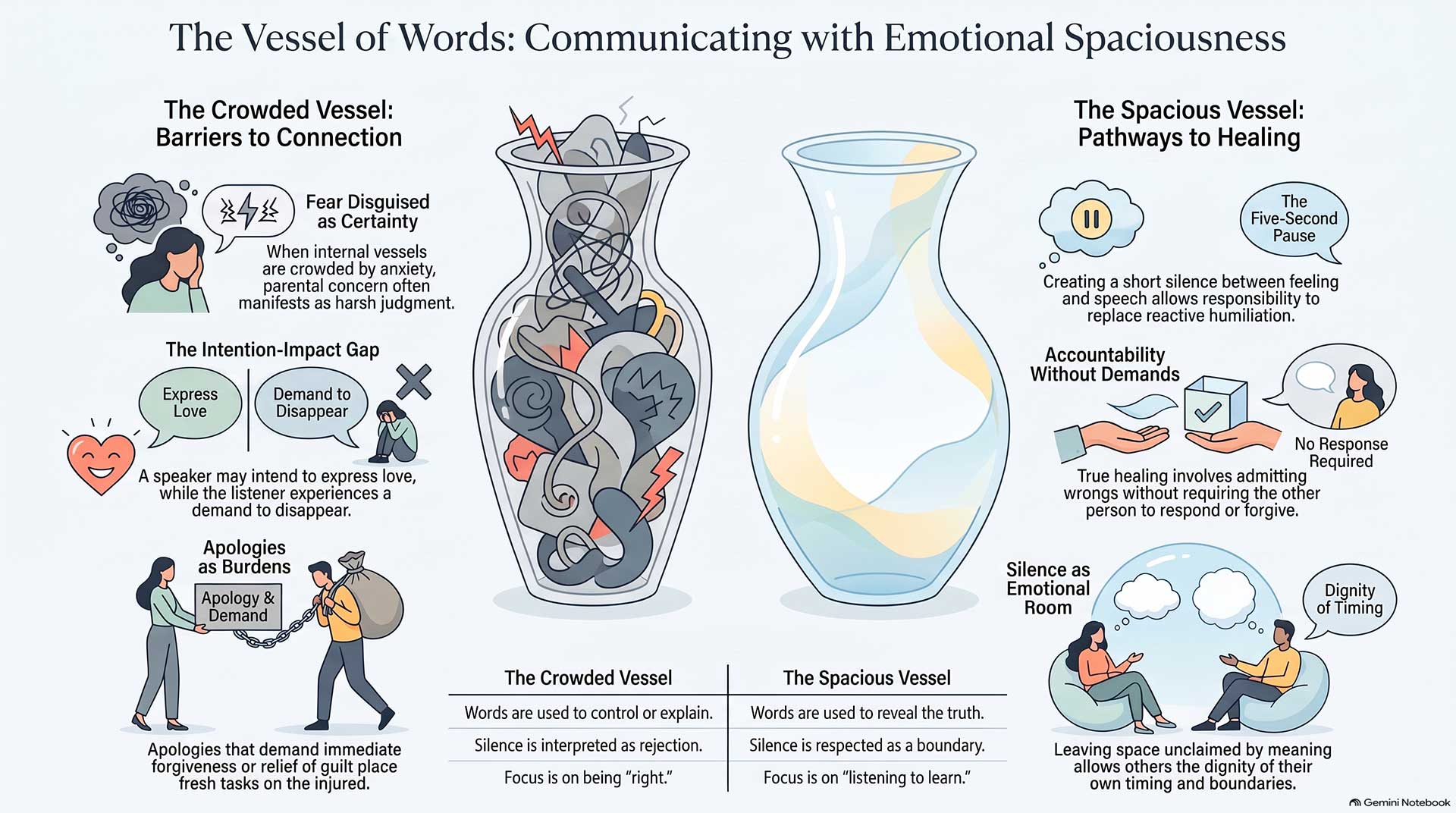
Inspired by Kim Yoon-na’s The Vessel of Words, the stories explore a simple but demanding idea: words reveal the size and condition of the inner vessel holding them.
When that vessel is crowded with fear, shame, resentment, or the need to be right, concern can sound like judgment. Advice can become control. An apology can become another request placed upon the injured person.
Emotional spaciousness does not mean staying silent or avoiding difficult truths. It means creating enough room between feeling and speech to ask:
What am I placing inside the other person with these words?
Each story begins with a familiar form of communication: a text message, a workplace correction, a family announcement, an online comment, or a long silence. None of these forms is harmful by itself. The harm begins when fear disguises itself as certainty and one person decides what another person must feel, explain, forgive, or become.
These stories do not offer effortless reconciliation. Some messages receive no reply. Some apologies are refused. Some families remain separated. The goal is more modest and more honest: to stop adding fresh pain to an injury that already exists.
The Five Stories
1. The Unread Message
Kim Tae-su loves his son, Min-jae, but his fear repeatedly emerges as criticism. When Min-jae stops answering his messages, Tae-su interprets the silence as immaturity and rejection.
He slowly recognizes that many of his messages have contained judgments disguised as parental concern. Tae-su sends a new apology without asking Min-jae to respond. The unread message becomes his first attempt to leave emotional room for his son.
2. Five Seconds in the Conference Room
A mistake during an important meeting gives a senior employee the chance to humiliate a younger colleague in front of the team.
Park Sang-ho feels anger rising and prepares to speak. Han Seo-yeon asks for five seconds.
That short pause does not erase responsibility. It changes how responsibility is addressed. The story asks whether authority must injure someone before it can correct them.
3. I Won’t Be Coming Home for Seollal
Han Ji-hye tells her mother, Myeong-suk, that she will not return home for the holiday.
Myeong-suk hears punishment and ingratitude. Ji-hye is trying to protect herself from another gathering filled with criticism, comparison, and questions presented as concern.
Their conversation reveals the painful distance between intention and impact. A parent may believe her words express love, yet the child may experience those same words as a demand to disappear inside the family’s expectations.
4. The Deleted Comment
Choi Yu-na exposes Park Na-ri’s panic attacks on an anonymous school message board. Yu-na deletes the post seven minutes later, but screenshots have already spread.
Na-ri refuses to accept an apology that asks her to relieve Yu-na’s guilt. Yu-na learns that confession does not purchase forgiveness and remorse does not restore the injured person’s sense of safety.
When Kang Min-seo admits that she wrote the anonymous insult that first provoked Yu-na, the story exposes a chain of pain: one wounded person reaching for another person’s wound.
5. The One Who Left the Bowl Empty
Pottery teacher Oh Seon-ja has spent years interpreting her estranged son’s silence as disloyalty. Her son, Hyeon-woo, stopped speaking to her after she shamed his wife, So-hee, during her struggle with postpartum depression.
When Seon-ja undergoes surgery, Hyeon-woo comes to the hospital but cannot enter her room. He leaves an imperfect white bowl and a letter explaining that he is still not ready to face her.
Seon-ja wants to fill his silence with accusation, hope, and prediction. Instead, she leaves the bowl empty.
For the first time, she allows her son’s silence to belong to him.
(Note: This is an imaginary conversation, a creative exploration of an idea, and not a real speech or event.)
Story 1: The Unread Message
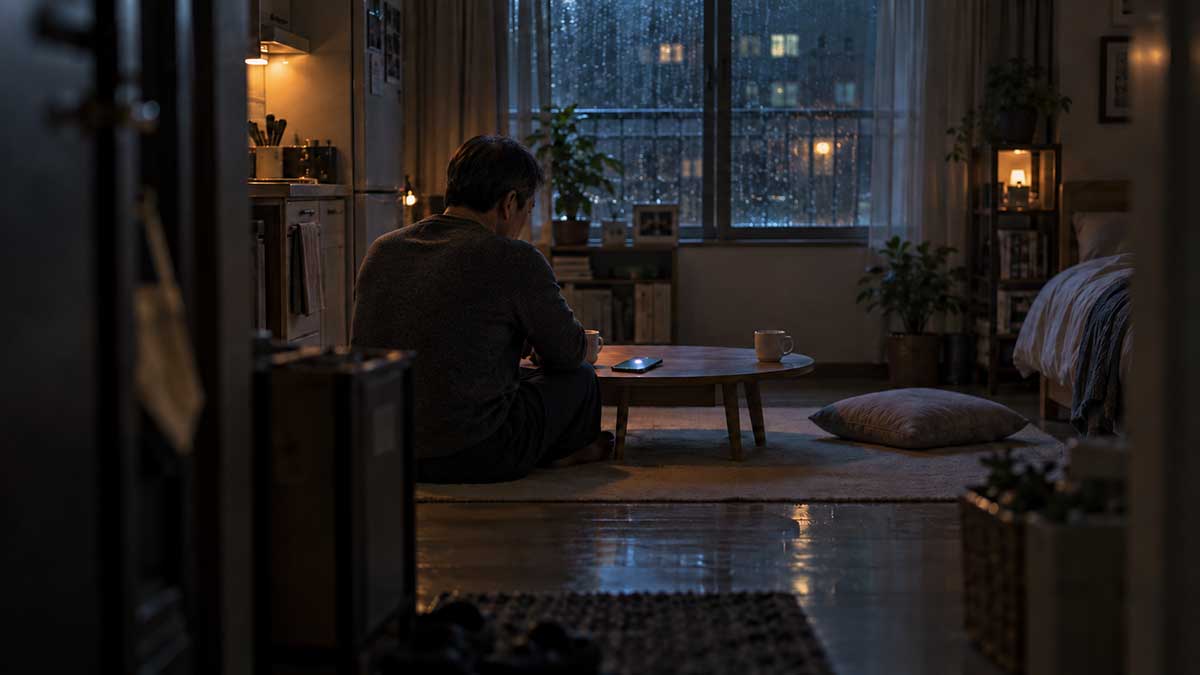
By the time candle wax reached the frosting, no one at the table was celebrating.
The cake still carried its blue Korean lettering:
합격 축하해, 민재야.
Congratulations on getting in, Min-jae.
Lee So-ra had ordered it three days earlier, after her son’s acceptance letter arrived. She had spent the afternoon making japchae and braised short ribs, the dishes Min-jae requested every year on his birthday. Her husband, Kim Tae-su, had come home carrying a new laptop in a silver box.
Their son had been accepted into the electrical engineering program at one of Seoul’s most competitive universities.
For months, Tae-su had pictured this evening. He would give Min-jae the laptop, pour himself one glass of soju, and finally feel that the years of private academies, entrance exams, application essays, and weekend drives had led somewhere.
Min-jae blew out the candles.
His mother clapped. Tae-su pushed the laptop across the table.
“You’ll need something better for engineering.”
Min-jae looked at the box but did not open it.
“Dad, Mom, I need to tell you something.”
Tae-su felt the evening change before his son said another word.
“I want to defer enrollment for one semester.”
So-ra lowered the cake knife.
“Defer?”
“There’s a youth center in Yeongwol. They work with kids from rural families and multicultural households. I applied to volunteer there for six months.”
Tae-su stared at him.
“You applied?”
“I wanted to know whether they would take me before I brought it up.”
“So you already made the decision.”
“I haven’t accepted yet.”
“But you applied without telling us.”
Min-jae’s hands tightened beneath the table.
“I knew what you would say.”
“Then why are we having this conversation?”
“Tae-su,” So-ra said.
He ignored her.
“You worked three years to get into that university. You have a scholarship. Do you think they will keep everything waiting for you?”
“The admissions office said I can request a one-semester deferment.”
“And next semester? Will the scholarship still be there?”
“I have to file new paperwork. They said students usually keep it if their situation hasn’t changed.”
“Usually?”
“I checked.”
“You checked.” Tae-su gave a short laugh. “You’re twenty years old, and you checked a website. I’m supposed to trust the next year of your life to that?”
Min-jae’s face hardened.
“It’s six months.”
“Six months becomes a year. A year becomes never. You lose your rhythm, your friends move ahead, and then returning gets harder.”
“I’m not quitting school.”
“You don’t know that.”
“I know what I’m choosing.”
“No, you know what you feel like doing right now.”
So-ra placed the cake knife on the table.
“Let him explain why he wants to go.”
Tae-su turned to his son.
“Fine. Explain.”
The word sounded less like an invitation than a challenge.
Min-jae looked down at the unopened laptop.
“At the interview, they asked what I wanted to do after college. I said I wanted to build technology that helps people. Then they asked who I had helped so far.”
Tae-su waited.
“I couldn’t answer.”
“That is why you go to college. You learn first.”
“I’ve spent my whole life preparing for the next thing. Middle school was for high school. High school was for college. College will be for a job. I want six months when I’m responsible for something happening now.”
“You think studying is not real responsibility?”
“That isn’t what I said.”
“You think your mother and I spent all this time and money so you could walk away when the work finally begins?”
“I’m not walking away.”
“It looks exactly like that.”
Min-jae’s chair moved back a few centimeters.
So-ra reached for her husband’s arm, but Tae-su pulled it away.
Fear had already found its sentence.
“You always run when something truly matters.”
No one moved.
The refrigerator hummed behind them. A drop of candle wax slid onto the white frosting.
Min-jae looked at his father with an expression Tae-su could not read.
“What do you mean, always?”
Tae-su had no answer.
There had been no “always.” Min-jae had never quit school, abandoned a job, or walked away from a promise. He had played basketball through a fractured finger in tenth grade. He had retaken calculus after earning the first C of his life. He had stayed awake beside his mother in the emergency room when Tae-su was away on business.
Yet the sentence had already been spoken.
“You know what I mean,” Tae-su said.
“No. I don’t.”
“If you were ready for adult decisions, I wouldn’t have to explain everything.”
Min-jae stood.
“Then don’t.”
He left the table.
His bedroom door closed without a slam. The quiet sound made Tae-su angrier than a slammed door would have.
So-ra began removing the untouched dishes.
“You didn’t oppose his plan,” she said.
“I gave him facts.”
“You told him what kind of person he is.”
“He needs someone to bring him back to reality.”
“Does he?”
Tae-su looked at her.
“Or do you need him to return to the future you already chose?”
The next morning, Min-jae left before sunrise.
So-ra woke at the sound of the front door. She found him tying his shoes with a backpack at his feet.
“You’re going today?”
“The center said I can visit before I decide.”
She went to the kitchen and brought out the foil-wrapped kimbap she had prepared the night before.
“Eat this on the bus.”
Min-jae took the bag, then glanced toward the closed bedroom door.
“Is Dad awake?”
“I don’t know.”
It was a lie. Tae-su was awake. He lay facing the wall, listening to every sound from the entryway.
So-ra hugged her son.
“Call me when you arrive.”
Min-jae placed the bag of kimbap on the shoe cabinet so he could put on his jacket. A minute later, the door closed.
The bag remained there.
At 6:14 a.m., Tae-su opened KakaoTalk.
He began typing.
He explained the risks of delaying enrollment, the scholarship paperwork, the competition Min-jae would face, and how difficult it was to regain academic discipline after a long break. He wrote that parents had a duty to see dangers their children could not yet see. He wrote that every harsh word he had spoken came from concern.
The message grew until it filled several screens.
He ended with:
Someday you will understand why I had to say this.
Then he sent it.
A small yellow number appeared beside the message.
Unread.
At noon, the number was still there.
At three, it remained.
That evening, So-ra found him checking his phone at the kitchen table.
“Did you send him something?”
“He hasn’t read it.”
“What did you write?”
Tae-su handed her the phone.
She scrolled in silence.
When she finished, she placed it on the table.
“You wrote an argument.”
“I explained myself.”
“You explained why he should agree that you were right.”
“He should at least read it.”
“Are you asking him to read, or are you asking him to surrender?”
Tae-su took back the phone.
“You make it sound as if I attacked him.”
“You did.”
“With one sentence?”
“One sentence can tell a child who you believe he is.”
“He isn’t a child.”
“Then stop speaking as if his life belongs to you.”
The unread number stayed on the screen for four days.
Tae-su carried it into meetings. He checked it in the elevator, at red lights, and in the company cafeteria. Each time he saw the number, resentment rose before grief could reach him.
Min-jae was being stubborn.
Min-jae was punishing him.
Min-jae had always been too sensitive.
The word “always” returned.
On Friday night, Tae-su opened the cabinet in Min-jae’s room to find the warranty papers for the laptop. The box was still unopened on the desk.
A stack of school records slid from the upper shelf and fell to the floor. Tae-su knelt to gather them.
Among Min-jae’s report cards was an older sheet of yellowed paper.
His own middle-school record.
He recognized his father’s handwriting at once.
너는 형만큼 될 수 없다. 정신 차려라.
You will never be as good as your brother. Get a grip.
Tae-su sat on the floor.
His father had written it after Tae-su placed twelfth in his class. His older brother had placed first.
For years, Tae-su had carried that sentence as proof that he needed to work harder. He had entered a good university, found stable employment, and become a manager before fifty. When people praised his discipline, he never told them that much of it had grown from the terror of becoming the disappointing son his father had named.
He had promised himself he would never speak to his own child that way.
Yet he had handed Min-jae a slightly altered version of the same sentence.
You always run.
Different words. The same verdict.
So-ra found him sitting on the floor with the report card in his hand.
She read the note and sat beside him.
“I hated him for writing this,” Tae-su said.
“I know.”
“I thought it made me stronger.”
“Maybe it made you work harder.”
“Isn’t that the same thing?”
“No.”
She did not explain further.
Tae-su looked at the long KakaoTalk message he had sent. Every paragraph asked his son to examine the father’s fear. None asked the father to examine the son’s wound.
“What should I say?”
So-ra leaned against the bed.
“If you send another message to make him forgive you, don’t send it.”
“Then what is an apology for?”
“To tell the truth about what you did.”
“What if he never answers?”
“Then he doesn’t answer.”
Tae-su opened the message window.
He typed several sentences and erased them.
I’m sorry, but you need to see this from my side.
He deleted it.
I may have spoken too harshly, but everything I said came from love.
He deleted that too.
He remembered the report card in his hand. His father had never apologized. Yet Tae-su knew what kind of apology he had once wanted. Not an explanation of tuition bills, exhaustion, or parental concern. He had wanted his father to admit that the sentence was wrong.
Tae-su wrote three lines.
I had the right to disagree with your decision. I did not have the right to insult you.
I turned my fear into a judgment about your character. I’m sorry.
You do not have to reply.
He sent it.
The number 1 appeared again.
Tae-su set the phone on Min-jae’s desk and left the room.
The message remained unread that night.
It remained unread the next morning.
At work on Monday, Tae-su arrived before most of his team. He placed his phone beside the keyboard with the screen facing up.
The number was still there.
At 9:23, Han Seo-yeon, a quality-control engineer, appeared at his office door holding a laptop.
“Manager Kim, do you have a minute?”
“What is it?”
“We saw a temperature spike during the home-battery durability test. It lasted eleven seconds. We haven’t reproduced it, but the curve doesn’t look like a sensor error.”
Tae-su glanced at the clock. A launch meeting was scheduled for the afternoon. The production team had already warned him against raising new concerns without conclusive data.
His first instinct arrived fully formed.
If it hasn’t happened again, don’t turn it into a crisis.
Seo-yeon remained in the doorway.
“There may be an internal heat issue,” she said. “I think you should see the first test record.”
Tae-su looked at his phone.
The unread number seemed smaller than it had at home, yet it carried the same question.
Was he listening to learn what another person meant, or waiting for a chance to replace her words with his own fear?
He turned the phone face-down.
“Come in,” he said. “Sit down and tell me from the beginning.”
Seo-yeon entered and opened her laptop.
Tae-su had not become a different man.
His son had not forgiven him.
Nothing had been repaired.
He had simply reached another moment in which someone could be heard or interrupted.
This time, he chose to listen first.
Story 2: Five Seconds in the Conference Room
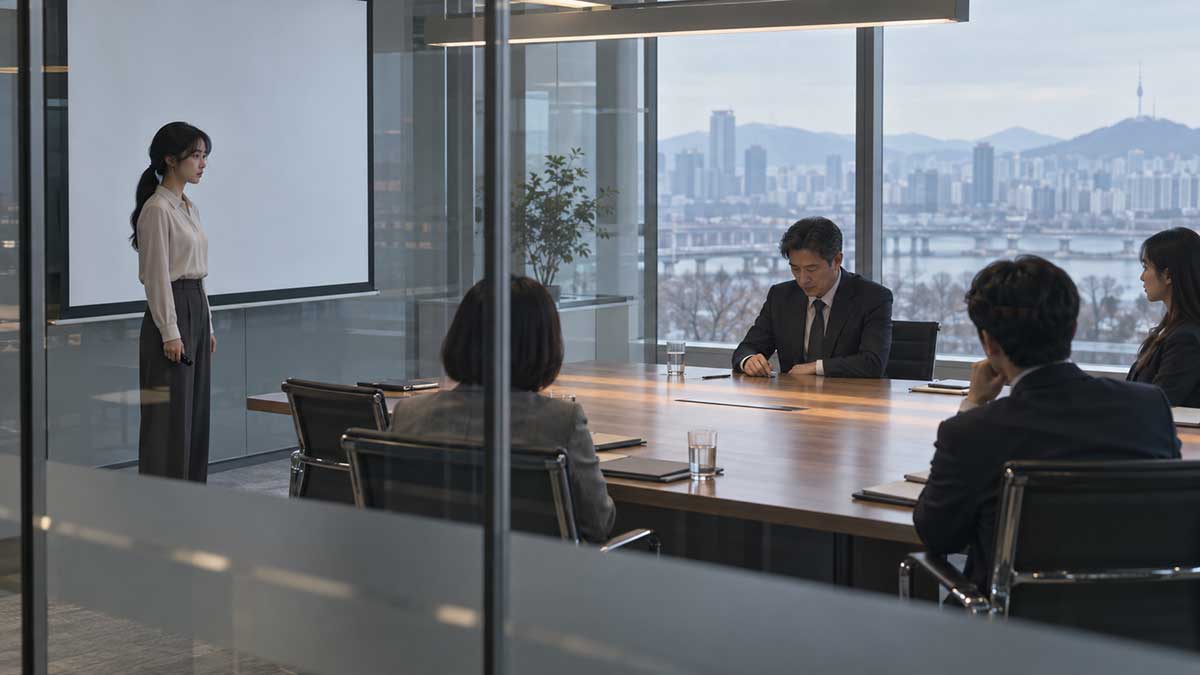
Numbers never raised their voices.
They did not glance at the most senior person in the room before deciding what they meant. They did not lower themselves to protect a launch date, a promotion, or a company’s reputation.
That was why Han Seo-yeon trusted them.
At twenty-nine, she had spent six years in quality control at Hanbit Energy, a Korean manufacturer preparing to release a home battery system. During a blackout, the unit could keep a refrigerator, several lights, and basic household equipment running through the night.
The marketing team had already chosen its slogan.
A battery that keeps your family’s night safe.
On the first Monday in October, the final durability test began.
At 9:17 a.m., the temperature in test unit three rose past the safety limit.
71.2 degrees Celsius.
Eleven seconds later, it returned to its normal range.
Seo-yeon enlarged the graph.
The rise was smooth, not the jagged movement she expected from a loose sensor. Something inside the battery may have generated real heat.
Yoon Sang-ho, the contract technician assigned to the test, leaned over her shoulder.
“Could it be a sensor error?”
“I don’t know yet.”
She saved the raw data to two locations.
“Run it again under the same conditions.”
The second test showed nothing unusual. The third was normal too.
Sang-ho let out the breath he had been holding.
“Maybe it was just a bad reading.”
“Maybe.”
Seo-yeon did not erase the first result.
An event that happened once still had a cause. Failure to find that cause did not make the event unreal.
She spent the next hour comparing voltage, internal resistance, room temperature, charging rate, and sensor response. Nothing explained the spike.
At 11:06, she carried her laptop to Manager Kim’s office.
Kim Tae-su looked older than he had the week before. His phone rested on the desk with its screen facing down.
“Do you have a minute?” she asked.
“What did you find?”
“There was a temperature spike in unit three.”
He glanced toward the clock, then stopped himself.
“Come in. Sit down and tell me from the beginning.”
Seo-yeon sat.
She showed him the graph, test conditions, and sensor records. Tae-su did not interrupt. He enlarged the temperature curve twice and asked her to compare it with data from the other units.
“You couldn’t reproduce it?”
“No.”
“What do you recommend?”
“Ten more days of testing. We should pause launch approval until we identify the cause.”
Tae-su leaned back.
Ten days would affect advertising contracts, shipping schedules, retailer commitments, and the team’s annual evaluation. He knew what the delay would cost.
Yet he did not reject her recommendation.
“Write the report,” he said. “Bring it to this afternoon’s launch meeting.”
Seo-yeon left his office with a small sense of relief.
Being heard did not mean the listener agreed.
It meant her words had been allowed to exist long enough to be examined.
The afternoon meeting was different.
Director Park sat at the head of the long table. He was the senior executive responsible for releasing the new battery before the winter sales season. The heads of sales, production, and safety sat beside him.
A large screen displayed the launch schedule.
D-18.
Eighteen days remained.
Seo-yeon connected her laptop and displayed the temperature graph.
Director Park looked at it for several seconds.
“Was the result reproduced?”
“No, sir.”
“How many tests have been completed?”
“Thirty-two.”
“So this happened once in thirty-two tests.”
“Yes. The temperature returned to normal after eleven seconds, but we have no confirmed explanation for the rise.”
Director Park folded his hands.
“You want to delay the product over eleven seconds of data that no one can reproduce?”
“I’m not recommending cancellation. I’m recommending ten more days of testing before final approval.”
The sales director tapped one finger against the table.
“Ms. Han, do you know how much money has gone into this launch?”
She said nothing.
The question sounded like a request for information, but every person in the room knew it was a warning.
Director Park turned to Tae-su.
“Manager Kim, do you agree with her recommendation?”
That morning, Tae-su had believed more testing was needed.
In the meeting room, other numbers crowded into his mind. The penalties for delayed delivery. The cost of rescheduling advertisements. The team’s performance rating. The bonuses his staff expected at the end of the year.
He thought of the message he had sent his son.
I turned my fear into a judgment about your character.
For one brief moment, he knew what he should say.
Then Director Park looked at him again.
Tae-su studied the faces around the table before answering.
“Current data is not enough to classify this as a product defect.”
Seo-yeon turned toward him.
“Manager Kim, the first curve suggests a rise in internal resistance. If we compare it with the charging data…”
“Ms. Han.”
His voice was quiet.
It still stopped the room.
“Can’t you read the room?”
Seo-yeon’s mouth remained open for half a second.
Then she closed it.
No one looked at the graph after that.
The meeting ended with a compromise that protected the schedule. The launch would continue as planned, and the quality team would keep testing in the background.
The official report would state:
A temporary temperature variation was observed but could not be reproduced.
Seo-yeon’s first draft had said something else:
Internal heat generation cannot be ruled out. We recommend withholding launch approval until the cause is identified.
That evening, she rewrote the sentence three times.
Withholding launch approval became further observation may be useful.
Internal heat generation became possible sensor variation.
Her final version read:
No evidence has been found at this time to indicate a direct risk to product safety.
She stared at the sentence before saving it.
It was not false.
It simply made the truth smaller.
“Are you still here?”
Sang-ho stood at the test-room door with his coat over one arm.
“I’m finishing the report.”
“About the temperature spike?”
Seo-yeon closed the document.
“Go home, Sang-ho.”
He had two months left on his contract. Everyone knew that contract workers were easier to replace, easier to blame, and less able to challenge a senior employee.
Asking him to speak up would have been easy.
Standing beside him after he spoke would have been harder.
One week later, smoke came from a battery during an overnight repetition test.
The automatic suppression system contained the small fire inside the test chamber. No one was injured. The building suffered no serious damage.
The launch stopped the next morning.
By 8:30, a notice appeared on the company’s internal message board.
Possible failure by the overnight technician to follow testing procedures. Investigation in progress.
Sang-ho had been the overnight technician.
At the first incident meeting, he rubbed the back of one hand until the skin turned red.
“I followed every step,” he said. “The equipment log proves it.”
The production manager examined a printed checklist.
“Did you allow the full cooling period before restarting the unit?”
“I waited five minutes longer than the manual requires.”
“That is what you remember.”
“It’s recorded.”
“We are checking whether the record matches what happened.”
Sang-ho looked across the table at Seo-yeon.
She had the original temperature data on her laptop.
She had the first version of her report.
The document history showed every change, when it had been made, and whose account had approved it.
Sharing those records would expose Tae-su’s instruction.
It would expose her silence too.
Seo-yeon lowered her eyes.
That evening, her older sister, Han Ji-hye, sent her a message.
Mom heard something happened at your company. Are you okay?
Seo-yeon typed a reply, erased it, then tried again.
I’m not okay.
Her sister called at once. Seo-yeon let the phone ring.
She sent one more message.
If I don’t speak, no one notices why I stayed silent. They only see who paid for it.
Ji-hye responded:
Would speaking change anything?
Seo-yeon did not know.
Telling the truth would not erase the report she had changed. It might cost Tae-su his position. It might damage her own career. People could ask why she had waited until someone else faced punishment.
Silence offered one clear result.
Sang-ho would carry blame that belonged to several people.
Two days later, the company held a second investigation meeting.
Sang-ho’s name was missing from the attendance list.
Director Park explained that a written statement from a contract employee would be sufficient.
“This is not a meeting to punish any individual,” he said. “Our purpose is to establish the facts and protect the company’s credibility.”
Seo-yeon looked at the final page of the investigation file.
Probable technician failure to follow procedure.
The conclusion had been written before the discussion began.
Director Park looked around the table.
“Does anyone have further information?”
No one spoke.
Seo-yeon opened the revision history on her laptop.
Her heart beat so hard that her fingertips felt cold.
She drew a breath.
One second.
Tae-su saw the old and new versions of her report on the screen.
Two seconds.
He remembered the message to his son.
I turned my fear into a judgment about your character.
Three seconds.
He saw that he had done the same thing to Seo-yeon. He had feared the cost of her report, then treated her warning as a failure to read the room.
Four seconds.
Seo-yeon began to raise her hand.
Before the fifth second ended, Tae-su spoke.
“I stopped Ms. Han’s report.”
Every face turned toward him.
He placed both hands on the table. He was not trying to hide their trembling.
“The first test showed a possible internal heating event. Ms. Han recommended delaying approval. I interrupted her during the launch meeting and instructed her to weaken the language in the report.”
Director Park’s expression changed.
“Manager Kim, do you understand what you are saying?”
“Yes, sir.”
Seo-yeon looked at Tae-su.
He had spoken first. She could let him carry the entire burden. She could remain the employee who had tried to warn everyone and had been silenced by her manager.
That account would protect her.
It would still be incomplete.
Seo-yeon connected her laptop to the meeting-room screen.
“I changed the report,” she said.
The original and revised sentences appeared side by side.
“I was instructed to change it. That is true. I was still the person who saved the final version. After the fire, I did not disclose the revision history right away.”
The sales director stared at the screen.
“So both of you admit that the report failed to reflect the risk?”
“The report is part of the problem,” Seo-yeon said. “The larger problem is that we calculated the cost of hearing the warning before we calculated the cost of ignoring it.”
No one ended the meeting with a speech.
No one applauded.
The company opened an internal audit. The product launch was postponed without a new date. Tae-su was temporarily removed from his management duties. Seo-yeon was informed that she could face disciplinary action for failing to meet her reporting obligations.
Sang-ho’s contract was extended through the investigation period.
No one promised him a permanent job.
Truth did not return everything to its proper place.
Several days later, Seo-yeon was collecting files in an empty conference room when Tae-su appeared at the door.
“Ms. Han.”
She looked up.
“I’m sorry,” he said.
No explanation followed.
He did not mention the deadline, Director Park’s pressure, the team’s bonuses, or his own fear.
Seo-yeon studied him.
“Please don’t thank me.”
Tae-su nodded slowly.
“I won’t.”
“You didn’t give me the courage to speak. I waited too long too.”
“I know.”
She closed her laptop.
“Next time, listen from the beginning.”
Tae-su had no answer.
Seo-yeon left before he could find one.
Rain fell beyond the corridor windows. Employees crossed the space between buildings under dark umbrellas. Some walked alone. Others leaned close beneath a shared umbrella.
Seo-yeon’s phone vibrated.
A message from Ji-hye appeared.
Are you coming home for Seollal this year?
Seo-yeon stopped in the middle of the corridor.
She wrote a reply, erased it, then wrote another.
At last, she sent:
If you decide not to go, I’ll listen to your reason this time.
The message was read almost at once.
Ji-hye did not reply.
Seo-yeon placed the phone in her pocket.
Saying I’ll listen opened a door.
It did not require the other person to walk through it before they were ready.
Story 3: I Won’t Be Coming Home for Seollal
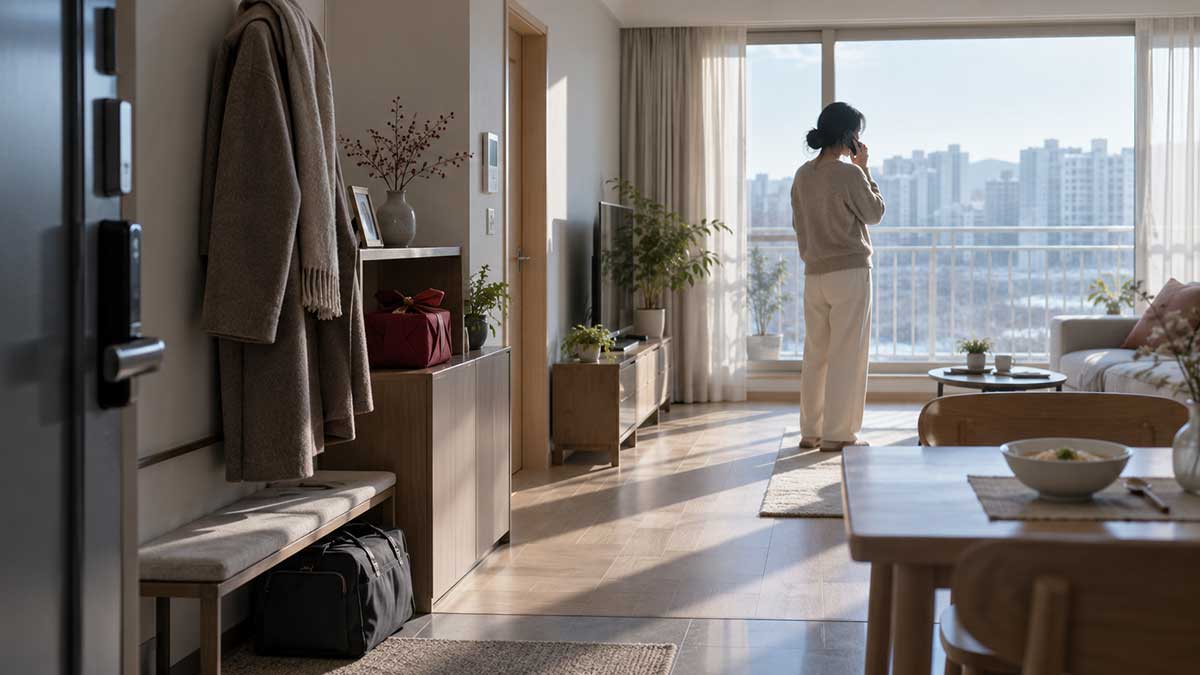
Han Ji-hye had been trying to send the same sentence for three days.
Mom, Yu-na and I won’t be coming home for Seollal this year.
Her thumb hovered over the button.
The message was short, but Ji-hye could already hear everything that would follow.
How can you do this to your own family?
Do you know what I gave up to raise you?
Ever since your divorce, you have become impossible.
How many more holidays do you think your mother has left?
Ji-hye erased the sentence and opened the refrigerator.
A box of Korean beef and a fruit gift set filled the lower shelf. She had bought them to take to her mother’s apartment for Seollal, the Korean Lunar New Year.
At the dining table, her seventeen-year-old daughter, Choi Yu-na, sat over a math workbook. She was peeling every white thread from a tangerine before eating it.
“Mom.”
“Yes?”
“Are we going to Grandma’s for Seollal?”
Ji-hye closed the refrigerator.
“Why do you ask?”
“No reason.”
Yu-na put one piece of tangerine in her mouth.
Ji-hye knew it was not a casual question.
During Chuseok, Korea’s autumn family holiday, her mother, Jeong Myeong-suk, had urged Yu-na to eat more japchae. When Yu-na said she was full, Myeong-suk laughed.
“You can’t go through life eating only what you want and hearing only what you want. If you become too sensitive like your mother, the people who live with you will suffer.”
Conversation stopped for a moment.
One aunt pretended not to hear. An uncle bent over the platter of pan-fried jeon. Someone turned up the television.
Ji-hye looked at her mother and said nothing.
That night, on the drive home, Yu-na asked a question.
“Did Dad leave you since you were too sensitive?”
Ji-hye gripped the steering wheel.
“No.”
“Then why did Grandma say that?”
“She said something she shouldn’t have.”
“Why didn’t you stop her?”
Four months later, Ji-hye still carried that question.
She had taught Yu-na to defend herself. Say no when something felt wrong. Tell a teacher when someone treated her unfairly. Leave a room where she did not feel safe.
Yet in front of her mother, Ji-hye was no longer forty-one.
She was eleven again.
The daughter who never talked back.
The daughter who protected the mood at dinner.
The daughter who worried about her mother’s anger before admitting her own pain.
Yu-na removed another white thread from the tangerine.
“You don’t want to go, do you?”
Ji-hye sat across from her.
“Do you?”
Yu-na stared at the peel in her hand.
“If I say no, will you stay home too?”
“Maybe.”
“Then it will feel like I kept you from seeing your family.”
Ji-hye heard an old family habit in her daughter’s voice.
Take responsibility for everyone else’s feelings.
Picture yourself as the selfish one before you refuse.
Make your pain smaller so no one else feels uncomfortable.
“That would not be your responsibility,” Ji-hye said.
“Would it be yours?”
Ji-hye paused.
“Yes. The decision would be mine.”
That night, she called her younger sister.
Seo-yeon was still facing an internal investigation at Hanbit Energy after admitting that she had weakened a safety report. Ji-hye did not want to place another problem in her hands. Yet she remembered the message Seo-yeon had sent.
If you decide not to go, I’ll listen to your reason this time.
Seo-yeon kept that promise.
She did not interrupt as Ji-hye described the Chuseok dinner, Yu-na’s question in the car, and the sentence she had been unable to send.
“I’m afraid staying home will feel like punishment,” Ji-hye said. “Mom lives alone now. Ever since Dad died, she waits for the holidays.”
“You’re hurting too,” Seo-yeon said.
“I can take it.”
“Mom has said that her entire life.”
Ji-hye went quiet.
Seo-yeon waited, then asked, “Are you staying home to hurt her?”
“No.”
“Are you ending the relationship?”
“No.”
“Then why aren’t you going?”
Ji-hye looked at Yu-na’s empty chair across the table.
“I don’t want to eat rice-cake soup as if nothing happened in a room where my daughter was humiliated. If I stay silent again, I will teach Yu-na that Mom was right.”
“Tell her that.”
“Do you think she’ll hear me?”
“She may not.”
“Then what is the point?”
Seo-yeon took a moment before answering.
“When I spoke at the company meeting, I didn’t expect everyone to accept what I said. I spoke since someone else was paying for my silence.”
After the call, Ji-hye opened the message again.
This time, she wrote more than one sentence.
Mom, Yu-na and I will not come for Seollal this year.
What you said to Yu-na at Chuseok stayed with her. She asked whether her father left since I was too sensitive. I was wrong to stay silent at the table.
I am not doing this to punish you. Until you can agree not to judge Yu-na’s parents, appearance, or personality in front of other people, I will not bring her to family gatherings.
I know you may be angry. I will not change this decision.
Her hand trembled when she sent it.
The message was marked as read.
Her phone rang less than a minute later.
“Have you lost your mind?”
Myeong-suk did not say hello.
“Did you read the whole message?”
“What terrible thing did I say to Yu-na? Children today are too fragile. If she can’t hear a comment like that from her grandmother, how will she survive outside this family?”
“I told you what the comment meant to her.”
“I said it out of concern.”
“It hurt her.”
“So I’m a horrible grandmother now?”
Ji-hye closed her eyes.
Conversations with her mother always arrived at the same place.
Ji-hye would name something Myeong-suk had done. Myeong-suk would hear an accusation against her entire life. Ji-hye would then be expected to prove that her mother was still a good person.
“I didn’t say you were a horrible person. I said that sentence was wrong.”
“Who lives without ever saying the wrong thing?”
“I’m not asking you to be perfect. I’m asking you to accept that someone was hurt.”
Myeong-suk released a dry laugh.
“You have made everything difficult since you were a child. My own mother said far worse things to me. You have no idea what I heard from your grandmother or from my mother-in-law. I endured it. I still went home for every holiday.”
Ji-hye lowered her voice.
“Does Yu-na have to endure it since you did?”
The other end of the call became quiet.
“I know you were hurt,” Ji-hye said. “I’m not denying that. I just don’t want Yu-na to inherit the same way of surviving.”
“So your daughter is the only person who matters.”
“Protecting her is my responsibility.”
“Am I not your mother?”
Ji-hye’s throat tightened.
She could not see why loving her mother and refusing her mother’s words had to stand on opposite sides.
“You are my mother.”
“Yet you won’t come for Seollal?”
“No. Not this year.”
Myeong-suk ended the call.
Ji-hye kept the phone against her ear long after the line went silent.
She had expected relief after drawing the boundary.
Relief did come, but it did not come alone. Guilt, grief, anger, and doubt came with it.
A boundary was not proof that love had ended.
At times, it meant closing a door in front of someone you still loved.
It meant hearing that person cry on the other side and refusing to open it before anything had changed.
Myeong-suk did not sleep that night.
A scarf she had bought for Yu-na lay on the living-room sofa. She unfolded it, pressed the fabric between her fingers, then folded it again.
Seollal had never been just a meal to her.
When her husband was alive, it was the day the family came home. After his death, the holiday became proof that she still occupied the center of the family.
Ji-hye’s absence did not feel like two empty chairs.
It felt like her own chair had been removed.
The next afternoon, Myeong-suk attended her pottery class at the neighborhood cultural center.
The studio was called The Empty Place.
The instructor, Oh Seon-ja, gave each student a piece of clay.
“Make a bowl small enough to hold in one hand,” she said. “Don’t think about what you will put inside. Look at the shape of the empty space.”
Myeong-suk pressed her thumb into the center of the clay. As the opening widened, she pinched the rim inward.
Seon-ja stopped beside her table.
“Why do you keep closing the top?”
“If it gets too wide, the shape will collapse.”
“A bowl can hold only what its opening allows inside.”
“What if it breaks?”
“Then you widen it only as far as the clay can bear. That is different from closing it.”
Myeong-suk stopped moving her hands.
“My daughter says she won’t come for Seollal.”
Seon-ja did not ask why.
“Children should not treat their parents that way,” Myeong-suk said.
“I don’t know what happened, so I can’t decide who is right.”
“Younger people talk about boundaries now. They even draw them against family.”
Seon-ja slowly turned the bowl on her own table.
“A bowl without an edge cannot hold water.”
“So family members should live like strangers?”
“An edge does not exist only to keep people out. It shows where one person ends and another begins. Without it, staying close can turn into swallowing each other.”
Myeong-suk frowned.
“If a mother tells her daughter to come home, refusing is disrespectful.”
Seon-ja looked at her.
“Was there any room inside your invitation for your daughter to say no?”
Myeong-suk did not answer.
On Seollal morning, the smell of tteokguk filled her apartment.
She had prepared four place settings.
Seo-yeon arrived early so her mother would not spend the holiday alone. She did not call Ji-hye and pressure her to come.
Myeong-suk left Ji-hye’s and Yu-na’s spoons on the table.
“Did you call your sister?”
“No.”
“She listens to you.”
“This was her decision.”
“You’re taking her side too?”
Seo-yeon lifted a spoonful of rice-cake soup and let it cool.
“I’m not standing against you.”
“Then what are you doing?”
“I’m refusing to act as if Ji-hye never said anything.”
Myeong-suk set down her spoon.
“I did not say those things since I hate Yu-na.”
“I know.”
“You know how much I love that girl.”
“I know that too.”
“Then that should be enough.”
Seo-yeon looked at her mother.
“Having love in your heart does not erase the wound your words created.”
Myeong-suk turned toward the window.
Across town, Ji-hye and Yu-na were making mandu, Korean dumplings, at their own kitchen table.
Their dumplings came out in different sizes. Some were overfilled, some leaned to one side, and one had split open before reaching the pan.
“That one will fall apart when we boil it,” Ji-hye said.
“Then we’ll fry it.”
“You can’t solve every problem by frying it.”
“We can solve this one.”
They placed the broken dumpling in the frying pan.
Near lunchtime, Yu-na looked at her mother.
“Do you miss Grandma?”
“Yes.”
“And you still didn’t go?”
“Yes.”
Yu-na seemed confused.
“You can miss someone and still decide that seeing them is not safe yet,” Ji-hye said.
“If Grandma apologizes, will we go next year?”
“One apology won’t finish everything. The way we speak to each other has to change.”
“What if she never changes?”
Ji-hye had no easy answer.
“Then we may need to find a different way to see her. It could take time.”
“Did you stay home for me?”
Ji-hye wiped flour from her daughter’s fingers.
“Not on account of you. I finally did what I should have done at Chuseok.”
At three that afternoon, Myeong-suk sent a photograph.
It showed tteokguk, braised ribs, and side dishes on her table.
There was no message beneath it.
Ji-hye did not reply.
An hour later, another message arrived.
I’m sending food with Seo-yeon.
It was not an apology.
Ji-hye answered:
We’ll accept it. Thank you.
Seo-yeon brought the food that evening. The bag held sliced rice cakes, braised ribs, Yu-na’s favorite yakgwa cookies, and the unwrapped scarf.
Yu-na wrapped it around her neck.
“Did Grandma make this?”
“I think she bought it for you.”
“Can I call her?”
Ji-hye hesitated.
“If you want to.”
Myeong-suk answered before the phone rang twice.
“Did you get the scarf?”
“Yes. I like the color. Thank you.”
Silence entered the call.
“What Grandma said last time…”
Ji-hye stopped moving in the kitchen.
Myeong-suk did not finish the sentence.
“When you visit again, I’ll make the ribs you like.”
Yu-na looked at her mother.
“Okay.”
After the call, Yu-na removed the scarf.
“I think she was going to say she was sorry.”
“Maybe.”
“Why couldn’t she?”
Ji-hye thought of all the meals and gifts her mother had used in place of apologies. To Myeong-suk, saying I was wrong may have felt like giving up every sacrifice she had ever made.
“Maybe she doesn’t have enough room for those words yet.”
“Do we wait?”
“We don’t just wait. We keep telling the truth without trying to hurt her back.”
That night, Ji-hye sent her mother another message.
Mom, we received the food and the scarf. Thank you.
Food cannot take the place of what happened. When you feel ready to listen, I want us to talk about what Yu-na felt after hearing your words.
The reply came the next morning.
I’m not ready.
A second message followed.
But I will try to listen.
Ji-hye read those words several times.
It was not forgiveness.
It was not reconciliation.
It felt like someone inside a locked room had placed a hand on the doorknob.
In the bedroom, Yu-na was talking to a school friend. At first, Ji-hye heard her laugh. Then the room went silent.
Yu-na was looking at an anonymous message board used by students at Haneul High School.
Someone had commented beneath her Seollal photograph, then deleted it.
The words were gone from the page.
Yu-na had already read them.
Pretending to be sensitive just like your mother is exhausting.
Ji-hye knocked on the door.
“Yu-na, are you okay?”
Yu-na turned off the screen.
“Yes. It’s nothing.”
Words could be deleted.
What someone had already read could not.
Story 4: The Deleted Comment
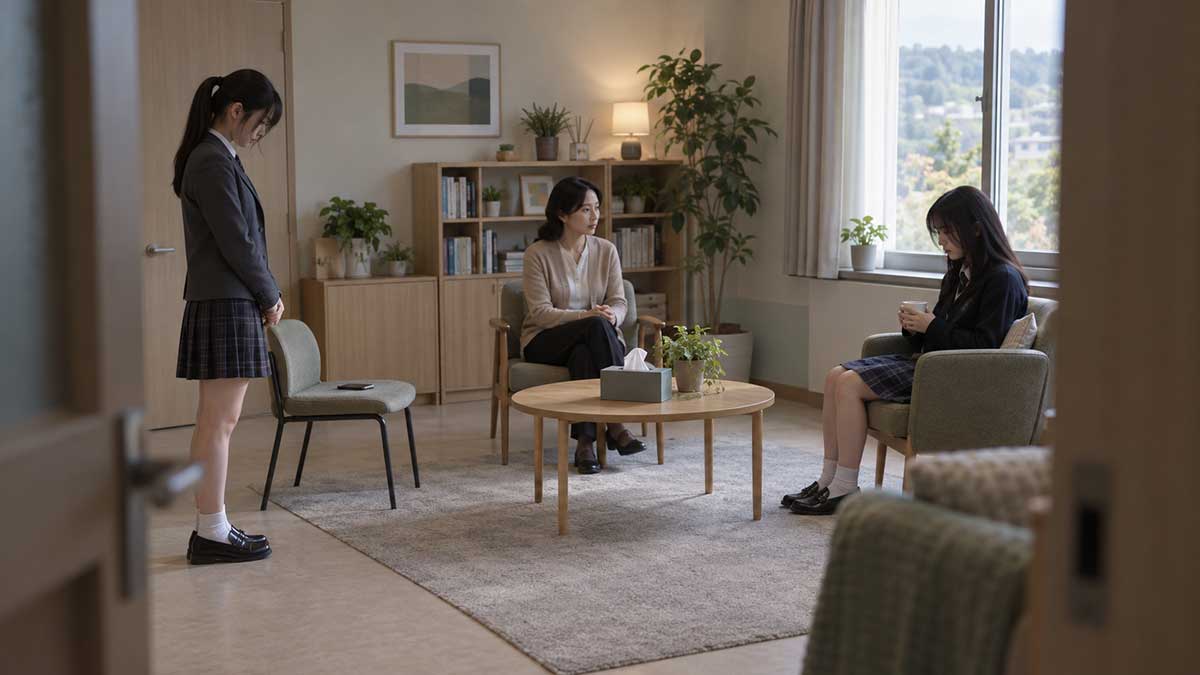
By 8:17 on Monday morning, nearly every student at Haneul High School had seen the post.
It appeared on Haneul Forest, the anonymous message board students used to complain about teachers, compare exam scores, trade gossip, and say things they would never attach to their names.
The post was only three sentences long.
It said that Park Na-ri, the student council vice president, had panic attacks. It described how she sometimes hid in the third-floor stairwell when she could not breathe. It ended by asking whether someone that “unstable” should represent the school.
At 8:24, the post disappeared.
Seven minutes.
That was long enough.
Screenshots had already moved through class group chats. Students lowered their phones whenever Na-ri walked past. Two girls near the shoe lockers stopped talking when they saw her.
Na-ri knew before anyone told her.
Silence had a shape. She recognized it.
Across the hallway, Choi Yu-na stood beside the classroom door with her phone pressed against her skirt pocket.
She had written the post.
Three months earlier, during a practice exam, Yu-na had found Na-ri crouched in the emergency stairwell. Na-ri’s hands were trembling. She kept trying to breathe, but every breath seemed to stop halfway.
“Don’t call anyone,” Na-ri had whispered. “Please.”
Yu-na had sat two steps below her.
She did not ask questions. She breathed slowly and counted with her fingers until Na-ri could follow.
Later, Na-ri made Yu-na promise not to tell anyone.
Yu-na promised.
For three months, she kept that promise.
Then came the anonymous comment about Yu-na’s family.
Her father had left home before Seollal. When Yu-na returned to school after the holiday, someone posted:
Some people act hurt so everyone will excuse their bad personality. Maybe their family got tired of them too.
Yu-na read it twelve times.
She became certain Na-ri had written it. Na-ri had heard her crying in the restroom before the holiday. Na-ri knew enough to hurt her.
That Sunday night, Yu-na opened Haneul Forest.
She wanted Na-ri to feel exposed for one minute. She wanted her to enter school knowing that strangers possessed the most frightening part of her life.
Yu-na posted the secret.
Seven minutes later, nausea rose into her throat. She deleted it.
She told herself that deleting it meant she had stopped.
Monday morning proved otherwise.
What Deleting Could Not Undo
Counselor Lee Su-jin asked Yu-na to come to her office after lunch.
Na-ri was already there.
She sat near the window with both hands around a paper cup of water. She did not look at Yu-na.
Ms. Lee closed the door.
“Yu-na has something she wants to say.”
Yu-na had rehearsed her apology during every class.
She had prepared the reasons. She had been angry. She had felt betrayed. She had believed Na-ri wrote the first comment. She had deleted the post almost at once.
Standing in front of Na-ri, each reason sounded like a request for mercy.
“I posted it,” Yu-na said. “I’m sorry.”
Na-ri’s fingers tightened around the cup.
“I deleted it.”
“I know.”
“I didn’t think people would save it.”
Na-ri finally raised her eyes.
“You didn’t think?”
Yu-na lowered her head.
“I was angry.”
“So you used the worst thing you knew about me.”
“I thought you wrote something about my family.”
“I didn’t.”
The answer came without hesitation.
Yu-na felt the floor shift beneath her.
“I don’t expect you to forgive me,” she said.
Na-ri gave a tired, almost bitter smile.
“Then what do you expect?”
“I don’t know.”
“You want to apologize so you can stop feeling like a bad person.”
Yu-na opened her mouth, but Na-ri continued.
“If I accept it, you get to go home feeling lighter. I still have to walk through the hallway tomorrow.”
Ms. Lee did not interrupt.
Na-ri placed the paper cup on the desk.
“I don’t want to hear the rest of your apology today.”
Yu-na’s face burned.
Part of her wanted to say that Na-ri was being cruel. Part of her wanted Ms. Lee to declare that refusing an apology was wrong.
Ms. Lee said nothing.
For the first time, Yu-na saw that an apology was something she could offer, but not something Na-ri was required to receive.
“Okay,” Yu-na said.
It was the smallest word she had spoken that day.
It was the first one that did not ask Na-ri to carry something for her.
The Person Behind the First Comment
Two days later, Kang Min-seo asked Yu-na to meet behind the gym.
Min-seo kept rubbing the edge of her sleeve.
“I wrote the comment about your family.”
Yu-na stared at her.
Min-seo spoke faster.
“I was angry after you removed me from the festival committee. I heard you talking about your father, and I used it. I didn’t think you would know it was me.”
“I didn’t know.”
Min-seo looked confused.
“I thought it was Na-ri.”
The color left Min-seo’s face.
Neither girl spoke.
A cold wind moved across the empty athletic field.
Yu-na had wanted to punish the person who hurt her. Instead, she had chosen someone whose private pain she already knew how to reach.
“You need to tell Ms. Lee,” Yu-na said.
“Can’t I just delete my account?”
“I deleted my post.”
Min-seo looked at her.
“It didn’t delete what happened.”
The next morning, Min-seo confessed to the counselor. The school removed Haneul Forest from its student network, yet copies and rumors remained on private phones.
Na-ri stopped attending student council meetings. She entered classrooms early so she would not have to walk through crowded hallways. Once, Yu-na saw her turn around when she noticed two students whispering near the stairwell.
Yu-na wanted to follow her.
She did not.
Wanting to help did not give her the right to approach.
An Apology With No Door Handle
Ms. Lee suggested that Yu-na write a letter.
“Should I explain why I did it?” Yu-na asked.
“You may explain what happened inside you,” Ms. Lee said. “But do not turn the explanation into your defense.”
“What should I ask her to do?”
“Nothing.”
Yu-na looked puzzled.
“An apology should return a choice to the person you hurt. It should not place another task in her hands.”
That night, Yu-na wrote five versions.
The first said, I hope you can forgive me.
She crossed it out.
The second said, I was hurt too.
She crossed that out.
The third promised that she would never do it again. The promise sounded too clean.
In the final letter, she wrote:
I shared something you trusted me to protect. I did it to make you feel unsafe, and it worked. Deleting the post did not repair what I did.
You do not owe me a conversation, forgiveness, or proof that you are healing.
I will tell the truth when people repeat the rumor. I will accept the school’s decision. I will not approach you unless you choose it.
I am sorry.
Yu-na sealed the envelope and gave it to Ms. Lee.
A week passed.
Then a message arrived from Na-ri.
I read it. I still don’t want to talk to you.
Yu-na stared at the sentence.
It hurt.
She typed, I understand.
Then she deleted those words. They sounded too complete, as if she could claim to know Na-ri’s pain.
She wrote:
Thank you for telling me. I will respect that.
Na-ri did not reply.
Yu-na placed the phone down.
This time, silence was not punishment.
It was a boundary.
The Imperfect Bowl
On Saturday, Yu-na attended a pottery class with her grandmother, Myeong-suk.
They had taken the class together for nearly a year, yet they rarely spoke about anything deeper than clay, glaze, or the bus ride home.
That afternoon, Myeong-suk watched Yu-na struggle with a bowl whose rim leaned to one side.
“You press too hard when you become afraid,” she said.
Yu-na pulled her hands away from the wheel.
Myeong-suk looked at the crooked bowl. Then she looked at her granddaughter.
“I did that to you too.”
Yu-na said nothing.
“When your father left, I told you to stop crying and protect your mother. I called you selfish when you were scared.”
Myeong-suk wiped clay from her fingers.
“I thought strong words would make you strong. I was placing my fear inside you and calling it advice.”
Yu-na looked at the bowl turning slowly between them.
“Why are you saying this now?”
“I saw how quiet you became.”
Her grandmother’s voice weakened.
“I kept waiting for you to tell me I had been a good grandmother. That was another burden.”
Myeong-suk bowed her head.
“You do not need to comfort me. I only wanted to name what I did.”
Yu-na did not forgive her that afternoon.
She did not reach across the table or cry in her grandmother’s arms.
She sat beside her and worked on the crooked bowl.
At the end of class, the instructor announced that finished pieces could be donated to the hospital café across the street.
“Would you like to write your name underneath?” he asked.
Yu-na turned the bowl over.
For months, anonymity had meant hiding behind words.
This time, she left the bottom blank.
She placed the imperfect bowl in the donation box without a name.
Someone she would never meet might receive soup in it. They might notice its uneven rim. They might hold it between tired hands on a difficult morning.
They would never know who made it.
That was the point.
Some nameless acts conceal responsibility.
Others ask for nothing in return.
Yu-na left the studio beside her grandmother. There was still distance between them. There was still distance between Yu-na and Na-ri.
Nothing had been restored to its former shape.
Yet on the shelf behind them sat an empty bowl, waiting to hold something without deciding what it had to be.
For now, leaving that space open was enough.
Story 5: The One Who Left the Bowl Empty

At sixty-nine, Oh Seon-ja could tell what a student feared by watching their hands touch clay.
Those afraid of failure pressed too carefully.
Those afraid of judgment tried to hide every uneven line.
Those afraid of losing control squeezed until the walls collapsed.
Every Saturday, six students gathered at Seon-ja’s pottery studio in Haneul-dong, a quiet neighborhood in Gyeonggi Province. The studio was called The Empty Place.
The name confused new students.
“Why would anyone come to an empty place?” one woman asked during her first class.
Seon-ja placed an unfinished bowl on the table.
“Empty does not mean useless,” she said. “It means there is room.”
Her students often wrote the sentence in their notebooks.
Seon-ja had taught it for fourteen years.
She had never learned how to live by it.
Five Years of Silence
Her son, Oh Hyeon-woo, had not entered the studio in five years.
He was forty-two now and owned a small furniture shop in Incheon. Seon-ja knew this through relatives and occasional online searches.
She knew that his wife, So-hee, had returned to part-time work.
She knew their daughter had started elementary school.
She knew the furniture shop had moved to a larger building.
She did not know her granddaughter’s favorite food, whether Hyeon-woo still drank coffee without sugar, or whether So-hee’s depression had returned.
Five years earlier, soon after the baby was born, So-hee began suffering from postpartum depression.
She could not sleep when the baby slept. She sometimes sat beside the crib and cried without knowing why. On difficult mornings, she was afraid to hold her own child.
Hyeon-woo took leave from work and cared for both of them.
Seon-ja visited their apartment one afternoon and found unwashed bottles beside the sink. Laundry covered the sofa. Hyeon-woo was heating seaweed soup as So-hee slept in the bedroom.
Seon-ja looked around the room.
“Every mother is tired,” she said.
Hyeon-woo stopped stirring the soup.
“Mother, please.”
“Your wife stays in bed, and you neglect your business. How long will this continue?”
“She is sick.”
“She has one healthy baby and a husband doing everything for her. What more does she need?”
So-hee had been standing behind the bedroom door.
Seon-ja did not know that until the door opened.
So-hee’s face was pale. Her eyes were swollen.
“I’m sorry,” she said.
She apologized as if her illness were a mess she had failed to clean.
Hyeon-woo walked his mother to the entrance.
“You need to leave.”
Seon-ja felt insulted.
“You are throwing away your own mother for this woman?”
Hyeon-woo stared at her for several seconds.
“No,” he said. “I am protecting my wife from you.”
He closed the door.
Seon-ja returned to Haneul-dong furious.
She waited for him to call and apologize.
A week passed.
Then a month.
Then Seollal arrived. She prepared his favorite braised short ribs and placed four bowls on the table.
He did not come.
She told relatives that So-hee was controlling him.
She said Hyeon-woo had forgotten his duty as a son.
She said young people cut off their parents whenever they heard something they disliked.
With every explanation, Seon-ja placed another meaning inside her son’s silence.
Disloyalty.
Weakness.
Manipulation.
Hatred.
She filled the silence until there was no room left for anything she did not want to see.
The Student With the Crooked Bowl
Choi Yu-na joined The Empty Place during her final year of high school.
Her grandmother, Myeong-suk, brought her.
Yu-na rarely spoke during the first few classes. She worked quickly and became frustrated whenever the clay moved away from the shape she had planned.
One Saturday, she made a bowl with a rim that leaned sharply to one side.
She started to crush it.
Seon-ja caught her wrist.
“Leave it.”
“It’s crooked.”
“So are many people.”
Yu-na looked at her.
Seon-ja released the girl’s wrist.
“A bowl does not need to be perfect before it can hold something.”
Yu-na kept the bowl.
Several weeks later, she donated it to the café at Haneul General Hospital. She left no name beneath it.
Seon-ja watched her place it in the donation box.
“Why didn’t you sign it?” she asked.
“I used to hide my name when I wanted to hurt someone,” Yu-na said. “I wanted to learn whether I could leave my name out of something good.”
Seon-ja did not ask what she meant.
She only watched the uneven bowl disappear beneath several larger pieces.
The Diagnosis
In early March, Seon-ja began waking with pain beneath her ribs.
She blamed irregular meals and continued teaching.
The pain grew worse. One morning, she became dizzy beside the kiln and dropped a tray of cups.
Myeong-suk drove her to Haneul General Hospital.
Tests revealed a tumor in her stomach.
“It appears localized,” the surgeon told her. “We should operate soon.”
Seon-ja nodded as if he were describing a repair to the studio roof.
That evening, she called her younger sister.
“Do not tell Hyeon-woo.”
Her sister sighed.
“He is your son.”
“He chose not to have a mother.”
“No, Seon-ja. He chose to protect his family.”
Seon-ja hung up.
Two days later, Hyeon-woo sent a message.
Aunt told me about the surgery.
Seon-ja read it several times.
Her fingers trembled above the screen.
She wanted to write:
So now you remember you have a mother.
She deleted it.
She tried:
I knew you would come back when something serious happened.
She deleted that too.
Her third attempt said:
I may die without ever seeing my granddaughter.
She stared at the sentence.
It was true that she wanted to see the child.
It was equally true that she had placed the sentence there to make her son feel guilty.
Seon-ja erased every word.
At last, she wrote:
The surgery is Tuesday. The doctor expects it to go well. You do not need to come.
Hyeon-woo replied an hour later.
I will think about it.
Seon-ja wanted to ask what there was to think about.
She set the phone facedown.
Outside the Hospital Room
On Tuesday morning, Seon-ja changed into a hospital gown and placed her clothes inside a narrow cabinet.
Myeong-suk sat beside the bed.
“Are you afraid?” she asked.
“No.”
“That means yes.”
Seon-ja almost laughed.
A nurse entered to check her blood pressure. Her name was Seo-yeon, and she spoke with a calmness that did not demand calmness from anyone else.
“You may feel afraid and still go into surgery,” Seo-yeon said.
Seon-ja studied her.
“You sound like a pottery teacher.”
“My father repairs bowls,” the nurse replied.
After she left, Seon-ja looked at the empty chair near the window.
Hyeon-woo had not come.
At nine o’clock, an orderly moved her bed into the corridor.
As they approached the elevator, Seon-ja saw a man near the vending machines.
Dark coat. Broad shoulders. Hands buried in his pockets.
Hyeon-woo.
He looked older than the son she carried in her mind.
For one second, their eyes met.
Seon-ja lifted her hand from beneath the blanket.
Hyeon-woo took one step forward.
Then the elevator doors opened.
The orderly pushed the bed inside.
Seon-ja waited for her son to follow.
He remained in the corridor.
The doors closed between them.
What He Left Behind
The surgery lasted four hours.
When Seon-ja awoke, evening light filled the room. Myeong-suk was asleep in the chair.
On the windowsill sat a plain white bowl with an uneven rim.
Yu-na’s bowl.
Beneath it was a folded piece of paper.
Seon-ja opened it.
I came to the hospital.
I wanted to enter your room, but I could not.
When So-hee was sick, you made her ashamed of needing help. When I protected her, you made me ashamed of being your son.
I am glad the surgery went well.
I am not ready to face you.
Please do not ask me when I will be ready. I do not know.
Hyeon-woo
Seon-ja read the note twice.
Her first feeling was anger.
He had come all that way and refused to enter.
He had left a bowl instead of sitting beside his mother.
He had written about his own pain on the day of her surgery.
Then she looked at the empty bowl.
For years, she had taught students that emptiness was room.
Yet whenever Hyeon-woo left silence, she filled it with the meanings that protected her.
He hates me.
His wife controls him.
He has no gratitude.
He wants to punish me.
His note contained none of those statements.
It said only that he was not ready.
Seon-ja took out her phone.
She typed:
A mother should not have to beg her own son.
She erased it.
She typed:
I could have died today.
She erased that too.
Her fingers rested above the screen.
At last, she wrote:
I read your letter.
What I said to So-hee was cruel. What I said to you afterward was cruel too.
I kept calling your silence disrespect since I did not want to look at what came before it.
I will not ask when you are coming back.
Thank you for coming to the hospital.
Hyeon-woo did not respond that night.
He did not respond the next day.
On Friday morning, one short message appeared.
I’m glad you’re recovering.
Seon-ja pressed the phone against her chest.
She wanted more.
She wanted a visit, a conversation, her granddaughter’s photograph, and five lost years returned to her.
She received one sentence.
This time, she did not force it to become a promise.
The Empty Place
Seon-ja reopened the studio six weeks later.
Her students brought rice cakes, fruit, flowers, and more concern than she knew how to receive.
Yu-na noticed her crooked bowl on the center table.
“I thought I donated that.”
“Your bowl found its way back to me.”
“Did it help?”
Seon-ja ran one finger around the uneven rim.
“It showed me something.”
At the end of class, everyone cleaned their tools and placed finished pieces on the drying shelf.
Seon-ja set Yu-na’s bowl at the fifth seat.
Myeong-suk reached for a bundle of brushes.
“Shouldn’t we put something in it? Flowers, perhaps?”
“No.”
“It looks lonely.”
Seon-ja looked at the doorway.
“No. It looks open.”
The following months did not bring a dramatic reunion.
Hyeon-woo sent a message on her birthday.
Seon-ja replied without asking when he would visit.
So-hee mailed a drawing made by their daughter. Seon-ja sent a short thank-you note. She did not call herself the child’s forgotten grandmother. She did not write about how much time had been lost.
In autumn, Hyeon-woo asked whether the pottery studio was open on Sundays.
Seon-ja read the question with tears in her eyes.
She answered:
I am usually there in the afternoon. You may come if you want. You may leave if it becomes difficult.
He did not say whether he would come.
The next Sunday, Seon-ja arrived early.
She swept the floor, opened the windows, and prepared tea for one person.
She did not set out a cup for Hyeon-woo. She did not prepare his favorite food. She did not stand at the window searching every passing car.
At the center of the table, she placed the crooked white bowl.
Nothing inside it.
No flowers.
No food.
No letter.
No demand.
At three o’clock, the door remained closed.
At four, rain began tapping against the windows.
Seon-ja sat at the table and shaped a new piece of clay.
She felt disappointment, but she did not turn disappointment into accusation.
She felt hope, but she did not turn hope into a promise.
The bowl remained empty.
For the first time, Seon-ja allowed the empty space to belong to her son.
Perhaps he would enter one Sunday.
Perhaps he would need more time.
Perhaps their relationship would never return to what it had been.
The empty bowl did not answer.
It did something harder.
It held the place where an answer might someday come.
Final Thoughts
Words do not disappear when we delete them.
An apology does not erase the moment someone felt unsafe.
Love does not give us ownership of another person’s boundaries.
Good intentions do not decide the impact of what we say.
Yet these stories are not arguments for fearfully measuring every sentence. They ask for something deeper: greater space inside the speaker.
A spacious inner vessel can hold anger without immediately throwing it at someone. It can hold guilt without demanding forgiveness. It can hold uncertainty without inventing an explanation. It can hold love without turning love into control.
Tae-su learns to send a message without demanding an answer.
Sang-ho learns that five seconds can separate correction from humiliation.
Ji-hye learns that refusing a family gathering can be an act of self-protection rather than revenge.
Yu-na learns that accepting consequences is part of an apology.
Seon-ja learns that silence is not an empty space she has the right to fill.
None of them becomes perfect. Their relationships do not return neatly to their earlier forms. A cracked relationship may retain its history.
Still, a vessel does not have to be flawless to carry care.
Sometimes the kindest words are the ones spoken after a pause.
Sometimes love appears in a boundary.
Sometimes accountability means receiving no forgiveness.
Sometimes an empty bowl is not proof that someone has left.
It is a place kept open without pressure, waiting without ownership, and hoping without making a promise for someone else.
Short Bios:
Kim Tae-su
A father whose anxiety about his son often becomes criticism. Min-jae’s silence forces him to examine the difference between concern and judgment.
Kim Min-jae
Tae-su’s son. His unread messages become a boundary after years of feeling corrected rather than heard.
Han Seo-yeon
A capable employee placed in a vulnerable position after a workplace mistake. Her dignity depends on whether the people above her can separate accountability from humiliation.
Park Sang-ho
A senior colleague accustomed to responding quickly and firmly. Five seconds of restraint confront him with the emotional effect of his authority.
Han Ji-hye
A daughter who decides not to return home for Seollal. Her refusal is not revenge but an attempt to protect the part of herself that disappears during family gatherings.
Myeong-suk
Ji-hye’s mother and Yu-na’s grandmother. She often expresses fear through criticism and mistakes family closeness for unlimited access to another person’s life.
Choi Yu-na
A high school student who posts Na-ri’s private medical information in retaliation for an anonymous insult. She must learn that deleting words does not delete their consequences.
Park Na-ri
A student council vice president living with panic attacks. She refuses to let Yu-na’s apology become another responsibility placed in her hands.
Kang Min-seo
The student who wrote the first anonymous insult about Yu-na’s family. Her confession reveals how unnamed cruelty can travel from one wounded person to another.
Lee Su-jin
The school counselor who teaches Yu-na to apologize without requesting forgiveness, reassurance, or immediate contact.
Oh Seon-ja
A sixty-nine-year-old pottery teacher who tells her students that emptiness means room. Her estrangement from her son reveals how difficult that lesson is to practice.
Oh Hyeon-woo
Seon-ja’s son, a furniture-shop owner in Incheon. He cares about his mother but remains unwilling to resume contact before he feels emotionally safe.
So-hee
Hyeon-woo’s wife. Seon-ja’s shaming words during So-hee’s postpartum depression became the breaking point in the family.
Yu-na’s Crooked Bowl
An imperfect vessel donated without a name. It passes from a student seeking accountability to a mother learning to leave silence unclaimed.
Leave a Reply