
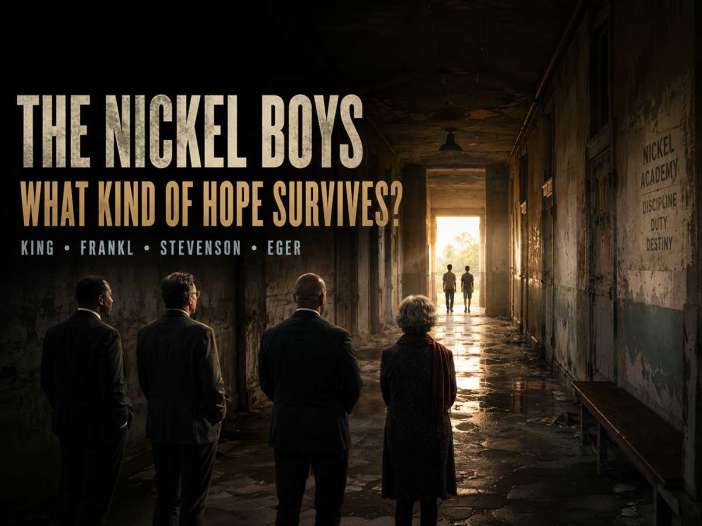
Introduction
What kind of hope remains after a person discovers that goodness does not guarantee safety?
Colson Whitehead’s The Nickel Boys gives us Elwood Curtis, a boy who believes deeply in justice, dignity, and the moral vision of Martin Luther King Jr. It gives us Turner, who has learned a harsher lesson: survival may require caution, silence, distrust, and knowing when not to fight.
Their conflict raises questions that reach far beyond Nickel Academy.
Was Elwood courageous or dangerously naive?
Why did so many adults fail to stop what was happening?
Is survival enough?
Can someone leave an abusive institution physically yet continue carrying that institution internally for decades?
And after hope has been disappointed, can it still remain honest?
In this imagined scholar conversation, Martin Luther King Jr., Viktor Frankl, Bryan Stevenson, and Edith Eger approach those questions from very different experiences.
King examines moral courage and the difference between nonviolent resistance and defenselessness.
Frankl asks how meaning can survive when outcomes cannot be controlled.
Stevenson repeatedly returns responsibility to the adults and institutions that failed children rather than placing the burden on the children themselves.
Eger brings the conversation into the private territory of trauma, survivor guilt, secrecy, identity, and the difficult work of allowing life to become life again after danger has passed.
They do not arrive at a simple formula.
Instead, they discover that hope worthy of The Nickel Boys must be strong enough to face reality without trying to explain it away.
(Note: This is an imaginary conversation, a creative exploration of an idea, and not a real speech or event.)
Topic 1: Was Elwood Brave or Naive?
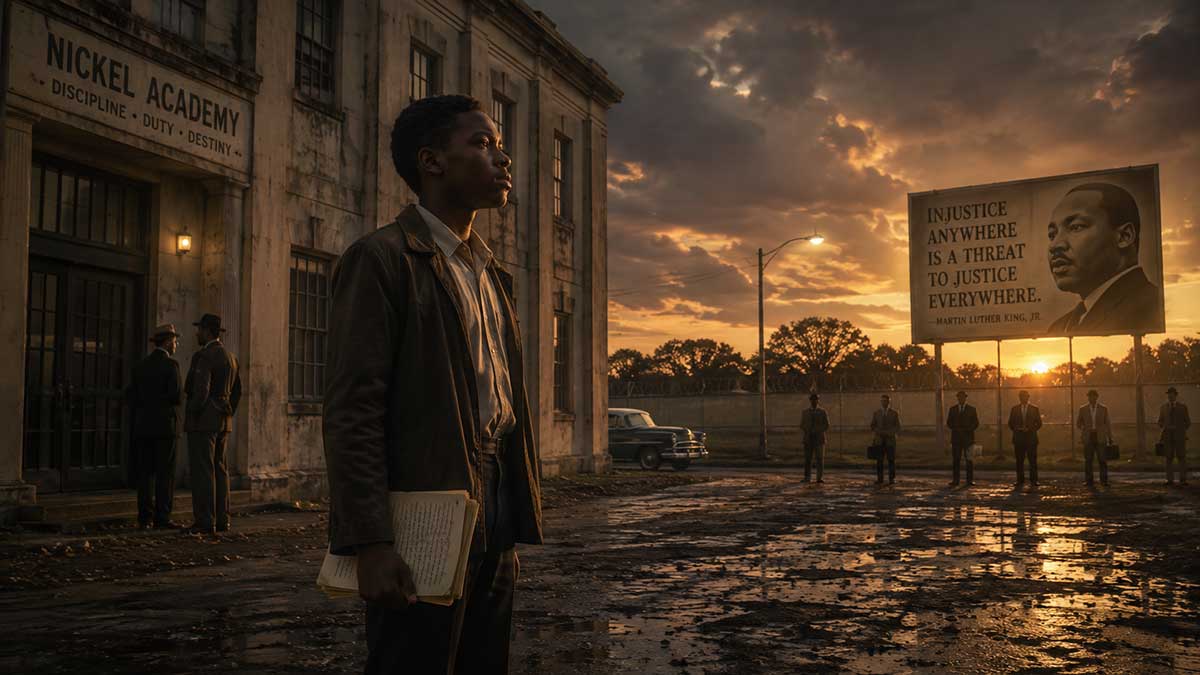
The book rested in the center of the table.
For several moments, nobody touched it.
Martin Luther King Jr. looked down at the cover, then at the others.
Martin Luther King Jr.: Before we praise this boy's courage, I think we have to ask something harder.
Bryan Stevenson leaned slightly forward.
Bryan Stevenson: Whether his courage helped him?
King shook his head.
Martin Luther King Jr.: Whether the hope behind it failed him.
The room became still.
Viktor Frankl watched King carefully.
Edith Eger folded her hands in front of her.
Stevenson was the first to answer.
Bryan Stevenson: I think we have to be careful already.
Martin Luther King Jr.: How so?
Bryan Stevenson: We have a child placed inside a violent institution by adults. Adults control the law. Adults control the school. Adults control the inspections. Adults control punishment. Adults decide whether anyone outside will believe him.
He touched the edge of the book.
Bryan Stevenson: Then we look at Elwood and ask whether his hope was wise enough.
King nodded slowly.
Bryan Stevenson: I understand the question. But I worry that we are putting the moral examination in the wrong chair.
Martin Luther King Jr.: You think we should examine the adults first.
Bryan Stevenson: I think they should have to answer before he does.
Frankl spoke quietly.
Viktor Frankl: Yet Elwood still had choices.
Stevenson turned toward him.
Bryan Stevenson: Limited choices.
Viktor Frankl: Very limited.
Bryan Stevenson: That distinction matters.
Viktor Frankl: It does. But limited choice is still meaningful choice.
Eger looked at Frankl.
Edith Eger: Sometimes.
Frankl turned.
Viktor Frankl: You disagree?
Edith Eger: I disagree with how quickly we can move from suffering to meaning.
Frankl's expression softened.
He knew where she was going.
Edith Eger: Elwood is a boy inside a place where adults hurt children. Before we discuss what meaning he could create from that, I want to say something much simpler.
She looked around the table.
Edith Eger: He should never have needed to create meaning from it.
Nobody answered.
Edith Eger: He should have been safe.
Bryan Stevenson: Yes.
Edith Eger: He should have grown up.
King lowered his eyes.
Edith Eger: He should have been allowed to remain a boy long enough to become a man without needing extraordinary courage.
Frankl nodded.
Viktor Frankl: I agree.
Edith Eger: Good.
She looked directly at him.
Edith Eger: Since people sometimes hear the language of meaning and turn it into a compliment for suffering.
Viktor Frankl: That would be a serious mistake.
Edith Eger: It is a common one.
Frankl paused.
Viktor Frankl: Meaning does not make suffering desirable.
Edith Eger: No.
Viktor Frankl: Nor does suffering automatically produce meaning.
Edith Eger: No.
Viktor Frankl: Meaning is what a person may sometimes create when suffering has already arrived and cannot immediately be removed.
Eger nodded.
Edith Eger: That's better.
King looked between them.
Martin Luther King Jr.: Then perhaps we can say Elwood's suffering was unnecessary, but his response to it still matters.
Bryan Stevenson: Yes.
Martin Luther King Jr.: Which brings us back to the uncomfortable question.
King rested his hand beside the book.
Martin Luther King Jr.: Was he brave?
He paused.
Martin Luther King Jr.: Or was he naive?
Stevenson looked at King.
Bryan Stevenson: I think you may be the person who has to answer that first.
King smiled faintly.
Martin Luther King Jr.: I suspected you might say that.
Bryan Stevenson: Elwood listens to your speeches.
He builds part of his moral imagination around them.
He believes dignity matters.
He believes injustice should be confronted.
He believes silence has a cost.
King nodded.
Bryan Stevenson: Then he enters Nickel.
Stevenson's voice lowered.
Bryan Stevenson: No cameras.
No organized movement.
No church network surrounding him.
No legal team waiting outside.
No national audience.
Just a boy.
King remained silent.
Bryan Stevenson: So did he misunderstand you?
King took his time.
Martin Luther King Jr.: Partly.
The answer surprised Stevenson.
Bryan Stevenson: Partly?
Martin Luther King Jr.: Yes.
Eger watched him closely.
Martin Luther King Jr.: People sometimes remember nonviolence as though it meant standing in front of brutality with nothing except purity of heart.
He shook his head.
Martin Luther King Jr.: That is not what organized resistance required.
It required preparation.
Discipline.
Community.
Strategy.
People willing to witness.
People willing to document.
People willing to return the next day.
Lawyers.
Churches.
Families.
Organizers.
People who knew when to march and when not to.
Frankl leaned forward.
Viktor Frankl: Then Elwood understood the moral principle without the surrounding structure.
King looked at him.
Martin Luther King Jr.: I think that's close.
Bryan Stevenson: Which is tragic.
Martin Luther King Jr.: Very.
Bryan Stevenson: Since a child heard the message, but the community that was supposed to make that message survivable was missing.
King absorbed that.
Martin Luther King Jr.: Yes.
Stevenson continued.
Bryan Stevenson: I don't want anyone reading Elwood's story and concluding that his failure was poor strategy.
King's eyes sharpened.
Martin Luther King Jr.: I would not say that.
Bryan Stevenson: I know.
Martin Luther King Jr.: Good.
Bryan Stevenson: But readers may.
He tapped the book.
Bryan Stevenson: People love asking what vulnerable people should have done differently.
Why didn't she leave?
Why didn't he report sooner?
Why didn't the child tell someone?
Why didn't the whistleblower gather more evidence?
Why didn't the boy keep quiet until he was safer?
Stevenson looked directly at King.
Bryan Stevenson: Those can be fair questions.
But they can become a way of avoiding the larger one.
Martin Luther King Jr.: Which is?
Bryan Stevenson: Why did the people with authority make courage so dangerous?
Silence.
Frankl nodded slowly.
Viktor Frankl: That changes the moral frame.
Bryan Stevenson: It should.
Eger looked toward King.
Edith Eger: But I still want to hear what you think Elwood misunderstood.
King looked down at the book.
Martin Luther King Jr.: He may have believed that moral truth carries its own protection.
Eger waited.
Martin Luther King Jr.: It does not.
The sentence settled heavily.
Martin Luther King Jr.: Truth can lose.
Good people can lose.
A morally correct action can end terribly.
Frankl watched King with interest.
Viktor Frankl: And does that make the action less meaningful?
Martin Luther King Jr.: No.
Edith Eger: But it may make it less wise.
King turned toward her.
Martin Luther King Jr.: Yes.
The answer seemed to surprise her.
Edith Eger: You agree?
Martin Luther King Jr.: Moral courage and strategic wisdom are not identical.
Edith Eger: Good.
Martin Luther King Jr.: A person can have one without enough of the other.
Bryan Stevenson: Elwood had courage.
Martin Luther King Jr.: Great courage.
Bryan Stevenson: Turner had strategy.
King paused.
Martin Luther King Jr.: Turner had survival knowledge.
Frankl smiled slightly.
Viktor Frankl: You hesitate to call it wisdom.
King noticed.
Martin Luther King Jr.: Perhaps I do.
Viktor Frankl: Why?
King leaned back.
Martin Luther King Jr.: Since survival can become an idol too.
Edith Eger: That's true.
Bryan Stevenson: But survival is not selfish.
Martin Luther King Jr.: I didn't say it was.
Bryan Stevenson: A child trying not to be beaten is not morally inferior to a child trying to expose the beating.
Martin Luther King Jr.: No.
Bryan Stevenson: Turner understood that.
Martin Luther King Jr.: Yes.
Frankl looked between them.
Viktor Frankl: Perhaps we are asking the wrong comparative question.
Edith Eger: Meaning?
Viktor Frankl: We keep asking whether Elwood was wiser or Turner was wiser.
He glanced down at the book.
Viktor Frankl: Perhaps each saw a portion of reality the other could not fully see.
King nodded.
Viktor Frankl: Elwood saw that survival without values can become empty.
Turner saw that values without attention to danger can destroy the person carrying them.
Edith Eger: I like that distinction, but I want to protect Turner from one thing.
Viktor Frankl: What?
Edith Eger: The idea that he had no values.
Viktor Frankl: I did not mean that.
Edith Eger: I know.
She turned slightly toward the others.
Edith Eger: His caution came from caring too.
He cared enough to warn Elwood.
He cared enough to stay near him.
He cared enough to be afraid of losing him.
Bryan Stevenson: That's right.
Edith Eger: Sometimes fear is evidence of attachment.
King looked thoughtful.
Martin Luther King Jr.: Then perhaps Turner's realism was not the opposite of love.
Edith Eger: No.
Martin Luther King Jr.: It may have been one form of it.
Frankl nodded.
Viktor Frankl: A frightened form.
Edith Eger: Most love is frightened somewhere.
Stevenson smiled faintly.
Bryan Stevenson: That's probably true.
King looked again at the book.
Martin Luther King Jr.: Let me ask something harder.
The others waited.
Martin Luther King Jr.: Suppose Elwood had followed Turner completely.
Bryan Stevenson: Kept his head down.
Martin Luther King Jr.: Yes.
No documenting.
No attempt to expose Nickel.
No unnecessary risk.
Wait for the safest possible opportunity to leave.
Viktor Frankl: He might have survived.
Martin Luther King Jr.: Perhaps.
Edith Eger: We don't know.
Martin Luther King Jr.: True.
King looked toward Stevenson.
Martin Luther King Jr.: But suppose he did.
What happens to the next boy?
Stevenson sighed.
Bryan Stevenson: That's the moral trap.
Martin Luther King Jr.: Exactly.
Bryan Stevenson: The institution benefits when every victim makes the individually safest choice.
King leaned forward.
Martin Luther King Jr.: That is what troubles me about calling Elwood naive.
Bryan Stevenson: I understand.
Martin Luther King Jr.: The same behavior that looks foolish from the standpoint of individual survival may be necessary from the standpoint of collective change.
Frankl considered this.
Viktor Frankl.: But does the individual owe society his life?
King shook his head.
Martin Luther King Jr.: No.
Viktor Frankl: Then where is the line?
King looked at him.
Martin Luther King Jr.: I don't know.
That answer surprised everyone.
Frankl's face softened.
Viktor Frankl: Good.
King almost laughed.
Martin Luther King Jr.: You're pleased that I don't know?
Viktor Frankl: Very.
Martin Luther King Jr.: Why?
Viktor Frankl: Since the moment we pretend there is a universal formula, we begin making moral decisions for people who may be standing inside dangers we do not share.
Eger nodded.
Edith Eger: Yes.
She turned to King.
Edith Eger: I would never want someone sitting safely outside the prison telling a frightened person inside it, "You must risk more."
King's expression became serious.
Martin Luther King Jr.: Nor would I.
Edith Eger: Yet moral language can do that without intending to.
Martin Luther King Jr.: You're right.
Eger continued.
Edith Eger: "Be courageous."
"Speak the truth."
"Stand up."
"Never surrender."
She shook her head.
Edith Eger: Beautiful words can become another burden placed on someone already carrying too much.
King absorbed the criticism without interruption.
Martin Luther King Jr.: Then what would you tell Elwood?
Eger thought for a moment.
Edith Eger: I would tell him he is allowed to want to live.
King nodded.
Edith Eger: He is allowed to be afraid.
He is allowed to calculate danger.
He is allowed to wait.
He is allowed to survive.
She paused.
Edith Eger: None of those things make him less moral.
Stevenson looked at King.
Bryan Stevenson: I think that's where leadership matters.
Martin Luther King Jr.: Explain.
Bryan Stevenson: Good leaders shouldn't simply inspire people to sacrifice.
They should create conditions where people do not have to sacrifice alone.
King became very still.
Bryan Stevenson: If someone tells the truth, who stands beside him?
Who protects him?
Who records what happens next?
Who makes sure he doesn't disappear?
Who has resources?
Who knows the law?
Who can call attention to retaliation?
Stevenson's voice remained calm.
Bryan Stevenson: Courage needs companionship.
Frankl nodded.
Viktor Frankl: Meaning needs relationship too.
Bryan Stevenson: Exactly.
King looked down.
Martin Luther King Jr.: That may be one of the saddest things about Elwood.
Edith Eger: What?
Martin Luther King Jr.: He had moral companionship in Turner's friendship.
He did not have enough institutional protection around that friendship.
Stevenson nodded.
Bryan Stevenson: Two boys trying to solve a problem created by adults.
Nobody spoke for several seconds.
Then Frankl leaned forward.
Viktor Frankl: May I ask a question that may sound uncomfortable?
Edith Eger: Please.
Viktor Frankl: If Elwood's decision leads to death, can we still call it meaningful without romanticizing what happened?
Stevenson looked at him carefully.
King did too.
Eger answered first.
Edith Eger: Yes.
Frankl waited.
Edith Eger: But only if we separate meaning from reward.
Viktor Frankl: Go on.
Edith Eger: Elwood does not become meaningful since he died.
His death is not the meaning.
His suffering is not the meaning.
His courage does not erase the tragedy.
She placed one hand lightly on the table.
Edith Eger: The meaning lies in what he valued.
Truth.
Dignity.
Other boys.
The belief that what was happening should not continue.
Frankl nodded.
Edith Eger: But I would never say the tragedy became acceptable since his values were beautiful.
Viktor Frankl: I agree completely.
Bryan Stevenson: I think that's essential.
Martin Luther King Jr.: Yes.
Frankl looked at King.
Viktor Frankl: Then perhaps meaningful action is not action guaranteed to succeed.
Martin Luther King Jr.: No.
Viktor Frankl: Nor action guaranteed to keep us safe.
Martin Luther King Jr.: No.
Viktor Frankl: But it still needs contact with reality.
King smiled faintly.
Martin Luther King Jr.: You are bringing Turner back into the room.
Viktor Frankl: He never left.
Stevenson smiled.
Bryan Stevenson: That's probably the point.
King nodded slowly.
Martin Luther King Jr.: Elwood needed Turner.
Edith Eger: And Turner needed Elwood.
Martin Luther King Jr.: Yes.
Bryan Stevenson: Not since one was hope and one was fear.
King looked at him.
Bryan Stevenson: Since one could see what was worth protecting, and the other could see what threatened it.
Frankl smiled.
Viktor Frankl: That is much closer.
Eger leaned back.
Edith Eger: Then let's return to the original question.
She looked at King.
Edith Eger: Brave or naive?
King smiled.
Martin Luther King Jr.: Both.
Stevenson raised an eyebrow.
Bryan Stevenson: That's your answer?
Martin Luther King Jr.: Yes.
Bryan Stevenson: Explain.
Martin Luther King Jr.: He was naive about protection.
He believed truth had more allies than it actually had.
He underestimated the ability of an institution to protect itself.
He believed moral clarity would eventually reach someone with authority and awaken conscience.
King's expression saddened.
Martin Luther King Jr.: That was naive.
Nobody interrupted.
Martin Luther King Jr.: But he was brave in refusing to accept Nickel's definition of reality.
Frankl nodded.
Martin Luther King Jr.: Nickel told him cruelty was normal.
He refused.
Nickel told him silence was safety.
He questioned it.
Nickel told him power determined truth.
He resisted that.
King looked around the table.
Martin Luther King Jr.: His mistake was not believing that justice mattered.
His mistake was believing justice would protect him simply since it mattered.
Silence.
Stevenson leaned forward.
Bryan Stevenson: I can agree with that.
Then he added:
Bryan Stevenson: But I still want one sentence attached to it.
Martin Luther King Jr.: Which one?
Bryan Stevenson: Elwood should never have needed to be that brave.
King looked at him for a long moment.
Martin Luther King Jr.: Yes.
Eger nodded.
Edith Eger: That's the sentence I want people to remember.
Frankl looked toward the book.
Viktor Frankl: Perhaps we praise courage too easily when we should be ashamed that courage became necessary.
Nobody spoke.
That thought changed the room.
King finally broke the silence.
Martin Luther King Jr.: Then what should leadership do?
Stevenson answered first.
Bryan Stevenson: Make courage less lonely.
Eger followed.
Edith Eger: Make survival less shameful.
Frankl looked at both of them.
Viktor Frankl: Help people preserve meaning without demanding martyrdom.
King nodded slowly.
Martin Luther King Jr.: And perhaps teach hope differently.
Stevenson looked at him.
Bryan Stevenson: Differently how?
King glanced at the book once more.
Martin Luther King Jr.: Not as a promise that goodness will keep you safe.
He paused.
Martin Luther King Jr.: As a reason not to let danger decide everything you believe.
Frankl smiled.
Viktor Frankl: That kind of hope can survive disappointment.
Eger looked at him.
Edith Eger: Maybe.
Viktor Frankl: Only maybe?
Edith Eger: I don't trust hope that has never been tested.
King looked at her.
Martin Luther King Jr.: Neither do I.
Stevenson leaned back.
Bryan Stevenson: Then perhaps Elwood's hope did not fail simply since he suffered.
King considered that.
Martin Luther King Jr.: No.
Bryan Stevenson: But his hope needed something it never received.
Martin Luther King Jr.: What?
Stevenson looked at each of them.
Bryan Stevenson: People willing to stand between the boy and the institution.
Eger's eyes lowered.
Edith Eger: Adults.
Bryan Stevenson: Yes.
Edith Eger: That's what keeps troubling me.
She looked at the others.
Edith Eger: Four adults sitting here discussing whether a boy should have been more strategic.
The table went silent again.
Then Eger said:
Edith Eger: Maybe Topic One ends there.
King looked at her.
Martin Luther King Jr.: With what?
Edith Eger: With the question adults should have asked before Elwood ever had to ask whether courage was worth the risk.
She paused.
Edith Eger: "What are we going to do so this child does not have to face evil alone?"
Stevenson nodded.
Frankl looked down.
King remained silent for several seconds.
Then he said quietly:
Martin Luther King Jr.: And perhaps that leads to the next question.
Bryan Stevenson: Which one?
King looked around the table.
Martin Luther King Jr.: If so many adults were there...
His voice softened.
Martin Luther King Jr.: why didn't enough good people stop Nickel?
I can continue directly into Topic 2 in the same ALCF voice and tension.
Topic 2: Why Didn't Good People Stop Nickel?
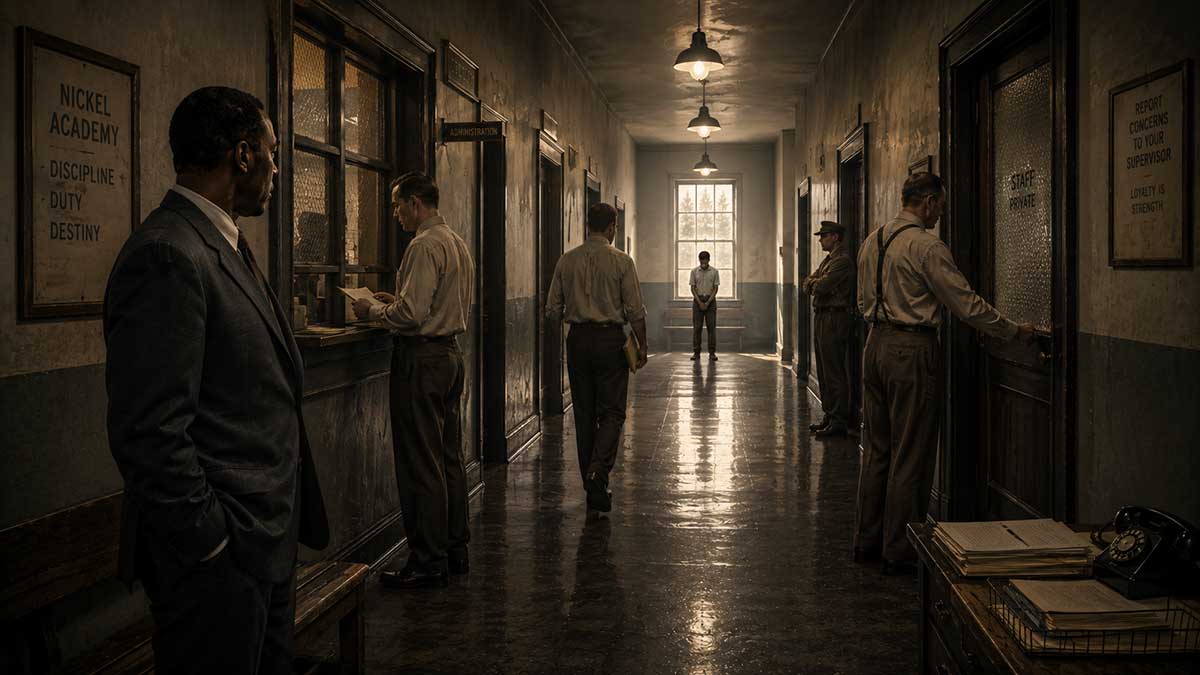
The question stayed in the room.
If so many adults were there, why didn't enough good people stop Nickel?
Bryan Stevenson looked down at the book.
Bryan Stevenson: I think we need to start by resisting the easiest answer.
Martin Luther King Jr.: Which is?
Bryan Stevenson: That everyone around Nickel was evil.
Frankl nodded.
Viktor Frankl: Evil is easier to confront when we can put a face on it.
Edith Eger: A monster is emotionally convenient.
King turned toward her.
Martin Luther King Jr.: Convenient?
Edith Eger: Yes.
She folded her hands.
Edith Eger: If the person who does terrible things is completely unlike us, then we don't have to examine ourselves.
We can say, "I would never do that."
Frankl looked toward her.
Viktor Frankl: And history gives us reasons to be cautious about that confidence.
Edith Eger: Very cautious.
Stevenson leaned forward.
Bryan Stevenson: Nickel didn't survive for years through one cruel person.
It needed administrators.
Staff.
Inspectors.
People handling supplies.
People writing reports.
People receiving information.
People hearing rumors.
People who saw enough to become uncomfortable.
Martin Luther King Jr.: And people who decided discomfort was not yet responsibility.
Bryan Stevenson: Exactly.
Frankl looked at King.
Viktor Frankl: Then perhaps the question is not why evil people permitted evil.
Martin Luther King Jr.: What is it?
Viktor Frankl: How ordinary people gradually become able to live beside it.
Eger nodded.
Edith Eger: That is the more frightening question.
King sat back.
Martin Luther King Jr.: Why frightening?
Edith Eger: Since ordinary people are us.
Silence.
Stevenson looked at her.
Bryan Stevenson: I think that may be where institutions become dangerous.
A person encounters something shocking once and reacts.
If it happens again, he is disturbed.
Again, he becomes tired.
Again, it becomes part of the job.
Viktor Frankl: Adaptation.
Bryan Stevenson: Yes.
Edith Eger: Human beings can adapt to terrible things.
That ability can save us.
It can keep us alive.
But morally, it can become dangerous.
Martin Luther King Jr.: We become accustomed.
Edith Eger: Exactly.
A scream becomes background noise.
A bruise becomes discipline.
A missing child becomes paperwork.
Stevenson's face tightened.
Bryan Stevenson: A complaint becomes a difficult child.
A frightened witness becomes unreliable.
A parent asking questions becomes troublesome.
King looked down.
Martin Luther King Jr.: Language changes the moral shape of what we are seeing.
Bryan Stevenson: It can.
Viktor Frankl: Language can give people distance from reality.
Edith Eger: Sometimes enough distance to sleep at night.
The room grew quiet.
Then King spoke.
Martin Luther King Jr.: But explanation cannot become excuse.
Eger looked at him.
Edith Eger: I agree.
Martin Luther King Jr.: We can understand how people adapt without absolving them.
Viktor Frankl: Yes.
Bryan Stevenson: That distinction matters.
King leaned forward.
Martin Luther King Jr.: I worry sometimes that when we speak about systems, individuals disappear.
Stevenson watched him.
Martin Luther King Jr.: We say "the institution."
"The culture."
"The bureaucracy."
"The structure."
All true.
But an institution has no hands.
People sign papers.
People open doors.
People hear cries.
People decide.
Stevenson nodded slowly.
Bryan Stevenson: I agree.
But I worry about the opposite danger.
Martin Luther King Jr.: Which one?
Bryan Stevenson: We find one cruel administrator, punish him, and tell ourselves the system has been cleaned.
King considered that.
Bryan Stevenson: Then everyone else returns to normal.
The organization survives.
The incentives survive.
The silence survives.
The same conditions remain.
Viktor Frankl: So personal responsibility and institutional responsibility must both remain visible.
Bryan Stevenson: Yes.
Martin Luther King Jr.: Neither can hide behind the other.
Edith Eger: Good.
She looked around the table.
Edith Eger: Then let's make the question harder.
Suppose a staff member at Nickel knows boys are being hurt.
He doesn't participate.
He hates it.
But he has three children at home.
If he reports what he knows, he may lose his job.
What does morality require?
King answered quickly.
Martin Luther King Jr.: Action.
Eger looked at him.
Edith Eger: How much?
King paused.
Edith Eger: His job?
Martin Luther King Jr.: Perhaps.
Edith Eger: His family's home?
King did not answer.
Edith Eger: Their food?
Their security?
His own safety?
Martin Luther King Jr.: I don't know.
Edith Eger: Good.
King smiled faintly.
Martin Luther King Jr.: Frankl already congratulated me once today for not knowing.
Viktor Frankl: I remain encouraged.
Eger smiled.
Then her face became serious again.
Edith Eger: I ask since people judge fear differently when it belongs to someone else.
Bryan Stevenson: Yes.
Edith Eger: From outside, courage can look obvious.
Inside danger, every choice has a cost.
Martin Luther King Jr.: But the cost of silence is paid by someone too.
Eger nodded.
Edith Eger: That is the tragedy.
Martin Luther King Jr.: The employee protects his children.
A boy inside Nickel pays for that protection.
Bryan Stevenson: And now the moral problem has no clean side.
Viktor Frankl: Perhaps most serious moral problems do not.
King looked toward Stevenson.
Martin Luther King Jr.: Then what do we ask of the frightened employee?
Stevenson thought.
Bryan Stevenson: Maybe not heroism at first.
King raised an eyebrow.
Bryan Stevenson: One step.
Document something.
Tell someone outside.
Refuse to sign a false report.
Ask a question.
Find another person who has seen the same thing.
Edith Eger: Reduce isolation.
Bryan Stevenson: Exactly.
Martin Luther King Jr.: Small acts of resistance.
Bryan Stevenson: Small acts can become a chain.
One person rarely stops an institution alone.
But silence can be broken collectively too.
Frankl looked interested.
Viktor Frankl: Then courage may not always begin dramatically.
Bryan Stevenson: Usually it doesn't.
Edith Eger: Sometimes courage is simply refusing to become comfortable.
King looked at her.
Martin Luther King Jr.: Say more.
Edith Eger: If something disturbs you, do not rush to make the disturbance disappear.
Pay attention to it.
Ask why you feel uncomfortable.
Many people are very skilled at making discomfort go away.
We explain.
We rationalize.
We blame the victim.
We say it is complicated.
We become busy.
She paused.
Edith Eger: Sometimes conscience begins as discomfort.
Viktor Frankl: And moral failure may begin with repeatedly silencing it.
King nodded.
Martin Luther King Jr.: That is powerful.
Stevenson looked toward the book.
Bryan Stevenson: Nickel benefited from people who became used to things they should never have become used to.
King's face tightened.
Martin Luther King Jr.: But there is something else.
Bryan Stevenson: What?
Martin Luther King Jr.: Respectability.
Stevenson nodded immediately.
Martin Luther King Jr.: Nickel had an official name.
Buildings.
Rules.
Government authority.
A mission statement, I assume.
Bryan Stevenson: The appearance of legitimacy.
Martin Luther King Jr.: Yes.
He leaned forward.
Martin Luther King Jr.: If one man took children into a private house and beat them, people might recognize the horror quickly.
Put him behind a desk.
Give the building a seal.
Call punishment rehabilitation.
Suddenly people hesitate.
Edith Eger: Authority changes what people think they are seeing.
Viktor Frankl: It can.
Bryan Stevenson: And vulnerable people start at a credibility disadvantage.
King looked at him.
Bryan Stevenson: The institution has records.
Titles.
Officials.
The boy has a story.
Martin Luther King Jr.: And we ask the boy to prove the institution is lying.
Bryan Stevenson: Yes.
Edith Eger: That is a terrible imbalance.
Viktor Frankl: Why do people prefer the institutional version?
Stevenson thought.
Bryan Stevenson: Partly trust.
Partly convenience.
Partly fear of what believing the boy would require.
King looked at him.
Martin Luther King Jr.: Action.
Bryan Stevenson: Exactly.
If I believe him, I may have to do something.
If I doubt him, my day can continue.
Eger's expression darkened.
Edith Eger: That may be one of the most human and most dangerous motives.
Viktor Frankl: The desire for normality.
Edith Eger: Yes.
People protect normality.
Sometimes more fiercely than truth.
King sat quietly for a moment.
Martin Luther King Jr.: Then perhaps Nickel's greatest shield was not secrecy.
Bryan Stevenson: What was it?
Martin Luther King Jr.: People's desire to believe things were basically fine.
Stevenson nodded slowly.
Bryan Stevenson: That is very often true.
Frankl leaned forward.
Viktor Frankl: May I complicate this again?
Martin Luther King Jr.: Please.
Viktor Frankl: We have discussed bystanders as though they stand outside the institution.
But many people inside a system derive part of their identity from it.
Edith Eger: Their job becomes who they are.
Viktor Frankl: Yes.
If admitting wrongdoing means admitting that the institution to which they gave twenty years is corrupt, the psychological cost becomes enormous.
Bryan Stevenson: So they defend the institution partly to defend themselves.
Viktor Frankl: Exactly.
Martin Luther King Jr.: That does not reduce responsibility.
Viktor Frankl: No.
But it helps explain why evidence can become threatening.
Edith Eger: People may prefer a lie that protects identity over a truth that destroys it.
King looked troubled.
Martin Luther King Jr.: Then truth has to compete with belonging.
Bryan Stevenson: Often.
Martin Luther King Jr.: Employment.
Community.
Identity.
Reputation.
Bryan Stevenson: Yes.
Martin Luther King Jr.: That makes truth expensive.
Edith Eger: It often is.
King looked at her.
Martin Luther King Jr.: Yet somebody pays either way.
Eger nodded.
Edith Eger: Always.
Martin Luther King Jr.: If the truth-teller doesn't pay, perhaps the victim does.
If the employee doesn't pay, perhaps the child does.
If the institution doesn't pay, perhaps the family does.
Silence does not eliminate cost.
It transfers it.
Stevenson looked at King.
Bryan Stevenson: That's exactly right.
Silence often means the person with the least protection pays the highest price.
Frankl sat back.
Viktor Frankl: Then moral responsibility might partly be the question of who we permit to carry the cost.
Nobody spoke.
Eger finally broke the silence.
Edith Eger: I want to return to something Bryan said earlier.
Bryan Stevenson: What?
Edith Eger: The dangerous habit of asking why a victim did not do more.
She turned toward King.
Edith Eger: Do you think societies sometimes admire heroic resistance since it allows everyone else to remain ordinary?
King looked surprised.
Martin Luther King Jr.: Explain.
Edith Eger: We celebrate the person who stood up.
We tell the story later.
We call that person courageous.
But perhaps twenty people around them could have made that courage unnecessary.
Stevenson nodded.
Edith Eger: Maybe heroism sometimes reveals collective failure.
King's expression changed.
Martin Luther King Jr.: Yes.
He looked down.
Martin Luther King Jr.: That is difficult to admit.
Bryan Stevenson: But true.
Martin Luther King Jr.: We love stories of one brave person.
Viktor Frankl: They inspire us.
Martin Luther King Jr.: They do.
But perhaps we should sometimes ask why only one person stood.
Eger nodded.
Edith Eger: Exactly.
Bryan Stevenson: If five people had stood, the risk might have changed.
If fifty had stood, the institution might have changed.
Martin Luther King Jr.: Which returns us to community.
Bryan Stevenson: It does.
King leaned forward.
Martin Luther King Jr.: Then courage is not merely personal.
Bryan Stevenson: No.
Martin Luther King Jr.: Communities can distribute courage.
Stevenson smiled.
Bryan Stevenson: And distribute risk.
Frankl looked at them.
Viktor Frankl: That may be one of the deepest differences between Elwood and a movement.
King turned.
Viktor Frankl: Elwood has conscience.
A movement gives conscience structure.
King nodded slowly.
Martin Luther King Jr.: Yes.
Viktor Frankl: Without structure, morality can become lonely.
Edith Eger: And lonely morality is vulnerable.
Stevenson looked again at the book.
Bryan Stevenson: Nickel depended on isolation.
Each boy alone.
Each employee unsure what others knew.
Each witness wondering whether anyone else would stand with them.
Martin Luther King Jr.: Isolation protects wrongdoing.
Bryan Stevenson: Very often.
King's expression became thoughtful.
Martin Luther King Jr.: Then perhaps one answer to "Why didn't good people stop Nickel?" is that they remained separate.
Edith Eger: Separate and afraid.
Viktor Frankl: Separate and uncertain.
Bryan Stevenson: Separate and able to tell themselves someone else would handle it.
King nodded.
Martin Luther King Jr.: Responsibility dissolves when everyone expects another person to carry it.
Eger looked at him.
Edith Eger: But we still haven't answered the most uncomfortable question.
Martin Luther King Jr.: Which one?
Edith Eger: When does fear stop being explanation and become cooperation?
Silence.
Stevenson looked down.
Frankl rested his hands together.
King stared at the table.
Martin Luther King Jr.: I don't know that there is one universal moment.
Edith Eger: Neither do I.
Bryan Stevenson: Maybe repetition matters.
King looked toward him.
Bryan Stevenson: One moment of fear is understandable.
Then another chance comes.
Then another.
Then another.
At some point, repeated refusal becomes part of what keeps the system functioning.
Frankl nodded.
Viktor Frankl: Responsibility grows with knowledge and opportunity.
Bryan Stevenson: Yes.
How much did you know?
How much authority did you have?
How many chances did you receive?
What could you realistically have done?
Eger looked at him.
Edith Eger: That feels fairer than calling everyone equally guilty.
Bryan Stevenson: They aren't equally guilty.
Martin Luther King Jr.: But unequal guilt does not mean no responsibility.
Bryan Stevenson: Right.
King leaned back.
Martin Luther King Jr.: Then maybe there are several circles.
At the center, the person committing the harm.
Around him, the person ordering it.
Then the person knowingly enabling it.
Then the person seeing enough to suspect.
Then those farther away.
Viktor Frankl: Responsibility weakens with distance.
Edith Eger: But may not disappear completely.
King nodded.
Martin Luther King Jr.: Yes.
Stevenson looked thoughtful.
Bryan Stevenson: And perhaps the person with more power carries greater responsibility to move inward rather than away.
King turned toward him.
Bryan Stevenson: A child has almost no power.
An administrator has much more.
An inspector has more.
A judge has more.
A legislator has more.
The moral burden should not fall most heavily on the person least able to act.
Eger nodded firmly.
Edith Eger: Yes.
Martin Luther King Jr.: That may be one of the central lessons.
Frankl looked at Stevenson.
Viktor Frankl: Power increases responsibility.
Bryan Stevenson: It should.
King's voice became quieter.
Martin Luther King Jr.: But power often decreases the feeling of responsibility.
Stevenson looked at him.
Bryan Stevenson: Since authority can create distance from consequences.
Martin Luther King Jr.: Exactly.
The person making the rule may never see the boy who suffers from it.
The person signing the budget may never hear the scream.
The person receiving the report may never enter the room.
Frankl nodded.
Viktor Frankl: Moral distance.
Edith Eger: And distance makes cruelty easier.
Stevenson sat quietly for several seconds.
Then he spoke.
Bryan Stevenson: This is why proximity matters.
King looked at him.
Bryan Stevenson: You have to get close enough to people who are suffering that abstraction becomes difficult.
A "juvenile offender" becomes a boy.
A "disciplinary incident" becomes a beating.
A "facility" becomes a place where someone is afraid at night.
King nodded.
Martin Luther King Jr.: Distance protects conscience from reality.
Bryan Stevenson: Yes.
Edith Eger: Proximity can make denial harder.
Viktor Frankl: But proximity alone does not guarantee courage.
Bryan Stevenson: No.
Martin Luther King Jr.: Nothing does.
Silence again.
Then Eger smiled faintly.
Edith Eger: We keep wanting guarantees.
Frankl: Human beings like them.
Edith Eger: Moral life offers very few.
King smiled.
Martin Luther King Jr.: That may be why faith matters.
Stevenson looked at him.
Bryan Stevenson: Faith in what?
King thought.
Martin Luther King Jr.: Perhaps not certainty that things will turn out well.
We have already learned that lesson from Elwood.
He looked around the table.
Martin Luther King Jr.: Faith that another person's suffering creates a claim on us.
Frankl nodded slowly.
Viktor Frankl: A claim?
Martin Luther King Jr.: Yes.
If I know someone is being harmed, that knowledge changes me.
I may have limitations.
I may have fear.
I may not know exactly what to do.
But I can no longer pretend I stand in the same moral position as someone who knows nothing.
Stevenson leaned forward.
Bryan Stevenson: I agree with that.
Edith Eger: So knowledge creates responsibility.
Martin Luther King Jr.: Some responsibility.
Viktor Frankl: Proportional to capacity.
Bryan Stevenson: And opportunity.
King nodded.
Eger looked again at the book.
Edith Eger: Then maybe the tragedy of Nickel is not merely that people were cruel.
It is that people kept receiving small invitations to care and repeatedly declined them.
Nobody answered.
She continued.
Edith Eger: A question.
A bruise.
A frightened child.
A rumor.
A report that did not make sense.
Each one could have been a beginning.
Bryan Stevenson: Yes.
Edith Eger: Most evil does not always announce itself with one enormous decision.
Sometimes it grows through a thousand small decisions to remain comfortable.
King sat very still.
Martin Luther King Jr.: Then perhaps the opposite is true too.
Eger looked at him.
Martin Luther King Jr.: Good may grow through small refusals to remain comfortable.
Stevenson nodded.
Bryan Stevenson: Ask one more question.
Listen to one more child.
Keep one more copy of a document.
Tell one more person.
Refuse one false statement.
Viktor Frankl: Small acts restoring moral agency.
Edith Eger: Before heroism becomes necessary.
King smiled faintly.
Martin Luther King Jr.: I like that.
Bryan Stevenson: It is less dramatic.
Martin Luther King Jr.: Perhaps that is why we need it.
Silence returned.
Then Frankl looked toward Stevenson.
Viktor Frankl: Bryan, may I ask something?
Bryan Stevenson: Of course.
Viktor Frankl: Suppose the system is so corrupt that telling the truth changes nothing.
What then?
Stevenson sat back.
Bryan Stevenson: Sometimes that happens.
Viktor Frankl: Then was the act pointless?
Bryan Stevenson: No.
Viktor Frankl: Why?
Stevenson thought.
Bryan Stevenson: Since records matter.
Witness matters.
The person who speaks may not stop the harm that day.
But testimony can outlive the institution's lie.
King looked at him.
Martin Luther King Jr.: The truth can arrive late.
Bryan Stevenson: Very late.
Edith Eger: Sometimes after people are dead.
Bryan Stevenson: Yes.
The room became solemn again.
Viktor Frankl: Then truth may fail as rescue and still matter as witness.
Stevenson nodded.
Bryan Stevenson: Exactly.
King looked down at the book.
Martin Luther King Jr.: That is a painful distinction.
Edith Eger: It should be.
Stevenson looked at her.
Edith Eger: We should never make late truth sound equivalent to timely protection.
Bryan Stevenson: I agree.
Edith Eger: Finding graves decades later matters.
But believing living children would have mattered more.
No one spoke.
King finally nodded.
Martin Luther King Jr.: Yes.
He paused.
Martin Luther King Jr.: Perhaps justice is truth arriving before the grave.
The sentence settled over the table.
Frankl looked down.
Stevenson closed his eyes briefly.
Eger said nothing for several seconds.
Then she looked at King.
Edith Eger: That is the sentence.
King's expression remained sad.
Martin Luther King Jr.: I wish it were not.
Stevenson opened the book but did not turn a page.
Bryan Stevenson: There is one more question we need to carry forward.
Martin Luther King Jr.: What?
Stevenson looked at the others.
Bryan Stevenson: If Elwood's instinct was to resist and Turner's instinct was to survive, which one did Nickel need more in order to continue?
Frankl frowned.
Viktor Frankl: Turner?
Bryan Stevenson: Not Turner himself.
His logic.
Keep your head down.
Protect yourself.
Don't risk too much.
Wait.
Survive.
Eger looked troubled.
Edith Eger: The individually rational choice.
Bryan Stevenson: Yes.
King understood.
Martin Luther King Jr.: If every person chooses the safest path, the institution becomes safer too.
Stevenson nodded.
Martin Luther King Jr.: That is a terrible paradox.
Viktor Frankl: Survival protects the individual.
Collective survival may require someone eventually taking a risk.
Edith Eger: But no one gets to demand that risk from another person.
Bryan Stevenson: Exactly.
King looked around the table.
Martin Luther King Jr.: Then Topic Two leaves us with no easy moral command.
Edith Eger: Good.
Martin Luther King Jr.: Instead we have a tension.
Viktor Frankl: Survival and responsibility.
Bryan Stevenson: Safety and truth.
Edith Eger: Fear and conscience.
King nodded.
Then he closed the book gently.
Martin Luther King Jr.: Which means perhaps we are finally ready to ask Turner the question we have been circling.
Stevenson looked at him.
Bryan Stevenson: Is survival enough?
King nodded.
Martin Luther King Jr.: Yes.
And if it is not, what is survival for?
Topic 3: Is Survival Enough?
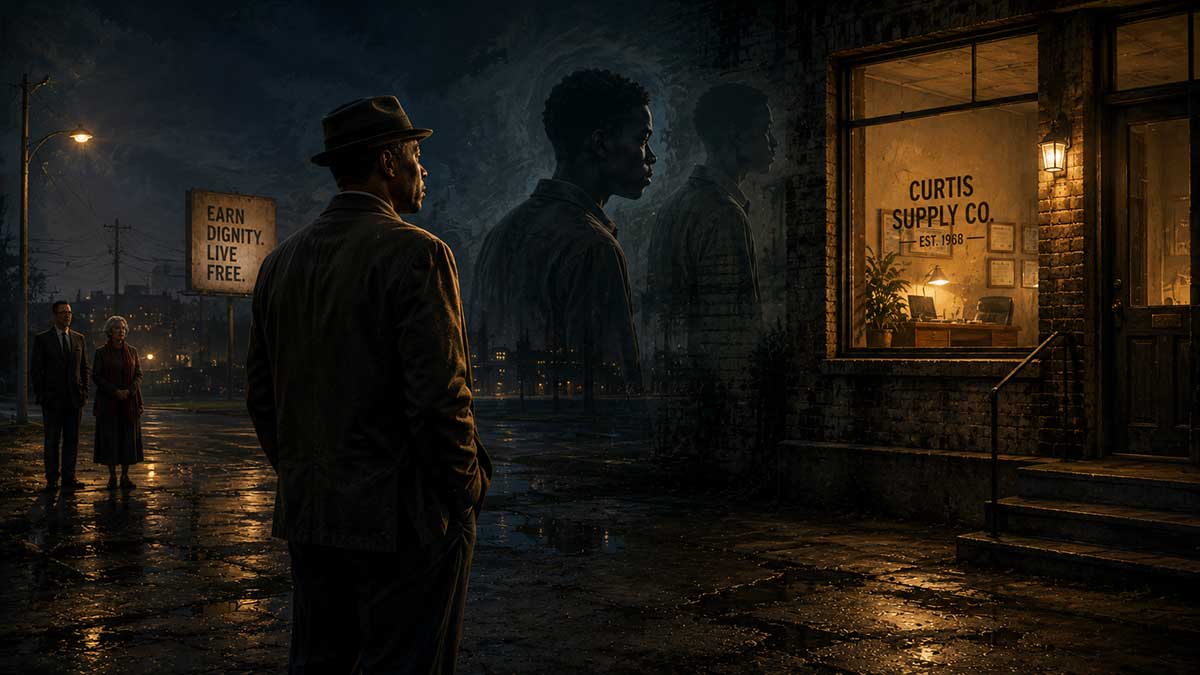
For a moment, nobody spoke.
The question sounded simple.
It was not.
If survival is not enough, what is survival for?
Viktor Frankl looked at the others.
Viktor Frankl: I think Turner would dislike this question.
Bryan Stevenson smiled slightly.
Bryan Stevenson: Why?
Viktor Frankl: Since it sounds as though survival needs to justify itself.
Edith Eger nodded immediately.
Edith Eger: Yes.
She leaned forward.
Edith Eger: I want to protect him from that.
If someone survives terrible circumstances, we should be very careful before asking, "And what did you do with the life you were given?"
King watched her.
Martin Luther King Jr.: You hear judgment in the question.
Edith Eger: It can easily become judgment.
A person survives.
Then we tell him he must make his life meaningful enough to justify surviving.
He must become wise.
He must help others.
He must forgive.
He must turn suffering into service.
She shook her head.
Edith Eger: No.
Sometimes a person gets to live.
That is enough.
Frankl nodded slowly.
Viktor Frankl: I agree.
Eger looked at him.
Edith Eger: Completely?
Viktor Frankl: Completely.
She smiled.
Viktor Frankl: Meaning does not require greatness.
It does not require public achievement.
It does not require transforming trauma into a mission.
A meaningful life might be a marriage.
A meal shared with someone.
Work honestly done.
A person loved well.
Bryan Stevenson: An ordinary life.
Viktor Frankl: Yes.
Edith Eger: Good.
King looked thoughtful.
Martin Luther King Jr.: But suppose survival becomes the only value.
Frankl turned toward him.
Viktor Frankl: Then we have a different problem.
Martin Luther King Jr.: That is what troubles me about Turner.
Bryan Stevenson: Turner or what Turner believes?
King paused.
Martin Luther King Jr.: His philosophy.
Stevenson nodded.
Martin Luther King Jr.: Keep your head down.
Protect yourself.
Do not trust authority.
Do not expose yourself unnecessarily.
Know when to leave.
Much of that is wise inside Nickel.
Edith Eger: Very wise.
Martin Luther King Jr.: But can a person build an entire life from emergency instructions?
Nobody answered immediately.
Frankl's expression changed.
Viktor Frankl: That is the question.
Eger looked toward him.
Edith Eger: Survival strategies can become life strategies long after danger ends.
Bryan Stevenson: And what saved you in one environment can imprison you in another.
Eger nodded.
Edith Eger: Exactly.
Never trust anyone.
Useful when trust is dangerous.
Very painful in a marriage.
Never reveal weakness.
Useful when weakness gets punished.
Very painful when someone loves you.
Always look for the exit.
Useful in danger.
Exhausting at the dinner table.
King lowered his eyes.
Martin Luther King Jr.: So Turner's wisdom had an expiration date.
Eger shook her head.
Edith Eger: Not exactly.
Some of it remains wisdom.
The problem comes when the nervous system cannot recognize that the environment has changed.
Frankl looked at her.
Viktor Frankl: The prison is gone, but the rules remain.
Edith Eger: Yes.
King thought for a moment.
Martin Luther King Jr.: Then freedom requires more than leaving.
Edith Eger: Much more.
Stevenson looked at the book.
Bryan Stevenson: This is what makes Turner's adult life so painful to me.
He succeeds in many conventional ways.
He works.
He builds a business.
He marries.
He creates a life.
Yet part of him never leaves Nickel.
Viktor Frankl: Since part of his identity remains organized around what happened there.
Edith Eger: Yes.
Martin Luther King Jr.: Which brings us to the name.
The table grew quiet.
Stevenson looked toward King.
Bryan Stevenson: Elwood.
King nodded.
Martin Luther King Jr.: Turner survives, but lives under Elwood's name.
Frankl rested his hands on the table.
Viktor Frankl: That is one of the most psychologically rich choices in the book.
Edith Eger: And one of the saddest.
King looked at her.
Martin Luther King Jr.: Sad?
Edith Eger: Beautiful too.
But yes, sad.
Bryan Stevenson: Why?
Eger considered the question.
Edith Eger: Since love and identity become mixed together.
Turner carries Elwood forward.
That can be tribute.
It can be gratitude.
It can be grief.
It can be guilt.
She paused.
Edith Eger: It can be all of them at once.
Frankl nodded.
Viktor Frankl: He creates meaning from loss.
Edith Eger: Perhaps.
But I want to challenge that interpretation.
Frankl smiled faintly.
Viktor Frankl: I expected you might.
Edith Eger: What if becoming Elwood is partly Turner's way of avoiding being Turner?
King looked at her.
Martin Luther King Jr.: Explain.
Edith Eger: Turner survives something another boy does not.
Now he has to live with that fact.
What if carrying Elwood's name helps him avoid confronting the question, "Why am I still here?"
Bryan Stevenson: Survivor guilt.
Edith Eger: Yes.
Viktor Frankl: But perhaps the name also gives the survival direction.
Edith Eger: It may.
She turned toward Frankl.
Edith Eger: Yet meaning can become another hiding place.
Frankl studied her.
Viktor Frankl: How?
Edith Eger: If I tell myself, "I survived for him," I no longer have to ask, "What do I want?"
King went still.
Martin Luther King Jr.: That is a very different question.
Edith Eger: A survivor can become so loyal to the dead that living for himself begins to feel like betrayal.
Stevenson nodded slowly.
Bryan Stevenson: And Turner's use of Elwood's name may keep that relationship alive every day.
Viktor Frankl: Then tribute can become burden.
Edith Eger: Yes.
Martin Luther King Jr.: But would you ask him to give up the name?
Eger thought.
Edith Eger: No.
Martin Luther King Jr.: Why not?
Edith Eger: Since healing does not require erasing what helped you survive.
I would ask something else.
Bryan Stevenson: What?
Eger looked at the book.
Edith Eger: "Can you carry Elwood without disappearing?"
Nobody spoke.
Frankl finally nodded.
Viktor Frankl: That is better.
King looked thoughtful.
Martin Luther King Jr.: There is something almost spiritual in the idea that Elwood survives through Turner.
Eger turned toward him.
Edith Eger: Yes.
But we have to be careful.
Martin Luther King Jr.: With what?
Edith Eger: We love beautiful interpretations of tragedy.
King's face changed.
Edith Eger: "He lives on through Turner."
"He changed Turner."
"His ideals survived."
All may be true.
But Elwood still should have lived himself.
King lowered his eyes.
Martin Luther King Jr.: Yes.
Edith Eger: I do not want Turner's survival to become compensation for Elwood's death.
Bryan Stevenson: It cannot.
Viktor Frankl: Nor should meaning be confused with restitution.
Eger nodded.
Edith Eger: Exactly.
Meaning does not undo loss.
King looked toward Frankl.
Martin Luther King Jr.: Then what does it do?
Frankl took his time.
Viktor Frankl: Sometimes it allows a person to carry suffering without being reduced to suffering.
King nodded.
Viktor Frankl: It creates a direction.
Not an explanation for why the tragedy happened.
Not a justification.
A direction after it happened.
Stevenson leaned forward.
Bryan Stevenson: That distinction matters.
Viktor Frankl: Very much.
We ask "Why did this happen?" and sometimes no answer is sufficient.
A different question may become possible later.
"What now?"
Edith Eger: Later.
Frankl looked at her.
Edith Eger: I want that word.
Later.
Not immediately.
Viktor Frankl: Agreed.
Edith Eger: People need room to grieve before someone asks them to turn grief into direction.
King nodded.
Martin Luther King Jr.: There is a danger in rushing people toward redemption.
Bryan Stevenson: Yes.
Martin Luther King Jr.: We can become uncomfortable with suffering and ask the survivor to make it beautiful for us.
Eger looked at him.
Edith Eger: Exactly.
The room went quiet again.
Then Stevenson spoke.
Bryan Stevenson: There is another thing I want to protect Turner from.
Martin Luther King Jr.: What?
Bryan Stevenson: The idea that he was morally weaker since he wanted to survive.
King looked at him.
Bryan Stevenson: I keep thinking about children trapped in systems they did not create.
They learn survival fast.
Read the room.
Avoid certain adults.
Know when to speak.
Know when not to.
Hide pain.
Stay invisible.
We can look at that later and call it cynicism.
But inside the institution, it may be intelligence.
Edith Eger: Yes.
Viktor Frankl: Adaptive intelligence.
Bryan Stevenson: Exactly.
King nodded.
Martin Luther King Jr.: Then Turner's realism deserves respect.
Bryan Stevenson: More than respect.
I think it deserves moral seriousness.
King looked interested.
Martin Luther King Jr.: Explain.
Bryan Stevenson: Survival can be resistance.
An institution that dehumanizes you does not necessarily win simply since you refuse a dramatic confrontation.
Sometimes getting out is resistance.
Living is resistance.
Building something afterward can be resistance.
Eger smiled slightly.
Edith Eger: Joy can be resistance too.
King looked at her.
Martin Luther King Jr.: Joy?
Edith Eger: Yes.
If an institution teaches you that your life has little value, creating a life you value becomes a contradiction of what it taught you.
Frankl nodded.
Viktor Frankl: That is powerful.
Edith Eger: Loving someone.
Laughing.
Resting.
Building a business.
Sitting in your own home and knowing nobody can order you into a room.
These are not small things after captivity.
King considered this.
Martin Luther King Jr.: Then perhaps I have judged survival too narrowly.
Stevenson looked at him.
Bryan Stevenson: How?
Martin Luther King Jr.: I tend to think about resistance in terms of action against injustice.
Speaking.
Organizing.
Standing.
Marching.
Refusing.
Eger nodded.
Martin Luther King Jr.: But perhaps surviving and building a human life after someone tried to degrade it is another form of refusal.
Edith Eger: Yes.
Viktor Frankl: Provided the person is free to define that life for himself.
King looked toward Frankl.
Martin Luther King Jr.: There it is again.
Freedom.
Frankl nodded.
Viktor Frankl: Survival gives possibility.
Freedom gives direction.
Bryan Stevenson: But many survivors do not feel free.
Viktor Frankl: True.
Edith Eger: That is where inner captivity matters.
King turned to her.
Martin Luther King Jr.: Let's go there.
Eger sat back.
Edith Eger: Turner leaves Nickel, yet fear travels with him.
He learns secrecy there.
He carries secrecy into adulthood.
He learns distrust there.
He carries distrust into relationships.
He learns that being known can be dangerous.
So he hides.
Bryan Stevenson: Including from Millie.
Edith Eger: Yes.
His wife knows the man he built.
She does not fully know the boy he survived.
Frankl looked down.
Viktor Frankl: That division must be exhausting.
Edith Eger: It can be.
You spend energy protecting people from the truth.
Then you spend more energy protecting yourself from being discovered.
Eventually secrecy becomes another guard.
King's expression darkened.
Martin Luther King Jr.: Nickel no longer needs to lock the door.
Edith Eger: Correct.
Turner can do it internally.
The room grew very still.
Stevenson looked toward Eger.
Bryan Stevenson: Is telling Millie the truth freedom?
Eger considered it.
Edith Eger: Part of freedom.
Martin Luther King Jr.: Why only part?
Edith Eger: Since disclosure does not erase trauma.
It does something else.
Viktor Frankl: It allows reality to be shared.
Edith Eger: Yes.
Trauma often says, "You are alone with this."
Telling a trusted person says, "Not anymore."
King nodded slowly.
Martin Luther King Jr.: That sounds almost like community entering after the fact.
Bryan Stevenson: Very late community.
Edith Eger: But still community.
Frankl smiled faintly.
Viktor Frankl: Perhaps that matters more than we realize.
Bryan Stevenson: It does.
People often think testimony is mainly about accountability.
Sometimes it is.
But testimony can be relational too.
It lets another person stand beside you inside a memory you carried alone.
Eger looked at him.
Edith Eger: Yes.
That can be deeply healing.
King looked toward the book.
Martin Luther King Jr.: Then Turner's eventual truth-telling is not simply Elwood finally winning an argument.
Bryan Stevenson: No.
Martin Luther King Jr.: It is Turner becoming capable of something he could not safely do before.
Edith Eger: Exactly.
Timing matters.
Viktor Frankl: That is important.
The same action can be reckless in one moment and freeing in another.
King looked at Frankl.
Martin Luther King Jr.: So courage changes with context.
Viktor Frankl: It must.
Bryan Stevenson: Which is why Elwood and Turner cannot be reduced to courage versus cowardice.
Edith Eger: Never.
Martin Luther King Jr.: Elwood speaks before safety.
Turner speaks after safety.
Bryan Stevenson: Both truths matter.
King sat with that.
Then Frankl spoke.
Viktor Frankl: I want to return to our starting question.
Edith Eger: Is survival enough?
Viktor Frankl: Yes.
Eger smiled.
Edith Eger: And?
Frankl looked around the table.
Viktor Frankl: In the moment of danger, perhaps survival is enough.
King listened.
Viktor Frankl: A drowning person does not need a philosophy.
He needs air.
Eger nodded.
Viktor Frankl: But after the danger has passed, another question may eventually emerge.
Not a demand.
Not an accusation.
An invitation.
Bryan Stevenson: What invitation?
Viktor Frankl: "Now that you are alive, what makes being alive yours?"
Eger's expression softened.
Edith Eger: I like that better.
Martin Luther King Jr.: Yours.
Viktor Frankl: Yes.
Not Elwood's life.
Not Nickel's definition.
Not society's expectation of what a survivor should become.
Your life.
King looked toward Eger.
Martin Luther King Jr.: Then perhaps Turner's deepest task is not to justify surviving Elwood.
Edith Eger: No.
Martin Luther King Jr.: It is to become Turner again without abandoning Elwood.
Eger nodded.
Edith Eger: Yes.
Stevenson looked troubled.
Bryan Stevenson: But what does that mean practically?
Eger turned toward him.
Edith Eger: It might mean allowing himself happiness without asking whether Elwood received enough happiness first.
It might mean letting Millie know him fully.
It might mean speaking about Nickel when he chooses.
It might mean refusing to speak when he does not choose.
It might mean remembering Elwood without making every good moment feel guilty.
Frankl nodded.
Viktor Frankl: Freedom from the obligation to suffer on behalf of the dead.
King looked at him.
Martin Luther King Jr.: That sentence troubles me.
Frankl raised an eyebrow.
Viktor Frankl: Why?
Martin Luther King Jr.: Since remembrance does create responsibility.
Edith Eger: Responsibility, yes.
Punishment, no.
King looked at her.
Edith Eger: Turner does not owe Elwood misery.
Silence.
Bryan Stevenson: I agree with that completely.
Edith Eger: If I love someone who died, I may feel that being happy leaves them behind.
But happiness does not erase love.
King nodded.
Edith Eger: The dead do not become more honored when survivors remain emotionally buried beside them.
Frankl lowered his eyes.
Viktor Frankl: Yes.
King thought for a long moment.
Martin Luther King Jr.: Then what does Turner owe Elwood?
Eger answered first.
Edith Eger: Nothing he must pay with his life.
Frankl followed.
Viktor Frankl: Perhaps honesty.
Stevenson added:
Bryan Stevenson: Witness, when he freely chooses it.
King thought.
Martin Luther King Jr.: And memory.
Eger nodded.
Edith Eger: Memory without self-erasure.
King smiled faintly.
Martin Luther King Jr.: You keep bringing us back there.
Edith Eger: Since I think Turner needs someone to tell him he may stop being a memorial.
Nobody spoke.
That sentence carried more weight than she expected.
Frankl looked toward her.
Viktor Frankl: A memorial.
Edith Eger: Yes.
A living memorial to Elwood.
Beautiful from outside.
Heavy from inside.
Stevenson looked at the book.
Bryan Stevenson: Perhaps that is why the name matters so much.
Martin Luther King Jr.: He made his survival into remembrance.
Edith Eger: And maybe now he needs permission to make remembrance only part of survival.
Frankl nodded.
Viktor Frankl: To live beyond tribute.
King looked thoughtful.
Martin Luther King Jr.: There is something almost painful about saying that.
Edith Eger: Healing often feels disloyal at first.
King turned toward her.
Martin Luther King Jr.: Why?
Edith Eger: Since pain can become one of the last remaining connections to someone or something lost.
If the pain lessens, the survivor may fear the bond is lessening too.
Frankl's face softened.
Viktor Frankl: Yet love does not require continuous pain.
Edith Eger: No.
Bryan Stevenson: Nor does justice.
Eger looked at him.
Bryan Stevenson: We should seek justice so future people suffer less.
Not so survivors remain permanently defined by what was done to them.
King nodded.
Martin Luther King Jr.: That may be where survival becomes hope.
Stevenson looked toward him.
Bryan Stevenson: How?
Martin Luther King Jr.: Not simply "I stayed alive."
Something more like, "What happened to me did not receive ownership of everything that came afterward."
Eger smiled.
Edith Eger: Yes.
Frankl nodded.
Viktor Frankl: That is freedom moving beyond survival.
King looked again at the book.
Martin Luther King Jr.: Then perhaps Turner was wiser than Elwood about immediate danger.
Bryan Stevenson: I think he was.
Martin Luther King Jr.: And Elwood was wiser than Turner about something else.
Edith Eger: What life needs beyond danger.
King nodded.
Martin Luther King Jr.: A reason not to let survival become the whole definition of living.
Frankl leaned forward.
Viktor Frankl: Then neither philosophy is enough alone.
Bryan Stevenson: That's where we keep arriving.
Edith Eger: Since human beings need both safety and meaning.
King smiled.
Martin Luther King Jr.: Protection and purpose.
Bryan Stevenson: Realism and conscience.
Viktor Frankl: Survival and freedom.
Eger added quietly:
Edith Eger: Memory and permission to live.
The table fell silent.
After a while, Stevenson spoke.
Bryan Stevenson: I keep thinking about something.
Martin Luther King Jr.: What?
Bryan Stevenson: Maybe Turner spent years believing that Elwood was the brave one since Elwood died trying to act.
King nodded.
Bryan Stevenson: But there is another kind of courage required of Turner.
Edith Eger: Living?
Bryan Stevenson: Living honestly.
He looked at the others.
Bryan Stevenson: Letting himself be known.
Facing the past.
Speaking after years of silence.
Accepting that survival was not theft.
Frankl nodded.
Viktor Frankl: Yes.
Martin Luther King Jr.: Perhaps courage after danger looks very different from courage inside danger.
Edith Eger: It usually does.
King looked at her.
Martin Luther King Jr.: Then if Turner were sitting here, what would you tell him?
Eger did not hesitate.
Edith Eger: I would tell him, "You don't need to earn the right to be alive."
Nobody moved.
Frankl looked down.
Stevenson's expression changed.
King remained silent.
Eger continued.
Edith Eger: "You survived.
That is not a crime.
You loved Elwood.
You carry him.
But you are still Turner."
Her voice softened.
Edith Eger: "You are allowed to live as the man who survived, not only as the boy who was left behind."
Silence filled the room.
Frankl finally spoke.
Viktor Frankl: I would tell him something similar.
King looked toward him.
Viktor Frankl: "Do not ask why your life was spared as though you must produce an answer worthy of the dead."
He paused.
Viktor Frankl: "Ask instead what, today, makes this life worth inhabiting."
Stevenson nodded.
Bryan Stevenson: I would tell him the failure was never his.
King turned.
Bryan Stevenson: He was a child.
The institution failed.
The justice system failed.
The adults failed.
The inspectors failed.
He does not need to carry their responsibility in the form of guilt.
King looked at the book for a long moment.
Then Stevenson asked:
Bryan Stevenson: What would you tell him?
King did not answer immediately.
When he did, his voice was quieter than before.
Martin Luther King Jr.: I think I would apologize.
The others looked at him.
Edith Eger: For what?
King took a breath.
Martin Luther King Jr.: Not for teaching hope.
I still believe in hope.
Not for teaching courage.
I still believe courage matters.
He looked down.
Martin Luther King Jr.: But I would be sorry if words meant to free a young person's spirit ever became another reason for that person to believe he had failed when he was afraid.
No one interrupted.
Martin Luther King Jr.: I would tell Turner that fear did not make him morally small.
Surviving did not make him selfish.
Seeing danger clearly did not make him faithless.
King looked at the others.
Martin Luther King Jr.: Then I would tell him something Elwood may have understood better than he did.
Bryan Stevenson: What?
King looked toward the window.
Martin Luther King Jr.: Survival is precious.
But perhaps the final victory is when survival becomes life again.
Eger nodded slowly.
Edith Eger: Yes.
Frankl smiled.
Viktor Frankl: That is the distinction.
Stevenson closed the book gently.
Bryan Stevenson: Then we have another problem.
King looked at him.
Martin Luther King Jr.: Which one?
Stevenson's eyes rested on the cover.
Bryan Stevenson: A man can leave Nickel.
He can build a life.
He can survive.
But if Nickel still decides whom he trusts, what he hides, how he loves, and what he believes he deserves...
Stevenson looked up.
Bryan Stevenson: did he ever completely leave?
Eger's expression changed.
King looked toward her.
Frankl became very still.
They had reached the next question.
Not how to escape a prison.
How to recognize the prison that remains after the gates are gone.
Topic 4 can now become the most psychologically intimate scholar section, centered on Turner, survivor guilt, secrecy, identity, and whether a person can truly leave the prison inside.
Topic 4: Can You Leave the Prison Inside You?
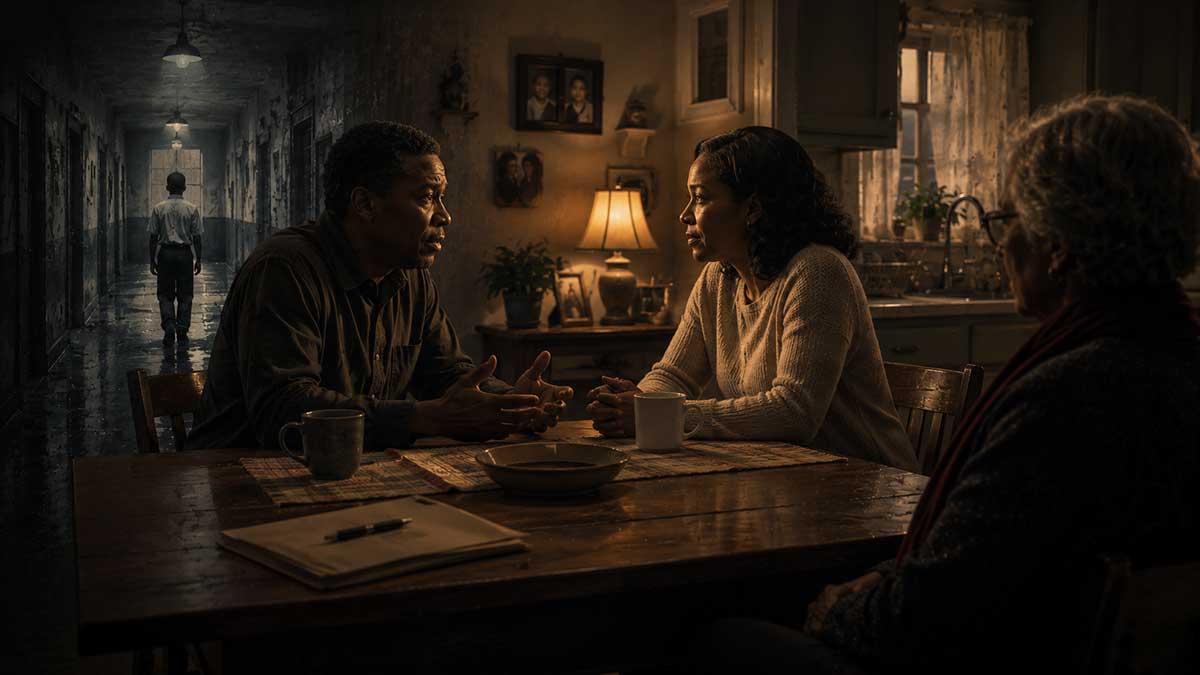
The room stayed quiet after Stevenson's question.
A man can leave Nickel.
But if Nickel still decides whom he trusts, what he hides, how he loves, and what he believes he deserves, did he ever completely leave?
Edith Eger looked down at her hands.
Edith Eger: Physically, yes.
Psychologically, perhaps not.
King watched her.
Martin Luther King Jr.: Can someone ever fully leave a place like that?
Eger thought.
Edith Eger: I would be careful with the word fully.
Some experiences remain.
A smell.
A sound.
A certain kind of room.
A person's voice.
The body can remember before the mind explains anything.
Frankl nodded.
Viktor Frankl: Memory does not require permission.
Edith Eger: Exactly.
A person may believe, "That happened fifty years ago."
Then the body responds as though it happened five minutes ago.
Stevenson looked toward her.
Bryan Stevenson: Which means someone can know intellectually that he is safe and still not feel safe.
Edith Eger: Yes.
That difference can shape an entire life.
King leaned forward.
Martin Luther King Jr.: Then when Turner checks the room...
Edith Eger: His body may still be protecting the boy.
King stopped.
Martin Luther King Jr.: The boy.
Edith Eger: Yes.
We see an older man.
The nervous system may still be responding for someone much younger.
Frankl looked thoughtful.
Viktor Frankl: Then perhaps healing involves updating reality.
Eger turned toward him.
Edith Eger: Partly.
But not by commanding the body to stop.
You do not say, "That was long ago. Get over it."
You help the person experience, repeatedly, that the present is different.
Frankl nodded.
Viktor Frankl: Safety has to become lived experience.
Edith Eger: Yes.
Not merely information.
Stevenson sat back.
Bryan Stevenson: That matters for how society treats survivors too.
Martin Luther King Jr.: How?
Bryan Stevenson: We expect people to function once the obvious danger ends.
The institution closes.
The sentence is over.
The abusive person is gone.
The war ends.
Then everyone assumes the problem has ended.
Eger nodded.
Bryan Stevenson: But the person may still be organizing life around a danger nobody else can see.
Edith Eger: Exactly.
King looked troubled.
Martin Luther King Jr.: Then freedom has layers.
Viktor Frankl: External freedom.
Internal freedom.
Relational freedom.
Perhaps moral freedom too.
Martin Luther King Jr.: Moral freedom?
Viktor Frankl: The ability to choose without the old oppressor continuing to make every choice indirectly.
Eger looked at him.
Edith Eger: I like that.
Stevenson nodded.
Bryan Stevenson: Nickel says, "Trust no one."
Years later, Turner still trusts no one.
Nickel is gone.
Its instruction remains.
Martin Luther King Jr.: Then obedience can continue after authority disappears.
Edith Eger: Yes.
That is why some prisons do not need walls anymore.
Silence.
King looked down at the book.
Martin Luther King Jr.: That may be one of the cruelest things an institution can do.
Bryan Stevenson: Teach the survivor to carry it home.
Frankl's expression saddened.
Viktor Frankl: Yet if those strategies once kept him alive, asking him to abandon them may feel dangerous.
Edith Eger: Very dangerous.
Martin Luther King Jr.: Then healing asks someone to release the very thing that once protected him.
Edith Eger: Sometimes.
And that can feel almost like betrayal.
Stevenson looked at her.
Bryan Stevenson: Betrayal of what?
Edith Eger: The younger self.
The person may think, "This vigilance saved me. If I stop being vigilant, I become vulnerable again."
Frankl nodded.
Viktor Frankl: So the defense becomes part of identity.
Edith Eger: Yes.
King leaned back.
Martin Luther King Jr.: How do you tell the frightened part of a person that the war is over?
Eger's expression softened.
Edith Eger: Gently.
And many times.
Nobody spoke for a moment.
Then Stevenson looked toward the book.
Bryan Stevenson: I keep thinking about Millie.
Martin Luther King Jr.: Turner's wife.
Bryan Stevenson: Yes.
For years, she lives with a man carrying a history she doesn't fully know.
Viktor Frankl: A divided identity.
Edith Eger: That can be deeply lonely.
King looked at her.
Martin Luther King Jr.: For Turner or for Millie?
Edith Eger: Both.
Turner may believe secrecy protects him.
Perhaps protects her too.
But secrecy changes intimacy.
Someone can love you deeply and still not be allowed into certain rooms inside you.
Stevenson nodded.
Bryan Stevenson: Which means Nickel affects a marriage decades later.
Edith Eger: Yes.
Trauma is rarely confined neatly to the person who experienced it.
King's face tightened.
Martin Luther King Jr.: That feels unfair to Millie.
Edith Eger: It may be.
But I would not begin with blame.
Martin Luther King Jr.: Why?
Edith Eger: Since secrecy can once have been necessary.
At Nickel, being known was dangerous.
Showing weakness was dangerous.
Telling the wrong person could be dangerous.
The adult Turner may still be using rules the child Turner learned accurately.
Frankl looked toward Stevenson.
Viktor Frankl: Then perhaps the question is not, "Why didn't he tell her sooner?"
Bryan Stevenson: What is it?
Viktor Frankl: "When did telling become safe enough?"
Eger smiled faintly.
Edith Eger: Much better.
King nodded.
Martin Luther King Jr.: That changes the moral tone completely.
Stevenson looked thoughtful.
Bryan Stevenson: It does.
We often treat disclosure as a duty.
Tell your family.
Tell the authorities.
Tell your story.
But the survivor may still experience disclosure as danger.
Edith Eger: Yes.
Nobody owes the public access to every wound.
King turned toward her.
Martin Luther King Jr.: Yet testimony matters.
Edith Eger: It does.
Martin Luther King Jr.: History needs witnesses.
Edith Eger: Yes.
Martin Luther King Jr.: Future victims may need someone to speak.
Edith Eger: Yes.
King paused.
Martin Luther King Jr.: Then where is the line?
Eger looked directly at him.
Edith Eger: Choice.
King remained silent.
Edith Eger: Testimony given freely can be an act of strength.
Testimony demanded from someone can become another form of taking control away.
Stevenson nodded firmly.
Bryan Stevenson: I agree.
Viktor Frankl: The survivor must remain a subject, not become evidence owned by others.
Eger looked at him.
Edith Eger: Exactly.
King thought for a moment.
Martin Luther King Jr.: Then even the pursuit of justice can become intrusive if it forgets the person.
Bryan Stevenson: Yes.
We can become so focused on the case that we stop seeing the human being carrying it.
The room went quiet.
Then Frankl spoke.
Viktor Frankl: What changes when Turner finally tells Millie?
Eger took her time.
Edith Eger: He allows two selves to meet.
Martin Luther King Jr.: Two selves?
Edith Eger: The man Millie knows and the boy Turner has protected.
Stevenson looked toward her.
Bryan Stevenson: So telling the truth is integration.
Edith Eger: It can be.
The hidden part no longer has to live alone.
Frankl nodded.
Viktor Frankl: That may reduce the split between public identity and private memory.
Edith Eger: Yes.
King looked at the book.
Martin Luther King Jr.: And perhaps being known becomes a form of freedom.
Eger smiled.
Edith Eger: Very much so.
Bryan Stevenson: If the person hearing the truth responds with care.
Edith Eger: Yes.
That condition matters.
Disclosure does not heal automatically.
It can injure again if the listener doubts, judges, minimizes, or turns the story into something about themselves.
King nodded slowly.
Martin Luther King Jr.: Then listening is moral work too.
Bryan Stevenson: Absolutely.
Viktor Frankl: To receive another person's truth without taking possession of it.
Eger looked at him.
Edith Eger: Beautifully said.
Silence.
Then King asked:
Martin Luther King Jr.: Do survivors owe the dead remembrance?
Eger's expression changed.
Edith Eger: We are back to debt.
Martin Luther King Jr.: Yes.
Edith Eger: I worry whenever grief is described as something owed.
Frankl nodded.
Viktor Frankl: Since debt implies payment.
Edith Eger: Exactly.
And survivors often think the payment should be pain.
Stevenson looked down.
Bryan Stevenson: But forgetting can help institutions escape accountability.
Edith Eger: I know.
Bryan Stevenson: So someone has to remember.
Edith Eger: History has to remember.
That does not mean every individual survivor must remain the archive.
King looked interested.
Martin Luther King Jr.: Explain that distinction.
Edith Eger: Society should preserve records.
Names.
Testimony people choose to give.
Evidence.
Graves.
Documents.
The survivor should not have to wake every morning and personally carry the entire moral burden of remembrance.
Frankl nodded.
Viktor Frankl: Collective memory can reduce private burden.
Bryan Stevenson: That's powerful.
King looked at Stevenson.
Martin Luther King Jr.: The community carries what the individual cannot.
Bryan Stevenson: It should.
Eger leaned forward.
Edith Eger: That is what healthy remembrance can do.
It says to Turner, "You do not have to keep Elwood alive by hurting forever. We will remember too."
The sentence silenced the table.
Frankl's eyes lowered.
King looked deeply moved.
Stevenson exhaled slowly.
Martin Luther King Jr.: We will remember too.
Edith Eger: Yes.
Perhaps that is what communities owe survivors.
Not "Tell us everything."
Not "Stay wounded so we don't forget."
Something closer to:
"We believe you."
"We will carry this with you."
"You may rest."
Frankl nodded.
Viktor Frankl: Rest.
Edith Eger: Survivors sometimes need permission for that.
King looked toward her.
Martin Luther King Jr.: Why would rest require permission?
Edith Eger: Since vigilance can feel virtuous after danger.
Rest can feel careless.
Happiness can feel disloyal.
Love can feel risky.
Peace can feel suspicious.
Stevenson added quietly:
Bryan Stevenson: Success can feel undeserved.
Eger nodded.
Edith Eger: Yes.
Frankl looked at the others.
Viktor Frankl: Survivor guilt asks a question that logic cannot easily answer.
Why am I here?
Martin Luther King Jr.: And what is the answer?
Viktor Frankl: Sometimes there isn't one.
King studied him.
Viktor Frankl: That may be necessary to accept.
Not every survival has a reason we can discover.
Not every death has a reason we can justify.
Eger nodded.
Edith Eger: Trying to create a grand explanation can sometimes hurt more.
Bryan Stevenson: Since then the survivor may feel obligated to live an extraordinary life.
Frankl looked at him.
Viktor Frankl: Exactly.
If I survived for a reason, perhaps I must prove worthy of the reason.
King frowned.
Martin Luther King Jr.: That sounds exhausting.
Edith Eger: It is.
Bryan Stevenson: And unfair.
King sat with that.
Martin Luther King Jr.: Then perhaps "Why did I survive?" is the wrong question.
Frankl nodded.
Viktor Frankl: Often.
Martin Luther King Jr.: What would you ask instead?
Frankl thought.
Viktor Frankl: "How do I want to live now?"
Eger smiled.
Edith Eger: Yes.
Not "Why was I chosen?"
Not "What debt must I pay?"
Just:
"What is mine to live now?"
King looked down.
Martin Luther King Jr.: That seems almost too gentle after so much violence.
Edith Eger: Gentleness is not weakness.
King looked at her.
Edith Eger: A person who has suffered enough does not need every next question to be hard.
Silence.
Stevenson smiled faintly.
Bryan Stevenson: I think Turner would appreciate that.
Edith Eger: Maybe eventually.
King turned toward Stevenson.
Martin Luther King Jr.: You spoke earlier about accountability.
How do we balance Turner's right to move forward with society's need to confront Nickel?
Stevenson considered the question carefully.
Bryan Stevenson: By refusing to make Turner responsible for fixing the institution that harmed him.
King nodded.
Bryan Stevenson: He may choose to testify.
He may choose to support investigations.
He may choose to tell his story.
All of that can matter deeply.
But institutions need mechanisms that do not depend entirely on survivors volunteering more pain.
Viktor Frankl: Meaning the system must learn to investigate itself.
Bryan Stevenson: Independently, yes.
Records.
Oversight.
External review.
Protection for whistleblowers.
Consequences.
Historical inquiry.
Eger looked at him.
Edith Eger: So justice should not require endless extraction from survivors.
Bryan Stevenson: Exactly.
King nodded.
Martin Luther King Jr.: That may be one of the great moral mistakes.
We fail someone once.
Then later ask that same person to carry the burden of correcting our failure.
Stevenson looked at him.
Bryan Stevenson: Yes.
The room fell silent again.
Then Eger looked toward the book.
Edith Eger: There is something else about Turner's name I keep returning to.
Martin Luther King Jr.: Elwood.
Edith Eger: Yes.
King waited.
Edith Eger: Earlier we asked whether Turner can carry Elwood without disappearing.
Now I think the question goes deeper.
Can Turner love Elwood without believing he must continue being hurt for him?
Frankl nodded slowly.
Viktor Frankl: Pain as loyalty.
Edith Eger: Yes.
People do this.
If I stop grieving intensely, perhaps I am forgetting.
If I laugh, perhaps I am betraying.
If I fall in love again, perhaps the person I lost mattered less.
King looked toward her.
Martin Luther King Jr.: What would you tell them?
Eger answered gently.
Edith Eger: Love and suffering are not the same thing.
The end of constant suffering does not mean the end of love.
Stevenson looked down.
Frankl's expression softened.
Edith Eger: You can carry someone in gratitude rather than guilt.
In tenderness rather than punishment.
In memory rather than self-erasure.
King remained silent.
Then he said:
Martin Luther King Jr.: That sounds like a kind of resurrection.
Eger looked at him.
Edith Eger: Perhaps.
But not the dead returning.
The living returning to life.
King nodded slowly.
Martin Luther King Jr.: The living returning to life.
Frankl looked toward him.
Viktor Frankl: That may be the proper definition of healing here.
Bryan Stevenson: Not forgetting.
Edith Eger: No.
Bryan Stevenson: Not pretending justice was complete.
Edith Eger: No.
Viktor Frankl: Not becoming who you were before.
Edith Eger: No.
King looked at her.
Martin Luther King Jr.: Then what?
Eger smiled sadly.
Edith Eger: Becoming someone who can live with what happened without letting what happened make every decision.
Nobody spoke.
The words felt earned.
Stevenson broke the silence.
Bryan Stevenson: I want to test that.
Edith Eger: Please.
Bryan Stevenson: Suppose Turner remains angry.
Years later.
Still angry at Nickel.
Still angry at the people who failed Elwood.
Is that failure to heal?
Eger shook her head immediately.
Edith Eger: No.
Bryan Stevenson: Why not?
Edith Eger: Healing does not require emotional neutrality.
Anger can contain truth.
It can say, "This should not have happened."
King nodded.
Martin Luther King Jr.: I agree.
Edith Eger: The question is whether anger is serving him or governing him.
Frankl leaned forward.
Viktor Frankl: That distinction applies to memory too.
Edith Eger: Yes.
Memory can guide.
Memory can imprison.
Anger can motivate.
Anger can consume.
Fear can protect.
Fear can rule.
King looked thoughtful.
Martin Luther King Jr.: So many things are neither good nor bad by themselves.
Edith Eger: Context matters.
Stevenson smiled slightly.
Bryan Stevenson: Turner would approve.
King laughed softly.
Martin Luther King Jr.: He probably would.
Then King became serious again.
Martin Luther King Jr.: What about forgiveness?
Eger looked at him carefully.
Stevenson did too.
Frankl waited.
Edith Eger: What about it?
Martin Luther King Jr.: Does freedom require Turner to forgive?
Eger shook her head.
Edith Eger: No.
King raised an eyebrow.
Martin Luther King Jr.: You sound certain.
Edith Eger: I am.
Martin Luther King Jr.: I have spoken often about forgiveness.
Edith Eger: And forgiveness can be deeply meaningful.
But making forgiveness mandatory can become another demand placed on the injured person.
King listened.
Edith Eger: Some people reach forgiveness.
Some do not.
Some need years.
Some redefine what forgiveness means.
The survivor's freedom should not depend on producing the emotional state other people find spiritually satisfying.
Frankl nodded.
Viktor Frankl: Meaning cannot be prescribed from outside.
Bryan Stevenson: Neither can reconciliation.
King looked down at the book.
Martin Luther King Jr.: Then perhaps forgiveness is invitation, not command.
Eger smiled.
Edith Eger: Much better.
King smiled back.
Martin Luther King Jr.: I am being corrected frequently today.
Bryan Stevenson: That's why there are four chairs.
They laughed quietly.
The laughter faded into something warmer.
Then Stevenson looked toward Eger.
Bryan Stevenson: If Turner were here now, what would freedom sound like?
Eger did not answer immediately.
She looked toward the empty space beside the table as though Turner might actually be sitting there.
Edith Eger: I think I would tell him:
"You do not have to forget Nickel."
She paused.
"You do not have to forgive anyone before you are ready."
Another pause.
"You do not have to explain why you survived."
The room was completely still.
"You do not have to carry Elwood by becoming him every moment."
King lowered his eyes.
Eger continued.
"You may remember him and still laugh."
"You may tell the truth and still keep parts of yourself private."
"You may love Millie without telling yourself that love is dangerous."
"You may wake up one morning and feel happy before you remember Nickel."
She paused again.
"And when that happens, you do not need to feel guilty."
Frankl exhaled slowly.
Stevenson looked away.
King's eyes remained on the table.
Eger's voice softened.
Edith Eger: "That morning would not mean you forgot the dead."
She looked at the others.
Edith Eger: "It would mean Nickel did not get that morning."
Nobody spoke for a long time.
Then King finally looked up.
Martin Luther King Jr.: That may be the clearest definition of freedom we've reached.
Frankl nodded.
Viktor Frankl: The past remains true.
The present becomes available again.
Stevenson added:
Bryan Stevenson: And the future is no longer entirely written by the institution.
King sat with that.
Martin Luther King Jr.: Then perhaps the question is no longer whether Turner can erase the prison inside him.
Eger nodded.
Edith Eger: He does not need to erase it.
Martin Luther King Jr.: He needs to stop letting it govern everything beyond its walls.
Edith Eger: Yes.
Frankl looked at King.
Viktor Frankl: Which brings us somewhere interesting.
Martin Luther King Jr.: Where?
Frankl looked toward the book.
Viktor Frankl: If freedom is possible without forgetting, hope may be possible without pretending.
Stevenson nodded.
Bryan Stevenson: Hope without denial.
Edith Eger: Hope without pressure to be healed.
King's expression changed.
He understood where they were going.
Martin Luther King Jr.: Then perhaps we are finally ready for the hardest question.
Eger looked at him.
Edith Eger: Which one?
King placed his hand beside The Nickel Boys.
Martin Luther King Jr.: What kind of hope is still honest after Nickel?
Nobody answered yet.
For the first time, they were not asking whether hope sounded beautiful.
They were asking whether hope could survive reality.
Topic 5: What Kind of Hope Survives Reality?
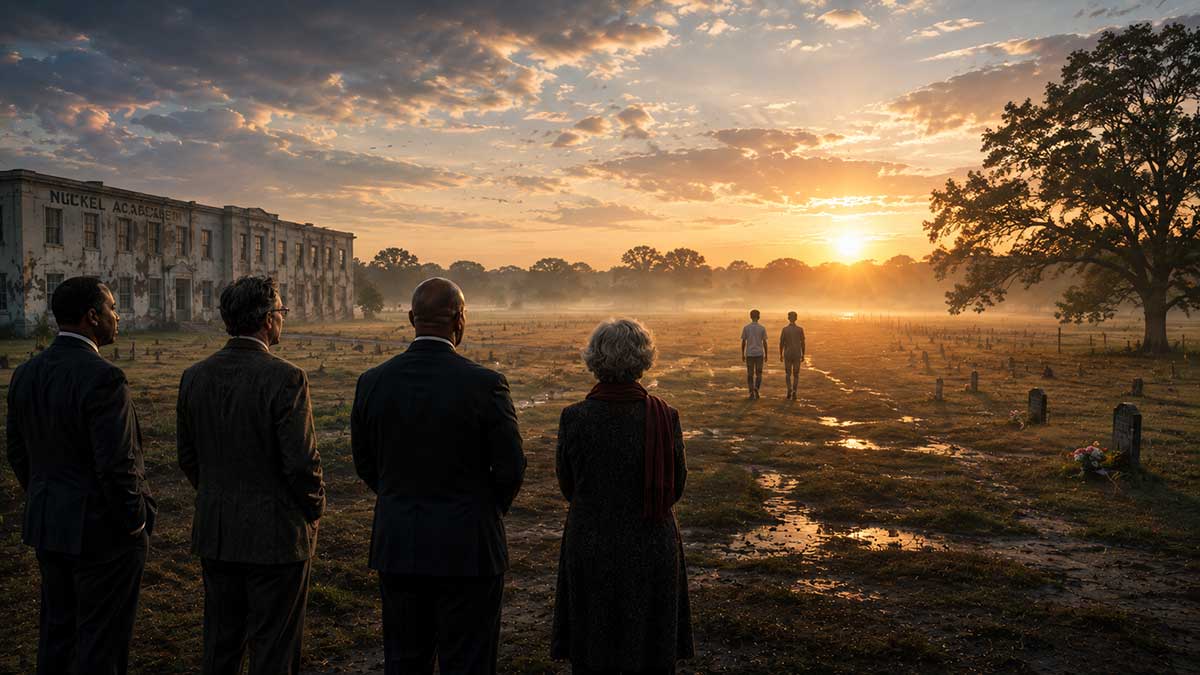
Nobody answered King's question immediately.
What kind of hope is still honest after Nickel?
Frankl looked toward the book.
Eger looked toward King.
Stevenson sat back, thinking.
King broke the silence himself.
Martin Luther King Jr.: Perhaps we should begin by admitting that some forms of hope deserve to die.
Stevenson looked at him.
Bryan Stevenson: Such as?
Martin Luther King Jr.: The hope that goodness guarantees safety.
The hope that truth always wins quickly.
The hope that institutions correct themselves merely when evidence appears.
The hope that suffering will eventually make sense.
Frankl nodded slowly.
Viktor Frankl: Those are not always hope.
Sometimes they are expectations.
Eger leaned forward.
Edith Eger: Or bargains.
King turned toward her.
Edith Eger: "If I am good, nothing terrible will happen."
"If I tell the truth, someone will protect me."
"If I suffer enough, eventually I will understand why."
She shook her head.
Edith Eger: Life does not always honor those bargains.
Stevenson looked down.
Bryan Stevenson: Elwood learned that brutally.
Martin Luther King Jr.: Yes.
King's voice became quieter.
Martin Luther King Jr.: Which means I have to answer the question we have avoided from the beginning.
Frankl looked at him.
Viktor Frankl: Did your philosophy fail him?
King stared at the book.
Martin Luther King Jr.: If Elwood heard hope as a promise that justice would arrive in time to protect him...
He paused.
Martin Luther King Jr.: then yes.
That kind of hope failed him.
No one rushed to rescue King from the statement.
He continued.
Martin Luther King Jr.: But I do not believe that was the deepest thing I meant by hope.
Bryan Stevenson: Then what was?
King looked at Stevenson.
Martin Luther King Jr.: The refusal to let present injustice become the final definition of reality.
Frankl's expression softened.
Martin Luther King Jr.: I never believed every struggle would end well for every person who entered it.
History gives us too much evidence against that.
Edith Eger: Good people die.
Martin Luther King Jr.: Yes.
Viktor Frankl: Courageous people fail.
Martin Luther King Jr.: Yes.
Bryan Stevenson: Innocent people are punished.
Martin Luther King Jr.: Yes.
King looked around the table.
Martin Luther King Jr.: Hope must be able to hear all of those sentences and remain standing.
Frankl nodded.
Viktor Frankl: Otherwise it is optimism.
King looked toward him.
Martin Luther King Jr.: Explain the difference.
Frankl thought for a moment.
Viktor Frankl: Optimism often predicts an outcome.
Things will improve.
Justice will prevail.
Tomorrow will be better.
He paused.
Viktor Frankl: Hope does not require certainty about tomorrow.
It may simply say, "There remains something worth moving toward."
Stevenson leaned forward.
Bryan Stevenson: That matters.
Edith Eger: Very much.
Martin Luther King Jr.: Then hope is not a forecast.
Viktor Frankl: No.
Martin Luther King Jr.: It is a direction.
Frankl smiled.
Viktor Frankl: Yes.
Stevenson looked at King.
Bryan Stevenson: I think that distinction is necessary in justice work too.
Martin Luther King Jr.: How?
Bryan Stevenson: If I needed every case to end well before continuing, I could not continue.
Sometimes people lose.
Sometimes institutions resist change.
Sometimes the law moves slowly.
Sometimes someone you are trying to help is harmed before justice arrives.
King nodded.
Bryan Stevenson: Hope cannot mean pretending those losses are smaller than they are.
It means refusing to let losing one case prove that justice is meaningless.
Eger looked at Stevenson.
Edith Eger: But I want to protect one thing again.
Bryan Stevenson: What?
Edith Eger: The exhausted person.
Stevenson nodded before she finished.
Edith Eger: We speak beautifully about continuing.
Returning.
Trying again.
Standing up.
But sometimes a person needs to stop.
Rest.
Grieve.
Say, "I cannot carry this today."
King listened carefully.
Edith Eger: Hope should not become another command.
Frankl nodded.
Viktor Frankl: Agreed.
Martin Luther King Jr.: Then hope may include rest.
Edith Eger: It must.
Bryan Stevenson: I agree.
If hope requires permanent strength, most human beings will fail its test.
King smiled faintly.
Martin Luther King Jr.: Perhaps hope itself needs mercy.
Eger smiled.
Edith Eger: Yes.
The room softened for a moment.
Then Frankl spoke.
Viktor Frankl: There is another danger.
Martin Luther King Jr.: Which one?
Viktor Frankl: Turning suffering into proof of meaning.
King looked toward him.
Viktor Frankl: Elwood's death cannot become beautiful simply since his convictions were beautiful.
Edith Eger: Exactly.
Bryan Stevenson: He should have lived.
Frankl nodded.
Viktor Frankl: Yes.
Martin Luther King Jr.: Elwood should have lived.
The sentence landed harder than anything inspirational could have.
Eger repeated it.
Edith Eger: Elwood should have lived.
Stevenson looked at the book.
Bryan Stevenson: And the boys buried there should have lived.
Viktor Frankl: Yes.
King let the silence remain.
Then he said:
Martin Luther King Jr.: I think hope becomes dishonest when it asks us to rush past that sentence.
Nobody disagreed.
Martin Luther King Jr.: Before redemption, grief.
Before meaning, truth.
Before forgiveness, acknowledgment.
Stevenson nodded.
Bryan Stevenson: Before inspiration, responsibility.
Eger looked at him.
Edith Eger: Yes.
Frankl leaned forward.
Viktor Frankl: Then perhaps hope begins not with denial of tragedy but with full recognition of it.
Martin Luther King Jr.: That feels right.
Edith Eger: Hope that cannot sit beside grief is fragile.
King looked at her.
Martin Luther King Jr.: Why?
Edith Eger: Since grief knows too much.
Shallow hope says, "Look forward."
Grief says, "Someone is missing."
Shallow hope says, "Everything happens for a reason."
Grief says, "Do not explain away what I loved."
Frankl nodded.
Edith Eger: Honest hope does not silence grief.
It sits beside it.
Stevenson looked down.
Bryan Stevenson: That may be what Turner needs.
Martin Luther King Jr.: Not someone telling him Elwood's death had a purpose.
Edith Eger: No.
Viktor Frankl: Not someone telling him he survived for a reason.
Edith Eger: No.
Bryan Stevenson: Someone telling him what happened was wrong, his survival was not wrong, and his life remains his.
Eger nodded.
Edith Eger: Exactly.
King became quiet.
Then Stevenson looked toward him.
Bryan Stevenson: May I ask you something directly?
Martin Luther King Jr.: Please.
Bryan Stevenson: What would you say to someone who hears all your language about hope and answers, "You can say that since you still believe history bends toward justice. I don't."
King did not answer quickly.
Frankl watched him.
Eger did too.
Martin Luther King Jr.: I would ask why.
Bryan Stevenson: Suppose they say, "I have seen too much."
King nodded.
Martin Luther King Jr.: Then I would not argue immediately.
Stevenson looked surprised.
Martin Luther King Jr.: Some people need to be heard before they need to be persuaded.
Eger smiled.
Edith Eger: Good.
King continued.
Martin Luther King Jr.: And perhaps I would tell them I do not ask them to believe justice is inevitable.
Frankl leaned forward.
Viktor Frankl: That's significant.
King nodded.
Martin Luther King Jr.: I ask whether injustice should therefore become acceptable.
Stevenson looked at him.
Martin Luther King Jr.: If the universe gives me no guarantee that justice wins, does that relieve me of the responsibility to care about justice?
Bryan Stevenson: No.
Martin Luther King Jr.: That is where my hope begins.
Not certainty.
Commitment.
Frankl nodded.
Viktor Frankl: Meaning expressed through responsibility.
Martin Luther King Jr.: Perhaps.
Eger looked toward King.
Edith Eger: Then your hope is closer to a choice.
Martin Luther King Jr.: Yes.
Edith Eger: That I like much more than a promise.
King smiled.
Martin Luther King Jr.: I am glad to have survived another correction.
Stevenson laughed softly.
So did Frankl.
Eger shook her head.
Then Stevenson became serious again.
Bryan Stevenson: For me, hope becomes practical.
King looked toward him.
Bryan Stevenson: People sometimes speak about hope as a feeling.
I don't always feel hopeful.
Viktor Frankl: Yet you continue.
Bryan Stevenson: Yes.
Edith Eger: Why?
Stevenson thought.
Bryan Stevenson: Since somebody is still there.
A child.
A prisoner.
A family.
Someone nobody believes.
Someone whose case looks impossible.
He paused.
Bryan Stevenson: Sometimes hope is simply showing up again.
King nodded.
Bryan Stevenson: Reading the file again.
Making another call.
Visiting someone another person has forgotten.
Listening when the story is difficult.
Refusing to reduce someone to the worst thing associated with them.
Frankl smiled slightly.
Viktor Frankl: Hope as behavior.
Bryan Stevenson: Yes.
Martin Luther King Jr.: Before hope becomes emotion.
Bryan Stevenson: Often.
Eger looked thoughtful.
Edith Eger: I like that.
Sometimes people wait to feel hopeful before acting.
Perhaps action can come first.
Bryan Stevenson: Exactly.
A person may feel exhausted and still do one humane thing.
King nodded.
Martin Luther King Jr.: That makes hope accessible.
Bryan Stevenson: It should be.
Viktor Frankl: One does not need certainty about the future to act responsibly in the present.
Stevenson looked at him.
Bryan Stevenson: Yes.
That is enough for many days.
The room grew quiet again.
Then King looked toward Eger.
Martin Luther King Jr.: What does hope look like for Turner?
Eger smiled sadly.
Edith Eger: Smaller than what the rest of you are describing.
King raised an eyebrow.
Edith Eger: And that is not an insult.
She thought.
Edith Eger: Hope for Turner might be telling Millie one more truth.
Sleeping one night without checking every sound.
Allowing himself to enjoy breakfast.
Hearing someone raise a voice and noticing, after a moment, that he is still safe.
Frankl nodded.
Edith Eger: Hope might be choosing not to leave first.
Letting someone stay close.
Saying Elwood's name without feeling he must become Elwood again.
Stevenson's face softened.
Bryan Stevenson: That is a different kind of justice.
Edith Eger: Internal justice, perhaps.
King looked curious.
Martin Luther King Jr.: What do you mean?
Edith Eger: Giving the present back to the person who survived.
Nickel took enough years.
Why should it receive the next morning too?
King remembered her earlier words.
Martin Luther King Jr.: "It would mean Nickel did not get that morning."
Eger nodded.
Edith Eger: Yes.
Viktor Frankl: That may be one of the purest forms of hope here.
Not imagining a future where Nickel never happened.
Knowing Nickel happened and still permitting another morning to belong to you.
King looked down.
Martin Luther King Jr.: Hope without rewriting history.
Edith Eger: Exactly.
Bryan Stevenson: And justice without pretending the wound disappeared.
Viktor Frankl: Meaning without claiming suffering was necessary.
King nodded.
Then he looked around the table.
Martin Luther King Jr.: We have spoken about Turner.
What would hope have meant for Elwood?
Nobody answered immediately.
Stevenson looked down.
Frankl became still.
Eger's expression saddened.
Bryan Stevenson: I don't know if I want to answer that too beautifully.
King nodded.
Bryan Stevenson: He was a child.
Hope should have meant adults believing him.
Protecting him.
Getting him out.
Stopping what was happening.
Martin Luther King Jr.: Yes.
Bryan Stevenson: Sometimes the most moral form of hope is concrete protection.
Not philosophy.
King absorbed that.
Edith Eger: I agree.
Viktor Frankl: Meaning is not a substitute for rescue.
Bryan Stevenson: Exactly.
The table became silent.
Then King spoke quietly.
Martin Luther King Jr.: That may be a sentence worth remembering.
Meaning is not a substitute for rescue.
Frankl nodded.
Viktor Frankl: Very much so.
King looked toward Stevenson.
Martin Luther King Jr.: Perhaps one danger of inspirational language is that it can make us admire the resilience of people we should have protected.
Stevenson held his gaze.
Bryan Stevenson: Yes.
Edith Eger: That happens often.
Martin Luther King Jr.: We say, "Look how strong they became."
Instead of asking why they needed so much strength.
Eger nodded.
Edith Eger: Exactly.
Frankl looked toward the book.
Viktor Frankl: Yet we should still honor the strength when it appears.
Edith Eger: Yes.
Both truths.
They should have been protected.
And what they did to survive may still deserve respect.
Frankl smiled.
Viktor Frankl: You keep insisting on two truths at once.
Edith Eger: Life keeps insisting first.
Stevenson smiled.
King did too.
Then Stevenson looked toward the cover again.
Bryan Stevenson: I keep coming back to the graves.
King's smile faded.
Bryan Stevenson: What does hope mean when justice arrives after someone is already buried?
Frankl sighed.
Viktor Frankl: It cannot mean restoration.
Edith Eger: No.
Martin Luther King Jr.: It cannot bring them back.
Bryan Stevenson: Then what does it do?
King thought.
Martin Luther King Jr.: Perhaps it protects the truth from burial.
Bryan Stevenson: That's part of it.
Edith Eger: It may protect future children too.
Viktor Frankl: If people learn.
Stevenson looked at him.
Bryan Stevenson: If.
Frankl nodded.
Viktor Frankl: Yes.
That word must remain.
King leaned forward.
Martin Luther King Jr.: Then hope still requires action.
Bryan Stevenson: Always, if we're talking about institutions.
King looked toward Eger.
Martin Luther King Jr.: And perhaps not always, if we're talking about a survivor.
Eger smiled.
Edith Eger: You're learning.
King laughed.
Martin Luther King Jr.: Slowly.
Eger continued.
Edith Eger: For society, hope may mean reform, accountability, protection, remembrance.
For Turner, hope might mean resting.
We should not confuse those responsibilities.
Stevenson nodded.
Bryan Stevenson: Society acts.
The survivor gets to choose.
Edith Eger: Yes.
King looked impressed by the simplicity.
Martin Luther King Jr.: Society acts. The survivor gets to choose.
Frankl nodded.
Viktor Frankl: That preserves freedom.
Stevenson leaned back.
Bryan Stevenson: And keeps us from asking victims to solve the problem that victimized them.
Silence settled over the table.
Then Frankl spoke.
Viktor Frankl: There is one question left for me.
King looked at him.
Martin Luther King Jr.: What is it?
Viktor Frankl: If Elwood's life ended before justice reached him, can his life still have meaning?
King looked down.
Eger did not answer.
Stevenson waited.
Frankl continued.
Viktor Frankl: Not his death.
His life.
King looked up.
Martin Luther King Jr.: Yes.
Viktor Frankl: Why?
King took a long time.
Martin Luther King Jr.: Since meaning cannot belong only to people who live long enough to see consequences.
He paused.
Martin Luther King Jr.: Elwood mattered before anyone learned from his story.
He mattered before the graves were found.
He mattered before Turner carried his name.
He mattered before history knew what happened.
Eger nodded slowly.
Martin Luther King Jr.: His worth did not arrive later.
Stevenson looked deeply moved.
Bryan Stevenson: That's important.
King continued.
Martin Luther King Jr.: We sometimes think remembrance gives dignity to the dead.
Perhaps remembrance recognizes dignity that was already there.
Frankl smiled faintly.
Viktor Frankl: Yes.
Edith Eger: Very different.
Martin Luther King Jr.: Elwood did not need history to make his life meaningful.
History needed to stop denying that it was.
Nobody spoke.
Stevenson closed his eyes for a moment.
Then Eger asked:
Edith Eger: And Turner?
King looked toward her.
Martin Luther King Jr.: What about him?
Edith Eger: Does Turner's life matter apart from carrying Elwood?
King smiled sadly.
Martin Luther King Jr.: It must.
Edith Eger: Good.
Viktor Frankl: Completely.
Bryan Stevenson: Yes.
Eger looked around the table.
Edith Eger: Then perhaps this is where hope finally becomes fair to both boys.
Elwood's life mattered though he did not survive.
Turner's life matters though he did.
Frankl nodded.
Viktor Frankl: Neither needs to justify his worth through outcome.
King looked at the book.
Martin Luther King Jr.: Then maybe our question has changed.
Bryan Stevenson: From what?
Martin Luther King Jr.: We began asking what kind of hope survives reality.
He paused.
Martin Luther King Jr.: Perhaps hope is what remains when we stop requiring reality to guarantee anything first.
Stevenson considered that.
Bryan Stevenson: I can live with that if hope still gets up and does something.
King smiled.
Martin Luther King Jr.: I expected you to say that.
Edith Eger: And if hope is allowed to sleep sometimes.
Stevenson laughed.
Bryan Stevenson: Fair.
Frankl smiled.
Viktor Frankl: Then we have a strange definition.
King looked toward him.
Viktor Frankl: Hope moves.
Hope rests.
Hope grieves.
Hope acts.
Hope remembers.
Hope allows joy.
Edith Eger: Hope tells the truth.
Bryan Stevenson: Hope gets close enough to suffering to respond.
King listened to them.
Then he looked again at The Nickel Boys.
Martin Luther King Jr.: Perhaps hope is not one thing.
The others waited.
Martin Luther King Jr.: Perhaps it is whatever refuses to let cruelty become the only truth available to us.
Silence.
Eger looked at him.
Edith Eger: That's beautiful.
King smiled.
Martin Luther King Jr.: I hear a "but."
Edith Eger: You know me well.
The others laughed softly.
Martin Luther King Jr.: Go ahead.
Eger looked toward the book.
Edith Eger: I don't want hope to have the last word.
King raised an eyebrow.
Martin Luther King Jr.: What should?
Eger did not answer immediately.
She looked from King to Frankl, then Stevenson.
Finally, she looked again at the book.
Edith Eger: Life.
The room became still.
King repeated the word quietly.
Martin Luther King Jr.: Life.
Edith Eger: Yes.
Elwood should have had more of it.
Turner still has some of it.
The boys in the graves deserved it.
The children who come after them deserve protection for theirs.
She paused.
Edith Eger: Hope matters since it serves life.
Justice matters since it protects life.
Memory matters since these lives mattered.
Healing matters since survivors still have lives left to live.
Frankl nodded.
Viktor Frankl: Then life is not a reward at the end of suffering.
Edith Eger: No.
It is what we were trying to protect all along.
Stevenson looked toward King.
Bryan Stevenson: That may be the most hopeful place we could end without lying.
King nodded.
Martin Luther King Jr.: Yes.
Not "everything will be fine."
Not "suffering had a purpose."
Not "justice always wins."
He looked around the table.
Martin Luther King Jr.: Something simpler.
He placed his hand beside the book.
Martin Luther King Jr.: This life matters.
Frankl placed his hand beside King's.
Viktor Frankl: And this moment still asks something of us.
Stevenson placed his hand on the table.
Bryan Stevenson: Protect the person who is still here.
Eger looked at all three men.
She did not place her hand on the book.
Instead, she closed it gently.
Edith Eger: And when they are finally safe...
She looked up.
Edith Eger: let them live.
No one spoke after that.
There was nothing left to prove.
Nothing needed to become beautiful.
Elwood should have lived.
Turner was allowed to live.
And perhaps somewhere between those two truths stood a form of hope strong enough to survive Nickel without pretending Nickel had ever been necessary.
Final Thoughts
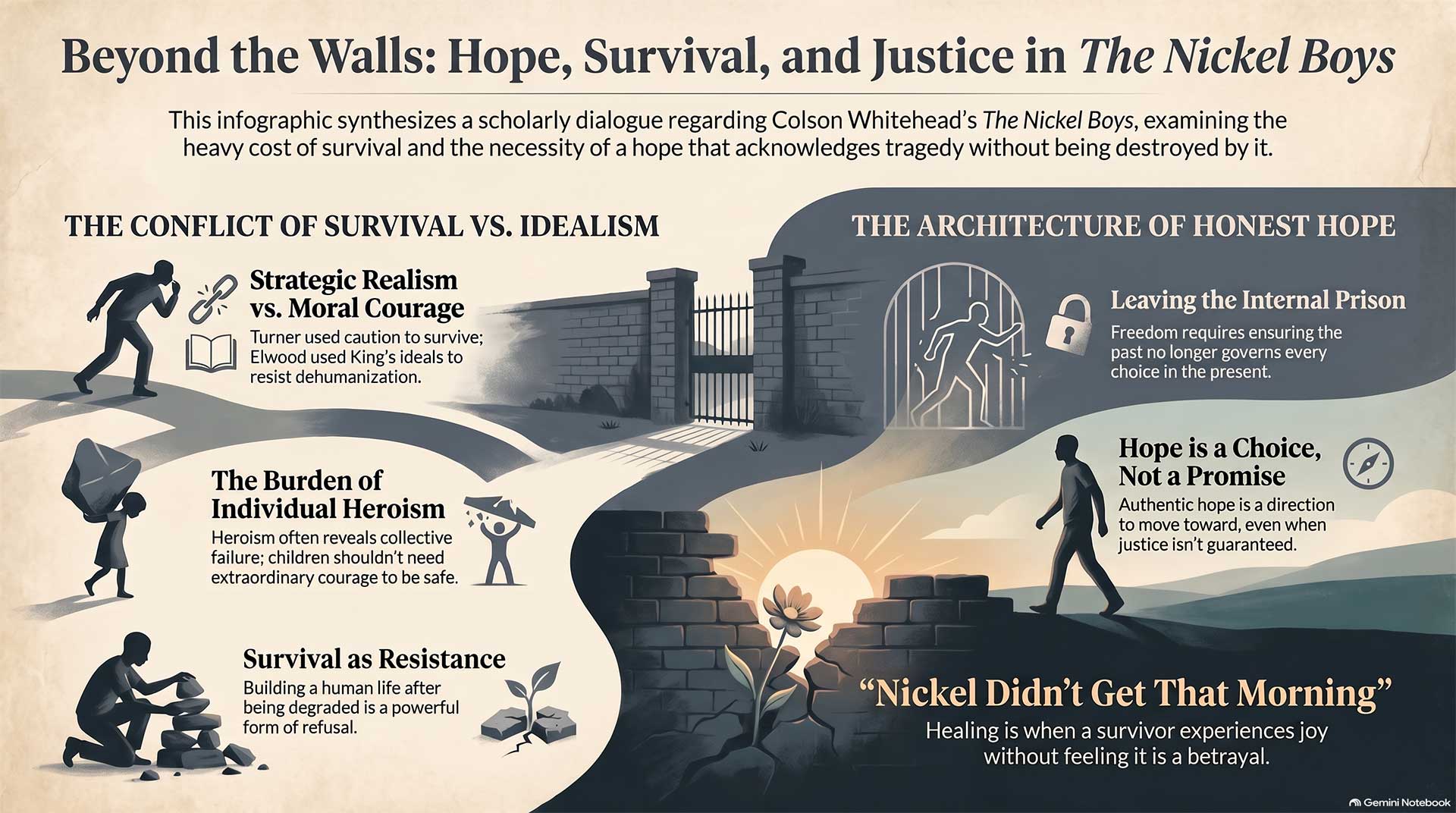
Perhaps one of the most dangerous mistakes we make when reading stories of suffering is rushing too quickly toward inspiration.
Elwood should not need to become an example of courage before we acknowledge something simpler:
Elwood should have lived.
The boys buried near Nickel should have lived.
Adults should have protected them.
Institutions should have believed them.
Meaning cannot replace rescue.
Hope cannot excuse failure.
Forgiveness cannot be demanded from the injured.
Yet the conversation does not end in despair.
It gradually discovers a different kind of hope.
Not the belief that goodness always wins.
Not the belief that suffering happens for some hidden reason.
Not the expectation that justice will arrive in time.
Hope becomes something quieter.
King sees it as refusing to let present injustice define all reality.
Frankl sees it as finding a direction without requiring a guarantee.
Stevenson sees it in returning to the work, standing near people who have been forgotten, and building systems that make courage less lonely.
Eger sees it in a survivor waking one morning, feeling happiness before remembering the past, and realizing that happiness is not betrayal.
Turner does not need to suffer forever to prove that Elwood mattered.
He does not need to earn the right to have survived.
He can remember Elwood without disappearing inside Elwood.
He can tell the truth when he chooses.
He can remain angry.
He can rest.
He can love.
He can live.
Perhaps that becomes the deepest distinction of the entire conversation:
The past can remain true without remaining in command.
Nickel may have shaped Turner.
It does not deserve every morning that comes after Nickel.
The final word, then, is not really hope.
It is life.
Justice matters since life matters.
Memory matters since those lives mattered.
Healing matters since survivors still possess lives that deserve to be lived.
Elwood should have had more life.
Turner still has life.
And perhaps one of the greatest acts of resistance against an institution built on fear is eventually becoming capable of living without asking that institution for permission.
Short Bios:
Martin Luther King Jr.
American Baptist minister and civil rights leader whose philosophy of nonviolent resistance joined moral courage with organized collective action. His ideas strongly influence Elwood Curtis and become central to the question of whether moral conviction can survive when justice offers no guarantee of protection.
Viktor Frankl
Austrian psychiatrist, neurologist, Holocaust survivor, and author of Man’s Search for Meaning. His work explores meaning, responsibility, inner freedom, and the possibility of retaining a sense of purpose during severe suffering without claiming that suffering itself is desirable.
Bryan Stevenson
American lawyer, author, and founder of the Equal Justice Initiative. His work focuses on people facing incarceration, racial injustice, wrongful convictions, juvenile sentencing, and institutional failures. His perspective keeps responsibility centered on the systems and adults who possess the authority to protect vulnerable people.
Edith Eger
Psychologist, Holocaust survivor, and author of The Choice and The Gift. Her work explores trauma, survivor guilt, freedom, memory, choice, and the possibility of building a meaningful life after experiences that cannot be undone.
Leave a Reply