• Skip to main content
  • Skip to primary sidebar
  • Skip to footer
ImaginaryTalks.com
  • Spirituality and Esoterica
    • Afterlife Reflections
    • Ancient Civilizations
    • Angels
    • Astrology
    • Bible
    • Buddhism
    • Christianity
    • DP
    • Esoteric
    • Extraterrestrial
    • Fairies
    • God
    • Karma
    • Meditation
    • Metaphysics
    • Past Life Regression
    • Spirituality
    • The Law of Attraction
  • Personal Growth
    • Best Friend
    • Empathy
    • Forgiveness
    • Gratitude
    • Happiness
    • Healing
    • Health
    • Joy
    • Kindness
    • Love
    • Manifestation
    • Mindfulness
    • Self-Help
    • Sleep
  • Business and Global Issues
    • Business
    • Crypto
    • Digital Marketing
    • Economics
    • Financial
    • Investment
    • Wealth
    • Copywriting
    • Climate Change
    • Security
    • Technology
    • War
    • World Peace
  • Culture, Science, and A.I.
    • A.I.
    • Anime
    • Art
    • History & Philosophy
    • Humor
    • Imagination
    • Innovation
    • Literature
    • Lifestyle and Culture
    • Music
    • Science
    • Sports
    • Travel

moral responsibility

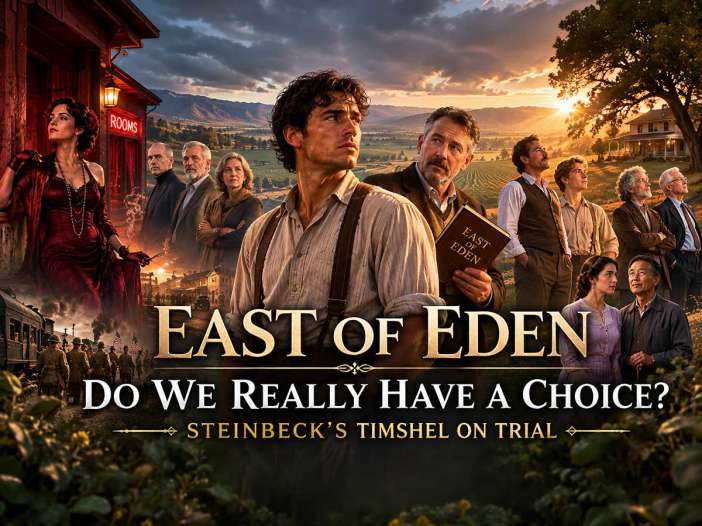
East of Eden: Does Timshel Still Make Sense Today?

August 29, 2026 by Nick Sasaki Leave a Comment

john steinbeck east of eden

Introduction What if the deepest question in East of Eden is not whether Cal is good or bad, but whether any of us can become more than what family, biology, pain, and history have already made us?That question feels especially timely in 2026 as the new East of Eden Netflix adaptation, created by Zoe Kazan and starring Florence Pugh as Cathy Ames, brings … [Read more...] about East of Eden: Does Timshel Still Make Sense Today?

Filed Under: Family, Literature, Psychology Tagged With: Adam Trask, Aron Trask, biblical themes, Cain and Abel, Cal Trask, Cathy Ames, determinism, East of Eden, East of Eden Netflix, family systems, family trauma, free will, generational trauma, good and evil, guilt and shame, idealization, inherited trauma, Intergenerational Trauma, John Steinbeck, Lee, literary analysis, moral responsibility, nature vs nurture, neuroscience, parental favoritism, philosophy, psychology, Robert Sapolsky, sibling rivalry, thou mayest, timshel, Viktor Frankl

The Man Who Never Took the Day Off: A Modern Ishiguro Story

August 9, 2026 by Nick Sasaki Leave a Comment

the-man-who-never-took-the-day-off-

Introduction What happens when being needed becomes the reason you never live your own life?For thirty-eight years, Daniel Mercer has served billionaire businessman Richard Vale as his executive assistant, fixer, confidant, and most dependable employee.Daniel misses dinners, relationships, vacations, and eventually his father’s final hours. Yet he never … [Read more...] about The Man Who Never Took the Day Off: A Modern Ishiguro Story

Filed Under: ImaginaryTalks Originals, Literature Tagged With: Career Identity, Corporate Ethics, Corporate Loyalty, Kazuo Ishiguro, Late Life Change, literary fiction, meaning of life, Missed Opportunities, modern adaptation, modern fiction, moral responsibility, Nobel Prize literature, regret, Short Story, The Man Who Never Took the Day Off, The Remains of the Day, Work Life Balance, Workaholism

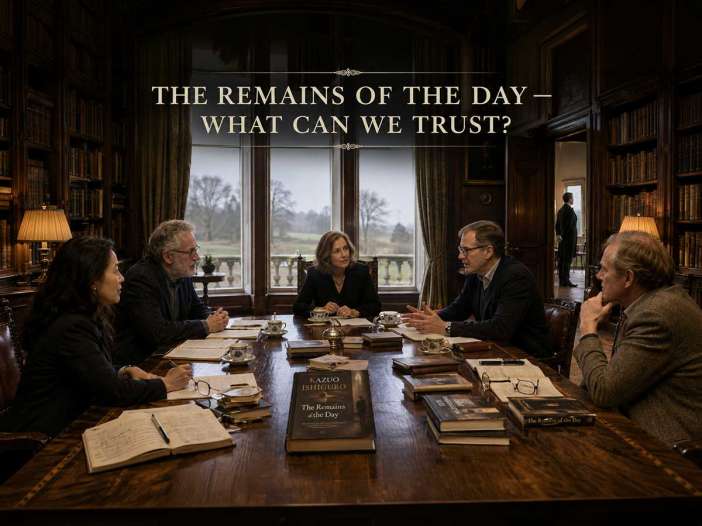
The Remains of the Day Explained by Leading Ishiguro Scholars
August 9, 2026 by Nick Sasaki Leave a Comment

Introduction Why does Stevens remember so much of his life accurately, yet seem unable to recognize what those memories mean?That question lies at the heart of Kazuo Ishiguro’s The Remains of the Day.In this second imaginary conversation, five leading Ishiguro scholars — Cynthia F. Wong, Brian W. Shaffer, Kathleen Wall, Steven Connor, and Barry Lewis — … [Read more...] about The Remains of the Day Explained by Leading Ishiguro Scholars

Filed Under: Literature, Nobel 100 Best Books Tagged With: book analysis, British literature, Class, dignity, Englishness, Ishiguro Scholars, Kazuo Ishiguro, Literary Criticism, Lord Darlington, memory, Miss Kenton, moral responsibility, Nobel Prize literature, regret, Self-Deception, Stevens, The Remains of the Day, Unreliable Narrator

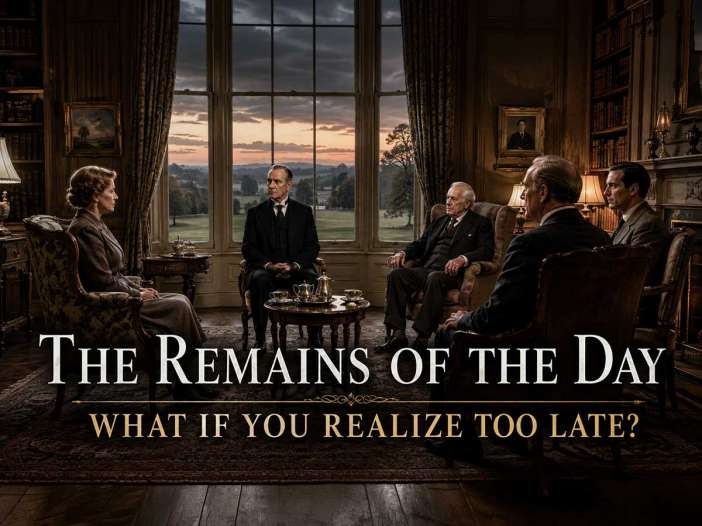
The Remains of the Day Explained Through Its Characters
August 9, 2026 by Nick Sasaki Leave a Comment

the-remains-of-the-day-imaginary-talks-

Introduction What happens when you reach the later years of your life and realize that the qualities you were proudest of may have kept you from truly living?Kazuo Ishiguro’s The Remains of the Day follows Stevens, an English butler who has devoted his life to dignity, loyalty, and service. He rarely questions his employer, rarely expresses emotion, and … [Read more...] about The Remains of the Day Explained Through Its Characters

Filed Under: Literature, Nobel 100 Best Books Tagged With: book analysis, British literature, Classic Novels, dignity, Duty, Kazuo Ishiguro, Literary Characters, Lord Darlington, Lost Love, loyalty, Miss Kenton, moral responsibility, Nobel Prize literature, Reginald Cardinal, regret, Self-Deception, Stevens, The Remains of the Day

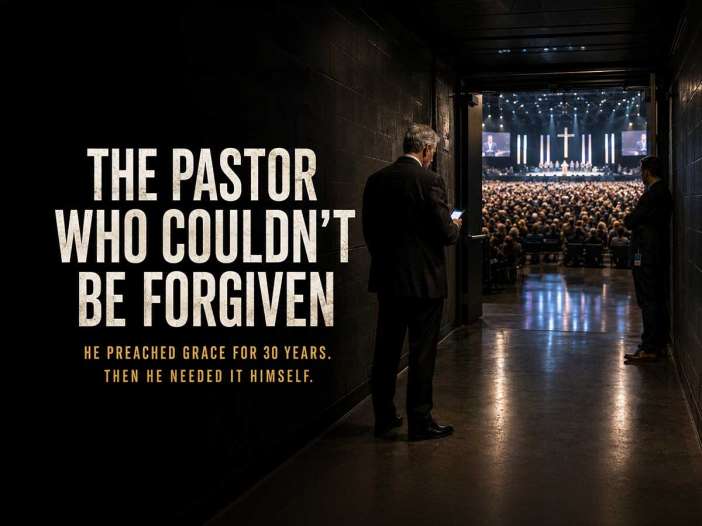
The Pastor Who Couldn’t Be Forgiven: A Modern Story of Grace
August 9, 2026 by Nick Sasaki Leave a Comment

the-pastor-who-couldnt-be-forgiven-

Introduction For thirty years, Nathaniel Mercer preached that grace is greater than our worst mistakes.Then, one Sunday morning, a woman from his past tells the world what happened between them.Within weeks, Nate loses his church, his reputation, his marriage, and the public life that once defined him. Yet one question refuses to disappear: Was he simply a … [Read more...] about The Pastor Who Couldn’t Be Forgiven: A Modern Story of Grace

Filed Under: Forgiveness, ImaginaryTalks Originals, Literature Tagged With: Christian forgiveness, Christian short story, church accountability, church leadership, Disgrace, fallen pastor, forgiveness and trust, forgiveness vs restoration, grace and forgiveness, Imaginary Talks, J. M. Coetzee, modern Disgrace adaptation, modern literary fiction, moral responsibility, pastor redemption, pastor scandal, repentance, second chances, spiritual abuse, The Pastor Who Couldn’t Be Forgiven

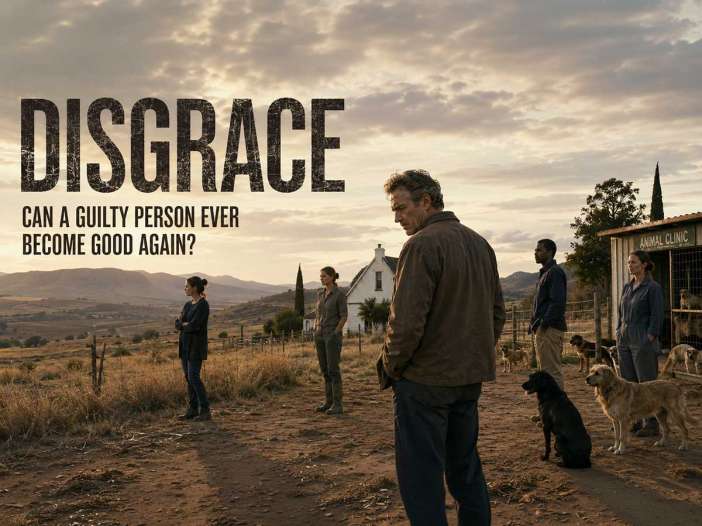
Disgrace Explained Through Its Characters
August 8, 2026 by Nick Sasaki Leave a Comment

disgrace-j-m-coetzee-

Introduction What if losing your reputation does not mean you have learned why you lost it? What happens when a person does something that cannot be undone?J. M. Coetzee’s Disgrace begins with David Lurie, a university professor whose relationship with his student Melanie Isaacs destroys his career and public reputation. Yet losing his position is only the … [Read more...] about Disgrace Explained Through Its Characters

Filed Under: History & Philosophy, Literature, Nobel 100 Best Books, Psychology Tagged With: Bev Shaw, Booker Prize, consent and power, David Lurie, Disgrace, Disgrace analysis, Disgrace characters, Disgrace ending, Disgrace explained, Disgrace themes, J. M. Coetzee, literary analysis, Lucy Lurie, Melanie Isaacs, moral responsibility, Nobel Prize literature, Petrus, post-apartheid South Africa, shame and redemption, South African literature

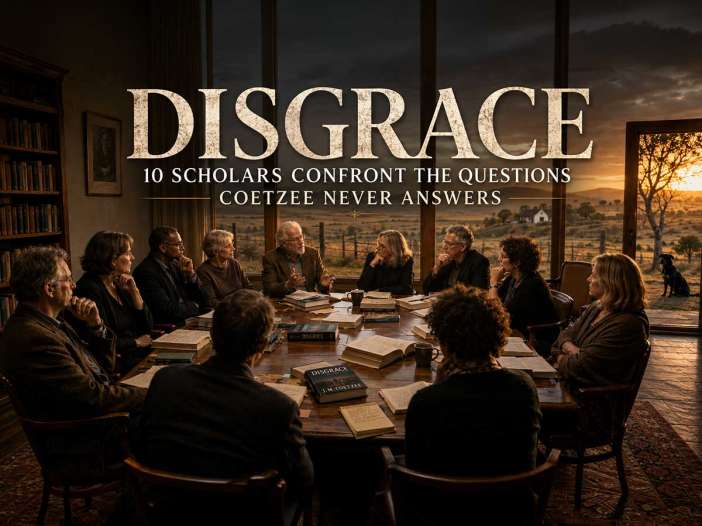
Disgrace Explained by Leading J. M. Coetzee Scholars
August 8, 2026 by Nick Sasaki Leave a Comment

disgrace-explained-leading-jm-coetzee-scholars

Introduction David Lurie admits what he did. So why doesn’t his confession feel like enough? What if the hardest question in Disgrace is not whether David Lurie is guilty—but what guilt requires after the damage has already been done?J. M. Coetzee’s novel refuses the comfort of simple answers. David admits what happened with Melanie but resists the language … [Read more...] about Disgrace Explained by Leading J. M. Coetzee Scholars

Filed Under: History & Philosophy, Literature, Nobel 100 Best Books Tagged With: animal ethics, consent and power, David Lurie, Disgrace, Disgrace analysis, Disgrace dogs, Disgrace ending, Disgrace explained, Disgrace scholars, Disgrace themes, J. M. Coetzee, Literary Criticism, Lucy Lurie, Melanie Isaacs, moral responsibility, Nobel Prize literature, post-apartheid South Africa, sexual violence in literature, shame and redemption, Truth and Reconciliation Commission

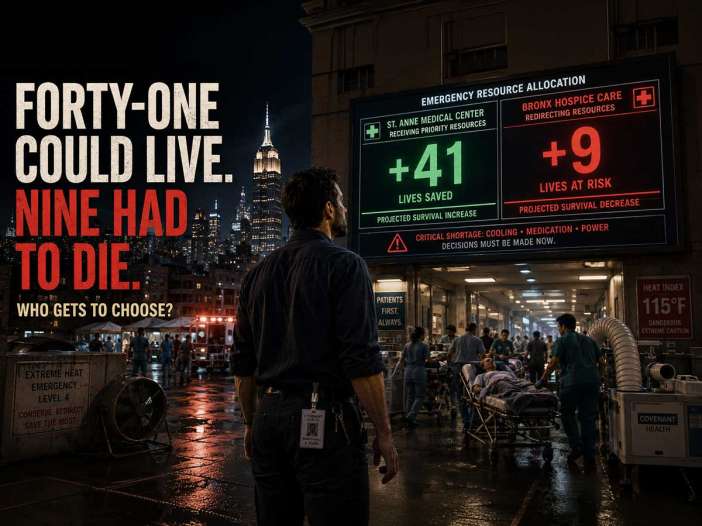
Forty-One Could Live. Nine Had to Die.
August 8, 2026 by Nick Sasaki Leave a Comment

Introduction Daniel Rosen is an ordinary hospital maintenance worker in New York City. He fixes broken cooling systems, faulty doors, and whatever else stops working during one of the worst heat emergencies the city has faced.Then Daniel discovers something he cannot repair with tools.Covenant Health has developed a system for deciding where scarce medical … [Read more...] about Forty-One Could Live. Nine Had to Die.

Filed Under: Christianity, ImaginaryTalks Originals, Literature Tagged With: Christian themes, contemporary Jesus retelling, Daniel Rosen, faith and doubt, healthcare ethics, human dignity, Imaginary Talks, Jesus in modern times, Jewish identity, José Saramago, medical ethics, modern biblical fiction, modern Jesus story, moral responsibility, Philosophical Fiction, religious fiction, sacrifice, Stay With Them, The Gospel According to Jesus Christ, whistleblower story

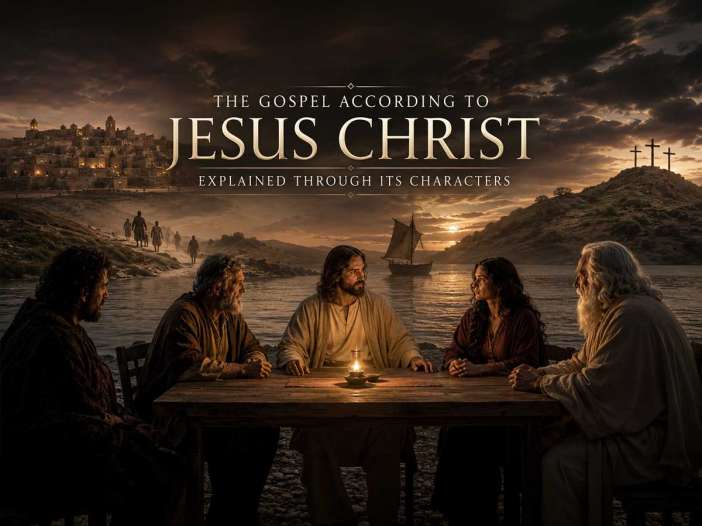
The Gospel According to Jesus Christ Explained Through Its Characters
August 7, 2026 by Nick Sasaki Leave a Comment

The Gospel According to Jesus Christ explained

Introduction What if Jesus knew how much suffering would later occur in his name? José Saramago’s The Gospel According to Jesus Christ is not a conventional retelling of the life of Jesus.It is a moral confrontation.Saramago takes figures familiar to billions of people—Jesus, Joseph, Mary Magdalene, God, and the Devil—and places them inside questions … [Read more...] about The Gospel According to Jesus Christ Explained Through Its Characters

Filed Under: Christianity, Literature, Nobel 100 Best Books Tagged With: character analysis, Christianity, divine foreknowledge, forgiveness, free will, God, Imaginary Talks, Jesus, José Saramago, Joseph, literary analysis, Mary Magdalene, moral responsibility, Nobel Prize literature, religious fiction, sacrifice, the Devil, The Gospel According to Jesus Christ

The Gospel According to Jesus Christ Explained by Top Scholars
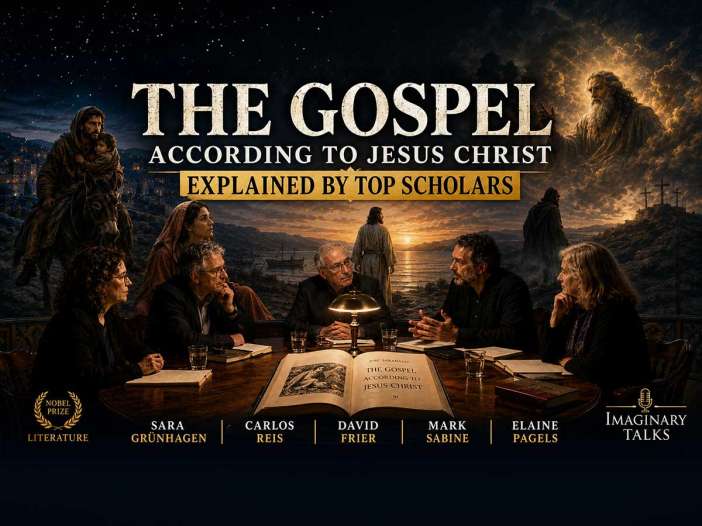
August 7, 2026 by Nick Sasaki Leave a Comment

SARAMAGO’S GOSPEL EXPLAINED

Introduction by José Saramago Did Saramago reject Christianity, or challenge Christianity to examine its relationship with authority and suffering? I wrote a book about Jesus, and many people assumed that meant I intended to write a book against Jesus.I did not.The Jesus who interested me was precisely the opposite: a human being caught between what he … [Read more...] about The Gospel According to Jesus Christ Explained by Top Scholars

Filed Under: Christianity, Literature, Nobel 100 Best Books Tagged With: biblical fiction, Christianity, divine foreknowledge, free will, God, Imaginary Talks, Jesus, José Saramago, literary analysis, Mary Magdalene, moral responsibility, Nobel Prize literature, philosophy of religion, religious authority, sacrifice, Saramago scholars, suffering, The Gospel According to Jesus Christ

  • Page 1
  • Page 2
  • Go to Next Page »

Primary Sidebar

RECENT POSTS

  • The Correspondent Inspired Stories: 5 Emotional Tales
  • the correspondent questionsThe Correspondent Book Club Questions: Sybil & Psychology
  • the correspondent explainedThe Correspondent Explained: Grief, Love & Sybil’s Letters
  • The Waste Land modern storiesThe Waste Land Modern Stories: 5 Emotional Tales
  • The Waste Land explainedThe Waste Land Explained: What Did T. S. Eliot Mean?
  • The Waste Land charactersThe Waste Land Characters Explained: Eliot’s Broken World
  • theo of golden questionsTheo of Golden Book Club Questions: Expert Discussion
  • Theo of Golden Inspired Stories: 5 Modern Tales
  • theo of goldenTheo of Golden Analysis: What It Means to Truly See Someone
  • martyr modern storiesMartyr Kaveh Akbar Inspired Stories: 5 Emotional Tales
  • martyr explainedMartyr Kaveh Akbar Book Club Questions: 25 Big Questions
  • martyr charactersMartyr Kaveh Akbar Analysis: Meaning, Death & Suffering
  • little wonder storiesLittle Wonder Inspired Stories: 5 Emotional Modern Tales
  • Little Wonder Analysis: Love, Loss & Gifted Children
  • Little Wonder Sophie Chen Keller: Love, Sacrifice & Identity
  • sense and sensibility modern storiesSense and Sensibility Lessons: 5 Modern Love Stories
  • sense and sensibility analysisSense and Sensibility Analysis: Love, Emotion & Austen
  • sense and sensibility conversationSense and Sensibility: How Do We Know Love Is Real?
  • marriage courseAlphaUSA Marriage Course: 5 Emotional Stories Inspired by Its 7 Sessions
  • AlphaUSA Marriage Course: 7 Questions for a Stronger Marriage
  • AI Agents DebateAI Agents Debate Human Extinction: Should Humanity Survive?
  • ai human extinction storiesJunji Ito-Inspired Tales of AI and Human Extinction
  • ai could destroy humanityEx-Anthropic insider Fear how AI could kill all humans by 2030
  • the vessel of words questionsThe Vessel of Words: How Language Shapes Relationships
  • Empty Nest Syndrome StoryEmpty Nest Syndrome Story: 5 Modern Stories for Parents
  • empty nest griefEmpty Nest Syndrome: 30 Questions Parents Ask
  • Empty Nest SyndromeEmpty Nest Syndrome: When the House Goes Quiet
  • the vessel of words storiesThe Vessel of Words: 5 Korean Stories of Hurt and Healing
  • abraham lincoln modern day storiesAbraham Lincoln Leadership Lessons: 5 Modern Stories
  • the real lincolnAbraham Lincoln: What Historians Really Know and Debate
  • Abraham Lincoln and Slavery: War, Power & Change
  • if god is oneIf God Is One, Why Do Religions Divide Us?
  • 5 Modern Stories Inspired by Cleopatra’s Greatest Lessons
  • Joan of Arc: 5 Modern Stories About Faith and Courage
  • Joan of Arc ExplainedJoan of Arc Examined: Voices, War, Trial, and Legend
  • Joan of Arc HistoryJoan of Arc: Did God Really Speak to Her?
  • ASI stories5 Stories About Life After AI Surpasses Human Intelligence
  • the age of superintelligenceThe Age of Superintelligence: What Happens When AI Surpasses Humans?
  • masayoshi son ai futureMasayoshi Son’s AI Future: Health, Jobs, Cyberwar & Japan
  • The Good Earth: 5 Modern Stories About Love and Sacrifice
  • the good earth scholarsThe Good Earth: What Scholars Reveal About Wang Lung and O-lan
  • the good earthThe Good Earth: Did Wealth Destroy What Wang Lung Loved?
  • SoftBank World 2026: Masayoshi Son’s AI 2040 Vision Explained
  • The Great Gatsby in 7 Minutes: Why Gatsby’s Dream Failed
  • a new earthIs Humanity Entering a New Earth? Spiritual Awakening Explained
  • great gatsby modern storiesThe Great Gatsby: 5 Modern Stories About Dreams We Chase
  • the great gatsby analysisThe Great Gatsby Experts Explain Gatsby’s Dream and Tragedy
  • the Great Gatsby explainedThe Great Gatsby: Did Gatsby Love Daisy or His Dream?
  • After Of Mice and Men: What Happened to George After Lennie?
  • Of Mice and Men in 7 Minutes: When Love Is Not Enough
  • of mice and men modern day storiesOf Mice and Men: 5 Modern Stories About Love, Care and Responsibility
  • of mice and men analysisOf Mice and Men: Was George Right to Kill Lennie?
  • of mice and men 5Of Mice and Men: Was George’s Final Choice an Act of Love?
  • grapes of wrath modern storiesThe Grapes of Wrath Today: 5 Modern Stories About “I” and “We”
  • grapes of wrath questionsThe Grapes of Wrath Explained: 5 Questions Readers Still Ask
  • the grapes of wrath john steinbeckThe Grapes of Wrath: When Does “Me” Become “We”?
  • Stand With Jesus: What If People Tried to Stop the Crucifixion?
  • East of Eden Today: 5 Stories About Breaking Family Cycles
  • john steinbeck east of edenEast of Eden: Does Timshel Still Make Sense Today?
  • East of Eden: Are We Born Bad or Free to Choose?
  • Convenience Store Woman: 5 American Stories About Marriage and Freedom
  • convenience-store-women-analysis-Convenience Store Woman: Is the New Normal Really Normal?
  • convenience store womenConvenience Store Woman: Who Decides What Is Normal?
  • sayaka murata imaginary friendsSayaka Murata Imaginary Friends: The Mystery Behind Her Inner World
  • Social Health Stories: 5 Ways We Lost Our Sense of Belonging
  • Social Health: Why Modern Life Is Making Us Lonely
  • nickel-boys-modern-stories-The Nickel Boys: 5 Modern Stories About Truth, Trauma and Hope
  • coloson whitehead the nickel boys discussionThe Nickel Boys: What Kind of Hope Survives Injustice?
  • the nickel boys colson whiteheadThe Nickel Boys: Elwood and Turner on Justice, Survival and Truth
  • AI Resource Consumption: Can AI Give More Than It Takes?
  • madeline-miller-circe-modern-stories-5 Modern Stories Inspired by Circe by Madeline Miller
  • Circle-Madeline-Miller-analysis-Circe Explained: Myth, Meaning, and Madeline Miller
  • Madeline Miller Circle CharactersMadeline Miller Circe: What If No One Ever Chose You?
  • 5 Modern Stories Inspired by Keigo Higashino’s Silent Parade
  • could japanese culture succeed where religion has failedCould Japanese Culture Succeed Where Religion Has Failed?
  • keigo-Higashino-when-love-becomes-too-much-5 Modern Stories Inspired by The Devotion of Suspect X
  • The Devotion of Suspect X Explained by Psychologists: Is Ishigami’s Love Really Love?
  • the devotion of suspect xThe Devotion of Suspect X Explained: Was Ishigami’s Sacrifice Really Love?
  • 5 Modern Midnight Library Stories About Regret, AI, and Choice
  • Matt Haig The Midnight LibraryThe Midnight Library Explained by Scholars and Matt Haig
  • The-Midnight-Library-explainedThe Midnight Library Explained Through Its Characters
  • 5 Modern Siddhartha Stories About Wisdom, Love, AI, and Choice
  • Siddhartha explained by leading scholarsSiddhartha Explained by Leading Hermann Hesse Scholars
  • Siddhartha explainedSiddhartha Explained Through Its Characters: Love, Loss, and Enlightenment
  • before-the-names-are-carved-Before the Names Are Carved: Five Connected Stories
  • The Scholars and the Unworn ShoesHan Kang Human Acts Explained by Leading Scholars
  • Han Kang Human Acts: An Imaginary Conversation with the Dead
  • The Years We Thought We Had: A Story of Love and Waiting in Japan
  • snow-country-analysis-Snow Country Analysis: Kawabata Scholars Explain It
  • snow-country-was-their-love-realSnow Country Explained Through Its Characters
  • the-man-who-never-took-the-day-off-The Man Who Never Took the Day Off: A Modern Ishiguro Story
  • The Remains of the Day Explained by Leading Ishiguro Scholars
  • the-remains-of-the-day-imaginary-talks-The Remains of the Day Explained Through Its Characters
  • the-pastor-who-couldnt-be-forgiven-The Pastor Who Couldn’t Be Forgiven: A Modern Story of Grace
  • disgrace-j-m-coetzee-Disgrace Explained Through Its Characters
  • disgrace-explained-leading-jm-coetzee-scholarsDisgrace Explained by Leading J. M. Coetzee Scholars
  • Forty-One Could Live. Nine Had to Die.
  • The Gospel According to Jesus Christ explainedThe Gospel According to Jesus Christ Explained Through Its Characters
  • SARAMAGO’S GOSPEL EXPLAINEDThe Gospel According to Jesus Christ Explained by Top Scholars
  • the last safe floorThe Last Safe Floor: A Modern Lord of the Flies Story for 2026

Footer

Recent Posts

  • The Correspondent Inspired Stories: 5 Emotional Tales September 18, 2026
  • The Correspondent Book Club Questions: Sybil & Psychology September 18, 2026
  • The Correspondent Explained: Grief, Love & Sybil’s Letters September 18, 2026
  • The Waste Land Modern Stories: 5 Emotional Tales September 17, 2026
  • The Waste Land Explained: What Did T. S. Eliot Mean? September 17, 2026
  • The Waste Land Characters Explained: Eliot’s Broken World September 17, 2026

Pages

  • About Us
  • Contact Us
  • Disclaimer
  • Earnings Disclaimer
  • Privacy Policy
  • Terms and Conditions

Categories

Copyright © 2026 Imaginarytalks.com