
Introduction
What happens when justice never feels complete?
That question sits quietly beneath these five stories, inspired by the themes we explored in Keigo Higashino’s Silent Parade.
A father in Ohio realizes that wishing for someone else to take revenge may carry its own kind of responsibility.
A Palestinian sister discovers that the story her family tells about her dead brother may be protecting them from a much harder truth.
An Israeli mother spends years remembering the man she hates until she realizes that hatred has begun replacing memories of her own daughter.
A sister in Chicago watches her dead brother become a public symbol, then risks destroying that image so he can remain what he truly was: a complicated human being.
And in Jerusalem, a Palestinian surgeon must save the life of the Israeli man he has blamed for his father’s death for thirty-eight years.
Different countries.
Different families.
Different losses.
Yet each person eventually encounters the same terrible question:
When justice cannot return the person you loved, what do you do with the anger that remains?
These stories do not argue that victims must forgive.
They do not suggest that truth makes grief disappear.
They ask something quieter.
Can we remember the dead without building our lives around the people we blame for their deaths?
Can we admit that someone we love was imperfect without loving them less?
Can we stop hatred from becoming the final relationship we have with someone who is gone?
And can a person move forward without pretending that what happened was acceptable?
These five stories begin with revenge.
They end somewhere very different.
(Note: This is an imaginary conversation, a creative exploration of an idea, and not a real speech or event.)
1. The Man Across the Street
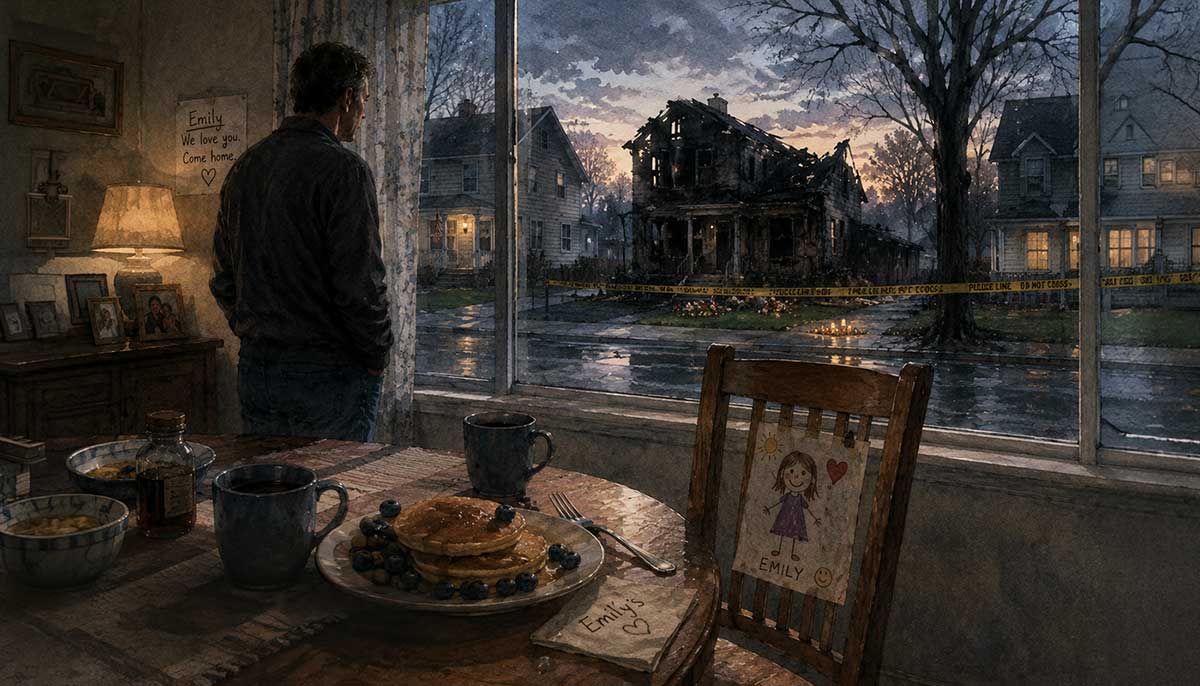
Ever since Emily disappeared, Mark Carter had developed a new morning ritual.
He opened the curtains before he did anything else.
It hadn't always been that way.
Mornings used to smell like coffee. Sarah would be putting dishes away in the kitchen, and Emily would come pounding down the stairs shouting that she was going to be late.
Their seventeen-year-old daughter had a habit of leaving one sock in the living room.
Mark would pick it up.
“Again?”
Emily would open the refrigerator and reach for the orange juice.
“I’ll stop tomorrow.”
Tomorrow never came.
Now there was only one reason Mark opened the curtains.
To look across the street.
Daniel Mercer’s house.
White siding.
Grass slightly too long.
An old mailbox beside the driveway.
Before Emily disappeared, Mark had barely noticed the place.
Now he knew where every window was.
6:40 a.m.
The front door opened.
Daniel came outside.
Gray hoodie.
Black dog.
Leash in his left hand.
Same as yesterday.
Mark stood behind the glass with his coffee.
Daniel walked down the sidewalk.
Past the Carter house.
Around the corner.
Gone.
And every morning Mark thought the same thing.
Why does he still get mornings?
When Emily doesn’t.
Nine months after Emily disappeared, police searched Daniel’s house.
The whole neighborhood watched.
Squad cars.
Yellow tape.
Detectives.
Television crews.
For the first time since Emily vanished, Mark felt as though the world had finally begun moving in his direction.
Daniel had previously been questioned in connection with the disappearance of a nineteen-year-old woman.
He had never been charged.
This time, he initially told police that he barely knew Emily.
Then investigators discovered several messages between them.
Nothing incriminating.
Emily had contacted him about something involving a neighborhood dog.
Daniel had answered.
That was all.
But a lie was still a lie.
He had said he didn't know her.
He did.
For Mark, that was enough.
For the police, it wasn't.
No body.
No blood.
No surveillance footage showing anything conclusive.
Several weeks later, Daniel came home.
Just like that.
The neighborhood gathered at the Carters’ house that evening.
Somebody brought beer.
Somebody brought a casserole.
Nobody ate much.
“I can’t believe it,” Jeff from next door said.
“Come on. We all know he did it.”
Someone nodded.
Another neighbor said, “The police keep talking about evidence. Evidence, evidence, evidence.”
Mark stared at the bottle in his hands.
“If it were me, I couldn’t take it,” Jeff said. “Seeing him every day.”
Mark said nothing.
“Sooner or later somebody’s gonna do something.”
The room went quiet for a moment.
Later, Mark couldn't remember who had said it.
He remembered only how the words had entered him.
Somebody’s gonna do something.
“Don’t do anything stupid,” Mark said.
A few people nodded.
The conversation moved elsewhere.
That night, after everyone had gone home, Mark left the curtains open.
He fell asleep on the couch facing Daniel Mercer’s house.
Sarah began clearing things out of Emily’s bedroom.
Slowly.
The first thing Mark noticed was that some of the makeup had disappeared from her desk.
Then the magazines on the floor.
Then some clothes from the closet.
One Saturday afternoon, Mark went upstairs and found Sarah placing Emily’s clothes into a cardboard box.
“What are you doing?”
Sarah didn't turn around.
“Putting things away.”
“Put them back.”
Her hands stopped.
“Mark.”
“She might come home.”
“It’s been nine months.”
“Doesn’t matter.”
“It does.”
“No, it doesn’t.”
“Yes, it does.”
Mark kicked the box.
Clothes spilled across the floor.
Sarah said nothing.
Her silence made him angrier.
“Don’t throw her things away.”
“I’m not throwing them away.”
“Then what are you doing?”
Sarah stood.
For a long moment she looked at her husband.
Then she said:
“You’re not waiting for Emily anymore.”
Mark froze.
“What?”
“You’re waiting for that man to be punished.”
His face grew hot.
“That’s the same thing.”
“No.”
“Yes, it is.”
Sarah's eyes filled with tears.
“At some point, you stopped talking about Emily.”
“I talk about her every day.”
“No. You talk about Daniel.”
Mark stared at her.
“What time Daniel walked his dog.”
“Who Daniel talked to.”
“What time Daniel left his house.”
“Where Daniel bought his coffee.”
Her voice softened.
“You watch him more than you remember her.”
Mark walked out.
On his way downstairs, he punched the wall.
They barely spoke that night.
There were three chairs at the dinner table.
One for Mark.
One for Sarah.
And one for Emily.
Nobody sat there.
Nobody had moved it.
Tyler Green was twenty-four.
He lived four houses down.
He had known Emily since she was little.
When she was a kid, they sometimes played basketball together. Later, Emily called him her “neighborhood big brother.”
After she disappeared, Tyler came around often.
He repaired a loose porch railing.
Shoveled the sidewalk after a snowfall.
When Sarah returned from the grocery store, he carried the bags inside without being asked.
He was a good kid.
At least that was what everybody said.
One evening, Tyler came into Mark’s garage.
Mark was putting away tools.
“Mr. Carter.”
“Call me Mark.”
“Right.”
Tyler stayed near the entrance.
“What is it?”
“I wanted to ask you something.”
Mark closed his toolbox.
“What?”
Tyler looked across the street.
At Daniel’s house.
“If his house wasn't there anymore…”
Mark stopped.
“What?”
Tyler tried to smile.
It didn't work.
“If he wasn't here anymore, do you think you could sleep?”
Mark stared at him.
“Don’t ask me that.”
Tyler nodded.
“Yeah.”
“Don't do anything stupid.”
“I’m not.”
“Good.”
Tyler left.
Mark didn't call the police.
He didn't tell Sarah.
At 1:07 that morning, his phone vibrated.
A message from Tyler.
He won't be there forever.
Mark stared at it.
He typed:
Stop.
He looked at the word.
Then deleted it.
He turned the phone facedown.
Went upstairs.
Got into bed.
He didn't sleep.
The fire came three nights later.
2:17 a.m.
Orange light filled the bedroom.
Mark woke instantly.
Daniel's garage was burning.
Flames had already reached the roof.
“Sarah!”
They ran outside.
Neighbors poured from their houses.
Someone was calling 911.
Through the flames, Daniel crawled out the front door.
His clothes were burned.
His face and hands were badly injured.
He collapsed on the lawn.
Firefighters rushed toward him.
Daniel was shouting something.
Mark couldn't understand it at first.
Then he heard it.
“Lily!”
Firefighters ran into the house.
Mark didn't know that name.
“Who’s Lily?” Sarah whispered.
Someone behind them answered.
“His niece, I think.”
She was twelve.
She stayed with Daniel on some weekends.
Mark had seen her before.
A little girl carrying a backpack into the house on Friday afternoons.
He had never paid attention.
Ten minutes later, a firefighter carried her outside.
Mark couldn't see her face.
Only one small arm protruding from beneath a blanket.
All night, one sentence repeated inside his head.
We didn't know there was a kid in there.
Somebody in the neighborhood had said it.
We didn't know there was a kid in there.
By five in the morning, the sentence had changed.
It became a question.
Would it have been okay if there hadn't been?
Investigators determined that the fire had been deliberately set.
Tyler was arrested two days later.
A security camera had caught him.
There was a record of him buying gasoline.
His phone location placed him near the house.
There was nowhere for him to run.
Tyler’s mother came to the Carters’ home crying.
Sarah spoke to her at the door.
Mark stayed in the back of the house.
That evening, Sarah asked:
“Did you know?”
Mark kept looking at the television.
The sound was off.
“Know what?”
“About Tyler.”
He didn't answer.
Sarah looked at him.
“Did you know something?”
“No.”
It wasn't a lie.
Not entirely.
“Mark.”
“I didn't know.”
“Are you sure?”
He couldn't look at her.
The next morning, the news reported that Lily remained hospitalized with severe burns.
She would need multiple surgeries.
Doctors expected her to survive.
Mark turned off the television.
Across the street stood the blackened shell of Daniel's house.
The man Mark had watched every morning was gone.
This was the view he had wanted.
He felt nothing.
Or rather, he was frightened by how little he felt.
Tyler asked to see him ten days after the arrest.
Mark didn't want to go.
The request came through Tyler’s attorney.
Sarah didn't tell him what to do.
In the visitation room, Tyler sat behind glass.
He suddenly looked young.
Twenty-four.
Only seven years older than Emily.
“Mr. Carter.”
“I told you. Mark.”
Tyler nodded.
“I didn't know Lily was there.”
Mark said nothing.
“I swear.”
“I heard you.”
“I wasn't trying to kill anybody.”
Mark looked at him.
“Then what were you trying to do?”
Tyler couldn't answer.
“Scare him?”
“I don't know.”
“You don't know?”
Tears formed in Tyler's eyes.
“Everybody was saying it.”
Mark felt something tighten in his chest.
“Saying what?”
“That he deserved it.”
“So you burned his house down?”
“Jeff said it. Rick said it. Everybody.”
“Everybody didn't set the fire.”
Tyler's expression changed.
“But everybody thought it.”
Mark said nothing.
“Everybody was saying the same thing.”
Tyler leaned closer to the glass.
“I was just the one who actually did it.”
Mark's mouth went dry.
“No.”
“What part isn't true?”
“I never asked you to do anything.”
Tyler looked at him.
“I know.”
That answer hurt more than anything else he could have said.
“You never asked me.”
Tyler paused.
“But you didn't stop me either.”
Mark felt his heart pounding.
“I told you not to do anything stupid.”
“You did.”
“I said it.”
“You did.”
Tyler gave a small, broken smile.
“But that message I sent you…”
Mark stopped breathing.
“You never answered.”
For a moment neither spoke.
“I knew then,” Tyler said.
“Knew what?”
“That you weren't going to stop me.”
Long after the visit ended, Mark remained sitting in the parking lot.
Daniel survived.
His burns were severe.
According to a local news report, when he first regained consciousness, he didn't ask about himself.
He asked one question.
“Lily?”
That was all.
Sarah was watching the report.
Mark was in the kitchen.
He heard it.
He wished he hadn't.
Lily?
One word forced Mark to see something he had spent months refusing to see.
Daniel had someone he loved.
Someone he worried about.
Somebody called him Uncle.
None of that made him innocent.
It didn't explain what had happened to Emily.
It didn't erase Mark's suspicions.
But for one unwanted moment, the monster became a person again.
Mark hated that.
He wanted Daniel to remain a monster.
Monsters were easier.
That Sunday morning, Sarah made blueberry pancakes.
Emily's favorite.
Technically, Emily hadn't liked blueberries.
She used to pick the actual berries out.
“Squishy fruit is disgusting.”
But she loved the purple syrup they left behind.
Mark suddenly remembered that.
Two plates sat on the table.
Emily's chair had been moved against the wall.
Mark stopped.
“The chair.”
Sarah was washing the skillet.
“I moved it.”
“Why?”
“Nobody sits there.”
He said nothing.
The chair hadn't been thrown away.
It was still in the room.
Just a little farther from the table.
Mark looked through the window.
The burned house across the street.
Then he said:
“I’m going to the police.”
Sarah stopped washing.
“What?”
“I need to tell them.”
“Tell them what?”
“About Tyler.”
Her expression changed.
“What did you know?”
“I didn't know.”
Mark stopped.
Then shook his head.
“No.”
He tried again.
“I didn't know. But…”
His voice failed.
Sarah waited.
Mark walked to the door.
The detective interviewed him in a small room.
A young woman.
Mark told her about the conversation in the garage.
Then he showed her Tyler's message.
She studied the phone.
“You didn't respond?”
“No.”
“Why?”
Mark looked at his hands.
“I don't know.”
The detective waited.
“I didn't know what he was going to do.”
“I understand.”
“I didn't know he was going to set the house on fire.”
“Yes.”
“I didn't ask him to do it.”
She said nothing.
Mark looked up.
“I didn't ask him.”
“I heard you.”
“I didn't set that fire.”
The detective put down her pen.
“Mr. Carter.”
He stopped.
“I haven't said that you did.”
Something inside him gave way.
He wasn't explaining himself to the detective.
He was explaining himself to himself.
It wasn't me.
I didn't ask.
I didn't know.
How many times would he have to say it before he believed it?
Mark covered his face.
The detective didn't rush him.
After a long time, he lowered his hands.
“I wanted him gone.”
She waited.
“Daniel.”
His voice shook.
“I wanted him gone.”
Silence.
“I thought…”
Tears began falling.
“I thought maybe somebody would do something.”
He swallowed.
“But I never told anyone to hurt him.”
Still the detective said nothing.
Mark finally said the part he had been avoiding.
“I wanted somebody else to do what I couldn't.”
The room became very quiet.
The confession didn't bring Emily home.
It didn't heal Lily's burns.
It didn't free Tyler.
It didn't prove Daniel guilty.
It didn't prove him innocent.
Nothing had been fixed.
Only one thing had changed.
Mark could no longer tell himself that he had wanted nothing to happen.
Several weeks later, Sarah made blueberry pancakes again.
She burned them slightly.
Mark sat at the table.
Emily's chair remained against the wall.
There were several pieces of mail piled on it now.
Before, Mark would never have allowed that.
He noticed.
Sarah noticed that he noticed.
Neither said anything.
Through the window, Daniel's burned house was still visible.
Repairs hadn't begun.
Out of habit, Mark almost looked at it.
Then Sarah said:
“It's getting cold.”
He turned.
The pancakes were on his plate.
Purple syrup.
Emily's favorite.
Mark picked up his fork.
He took a bite.
A little tough.
“You burned these.”
Sarah took a sip of coffee.
“I know.”
Mark took another bite.
That morning, for the first time in months,
he ate breakfast without watching the house across the street.
2. My Brother’s Name
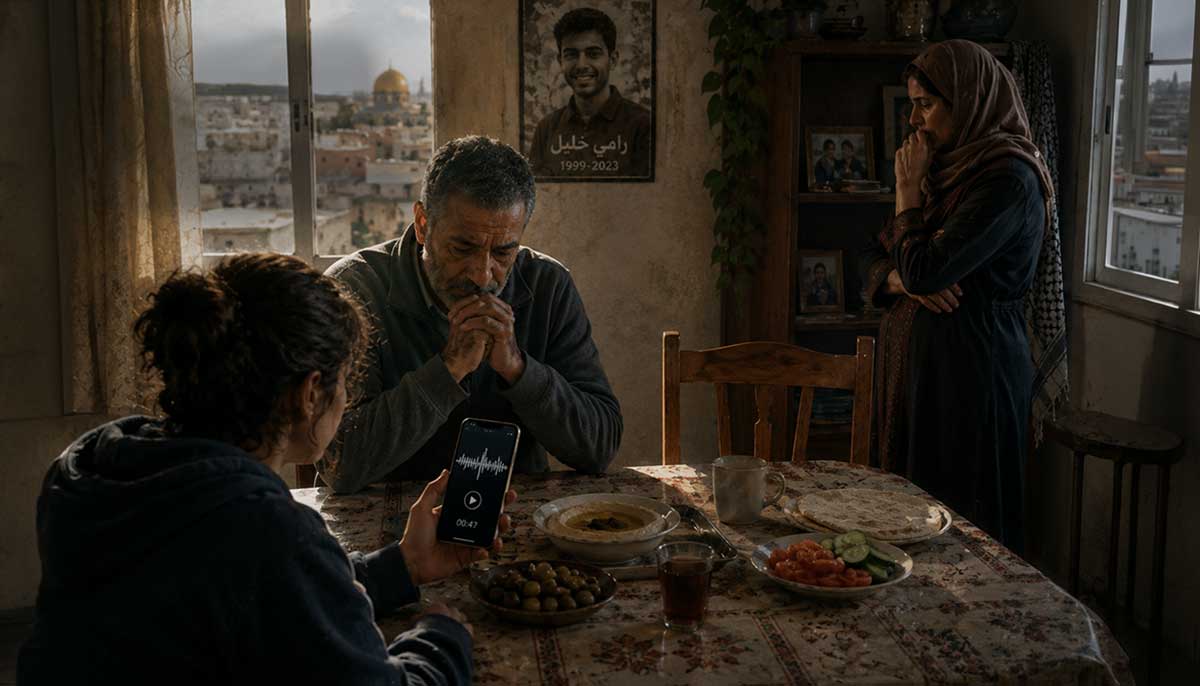
After Rami died, their father began saying his name every day.
Morning.
Afternoon.
Night.
“Rami would never have done that.”
“Rami would have been home by now.”
“Rami would have taken over the shop.”
“Rami cared about this family more than you do.”
Whenever Mariam heard that last one, she smiled.
She had to.
Otherwise she might say something to her father she could never take back.
Rami was her younger brother.
Twenty-two years old.
Four years younger than Mariam.
He attended university during the week and helped at their father’s shop on weekends.
He always wore one earbud.
Never two.
One in his ear, the other hanging loose.
Their mother had told him a hundred times to take it out when people were speaking to him.
“If I wear both,” Rami once said, “I won’t hear Mom complaining.”
Their mother tried to look offended.
She always ended up laughing.
Then one night Rami didn't come home.
Hours later, the family learned that he was dead.
There were too many unanswered questions.
What exactly had happened.
Who had been involved.
Who had spoken to whom.
Who had known what.
But after a few weeks, one name began appearing again and again inside their home.
Samir Khalil.
A man in his forties who lived in the same neighborhood.
Their father knew him.
Rami had spoken with him several times.
And apparently, shortly before his death, Rami had met him.
At first, Samir denied it.
Later, he admitted it.
For their father, that was enough.
“He informed on him.”
Their father said it one evening at dinner.
Their mother had made lentil soup.
Nobody was eating.
“Who did?” Mariam asked.
Her father stared at her.
“Samir.”
“What proof do we have?”
His expression changed.
“Proof?”
“Do we know he told anyone anything?”
“Rami met him. Then Rami died.”
“That’s all?”
Her father placed his fist on the table.
“That isn't all.”
Their mother spoke quietly.
“Please. Stop.”
He didn't.
“Samir lied.”
“He said he hadn't met Rami.”
“Then he admitted he had.”
“Why lie?”
Mariam said nothing.
“Guilt.”
Her mother stirred her soup.
There was no bowl in front of Rami’s chair.
The chair itself remained.
Nobody sat there.
Samir still walked through the neighborhood.
Normally.
He bought bread.
Called taxis.
Went to the pharmacy.
Stopped to talk with people.
Whenever their father saw him, he became silent.
His face hardened.
One afternoon, Samir walked past the family shop.
Their father was behind the counter.
Samir didn't stop.
Their father didn't call after him.
That evening, he barely touched his dinner.
“You didn't say anything?” Mariam asked.
Her father didn't answer.
“Why don't you talk to him?”
Her mother looked at her.
“Talk about what?”
Their father answered.
“Ask if he did it?”
“Do you think he'll say yes?”
Mariam fell silent.
Her father looked at Rami's chair.
“That kind of man never does.”
Their mother served him more soup.
“You don't know that.”
His hand stopped.
“What?”
“We don't know what happened.”
Her father looked at his wife.
“This again?”
“We don't.”
“I do.”
“You believe you do.”
He stood.
“You think I'm not on my own son's side?”
The color left her mother's face.
Mariam stopped breathing for a second.
Their father realized what he had said.
He didn't apologize.
He pushed his chair back and walked outside.
The door closed behind him.
Their mother stared at her soup.
“That was cruel,” Mariam said.
Her mother shook her head.
“He's grieving.”
“So are you.”
“I know.”
“Then why do you let him talk to you like that?”
Her mother didn't answer.
“You always do this.”
Now her mother looked up.
“You never say anything.”
“What should I say?”
“The truth.”
Her mother stared at her.
“What truth?”
Mariam had no answer.
Six months after Rami's death, Mariam began cleaning up an old laptop.
Rami had used it before she did.
Their father wouldn't touch it.
Neither would their mother.
Mariam opened it only to move some university files.
The desktop was full of photographs.
Friends.
Campus.
A broken chair.
A cat.
Half a sandwich.
Meaningless pictures.
When Rami was alive, none of them had mattered.
Now Mariam couldn't delete a single one.
Deep inside one folder, she found an audio file.
No title.
The date was three days before Rami died.
She pressed play.
At first there was only wind.
Then Rami's voice.
Low.
Hurried.
“Okay. I'll meet you tomorrow.”
Another voice answered.
Mariam froze.
Samir.
She was certain.
“Don't talk here.”
“Don't tell anybody.”
Then Rami:
“That’s why I’m asking you to help me.”
Mariam's finger stopped above the keyboard.
She played it again.
“That’s why I’m asking you to help me.”
Help me.
That phrase had never appeared in the family's version of Rami's death.
According to their father, Samir had betrayed Rami.
Rami had been caught in something he didn't understand.
That was the story.
But this recording said something different.
Rami had contacted Samir.
Rami was asking him for help.
Help with what?
Who was he afraid of?
Why?
The recording ended.
Mariam remained in front of the laptop for a long time.
She went to Samir's house the next day.
When he opened the door, he didn't seem surprised.
“Mariam.”
“I need to talk to you.”
He hesitated before letting her inside.
The room was small.
An old sofa.
Medicine on a shelf.
Family photographs on the wall.
Mariam remained standing.
She took out her phone.
She played the recording.
Samir's expression changed.
“Where did you find that?”
“Rami's computer.”
He sat down.
“What happened?”
No answer.
“My brother was asking you for help.”
Silence.
“What did you know?”
Samir folded his hands.
“I can't tell your father.”
Anger rose through her.
“That again?”
He looked up.
“Everybody stays quiet.”
“You.”
“Mom.”
“Dad only listens to the answer he's already decided is true.”
Her voice trembled.
“Rami is dead, and nobody will tell me what actually happened.”
Samir watched her for a long moment.
Then he said:
“Rami was frightened.”
Mariam didn't move.
“Of what?”
Samir looked toward the window.
“There are things you would be better off not knowing.”
Mariam laughed.
“Who gets to decide that?”
He said nothing.
“Rami?”
“My father?”
“You?”
“Everybody thinks they're protecting me?”
“No.”
“Then what?”
A long silence.
“You're not the only person we're trying to protect.”
It took Mariam a moment.
“Who?”
Samir didn't answer.
She saw it in his face.
“My family?”
He closed his eyes.
“Did Rami do something?”
“Mariam.”
“What did he do?”
“He wasn't a bad kid.”
Her heart began pounding.
“That isn't what I asked.”
Samir looked at her.
“He carried packages for some people.”
“What kind of packages?”
“I don't think he knew.”
“You don't think?”
“Not at first.”
Mariam put one hand against the wall.
“He found out?”
“Eventually.”
“And then he came to you?”
Samir nodded.
“He wanted out.”
“He was scared.”
“He wanted to disappear from it without anyone knowing.”
Mariam heard her brother's voice again.
That’s why I’m asking you to help me.
“Did you?”
Samir didn't answer.
“Did you help him?”
“I tried.”
Tears came into Mariam's eyes.
“Then why is he dead?”
Samir looked down.
“I don't know.”
“That's a lie.”
“I truly don't know.”
“You told someone.”
He looked up.
“I didn't.”
“My father says you did.”
“I understand why your father needs to believe that.”
Mariam's voice sharpened.
“Needs to believe?”
“It may be easier than believing his son got involved in something dangerous.”
Samir stopped.
Too late.
“So it's easier to believe somebody betrayed him?”
Samir said nothing.
Mariam was crying now.
“You're cruel.”
“I know.”
“My father says Rami's name every day.”
“I know.”
“He says Rami was honorable.”
“He was.”
“He says Rami always put his family first.”
“He did.”
“But he was doing something dangerous?”
Samir nodded.
“People are more than one thing.”
Mariam hated the sentence.
At least then she did.
“Don't turn my brother into philosophy.”
Samir lowered his eyes.
When Mariam returned home, her father was drinking tea in the back of the shop.
Her mother was washing beans.
“Where were you?”
“Samir's.”
His expression changed.
“What were you doing there?”
“Talking.”
“By yourself?”
“Yes.”
“What did he say?”
Mariam gripped her phone.
She could play the recording now.
She could tell him everything.
That would be the right thing.
There was no proof Samir had betrayed Rami.
Rami had gone to him for help.
Their father's story was, at the very least, incomplete.
She only had to say it.
Mariam looked at her father.
He had aged in six months.
More gray in his hair.
His cheeks had hollowed.
Only when he spoke about Rami did some part of the old man return.
Almost proud.
“Rami never showed fear.”
“Rami would never betray this family.”
“Rami always knew right from wrong.”
That story was keeping him alive.
Mariam realized that telling the truth meant taking that story away.
“What did he say?” her father asked again.
Mariam answered:
“Nothing.”
Her mother's hands stopped moving.
Her father stared at her.
“Nothing?”
“Nothing useful.”
“He says he doesn't know anything?”
Mariam nodded.
“I knew it.”
Her father sat back down.
“Liar.”
Mariam looked at her mother.
Her mother was already looking at her.
Something passed between them.
And Mariam understood.
Her mother knew something.
She had known before Mariam did.
That night, Mariam went into her mother's room.
Their father was asleep.
“Mom.”
Her mother was closing the window.
“What?”
“Did you know?”
Her hand stopped.
“Know what?”
“About Rami.”
Her mother didn't turn.
“That he was involved in something dangerous.”
The silence answered for her.
“You knew.”
“Not everything.”
“How much?”
“That he was scared.”
“Of what?”
“One night he came home crying.”
Mariam stopped breathing.
Rami crying.
That Rami didn't exist in their father's stories.
“What did he say?”
“Nothing.”
“Nothing?”
“He hugged me.”
Tears slid down her mother's face.
“Like he did when he was little.”
Mariam sat down.
“That was all?”
“He said he needed help.”
Mariam closed her eyes.
Again.
That word.
Help.
“Why didn't you tell Dad?”
“Rami begged me not to.”
“After he died too?”
Her mother didn't answer.
“Even now?”
Silence.
“Dad hates Samir so much he could get somebody hurt.”
“I know.”
“Then we have to tell him.”
“Tell him what?”
“That Rami—”
The words stopped.
What exactly had Rami done?
Mariam still didn't know everything.
Her mother said:
“Your father lost his son.”
“I know.”
“He doesn't know that his son was frightened, made mistakes, got involved in things behind his back, and asked another man for help.”
Her mother shook her head.
“If you give him all of that now—”
“So we leave him with a lie?”
“It isn't a lie.”
“Yes, it is.”
Mariam's voice rose.
“Rami wasn't perfect.”
Her mother's face tightened.
“Don't say that.”
Mariam stared at her.
“There.”
“What?”
“You're doing it too.”
Her mother looked confused.
“You're not protecting Rami.”
Tears rolled down Mariam's cheeks.
“You're protecting the Rami you want to remember.”
Her mother couldn't answer.
Three days later, their father's cousin came to the house.
Two men were with him.
Mariam heard them talking in the back of the shop.
“We can't leave this alone.”
“Everybody knows.”
“How long does Samir think he can walk around like nothing happened?”
Her father's voice was low.
“What are you planning?”
“Just a conversation.”
Mariam froze.
Then her father said:
“I don't know anything about it.”
One of the men answered:
“Of course.”
Mariam walked into the shop.
“Stop.”
Everyone turned.
Her father's face hardened.
“What are you talking about?”
“Don't go to Samir's.”
His cousin laughed.
“Nobody said anything about going anywhere.”
“I heard you.”
Her father stood.
“Mariam, go upstairs.”
“No.”
“This isn't your business.”
“This is about Rami, isn't it?”
Her father fell silent.
Mariam took out her phone.
Her hand was shaking.
“Then listen.”
His expression changed.
“To what?”
She pressed play.
Wind.
Rami's voice.
“Okay. I'll meet you tomorrow.”
Samir:
“Don't talk here.”
Rami:
“That’s why I’m asking you to help me.”
Her father didn't move.
The recording ended.
Nobody spoke.
“What is that?”
His voice barely came out.
“It was on Rami's laptop.”
“When?”
“Three days before he died.”
Her father reached for the phone.
Mariam handed it to him.
He played it again.
That’s why I’m asking you to help me.
His fingers trembled.
“What did he need help with?”
Mariam couldn't answer.
“What?”
“He was involved in something dangerous.”
Her father looked up.
“Who told you that?”
“Samir.”
Her father laughed.
“There.”
Mariam's chest hurt.
“No.”
“Of course. Now he's trying to—”
“No.”
“He's making Rami look guilty to save himself!”
“That's not what happened.”
“Then what happened?”
Their mother stood in the doorway.
“It's true.”
Her father looked at his wife.
She was crying.
“I knew too.”
His face emptied.
“Knew what?”
She couldn't answer.
“What did you know?”
“Rami was afraid.”
He didn't move.
“He said he couldn't tell you.”
“Why not?”
“He thought you would be ashamed of him.”
Their father sat down.
Silently.
The cousin and the two men left without another word.
That night, their father sat in Rami's chair.
For the first time.
Mariam and her mother said nothing.
He stared at the table.
“What did he do?”
It wasn't clear who he was asking.
Mariam answered.
“We don't know everything.”
“Was it bad?”
“Probably.”
His eyes closed.
“Rami?”
“Yes.”
“My Rami?”
Mariam's chest tightened.
“Dad.”
“I didn't know my own son.”
Her mother answered immediately.
“You knew him.”
He looked at her.
“Knew what?”
She moved her chair closer.
“How he laughed.”
“How angry he got.”
“The way he ate.”
“What his face looked like when he was tired.”
“How terrified he was of thunderstorms when he was little.”
Tears filled her father's eyes.
“But I didn't know this.”
“No parent knows everything.”
He said nothing.
Mariam spoke softly.
“Neither did I.”
He looked at her.
“But he was still Rami.”
Her father shook his head.
“I don't know.”
“You don't have to.”
Mariam surprised herself with the words.
“Not tonight.”
Her father began to cry.
“What about Samir?”
“We don't know.”
“Did he betray him?”
“I don't know.”
“Then whose fault was it?”
Mariam looked at her father.
“I don't know.”
His face collapsed.
“Then there's nothing.”
Mariam remained silent.
Her father didn't hit the table.
He didn't shout.
He just cried.
“I wanted someone to blame.”
It was the first time he had said it.
“I know.”
“I wanted it to be Samir.”
Mariam stopped breathing for a moment.
Her father continued.
“It would have been easier if it was all one man's fault.”
Nobody contradicted him.
The next morning, their mother set out bread, olives, cheese, and tea.
Their father came in late.
He started toward his usual chair.
Then stopped.
He looked at Rami's chair.
The one he had sat in the night before.
For a long time, he stood there.
Then he moved it slightly closer to the table.
Their mother watched.
So did Mariam.
He didn't sit in it.
He didn't invite anyone else to sit there.
He just brought it a little closer.
“I’m going to see Samir,” he said.
Mariam stopped eating.
“Why?”
Her father tore off a piece of bread.
“I don't know.”
He thought for a moment.
“To ask him.”
“Ask him what?”
Her father was quiet for a long time.
“What Rami was afraid of.”
Mariam watched him.
“Are you going to get angry?”
A painful smile appeared on his face.
“Probably.”
Their mother lowered her eyes.
“But…”
He looked at Rami's chair.
“I want to hear about the Rami who was actually there.”
His voice trembled.
“Not just the Rami I want to hear about.”
Mariam couldn't speak.
Her mother placed tea in front of him.
He took a sip.
It must have been bitter.
His face tightened slightly.
And suddenly Mariam remembered.
Rami used to make exactly the same face whenever he drank tea that was too hot.
Just like their father.
She almost laughed.
She almost cried.
That morning, for the first time since Rami died, their father did not say his name.
Nobody thought that meant he had forgotten him.
3. The Empty Chair
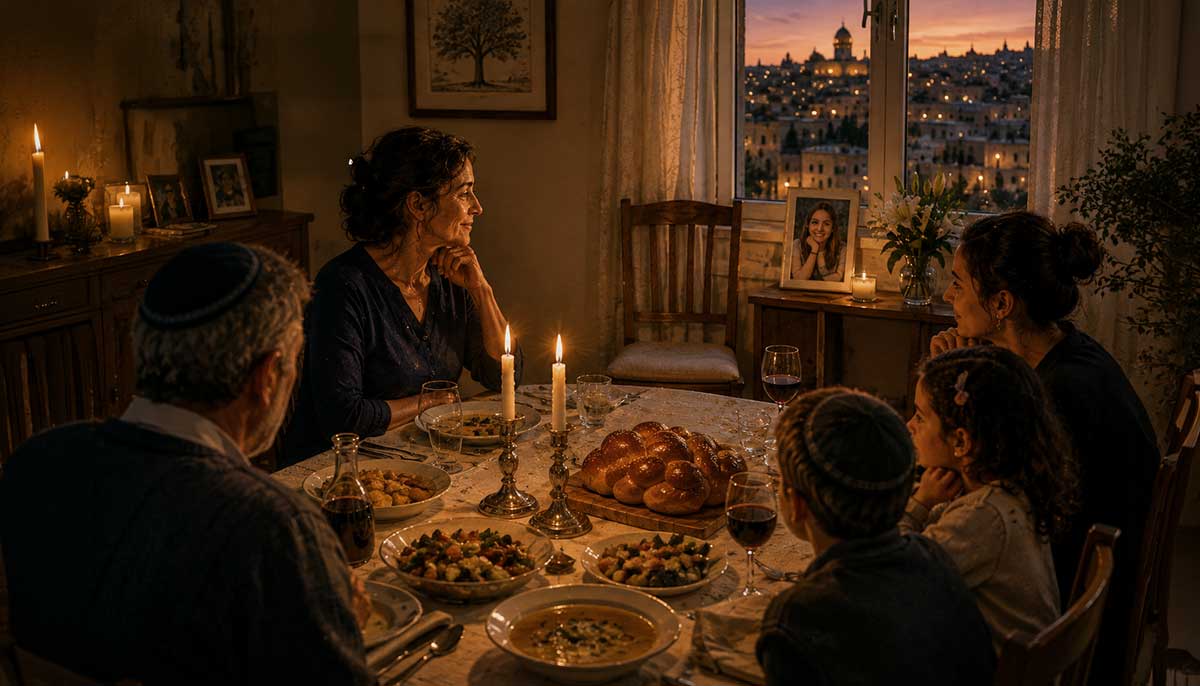
Every Friday evening, Miriam Levi took out seven candles.
Two for Shabbat.
One for her husband’s father.
One for her own mother.
And three whose purpose no one asked about anymore.
One of them was a little thinner than the others.
That one was for Noa.
Her daughter.
Dead at twenty-six.
Every week, Miriam placed that candle in exactly the same spot.
At the end of the table.
In front of the empty chair.
Noa’s chair.
Nobody sat there.
Not Miriam’s husband, David.
Not Noa’s younger sister, Yael.
Not the grandchildren.
Not even guests.
During the first year, nobody questioned it.
Nor during the second.
In the third year, Yael asked once.
“How long?”
Miriam knew exactly what she meant.
“How long what?”
“The chair.”
“Do you want to sit there?”
“That’s not what I mean.”
“Then leave it alone.”
Yael never asked again.
Miriam remembered every detail of the day Noa died.
The time the phone rang.
The light outside the window.
The lemons left in the refrigerator.
The way David tied one shoe, then untied it and tied it again.
The way Yael sat against the wall without speaking.
Years passed, but the memory of that day never faded.
Other memories did.
What color backpack Noa wanted when she was seven.
Who she fought with when she was twelve.
What she hated about high school.
Those things had begun to blur.
But the day she died remained perfectly clear.
And something else had become clearer with every passing year.
Avi Ben-Ami.
Miriam never forgot his name.
How could she?
He was the man she believed had been involved in Noa’s death.
The police questioned him.
There wasn't enough evidence.
No charges were filed.
Miriam couldn't accept it.
At first, she called the police.
Then lawyers.
Then reporters.
She searched his name online.
His workplace.
His address.
Things he had said years earlier.
His family.
Photographs.
Where he worked now.
Who appeared beside him in pictures.
Years later, Miriam even knew what kind of glasses he wore.
One evening David said:
“Maybe you should stop.”
Miriam turned.
“Stop what?”
“Searching for him.”
“Why?”
“Nothing changes.”
She gave him a cold smile.
“So you're allowed to change?”
“That isn't what I said.”
“I won't forget.”
“Nobody is asking you to forget.”
“Then don't ask.”
David fell silent.
After that, he stopped asking.
Yael grieved differently.
During the first year, she talked about Noa constantly.
Even stupid things.
How Noa always fell asleep halfway through movies.
How she liked reading road signs out loud.
How she gave names to dogs she passed on the street.
How she hated spicy food but kept ordering it and regretting it.
Every time, Miriam eventually brought the conversation back to the same place.
“If Avi hadn't been there that day…”
“What did Avi know?”
“Why didn't the police investigate him more?”
“Someone must have protected him.”
Eventually Yael would stop talking.
One Friday evening, David brought out an old photograph of Noa.
It had been taken by the sea.
Noa was twenty.
The wind had blown her hair completely across her face.
Yael laughed.
“I remember this. She fell right before you took it.”
David smiled.
“That’s right.”
Miriam looked at the photograph.
“Two years after this was when Avi first had contact with her.”
Yael stopped smiling.
“What?”
“That was when Avi first met Noa.”
The table went quiet.
David spoke softly.
“Miriam.”
“What? It's true.”
Yael was still holding the photograph.
“Why would you say that now?”
“What's wrong with saying it?”
“I was talking about Noa.”
“So am I.”
“No.”
Miriam's face hardened.
“What do you mean, no?”
Yael placed the photograph on the table.
“You're not talking about Noa.”
Miriam stared at her.
“You're talking about Avi.”
David exhaled quietly.
“Yael.”
“No. It's true.”
Yael looked directly at her mother.
“Every picture of Noa becomes Avi.”
“Her birthday becomes Avi.”
“We go to a restaurant she loved, and it becomes Avi.”
“Shabbat becomes Avi.”
Miriam's voice dropped.
“What exactly are you trying to say?”
Tears filled Yael's eyes.
“You remember him better than you remember Noa.”
Miriam's hand stopped.
“That is not true.”
“It is.”
“No.”
“Yes.”
“Stop it.”
“Mom, you know where Avi works, don't you?”
“Yes.”
“You know he moved last year.”
“Yes.”
“You know he has two daughters.”
“Yes.”
“You even know where they went to school.”
Miriam didn't answer.
Yael swallowed.
“What's the last movie Noa loved?”
Miriam opened her mouth.
Nothing came.
Yael saw it.
“There.”
“I forgot.”
“But you don't forget anything about Avi.”
Miriam stood.
Her chair scraped against the floor.
“That’s enough.”
“No, it isn't.”
“Be quiet.”
Yael stood too.
“You don't want to remember Noa.”
Miriam's face flushed.
“What did you say?”
“You don't want to let go of being angry.”
David rose from his chair.
“Stop.”
Yael didn't.
“As long as you're angry, you feel like you're still fighting for her.”
Tears ran down Miriam's face.
“What do you know about it?”
“I lost her too.”
“You're not her mother.”
“No.”
Yael's voice shook.
“But I'm her sister.”
The room went silent.
“I lost Noa too.”
Miriam couldn't speak.
Yael looked at the empty chair.
“But in this family, there's only one acceptable way to grieve her.”
“Be angry.”
“Hate Avi.”
“Keep saying we'll never forget.”
She looked back at Miriam.
“I felt guilty every time I laughed.”
Miriam's expression changed.
“You felt that?”
“Yes.”
“Who told you to feel that way?”
“Nobody.”
Yael wiped her face.
“But I did.”
Most of the Shabbat dinner went uneaten that night.
Several days later, Miriam went into Noa’s old room alone.
It no longer looked exactly as it once had.
Yael had packed away some things.
David had put others into boxes.
But nobody had touched the top shelf.
Noa's old box.
Miriam climbed onto a chair and took it down.
Photographs.
Tickets.
Notebooks.
Meaningless scraps of paper.
A small seashell.
And an old phone.
She charged it.
It still worked.
She opened the photographs.
Friends.
Coffee shops.
Sky.
Shoes.
Noa.
Then she found a video.
Thirty seconds.
Miriam pressed play.
Noa and Yael were standing in the kitchen.
Yael was burning something in a pan.
Noa was laughing.
“Mom's coming. You're dead.”
“Shut up!”
“She’s gonna know.”
“Open the window!”
They both laughed.
Noa leaned toward the camera.
“If anybody ever finds this, it was completely Yael's fault.”
The video ended.
Miriam played it again.
Then again.
The third time, she stopped halfway through.
And cried.
For the first time in a long while, she had been looking at Noa without thinking about Avi.
The realization brought another kind of pain.
When had she stopped remembering her daughter laughing?
When had the day Noa died become clearer than all the days she had lived?
The following Friday, Miriam took out the seven candles as usual.
Then stopped.
She put one back.
Then another.
Five remained.
She wasn't removing Noa's candle.
That one stayed.
She had simply put away two candles whose meanings had become confused with grief over the years.
David noticed.
He said nothing.
Yael arrived a little later with the children.
Noa's chair remained at the table.
Empty.
Miriam looked at it.
“Move that over there.”
David turned.
“The chair?”
“Yes.”
Nobody moved at first.
Yael watched her mother.
“Where?”
Miriam pointed toward the window.
“Over there.”
David lifted the chair.
He moved it away from the table.
Beside the window.
Under the shelf where Noa's photograph stood.
Miriam picked up a small frame.
The seaside photograph.
Noa with her hair blown across her face.
She didn't place it on the chair.
She placed it on the shelf.
One of the grandchildren looked at the empty space at the table.
“Can I sit there now?”
Miriam looked at the place where Noa's chair had been.
The table seemed strange without it.
Smaller.
“Yes.”
The child dragged another chair into the space.
A chair meant for someone to sit in.
Dinner began.
Bread.
Fish.
Salad.
Soup.
At first Miriam said very little.
David asked one of the grandchildren about school.
Yael talked about work.
Ordinary conversation.
Miriam found it frightening.
Noa was dead.
Yet ordinary conversation was happening.
Then Yael pointed to the fish.
“Noa loved this, remember?”
Miriam nodded.
“She hated the bones.”
Yael smiled.
“She never took them out herself.”
David laughed.
“She always handed the plate to me.”
Miriam smiled too.
A real smile.
“When she was twenty, she put every single fish bone onto my plate.”
Yael laughed.
“I don't remember that.”
“I do.”
The words surprised Miriam.
I do.
She was talking about Noa.
Only Noa.
Avi's name had not entered the room.
For years, something so simple had seemed impossible.
After dinner, Yael came into the kitchen.
Miriam was washing dishes.
“Mom.”
“What?”
“Thank you.”
Miriam turned off the faucet.
“For what?”
Yael shook her head.
“Nothing.”
Miriam studied her daughter for a moment.
Then said:
“I don't forgive him.”
Yael said nothing.
“I probably never will.”
“Okay.”
“I still think he knew something.”
“Okay.”
“He might really have been involved.”
“Okay.”
Miriam dried a plate.
“But…”
She paused.
“Maybe I don't have to look at him every day anymore.”
Tears appeared in Yael's eyes.
“Look at who?”
“Him.”
Miriam said nothing more.
Several weeks later, Miriam opened her computer.
Avi's name was still sitting in the search history.
A name she had typed almost every day for years.
There was a new result.
She almost clicked it.
Her finger stopped.
She stared at the screen.
Then closed it.
Instead, she opened her photographs.
Noa.
At the sea.
In the kitchen.
With friends.
Wearing a ridiculous hat.
Standing beside burnt food.
Laughing with Yael.
Miriam opened one photograph.
Noa had stuffed far too much bread into her mouth.
It wasn't beautiful.
It wasn't tragic.
It wasn't symbolic.
It was just Noa.
Miriam laughed.
Then cried.
Both at once.
The next Friday evening, Miriam lit the candles.
Noa's photograph stood near the window.
The chair was there too.
But it was no longer empty.
A folded blanket rested on it.
Something for the grandchildren to use when they got cold.
At the table, David poured wine.
Yael tore the bread.
One of the children spilled something.
Miriam scolded him.
Everyone laughed.
In the middle of it, Miriam glanced at Noa's photograph.
And for the first time, she thought:
I haven't forgotten you.
She was still angry.
She had not forgiven Avi.
She might never forgive him.
But she no longer needed him in order to remember her daughter.
And that was enough.
4. The Video Everyone Saw
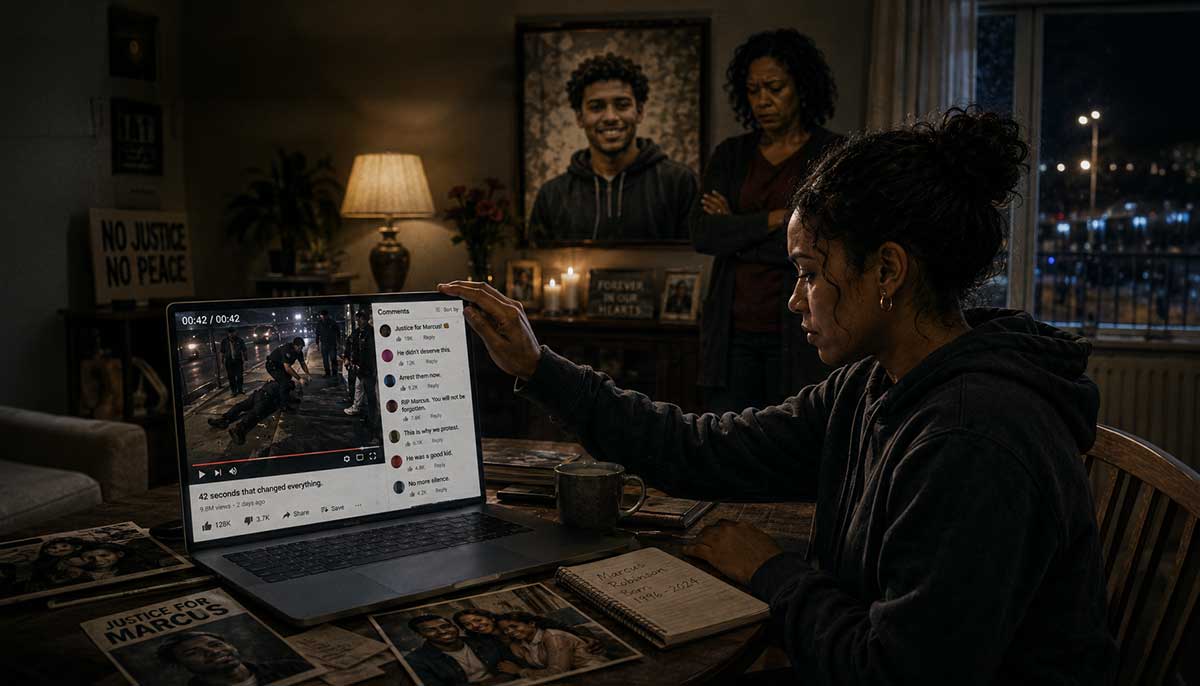
The first video was forty-two seconds long.
Forty-two seconds was all it took to turn her brother’s life into a story.
A black jacket.
A sidewalk at night.
The entrance to a nightclub.
Someone shouting.
A security guard’s arm.
Her brother falling to the ground.
Someone screaming.
Then the camera jerked sideways.
The video ended.
By the next morning, millions of people had watched it.
Her brother’s name was Marcus Reed.
He was twenty-eight.
He had grown up on the South Side of Chicago.
He played basketball in high school.
He never forgot to call his mother on Sundays.
Every year on Nia’s birthday, he sent his younger sister a gift card with exactly ten dollars more than the amount he intended to give her.
When she once asked why, he said:
“For taxes.”
It made no sense.
That was Marcus.
He could say ridiculous things with a completely serious face.
He made people laugh.
When he got angry, he got loud.
When he was wrong, it could take him a long time to apologize.
He was kind.
He could be difficult.
None of that appeared in the forty-two-second video.
The video showed only one thing.
Marcus being taken to the ground.
Three days later, reporters were standing outside Nia’s house.
Their mother, Deborah, initially refused to speak to anyone.
A week later, she was sitting in front of cameras.
“My son isn't coming home.”
That was what she said.
“But I want to know what happened to him.”
That clip spread too.
Thousands of people began sharing photographs of Marcus.
High school graduation.
Marcus laughing beside his mother.
Marcus holding his nephew.
Marcus standing outside church.
Strangers wrote underneath them.
Justice for Marcus.
He should have made it home.
Arrest the guard.
The security guard’s name was Eric Wallace.
Thirty-nine.
Former military.
Father of two.
That information spread almost immediately.
Then his address appeared online.
Threatening calls reached his workplace.
People found his wife’s social media accounts.
Someone posted the name of his children’s school.
When Nia saw that, something inside her tightened.
It frightened her.
But she said nothing.
Her brother was dead.
At the time, that felt bigger than everything else.
Two weeks after Marcus died, a large gathering was held for him.
Nia sat beside her mother.
Behind the stage was an enormous photograph of Marcus smiling.
It was a beautiful picture.
The speaker at the podium said:
“Marcus was a victim of violence.”
Applause.
“They may have taken his voice, but they cannot take ours.”
The crowd cheered.
Nia sat quietly, folding the corner of the program in her hands.
Her mother was crying.
People around them touched Deborah’s shoulder and rubbed her back.
And in the middle of it, Nia had a strange thought.
Marcus would have hated this.
The enormous picture of himself.
The applause from strangers.
The serious music.
She could almost hear him.
Come on. I wasn't that good.
For a moment, she nearly laughed.
She stopped herself.
It felt wrong to laugh here.
A month after Marcus died, the family’s attorney called.
“There’s something you need to see.”
Nia went to the office with her mother.
They sat in a small conference room.
The attorney opened a laptop.
“This came from the club.”
Deborah immediately asked:
“The video?”
“Not the one everyone has seen.”
The attorney hesitated.
“This begins earlier.”
He pressed play.
For the first few minutes, nothing happened.
The sidewalk outside the club.
People standing in line.
Then Marcus appeared.
Nia stared at the screen.
Her brother was alive.
Walking.
Laughing.
That alone hurt.
Several minutes passed.
An argument began.
Marcus and another customer.
There was no clear audio.
The other man spread his arms.
Marcus stepped closer.
A security guard moved between them.
Eric Wallace.
Marcus pushed him.
Nia's body went rigid.
Her mother whispered:
“No.”
The video continued.
Marcus shouted something.
He pushed Eric again.
The guard stepped backward.
Then Marcus reached into his pocket.
Eric’s expression changed.
Several people moved at once.
Marcus swung his arm.
Eric grabbed him.
Forced him down.
And there it was.
The beginning of the forty-two seconds the entire country had already seen.
Deborah stood.
“Turn it off.”
The attorney paused the video.
Silence filled the room.
“So what is this?”
Deborah's voice trembled.
“You're telling me my son was the problem?”
“No.”
“Then what are you telling me?”
“This doesn't erase questions about the restraint that was used.”
Nia kept staring at the frozen image.
Marcus looked angry.
She knew that face.
She had seen it before.
“What was in his pocket?” she asked.
The attorney hesitated.
“Nothing.”
Deborah looked up.
“Nothing?”
“No weapon was found.”
Nia exhaled.
For a moment, she felt relief.
But the rest of the video remained.
Marcus had pushed first.
He had shouted.
He had gone back toward the guard.
That remained too.
Neither woman spoke much on the drive home.
Once they were inside, Nia finally asked:
“What do we do?”
Deborah placed her purse on the table.
“About what?”
“The video.”
“Nothing.”
“You don't think people should see it?”
Her mother turned.
“Why would they need to?”
“They've only seen the end.”
“So?”
“So they haven't seen what actually happened.”
Deborah's face hardened.
“Marcus is dead.”
“I know.”
“He can't explain himself.”
“I know that too.”
“Then why would we give people something they can use against him?”
Nia had no answer.
Her mother’s voice shook.
“You know what people are like.”
Nia did.
If the full video came out, some of the people who had defended Marcus would disappear.
Others would say:
See?
He started it.
The guard was protecting himself.
Marcus’s entire life would be reduced again.
Just to a different forty-two seconds.
“But what about Eric's family?” Nia asked.
Her mother went still.
“What?”
“The guard’s family.”
“You're asking me that now?”
“People posted his address.”
“Nia.”
“His kids’ school.”
Deborah stared at her.
“Whose sister are you?”
The words stopped Nia completely.
Her mother’s expression changed the moment she heard herself say them.
But she didn't apologize.
Nia didn't answer.
That night, Nia listened to one of Marcus’s old voicemails.
She had saved it.
It was from her birthday.
“Yo, old lady.”
She laughed immediately.
He was only two years older than her.
“Sent your gift. Put ten extra dollars on there. Taxes.”
Marcus laughed at his own joke.
“Call me back too. Mom says I'm the only one who calls her.”
End.
Forty seconds.
It struck Nia that millions of people now believed they knew Marcus from forty-two seconds of video.
Yet this stupid forty-second voicemail contained more of her brother than anything they had seen.
Several days later, Nia received an email from Eric Wallace’s wife.
At first she thought it was fake.
The message was short.
I am not asking anything from you.
I am not asking you to defend what my husband did.
I only want you to know that our daughter has stopped going to school.
People have been coming to our house.
Nia closed the message.
Ten minutes later, she opened it again.
She didn't reply.
She didn't reply the next day either.
Or the day after that.
But she couldn't delete it.
Marcus’s death continued to grow into something larger.
Television programs.
Podcasts.
Newspaper columns.
Politicians.
Activists.
Commentators.
People who had never met Marcus talked about who Marcus had been.
One television program described him as:
“A gentle young man devoted to peace.”
Nia looked at the television.
“No, he wasn't.”
Marcus wasn't devoted to peace.
He got into fights.
He dropped out of college once.
He took their mother’s car without permission.
At twenty, he got into a fistfight with a cousin.
He was there for his nephew’s birthdays.
He went with their mother to every major medical appointment.
When Nia's heart was broken, he stayed on the phone with her until three in the morning.
He was a person.
But everyone seemed determined to make him one of two things.
A saint.
Or a criminal.
One afternoon, Deborah was scheduled to give another press conference.
Nia was supposed to sit beside her.
On the drive there, her mother said:
“Don't say anything unnecessary today.”
Nia looked out the window.
“What does unnecessary mean?”
Deborah didn't answer.
The room was crowded.
Photographs of Marcus.
Signs.
Cameras.
Nia's chair was beside her mother's.
But just before the press conference began, she realized she couldn't sit there.
She walked to the back of the room.
The chair beside Deborah remained empty.
Her mother turned.
Their eyes met.
Nia shook her head.
For a moment, Deborah's face seemed to collapse.
Then the cameras came on.
The press conference began.
Nia watched from the back.
She kept looking at the empty chair beside her mother.
That night, Nia called the attorney.
“I want the full video released.”
There was a pause.
“Are you certain?”
“Yes.”
“Your mother?”
Nia said nothing.
“She’s against it.”
“And you still want to?”
“Yes.”
After the call, she told Deborah.
The argument was worse than she had expected.
“What are you thinking?”
“Mom—”
“Do you have any interest in protecting your brother?”
“Of course I do.”
“Then why would you do this?”
“Because the story they're telling now isn't Marcus either!”
Deborah stopped.
Tears ran down Nia's face.
“The Marcus everyone has created isn't Marcus.”
“What are you talking about?”
“The perfect victim.”
“The peaceful young man.”
“The guy who never put his hands on anybody.”
“He wasn't that person.”
Deborah's face twisted.
“You want the entire country to see every bad thing about your dead brother?”
“It isn't about showing the bad things.”
“Then what is it?”
Nia lowered her voice.
“The human things.”
Her mother couldn't speak.
“Marcus made mistakes.”
“He got angry.”
“He did stupid things.”
“He pushed people.”
Nia wiped her face.
“And none of that means he deserved to die.”
Deborah began to cry.
“You think people will understand that?”
Nia shook her head.
“No.”
“Then why do it?”
Nia looked at the photograph of her brother.
Smiling.
“I don't want to protect him with a lie.”
Deborah covered her face.
“I just want to protect my son.”
“I know.”
“I don't want them hurting him anymore.”
“I know.”
Nia sat beside her.
For a long time, neither woman spoke.
Then Deborah asked:
“If the video comes out, people will blame him.”
“Yes.”
“They'll say horrible things.”
“Yes.”
“Can you live with that?”
Nia answered:
“I don't know.”
The full video was released the next afternoon.
Within an hour, the story began changing.
This is completely different.
Marcus started the confrontation.
The guard was doing his job.
That restraint was still excessive.
They were both wrong.
The family knew about this video?
They hid the truth.
Stop attacking Marcus.
Nobody should have judged this from one clip.
Nia kept scrolling.
Her brother was becoming another story.
Yesterday, he had been a saint.
Today, he was becoming a man who had brought everything upon himself.
Some of the same accounts that had praised him hours earlier were now condemning him.
Marcus hadn't changed.
The video had simply become longer.
Deborah entered the room.
“Close it.”
Nia kept looking at the screen.
“Just a minute.”
“Close it.”
Nia shut the laptop.
The room became quiet.
Her mother remained standing.
“Why?”
That was all she asked.
Nia looked at her.
“Why what?”
“Why did you do it?”
For a long time, Nia couldn't answer.
Her brother’s photograph.
The press conference.
The empty chair.
The voicemail.
Forty-two seconds.
The full video.
Everything was there.
Finally, she said:
“Before Marcus became everybody's symbol…”
Her voice broke.
“He was my brother.”
Deborah's eyes filled with tears.
“So?”
“So I didn't want to make him beautiful.”
“I didn't want to make him ugly either.”
Nia pressed a hand against her chest.
“I wanted to remember him the way he actually was.”
Her mother said nothing.
Several weeks passed.
People gradually lost interest.
Another story appeared.
Another video went viral.
Another name began trending.
The world moved on.
Nia still received messages from strangers.
Some blamed Marcus.
Some defended him.
Some blamed Nia.
Some praised her.
She stopped reading most of them.
One Sunday afternoon, she had lunch at her mother's house.
Chicken.
Macaroni.
Cornbread.
Deborah said:
“Marcus hated this.”
Nia looked up.
“The macaroni?”
“No. Cornbread.”
“He loved cornbread.”
“He hated it.”
“Maybe he hated your cornbread.”
Deborah stared at her.
“Excuse me?”
Nia laughed.
Her mother tried not to.
Then she laughed too.
After a moment Deborah said:
“Wait.”
“What?”
“I want to know.”
“Know what?”
“Did he really hate it?”
Nia picked up her phone.
“Let's ask him.”
Her mother smiled.
“How?”
Nia opened the saved voicemail.
Marcus’s voice filled the room.
“Yo, old lady.”
Deborah laughed immediately.
So did Nia.
The Marcus in that recording wasn't a victim.
He wasn't a symbol.
He wasn't innocent of every mistake.
He wasn't a villain.
He was Marcus.
The recording ended.
Nia placed the phone facedown.
Her mother said:
“Again.”
Nia played it again.
Outside, a car passed.
The television was off.
No social media feeds were open.
For that afternoon, nobody talked about what Marcus represented.
They talked about who he had been.
5. The Doctor Who Wouldn’t Say His Name
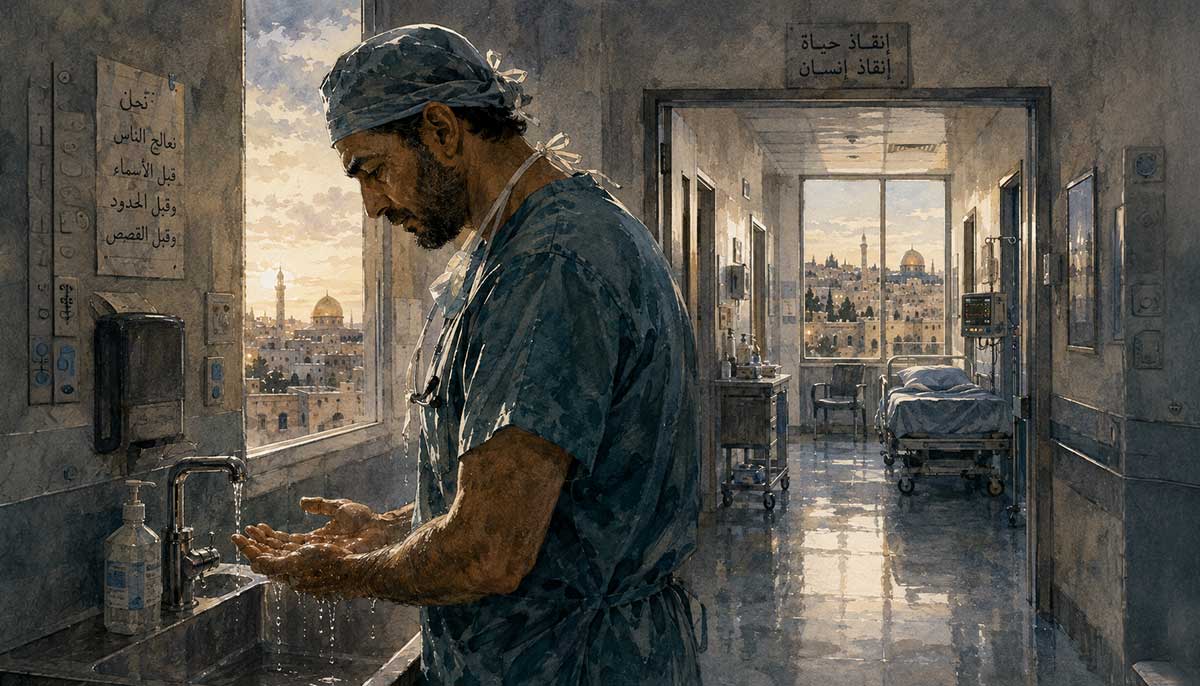
That night, what Youssef Khalil was drinking required a generous definition of the word coffee.
2:13 a.m.
A hospital in Jerusalem.
His shift was nowhere near over.
Youssef stood beside the vending machine and took another sip of the lukewarm, bitter liquid.
“I don't know how you drink that every night.”
He knew the voice without turning around.
Daniel Rosen.
An emergency physician.
“That’s coffee.”
“That’s mud.”
“Still better than anything you make.”
“When have you ever seen me make coffee?”
Youssef smiled.
A little.
They had worked at the same hospital for more than ten years.
Youssef was fifty-four, a Palestinian surgeon.
Daniel was forty-eight, an Israeli emergency physician.
They had not grown up in the same kind of home.
Their families did not tell the same stories about history.
They did not agree about everything.
Sometimes they didn't agree about much at all.
But inside the emergency department, those differences came later.
A patient arrived.
You checked the airway.
Breathing.
Blood pressure.
Bleeding.
Sometimes you didn't even know the patient's name until after you had begun trying to save them.
Where they came from.
Who they loved.
Who they hated.
What they believed.
There was no time for any of that.
At least that was how Youssef had always worked.
Until that night.
The announcement came over the hospital system.
Elderly male.
Multiple trauma.
Reduced consciousness.
Suspected internal bleeding.
Daniel put down his cup.
“Come on.”
Youssef threw his coffee away.
By the time they entered the trauma bay, the stretcher was already coming through the doors.
A man in his late seventies.
White hair.
His blood-soaked shirt had been cut open.
Oxygen mask.
A nurse read out the information.
“Eli Navon. Seventy-eight.”
Youssef stopped walking.
For a moment, he thought he had heard the name wrong.
“Eli Navon.”
He heard it again.
Youssef could not remember the last time he had heard that name spoken aloud.
But there had not been a single day when he had truly forgotten it.
He looked at the man on the stretcher.
Old.
Very old.
Nothing like the photographs Youssef remembered from thirty-eight years ago.
The cheeks were hollow now.
The hair white.
Deep lines covered the face.
Still, Youssef knew.
Eli Navon.
The man connected to his father's death.
The man Youssef had spent thirty-eight years believing had gotten his father killed.
“Youssef?”
Daniel was watching him.
“You know him?”
For a moment, Youssef said nothing.
Then:
“No.”
It was a lie.
A nurse called out:
“Pressure's dropping!”
Time started moving again.
Youssef stepped closer to the stretcher.
He erased the name.
He erased the memory.
This was not Eli Navon.
This was a seventy-eight-year-old male.
Internal bleeding.
That was all.
The scans showed a ruptured spleen, liver injury, pelvic fractures.
Youssef looked at the numbers.
“We operate.”
As he scrubbed his hands, Youssef remembered his father's hands.
Large hands.
Thick fingers.
His father repaired watches.
When Youssef was a boy, he had never understood how fingers that large could work with gears so small.
Once, he asked him.
His father laughed.
“It isn't the hands.”
He pointed at the watch.
“It’s whether you know how to wait.”
Then he said:
“If you rush it, you break it.”
Youssef was sixteen when his father died.
Afterward, one name remained inside the family.
Eli Navon.
The last person known to have met his father.
The man rumored to have told others where his father could be found.
There had been no trial.
No proof Youssef ever saw.
Someone had seen something.
Someone had heard something.
Someone knew someone who knew.
Over time, rumor hardened into fact.
Eli betrayed him.
Eli got him killed.
Youssef's mother rarely said the name.
His uncles did.
Again and again.
So Youssef learned it too.
A name absorbed by a sixteen-year-old boy together with grief.
On the operating table, the patient had no face.
Green drapes.
Blood.
Monitors.
Numbers.
“Suction.”
Youssef's hands moved.
Incision.
Find the bleeding.
Control it.
Repair the damage.
After his father's death, Youssef became a doctor.
Not for revenge.
At least that was what he had always believed.
When his medical school acceptance letter arrived, his mother cried.
“If your father were here…”
She never finished the sentence.
Nobody in the family ever did.
If your father were here.
During the operation, Eli's blood pressure fell again.
“Youssef.”
“I see it.”
More suction.
More blood.
Control the bleeding.
And then it happened.
A thought entered his mind.
Just for an instant.
What if I were a little slower?
One delayed decision.
One small mistake.
The man was seventy-eight.
His injuries were severe.
He had lost a great deal of blood.
Nobody would be surprised if he died.
Nobody might ever know.
The thought lasted less than a second.
But it existed.
Youssef looked at his own hands.
“More blood.”
He continued operating.
Four hours later, Eli Navon was alive.
After the patient was transferred to intensive care, Youssef leaned against the corridor wall.
Daniel appeared carrying a paper cup.
“This one is actual coffee.”
Youssef didn't take it.
“I don't want it.”
Daniel stood beside him.
After a moment, he said:
“You knew him.”
Youssef remained silent.
“I saw your face when you heard the name.”
“He was involved in my father's death.”
Daniel didn't respond immediately.
“Involved?”
“That’s what I was raised believing.”
“Was there proof?”
Youssef looked at him.
“You're asking me that now?”
“I'm not asking as a doctor.”
“Then what are you asking as?”
Daniel thought for a moment.
“Someone who has worked beside you for more than ten years.”
Youssef looked away.
“There was no proof.”
Daniel nodded.
He said nothing more.
The following day, Eli's daughter came to the hospital.
Rachel.
Around fifty.
Close to Youssef's own age.
“Are you the surgeon who operated on my father?”
“Yes.”
Rachel took his hand in both of hers.
“Thank you.”
Youssef's body stiffened.
“He's still in serious condition.”
“But he's alive.”
Her eyes filled with tears.
“My father is all I have.”
Youssef couldn't answer.
My father is all I have.
At sixteen, Youssef had lost exactly that.
And the father of the woman standing before him might have been responsible.
Yet Youssef had just saved his life.
“Doctor, thank you.”
Youssef withdrew his hand.
“It’s my job.”
The moment he said it, he hated the sentence.
Three days later, Eli regained consciousness.
Youssef didn't visit him.
Other doctors handled his care.
There was no medical reason for Youssef to go.
That was what he told himself.
On the fourth day, Rachel stopped him in the corridor.
“Doctor.”
Youssef turned.
“My father would like to see you.”
“Me?”
“When he heard your name…”
She hesitated.
“He said he knew it.”
Youssef felt something cold move through him.
“You are Dr. Khalil, right?”
“Yes.”
“He said he knows that name.”
Youssef stood outside Eli's room for nearly five minutes.
This was not a medically necessary visit.
He could refuse.
He could walk away.
Instead, he opened the door.
The man in the bed looked small.
For thirty-eight years, Eli had been enormous inside Youssef's memory.
The man who took his father.
The man who made his mother cry.
The man who damaged his family.
A monster.
The person in the hospital bed was an old man connected to tubes.
Eli opened his eyes.
He looked at Youssef.
“Khalil?”
His voice was weak.
“Yes.”
“Your father…”
Eli struggled to speak.
“Adel?”
Youssef's entire body tightened.
“Yes.”
He waited.
“Adel Khalil was my father.”
Eli closed his eyes.
“I see.”
That was all.
Something inside Youssef broke open.
“That’s all you have to say?”
Eli opened his eyes.
“What?”
“You knew my father.”
“Yes.”
“You gave information about him.”
The old man remained silent.
“Who told you that?”
“Everyone.”
“For thirty-eight years.”
Eli looked at the ceiling.
“Everyone.”
Then, quietly:
“A useful word.”
Youssef clenched his fist.
“Are you denying it?”
“Denying what?”
“That you caused my father's death.”
Eli looked at him.
“That is what you believe.”
“Answer me.”
Silence.
Then Eli said:
“I spoke about your father.”
Youssef forgot to breathe.
He had waited thirty-eight years to hear those words.
“To whom?”
No answer.
“What did you tell them?”
“Where he was.”
Tears filled Youssef's eyes.
Anger.
Grief.
He couldn't tell which.
“So it was you.”
“But—”
Eli's voice interrupted him.
“It wasn't the way you've been told.”
“What does that mean?”
“I didn't tell them where he was so that they would kill him.”
“My father died.”
“I know.”
“Then what difference does it make?”
Eli closed his eyes.
“Perhaps none.”
Youssef gave a dry laugh.
“Perhaps?”
“I believed I was doing the right thing.”
“My father probably believed the same thing.”
Eli said nothing.
Youssef couldn't bear another second in the room.
He walked out.
That night, Youssef went to see his mother.
She was eighty-two now and lived alone.
“You never come this late.”
“I was nearby.”
Another lie.
She made tea.
His father's photograph hung on the wall.
The man in the picture was younger than Youssef was now.
“Mom.”
“Yes?”
“Do you remember Eli Navon?”
Her cup stopped halfway to her mouth.
“Why are you saying that name?”
“He came into the hospital.”
“As a patient?”
“I operated on him.”
His mother slowly sat down.
“He's alive?”
“Yes.”
Silence.
Youssef looked at his father's photograph.
“What do you really know?”
His mother lowered her eyes.
“It's been thirty-eight years.”
“That’s why I'm asking now.”
He looked at her.
“Did Eli betray Dad?”
She didn't answer.
“Mom.”
Finally, she said:
“Your father and Eli were friends.”
Youssef couldn't process the sentence.
“What?”
“When they were young.”
“Nobody ever told me that.”
“I didn't.”
“Why?”
Tears formed in her eyes.
“Near the end, your father didn't hate Eli.”
“That’s a lie.”
“No.”
“Then why didn't anyone say that?”
“The family didn't know.”
“You did?”
She said nothing.
Youssef's voice shook.
“Why didn't you tell me?”
His mother looked at him.
“Because you needed him.”
“Needed who?”
“Eli.”
Youssef stared at her.
“You were sixteen.”
Her tears fell now.
“Your father was dead, and every night you asked me whose fault it was.”
“I had no answer.”
“Then people started saying Eli's name.”
“And after that, you slept a little.”
Youssef sat down.
“So you let me believe it?”
His mother nodded.
“If I took away your hatred…”
Her voice broke.
“I thought all you would have left was grief.”
Back at the hospital, Youssef opened Eli's medical record.
Something in the social worker's notes caught his attention.
Family history.
Community work.
Charitable support.
Then the name of a small medical fund.
Youssef knew that fund.
More than a decade earlier, his cousin's son had needed surgery.
The fund had helped pay for part of it.
The donor had been anonymous.
Youssef made a call.
Later, someone called him back.
Eli Navon had been one of the fund's founders.
Youssef ended the call.
And became furious.
Truly furious.
It would have been easier if Eli had only been the man who betrayed his father.
Easier if he had spent his life hurting people.
Then the story Youssef had carried for thirty-eight years could remain intact.
But Eli had helped strangers.
One of those strangers had belonged to Youssef's own family.
He did not want to know that.
He did not want Eli to contain contradictions.
He wanted the monster back.
The day before Eli was discharged, Youssef entered his room.
The old man was looking out the window.
“Doctor.”
“I learned about the medical fund.”
Eli said nothing.
“Why did you do it?”
“Do what?”
“Help people.”
Eli gave the faintest smile.
“That’s a strange question.”
“Answer it.”
After a long silence, Eli said:
“Once, there was someone I couldn't help.”
Youssef felt pain move through his chest.
“My father?”
Eli didn't answer.
This time, Youssef didn't ask again.
Eventually, Eli spoke.
“You don't have to forgive me.”
Youssef's expression hardened.
“You don't get to tell me that.”
“No.”
Eli nodded.
“You're right.”
Silence returned.
Youssef turned to leave.
“Youssef.”
He stopped.
It was the first time Eli had used his first name.
Youssef turned.
The old man studied his face.
“Your father…”
His voice weakened.
“He had the same eyes.”
Youssef said nothing.
Outside the room, Youssef leaned against the wall.
He didn't cry.
He didn't shout.
He hadn't forgiven Eli.
For most of his life, his father's death had possessed a clear shape.
His father had lived.
Eli had betrayed him.
His father had died.
Youssef had built thirty-eight years around that shape.
Now it was breaking apart.
What exactly had his father been involved in?
Why had Eli revealed where he was?
What had Eli believed would happen?
Why had his father stopped hating him?
What else did Youssef's mother know?
He didn't know.
For the first time, another possibility entered his mind.
Perhaps he never would.
Soon, another patient needed surgery.
A young man injured in a traffic accident.
Youssef stood at the sink.
Soap.
Wrists.
Backs of the hands.
Between the fingers.
The same sequence he had performed thousands of times.
He looked down at his hands.
They did not resemble his father's.
His father's fingers had been thick.
Youssef's were slender.
A surgeon's hands.
For years, he had thought he knew what he had inherited from his father.
A name.
Memories.
Grief.
Anger.
He had believed that honoring his father meant carrying all of it until the end.
Perhaps it didn't.
He didn't yet know what honoring him meant.
The surgery ended at three in the afternoon.
Youssef walked to the vending machine.
He bought another coffee.
Took one sip.
Terrible.
“You never learn.”
Daniel had appeared beside him.
“It’s bad today.”
“You said that yesterday.”
“I'll say it tomorrow too.”
Daniel smiled.
After a moment, he asked:
“Navon is being discharged?”
“Yes.”
“You talked to him?”
“A little.”
Daniel didn't ask anything else.
The two men stood near the window.
Below them, an ambulance was pulling into the hospital.
Another patient.
Someone whose name they didn't know yet.
Youssef lifted the paper cup.
Then stopped.
For thirty-eight years, whenever he thought about his father's death, Eli's face had come first.
That afternoon, it didn't.
He saw his father's hands.
Large hands.
Thick fingers.
A tiny watch resting between them.
And he heard his father's voice.
It isn't the hands.
It's whether you know how to wait.
If you rush it, you break it.
Youssef closed his eyes for just a moment.
Then he set the coffee down.
He walked back toward the emergency department.
Somewhere inside, another person was waiting to be saved.
Final Thoughts

Across these stories, silence keeps changing its meaning.
In “The Man Across the Street,” silence comes dangerously close to complicity.
Mark never orders Tyler to hurt Daniel.
He never sets the fire.
He even tells Tyler not to do anything stupid.
Yet when Tyler sends a message that should frighten him, Mark types Stop and then deletes it.
His silence gives him something he secretly wants: the possibility that another person will act on the hatred he cannot act upon himself.
His hardest realization is not that he committed the crime.
He didn't.
It is that part of him wanted the result.
That distinction matters.
Responsibility is rarely as simple as guilt or innocence.
Sometimes the most painful moral questions begin in the space between them.
In “My Brother’s Name,” silence looks completely different.
Mariam's mother remains quiet out of love.
She knows Rami was frightened.
She knows the perfect version of Rami living inside her husband's grief is incomplete.
Yet she fears that taking away that version of their son will leave her husband with nothing but unbearable sorrow.
The lie gives grief a structure.
Samir becomes the villain.
Rami remains innocent.
The father remains certain.
Then Mariam introduces something much harder than certainty:
ambiguity.
Rami made mistakes.
Rami was afraid.
Rami needed help.
Rami may have entered something dangerous voluntarily.
None of this means he deserved to die.
None of it means his family should love him less.
The father finally begins grieving his actual son rather than the idealized son created after death.
That may be one of the hardest forms of love:
allowing the dead to remain human.
“The Empty Chair” turns from truth to memory.
Miriam believes she is keeping Noa alive through anger.
She searches Avi's name.
Studies his life.
Tracks where he works.
Remembers his family.
Remembers his glasses.
Then Yael asks one devastating question:
What was the last movie Noa loved?
Miriam cannot answer.
The man she hates has slowly occupied more space in her memory than the daughter she is trying to honor.
That is the tragedy at the center of the story.
Hatred can feel like loyalty.
Anger can feel like remembrance.
Refusing to move can feel like refusing to abandon the dead.
Yet Noa returns most vividly when Miriam stops looking at the circumstances of her death and watches an ordinary thirty-second video of her laughing in a kitchen.
Noa is no longer merely someone who died.
She becomes someone who lived.
Miriam never has to forgive Avi for that transformation to occur.
She simply stops allowing him to stand between her and her daughter.
“The Video Everyone Saw” moves the same question into public life.
Marcus dies.
Within hours, strangers begin deciding who he was.
For one group, he becomes a symbol of innocence.
For another, after the longer video appears, he becomes responsible for everything that happened.
Both versions erase him.
Nia knows something the public does not seem able to tolerate:
Marcus could behave badly and still not deserve to die.
He could start a confrontation and still deserve humane treatment.
He could be loving and difficult.
Funny and angry.
Generous and foolish.
The moral value of his life does not depend upon proving that he never made a mistake.
When Nia releases the longer video, she risks destroying the image that has been protecting her brother.
She does it for a strange reason.
Love.
She would rather remember an imperfect Marcus than defend a fictional one.
The forty-second voicemail becomes more meaningful than the viral footage.
Millions saw Marcus die.
Only the people who loved him knew how he lived.
Then comes “The Doctor Who Wouldn’t Say His Name.”
Youssef has carried Eli Navon's name for thirty-eight years.
Eli gives his grief a shape.
His father died.
Someone must be responsible.
Eli becomes that person.
Then fate places Eli unconscious on Youssef's operating table.
For one second, Youssef realizes he could let the story end there.
He doesn't.
He saves him.
That choice does not make Youssef morally pure. The fleeting thought of letting Eli die matters precisely since Youssef is human enough to have it.
The greater transformation comes later.
Eli admits that he revealed Youssef's father's location.
Yet the truth refuses to become simple.
Eli believed he was doing the right thing.
Youssef's father had once been his friend.
Youssef's mother knew more than she admitted.
She allowed her sixteen-year-old son to hate Eli after noticing that hatred gave him something grief could not:
an answer.
Then Youssef discovers that Eli later helped create a medical fund that quietly helped strangers, including someone in Youssef's extended family.
None of this erases what Eli did.
That is the point.
Eli does not transform from villain into hero.
He transforms from villain into human being.
And that is much harder for Youssef to accept.
A monster can be hated without hesitation.
A human being forces questions.
By the end, Youssef still hasn't forgiven Eli.
Miriam hasn't forgiven Avi.
Nia hasn't decided that what happened to Marcus was acceptable.
Mariam's family still doesn't know exactly why Rami died.
Mark cannot undo his silence.
Nothing is neatly repaired.
Yet something has shifted.
Mark eats breakfast instead of watching the house across the street.
Mariam's father wants to learn who his son really was.
Miriam remembers Noa laughing.
Nia and Deborah listen to Marcus joking on an old voicemail.
Youssef remembers his father's hands before he remembers Eli's face.
That may be the thread connecting all five stories.
Healing does not always begin when we forgive the person we blame.
Sometimes it begins when that person stops occupying the center of the story.
The dead return to the center.
Emily.
Rami.
Noa.
Marcus.
Adel.
They become more than victims again.
A daughter who left socks in the living room.
A brother who wore one earbud and made his mother laugh.
A young woman who burned food with her sister.
A brother who added ten dollars to a birthday gift “for taxes.”
A father with thick fingers who repaired tiny watches.
Perhaps that is the deepest answer these stories offer to the question raised at the beginning.
What do we do with anger when justice cannot return the people we love?
We may never completely lose the anger.
But we can refuse to let it become the most important thing we remember.
Short Bios:
Mark Carter — “The Man Across the Street”
An Ohio father whose daughter Emily disappeared. His obsession with the man he suspects forces him to confront the moral difference between committing violence and secretly wishing someone else would commit it for him.
Mariam — “My Brother’s Name”
A Palestinian woman trying to discover what happened before her younger brother Rami's death. She learns that protecting a loved one's memory can sometimes require accepting truths that make that memory less perfect.
Miriam Levi — “The Empty Chair”
An Israeli mother who has spent years grieving her daughter Noa. She begins to recognize that her fixation on the man she blames has gradually displaced the ordinary memories of the daughter she wants desperately to preserve.
Nia Reed — “The Video Everyone Saw”
A Chicago woman whose brother Marcus becomes the subject of a viral video and national debate after his death. She fights to preserve his right to be remembered as an imperfect human being rather than a symbol.
Youssef Khalil — “The Doctor Who Wouldn’t Say His Name”
A Palestinian surgeon in Jerusalem who finds the man he has blamed for his father's death on his operating table. Saving Eli's life begins a confrontation with a past far less simple than the story Youssef has carried since he was sixteen.
Leave a Reply