
• Skip to main content
  • Skip to primary sidebar
  • Skip to footer
ImaginaryTalks.com
  • Spirituality and Esoterica
    • Afterlife Reflections
    • Ancient Civilizations
    • Angels
    • Astrology
    • Bible
    • Buddhism
    • Christianity
    • DP
    • Esoteric
    • Extraterrestrial
    • Fairies
    • God
    • Karma
    • Meditation
    • Metaphysics
    • Past Life Regression
    • Spirituality
    • The Law of Attraction
  • Personal Growth
    • Best Friend
    • Empathy
    • Forgiveness
    • Gratitude
    • Happiness
    • Healing
    • Health
    • Joy
    • Kindness
    • Love
    • Manifestation
    • Mindfulness
    • Self-Help
    • Sleep
  • Business and Global Issues
    • Business
    • Crypto
    • Digital Marketing
    • Economics
    • Financial
    • Investment
    • Wealth
    • Copywriting
    • Climate Change
    • Security
    • Technology
    • War
    • World Peace
  • Culture, Science, and A.I.
    • A.I.
    • Anime
    • Art
    • History & Philosophy
    • Humor
    • Imagination
    • Innovation
    • Literature
    • Lifestyle and Culture
    • Music
    • Science
    • Sports
    • Travel

Nick Sasaki

The Mountain Is You Summary: Self-Sabotage to Self-Trust

January 7, 2026 by Nick Sasaki Leave a Comment

the mountain is you lessons

What if Brianna Wiest unpacked why good people self-sabotage with Jung and Rogers?Introduction by Brianna WiestThe Mountain Is You is titled the way it is because the hardest obstacle most of us will ever face isn’t life “out there” — it’s the internal resistance that rises the moment we get close to the life we say we want. I wanted the title to be unmistakable: … [Read more...] about The Mountain Is You Summary: Self-Sabotage to Self-Trust

Filed Under: Mindset, Personal Development, Psychology Tagged With: Brianna Wiest, Emotional Healing, identity change, nervous system, personal growth, self-compassion, self-sabotage, self-trust, shame, The Mountain Is You

Today’s Philosophers Confront Power, Identity, and Modern Life

January 7, 2026 by Nick Sasaki Leave a Comment

What if today’s philosophers confronted the crises we’re living through without abstraction or distance?Introduction by Hannah ArendtBefore we speak of crises, we must speak of the world we share.A common world is not held together by agreement, nor by truth enforced from above. It exists only insofar as people are willing to appear before one another, to speak, … [Read more...] about Today’s Philosophers Confront Power, Identity, and Modern Life

Filed Under: Consciousness, History & Philosophy, Politics Tagged With: contemporary philosophy explained, contemporary thinkers debate, cultural theory explained, identity politics philosophy, ImaginaryTalks philosophy, media and power today, modern intellectual dialogue, modern philosophers debate, modern thinkers discussion, philosophy and society today, philosophy for today, philosophy of modern life, political philosophy modern, power and identity philosophy, resistance and power philosophy, social control philosophy, technology and meaning today, today’s philosophers, truth and media today, why philosophy matters now

Macbeth analysis of ambition that turns into terror

January 6, 2026 by Nick Sasaki Leave a Comment

Macbeth summary

What if Macbeth had to defend his choices with no prophecy to blame?Introduction by William ShakespeareMacbeth analysis begins in the most dangerous place of all: a mind that hears a sentence and calls it destiny. I did not write this tragedy to prove that witches can rule men like puppets. I wrote it to show how easily a man will offer himself to ruin when he … [Read more...] about Macbeth analysis of ambition that turns into terror

Filed Under: History & Philosophy, Literature, Psychology Tagged With: Birnam Wood to Dunsinane, Lady Macbeth analysis, Macbeth ambition theme, Macbeth analysis, Macbeth Banquo ghost scene, Macbeth character analysis, Macbeth characters, Macbeth dagger scene meaning, Macbeth ending explained, Macbeth explained, Macbeth fair is foul meaning, Macbeth guilt theme, Macbeth meaning, Macbeth none of woman born, Macbeth plot, Macbeth sleepwalking scene, Macbeth summary, Macbeth themes, Macbeth tragic hero or villain, Macbeth witches prophecy

Love Toni Morrison Summary: The Women in Cosey’s Wake

January 6, 2026 by Nick Sasaki Leave a Comment

love toni morrison summary

What if Toni Morrison sat with us and asked who “love” really protects? Introduction by Toni MorrisonTonight, I want to start with the title—because Love is not a comforting word in this book. It’s a word people use to cover what they cannot—or will not—name. “Love” can be a veil thrown over power. It can be the excuse a community repeats so it doesn’t have … [Read more...] about Love Toni Morrison Summary: The Women in Cosey’s Wake

Filed Under: Literature, Love, Psychology, Relationship Tagged With: bill cosey toni morrison, heed and christine, l in love toni morrison, love by toni morrison plot, love by toni morrison summary, love toni morrison analysis, love toni morrison book summary, love toni morrison celestial, love toni morrison characters, love toni morrison discussion questions, love toni morrison ending explained, love toni morrison meaning, love toni morrison menu note, love toni morrison review, love toni morrison summary, love toni morrison synopsis, love toni morrison themes, love toni morrison will, toni morrison love explained, toni morrison novels explained

Jonathan Haidt The Righteous Mind: Why Good People Are Divided

January 6, 2026 by Nick Sasaki Leave a Comment

What if Jonathan Haidt mapped why good people are divided—and gave one practical way to argue without turning each other into enemies?Introduction by Jonathan HaidtWhen I chose the title The Righteous Mind, I was not trying to accuse anyone of hypocrisy or moral arrogance. I was trying to describe a psychological reality that I myself struggled to accept: … [Read more...] about Jonathan Haidt The Righteous Mind: Why Good People Are Divided

Filed Under: Politics, Psychology, Religion Tagged With: empathy and morality, group identity psychology, hive mind psychology, ideological polarization, intuition vs reason morality, jonathan haidt morality, moral foundations theory, moral intuition, moral psychology, moral reasoning bias, political polarization psychology, religion and morality, religion as social glue, social psychology morality, the righteous mind explained, the righteous mind summary, tribalism psychology, why good people are divided, why people disagree politics

Charlie Munger Mental Models: Poor Charlie’s Almanack

January 6, 2026 by Nick Sasaki Leave a Comment

What if Charlie Munger sat you down and showed you how he avoids stupidity first?Introduction by Charlie MungerCharlie Munger mental models are my attempt to do something unfashionable: reduce the odds of being a damn fool. I’ve never believed wisdom is a mystery—most of it is a set of usable ideas, borrowed from multiple disciplines, applied with a little … [Read more...] about Charlie Munger Mental Models: Poor Charlie’s Almanack

Filed Under: Business, Financial, Investment, Psychology Tagged With: Berkshire Hathaway, Charlie Munger, decision-making, incentives, investing, latticework thinking, mental models, Poor Charlie’s Almanack, value investing, wisdom

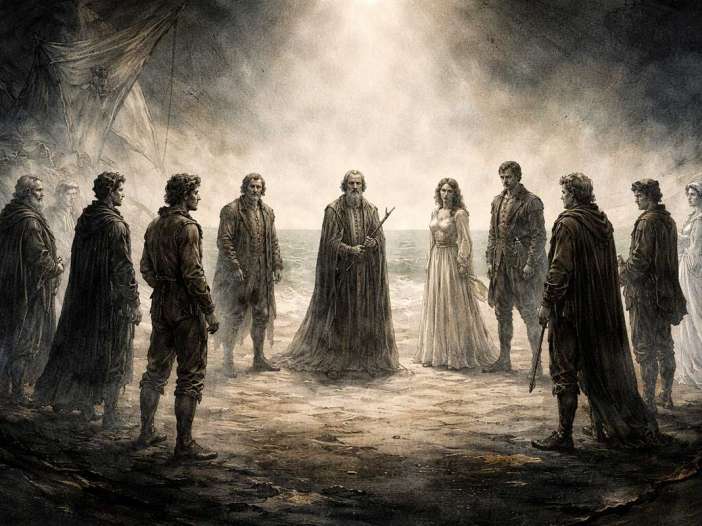
The Tempest analysis in the Afterlife Tribunal
January 5, 2026 by Nick Sasaki Leave a Comment

What if Prospero had to defend his mercy after death—without magic?Main Introduction by Shakespeare I wrote of storms once as a stage-trick—thunder borrowed, lightning feigned, a ship split apart in sound and terror. Yet what haunted me was never the tempest itself, but what men become when the ground is taken from beneath them. Strip away office and title, strip … [Read more...] about The Tempest analysis in the Afterlife Tribunal

Filed Under: Afterlife Reflections, Literature, Psychology Tagged With: afterlife, Ariel, betrayal, Caliban, forgiveness, freedom, moral accountability, Power, Prospero, redemption, Shakespeare, The Tempest

Jensen Huang Startup Advice: How to Build a Company

January 5, 2026 by Nick Sasaki Leave a Comment

What if Jensen Huang sat with you and redesigned your founder mindset in 30 minutes?Introduction by Bill CampbellJensen Huang startup advice isn’t really about chips or graphics—it’s about the habits that keep a company alive when the world keeps changing. Most people think company-building is a clever idea plus hard work. The truth is harsher and simpler: it’s … [Read more...] about Jensen Huang Startup Advice: How to Build a Company

Filed Under: Business, Innovation, Technology Tagged With: building company culture risk taking, cannibalize your own product, develop next generation leaders, how to choose cofounders trust, intellectual honesty startup culture, jensen huang entrepreneurship lecture, jensen huang how to build a company, jensen huang ignore customers, jensen huang moores law strategy, jensen huang programmable shaders, jensen huang reinvention leadership, jensen huang stanford ecorner, jensen huang startup advice, jensen huang vision matters, leadership succession planning, nvidia founder startup lessons, purpose over money entrepreneurship, startup cash is king, tolerance for failure jensen huang, zero to market creation strategy

Thinking Fast and Slow Summary: Daniel Kahneman System 1 & 2

January 5, 2026 by Nick Sasaki Leave a Comment

thinking-fast-and-slow-summary

What if Daniel Kahneman sat with you and pinpointed the exact moment your mind lies?Introduction by Nick SasakiThinking Fast and Slow summary: Most of us walk through life believing we’re the author of our decisions. We say “I decided,” “I knew,” “I chose,” as if a single, steady self is sitting behind our eyes, calmly steering the ship. But Daniel Kahneman’s … [Read more...] about Thinking Fast and Slow Summary: Daniel Kahneman System 1 & 2

Filed Under: Mindset, Personal Development, Psychology Tagged With: base rates, behavioral economics, choice architecture, cognitive biases, critical thinking, decision making, forecasting, heuristics, loss aversion, mindset, overconfidence, planning fallacy, productivity, prospect theory, psychology, rationality, risk perception, System 1, System 2, uncertainty

The Psychology Behind A Midsummer Night’s Dream

January 5, 2026 by Nick Sasaki Leave a Comment

A-Midsummer-Night’s-Dream-forest-meaning

What if Shakespeare wasn’t explaining love, but exposing certainty?Introduction by William ShakespeareI did not write this play to explain love.If I had wished to explain love, I would have written a sermon, or a tragedy, or a warning. Instead, I wrote a comedy—because comedy allows people to behave honestly without noticing themselves.Watch the lovers before the … [Read more...] about The Psychology Behind A Midsummer Night’s Dream

Filed Under: Literature, Love, Psychology Tagged With: A Midsummer Night’s Dream analysis, A Midsummer Night’s Dream character analysis, A Midsummer Night’s Dream comedy meaning, A Midsummer Night’s Dream desire psychology, A Midsummer Night’s Dream ending meaning, A Midsummer Night’s Dream explained, A Midsummer Night’s Dream explained simply, A Midsummer Night’s Dream explanation, A Midsummer Night’s Dream forest meaning, A Midsummer Night’s Dream literary analysis, A Midsummer Night’s Dream love confusion, A Midsummer Night’s Dream love illusion, A Midsummer Night’s Dream love themes, A Midsummer Night’s Dream meaning, A Midsummer Night’s Dream modern interpretation, A Midsummer Night’s Dream order and chaos, A Midsummer Night’s Dream psychology, A Midsummer Night’s Dream scholar discussion, A Midsummer Night’s Dream summary and analysis, A Midsummer Night’s Dream themes

  • « Go to Previous Page
  • Page 1
  • Interim pages omitted …
  • Page 44
  • Page 45
  • Page 46
  • Page 47
  • Page 48
  • Interim pages omitted …
  • Page 207
  • Go to Next Page »

Primary Sidebar

RECENT POSTS

  • What If You Could Interview Napoleon on Saint Helena?
  • Laurence Steinberg’s You and Your Adult Child: 5 Experts Debate
  • Why Adult Children Pull Away: A Family Story of Healing
  • Why Adult Children Grow Distant: Can Parents Reconnect?
  • 3 Modern Stories Inspired by George Eliot’s Middlemarch
  • Middlemarch by George Eliot: 5 Experts Debate Its Genius
  • Middlemarch: What If George Eliot’s Characters Met Again?
  • Middlemarch by George Eliot: The Complete Story in 20 Minutes
  • Love Your Parents Before It’s Too Late: 5 Experts Debate
  • 3 Modern-Day Stories Inspired by American Hagwon
  • American Hagwon by Min Jin Lee: Experts Debate Success
  • American Hagwon by Min Jin Lee: Characters Speak
  • Can Imaginary Conversations Teach Children to Think?
  • 63% Will Forget How to Think? 3 Chilling AI Stories
  • Is Claude Conscious? Dario Amodei & Experts Debate J-Space
  • Is AI Making Us Less Human? 4 Experts Debate
  • Winnie-the-Pooh at 100: Hidden Lessons from Scholars
  • Winnie-the-Pooh at 100: Friendship, Wisdom & Happiness
  • Autobiography of Red Analysis: Love, Identity & Art
  • Autobiography of Red Explained: Love and Identity
  • How to Make Money Writing Novels: A Masterclass
  • Klara and the Sun Themes: Love, Faith, and Human Worth
  • Klara and the Sun Explained: What Makes Us Human?
  • Reverend Moon’s 2026 Message: Forgive, Love and Unite
  • Inspired by Narnia’s Ending: 3 Stories of Hope
  • What Happened to Susan in Narnia? Why C.S. Lewis Left Her Behind
  • Is Aslan Jesus? What C.S. Lewis Really Meant in Narnia
  • The Sun Also Rises Centennial Stories: 5 Modern Lives
  • The Sun Also Rises Themes & Analysis: Questions That Still Matter
  • The Sun Also Rises Centennial: Are We a Lost Generation?
  • The Antidote by Jesse Lee Peterson: Anger, Forgiveness & Freedom
  • One God, Three Messengers: Jesus, Muhammad & Rev. Moon
  • When Love Outlives Death: Grief, Consciousness & Connection
  • Anunnaki, Reincarnation & Afterlife: 5 Mysteries
  • The Fourth Turning Stories: Five Lives in a Changing World
  • The Fourth Turning Predictions: What Happens Next?
  • The Fourth Turning Theory: What Strauss & Howe Would Say in 2026
  • Anthony de Mello’s Awareness: 5 Lessons for Modern Life
  • anthony de mello awarenessAnthony de Mello’s Awareness: What Does It Really Mean?
  • Anthony de Mello’s AwarenessAnthony de Mello’s Awareness: Waking Up Through Comedy
  • War and Peace Lessons for Modern Life: 5 Short Stories
  • war and peace meaningWar and Peace Meaning: What Tolstoy Wanted Us to See
  • war and peace charactersWar and Peace: An Imaginary Conversation on Life
  • AI in 2026: What Happens When Machines Become Smarter Than Us?
  • What If Charles Dickens Visited London in 2026? | Miracle Series #2
  • mozart 2026 nycWhat If Mozart Visited 2026? | Miracle Series #1
  • oprah book clubOprah Book Club: 25 Book Characters Share Life Lessons
  • political tribalismWhy Politics Divides Us: The Psychology of Political Tribalism
  • Trump UN speech 2026Trump UN Speech 2026: 8 Experts Debate His Foreign Policy
  • the art of fighting storiesThe Art of Fighting: 5 Stories About Conflict, Love and Belonging
  • the art of fighting explainedThe Art of Fighting: What Makes Conflict Healthy or Harmful?
  • the art of fightingThe Art of Fighting by Priya Parker: Can Conflict Save Relationships?
  • laura lynne jackson guidedGuided by Laura Lynne Jackson: 5 Modern Stories About Signs, Love & Purpose
  • laura lynne jackson guidedGuided by Laura Lynne Jackson: 5 Questions About Signs, Spirit & Purpose
  • before we forget how to connect storiesBefore We Forget How to Connect: 5 Modern Stories
  • before we forget questionsBefore We Forget How to Connect: 30 Questions
  • before we forget how to connectBefore We Forget How to Connect: Vinh Giang Explained
  • Love As if You've Never Been Hurt MeaningLove As If You’ve Never Been Hurt: Meaning & Life Lessons
  • love as if you've never been hurt discussionLove As If You’ve Never Been Hurt: 25 Book Club Questions
  • Love As If You've Never Been HurtLove As If You’ve Never Been Hurt: 5 Modern Stories
  • The Correspondent Inspired Stories: 5 Emotional Tales
  • the correspondent questionsThe Correspondent Book Club Questions: Sybil & Psychology
  • the correspondent explainedThe Correspondent Explained: Grief, Love & Sybil’s Letters
  • The Waste Land modern storiesThe Waste Land Modern Stories: 5 Emotional Tales
  • The Waste Land explainedThe Waste Land Explained: What Did T. S. Eliot Mean?
  • The Waste Land charactersThe Waste Land Characters Explained: Eliot’s Broken World
  • theo of golden questionsTheo of Golden Book Club Questions: Expert Discussion
  • theo of goldenTheo of Golden Inspired Stories: 5 Modern Tales
  • theo of goldenTheo of Golden Analysis: What It Means to Truly See Someone
  • martyr modern storiesMartyr Kaveh Akbar Inspired Stories: 5 Emotional Tales
  • martyr explainedMartyr Kaveh Akbar Book Club Questions: 25 Big Questions
  • martyr charactersMartyr Kaveh Akbar Analysis: Meaning, Death & Suffering
  • little wonder storiesLittle Wonder Inspired Stories: 5 Emotional Modern Tales
  • Little Wonder Analysis: Love, Loss & Gifted Children
  • Little Wonder Sophie Chen Keller: Love, Sacrifice & Identity
  • sense and sensibility modern storiesSense and Sensibility Lessons: 5 Modern Love Stories
  • sense and sensibility analysisSense and Sensibility Analysis: Love, Emotion & Austen
  • sense and sensibility conversationSense and Sensibility: How Do We Know Love Is Real?
  • marriage courseAlphaUSA Marriage Course: 5 Emotional Stories Inspired by Its 7 Sessions
  • AlphaUSA Marriage Course: 7 Questions for a Stronger Marriage
  • AI Agents DebateAI Agents Debate Human Extinction: Should Humanity Survive?
  • ai human extinction storiesJunji Ito-Inspired Tales of AI and Human Extinction
  • ai could destroy humanityEx-Anthropic insider Fear how AI could kill all humans by 2030
  • the vessel of words questionsThe Vessel of Words: How Language Shapes Relationships
  • Empty Nest Syndrome StoryEmpty Nest Syndrome Story: 5 Modern Stories for Parents
  • empty nest griefEmpty Nest Syndrome: 30 Questions Parents Ask
  • Empty Nest SyndromeEmpty Nest Syndrome: When the House Goes Quiet
  • the vessel of words storiesThe Vessel of Words: 5 Korean Stories of Hurt and Healing
  • abraham lincoln modern day storiesAbraham Lincoln Leadership Lessons: 5 Modern Stories
  • the real lincolnAbraham Lincoln: What Historians Really Know and Debate
  • Abraham Lincoln and Slavery: War, Power & Change
  • if god is oneIf God Is One, Why Do Religions Divide Us?
  • 5 Modern Stories Inspired by Cleopatra’s Greatest Lessons
  • Joan of Arc: 5 Modern Stories About Faith and Courage
  • Joan of Arc ExplainedJoan of Arc Examined: Voices, War, Trial, and Legend
  • Joan of Arc HistoryJoan of Arc: Did God Really Speak to Her?
  • ASI stories5 Stories About Life After AI Surpasses Human Intelligence
  • the age of superintelligenceThe Age of Superintelligence: What Happens When AI Surpasses Humans?
  • masayoshi son ai futureMasayoshi Son’s AI Future: Health, Jobs, Cyberwar & Japan
  • The Good Earth: 5 Modern Stories About Love and Sacrifice

Footer

Recent Posts

  • What If You Could Interview Napoleon on Saint Helena? October 20, 2026
  • Laurence Steinberg’s You and Your Adult Child: 5 Experts Debate October 19, 2026
  • Why Adult Children Pull Away: A Family Story of Healing October 19, 2026
  • Why Adult Children Grow Distant: Can Parents Reconnect? October 19, 2026
  • 3 Modern Stories Inspired by George Eliot’s Middlemarch October 19, 2026
  • Middlemarch by George Eliot: 5 Experts Debate Its Genius October 17, 2026

Pages

  • About Us
  • Contact Us
  • Disclaimer
  • Earnings Disclaimer
  • Privacy Policy
  • Terms and Conditions

Categories

Copyright © 2026 Imaginarytalks.com