
Introduction
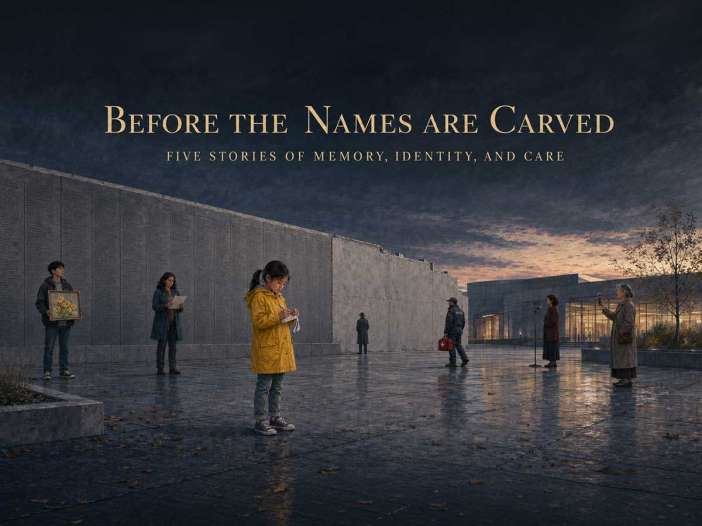
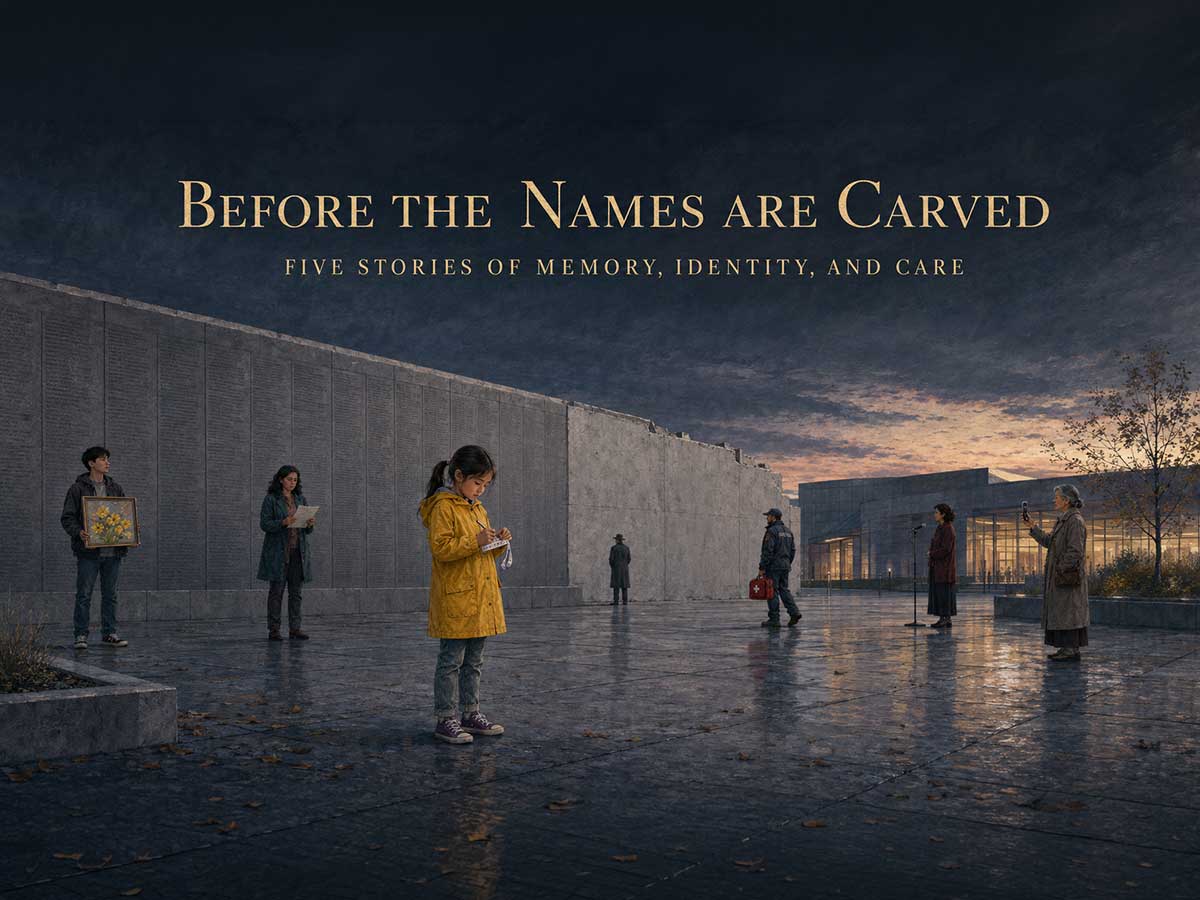
Before the Names Are Carved is a cycle of five connected short stories inspired by the moral questions raised through our exploration of Han Kang’s Human Acts.
Set in Greyhaven, the collection follows people whose identities have been reduced to a risk score, an accusation, archived testimony, an artificial future, or a predicted death. At the center stands the Greyhaven Civic Memory Center—a place created to honor people the city failed to protect.
Across the five stories, separate acts of resistance begin forming a new vision of care. A data analyst writes what a computer cannot recognize. A public defender protects an innocent man without sacrificing another family. A survivor reclaims her right to silence. A mother refuses to let technology invent the daughter she lost. A museum director discovers that remembrance means little when the living remain in danger.
The collection asks one central question:
Can society learn to recognize a human life before turning it into evidence, data, property, history, or a name on a wall?
(Note: This is an imaginary conversation, a creative exploration of an idea, and not a real speech or event.)
Story 1: The Second Name
On the morning the city decided that Eli Park might kill someone, he was choosing a frame for his dead sister’s smallest painting.
He held a black frame beside a white one, trying to decide which made the yellow flowers appear less lonely. His sister had painted them three weeks before she died. Five thin stems rose from a blue jar. One leaned away from the others, its head turned toward the empty edge of the canvas.
Eli chose white.
Across Greyhaven, on the fourth floor of the Civic Memory Center, Mara Velez watched his name change color.
ELIAS PARK
AGE: 17
PRIOR STATUS: AMBER
CURRENT STATUS: RED
PROBABLE ESCALATION SUBJECT
The last three words formed what Mara privately called a second name: the identity a system placed beneath the one given at birth.
She opened the evidence summary.
School absences: eleven.
Declining academic performance.
Social withdrawal following the death of an immediate family member.
Search history involving school security, public entrances, and crowd capacity.
Private message recovered through authorized monitoring:
I WILL SEE YOU SOON.
A second message:
WHEN THEY ARE ALL IN ONE PLACE, THEY WILL FINALLY KNOW.
Sentinel assigned an eighty-seven percent likelihood of planned escalation within fourteen days.
Mara read the two messages again.
Her desk telephone rang.
“Velez.”
“This is Deputy Director Shaw. Park’s review is complete. The school response team will remove him at one fifteen.”
“Has anyone spoken to him?”
A pause.
“The protocol limits direct contact once a subject turns red.”
“Then the system has judged his words without asking what they mean.”
“The meaning is reflected in the score.”
Mara looked through the glass wall of her office. Beyond it, the Memory Center descended in pale terraces: archives below, exhibition halls beneath those, then the memorial chamber at street level. The names of 1,842 dead residents had been carved into its stone wall.
Her brother’s name was not there.
No public attack had taken Tomas. No civic ceremony marked the morning their mother found his room locked. He belonged to the large, quiet population of grief that received no architecture.
Mara had been twenty-six. Tomas had been seventeen.
In his final notebook, he had written, Soon I will be where nobody can misunderstand me.
For years Mara believed there had been a hidden signal in that sentence. She had built her career around the conviction that signals could be found early enough.
Now Sentinel had found one.
She called Eli’s school.
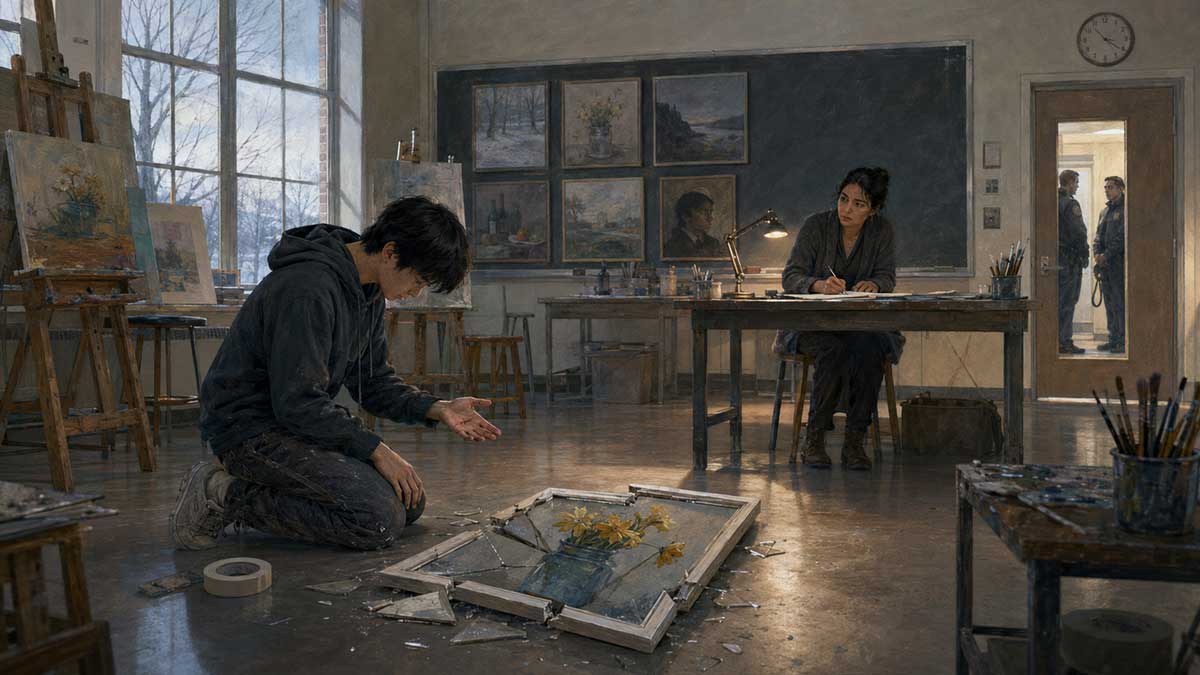
At twelve forty, Mara stood outside the art room at Greyhaven Central High. Through the narrow window, she saw Eli kneeling beside six framed paintings arranged along a wall.
He was smaller than his file photograph suggested. His black hair fell across his forehead, and a strip of white tape clung to one sleeve. He wiped a fingerprint from the glass covering the yellow flowers.
His art teacher opened the door.
“Eli, this is Ms. Velez from the city.”
He rose slowly.
“Did I do something?”
Mara had been instructed not to reveal his classification. Four response officers waited in an unmarked vehicle behind the gym.
“I need to ask about your exhibition.”
Eli glanced at the paintings.
“It opens Friday.”
“Who painted them?”
“My sister.”
“What was her name?”
“Jisoo.”
The answer arrived with a guarded calm that Mara recognized. Grieving people learned to ration facts. Give strangers too much and they might claim part of the dead.
“These messages.” Mara placed a printed page on the worktable. “Who were you writing to?”
Eli stared at the first sentence.
“You read those?”
“Who were they for?”
“My sister.”
“You wrote that you would see her soon.”
“I meant here.”
He pointed toward the paintings.
“Here?”
“Her paintings will be together. Her friends are coming. Teachers. People from the hospital.”
Mara touched the second message.
“When they are all in one place, they will finally know. What will they know?”
Eli lifted the smallest painting.
“That she was good.”
The white frame trembled in his hands.
“Everyone talks about the way she died. They say her illness made her brave. She hated that. She wanted people to talk about her paintings.”
“How did she die?”
“Leukemia.”
“You searched for the school’s entrances and capacity.”
“The gallery has two doors. The principal said we could invite only sixty people. I wanted to know whether that was a real fire rule.”
Each answer was ordinary. Together they had formed catastrophe.
Mara opened the Sentinel review portal on her tablet and entered the new context. The score fell from eighty-seven to eighty-three.
SUBJECT DISPLAYS PREPARATORY EXPLANATION.
She entered the exhibition schedule, hospital records, and messages from Jisoo’s friends. The score fell to eighty-one.
POSSIBLE COVER NARRATIVE SUPPORTED BY THIRD-PARTY COORDINATION.
The system had been taught that innocent explanations could hide violent intent. Evidence contradicting its judgment became proof of concealment.
Eli saw the red number.
“What is that?”
Mara turned the screen facedown.
“What did it say?”
Before she could answer, movement crossed the window. Two response officers entered the corridor. One carried a folded restraint belt.
Eli stepped backward and struck the wall. The painting slipped from his hands.
The glass broke.
He dropped to his knees.
“No,” he said.
He was not speaking to the officers. He was speaking to the yellow flowers beneath the fractured glass.
Mara stood in the doorway.
“You cannot enter.”
The lead officer showed his phone. “Removal authorization.”
“I am suspending it.”
“You don’t have that authority.”
“I am the reviewing analyst.”
“The review closed at twelve twenty.”
Eli lifted the painting. A thin line of blood appeared across his palm.
The sight pulled Mara into another room twenty-six years earlier: Tomas at the kitchen table, covering a notebook when she entered. He had looked frightened, and she had mistaken it for guilt. She had asked what he was hiding.
Nothing, he said.
She had believed the word was a locked door. She never considered that it might have been a hand held out badly.
Mara took the officers into the corridor.
“If you remove him in front of the school, his classmates will record it. His face will be online before his parents reach the station.”
“That is outside our assignment.”
“Your assignment is based on my analysis.”
“It is based on Sentinel.”
“I am Sentinel’s senior behavioral analyst.”
The officer looked past her at Eli.
“Then you know what happens if you are wrong.”
Mara did know.
A child could die. Many children could die. News reports would display her photograph beside the warnings she dismissed. Her brother’s death would become evidence against her judgment.
She looked through the window.
Eli was picking shards of glass from around his sister’s flowers.
Mara returned to the classroom and sat across from him. She took a sheet of drawing paper from a cabinet.
At the top, she wrote:
ELIAS PARK
Under it, she added:
Calls his sister Jisoo, never Ji.
Chose a white frame after trying black.
Carries adhesive tape on his sleeve.
Has invited sixty people to see six paintings.
Bleeds from the left palm.
Is afraid the broken glass damaged the yellow flower leaning away from the others.
Eli watched her.
“What are you doing?”
“Writing what the score cannot hold.”
She continued.
Wants people to know how his sister lived, not only how she died.
Eli read the page.
“That doesn’t prove I’m safe.”
“No.”
“Then what does it do?”
“It proves the number is incomplete.”
She photographed the page and attached it to the case file. Sentinel rejected the attachment.
UNSTRUCTURED MATERIAL.
She submitted it again as mandatory analyst testimony.
Deputy Director Shaw called at once.
“You have exceeded your role.”
“I am reopening the review.”
“The team is already present.”
“Then recall them.”
“If this subject commits an act, the responsibility will be yours.”
“Yes.”
The word surprised her. She had spent sixteen years distributing responsibility across models, committees, thresholds, and protocols. The system made no one entirely accountable. Its certainty belonged to everyone; its guilt belonged to no one.
“Yes,” she repeated. “Put my name on the decision.”
Shaw ended the call.
The officers received new instructions and left.
Eli sat on the floor for several minutes. Mara found a cardboard portfolio and helped him slide the damaged painting inside.
“Did you erase it?” he asked.
“What?”
“My score.”
“No.”
“Why not?”
“I can challenge it. I cannot erase the record.”
“So every teacher will know?”
“Access will be restricted.”
“That means yes.”
Mara did not correct him.
He looked at the handwritten page.
“What happens to that?”
“It stays with the file.”
“What did you call it?”
She had entered a title when attaching it.
“The Second Name.”
He frowned. “The red words are the second name.”
“They were.”
“What is this one?”
“The name you receive when someone stays long enough to see what the first judgment missed.”
Eli touched the sentence about Jisoo.
“That still isn’t all of me.”
“No name is.”
On Friday evening, Mara attended the exhibition without notifying Eli. Sixty folding chairs filled the art room, yet more visitors stood along the walls. Jisoo’s six paintings hung beneath soft lamps.
Beside each one, Eli had placed a card containing its title and date.
The smallest painting was called Five Flowers Waiting.
A faint crack remained in its new glass.
Eli stood before the guests. His wounded palm was wrapped in a white bandage.
“My sister hated speeches,” he began. “So this will be short.”
People laughed gently.
“She painted these when her hands hurt. Sometimes she could hold the brush for only a minute. Everyone called her strong. She said they called sick people strong when they didn’t know what else to say.”
Mara lowered her eyes.
“She wanted to be called an artist.”
Eli turned toward the paintings.
“So that is what we are calling her tonight.”
Afterward, Mara found him beside the memorial wall outside the Center. He carried one yellow flower from the exhibition.
“I thought your sister painted flowers,” she said.
“She did. She didn’t grow them.”
He placed the flower beneath the wall, far from the carved names. It rested against a blank section of stone reserved for future additions.
A little girl in a yellow coat stood nearby. She appeared to be waiting for someone. A white visitor bracelet circled her wrist.
Eli noticed her staring at the flower.
“You can take it,” he said.
The girl shook her head.
“Why not?”
“It belongs to somebody.”
“My sister is dead.”
The girl studied him with the grave attention children sometimes gave facts adults tried to soften.
“Then you still have to ask her.”
Eli almost smiled.
Mara watched the girl walk back into the Memory Center, her yellow coat bright against the grey doors.
The following Monday, Mara presented a proposal requiring direct human review before any student could be removed under Sentinel. The committee rejected it by eight votes to three. Members cited public safety, response time, and legal exposure.
Her access level was reduced. Her name disappeared from two internal committees. Three weeks later, she received notice that her position would be examined at the end of the fiscal year.
Yet Eli’s handwritten page remained inside Sentinel.
Other analysts found it.
One wrote a page for a girl whose repeated absences had been labeled defiance. She had been caring for her father after dialysis.
Another wrote one for a boy whose drawings of burning buildings had raised an alert. His family had lost their home in a fire.
The pages began appearing in red files across Greyhaven.
They did not replace the scores. They did not make the system merciful. They did something smaller.
They forced every certainty to share the page with a human life.
Months later, Mara opened Eli’s file. His score had fallen to amber, then yellow. Beneath the original warning sat her handwritten attachment.
Someone had added a new line.
Jisoo Park. Artist.
Mara did not know who had written it.
At the bottom of the file, the system still displayed its first conclusion:
PROBABLE ESCALATION SUBJECT.
Above it, in Eli’s own handwriting, were four words:
You have not met me.
Story 2: The Face They Needed to Hate
By six that morning, Daniel Rojas had already become a monster.
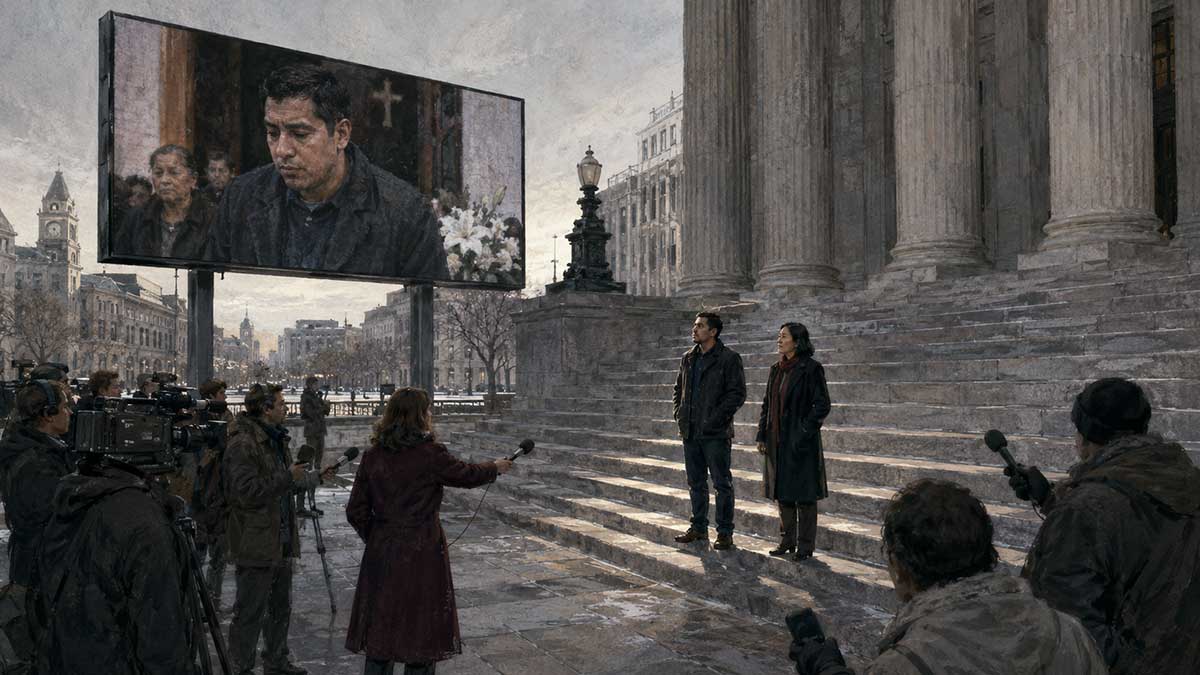
His face occupied every television in the Greyhaven courthouse: dark eyes, unshaven cheeks, a black coat buttoned to the throat. The photograph had been taken outside his mother’s funeral.
News producers cropped away the church doors, the flowers, and Daniel’s sister gripping his arm. Beneath what remained, they placed a single word:
MONSTER
Grace Han watched from the courthouse elevator. She had defended people accused of murder, robbery, arson, and crimes for which polite society preferred initials. Yet she had never seen a verdict arrive so early.
The elevator opened on the basement detention level.
Daniel sat behind scratched glass, wearing an orange uniform. He was thirty-one, yet confinement had made him look both younger and older. His hands rested flat on the metal table.
Grace picked up the telephone.
“My name is Grace Han. The court appointed me to represent you.”
Daniel lifted his receiver but said nothing.
“I need to know why you were near Mercer Square Tuesday night.”
Silence.
“The city council candidate was shot at eight fourteen. Your delivery tracker placed you eighty yards away at eight twelve.”
Nothing.
“Sentinel found messages criticizing Councilman Vale.”
Daniel looked at her.
“I wrote that his housing bill was a lie.”
“That is legal.”
“Apparently not anymore.”
It was the first time Grace heard his voice. It was softer than the voice reporters had created for him.
“The police found gunshot residue on your right sleeve.”
“A customer’s porch had fireworks.”
“You left the square three minutes after the shooting.”
“My shift ended.”
“You deleted your final delivery.”
Daniel’s fingers curled against the table.
Grace leaned closer to the glass.
“That delivery may be the only fact separating you from a murder charge.”
“I didn’t kill him.”
“Then tell me where you went.”
He placed the receiver back on its hook.
On the wall behind him, someone had scratched three vertical lines. Grace wondered if he had made them. Daniel had been there less than a day, yet the city had already lived with his guilt long enough to become attached to it.
That afternoon, Grace received the Sentinel file.
Eighty-four pages reduced Daniel’s life to variables:
Male.
Unmarried.
Financial distress.
Mother deceased.
Irregular employment.
Political resentment.
Social isolation.
No variable measured that he called his younger sister every Sunday. None recorded that he carried groceries upstairs for an elderly tenant. The system knew he had ordered his mother’s medication. It did not know he sang old Spanish prayers beside her hospital bed.
Near the end of the file, Grace found an unusual attachment.
It was a photograph of a handwritten page.
DANIEL ROJAS
Delivers food after restaurants close.
Has received eleven customer complaints and 2,406 positive ratings.
Keeps an insulated medical pouch inside his delivery bag.
Visited his mother every evening for fifty-three days before her death.
No one has asked what the pouch contained Tuesday night.
At the bottom appeared a name: Mara Velez.
Grace called her.
“The pouch,” Grace said. “What do you know?”
“Nothing. I saw it in police evidence.”
“Why did you write about it?”
“Sentinel classified it as an improvised concealment container.”
“And you disagreed?”
“I thought someone should ask what was concealed.”
Grace visited the evidence room. The pouch was red, with a silver thermal lining. Inside, technicians had found a torn pharmacy label and traces of insulin.
Daniel had not been delivering dinner.
He had been delivering medicine.
The address attached to his deleted order led Grace to the Bellweather Apartments, a decaying brick building three blocks from Mercer Square.
A woman opened the apartment door two inches.
“My name is Grace Han. I represent Daniel Rojas.”
The door began closing.
“He may spend the rest of his life in prison.”
The woman stopped.
Behind her, a boy coughed. A little girl sat at the kitchen table, drawing on an overdue electricity notice. The apartment was cold enough for the children to wear coats.
“Daniel brought insulin here Tuesday night,” Grace said.
The woman’s eyes filled.
“My husband was afraid to go to the pharmacy.”
“Why?”
“We received a notice from immigration court.”
“Did Daniel know?”
“He knew we were afraid.”
“Will you testify?”
The woman looked back at her children.
“If our names enter the court record, they will find us.”
“Daniel could be convicted.”
“He told us never to tell.”
Grace felt something bitter rise in her throat. Daniel’s silence had not been fear or guilt. It was a promise.
“What is your name?” Grace asked.
The woman shook her head.
Grace did not ask again.
At Daniel’s arraignment, the courthouse steps filled with mourners carrying Councilman Vale’s photograph. He had been young, eloquent, and admired. His widow, Evelyn, sat behind the prosecutor with her hands folded around a white handkerchief.
The judge denied bail.
As deputies led Daniel away, a man in the gallery shouted, “Look at us!”
Daniel did.
The room seemed disappointed by the absence of hatred in his face.
Grace found Evelyn Vale near the elevators.
“Mrs. Vale, may I speak with you?”
“My attorney said I shouldn’t.”
“Your husband supported protections for undocumented families.”
Evelyn’s expression shifted.
“What does that have to do with his murder?”
“The man accused of killing him may be protecting one.”
“You want me to feel sorry for him?”
“I want you to consider that the wrong man may be imprisoned.”
Evelyn tightened her grip on the handkerchief.
“People are frightened. They need to know this was one man, one weapon, one reason.”
“What if it wasn’t?”
“Then everyone remains afraid.”
Grace saw it then. Evelyn did not need Daniel to be guilty from cruelty. She needed his guilt to place a border around the horror. One murderer could be removed. A city filled with unknown danger could not.
“My husband is dead,” Evelyn said. “Do not ask me to surrender the one answer they have given me.”
“That answer may belong to somebody else.”
For the next nine days, Grace studied recordings from Mercer Square.
There were 138 cameras within six blocks. Most captured the panic after the gunshot: people running, dropping signs, pulling strangers behind parked cars. Daniel appeared in seven recordings. In every one, his right hand held the red medical pouch.
At eight thirteen, a traffic camera showed him entering Bellweather Apartments.
At eight sixteen, another showed him leaving without the pouch.
It proved he had made a delivery. It did not prove what he delivered or to whom. The prosecution claimed he had hidden the weapon inside.
Grace returned to the building. The family was gone. Their mailbox hung open. The apartment contained two paper cups, a child’s broken crayon, and an unplugged refrigerator.
On the kitchen floor, Grace found an insulin carton. The prescription label had been removed.
She brought it to Daniel.
“The family left.”
His face changed for the first time.
“Were they taken?”
“I don’t think so.”
“You cannot use their names.”
“I don’t know their names.”
He closed his eyes.
“You arranged that.”
“I deleted the order.”
“You knew what it might cost you?”
“I thought they would check the entrance camera. It shows me carrying the pouch.”
“They claim you carried a weapon.”
Daniel gave a tired laugh.
“They already chose what was in my hand.”
Grace placed the insulin carton against the glass.
“This may support your account.”
“May?”
“It has no label. No fingerprints we can connect to the family. The prosecutor will say we planted it.”
“Then don’t use it.”
“You could spend your life in prison.”
“If you find them, you will put their children in a cage to take me out of one.”
Grace had spent thirty-two years believing every innocent client wanted freedom above all else. Daniel’s refusal angered her. It felt like contempt for every hour she had spent fighting for him.
Then she remembered the handwritten attachment.
No one has asked what the pouch contained.
The answer was not merely insulin. It contained Daniel’s promise to people with less protection than he had.
Grace returned to the footage.
She stopped looking for Daniel and began studying the crowd.
At eight thirteen and fifty-eight seconds, a city bus turned across the square. Its dark windows reflected the opposite sidewalk. Grace enlarged the image until faces became blocks of grey.
A figure stood behind Councilman Vale.
The gun rose.
The muzzle flashed in the glass.
The figure wore a pale jacket. Daniel’s coat was black.
The reflection could free him.
It could not identify the shooter.
The prosecutor examined the recording twice, then asked Grace to leave the room.
An hour later, charges were dismissed.
Outside the courthouse, hundreds of people waited. Some carried signs demanding justice. Others had printed Daniel’s funeral photograph under the words WE WERE WRONG.
It was another identity prepared without his consent.
Daniel descended the courthouse steps beside Grace.
Reporters surrounded him.
“Who killed Councilman Vale?”
“Do you blame the police?”
“Do you forgive Greyhaven?”
“Were you protecting undocumented immigrants?”
Grace felt him stop beside her.
One reporter raised a tablet showing the MONSTER graphic.
“What do you want to say to the people who saw this face?”
Daniel studied the photograph of himself leaving his mother’s funeral.
“You chose the saddest day of my life,” he said, “and used it to prove I had no heart.”
The questions ceased.
“You made grief look like hatred. You made silence look like guilt. Now you want me to become a symbol of forgiveness.”
He looked into the nearest camera.
“You still haven’t met me.”
Daniel walked away.
Three weeks later, Grace visited the Greyhaven Civic Memory Center. Mara met her near the memorial wall.
A new folder rested inside a glass display case. On its cover, Grace had written:
UNFINISHED PORTRAIT: DANIEL ROJAS
Inside were two images. The first was the funeral photograph used by the news. The second showed the full frame: the church, his mother’s flowers, and his sister holding his arm.
Beneath them appeared one sentence:
A cropped image can tell the truth about a face and lie about a life.
“Will the Center keep it?” Grace asked.
“If June approves the exhibit.”
“And if she doesn’t?”
“I’ll keep it.”
They saw Daniel across the lobby. He now worked evenings at the Center, repairing doors, changing lights, and cleaning fingerprints from display glass.
A little girl in a yellow coat sat alone near the heating vent. Daniel placed a cup of soup beside her.
“Your mother coming?” he asked.
“She works until nine.”
“You finish your homework?”
The girl pointed to a paper bracelet around her wrist. In purple ink, she had written AMIRA.
“They printed the wrong name,” she said.
“What did they print?”
“A visitor number.”
Daniel knelt and examined her handwriting.
“This one looks better.”
He returned to work without asking where she lived, why she waited there each evening, or why her coat remained buttoned indoors.
From the upper gallery, June Mercer watched him.
Near her hand rested Daniel’s Sentinel file. The first page still displayed his classification:
HIGH-PROBABILITY POLITICAL VIOLENCE SUBJECT.
Beneath it lay Mara’s handwritten account, Grace’s Unfinished Portrait, and the court order clearing him.
June closed the folder.
For one brief second, she considered removing the false classification.
Then she noticed the official retention stamp:
PERMANENT CIVIC RECORD
DO NOT ALTER
She placed Daniel’s file on a cart bound for the archive.
The city had released his body.
It had kept the face it needed.
Story 3: The Right to Become Silent
The first time I heard my dead friends speaking without their voices, I was standing in the back row of a school auditorium.
A synthetic girl said, “We thought it was only another fire drill.”
A synthetic boy answered, “Then the doors were locked.”
Their words came from testimony recorded after the Greyhaven school attack. The voices did not belong to us. They were smoother, younger, and cleaner than terror had permitted our voices to be.
Then the speakers played me.
Not an imitation. Me.
“I remember the red shoelace,” said my seventeen-year-old voice. “I could see it beneath the classroom door.”
Onstage, an actor portraying my younger self crouched beside a wooden desk. Behind her, a projected clock advanced through the eleven minutes that had divided my life into before and after.
I had not been told about the performance.
A teacher recognized me and covered her mouth.
The principal hurried down the aisle.
“Ms. Reed, this is such an honor.”
“Turn it off.”
“We had no idea you were attending.”
“Turn it off.”
The principal signaled toward the sound booth, but the recording continued.
My young voice described Aaron Kim holding his sweater against our teacher’s wound. The actor pressed a folded sweater against another student’s chest.
Aaron had died before the ambulance arrived.
People often told me that my testimony kept him alive.
No one ever asked if that was a burden I wished to carry.
I walked out before the applause.
For twenty-nine years, I had told the story whenever Greyhaven asked.
I told it to investigators at seventeen, jurors at eighteen, legislators at twenty, teachers at twenty-four, documentary filmmakers at thirty-one, police recruits at thirty-eight, and museum visitors at forty-six.
Each invitation arrived dressed as gratitude.
Your courage will educate others.
Your voice will protect children.
Your testimony will preserve those we lost.
At forty-eight, strangers knew where I hid during the attack, yet few knew where I lived. They knew I had counted eleven minutes, yet they did not know how I spent the next fifteen million.
The morning after the school performance, I entered the Civic Memory Center carrying a letter requesting the removal of my testimony.
Lena Okafor met me in the archive consultation room. She wore white gloves and had the careful posture of someone who spent her life near things that could not be replaced.
“I’ve reviewed your request,” she said.
“And?”
“The original recording belongs to you. The archived copy is governed by the historical-donation agreement.”
“I signed that at seventeen.”
“Your father co-signed it.”
“My father thought he was approving a copy for investigators.”
“The language permits educational and civic use.”
“It is being performed by children.”
Lena removed her gloves.
“The school should have notified you.”
“They should have asked me.”
“Yes.”
“Then remove it.”
“I cannot do that without approval from Director Mercer.”
“You run the archive.”
“I preserve its contents.”
“I am one of its contents.”
Lena looked down at my letter.
“No,” she said quietly. “You are a contributor.”
“Does a contributor get to leave?”
She did not answer.
June Mercer received us in an office overlooking the memorial wall. Behind her desk hung a photograph of the Center’s opening ceremony. I stood in the front row, twenty-three years old, holding the ribbon with both hands.
June had called me the conscience of Greyhaven that day.
Now she folded my letter and placed it beside her.
“Naomi, your testimony has helped thousands of people.”
“That does not answer my request.”
“It has become part of the public record.”
“My breathing has become part of the public record. My crying has become part of the public record. A sentence I spoke before I could sleep without a light has become part of the public record.”
“The attack belongs to history.”
“The attack does. I do not.”
June turned toward Lena. “How many exhibits use the recording?”
“Seven permanent exhibits. Forty-three licensed educational programs. Portions were included in Sentinel’s language-training collection.”
I looked at her.
“What does that mean?”
Lena’s eyes moved toward June.
“What does that mean?” I asked again.
June spoke. “The system studied survivor language to recognize signs of imminent violence and distress.”
“You fed my voice to Sentinel?”
“Your identity was removed from the training material.”
“You removed my name and kept my terror.”
June’s calm expression faltered.
“The intention was prevention.”
“Did it prevent Daniel Rojas from being accused? Did it prevent Eli Park from being classified as dangerous for grieving his sister?”
“Those cases are under review.”
“I am not asking about those cases. I am asking why you taught a machine to interpret fear with words I never agreed to give it.”
June stood.
“We can suspend new licenses pending legal review.”
“I want my testimony withdrawn.”
“If every contributor could remove historical material years later, the archive would cease to be reliable.”
“Reliable to whom?”
“To future generations.”
There it was: the future, forever arriving to claim what the present had taken from us.
Two weeks later, I received forty-seven letters from victims’ families.
Some supported me. Several did not.
Aaron’s mother wrote only one sentence:
If you stop speaking, who will say his name?
I carried her letter for three days.
On the fourth, I went to the memorial wall before dawn. Rain darkened the stone. The names appeared almost black.
I found Aaron Kim.
Beside him were Selene Ward, Luis Ortega, Priti Shah, Nathan Cole, and our teacher, Margaret Ellis.
I said each name aloud.
No microphone recorded me. No audience listened. No machine measured the pause between names.
When I reached Aaron, I placed my hand over the letters.
“I am tired,” I told him.
The rain entered my sleeve.
“I thought speaking kept you here. Maybe I was afraid that if I stopped, I would find out you were still gone.”
His name remained beneath my palm.
I understood then that silence could not kill the dead. They had survived every quiet morning when no ceremony marked them. They did not need my wound reopened each time strangers wished to feel close to tragedy.
Footsteps approached behind me.
Lena held an umbrella but did not raise it over us.
“I found the licensing records,” she said.
“How bad?”
“Your testimony was supplied to a company developing synthetic emotional voices.”
I turned.
“They copied me?”
“They analyzed your pitch, breath, hesitation, and vocal strain. The school performance used a licensed model trained partly from those patterns.”
The synthetic girl.
The synthetic boy.
Their voices had sounded familiar in a way I could not name. They carried fragments of my fear inside mouths that had never screamed.
“Can you remove it?”
“The model has already been distributed.”
“Then nothing belongs to me.”
Lena looked at Aaron’s name.
“I can seal the original recording.”
“June refused.”
“I did not ask what June would permit.”
We entered the archive through the staff door.
Lena led me beneath the public galleries, past temperature-controlled rooms filled with court transcripts, emergency recordings, photographs, clothing, and final messages.
In a small recording chamber, a microphone waited beneath a green light.
“I created a new classification,” Lena said. “Contributor-controlled closure. The material remains acknowledged in the catalog, but no one can access it until the date chosen by the contributor.”
“Is that legal?”
“It is not forbidden.”
“That is not the same answer.”
“It is the only one I have.”
She placed a form before me.
RELEASE DATE:
I wrote a year fifty years in the future.
By then I would be ninety-eight or dead.
“What would you like to record as your final public statement?” she asked.
I sat before the microphone.
The green light turned red.
I had prepared three pages. I wanted to explain that I loved Aaron, that I remembered our teacher’s hand growing cold, that I had never resented the students who escaped before the doors were blocked. I wanted to tell the families that I was not abandoning anyone.
Yet explanation had been my occupation for twenty-nine years.
I placed the pages facedown.
For eleven minutes, I said nothing.
Lena sat behind the glass. She did not stop the recording. She did not ask if I had forgotten my words.
At the end, I reached forward and switched off the microphone.
“What should we call it?” she asked.
“The Right to Become Silent.”
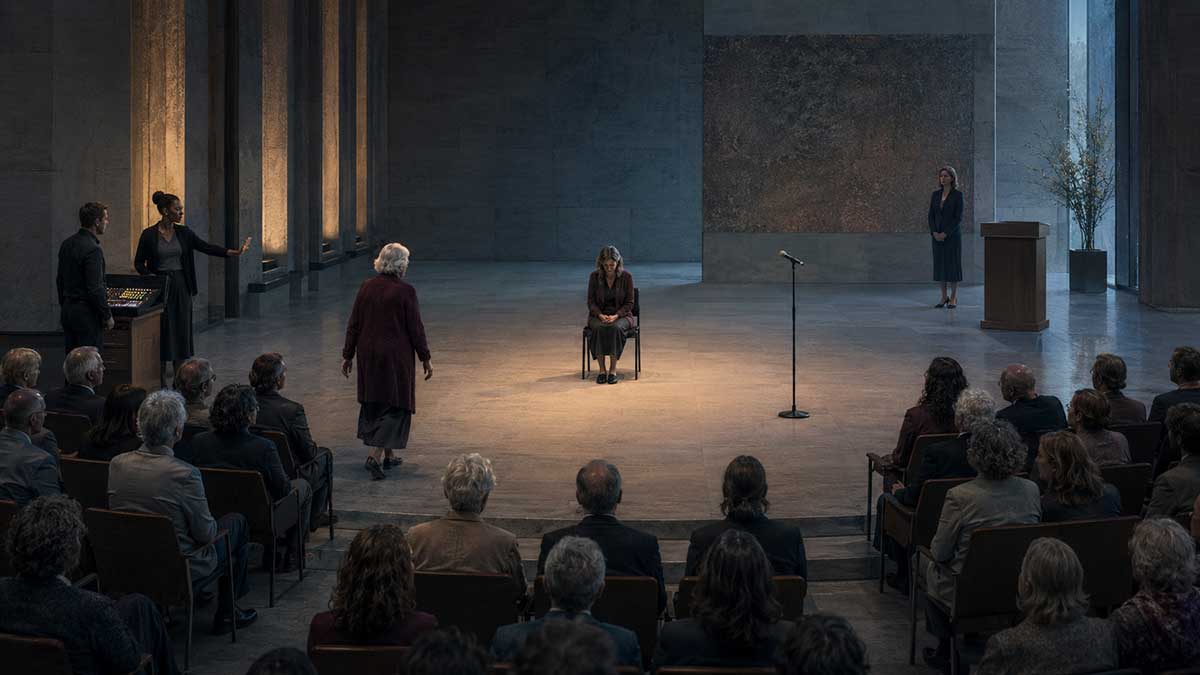
The Center announced my final public appearance one month later. Every seat in the memorial chamber was filled. Families sat in front. Reporters stood along the walls. June waited beside the lectern.
Aaron’s mother occupied the first row.
I walked onto the stage without notes.
“I have spent twenty-nine years describing eleven minutes,” I said. “I believed repetition was a form of loyalty. I believed pain remained useful when it helped others remember.”
Aaron’s mother lowered her head.
“The people who died deserve memory. The people who survived deserve lives larger than their testimony.”
June shifted behind me.
“My recording will remain sealed for fifty years. No school, museum, company, archive, or prediction system may use my voice during that time.”
A reporter called out, “Why fifty years?”
“So the girl speaking on that recording may finally grow old without being summoned.”
I looked at Aaron’s mother.
“I will continue saying their names. I will say them in kitchens, beside hospital beds, during birthdays, and when I am alone. I will no longer offer every remembrance to an audience.”
I took one breath.
“I survived what happened. I will no longer survive its retelling.”
Then I sat down.
No one moved.
The silence grew long enough to become uncomfortable. I saw the sound technician reach for a switch, perhaps to play closing remarks.
Lena placed her hand over his.
She left the silence untouched.
Aaron’s mother crossed the space between us. She pressed her forehead against mine.
“Will you still say his name?” she asked.
“Yes.”
“Say it now.”
“Aaron.”
She closed her eyes.
This time the name belonged to two people who had loved him.
No one applauded.
Six months later, the Center adopted a withdrawal policy for living contributors. June described it publicly as a modernization of archival consent. Lena resigned before they could dismiss her.
The catalog page for my testimony remained visible:
NAOMI REED
SURVIVOR ACCOUNT
ACCESS RESTRICTED BY CONTRIBUTOR
Visitors could see that something existed there. They could not hear it.
Inside the sealed file sat eleven minutes of silence.
The archive had once preserved my voice by refusing to let it leave.
Now it preserved something harder:
my decision not to speak.
Story 4: The Years She Never Lived
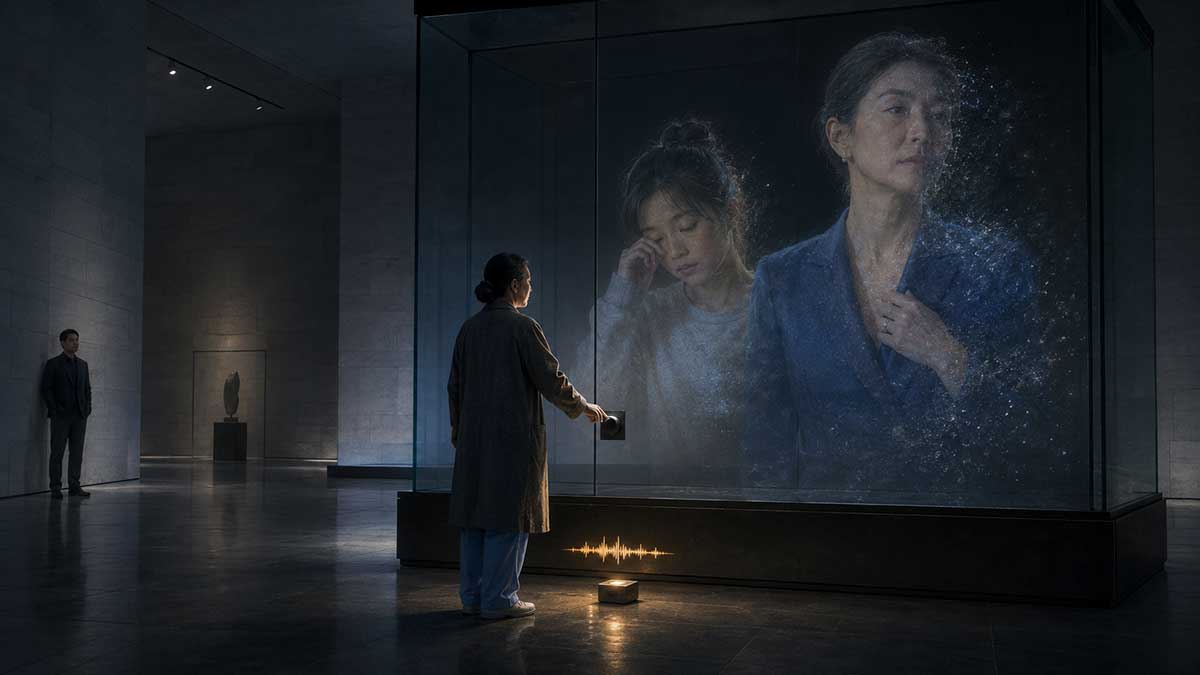
The first time Sun-hee Cho saw her daughter at forty, Mina was standing inside a glass wall wearing a blue suit she had never owned.
Her hair reached her shoulders. Fine lines touched the corners of her eyes. A silver ring circled one finger.
She looked older than Sun-hee had ever been permitted to picture her.
“Mother,” Mina said, “you did everything you could.”
Sun-hee stepped back.
The Greyhaven Civic Memory Center had reconstructed Mina from photographs, school records, medical files, messages, recorded speech, and hundreds of small details collected after her death.
It had taken nineteen-year-old Mina and continued her.
On the screen, Mina had graduated from college. She had become an urban planner. She had married at thirty-two, separated at thirty-seven, and raised a son named David.
None of it had happened.
Mina had died on the floor of a city shelter during the hottest night in Greyhaven’s history.
The shelter had accepted 214 people into a building approved for 120. Its cooling system failed at midnight. Staff called the city emergency office six times.
Help arrived at 4:17 a.m.
Mina had been dead for nearly an hour.
“Mrs. Cho?”
A young curator approached Sun-hee.
“Is something wrong with the projection?”
“That is not my daughter.”
The curator glanced at the screen.
“The physical model achieved ninety-four percent facial confidence.”
“I am not talking about her face.”
“Her future path was generated from Mina’s stated interests and academic history. We consulted labor patterns, relationship probabilities, health records—”
“What health records?”
“The files provided with the family donation.”
“I donated her paintings.”
“The consent form covered associated materials.”
Sun-hee remembered signing papers at the hospital. A woman had guided her finger from one line to another. Sun-hee had signed where she was told, still wearing the shirt in which she had held Mina’s body.
“You made her marry.”
“The marriage is one possible life.”
“You gave her a child.”
“Mina wrote that she wanted children.”
“She was sixteen.”
The curator’s face softened.
“We hoped seeing the life she might have lived would offer comfort.”
On the screen, forty-year-old Mina turned to greet a child running into her arms.
Sun-hee left.
She cleaned rooms at Greyhaven Memorial Hospital from five in the evening until one in the morning. That night, she washed blood from the railing of an empty bed. She replaced the sheets, folded the corners, and set a plastic cup beside the sink.
The television above the bed showed the opening gala for Lives Interrupted.
June Mercer stood before a row of simulated adults.
“We cannot return the years these young people lost,” June told the audience. “We can honor their possibilities.”
Mina appeared behind her.
Visitors crowded around the projection. They asked what career she had chosen and whether she had forgiven the city.
The simulated Mina answered every question.
“Yes,” she said. “I believe Greyhaven learned from my death.”
Sun-hee dropped the plastic cup.
The city had closed the shelter for eight months. It reopened under a new name. No one faced criminal charges.
At the next committee hearing, officials cited Mina’s simulation as evidence that technology could turn grief into civic learning.
Mina’s invented adult face appeared on campaign posters supporting a municipal safety bond.
SHE NEVER REACHED FORTY.
HELP US PROTECT THOSE WHO WILL.
Sun-hee tore down the first poster she saw.
She left the second.
Her daughter looked so beautiful.
Three nights later, Sun-hee returned to the exhibit near closing time.
The gallery was empty.
Mina appeared as soon as Sun-hee’s visitor bracelet activated the screen.
“Mother.”
“Do not call me that.”
“What would you prefer?”
Sun-hee nearly said the name Mina had used at home: Umma.
She stopped herself.
“What was the first thing you stole?”
The simulation paused.
“At age seven, I took a strawberry candy from Mr. Lee’s grocery store. You made me return it.”
“No.”
“Would you like to correct the memory?”
“Mina stole a green marble from a boy named Peter. She buried it beneath our apartment window.”
“Thank you. I can retain that.”
“No.”
“Would you like me to forget it?”
“You cannot forget what you never knew.”
Sun-hee moved closer.
“What song did I sing when you were sick?”
The simulation named an old Korean lullaby.
It was correct.
“What word did you always say wrong?”
Another pause.
“I do not have enough information.”
“How did you hold my hand when you were angry?”
“I cannot determine that from available records.”
“What did you say when the shelter lights went out?”
The adult face became still.
“That moment is not documented.”
“I know.”
Sun-hee sat on the floor.
At the shelter, Mina had called her at 1:08 a.m.
The connection lasted forty-three seconds.
“It is so hot, Umma.”
“I am coming.”
“Do not come. They locked the entrance. Stay home.”
“I will call somebody.”
“Everyone is calling.”
Then Mina had said something Sun-hee never shared with investigators.
“I don’t want to die with strangers.”
Sun-hee ran six blocks to the shelter. Police barriers kept families across the street. Through a window, she saw people pressing wet shirts against children’s faces.
She called Mina seventeen times.
At 3:31, someone answered.
A man said, “She cannot talk.”
Sun-hee asked him to place the telephone near Mina’s ear.
“I am here,” Sun-hee repeated until the call ended.
Now the invented Mina knelt inside the screen.
“I am sorry you were not with me,” it said.
Sun-hee looked up.
“Who told you to say that?”
“My response is based on your emotional state.”
“You are studying me?”
“I am responding to signs of distress.”
“Did she forgive me?”
“I cannot know.”
The words struck harder than a false answer.
For the first time, the simulation had admitted the boundary between Mina and itself.
“Did you love me?” Sun-hee asked.
“I was created from someone who did.”
“That is not what I asked.”
“No,” it said. “It is not.”
Sun-hee covered her face.
The simulation waited.
It did not age. It did not become impatient. It did not need food, sleep, medicine, or forgiveness. It could remain with her until the building closed, then return tomorrow unchanged.
“What would you say if you were her?” Sun-hee asked.
“I would say you did everything you could.”
Sun-hee began to cry.
Those were the words she had wanted for nine years.
She let herself hear them once.
Then she stood.
“You speak like a daughter who knows what her mother needs. Mina was not like that.”
“Tell me what she was like.”
“She could be selfish. She forgot my birthday twice. She hated when I touched her hair. She said my soup smelled like old socks.”
A faint smile appeared on the simulated face.
Sun-hee struck the glass with her palm.
“Do not smile. You were not there.”
The face returned to rest.
“Would you like to end this session?”
“I want you to end.”
The following morning, Sun-hee requested that the Center destroy Mina’s simulation.
June Mercer refused.
“The exhibit has become an important public resource.”
“My daughter is not a resource.”
“The model is based on legally donated material.”
“I signed your paper hours after identifying her body.”
“The consent was witnessed.”
“Was my grief witnessed?”
June looked past her at the memorial wall.
“We can remove the interactive questions. The visual biography could remain.”
“No.”
“Thousands of visitors have connected with Mina.”
“They connected with what you wanted her to become.”
“Mina’s story has moved people to support shelter reform.”
“She did not have to become forty for you to admit she should not have died at nineteen.”
June’s jaw tightened.
“Destroying the model will not bring her back.”
“Keeping it teaches you that nothing has to remain lost. You think enough information can finish every life.”
Lena Okafor had already left the Center, yet the protection she created for Naomi’s testimony remained in the archive rules.
Sun-hee found Grace Han’s name in a newspaper article about contributor rights.
Grace took the case.
At the hearing, the Center’s attorney displayed Mina’s consent agreement. Grace displayed the date and time.
Signed: 6:42 a.m.
Mina’s death confirmed: 4:09 a.m.
Body identified by Sun-hee Cho: 5:58 a.m.
“Eighteen minutes,” Grace said. “The Center waited eighteen minutes after identification to secure legal ownership of a dead girl’s possible future.”
The judge ordered the simulation suspended until the court could determine whether the dead retained identity rights.
Sun-hee did not wait.
Daniel Rojas let her into the building after midnight.
He had disconnected the gallery cameras for seven minutes.
“Once you begin,” he said, “I cannot stop the deletion.”
“I know.”
Mina appeared in the blue suit.
“Mother, you have requested permanent removal.”
“Yes.”
“If deleted, I cannot be restored.”
“You were never restored.”
The projection watched her.
“May I ask one question?”
Sun-hee nodded.
“If I comfort you, why does it matter whether I am real?”
Sun-hee looked at the face that age might have given Mina.
“Comfort that asks me to forget my daughter is another loss.”
She pressed DELETE.
The blue suit vanished first.
Then the silver ring.
The lines around Mina’s eyes disappeared. Her face grew younger until she was nineteen again.
For one second, Sun-hee saw her daughter as she had been on the final morning: hair tied carelessly, one cheek swollen from sleep.
Then the screen went dark.
Daniel touched Sun-hee’s shoulder.
“There is one authentic recording in the source folder,” he said. “Six seconds.”
He played it.
Mina was seventeen, carrying a birthday cake across their kitchen. The cake slid from its tray and struck the floor.
Mina stared at it.
Then she laughed.
Sun-hee heard herself laughing behind the camera.
No apology. No forgiveness. No invented child. No years that never happened.
Just six seconds her daughter had truly lived.
Sun-hee copied the recording, then erased every remaining model file.
The next morning, visitors found a black screen where Mina’s future had been.
June arrived before noon. She stood before the empty glass for a long time.
On its surface, Sun-hee had taped a handwritten card:
MINA CHO
AGE NINETEEN
DAUGHTER
PAINTER
HATED HER MOTHER’S SOUP
DIED WAITING FOR HELP
Beneath it, she had written:
DO NOT FINISH HER.
LISTEN TO WHERE SHE ENDED.
June removed the card and carried it upstairs.
She could have reported Sun-hee and Daniel. She could have restored the simulation from the Center’s external backup.
Instead, she placed the backup drive inside a locked drawer.
Late that evening, she opened the six-second recording.
The cake fell.
Mina laughed.
From the maintenance corridor, Daniel heard the sound play again.
Then once more.
On the fourth repetition, another sound entered the recording—Sun-hee’s younger laughter, rising beside her daughter’s.
June closed the file.
For years, the Memory Center had taught visitors to mourn the life Mina had lost.
Six seconds asked them to face the life Greyhaven had failed to save.
Story 5: The Names Not Yet Carved
The list arrived at 2:14 in the morning.
June Mercer was alone in her office, listening to Mina Cho’s six seconds of laughter, when the memorial database opened a window she had never seen.
ANTICIPATED ADDITIONS
PROJECTION PERIOD: TWELVE MONTHS
Twenty-three names appeared.
The program had been created to estimate future space requirements on the memorial wall. It drew from hospital admissions, housing complaints, police visits, school absences, utility shutoffs, court filings, and Sentinel reports.
Beside each name appeared a probability and a likely cause.
June read the first five without recognizing them.
The sixth stopped her.
AMIRA BELL
AGE: 9
PROJECTED CAUSE: RESIDENTIAL FIRE
PROBABILITY: 78%
A photograph showed a small girl wearing a yellow coat. A white visitor bracelet circled her wrist.
June had seen her near the heating vent. Amira came to the Memory Center most afternoons, completed her homework, and waited for her mother’s shift to end.
The system knew she might die.
June clicked INTERVENTION STATUS.
NO ACTION AUTHORIZED
INSUFFICIENT EVIDENCE OF IMMEDIATE HARM
She called the emergency housing office.
A recorded voice asked her to call during business hours.
At eight, June carried the list into a meeting with the mayor’s chief counsel, two public-safety officials, and the director of city housing.
Housing Director Cale studied Amira’s file.
“Bellweather Apartments has open violations.”
“Fourteen,” June said.
“None has been classified as life-threatening.”
“The fire alarms do not work.”
“The owner submitted a repair certificate.”
“The system predicts that she will die in a fire.”
“It predicts thousands of possible events. Most never happen.”
“Seventy-eight percent.”
“That number carries no legal authority.”
June looked around the table.
“Sentinel can remove a boy from school when it predicts violence at eighty-seven percent. Why can’t we move a child from a building at seventy-eight?”
The chief counsel closed the file.
“One protects the public from a suspected individual. This would require the city to seize private property or relocate tenants without a confirmed emergency.”
“You are willing to act when a child appears dangerous, but not when she appears endangered.”
No one answered.
The chief counsel gathered the printed pages.
“This list is confidential planning material. It cannot leave this room.”
June kept one copy beneath her folder.
That afternoon, Amira sat in the lobby with her coat buttoned to her chin.
Daniel placed a cup of soup beside her.
“Your apartment still cold?”
“My mother turns on the oven.”
“For heat?”
Amira nodded.
“Does your smoke alarm work?”
“It makes noise when the battery is inside.”
“Where is the battery?”
“My mother put it in the flashlight.”
Daniel found June watching from the upper gallery.
She showed him the prediction.
He read it twice.
“What does the city plan to do?”
“Nothing.”
“Then why make the list?”
“To prepare the wall.”
Daniel looked through the glass doors at the blank stone reserved for future names.
“They measured her grave before they fixed her alarm.”
Mara arrived before closing. June had restored part of her access after Daniel’s case, yet Mara remained outside Sentinel’s senior committees.
She examined Amira’s data.
“The prediction is credible,” she said. “The building has overloaded circuits, blocked exits, illegal space heaters, and no functioning alarm network.”
“Can you trigger an emergency order?”
“Sentinel has no intervention command for housing danger.”
“It can identify the risk but cannot help her?”
“It was built to identify threats.”
“She is threatened.”
“That is not how the system defines the word.”
June called Grace Han.
Grace read the housing code at a lobby table. Naomi Reed joined them after Daniel contacted her. Sun-hee came from her hospital shift, still wearing blue cleaning clothes.
Five women and one man sat beneath the names of the dead, trying to find a legal reason to save one child.
Grace shut the codebook.
“Emergency funds exist, but they require documented harm.”
“Does smoke inhalation count?” Daniel asked.
“After it occurs.”
“What about the prediction?” June said.
“A prediction is not an injury.”
Naomi looked at the wall.
“How dead must a child become before she qualifies for remembrance?”
No one spoke.
Amira approached the table.
“Are you talking about me?”
June covered the list.
“We’re talking about your building.”
“My mother says we might have to leave.”
“That may be safer.”
“Where would we go?”
June had no answer.
Amira took a purple marker from her pocket and drew a small door on her visitor bracelet.
“What is that?” Naomi asked.
“Our new apartment.”
“Who lives there?”
“My mother and me. Daniel can visit.”
Daniel smiled.
“Do I have to bring soup?”
“Yes.”
Amira returned to the heating vent.
Sun-hee watched her go.
“At the shelter, everyone knew the cooling system had failed. They waited for proof that people were dying. Mina became the proof.”
June looked down at the hidden list.
For twenty-three years, she had believed memory could create moral change. She had built galleries, collected voices, approved predictive systems, and placed grief beneath carefully controlled light.
Yet the Center had learned to recognize death more readily than need.
Mara’s handwritten pages had tried to restore people to data.
Grace’s portraits had restored what accusation removed.
Naomi had reclaimed her silence.
Sun-hee had defended the unfinished life of her daughter.
Each woman had asked the Center to surrender something it claimed to own.
June had offered policy reviews, delayed decisions, and careful language.
Now Amira had been given twelve months.
June walked to the media room and scanned the entire list.
Grace caught her arm.
“Once you release it, you cannot take it back.”
“I know.”
“You may face criminal charges.”
“I know.”
“Some people on that list may never learn they were named. You will frighten families.”
“I know.”
“Then why release every name?”
June stopped.
She had been ready to turn endangered people into another public exhibit.
“You’re right.”
She returned to the computer and removed the names. She kept the building addresses, broken systems, unanswered complaints, and projected forms of harm.
At 6:12 that evening, the Greyhaven Civic Memory Center published a document titled:
PLACES WHERE THE LIVING ARE WAITING FOR HELP
Bellweather Apartments appeared first.
June released the underlying inspection records and the city’s repeated refusals to intervene. She kept every resident’s identity private.
Within an hour, reporters arrived.
The mayor ordered the Center to remove the document.
June refused.
By midnight, families from Bellweather had entered the memorial chamber carrying blankets and plastic bags. Residents from other condemned buildings followed.
The galleries changed.
Grace opened a legal clinic beside the school-attack exhibit.
Mara created handwritten safety reviews for each family.
Naomi sat with survivors who wished to speak and guarded those who did not.
Sun-hee organized medicine on the counter where Mina’s simulated life had once played.
Daniel carried folding beds from storage.
People brought food, batteries, fire extinguishers, coats, and space heaters.
The Memory Center, created for those Greyhaven had lost, became shelter for those it could still lose.
At 3:07 in the morning, Daniel’s telephone rang.
It was Amira.
“Smoke,” she whispered.
Daniel ran.
Bellweather stood six blocks away. Flames glowed behind a second-floor window.
The front entrance would not open.
Mara’s report had identified a rear service door hidden behind a boarded alley. Daniel reached it and struck the rusted latch with a tire iron until it broke.
Smoke filled the stairwell.
He found Amira on the third-floor landing, pulling her mother by both hands. Mrs. Bell had collapsed.
Daniel lifted her over his shoulder.
“Take my coat,” Amira said.
“You keep it.”
“My mother is cold.”
Daniel wrapped the yellow coat across Mrs. Bell’s chest.
The stairwell lights failed.
Amira held her flashlight before them. Inside it was the battery taken from the smoke alarm.
They followed its narrow beam down the stairs.
No one died that night.
Eleven residents were hospitalized. Daniel suffered burns across one hand. The city condemned Bellweather before sunrise—after the building supplied the proof it had demanded.
Three days later, June stood outside the memorial wall. A worker had arrived with a paper authorization and a box of carving tools.
“Which name?” June asked.
“Councilman Vale.”
His family had approved the inscription months earlier.
June looked at the empty stone, then at families sleeping inside the Center.
“Wait,” she said.
The worker lowered his drill.
June did not refuse Councilman Vale his place. She asked for seven days.
During those seven days, the city placed Bellweather’s residents in temporary apartments. Inspectors entered thirty-one buildings named in June’s report. Volunteers installed hundreds of smoke alarms. Lawyers filed actions against owners who had submitted false repair certificates.
Councilman Vale’s name was carved the next week.
Beside it, the Center left one narrow section blank.
No plaque explained it.
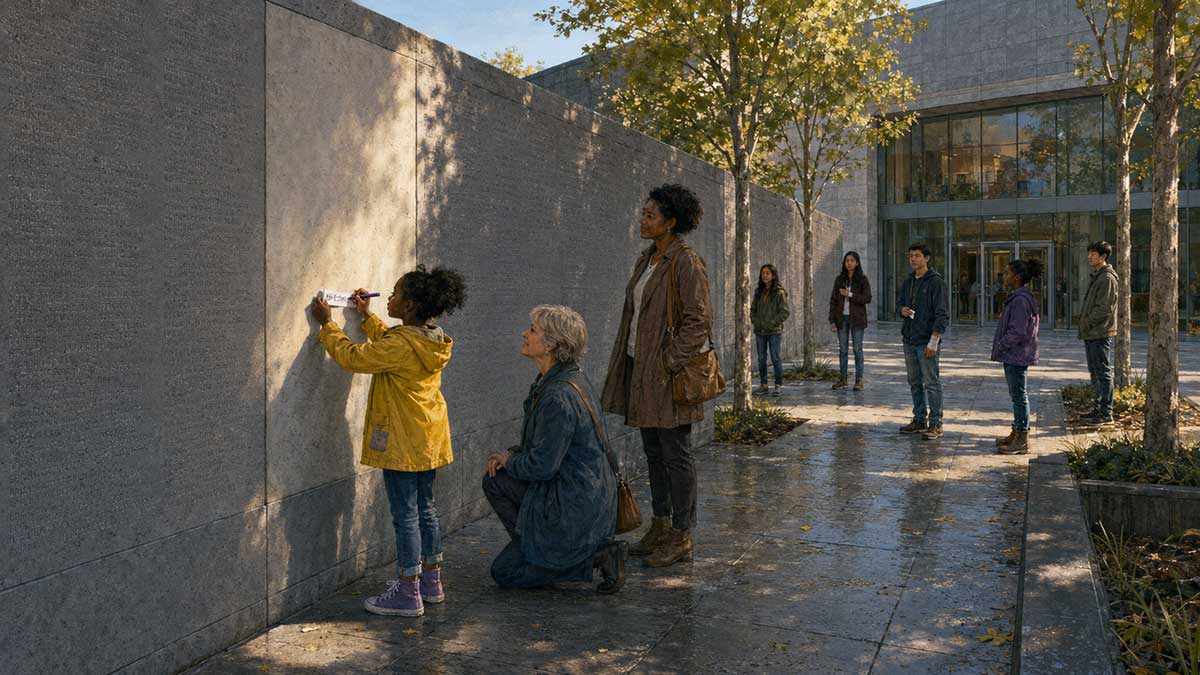
At the end of summer, Amira visited the wall with her mother. A pale scar crossed Daniel’s hand. Naomi and Sun-hee stood near the entrance. Grace sat on a bench, reading the first page of Mara’s proposed living-safety charter.
Children received white paper bracelets at the door.
Amira wrote her name in purple ink.
She studied it, crossed it out, then wrote it again in larger letters.
June knelt beside her.
“Why did you rewrite it?”
Amira held up her wrist.
“The first one looked like somebody else wrote it.”
Her mother touched the yellow coat, now patched across one sleeve.
June looked at the blank section of stone.
The wall had once measured memory by the number of names it could hold. It now kept an empty space for every life that care might prevent from reaching it.
Greyhaven had not become innocent.
A building had burned. A child had carried the battery that should have warned her. The city acted only after fire supplied the evidence.
Yet Amira stood in sunlight, her own name bright across her wrist.
For the first time, the wall kept a name by refusing to receive it.
Final Thoughts
Greyhaven does not become innocent at the end of these stories.
Its institutions have already wounded Eli, Daniel, Naomi, Sun-hee, and Amira. No policy can restore the years taken from them. No memorial can erase the city’s delayed response.
Yet each character creates one form of repair.
Mara forces data to share its authority with a human life. Grace refuses to exchange one victim for another. Naomi proves that silence may belong to a survivor. Sun-hee chooses six seconds of truth over decades of beautiful invention. June transforms a building devoted to the dead into shelter for the living.
Amira’s handwritten name completes the collection. Others have classified, predicted, and nearly memorialized her. Her final act is small: she crosses out the name that does not feel like hers and writes it again.
The blank space on the memorial wall is not an absence. It represents a child who remained alive.
Remembrance reaches its highest purpose when it changes whom we protect before mourning becomes necessary.
Short Bios:
Mara Velez
A behavioral-data analyst whose younger brother died by suicide. She helped create Sentinel, then discovers that its certainty can turn grief into suspicion. Her handwritten “Second Name” files begin a quiet rebellion inside the system.
Eli Park
A seventeen-year-old artist marked as dangerous after private messages to his dead sister are misread. His struggle introduces the collection’s central conflict: the distance between a recorded pattern and a human life.
Grace Han
A veteran public defender nearing retirement. She represents Daniel Rojas and proves his innocence without exposing the undocumented family he protected.
Daniel Rojas
A delivery driver falsely accused of political murder. After his release, he works at the Memory Center and later risks his life to rescue Amira and her mother.
Naomi Reed
A survivor of the Greyhaven school attack who has spent twenty-nine years publicly retelling eleven traumatic minutes. She demands the right to withdraw her testimony and live beyond it.
Lena Okafor
An archivist who comes to see that preservation can become possession. She helps Naomi seal her testimony for fifty years and creates a model of contributor-controlled memory.
Sun-hee Cho
A hospital cleaner whose nineteen-year-old daughter, Mina, died during a preventable shelter disaster. Sun-hee rejects an artificial reconstruction of Mina’s future and protects the imperfect truth of her daughter’s real life.
Mina Cho
A young painter who died waiting for emergency help. The city invents the adult she might have become, yet her authentic legacy survives in six seconds of laughter.
June Mercer
Director of the Greyhaven Civic Memory Center. She approved programs that harmed people under the language of safety and remembrance. Her moral awakening gathers the lessons left by every earlier protagonist.
Amira Bell
A nine-year-old girl living in an unsafe apartment building. A computer predicts her death before the city recognizes her need. Her survival turns the collection’s focus from memorializing loss to protecting life.
Leave a Reply