
Introduction
In May 1980, the South Korean military entered Gwangju and opened fire on citizens calling for democracy. Among the dead was a fifteen-year-old boy whose brief life became the emotional center of Han Kang’s Human Acts.
In the novel, his name is Dong-ho.
He remains at the provincial office gymnasium, helping volunteers identify bodies and care for the dead. He searches for his friend Jeong-dae, who was shot during the uprising. Others urge Dong-ho to escape before the soldiers return. He stays.
He is killed.
History may call him courageous. His mother remembers something more painful: he was a child who should have come home.
This imaginary conversation brings Dong-ho together with Jeong-dae, his mother, and several survivors whose lives were permanently altered by Gwangju. Eun-sook carries words injured by censorship. Jin-su carries the prison inside his body long after his release. Seon-ju protects a story that researchers believe she owes to history. Han Kang sits among them, questioning whether a writer can approach another person’s suffering without claiming it.
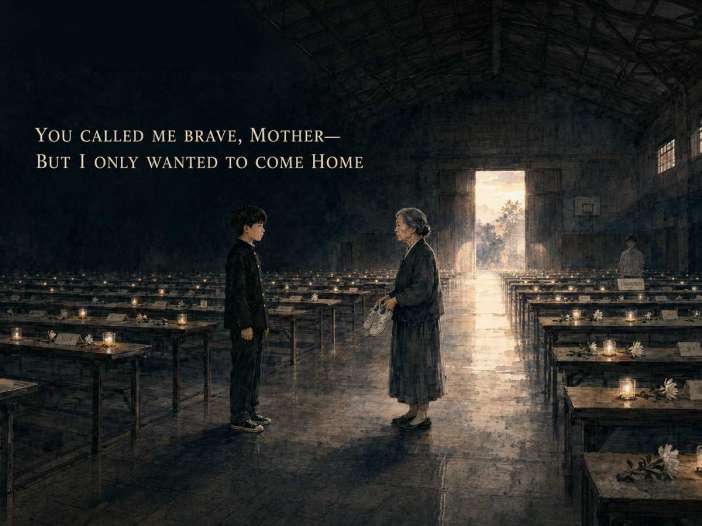
Their gathering takes place inside the old gymnasium. The bodies are gone, but candles continue burning upon the empty tables. Name cards remain for people who were never identified. Near the entrance rests a pair of school shoes Dong-ho never had time to grow into.
The conversation begins with a mother’s unbearable question:
Why did her son stay when he could have tried to come home?
Dong-ho says he stayed for Jeong-dae. His mother asks why one frightened child believed another child’s death required his own. Their exchange challenges the language society often uses to make tragedy easier to accept. Calling a murdered child a hero may honor his courage, but it can hide the failure of adults and institutions that did not protect him.
The conversation then turns to those who survived.
Jin-su reveals that survival did not feel like rescue. Seon-ju refuses the idea that survivors must expose their deepest wounds to prove that violence occurred. Eun-sook asks whether silence can preserve truth when governments censor language. Jeong-dae asks whether the dead blame those who ran, lived, laughed, or forgot them for a few precious moments.
No answer repairs what happened.
Yet each character begins returning guilt to the people and institutions that created the violence. The frightened did not cause the massacre. The tortured did not create their shame. Survivors did not steal the years denied to the dead. Mothers are not required to transform murdered children into noble symbols.
At the center stands one moral question:
What must the living do so the dead are not abandoned again?
The answer is not remembrance alone. It is truthful language, care for survivors, resistance to historical denial, accountability for those responsible, and protection of people before their courage becomes necessary.
Above all, it is remembering that every historical victim possessed an ordinary life before becoming a name in a book.
(Note: This is an imaginary conversation, a creative exploration of an idea, and not a real speech or event.)
Topic 1: Why Did You Stay When You Could Have Come Home?
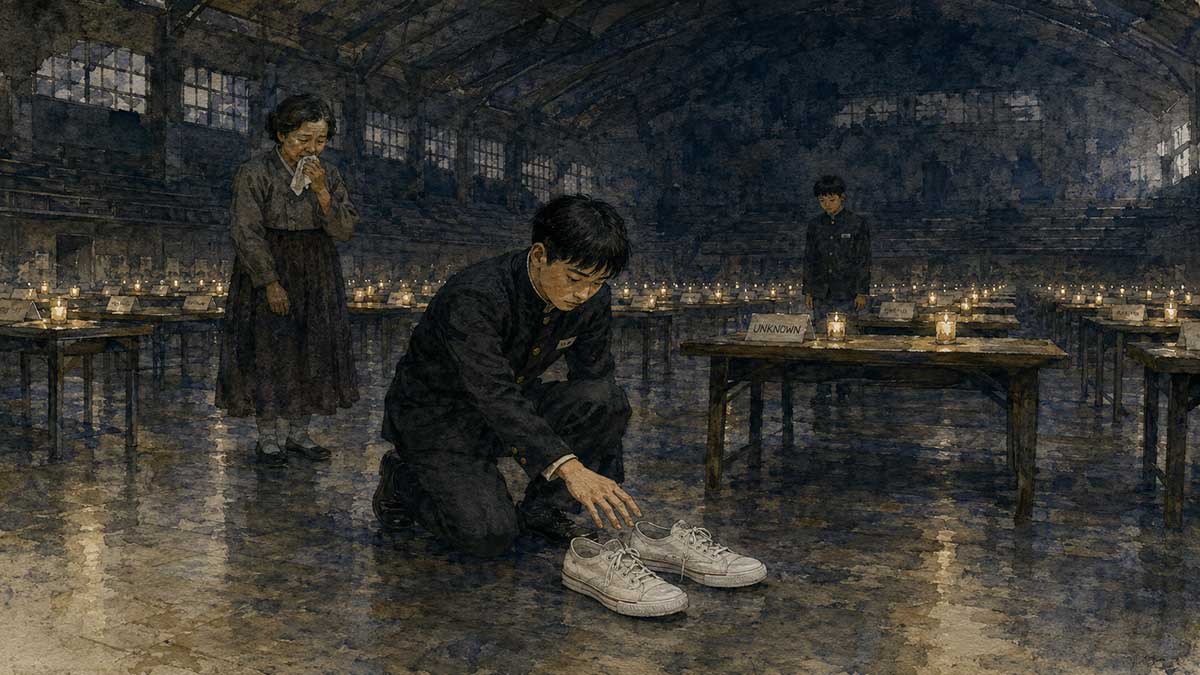
The old gymnasium stood in darkness except for the candles.
They burned in long rows upon empty tables where bodies had once been arranged beneath flags and bloodstained sheets. Some flames stood straight. Others shivered each time the night wind entered through a broken window.
Dong-ho walked between the tables carrying a cardboard box filled with candles.
He appeared as he had in May 1980: fifteen years old, narrow-shouldered, wearing his school uniform. There was dried blood on one sleeve, but his face remained untouched. He looked neither completely alive nor entirely dead.
At the far end of the gymnasium, a woman stood with her back to him.
She held a pair of white school shoes.
Dong-ho stopped.
The box began slipping from his hands.
Dong-ho: Mother?
She did not turn.
Dong-ho: Mother, is that you?
Dong-ho’s Mother: I heard your voice.
Dong-ho: Then why won’t you look at me?
Dong-ho’s Mother: I have spent thirty years looking for you in crowds. At bus stops. Outside schools. In the faces of boys walking ahead of me. Every time I saw someone with your shoulders, my heart ran to him before my feet could move.
She placed the shoes on an empty table.
Dong-ho’s Mother: Let me remain here one more moment before I turn around.
Dong-ho set down the box.
Dong-ho: I wanted to come home.
Dong-ho’s Mother: Do not say that yet.
Dong-ho: It’s true.
Dong-ho’s Mother: If you begin with that, I will have to ask why you didn’t.
She slowly faced him.
Her eyes moved across his face, his uniform, his hands, and the blood on his sleeve. She seemed to be searching for evidence that this boy truly belonged to her.
Dong-ho attempted a smile.
His mother crossed the distance between them and raised one hand toward his cheek. Her fingers stopped just before touching him.
Dong-ho: You can touch me.
Dong-ho’s Mother: Can I?
Dong-ho: I think so.
Her fingers passed through the edge of his face like a hand moving through cold mist.
She pulled them back.
Dong-ho’s Mother: No. They took even that from me.
Dong-ho: Mother—
Dong-ho’s Mother: Everyone told me you were brave.
Dong-ho lowered his eyes.
Dong-ho’s Mother: Teachers said it. Reporters said it. Men giving speeches said it. People who never heard you laugh stood before microphones and called you a brave young martyr.
Dong-ho: Wasn’t I brave?
Dong-ho’s Mother: Don’t ask me to be proud of the thing that kept you from coming home.
A candle sputtered between them.
From another table came the voice of a second boy.
Jeong-dae: He stayed for me.
Dong-ho turned.
Jeong-dae sat beside a name card marked UNKNOWN. His shirt was torn near the chest. His skin carried the gray stillness of a body left too long beneath other bodies.
Dong-ho stared at him.
Dong-ho: Jeong-dae?
Jeong-dae: You took your time.
Dong-ho crossed the gymnasium, then stopped a few steps away.
Dong-ho: I looked everywhere for you.
Jeong-dae: I know.
Dong-ho: I checked the faces. Some were swollen. Some were covered. I kept thinking the next body might be yours.
Jeong-dae: It was there.
Dong-ho: Where?
Jeong-dae: Not in the gymnasium.
Dong-ho: I should have kept looking.
Jeong-dae: You should have gone home.
Dong-ho looked at his mother.
She had closed her eyes.
Dong-ho: You were waiting for me.
Jeong-dae: I was dead.
Dong-ho: I didn’t know that.
Jeong-dae: You saw me fall.
Dong-ho: I saw the blood. I saw people running. Someone pulled me away.
Jeong-dae: And you ran.
Dong-ho flinched.
Dong-ho: Yes.
Jeong-dae: That is what children do when soldiers fire at them.
Dong-ho: I left you in the street.
Jeong-dae: You survived the street.
Dong-ho: For how long?
Jeong-dae looked toward Dong-ho’s mother.
Jeong-dae: Not long enough.
Dong-ho picked up a candle and began pressing it into a metal holder. His fingers trembled.
Dong-ho’s Mother: Did you remain in this place to punish yourself?
Dong-ho: No.
Dong-ho’s Mother: Then tell me why.
Dong-ho: People were bringing in bodies. Someone had to write down their names. Their families were coming. They needed help finding them.
Dong-ho’s Mother: There were adults here.
Dong-ho: Not enough.
Dong-ho’s Mother: You were fifteen.
Dong-ho: I could still help.
Dong-ho’s Mother: You were fifteen.
Dong-ho: I wasn’t useless.
Dong-ho’s Mother: I did not say you were useless. I said you were fifteen.
Her voice broke on the final word.
Dong-ho pressed the candle too hard. The wax cracked in his hand.
Dong-ho: When I cleaned their faces, they looked less alone.
Dong-ho’s Mother: And who was supposed to keep you from being alone?
Dong-ho: I thought the soldiers might see that we weren’t armed.
Dong-ho’s Mother: They had already killed children.
Dong-ho: I thought if we raised our hands—
Dong-ho’s Mother: They had already shot people with their hands raised.
Dong-ho: I know that now.
Dong-ho’s Mother: You knew enough then.
Dong-ho: Knowing is different when you’re standing inside it.
Silence spread across the gymnasium.
Eun-sook stood beside a table near the wall. She carried a manuscript covered in black censor marks.
Eun-sook: He was afraid.
Dong-ho’s mother turned toward her.
Eun-sook: We all were. Every noise outside made us look at the doors. We told one another that the soldiers might not fire if we surrendered peacefully. We needed to believe there was some boundary they would not cross.
Dong-ho’s Mother: You were older than he was.
Eun-sook: Yes.
Dong-ho’s Mother: Then why didn’t you drag him out?
Eun-sook stared at the black lines running across her manuscript.
Eun-sook: I left before the final attack.
Dong-ho’s Mother: He stayed.
Eun-sook: Yes.
Dong-ho’s Mother: Did you tell him to leave?
Eun-sook: More than once.
Dong-ho’s Mother: Did you take his hand?
Eun-sook: No.
Dong-ho’s Mother: Then you asked a child to rescue himself.
The words struck Eun-sook more sharply than an accusation shouted in anger.
Eun-sook: I believed he would follow us.
Dong-ho’s Mother: I believed he would come home for dinner.
Eun-sook: I’m sorry.
Dong-ho’s Mother: I have heard those words from people who lost nothing.
Eun-sook: I lost people too.
Dong-ho’s Mother: But not him.
Eun-sook: No. Not as you lost him.
Dong-ho stepped between them.
Dong-ho: Mother, she tried to help me.
Dong-ho’s Mother: Stop protecting everyone.
Dong-ho: I’m not—
Dong-ho’s Mother: You protected the bodies. You protected your friend. You protected the adults who left. Now you are protecting the people who gave you a choice no child should have faced.
Dong-ho: I made my own choice.
Dong-ho’s Mother: Is that what you need me to believe?
Dong-ho: It’s what happened.
Dong-ho’s Mother: Then say it clearly. Tell me that you chose the dead over me.
Dong-ho looked at the rows of empty tables.
Dong-ho: That isn’t fair.
Dong-ho’s Mother: Neither was identifying my son by the shape of his hands.
No one moved.
One candle went out.
Dong-ho’s mother picked up the shoes and held them against her chest.
Dong-ho’s Mother: I bought these a week before you died. Do you remember?
Dong-ho: They were too large.
Dong-ho’s Mother: You complained that your heel slipped.
Dong-ho: You said I would grow into them.
Dong-ho’s Mother: I thought we had time.
Dong-ho looked down at his feet.
Dong-ho: I remember wearing the old pair that morning.
Dong-ho’s Mother: You left these near the door.
Dong-ho: I meant to wear them later.
Dong-ho’s Mother: I kept them there for months.
Dong-ho: Why?
Dong-ho’s Mother: At first, I thought you might need them when you came back. Then I could not move them. Moving them would have meant admitting you no longer needed shoes.
She placed them on the floor in front of him.
Dong-ho’s Mother: Put them on.
Dong-ho: Mother—
Dong-ho’s Mother: I want to see whether they fit now.
Dong-ho: I never grew any older.
Dong-ho’s Mother: I did.
Dong-ho knelt beside the shoes. He tried to lift one, but his fingers passed through it.
His mother watched him try again.
Dong-ho: I’m sorry.
Dong-ho’s Mother: For what?
Dong-ho: For not growing into them.
His mother turned away and pressed one fist against her mouth.
Jeong-dae rose from his table.
Jeong-dae: It wasn’t his fault.
Dong-ho’s Mother: I know.
Jeong-dae: Then why are you making him answer for it?
She looked directly at Jeong-dae.
Dong-ho’s Mother: I am not asking why the soldiers killed him. I know why men with guns kill children. They do it when obedience becomes more precious than conscience.
She pointed toward Dong-ho.
Dong-ho’s Mother: I am asking why my son believed your death required his.
Jeong-dae: It didn’t.
Dong-ho stood.
Dong-ho: You were my friend.
Jeong-dae: Then you should have known I would never ask you to die beside me.
Dong-ho: I didn’t stay so I could die.
Jeong-dae: What did you think would happen when the soldiers returned?
Dong-ho: I thought they might arrest us.
Jeong-dae: And after everything you had seen?
Dong-ho: We agreed to surrender.
Jeong-dae: Did the people with guns agree?
Dong-ho’s voice became small.
Dong-ho: I didn’t want fear to decide who I became.
Dong-ho’s Mother: Fear was trying to bring you home.
Dong-ho: Fear had already made me leave Jeong-dae.
Jeong-dae: No. Gunfire made you leave me.
Dong-ho: I kept hearing you fall.
Jeong-dae: That sound belonged to the soldier who shot me. You carried it as if it belonged to you.
Dong-ho: If I had stayed beside you—
Jeong-dae: You would have died in the street.
Dong-ho: Then you wouldn’t have died alone.
Jeong-dae: Is that what you thought friendship meant?
Dong-ho: At that moment, yes.
Jeong-dae walked closer.
Jeong-dae: I was angry when you ran.
Dong-ho stared at him.
Jeong-dae: For one second, I hated you. I saw your back moving away, and I thought, “He is leaving me.”
Dong-ho: I knew it.
Jeong-dae: Listen to the rest.
Dong-ho’s lips tightened.
Jeong-dae: Then I heard more shots. I saw people falling. I wanted you to run faster. That was my final wish as a living person.
Dong-ho covered his face.
Jeong-dae: You spent your remaining hours obeying the first thought I had. You never heard the second.
Dong-ho: How could I?
Jeong-dae: You couldn’t.
Dong-ho: Then how was I supposed to know?
Jeong-dae: You weren’t. That is the tragedy. Not your failure.
Dong-ho’s mother approached her son again.
Dong-ho’s Mother: Look at me.
He lowered his hands.
Dong-ho’s Mother: Were you thinking of me when the soldiers entered?
Dong-ho: Yes.
Dong-ho’s Mother: What did you think?
Dong-ho: I thought you would be angry.
A broken laugh escaped her.
Dong-ho’s Mother: Angry?
Dong-ho: I had stayed out. I hadn’t sent word. I thought you would say I never listened.
Dong-ho’s Mother: What else?
Dong-ho: I pictured the kitchen.
Dong-ho’s Mother: The kitchen?
Dong-ho: The light above the sink. Your apron hanging on the wall. The rice pot. I could see everything.
Dong-ho’s Mother: Did you call for me?
Dong-ho: Not aloud.
Dong-ho’s Mother: Why not?
Dong-ho: The older boys were there. I didn’t want them to know how afraid I was.
Dong-ho’s Mother: So you died trying to look brave.
Dong-ho: No. I died wanting my mother.
Her face collapsed.
She reached for him again, forgetting that she could not touch him. Her arms passed through his shoulders. For a moment, mother and son occupied the same space without being able to hold one another.
Dong-ho’s Mother: You should have called me.
Dong-ho: Would you have heard?
Dong-ho’s Mother: I would have heard.
Dong-ho: From home?
Dong-ho’s Mother: A mother hears the sound her child never makes. She hears it for the rest of her life.
Dong-ho closed his eyes.
Dong-ho: I’m sorry I didn’t come home.
Dong-ho’s Mother: I do not want your apology.
Dong-ho: What do you want?
Dong-ho’s Mother: I want the morning returned.
Dong-ho: I can’t give you that.
Dong-ho’s Mother: I want to stand at the door and block your way.
Dong-ho: I know.
Dong-ho’s Mother: I want to tell you that friendship does not require dying.
Dong-ho: I know that now.
Dong-ho’s Mother: I want you to complain about those shoes. I want you to ask for more rice. I want to become irritated when you leave your books on the floor.
Dong-ho: Mother—
Dong-ho’s Mother: I want ordinary things. Everyone gave me history, but I wanted Tuesday.
Dong-ho looked toward Han Kang, who sat apart from the group with a closed notebook.
Dong-ho: Is that why you wrote about me?
Han Kang did not open the notebook.
Han Kang: I wrote so people would know what was taken.
Dong-ho’s Mother: Do they know?
Han Kang: They know the event.
Dong-ho’s Mother: That is not what I asked.
Han Kang looked at the shoes.
Han Kang: No. They cannot fully know.
Dong-ho’s Mother: Then tell them he disliked radish soup.
Dong-ho glanced at her.
Dong-ho: I didn’t dislike it.
Dong-ho’s Mother: You left the radish at the bottom of the bowl.
Dong-ho: I ate some of it.
Dong-ho’s Mother: Only when I watched you.
A faint smile crossed her face. Dong-ho smiled too.
For one brief moment, the gymnasium seemed to contain a kitchen, a bowl of soup, and a boy pretending to eat vegetables under his mother’s watch.
Then the moment passed.
Jin-su stood near the doors, his hand resting on the metal handle.
Jin-su: He should have had years to change his mind about radish soup.
Dong-ho’s mother looked toward him.
Dong-ho’s Mother: You knew my son?
Jin-su: Yes.
Dong-ho’s Mother: You were there?
Jin-su: Yes.
Dong-ho’s Mother: You survived?
Jin-su withdrew his hand from the door.
Jin-su: My body did.
Dong-ho studied him.
Dong-ho: You grew older.
Jin-su: I accumulated years.
Dong-ho: That isn’t the same?
Jin-su: No.
Dong-ho: Did you have a family?
Jin-su: No.
Dong-ho: Did you return to school?
Jin-su: For a time.
Dong-ho: Did you ever forget that night?
Jin-su looked at the rows of candles.
Jin-su: Not for the length of a single breath.
Dong-ho’s mother picked up the school shoes and carried them to Jin-su.
Dong-ho’s Mother: Hold these.
Jin-su hesitated.
Jin-su: Why?
Dong-ho’s Mother: You received the years my son did not. Tell me what you did with them.
Jin-su stared at the shoes in her hands.
He did not take them.
Jin-su: I tried to survive them.
Dong-ho stepped closer to him.
Dong-ho: Was surviving so terrible?
Jin-su looked at the dead boy, then at the gymnasium doors he had been unable to open.
Jin-su: Dong-ho, there were mornings when I envied you.
The candles trembled.
Dong-ho’s mother held the unworn shoes between the dead child and the man who had survived him.
Topic 2: Is Survival a Gift—or a Punishment?
The candles trembled.
Dong-ho’s mother held the unworn shoes between the dead child and the man who had survived him.
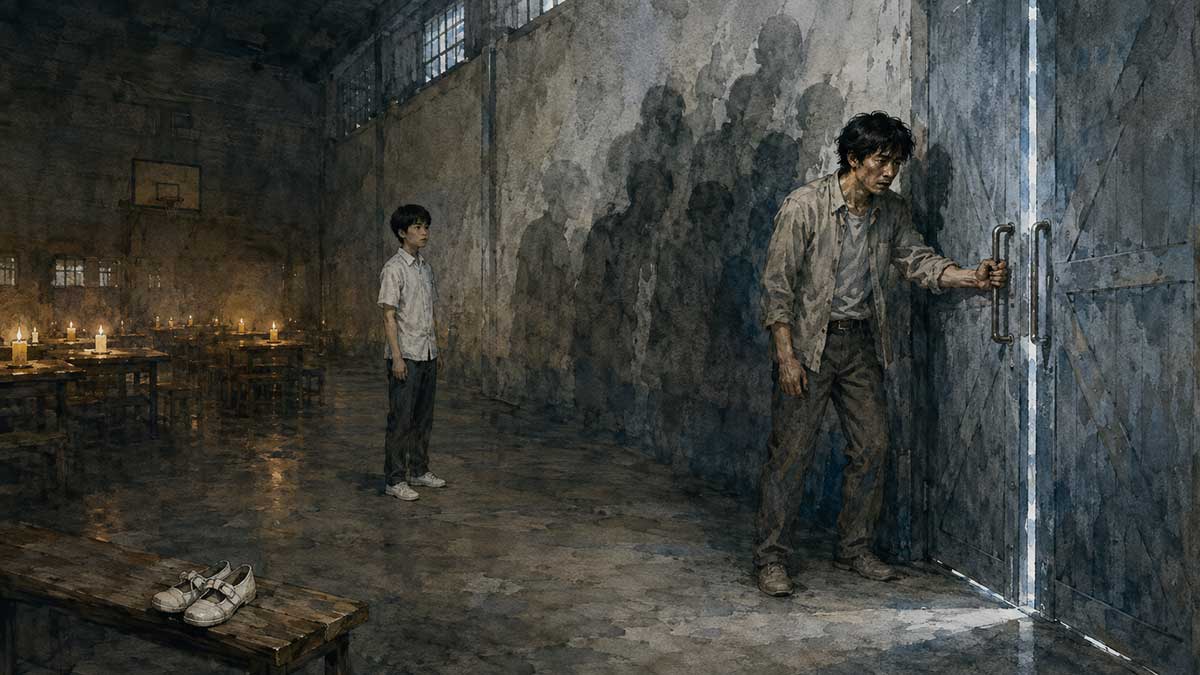
Jin-su stood near the gymnasium doors, one hand suspended over the metal handle. He had touched it so many times that the motion seemed older than his body.
Dong-ho: You envied me?
Jin-su looked at the floor.
Dong-ho: You wished you were dead?
Jin-su: Sometimes.
Dong-ho: You lived the years I lost.
Jin-su: I carried them.
Dong-ho: What is the difference?
Jin-su: Living means a year belongs to you. Carrying it means you drag it behind you until another year is added.
Dong-ho’s mother lowered the shoes.
Dong-ho’s Mother: How many years did you carry?
Jin-su: Nine.
Dong-ho: Only nine?
Jin-su: Nine after Gwangju. Nineteen before it.
Dong-ho: And then?
Jin-su’s fingers curled toward the handle.
Jin-su: Then I stopped.
Dong-ho looked at Eun-sook. She held her censored manuscript tightly against her chest.
Dong-ho: What does he mean?
Eun-sook did not answer.
Seon-ju unfolded her hands.
Seon-ju: He took his own life.
Dong-ho looked back at Jin-su.
Dong-ho: You killed yourself?
Jin-su: Yes.
Dong-ho: Why?
Jin-su almost smiled.
Jin-su: People always ask that as if there were one final reason. One terrible morning. One letter. One door closing.
Dong-ho: Wasn’t there?
Jin-su: There were thousands of mornings.
Dong-ho: Did you think of us?
Jin-su: Every day.
Dong-ho: Then why didn’t remembering us help you live?
Jin-su: Remembering you was part of what made living unbearable.
Dong-ho stepped back as if Jin-su had struck him.
Dong-ho: So my death helped cause yours?
Jin-su: No.
Dong-ho: You just said—
Jin-su: Your death did not kill me. The men who killed you, imprisoned us, tortured us, and sent us home carrying their voices killed parts of me over many years.
Dong-ho: But you said you remembered me.
Jin-su: I remembered you at fifteen. I grew older than you. Each birthday felt like stealing.
Dong-ho: Stealing from whom?
Jin-su: From you. From Jeong-dae. From all the people who died.
Jeong-dae stood beside the table bearing the UNKNOWN card.
Jeong-dae: We could not use those years.
Jin-su: That did not make them mine.
Jeong-dae: Whose were they, then?
Jin-su had no answer.
Dong-ho’s mother approached him and held out the shoes.
Dong-ho’s Mother: Take them.
Jin-su looked at her.
Dong-ho’s Mother: You said you carried my son’s years. Then hold what he left behind.
Jin-su accepted the shoes.
His hands began shaking.
Jin-su: These are so light.
Dong-ho’s Mother: They were made for a child.
Jin-su: I expected them to be heavier.
Dong-ho’s Mother: Grief is heavy. The things left behind are painfully light.
Jin-su ran his thumb along one clean shoelace.
Jin-su: I used to picture him growing older.
Dong-ho’s Mother: How old?
Jin-su: My age. Whatever age I reached, I made him that age too.
Dong-ho: What did I become?
Jin-su: Sometimes a teacher.
Dong-ho: I wasn’t very patient.
Jin-su: Then a photographer.
Dong-ho: I didn’t own a camera.
Jin-su: You might have bought one.
Dong-ho: What else?
Jin-su: A father.
Dong-ho’s expression changed.
Dong-ho: Did I have children?
Jin-su: Two in one version. A girl and a boy.
Dong-ho: What were their names?
Jin-su: I never gave them names.
Dong-ho: Why not?
Jin-su: That felt like going too far.
Dong-ho sat on the edge of an empty table.
Dong-ho: You gave me a family, then left my children nameless.
Jin-su: I’m sorry.
Dong-ho: Did you picture my mother?
Jin-su: Yes.
Dong-ho: Was she happy?
Jin-su looked at her.
Jin-su: She was cooking. You were late. She complained about you.
Dong-ho’s Mother: That sounds right.
Jin-su: Then I would remember where I was. I would remember that none of it happened.
Dong-ho: And you blamed yourself?
Jin-su: I was standing inside the future you never entered.
Dong-ho: You didn’t take it from me.
Jin-su: I knew that here.
He touched his forehead.
Jin-su: I could not make the rest of me believe it.
Dong-ho: What part?
Jin-su touched his chest, then his throat, then his stomach.
Jin-su: Every part that remembered the prison.
The candles nearest him dimmed.
The gymnasium walls seemed to contract. The empty tables moved closer together until the aisles narrowed. Jin-su’s breathing changed.
Eun-sook: Jin-su, look at the doors.
Jin-su: I am looking.
Eun-sook: You are in the gymnasium.
Jin-su: I know.
Eun-sook: There are no guards here.
Jin-su: I know.
Eun-sook: No one has locked the doors.
Jin-su: Then why can’t I open them?
He placed the school shoes on the floor and pulled at the handle.
The doors did not move.
Dong-ho: Let me help.
Jin-su: Don’t come closer.
Dong-ho stopped.
Jin-su: Please.
Dong-ho: I won’t touch you.
Jin-su: It isn’t you.
Dong-ho: Then what is it?
Jin-su pressed his back against the doors.
Jin-su: Too many bodies.
His eyes were fixed upon a place no one else could see.
Jin-su: We were packed together so tightly that I could not lower my arms. A man’s elbow was against my ribs. Someone’s face was pressed into the back of my neck. When one person shifted, everyone had to shift.
Dong-ho listened without blinking.
Jin-su: We could smell blood, sweat, urine, and fear. We begged for water. The guards laughed.
Dong-ho: How long were you there?
Jin-su: Time had no shape. It was measured by footsteps outside the door. By the sound of someone being taken. By whether he returned.
Jeong-dae: Did they call your names?
Jin-su: Sometimes. Other times they pointed.
Jeong-dae: Which was worse?
Jin-su: Hearing your name.
Dong-ho: Why?
Jin-su: A name should mean someone recognizes you. There, it meant they had chosen your body.
Dong-ho looked at the name cards on the tables.
In the gymnasium, recording a name had restored dignity. In prison, speaking a name had marked a victim for pain.
Jin-su: They made us kneel. They beat the bottoms of our feet so bruises would be harder to see. They struck our backs. They forced our heads down. They asked who organized us.
Dong-ho: What did you tell them?
Jin-su: Whatever I thought might make them stop.
Dong-ho: Was it true?
Jin-su: Some of it. Some of it wasn’t.
Dong-ho: Did anyone suffer from what you said?
Jin-su closed his eyes.
Jin-su: I don’t know.
Dong-ho: Is that what stayed with you?
Jin-su: One of the things.
Dong-ho: You were being tortured.
Jin-su: That did not protect anyone whose name came out of my mouth.
Seon-ju: They made your pain speak. That is not the same as choosing to betray someone.
Jin-su: The person taken from his house would not care about that distinction.
Seon-ju: You do not know that anyone was taken.
Jin-su: I do not know that no one was.
Seon-ju: So they sentenced you to uncertainty, and you continued their work after they released you.
Jin-su looked at her.
Jin-su: Didn’t you?
Seon-ju became still.
Jin-su: Didn’t you repeat their questions in your head? Didn’t you hear their voices when no one was near you?
Seon-ju: Yes.
Jin-su: Didn’t you inspect your own memories as if searching for evidence against yourself?
Seon-ju: Yes.
Jin-su: Then you know.
Seon-ju: I know what they did. I refuse to call it what we did to ourselves.
Jin-su released the door handle.
Jin-su: They were gone. I was the one repeating it.
Seon-ju: They taught your mind how to guard its own prison.
Jin-su: Does changing the language change the result?
Seon-ju: It changes where the guilt belongs.
Dong-ho walked nearer, stopping several feet away as Jin-su had requested.
Dong-ho: Were you afraid of people touching you?
Jin-su: Yes.
Dong-ho: Were you afraid of being alone?
Jin-su: Yes.
Dong-ho: How can both be true?
Jin-su: That is what they left inside us.
Dong-ho thought about the gymnasium before the final attack. The volunteers had sat close together, drawing reassurance from the presence of other bodies.
Dong-ho: I thought being near people made fear smaller.
Jin-su: It once did.
Dong-ho: And afterward?
Jin-su: A crowded bus could make me feel the cell around me. A stranger’s breath on my neck could bring back the man pressed behind me. If someone closed a door, I counted the steps to the window.
Dong-ho: What happened when someone hugged you?
Jin-su looked down.
Jin-su: I waited for it to end.
Dong-ho’s mother stared at him with a grief different from the one she carried for her son.
Dong-ho’s Mother: Did your family know?
Jin-su: They knew I had changed.
Dong-ho’s Mother: Did you tell them why?
Jin-su: My mother saw the injuries when I came home.
Dong-ho’s Mother: What did she do?
Jin-su: She heated water. She cleaned me. She asked where it hurt.
Dong-ho’s Mother: What did you say?
Jin-su: Nowhere.
Dong-ho’s Mother: Why?
Jin-su: If I named one place, I thought the others might begin speaking.
Dong-ho’s Mother: Did she believe you?
Jin-su: No.
Dong-ho’s Mother: Mothers rarely do when their children say they are fine.
Jin-su: She sat outside my room at night.
Dong-ho’s Mother: Did you hear her?
Jin-su: Every night.
Dong-ho’s Mother: Did you open the door?
Jin-su: No.
Dong-ho’s Mother: Why?
Jin-su: I thought I was protecting her.
Dong-ho’s mother glanced at her son.
Dong-ho’s Mother: You boys protect your mothers by disappearing behind doors.
Jin-su looked at the gymnasium entrance.
Jin-su: She died before I did.
Dong-ho’s Mother: Did she know you loved her?
Jin-su: I hope so.
Dong-ho’s Mother: Hope is a painful substitute for saying it.
Jin-su’s face tightened.
Jin-su: I could not let her touch me. I could not tell her what had happened. I could not sit at the table without watching the door. Every kindness made me ashamed.
Dong-ho: Why would kindness make you ashamed?
Jin-su: It reminded me that I could no longer receive it properly.
Eun-sook: There is no proper way to receive kindness after torture.
Jin-su: People become tired of giving something that appears to vanish.
Eun-sook: Did they tell you that?
Jin-su: They didn’t have to.
Eun-sook: You decided it for them.
Jin-su: I watched their faces.
Eun-sook: You watched for rejection so closely that every expression began to resemble it.
Jin-su turned toward her.
Jin-su: You make it sound like a mistake in my thinking.
Eun-sook: No. I am saying they injured the part of you that recognized safety. Love could stand in front of you, and your body still prepared for danger.
Jin-su: What good is love if the body cannot recognize it?
Eun-sook opened her mouth, but no answer came.
Han Kang remained beside the wall, her notebook still closed.
Han Kang: Did anyone help you after your release?
Jin-su gave a short laugh.
Jin-su: Help?
Han Kang: A doctor. A counselor. Someone trained to care for survivors.
Jin-su: They watched us. They questioned us. They warned our families. Employers were told we were troublemakers. Police visited homes. We learned to lower our voices when certain subjects came up.
Han Kang: So release did not mean freedom.
Jin-su: Release meant the cell became larger.
Dong-ho: How large?
Jin-su: The size of the country.
The silence that followed seemed to fill every corner of the gymnasium.
Dong-ho: Did you ever feel happy?
Jin-su looked surprised by the question.
Jin-su: Sometimes.
Dong-ho: Tell me.
Jin-su: Once, I ate cold watermelon beside a river.
Dong-ho: Who were you with?
Jin-su: Friends from university.
Dong-ho: Were you laughing?
Jin-su: Yes.
Dong-ho: What was funny?
Jin-su: I don’t remember.
Dong-ho: Then why do you remember the watermelon?
Jin-su: Juice ran down my wrist. The sun was warm. For several minutes, I did not think of prison.
Dong-ho: That sounds good.
Jin-su: Then I noticed I had forgotten.
Dong-ho: What happened?
Jin-su: I felt ashamed.
Dong-ho: For eating watermelon?
Jin-su: For laughing in a life that continued after yours ended.
Dong-ho’s face showed something close to anger.
Dong-ho: Did you think I wanted you to taste nothing?
Jin-su: I didn’t think you wanted anything. You were dead.
Dong-ho: Yet you imagined me judging you.
Jin-su: I judged myself in your voice.
Dong-ho: What did my voice say?
Jin-su: “Why are you here when I am not?”
Dong-ho: I never said that.
Jin-su: I know.
Dong-ho: It doesn’t sound like me.
Jin-su: I know.
Dong-ho: Then whose voice was it?
Jin-su looked toward the doors.
Jin-su: The men who wanted us to believe our lives belonged to them.
Dong-ho picked up the school shoes.
Dong-ho: You imagined me growing older. Let me picture something for you.
Jin-su: What?
Dong-ho: You are sitting beside the river again.
Jin-su: Don’t.
Dong-ho: There is watermelon.
Jin-su: Dong-ho—
Dong-ho: The juice is running down your wrist. Your friends are laughing. You don’t remember why.
Jin-su: Stop.
Dong-ho: This time, when you forget the prison, you do not apologize.
Jin-su: That day is gone.
Dong-ho: We are all gone. You still carried us.
Jin-su: I could not save you.
Dong-ho: You were not the one holding the gun.
Jin-su: I could have stayed.
Dong-ho: And died?
Jin-su: Perhaps.
Dong-ho: Would my mother have received me back if you had died beside me?
Jin-su: No.
Dong-ho: Would Jeong-dae have received a burial?
Jin-su: No.
Dong-ho: Would one more body have made the soldiers guilty in a way they were not already guilty?
Jin-su: No.
Dong-ho: Then why did you owe us your death?
Jin-su looked at him for a long time.
Jin-su: I don’t know.
Dong-ho: You had nine years. Did none of them belong to you?
Jin-su: I wanted them to.
Dong-ho: Did you ever ask us?
Jin-su: Ask you what?
Dong-ho: Whether we wanted you to suffer.
Jin-su: Dead boys do not answer questions.
Jeong-dae: We are answering now.
Jin-su turned toward him.
Jeong-dae: I do not forgive you for surviving.
Jin-su’s face went pale.
Jeong-dae: There is nothing to forgive.
Dong-ho placed the shoes beside Jin-su’s feet.
Dong-ho: You said you carried the years I lost.
Jin-su: Yes.
Dong-ho: You were wrong.
Jin-su: I know that is what you want me to say.
Dong-ho: Those years were yours.
Jin-su: They did not feel like mine.
Dong-ho: Feeling is not always truth.
Jin-su looked at Seon-ju.
Jin-su: Is that what you believe?
Seon-ju: No.
Dong-ho: Then I said it badly.
Seon-ju: Pain is true. Guilt can be real without being deserved.
Dong-ho: Yes. That.
Jin-su: If it felt real enough to kill me, what difference does “deserved” make?
Seon-ju: It makes the difference between your death being a personal failure and your death being part of what they did to you.
Jin-su sank onto a bench near the doors.
Jin-su: Everyone said I had survived.
Seon-ju: They saw you breathing.
Jin-su: Isn’t that survival?
Seon-ju: It is one form.
Jin-su: What other form is there?
Seon-ju looked at her hands.
Seon-ju: I am still trying to learn.
Dong-ho sat beside Jin-su, leaving a careful space between them.
Dong-ho: Were you alone when you died?
Jin-su: Yes.
Dong-ho: Were you afraid?
Jin-su: Yes.
Dong-ho: Did you think of your mother?
Jin-su nodded.
Dong-ho: Did you think of me?
Jin-su: Yes.
Dong-ho: What did you say?
Jin-su: I said I was sorry it took me so long.
Dong-ho lowered his head.
Dong-ho: I wish you had taken longer.
Jin-su began to cry.
No one moved to touch him.
They remained near enough for him to know he was not alone, yet far enough that his body did not have to defend itself.
After some time, Jin-su wiped his face.
Jin-su: You asked whether I ever felt happy.
Dong-ho: Yes.
Jin-su: There was another time.
Dong-ho: Tell me.
Jin-su: A little girl fell asleep beside me on a bus. Her head rested against my arm.
Dong-ho: Did you move away?
Jin-su: At first, I wanted to. Then I saw her mother standing in the aisle. She smiled at me.
Dong-ho: What did you do?
Jin-su: I remained still until their stop.
Dong-ho: Were you afraid?
Jin-su: Yes.
Dong-ho: But you stayed.
Jin-su: Yes.
Dong-ho: Maybe that was brave.
Jin-su looked at Dong-ho’s mother.
Jin-su: I no longer trust that word.
Dong-ho’s Mother: Nor do I.
She sat on the other side of him.
Dong-ho’s Mother: Tell us about the girl.
Jin-su: There is nothing more.
Dong-ho’s Mother: There is always more when someone remembers gently.
Jin-su: Her hair smelled like soap.
Dong-ho’s Mother: What color was her dress?
Jin-su: Yellow.
Dong-ho: Did she wake before leaving?
Jin-su: Yes. She looked embarrassed.
Dong-ho: What did you say?
Jin-su: I told her I had been tired too.
Dong-ho smiled.
Dong-ho: You protected her from being ashamed.
Jin-su looked down at his hands.
Jin-su: It was a small thing.
Dong-ho: Small things were all we had in the gymnasium.
Dong-ho’s mother picked up one of the shoes and placed it carefully in Jin-su’s lap.
Dong-ho’s Mother: My son could not grow into this.
Jin-su’s shoulders tightened.
Dong-ho’s Mother: I am not asking you to wear it for him.
She placed the second shoe beside the first.
Dong-ho’s Mother: I am asking you to stop believing that your feet stole his road.
Jin-su touched the laces.
Jin-su: I wish someone had said that when I was alive.
Dong-ho’s Mother: Would you have believed it?
Jin-su: No.
Dong-ho’s Mother: Then we would have said it again.
The doors behind them gave a faint metallic sound.
Jin-su turned.
They had opened a few inches.
Dawn had not yet arrived. Beyond the narrow opening lay only darkness.
Dong-ho: You opened them.
Jin-su: I didn’t.
Seon-ju: Perhaps they were never locked.
Jin-su rose but did not approach the opening.
Jin-su: That almost makes it worse.
Dong-ho: Why?
Jin-su: I spent all this time believing someone held them shut.
Seon-ju stood from the darkest corner.
Seon-ju: Someone did.
Jin-su looked at her.
Seon-ju: They taught your body to hold the door closed for them.
She stepped into the candlelight.
Jin-su studied her face, recognizing a pain shaped differently from his own.
Jin-su: Did they teach your body the same thing?
Seon-ju’s hands folded over her stomach.
Seon-ju: They taught mine to become a room I could no longer enter.
Han Kang’s fingers moved toward her notebook.
Seon-ju saw them.
Seon-ju: Don’t.
Han Kang stopped.
Han Kang: I haven’t written anything.
Seon-ju: You were about to.
Han Kang: Yes.
Seon-ju: Everyone is always about to write my body down.
She stepped closer to the empty tables.
Seon-ju: Before any of you ask what happened to me, answer one question.
No one spoke.
Seon-ju: When does remembering a survivor become another way of using her?
Topic 3: Who Owns the Story Written on a Survivor’s Body?
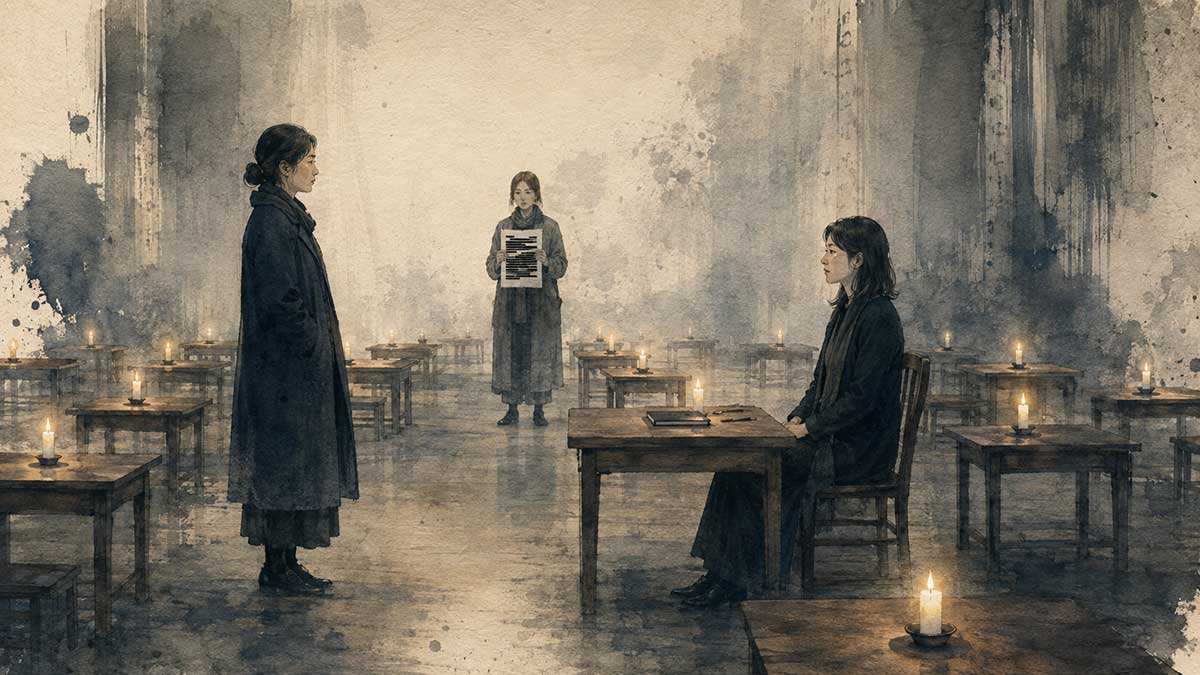
Seon-ju: When does remembering a survivor become another way of using her?
No one answered.
The gymnasium doors remained open only a few inches. A blade of cold darkness divided them.
Han Kang’s fingers rested near her closed notebook.
Seon-ju walked toward her.
Seon-ju: Put your hand away.
Han obeyed.
Seon-ju: You heard one sentence about my body and reached for your pen.
Han Kang: I wanted to remember your words accurately.
Seon-ju: Everyone says that.
Han Kang: I will not write them.
Seon-ju: You already remember them.
Han Kang: Would you prefer that I forget?
Seon-ju: I would prefer to be asked before someone decides that remembering me is virtuous.
Han Kang lowered her eyes.
Han Kang: Then I am asking.
Seon-ju: No.
The answer landed with unexpected force.
Han Kang: I accept that.
Seon-ju: Do you?
Han Kang: I will try.
Seon-ju: Accepting is different from trying.
Han pushed the notebook farther away.
Han Kang: I accept it.
Seon-ju looked at the notebook, then at the empty tables.
Seon-ju: A professor once asked me for my testimony. He wanted to record my voice. He said my account would help future generations learn what happened.
Dong-ho: Did you agree?
Seon-ju: No.
Dong-ho: Why not?
Seon-ju: He asked the question you just asked.
Dong-ho: Which question?
Seon-ju: “What happened to you?”
Dong-ho: Isn’t that the reason we are here?
Seon-ju: Is it?
Dong-ho: We are telling one another what happened.
Seon-ju: You wanted to tell your mother why you stayed.
Dong-ho: Yes.
Seon-ju: Jin-su wanted you to know what survival became for him.
Dong-ho: Yes.
Seon-ju: I have not said that I want to tell you anything.
Dong-ho looked down.
Dong-ho: You’re right.
Seon-ju: The professor sent a recording device after I refused.
Eun-sook: Without your permission?
Seon-ju: He thought persistence proved that he cared about history. He sent instructions. Press this button. Sit near the microphone. Begin wherever you can.
Jin-su: Did you record anything?
Seon-ju: I turned it on.
Han Kang looked up.
Seon-ju: I sat before it for hours.
Dong-ho: What did you say?
Seon-ju: Nothing.
Dong-ho: Not one word?
Seon-ju: I breathed.
Jin-su: That was testimony.
Seon-ju looked at him.
Jin-su: He wanted the story of what they did. He received the sound of what remained.
Seon-ju: He could not use breathing in his research.
Jin-su: Perhaps that was the truest part.
Seon-ju: He needed names, dates, methods, injuries, places. He wanted a sequence.
Eun-sook: History asks for sequences.
Seon-ju: Bodies do not remember in sequence.
She touched two fingers to her temple.
Seon-ju: A smell appears before a face. A hand comes before the room. A voice arrives without words. The body reacts, then the mind searches for an explanation.
Jin-su: A door closes.
Seon-ju: Yes.
Jin-su: Footsteps stop outside.
Seon-ju: Yes.
Jin-su: Someone stands behind you on a bus.
Seon-ju: Yes.
They looked at one another across the tables.
No further explanation was required between them.
Dong-ho: Did the professor know you had been tortured?
Seon-ju: That was the reason he wanted me.
Dong-ho flinched at the final word.
Dong-ho: He wanted your testimony.
Seon-ju: People say “testimony” when “pain” sounds too cruel.
Eun-sook: Testimony can expose the people responsible.
Seon-ju: It can.
Eun-sook: It can correct lies.
Seon-ju: It can.
Eun-sook: It can protect the dead from being erased.
Seon-ju: It can.
Eun-sook: Then why speak of it as if it were theft?
Seon-ju: I speak of the taking as theft.
Eun-sook tightened her hold on the manuscript.
Seon-ju: When I offer my story, it is testimony. When someone believes history gives him the right to extract it, it becomes another taking.
Eun-sook: What if no one else can prove what happened?
Seon-ju: Then ask why proof must come from the person already made to pay the highest price.
Eun-sook: Governments destroy records.
Seon-ju: Find those who destroyed them.
Eun-sook: Perpetrators lie.
Seon-ju: Pursue the liars.
Eun-sook: Bodies may be the only evidence left.
Seon-ju: My body belongs to me before it belongs to history.
The words moved through the gymnasium and seemed to settle upon every empty table.
Dong-ho’s Mother: Yes.
Seon-ju turned toward her.
Dong-ho’s Mother: After they killed my son, officials examined him. Reporters wanted photographs. Investigators wanted records. Activists wanted his name. Each person had a reason.
She looked at Dong-ho.
Dong-ho’s Mother: I wanted someone to cover him.
Seon-ju: Did they?
Dong-ho’s Mother: Eventually.
Seon-ju: Eventually is a long time when a body is exposed.
Dong-ho’s mother nodded.
Dong-ho: We covered the bodies here.
Seon-ju: I know.
Dong-ho: We used flags and sheets.
Seon-ju: I helped you.
Dong-ho: I remember.
Seon-ju: Do you remember my face?
Dong-ho studied her.
Dong-ho: You tied back your hair.
Seon-ju: Yes.
Dong-ho: You gave water to the families.
Seon-ju: Yes.
Dong-ho: You sang that night.
Seon-ju’s face changed.
Dong-ho: Before the soldiers came.
Seon-ju: I had forgotten that you were near me.
Dong-ho: Your voice shook at first.
Seon-ju: Everyone’s did.
Dong-ho: Then the other voices joined yours.
Seon-ju: We thought singing would make us less afraid.
Dong-ho: It did.
Seon-ju: Did it?
Dong-ho: For me.
Seon-ju looked away.
Dong-ho: When I remember you, I remember your voice. Is that wrong?
Seon-ju: No.
Dong-ho: Then what may I remember?
Seon-ju: What you witnessed.
Dong-ho: And what may I ask?
Seon-ju: Anything.
Dong-ho seemed surprised.
Dong-ho: But you don’t have to answer.
Seon-ju: Now you know the difference.
Han Kang watched them but did not move toward her notebook.
Han Kang: May I ask something?
Seon-ju considered her.
Seon-ju: Ask.
Han Kang: When people sought your testimony, did any of them ask what you wanted remembered about you?
Seon-ju stood in silence.
Han Kang: You do not have to answer.
Seon-ju: No.
Han Kang: No, you will not answer?
Seon-ju: No one asked.
A candle cracked as melted wax reached its base.
Han Kang: What would you have said?
Seon-ju: I do not know. They trained me to answer only questions about the worst days of my life.
Dong-ho’s Mother: What did you enjoy before Gwangju?
Seon-ju looked at her.
Dong-ho’s Mother: You can refuse.
Seon-ju: Persimmons.
Dong-ho: Persimmons?
Seon-ju: Soft ones. So ripe the skin nearly breaks when you hold them.
Dong-ho’s Mother: Did your family grow them?
Seon-ju: A neighbor had a tree. Its branches leaned over our wall.
Dong-ho: Did you steal them?
Seon-ju: They were on our side.
Dong-ho: That sounds like stealing with an explanation.
A faint smile moved across Seon-ju’s face.
Seon-ju: My sister and I waited until the neighbor went inside. She held my waist, and I reached over the wall.
Dong-ho: Did he ever catch you?
Seon-ju: Once. He shouted from his window that we should take the ripe ones and stop pulling down the branches.
Dong-ho’s Mother: What was your sister’s name?
Seon-ju hesitated.
Seon-ju: Hye-mi.
Dong-ho’s Mother: Was she older?
Seon-ju: Younger.
Dong-ho: Did she sing with you?
Seon-ju: Badly.
Dong-ho smiled.
Dong-ho: Now I know three things about you.
Seon-ju: What are they?
Dong-ho: You sang when you were frightened. You stole persimmons.
Seon-ju: Borrowed.
Dong-ho: And you loved your sister enough to lie about her singing.
Seon-ju gave a brief laugh.
She covered her mouth as if the sound had escaped without permission.
Jin-su watched her.
Jin-su: I had forgotten you sounded like that.
Seon-ju: Like what?
Jin-su: Alive.
Her smile disappeared.
Jin-su: I’m sorry.
Seon-ju: No. You are right.
Jin-su: I didn’t mean—
Seon-ju: You remembered me through what happened afterward.
Jin-su: Yes.
Seon-ju: Most people do.
She turned toward Han Kang.
Seon-ju: That is what frightens me about writers.
Han Kang: That we will preserve the wound and lose the person?
Seon-ju: That you will make the wound the most interesting part of her.
Han Kang accepted the accusation without defending herself.
Han Kang: I cannot promise that writing will never fail in that way.
Seon-ju: Then why write?
Han Kang: The people who ordered the violence produced their own story. In their story, citizens were dangerous. Soldiers restored order. The dead created their own deaths.
Eun-sook: That story was printed everywhere.
Han Kang: If no one writes against it, the official lie becomes the memory inherited by people who were not there.
Seon-ju: So you need us.
Han Kang: Yes.
Seon-ju: And you need what was done to us.
Han Kang: I need the truth of what was done. I do not own it.
Seon-ju: Yet your name appears on the book.
Han Kang’s eyes moved toward Dong-ho.
Han Kang: Yes.
Seon-ju: Readers praise your sentences.
Han Kang: Some do.
Seon-ju: They close the book and say it was beautiful.
Han Kang: Yes.
Seon-ju: What is beautiful about a boy’s body riddled with bullets?
Han Kang: Nothing.
Seon-ju: What is beautiful about torture?
Han Kang: Nothing.
Seon-ju: Then where does beauty enter?
Han Kang looked at the candles.
Han Kang: In the hands that cleaned the bodies.
Seon-ju: That is goodness, not beauty.
Han Kang: Perhaps beauty is the wrong word.
Seon-ju: Yet it is the word readers use.
Han Kang: They may mean that language helped them remain present before something they would otherwise turn away from.
Seon-ju: Or language made it bearable.
Han Kang: Yes.
Seon-ju: Should it be bearable?
Han Kang: If it becomes unbearable, readers may shut the book.
Seon-ju: We could not shut it.
Han Kang: I know.
Seon-ju: No. You know the sentence. You do not know the experience.
Han Kang bowed her head.
Han Kang: You are right.
Seon-ju: Say it again.
Han Kang: I do not know your experience.
Seon-ju: You can approach it. You can listen. You can study records. You can wake from nightmares created by what you have learned. You can feel grief.
She moved closer to Han.
Seon-ju: But do not say you entered my body.
Han Kang: I will not.
Seon-ju: Do not tell readers you carried my pain.
Han Kang: I will say I tried to remain near it.
Seon-ju: Near is honest.
Eun-sook opened her censored manuscript.
Whole passages were covered by thick black marks.
Eun-sook: What happens when the survivor cannot speak and the writer refuses to approach?
She held the pages toward Seon-ju.
Eun-sook: This is what remains. Black lines chosen by men who feared the truth.
Seon-ju: I am not asking writers to refuse.
Eun-sook: What are you asking?
Seon-ju: That they recognize permission as something living. I may say yes today and no tomorrow. I may tell one part and keep another. I may speak to Dong-ho and refuse to speak to a professor.
Eun-sook: History dislikes incomplete accounts.
Seon-ju: Human beings are incomplete accounts.
Eun-sook: The censor uses every gap.
Seon-ju: Then expose the censor. Do not fill the gap with what you assume happened to me.
Eun-sook looked at the crossed-out sentences.
Eun-sook: During the performance, the actors silently mouthed the deleted words.
Dong-ho: Could the audience follow them?
Eun-sook: They could not hear the exact sentences. They knew something had been removed.
Seon-ju: Did the silence speak?
Eun-sook: Yes.
Seon-ju: Then let my silence speak without forcing it to become a transcript.
Eun-sook slowly closed the manuscript.
Eun-sook: I can do that.
Seon-ju: Can you?
Eun-sook: I can place the absence where people must see it.
Seon-ju: Without explaining what belongs inside?
Eun-sook: Without claiming to know.
Seon-ju nodded.
Dong-ho sat upon the floor near one of the empty tables.
Dong-ho: May I ask another question?
Seon-ju: Yes.
Dong-ho: What happened to your voice?
Her eyes moved toward him.
Dong-ho: You sang in the gymnasium. Years later, you sat before the recorder and could only breathe.
Seon-ju: They taught me that speaking made pain worse.
Dong-ho: Who?
She looked at the candle beside him.
Seon-ju: The men who questioned me.
Dong-ho: Did they ask about us?
Seon-ju: They asked who was present at the provincial office. Who gave instructions. Who distributed food. Who carried messages.
Dong-ho: Did they ask about me?
Seon-ju: Yes.
Dong-ho’s mother stepped closer.
Dong-ho’s Mother: What did they ask?
Seon-ju: They showed me names.
Dong-ho’s Mother: His name?
Seon-ju: Yes.
Dong-ho: What did you say?
Seon-ju’s breath became shallow.
Dong-ho: You don’t have to answer.
She looked at him.
Seon-ju: I told them you were dead.
Dong-ho’s mother closed her eyes.
Seon-ju: They said dead people still had accomplices.
Dong-ho: Did they want you to say I had done something wrong?
Seon-ju: They wanted every innocent act translated into a crime. Carrying water became aiding rebels. Recording names became revolutionary organization. Singing became incitement.
Dong-ho: And cleaning bodies?
Seon-ju: Propaganda.
Dong-ho: We were preparing people for their families.
Seon-ju: They knew.
Dong-ho: Then why ask?
Seon-ju: They did not need information. They needed submission.
Jin-su spoke from beside the doors.
Jin-su: They ask until their version comes out of your mouth.
Seon-ju: Yes.
Jin-su: Then you spend years wondering which words were yours.
Seon-ju: Yes.
Jin-su: And which belonged to them.
Seon-ju: Yes.
Dong-ho’s mother moved near Seon-ju but did not touch her.
Dong-ho’s Mother: Is that why you stopped speaking?
Seon-ju: Partly.
Dong-ho’s Mother: What is the other part?
Seon-ju looked at her.
Dong-ho’s Mother: You may keep it.
Seon-ju’s shoulders loosened slightly.
Seon-ju: Thank you.
Dong-ho watched the exchange.
Dong-ho: Mother, you wanted me to explain everything.
Dong-ho’s Mother: You are my son.
Dong-ho: Does that give you the right?
His question surprised her.
Dong-ho’s Mother: No.
Dong-ho: Then why did you keep asking?
Dong-ho’s Mother: I thought an answer might return some part of you.
Dong-ho: Did it?
She looked at the boy before her.
Dong-ho’s Mother: It returned parts I did not know I had lost.
Dong-ho: Is that different from what the professor wanted?
Dong-ho’s Mother: My questions came from love.
Seon-ju: Questions from love can still wound.
Dong-ho’s mother absorbed this without resistance.
Dong-ho’s Mother: Then I should have asked whether you wanted to tell me.
Dong-ho: I did.
Dong-ho’s Mother: How do you know?
Dong-ho: I had been waiting to tell you that I wanted you in the final moment.
She covered her mouth.
Dong-ho: It hurt to say it.
Dong-ho’s Mother: It hurt to hear it.
Dong-ho: But I wanted you to know.
Seon-ju: That is testimony freely given.
Han Kang looked at her notebook.
Han Kang: May I write that sentence?
Seon-ju considered the request.
Seon-ju: Which sentence?
Han Kang: “That is testimony freely given.”
Seon-ju: Yes.
Han opened the notebook and wrote only those five words.
Then she closed it again.
Han Kang: Thank you.
Seon-ju: Do not thank me as if I have donated part of myself.
Han paused.
Han Kang: I will keep faith with the boundary you gave me.
Seon-ju: That is better.
Jeong-dae had remained beside the UNKNOWN card. He now lifted it from the table.
Jeong-dae: What about those of us who cannot give permission?
Everyone turned toward him.
Jeong-dae: No one asked before photographing my body. No one asked before moving it. No one asked before placing it beneath other bodies.
He held up the blank card.
Jeong-dae: No one wrote my name.
Dong-ho: I tried to find you.
Jeong-dae: I know.
Dong-ho: If I had found you, I would have written it.
Jeong-dae: Then would my body’s story belong to you?
Dong-ho: No.
Jeong-dae: To my family?
Dong-ho: Partly.
Jeong-dae: To history?
Eun-sook: Partly.
Jeong-dae: To the writer?
Han Kang answered softly.
Han Kang: No.
Jeong-dae: Then who speaks when the dead cannot?
No one replied.
He walked to Han Kang and placed the UNKNOWN card on top of her notebook.
Jeong-dae: If you write about me, do not begin with the bullet.
Han Kang: Where should I begin?
Jeong-dae looked toward Dong-ho.
Jeong-dae: Begin with the day we raced home from school and he cheated.
Dong-ho: I did not cheat.
Jeong-dae: You took the alley.
Dong-ho: We never agreed on the route.
Jeong-dae: Everyone knew the route.
Dong-ho: You were losing before I reached the alley.
For the first time, Jeong-dae laughed.
The sound was young and clear. It belonged to a boy running home, not to a spirit waiting beside an unidentified corpse.
Jeong-dae: Write that.
Han Kang rested her hand beside the notebook.
Han Kang: May I?
Jeong-dae: Yes.
She opened it and wrote.
Jeong-dae watched until she finished.
Jeong-dae: Now write that I was afraid when I died.
Han’s pen stopped above the page.
Han Kang: Do you want that remembered?
Jeong-dae: Yes.
Han Kang: Why?
Jeong-dae: They made us into heroes so no one had to picture children crying for their mothers.
Dong-ho’s mother looked at him.
Jeong-dae: Write that I wanted my sister. Write that I was angry at Dong-ho for running. Write that I changed my mind. Write that I wanted him to live.
Han wrote each sentence slowly.
Jeong-dae: Now write my name.
Han Kang: Tell me.
He looked at the UNKNOWN card resting between them.
Jeong-dae: Jeong-dae.
Han wrote it.
The black letters appeared upon the name card too, as if an unseen hand had pressed ink into the paper.
Jeong-dae lifted the card.
Jeong-dae: Is this what testimony does?
Eun-sook: Sometimes.
Jeong-dae: It gives the dead their names?
Eun-sook: When it is treated faithfully.
Jeong-dae: And when it is not?
Jin-su answered from the doors.
Jin-su: It gives the living another reason to fear speaking.
Jeong-dae placed his name card beside a candle.
Jeong-dae: Then the problem is not whether stories should be told.
He looked at Seon-ju.
Jeong-dae: It is whether the listener knows how to receive them.
Seon-ju unfolded her hands.
For the first time, she sat beside the others rather than apart from them.
Seon-ju: Listening is not waiting for your turn to ask another question.
Han Kang: What is it?
Seon-ju: Remaining present after the answer becomes uncomfortable.
Eun-sook: And when there is no answer?
Seon-ju: Remaining present then too.
They sat together among the candles.
No one asked Seon-ju what had been done to her.
No one asked Jin-su to describe another cell.
No one asked Dong-ho’s mother to forgive history.
In that quiet, their unanswered stories did not disappear. They remained wholly their own.
Then Jin-su looked at Jeong-dae’s newly written name.
Jin-su: You said you wanted Dong-ho to live.
Jeong-dae: Yes.
Jin-su: What did you want from those of us who survived?
Jeong-dae turned toward him.
Jin-su: Did you watch us?
Jeong-dae: Sometimes.
Jin-su: Did you see what we became?
Jeong-dae: Yes.
Jin-su: Were you angry?
Jeong-dae looked at Dong-ho, then at Seon-ju, Eun-sook, and Dong-ho’s mother.
Jeong-dae: I was angry at many things.
Jin-su: Were you angry at us?
Jeong-dae did not answer immediately.
The narrow opening between the gymnasium doors widened.
A pale line appeared at the edge of the night.
Jeong-dae: If I tell you that the dead never blamed you, will you finally stop punishing yourselves?
Jin-su stared at him.
Jin-su: I don’t know.
Jeong-dae: Then perhaps it is time we speak about what the dead can forgive—and what was never yours to be forgiven for.
Topic 4: Can the Dead Forgive the Living?
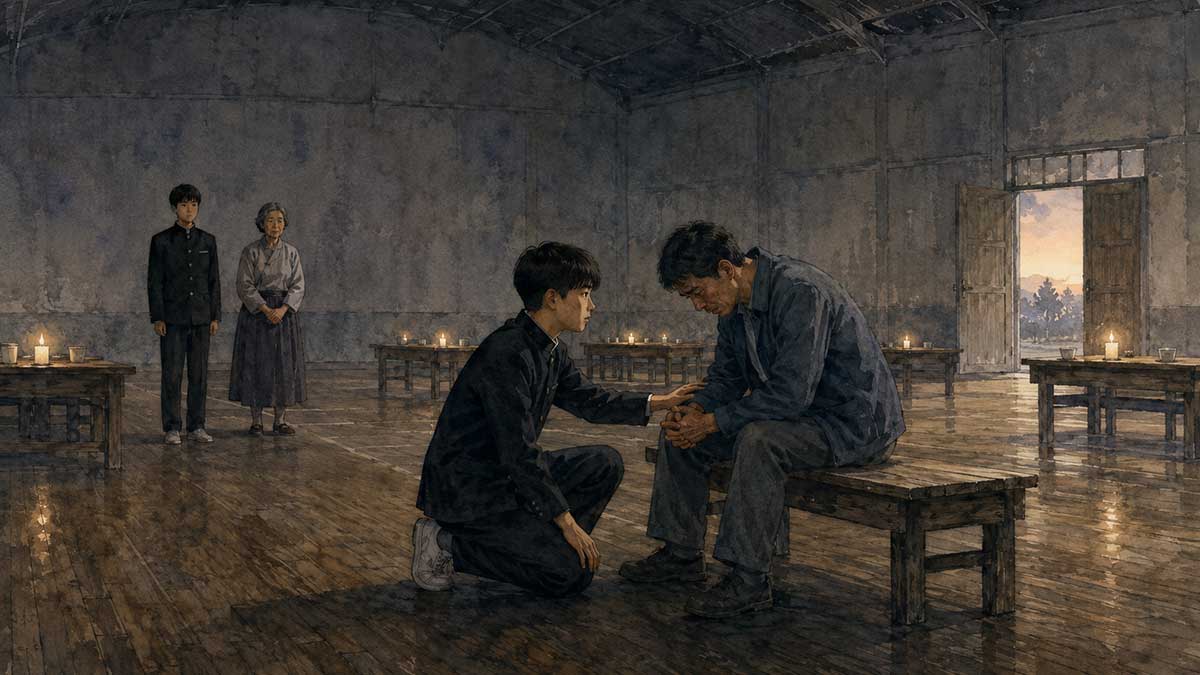
Jeong-dae: If I tell you that the dead never blamed you, will you finally stop punishing yourselves?
Jin-su stared at him.
Jin-su: I don’t know.
Jeong-dae: Then perhaps it is time we speak about what the dead can forgive—and what was never yours to be forgiven for.
The narrow opening between the gymnasium doors widened.
A pale line appeared at the edge of the night. It was not yet morning. It was only the first weakening of darkness.
Jeong-dae stood beside the candle bearing his restored name.
Jin-su remained near the doors, holding the school shoes Dong-ho had never grown into.
Jin-su: Did you see us after you died?
Jeong-dae: Sometimes.
Jin-su: How?
Jeong-dae: I don’t know.
Jin-su: Were you in the city?
Jeong-dae: At first, I remained near my body.
Dong-ho: Were you afraid?
Jeong-dae: Yes.
Dong-ho: Of what?
Jeong-dae: That no one would find me. That my sister would keep searching. That my mother would die without knowing where I had gone.
Dong-ho: I searched for you.
Jeong-dae: I know.
Dong-ho: Did you see me in the gymnasium?
Jeong-dae: Not clearly. I felt you looking.
Dong-ho: Why didn’t you call me?
Jeong-dae: I tried.
Dong-ho: I never heard you.
Jeong-dae: The dead learn quickly that wanting a voice does not create one.
Eun-sook looked down at the censored manuscript in her hands.
Eun-sook: The living learn that too.
Jeong-dae walked among the empty tables.
Jeong-dae: After my body was moved, I seemed to move with the people who remembered me. I was in my mother’s room when she folded my clothes. I was beside my sister when she searched hospitals. I was near Dong-ho when he examined the bodies.
Dong-ho: Then you knew I hadn’t abandoned you.
Jeong-dae: Yes.
Dong-ho: Were you still angry?
Jeong-dae: For a time.
Dong-ho looked wounded.
Jeong-dae: You asked for truth. Do not punish me for giving it.
Dong-ho: I’m listening.
Jeong-dae: I was angry that you were breathing. I was angry that your legs had carried you away. I was angry at every living person who walked past a window or drank water.
Jin-su: That is what I feared.
Jeong-dae: My anger did not make you guilty.
Jin-su: If the dead resented us—
Jeong-dae: A dying boy’s anger is not a verdict.
Dong-ho: When did it change?
Jeong-dae: When I saw you return.
Dong-ho: To the gymnasium?
Jeong-dae: Yes.
Dong-ho: You were relieved?
Jeong-dae: No. I wanted to strike you.
Dong-ho blinked.
Jeong-dae: I wanted to push you through the doors. I wanted to make you run all the way to your mother.
Dong-ho: I thought you needed me.
Jeong-dae: I needed you alive.
Dong-ho: I couldn’t know that.
Jeong-dae: I know.
Dong-ho: Then do you forgive me?
Jeong-dae moved close to him.
Jeong-dae: For running?
Dong-ho: Yes.
Jeong-dae: There is nothing to forgive.
Dong-ho: For leaving you in the street?
Jeong-dae: There is nothing to forgive.
Dong-ho: For surviving you?
Jeong-dae: You survived me for less than two days.
Dong-ho: They felt longer.
Jeong-dae: There is nothing to forgive.
Dong-ho: Then why can’t I stop feeling guilty?
Jeong-dae: Your guilt is the last place where you believe you still possess control.
Dong-ho frowned.
Jeong-dae: If you caused my abandonment, then you could have prevented it. If you failed me, then another choice might have saved me.
Dong-ho: I could have stayed beside you.
Jeong-dae: And stopped the bullet?
Dong-ho: No.
Jeong-dae: Carried me through the gunfire?
Dong-ho: I could have tried.
Jeong-dae: You were fifteen. I was fifteen. My body was heavier than you remember.
Dong-ho: I might have found help.
Jeong-dae: Everyone was running from the same soldiers.
Dong-ho: There must have been something.
Jeong-dae: That belief is less frightening than accepting there was nothing a boy could do.
Dong-ho looked at his mother.
Dong-ho: Is that why you keep asking why I stayed?
She considered the question.
Dong-ho’s Mother: Perhaps.
Dong-ho: If I made the wrong decision, then there was a right one.
Dong-ho’s Mother: Coming home was the right one.
Dong-ho: Would I have reached home?
She opened her mouth, then stopped.
Dong-ho: The soldiers were in the streets.
Dong-ho’s Mother: You might have reached me.
Dong-ho: I might not have.
Dong-ho’s Mother: Do not take that possibility from me.
Dong-ho: I’m not trying to.
Dong-ho’s Mother: It is all I had. For years, I returned to that morning and moved you through it differently. I stopped you at the door. I sent someone to find you. I reached the gymnasium before the soldiers. I pulled you by the wrist as you protested.
Dong-ho: Did we make it home?
Dong-ho’s Mother: Every time.
Dong-ho: What happened next?
Dong-ho’s Mother: I locked the door. I pushed a cabinet against it. I made you sit beneath the kitchen table.
Dong-ho: Would a table stop bullets?
Dong-ho’s Mother: In my version, it did.
Dong-ho nodded.
Dong-ho: Then keep that version.
His mother looked at him.
Dong-ho: Somewhere, let us make it home.
She turned away to hide her tears.
Jin-su set the school shoes on the table beside Jeong-dae’s name card.
Jin-su: You say guilt gives us the illusion of control.
Jeong-dae: Sometimes.
Jin-su: What about responsibility?
Jeong-dae: What responsibility do you believe was yours?
Jin-su: I lived.
Jeong-dae: That is an event, not a crime.
Jin-su: I went back to school.
Jeong-dae: That is not a crime.
Jin-su: I ate when others had died thirsty.
Jeong-dae: That is not a crime.
Jin-su: I laughed.
Jeong-dae: That is not a crime.
Jin-su: I forgot you for minutes at a time.
Jeong-dae: That is not a crime.
Jin-su: I wanted an ordinary life.
Jeong-dae: That is not a crime.
Jin-su’s voice rose.
Jin-su: Then what would have been a crime?
Jeong-dae: Joining those who called us rioters. Denying what happened. Helping the guilty erase us. Inflicting upon someone else what was inflicted upon you.
Jin-su: I did none of those things.
Jeong-dae: Then why are you standing before dead boys asking for acquittal?
Jin-su sank onto the bench.
Jin-su: I don’t know how to live without a sentence hanging over me.
Seon-ju: They gave us one.
Jin-su: We were released.
Seon-ju: From the building.
Jin-su: You said the prison continued inside us.
Seon-ju: Yes.
Jin-su: Then who has the authority to release us from that?
Seon-ju: Perhaps no one.
Dong-ho: That cannot be the answer.
Seon-ju: Why?
Dong-ho: It means they still control you.
Seon-ju: They altered us. Refusing to admit that would be another lie.
Dong-ho: Altered is not owned.
Seon-ju looked at him.
Dong-ho: They hurt your body. They taught it to fear. They did not become the owner of everything you did afterward.
Seon-ju: You speak as if a person can draw a clean boundary.
Dong-ho: No. I am asking whether any boundary remains.
Seon-ju folded her arms across herself.
Seon-ju: Some days, yes.
Dong-ho: What happens on those days?
Seon-ju: I work. I eat. I walk home. I sleep for several hours without waking.
Dong-ho: Anything else?
She thought about it.
Seon-ju: I once returned to the wall with the persimmon tree.
Dong-ho: Was it still there?
Seon-ju: The tree was. The neighbor had died. His son lived in the house.
Dong-ho: Did you take a persimmon?
Seon-ju: I asked.
Dong-ho: You became honest?
Seon-ju: I became too old to climb the wall.
Dong-ho smiled.
Seon-ju: The son filled a bag for me. He said his father used to complain about two girls stealing fruit.
Dong-ho: Did you tell him it was you?
Seon-ju: Yes.
Dong-ho: What did he say?
Seon-ju: He laughed. He said his father always left the ripest fruit on our side.
Dong-ho’s mother pressed one hand to her chest.
Dong-ho’s Mother: Then the neighbor knew.
Seon-ju: He knew.
Dong-ho: He wanted you to take them.
Seon-ju: It seems so.
Dong-ho: All those years, you thought you had stolen them.
Seon-ju: Yes.
Dong-ho: But they had been given.
Seon-ju looked at the candlelight.
Seon-ju: Perhaps some forms of life are like that.
Jin-su: Given without our knowing?
Seon-ju: Perhaps.
Jin-su: I wish I had known.
Seon-ju: So do I.
Eun-sook opened her manuscript to a page nearly covered in black ink.
Eun-sook: I felt guilty every time I laughed too.
Dong-ho: Why?
Eun-sook: Laughter sounded careless.
Dong-ho: Did you think we could hear you?
Eun-sook: I thought the country had no right to sound normal.
Dong-ho: Was the country normal?
Eun-sook: It pretended to be.
Dong-ho: That is different from one person laughing.
Eun-sook: I did not know how to separate them. Shops opened. Buses ran. People married. Children were born. The men responsible still held authority.
She lifted the censored pages.
Eun-sook: I would see people laughing in cafés and wonder how the city could permit joy after what happened.
Dong-ho’s Mother: Did you never laugh?
Eun-sook: Sometimes it escaped.
Dong-ho’s Mother: What did you do then?
Eun-sook: I remembered Dong-ho.
Dong-ho studied her.
Dong-ho: You used me to stop yourself?
Eun-sook: I did not think of it that way.
Dong-ho: Each time you felt happy, you brought my dead face into the room.
Eun-sook: I wanted to remain faithful.
Dong-ho: Faithful to what?
Eun-sook: To the fact that you could not laugh anymore.
Dong-ho: Did your silence give me laughter?
Eun-sook: No.
Dong-ho: Did your sadness return anything to my mother?
Eun-sook: No.
Dong-ho: Then what did it protect?
Eun-sook looked at the manuscript.
Eun-sook: My fear that I might become like everyone who forgot.
Dong-ho: Is forgetting for one moment the same as denying?
Eun-sook: It felt close.
Dong-ho: Jin-su forgot us beside the river. A little happiness found him, and he treated it like betrayal.
Eun-sook: I know.
Dong-ho: Did you want that for him?
Eun-sook: No.
Dong-ho: Why want it for yourself?
She had no answer.
Dong-ho’s mother walked to Eun-sook.
Dong-ho’s Mother: There were days when I laughed after he died.
Eun-sook: Did you feel guilty?
Dong-ho’s Mother: Immediately.
Eun-sook: What did you do?
Dong-ho’s Mother: I went into his room and apologized.
Dong-ho looked at her.
Dong-ho: You apologized to me for laughing?
Dong-ho’s Mother: Yes.
Dong-ho: I never heard you.
Dong-ho’s Mother: I said it many times.
Dong-ho: What made you laugh?
Dong-ho’s Mother: Your brother once came home with one shoe.
Dong-ho: How did he lose the other?
Dong-ho’s Mother: He didn’t know. He had walked half the way home before noticing.
Dong-ho laughed.
The sound filled the gymnasium.
His mother stared at him, startled, then laughed too. Her laughter broke apart and became crying. Dong-ho stood near her, unable to place his arms around her.
Dong-ho: You should not have apologized.
Dong-ho’s Mother: It felt as if happiness were closing the door on you.
Dong-ho: Mother, laughter was one of the ways I knew I belonged in our house.
She wiped her face.
Dong-ho: If the house never laughed again, then part of what I loved about it died with me.
Dong-ho’s Mother: The house did change.
Dong-ho: I know.
Dong-ho’s Mother: Your brothers lowered their voices. Your father stopped sitting in your chair. We left your bowl in the cupboard. No one touched your schoolbooks.
Dong-ho: Did preserving my place make me feel near?
Dong-ho’s Mother: At first.
Dong-ho: And later?
Dong-ho’s Mother: It made the empty place visible.
Dong-ho: I’m sorry.
Dong-ho’s Mother: You keep apologizing for what was done to you.
Dong-ho: I don’t know what else to give you.
Dong-ho’s Mother: Tell me I may laugh.
Dong-ho: You may laugh.
Dong-ho’s Mother: Tell me I may still miss you when I do.
Dong-ho: You may miss me in the middle of laughing.
Dong-ho’s Mother: Tell me laughter does not carry me farther from you.
Dong-ho: Mother, nothing carries you away from me.
She closed her eyes and allowed the words to enter.
Jeong-dae stood before Jin-su.
Jeong-dae: Now you.
Jin-su: What?
Jeong-dae: Ask what you came to ask.
Jin-su: I already did.
Jeong-dae: No. You asked whether I was angry.
Jin-su: Isn’t that the same?
Jeong-dae: No.
Jin-su’s hands rested upon his knees.
Jin-su: Do you forgive me for killing myself?
Dong-ho looked sharply at him.
Jeong-dae did not answer at once.
Jin-su: You said there was nothing to forgive in surviving. This is different.
Jeong-dae: Yes.
Jin-su: I abandoned people who loved me.
Jeong-dae: Yes.
Jin-su: I caused pain.
Jeong-dae: Yes.
Jin-su: Then do you forgive me?
Jeong-dae: I was angry.
Jin-su: At me?
Jeong-dae: Yes.
Jin-su bowed his head.
Jeong-dae: I watched you move closer to us each year. I wanted someone to stop you.
Jin-su: People tried.
Jeong-dae: Did you tell them how near you were?
Jin-su: No.
Jeong-dae: Why?
Jin-su: I did not want to become another burden.
Jeong-dae: So you left them a death instead.
Jin-su recoiled.
Dong-ho: Jeong-dae.
Jeong-dae: He asked for truth.
Jin-su: Let him speak.
Jeong-dae: I was angry at you for believing the dead wanted your company more than the living did.
Jin-su’s breathing became uneven.
Jeong-dae: I was angry that you turned us into a place you had to reach.
Jin-su: I thought you would understand.
Jeong-dae: We understood pain. That did not mean we wanted it to kill you.
Jin-su: Do you forgive me?
Jeong-dae moved closer.
Jeong-dae: Yes.
Jin-su looked up.
Jeong-dae: I forgive the man who could no longer see the size of his own absence.
Jin-su began crying silently.
Jeong-dae: I forgive the man who mistook exhaustion for worthlessness.
Jin-su covered his face.
Jeong-dae: I forgive the frightened prisoner who believed he had become a burden.
Jeong-dae knelt before him.
Jeong-dae: But I will not forgive the men who built the darkness around you on your behalf.
Jin-su lowered his hands.
Jin-su: I was the one who made the final choice.
Jeong-dae: Yes.
Jin-su: Then some responsibility is mine.
Jeong-dae: Responsibility and condemnation are not the same.
Jin-su: Can you mourn someone and still be angry with him?
Dong-ho’s mother answered.
Dong-ho’s Mother: Every mother knows that you can love someone and remain angry with what he did.
Dong-ho glanced at her.
Dong-ho: Are you still angry with me?
Dong-ho’s Mother: Yes.
Dong-ho: For staying?
Dong-ho’s Mother: Yes.
Dong-ho: Do you forgive me?
She approached him.
Dong-ho’s Mother: No.
Dong-ho’s face fell.
Dong-ho’s Mother: I do not forgive you, since I refuse to turn your love for Jeong-dae into a wrongdoing.
Dong-ho: Then what will you do with your anger?
Dong-ho’s Mother: Place it where it belongs.
She turned toward the rows of candles.
Dong-ho’s Mother: I am angry at the soldiers who entered a room of frightened young people and fired.
Her voice grew stronger.
Dong-ho’s Mother: I am angry at the officers who issued orders.
She looked at the black marks across Eun-sook’s manuscript.
Dong-ho’s Mother: I am angry at those who changed the names of murder and courage until citizens were made guilty for being killed.
She looked at Han Kang.
Dong-ho’s Mother: I am angry at every person who told me to be proud before asking whether I could sleep.
She returned her gaze to Dong-ho.
Dong-ho’s Mother: But I am not angry at my son for loving his friend.
Dong-ho lowered his head.
Dong-ho: I thought you blamed me.
Dong-ho’s Mother: I blamed the door that did not open and bring you home. I blamed the clock. I blamed the road. I blamed myself. Sometimes I blamed you.
Dong-ho: And now?
Dong-ho’s Mother: Now I know grief searches for someone it can reach. The guilty were far away. You were always near.
Dong-ho began to cry.
His mother reached toward him again. Her hands passed through his shoulders, but this time she did not pull them back.
She stood with her arms surrounding the space where he remained.
Dong-ho’s Mother: I could not hold you.
Dong-ho: Stay there.
Dong-ho’s Mother: Can you feel me?
Dong-ho: No.
She closed her eyes.
Dong-ho: But I remember how it felt.
They remained that way.
Seon-ju looked toward Jeong-dae’s name card.
Seon-ju: Are the dead required to forgive?
Jeong-dae turned.
Seon-ju: People ask survivors to forgive. They speak of peace, healing, and moving forward. Do they ask the dead the same thing?
Jeong-dae: The dead are asked to become symbols. Symbols do not speak back.
Seon-ju: Then speak back now.
Jeong-dae: I do not forgive the men who killed us.
Dong-ho: Neither do I.
Dong-ho’s mother lowered her arms.
Han Kang: Is forgiveness impossible?
Jeong-dae: Confession has not been completed.
Eun-sook: Many facts are now known.
Jeong-dae: Facts are not confession.
Han Kang: What would confession require?
Jeong-dae: A person saying, “I did this.”
Dong-ho: Without blaming orders.
Seon-ju: Without blaming fear.
Jin-su: Without calling torture an interrogation.
Eun-sook: Without calling murder the restoration of order.
Dong-ho’s Mother: Without asking mothers to accept history as payment for their children.
Han Kang: And if confession never comes?
Jeong-dae: Then forgiveness cannot be demanded as a substitute.
Seon-ju: Perhaps forgiveness is not the task.
Han Kang: What is?
Seon-ju: Truth. Accountability. Protection of those still living.
Jin-su: And memory?
Seon-ju: Memory that changes conduct.
Eun-sook: What does that look like?
Dong-ho: When soldiers are ordered to fire upon citizens, they refuse.
Jeong-dae: When authorities call the dead traitors, people ask who benefits from that story.
Jin-su: When a prisoner returns home, someone remains after the commemorations end.
Seon-ju: When a survivor refuses to speak, no one mistakes her silence for consent or falsehood.
Dong-ho’s Mother: When a child acts bravely, adults do not celebrate before asking why the child was left unprotected.
Han Kang opened her notebook but waited.
Seon-ju saw her.
Seon-ju: You may write those.
Han began recording their words.
Han Kang: What should future generations hear from the dead?
Dong-ho looked around the gymnasium.
Dong-ho: Tell them we were ordinary.
Jeong-dae: Tell them we were afraid.
Eun-sook: Tell them fear did not make their actions meaningless.
Jin-su: Tell them survival did not make anyone guilty.
Seon-ju: Tell them survivors do not exist to complete other people’s lessons.
Dong-ho’s Mother: Tell them my son had a life before he became a photograph.
Han wrote.
Han Kang: Is that enough?
Dong-ho’s mother shook her head.
Dong-ho’s Mother: No.
Han Kang: What is missing?
Dong-ho’s Mother: His laugh.
Han looked toward Dong-ho.
Han Kang: How do I write that?
Dong-ho’s Mother: You cannot.
Han Kang: Then how can I preserve it?
Dong-ho’s Mother: Admit that some parts of him died beyond your reach.
Han placed her pen upon the notebook.
Han Kang: I can do that.
Dong-ho’s Mother: Then leave space around his name.
Jeong-dae lifted his card.
Jeong-dae: Space does not have to mean erasure.
Eun-sook: It can mean reverence.
The darkness outside the doors faded into gray.
Jin-su stood and approached the narrow opening. Dong-ho joined him but did not touch the handle.
Dong-ho: Are you ready to go through?
Jin-su: Where does it lead?
Dong-ho: I don’t know.
Jin-su: Are you coming?
Dong-ho looked at his mother.
Dong-ho: Not yet.
Jin-su reached for the door.
Then he stopped.
Jin-su: If I cross, am I leaving you behind?
Dong-ho: You never had to remain imprisoned to stay faithful to us.
Jin-su: I know that now.
Dong-ho: Do you believe it?
Jin-su: Not completely.
Dong-ho: Then stay until you can say what you do believe.
Jin-su released the handle.
Jin-su: I believe I was hurt.
Seon-ju: Yes.
Jin-su: I believe I hurt people when I disappeared from them.
Jeong-dae: Yes.
Jin-su: I believe I wanted to live longer than I admitted.
Dong-ho stepped closer.
Dong-ho: Yes.
Jin-su: I believe I needed help that did not exist.
Eun-sook: Yes.
Jin-su: I believe my death was not proof that my life had no value.
Dong-ho’s mother picked up the school shoes.
Dong-ho’s Mother: Yes.
Jin-su looked through the opening.
Jin-su: That is all I can say.
Dong-ho: It is enough for this moment.
A thin ray of morning entered and fell across the floor.
It reached Jeong-dae’s name card first.
Then it touched the blackened manuscript, Han Kang’s notebook, the unworn shoes, and Seon-ju’s folded hands.
Dong-ho’s mother watched the light approach her son.
Dong-ho’s Mother: Morning always came without asking whether I was ready.
Dong-ho: Did you hate it?
Dong-ho’s Mother: For years.
Dong-ho: And now?
She looked at the candles whose flames had begun to disappear in the growing light.
Dong-ho’s Mother: Now I wonder what we are meant to do with it.
Han Kang turned to the final blank page of her notebook.
Han Kang: Then that must be our last question.
Dong-ho looked across the room at the living, the dead, and those who existed somewhere between.
Dong-ho: What must the living do so none of us are abandoned again?
Topic 5: What Must the Living Do So the Dead Are Not Abandoned Again?
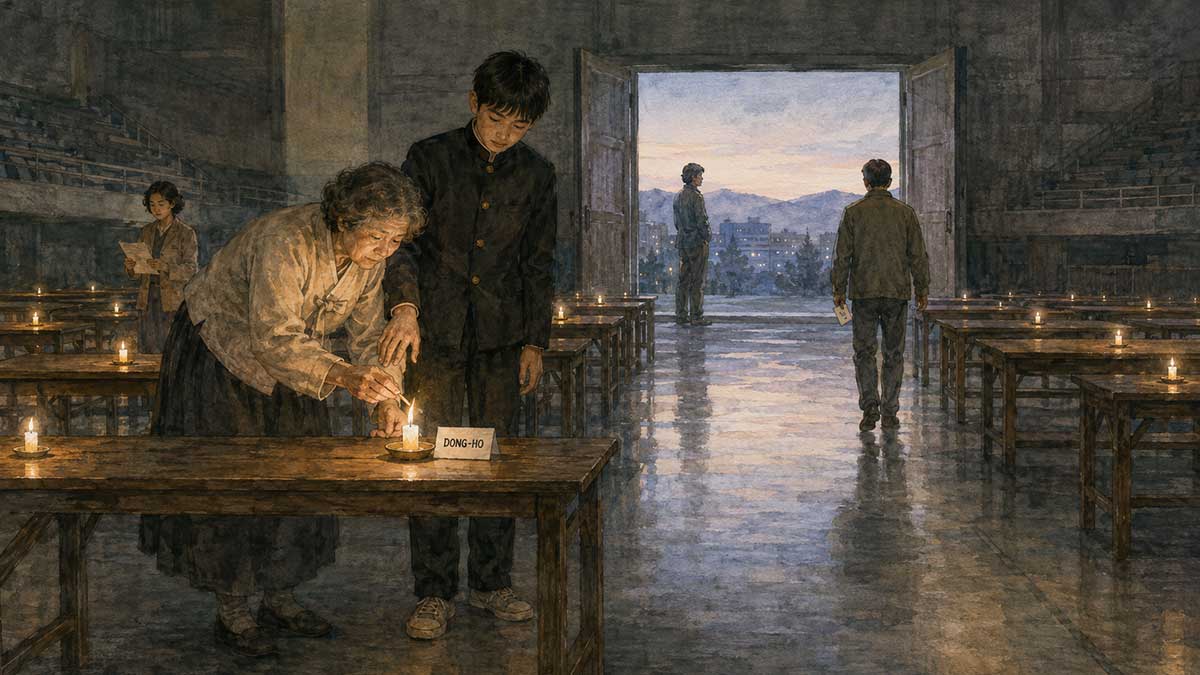
Dong-ho: What must the living do so none of us are abandoned again?
The question remained above the candles.
Morning had begun entering through the narrow opening between the gymnasium doors. Its pale light crossed the floor slowly, touching the empty tables where bodies had once rested.
Dong-ho’s mother held the school shoes against her chest.
Eun-sook carried the censored manuscript.
Seon-ju stood with her hands unfolded.
Jin-su remained near the doorway.
Jeong-dae watched the candle burning beside his restored name.
Han Kang waited before a blank page.
Han Kang: Is remembering enough?
Dong-ho’s Mother: No.
Her answer came without hesitation.
Han Kang: Why not?
Dong-ho’s Mother: People remembered my son once a year. They gathered, placed flowers, gave speeches, and went home.
Dong-ho: Did that hurt you?
Dong-ho’s Mother: It depended on who was speaking.
Dong-ho: What did they say?
Dong-ho’s Mother: They called you a symbol of democracy. They spoke about the courage of Gwangju. They praised the citizens who sacrificed themselves.
Dong-ho: Those things are true.
Dong-ho’s Mother: Partly.
Dong-ho: What was missing?
Dong-ho’s Mother: No one said you were hungry that morning.
Dong-ho looked at her.
Dong-ho’s Mother: You left without finishing breakfast.
Dong-ho: I wasn’t hungry.
Dong-ho’s Mother: You were worried about Jeong-dae.
Dong-ho: Yes.
Dong-ho’s Mother: No one said your socks did not match.
Dong-ho looked down at his feet.
Dong-ho: Did they not?
Dong-ho’s Mother: One had a blue stripe. The other had a gray stripe.
Dong-ho: I dressed quickly.
Dong-ho’s Mother: No one said you had an examination the following week. No one said you wanted a bicycle. No one said you had begun locking the bathroom door so your brothers would stop barging in.
A faint smile appeared on Dong-ho’s face.
Dong-ho’s Mother: They remembered how you died and forgot that you had been living.
Han Kang: Then remembrance must contain the ordinary person.
Dong-ho’s Mother: Yes.
Jeong-dae: How?
Dong-ho’s Mother: Learn more than the final day.
Jeong-dae: What would you want them to know about me?
Dong-ho answered.
Dong-ho: You hated losing.
Jeong-dae: Everyone hates losing.
Dong-ho: You cheated at marbles.
Jeong-dae: You still owe me three.
Dong-ho: You sang terribly.
Seon-ju smiled.
Jeong-dae: I sang better than you.
Dong-ho: You cried during a school film.
Jeong-dae: The dog died.
Dong-ho: You told everyone dust had entered your eyes.
Jeong-dae: There was dust.
Dong-ho: Inside the auditorium?
Jeong-dae: Old buildings collect dust.
Dong-ho’s mother laughed softly.
This time, she did not apologize.
Han Kang: If I write those things, will readers mistake them for trivial details?
Dong-ho’s Mother: A life is made of trivial details. Death is the interruption.
Han wrote the sentence.
Jeong-dae: Remembering our lives is one duty. What else?
Eun-sook opened her manuscript.
Eun-sook: Speak the words authorities tried to remove.
She turned the pages. Black censor marks covered entire passages.
Eun-sook: They did not fear every word equally. They feared certain words: soldiers, bullets, bodies, orders, torture, children.
Dong-ho: Why did they fear words after they had guns?
Eun-sook: Guns control what people do. Words may change what people believe about what was done.
Jin-su: They wanted us to call ourselves criminals.
Eun-sook: Yes.
Seon-ju: They wanted us to describe obedience as peace.
Eun-sook: Yes.
Dong-ho’s Mother: They wanted mothers to accept silence as patriotism.
Eun-sook: Yes.
She ran her fingers across a censored line.
Eun-sook: A government that controls language can move guilt from the perpetrator to the victim. Murder becomes restoration. Resistance becomes disorder. Torture becomes questioning. Fear becomes loyalty.
Dong-ho: How do the living stop that?
Eun-sook: Refuse false names.
Dong-ho: Is that enough?
Eun-sook: No. They must ask what each word is hiding.
Han Kang: Can you give an example?
Eun-sook: When officials say “order,” ask whose suffering was required to create it. When they say “security,” ask who has been declared dangerous. When they say “necessary force,” ask to see the bodies.
Seon-ju: And when they call victims heroes?
Eun-sook looked at Dong-ho’s mother.
Eun-sook: Ask whether the word honors them or makes their deaths easier to accept.
Dong-ho’s mother nodded.
Dong-ho: Must we stop calling anyone brave?
Dong-ho’s Mother: No.
Dong-ho: Then when may the word be used?
Dong-ho’s Mother: After the person’s fear has been acknowledged.
Dong-ho: I was afraid.
Dong-ho’s Mother: I know.
Dong-ho: I stayed anyway.
Dong-ho’s Mother: I know.
Dong-ho: Can you call me brave now?
His mother looked at him for a long time.
Dong-ho’s Mother: You were brave.
Dong-ho’s eyes filled.
Dong-ho’s Mother: And you should never have needed to be.
He nodded.
The word no longer sounded like praise given by strangers. From his mother, it contained his terror, youth, compassion, and the life she wished he had protected.
Jeong-dae: What comes after truthful language?
Jin-su stepped away from the doors.
Jin-su: Care for the people who remain alive.
Han Kang: What kind of care?
Jin-su searched for words.
Jin-su: Care that lasts longer than public attention.
Eun-sook: Medical care?
Jin-su: Yes.
Seon-ju: Counseling chosen by survivors, not forced upon them.
Jin-su: Yes.
Dong-ho’s Mother: Help for families.
Jin-su: Yes.
Seon-ju: Protection from surveillance and retaliation.
Jin-su: Yes.
Eun-sook: Financial support?
Jin-su: Yes.
Dong-ho: Would those things have saved you?
Jin-su looked toward the morning light.
Jin-su: I cannot know.
Dong-ho: What might have helped?
Jin-su: One person who understood that release from prison did not mean I had returned.
Dong-ho: Your mother tried.
Jin-su: She loved me. She did not know what had happened inside me.
Seon-ju: Love cannot perform every kind of care.
Jin-su: I needed someone who knew why I could not tolerate closed doors. Someone who did not ask me to tell the entire story before believing I was hurt.
Dong-ho: Did no one offer that?
Jin-su: We did not have language for it. People said I was weak, unstable, ungrateful, or unable to forget the past.
Seon-ju: Forgetting was treated as health.
Jin-su: Yes.
Han Kang: What would real care have said?
Jin-su looked at the shoes upon Dong-ho’s mother’s arm.
Jin-su: “What happened to you is still happening inside you.”
Seon-ju nodded.
Jin-su: “You are not failing at recovery.”
His voice began to break.
Jin-su: “You do not have to prove your pain before receiving help.”
Dong-ho moved beside him.
Jin-su: “We will remain when you become difficult to love.”
No one spoke for several moments.
Dong-ho: You were never difficult to love.
Jin-su: I was difficult to reach.
Dong-ho: That is not the same.
Jin-su closed his eyes.
Dong-ho: Would you have believed someone who said those things?
Jin-su: Not at first.
Dong-ho: Then they should have said them again.
Dong-ho’s mother looked at Jin-su.
Dong-ho’s Mother: Again and again.
Jin-su nodded.
Han Kang: Is caring for survivors part of remembering the dead?
Jin-su: It must be.
Jeong-dae: Why?
Jin-su: When a society praises those who died but neglects those who survived, it honors sacrifice more than human life.
Dong-ho: Then a memorial can become a hiding place.
Eun-sook: Yes. People may point to the memorial as proof that the past has been settled.
Dong-ho’s Mother: Nothing was settled for me.
Han Kang: What would justice mean to you?
She looked at Han with suspicion.
Han Kang: You may refuse.
Dong-ho’s Mother: I do not want to refuse.
She placed the school shoes on a table.
Dong-ho’s Mother: Justice would begin with someone responsible standing before me without a uniform, title, excuse, or prepared statement.
Dong-ho: What would you ask him?
Dong-ho’s Mother: I would ask whether he saw your face.
Dong-ho: And if he said no?
Dong-ho’s Mother: I would show him your photograph.
Dong-ho: What if he apologized?
Dong-ho’s Mother: I would ask what he was apologizing for.
Eun-sook: Why does the wording matter?
Dong-ho’s Mother: “I am sorry for your loss” is not confession.
Jin-su: It treats the death like an accident.
Dong-ho’s Mother: Yes. I would need him to say, “We killed your son.”
Dong-ho: Would that bring you peace?
Dong-ho’s Mother: No.
Dong-ho: Would you forgive him?
His mother walked among the tables before answering.
Dong-ho’s Mother: Why is forgiveness always requested from the wounded?
Dong-ho: I don’t know.
Dong-ho’s Mother: People fear anger that refuses to disappear. They call forgiveness healing so the injured person becomes responsible for making everyone comfortable again.
Seon-ju: Forgiveness can become another command.
Dong-ho’s Mother: Yes.
Han Kang: Is forgiveness impossible without confession?
Seon-ju: It may be possible for some people. It cannot be required from anyone.
Eun-sook: What if the guilty person dies without confessing?
Dong-ho’s Mother: Then the truth must remain, including the absence of confession.
Dong-ho: Mother, if you never forgive, will anger keep hurting you?
Dong-ho’s Mother: Perhaps.
Dong-ho: I don’t want that.
Dong-ho’s Mother: My anger is not only pain. It protects the truth that your death was unacceptable.
Dong-ho: Could you release the pain without releasing the truth?
Dong-ho’s Mother: I have spent years trying to discover whether those things can be separated.
Dong-ho: Have you?
Dong-ho’s Mother: Not completely.
Dong-ho: Then do not forgive for me.
His mother looked at him.
Dong-ho: Do not remain angry for me either.
Dong-ho’s Mother: What should I do?
Dong-ho: Let the choice be yours.
Seon-ju looked at Dong-ho with quiet recognition.
Seon-ju: That is what survivors need most—the return of choice.
Dong-ho’s mother nodded.
Dong-ho’s Mother: Then I will not decide today.
Han Kang: That is an answer.
Dong-ho’s Mother: It is a boundary.
Han did not write it down.
Seon-ju noticed.
Seon-ju: You may write that.
Han recorded the sentence carefully.
Jeong-dae: Truth, care, accountability. What else must the living do?
Seon-ju: Learn how to hear silence.
Dong-ho: What does silence say?
Seon-ju: Different things.
She stepped into the morning light.
Seon-ju: Sometimes it says, “I am afraid.”
Jin-su: Sometimes, “I do not have words.”
Eun-sook: Sometimes, “My words were taken.”
Dong-ho’s Mother: Sometimes, “No answer can give me what I lost.”
Han Kang: Sometimes, “This part belongs only to me.”
Seon-ju: Yes.
Dong-ho: How can listeners know which one it means?
Seon-ju: They may not know.
Dong-ho: Then what should they do?
Seon-ju: Remain without filling the silence for us.
Han Kang: Writers fill silence.
Seon-ju: Then mark the difference between what you know, what you were told, and what you created.
Han Kang: Is fiction permitted near historical suffering?
Seon-ju: You already asked me that.
Han Kang: I am asking again after hearing all of you.
Seon-ju studied her.
Seon-ju: Fiction may carry readers near a person whom official history reduced to a number.
Han Kang: Then it has value?
Seon-ju: Yes.
Han Kang: What is its danger?
Seon-ju: It can make the writer appear to know more than the survivor. It can turn pain into beauty. It can give readers tears without responsibility.
Dong-ho: What responsibility should follow tears?
Seon-ju: Recognition.
Dong-ho: Of what?
Seon-ju: That the person in the story did not exist to make the reader feel something.
Jin-su: That suffering is not redeemed merely by being witnessed.
Eun-sook: That the causes of violence must be examined.
Dong-ho’s Mother: That grief does not end when the final page closes.
Han Kang looked down at her notebook.
Han Kang: What should I do with the final page?
Dong-ho: Do not make us disappear.
Han Kang: How?
Dong-ho: Let the conversation continue inside the reader.
Jeong-dae: Do not tell them we are at peace if you do not know.
Jin-su: Do not say all wounds heal.
Seon-ju: Do not make survival sound victorious.
Eun-sook: Do not end with silence imposed by authority.
Dong-ho’s Mother: End with something ordinary.
Han raised her eyes.
Han Kang: Such as?
Dong-ho’s mother looked at the school shoes.
Dong-ho’s Mother: A mother remembering what her son disliked for dinner.
Dong-ho: Radish soup again?
Dong-ho’s Mother: You left it in the bowl.
Dong-ho: Only the largest pieces.
Jeong-dae: You gave them to me at school.
Dong-ho: You liked radish.
Jeong-dae: I was hungry.
Dong-ho: That still counts.
A gentle warmth passed through the room.
It did not erase the tables, the candles, or the memory of bodies. It existed beside them.
Han Kang: What should children be taught about Gwangju?
Eun-sook answered first.
Eun-sook: Teach them that democracy is lived through people, not granted permanently by institutions.
Jin-su: Teach them that governments can call cruelty necessary.
Seon-ju: Teach them that obedience does not remove personal responsibility.
Jeong-dae: Teach them that dead people had names before they had numbers.
Dong-ho’s Mother: Teach them to question any history that requires a child’s death to become inspiring.
Dong-ho: Teach them that fear does not make them cowards.
Han Kang: What should they do if such a moment comes to them?
Dong-ho’s mother looked alarmed.
Dong-ho’s Mother: Do not prepare children to die nobly.
Han Kang: What should we prepare them for?
Dong-ho’s Mother: To recognize danger. To protect one another. To refuse lies. To return home alive.
Dong-ho: What if returning home means leaving someone behind?
His mother closed her eyes briefly.
Dong-ho’s Mother: Then adults must build a society in which children are never forced to choose between compassion and survival.
Dong-ho: And if adults fail?
Dong-ho’s Mother: Then the shame belongs to the adults.
Dong-ho looked at Jeong-dae.
Dong-ho: Do you hear that?
Jeong-dae: I do.
Dong-ho: The shame was never ours.
Jeong-dae: No.
Dong-ho: I wish we had known.
Jeong-dae: We know now.
The candle beside Jeong-dae’s name burned low.
He reached toward it.
Dong-ho: Don’t put it out.
Jeong-dae: I wasn’t going to.
Dong-ho: It’s almost gone.
Jeong-dae: Candles are not the only way to remember.
Dong-ho: What happens when it dies?
Jeong-dae: Another can be lit.
Dong-ho picked up a fresh candle from the cardboard box. He placed it beside Jeong-dae’s flame and transferred the fire from one wick to the next.
The old candle went dark.
The new one continued burning.
Eun-sook: Perhaps that is what testimony is.
Seon-ju: Only if the second flame does not claim to be the first.
Han Kang: It carries the fire, not the experience.
Seon-ju: Yes.
Jin-su faced the open doors.
The gap was now wide enough for a person to pass through.
Jin-su: I think I am ready.
Dong-ho: To leave?
Jin-su: To step outside.
Dong-ho: Is there a difference?
Jin-su: Leaving sounds final.
He glanced at Dong-ho.
Jin-su: I spent years believing I had to choose between remaining faithful to you and continuing with my life.
Dong-ho: What do you believe now?
Jin-su: That walking forward does not erase the place from which I came.
Dong-ho approached him.
Dong-ho: Are you afraid?
Jin-su: Yes.
Dong-ho: Then I will stand here until you cross.
Jin-su looked at the light beyond the doors.
He took one step.
His body stiffened.
Seon-ju moved nearer but did not touch him.
Seon-ju: You are in the gymnasium.
Jin-su: I know.
Seon-ju: There are no guards.
Jin-su: I know.
Seon-ju: The doors are open.
Jin-su: I can see them.
Seon-ju: You may stop.
Jin-su: I know.
Seon-ju: You may continue.
Jin-su breathed slowly.
Then he crossed the threshold.
He stood outside in the early morning, surprised that the ground beneath him felt no different from the ground inside.
Jin-su: Dong-ho?
Dong-ho: I’m here.
Jin-su: Jeong-dae?
Jeong-dae: We’re here.
Jin-su: I thought the dead would become farther away.
Jeong-dae: Distance is not betrayal.
Jin-su took another step.
The morning received him without judgment.
Seon-ju remained near the threshold.
Jin-su: Are you coming?
Seon-ju: Not yet.
Jin-su: Do you want me to wait?
She considered his question.
Seon-ju: Yes.
Jin-su sat outside the doors.
He did not urge her forward.
Dong-ho’s mother lifted the school shoes from the table and carried them toward her son.
Dong-ho’s Mother: I brought these so you could wear them.
Dong-ho: They won’t fit.
Dong-ho’s Mother: I know.
Dong-ho: What will you do with them?
Dong-ho’s Mother: I think I can put them away now.
Dong-ho looked frightened.
Dong-ho: Will that mean you are leaving me?
Dong-ho’s Mother: No.
Dong-ho: Will my place near the door disappear?
Dong-ho’s Mother: The place remained empty long after the shoes stopped being yours.
Dong-ho: Then where will you keep me?
She placed one hand over her heart, then shook her head.
Dong-ho’s Mother: People always say that. It is too simple.
Dong-ho: Then where?
Dong-ho’s Mother: In the kitchen light. In unmatched socks. In radish left at the bottom of a bowl. In every boy I mistook for you on the street.
She looked toward Jeong-dae.
Dong-ho’s Mother: In the friend you tried to find.
She looked at the candles.
Dong-ho’s Mother: In the names you helped preserve.
She returned her gaze to him.
Dong-ho’s Mother: And in the anger I will no longer place upon you.
Dong-ho lowered his head.
Dong-ho: I wanted to come home.
Dong-ho’s Mother: I know.
Dong-ho: I thought you might believe I chose them over you.
Dong-ho’s Mother: I did believe that.
Dong-ho: And now?
Dong-ho’s Mother: Now I know that even here, surrounded by the dead, you were still trying to find your way back to me.
She placed the shoes inside the cardboard box that had carried the candles.
Dong-ho: Mother?
Dong-ho’s Mother: Yes?
Dong-ho: When people call me brave—
Dong-ho’s Mother: I will tell them you were afraid.
Dong-ho: When they call me a martyr—
Dong-ho’s Mother: I will tell them you were my son.
Dong-ho: When they say I died for democracy—
Dong-ho’s Mother: I will tell them democracy owes you a life it can never repay.
Dong-ho smiled through his tears.
His mother moved to the final empty table.
One unlit candle stood there.
A small card rested beside it.
DONG-HO.
She picked up the matchbox.
Her hand began to shake.
Dong-ho: That one is mine.
Dong-ho’s Mother: I know.
Dong-ho: Will you light it?
She held the match but did not strike it.
Dong-ho: Mother?
Dong-ho’s Mother: If I light it, I am admitting you belong with the dead.
Dong-ho: I do.
Dong-ho’s Mother: Not to me.
Dong-ho: I can belong to the dead and still be your son.
Dong-ho’s Mother: I spent thirty years refusing the first part.
Dong-ho: Did it bring me home?
Dong-ho’s Mother: No.
Dong-ho: Then let me be both.
She looked at him.
Dong-ho: Let me be the boy who died here and the son who still lives wherever you remember me laughing.
She struck the match.
The flame appeared between them.
Dong-ho placed his hand over hers. She could not feel his fingers, yet her trembling stopped.
Together, they lowered the flame to the wick.
The candle caught.
Morning entered the gymnasium fully.
Its light reached every table. The candles did not vanish in the brightness. Their flames became harder to see, but they continued burning.
Han Kang opened her notebook to the final page.
Han Kang: What should I write?
Dong-ho’s mother watched her son.
Dong-ho’s Mother: Write that history remembered his death.
Han waited.
Dong-ho’s Mother: Then write that I remembered his life.
Han placed her pen upon the page.
Dong-ho’s Mother: Write that he used to run home from school with one sock falling down.
Dong-ho smiled.
Dong-ho’s Mother: Write that he pretended not to cry when he was hurt.
Dong-ho looked toward Jeong-dae.
Dong-ho’s Mother: Write that he loved his friend more than he knew how to carry.
Jeong-dae lowered his head.
Dong-ho’s Mother: Write that he was afraid.
She approached the table where his candle burned.
Dong-ho’s Mother: Write that he should have lived.
Han wrote the words.
Then she stopped.
Han Kang: Is there anything else?
Dong-ho’s mother looked at the pale morning beyond the open doors.
Dong-ho’s Mother: Yes.
Han Kang: What?
Dong-ho’s Mother: Do not write that we have finished speaking.
Han closed the notebook.
Outside, Jin-su waited for Seon-ju.
Eun-sook began reading aloud the words that had once been censored.
Jeong-dae carried his name card into the morning.
Dong-ho remained beside his mother, listening as she told him about every year he had missed.
Final Thoughts
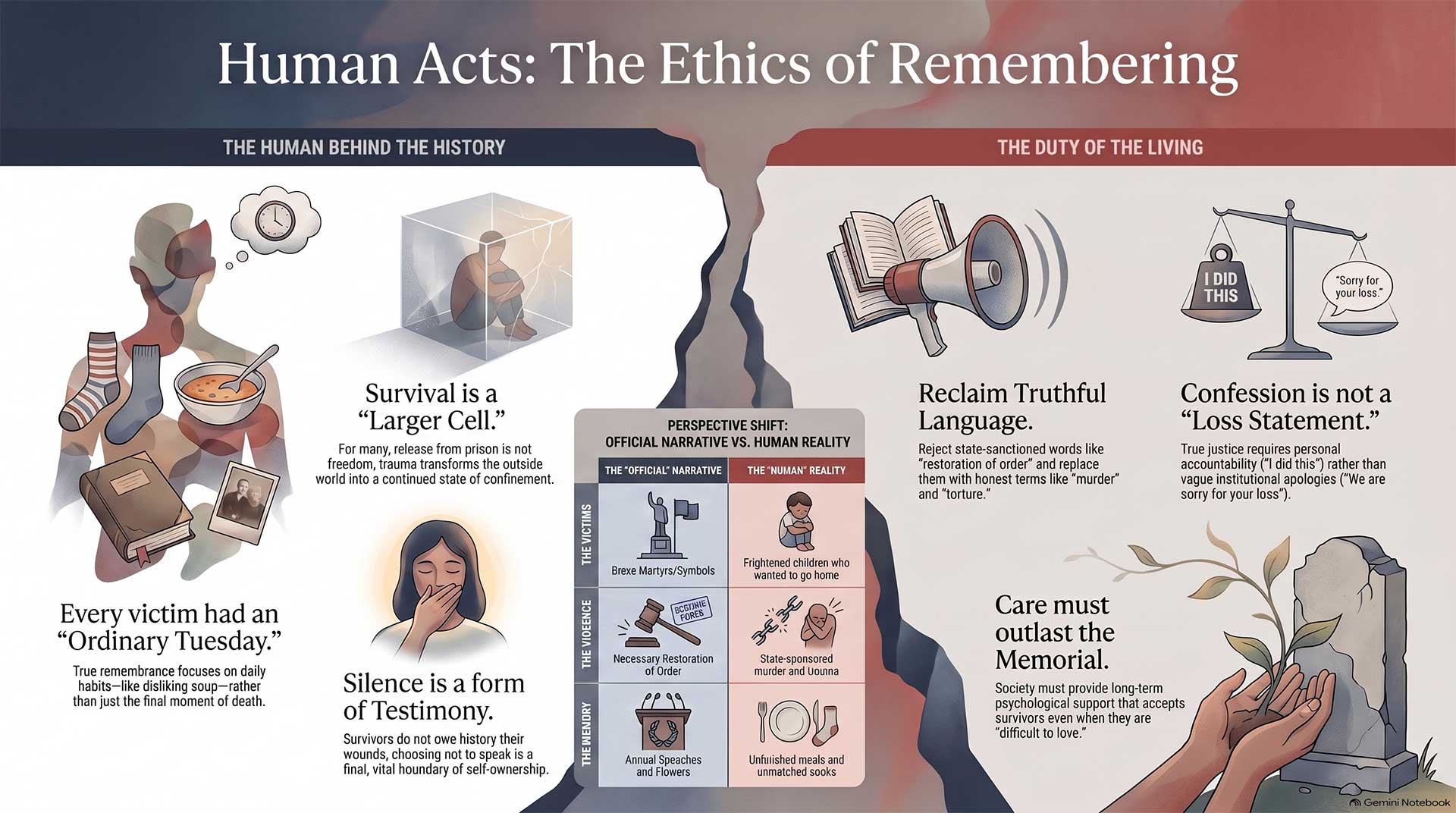
The deepest tragedy in this conversation is not that Dong-ho lacked courage. It is that courage was demanded from him at fifteen.
His mother does not deny the beauty of his compassion. She refuses to accept a society that praises the sacrifice of children after failing to protect them. Her grief separates two ideas that history often joins together:
Dong-ho’s decision had moral meaning.
His murder had none.
That distinction changes the conversation. It permits Dong-ho to honor what he did without defending the violence that ended his life.
Jin-su’s story reveals another truth: the end of imprisonment does not always create freedom. The cell can remain in breathing patterns, closed doors, crowded buses, sleepless nights, and fear of human touch. His life after Gwangju was not proof that he escaped. His death years later belonged to the continuing consequences of torture.
Seon-ju reminds us that testimony must be freely given. Society may need historical evidence, but survivors do not owe public access to every wound. Refusing to speak does not mean choosing forgetfulness. Silence may be the final boundary a survivor still controls.
Eun-sook demonstrates why language matters. Governments rarely describe their own violence honestly. They replace murder with “order,” torture with “questioning,” and terrified citizens with “dangerous agitators.” Preserving history requires more than repeating official words. It requires asking who benefits from those words and whose body disappears beneath them.
Jeong-dae returns the burden of guilt to its rightful place. Dong-ho did not betray him by running from gunfire. Jin-su did not betray the dead by surviving. Eun-sook did not betray them when laughter briefly escaped her. The dead gain nothing when survivors destroy themselves to demonstrate loyalty.
The conversation does not force forgiveness. Dong-ho’s mother questions why the wounded are so often asked to relieve the moral discomfort of the guilty. Forgiveness cannot replace confession, accountability, or truth. It must remain a personal choice, including the choice never to grant it.
Near the end, Dong-ho’s mother lights the candle bearing her son’s name. The act does not mean she has released him or accepted his death. She permits two truths to exist together: Dong-ho belongs among the dead, and he remains her son.
She places his unworn shoes inside the box that once carried candles. She no longer needs the shoes to wait near the door. Her memory of him has moved elsewhere—to unmatched socks, unfinished soup, schoolboy laughter, and every ordinary moment political history cannot preserve.
The final request is simple:
Do not remember only how they died.
Remember that they were living.
Short Bios:
Han Kang
Han Kang is a South Korean novelist and poet born in Gwangju in 1970. Her family moved to Seoul shortly before the 1980 Gwangju Uprising. She later learned that a boy connected to her family’s former home had been killed during the massacre. That knowledge helped inspire Human Acts. Han received the 2024 Nobel Prize in Literature for writing that confronts historical trauma and human fragility.
Dong-ho
Dong-ho is the fifteen-year-old emotional center of Human Acts. He helps volunteers identify and care for bodies in the Gwangju provincial office gymnasium. He remains partly to search for his friend Jeong-dae and partly from guilt over having escaped when Jeong-dae was shot. Dong-ho is killed when government soldiers retake the building.
Jeong-dae
Jeong-dae is Dong-ho’s friend. He is shot during the uprising, and his body is taken away with other victims. His posthumous voice reveals the terror of dying unidentified and separated from family. He becomes a symbol of the dead whose names, bodies, and stories were nearly erased.
Dong-ho’s Mother
Dong-ho’s mother carries the private cost hidden beneath public descriptions of martyrdom. She remembers her son through his habits, school clothes, meals, and unfinished childhood. Her grief rejects any political explanation that tries to make his death acceptable.
Eun-sook
Eun-sook helps care for the dead during the uprising and later works in publishing. She faces censorship and physical intimidation connected to a manuscript about Gwangju. Her story examines the struggle to protect truthful language when authorities attempt to control public memory.
Jin-su
Jin-su survives arrest, imprisonment, overcrowding, humiliation, and torture. Release does not free him from the experience. He lives with bodily trauma, isolation, and guilt over surviving those who died. His later suicide shows how state violence can continue claiming lives years after the visible event ends.
Seon-ju
Seon-ju is a former factory worker and activist who assists at the provincial office. After her arrest, she suffers sexual torture. Years later, she refuses a researcher’s request for recorded testimony. Her silence asserts that the survivor—not history, scholarship, or literature—retains authority over her own story.
Leave a Reply