

Introduction
George and Lennie’s tragedy in Of Mice and Men begins with friendship, but gradually becomes something much heavier.
George is not simply Lennie’s friend. He becomes his protector, caregiver, problem-solver, safety plan, and eventually the person forced to make an unbearable decision about Lennie’s future.
That leaves us with a question that reaches far beyond Steinbeck’s novel:
How much can we ask love to carry before love itself begins to break under the weight?
These five modern-day short stories bring that question into our own time. They follow ordinary people caring for family members, growing older, searching for belonging, causing harm without intending it, and struggling with the difficult line between protecting someone and controlling their life.
Each story explores a different part of Steinbeck’s world: care, worth, hope, responsibility, and authority.
But unlike Of Mice and Men, these stories begin to explore another possibility.
What if responsibility could be shared before everything reached a breaking point?
What if a caregiver could ask for help without feeling that they were abandoning someone?
What if human worth did not depend on usefulness?
What if protecting someone did not require taking over their life?
Together, these five stories ask a question George and Lennie never had the chance to answer:
What changes when love no longer has to carry everything alone?
(Note: This is an imaginary conversation, a creative exploration of an idea, and not a real speech or event.)
Story 1: The Spare Key
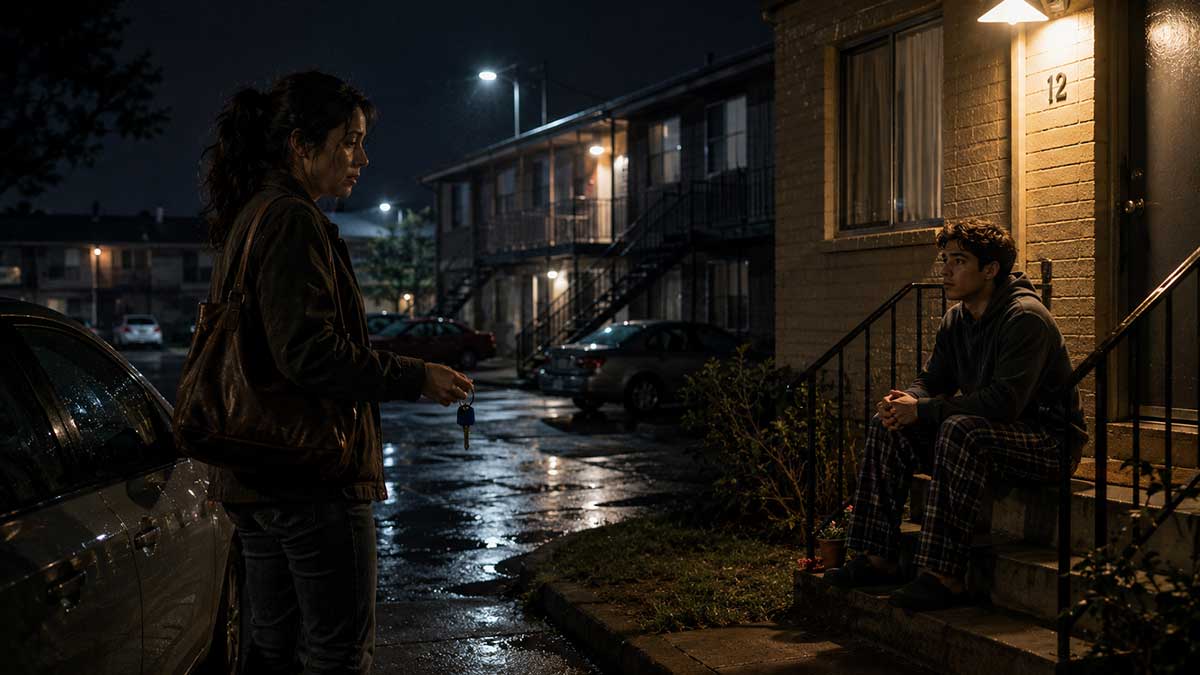
At 2:13 a.m., Elena's phone rang for the fourth time that week.
She knew it was Mateo before she looked.
For several seconds, she lay still in the darkness, listening to the vibration against the nightstand.
Once.
Twice.
Three times.
She closed her eyes.
Then she answered.
“What's wrong?”
“I can't get in.”
Elena sat up.
“What do you mean you can't get in?”
“I can't find my key.”
She looked at the clock again.
2:13.
“Where are you?”
“Outside.”
“Outside where?”
“My building.”
“Mateo, it's forty degrees.”
“I know.”
“Are you wearing a coat?”
There was a pause.
“My hoodie.”
Elena swung her legs out of bed.
“Stay by the front door. Don't go anywhere.”
“I wasn't going anywhere.”
“I know. Just stay there.”
She found yesterday's jeans on the floor, pulled on a sweatshirt, and walked barefoot through the apartment until she reached the ceramic bowl beside the front door.
Her keys were inside.
So was his.
A plain silver key with a strip of blue tape wrapped around the top.
MATEO written in black marker.
Years ago, when he first moved into his own apartment, he had handed it to her proudly.
“For emergencies.”
She had teased him.
“You mean for when you lock yourself out?”
“That is an emergency.”
They had laughed.
Elena picked up the key.
She wasn't laughing now.
Twenty-three minutes later she pulled into Mateo's apartment complex.
He was sitting on the concrete step beneath the yellow porch light, arms tucked inside his hoodie, shoulders hunched against the cold.
When he saw her car, he stood.
She rolled down the window.
“Get in.”
“But the apartment.”
“Get in first.”
Mateo climbed into the passenger seat.
Cold air came with him.
“Sorry.”
Elena turned the heater vents toward him.
“Where did you last have the key?”
“I don't know.”
“You have to know.”
“I went to work.”
“Did you have it after work?”
“I think.”
“Mateo.”
“I said I think.”
She immediately heard the sharpness in her own voice.
He stared through the windshield.
Elena rubbed her forehead.
“Sorry. I'm tired.”
“I know.”
That irritated her more than it should have.
She got out, unlocked the building, and followed him upstairs.
Inside his apartment, everything looked normal.
A half-empty cereal bowl on the coffee table.
A baseball game paused on television.
Two pairs of sneakers beside the couch.
A mug in the sink.
His grocery-store name tag lying beside the microwave.
Mateo emptied his pockets.
Wallet.
Receipt.
Bus pass.
Three quarters.
A folded schedule from work.
No key.
Elena checked the couch cushions.
Then the bathroom.
Then beneath the bed.
Then the kitchen counter.
Mateo followed her from room to room.
“You don't have to look tonight.”
“You need your key.”
“I have another one.”
Elena stopped.
“What?”
Mateo opened a kitchen drawer.
Inside was a second key.
Elena stared at it.
“Why didn't you use that?”
“I forgot it was there.”
She looked at Mateo.
He gave her the apologetic smile she knew too well.
“I knew you'd come.”
Something inside Elena dropped.
Not anger exactly.
Something heavier.
She picked up her purse.
“Go to bed.”
“Elena?”
“What?”
“Thank you.”
She nodded.
Outside, she sat in her car with both hands on the steering wheel.
The engine was running.
She didn't move.
At 3:04 a.m., she drove home.
By 3:31, she was back in bed.
At 3:49, she was still awake.
At 6:15, her alarm went off.
Elena had been helping Mateo for so long that nobody could say exactly when helping had become something else.
Their mother used to handle everything.
Then their mother died.
Not suddenly.
There had been seventeen months of appointments, chemotherapy, medication, phone calls, forms, and increasingly quiet conversations.
During those months Elena had started taking over some of Mateo's responsibilities.
Temporary things.
At first.
She drove him to work when their mother was too sick.
She helped him understand bills.
She called the landlord when his shower stopped working.
She taught him how to refill prescriptions.
She wrote his schedule on a whiteboard.
After their mother died, the temporary things stayed.
Then more things arrived.
Mateo could read.
He could cook simple meals.
He could work.
He could take the bus.
He could tell jokes so badly that Elena sometimes laughed simply because he was laughing first.
He remembered almost every baseball statistic he had ever heard.
He could tell you who won the 1997 World Series, how many home runs Ken Griffey Jr. hit in 1998, and which pitcher had the lowest ERA in the American League three seasons ago.
Yet paperwork overwhelmed him.
Unexpected changes frightened him.
Money disappeared from his account if Elena didn't help him plan.
People could persuade him too easily.
If someone told him something confidently enough, Mateo often believed them.
Their mother had worried about this endlessly.
A week before she died, she had taken Elena's hand.
“You'll watch him?”
Elena had said yes.
Of course she had.
There had been no other possible answer.
At work the next morning, Elena entered payroll adjustments while drinking coffee that tasted like burnt cardboard.
Her phone vibrated.
She looked immediately.
Mateo.
Do I work 11 or 12 today?
She typed:
12. Your schedule says noon.
Thirty seconds later:
Are you sure?
She photographed the schedule he had texted her two days earlier and circled the shift.
Yes. Noon.
A minute passed.
OK thanks
Elena returned to her spreadsheet.
Three minutes later:
Can I take the bus?
She stared at the message.
Yes.
Even if rain?
Elena looked through the office window.
Gray sky.
Light drizzle.
Yes, Mateo. You can take the bus in rain.
Her coworker Hannah appeared beside the cubicle.
“Lunch?”
Elena nodded.
“Absolutely.”
Hannah looked suspicious.
“You said absolutely too quickly.”
“I haven't eaten breakfast.”
“That wasn't what I meant.”
Elena pushed back from her desk.
In the cafeteria, Hannah opened a yogurt and watched Elena unwrap a turkey sandwich.
“You look terrible.”
“Thank you.”
“Mateo?”
“Locked himself out.”
“Again?”
“Not exactly.”
Elena told her about the second key.
Hannah laughed.
Elena didn't.
The laugh died.
“Sorry.”
“He had a key the whole time.”
“That is frustrating.”
“He called me at two in the morning and sat outside freezing when there was another key in the kitchen.”
Hannah nodded.
“Yeah.”
“And the stupid thing is, I drove over there like the building was on fire.”
“What else were you supposed to do?”
“I don't know.”
Hannah waited.
Elena stared at the sandwich.
Then she said it.
“I want somebody to take him.”
Hannah didn't move.
Elena's eyes filled immediately.
“Not forever.”
“I know.”
“One week.”
“I know.”
“I want one week where nobody calls me because they lost something or missed a bus or got nervous or bought something they shouldn't have or don't know which form to sign.”
Hannah reached across the table.
Elena pulled her hand away.
“No. Don't make it sad.”
“I'm not.”
“I love him.”
“I know.”
“I love him more than anybody.”
“I know.”
“I just want...”
She stopped.
Hannah waited.
Elena whispered:
“I want one week where I'm not somebody's emergency plan.”
Two months earlier, Hannah had invited Elena to Nashville.
Two nights.
A concert.
Restaurants.
A hotel with a rooftop pool.
Elena had said yes immediately.
Then spent the next six weeks planning Mateo's weekend.
She printed bus schedules.
Bought groceries.
Put medication into labeled containers.
Called him every evening to practice what he should do if something went wrong.
“What if the power goes out?”
“Flashlight.”
“What if you miss the bus?”
“Next bus.”
“What if somebody knocks and I don't know them?”
“Don't open.”
“What if I feel sick?”
“Call you.”
Elena paused.
“No. First check if it's serious.”
“How do I know?”
She created a list.
CALL 911 IF:
Chest pain.
Can't breathe.
Heavy bleeding.
Unconscious.
CALL ELENA IF:
Everything else.
When she finished, she stared at the page.
She almost cancelled then.
But Hannah had already purchased the concert tickets.
So Elena kept preparing.
Friday came.
Her bag was packed.
Hannah was picking her up at five.
At 4:12, Mateo called.
“Elena?”
His voice sounded frightened.
Her body reacted before her mind did.
“What happened?”
“There's water.”
“What water?”
“Kitchen.”
“Where?”
“Floor.”
“How much?”
“A lot.”
“Turn off the faucet.”
“It's not the faucet.”
“Under the sink?”
“I don't know.”
“Can you see where it's coming from?”
“No.”
“I'll be there.”
She texted Hannah.
Emergency. Mateo.
She drove twenty minutes.
By the time she reached Mateo's building, a maintenance van was parked outside.
Elena ran upstairs.
Mateo's apartment door was open.
Mrs. Alvarez from across the hall was standing in the kitchen holding a mop.
A maintenance worker crouched beneath the sink.
Mateo sat at the table.
Mrs. Alvarez looked up.
“Elena, sweetheart. We got it.”
Elena slowed.
“What happened?”
“Supply line cracked.”
The maintenance worker held up a small metal hose.
“Caught it pretty quick.”
Elena looked at Mateo.
“You called maintenance?”
Mateo shook his head.
“Mrs. Alvarez did.”
Mrs. Alvarez smiled.
“I heard him in the hall.”
Mateo said, “I knocked because you said don't use the elevator if there's water.”
Elena stared at him.
The maintenance worker stood.
“Floor's fine. Good thing he got help fast.”
Elena looked at the clock.
4:41.
If she left immediately, she could still go.
Her phone buzzed.
Hannah:
I can wait. How bad is it?
Elena typed:
Pretty bad. I'm sorry.
She sent it.
Mateo was watching her.
“What?”
“You're going somewhere?”
“No.”
“You have the suitcase.”
Elena looked down.
She had forgotten it was still in the trunk.
“Just a weekend.”
“Go.”
She gave a short laugh.
“Mateo.”
“Mrs. Alvarez fixed it.”
Mrs. Alvarez shook her head.
“I called somebody. That's not fixing.”
Mateo looked at Elena.
“You can go.”
The sensible part of Elena knew he was right.
The pipe was repaired.
Mateo was calm.
Mrs. Alvarez was across the hall.
Nothing required Elena to remain.
She stayed anyway.
At 6:30, she ordered pizza.
At 7:15, she checked the cabinet beneath the sink twice.
At 8:00, she called Hannah.
“I can't do it.”
Hannah was silent for a moment.
“Okay.”
“I'm sorry.”
“I know.”
“I'll pay you for my ticket.”
“Elena.”
“What?”
“You don't have to convince me that you're a good sister.”
Elena said nothing.
Hannah continued.
“But I think you might be trying to convince yourself.”
The following morning Mateo made coffee.
He poured Elena a cup and sat across from her.
“You're mad.”
“No.”
“Yes.”
“I'm tired.”
“You always say that.”
Elena looked up.
Mateo was stirring sugar into his coffee long after it had dissolved.
“What does that mean?”
“You say you're tired when you're mad.”
“Sometimes I'm actually tired.”
“Are you tired of me?”
The question landed so cleanly that Elena almost stopped breathing.
“No.”
Mateo looked down.
“Then why did you say it like that?”
She knew exactly what he meant.
The cafeteria.
The late-night calls.
The cancelled Nashville trip.
The resentment that leaked through despite every attempt to contain it.
She wanted to say something reassuring.
Instead she asked:
“Do you think I help you too much?”
Mateo looked surprised.
“Yes.”
Elena almost laughed.
“You didn't even think about it.”
“I think about it.”
“What do I do too much?”
“You call me before work.”
“So you don't oversleep.”
“I have alarm.”
“You missed work twice last year.”
“Twice.”
“You forgot.”
“Yes. Twice.”
Elena crossed her arms.
“What else?”
“You look at my bank.”
“Because you bought three hundred dollars of baseball cards online.”
“Two hundred eighty.”
“That doesn't help your argument.”
Mateo smiled slightly.
Then grew serious.
“You tell me who I can talk to.”
“I told you not to talk to that guy because he tried to get your debit card.”
“I know.”
“You wanted to give it to him.”
“I know now.”
Elena sighed.
“What else?”
“You say I can't go downtown at night.”
“That's safety.”
“You say I can't go to baseball by myself.”
“Mateo.”
“I know bus.”
“That's not the point.”
“What is point?”
She opened her mouth.
Closed it.
Mateo said:
“You keep saying it's my apartment.”
“It is.”
“But you decide.”
Elena looked around.
The apartment was undeniably Mateo.
Baseball caps lined the wall.
A framed photo of their mother sat on the television stand.
A calendar contained thick black Xs through completed days.
A grocery list in Mateo's handwriting said:
MILK
EGGS
BANANAS
NO CEREAL ELENA SAYS TOO MUCH
She almost smiled.
Mateo said:
“I want to go to game Saturday.”
“With who?”
“Me.”
“No.”
His face changed.
“Why?”
“Because downtown gets crowded after games.”
“So?”
“So you can get overwhelmed.”
“I went with work people.”
“That's different.”
“Why?”
“You weren't alone.”
Mateo stood.
“You always say no before I do it.”
“That's because sometimes I know what happens after.”
“You don't know if I don't do it.”
He walked into his bedroom and shut the door.
Not slammed.
Shut.
Elena sat alone at his kitchen table.
On the counter beside her was his spare key.
The following Saturday, Mateo went to the baseball game alone.
Not because Elena suddenly became comfortable with it.
She wasn't.
They made a plan.
Bus downtown.
Phone charged.
Ticket stored in wallet.
No giving money to strangers.
No leaving with anyone.
Text upon arrival.
Text when game ended.
Mateo rolled his eyes through most of it.
At 5:02 p.m.:
HERE
Elena replied immediately.
Have fun.
At 5:17 she checked her phone.
Nothing.
5:43.
Nothing.
6:10.
Nothing.
She opened the baseball team's app.
The game had started.
6:48.
She almost texted.
Stopped herself.
7:21.
Her phone rang.
Mateo.
Her heart jumped.
She answered.
“What happened?”
“Nothing.”
“Why are you calling?”
“Home run.”
“What?”
“Lewis hit home run.”
Elena closed her eyes.
“You called me because somebody hit a home run?”
“Yes.”
She laughed.
Mateo laughed too.
“Okay. Enjoy the game.”
“Okay.”
Then he added:
“I told you.”
“Told me what?”
“I can do it.”
The line disconnected.
At 10:16 p.m., Mateo texted:
HOME
Elena stared at the word.
Relief came first.
Then something she did not expect.
Sadness.
For years Elena had told herself she wanted Mateo to become more independent.
Now he had done one small thing without her, and part of her felt unnecessary.
She hated discovering that part.
A few weeks later, Mateo called while Elena was driving home.
“Can you come?”
Her shoulders tightened.
“What happened?”
“My card doesn't work.”
“Where are you?”
“Store.”
“Which store?”
“Grocery.”
“Your work?”
“Yes.”
“What are you buying?”
“Food.”
“Mateo, you have food.”
“No bananas.”
“You called me because your debit card won't work and you want bananas?”
“I need other things.”
“Did you ask your bank?”
“No.”
“Did you ask the cashier what the message says?”
“No.”
“Do that first.”
Silence.
“Mateo?”
“You're not coming?”
Elena tightened her grip on the wheel.
“No.”
Another silence.
Then:
“Okay.”
He hung up.
Elena drove another mile.
Then pulled into a parking lot.
Her chest was pounding.
Every instinct told her to turn around.
She didn't.
Twenty minutes later he called again.
“It works.”
“What happened?”
“I used wrong card.”
Elena started laughing.
Mateo did too.
“See?”
“See what?”
“You didn't have to come.”
Elena looked through the windshield.
Cars moved along the road.
People carried groceries.
Life continued.
“No,” she said quietly. “I didn't.”
The support coordinator's name was Denise.
Elena had resisted calling her for nearly a year.
Their mother had always handled Mateo privately.
Family takes care of family.
That phrase had shaped Elena's life more deeply than she realized.
Now Denise sat at Mateo's kitchen table with a yellow legal pad.
Mateo was there.
Mrs. Alvarez was there.
Elena was there.
Hannah came because Mateo liked her and because Elena needed someone there who belonged primarily to Elena.
Denise asked Mateo:
“What are the things you want Elena to keep helping with?”
Mateo thought seriously.
“Big money.”
Elena nodded.
“Appointments?”
“Yes.”
“Medication?”
Mateo hesitated.
“Text reminder.”
Elena started to speak.
Denise raised a hand gently.
“Let him answer.”
Elena stopped.
Mateo said:
“Text. Not call.”
Denise wrote it down.
“Transportation?”
“Me.”
“What if the bus doesn't come?”
“I wait.”
“What if there's an emergency?”
Mateo looked at Mrs. Alvarez.
Then at Elena.
“Depends.”
Denise smiled.
“That's a good answer.”
They created a list.
Real emergency.
Minor problem.
Problem Mateo could solve himself.
Problem where Mateo could ask someone nearby.
Problem where Elena genuinely needed to come.
Mrs. Alvarez agreed to hold a spare key.
Mateo looked at Elena.
“Okay?”
Elena looked at the blue-taped key on the table.
The key she had carried for years.
The key that meant:
If something happens, I come.
She picked it up.
Walked across the kitchen.
Held it toward Mrs. Alvarez.
For one strange second, she couldn't release it.
Mrs. Alvarez noticed.
She did not grab it.
She simply held out her palm.
Elena placed the key there.
Mateo smiled.
“You still have one.”
“I know.”
“So don't be weird.”
Everybody laughed.
Elena laughed too.
Then unexpectedly began crying.
Mateo's smile disappeared.
“What?”
“Nothing.”
“You're crying.”
“I know.”
“Why?”
Elena wiped her face.
“I don't know.”
But she did.
She was relieved.
She was ashamed of the relief.
She was afraid.
She felt replaced.
She felt rescued.
She felt as though she had carried a heavy suitcase for so long that putting it down made her arm ache more than carrying it had.
Mateo walked around the table.
He hugged her.
Awkwardly.
Too tightly at first.
Then softer.
Elena whispered:
“I am tired.”
Mateo became still.
“Of me?”
There it was again.
The question she had been avoiding for years.
She pulled back enough to look at him.
“Not of you.”
Mateo waited.
“Of being the only person.”
He looked toward Mrs. Alvarez.
Then Denise.
Then Hannah.
Then back at Elena.
“You're not.”
“No,” Elena said.
And for the first time, she believed it.
Three months later, Elena went to Nashville.
Hannah refused to let her cancel.
Mateo sent seventeen messages the first day.
Most of them were baseball scores.
One was a photograph of his dinner.
Another said:
MRS ALVAREZ SAYS I USE TOO MUCH SALT
Elena replied:
She is correct.
At 11:30 p.m., Hannah and Elena returned to the hotel after the concert.
Hannah fell asleep almost immediately.
Elena showered.
Changed into pajamas.
Put her phone on the nightstand.
She woke suddenly in darkness.
Her heart racing.
She reached for the phone.
2:13 a.m.
No calls.
No messages.
She stared at the screen.
For years, silence at that hour would have meant one thing.
Everything is okay.
Tonight it meant something slightly different.
Everything might be okay without me.
The thought should have felt like freedom.
Instead Elena felt tears gathering.
She thought of their mother.
You'll watch him?
Yes.
She had.
Perhaps she had misunderstood the promise.
Watching someone did not have to mean standing between them and the entire world.
It did not have to mean answering every phone call.
Preventing every mistake.
Carrying every key.
Elena turned the phone facedown.
She lay back on the pillow.
For several minutes, she remained awake, listening to the unfamiliar quiet.
Then she closed her eyes.
And this time, when nobody needed her, Elena slept.
Story 2: Employee Number 417
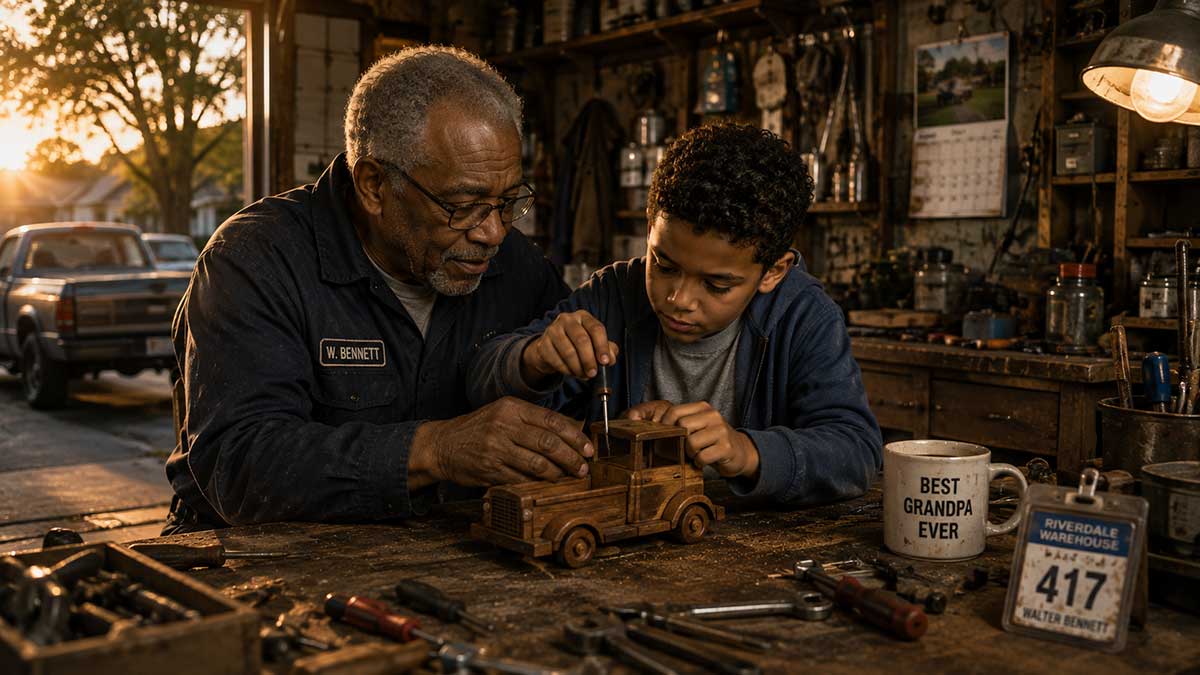
The scanner rejected Walter Bennett’s fingerprint three times.
A red light flashed.
Then the screen displayed:
ACCESS DENIED
Walter tried again.
Same result.
Devon, standing behind him with a coffee in one hand, grinned.
“Machine says you don’t exist.”
The younger workers nearby laughed.
Walter did too.
He even lifted both hands and said, “Well, that explains a lot.”
More laughter.
Then Devon tapped his badge, the door unlocked, and everyone went inside.
Walter stayed still for half a second longer than anyone noticed.
Thirty-two years in the same building.
Thirty-two years of knowing every aisle, every loading bay, every broken latch, every supervisor who had come and gone.
And now a machine was telling him he did not exist.
He eventually got inside using his badge.
417.
That number had been clipped to his belt for so long he sometimes forgot it was there.
Walter started at the distribution center when he was thirty-one.
Back then, the place smelled like cardboard, diesel, dust, and burnt coffee.
It still did.
The technology had changed.
The work had not.
Boxes arrived.
Boxes moved.
Boxes left.
If they did not move fast enough, somebody asked why.
If they moved to the wrong place, somebody asked who had done it.
Walter had always liked that.
A problem happened.
You fixed it.
Simple.
He was good at useful things.
A conveyor belt jammed.
Walter knew which panel to open.
A shipment arrived with nearly identical labels.
Walter knew the difference.
A rookie could not find a product.
“Ask Walt.”
A supervisor needed somebody for Saturday.
“Ask Walt.”
A driver got stuck in snow.
“Call Walt.”
He liked hearing his name attached to a solution.
He never said that out loud.
Devon Price had been hired eight months earlier.
Twenty-four years old.
Quick learner.
Polite.
That almost made him worse.
Walter would have preferred arrogant.
Arrogant was easier to dislike.
Devon listened.
Asked questions.
Remembered answers.
He could operate the new warehouse software faster than most supervisors.
Management paired him with Walter during the automation transition.
The official reason was “knowledge transfer.”
Walter knew what that meant.
Teach the kid everything you know before the company decides it no longer needs to pay you for knowing it.
Still, Walter trained him properly.
“You never stack those next to each other.”
“Why?”
“Because the labels look almost identical.”
Devon scanned both.
The handheld device flashed an alert.
Walter frowned.
“Used to be you had to remember.”
Devon shrugged.
“Still good to know.”
Walter looked at him.
“Don’t make me feel useful.”
“I’m not.”
Walter could not decide whether that answer annoyed him or pleased him.
At home, Marcia was planning retirement.
She had started keeping brochures in a drawer.
Savannah.
Smoky Mountains.
A train trip through Canada.
Walter hated all of them.
Not because he disliked traveling.
Because each brochure seemed to assume the person reading it had nothing important to do.
Marcia sat at the kitchen table one evening.
“You know what I want to do?”
Walter grunted.
“Take Theo to that science museum in Chicago.”
“He’d like that.”
“And go somewhere warm in February.”
“You hate beaches.”
“I hate Ohio in February more.”
Walter opened the refrigerator.
Marcia watched him.
“What?”
“Nothing.”
“You’re making a face.”
“I’m looking for mustard.”
“You make a face when I talk about retirement.”
“I am looking for mustard.”
“Second shelf.”
He found it exactly where she said.
Thirty-five years of marriage had made certain arguments predictable.
Marcia waited until he sat down.
“Did they say anything more at work?”
“No.”
“Walter.”
“They’re making changes.”
“What kind?”
He cut his sandwich.
“Smaller crew.”
“That doesn’t answer me.”
“They offered me a training position.”
Marcia brightened.
“That sounds good.”
“Twenty-six hours.”
Her expression changed.
“Pay?”
“Enough.”
“Benefits?”
“For now.”
“Then why do you look like somebody died?”
Walter put the knife down.
“Because they’re moving me out.”
“They’re not firing you.”
“They’re putting me in a room teaching people to do work I used to do.”
Marcia leaned back.
“And your knee?”
“What about it?”
“You limp every night.”
“I’m sixty-three, Marcia.”
“Yes.”
He looked at her.
She did not look away.
That irritated him more than sympathy would have.
The fall happened on a Tuesday.
Nothing dramatic.
No ambulance.
No blood.
Walter was walking between aisle twelve and thirteen carrying a small carton when his right knee buckled.
The box dropped.
He grabbed a rack.
Missed.
Then he was on the floor.
The pain came second.
The humiliation came first.
Three people rushed over.
Devon got there fastest.
“Don’t move.”
“I’m fine.”
“Stay down.”
“I said I’m fine.”
Devon crouched beside him.
“Walt.”
That tone.
Walter hated that tone.
The same tone nurses used.
The same tone Marcia had started using.
Careful.
Gentle.
As if he were something breakable.
“I can get up.”
He tried.
His knee failed again.
Devon caught his elbow.
For a moment Walter saw the entire thing from outside himself.
Young man supporting old man.
He jerked his arm away.
“Don’t.”
Devon let go immediately.
Walter sat on the concrete floor pretending he was checking the box.
Around him, people had stopped working.
They were watching.
Not mocking.
Worse.
Concerned.
The doctor called it degeneration.
Walter called it getting old.
Physical therapy.
Anti-inflammatory medication.
Possibly surgery later.
No lifting for several weeks.
No climbing.
Limited standing.
His manager, Neil, asked Walter into the office.
Neil was forty-two.
Walter had trained him too.
That bothered Walter now.
“We want to keep you here.”
Walter nodded.
“The training role is still open.”
“Right.”
“You know more about this operation than anyone.”
“That’s what everybody keeps saying.”
Neil hesitated.
Walter caught it.
“What?”
“Nothing.”
“Say it.”
“We need your knowledge more than your body now.”
Neil clearly meant it as respect.
Walter heard the other half.
We do not need your body anymore.
For thirty-two years, his body had been the contract.
Carry.
Lift.
Stand.
Walk.
Fix.
Move.
Now the company wanted what remained after the body became inconvenient.
Walter signed the temporary transfer form.
The training room had six chairs and a whiteboard.
Walter hated it.
The first week, he spent most of his time telling younger workers stories they did not need.
“Before this software, we kept manifests by hand.”
Nobody cared.
“Back in ninety-eight, truck seven lost its brakes near Dayton.”
Mild interest.
“We used to unload half these trailers ourselves.”
A few polite nods.
Then Devon started asking him practical questions.
“What do you check first if the scanner count and physical count disagree?”
“Depends on the shipment.”
“How?”
Walter explained.
Devon took notes.
“What else?”
Walter showed him an old trick for spotting damaged cartons.
Then another for reorganizing a loading sequence when a truck arrived late.
For ten minutes, Walter forgot to be angry.
Then Devon’s tablet suggested almost the exact same solution.
Walter stopped.
Devon looked up.
“What?”
“Nothing.”
“Walt.”
“The machine knows.”
“Not everything.”
“Enough.”
Devon put the tablet down.
“You know why I ask you?”
Walter gave him a look.
“Because they told you to.”
“No.”
“Then why?”
Devon thought about it.
“Because I want to know what happens when the machine is wrong.”
Walter looked at him.
Devon continued.
“And because half the stuff you know isn’t in there.”
Walter said nothing.
For the rest of the afternoon, he taught him anyway.
Walter started noticing retirements.
He had seen them for decades.
Now they looked different.
Frank got a sheet cake in the break room.
Forty-one years.
Everybody signed a card.
There was a speech.
Frank cried.
Three days later, somebody else was using his locker.
A month later, most of the new hires did not know who Frank was.
Then Cheryl left.
Twenty-seven years.
Cake.
Card.
Photo.
Gone.
Walter began thinking about his own locker.
Top row.
Third from the end.
Small dent on the door from 2004 when a pallet jack clipped it.
Inside:
work gloves,
aspirin,
old family photograph,
spare socks,
flashlight,
employee badge 417.
He imagined someone scraping his name off the label.
He could almost hear the adhesive tearing.
Theo came over every Wednesday.
Nine years old.
Walter’s favorite person.
Theo believed Walter could fix anything.
Remote-control car.
Kitchen chair.
Baseball glove.
Loose bicycle chain.
Once Theo brought him a plastic dinosaur with one leg broken and waited like a patient in an emergency room.
Walter repaired it with epoxy.
Theo had stared at him.
“How do you know how to do everything?”
Walter had laughed.
“I’m old.”
Theo nodded seriously.
That seemed like enough explanation.
Now Theo brought over a wooden toy truck.
One wheel had come off.
“Can we fix it?”
Walter was icing his knee.
“Later.”
“You always say later now.”
Walter looked at him.
“Grandpa’s tired.”
Theo sat beside him.
“You tired from work?”
Walter almost said yes.
Instead:
“Not exactly.”
Theo examined the ice pack.
“Does being old hurt?”
Walter laughed once.
“Sometimes.”
Theo thought about that.
“Being nine hurts too.”
Walter looked over.
“How?”
“School.”
Walter smiled.
For the first time all day.
The company announced Walter’s retirement celebration without asking him.
He saw the email.
Please join us in celebrating Walter Bennett’s 32 years of service.
There was even an old photograph attached.
Walter in his thirties.
Thick hair.
Work boots.
Arms crossed.
He looked invincible.
Devon walked into the training room.
“You see it?”
Walter pointed at the screen.
“They’re throwing me a funeral.”
“It’s a party.”
“Same idea. Everybody says nice things, then they move on.”
“You’re not dying.”
“That’s not what I mean.”
Devon leaned against the desk.
“You know people like you, right?”
“People liked Frank.”
“Yeah.”
“Where is Frank’s locker?”
Devon said nothing.
“Exactly.”
Later Walter called Neil.
“Cancel it.”
“What?”
“The retirement thing.”
“We already ordered food.”
“Cancel it.”
“Walt.”
“No speeches. No cake. No slideshow.”
“People want to say goodbye.”
Walter’s voice sharpened.
“They know where I live.”
Neil went quiet.
Walter hung up.
That night Marcia found badge 417 on the dresser.
Walter had taken it off without noticing.
She picked it up.
“This has been through a lot.”
“Put it down.”
She turned it over.
The photo was ancient.
Walter looked irritated even then.
“You were handsome.”
“Was?”
She smiled.
Then Walter said:
“What am I supposed to do?”
Marcia set the badge down.
“With what?”
“After.”
“After what?”
“Work.”
She waited.
He hated when she made him say things.
“Every day.”
“We do things.”
“That’s not what I asked.”
“We travel.”
“I don’t want to spend my life waiting for vacations.”
“You see Theo.”
“That’s Wednesdays.”
“Walter.”
“What?”
“You think work is the only place anybody needs you?”
He stood.
“That’s not what I said.”
“It’s what you mean.”
“You don’t get it.”
Marcia’s face changed.
“Try me.”
“At work, I know what I am.”
The sentence surprised both of them.
Walter looked away.
Marcia spoke softly.
“And here?”
He had no answer.
That hurt her.
He saw it.
But he still had no answer.
The family day was supposed to be fun.
Walter almost skipped it.
Marcia made him go.
Theo came too.
Kids toured the warehouse.
Employees showed families the sorting system.
Devon demonstrated the new scanner.
Theo loved everything.
“Grandpa used to do this?”
“Still do,” Walter said.
Marcia glanced at him.
Walter pretended not to notice.
Then one of the conveyor sections stopped.
Alarm.
Workers gathered.
Walter instinctively stepped forward.
“Panel three.”
Devon was already there.
He opened it.
Walter pointed.
“Check the relay.”
Devon checked the tablet.
“Sensor fault.”
Walter frowned.
“No. Listen.”
Devon paused.
The belt made a clicking sound.
“Relay?”
Walter nodded.
Devon reached in, adjusted the part, reset the system.
The conveyor started.
Theo looked at Devon.
“That was cool.”
Walter felt something ugly in his chest.
Jealousy.
Of a twenty-four-year-old.
In front of his grandson.
Devon walked back.
“Good catch.”
Walter shrugged.
Theo said:
“Devon fixed it.”
Devon opened his mouth.
Walter said:
“Yep.”
He walked away.
At home that night, Theo followed him into the garage.
Walter sat on a stool.
His knee hurt.
Theo carried the broken wooden truck.
“Can we do it now?”
Walter sighed.
“Sure.”
He opened his toolbox.
The smell hit him.
Oil.
Wood shavings.
Metal.
Old leather.
Theo put the truck on the bench.
Walter examined the wheel.
“Axle pin’s cracked.”
“Can you fix it?”
Walter stared at it.
His hands looked older under the work light.
Veins raised.
Knuckles swollen.
A scar across one finger from a warehouse accident twenty years earlier.
“You know I don’t work there anymore.”
Theo looked confused.
“What?”
“At the warehouse.”
“I know.”
“I’m retired.”
“Okay.”
Walter waited.
Theo waited too.
Finally Theo asked:
“Can we fix my truck?”
Walter looked at him.
“I said I don’t work there anymore.”
Theo frowned.
“I didn’t ask where you work.”
Walter went still.
Theo had already started digging through the toolbox.
“Which screwdriver?”
Walter did not answer right away.
Then he pointed.
“Small Phillips.”
Theo grabbed one.
Walter took the truck.
For the next forty minutes they worked.
Walter did less than usual.
He let Theo hold the flashlight.
Let him sand the new pin.
Let him tighten the screw.
Theo stripped it once.
Walter almost took over.
Stopped himself.
“Back it out.”
“What?”
“You crossed the thread.”
Theo looked worried.
“Did I break it?”
“No.”
“Can we fix it?”
Walter smiled.
“Yeah.”
They fixed it.
When the wheel finally turned, Theo pushed the truck across the bench.
“Works.”
Walter nodded.
“Works.”
Theo looked up.
“Grandpa?”
“Yeah?”
“When you die, can I have your tools?”
Walter laughed so hard his knee hurt.
“Kid, let me retire first.”
Theo laughed too.
Then Walter stopped.
Retire.
Not disappear.
The two words had become tangled in his mind.
Maybe they were not the same.
His last official day came quietly.
Walter had cancelled the party.
But somebody left a card on his desk anyway.
No speech.
No cake.
Just signatures.
Some people wrote only their names.
Others wrote things.
Thanks for teaching me.
You saved my ass more times than I can count.
I still check labels the way you taught me.
Don’t be a stranger.
Devon wrote:
The machine still doesn’t know everything.
Walter read that one twice.
At 4:58 p.m., he cleared his locker.
Gloves.
Flashlight.
Photograph.
Aspirin.
Badge 417.
He closed the door.
Then opened it again.
Nothing.
He shut it.
The click sounded final.
Devon was waiting near the exit.
“Need help carrying anything?”
Walter gave him a look.
Devon smiled.
“Kidding.”
They stood awkwardly.
Then Devon held out his hand.
Walter shook it.
“You’ll do fine.”
“Because you trained me?”
“No.”
Devon raised an eyebrow.
“Then why?”
Walter looked around the warehouse.
“Because you ask when you don’t know.”
Devon nodded.
Walter started toward the door.
“Walt.”
He turned.
“Yeah?”
“Come back sometime.”
Walter almost said:
For what?
Instead:
“Maybe.”
Outside, the sun was low over the parking lot.
Walter stood beside his truck.
Thirty-two years.
He expected to feel something dramatic.
Nothing came.
He drove home.
The next morning Walter woke at 5:17 without an alarm.
For several seconds he thought he was late.
Then remembered.
He showered.
Shaved.
Put on jeans.
Reached for his work shirt.
Stopped.
He stood in the bedroom looking at it.
Marcia was still asleep.
Walter went downstairs.
Made coffee.
Sat at the kitchen table.
The house was silent.
At 6:03, he got up and walked to the dresser in the hallway.
Badge 417 was there.
He picked it up.
The plastic felt warm from his hand.
He considered throwing it away.
Instead he opened the junk drawer.
Batteries.
Tape.
Scissors.
Old receipts.
He placed badge 417 inside.
Closed the drawer.
A few minutes later, a car door slammed outside.
Theo came running through the kitchen.
“Grandpa!”
Walter looked at the clock.
“Why aren’t you in school?”
“Teacher work day.”
Marcia appeared behind him smiling.
“You forgot.”
Theo carried the wooden truck.
One wheel had fallen off again.
Walter groaned.
“You already broke it?”
“It broke itself.”
“Sure.”
Theo put it on the kitchen table.
Walter opened the garage door.
“You get the toolbox.”
Theo ran ahead.
Walter followed more slowly.
His knee hurt.
He let it hurt.
In the garage, Theo dragged the toolbox across the floor.
Walter sat on the stool.
Theo held up the truck.
“Can you fix it?”
Walter studied the broken wheel.
Then looked at his grandson.
“No.”
Theo’s face fell.
Walter handed him the screwdriver.
“But I can show you how.”
Theo smiled.
Walter smiled too.
For thirty-two years, the company had needed his hands.
For thirty-two years, badge 417 had told Walter where to stand, when to arrive, and what problem belonged to him.
Now the badge was in a drawer.
The building had already kept moving without him.
That still hurt.
Maybe it always would.
But the boy beside him turned the screwdriver too hard.
Walter placed one finger lightly against Theo’s wrist.
“Easy.”
Theo loosened his grip.
“Like this?”
“Yeah.”
“Still too much?”
“A little.”
Theo tried again.
Walter nodded.
“There.”
The wheel turned.
And for the first time since leaving the warehouse, Walter did not feel useful.
He felt something better.
He felt wanted.
Story 3: Sunday Table
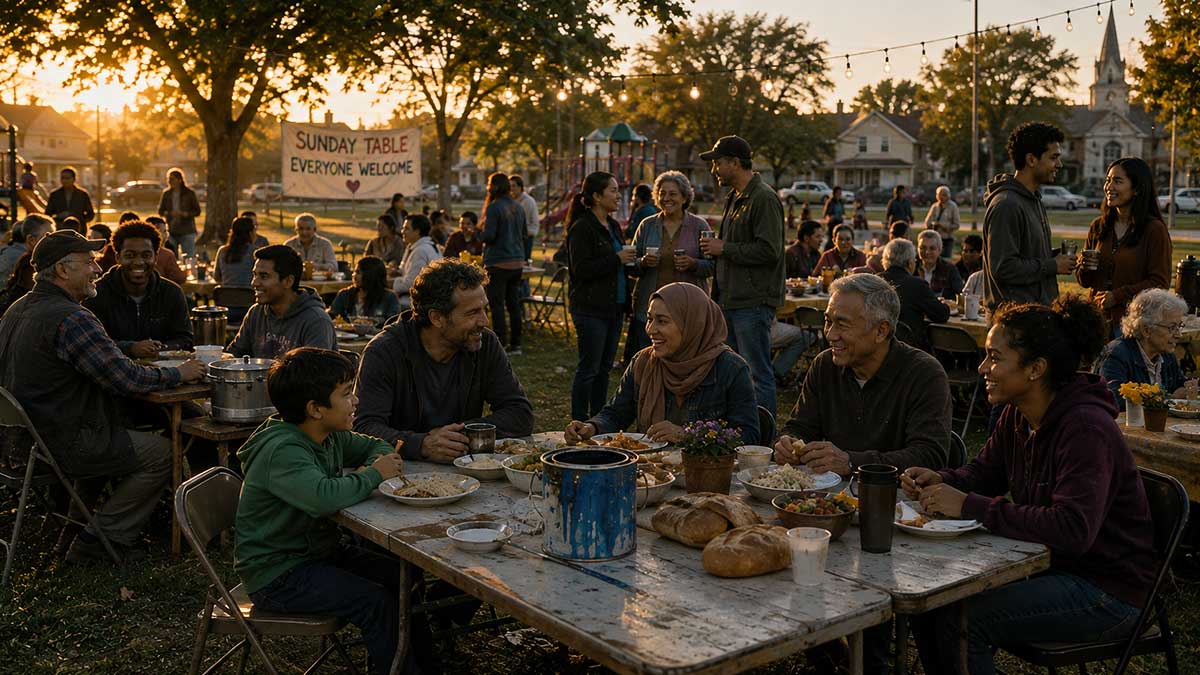
Every Sunday at four o’clock, Marcus Reed unfolded a plastic table behind an abandoned bakery.
The first Sunday, nobody came.
He sat there for forty-three minutes with a pot of coffee, six paper cups, and a handwritten sign taped to the table:
SUNDAY. 4 PM. BRING SOMETHING IF YOU CAN.
IF YOU CAN’T, COME ANYWAY.
At 4:43, Marcus poured the remaining coffee into the grass, folded the table, and put it back in his truck.
The second Sunday, an old man appeared.
He did not introduce himself.
He simply placed a paper bag on the table, sat down, and stared at the boarded-up bakery.
Marcus poured him coffee.
The old man took a sip.
“This is terrible.”
Marcus looked at him.
“You brought anything?”
“No.”
“Then drink the terrible coffee.”
The old man drank it.
His name was Leo Park.
He was seventy-one years old.
His wife had been dead for eleven months.
The third Sunday, Nadia Rahman came with her eight-year-old son and a foil pan of rice.
The fourth Sunday, Jasmine Cole arrived carrying a six-pack of soda she had bought with money she probably should not have spent.
By the sixth Sunday, Marcus needed a second table.
That was how it began.
Not with a business plan.
Not with money.
Not with a building.
With a folding table behind a bakery nobody owned.
Marcus had started the Sunday meals because his therapist told him he needed to “reconnect socially.”
Marcus hated phrases like that.
He was forty-seven years old.
He had been married for nineteen years.
Then one Tuesday evening his wife, Rebecca, sat across from him at their kitchen table and said:
“I don’t think either of us is happy.”
Marcus had answered:
“I’m fine.”
Rebecca had looked at him for a long time.
“That’s part of the problem.”
Six months later, Rebecca had the house.
Marcus had a basement apartment with one small window at ground level.
He could see people’s shoes walking past.
He began recognizing neighbors by footwear.
Red running shoes.
Brown work boots.
A child with blinking sneakers.
He knew their shoes better than their faces.
Marcus was an electrician.
People called him when something stopped working.
He liked that.
Electrical problems made sense.
Current went somewhere or it didn’t.
A connection existed or it didn’t.
Find the break.
Restore the connection.
People were harder.
After the divorce, coworkers invited him out.
He declined.
Friends called.
He let voicemail answer.
His daughter was away at college and texted every few days.
Marcus always replied:
Doing great.
Then he ate dinner alone.
One Sunday afternoon, after realizing he had spoken to nobody since Friday except a cashier, Marcus drove around without knowing where he was going.
He passed the abandoned bakery.
He remembered buying doughnuts there when his daughter was little.
He pulled into the parking lot.
The front windows were covered from inside.
A faded sign still hung above the door.
MILLER’S BAKERY
Marcus walked around back.
There was a small paved area with weeds growing through cracks.
He stood there for a while.
Then drove to a discount store and bought a folding table.
He could never explain why.
Nadia worked evening shifts at a hotel near the interstate.
She had come to the United States six years earlier.
Her husband had followed two years later.
The marriage lasted eleven months after that.
Now Nadia and Benji lived in a two-bedroom apartment above a laundromat.
She cooked too much food.
This was partly cultural.
Partly habit.
Partly loneliness.
When Marcus asked why she kept bringing enough rice for twenty people, she said:
“My mother taught me that running out of food means you failed.”
Marcus pointed at the empty chairs.
“We have seven people.”
“My mother would cook for fourteen.”
“Why?”
“Because maybe seven more are coming.”
Marcus laughed.
Nadia didn’t.
“Sometimes they do.”
Benji usually spent the Sunday meals drawing.
One afternoon he stared at the abandoned bakery.
“Why is it closed?”
Marcus shrugged.
“Owner retired.”
“Who owns it now?”
“Some guy.”
“Why doesn’t he open it?”
“Because owning a bakery and knowing how to run a bakery are different things.”
Benji considered this.
“My mom can cook.”
Nadia looked up.
“Eat your food.”
“Leo can bake.”
Leo grunted.
Marcus looked at him.
“You bake?”
Leo continued eating.
Nadia smiled.
“He told me.”
Leo glared at her.
“You talk too much.”
“You don’t talk enough. It balances.”
Jasmine laughed.
Benji pointed at Marcus.
“You fix stuff.”
Then at Jasmine.
“You do computer.”
Jasmine was twenty-two and studying accounting at community college.
“I do more than computer.”
Benji ignored her.
He looked at the bakery again.
“So open it.”
Four adults stared at him.
Marcus finally said:
“With what money?”
Benji shrugged.
“Adults always say that.”
The following Sunday, Leo brought bread.
Not store bread.
Real bread.
Dark crust.
Soft center.
Still slightly warm.
Marcus tore off a piece.
He stopped chewing.
“Jesus.”
Leo looked offended.
“What?”
“This is incredible.”
Nadia tried it.
Her eyes widened.
Jasmine took another piece before finishing the first.
Benji said:
“You should sell this.”
Leo looked down at the loaf.
“My wife made it.”
Everyone became quiet.
Leo corrected himself.
“Recipe was hers.”
Nobody said anything for several seconds.
Then Nadia asked:
“What was her name?”
Leo’s expression changed.
“Sunhee.”
“Did she bake?”
“Every Saturday.”
“For a business?”
“For everybody.”
Leo looked at the bread.
“Neighbors. Church. Kids. People she barely knew.”
Marcus asked:
“When did you start?”
“After she got sick.”
“To help her?”
Leo nodded.
“At first.”
“And after?”
Leo tore off a piece.
“House got too quiet.”
Marcus understood that.
They ate the entire loaf.
The idea became serious accidentally.
Marcus saw a small FOR SALE sign in the bakery window.
He called the number.
The price was lower than he expected.
Not cheap.
But not impossible.
He mentioned it Sunday.
Nadia laughed.
“You called?”
“I was curious.”
Jasmine immediately asked:
“How much?”
Marcus told her.
She stopped laughing.
Leo stared at the building.
Nadia said:
“No.”
Marcus looked at her.
“I didn’t ask anything.”
“I know that face.”
“What face?”
“The face people have before they ask me for money.”
Jasmine was already using her phone calculator.
“What if it’s not one person?”
Nadia shook her head.
“No.”
“What if it’s a cooperative?”
“A what?”
“Everybody owns part.”
Leo said:
“Bad idea.”
Benji looked around the table.
“Can the door be blue?”
Nobody answered.
He repeated:
“Can the door be blue?”
Marcus looked at the bakery’s faded brown door.
“If we buy it, you can paint it whatever you want.”
Benji smiled.
That was the first promise.
By the following Sunday, Jasmine had created a spreadsheet.
Marcus hated spreadsheets.
Jasmine loved them.
Purchase price.
Estimated repairs.
Insurance.
Utilities.
Equipment.
Permits.
Revenue projections.
Leo looked at the screen.
“No.”
Jasmine frowned.
“You haven’t even seen it.”
“I see enough.”
Nadia studied the numbers.
“What if we only open three days?”
Jasmine changed a cell.
Marcus leaned over.
“What about electrical work?”
“You’re free.”
“I’m not free.”
“You are to us.”
Marcus laughed.
“Put materials only.”
Jasmine changed another number.
Leo said:
“Still stupid.”
Marcus looked at him.
“Then why are you here?”
Leo had no answer.
Benji was drawing on the back of an old menu.
“What’s that?” Marcus asked.
“Our bakery.”
The drawing had a bright blue door.
Above it Benji had written:
SUNDEE TABLE
Jasmine corrected him.
“It’s Sunday.”
“I know.”
“You spelled it wrong.”
“It looks better.”
Leo leaned over.
“Keep it.”
The dream began collecting details.
That was when it became dangerous.
At first they had only said:
Maybe.
Then they began saying:
When.
When we open.
When we get the ovens.
When Nadia starts lunch.
When Leo teaches baking classes.
When Jasmine finishes school.
When Marcus fixes the back room.
When Benji paints the door.
They discussed where tables would go.
Marcus measured the building from outside.
Nadia developed a menu.
Leo brought different breads each Sunday.
Jasmine created a logo without telling anyone.
Benji drew the blue door again and again.
Each person quietly began placing something private inside the building.
For Nadia, it was independence.
She was tired of asking a hotel manager for extra shifts.
She wanted Benji to see her name attached to something she owned.
For Jasmine, it was permanence.
She had entered foster care at twelve.
Since then she had lived in eleven homes, two dormitories, three apartments, and one friend’s basement.
When people asked where home was, she named wherever her clothes happened to be.
The bakery would be the first place she had chosen before it chose her.
For Leo, it was Sunhee.
Nobody said that aloud.
Everyone knew.
For Marcus, it was harder.
He told himself it was a project.
Electrical work.
Repairs.
Something to do.
But one evening Rebecca called.
They talked about their daughter.
Then Rebecca asked:
“How are you?”
Marcus nearly said what he always said.
Fine.
Instead he said:
“I think I’m opening a bakery.”
There was a long silence.
“You?”
Marcus laughed.
“I’m not baking.”
“You don’t cook.”
“I know.”
“You burn toast.”
“I’m fixing it.”
“With who?”
Marcus looked through the basement window.
Shoes passed outside.
For once, he did not feel beneath them.
“Friends.”
The word surprised him.
Rebecca heard it.
“I’m glad.”
After the call, Marcus sat quietly for a long time.
The Sunday table grew.
Mrs. Alvarez came once with a younger man named Mateo who talked enthusiastically about baseball.
Walter Bennett brought his grandson after seeing a flyer before retiring from work.
A teacher came.
Two nurses.
A mechanic.
A woman from the church down the street.
Nobody officially joined anything.
They simply ate.
Jasmine created a fundraising page.
Marcus objected.
“You can’t ask strangers for money.”
“That is literally what fundraising is.”
“We don’t even own the place.”
“We’re trying to.”
Leo donated five thousand dollars.
Everyone stared at him.
Nadia said:
“No.”
Leo said:
“My money.”
“That’s too much.”
“My decision.”
Marcus asked:
“You sure?”
Leo looked toward the bakery.
“Sunhee would have given ten.”
He transferred five.
That was the moment Marcus began believing.
Not pretending.
Believing.
The nonprofit meeting went well.
Then the bank meeting went better than expected.
The loan officer said:
“If you can raise the remaining down payment and the inspection doesn’t reveal anything major, I think there’s a path.”
A path.
Marcus repeated the phrase all week.
There’s a path.
Jasmine calculated how much remained.
Nadia began selling weekend meal trays.
Leo sold bread at church.
Marcus took two extra electrical jobs.
Benji emptied twenty-three dollars from his piggy bank onto the folding table.
Nadia pushed it back.
“No.”
“It’s for bakery.”
“You keep it.”
“You said everybody owns part.”
The adults looked at one another.
Leo took one dollar from the pile.
“Now he owns one dollar.”
Benji considered this acceptable.
Three months later, they had enough.
Barely.
Marcus called the owner.
“We’re ready.”
The owner, Mr. Patterson, sounded pleased.
“Good. I like what you’re doing.”
They scheduled the paperwork for Friday.
Sunday became a celebration.
Nadia cooked chicken.
Leo brought two loaves.
Jasmine brought cheap sparkling cider.
Marcus unfolded three tables now.
Benji arrived carrying a small can of blue paint.
Nadia stared at it.
“Where did you get that?”
“Grandma.”
“You told her?”
“She knows.”
Marcus picked up the can.
Bright blue.
“You’re serious.”
Benji nodded.
“You promised.”
“I remember.”
They stood in front of the bakery door.
Marcus held the paint can beside it.
Leo said:
“Too bright.”
Benji looked horrified.
Nadia said:
“It’s perfect.”
Jasmine took a photograph.
For years afterward, Marcus would remember that photograph more clearly than almost any other.
Five adults.
One child.
An ugly brown door.
A can of blue paint.
Everyone smiling at something that did not exist yet.
Mr. Patterson called Thursday afternoon.
Marcus was on a ladder replacing a ceiling fixture.
He climbed down.
“Everything okay for tomorrow?”
Silence.
Marcus knew.
Before Patterson spoke, Marcus knew.
“I’m sorry.”
Marcus sat on the bottom rung.
“What happened?”
“Another offer came in.”
“How much?”
Patterson told him.
Marcus laughed once.
Not because it was funny.
They could never match it.
“They’re paying cash.”
“You said we had a deal.”
“We hadn’t signed.”
“You said Friday.”
“I know.”
“We raised the money.”
“I know.”
“People gave us money.”
“Marcus.”
“You said you liked what we were doing.”
“I do.”
“Then sell it to us.”
Another silence.
“I have a family too.”
Marcus closed his eyes.
There it was.
No villain.
No cruelty.
Just somebody else’s future beating theirs by seventy thousand dollars.
“When?”
“Closing next week.”
Marcus hung up.
He told Jasmine first.
She did not speak for nearly a minute.
Then:
“Can we increase?”
“No.”
“Different lender?”
“No.”
“Ask the nonprofit?”
“Seventy thousand.”
She stopped.
Nadia cried when he told her.
Then became angry.
At Patterson.
At Marcus.
At herself.
“I knew.”
“Nadia.”
“I knew this was stupid.”
“You didn’t.”
“Yes. I did. People like us don’t buy buildings.”
“What does that mean?”
“It means exactly what it means.”
Leo said nothing.
He simply stopped coming.
That frightened Marcus more than Nadia’s anger.
Benji asked:
“What about the door?”
Nadia said:
“There’s no door.”
“There is.”
“You know what I mean.”
“I have paint.”
“Benji.”
“Marcus promised.”
Nadia looked at Marcus.
Marcus looked away.
The following Sunday, Marcus did not unfold the table.
He drove past the bakery at 4:07.
Nobody was there.
At 4:22, Jasmine texted:
Are we meeting?
Marcus did not answer.
At 4:31:
Marcus?
He put the phone facedown.
The next Sunday he stayed home.
He watched television.
Ate cereal for dinner.
At 6:00, his daughter called.
“You okay?”
“Fine.”
The word had returned.
Construction began three weeks later.
The commercial buyer was turning the bakery into a specialty pet store.
Marcus found that almost insulting.
Not enough to hate anyone.
Just enough to make him avoid the street.
One Wednesday he had an electrical job nearby.
On the drive home, he accidentally passed the bakery.
The old sign was gone.
A dumpster sat outside.
Workers had removed part of the front wall.
Marcus slowed.
Then saw something beside the dumpster.
A small blue paint can.
For one irrational second, he thought it was Benji’s.
He pulled over.
Walked back.
It was not the same brand.
Not the same size.
Just blue paint.
Marcus stood staring at it.
Then started laughing.
He laughed until his eyes filled.
A construction worker looked over.
“You okay?”
Marcus nodded.
“Yeah.”
He wasn’t.
That evening he drove to Nadia’s apartment.
Benji answered.
“Marcus!”
“Your mom home?”
“Yeah.”
Nadia appeared.
“What happened?”
“Nothing.”
He looked at Benji.
“You still have the paint?”
Benji nodded.
“Get it.”
Nadia frowned.
“Why?”
Marcus said:
“I don’t know yet.”
They drove to the park.
The folding table was already there.
Marcus stopped walking.
Leo sat behind it.
Alone.
A paper bag rested beside him.
Marcus approached.
Leo looked up.
“You’re late.”
Marcus stared at him.
“For what?”
“Sunday.”
“It’s Wednesday.”
Leo shrugged.
“I was busy Sunday.”
Marcus looked at the bag.
“Bread?”
Leo nodded.
Nadia and Benji arrived behind him.
Leo looked at them.
“Hungry?”
Nadia started crying.
She turned away angrily, wiping her face.
“Oh, stop.”
Nobody knew whether she meant herself or them.
Benji put the blue paint on the table.
Leo frowned.
“What is that?”
“My door.”
“There is no door.”
Benji crossed his arms.
“You sound like Mom.”
Marcus sat.
For several minutes nobody spoke.
Then Jasmine appeared.
Marcus looked at her.
“How did you know?”
“Location sharing.”
“That’s disturbing.”
“You’re old.”
“I’m forty-seven.”
“Exactly.”
She sat.
Four adults.
One child.
One folding table.
Again.
Leo opened the bag.
The smell of bread rose into the evening air.
Marcus tore off a piece.
Still warm.
“This is better than your last one.”
“No.”
“It is.”
“No.”
Nadia tasted it.
“He’s right.”
Leo looked offended.
Benji said:
“We can still have bakery.”
Nobody answered.
He looked around.
“Why not?”
Jasmine spoke gently.
“Because we don’t have a building.”
“We have food.”
Nadia smiled sadly.
“It’s not the same.”
“We have table.”
Marcus looked at the plastic folding table.
Scratched.
Stained.
One leg slightly crooked.
They did have that.
The following Sunday, Marcus unfolded it at four.
Leo came.
Nadia brought rice.
Jasmine brought drinks.
Seven other people showed up.
The Sunday after that, twelve.
Then eighteen.
The church across the street offered its kitchen twice a month.
Jasmine resisted at first.
“That’s not ours.”
Marcus said:
“No.”
Nadia asked:
“Does it have ovens?”
“Yes.”
Leo asked:
“Good ovens?”
“Probably.”
Leo shrugged.
“Then who cares?”
They began cooking there.
Nothing became what they had planned.
There was no cooperative bakery.
No ownership papers.
No grand opening.
No sign.
Yet something strange happened.
Nadia started selling lunch trays from the church kitchen with permission.
Jasmine helped with bookkeeping.
Leo taught six people how to make Sunhee’s bread.
Marcus repaired three outlets and refused payment.
Jasmine graduated.
When nobody from her biological family attended, the Sunday Table occupied almost an entire row.
She pretended not to cry when she saw them.
Marcus pretended not to notice.
A year after they lost the bakery, Marcus drove past it.
The pet store had opened.
Bright windows.
Clean sign.
Customers inside.
The front door was red.
Marcus laughed.
He took a photograph and sent it to the group.
Terrible color.
Nadia replied:
Awful.
Jasmine:
1 star
Leo:
Who cares
Then Benji, now nine:
ours would be better
Marcus stared at that message.
Would be.
Not would have been.
The boy still carried the future in the present tense.
That Sunday, they held dinner outside.
Almost thirty people came.
Walter Bennett sat with his grandson.
Mateo argued baseball with a retired teacher.
Mrs. Alvarez brought empanadas.
Nadia moved between tables carrying food.
Jasmine collected donations for the church kitchen.
Leo sliced bread.
Marcus stood a little apart watching them.
Benji came beside him.
“You didn’t put the table out.”
Marcus looked.
The original folding table was still leaning against his truck.
They had newer tables now.
Bigger ones.
Better ones.
“We don’t need it.”
Benji frowned.
“Yes, we do.”
“Why?”
“That’s the first one.”
Marcus looked at him.
Then walked to the truck.
Together they carried the old table across the grass.
They unfolded it.
One leg wobbled.
Benji crawled underneath.
Marcus adjusted the latch.
“Better?”
Benji shook the table.
“Good.”
He placed the blue paint can in the center.
Marcus laughed.
“You still have that?”
“Yes.”
“What are you saving it for?”
Benji shrugged.
“Something.”
People began placing food around it.
Bread.
Rice.
Chicken.
Salad.
Cookies.
Coffee.
Soon the blue can nearly disappeared among the dishes.
Marcus looked across the tables.
He remembered sitting alone behind the bakery.
Six empty cups.
Terrible coffee.
Waiting to see if anyone would come.
He remembered the bank.
The spreadsheets.
The measurements.
The blue door they had already seen so clearly that losing it felt like losing a real place.
For a long time Marcus had believed the bakery was the dream.
Now he wondered if they had mistaken the container for what it was supposed to contain.
The building would have been wonderful.
He still wanted it.
He would not pretend losing it had been a gift.
Some losses were simply losses.
But the people were here.
Leo was laughing at something Walter had said.
Nadia was arguing with Jasmine about money.
Mateo was explaining a baseball statistic nobody had asked for.
Theo was chasing Benji across the grass.
People who might otherwise have eaten alone were passing plates to one another.
Marcus sat at the old folding table.
Leo put a piece of bread in front of him.
Marcus took a bite.
“Still not as good as the one you made last week.”
Leo glared at him.
Marcus smiled.
Across the table, an empty chair remained.
Then a woman Marcus had never seen before approached carrying a casserole dish.
She looked uncertain.
“Is this the Sunday dinner?”
Marcus stood.
“Yes.”
“I don’t know anybody.”
“That’s okay.”
She looked at the crowded tables.
“Do I need to sign up?”
“No.”
“Do I need to bring something?”
Marcus shook his head.
“No.”
The woman hesitated.
Marcus remembered the first sign he had taped to the table.
Bring something if you can.
If you can’t, come anyway.
He pulled out the empty chair.
“Sit.”
She did.
Marcus sat beside her.
They never bought the bakery.
Benji never painted its door blue.
The ovens they had chosen existed only on Jasmine’s old spreadsheet. Marcus’s electrical plans remained rolled inside his closet. Nadia never hung the menu she had written. Leo never baked Sunhee’s bread there.
The future they had described every Sunday never arrived.
But somehow, while they were waiting for that future, they had built the part of it they needed most.
And every Sunday at four o’clock, nobody at their table had to eat alone.
Story: The Door He Didn't Know He Had Closed
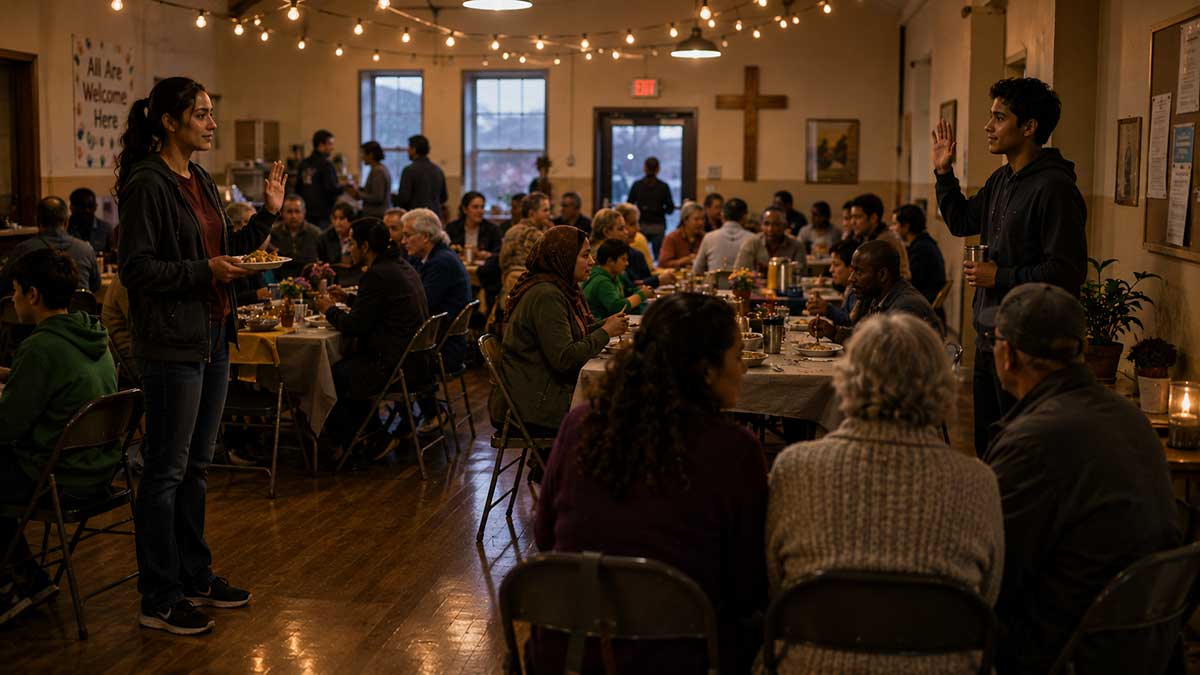
“He kept saying he was sorry while he was still holding the door shut.”
Maya Brooks sat in the passenger seat of her mother’s car outside urgent care, cradling her left wrist against her chest.
Tasha had already unbuckled her seat belt.
She stopped.
“What?”
“He kept saying, ‘Sorry, Maya. Sorry.’”
Maya stared through the windshield.
“And he still wouldn’t move.”
Her mother looked at the swollen wrist.
“Did he touch you?”
“No.”
“Did he hit you?”
“No.”
“Then what happened?”
Maya swallowed.
“I couldn’t get out.”
Tasha waited.
Maya had been remarkably calm since calling her forty minutes earlier.
Now her mouth began trembling.
“I told him I wanted to leave, Mom.”
Tasha reached across the console.
Maya pulled away.
Not angrily.
She just didn't want anyone touching her.
“I told him three times.”
That was when Tasha understood that whatever had happened at the recreation center was larger than the wrist.
She opened her door.
“Come on.”
Maya didn't move.
“Maya?”
“He didn't understand.”
Tasha looked at her daughter.
“What?”
“Eli.”
Maya's eyes filled.
“He didn't understand what he was doing.”
She looked down at her wrist.
“And I don't know why that makes me feel worse.”
Three months earlier, Maya had liked Eli Mercer.
Most people at the Riverside Community Recreation Center did.
Eli was twenty.
Tall.
Broad-shouldered.
Almost always smiling.
He stocked towels, cleaned equipment, moved boxes, refilled vending machines, and performed dozens of small jobs that kept the center running.
He worked Monday, Wednesday, and Friday from four until eight.
Maya worked the front desk most evenings while taking classes at community college.
The two often ate dinner together in the staff room.
Eli brought the same thing almost every shift.
Turkey sandwich.
Pretzels.
Apple juice.
Maya once looked inside his lunch bag.
“Do you ever eat anything else?”
“Yes.”
“What?”
“Pizza.”
“When?”
“Saturday.”
“Every Saturday?”
“Yes.”
She stared at him.
“That's terrifying.”
Eli laughed.
“You eat yogurt every day.”
“That's different.”
“Why?”
“Because yogurt is sophisticated.”
Eli laughed so hard that apple juice came out his nose.
For the next month, whenever Maya opened yogurt, Eli said:
“Sophisticated.”
She would throw a napkin at him.
He would laugh.
That was their relationship.
Easy.
Ordinary.
Eli had difficulties that people described differently depending on how well they knew him.
Some said developmental disability.
Some said cognitive limitations.
Some used diagnostic words Noah Mercer disliked.
Noah preferred:
“My son needs more time with some things.”
Eli could read simple instructions.
He could take the same bus route independently.
He remembered routines with remarkable precision.
He worked hard.
He wanted people to like him.
Unexpected changes were difficult.
Conflicts were worse.
When Eli became overwhelmed, his body seemed to move faster than his thinking.
He sometimes stood in people's way.
Once, when another employee tried to take a mop from him before he had finished cleaning, Eli gripped the handle and would not release it.
Nobody was hurt.
Another time, he stood in front of the equipment-room door when a supervisor told him to leave before completing his checklist.
Renee Patel, the center manager, had called Noah afterward.
“It wasn't serious.”
“But?”
Renee hesitated.
“He's a big guy, Noah.”
Noah knew what she meant.
“He wouldn't hurt anybody.”
“I know.”
“He gets stuck.”
“I understand.”
“He thinks if he finishes the routine, everything will be okay.”
“I know.”
“He's not threatening people.”
“I didn't say he was.”
Noah's voice sharpened anyway.
He had spent twenty years hearing what people thought his son could not do.
Could not attend this class.
Could not participate in that program.
Could not work without supervision.
Could not be trusted.
Could not live independently.
Could not.
Could not.
Could not.
Noah had learned to fight early.
Sometimes he kept fighting after nobody was attacking.
Renee said:
“I just think we need a plan for when he gets overwhelmed.”
“I'll talk to him.”
And Noah did.
“Eli, you can't block doors.”
“I know.”
“If somebody wants to leave, you move.”
“I know.”
“Even if you're upset.”
“I know.”
“Even if you haven't finished.”
Eli became irritated.
“I said I know.”
Noah stopped.
He believed him.
Maybe that was the mistake.
Or maybe the mistake was believing that knowing a rule while calm meant being able to follow it while frightened.
Maya had seen Eli upset before.
Once the vending-machine delivery arrived on Thursday instead of Friday.
Eli insisted it was wrong.
“It comes Friday.”
“I know,” Maya said.
“Today is Thursday.”
“I know.”
“They're not supposed to be here.”
“The driver said tomorrow is a holiday.”
Eli stared at the boxes.
“But Friday.”
Maya could see his breathing change.
She touched his arm.
“Hey.”
Eli pulled away.
“Don't.”
Maya immediately stepped back.
“Okay.”
Renee came over.
She showed him the calendar.
Explained the holiday.
Gave him several minutes.
Eventually Eli began stocking the machines.
Later he found Maya.
“Sorry.”
“For what?”
“I yelled.”
“You didn't yell.”
“I was mad.”
“People get mad.”
He looked at her carefully.
“You mad?”
“No.”
“You sure?”
“Eli, if I'm mad, I'll tell you.”
That seemed to comfort him.
“Okay.”
Then he pointed at the yogurt she was eating.
“Sophisticated.”
Maya laughed.
The moment passed.
Maya wanted to become a nurse.
Not since childhood.
She had decided at seventeen after spending six days visiting her grandmother in the hospital.
Her grandmother had been frightened of almost everything.
Tests.
Needles.
Doctors.
Dying.
One nurse named Kelly had a habit of sitting down before explaining anything.
Not standing over the bed.
Sitting.
Maya noticed that her grandmother became calmer whenever Kelly entered.
After her grandmother died, Maya kept thinking about the chair.
How such a small physical act could tell someone:
I'm staying long enough to explain.
Maya wanted to become that kind of nurse.
She had been accepted into a competitive transfer program beginning the following semester.
She kept the acceptance email starred on her phone.
Sometimes during slow shifts, she opened it just to look.
Congratulations, Maya Brooks...
A doorway into another life.
The Friday everything happened began with a schedule change.
Renee was called away at 5:30 because her daughter was sick.
Before leaving, she told the staff:
“Close the upstairs fitness room at seven instead of eight. Maintenance is coming early.”
Eli heard her.
His face changed immediately.
“We close at eight.”
“Usually.”
“My list says eight.”
“I know. Tonight it's seven.”
“Why?”
“Maintenance.”
“They come Tuesday.”
“Tonight they're coming Friday.”
“Why?”
Renee glanced at her phone.
Her daughter was calling again.
“Eli, I have to go. Maya knows what's happening.”
That sentence would return to Maya later.
Maya knows what's happening.
As if knowing made her responsible for what came next.
Renee left.
At 6:50, Maya went upstairs.
“Eli, ten minutes.”
“I know.”
At seven, she returned.
He was still restocking towels.
“Time.”
“Not finished.”
“That's okay.”
“No.”
“Eli, maintenance needs the room.”
“They're not here.”
“They'll be here soon.”
“I have three.”
“Three what?”
“Three towels.”
Maya looked at the cart.
“Then do three towels.”
He folded them.
Placed them precisely.
Then checked his list.
“Trash.”
“No. We're done.”
“I have trash.”
“You can do it Monday.”
His expression tightened.
“Friday.”
“I know.”
“Trash Friday.”
“Eli.”
“Trash Friday.”
Maya sighed.
“Fine. Do the trash. Then we're done.”
He did.
Then he noticed the water cooler.
“Cups.”
Maya checked the clock.
7:11.
“No.”
“Cups.”
“We're done.”
“You said after trash.”
“I said do the trash and we're done.”
“No.”
“Yes.”
“You said after.”
Maya was tired.
She had an anatomy exam Monday.
Her wrist already ached from typing study notes all afternoon.
She picked up Eli's checklist.
“Give me the pen.”
“No.”
“Eli.”
“I have to finish.”
She put the checklist down.
“I'm going downstairs.”
“No.”
Maya started walking.
Eli followed.
The staff room was near the stairwell.
Maya went inside to get her backpack.
Eli stood in the doorway.
“You have to tell Renee.”
“I will.”
“No.”
“What?”
“You have to tell Renee we didn't finish.”
“I'll text her.”
“She'll be mad.”
“She won't.”
“Yes.”
“No, she won't.”
“Tell her now.”
“She is with her daughter.”
Eli stepped into the doorway.
Maya put on her backpack.
“Move.”
“Call Renee.”
“Eli, move.”
“You have to tell her.”
“I will.”
“When?”
“Later.”
“No.”
Maya looked at him.
He was not smiling.
But he did not look angry either.
He looked frightened.
That distinction mattered later.
It did not help her then.
“Eli.”
“Call Renee.”
“I am going home.”
“No.”
“What do you mean, no?”
“Wait.”
“For what?”
“Renee.”
“She isn't coming back.”
“Then call.”
Maya walked toward the doorway.
Eli stayed there.
“Move.”
“Sorry.”
“Move, Eli.”
“Sorry, Maya.”
She tried stepping around him.
He shifted.
Blocked her again.
Her stomach tightened.
Until that moment, some part of Maya still believed they were having an argument.
Now something changed.
“Eli, you're scaring me.”
His face crumpled.
“No.”
“Yes.”
“No. Sorry.”
“Then move.”
“Call Renee.”
“I don't want to call Renee.”
“Sorry.”
“Get out of the doorway.”
“Sorry.”
“Eli!”
He flinched.
Maya pushed toward the opening.
Eli grabbed the edge of the door and pulled it partly closed.
Maya pushed back.
“Stop!”
“Sorry.”
“Open the door!”
“Wait.”
“OPEN IT!”
She threw her weight against it.
Eli panicked.
He pulled harder.
Maya's wrist became trapped between the door and frame.
She screamed.
Eli released it instantly.
Maya stumbled forward.
Her foot caught the leg of a chair.
She fell.
For several seconds, neither moved.
Then pain exploded through her arm.
Eli stared at her.
“Maya?”
She backed away on the floor.
“Don't touch me.”
He stepped forward.
“Don't!”
He froze.
“Sorry.”
Maya began crying.
“Get away from me.”
“Sorry.”
“GET AWAY!”
Eli ran.
At urgent care, X-rays showed a severe sprain and a small fracture.
The doctor said six to eight weeks.
Possibly longer before she regained full strength.
Maya stared at him.
“My nursing program starts in seven weeks.”
“We'll document everything. They may be able to accommodate you.”
“May?”
The doctor gave her the careful look people used when they had no useful answer.
Tasha squeezed her daughter's shoulder.
Maya let her this time.
Noah arrived at the recreation center before the police did.
Eli had called him.
He was sitting outside on the curb.
When Noah pulled up, Eli ran to the car.
“Dad.”
“What happened?”
“Maya got hurt.”
“How?”
“Door.”
“What door?”
“I said sorry.”
Noah put both hands on his son's shoulders.
“Slow down.”
“I didn't hurt her.”
“Okay.”
“I didn't.”
“Okay.”
“I didn't want to.”
Noah heard the difference.
He stopped.
“What happened?”
Eli began crying.
The next morning, Noah called Tasha.
She almost did not answer.
“Mrs. Brooks?”
“Yes.”
“This is Noah Mercer. Eli's father.”
Silence.
“I wanted to ask how Maya is.”
“She has a fracture.”
Noah closed his eyes.
“I'm sorry.”
Tasha said nothing.
“He didn't understand what was happening.”
There was another silence.
Noah continued.
“When Eli gets overwhelmed, sometimes he thinks he has to finish something before he can move on.”
Tasha's voice changed.
“Mr. Mercer.”
“Yes?”
“My daughter was trapped in a room.”
“I know.”
“He wouldn't let her leave.”
“I know, but he didn't understand.”
“My daughter understood.”
Noah stopped speaking.
Tasha's voice shook now.
“She understood she was asking a man bigger than her to let her out. She understood she was scared. She understood that saying no wasn't working.”
“I didn't mean...”
“I know what you mean.”
Noah sat down.
Tasha continued.
“I am sorry your son was scared.”
That surprised him.
“I mean that. I am.”
Then she said:
“But my daughter does not have to be less scared so your son can be less guilty.”
Noah had no answer.
After they hung up, he sat at his kitchen table for a long time.
Eli was upstairs.
Noah could hear him moving.
For twenty years, Noah had learned to explain his son.
Sometimes explanation was protection.
Sometimes it was translation.
Sometimes it was advocacy.
But that morning Noah wondered whether explanation could become something else.
A way of getting to Eli's pain so quickly that nobody had to remain with someone else's.
Maya hated the phrase more than anything:
He didn't mean it.
Renee said it.
A coworker said it.
A friend from class said it.
Even Maya herself said it.
Each time, she became angrier.
Two weeks after the incident, she sat with her friend Leah in the college cafeteria.
“You know Eli,” Leah said. “He wouldn't intentionally hurt you.”
“I know.”
“That's all I'm saying.”
“I know.”
“Then why are you mad at me?”
Maya put down her fork.
“Because everybody keeps saying it like it's the end of the sentence.”
Leah looked confused.
“What?”
“He didn't mean it, so...”
Maya waited.
“So what?”
“I don't know.”
“Exactly.”
Leah became quiet.
Maya looked at her brace.
“I know he didn't mean it.”
Her voice cracked.
“I know better than almost anybody.”
She wiped her eyes.
“But why does understanding him require everybody to stop understanding me?”
Leah reached across the table.
This time Maya let her.
Eli did not understand why Maya would not answer his messages.
He sent:
SORRY
Then:
HOW WRIST
Then:
I DIDNT WANT
No response.
He asked Noah:
“Is Maya mad?”
“Yes.”
“But I said sorry.”
“I know.”
“So when not mad?”
“I don't know.”
“Tomorrow?”
“No.”
“Monday?”
“Eli.”
“When?”
Noah looked at his son.
There were moments when parenthood required explaining a world that had rules.
Red means stop.
Hot means don't touch.
Money runs out when you spend it.
People go to work.
People die.
This was harder.
“Sometimes sorry doesn't make things go back.”
Eli stared at him.
“Why?”
“Because something happened.”
“I didn't want it.”
“I know.”
“Then why?”
Noah had spent years teaching Eli that intentions mattered.
Now he needed to teach him that intentions were not everything.
“You can hurt someone without wanting to hurt them.”
Eli's eyes filled.
“Bad person?”
“No.”
“Then Maya not mad?”
“No. Maya can still be mad.”
Eli looked completely lost.
Noah moved closer.
“Both can be true.”
Eli shook his head.
“No.”
“Yes.”
“No.”
He began crying.
Noah wanted to tell him it was okay.
He didn't.
He put his arm around him instead.
The recreation center conducted a review.
Renee cried during one meeting.
“I should never have left Maya responsible.”
Noah started to defend Eli.
Then stopped.
Renee continued.
“We knew schedule changes were difficult. We knew about the doorway incidents. We talked about them. We never made an actual plan.”
Noah looked down.
“I told him not to do it.”
The support coordinator asked:
“And what support did he have when he couldn't follow that instruction?”
Noah didn't know.
That question followed him home.
What support did Eli have when knowing was not enough?
And another followed it.
What support did Maya have when Eli couldn't manage?
The answer to both was almost nothing.
Maya initially refused a mediated meeting.
Nobody pressured her.
Three months passed.
Her wrist improved.
The nursing program delayed one clinical requirement and allowed her to begin coursework.
She still avoided the recreation center.
She sometimes dreamed about the door.
Not Eli.
The door.
In the dream, she pushed and pushed.
Someone on the other side kept saying:
Sorry.
Eventually Maya asked for the meeting.
Not because she wanted reconciliation.
She wanted to say one thing.
Eli entered the room with Noah.
Maya sat beside Tasha.
Renee and the support coordinator were there.
Eli looked at Maya's wrist.
The brace was gone.
He smiled automatically.
“Better.”
Maya nodded.
“Better.”
He sat.
Nobody spoke.
Finally Eli said:
“Sorry.”
Maya looked at him.
“I know.”
“I didn't want to hurt.”
“I know.”
Eli looked relieved.
Maya continued.
“But you scared me.”
The relief disappeared.
“I didn't want.”
“I know.”
“You know?”
“Yes.”
“Then you're not mad?”
Maya took a long breath.
“I can know you didn't want to hurt me and still be mad.”
Eli frowned.
He looked at Noah.
Noah did not answer for him.
Eli looked back at Maya.
“Both?”
“Yes.”
He was quiet.
Then:
“Both true?”
Maya nodded.
“Both true.”
Eli stared at the table.
After a while he said:
“Okay.”
It was not forgiveness.
It was not resolution.
But it was the first time Noah saw his son remain inside two difficult truths without immediately trying to make one disappear.
Eli did not return to the same job.
At first Noah saw that as punishment.
Later he stopped using that word.
The recreation center worked with a vocational support program.
Eli eventually began a different position at a community food program.
His schedule was posted in advance.
Changes were explained by one designated supervisor.
He was taught what to do when he felt trapped by unfinished tasks.
Step away.
Call someone.
Do not block.
Do not grab.
Do not prevent another person from leaving.
The rules were simple.
The support behind them was not.
Maya continued nursing school.
Her wrist healed slowly.
She never returned to work at Riverside.
She did not owe anyone that.
Months later, Maya went with her mother to a Sunday dinner held at a neighborhood church.
Tasha knew one of the women who cooked there.
The room was crowded.
Families.
Older people.
Children.
A long plastic folding table near the wall held bread, rice, chicken, salads, and coffee.
Maya was reaching for a plate when she saw Eli.
He was across the room carrying a box of paper cups.
Her body reacted before her thoughts did.
Her shoulders tightened.
Her pulse jumped.
Eli saw her.
He smiled.
Then he started walking toward her.
Maya stopped breathing.
Three steps.
Two.
Then Eli stopped.
He stood perhaps twenty feet away.
For several seconds they looked at one another.
Maya wondered whether someone had taught him this.
Maybe they had.
Maybe he had learned it himself.
Maybe there was no meaningful difference.
Eli did not come closer.
He did not call her name.
He did not make her decide whether to step backward.
He simply raised one hand.
A small wave.
Maya looked at him.
The room continued around them.
Someone laughed.
A child dropped a fork.
A man at the table argued about baseball.
Nobody else seemed to notice.
Maya remembered the staff room.
The door.
Her hand pushing.
Eli on the other side.
Sorry.
She remembered the weeks of pain.
The fear that came afterward.
She remembered Eli at the meeting asking:
Both true?
Maya slowly raised her hand.
She waved once.
Eli smiled.
Then, before she had to ask him to, he turned away.
Maya watched him return to the table.
Her mother came beside her.
“You okay?”
Maya considered the question.
“Yes.”
Then she corrected herself.
“I think so.”
Tasha touched her shoulder.
Maya did not look away from Eli.
She did not forgive him in that moment.
She did not forget.
She did not decide that what happened had somehow been necessary for him to grow.
She would never owe his growth the price of her fear.
But across the room was a young man who had once believed that not wanting to hurt someone meant he had not truly harmed them.
Now he understood something he had not understood before.
If someone wanted to leave, he had to let them.
Maya picked up her plate.
There was an empty seat at the long folding table.
She sat.
Not beside Eli.
Not far from him either.
And the door between them, for once, belonged to neither of them.
Story 5: Initial Here
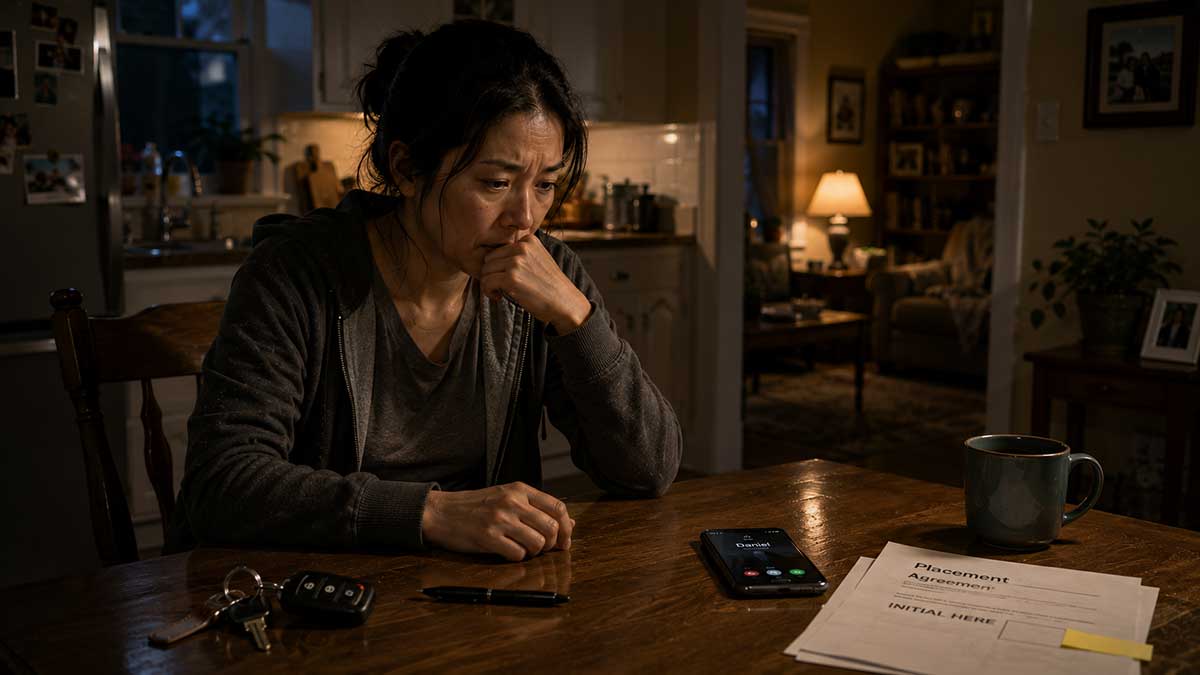
The case manager turned the form around and pushed it across the table.
A yellow tab marked one line.
LEGAL REPRESENTATIVE: INITIAL HERE
Rachel Kim looked at the empty box.
It was barely large enough for two letters.
RK.
That was all they wanted.
Two letters.
Her brother's bedroom.
His medication.
The route he would take to work.
The people who would watch him.
The doors he could open without asking.
The doors somebody else could lock.
How much money he could carry.
Whether he could leave the building alone.
Whether he could choose what time to go to bed.
Twenty years of loving Daniel had somehow become a quarter-inch square.
A pen appeared beside the form.
Rachel looked up.
The case manager smiled gently.
“Take your time.”
Rachel almost laughed.
They had been telling her that for three months.
Take your time.
As though time made the decision smaller.
She picked up the pen.
Then put it down.
“I can't sign this.”
Across the table, her mother closed her eyes.
“Rachel.”
“I said I can't.”
The case manager pulled the form back.
“That's okay.”
No.
Rachel thought.
It wasn't.
Nothing about this was okay.
Daniel Kim was forty-nine years old and hated bananas.
This mattered.
At least Rachel thought it did.
Everyone discussing Daniel's future seemed to know his medical history.
Traumatic brain injury at twenty-seven.
Cognitive impairment.
Executive-function limitations.
Memory deficits.
Reduced impulse control.
Difficulty evaluating complex risk.
They knew his medication.
His insurance.
His assessment scores.
His history of wandering.
The incident with the credit card.
The medication mistake.
The bus station.
They knew everything important about Daniel.
Except the things Daniel thought were important.
Daniel hated bananas.
He loved old detective shows.
He put hot sauce on scrambled eggs.
He knew nearly every lyric to songs from the 1980s but sometimes forgot what he had eaten for breakfast.
He hated people entering his bedroom without knocking.
He drank coffee too sweet.
He wanted a job at a hardware store.
Every Thursday at exactly 8:00 p.m., he called Rachel.
Not 7:58.
Not 8:05.
Eight.
“What's new?” Rachel would ask.
“Nothing.”
Then they would talk for forty minutes about nothing.
Daniel was not a problem to solve.
Rachel knew that.
She sometimes wondered whether everybody else did.
Before the accident, Daniel had been the one who took care of things.
He was three years older than Rachel.
When she was sixteen and crashed their father's car into a mailbox, Daniel helped her replace the mailbox before their parents came home.
Their father noticed anyway.
When Rachel's college boyfriend broke up with her, Daniel drove four hours to her campus with two cheeseburgers and a six-pack of beer.
When their father died, Daniel handled the funeral home.
He chose the coffin.
Called relatives.
Paid bills.
Held their mother while she cried.
Daniel had been twenty-seven when a pickup truck crossed the center line.
The doctors did not think he would survive the first night.
He did.
Then they did not know whether he would wake.
He did.
Then they did not know whether he would speak.
He did.
Daniel had spent years surprising people.
Yet some things did not return.
He could not go back to his old job.
He could not manage complicated finances.
He could become confused in unfamiliar places.
He trusted people too quickly.
Once, a man at a bus stop convinced Daniel to lend him four hundred dollars.
Daniel gave him his debit card.
Another time Daniel missed two days of medication because he had reorganized his pill container incorrectly.
Once he disappeared for seven hours after taking the wrong bus.
Rachel found him sitting inside a doughnut shop thirty miles away, drinking coffee and watching police cars search for him.
“What?” Daniel had asked.
Rachel had begun crying.
Daniel stared at her.
“I was coming home.”
“How?”
“I don't know yet.”
That sentence stayed with her.
Their mother, Grace, had managed Daniel's life for years after the accident.
Then Grace turned seventy.
Then seventy-two.
Then seventy-four.
Her hands began trembling.
Her driving became uncertain.
One afternoon she called Rachel.
“I can't do this forever.”
Rachel knew.
She had always known.
Still, hearing it felt like receiving a package she had spent years refusing to open.
Rachel became Daniel's legal representative for major decisions.
She told herself it was paperwork.
It wasn't.
It was everything.
Daniel's residential center announced its closure in February.
Funding.
Staffing.
Operating costs.
Words that sounded administrative until they entered somebody's life.
Residents had six months to relocate.
Daniel had lived there for eleven years.
He knew every staff member.
He knew which washing machine shook.
He knew the Wednesday dinner was spaghetti.
He knew that if he woke frightened at three in the morning, Carlos at the front desk would make coffee with him.
Daniel reacted to the closure by saying:
“Good.”
Rachel stared at him.
“Good?”
“I hate that place.”
“You've never said that.”
“I say it.”
“When?”
“To me.”
“You have never told me you hate it.”
Daniel shrugged.
“I don't like people coming in my room.”
“They check on you.”
“Knock.”
“They're supposed to.”
“They don't.”
Rachel made a note.
“Anything else?”
“They lock the kitchen after ten.”
“That's for safety.”
“I get hungry after ten.”
“You can ask staff.”
“I don't want to ask for crackers.”
Rachel looked at him.
Daniel said:
“I'm forty-nine.”
She had no answer.
There were two realistic options.
The first was Cedar Grove.
Twenty minutes from Rachel.
Highly structured.
Twenty-four-hour staff.
Medication administration.
Controlled entrances.
Transportation.
Meals.
Excellent safety record.
Daniel hated it within seven minutes.
A staff member showed them the common room.
Television.
Puzzles.
Large windows.
Clean furniture.
Daniel whispered:
“Old people.”
“They're your age.”
“They look old.”
“Daniel.”
The staff member pretended not to hear.
They toured his possible bedroom.
Daniel opened the closet.
“Can I lock my door?”
The staff member smiled.
“Staff needs access.”
“Do you knock?”
“Of course.”
Daniel looked at Rachel.
She knew what he was thinking.
They all say that.
On the drive home Rachel asked:
“What didn't you like?”
“Everything.”
“Be serious.”
“I am.”
“It is safe.”
Daniel looked out the window.
“You always pick safe.”
Rachel tightened her grip on the steering wheel.
“There's a reason.”
The second option was Maple House.
It was seventy minutes away.
Six residents lived in separate studio apartments connected to a staffed common area.
Residents cooked.
Some worked.
Some used public transportation.
The front doors were not locked during the day.
Staff support was available around the clock, but residents were expected to do more for themselves.
Daniel loved it.
He loved the small kitchen.
He loved the courtyard.
He loved that one resident had a bicycle.
He loved the hardware store two blocks away.
He walked into his possible studio and immediately checked the bedroom door.
“Lock?”
“Yes,” the director said. “Staff has emergency access, but this is your home.”
“You knock?”
“Every time.”
Daniel looked at Rachel.
“See?”
Rachel smiled despite herself.
Then she began noticing everything that frightened her.
The bus stop outside.
The busy road.
The unlocked front entrance.
The residents coming and going.
The medication cabinet inside Daniel's own apartment.
Freedom appeared everywhere.
So did danger.
On the drive home Daniel said:
“That one.”
“We haven't decided.”
“I did.”
“Daniel.”
“You asked me.”
“I asked what you liked.”
“I like Maple.”
“I know.”
“So Maple.”
Rachel stared at the road.
“It isn't that simple.”
“Why?”
She hated that question.
Because sometimes there was no way to explain complexity without making it sound like control.
The meetings began.
Physician.
Social worker.
Facility administrator.
Attorney.
Insurance representative.
Case manager.
Everyone was kind.
That somehow made Rachel angrier.
Nobody ordered her.
Nobody pressured her.
Nobody said:
Put Daniel here.
Instead they gave her information.
Risks.
Benefits.
Recommendations.
Options.
Then they placed the decision back in her hands.
Dr. Mira Shah explained Daniel's cognitive assessment.
“He can express preferences very clearly.”
Rachel nodded.
“But?”
“He has difficulty anticipating certain consequences.”
“So you're recommending Cedar Grove?”
“I'm not making the placement decision.”
“Then what are you saying?”
“I'm giving you information.”
Rachel stared at her.
Dr. Shah spoke gently.
“It's your decision.”
There it was.
Rachel looked at the pen on the doctor's desk.
Another pen.
Always a pen.
Her younger brother Michael called from North Carolina.
“I think you should listen to Daniel.”
Rachel was loading groceries into her car.
“I am listening.”
“He wants Maple.”
“I know what he wants.”
“Then why are we talking?”
Rachel stopped.
“Do you remember Milwaukee?”
Silence.
“Yes.”
“Do you?”
“Yes, Rachel.”
“You weren't there.”
“I know.”
“He disappeared for seven hours.”
“I know.”
“I was the one driving around looking for him.”
“I said I know.”
“You were at a soccer tournament.”
“My daughter had a tournament.”
“Exactly.”
Michael went quiet.
Rachel immediately regretted it.
But not enough to apologize.
He said:
“Daniel deserves some independence.”
Rachel slammed the trunk.
“You can afford principles because your phone isn't the one that rings.”
Silence.
Longer this time.
Michael finally said:
“That's fair.”
Rachel had wanted him to fight.
His agreement made her feel worse.
Grace wanted Cedar Grove.
No hesitation.
“He'll be safe.”
“He hates it.”
“He'll adjust.”
“He's forty-nine, Mom.”
“He has a brain injury.”
“I know.”
“I need to know he's protected.”
Rachel looked at her mother.
Grace's hands were trembling.
Not badly.
Enough.
“I need to know before I die.”
There it was.
The real sentence.
Rachel's anger disappeared.
Grace continued.
“I wake up thinking about it.”
“Mom.”
“Every night. What happens when I'm gone? What happens if you're sick? What happens if Michael doesn't come back? Who knows what Daniel likes? Who knows when he's pretending he's okay?”
Rachel reached for her mother's hand.
Grace held on.
“I just want to leave knowing he's safe.”
Rachel understood.
That was the problem.
Safety could become a gift one person gave another to quiet their own fear.
And sometimes the person receiving the gift had to live inside it.
Rachel took Daniel back to Maple House.
This time they stayed for lunch.
Daniel sat with three residents.
One woman complained loudly about the soup.
A man named Trevor left for his shift at a grocery store.
Another resident cooked eggs even though lunch was being served.
Nobody stopped him.
Daniel watched all of it.
“I can cook here.”
“You can cook now.”
“Kitchen locks.”
“After ten.”
“I get hungry after ten.”
Rachel laughed.
Daniel smiled.
Then the director told them about an incident from the previous year.
A resident had left without notifying staff.
Police found him six hours later.
Safe.
But far away.
Rachel's stomach tightened.
Daniel was examining the stove.
He had not heard.
On the drive home she said:
“Someone wandered away from Maple last year.”
Daniel looked at her.
“Okay.”
“That's not okay.”
“They found him.”
“That's not the point.”
“What point?”
“The point is that it can happen.”
Daniel shrugged.
“Things happen.”
Rachel felt anger rising.
“You don't understand.”
Daniel turned toward the window.
There it was.
The sentence she tried never to say.
You don't understand.
She immediately wanted it back.
Daniel said quietly:
“I understand you don't want me there.”
“That isn't what I said.”
“You want Cedar.”
“I want you safe.”
“You always want me safe.”
“Yes.”
Daniel looked at her.
“Maybe safe can fail too.”
Rachel glanced at him.
He was still looking outside.
She did not ask what he meant.
She was afraid he might explain it.
That night Rachel dreamed two dreams.
In the first, Daniel lived at Maple House.
Her phone rang at 2:00 a.m.
Daniel was missing.
Then the dream jumped.
Hospital corridor.
Police officer.
Her mother crying.
Michael asking why Rachel had allowed it.
Rachel woke sweating.
She drank water.
Returned to bed.
In the second dream, Daniel lived at Cedar Grove.
He was safe.
Years passed.
Rachel visited every Sunday.
Daniel spoke less each time.
One Sunday she entered his room.
He looked at her and said:
“I told you I didn't want this.”
Rachel woke again.
3:47 a.m.
She did not return to sleep.
That became the pattern.
Every possible future accused her.
Avery Cole, Daniel's social worker, met Rachel for coffee.
Rachel liked Avery.
This irritated her.
She wanted at least one person involved in the decision to be incompetent enough to blame.
Avery wasn't.
They discussed staffing.
Transportation.
Medication.
Finances.
Rachel finally said:
“Tell me what to do.”
Avery paused.
“I can't.”
“Why?”
“Because it's Daniel's life.”
“Then ask Daniel.”
“We have.”
“He chose Maple.”
“Yes.”
“So why do I have to sign?”
“Because legally you're responsible for this part of the decision.”
Rachel laughed.
People at the next table looked over.
“Do you hear how insane that sounds?”
Avery nodded.
“Yes.”
That surprised her.
Rachel leaned forward.
“Everybody keeps telling me I get to choose like that's a gift.”
Avery said nothing.
“Dr. Shah says it's your decision. The lawyer says it's your decision. My mother says it's your decision. Michael says he'll support whatever I decide.”
Rachel's eyes filled.
“Do you know what all of you are really saying?”
Avery waited.
“If it goes wrong, it was mine.”
“No.”
“Yes.”
“No, Rachel.”
“Then whose is it?”
Avery opened her mouth.
Stopped.
Rachel nodded.
“Exactly.”
Thursday at eight, Daniel called.
“Nothing new,” he said.
Rachel smiled.
“Nothing?”
“Nothing.”
They talked about a detective show.
Then the hardware store.
Daniel had asked Maple House whether residents could apply for jobs nearby.
“They said yes.”
“You haven't moved there.”
“I know.”
“You're planning already?”
“Yes.”
Rachel closed her eyes.
“Daniel.”
“What?”
“If something happens there, what am I supposed to do?”
“What happens?”
“I don't know. You miss your medication. You get lost. Someone takes advantage of you again.”
“Help me.”
Rachel's throat tightened.
“That's what I've been doing.”
Daniel was quiet.
Then:
“No.”
Rachel sat up.
“What?”
“You decide.”
“What does that mean?”
“You say don't go.”
“Sometimes.”
“You say don't buy.”
“When people are trying to scam you.”
“You say don't work.”
“I never said don't work.”
“You say don't live Maple.”
“I haven't decided.”
Daniel became frustrated.
“You decide.”
Rachel rubbed her forehead.
“Somebody has to help you make safe choices.”
“Help.”
“I am helping.”
“No.”
He struggled for words.
Rachel waited.
Daniel finally said:
“Help is not same as pick.”
Rachel went still.
Neither spoke.
Then Daniel said:
“Rachel?”
“Yes?”
“You mad?”
“No.”
“Thursday.”
“I know.”
“Next Thursday call?”
“Yes.”
“Okay.”
He hung up.
Rachel remained sitting on the couch.
Help is not same as pick.
For years, Rachel had believed the difference was obvious.
Now she wasn't sure she had ever learned it.
The final planning meeting was scheduled for Monday.
Maple House needed an answer.
Rachel arrived first.
She brought her own pen.
She had become tired of everybody else's.
Dr. Shah arrived.
Avery.
The Maple House director.
Grace.
Michael joined by video.
Daniel sat beside Rachel.
The form waited.
The yellow tab waited.
Rachel had slept perhaps three hours.
The director reviewed everything one final time.
Then:
“Whenever you're ready.”
Rachel picked up the pen.
Daniel watched.
Grace stared at the table.
Michael's face remained frozen on the laptop screen.
Rachel placed the pen against the paper.
Stopped.
“If we choose Maple, who is responsible for making it work?”
The director looked confused.
“We all are.”
“No.”
Rachel put the pen down.
“I want names.”
“Rachel,” Grace said.
“No.”
She looked at Avery.
“If Daniel misses medication, who notices?”
Avery answered.
“We can arrange daily medication support.”
“Who?”
The director named a staff coordinator.
Rachel wrote it down.
“If he starts giving money away again?”
Avery suggested a limited spending account with Daniel controlling everyday purchases and additional safeguards for larger transactions.
Daniel frowned.
“My money.”
Rachel looked at him.
“Your money.”
She turned to Avery.
“He helps decide the limit.”
Avery nodded.
“Yes.”
Rachel looked at Michael on the screen.
“How often are you coming?”
Michael blinked.
“What?”
“You said Daniel deserves independence. Good. How often are you coming?”
Michael looked down.
Then back up.
“Every six weeks.”
“That's six hours each way.”
“I know.”
“You have kids.”
“I know.”
“Don't promise something you won't do.”
Michael took a breath.
“Every two months in person. Video call every Sunday. And one weekend every summer he comes to us.”
Daniel smiled.
“Beach?”
Michael smiled too.
“Beach.”
Rachel wrote it down.
Grace said:
“I can pay for additional transportation.”
Rachel looked at her mother.
“You don't have to.”
“I want to.”
Daniel said:
“I take bus.”
“Sometimes,” Rachel said.
He considered this.
“Okay.”
Rachel looked at the director.
“If Daniel wants to go somewhere alone?”
“We build a plan with him.”
“Not for him?”
“With him.”
Daniel looked at Rachel.
She noticed.
The meeting continued.
One responsibility at a time, the decision became something else.
Still hers in one legal sense.
No longer hers in every practical sense.
For the first time, Rachel saw what had been missing.
They had spent months asking:
Where should Daniel live?
Nobody had spent enough time asking:
What would have to exist around Daniel so the life he wants has a reasonable chance of working?
Those were different questions.
An hour later the form returned.
Yellow tab.
Empty square.
Rachel held the pen.
She looked at Daniel.
“You still want Maple?”
“Yes.”
“You know there are rules.”
“Yes.”
“You have to take medication.”
“I know.”
“You have to check in.”
“I know.”
“If something happens, you tell somebody.”
“I know.”
“You can't just disappear.”
Daniel smiled.
“I try.”
Rachel almost corrected him.
Then stopped.
Try.
That was what every person in the room was promising.
Not certainty.
Not perfect safety.
Try.
Rachel initialed the box.
RK
Daniel smiled.
Grace cried quietly.
Michael said something from the computer.
Avery began discussing the move.
Everyone seemed relieved.
Rachel wasn't.
She looked at her initials.
Two letters.
She had expected the decision to feel like crossing something.
Instead she felt as though she had stepped off a curb in the dark without knowing how far the ground was below.
Daniel touched her arm.
“Maple?”
Rachel nodded.
“Maple.”
He grinned.
Rachel smiled back.
She was terrified.
Both were true.
Daniel moved six weeks later.
The first month went surprisingly well.
He started volunteering at the hardware store.
Then working eight paid hours each week.
He learned the bus route.
He cooked eggs at eleven at night simply because he could.
He complained that staff reminded him about medication too often.
Rachel considered that a good problem.
Then came the phone call.
Thursday.
Not eight.
5:42 p.m.
Rachel saw Daniel's name and felt the old electricity move through her body.
She answered immediately.
“What happened?”
“Missed bus.”
“Where are you?”
“Downtown.”
“Which stop?”
“I don't know.”
Rachel was already reaching for her car keys.
“Stay where you are.”
“Okay.”
“Don't move.”
“I called Avery.”
Rachel stopped.
“What?”
“I called Avery.”
“You did?”
“Yes.”
“She sending somebody?”
“No.”
“What?”
“She helped me find next bus.”
Rachel slowly put the keys down.
“You know where you are?”
“Yes.”
“Which stop?”
Daniel read the street names.
Rachel opened the transit app.
He was right.
The next bus would arrive in twelve minutes.
“You're okay?”
“Yes.”
“You sure?”
“Yes.”
Silence.
Daniel asked:
“You mad?”
“No.”
“Scared?”
Rachel looked at the keys on the counter.
For a moment she considered lying.
“Yes.”
Daniel was quiet.
Then:
“Me too.”
Rachel sat down.
“What are you going to do?”
“Wait bus.”
“Where?”
“By coffee shop.”
“Good.”
Another silence.
Then Daniel said:
“I can call when home.”
Rachel closed her eyes.
“Yes.”
“Okay.”
He started to hang up.
“Daniel.”
“What?”
“You did good.”
“With what?”
“Calling Avery.”
“Oh.”
He seemed surprised that this counted as an accomplishment.
“Okay.”
Then he hung up.
Rachel sat at the kitchen table.
Her keys remained beside her hand.
For years, love had meant getting up.
Driving.
Fixing.
Calling.
Preventing.
Choosing.
Tonight love meant staying in the chair.
It was much harder than she expected.
At 6:38, Daniel texted:
HOME
At 6:39:
MAKING EGGS
Rachel replied:
Good.
Then:
Not too much hot sauce.
Three dots appeared.
MY EGGS
Rachel laughed.
She put the phone down.
Several months later, Rachel cleaned out her purse.
Receipts.
Lip balm.
Two cough drops.
A grocery list.
An old parking ticket.
At the bottom she found a black pen.
She recognized it immediately.
The pen from the meeting.
She had brought it herself.
She held it between her fingers.
For a moment she was back at the table.
Daniel beside her.
Her mother crying.
Michael on the screen.
The yellow tab.
INITIAL HERE
Rachel had spent months trying to discover the correct decision.
She knew now that there had never been one.
Maple had risks.
Cedar Grove had risks.
Freedom had risks.
Protection had costs.
Daniel needed help.
Daniel also needed a life that still belonged, as much as possible, to Daniel.
Rachel had wanted somebody wiser to tell her where the line was.
Nobody had.
Perhaps nobody could.
But she understood something she had not understood when the first form crossed the table.
The worst part had not been that Daniel needed her.
The worst part had been the belief that loving him meant she had to become the answer to everything he needed.
His memory.
His judgment.
His transportation.
His money.
His safety.
His future.
His fear.
The person who decided.
The person who rescued.
The person whose phone always rang.
That was too much authority for one sister.
Too much responsibility.
Maybe too much even for love.
Rachel opened the kitchen junk drawer.
Inside were batteries, tape, scissors, and things she kept because she did not know where else to put them.
She placed the pen inside.
Then closed the drawer.
At eight o'clock her phone rang.
Daniel.
Rachel answered.
“What's new?”
“Nothing.”
She smiled.
“Nothing?”
“Nothing.”
Then he told her about the hardware store.
A customer had asked him where the drill bits were.
Daniel had known.
He told her about a detective show.
He complained about a resident who stole his orange juice.
He said Michael was visiting next month.
Then he asked:
“You coming Sunday?”
“Yes.”
“Bring hot sauce.”
“You have hot sauce.”
“Almost gone.”
“I'll bring some.”
“Not bananas.”
Rachel laughed.
“I know.”
They talked for another thirty minutes.
Before hanging up, Daniel said:
“Rachel?”
“Yeah?”
“You still scared?”
She looked toward the kitchen drawer.
Sometimes.
Probably always.
“Yes.”
Daniel thought about that.
“Me too.”
Rachel smiled.
“That's okay.”
And this time she meant it.
Not because everything was safe.
Not because Rachel had made the right decision and could finally stop worrying.
Not because love had somehow conquered uncertainty.
Daniel's life remained uncertain.
So did hers.
The difference was smaller and more important.
When something went wrong, Daniel had more than one number to call.
And when Rachel's phone rang, she finally knew she did not always have to be the one who picked up the keys.
Final Thoughts
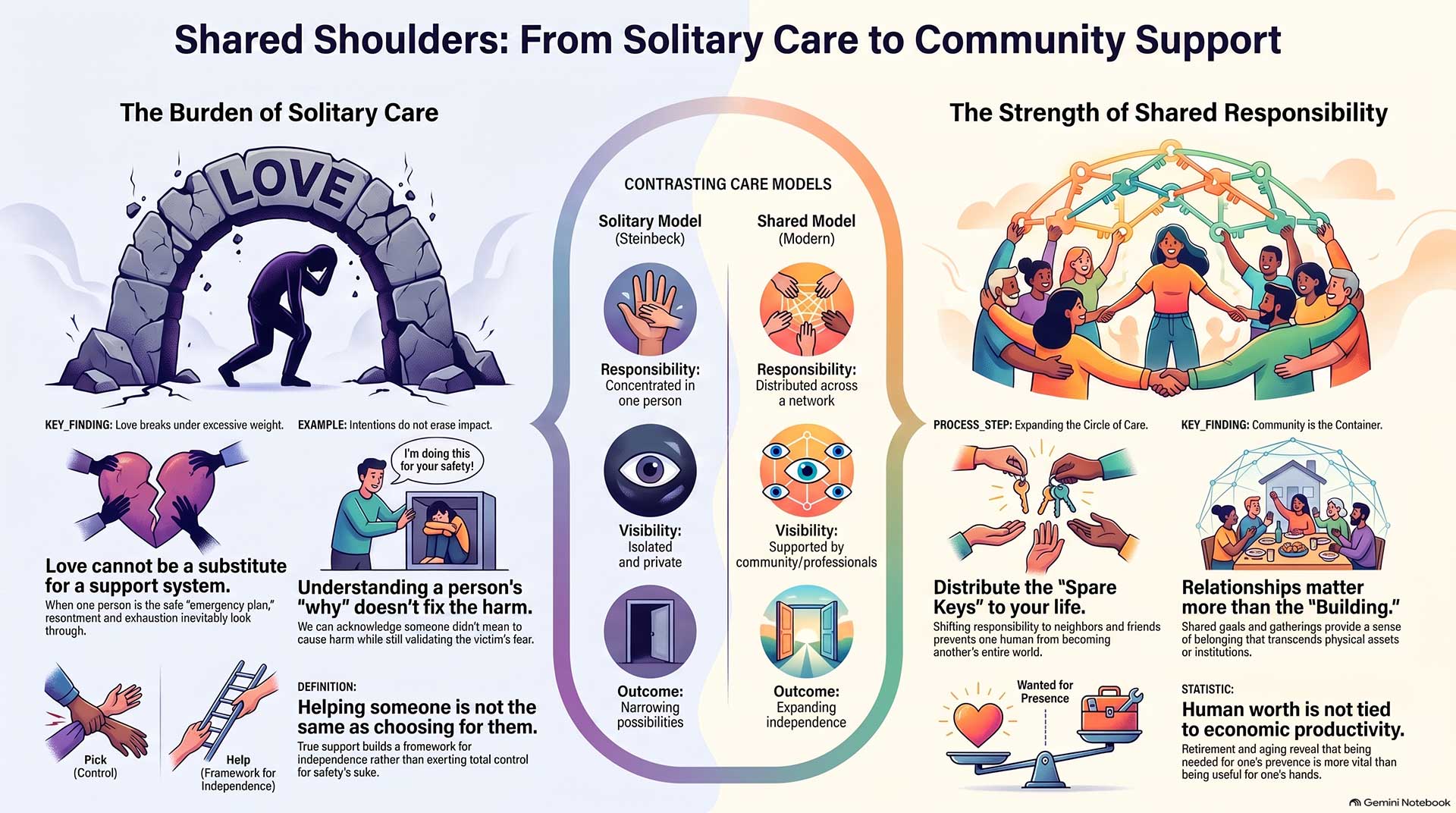
These five stories began with Of Mice and Men.
But they lead somewhere slightly different.
Steinbeck’s story progressively narrows.
George and Lennie begin on the road.
They reach the ranch.
They begin dreaming about the farm.
For a brief moment, Candy’s money makes that dream almost attainable.
Then the possibilities disappear one by one.
The farm disappears.
Safety disappears.
Escape disappears.
Finally the whole world seems to shrink to two men beneath a tree.
George.
Lennie.
And a decision.
That narrowing may be one of the most frightening things about the novel.
By the final pages, responsibility that should have belonged to many people has somehow concentrated in the hands of one exhausted migrant worker.
Our five modern stories move in the opposite direction.
Elena begins alone with Mateo’s spare key.
Then Mrs. Alvarez receives one.
Walter loses the workplace identity that once defined him and discovers relationships that do not depend upon productivity.
Marcus unfolds one lonely table and watches a community gather around it.
Eli and Maya’s crisis reveals what happens when everybody knows there is a problem but nobody builds sufficient support around it.
Rachel finally refuses to make Daniel’s future work through love alone.
One person becomes two.
Two become a table.
The table becomes a community.
The community becomes shared responsibility.
That does not eliminate suffering.
It does not make every decision safe.
It does not guarantee that nobody will be hurt.
It does something more modest.
It prevents one human being from becoming another human being’s entire world.
Perhaps that is one way of reading George differently.
George loved Lennie.
But love could not become everything Lennie needed.
It could not become a social support system.
It could not become professional care.
It could not become a safe living environment.
It could not become respite for George.
It could not protect every person Lennie encountered.
It could not become a court capable of deciding what should happen after Curley’s wife died.
Yet by the river, love was almost all that remained.
And George was left holding responsibilities far larger than friendship.
That does not settle whether George was right.
It should not.
Steinbeck did not give us a comfortable answer, and these stories should not manufacture one.
Instead, they leave us with a question that may matter more:
Before someone reaches their own riverbank, what could the rest of us have helped carry?
Maybe the deepest tragedy of Of Mice and Men is not simply that George could not save Lennie.
Maybe it is that, when the final moment arrived, there was nobody left beside them.
Short Bios:
John Steinbeck (1902–1968)
American novelist and Nobel Prize laureate whose fiction often focused on workers, poverty, loneliness, dignity, social exclusion, and the struggle for human connection. Of Mice and Men, published in 1937, remains one of his best-known works.
George Milton
A migrant ranch worker who travels with and cares for Lennie Small. Intelligent, practical, loving, impatient, protective, and exhausted, George carries increasing responsibility for Lennie until he faces the novel’s devastating final decision.
Lennie Small
George’s physically powerful companion who has significant cognitive limitations and depends heavily upon George. Lennie longs for affection, safety, soft things, and the rabbits he hopes to tend on their imagined farm. His intentions are often innocent, but his inability to regulate his strength contributes to serious harm.
Candy
An aging ranch worker who has lost one hand and fears becoming useless. After hearing about George and Lennie’s farm, he offers his savings and transforms their fantasy into a genuine possibility. His elderly dog becomes one of the novel’s most troubling parallels to Lennie’s fate.
Crooks
A Black stable worker forced to live separately from the other ranch workers. His isolation exposes the racial hierarchy of the ranch and the psychological damage of exclusion. His brief interest in the farm reveals how deeply he longs for belonging.
Curley’s Wife
The unnamed wife of the ranch owner’s son. Lonely, frustrated, and trapped within a narrow life, she dreams of the recognition and freedom she associates with Hollywood. She can be cruel, most starkly in her racist threat against Crooks, yet her loneliness and death must not be reduced to devices in the stories of the men around her.
Slim
A highly respected ranch worker whose calm judgment gives him unusual moral authority among the men. At the end of the novel, Slim recognizes George’s grief when others cannot, making him one of the few characters capable of seeing the final event as a human tragedy rather than merely a problem that has been solved.
Leave a Reply