• Skip to main content
  • Skip to primary sidebar
  • Skip to footer
ImaginaryTalks.com
  • Spirituality and Esoterica
    • Afterlife Reflections
    • Ancient Civilizations
    • Angels
    • Astrology
    • Bible
    • Buddhism
    • Christianity
    • DP
    • Esoteric
    • Extraterrestrial
    • Fairies
    • God
    • Karma
    • Meditation
    • Metaphysics
    • Past Life Regression
    • Spirituality
    • The Law of Attraction
  • Personal Growth
    • Best Friend
    • Empathy
    • Forgiveness
    • Gratitude
    • Happiness
    • Healing
    • Health
    • Joy
    • Kindness
    • Love
    • Manifestation
    • Mindfulness
    • Self-Help
    • Sleep
  • Business and Global Issues
    • Business
    • Crypto
    • Digital Marketing
    • Economics
    • Financial
    • Investment
    • Wealth
    • Copywriting
    • Climate Change
    • Security
    • Technology
    • War
    • World Peace
  • Culture, Science, and A.I.
    • A.I.
    • Anime
    • Art
    • History & Philosophy
    • Humor
    • Imagination
    • Innovation
    • Literature
    • Lifestyle and Culture
    • Music
    • Science
    • Sports
    • Travel
You are here: Home / Imagination / The Love Song Reimagined: T.S. Eliot’s Prufrock Journey

The Love Song Reimagined: T.S. Eliot’s Prufrock Journey

August 31, 2025 by Nick Sasaki Leave a Comment

Prologue

[Stage is bare. A dim light rises to reveal ELIOT seated at a small desk, a manuscript before him. He looks up, addressing the audience with deliberate restraint.]

Eliot:
This is not a love song in any familiar sense.
It is not the hymn of fulfillment, nor the sonnet of devotion.
It is the monologue of hesitation,
The theater of thought where action never quite arrives.

You will meet a man—Prufrock—
A man of fragments, of whispers, of echoes.
He moves through rooms filled with chatter,
Yet his voice falters at the threshold.
He is haunted not by tragedy,
But by the tyranny of small decisions.

I offer him to you not as hero but as mirror.
What you witness tonight is not a story of great events,
But the tremor of consciousness itself—
The sound of a soul
Stalled in the corridor of possibility.

Attend, then, with patience.
The play begins not with a trumpet blast,
But with a sigh.

Play/Pause Audio

Table of Contents
Prologue
Scene 1 — The Invitation
Scene 2 — The Social Drawing Room
Scene 3 — The Mirror of Self-Doubt
Scene 4 — The Missed Opportunity
Scene 5 — The Drowning Dream
Epilogue

Scene 1 — The Invitation

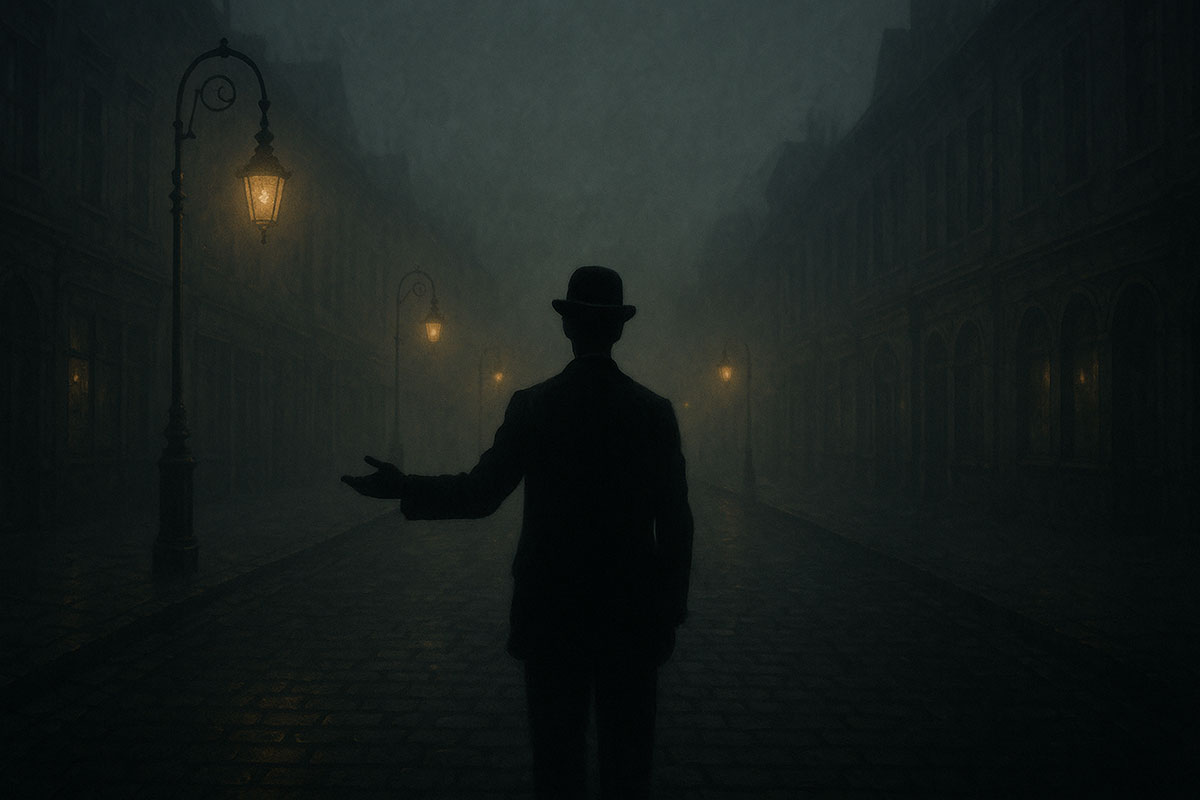
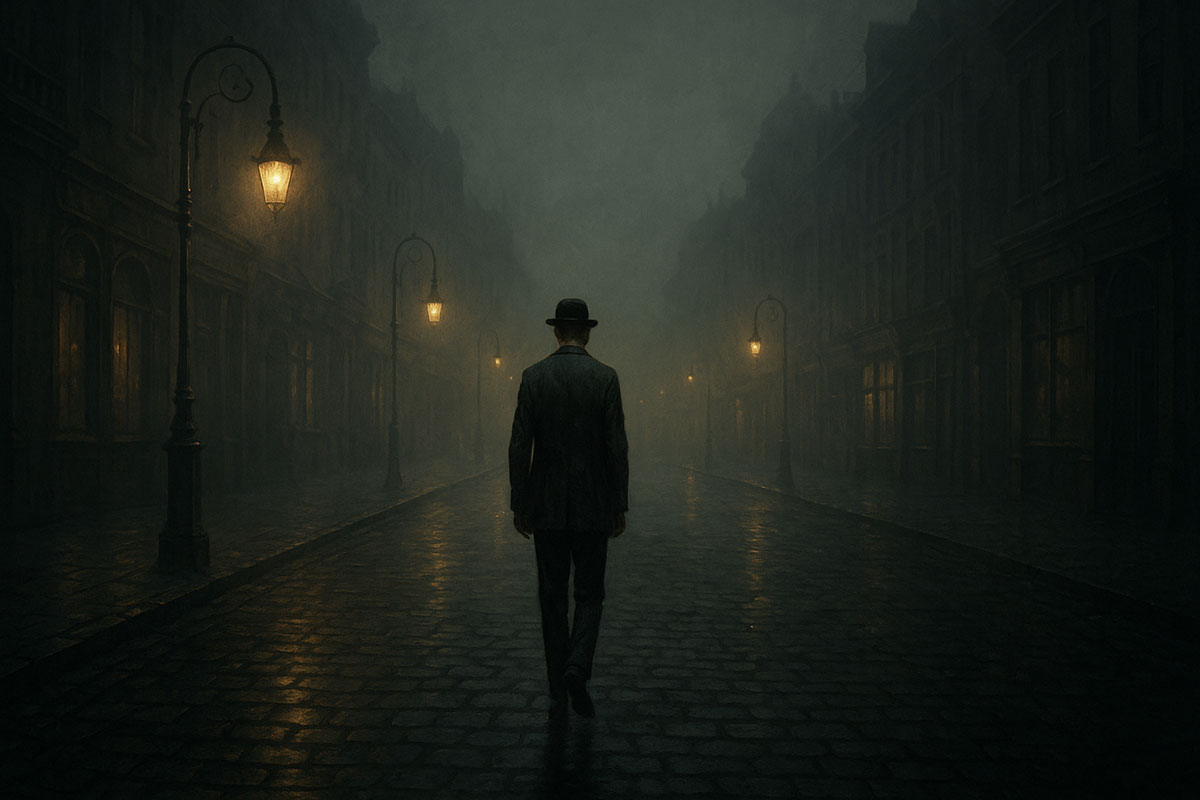
[Stage: Dimly lit street. The backdrop is a row of shadowy buildings. Gas lamps glow in a sepia haze, the faint sound of carriage wheels in the distance. A solitary figure, PRUFROCK, dressed in an ill-fitted suit, steps forward. He addresses the audience directly as though leading them into his thoughts.]

Prufrock:
Let us go, then, you and I,
When the evening is spread out against the sky
Like a patient etherised upon a table.

Do you feel it? The city exhales its fog,
And we are its passengers,
wandering through half-deserted streets,
The muttering retreats of restless nights.

[He gestures down the street. Prostitutes lean in doorways, men stumble drunk into alleys. He avoids them nervously.]

Do not be alarmed.
This is not the poetry of love but of hesitation.
Not the song of triumph but of… paralysis.
But still, come. Walk beside me.
There will be time—there will be time—
For decisions, for revisions,
For a hundred hesitant footsteps
That never quite arrive.

[He offers his arm to the audience, then withdraws it awkwardly.]

Let us go, then, before the night grows older.

[Blackout.]

Scene 2 — The Social Drawing Room
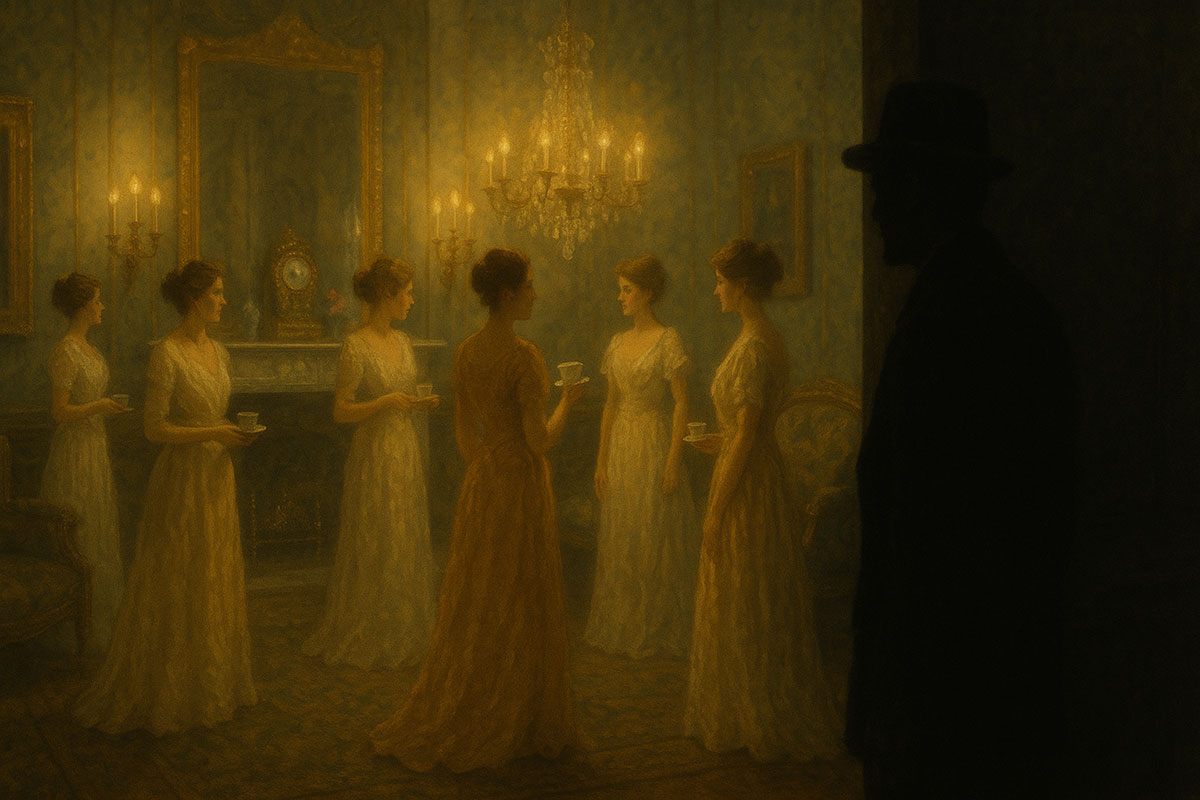
[Stage: A grand parlor. Women in gowns circulate with tea cups and chatter. A gramophone plays faint classical music. PRUFROCK stands at the edge, as though tethered by invisible strings. A CHORUS OF WOMEN speaks in overlapping fragments.]

Chorus of Women (overlapping):
“In the room the women come and go…
Talking of Michelangelo…”

Prufrock (aside to the audience):
Do you hear them?
Every syllable polished like silver cutlery,
Every gesture rehearsed,
Every laugh cut from marble.
And I—
I am the stain upon the wallpaper,
The cough in the corner,
The awkward guest no one remembers inviting.

[He steps forward, then falters. The women glide past him as though he were invisible.]

Prufrock:
Should I speak? Should I cross the carpet?
Should I say:
“I have known the evenings, mornings, afternoons,
I have measured out my life with coffee spoons”?
Would they nod politely,
Before returning to their Michelangelo?

[The Chorus repeats softly, hypnotically.]

Chorus of Women:
“In the room the women come and go…
Talking of Michelangelo…”

Prufrock (to himself, nearly whispering):
And so I linger here,
Not in the circle of light
But in the shadow at its edge.

[Music fades. Lights dim until only Prufrock remains in a spotlight.]

Prufrock:
Is this what eternity feels like?
One long hesitation,
One endless doorway
I cannot cross.

[Blackout.]

Scene 3 — The Mirror of Self-Doubt
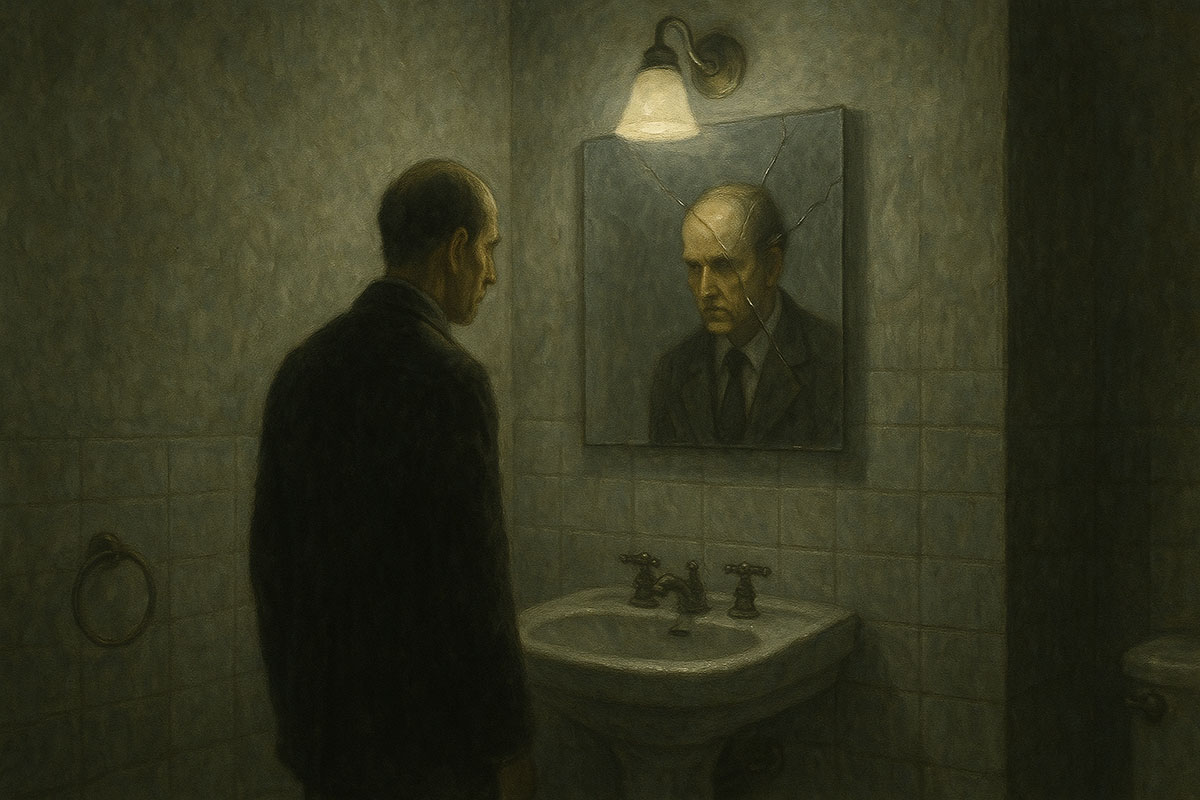
[Stage: A stark bathroom. A cracked mirror dominates the back wall. Harsh white light. PRUFROCK stares at his reflection. His voice echoes, fragments of his thoughts bouncing like ghosts in the room.]

Prufrock:
They will say: “How his hair is growing thin!”
They will say: “But his arms and legs are thin.”
And I—
I prepare my face to meet the faces that I meet,
A thousand rehearsals, a thousand masks,
Each one discarded in silence.

[He leans into the mirror, almost pressing his face against it.]

Do I dare?
Do I dare disturb the universe?

[A VOICE FROM THE MIRROR, deeper and more commanding, interrupts.]

Mirror Voice:
You are no prince Hamlet.
You are not even the Fool.
You are the background character
In the lives of others,
A footnote in someone else’s play.

Prufrock (desperate):
But is there not still time?
Time to turn back, to descend the stair,
To claim a life unsquandered?
Time yet for a hundred indecisions,
And for a hundred visions and revisions,
Before the taking of toast and tea?

Mirror Voice (mocking):
You dream of mermaids singing,
But their song is not for you.

[PRUFROCK collapses to his knees, clutching his face. Lights flicker violently, then dim until only his reflection remains glowing.]

Prufrock (whispering):
I am pinned and wriggling on the wall.
And still the question burns unasked.

[Blackout.]

Scene 4 — The Missed Opportunity
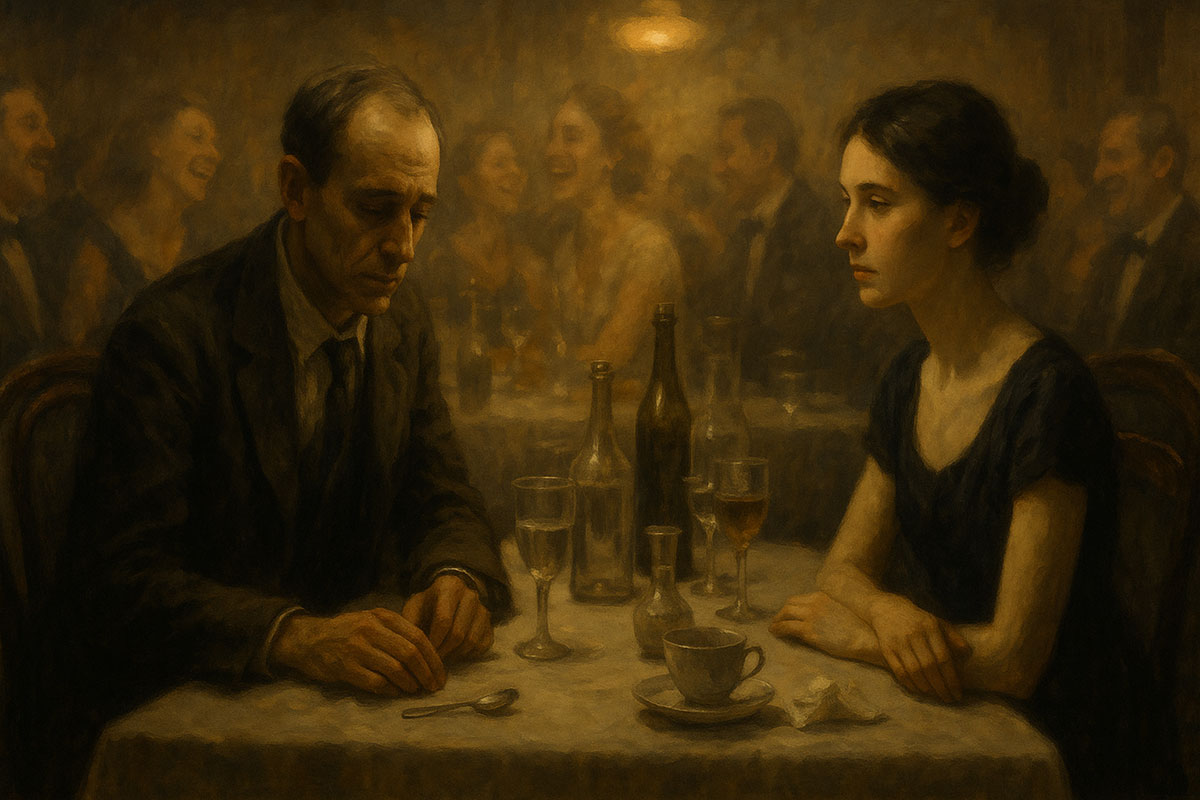
[Stage: A café, long banquet table. Guests laugh and toast one another. PRUFROCK sits at the end, isolated, staring at his teacup. Across from him sits a WOMAN (silent, enigmatic). A moment arises where silence falls and all eyes turn away. This is his chance.]

Prufrock (to himself, building courage):
This is the moment.
Now, now, I could speak—
Tell her what trembles inside my chest.

[He half-rises, words trembling on his lips.]

If one, settling a pillow by her head,
Should say: “That is not what I meant at all.
That is not it, at all.”

[The WOMAN tilts her head as though waiting, but PRUFROCK falters, sinking back into his chair. The moment passes. Conversation resumes around him. Laughter erupts. The chance is gone.]

Prufrock (to audience):
And so I swallow my words,
Bitterer than the coffee in my cup.
I have seen the eternal Footman hold my coat, and snicker.
I was afraid.

[The WOMAN rises and leaves. PRUFROCK reaches after her but freezes, hand suspended in air. He withdraws it slowly.]

Prufrock (voice cracking):
Would it have been worth it, after all?
Would it have been worth the risk
Of misunderstanding,
Of laughter?
Would it have been worth… my life?

[The café dissolves into darkness, leaving PRUFROCK alone at the table, lit only by a single flickering candle.]

Scene 5 — The Drowning Dream
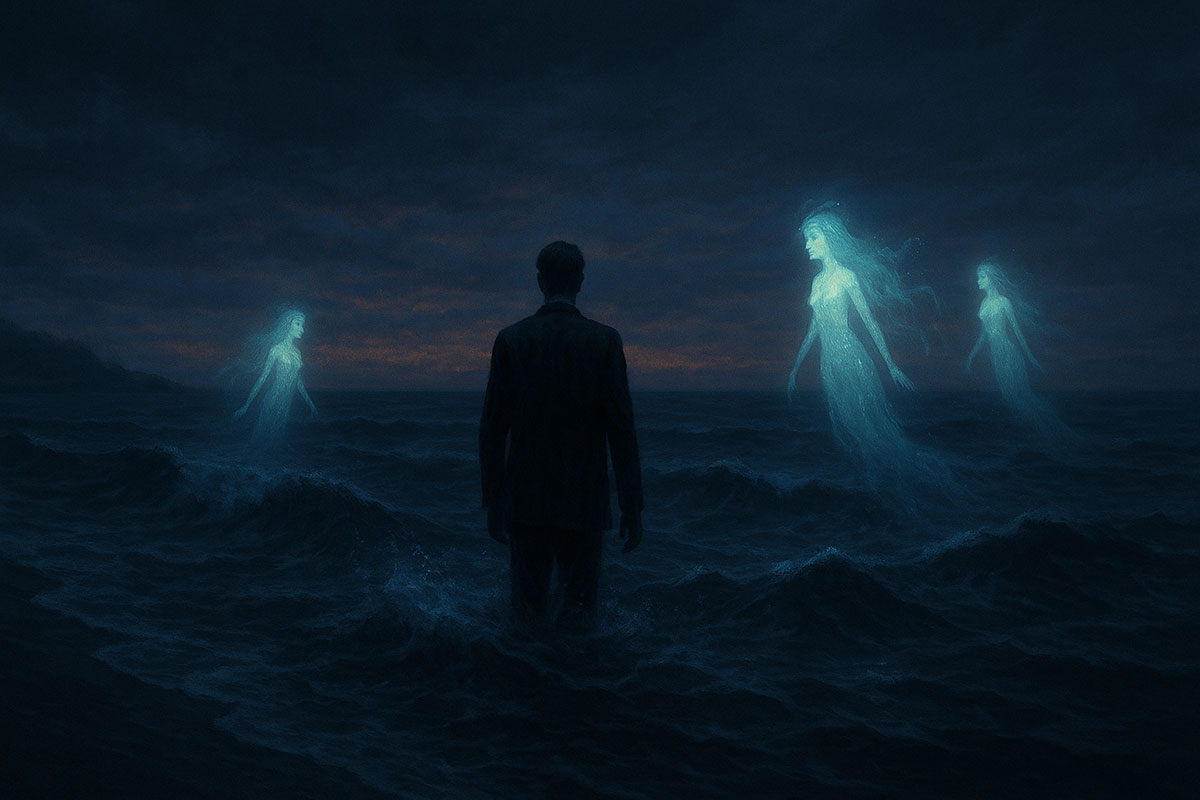
[Stage: A twilight shoreline. Waves crash softly. The backdrop shimmers as though water itself. Ethereal MERMAID VOICES sing faintly. PRUFROCK stands at the edge, his shoes sinking into the sand.]

Prufrock:
I have heard the mermaids singing, each to each.
But I do not think that they will sing to me.

[The mermaid voices swell, beckoning, but always out of reach. He stretches his arms toward them, trembling.]

We linger by seashores we dare not enter.
We dream of songs meant for others.
We imagine ourselves bold…
But awaken always silent.

[The tide rises, swirling around his ankles, knees, waist. He does not resist.]

Prufrock (final monologue):
We have lingered in the chambers of the sea
By sea-girls wreathed with seaweed red and brown,
Till human voices wake us—
And we drown.

[The waves engulf him. Lights dim to black. The last sound: the mermaids’ song fading into silence.]

Epilogue
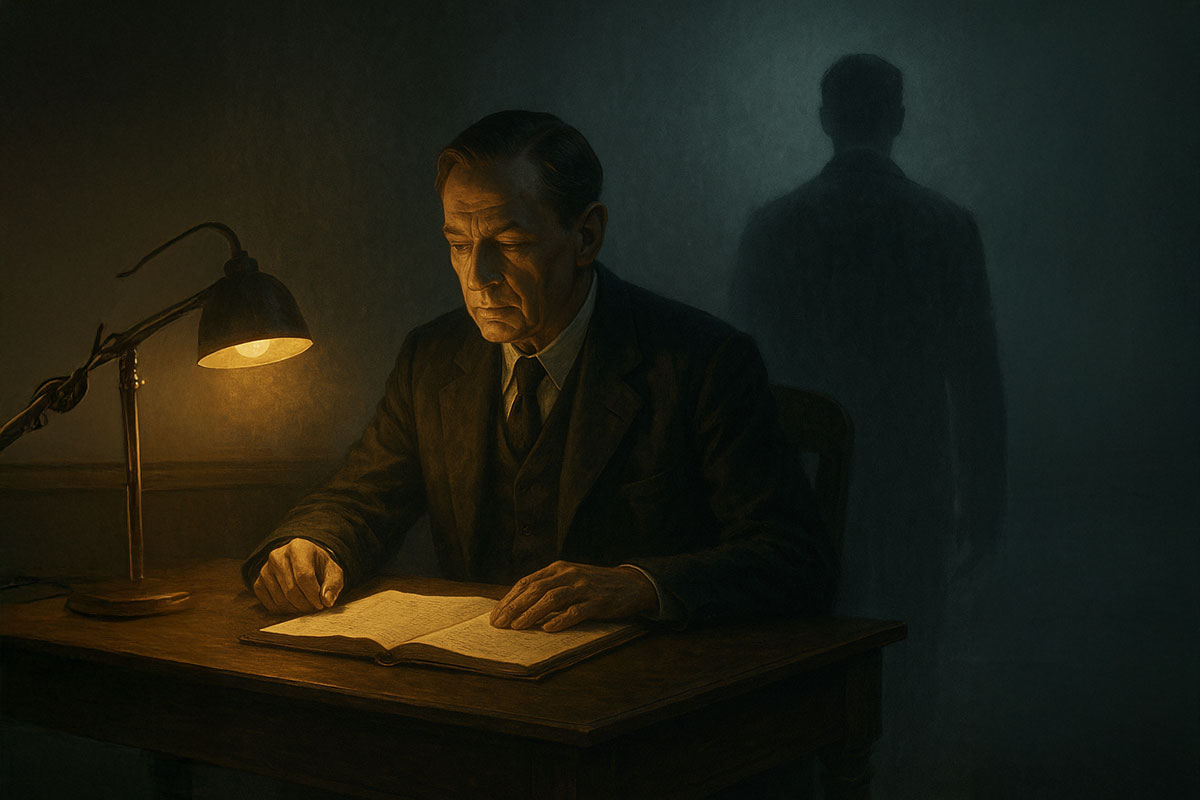
[After Scene 5, the drowning dream fades into darkness. Slowly, light returns to reveal ELIOT once again at his desk. The manuscript lies open. He speaks softly, as though to himself but for all to hear.]

Eliot:
And so, Prufrock remains.
Not drowned by the sea,
But by silence.
Not destroyed by catastrophe,
But by the quiet erosion of unspoken words.

There are no epics here,
No triumphs, no conquests,
Only the ordinary heroism of indecision.
And perhaps that is why he endures—
Because in him we glimpse
Our own private hesitations,
Our own quiet defeats,
Our own longing for mermaids
Who never turn their heads our way.

If he could have spoken,
If he could have dared,
The play might have ended differently.
But it did not.
And perhaps it never will.

[He closes the manuscript, exhales, and stands. The stage darkens.]

Eliot (final words in the dark):
This was his love song.
And perhaps, in fragments,
It is ours as well.

[Blackout.]

Short Bios:

T.S. Eliot (1888–1965)

Modernist poet, critic, and Nobel laureate, Eliot reshaped 20th-century literature with works like The Love Song of J. Alfred Prufrock and The Waste Land. His poetry explores alienation, fragmentation, and the search for meaning in a disjointed world.

J. Alfred Prufrock (Fictional Character)

The anxious narrator of Eliot’s Love Song, Prufrock embodies hesitation, regret, and longing. His voice gives shape to the modern condition of isolation, caught between desire for intimacy and fear of judgment.

The Women in the Drawing Room

Symbolic figures representing society’s polite circles. They embody superficial chatter and social expectation, against which Prufrock measures his inadequacy and silence.

The Mirror Voice

A haunting projection of Prufrock’s own conscience. It crystallizes his fear of judgment and futility, reflecting the harsh self-criticism that keeps him paralyzed.

The Silent Woman

An imagined moment of intimacy in the café. Her silence is a mirror to Prufrock’s own inability to speak — she symbolizes the opportunity for connection that slips away.

The Mermaids

Dreamlike symbols of beauty and transcendence. They embody a world of meaning and song that Prufrock longs for but believes forever beyond his reach.

Related Posts:

  • Karma Exchanger: A Novel of Pain, Rebirth, and Mercy
  • T.S. Eliot’s Prufrock in 2025: Love Song Reimagined
  • Ultimate Pilgrimage in Israel: When the Bible Comes Alive
  • S. Y. Agnon in 2026: An Imagined Novel of Belonging
  • The Waste Land Explained: Five Critics in Dialogue
  • Hamlet and Prufrock Discuss Modern Isolation and Meaning

Filed Under: Imagination, Literature, Reimagined Story, Spirituality Tagged With: best modernist poems, best poems on stage, classic poem reimagined, dramatic monologue play, Eliot characters on stage, Eliot literary analysis, Eliot stage adaptation, Eliot theater piece, Eliot’s love song explained, famous poem adaptation, Love Song of J. Alfred Prufrock, modernist literature play, modernist poetry drama, poetry-inspired drama, Prufrock analysis, Prufrock dramatic script, Prufrock explained, Prufrock themes, T.S. Eliot play adaptation, theater for literature lovers

Reader Interactions

Leave a Reply Cancel reply

Your email address will not be published. Required fields are marked *

Primary Sidebar

RECENT POSTS

  • claude mythos ailaude Mythos: The AI Anthropic Refused to Release
  • The future of humanityThe Future of Humanity: AI, Aliens, God, and the Multiverse
  • Elon Musk Warns AGI Could Surpass Humanity Within Years
  • japanese sauna culture totonouWhy the World Is Falling in Love With Japanese Sauna Culture
  • Why Foreigners Fell in Love With Japan
  • patrick winston how to speak effectivelyPatrick Winston’s Last Lecture: How Communication Creates Success
  • psychology of money explainedThe Psychology of Money Explained
  • The Ultimate Japan Trip: Week 3 — Memory, Warmth, and Goodbye
  • the ultimate japan travel week 2The Ultimate Japan Trip: Week 2 — Kyoto to Osaka
  • the ultimate japan travel week 1The Ultimate Japan Trip: Week 1 — Tokyo’s Hidden Rules
  • graduation emotionsGraduation and Growing Up: Why Saying Goodbye Hurts So Much
  • The Simple Path to Wealth Explained by Top Financial Thinkers
  • How to Master Time Before Life Slips Away
  • Jujutsu Kaisen Curses Explained by Psychics
  • national defense strategy explainedNational Defense Strategy Explained: Security or Empire?
  • Edgar Cayce JesusEdgar Cayce on Jesus and Christ Consciousness
  • MrBeast challengeMrBeast’s Biggest Challenge Ever: 100 Nations, One Prize
  • 5 Great Novels About Mothers and Silent Sacrifice
  • what children realize too late5 Movie Mothers Who Revealed the Real Meaning of Love
  • before i was a mom explainedBefore I Was a Mom Explained: The Poem Makes Mothers Cry
  • What Happens When the World Order Loses Trust?
  • Why Empires Go to War: Truth, Profit, Fear
  • Your Child Is Your Karma? Explore Parenting and Soul Healing
  • Buckminster Fuller and AI: Can Technology Save the Soul?
  • Why War Still Exists in 2026: God, Religion, Technology, and Peace
  • mel robbins let them theoryThe Let Them Theory Explained: Stop Chasing Approval
  • history repeatsFourth Turning vs Dispensational Time Identity Explained
  • Fourth Turning Cycle Explained: Crisis, Generations, Reset
  • The Unoriginal Sinner Imaginary TalksThe Unoriginal Sinner and the Ice-Cream God Explained
  • Never Split the Difference Explained: Chris Voss Breaks It Down
  • hungry-ghosts-explainedHungry Ghosts Explained: Maté on Addiction & Trauma
  • World Peace Through God: One Human Family
  • John Lennon’s Imagine: Vision or Illusion?
  • ikigaiIkigai Explained: The Japanese Secret to Purpose and Longevity
  • Tiny Habits by B.J. Fogg: Why Small Actions Change Everything
  • Faith, Trump, and Tucker Carlson: Can Belief and Politics Coexist?
  • The Goal Explained: Goldratt, Cox, and Business Bottlenecks
  • A Return to Love: Marianne Williamson Dream Panel
  • Is Lust Bad or God-Given? A Christian View of Sexual Desire
  • My Voice Will Go With You: Why Stories Heal
  • bryon katie loving what isByron Katie’s Loving What Is and the Truth About Suffering
  • Fooled by RandomnessFooled by Randomness: Taleb on Luck, Risk, and Ruin
  • humanity at the edgeHuman Awakening Through Crisis: Are We Evolving or Breaking?
  • dan kennedy wealth attractionDan Kennedy on Wealth Attraction for Entrepreneurs
  • Ultimate pilgrimage in IsraelUltimate Pilgrimage in Israel: When the Bible Comes Alive
  • the wedding that waited a the crossingA Palestinian Wedding Day Divided by Roads, Memory & Waiting
  • Israeli Family War Story: A Son Returns Home Changed by Fear, Duty & Silence
  • Russian historical fiction 2022 warRussian Family War Story: How Pride, Silence & Duty Sent a Son Away
  • the house that stayed awakeUkraine War Family Story: A House Changed by 1991, 2014, and 2022
  • why the rich get paid differentlyWhy the Rich Use Securities Loans
  • The Name They Could Not EraseThe Name They Could Not Erase
  • Trump and Pope Leo on Power, Peace, and Christian Politics
  • The Millionaire Next Door Thomas J. StanleyThe Millionaire Next Door and the Hidden Habits of Real Wealth
  • colin obrady resilience talkColin O’Brady on Pain, Grit, and Human Possibility
  • Mans Search for Meaning Viktor FranklViktor Frankl on Man’s Search for Meaning
  • the-house-left-behindAfter Nanjing Fell: A Chinese Family Story
  • A Japanese Soldier’s Confession After the Nanjing Massacre
  • David R. Hawkins Letting GoDavid R. Hawkins Letting Go: Pain, Surrender, and Healing
  • Joseph Grenny on Crucial Conversations and Human Truth
  • Carol Dweck Mindset: Why Failure Breaks Some People
  • Fetterman, Iran, and the Double Standard on Trump
  • Dolores Cannon: Why Souls Meet, Suffer, and Heal
  • The Olive Tree Remembered by Nick Sasaki
  • the saad truth about happinessGad Saad on Happiness: 8 Secrets for the Good Life
  • tucker vs trumpDid Tucker Deliberately Misframe Trump as a Thief?
  • gad saad the parasitic mindGad Saad on The Parasitic Mind, Truth, Biology & Moral Courage
  • ufo contactChris Bledsoe and the Hidden Contact Phenomenon
  • Artificial Intelligence or Alien Intelligence? The Quiet Takeover
  • mr.houston 4 ways children wound parentsMr. Houston on 4 Ways Children Wound Parents
  • saito hitori war peaceSaito Hitori Challenges World Leaders on War and Peace
  • the bibi filesThe Bibi Files: Power, Corruption, War, and the Soul of Israel
  • IANG XUEQIN Iran TrumpJiang Xueqin on Iran, Trump, and the Prophecy of Collapse
  • the summer evacuationThe Summer Evacuation Map: Climate, Youth, and Care in 2026
  • the one that sleeps for youThe One That Sleeps for You: AI, Grief, and Night
  • jd vance ufoWhy JD Vance Says UFOs Are Demons
  • the voice after heatThe Voice After Heat: Care, Climate, and AI in 2026
  • Gad Saad on Happiness: Truth, Freedom, Love, and Human Nature
  • tim urban procrastinationTim Urban on Procrastination, Fear, Attention, and Change
  • karma exchangerKarma Exchanger: A Novel of Pain, Rebirth, and Mercy
  • Edward Mannix’s Compassion Key, Examined Deeply
  • S. Y. Agnon in 2026: An Imagined Novel of Belonging
  • bts swim meaningBTS “Swim” Meaning: Water, Desire, Risk, and Rebirth
  • The Hidden Logic of Iran–Israel Escalation
  • The Deeper Story Behind UFO Disclosure
  • p53 cancer agingp53 and the Hidden Judgment of Cells in Cancer and Aging
  • Angela Duckworth on the Grittiest People of All
  • Protected: 100 Geniuses on Humanity’s Future
  • power of focus jack canfieldThe Power of Focus and the Meaning of Success
  • saint patrickSaint Patrick Play: The Slave Who Came Back
  • the lanyard billy collinsThe Lanyard: Billy Collins Meets His Mother Again
  • Prophecy on Iran Japan North Korea CubaProphecy on Iran, Asia, Cuba, and the Future of Humanity
  • can war ever end?Can War Ever End?
  • are we alone in the universeAre We Alone in the Universe?
  • how did life beginHow Did Life Begin? Five Views on Life’s Origin
  • do not gloat when your enemy fallsDo Not Gloat When Your Enemy Falls: Proverbs 24:17
  • what happens after death?What Really Happens After Death?
  • epstein exposedJeffrey Epstein and the Larger System of Elite Power
  • who controls america's warsWho Really Drives America Into War?
  • the art of sarahThe Art of Sarah: Identity, Luxury, Truth, and Reinvention
  • Bill O’Reilly’s Confronting Evil: Five Tyrants Face History

Footer

Recent Posts

  • laude Mythos: The AI Anthropic Refused to Release May 23, 2026
  • The Future of Humanity: AI, Aliens, God, and the Multiverse May 22, 2026
  • Elon Musk Warns AGI Could Surpass Humanity Within Years May 21, 2026
  • Why the World Is Falling in Love With Japanese Sauna Culture May 20, 2026
  • Why Foreigners Fell in Love With Japan May 20, 2026
  • Patrick Winston’s Last Lecture: How Communication Creates Success May 19, 2026

Pages

  • About Us
  • Contact Us
  • Disclaimer
  • Earnings Disclaimer
  • Privacy Policy
  • Terms and Conditions

Categories

Copyright © 2026 Imaginarytalks.com