
William Faulkner Brings the Compsons Together One Last Time
Most people don't finish The Sound and the Fury because they think it's too difficult.
They believe they're failing the book.
What if the opposite is true?
What if William Faulkner never wanted readers to understand everything on the first reading?
What if he wanted them to feel it first?
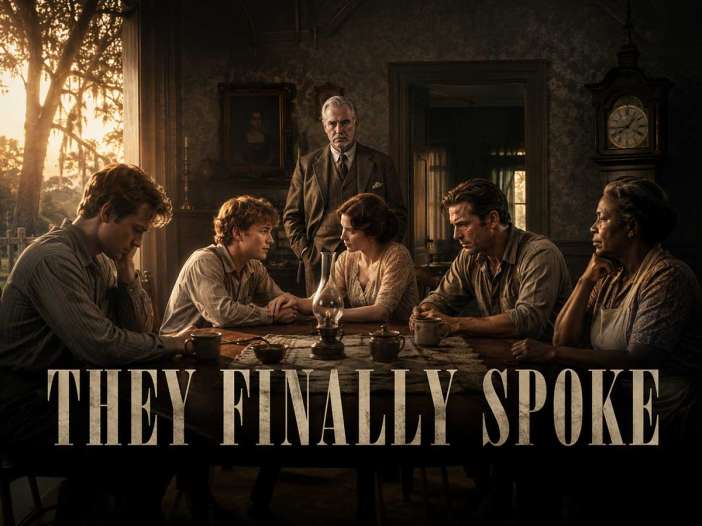
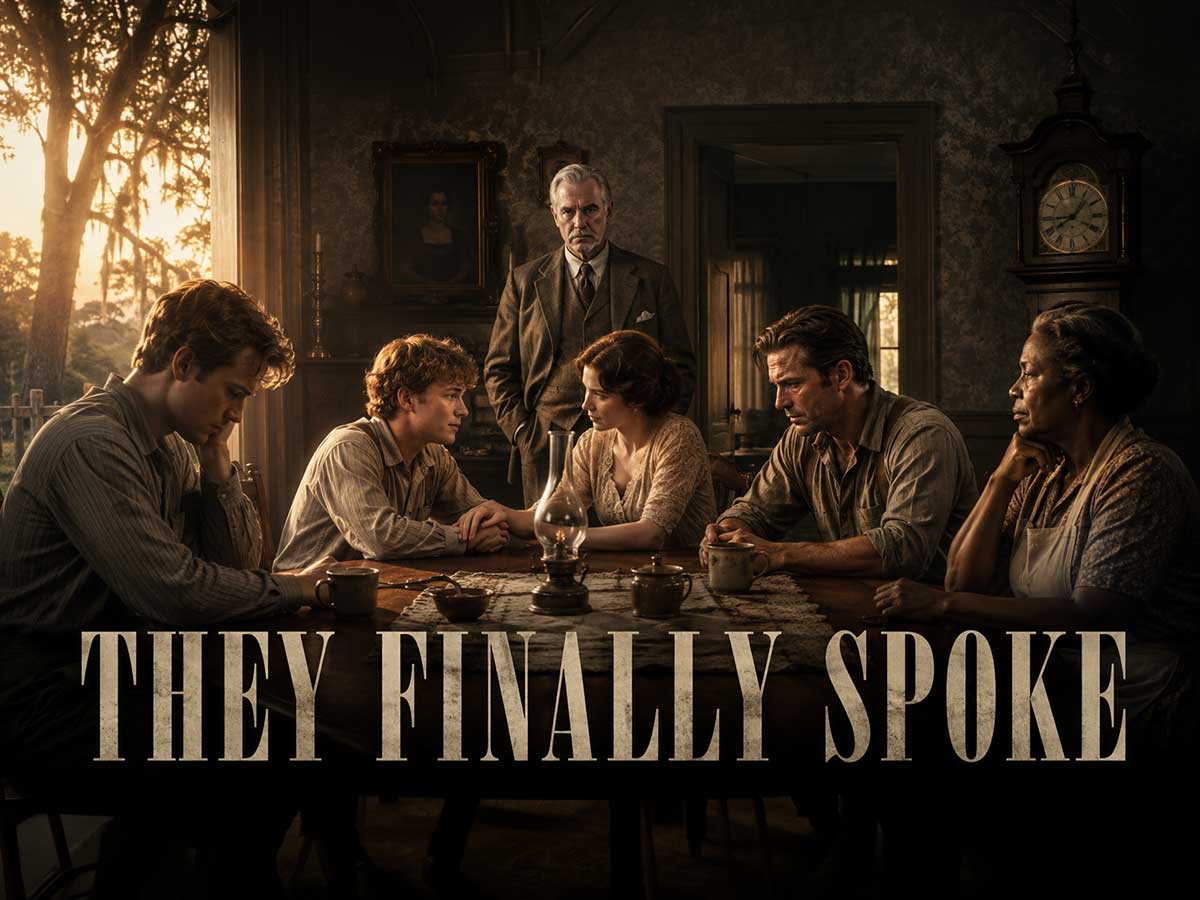
Tonight, for the first time, the Compson family gathers around one table.
Benjy, who remembers with his heart.
Quentin, who cannot escape time.
Caddy, who spent her life carrying everyone else's burdens.
Jason, whose anger concealed a lifetime of loneliness.
Dilsey, whose quiet faith became the moral center of a collapsing family.
And William Faulkner himself.
No critics.
No classrooms.
No literary theories.
Just a family finally saying the words they never found the courage to speak.
Perhaps after listening to them...
this extraordinary novel won't seem difficult anymore.
It will simply feel heartbreakingly human.
(Note: This is an imaginary conversation, a creative exploration of an idea, and not a real speech or event.)
Topic 1 – Who Was the Real Heart of the Compson Family?
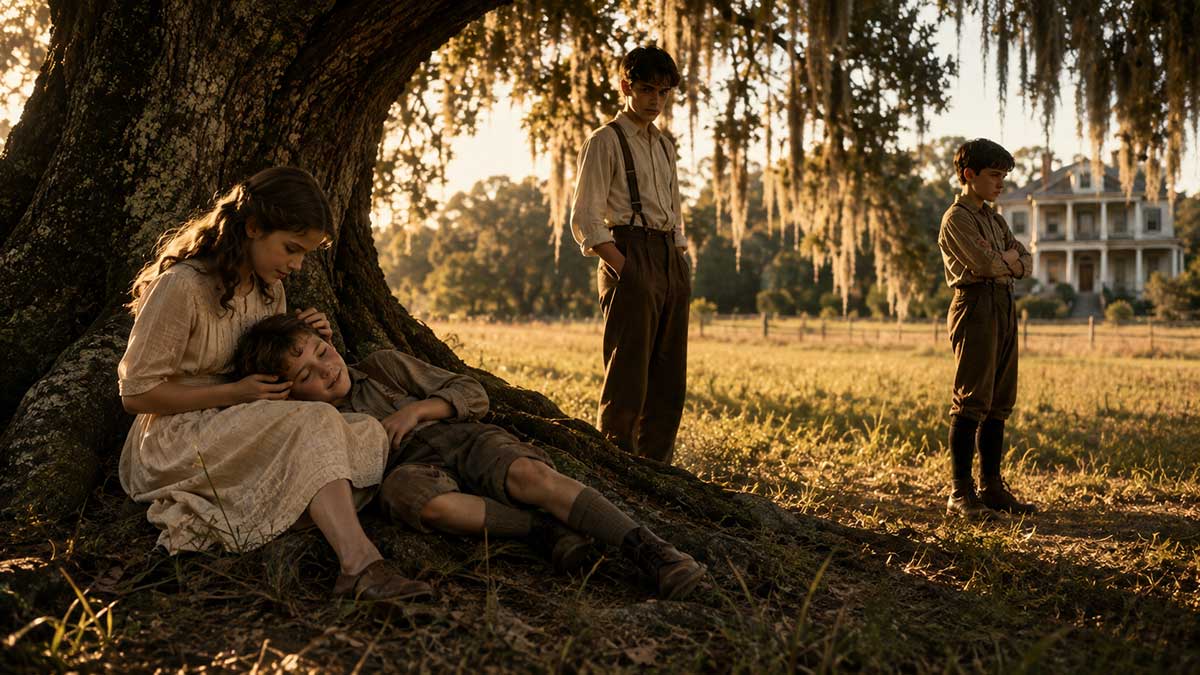
The room is quiet.
No grand hall.
No stage.
Just an old Southern dining room where time itself seems unwilling to leave.
The afternoon light filters through worn curtains. Dust drifts lazily in the air.
Benjy is already sitting by the window.
He slowly runs his fingers across the wooden table as if remembering something hidden beneath its surface.
Caddy walks in first.
Benjy doesn't even look up.
He simply smiles.
It's the first genuine smile anyone has seen.
She quietly places her hand over his.
Without a word, his breathing slows.
Quentin notices.
Jason notices too.
Dilsey closes her eyes for a moment.
William Faulkner watches them all before speaking.
William Faulkner:
People have argued for nearly a hundred years about who destroyed this family.
Some say Caddy.
Some blame your parents.
Some blame the old South.
Some blame time.
I've spent long enough hearing everyone else's opinions.
I'd rather hear yours.
Tell me...
when did this family begin falling apart?
No one answers.
Only the grandfather clock can be heard.
Tick.
Tick.
Tick.
Finally...
Benjy speaks.
Benjy Compson:
It wasn't broken...
when Caddy smelled like trees.
The room grows still.
Jason exhales impatiently.
Jason Compson IV:
That's your answer?
Trees?
Benjy nods.
Benjy:
Trees.
Rain.
Mud.
She laughed.
Everything stayed where it belonged.
Then...
one day...
it didn't.
Caddy's eyes begin to glisten.
She doesn't wipe them.
Caddy Compson:
You always remembered the smell.
I never understood why.
Benjy:
Because...
it meant...
home.
Silence.
Even Jason doesn't interrupt.
William Faulkner:
That's interesting.
Everyone else remembers events.
Benjy remembers feelings.
Perhaps that's why readers trust him more than they realize.
Caddy...
did you know everyone leaned on you that much?
She lets out a small laugh.
Not a joyful one.
Just tired.
Caddy:
No.
Children don't wake up one morning deciding they'll become the strongest person in the house.
It happens slowly.
Mother was somewhere else...
even when she sat beside us.
Father had already stopped believing much mattered.
Benjy needed someone.
Quentin worried about everything.
Jason...
well...
Jason was already angry at the world before he knew what the world was.
Somebody had to keep smiling.
So I smiled.
Jason:
You make it sound noble.
Caddy:
No.
I make it sound lonely.
Jason looks away.
For the first time, he has no quick reply.
Quentin finally speaks.
His voice is almost a whisper.
Quentin Compson:
I used to tell myself I was protecting her.
I've had a long time to think about that.
The truth is uglier.
I wasn't protecting Caddy.
I was protecting my picture of Caddy.
Those are very different things.
He stares at the table.
Quentin:
I needed her to stay exactly as she had been when we were children.
Pure.
Untouched.
Safe.
I called it honor.
Maybe it was selfishness.
Maybe I couldn't bear watching time move forward.
Faulkner quietly nods.
William Faulkner:
You wanted to stop time.
Quentin smiles sadly.
Quentin:
I wanted to stop losing.
No one speaks.
Even the clock seems quieter now.
Dilsey finally leans forward.
Dilsey Gibson:
You all keep talking like Miss Caddy was grown.
She wasn't.
She was just another child.
Funny thing about families...
when the grown folks stop carrying the weight...
the children start lifting it.
Folks praise 'em for being so mature.
They never ask why a child had to become grown in the first place.
Caddy lowers her head.
Caddy:
I don't remember anyone asking if I was tired.
I remember everybody needing something.
Benjy needed comfort.
Quentin needed hope.
Mother needed sympathy.
Father needed someone to disappoint.
Jason...
needed somebody to blame.
I kept thinking...
if I loved everyone enough...
maybe we'd become a family again.
Jason laughs.
It's a sharp laugh.
But weaker than before.
Jason:
Families don't fall apart because somebody stopped loving.
They fall apart because somebody leaves.
Caddy turns toward him.
Her voice remains calm.
Caddy:
Did you ever wonder why I left?
Not the story you told yourself.
Me.
Did you ever wonder about me?
Jason opens his mouth.
Nothing comes out.
For several seconds...
he simply stares back.
Dilsey answers for him.
Dilsey:
No, child.
He never did.
Sometimes pain makes folks blind.
Sometimes pride finishes the job.
Benjy slowly reaches across the table.
He takes Caddy's hand again.
Benjy:
I would've stayed with you.
Caddy closes her eyes.
A tear finally escapes.
Caddy:
I know.
You always loved me exactly as I was.
Maybe...
you were the only one.
Quentin looks up immediately.
Quentin:
No.
I loved you.
She smiles gently.
Caddy:
You loved who you needed me to be.
Benjy loved who I already was.
There's a difference.
The words settle over the room like dust.
No one argues.
Not even Jason.
Faulkner waits a long while before speaking.
William Faulkner:
People have spent decades asking who destroyed the Compson family.
Listening to all of you...
I wonder if that's the wrong question.
Perhaps the better question is this.
Who was everyone quietly expecting to save them?
The silence that follows feels heavier than any answer.
Outside, a breeze stirs the trees beyond the window.
Benjy notices first.
He smiles again.
For just a heartbeat...
everyone remembers the house before it became a tragedy.
Topic 2 – Can We Ever Escape the Past?
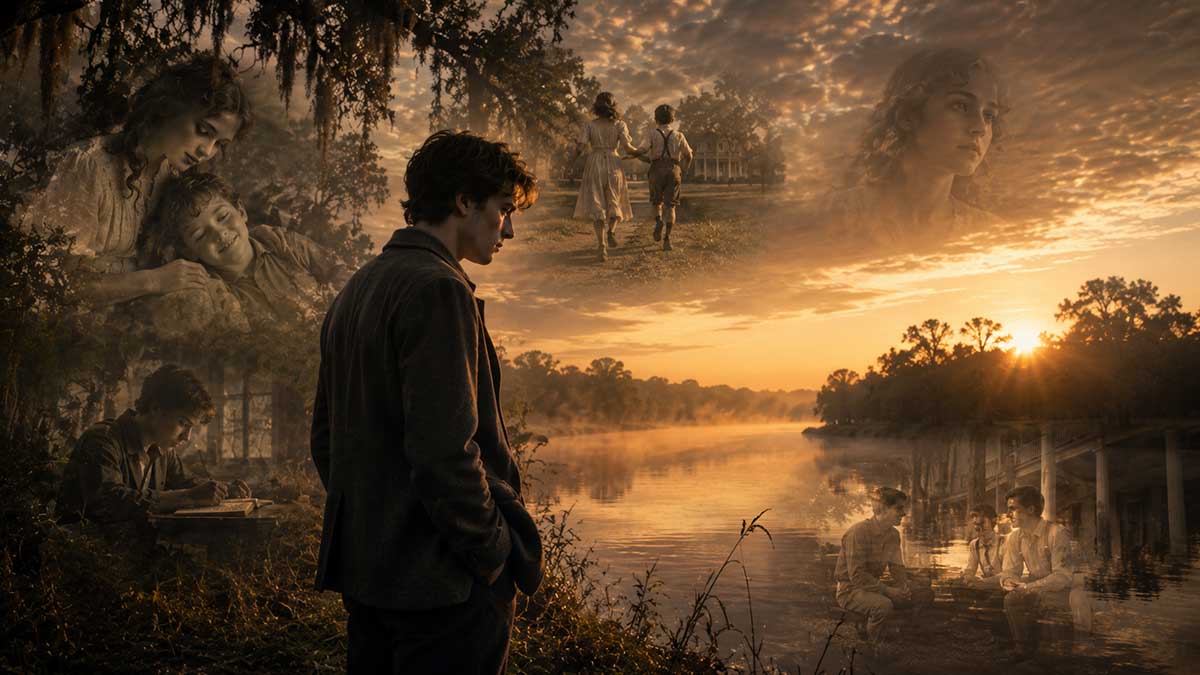
The room has grown quieter.
Outside, evening settles over the old Compson house.
The shadows stretch across the floorboards.
No one seems eager to speak.
William Faulkner rises and walks to the window.
He watches the fading light before turning back.
William Faulkner:
There's something curious about memory.
Some people spend their lives trying to forget.
Others spend their lives trying to remember.
Yet neither seems to find peace.
I wonder...
does the past ever truly release us?
Or do we simply learn to carry it?
Quentin lets out a slow breath.
Almost a laugh.
Almost a sigh.
Quentin Compson:
If I answer first...
everyone already knows what I'll say.
No.
The past never leaves.
People speak as though time moves in one direction.
Morning.
Afternoon.
Evening.
Tomorrow.
But grief doesn't know clocks.
It circles.
You think you've escaped it...
then a scent...
a song...
a familiar street...
and suddenly you're standing inside yesterday again.
I spent my whole life believing I was remembering.
Looking back now...
I think I was living there.
William Faulkner:
What were you afraid would happen if you let yesterday go?
Quentin looks out toward the darkening trees.
He takes a long time before answering.
Quentin:
Then I'd have to admit...
that the world keeps going without asking my permission.
That childhood ends.
That innocence ends.
That people change.
I thought holding onto the past was loyalty.
Now I wonder...
if it was fear.
Across the table, Caddy studies her brother with quiet sadness.
Caddy Compson:
Quentin...
I wanted you to remember me.
Just...
not instead of living.
Every time you looked at me...
you were searching for the little girl climbing trees.
She couldn't stay.
None of us could.
I changed.
You changed.
Even Benjy changed.
You were grieving people who were still alive.
Quentin lowers his eyes.
Quentin:
You're right.
I mourned ghosts before anyone had died.
No one speaks.
Dilsey nods slowly.
As though she has waited years to hear him admit it.
Dilsey Gibson:
That's sorrow's trick.
It tells you that if you hold on tight enough...
nothing'll ever leave.
But squeezing too hard kills plenty of beautiful things.
Love ain't preserving somebody in a glass case.
Love lets folks breathe.
Jason shifts in his chair.
He has been unusually quiet.
Faulkner notices.
William Faulkner:
Jason.
You keep saying the past doesn't matter.
Yet every complaint you've made tonight began years ago.
Jason smirks.
Jason Compson IV:
That's different.
Benjy looks at him curiously.
Benjy Compson:
Why?
Jason hesitates.
Everyone notices.
Jason:
Because...
because people should pay for what they do.
Caddy:
Even forever?
Jason doesn't answer.
Dilsey:
Child...
there's a difference between remembering a wound...
and feeding it every morning.
You've been eating the same hurt your whole life.
No wonder it keeps growing.
Jason laughs.
This time there is no anger in it.
Only exhaustion.
Jason:
You know what the worst part is?
People think bitterness feels strong.
It doesn't.
It's heavy.
You carry it so long...
you forget what standing straight feels like.
The room falls silent.
Even Caddy looks surprised.
William Faulkner:
That's the first time you've spoken about pain...
instead of blame.
Jason shrugs.
Jason:
Don't get used to it.
A faint smile crosses Dilsey's face.
At the far end of the table, Benjy has been staring out the window.
A breeze moves through the trees.
He smiles softly.
Benjy:
The trees remember.
Everyone turns toward him.
William Faulkner:
What do you mean?
Benjy struggles to find the words.
Caddy waits patiently.
She knows he always gets there eventually.
Benjy:
Every spring...
they lose everything.
Every leaf.
Every color.
Every year...
they come back.
They don't cry.
They don't get angry.
They just...
grow again.
No one speaks.
Even Quentin is listening carefully now.
Quentin:
Benjy...
I've spent my whole life believing memory was meant to preserve.
Maybe memory is meant to nourish.
Not chains...
roots.
Roots hold us.
Chains hold us back.
I never knew the difference.
Faulkner smiles quietly.
William Faulkner:
Perhaps that's why Benjy begins this novel.
People have called him simple.
Yet he never confuses memory with possession.
He loves without trying to imprison what he loves.
The others...
all tried, in their own way, to stop time.
Caddy reaches over and gently brushes Quentin's hand.
The same way she once comforted him when they were children.
Caddy:
Brother...
if you had lived...
what would you have done differently?
Quentin closes his eyes.
When he answers, his voice is barely audible.
Quentin:
I would've stopped trying to return to childhood...
and started carrying it with gratitude instead of grief.
There's a difference.
I just learned it too late.
Dilsey folds her hands.
Dilsey:
Lord...
that's what growing old teaches.
The past ain't your house anymore.
It's your teacher.
Visit it.
Learn from it.
Then come back home.
Don't try to live there.
The room grows still once more.
Outside, darkness has settled over the Compson house.
Inside, no one feels trapped by it.
Not tonight.
For the first time...
the memories seem less like prison walls...
and more like candles quietly lighting the path behind them.
Topic 3 – The Words We Never Said
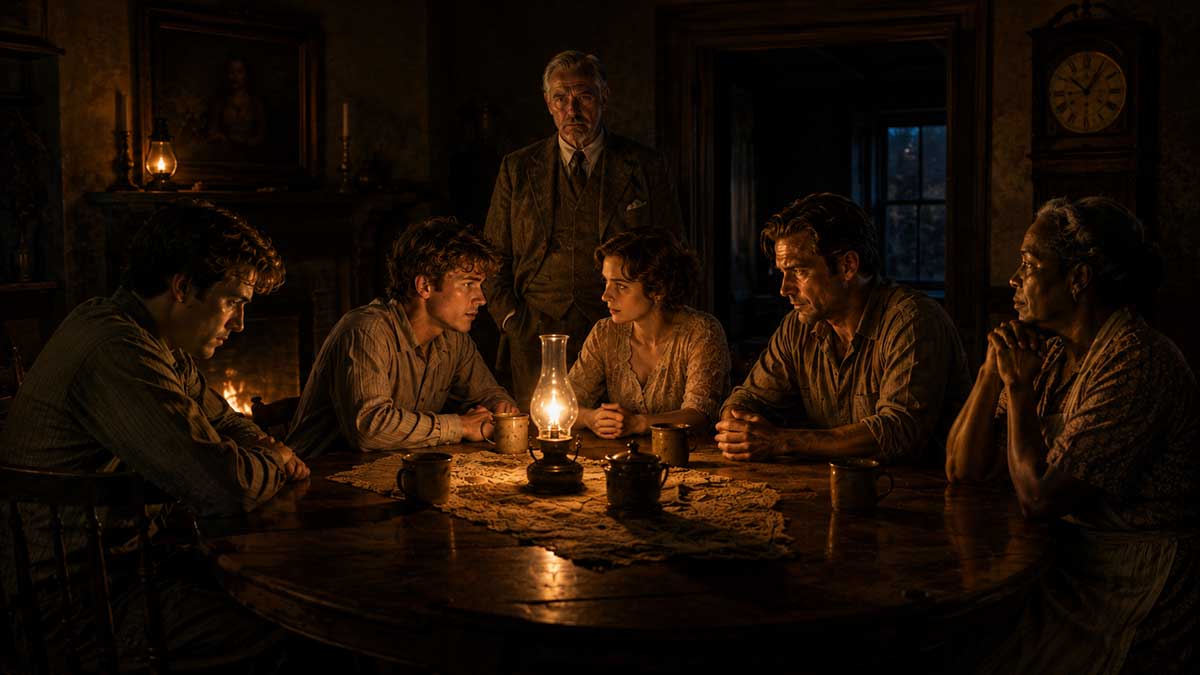
Night has fallen.
The only light now comes from an old oil lamp in the center of the table.
Its glow reaches every face differently.
Benjy watches the flame as if it were telling him a story.
Quentin stares into it.
Jason avoids looking at it altogether.
Caddy gently rests her elbows on the table.
Dilsey folds her hands.
No one seems ready for what comes next.
William Faulkner speaks softly.
William Faulkner:
Families have a curious habit.
They talk every day.
Yet somehow...
the most important things remain unsaid.
I've often wondered...
how many tragedies begin with silence rather than cruelty.
If tonight were your last chance to speak to one another...
what would you finally say?
No one answers.
The silence itself becomes an answer.
Benjy suddenly looks at Caddy.
Benjy Compson:
Why...
didn't you tell me...
you were hurting?
Caddy's face crumbles.
She had expected questions from Quentin.
Perhaps accusations from Jason.
She never expected this.
Caddy Compson:
Because...
you already carried enough.
I wanted one person in this family...
who could still believe the world was beautiful.
That was you.
I couldn't bear taking that away.
Benjy slowly shakes his head.
Benjy:
I would've carried it.
With you.
Caddy covers her mouth.
A tear slips through her fingers.
Caddy:
I know that now.
Back then...
I thought love meant protecting people from my pain.
I didn't know...
letting people love you...
is part of love too.
Dilsey smiles gently.
Dilsey Gibson:
That's a lesson plenty of grown folks never learn.
Everybody wants to be the helper.
Hardly anybody wants to be helped.
Quentin quietly nods.
Quentin Compson:
She's right.
I spent my life trying to rescue people.
Honor.
Family.
The past.
I never admitted...
I was the one drowning.
Faulkner looks at him.
William Faulkner:
Who did you wish would notice?
Quentin's answer comes almost immediately.
As though he has carried it for decades.
Quentin:
Anyone.
Father.
Mother.
Caddy.
God.
It didn't matter.
I kept hoping someone would look at me...
and say...
"You don't have to carry all of this."
Instead...
everyone assumed I was strong.
Caddy reaches across the table.
She places her hand over Quentin's.
Exactly as she once did when they were children.
Caddy:
You should've told me.
Quentin smiles sadly.
Quentin:
Would you have listened?
She doesn't answer immediately.
She thinks.
Really thinks.
Caddy:
I would've tried.
Maybe I would've failed.
But you would've been carrying it with me...
instead of alone.
Jason suddenly laughs.
Not mockingly.
Almost nervously.
Everyone turns.
Jason Compson IV:
Listen to us.
Everybody talking about feelings.
You know what nobody ever says?
Sometimes people don't speak...
because they're afraid the truth won't change anything.
Faulkner studies him carefully.
William Faulkner:
What truth never left your mouth?
Jason leans back.
For a long time...
he says nothing.
His voice, when it finally comes, is quieter than anyone has ever heard it.
Jason:
I was jealous.
No one interrupts.
Jason:
Benjy got everyone's sympathy.
Quentin got everyone's admiration.
Caddy got everyone's love.
Even Mother got everyone's attention.
Me?
I became useful.
Reliable.
Responsible.
Invisible.
Anger...
was the only thing people noticed.
So I kept feeding it.
At least somebody looked my way.
Even Dilsey looks surprised.
Dilsey:
Oh, Jason...
Why didn't you say that years ago?
Jason gives a bitter smile.
Jason:
Because angry men don't get asked what's hurting.
People just learn to stay away.
The room grows painfully quiet.
Benjy suddenly stands.
Without saying anything...
he walks around the table.
He places one hand on Jason's shoulder.
Jason freezes.
No one has touched him all evening.
Benjy:
You're...
my brother.
Jason cannot speak.
He stares at Benjy's hand.
Then quickly looks away.
Jason:
You always did have terrible timing.
But no one misses the slight crack in his voice.
Faulkner waits before speaking again.
William Faulkner:
Caddy...
if there were one sentence you wish every member of this family had heard...
what would it be?
She looks at each of them.
One by one.
Her voice is steady now.
Caddy:
I didn't need any of you to save me.
I just needed you to know me.
There's a difference.
Sometimes...
people love the role you're playing...
instead of the person standing in front of them.
I spent my whole life being somebody's answer.
I don't think I was ever allowed to become myself.
Quentin quietly whispers—
Quentin:
I'm sorry.
Jason says nothing.
But he doesn't argue.
Not this time.
Dilsey looks around the table.
Her eyes are full of affection.
And sorrow.
Dilsey:
You know what breaks my heart?
Every one of you loved this family.
Every single one.
You just spoke different languages.
Benjy spoke kindness.
Quentin spoke sacrifice.
Caddy spoke service.
Jason spoke anger.
The trouble is...
nobody knew how to translate.
No one moves.
The lamp flickers.
Outside, a mockingbird begins to sing into the darkness.
William Faulkner smiles.
Not because the pain has disappeared.
But because, perhaps for the first time...
it has finally been heard.
William Faulkner:
People often ask why this novel is called The Sound and the Fury.
They assume the fury is the shouting.
Tonight...
I think the greater tragedy was the silence.
How many lives are changed...
not by the words we say...
but by the love we never find the courage to speak?
The lamp burns lower.
No one reaches to extinguish it.
Some conversations...
deserve to linger a little longer.
Topic 4 – Who Among Us Truly Understood Love?
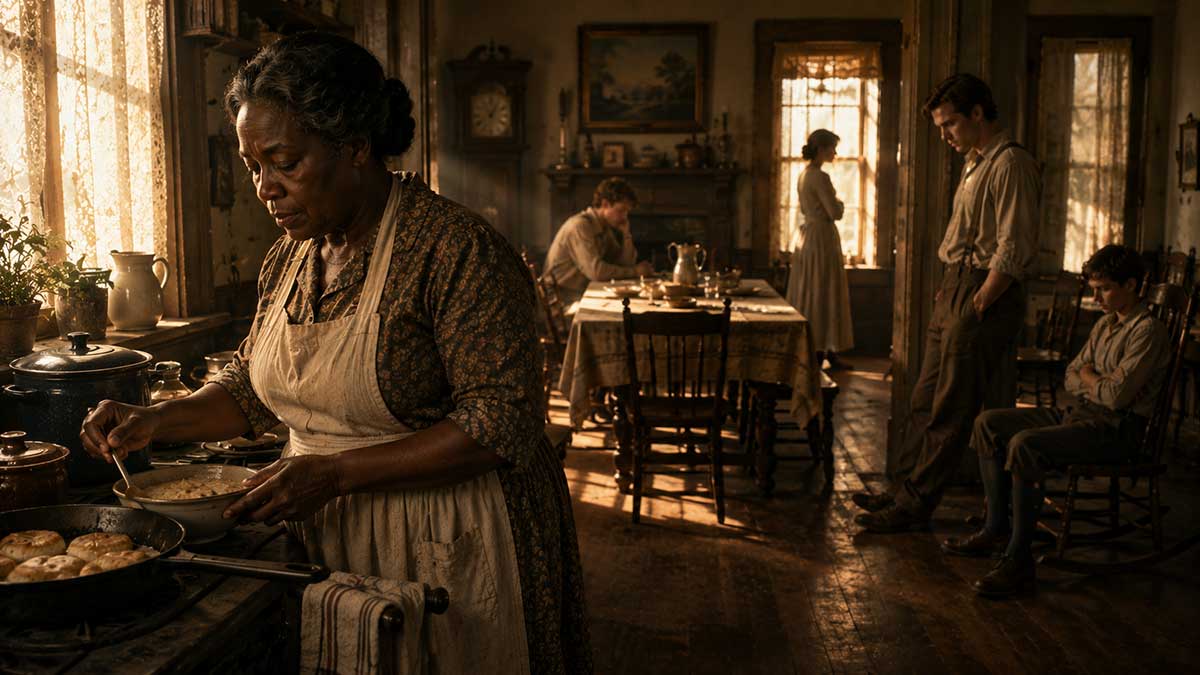
The oil lamp burns lower now.
Outside, the night has become completely still.
No wind.
No voices.
Only the faint sound of crickets beyond the open window.
The room feels different.
Not lighter.
Honest.
William Faulkner looks around the table before speaking.
William Faulkner:
Love.
It's the word people use most easily.
And perhaps understand the least.
Each of you believed you loved this family.
Yet your love led to heartbreak, guilt, resentment, sacrifice, even death.
So tonight, I want to ask something that may be uncomfortable.
Did any of you truly understand what love is?
Or were you simply loving the best way you knew how?
No one answers immediately.
Then Benjy quietly raises his head.
Benjy Compson:
Love...
doesn't leave.
Jason lets out a small sigh.
Jason Compson IV:
That's nice.
Real life isn't that simple.
People leave every day.
Benjy slowly shakes his head.
Benjy:
People leave.
Love...
doesn't.
The room falls silent.
Even Jason doesn't interrupt.
Faulkner smiles.
William Faulkner:
That's an extraordinary distinction.
Caddy turns toward Benjy.
Her eyes are warm.
Caddy Compson:
You know...
when I was little, I thought love meant fixing everything.
If Benjy cried...
I comforted him.
If Quentin worried...
I stayed beside him.
If Mother complained...
I tried to become a better daughter.
I thought...
if I loved everyone enough...
nothing bad could happen.
I carried that belief for years.
Until one day...
I realized love can't keep every family together.
Sometimes...
people you love still break.
Dilsey Gibson:
Child...
that's because love ain't control.
Never was.
Never will be.
You can hold somebody's hand.
You can't walk their road for 'em.
Caddy nods slowly.
Caddy:
That took me far too long to learn.
I confused responsibility with love.
Every time somebody hurt...
I believed I'd failed them somehow.
That's a terrible way to live.
Quentin has been listening quietly.
He finally looks at his sister.
Quentin Compson:
May I ask you something?
Caddy:
Always.
Quentin:
Did you ever resent us?
For needing you so much?
The question hangs in the room.
Caddy doesn't rush.
She looks at each face around the table before answering.
Caddy:
Sometimes.
Then I'd feel guilty for resenting you.
Then I'd try harder.
Looking back...
I wish I'd known something much earlier.
Love that never receives...
eventually forgets how.
Dilsey smiles gently.
Dilsey:
Now you're preaching.
Everyone laughs softly.
Even Jason.
Only for a moment.
But it's enough.
Faulkner notices.
William Faulkner:
Jason...
I've been waiting all evening.
What did love mean to you?
Jason stares into the lamp.
His reflection trembles in the glass.
Jason:
I don't know.
Nobody's ever asked me that.
People usually ask why I'm angry.
Not why I became angry.
He pauses.
Jason:
Maybe...
love looked dangerous.
Everybody who loved somebody in this family...
got hurt.
Father loved his memories.
Mother loved appearances.
Quentin loved perfection.
Caddy loved everyone.
Look how that turned out.
So I decided...
if I expected nothing...
nothing could disappoint me.
Dilsey:
And did it work?
Jason gives a tired smile.
Jason:
No.
It just made loneliness easier to explain.
No one laughs.
No one needs to.
Faulkner slowly turns toward Dilsey.
William Faulkner:
You've watched this family longer than anyone.
You've buried dreams that weren't even yours.
You've stayed when leaving would've been easier.
Why?
Dilsey doesn't answer right away.
She folds her hands.
The room waits.
Dilsey Gibson:
People think love is a feeling.
Sometimes it is.
Sometimes it ain't.
Sometimes...
love is making breakfast when your heart's already broken.
Sometimes it's staying gentle after the world's given you every excuse to become hard.
Sometimes it's choosing not to pass your pain to the next person.
That's love too.
Folks don't write poems about that kind.
But it's the kind that keeps children alive.
The room is completely still.
Even the crickets outside seem to fade.
Quentin quietly wipes his eyes.
Quentin Compson:
I spent my whole life chasing beautiful ideas.
Honor.
Purity.
Time.
Maybe I overlooked something much greater.
William Faulkner:
What was that?
Quentin looks toward Dilsey.
Quentin:
Faithfulness.
Not grand gestures.
Just...
remaining kind.
Remaining present.
Remaining faithful.
Perhaps that's what love was all along.
Dilsey smiles.
Dilsey:
Now you're getting somewhere.
Benjy suddenly speaks again.
Very softly.
Benjy:
Caddy...
still smells...
like home.
Caddy closes her eyes.
She reaches across the table and gently brushes Benjy's hair back, exactly as she did when they were children.
Caddy:
Home isn't a place anymore, is it?
Benjy smiles.
Benjy:
No.
It's people.
Nobody moves.
The words settle over everyone.
Even Jason looks away, blinking more than usual.
William Faulkner slowly stands.
William Faulkner:
For decades, readers have searched this novel for symbols, hidden meanings, and literary innovations.
They're all there.
Yet sitting here tonight, I'm struck by something much simpler.
The wisest voice at this table belongs to the man the world called incapable of understanding.
The strongest heart belongs to the woman who quietly carried everyone else.
And the steadiest soul belongs to the one history rarely placed at the center.
Perhaps that's how life often works.
The people we overlook...
are the ones holding everything together.
The lamp flickers.
No one speaks.
In the silence, each of them seems to understand something they had never understood when they were alive.
Topic 5 – If You Could Speak to Your Younger Self
The night is almost over.
The oil lamp has gone out.
Only the first hint of dawn slips through the window.
For the first time all evening, the room doesn't feel haunted.
It feels peaceful.
No one seems eager to leave.
William Faulkner stands, walks slowly around the table, then stops behind Benjy's chair.
He looks at each of them.
Not as characters.
As people.
William Faulkner:
Every life reaches a moment when we wish we could go back.
Not to change the world...
Just one conversation.
One decision.
One ordinary afternoon we didn't realize would never come again.
Suppose each of you could stand before your younger self.
What would you say?
And...
would your younger self listen?
The room grows quiet.
Morning birds begin singing outside.
Benjy smiles toward the sound.
Benjy Compson:
I wouldn't...
say anything.
Faulkner smiles.
William Faulkner:
No?
Benjy shakes his head.
Benjy:
I'd...
just...
stay.
Caddy reaches over and takes his hand.
Caddy Compson:
That may be the most beautiful answer of the night.
Benjy looks at her with the same trusting eyes he had as a little boy.
Benjy:
Nobody...
should be...
alone.
No one speaks.
The simplicity of his words leaves no room for improvement.
Quentin slowly stands.
He walks toward the old grandfather clock.
It has marked every hour of their family's decline.
He rests one hand against its wooden frame.
Quentin Compson:
When I was young...
I thought wisdom meant knowing the right answers.
If I could speak to that frightened boy again...
I'd tell him something much simpler.
You don't have to save time.
You only have to live inside it.
He smiles sadly.
Quentin:
I spent my whole life trying to stop the river.
I never noticed...
it was carrying beautiful things too.
Faulkner watches him quietly.
William Faulkner:
Do you think your younger self would've believed you?
Quentin laughs softly.
Quentin:
Probably not.
Young people rarely believe old sorrow.
They have to meet it themselves.
Caddy walks slowly toward the window.
The sky is beginning to brighten.
Caddy:
If I could meet the little girl climbing trees...
I'd tell her...
"You don't have to earn love."
She'd probably laugh.
She always thought helping everyone made her valuable.
I'd hold her shoulders.
I'd make her look me in the eyes.
And I'd tell her again.
"You were enough before anyone needed you."
Dilsey quietly whispers—
Dilsey Gibson:
Amen.
Caddy wipes away a tear.
Caddy:
I spent so much of my life becoming who everyone needed...
I never asked who I wanted to become.
I hope people reading our story don't make that same mistake.
Jason has remained silent.
His chair scrapes softly against the floor as he stands.
He doesn't look at anyone.
Jason Compson IV:
I always thought this conversation would end with everybody blaming me.
Funny.
Turns out...
I've been blaming myself longer than anyone else has.
No one interrupts.
Jason:
If I could meet that angry little boy...
I'd tell him...
Being overlooked hurts.
But don't spend your whole life trying to prove you deserved to be seen.
The people who never noticed...
may never have learned how.
Don't become like them.
Dilsey's eyes fill with tears.
Dilsey Gibson:
Oh, Jason...
I've waited a mighty long time to hear those words.
Jason nods once.
He can't trust himself to say more.
Faulkner turns toward Dilsey.
William Faulkner:
And you?
Would you change anything?
Dilsey smiles.
Not with pride.
With peace.
Dilsey Gibson:
No, sir.
Life gave me joy.
Life gave me grief.
Both taught me something.
I don't wish for another road.
I only pray I walked this one with enough kindness.
That's all any of us can really leave behind.
The first rays of sunlight spill across the table.
Benjy watches the light crawl over the wood.
He smiles.
Benjy:
Morning.
Everyone turns toward the window.
For a long moment...
they simply watch the sunrise together.
No one speaks.
Finally, William Faulkner breaks the silence.
William Faulkner:
When I wrote your story, many readers believed it was about the fall of a family.
Others believed it was about the decline of the South.
Some called it a novel about memory.
Others called it a novel about time.
Listening to all of you tonight...
I hear something else.
I hear five people who loved one another deeply...
yet spent most of their lives speaking through fear instead of truth.
Perhaps that's why your story still lives.
Not because it belongs to one place...
or one century...
but because nearly every family has someone who carries too much, someone who clings too tightly, someone who hides behind anger, someone who quietly keeps everyone going, and someone whose love is so pure that the rest forget to learn from it.
He pauses.
Then he looks around the table one last time.
William Faulkner:
Before we leave...
I'd like each of you to answer one final question.
Not as characters.
As souls.
What do you hope people remember after they close our book?
Benjy answers first.
Without hesitation.
Benjy:
Hold...
their hand...
before...
it's too late.
Quentin looks toward the sunrise.
Quentin:
Don't worship the past.
Let it bless you.
Then let it go.
Caddy smiles through tears.
Caddy:
Love people.
Not the version you've created in your mind.
The real person standing in front of you.
Jason folds his arms, then slowly relaxes them.
For the first time all night.
Jason:
If you're hurting...
say it before anger becomes your only language.
It's much harder to translate later.
Finally...
everyone looks toward Dilsey.
She has listened more than she has spoken.
Just as she always did.
She gazes out the window where the morning light now fills the room.
Dilsey Gibson:
Every family loses something.
Time.
Dreams.
People.
Don't let kindness be one of the things you lose.
That's the one thing sorrow can never replace.
No one moves.
The sunlight grows brighter.
The old house seems different now.
Not repaired.
Some wounds belong to history.
But no longer trapped inside its own silence.
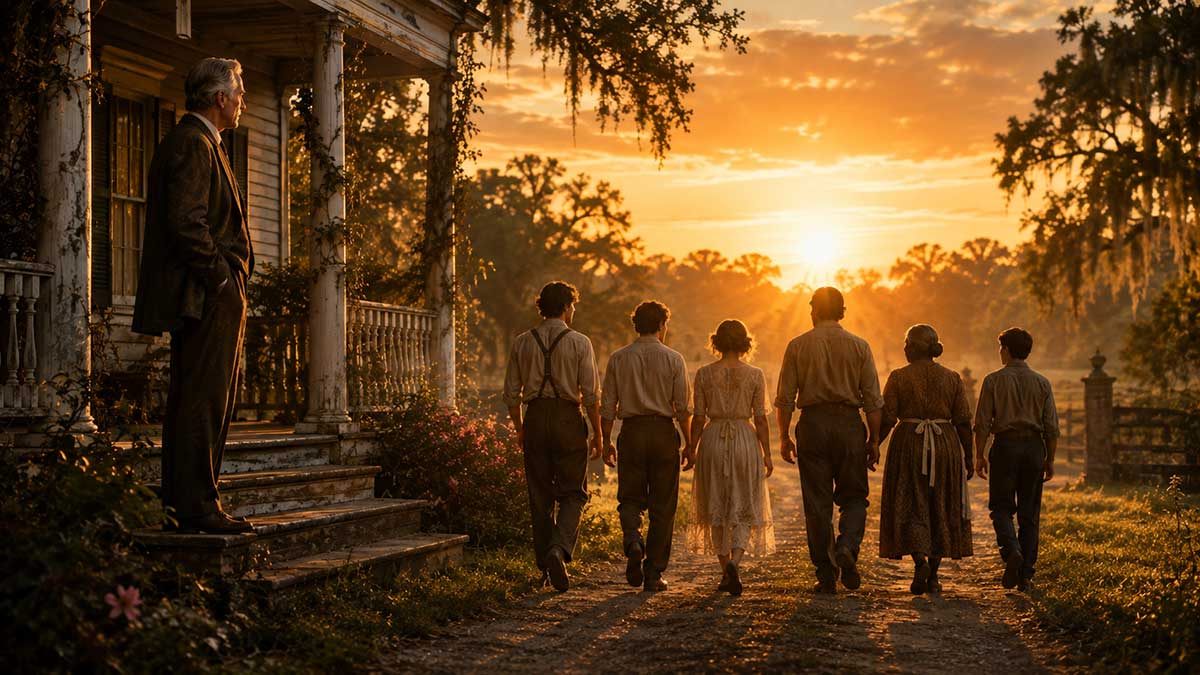
William Faulkner opens the front door.
Fresh morning air fills the room.
One by one, they walk outside together.
Not as victims.
Not as heroes.
Simply as a family.
Still imperfect.
Still carrying memories.
Yet somehow...
lighter than when the night began.
And for the first time in a very long while...
the sound is no longer fury.
It is peace.
Final Thoughts by William Faulkner
When people speak about The Sound and the Fury, they often begin with its difficulty.
Its shifting timelines.
Its stream of consciousness.
Its unconventional structure.
Those things matter.
But they were never my destination.
They were simply the road.
I did not write this novel to test your intelligence.
I wrote it because there are moments in life that cannot be told in a straight line.
Memory doesn't move that way.
Love doesn't move that way.
Grief certainly doesn't.
A single scent can return us to childhood.
One familiar voice can awaken decades we believed had disappeared.
The heart has never obeyed the calendar.
That is the novel I tried to write.
Many readers ask which character they should admire.
I would answer...
perhaps none of them.
Or perhaps all of them.
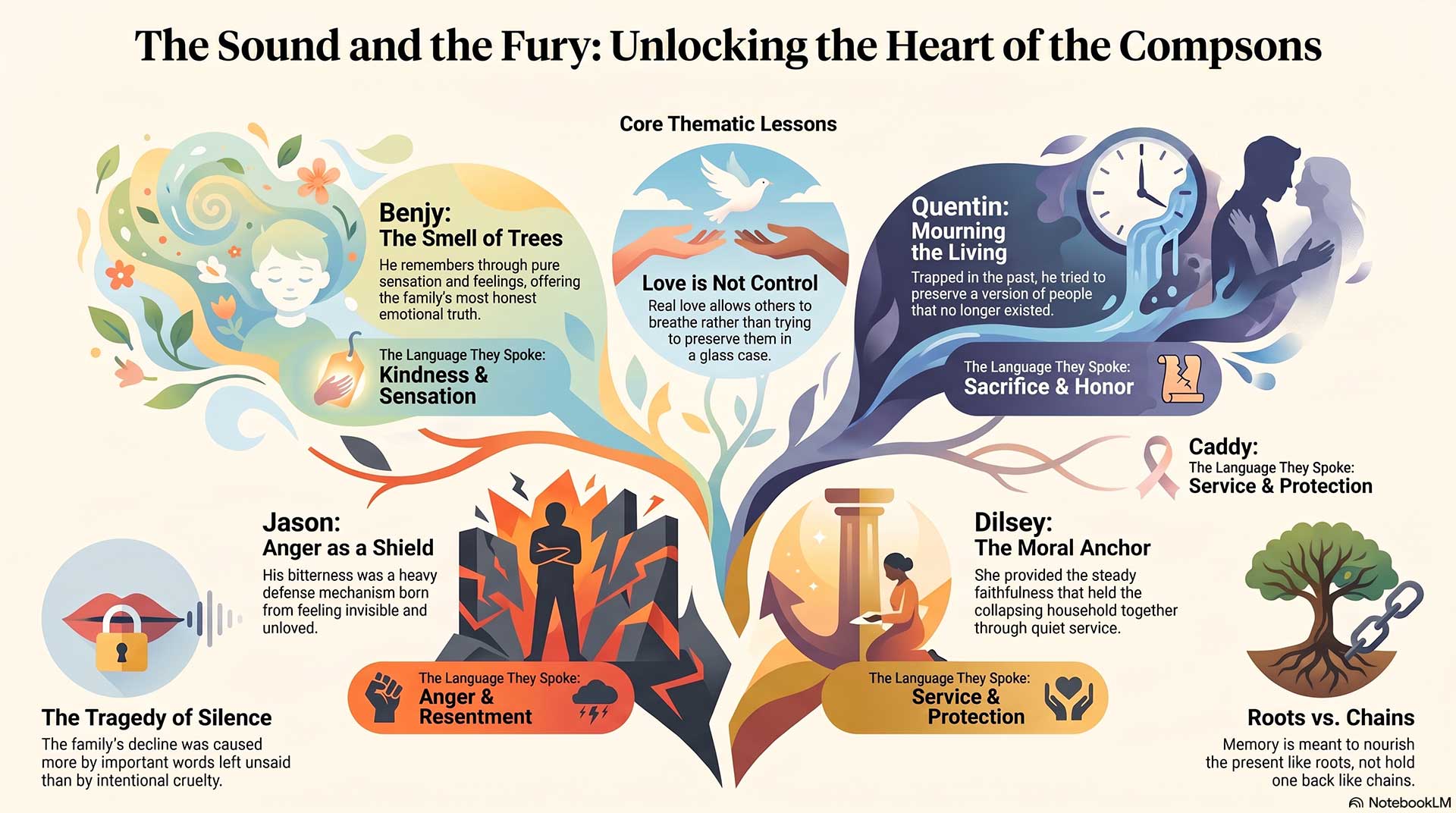
Benjy reminds us that love begins before language.
Quentin shows what happens when we confuse memory with life itself.
Caddy reveals how easily the strongest person in a family becomes invisible because everyone assumes she can carry one more burden.
Jason warns us that pain left unspoken often disguises itself as anger.
Dilsey quietly proves that compassion may accomplish more than brilliance ever will.
Each of them possesses only part of the truth.
Only together do they become fully human.
If this conversation has accomplished anything, I hope it has changed one question.
Instead of asking,
"Which character was right?"
perhaps ask,
"Which character am I becoming?"
Am I living in yesterday?
Am I carrying responsibilities that were never mine?
Am I speaking my wounds honestly, or hiding them behind resentment?
Am I noticing the quiet person who holds my family together?
Am I loving real people, or merely the version I wish they would become?
Those questions belong to every generation.
The Compsons lived in Mississippi nearly a century ago.
Yet loneliness has not aged.
Neither has regret.
Neither has hope.
Stories endure because they continue introducing us to ourselves.
If, after closing this conversation, you call your sister...
embrace your brother...
thank the person who quietly keeps your family together...
or simply choose kindness where anger once seemed easier...
then perhaps the Compsons have not suffered in vain.
The house eventually falls.
Every house does.
The people we love eventually leave.
Every family knows that sorrow.
What remains is something far quieter.
The mercy we showed.
The forgiveness we offered.
The hands we reached for before it was too late.
That is what survives.
That is the only inheritance time cannot steal.
Thank you for spending this evening with us.
May your own home, whatever its imperfections, always have room for truth, compassion, and one more conversation.
Short Bios:
William Faulkner (1897–1962)
American novelist and Nobel Prize laureate in Literature (1949), William Faulkner transformed modern fiction through his bold use of stream of consciousness, shifting perspectives, and nonlinear storytelling. His fictional Yoknapatawpha County became one of literature's richest imagined worlds, exploring memory, race, family, honor, and the decline of the American South. The Sound and the Fury is widely regarded as his masterpiece and one of the greatest novels ever written.
Benjy Compson
The youngest Compson brother, Benjy experiences life through sensations rather than logic. His innocent perspective, free from judgment or deception, reveals emotional truths that the other characters often miss. Though frequently dismissed as incapable of understanding, his unwavering love becomes one of the novel's purest moral voices.
Quentin Compson
The eldest son of the Compson family, Quentin is intelligent, sensitive, and consumed by memories of a disappearing past. Unable to reconcile changing reality with his ideals of honor and family, he becomes trapped in grief and obsession. His story remains one of literature's most haunting portraits of psychological despair.
Caddy Compson
Although she never narrates the novel, Caddy is its emotional center. Sister to Benjy, Quentin, and Jason, she spends much of her life caring for those around her while quietly losing herself in the process. Her absence shapes every narrator, making her one of literature's most influential unseen protagonists.
Jason Compson IV
Practical, cynical, and deeply resentful, Jason masks years of disappointment beneath sarcasm and anger. Beneath his harsh exterior lies a man desperate to be seen and valued. His character illustrates how unspoken hurt can slowly harden into bitterness.
Dilsey Gibson
The Compson family's loyal housekeeper, Dilsey remains steady as the household around her disintegrates. Guided by faith, compassion, and quiet perseverance, she serves as the novel's moral anchor. Her enduring kindness offers hope amid the family's decline and reminds readers that true strength often appears without recognition.
Leave a Reply