
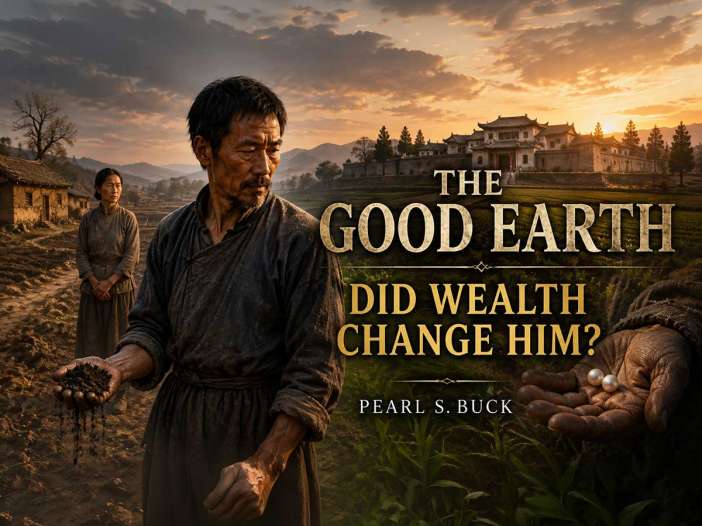
Introduction
What happens when a man spends his entire life trying to protect his family from poverty, only to discover that prosperity brings dangers he never expected?
Pearl S. Buck’s The Good Earth begins with one of the simplest human desires imaginable: Wang Lung wants enough.
Enough food.
Enough land.
Enough security that his family will never again fear hunger.
Through extraordinary labor, suffering, famine, and determination, he eventually gets far more than enough. He becomes wealthy. His family rises in status. His sons receive opportunities he could never have imagined as a young farmer.
Yet something changes along the way.
The man who once valued O-lan for her strength begins to feel ashamed of her appearance.
The farmer who once measured wealth by fertile soil becomes increasingly drawn to status, pleasure, refinement, and recognition.
The father who sacrifices everything to give his sons a different life later struggles to accept that they have become different men.
And O-lan, the quiet woman who helped build almost everything Wang Lung possesses, carries wounds and desires he barely notices until it is too late.
In this imagined conversation, Wang Lung, O-lan, Lotus, and Wang Lung’s sons are given something the novel itself cannot give them:
time to speak after the consequences are known.
Together, they confront five questions at the heart of The Good Earth.
Did wealth corrupt Wang Lung, or simply reveal desires poverty had kept hidden?
Did he truly love O-lan?
Why did two small pearls matter so much?
Do children owe their parents a future shaped by the sacrifices of the past?
And finally, after a lifetime spent buying and defending land, can anyone truly own the earth?
Their answers reveal that The Good Earth is about much more than poverty and wealth.
It is about gratitude.
Desire.
Marriage.
Sacrifice.
Memory.
Family.
And the difficult human tendency to stop seeing the people and things that once saved us after we no longer fear losing them.
(Note: This is an imaginary conversation, a creative exploration of an idea, and not a real speech or event.)
Topic 1: Did Wealth Change Wang Lung, or Reveal Him?
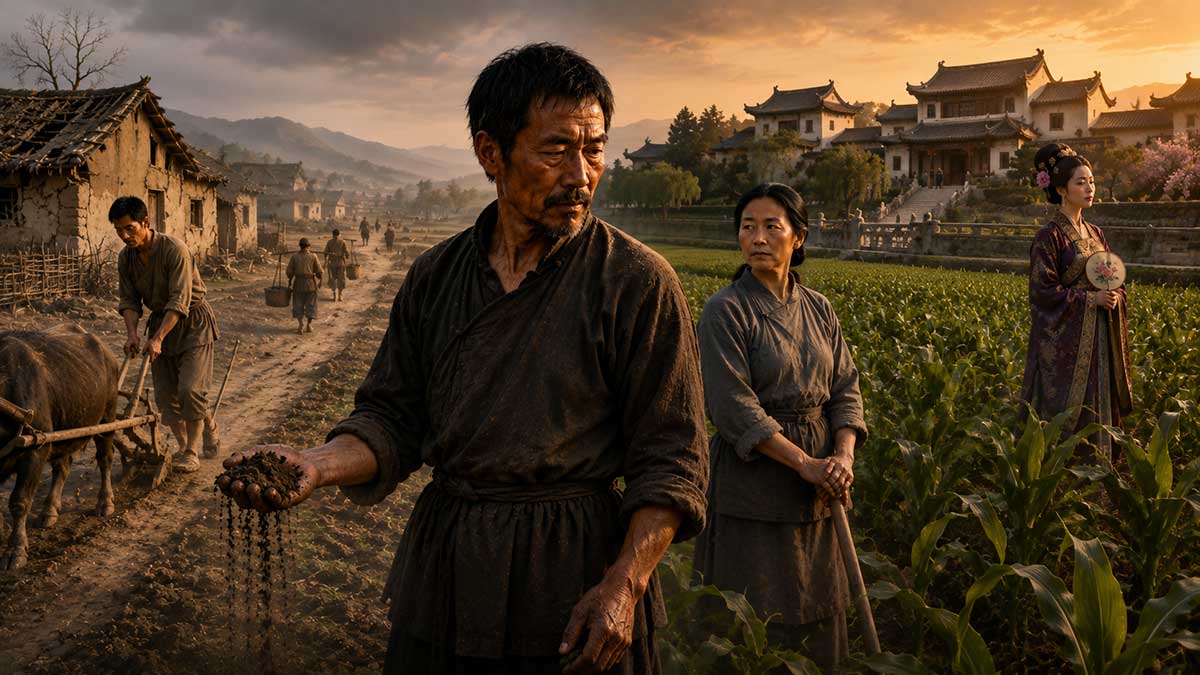
The afternoon sun lay low across Wang Lung's fields.
He had grown old enough that he no longer walked across them quickly. Once, he could have spent the whole day bent over the soil and returned home thinking only of supper and sleep. Now he stopped often.
He bent down and pushed his fingers into the earth.
The soil was dry near the surface but cool underneath.
Wang Lung: This earth is good.
His eldest son glanced across the fields.
Eldest Son: You have said that all your life, Father.
Wang Lung: And I have been right all my life.
Second Son: No one said you were wrong.
Wang Lung: You do not have to say it. I see how you look at the land.
Eldest Son: How do we look at it?
Wang Lung: As though it were something old.
His son smiled slightly.
Eldest Son: It is old.
Wang Lung rubbed the earth between his fingers.
Wang Lung: Older than you. Older than me. Older than the House of Hwang. And it will remain after all of us.
Lotus stood several steps away beneath the shade.
She had little affection for fields and no desire to pretend otherwise.
Lotus: If you brought us here merely to tell us the earth is old, we could have remained inside.
Wang Lung looked at her.
Even now, after so many years, there were moments when he remembered how she had first appeared to him.
Soft hands.
Perfume.
Silk.
Everything that his life with O-lan had not been.
Then he looked at O-lan.
She stood quietly nearby.
Her hands looked exactly as he remembered them.
Large.
Rough.
Working hands.
Wang Lung looked away.
Lotus: There. You did it again.
Wang Lung: Did what?
Lotus: Looked at me. Then looked at her.
O-lan said nothing.
Wang Lung: There is nothing in it.
Lotus: There was always something in it.
Wang Lung's eldest son gave an uncomfortable laugh.
Eldest Son: Must we speak about this?
Lotus: Your father has brought us all into a field to discuss his life. What would you prefer we discuss? The weather?
Wang Lung: I did not bring anyone here.
O-lan: No.
Everyone turned.
O-lan rarely interrupted.
O-lan: The land did.
Wang Lung stared at her.
For a moment, he almost smiled.
That sounded like something he might have said himself.
Wang Lung: Then perhaps the land knows better than we do.
Second Son: About what?
Wang Lung opened his hand and let the soil fall.
Wang Lung: About what happened to us.
His eldest son folded his arms.
Eldest Son: You became rich.
Wang Lung: Is that all?
Eldest Son: You were poor. You worked. You bought land. You survived famine. You bought more land. You hired men. You became wealthy. What part have I missed?
O-lan: The changing.
Silence.
Wang Lung turned toward her.
Wang Lung: What changing?
O-lan looked at him.
O-lan: You.
Lotus smiled faintly.
Lotus: Now we have arrived somewhere interesting.
Wang Lung's face hardened.
Wang Lung: I worked for everything we had.
O-lan: Yes.
Wang Lung: No man gave me these fields.
O-lan: No.
Wang Lung: When there was drought, I suffered. When there was famine, I suffered. When we went south, I pulled men through the streets like an animal so we could eat.
O-lan: Yes.
Wang Lung: Then why do you say it as though wealth were some shameful thing?
O-lan: I did not say wealth was shameful.
Wang Lung: You said I changed.
O-lan: You did.
Wang Lung waited for more.
None came.
That irritated him more than an accusation might have.
Wang Lung: Everyone changes.
Lotus: Convenient.
Wang Lung: You have no right to speak.
Lotus's expression sharpened.
Lotus: I have more right than you think.
Wang Lung: To judge me?
Lotus: No. To remind you that you came looking for me.
Wang Lung said nothing.
Lotus: People like to tell stories afterward. The poor farmer became rich, and then a beautiful woman tempted him.
She shook her head.
Lotus: I did not walk into your field and pull you away from your plow.
Wang Lung's eldest son looked at the ground.
Lotus: You came to the tea house.
Wang Lung: I know where I went.
Lotus: Do you?
She stepped closer.
Lotus: Then say it plainly. You had money. For the first time in your life, you could buy things that had once belonged to other men.
Fine food.
Fine clothes.
Leisure.
Women.
Respect.
You discovered that the world contained pleasures you had never been allowed to touch.
Wang Lung: And this makes me different from every other man?
Lotus: Perhaps not.
Wang Lung: Then why am I being judged?
O-lan: Perhaps that is the question.
Wang Lung turned toward her.
O-lan: Were you different?
He frowned.
O-lan: When you were poor.
Were you a better man?
Or were there simply fewer things you could do?
The question landed harder than Wang Lung expected.
Wang Lung: When a man is poor, he has no time for foolishness.
Second Son: That is not an answer.
Wang Lung: It is exactly an answer.
He pointed across the fields.
Wang Lung: When I was young, if I did not plant, we did not eat. If rain did not come, we suffered. If the harvest failed, there was nothing between my family and hunger.
You speak of virtue as though poor men wake every morning deciding to be humble.
A poor man is humble because the world keeps him on his knees.
His second son studied him.
Second Son: Then you believe poverty made you appear better than you were?
Wang Lung hesitated.
Wang Lung: I said no such thing.
Lotus: You nearly did.
Wang Lung: I said poverty gives a man fewer choices.
O-lan: And wealth gives him more.
Wang Lung: Yes.
O-lan: Then perhaps we learn more about him when he has choices.
Wang Lung looked at her carefully.
This O-lan unsettled him.
She was the same woman.
Yet she was saying aloud things he suspected she had carried silently for years.
Wang Lung: You think the money revealed something ugly in me.
O-lan: I think it revealed something.
Wang Lung: What?
O-lan: Hunger.
He almost laughed.
Wang Lung: Money ended our hunger.
O-lan shook her head.
O-lan: One hunger.
Wang Lung stopped.
O-lan looked across the land.
O-lan: First we wanted rice.
Then we wanted land.
Then more land.
Then a better house.
Then servants.
Then fine clothes.
Then people to know we were no longer poor.
Her eyes moved briefly to Lotus.
Then back to Wang Lung.
O-lan: Hunger did not leave.
It learned new names.
No one spoke for several seconds.
Even Lotus's expression changed.
Wang Lung finally answered.
Wang Lung: It is easy to speak this way after the suffering is finished.
He looked at his sons.
Wang Lung: Neither of you knows what it is to watch food disappear.
You do not know what it is to look at your children and wonder which one will still be alive when the rains return.
You do not know what it is to have land beneath your feet and still have nothing growing from it.
His voice tightened.
Wang Lung: I remember.
O-lan looked at him.
She remembered too.
Neither needed to describe the dead infant.
The silence carried that memory for them.
Wang Lung: After such things, a man does not say, "I have enough."
He says, "More."
More grain.
More silver.
More land.
One more field between my children and starvation.
Then another.
And another.
Second Son: That I understand.
Wang Lung looked almost relieved.
Second Son: But buying land was not the same as buying status.
The relief disappeared.
Second Son: There must have been a point when fear stopped explaining everything.
Wang Lung: You speak confidently about a life you never lived.
Second Son: I am asking about yours.
Eldest Son: He is right about one thing, Father.
Wang Lung looked at him.
Eldest Son: The land protected us.
But later you wanted people to know we were rich.
You wanted the house.
You wanted our family to be respected.
You wanted us educated partly so no one would see us as peasants.
Wang Lung: I wanted better for you.
Eldest Son: I know.
Wang Lung: Then what is wrong with that?
Eldest Son: Nothing.
He paused.
Eldest Son: Until "better" becomes "better than."
Wang Lung stared at his son.
Lotus gave a small smile.
Lotus: Your sons learned something after all.
Wang Lung: They learned to speak too much.
O-lan almost smiled.
Wang Lung noticed.
Wang Lung: You find this amusing?
O-lan: A little.
For once, the tension broke.
Then Wang Lung's expression softened.
Wang Lung: Perhaps I did want respect.
He looked into the distance.
Wang Lung: Do you know what it is to enter the house of a rich man when you are poor?
His sons remained silent.
Wang Lung: You notice everything.
Your clothes.
Your shoes.
Your hands.
How you speak.
Where you stand.
Whether someone looks at you.
Whether someone does not.
He remembered entering the House of Hwang on his wedding day.
He remembered feeling small.
Wang Lung: I hated that feeling.
O-lan: So did I.
Wang Lung looked at her.
He had forgotten.
Of course she knew.
She knew that house far better than he did.
She had lived inside it as a slave.
O-lan: You visited the House of Hwang.
I belonged to it.
The words were spoken without bitterness.
That made them heavier.
O-lan: You wanted never to feel small again.
I understand.
Wang Lung's face softened.
O-lan: But later you needed other people to feel that you were large.
His expression changed.
Wang Lung: That is not fair.
O-lan: Perhaps not.
Wang Lung: I never became like the old lord.
O-lan: No.
Wang Lung: I never wasted everything.
O-lan: No.
Wang Lung: I kept the land.
O-lan: Yes.
She looked at him for a long moment.
O-lan: But you began wanting some of the things he wanted.
Wang Lung could not deny that completely.
Lotus broke the silence.
Lotus: There is something none of you have said.
Everyone looked at her.
Lotus: You speak as though wanting pleasure is some strange disease of wealthy people.
Poor people want beautiful things too.
They want soft beds.
Good food.
Beautiful clothes.
They want someone desirable beside them.
They simply cannot always have those things.
Wang Lung nodded.
Wang Lung: Exactly.
Lotus: Do not agree too quickly.
He frowned.
Lotus: Wanting something is not the same as being entitled to it.
That surprised him.
Lotus: You wanted me.
You could afford me.
So you decided that was enough reason.
Wang Lung looked at her.
Lotus: Perhaps wealth's greatest temptation is not pleasure.
Perhaps it is believing that if you can have something, you should.
That silenced him.
O-lan looked at Lotus differently now.
Not warmly.
But without hostility.
Second Son: Then when did Father have enough?
No one answered.
Second Son: That seems to be the question.
When was there enough land?
Wang Lung: There is never too much good land.
Second Son: Enough silver?
Wang Lung: Silver can disappear.
Second Son: Enough security?
Wang Lung opened his mouth.
Then closed it.
Eldest Son: Enough respect?
No answer.
Lotus looked at him.
Lotus: Enough beauty?
Wang Lung's eyes moved involuntarily toward O-lan.
She saw it.
O-lan: There was never an answer.
Wang Lung: And you? You make yourself sound free of desire.
O-lan shook her head.
O-lan: No.
Wang Lung: What did you want?
There it was.
A simple question.
Yet something changed in O-lan's face.
Wang Lung realized with discomfort that he could not remember asking it when she was alive.
What did you want?
Not what did the children need.
Not what seed should they buy.
Not how much grain remained.
Not whether his father had eaten.
What did you want?
O-lan looked down at her hands.
O-lan: Very little.
Lotus: That is not the same as nothing.
O-lan glanced at her.
For a moment the two women seemed to understand something Wang Lung did not.
O-lan: No.
It is not.
Wang Lung waited.
But O-lan did not explain.
Not yet.
Wang Lung: Then tell me.
O-lan: Later.
Wang Lung: Why later?
She looked at him.
O-lan: You did not ask then.
You can wait now.
Wang Lung had no answer.
The sun had dropped lower.
Long shadows stretched across the fields.
His eldest son finally spoke.
Eldest Son: Father, do you regret becoming rich?
Wang Lung answered immediately.
Wang Lung: No.
That surprised everyone.
Wang Lung: I regret things I did after becoming rich.
That is different.
He looked across the land he had spent his life acquiring.
Wang Lung: Poverty is not beautiful.
Hunger is not noble.
Watching your family suffer does not make you pure.
I would choose the land again.
I would buy every field again.
I would save every piece of silver again.
His voice became quieter.
Wang Lung: But perhaps I would ask myself sooner what I was saving it for.
O-lan watched him.
Second Son: And what was it for?
Wang Lung looked at his family.
For years, the answer would have been obvious.
For them.
Yet now he understood that saying for my family did not settle every question.
A person could build something for his family and still hurt the people inside it.
He looked down.
A little soil remained beneath his fingernails.
Wang Lung: When I was poor, I feared losing everything.
O-lan nodded.
Wang Lung: When I became rich, I began fearing that what I had was not enough.
O-lan stepped closer.
O-lan: That is another kind of poverty.
Wang Lung raised his eyes to her.
This time he did not argue.
The wind moved softly through the fields.
For a long time, no one spoke.
Then Wang Lung looked at O-lan again.
Wang Lung: You said you wanted very little.
O-lan: Yes.
Wang Lung: And you said that was not the same as wanting nothing.
O-lan: Yes.
He hesitated.
Wang Lung: What did you want from me?
O-lan's expression changed.
The question had finally come.
Years too late.
She looked at the man beside whom she had planted and harvested, starved and survived, borne children and built a household.
Then she looked down at her rough hands.
O-lan: That is a different question.
And this time, Wang Lung knew enough not to force an answer.
Not yet.
That final exchange gives us a natural doorway into Topic 2: Did Wang Lung Ever Truly Love O-lan? It also keeps the pearls untouched for Topic 3, where they can carry their full emotional weight.
Topic 2: Did Wang Lung Ever Truly Love O-lan?
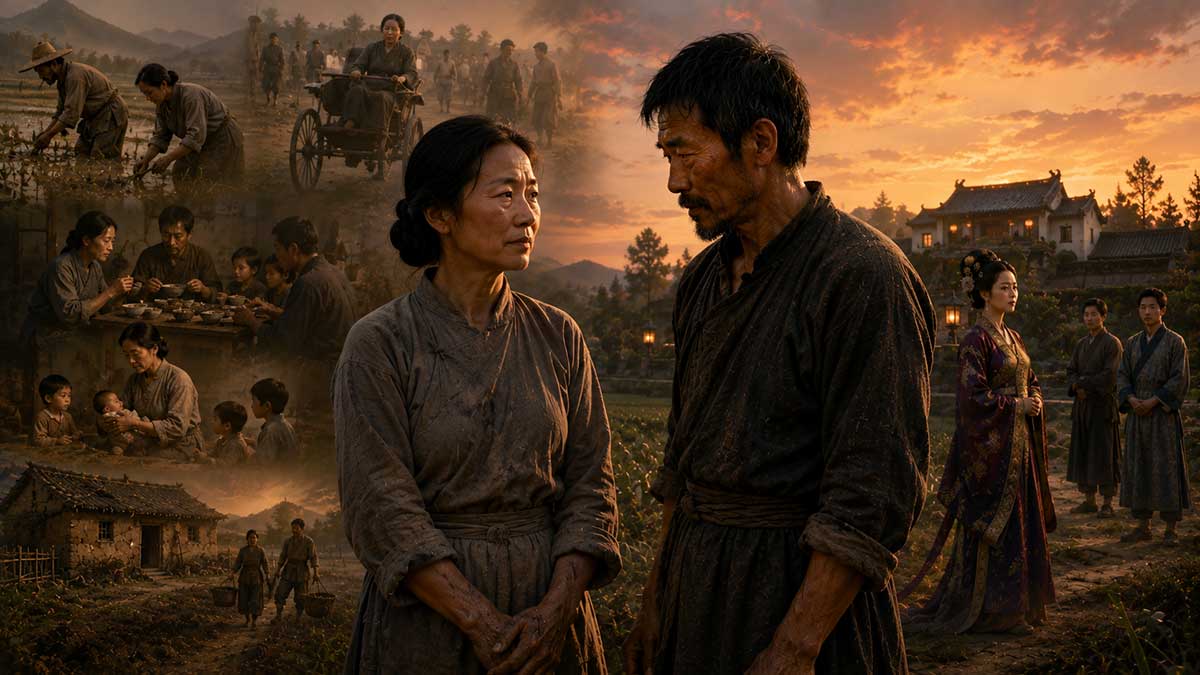
The question remained between them.
Wang Lung: What did you want from me?
O-lan did not answer.
The evening air had cooled. The fields stretched behind them, darkening as the last light settled over the earth.
Wang Lung waited.
In his younger years, waiting had never been one of his strengths. There was always something to be done. Seed to plant. Grain to sell. Land to buy. Money to count.
But there was nothing he could do now except wait for O-lan to speak.
O-lan: Why do you ask?
Wang Lung seemed surprised.
Wang Lung: Because I want to know.
O-lan: Now.
It was not quite a question.
Wang Lung: Yes. Now.
O-lan looked across the fields.
O-lan: There were many years when you could have asked.
Wang Lung: I know.
O-lan: Do you?
Wang Lung's face tightened.
Wang Lung: Must everything I say become an accusation against me?
Lotus: Perhaps you should stop hearing accusations before anyone makes them.
He turned sharply toward her.
Wang Lung: This is between my wife and me.
Lotus looked at O-lan.
Lotus: Is it?
O-lan considered this.
O-lan: Some of it.
Wang Lung was irritated.
Wang Lung: Then speak.
O-lan turned toward him.
O-lan: Did you love me?
The question stopped him.
His eldest son shifted uncomfortably.
Eldest Son: Mother...
O-lan: I am asking your father.
Wang Lung answered quickly.
Wang Lung: Of course I did.
O-lan's expression did not change.
Wang Lung: You were my wife.
O-lan: That was not what I asked.
Wang Lung: I know what you asked.
O-lan: Then why did you answer something else?
Wang Lung stared at her.
Lotus looked away, perhaps sensing that for once her presence was not needed.
Wang Lung: We had a life together.
O-lan: Yes.
Wang Lung: We had children.
O-lan: Yes.
Wang Lung: We worked the land together.
O-lan: Yes.
Wang Lung: We nearly starved together.
O-lan: Yes.
Wang Lung: We went south together.
O-lan: Yes.
His frustration grew with every quiet agreement.
Wang Lung: What more do you want me to say?
O-lan looked directly at him.
O-lan: That you loved me.
Wang Lung: I just said it!
O-lan: You listed the things I did.
Silence.
Wang Lung opened his mouth.
Nothing came.
O-lan: You said I was your wife.
I bore your children.
I worked your land.
I suffered beside you.
Those things are true.
But I asked whether you loved me.
Wang Lung looked toward his sons, almost as though one of them might rescue him.
Neither did.
Wang Lung: What do you think love is?
O-lan thought for a moment.
O-lan: I do not know.
That surprised him.
Wang Lung: Then how can you say I did not give it?
O-lan: I did not say that.
Wang Lung: Then what are you saying?
O-lan: I am trying to know what you meant when you said you loved me.
Wang Lung's anger began giving way to discomfort.
Wang Lung: I depended on you.
O-lan nodded.
Wang Lung: I trusted you.
Another nod.
Wang Lung: I knew you would care for my father.
Yes.
Wang Lung: I knew you would care for the children.
Yes.
Wang Lung: I knew you would work beside me.
Yes.
Wang Lung: I knew you would never waste what we had.
Yes.
Then O-lan asked:
O-lan: What did you know about me?
Wang Lung stopped.
Wang Lung: I have just told you.
O-lan: Those were things I did.
What did you know about me?
Wang Lung stared at her.
The distinction irritated him at first.
Then it frightened him.
O-lan: What frightened me?
He said nothing.
O-lan: What made me happy?
Nothing.
O-lan: What did I think about when I could not sleep?
Nothing.
O-lan: What did I want when there was finally enough food?
Nothing.
Her voice remained calm.
O-lan: What did I think was beautiful?
Wang Lung's eyes dropped.
He did not know why that question struck him differently.
Lotus knew.
She watched O-lan closely.
O-lan: You knew what I could do.
You did not know very much about me.
Wang Lung finally answered.
Wang Lung: You never spoke of these things.
O-lan: No.
Wang Lung: Then how was I supposed to know?
O-lan: You could have asked.
The answer was so simple that he almost resented it.
Wang Lung: You could have told me.
O-lan: Yes.
This time O-lan did not defend herself.
O-lan: I could have.
That unsettled him more.
O-lan: I had learned not to.
Wang Lung: From me?
O-lan shook her head.
O-lan: Before you.
Her eyes seemed to travel somewhere far beyond the fields.
O-lan: In the great house, no one asked what a slave girl wanted.
You learned what needed doing.
Then you did it.
If you were hungry, you worked.
If you were tired, you worked.
If you were frightened, you worked.
If you were unhappy...
She paused.
O-lan: You worked.
Wang Lung looked at her hands.
He had seen those hands thousands of times.
He suddenly wondered how many things they had done while she was frightened.
O-lan: Then I came to you.
You needed many things.
Food.
A clean house.
Children.
Someone for your father.
Someone in the fields.
So I knew what to do.
Wang Lung: You make it sound as though I bought another servant.
O-lan's eyes lifted.
O-lan: Did you know the difference at first?
Wang Lung recoiled.
Wang Lung: You were my wife!
O-lan: Yes.
Wang Lung: I treated you better than they did.
O-lan: Yes.
Wang Lung: I never starved you while I ate.
O-lan: No.
Wang Lung: I never beat you.
O-lan: No.
Wang Lung: I gave you a home.
O-lan: Yes.
Wang Lung's voice rose.
Wang Lung: Does none of that matter?
O-lan's face softened.
O-lan: It matters.
He stopped.
O-lan: That is why this is difficult.
Wang Lung stared at her.
O-lan: You were not always cruel to me.
If you had been, perhaps everything would be easier.
There were days when you were kind.
There were years when we worked beside each other and I knew where you would be before I looked.
There were nights when we had almost nothing, but I did not fear being alone.
You trusted me.
Sometimes you were gentle.
You cared when I was ill.
You cared for our daughter.
You loved our children.
She paused.
O-lan: There was something between us.
Wang Lung's eyes filled with relief.
Wang Lung: Then you know.
O-lan looked at him sadly.
O-lan: I know there was something.
That is not the same as knowing what it was.
The relief disappeared.
Lotus finally spoke.
Lotus: Perhaps you are asking the wrong question.
Wang Lung looked at her impatiently.
Lotus: You want her to decide whether you loved her.
Yes or no.
Then you can live with the answer.
If she says yes, you forgive yourself.
If she says no, you tell yourself she is unfair.
Wang Lung: And what would you ask?
Lotus: Whether loving someone excuses failing them.
No one answered.
Lotus: Men like simple judgments when the judgment concerns themselves.
Wang Lung glared at her.
Lotus: You loved her?
Very well.
Suppose you did.
Then what?
Does that return anything?
Does it undo humiliation?
Does it make every choice harmless?
Wang Lung: You speak boldly for someone who benefited from those choices.
Lotus's eyes narrowed.
Lotus: There it is.
Wang Lung: There what is?
Lotus: The place where you hide.
Wang Lung: I hide nowhere.
Lotus: You hide behind me.
O-lan watched them.
Lotus: I did not force you into the tea house.
I did not make you look at your wife's feet differently.
I did not make you become ashamed of her clothes.
I did not make you decide that a woman who had worked beside you through famine was no longer enough for a wealthy man.
Wang Lung: Enough!
Lotus did not move.
Lotus: No.
Not yet.
You wanted me.
I was there.
You had money.
You chose.
Do not turn me into the explanation for what you did.
Wang Lung's anger flared.
Then O-lan spoke.
O-lan: She is right.
Wang Lung looked stunned.
Wang Lung: You defend her?
O-lan: I am not defending her.
Wang Lung: Then what are you doing?
O-lan: I am not blaming her for you.
Lotus looked at O-lan.
Something passed between the two women.
Not affection.
Not forgiveness.
Recognition, perhaps.
O-lan: You were my husband.
She was not.
Wang Lung lowered his eyes.
His eldest son had been silent for some time.
Now he spoke.
Eldest Son: Father, perhaps you did love Mother.
Everyone turned toward him.
Eldest Son: But perhaps you loved her in the way a man loves something he believes will always be there.
Wang Lung frowned.
Eldest Son: The house.
The well.
The fields.
You do not wake every morning and thank the earth.
You simply expect it beneath your feet.
Wang Lung looked toward the soil.
His son continued.
Eldest Son: Perhaps Mother became like that to you.
Something necessary.
Something permanent.
Something you did not think you could lose.
O-lan looked at her son.
Eldest Son: Then when you became wealthy, you went looking for things that felt new.
Wang Lung was quiet.
Second Son: People notice what is missing more easily than what remains.
Wang Lung: So now both of you are philosophers?
Second Son: No.
We watched you.
That silenced him.
The last light had nearly disappeared.
Wang Lung looked at O-lan again.
Wang Lung: I did not think you would leave.
O-lan: I had nowhere to go.
He flinched.
Wang Lung: That is not what I meant.
O-lan: I know.
Wang Lung: I mean...
He struggled.
Wang Lung: You were part of my life.
O-lan: Yes.
Wang Lung: Part of me.
O-lan's expression softened.
O-lan: Perhaps.
Wang Lung stepped closer.
Wang Lung: When you became ill, I was afraid.
O-lan: I know.
Wang Lung: When I understood you might die...
His voice weakened.
Wang Lung: I did not want you to die.
O-lan: I know.
Wang Lung: Does that mean nothing?
O-lan: No.
It means something.
He waited.
O-lan: But I sometimes wondered why dying had to make me visible.
Wang Lung stared at her.
The sentence seemed to strike something inside him.
O-lan: I was there when I was strong.
I was there when I worked.
I was there when I bore your sons.
I was there when we had no food.
I was there when we returned.
I was there when the fields became ours.
I was there when the house grew.
Her voice remained steady.
O-lan: Why did you see me most clearly when I was disappearing?
Wang Lung could not answer.
Lotus lowered her eyes.
The sons were silent.
O-lan looked away.
For the first time, Wang Lung seemed to understand that regret was not the same thing as love arriving late.
Sometimes regret was love discovering how inattentive it had been.
Wang Lung: I wish I had known.
O-lan looked back at him.
O-lan: Known what?
Wang Lung: That you felt this way.
O-lan: Would it have changed anything?
He wanted to say yes.
The word reached his mouth.
Then he stopped.
He remembered himself as a younger wealthy man.
Restless.
Proud.
Fascinated by Lotus.
Embarrassed by O-lan.
Would he truly have listened?
Wang Lung: I do not know.
O-lan nodded.
She seemed to respect the answer more than she would have respected a comforting lie.
Wang Lung: But I wish you had told me.
O-lan: And I wish you had asked.
They stood facing one another.
No victory.
No complete accusation.
No easy forgiveness.
Just two people looking backward at the same marriage and discovering that they had not always lived inside the same version of it.
After a long silence, Wang Lung spoke.
Wang Lung: I loved you.
O-lan did not answer immediately.
Wang Lung: I know I did.
O-lan: Perhaps you did.
Wang Lung's face tightened.
O-lan: Do not be angry.
I am not saying you did not.
I think perhaps you loved me in the way you knew how.
He listened.
O-lan: But sometimes the way we know how to love is not enough for the person receiving it.
Wang Lung looked down.
Wang Lung: Then what should I have done?
O-lan's answer came quietly.
O-lan: Seen me.
The words were almost lost in the evening air.
Wang Lung raised his head.
Wang Lung: I see you now.
O-lan's face carried neither triumph nor bitterness.
Only sadness.
O-lan: Yes.
Now.
Wang Lung closed his eyes for a moment.
When he opened them, O-lan was looking at him with an expression he could not remember seeing during their life together.
Or perhaps he had seen it.
Perhaps he simply had not noticed.
Then O-lan said something that returned them to the question with which Topic 1 had ended.
O-lan: You asked what I wanted from you.
Wang Lung: Yes.
O-lan: I wanted to matter when I was not useful.
Wang Lung's breathing seemed to stop.
O-lan: Not as the mother of your sons.
Not as the woman who cooked.
Not as the woman who worked your fields.
Not because I could endure more than other women.
She touched her own chest.
O-lan: Just here.
Me.
Wang Lung's eyes lowered.
O-lan: I do not know whether that is what people call love.
But I wanted it.
Wang Lung's voice was barely audible.
Wang Lung: You mattered.
O-lan nodded.
O-lan: I know that you believe that now.
Again, that terrible word.
Now.
Wang Lung looked at her rough hands.
For years he had seen strength in them.
Labor.
Usefulness.
He wondered for the first time whether O-lan had ever wanted those hands to hold something that belonged only to her.
Something unnecessary.
Something beautiful.
His eyes remained on them.
O-lan noticed.
And for the first time that evening, she looked uneasy.
Wang Lung suddenly remembered something.
Something small.
Something round.
Something pale.
Two things, resting once in O-lan's palm.
His face changed.
O-lan saw that he remembered.
Lotus saw it too.
No one said the word.
Not yet.
O-lan slowly closed her hand.
And Wang Lung knew that the hardest question had not been asked.
Topic 2 now leaves us exactly where we want to be emotionally: Wang Lung has finally begun to see O-lan as a person rather than primarily through everything she did for him. Topic 3: The Two Pearls can now take that realization somewhere much more painful.
Topic 3: The Two Pearls
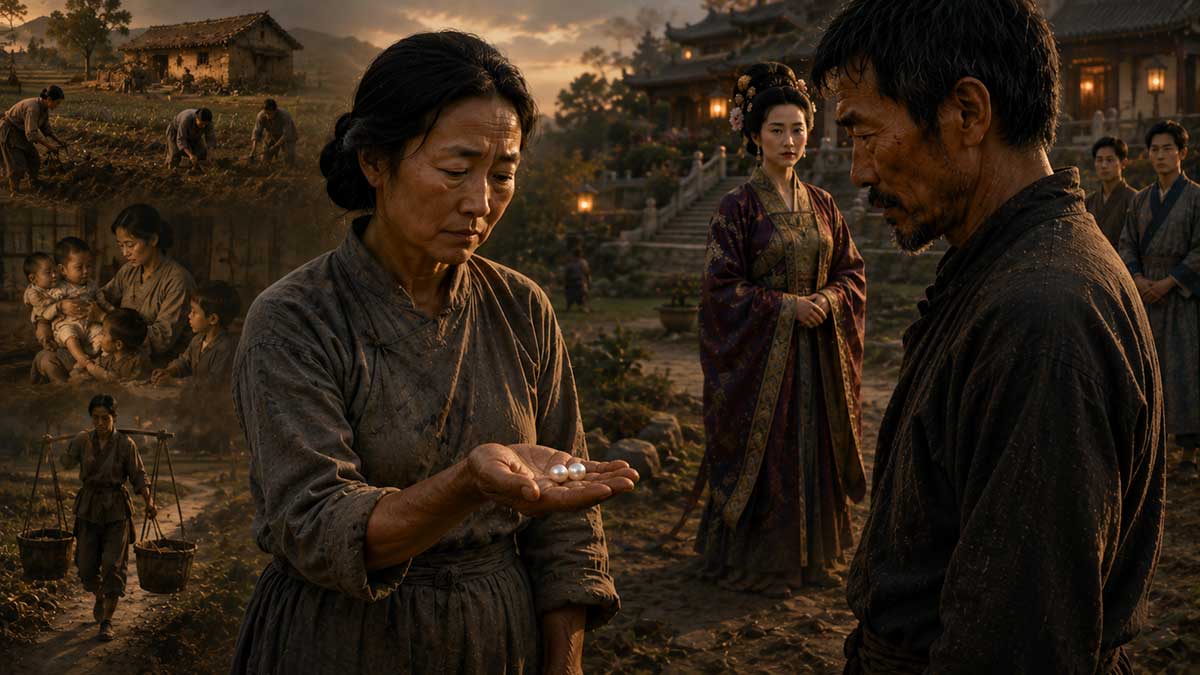
O-lan's hand remained closed.
Wang Lung stared at it.
He could see them without seeing them.
Two pearls.
Small enough to disappear inside her palm.
He remembered the day she had shown him the jewels taken from the rich man's house in the south.
Rubies.
Emeralds.
Diamonds.
Pearls.
A fortune hidden against her body while the family returned north.
Those jewels had helped change everything.
Land.
Seed.
Security.
The beginning of their rise.
Wang Lung had taken them.
All except two.
O-lan had asked to keep those.
He remembered being surprised that she had asked for anything.
Now he understood that his surprise should have told him something.
Wang Lung: The pearls.
O-lan did not answer.
Lotus looked away.
Wang Lung: You wanted the pearls.
O-lan: Yes.
Wang Lung: I had forgotten.
O-lan looked at him.
O-lan: I had not.
Wang Lung lowered his head.
His eldest son looked between his parents.
Eldest Son: What pearls?
No one answered immediately.
Second Son: Mother had pearls?
O-lan opened her hand.
There was nothing there.
Yet everyone seemed to look into her palm.
O-lan: Two.
Eldest Son: What happened to them?
Wang Lung's face tightened.
Lotus answered.
Lotus: Your father gave them to me.
The sons looked at Wang Lung.
He did not defend himself.
Second Son: Mother's pearls?
Wang Lung: Yes.
Eldest Son: Why?
It was such a simple question.
Wang Lung searched for an answer worthy of it.
None came.
Wang Lung: I wanted them.
Eldest Son: Why?
Wang Lung glanced at Lotus.
Wang Lung: For her.
His eldest son stared at him.
Eldest Son: You took Mother's pearls and gave them to Lotus?
Wang Lung: Yes.
Eldest Son: Did Mother agree?
O-lan spoke before Wang Lung could.
O-lan: He asked for them.
Her son looked at her.
Eldest Son: And you gave them to him?
O-lan: Yes.
Eldest Son: Why?
O-lan looked almost puzzled by the question.
O-lan: He was my husband.
The answer disturbed her sons more than anger might have.
Wang Lung looked at O-lan's empty palm.
Wang Lung: You could have refused.
O-lan's eyes lifted.
O-lan: Could I?
Wang Lung started to answer.
Then stopped.
O-lan: Perhaps I could have said no.
She considered it.
O-lan: I do not know whether I knew how.
Lotus watched her carefully.
O-lan: I had been given away before.
My work had belonged to others.
My time belonged to others.
My body was used for what households needed.
When I came to you, I thought perhaps things were different.
Some things were.
She looked at Wang Lung.
O-lan: But when you asked for the pearls, I knew what was expected.
Wang Lung shook his head.
Wang Lung: I did not command you.
O-lan: No.
Wang Lung: I did not threaten you.
O-lan: No.
Wang Lung: Then you make it sound worse than it was.
O-lan looked at him for a long moment.
O-lan: You still think the wound depends upon how loudly you made it.
Wang Lung fell silent.
Lotus turned toward O-lan.
Lotus: Why those two?
O-lan looked at her.
Lotus: There were other jewels.
Why did you choose the pearls?
For the first time, O-lan seemed embarrassed.
It was strange.
She had spoken of famine.
Childbirth.
Humiliation.
Death.
Yet this question made her uncomfortable.
O-lan: I liked them.
Lotus waited.
O-lan: They were pretty.
Nothing more.
Wang Lung stared at her.
O-lan looked down.
O-lan: I had never had anything like them.
When I was a girl, beautiful things belonged to other women.
I carried them.
Cleaned around them.
Saw them wearing things I could never wear.
She paused.
O-lan: I knew I was not beautiful.
Wang Lung: O-lan...
O-lan: It is true.
Do not become kind now and make it untrue.
Wang Lung closed his mouth.
O-lan: I knew what people saw.
Big feet.
Big hands.
A plain face.
A woman fit for work.
She looked at Lotus.
There was no hatred in her expression.
O-lan: Women like her wore beautiful things.
Women like me carried them.
Lotus's expression changed.
O-lan: When I found the jewels in the great house, I knew they could buy land.
I knew they could feed us.
I knew they were worth more than anything I had ever touched.
I knew they should go to the family.
She closed her fingers slightly.
O-lan: But I wanted two.
Wang Lung remembered her asking.
It had been so small a request that he had almost dismissed it.
O-lan: I did not want the diamonds.
I did not want the rubies.
I wanted two pearls.
Second Son: Why?
O-lan thought.
O-lan: They were quiet.
Her sons looked confused.
Lotus did not.
O-lan: They did not shine like the other stones.
They were simple.
Pale.
Smooth.
She almost smiled.
O-lan: Perhaps I thought they suited me.
Wang Lung felt something tighten in his chest.
O-lan: I thought someday...
She stopped.
Wang Lung waited.
Wang Lung: Someday what?
O-lan looked at him.
For the first time since the conversation began, she seemed vulnerable in a way that had nothing to do with suffering.
O-lan: I thought someday I might wear them.
Silence.
Wang Lung: You never told me.
O-lan: No.
Wang Lung: When?
O-lan: I do not know.
She gave the faintest smile.
O-lan: Perhaps when our eldest son married.
His eldest son lowered his eyes.
O-lan: Perhaps I would have had them made into earrings.
I thought I might wear a good robe.
Comb my hair.
Put the pearls in my ears.
Her smile disappeared almost as soon as it came.
O-lan: Just once.
No one spoke.
Wang Lung suddenly saw a woman he had never seen.
Not O-lan bending over seedlings.
Not O-lan giving birth alone.
Not O-lan begging in the city.
Not O-lan cooking for his father.
Not O-lan dying.
A woman standing before a small mirror, touching two pearls at her ears and wondering whether she might be beautiful.
Wang Lung closed his eyes.
Wang Lung: I did not know.
O-lan: No.
Wang Lung: If I had known...
O-lan interrupted gently.
O-lan: You would still have wanted them.
Wang Lung opened his eyes.
Wang Lung: You cannot know that.
O-lan: Neither can you.
He wanted to argue.
He could not.
Lotus finally spoke.
Lotus: I did not know.
O-lan looked toward her.
Lotus: When he gave them to me.
I did not know they were yours.
O-lan: I know.
Lotus: I thought he had bought them.
O-lan: I know.
Lotus seemed almost irritated.
Lotus: How can you know?
O-lan: Because he would not have told you.
Lotus looked at Wang Lung.
He said nothing.
Lotus: She is right.
O-lan nodded.
Lotus: I wore them.
O-lan's eyes moved toward Lotus's ears.
There were no pearls now.
Yet both women remembered them.
Lotus: Did you see me wearing them?
O-lan hesitated.
O-lan: Yes.
Wang Lung looked at her sharply.
Wang Lung: When?
O-lan: Many times.
Wang Lung: Why did you never say anything?
O-lan looked genuinely surprised.
O-lan: What would I say?
Wang Lung had no answer.
O-lan: That they were mine?
You knew.
Wang Lung: I did not know they meant so much.
O-lan's expression hardened for the first time.
O-lan: They did not have to mean much.
Wang Lung stared at her.
O-lan: They were mine.
The words were quiet.
Yet they changed everything.
O-lan: Must something be precious before another person should not take it?
Wang Lung looked down.
O-lan: Must I prove that I loved them enough?
Must I explain why?
Must I tell you the dream I had for them before they were allowed to belong to me?
No one moved.
O-lan: They were mine.
That should have been enough.
Wang Lung's face showed pain.
Wang Lung: Yes.
O-lan stopped.
Perhaps she had expected resistance.
Wang Lung: You are right.
Lotus looked at him.
His sons did too.
Wang Lung stepped closer to O-lan.
Wang Lung: I took them.
O-lan: Yes.
Wang Lung: I wanted Lotus to wear them.
O-lan: Yes.
Wang Lung: I thought they would look beautiful on her.
O-lan's eyes lowered.
Wang Lung immediately regretted saying it.
But he continued.
Wang Lung: And I never once wondered whether you wanted to be beautiful too.
O-lan looked at him.
There it was.
Not the loss of jewelry.
The deeper wound.
O-lan: No.
You did not.
Wang Lung swallowed.
Wang Lung: I am sorry.
O-lan remained still.
Wang Lung: I know that is not enough.
O-lan: No.
Wang Lung: But I am.
O-lan: I know.
Wang Lung looked almost desperate.
Wang Lung: Then what can I do?
O-lan's face softened.
O-lan: Nothing.
The answer frightened him.
Wang Lung: Nothing?
O-lan: They are gone.
The years are gone.
I am gone.
You cannot return to that day.
Wang Lung: Then what use is regret?
O-lan considered the question.
O-lan: Perhaps regret is not for changing yesterday.
Wang Lung: Then what is it for?
O-lan: Changing what yesterday means to you today.
Wang Lung looked at her.
O-lan: Before, you remembered taking two pearls.
Now you remember taking something from me.
That is different.
Wang Lung slowly nodded.
His second son spoke.
Second Son: Father, what did you think when you took them?
Wang Lung tried to remember himself.
Wang Lung: I thought I had given her all the other jewels.
O-lan: To buy land.
Wang Lung: Yes.
Second Son: So you thought the pearls were small compared with everything else?
Wang Lung: I suppose I did.
O-lan looked at her son.
O-lan: That is how people lose small things.
They compare them with large ones.
Eldest Son: But sometimes the small thing is the one that matters.
O-lan nodded.
Wang Lung looked across his fields.
Acres upon acres.
Land bought partly with jewels O-lan had carried home.
He suddenly saw the absurdity of it.
He had gained fields from her courage.
Then denied her two pearls.
Wang Lung: You gave me nearly everything.
O-lan did not respond.
Wang Lung: The jewels.
Your work.
Children.
Years.
He looked at her.
Wang Lung: And when you asked for two small things, I took those too.
O-lan's eyes filled, but she did not cry.
Wang Lung had rarely seen her cry.
Perhaps she had learned long before him that tears did not alter what needed to be done.
Lotus stepped forward.
Lotus: O-lan.
O-lan looked at her.
Lotus: If I could give them back...
O-lan: I know.
Lotus: I would.
O-lan studied her.
O-lan: Would you?
Lotus: Yes.
O-lan: Then perhaps you understand them now.
Lotus nodded.
O-lan's expression softened.
O-lan: That is enough from you.
Lotus seemed startled.
Lotus: Enough?
O-lan: You did not take them from me.
Lotus looked toward Wang Lung.
O-lan: He did.
Wang Lung accepted it.
Wang Lung: Yes.
Lotus moved back.
There was no dramatic reconciliation between the women.
None was needed.
The responsibility had finally been placed where it belonged.
Wang Lung looked at O-lan.
Wang Lung: When you saw her wearing them, what did you think?
O-lan was quiet for a long time.
O-lan: At first?
Wang Lung: Yes.
O-lan: I thought they looked beautiful.
The answer devastated him.
Wang Lung: On her?
O-lan: Yes.
Lotus looked down.
O-lan: They did.
Wang Lung could barely speak.
Wang Lung: And after that?
O-lan looked toward the darkening fields.
O-lan: I stopped thinking of them as mine.
Wang Lung: How?
O-lan: The same way I stopped thinking many things were mine.
You learn.
Her voice was calm again.
O-lan: Something is taken.
You hurt.
You continue working.
After enough time, you teach yourself that perhaps you never needed it.
Wang Lung stared at her.
O-lan: It is easier than wanting something you cannot have.
Wang Lung thought of the younger O-lan.
Working.
Always working.
Perhaps every act of endurance he had admired contained losses he had never bothered to see.
Wang Lung: I thought you were strong.
O-lan looked at him.
O-lan: I was.
Wang Lung: I thought nothing hurt you.
O-lan almost laughed.
O-lan: That is not strength.
He waited.
O-lan: Strength is being hurt and still getting up because there is work to do.
Wang Lung lowered his head.
The sons said nothing.
Lotus wiped one eye and seemed annoyed with herself for doing it.
After a long silence, Wang Lung reached into his robe.
There was nothing there.
Of course there was nothing there.
Yet his hand remained inside for a moment.
Then he withdrew it.
His palm was empty.
He held it toward O-lan.
Wang Lung: If I could put them here...
O-lan looked at his hand.
Wang Lung: If I could give them back to you now...
His voice broke.
Wang Lung: Would you take them?
O-lan looked at him for a long time.
Then she reached out.
For one brief moment, Wang Lung thought she might place her hand in his.
Instead she gently closed his empty fingers.
O-lan: No.
Wang Lung looked wounded.
Wang Lung: Why?
O-lan: I do not want them now.
Wang Lung: But you said...
O-lan: I wanted them then.
Wang Lung stopped.
O-lan: That is what you cannot give back.
Not the pearls.
The woman who wanted them.
Wang Lung's hand remained closed.
He finally understood.
He had been thinking that regret could restore an object.
O-lan was mourning a moment.
A younger self.
A tiny private hope.
A woman who had once permitted herself to want something beautiful.
That woman had waited.
Then stopped waiting.
Wang Lung's eyes filled.
Wang Lung: O-lan...
She looked at him.
Wang Lung: Were you unhappy with me?
O-lan considered it.
O-lan: Sometimes.
Wang Lung: Were you happy?
Another pause.
O-lan: Sometimes.
Wang Lung almost smiled through his sadness.
It was perhaps the most truthful description of a marriage either of them could give.
Wang Lung: Did you hate me?
O-lan: No.
Wang Lung: Even then?
O-lan knew what he meant.
The pearls.
Lotus.
His shame of her.
O-lan: No.
Wang Lung: Why not?
O-lan looked down at the earth.
O-lan: Perhaps hate requires believing someone owes you more than they have given.
Wang Lung listened.
O-lan: For much of my life, I did not believe anyone owed me anything.
The words hurt him more than hatred would have.
Wang Lung: And now?
O-lan raised her eyes.
O-lan: Now I think perhaps I was wrong.
Wang Lung could not speak.
O-lan opened her empty palm once more.
O-lan: I should have been allowed two pearls.
Wang Lung nodded.
Wang Lung: Yes.
O-lan: I should have been allowed to want something that did not feed anyone.
Wang Lung: Yes.
O-lan: I should have been allowed to feel beautiful once.
Wang Lung's voice barely came.
Wang Lung: Yes.
O-lan looked at him.
There was no anger left in her face.
That somehow made the moment harder.
O-lan: That is all I wanted you to know.
Wang Lung wiped his eyes.
Wang Lung: I know now.
O-lan nodded.
O-lan: Yes.
Now.
The word returned once more.
But this time it did not sound like an accusation.
It sounded like acceptance of something neither of them could change.
The night had nearly covered the fields.
Wang Lung bent down.
He pressed his fingers into the earth and lifted a handful.
Then he opened his other hand.
Earth in one.
Nothing in the other.
He had spent his life understanding the value of what filled the first hand.
Only now did he understand the value of what had once rested in the second.
Two pearls.
Two small, unnecessary, beautiful things.
And perhaps the only things O-lan had ever asked to keep simply because they made her happy.
Wang Lung let the earth fall slowly through his fingers.
Behind him, his sons watched.
One day, all this land would be theirs.
And for the first time, Wang Lung wondered whether inheritance was really about what a father managed to give his children.
Perhaps it was equally about teaching them to recognize what should never be taken.
His eldest son looked across the fields.
Then at his father.
Eldest Son: Father...
Wang Lung turned.
His son's eyes were on the land.
Eldest Son: There is something we need to tell you.
Wang Lung followed his gaze.
The earth beneath his feet suddenly felt less permanent than it had a moment before.
That last turn carries us naturally into Topic 4, where the emotional scale widens from O-lan's two pearls to Wang Lung's land: the small possession he failed to respect versus the enormous possession he cannot bear his sons to surrender.
Topic 4: Do Children Owe Their Parents' Sacrifices a Future?
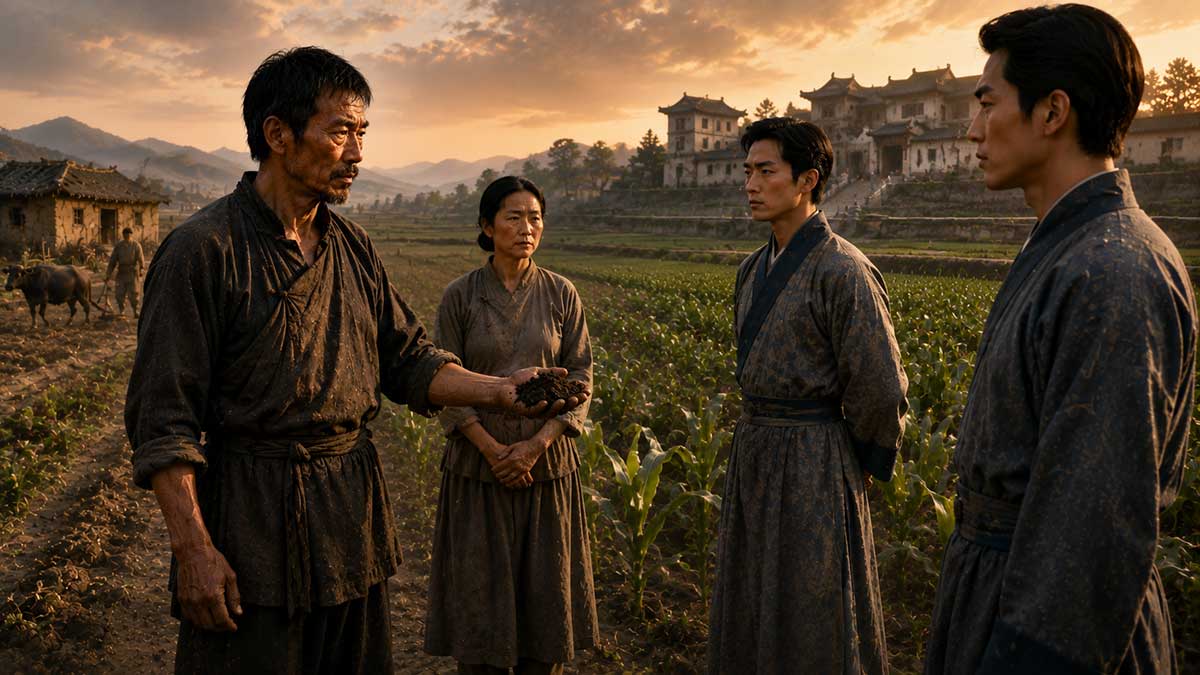
Wang Lung: What do you need to tell me?
Neither son answered.
The eldest had spoken first, but now he looked toward his younger brother.
Wang Lung noticed.
He had seen that look before.
Not often.
But enough.
It was the look of two men who had already discussed something before deciding how much their father should know.
Wang Lung: Speak.
Eldest Son: Father, there is no need to become angry.
Wang Lung's expression changed immediately.
Wang Lung: Then there is certainly something to make me angry.
Second Son: We have been discussing the future.
Wang Lung: Whose future?
Second Son: The family's.
Wang Lung looked from one son to the other.
Wang Lung: And you discuss the family's future without me?
Eldest Son: You will not always be here.
The words came too quickly.
His son regretted them immediately.
Wang Lung stared at him.
O-lan watched quietly.
A short time earlier they had been speaking about things that could not be returned.
Now another kind of loss had entered the conversation.
Wang Lung: I know I will die.
Eldest Son: Father, I did not mean...
Wang Lung: Do you think an old man forgets?
He bent and touched the soil.
Wang Lung: I know exactly where I will go.
His eldest son lowered his eyes.
Second Son: That is why we must think about what happens afterward.
Wang Lung slowly straightened.
Wang Lung: To what?
Neither answered.
Wang Lung knew.
His face changed.
Wang Lung: The land.
The second son spoke carefully.
Second Son: Some of it.
Wang Lung stared at him.
Wang Lung: Some?
Second Son: There may be reasons to sell certain fields.
Wang Lung: No.
Second Son: You have not heard the reasons.
Wang Lung: There are no reasons.
Second Son: Father...
Wang Lung: No land is sold.
His voice carried across the fields.
The sons exchanged another glance.
Wang Lung saw it.
Wang Lung: Do not look at each other!
They turned back toward him.
Wang Lung: Look at me.
Both did.
Wang Lung: You would sell this?
He pointed at the earth.
Wang Lung: This land?
Second Son: We would use its value elsewhere.
Wang Lung: Its value?
The phrase seemed almost obscene to him.
Wang Lung: You speak as though it were silver.
Second Son: Land has value, Father.
Wang Lung: Land gives value!
Second Son: It can do both.
Wang Lung: No.
Second Son: This is what I mean. You will not discuss it.
Wang Lung: There is nothing to discuss.
Eldest Son: Then why did you educate us?
Wang Lung turned toward him.
Wang Lung: What?
Eldest Son: Why did you send us away to learn?
Why did you want us dressed properly?
Why did you want people to respect our family?
Why did you move us into the great house?
Why did you spend your life raising us above what you had been?
Wang Lung looked confused.
Eldest Son: Did you do all that so we could return here and live exactly as you lived?
Wang Lung: I did it so you would never suffer as I suffered.
Eldest Son: We do not.
Wang Lung: Then be grateful!
His son recoiled.
Eldest Son: I am.
Wang Lung: You would sell the land that fed you!
Eldest Son: And you think that means I am not grateful.
Wang Lung: What else could it mean?
The eldest son struggled to control his frustration.
Eldest Son: Perhaps gratitude and obedience are not the same thing.
Wang Lung stared at him.
Wang Lung: A son owes obedience to his father.
O-lan looked at Wang Lung.
Eldest Son: Forever?
Wang Lung: What kind of question is that?
Eldest Son: A real one.
If you tell me how to live when I am a boy, I obey.
If you tell me how to live when I am a man, must I obey then?
If you tell my children how to live, must they obey too?
And their children?
When does your life stop deciding ours?
Wang Lung's face hardened.
Wang Lung: When you speak this way, I know I made your lives too easy.
His eldest son flinched.
Eldest Son: And there it is.
Wang Lung: There what is?
Eldest Son: The punishment for receiving what you gave us.
Wang Lung frowned.
Eldest Son: You wanted us to have easier lives.
Then whenever we act like men who had easier lives, you despise us for it.
Wang Lung stepped toward him.
Wang Lung: I do not despise you.
Eldest Son: You despise what we did not suffer.
The words stopped him.
His son continued.
Eldest Son: You speak of hunger.
I believe you.
You speak of the south.
I believe you.
You speak of pulling men through streets.
I believe you.
You speak of watching your children starve.
I believe you.
But I cannot remember what never happened to me.
Wang Lung stared at him.
Eldest Son: You made certain it never happened to me.
O-lan lowered her eyes.
Eldest Son: Was that not the point?
Wang Lung looked toward the fields.
Wang Lung: You do not understand.
Second Son: Then help us understand.
Wang Lung: I have spent my whole life telling you!
Second Son: You have told us what happened.
That is different.
Wang Lung turned sharply.
Second Son: I know the story of the famine.
I know we went south.
I know Mother begged.
I know you pulled a rickshaw.
I know you returned and bought land.
But knowing a story is not the same as having an empty stomach.
Wang Lung said nothing.
Second Son: You can give me the story.
You cannot give me the hunger.
The sentence settled over them.
Wang Lung looked at O-lan.
She had understood before he did.
O-lan: He is right.
Wang Lung seemed betrayed.
Wang Lung: You too?
O-lan: About this.
Yes.
Wang Lung: They would sell the land!
O-lan: I know.
Wang Lung: And you defend them?
O-lan: No.
I understand them.
Wang Lung: What is the difference?
O-lan: A large one.
She stepped closer.
O-lan: You remember the ox.
Wang Lung's expression changed.
O-lan: You remember eating what you once needed to work the fields.
You remember watching the grain disappear.
You remember leaving home because staying meant dying.
The boys know these things happened.
They do not wake from dreams of them.
Wang Lung looked at his sons.
For the first time, their ignorance of famine appeared to him differently.
He had always considered it a weakness.
Yet he had spent his life making that ignorance possible.
Wang Lung: I wanted to protect you.
Second Son: You did.
Wang Lung: I wanted you never to know hunger.
Eldest Son: We did not.
Wang Lung: I wanted you educated.
Eldest Son: We were.
Wang Lung: I wanted you respected.
Eldest Son: We are.
Wang Lung's voice weakened.
Wang Lung: Then why does it feel as though I failed?
His sons fell silent.
O-lan looked at him with unexpected tenderness.
O-lan: Perhaps because you succeeded.
Wang Lung turned toward her.
O-lan: You made them different from you.
He looked as if he had never considered success in such painful terms.
O-lan: Was that not what you wanted?
Wang Lung: Not like this.
O-lan: We do not choose every consequence of what we want.
Wang Lung looked down.
His hand tightened around a clump of earth.
Lotus had remained unusually quiet.
Now she spoke.
Lotus: Perhaps parents want an impossible thing.
Everyone looked at her.
Lotus: They want their children to receive the comfort but somehow inherit the suffering that paid for it.
Wang Lung said nothing.
Lotus: The child receives the house.
The parent wants him to remember sleeping without one.
The child receives food.
The parent wants him to remember hunger.
The child receives money.
The parent wants him to remember having none.
How?
Wang Lung: Then every generation must become weaker?
Second Son: Different is not always weaker.
Wang Lung: You think selling land is strength?
Second Son: I think refusing to examine whether something still serves the family can become another kind of weakness.
Wang Lung's anger returned.
Wang Lung: Serves the family?
He bent suddenly and scooped up soil.
Wang Lung: This served the family!
He held it before his son.
Wang Lung: This fed your grandfather.
This fed you.
This bought your education.
This paid for your fine clothes.
Everything you think you have become came from this!
His second son remained calm.
Second Son: Then perhaps the land did its work.
Wang Lung stared at him.
Wang Lung: What did you say?
Second Son: Perhaps it did what you needed it to do.
It carried the family from poverty into security.
Now perhaps some of its value can carry the family somewhere else.
Wang Lung looked genuinely horrified.
Wang Lung: You speak of land as though it were a ladder to throw away after climbing it.
Second Son: And you speak of it as though the family exists for the land.
Silence.
Wang Lung: The land is the family.
Eldest Son: Is it?
Wang Lung turned.
Eldest Son: If we sell one field, do I stop being your son?
Wang Lung: Do not twist my words.
Eldest Son: If the house burns, are we no longer a family?
Wang Lung: No.
Eldest Son: If the silver disappears?
Wang Lung: No.
Eldest Son: Then why does selling land destroy us?
Wang Lung struggled to explain something that had never needed words inside him.
Wang Lung: Because...
He looked across the fields.
Wang Lung: Because when everything else was gone, this remained.
His voice had changed.
The anger was disappearing.
Wang Lung: When there was no money, there was land.
When there was no food, I knew that if rain returned, the land could feed us again.
When we went south, I could bear it because this was here.
Waiting.
His sons listened.
Wang Lung: I would not sell it.
Even when we were starving.
Men wanted it.
I would not sell.
Because if I sold the land, there was nothing to come home to.
The eldest son's expression softened.
Wang Lung: You see fields.
I see the reason we came back.
No one spoke.
O-lan looked across the same fields.
O-lan: That is what they did not know.
Wang Lung nodded.
O-lan: And perhaps what you did not know was that they see something else.
He turned toward his sons.
Wang Lung: What?
The second son answered.
Second Son: Possibility.
Wang Lung frowned.
Second Son: You look at this field and see survival.
I look at it and see what could be done with what it is worth.
Trade.
Business.
Education for our children.
Another house.
Investment elsewhere.
Wang Lung: You see money.
Second Son: Yes.
Wang Lung: That is precisely what is wrong with you.
Second Son: Why?
Wang Lung stared.
Second Son: You bought land from the House of Hwang when they needed money.
Was that wrong?
Wang Lung froze.
Second Son: Their land became your opportunity.
You saw what they did not.
You took silver and turned it into fields.
Perhaps another generation turns fields into something else.
Wang Lung's face reddened.
Wang Lung: The Hwangs were fools!
Second Son: Perhaps their sons thought their fathers were fools too.
That landed harder than he intended.
The House of Hwang seemed suddenly close.
Wang Lung remembered its gates.
Its servants.
Its decadence.
Its decline.
The land slowly being sold.
Parcel by parcel.
He had always imagined his family as the opposite of theirs.
Now he could see the resemblance forming.
Wang Lung: That family died when it sold its land.
Second Son: Or perhaps it sold its land after it had already begun dying.
Wang Lung said nothing.
That distinction disturbed him.
Eldest Son: Father, I do not want our family destroyed.
Wang Lung: Then keep the land.
Eldest Son: You keep making the answer simple.
Wang Lung: Some answers are simple.
Eldest Son: Life was not simple when you took Mother's pearls.
Wang Lung flinched.
O-lan looked sharply at her son.
Eldest Son: I am not trying to hurt you.
But we just spent all this time learning that something small can mean more than its price.
Perhaps the opposite can be true too.
Something large can mean different things to different people.
Wang Lung looked at the earth in his hand.
The pearls returned to his mind.
Two small possessions O-lan had valued differently than he did.
Now the roles had reversed.
The land was precious to him in a way his sons could not feel.
For the first time, he understood the resemblance.
It frightened him.
Wang Lung: Are you saying the land is my pearls?
O-lan looked at him.
His eldest son did not answer.
The second did.
Second Son: Perhaps.
Wang Lung stared at the soil.
Wang Lung: Then you should understand why you cannot take it from me.
His sons fell silent.
O-lan's eyes rested on Wang Lung.
There was something almost painful in the symmetry.
O-lan: Yes.
They should.
Wang Lung looked at her.
O-lan: And perhaps you should understand something too.
Wang Lung: What?
O-lan: Knowing what something means to another person does not always mean it must belong to them forever.
Wang Lung's expression changed.
He knew she was no longer speaking only about land.
Wang Lung: Then what do you say?
O-lan looked at their sons.
Then at the fields.
O-lan: I say they should not sell it merely because they can.
Wang Lung nodded immediately.
O-lan: And you should not demand they keep it merely because you suffered.
His nod stopped.
O-lan: They should know what it cost.
They should know what it saved.
They should know who worked it.
They should know who is buried near it.
Then they must decide what they owe to that knowledge.
Wang Lung: They owe everything!
O-lan: Do they?
Wang Lung stared at her.
O-lan: Did our suffering belong to them before they were born?
He could not answer.
O-lan: We gave them life.
Perhaps life must eventually belong to the person living it.
Wang Lung looked toward his sons.
Wang Lung: Then a parent sacrifices everything and asks for nothing?
O-lan's face changed slightly.
O-lan: I know something about that.
Wang Lung lowered his eyes.
Again the pearls.
O-lan: I do not think children owe nothing.
They owe memory.
They owe respect.
They owe care when their parents grow weak.
They owe truth about where they came from.
She paused.
O-lan: But I do not know whether they owe us their entire future.
The eldest son looked at his mother with gratitude.
Wang Lung saw it.
Wang Lung: Easy for you to say. You never loved the land as I did.
O-lan's expression changed.
O-lan: No?
Wang Lung immediately realized his mistake.
O-lan: Who planted beside you?
He said nothing.
O-lan: Who harvested beside you?
Nothing.
O-lan: Who returned from the south?
Nothing.
O-lan: Who put the jewels into your hand that bought more of it?
Wang Lung looked down.
O-lan: Do not mistake silence for having no attachment.
The words echoed something she had said earlier.
Do not mistake strength for feeling no pain.
Wang Lung nodded.
Wang Lung: You are right.
O-lan looked back toward the fields.
O-lan: I loved the land.
Perhaps differently.
For you it became who you were.
For me it was where we survived.
Where my children ate.
Where I worked beside you.
Where I buried pieces of myself.
Her voice softened.
O-lan: I would be sad to see it sold.
Wang Lung looked at her hopefully.
O-lan: But I would be sadder if our sons kept it only because they feared disappointing a dead father.
Wang Lung absorbed the words.
Wang Lung: Then what is inheritance?
The second son answered first.
Second Son: What you leave us.
Wang Lung shook his head.
Wang Lung: That is property.
He looked toward O-lan.
Then toward his sons.
Wang Lung: I mean inheritance.
No one spoke.
At last the eldest son said:
Eldest Son: Perhaps it is what remains in us after what you leave us is gone.
Wang Lung stared at him.
The answer seemed to surprise the son himself.
Eldest Son: If the land remains but we become cruel men, what have we inherited from you?
Wang Lung listened.
Eldest Son: If the land is gone but we remember what you endured, care for our families, work hard, protect one another, and teach our children where we came from...
He hesitated.
Eldest Son: Have we lost everything?
Wang Lung looked down.
He wanted to say yes.
He could not.
The second son stepped nearer.
Second Son: Father, you keep asking us to remember your poverty.
But perhaps you should remember why you wanted us to escape it.
Wang Lung looked at him.
Second Son: You did not work so that suffering would continue.
You worked so it would stop.
Wang Lung's eyes filled.
Wang Lung: I only wanted you safe.
Second Son: We know.
Wang Lung: I wanted you to have more than I had.
Eldest Son: We know.
Wang Lung: Then how did we come to this?
O-lan answered.
O-lan: You gave them more.
Wang Lung looked at her.
O-lan: And "more" gave them choices.
The same word from Topic 1 returned.
Choices.
Wealth had given Wang Lung choices poverty never allowed.
Now his success had given his sons choices he himself had never possessed.
Wang Lung finally saw the pattern.
He had judged himself by what he did with his choices.
Now he had to allow his sons to face theirs.
That frightened him more than controlling them would have.
Wang Lung: Promise me one thing.
The sons waited.
Wang Lung: Do not sell it quickly.
Second Son: Father...
Wang Lung: Listen.
His voice was no longer commanding.
It was pleading.
Wang Lung: Walk it first.
All of it.
Not as men calculating what it is worth.
Walk it as I walked it.
Go where we planted.
Go where the house once stood.
Remember your grandfather.
Remember your mother.
Remember that when there was almost nothing left, this was what remained.
His sons listened.
Wang Lung: Then decide.
The eldest son looked surprised.
Eldest Son: You would let us decide?
The question hurt Wang Lung.
He looked at the soil.
Wang Lung: I will be dead.
The eldest son started to object.
Wang Lung raised his hand.
Wang Lung: No.
It is true.
Perhaps I have spent too much time pretending that what happens after my death can still belong to me.
The second son looked at him differently now.
Wang Lung: But promise me you will understand what you are selling before you sell it.
The brothers looked at one another.
This time Wang Lung did not become angry at the glance.
Finally, the eldest son nodded.
Eldest Son: I promise.
The second son hesitated.
Then nodded too.
Second Son: I promise.
Wang Lung looked relieved.
Yet not peaceful.
There was still something he could not release.
Wang Lung: And if you walk it...
His voice weakened.
Wang Lung: Perhaps you will decide to keep it.
His eldest son smiled sadly.
Eldest Son: Perhaps.
It was not the promise Wang Lung wanted.
But it was an honest answer.
They began walking.
Wang Lung moved more slowly than the others.
O-lan stayed beside him.
After several steps, he spoke quietly enough that only she could hear.
Wang Lung: I thought I was buying the land for them.
O-lan: You were.
Wang Lung: Now they may sell it.
O-lan: Yes.
Wang Lung: Then what was the purpose?
O-lan looked at him.
O-lan: Did it feed them?
Wang Lung: Yes.
O-lan: Did it shelter them?
Wang Lung: Yes.
O-lan: Did it give them lives we could not have imagined when we were starving?
Wang Lung looked at his sons walking ahead.
Wang Lung: Yes.
O-lan: Then perhaps it already fulfilled much of its purpose.
Wang Lung shook his head.
Wang Lung: You can let things go more easily than I can.
O-lan looked ahead.
O-lan: I had more practice.
Wang Lung stopped walking.
O-lan took two more steps before realizing.
She turned.
Their eyes met.
He knew what she meant.
The pearls.
Children leaving.
Youth.
Health.
Life itself.
O-lan had spent her existence losing things and continuing anyway.
Wang Lung had spent his trying to accumulate enough that loss could never reach him.
And yet here they both were.
At the same destination.
Wang Lung: O-lan.
She waited.
Wang Lung: Were you ever afraid that everything we built would disappear?
She considered it.
O-lan: Of course.
Wang Lung: Then how could you bear it?
O-lan looked down.
She pressed one foot gently against the earth.
O-lan: I never believed it was mine forever.
Wang Lung stared at her.
Ahead of them, the sons had stopped.
They were waiting.
Wang Lung looked at the fields stretching into darkness.
For the first time in his life, the words my land felt strange.
Not wrong.
But incomplete.
He looked at O-lan.
Wang Lung: If it is not ours forever, whose is it?
O-lan looked down at the soil beneath them.
Then back at him.
O-lan: Perhaps that is the last question.
Together, they walked after their sons.
This sets up Topic 5 naturally: Who Really Owns the Earth? It can now move beyond the family dispute into mortality, possession, impermanence, what Wang Lung's life meant, and what survives after the things we call "ours" pass into other hands.
Topic 5: Who Really Owns the Earth?
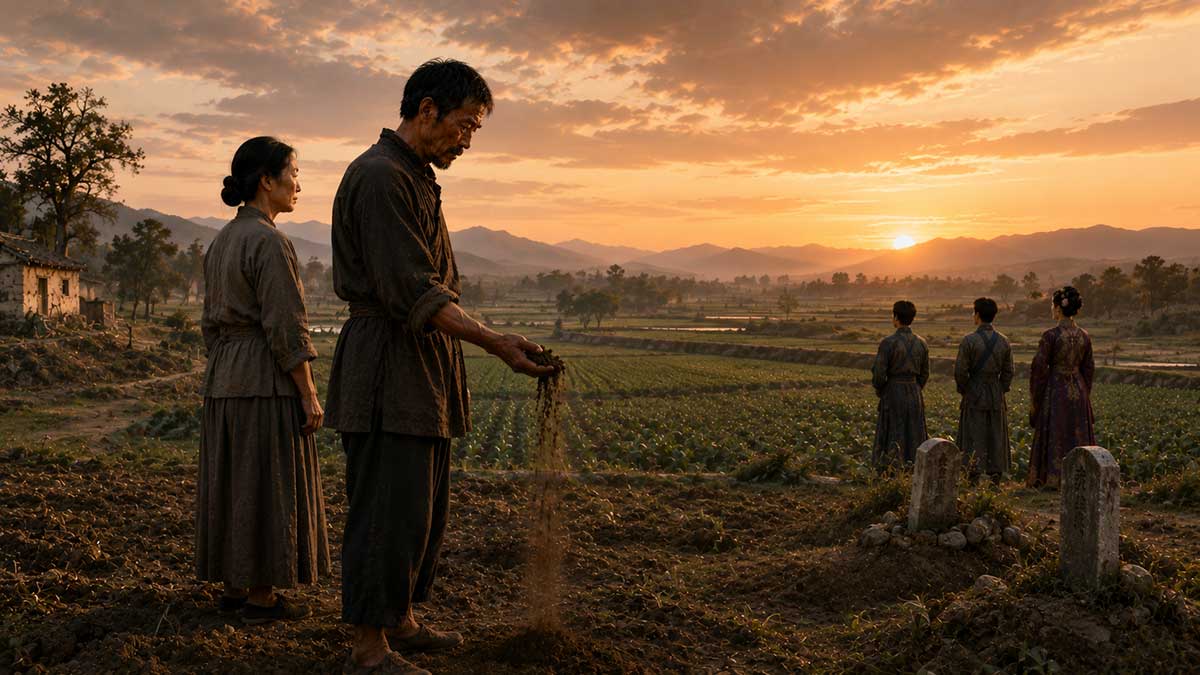
They walked until the house could no longer be seen.
The fields were almost dark now.
Wang Lung knew every part of them.
He knew where water collected after heavy rain.
He knew which soil held moisture longest.
He knew where wheat grew best and where rice demanded more labor.
He knew where his father had once walked.
Where O-lan had bent beside him.
Where his children had played when there was enough food for children to play.
His sons walked ahead.
Wang Lung stopped.
Wang Lung: Here.
The others turned.
Eldest Son: Here what?
Wang Lung pointed toward the ground.
Wang Lung: I bought this field from the House of Hwang.
His sons looked around.
There was nothing visibly different about it.
Second Son: This one?
Wang Lung: Yes.
He remembered the pride.
He had been a poor farmer purchasing land from a great family.
The transaction had seemed almost impossible.
A small piece of their world becoming his.
Wang Lung: I thought this was the beginning.
O-lan stood beside him.
O-lan: It was.
Wang Lung nodded.
Then he looked at his sons.
Wang Lung: Do you know what I thought when I bought it?
Eldest Son: That you wanted more land?
Wang Lung smiled.
Wang Lung: I thought no one could take it from me.
The second son looked down at the soil.
Wang Lung: Silver could disappear.
Food could be eaten.
A house could burn.
An ox could die.
But land...
He pressed his foot against the earth.
Wang Lung: Land remained.
O-lan watched him.
O-lan: The land remained.
Wang Lung noticed the distinction.
Wang Lung: That is what I said.
O-lan: No.
You said no one could take it from you.
Wang Lung looked at her.
O-lan: That is different.
He frowned.
Wang Lung: I bought it.
O-lan: Yes.
Wang Lung: I paid for it.
O-lan: Yes.
Wang Lung: Then it was mine.
O-lan looked toward the darkness.
O-lan: Who owned it before you?
Wang Lung answered immediately.
Wang Lung: The House of Hwang.
O-lan: And before them?
Wang Lung stopped.
Wang Lung: I do not know.
O-lan: Someone.
Wang Lung: Of course.
O-lan: And before that?
He looked impatient.
Wang Lung: What does it matter?
O-lan: Perhaps it matters if we are asking whose land it is.
Wang Lung looked down.
His eldest son smiled slightly.
Wang Lung: Do not look pleased. This concerns you too.
The smile disappeared.
Wang Lung: If you sell it, you will think it belongs to whoever pays you.
Second Son: Legally, it would.
Wang Lung: I am not speaking of silver now.
That surprised everyone.
Wang Lung bent slowly.
His knees resisted him.
O-lan moved instinctively to help.
He raised a hand.
Wang Lung: I can still reach my own earth.
He touched it.
Then he stopped.
His own earth.
The phrase sounded different after what O-lan had said.
He picked up a handful.
Wang Lung: The House of Hwang called this theirs.
O-lan: Yes.
Wang Lung: Then I called it mine.
O-lan: Yes.
Wang Lung: Perhaps one day they will call it theirs.
He gestured toward his sons.
Second Son: Perhaps.
Wang Lung: Then someone else.
No one answered.
Wang Lung opened his hand.
The soil remained there.
Wang Lung: It does not know any of our names.
O-lan looked at him.
O-lan: No.
Wang Lung almost laughed.
Wang Lung: I spent my life loving something that does not know I exist.
O-lan: Does that make the love foolish?
He thought.
Wang Lung: Perhaps.
O-lan: A child does not remember every meal his mother cooked.
Was cooking foolish?
Wang Lung looked at her.
O-lan: The earth does not have to know your name for your life upon it to matter.
He closed his fingers around the soil.
Wang Lung: Then what does owning mean?
His second son answered.
Second Son: Responsibility, perhaps.
Wang Lung looked surprised.
Second Son: You said I see land only as money.
Perhaps sometimes I do.
But if something belongs to you, perhaps ownership means you are responsible for what happens to it during your time.
Wang Lung considered this.
Eldest Son: Grandfather had the land before us.
You cared for it.
One day we may care for it.
Or someone else may.
Wang Lung: You still leave room for selling it.
Eldest Son: I promised honesty.
Not obedience.
Wang Lung sighed.
Wang Lung: You have become very skilled at reminding me of that.
O-lan's mouth almost formed a smile.
They continued walking.
After some time, Wang Lung spoke again.
Wang Lung: I thought money would make us safe.
O-lan: It helped.
Wang Lung: It did.
He wanted to be fair.
Wang Lung: We ate.
We had shelter.
The children lived differently.
There were servants.
There was medicine when it could be bought.
We did not return to the south begging.
He paused.
Wang Lung: But I was never safe.
O-lan looked at him.
Wang Lung: When I had little land, I feared losing it.
When I had much land, I feared losing more.
When I had silver, I feared spending it.
When my sons grew, I feared what they would become.
When I became old, I feared what would happen after I died.
He shook his head.
Wang Lung: I kept building walls against fear.
Fear kept finding another door.
No one answered for a moment.
Lotus: Perhaps you wanted money to do something money cannot do.
Wang Lung looked at her.
Wang Lung: What?
Lotus: Promise you tomorrow.
Wang Lung considered this.
Lotus: Money can buy comfort.
That is real.
It can buy food.
Medicine.
Warmth.
A beautiful room.
People who pretend to like you.
She smiled slightly.
Lotus: Sometimes even people who genuinely like you.
The sons laughed softly.
Then Lotus became serious.
Lotus: But it cannot make anything stay.
Wang Lung looked at her.
For a woman who had once represented pleasure and luxury in his life, she sounded strangely unsentimental now.
Lotus: Beauty does not stay.
Wang Lung saw the age in her face.
Lotus knew he saw it.
She did not turn away.
Lotus: Youth does not stay.
Desire does not stay.
Neither does wealth if fools inherit it.
The second son smiled.
Lotus: Do not smile. I may mean you.
His smile vanished.
Lotus: Nothing stays because we paid for it.
Wang Lung looked toward O-lan.
She had stayed beside him through nearly everything.
Then she had died.
Wang Lung: No.
Nothing does.
They reached another part of the fields.
Wang Lung stopped again.
He knew what lay nearby.
Family graves.
His father.
O-lan.
The dead returning physically to the same earth that had fed the living.
Wang Lung's voice became quiet.
Wang Lung: I used to think of death differently.
Eldest Son: How?
Wang Lung: As something that interrupted life.
He looked at the earth.
Wang Lung: Now I wonder if it completes it.
His sons listened.
Wang Lung: We take from the earth all our lives.
Food.
Wood.
Water.
Everything.
Then finally...
He touched his chest.
Wang Lung: We give this back.
O-lan watched him.
O-lan: You always wanted to return here.
Wang Lung: Yes.
O-lan: Even when you lived in the great house.
Wang Lung: Especially then.
He smiled sadly.
Wang Lung: The richer I became, the more foolish it seemed that dirt should comfort me.
O-lan: Perhaps it reminded you who you were before everyone began calling you important.
Wang Lung nodded.
Wang Lung: In the field, nobody cared whether I was important.
Rain did not fall because I had money.
Seed did not grow because men respected me.
Drought did not spare my crops because I owned many fields.
The earth never bowed to me.
O-lan looked at him.
O-lan: Perhaps that is why you trusted it.
Wang Lung smiled.
Wang Lung: Perhaps.
His eldest son looked at the land differently now.
Eldest Son: Father, do you regret anything besides Mother?
Wang Lung glanced toward O-lan.
The question could have wounded him.
Instead he considered it.
Wang Lung: Many things.
Eldest Son: What most?
Wang Lung thought.
Wang Lung: I mistook having more for becoming more.
His sons were silent.
Wang Lung: When I bought my first field from the Hwangs, I became more secure.
Then I began thinking every new thing made me more of a man.
More land.
More silver.
A greater house.
More respect.
He looked toward Lotus.
Wang Lung: A beautiful woman.
Lotus met his eyes without anger.
Wang Lung: But a man can surround himself with things that increase his importance and still become smaller inside.
O-lan watched him closely.
Wang Lung: I think there were times when that happened to me.
Second Son: And times when it did not.
Wang Lung looked at him.
Second Son: You are judging your whole life by its failures.
Wang Lung seemed surprised that his son was defending him.
Second Son: You kept the family alive.
You built something from almost nothing.
You survived.
You gave us choices you never had.
Eldest Son: You loved imperfectly.
But you loved.
O-lan looked toward her son.
Wang Lung looked at her too.
Wang Lung: Is that true?
O-lan knew what he was asking.
Not whether he had worked.
Not whether he had provided.
Whether he had loved.
The question from Topic 2 had returned.
O-lan: Yes.
Wang Lung's eyes filled.
O-lan continued before he could take too much comfort from it.
O-lan: And you hurt me.
He nodded.
O-lan: Both are true.
Wang Lung: Yes.
O-lan: You do not need to make yourself entirely bad to admit what you did badly.
Wang Lung looked down.
O-lan: Nor entirely good to believe your life mattered.
For a long moment, he said nothing.
Then:
Wang Lung: I wish I had understood you sooner.
O-lan: So do I.
There was no cruelty in the answer.
Wang Lung smiled sadly.
Wang Lung: You never make forgiveness easy.
O-lan: Would easy forgiveness teach you anything?
He laughed.
A genuine laugh.
Wang Lung: Perhaps you should have spoken more when we were young.
O-lan: Perhaps you should have listened more.
Wang Lung: There she is.
O-lan looked almost amused.
For a brief moment, they were no longer symbols of anything.
Not farmer and wife.
Not oppressor and victim.
Not man and earth.
Just two people who had shared a difficult life and understood it differently.
Wang Lung turned toward his sons.
Wang Lung: I have another question.
They waited.
Wang Lung: Suppose you sell everything.
His eldest son sighed.
Eldest Son: Father...
Wang Lung: Listen.
No anger.
Suppose the fields are sold.
The house is gone.
The silver spent.
Suppose your children remember none of this.
What remains of my life?
The sons looked at each other.
Neither answered quickly.
O-lan did.
O-lan: Them.
Wang Lung looked at her.
She nodded toward their sons.
O-lan: And whoever comes after them.
Wang Lung: But if they forget me?
O-lan: Must they remember your name for your life to have changed theirs?
Wang Lung was quiet.
O-lan: You ate grain planted by men whose names you never knew.
You walked on roads built by people you never knew.
You bought land from families whose ancestors you never knew.
Their lives still reached yours.
Wang Lung looked at his sons.
O-lan: Perhaps ours will reach people who never know us.
Wang Lung: Then memory is not necessary?
O-lan: Memory is precious.
But perhaps meaning is larger than memory.
The idea seemed to trouble and comfort him at once.
Wang Lung: Then what makes a life worth living if nothing remains?
O-lan shook her head.
O-lan: You keep saying nothing remains.
She pointed toward the fields.
O-lan: Did people eat what grew here?
Wang Lung: Yes.
O-lan: Then it mattered.
O-lan: Did our children live?
Wang Lung: Yes.
O-lan: Then it mattered.
O-lan: Did we sometimes laugh?
Wang Lung smiled.
Wang Lung: Sometimes.
O-lan: Then it mattered.
O-lan: Did you love anyone?
Wang Lung looked at her.
Wang Lung: Yes.
O-lan: Then it mattered.
Wang Lung's eyes lowered.
O-lan: Why must something last forever before you allow it to have meaning?
The question seemed to open something inside him.
For most of his life, permanence had been his measure of safety.
Land was valuable because it remained.
Family mattered because it continued.
Sons mattered because they carried the name.
Now O-lan was asking him to consider another possibility.
A harvest mattered precisely because it was consumed.
A childhood mattered precisely because it ended.
Love mattered despite death.
Perhaps partly because of it.
Wang Lung opened his hand.
The soil he had been carrying had dried against his palm.
He let a little fall.
Wang Lung: When I was young, I thought this land would save me.
O-lan: It did.
Wang Lung: Then I thought owning more of it would make me important.
O-lan waited.
Wang Lung: It did not.
More soil slipped between his fingers.
Wang Lung: Then I thought leaving it to my sons would make something of me permanent.
He looked at them.
Wang Lung: Perhaps that was foolish too.
Eldest Son: Not foolish.
Second Son: Human.
Wang Lung looked at his sons.
There was affection in his face now, mixed with something more difficult.
Release.
Wang Lung: I still do not want you to sell it.
His sons smiled.
Eldest Son: We know.
Wang Lung: I may haunt you if you do.
Second Son: That may reduce the price.
For a second there was silence.
Then O-lan laughed.
It was a small laugh.
Wang Lung turned toward her.
He could barely remember hearing that sound.
Soon everyone was smiling.
The moment passed.
The night grew deeper.
Wang Lung looked again at his hands.
He remembered them as a young man's hands.
Cracked.
Strong.
Covered in mud.
Then hands counting silver.
Hands touching Lotus.
Hands taking two pearls.
Hands holding children.
Hands trembling beside O-lan when illness had already taken too much of her.
The same hands.
Different man.
Or perhaps the same man revealed slowly across a lifetime.
Wang Lung: O-lan.
O-lan: Yes?
Wang Lung: If you could live it again, would you?
The others became quiet.
O-lan thought for a long time.
O-lan: Not the same way.
Wang Lung nodded.
He deserved that.
Then she continued.
O-lan: But I would want some of it again.
He looked at her.
Wang Lung: What?
O-lan looked across the dark fields.
O-lan: The mornings before anyone else woke.
The first green after rain.
Our children when they were small.
Your father complaining about his food.
Wang Lung smiled.
O-lan: The years when we worked beside each other and neither of us needed to explain what had to be done.
She looked at him.
O-lan: There were good things.
Wang Lung swallowed.
Wang Lung: And the pearls?
O-lan looked at him.
A faint smile appeared.
O-lan: I would keep them.
Wang Lung laughed softly through tears.
Wang Lung: Yes.
O-lan: Both.
Wang Lung: Both.
Lotus looked away, smiling.
The sons stood quietly.
Wang Lung opened his hand completely.
The last earth fell.
He looked at his empty palm.
Once, emptiness had terrified him.
An empty granary.
An empty purse.
An empty field.
An empty stomach.
He had spent his life filling things.
Perhaps old age was teaching him another task.
How to open his hand.
Wang Lung: I called it mine for so long.
O-lan looked down at the earth.
O-lan: For a while, it was.
Wang Lung: And after me?
O-lan: Someone else will call it theirs.
Wang Lung: And after them?
O-lan: Someone else.
Wang Lung nodded.
Wang Lung: Then who truly owns it?
O-lan bent down.
She took a handful of soil.
Wang Lung watched her.
Then she placed it gently into his palm.
O-lan: Perhaps no one.
She closed his fingers around it.
O-lan: Perhaps everyone who cares for it gets to hold it for a little while.
Wang Lung looked at their joined hands.
Her rough hand over his.
The hands that had planted together.
Built together.
Lost together.
Aged together.
Then O-lan removed hers.
Wang Lung slowly opened his fingers.
The earth slipped through.
He did not try to stop it.
His sons watched.
The soil returned to the soil.
Wang Lung looked across the fields one final time.
He had come into life needing the earth.
He had spent his life trying to possess it.
And now, near the end, he understood something simpler.
The earth had never needed him.
He had needed it.
It fed him when he was poor.
Humbled him when he was rich.
Waited when he left.
Received those he loved.
And one day it would receive him too.
Wang Lung looked at O-lan.
Wang Lung: It was good earth.
O-lan looked across the dark fields.
O-lan: It still is.
And together they stood upon something that had belonged to countless people before them, would belong to countless people after them, and had never truly belonged to any of them at all.
Final Thoughts
Perhaps Wang Lung's greatest tragedy is not that he became wealthy.
It is that he sometimes forgot what his struggle had been for.
He wanted land so his family would never starve.
He wanted money so his children would be safe.
He wanted status so he would never again feel small.
These desires were understandable.
Yet once survival was secure, desire did not disappear.
It changed.
Food became land.
Land became status.
Security became comparison.
Enough became more.
O-lan reveals another side of the story.
She asks for very little, yet that does not mean she wants nothing.
Her two pearls become powerful precisely because they serve no practical purpose. Almost everything in her life exists for someone else: her labor, her body, her time, her strength.
The pearls belong only to her.
When Wang Lung takes them, the deeper wound is not the loss of jewelry.
It is the realization that he never stopped long enough to ask why they mattered.
Then the story turns toward the sons.
Wang Lung spent his life making certain they would never experience the hunger that shaped him. Yet he expects them to possess the values that hunger created.
This may be one of the novel's most enduring questions:
How can parents pass down wisdom when they cannot, and should not, pass down the suffering that produced it?
By the end, even the land itself becomes part of that question.
Wang Lung believes the earth belongs to him because he bought it, worked it, protected it, and loved it.
Yet others owned it before him.
Others will hold it after him.
Perhaps that is the final humility offered by The Good Earth.
We possess very little forever.
Not wealth.
Not beauty.
Not our children.
Not even the ground beneath our feet.
What matters may be how we care for these things during the short period in which they are placed in our hands.
And perhaps the deepest lesson of Wang Lung's life is this:
A good life is not measured only by what we manage to acquire.
It is also measured by what we learn to value before it is gone.
Short Bios:
Wang Lung
The central character of The Good Earth. Wang Lung begins as a poor farmer deeply attached to his land. Through hard work, survival, and opportunity, he becomes wealthy, yet prosperity gradually complicates his values, relationships, and sense of identity.
O-lan
Wang Lung’s wife and one of the novel’s most powerful characters. Formerly enslaved in the House of Hwang, she is hardworking, resourceful, quiet, and remarkably resilient. Her sacrifices help build the family’s prosperity, though much of her emotional life remains unseen by those around her.
Lotus
A courtesan whom Wang Lung becomes infatuated with after gaining wealth. She later enters his household as his concubine. Lotus represents beauty, pleasure, and the new desires prosperity makes available to Wang Lung, but she is not solely responsible for the choices he makes.
Eldest Son
Wang Lung’s first son grows up with education, comfort, and social expectations very different from his father’s childhood. His life reflects the generational distance created by Wang Lung’s success.
Second Son
More practical and financially minded than his elder brother, the second son views land and wealth differently from Wang Lung. His perspective raises one of the novel’s central generational questions: must children preserve the world their parents struggled to build?
Pearl S. Buck
Pearl S. Buck (1892–1973) was an American writer who spent much of her early life in China. Her intimate familiarity with Chinese language and daily life deeply shaped her fiction. The Good Earth, published in 1931, became an international success and won the Pulitzer Prize. Buck received the Nobel Prize in Literature in 1938 for her writing about life in China and her biographical works.
Leave a Reply