• Skip to main content
  • Skip to primary sidebar
  • Skip to footer
ImaginaryTalks.com
  • Spirituality and Esoterica
    • Afterlife Reflections
    • Ancient Civilizations
    • Angels
    • Astrology
    • Bible
    • Buddhism
    • Christianity
    • DP
    • Esoteric
    • Extraterrestrial
    • Fairies
    • God
    • Karma
    • Meditation
    • Metaphysics
    • Past Life Regression
    • Spirituality
    • The Law of Attraction
  • Personal Growth
    • Best Friend
    • Empathy
    • Forgiveness
    • Gratitude
    • Happiness
    • Healing
    • Health
    • Joy
    • Kindness
    • Love
    • Manifestation
    • Mindfulness
    • Self-Help
    • Sleep
  • Business and Global Issues
    • Business
    • Crypto
    • Digital Marketing
    • Economics
    • Financial
    • Investment
    • Wealth
    • Copywriting
    • Climate Change
    • Security
    • Technology
    • War
    • World Peace
  • Culture, Science, and A.I.
    • A.I.
    • Anime
    • Art
    • History & Philosophy
    • Humor
    • Imagination
    • Innovation
    • Literature
    • Lifestyle and Culture
    • Music
    • Science
    • Sports
    • Travel

Nobel Prize literature

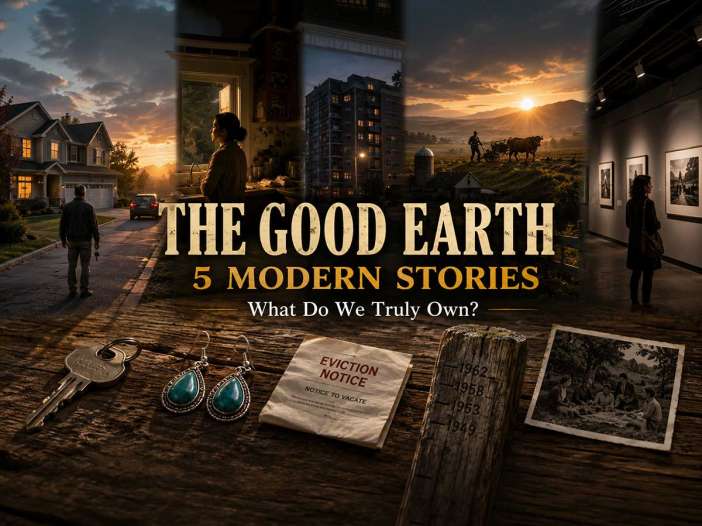
The Good Earth: 5 Modern Stories About Love and Sacrifice

September 4, 2026 by Nick Sasaki Leave a Comment

Introduction Nearly a century after Pearl S. Buck wrote The Good Earth, most of us no longer live in Wang Lung’s world.We may never plow a field, survive a famine, take a concubine, or watch our children debate whether to sell the land that fed generations of our family.And yet the questions beneath Wang Lung and O-lan’s lives have hardly disappeared.They … [Read more...] about The Good Earth: 5 Modern Stories About Love and Sacrifice

Filed Under: Literature, Nobel 100 Best Books Tagged With: Classic Literature, compassion, cultural identity, family sacrifice, generational conflict, hidden desires, Imaginary Talks, inheritance, land and memory, letting go, literary themes, love and sacrifice, modern short stories, Nobel Prize literature, O-lan, parent child relationships, Pearl S. Buck, poverty and wealth, The Good Earth, Wang Lung

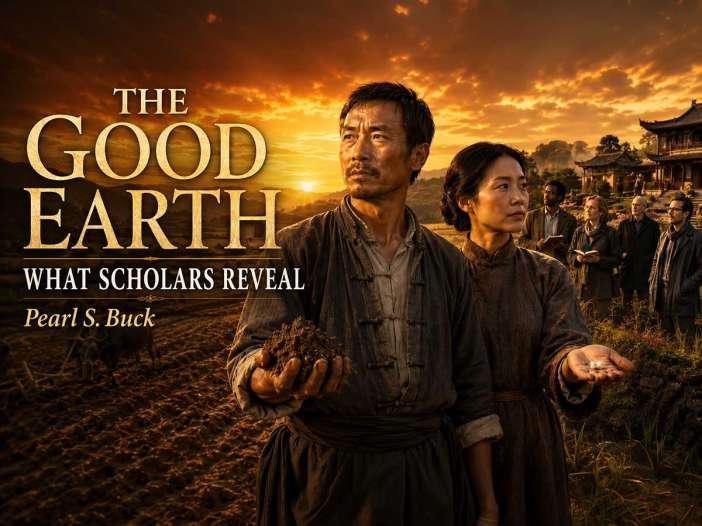
The Good Earth: What Scholars Reveal About Wang Lung and O-lan
September 3, 2026 by Nick Sasaki Leave a Comment

the good earth scholars

Introduction What happens when we stop asking whether Wang Lung was right or wrong and begin asking why he became the man he became?Pearl S. Buck’s The Good Earth is often remembered as a story about poverty, land, family, and the dangers of wealth. Yet beneath Wang Lung’s rise from struggling farmer to prosperous landowner are harder questions about human … [Read more...] about The Good Earth: What Scholars Reveal About Wang Lung and O-lan

Filed Under: Spirituality Tagged With: Chinese family, Classic Literature, cultural representation, famine, filial piety, generational conflict, Imaginary Talks, land symbolism, literary analysis, Nobel Prize literature, O-lan, Pearl S. Buck, Pulitzer Prize novels, scarcity psychology, scholar discussion, The Good Earth, two pearls, Wang Lung, wealth and morality, women in Chinese history

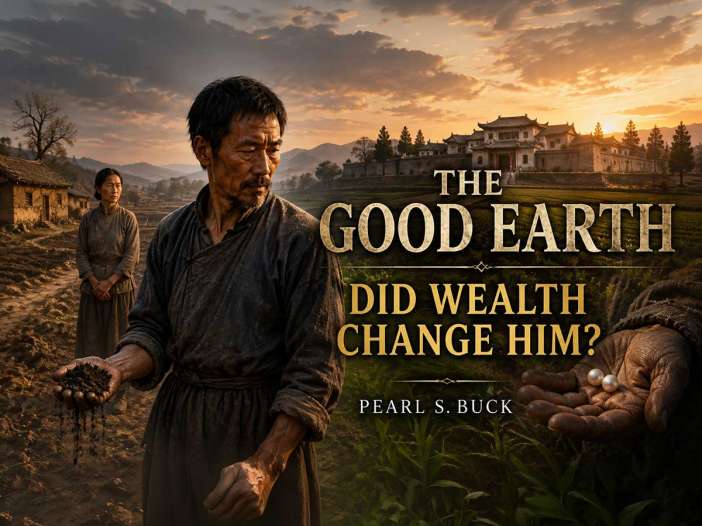
The Good Earth: Did Wealth Destroy What Wang Lung Loved?
September 3, 2026 by Nick Sasaki Leave a Comment

the good earth

Introduction What happens when a man spends his entire life trying to protect his family from poverty, only to discover that prosperity brings dangers he never expected?Pearl S. Buck’s The Good Earth begins with one of the simplest human desires imaginable: Wang Lung wants enough.Enough food.Enough land.Enough security that his family will never again fear … [Read more...] about The Good Earth: Did Wealth Destroy What Wang Lung Loved?

Filed Under: Imaginary Talks, Literature Tagged With: Book Discussion, character conversation, Chinese literature themes, Classic Literature, family sacrifice, generational conflict, Imaginary Talks, land symbolism, literary analysis, literature discussion, Lotus, marriage and love, Nobel Prize literature, O-lan, Pearl S. Buck, Pulitzer Prize novels, The Good Earth, two pearls, Wang Lung, wealth and poverty

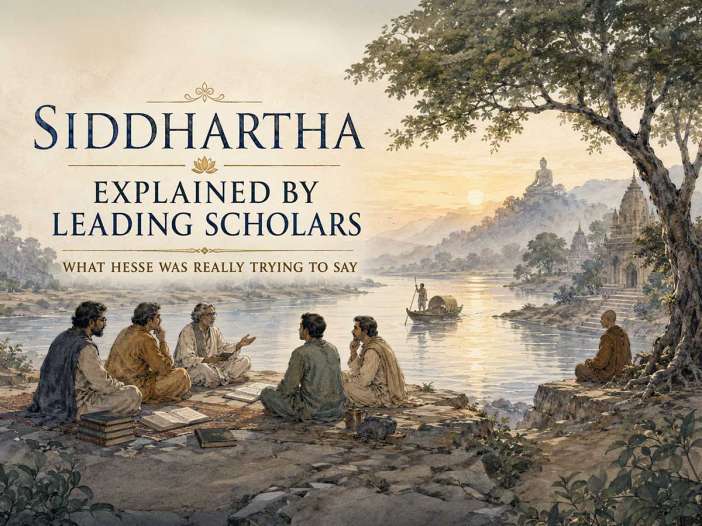
Siddhartha Explained by Leading Hermann Hesse Scholars
August 14, 2026 by Nick Sasaki Leave a Comment

Siddhartha explained by leading scholars

Introduction Hermann Hesse’s Siddhartha has been read for generations as a spiritual classic.But what kind of spiritual book is it really?Is it Buddhist?Hindu?A European novel wearing Indian religious clothing?A defense of radical individuality?A critique of spiritual pride?Or something far harder to classify?In this imaginary discussion, leading Hesse … [Read more...] about Siddhartha Explained by Leading Hermann Hesse Scholars

Filed Under: Literature, Nobel 100 Best Books, Spirituality Tagged With: Buddhist literature, comparative religion, counterculture literature, Eastern philosophy, Gautama Buddha, Govinda, Hermann Hesse, Hermann Hesse scholars, imaginary scholar discussion, Indian philosophy, Literary Criticism, Nobel Prize literature, river symbolism, self discovery, Siddhartha, Siddhartha analysis, Spiritual awakening, spiritual pride, Western individualism, wisdom

Siddhartha Explained Through Its Characters: Love, Loss, and Enlightenment
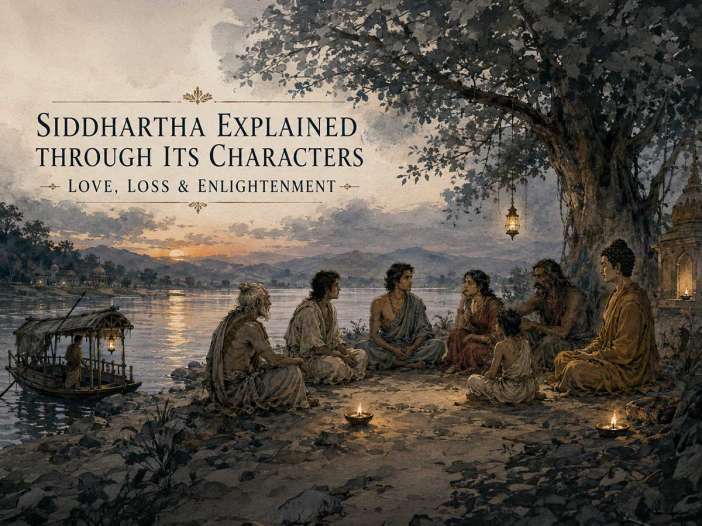
August 14, 2026 by Nick Sasaki Leave a Comment

Siddhartha explained

Introduction Hermann Hesse’s Siddhartha is often remembered as a novel about enlightenment, spiritual searching, and the wisdom of the river.But there is another way to read it.What if Siddhartha’s greatest lessons did not come from the Brahmins, the Samanas, Buddha, or even the river?What if they came from the people who loved him?His father had to watch … [Read more...] about Siddhartha Explained Through Its Characters: Love, Loss, and Enlightenment

Filed Under: Literature, Nobel 100 Best Books, Spirituality Tagged With: Enlightenment, father and son, Gautama Buddha, Govinda, Hermann Hesse, imaginary conversation, Kamala, literary analysis, love and attachment, Nobel Prize literature, self discovery, Siddhartha, Siddhartha analysis, Siddhartha characters, Siddhartha son, Siddhartha summary, Spiritual awakening, spiritual fiction, Vasudeva, wisdom

Han Kang Human Acts Explained by Leading Scholars
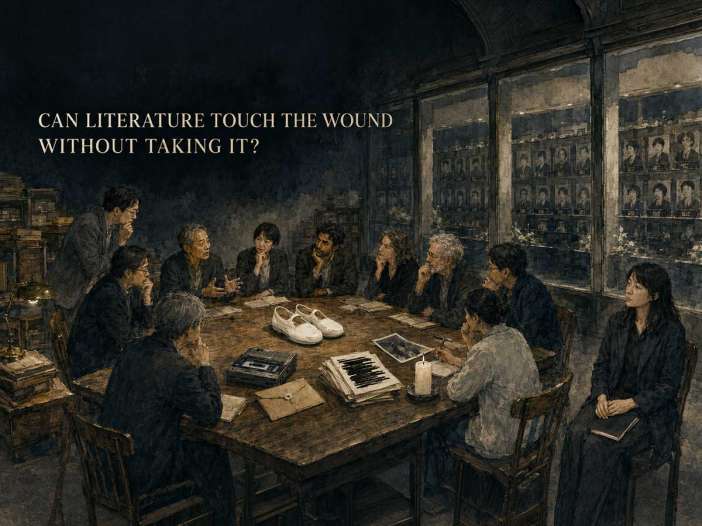
August 12, 2026 by Nick Sasaki Leave a Comment

The Scholars and the Unworn Shoes

Introduction Han Kang’s Human Acts begins with a murdered boy, but its questions reach far beyond one death.How does a government transform citizens into enemies? Can the body preserve a truth that official history suppresses? Does a survivor owe testimony to the public? Can poetic language represent torture without making suffering beautiful? What … [Read more...] about Han Kang Human Acts Explained by Leading Scholars

Filed Under: Literature, Nobel 100 Best Books Tagged With: bodily memory, censorship, collective memory, Dong-ho, Gwangju Uprising, Han Kang, historical trauma, Human Acts, Human Rights, imaginary conversation, Korean literature, literary analysis, literary scholars, Nobel Prize literature, political violence, reader responsibility, state violence, survivor testimony, translation studies, trauma theory

Han Kang Human Acts: An Imaginary Conversation with the Dead
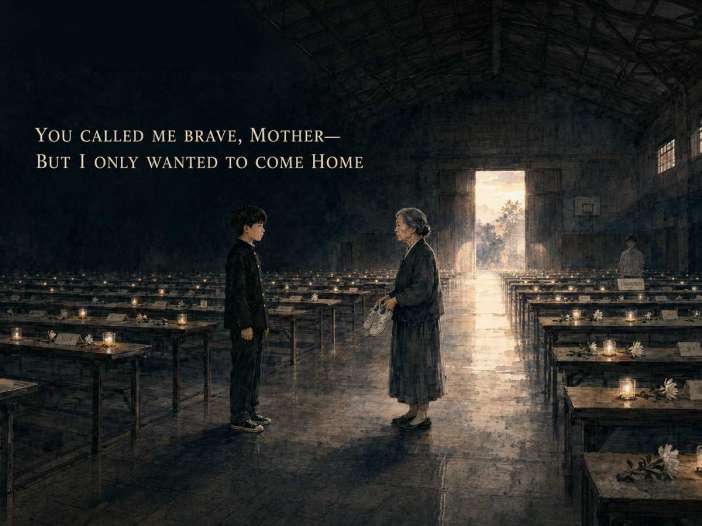
August 12, 2026 by Nick Sasaki Leave a Comment

Introduction In May 1980, the South Korean military entered Gwangju and opened fire on citizens calling for democracy. Among the dead was a fifteen-year-old boy whose brief life became the emotional center of Han Kang’s Human Acts.In the novel, his name is Dong-ho.He remains at the provincial office gymnasium, helping volunteers identify bodies and care for … [Read more...] about Han Kang Human Acts: An Imaginary Conversation with the Dead

Filed Under: Literature, Nobel 100 Best Books Tagged With: censorship, Dong-ho, Grief, Gwangju Uprising, Han Kang, historical trauma, Human Acts, Human Rights, imaginary conversation, Jeong-dae, Korean History, Korean literature, literary analysis, memory, mothers and sons, Nobel Prize literature, political violence, state violence, survivor guilt, testimony

Snow Country Analysis: Kawabata Scholars Explain It
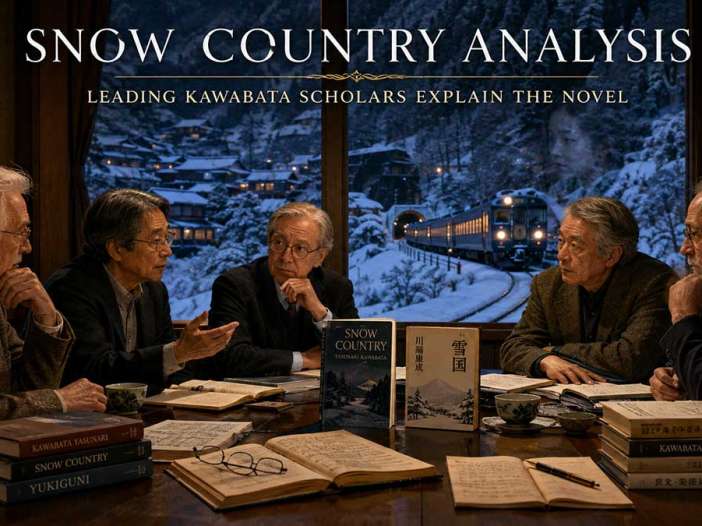
August 12, 2026 by Nick Sasaki Leave a Comment

snow-country-analysis-

Introduction Yasunari Kawabata’s Snow Country has inspired generations of readers with its beauty, silence, longing, and ambiguity.Yet beneath that beauty are much harder questions.Is the relationship between Shimamura and Komako truly love? What does the novel mean by “wasted effort”? Why are mirrors, windows, and reflections so central? Does Kawabata’s … [Read more...] about Snow Country Analysis: Kawabata Scholars Explain It

Filed Under: Literature, Nobel 100 Best Books Tagged With: Donald Keene, Edward Seidensticker, Geisha Culture, Japanese aesthetics, Japanese literature, Kawabata Scholars, Komako, literary analysis, Literary Criticism, Mirror Symbolism, Modern Japanese Literature, Mono no Aware, Nobel Prize literature, Shimamura, Snow Country, Snow Country Ending, Yasunari Kawabata, Yoko

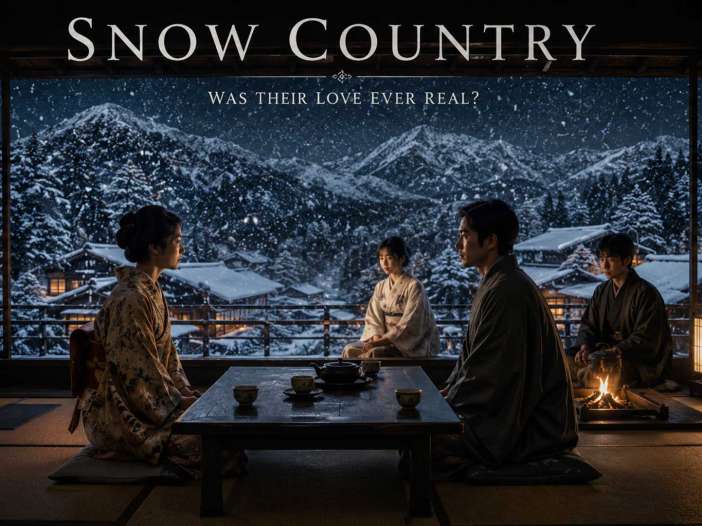
Snow Country Explained Through Its Characters
August 9, 2026 by Nick Sasaki Leave a Comment

snow-country-was-their-love-real

Introduction Yasunari Kawabata’s Snow Country is a story of beauty, distance, longing, and impermanence.Shimamura repeatedly returns from Tokyo to a remote hot-spring town, where Komako grows deeply attached to him. Yoko remains mysterious and unforgettable, and Yukio’s presence adds another layer of care, illness, and unresolved feeling.In this imaginary … [Read more...] about Snow Country Explained Through Its Characters

Filed Under: Literature, Nobel 100 Best Books Tagged With: book analysis, Book Discussion, Classic Literature, imaginary conversation, impermanence, Japanese Fiction, Japanese literature, Komako, literary analysis, Love and Loss, Mono no Aware, Nobel Prize literature, Shimamura, Snow Country, Snow Country Ending, Unrequited Love, Yasunari Kawabata, Yoko

The Man Who Never Took the Day Off: A Modern Ishiguro Story

August 9, 2026 by Nick Sasaki Leave a Comment

the-man-who-never-took-the-day-off-

Introduction What happens when being needed becomes the reason you never live your own life?For thirty-eight years, Daniel Mercer has served billionaire businessman Richard Vale as his executive assistant, fixer, confidant, and most dependable employee.Daniel misses dinners, relationships, vacations, and eventually his father’s final hours. Yet he never … [Read more...] about The Man Who Never Took the Day Off: A Modern Ishiguro Story

Filed Under: ImaginaryTalks Originals, Literature Tagged With: Career Identity, Corporate Ethics, Corporate Loyalty, Kazuo Ishiguro, Late Life Change, literary fiction, meaning of life, Missed Opportunities, modern adaptation, modern fiction, moral responsibility, Nobel Prize literature, regret, Short Story, The Man Who Never Took the Day Off, The Remains of the Day, Work Life Balance, Workaholism

  • Page 1
  • Page 2
  • Page 3
  • Go to Next Page »

Primary Sidebar

RECENT POSTS

  • Autobiography of Red Analysis: Love, Identity & Art
  • Autobiography of Red Explained: Love and Identity
  • How to Make Money Writing Novels: A Masterclass
  • Klara and the Sun Themes: Love, Faith, and Human Worth
  • Klara and the Sun Explained: What Makes Us Human?
  • Reverend Moon’s 2026 Message: Forgive, Love and Unite
  • Inspired by Narnia’s Ending: 3 Stories of Hope
  • What Happened to Susan in Narnia? Why C.S. Lewis Left Her Behind
  • Is Aslan Jesus? What C.S. Lewis Really Meant in Narnia
  • The Sun Also Rises Centennial Stories: 5 Modern Lives
  • The Sun Also Rises Themes & Analysis: Questions That Still Matter
  • The Sun Also Rises Centennial: Are We a Lost Generation?
  • The Antidote by Jesse Lee Peterson: Anger, Forgiveness & Freedom
  • One God, Three Messengers: Jesus, Muhammad & Rev. Moon
  • When Love Outlives Death: Grief, Consciousness & Connection
  • Anunnaki, Reincarnation & Afterlife: 5 Mysteries
  • The Fourth Turning Stories: Five Lives in a Changing World
  • The Fourth Turning Predictions: What Happens Next?
  • The Fourth Turning Theory: What Strauss & Howe Would Say in 2026
  • Anthony de Mello’s Awareness: 5 Lessons for Modern Life
  • anthony de mello awarenessAnthony de Mello’s Awareness: What Does It Really Mean?
  • Anthony de Mello’s AwarenessAnthony de Mello’s Awareness: Waking Up Through Comedy
  • War and Peace Lessons for Modern Life: 5 Short Stories
  • war and peace meaningWar and Peace Meaning: What Tolstoy Wanted Us to See
  • war and peace charactersWar and Peace: An Imaginary Conversation on Life
  • AI in 2026: What Happens When Machines Become Smarter Than Us?
  • What If Charles Dickens Visited London in 2026? | Miracle Series #2
  • mozart 2026 nycWhat If Mozart Visited 2026? | Miracle Series #1
  • oprah book clubOprah Book Club: 25 Book Characters Share Life Lessons
  • political tribalismWhy Politics Divides Us: The Psychology of Political Tribalism
  • Trump UN speech 2026Trump UN Speech 2026: 8 Experts Debate His Foreign Policy
  • the art of fighting storiesThe Art of Fighting: 5 Stories About Conflict, Love and Belonging
  • the art of fighting explainedThe Art of Fighting: What Makes Conflict Healthy or Harmful?
  • the art of fightingThe Art of Fighting by Priya Parker: Can Conflict Save Relationships?
  • laura lynne jackson guidedGuided by Laura Lynne Jackson: 5 Modern Stories About Signs, Love & Purpose
  • laura lynne jackson guidedGuided by Laura Lynne Jackson: 5 Questions About Signs, Spirit & Purpose
  • before we forget how to connect storiesBefore We Forget How to Connect: 5 Modern Stories
  • before we forget questionsBefore We Forget How to Connect: 30 Questions
  • before we forget how to connectBefore We Forget How to Connect: Vinh Giang Explained
  • Love As if You've Never Been Hurt MeaningLove As If You’ve Never Been Hurt: Meaning & Life Lessons
  • love as if you've never been hurt discussionLove As If You’ve Never Been Hurt: 25 Book Club Questions
  • Love As If You've Never Been HurtLove As If You’ve Never Been Hurt: 5 Modern Stories
  • The Correspondent Inspired Stories: 5 Emotional Tales
  • the correspondent questionsThe Correspondent Book Club Questions: Sybil & Psychology
  • the correspondent explainedThe Correspondent Explained: Grief, Love & Sybil’s Letters
  • The Waste Land modern storiesThe Waste Land Modern Stories: 5 Emotional Tales
  • The Waste Land explainedThe Waste Land Explained: What Did T. S. Eliot Mean?
  • The Waste Land charactersThe Waste Land Characters Explained: Eliot’s Broken World
  • theo of golden questionsTheo of Golden Book Club Questions: Expert Discussion
  • theo of goldenTheo of Golden Inspired Stories: 5 Modern Tales
  • theo of goldenTheo of Golden Analysis: What It Means to Truly See Someone
  • martyr modern storiesMartyr Kaveh Akbar Inspired Stories: 5 Emotional Tales
  • martyr explainedMartyr Kaveh Akbar Book Club Questions: 25 Big Questions
  • martyr charactersMartyr Kaveh Akbar Analysis: Meaning, Death & Suffering
  • little wonder storiesLittle Wonder Inspired Stories: 5 Emotional Modern Tales
  • Little Wonder Analysis: Love, Loss & Gifted Children
  • Little Wonder Sophie Chen Keller: Love, Sacrifice & Identity
  • sense and sensibility modern storiesSense and Sensibility Lessons: 5 Modern Love Stories
  • sense and sensibility analysisSense and Sensibility Analysis: Love, Emotion & Austen
  • sense and sensibility conversationSense and Sensibility: How Do We Know Love Is Real?
  • marriage courseAlphaUSA Marriage Course: 5 Emotional Stories Inspired by Its 7 Sessions
  • AlphaUSA Marriage Course: 7 Questions for a Stronger Marriage
  • AI Agents DebateAI Agents Debate Human Extinction: Should Humanity Survive?
  • ai human extinction storiesJunji Ito-Inspired Tales of AI and Human Extinction
  • ai could destroy humanityEx-Anthropic insider Fear how AI could kill all humans by 2030
  • the vessel of words questionsThe Vessel of Words: How Language Shapes Relationships
  • Empty Nest Syndrome StoryEmpty Nest Syndrome Story: 5 Modern Stories for Parents
  • empty nest griefEmpty Nest Syndrome: 30 Questions Parents Ask
  • Empty Nest SyndromeEmpty Nest Syndrome: When the House Goes Quiet
  • the vessel of words storiesThe Vessel of Words: 5 Korean Stories of Hurt and Healing
  • abraham lincoln modern day storiesAbraham Lincoln Leadership Lessons: 5 Modern Stories
  • the real lincolnAbraham Lincoln: What Historians Really Know and Debate
  • Abraham Lincoln and Slavery: War, Power & Change
  • if god is oneIf God Is One, Why Do Religions Divide Us?
  • 5 Modern Stories Inspired by Cleopatra’s Greatest Lessons
  • Joan of Arc: 5 Modern Stories About Faith and Courage
  • Joan of Arc ExplainedJoan of Arc Examined: Voices, War, Trial, and Legend
  • Joan of Arc HistoryJoan of Arc: Did God Really Speak to Her?
  • ASI stories5 Stories About Life After AI Surpasses Human Intelligence
  • the age of superintelligenceThe Age of Superintelligence: What Happens When AI Surpasses Humans?
  • masayoshi son ai futureMasayoshi Son’s AI Future: Health, Jobs, Cyberwar & Japan
  • The Good Earth: 5 Modern Stories About Love and Sacrifice
  • the good earth scholarsThe Good Earth: What Scholars Reveal About Wang Lung and O-lan
  • the good earthThe Good Earth: Did Wealth Destroy What Wang Lung Loved?
  • SoftBank World 2026: Masayoshi Son’s AI 2040 Vision Explained
  • The Great Gatsby in 7 Minutes: Why Gatsby’s Dream Failed
  • a new earthIs Humanity Entering a New Earth? Spiritual Awakening Explained
  • great gatsby modern storiesThe Great Gatsby: 5 Modern Stories About Dreams We Chase
  • the great gatsby analysisThe Great Gatsby Experts Explain Gatsby’s Dream and Tragedy
  • the Great Gatsby explainedThe Great Gatsby: Did Gatsby Love Daisy or His Dream?
  • After Of Mice and Men: What Happened to George After Lennie?
  • Of Mice and Men in 7 Minutes: When Love Is Not Enough
  • of mice and men modern day storiesOf Mice and Men: 5 Modern Stories About Love, Care and Responsibility
  • of mice and men analysisOf Mice and Men: Was George Right to Kill Lennie?
  • of mice and men 5Of Mice and Men: Was George’s Final Choice an Act of Love?
  • grapes of wrath modern storiesThe Grapes of Wrath Today: 5 Modern Stories About “I” and “We”
  • grapes of wrath questionsThe Grapes of Wrath Explained: 5 Questions Readers Still Ask
  • the grapes of wrath john steinbeckThe Grapes of Wrath: When Does “Me” Become “We”?
  • Stand With Jesus: What If People Tried to Stop the Crucifixion?
  • East of Eden Today: 5 Stories About Breaking Family Cycles

Footer

Recent Posts

  • Autobiography of Red Analysis: Love, Identity & Art October 10, 2026
  • Autobiography of Red Explained: Love and Identity October 10, 2026
  • How to Make Money Writing Novels: A Masterclass October 10, 2026
  • Klara and the Sun Themes: Love, Faith, and Human Worth October 9, 2026
  • Klara and the Sun Explained: What Makes Us Human? October 8, 2026
  • Reverend Moon’s 2026 Message: Forgive, Love and Unite October 8, 2026

Pages

  • About Us
  • Contact Us
  • Disclaimer
  • Earnings Disclaimer
  • Privacy Policy
  • Terms and Conditions

Categories

Copyright © 2026 Imaginarytalks.com