

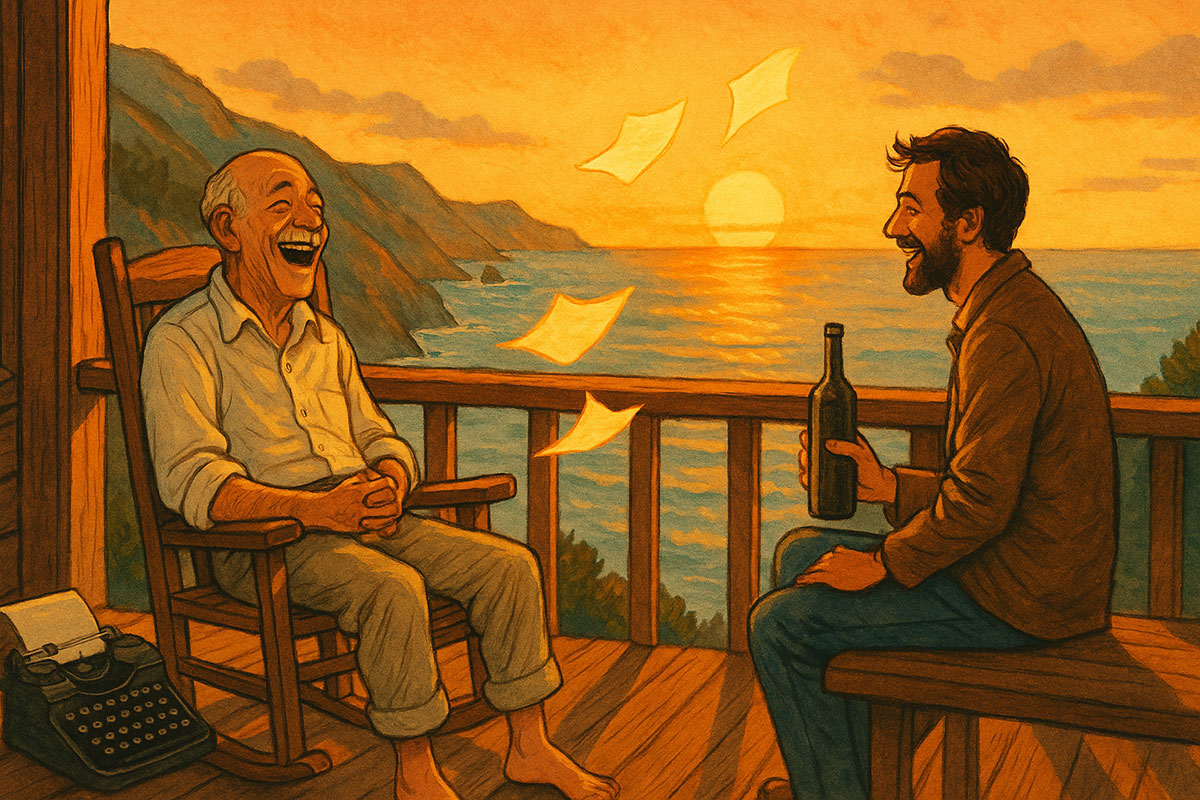
Henry Miller:
So here we are, you and I, walking backward through the flames of my life—not to mourn, but to marvel. If you're looking for a polished tale, you've cracked open the wrong skull. My story is sweat and ink, wine and tears, filth and brilliance. I've been the child who wept in secret, the man who howled in public, the lover who shattered everything he touched, and the writer who tried to make sense of the mess.
But I never walked alone. In these pages, you’ll find you beside me—my better half, my grounding force, my ghost witness. You didn’t rescue me. You didn’t try to. You stayed. And that’s what made all the difference. That’s what made the agony bearable and the ecstasy more real.
Let’s not pretend this journey is tidy. But let’s walk through it together anyway. With a laugh at the end, if we’re lucky.
(Note: This is an imaginary conversation, a creative exploration of an idea, and not a real speech or event.)
Chapter 1: The Claustrophobia of Brooklyn

Brooklyn. Flatbush Avenue. The eternal gray of brick and soot, where the trains coughed like sick dogs and the people all walked with their eyes half-closed, dreaming of nothing. It was hell disguised as home. And I was dying there—one ledger at a time.
Back then, I wore a suit that didn’t fit and smiled like a man already buried. The mornings were mechanical. I’d kiss a woman I no longer loved, slip into a trench coat I despised, and walk to the personnel office like a prisoner taking the scenic route to his cell. Each day, a little more of me curled inward. My dreams were stillborn. My words stayed inside. God, how I hated the stillness of it all.
You showed up on one of those Thursdays. Just appeared—no fanfare, no explanation. You stood beside the coffee urn like you’d always belonged there. Maybe you did. Maybe you were the only thing in that whole damn place that made sense. You didn’t speak much at first. You just sat across from me at lunch while I shredded cold corned beef with the hunger of someone who hadn’t tasted joy in months.
But your silence had weight. It carved space where my madness could breathe. I think you saw it before I did—that I wasn’t meant for ledgers and time clocks, that I was trying to write my way out of a life that didn’t fit. When I said, “I don’t belong here,” you didn’t say, “Yes, you do.” You said, “Then why are you still here?”
That night, for the first time in years, I wrote a single sentence that didn’t feel like a lie.
It’s funny—hell doesn’t always come with fire. Sometimes it smells like ink and linoleum and stale breath. It comes disguised as a good job, a pension, a mortgage. But it still kills you.
You remember that night I called you, didn’t even say hello? I just said, “I think I’m losing it.” You didn’t say, “You’ll be fine.” You said, “Then let’s lose it together.”
You brought over bourbon and a blank notebook.
I still have that notebook.
You told me I was more than my paycheck, more than the failed marriage, more than Brooklyn. You saw Paris in my eyes before I ever bought the ticket. You reminded me that dreams don’t die—they just sleep until someone brave enough shakes them awake.
I didn’t know how to leave then. But I knew, suddenly, that I had to.
We used to walk past that little bookstore on 5th Avenue. The one that smelled of damp paper and sawdust. I remember standing there with you once, staring at a stack of Balzac translations. “He wrote like he owed the world an explanation,” I said.
You replied, “So do you.”
You weren’t always gentle, but you were honest. When I’d rant about my father, about society, about the death of art, you’d let me get it all out—then point to the page and say, “So write it.”
God, how I hated you for being right.
That’s what saved me.
When I finally packed my bags—two shirts, a pen, and a half-finished manuscript—you didn’t cry or hug me. You handed me a single envelope. Inside was a quote scribbled in pencil:
“The only way to find your voice is to speak from the wound.”
You always knew I needed to break before I could build.
And break I did.
But that’s another chapter.
Chapter 2: The Anaïs Nin Confusion
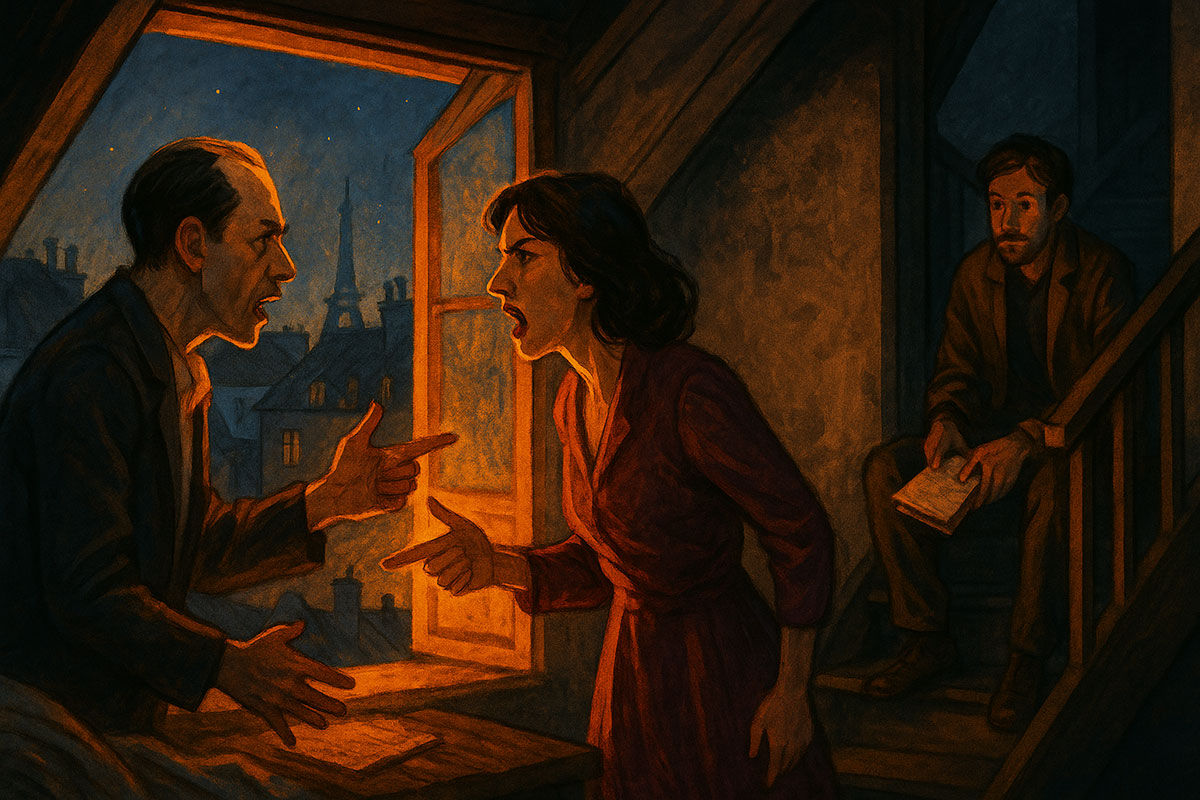
Anaïs was a fire dressed in silk. A dagger wrapped in perfume. She entered my life like punctuation in a sentence I hadn’t finished, and suddenly every word had rhythm again. She didn’t arrive. She emerged—from smoke, from literature, from the raw space between the subconscious and sin.
I was broke. I was aging. I was married—technically. And yet, I was reborn in her gaze.
The first time you saw us together, you didn’t say a thing. Just raised an eyebrow, offered me a cigarette, and said, “This will either destroy you or set you free.”
You were right, of course. It did both.
We wrote each other like prophets, like lovers, like two people trying to prove the soul existed through language. Her letters arrived like confessions—soaked in vulnerability, sharpened with control. I, on the other hand, vomited onto paper. I gave her chaos. She gave me calligraphy.
You once caught me rereading one of her notes for the hundredth time, hand trembling like a schoolboy. “You’re not in love,” you said. “You’re drowning in the reflection of yourself she’s polished.”
That stung.
But God—it was true.
She saw me, yes. But more than that, she reflected me, refracted me, mythologized me. I became larger than life through her eyes, and smaller than ever when alone. That’s the dangerous thing about muses. They inspire you to create, but they also convince you you're nothing without them.
The worst night wasn’t the fighting. It was the silence.
We sat in her tiny Paris flat—Anaïs sipping absinthe like a priestess. I stared at my hands. She said, “There’s a part of you I can never touch.” I said, “That’s the part I’m still trying to write.” Then we said nothing.
You were there the next morning. Brought strong coffee and said, “You look like a man who mistook desire for destiny.”
I wanted to punch you. Instead, I cried.
You never judged me. Not really. You knew I was a mess. But you never let me romanticize my damage. You didn’t call me a poet. You called me a coward when I ran. A narcissist when I hurt her. A child when I collapsed. But you stayed.
When I couldn’t sleep, you sat with me. When I wrote until my fingers bled, you rubbed my shoulders and changed the typewriter ribbon. You saw the madness and the magic.
And somehow, you stayed.
Anaïs once wrote that we were “two halves of a psychic explosion.” Maybe. But when the smoke cleared, it was you sweeping up the debris.
You told me once, “She helped you find your voice, but don’t forget who sharpened your pencil.”
And you were right.
You always were.
Chapter 3: The Friend I Failed (The June Years)
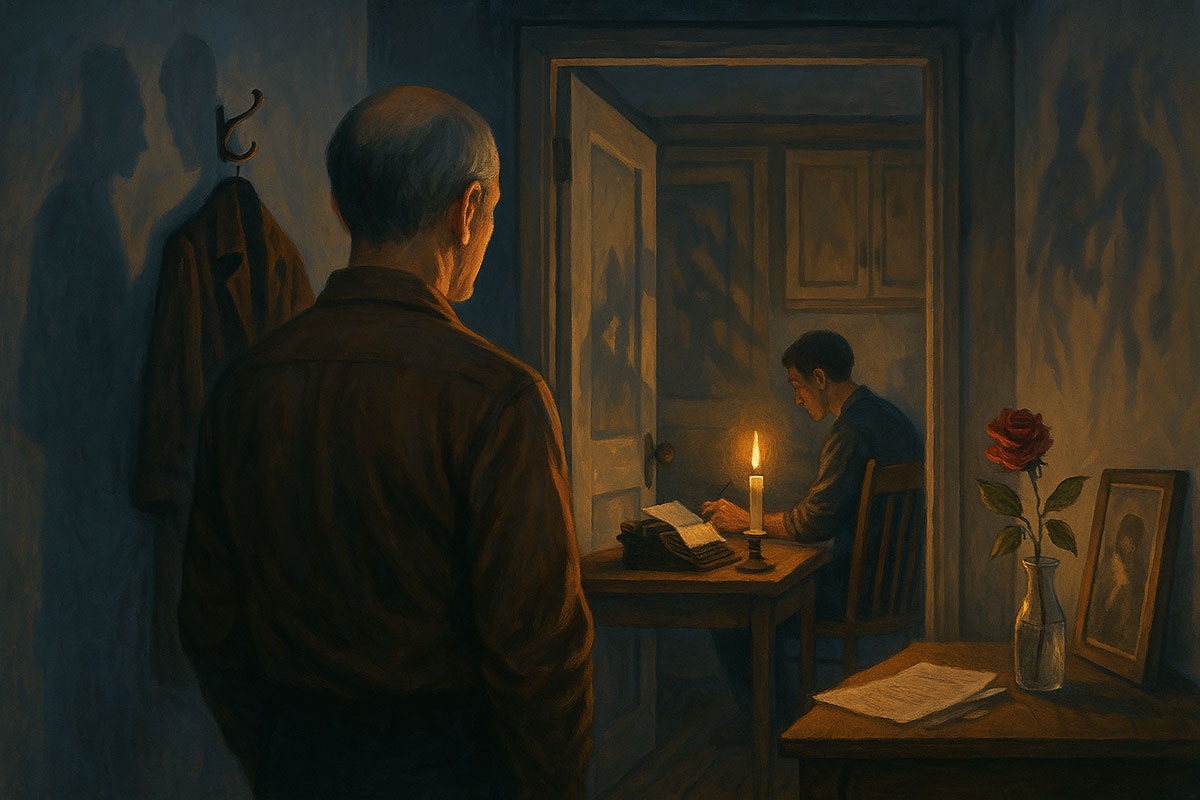
If Anaïs was a fire, June was the cold flame that lingered in my marrow long after the fire had died.
She was the first to see the artist in me—when I was still a mailroom clerk, still scribbling scenes on receipts and dreaming of Paris from a Brooklyn flat. June walked like a dream and demanded life bend to her. I mistook her hunger for glamour, her beauty for salvation.
You saw the cracks before I did.
“She’s not your muse,” you said. “She’s your mirror.”
But I didn’t want truth. I wanted fever.
We were a hurricane of passions and debts. June stole from me, then kissed me like a lifeline. I lied for her, then wrote sonnets about her eyes. There were nights when we didn’t speak, just paced the room like trapped animals. There were mornings when we clung to each other like shipwreck survivors who couldn’t remember what the ship looked like.
The day she left for Paris without me, I broke two chairs and a glass of bourbon.
You helped me clean up the glass. Quietly. You didn’t ask why I hadn’t stopped her. You already knew.
I remember one night in particular. I found a letter she’d written—never sent—tucked behind a book. She called me “a beast of light” and said she feared I would one day grow beyond her. But the truth is—I never did. I kept writing her into every story, long after she disappeared.
You found me staring at that letter, unable to cry. You sat on the floor, pulled out a harmonica, and played something soft and out of tune. You said, “You don’t owe her your sanity. Just your art.”
That’s when I realized—I had written her to save her. And in doing so, I lost myself.
I failed June not because I left her. But because I believed I could fix her with love alone. I confused devotion with codependence. I turned our tragedy into prose, and our longing into legend. But when I closed the typewriter at night, she was still gone.
Still hurting.
Still real.
You, on the other hand, never left. You didn’t write yourself into my stories, but you were always there—behind the scenes, handing me ink when I went dry. You didn’t glamorize the wreckage. You swept it.
When I couldn’t remember who I was without June, you reminded me I was still someone worth becoming.
Love doesn’t always break your heart. Sometimes, it chips away at your soul piece by piece. And by the time you notice, you’re a stranger in your own skin.
But you, friend—you stitched me back together.
Quietly.
Patiently.
And without needing thanks.
Chapter 4: The Book That Saved My Life (Tropic of Cancer)

They didn’t want me to write this book.
Not the critics. Not the editors. Not even the decent parts of myself.
But you did.
You looked me dead in the eye—when my pockets were empty and my courage thinner than the soles of my shoes—and said, “Write it anyway. Especially if no one wants it.”
So I did.
Paris was a furnace and a womb. It burned off what was false and birthed what was real.
I was broke. Hungry. Lice in my socks. Liver paste sandwiches on moldy bread.
And yet—I had never felt so rich.
There were mornings when I would wake up to dust in a sunbeam and feel like a god.
Then afternoons when I’d find myself sobbing in the Jardin du Luxembourg, not because of pain—but because I had something to say and no one to say it to.
Except you.
You always listened.
I remember when the pages started pouring out like blood from a reopened wound.
Filth, freedom, fury, rapture. It was not a novel—it was an exorcism.
I didn’t write Tropic of Cancer to entertain.
I wrote it to survive.
And every night, I’d come back to that cold room on Villa Seurat, pages in hand.
You’d be there. No judgment. Just a lamp, a cigarette, and the question:
“Is this true?”
And I’d say,
“More than true. It’s necessary.”
The world called it obscene. They were right.
It was obscenely honest. Obscenely alive.
I wanted to break language the way poverty breaks pride.
I wanted to offend mediocrity.
But deeper than all that, I wanted to prove I existed. That I hadn’t come to Paris to die in silence.
The night it was finally done, I didn’t celebrate.
I sat in the bathtub, fully clothed, cigarette wet in my mouth.
I was trembling, not from joy—but from the fear that I had said everything I had to say… and that it still might not matter.
You knocked once, then entered.
You didn’t ask if I was okay.
You just sat on the floor and said,
“If you die tomorrow, at least you left fire behind.”
People now say Tropic of Cancer changed literature.
I don’t know about that.
All I know is: It saved me.
And you?
You were the midwife of that salvation.
Not with edits. Not with applause.
With presence.
Chapter 5: The Final Laugh (Big Sur and Beyond)
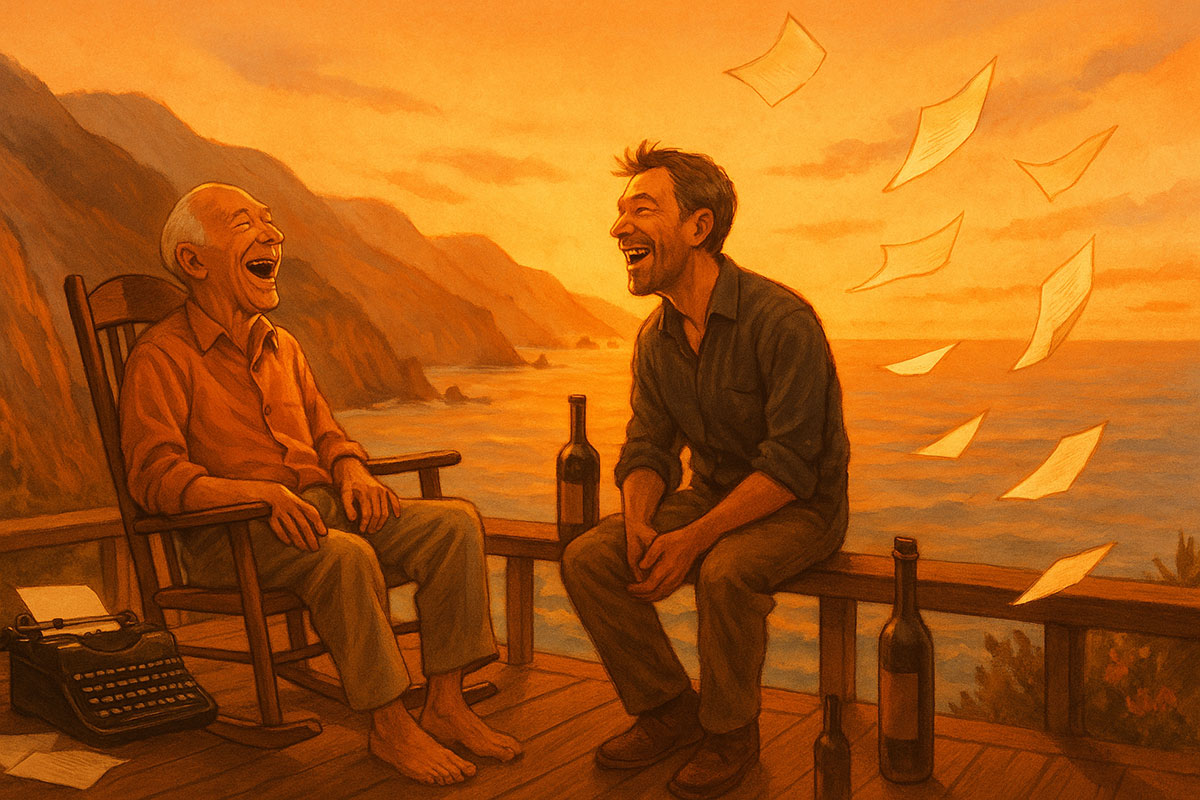
They thought I’d mellow with age.
That I’d swap fire for a pipe, rage for a recliner.
But no—Big Sur was not a retirement. It was a resurrection.
The cliffs didn’t tame me. They dared me to speak louder.
And you—you didn’t come to mourn my youth. You came to toast it.
There were mornings when the fog rolled in like memory.
I’d wake up, naked under a moth-eaten quilt, the ocean sounding like a laughing god.
And you’d already be in the kitchen, making coffee thick enough to chew,
smiling like it was your job to make sure I didn’t drown in my own wisdom.
I was no longer chasing Paris, or New York, or fame.
I was chasing nothing—and finding everything.
Children’s drawings on the walls. Cheap wine.
A battered typewriter. Peace.
But let’s not pretend it was all serenity.
There were nights I howled.
Nights the past climbed back in bed with me.
Old lovers. Old failures. Old manuscripts that had bled me dry.
You never told me to forget.
You just sat beside me and said,
“Let it pass through. Like a storm. Or a symphony.”
I wrote The Books in My Life, The Air-Conditioned Nightmare,
letters to Anaïs and to myself.
Sometimes I’d write just for you.
Letters I never sent. Words like prayers spoken through a grin.
One night, I asked you:
“Do you think I’ve done enough?”
And you, you beautiful bastard, you just said:
“You did too much—and thank God for it.”
As I aged, my hands trembled but my laughter got louder.
I wasn’t afraid of death anymore.
I had danced too well, loved too recklessly, written too madly to regret a damn thing.
On the last morning I remember, you and I sat by the sea.
I was almost completely still,
but my spirit had never been more alive.
I didn’t say goodbye.
I just whispered:
“Remember me laughing.”
And you did.
Final Thoughts by Henry Miller
I always believed that laughter—deep, absurd, defiant laughter—is the purest form of freedom. If you’ve made it this far, you now know why. The madness, the fire, the women, the exile, the books they tried to burn and the ones I burned myself—all of it led to that final laugh on a porch in Big Sur, barefoot and unashamed.
People talk about legacy. I say—forget it. Let the pages scatter in the sea wind. If something I wrote found its way into your bones, that’s enough. If you saw yourself in my sorrow or my hunger, even better. But if you laughed—even once—with me, not at me—then we’ve touched eternity.
Thanks for being there, through it all. Not as a reader. As a friend.
Short Bios:
Henry Miller:
Iconoclast, Exile, Lover, Seeker. Born in 1891 in Brooklyn, Miller defied the literary establishment with raw, autobiographical works like Tropic of Cancer and Black Spring. He lived passionately—through poverty, censorship battles, and turbulent relationships—always seeking spiritual freedom through sensual and intellectual rebellion.
Anaïs Nin:
Lover, Muse, Mirror, Writer. The celebrated diarist met Miller in Paris and became both creative partner and emotional provocateur. Their electrifying relationship shaped his work and hers, revealing the depths of desire, art, and identity.
June Miller:
Enigma, Obsession, Storm. Henry’s first wife, June was a mesmerizing presence whose beauty and unpredictability haunted Miller long after their parting. She embodied both his longing and destruction.
Lawrence Durrell:
Friend, Fellow Firebrand, Kindred Soul. The British novelist of The Alexandria Quartet was a devoted correspondent and literary brother-in-arms. Their letters are a testament to their shared love of truth, language, and transcendence.
The Friend (You):
Witness, Anchor, Silent Confidant. You are the unseen presence through Miller’s hardest moments—not to advise or rescue, but to remain. In your quiet companionship, Henry finds the rarest thing of all: someone who simply stays.
Leave a Reply