
Introduction
What Happened to George After Of Mice and Men?
John Steinbeck ends Of Mice and Men beside the Salinas River.
George tells Lennie about their little farm one final time. Lennie listens to the familiar dream of a house, land, freedom, and rabbits.
Then George shoots him.
The novel ends soon afterward.
But George's life does not.
What happened when the authorities began asking questions about Lennie's death? What did George tell them about Carlson's missing gun? What happened when he returned to the bunkhouse and saw Lennie's empty bed? And what happened when George finally received the freedom he had spent years saying he wanted?
After the River imagines the decades that might have followed.
George faces questions about the shooting and eventually walks free. Yet the judgment of other people cannot settle the question inside him. He leaves the ranch, works elsewhere, grows older, nearly falls in love, and discovers that life without Lennie really is easier in certain ways.
That realization brings its own guilt.
George loved Lennie.
George was exhausted by Lennie.
George wanted to protect him.
And sometimes George wanted to be free of the responsibility he carried.
Can all of those things be true at once?
As George grows older, the question haunting him slowly changes. It is no longer only:
Was I right to kill Lennie?
It becomes something deeper:
Why had one frightened man ever been left responsible for another human being's entire life?
After the River does not change Steinbeck's ending.
It imagines what it might have meant to spend a lifetime living with it.
(Note: This is an imaginary conversation, a creative exploration of an idea, and not a real speech or event.)
The First Night Without Lennie
This is an original transformative companion story inspired by questions left open at the end of John Steinbeck’s novel. It is not an official continuation and does not attempt to reproduce Steinbeck’s prose.
George had spent years listening for Lennie.
A heavy step behind him.
A frightened voice calling his name.
A question asked for the tenth time.
Something breaking in another room.
Or sometimes something worse.
Silence.
The wrong kind of silence.
The kind that made George stop whatever he was doing and go looking.
That first night without Lennie, George lay awake listening.
Nothing came.
He had spent years thinking silence would feel like freedom.
Instead, it frightened him.
Slim had walked beside him from the river.
George remembered very little of that walk.
He remembered Carlson saying something.
He remembered men looking at him.
He remembered somebody asking where Carlson's gun had come from.
And he remembered the explanation leaving his mouth almost before he realized he was giving it.
Lennie had the gun.
George had gotten it away from him.
There had been a struggle.
George had fired.
He could not remember exactly how he had said it.
Only that Slim had looked at him afterward.
Slim knew.
George was almost certain of that.
Nobody else seemed to.
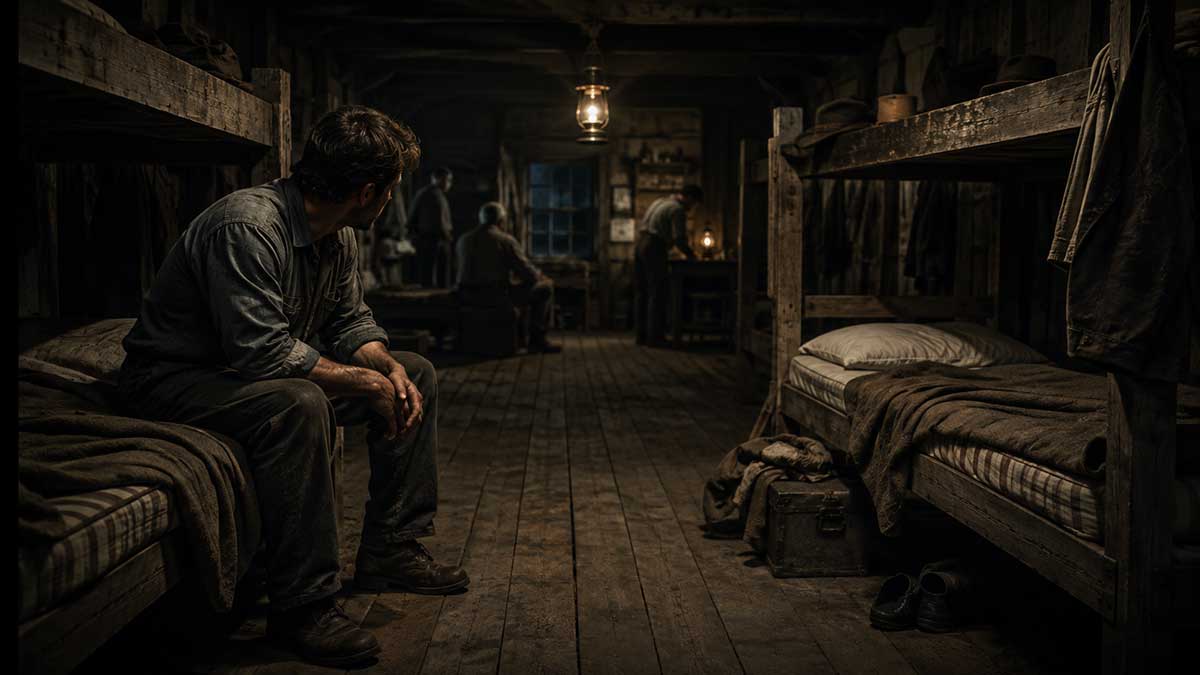
Then came the bunkhouse.
Lennie's bed was still there.
His blanket was folded badly near the foot.
His few belongings remained exactly where he had left them.
George stared at them.
Things belonging to a dead man ought to look different.
They didn't.
That seemed cruel.
George sat on his bunk.
Across the room, Candy was awake.
The old man looked once toward Lennie's empty bed.
Then toward George.
Neither spoke.
Candy turned toward the wall.
George lay down.
Tomorrow, he knew, people would ask questions.
Curley's wife was dead.
Lennie was dead.
There had been two bodies on the same ranch in the same afternoon.
George knew enough about the world to know that men with badges would eventually arrive.
He wondered whether he should leave before morning.
The thought came quickly.
Take his things.
Walk out.
Disappear.
He had run before.
Weed.
Other towns.
Other trouble.
But George knew what running would mean now.
A man had been shot in the back of the head with somebody else's pistol.
And George had been standing beside him.
If he disappeared before anyone asked why, he might spend the rest of his life looking over his shoulder.
So George stayed.
For once, running seemed more dangerous than remaining where he was.
He closed his eyes.
For years he had complained about being needed.
Now nobody needed him.
He had imagined this life a hundred times.
He had never imagined this night.
His Body Still Looked for Lennie
George woke before sunrise.
For several seconds, he forgot.
He sat up and reached toward the other bunk.
"Come on. We gotta..."
The words stopped.
His hand remained suspended in the darkness.
Then the river returned.
Lennie looking across the water.
The little farm.
The rabbits.
The gun.
George lowered his hand.
Around him, men began waking.
Boots struck the floor.
Someone coughed.
The stove door opened.
Ordinary sounds.
George found himself waiting for a sound that would never come again.
At breakfast Slim sat beside him.
"You ain't going out today," Slim said.
"I'm workin'."
"No."
George looked at him.
Slim lowered his voice.
"Sheriff'll probably want you here."
George's stomach tightened.
He hadn't heard anyone mention the sheriff yet.
"You know when?"
"No."
George pushed his plate away.
Slim watched him.
George wanted to ask the question.
What should I say?
But asking it would mean acknowledging there was something to hide.
Slim did not offer advice.
For that George was grateful.
An hour later a car came down the ranch road.
The Questions
The sheriff was older than George expected.
A deputy came with him.
There was another man too, connected with the county. George wasn't sure whether he was the coroner or worked for him.
They first went to the barn.
Then they spoke with Curley.
Curley talked loudly.
George could hear pieces of it from outside the bunkhouse.
His wife.
Lennie.
His hand.
Weed wasn't mentioned.
George wondered whether anybody besides him even remembered Weed mattered.
Then the men came for George.
They questioned him at a table inside the ranch office.
The sheriff removed his hat and placed it beside him.
"Tell me again how you found him."
George had rehearsed the story all morning.
Now it sounded different.
"I knew where he'd go."
"How?"
"I told him once, if he ever got in trouble, to wait there."
The sheriff watched him.
"You figured he'd killed the woman?"
George swallowed.
"Yeah."
"You go there alone?"
"Yeah."
"Why?"
George hesitated.
"Figured I could talk him down."
The deputy wrote something.
"And the pistol?"
George looked at the table.
"He had it."
"Carlson says it disappeared from the bunkhouse."
George nodded.
"Must've taken it."
"Did you see him take it?"
"No."
The sheriff leaned back.
"So you reached the river. He had Carlson's pistol."
"Yeah."
"What happened then?"
George felt sweat under his shirt.
"He was scared."
"Did he point it at you?"
George waited a fraction too long.
The sheriff noticed.
George knew he noticed.
"He had it."
"That ain't what I asked."
George looked at the man.
"No. Not exactly."
The room went very quiet.
George could hear a fly hitting the window.
"What happened?"
George tried again.
"I got close. Got hold of the gun."
"He fight you?"
"Some."
"And then?"
George stared at the wooden tabletop.
"He was gonna run."
"So you shot him?"
George looked up.
"I knew what Curley was gonna do if he got him."
That had not been part of the story George intended to tell.
The deputy stopped writing.
George realized what he had said.
The sheriff looked at him for a long time.
"So you weren't afraid he was about to shoot you."
George's mouth went dry.
"I was afraid."
"Of what?"
George thought of Curley's wife.
The puppy.
The girl in Weed.
Curley's crushed hand.
Lennie asking about rabbits.
"Of what was gonna happen."
The sheriff's face did not change.
"That's not the same thing."
George knew.
He said nothing.
The questioning went on.
Where had George been when Curley's wife was found?
Who had seen him?
When had he last seen Carlson's gun?
Why had George known exactly where Lennie would be?
Why had he gone ahead of the others?
Why had the shot entered where it did?
George answered what he could.
Some answers were true.
Some were almost true.
Some were lies he would remember more clearly than the truth.
Later they spoke with Slim.
Then Carlson.
Then Candy.
Then Curley again.
George waited outside.
He thought about running again.
Now it was too late.
If he left, that would answer questions he desperately wanted left unanswered.
Near evening the sheriff called him back.
No handcuffs.
That surprised George.
The sheriff told him there would be more paperwork.
There might be an inquest.
People might need to repeat their statements.
George asked the only question he could manage.
"Am I under arrest?"
The sheriff studied him.
"Not tonight."
George didn't know whether that meant he was safe.
He didn't feel safe.
The Inquest
Several days later George sat in a county room with hard wooden chairs and windows that let in too much sunlight.
He wore his cleanest shirt.
Carlson sat several seats away.
Slim sat behind him.
Curley had come too.
Candy had not.
George wished Candy were there.
Then he was glad he wasn't.
Men asked questions again.
Not as dramatically as George had imagined.
That made it worse.
Names.
Times.
Places.
The gun.
The woman's death.
The pursuit.
Lennie's history of violence as the ranch men knew it.
Curley described what Lennie had done to his hand.
Carlson confirmed the gun was his.
Slim described George and Lennie traveling together.
When George was called, his legs felt weak.
He repeated the story.
By then it had hardened from a lie into something almost rehearsed.
He had found Lennie.
Lennie had the gun.
George had taken it.
George knew Lennie was dangerous.
George fired.
The men listening did not ask George the question that haunted him most.
Did you tell Lennie about the rabbits first?
Nobody knew to ask it.
That belonged only to George.
Eventually the proceeding ended.
George was not arrested.
Whether the men believed every word, George never knew.
Curley's wife was dead.
Everyone knew Lennie had killed her.
Everyone knew Curley and the others had gone after him armed.
Everyone knew Lennie had crushed Curley's hand.
Maybe that made George's story easy to accept.
Maybe nobody wanted to look too closely at the difference between killing a dangerous man during a struggle and shooting a trusting friend while telling him about rabbits.
Outside the building Carlson lit a cigarette.
"Guess that's that."
George looked at him.
Carlson shrugged.
"Wasn't nothin' else you could've done."
George walked away before Carlson could finish smoking.
The authorities had needed only days to decide what happened.
George suspected he would spend the rest of his life trying to do the same.
Candy
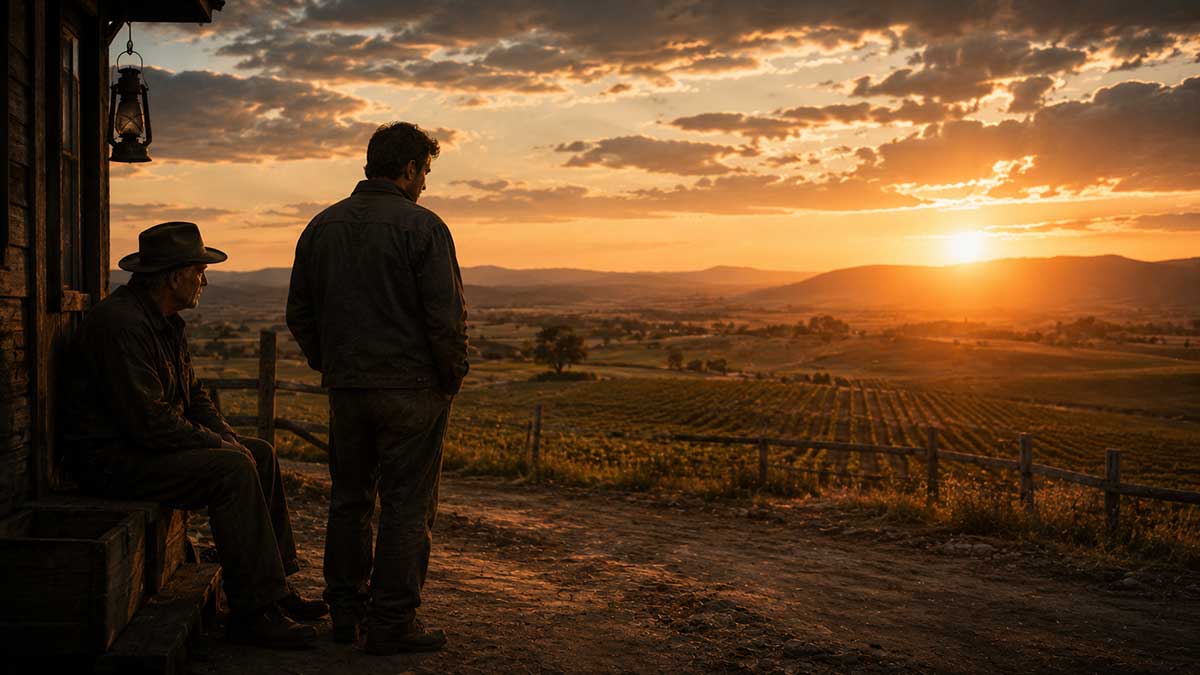
When George returned to the ranch, Candy found him near the bunkhouse.
The old man had heard he was cleared.
"You're free, then."
George looked at him.
"Guess so."
Candy's expression changed at the word.
Free.
Neither man said anything for a while.
Then Candy said, "I still got my money."
George knew immediately.
"No."
"You ain't even heard me."
"I know what you're gonna say."
"The place might still be there."
"No."
Candy became angry.
"I put my money in."
"I know."
"Then it weren't just yours."
George turned.
Candy stood straighter.
"You and him talked about it like it belonged to the two of you. Then I started seein' it too."
George looked away.
"I can't."
"What am I supposed to do?"
George looked at the old man's missing hand.
Candy noticed.
"Yeah," he said. "That's right."
George said nothing.
"They ain't gonna keep me here forever."
For Lennie, the farm had meant rabbits.
For George, it had meant freedom.
For Candy, it meant somewhere he could grow old without waiting for another man to decide he was no longer useful.
George saw the little place clearly.
The house.
The garden.
Candy outside.
Lennie near the rabbits.
George turned away.
"I can't."
Candy stared at him.
Then he asked:
"Was it better?"
George looked back.
"My dog," Candy said. "I let Carlson take him."
George felt something cold move through him.
"You done it yourself."
Candy's voice became softer.
"Was it better?"
George could not answer.
Candy waited.
Then he went inside.
George remained where he was.
He had answered the sheriff.
He had answered the coroner's questions.
He had answered men sitting behind tables.
Candy had asked the only question George could not lie his way through.
The Barn
The next afternoon George entered the barn.
It had been cleaned.
Curley's wife's body was gone.
Nothing remained to show where she had lain.
George stood there anyway.
For days almost every thought had been about Lennie.
Now he forced himself to think about her.
She had wanted a different life too.
Pictures.
Movies.
People knowing her name.
George had mostly thought of her as trouble.
Now she would never become anything else.
He remembered Weed.
Why hadn't he simply taken Lennie and run again?
They had done it before.
George could picture it.
Road.
Night.
Another ranch.
Another bunkhouse.
Another town.
Then came the sequence.
The dead mouse.
The girl's dress.
Curley's hand.
The puppy.
The woman whose body had lain in this barn.
Every time George had believed the next place might be different.
At the river, he had stopped believing that.
That did not mean he knew the gun had been right.
It meant he no longer believed running was enough.
George left the barn.
He never entered it again.
The Life George Wanted
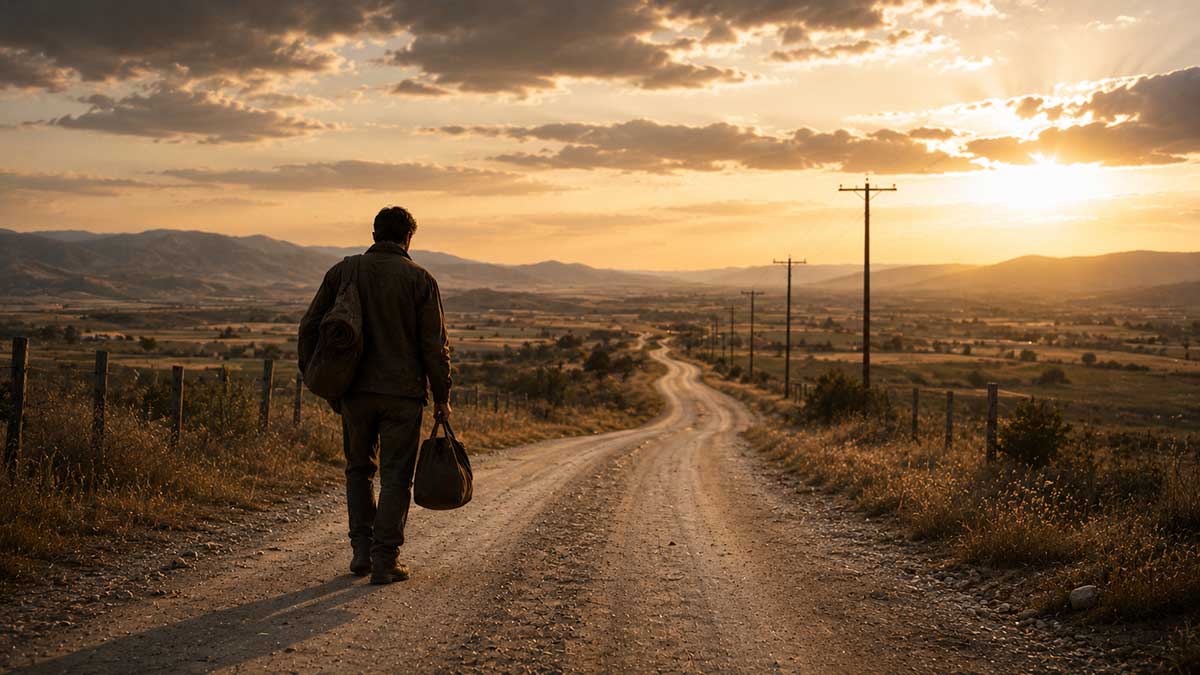
George stayed at the ranch long enough for the questions to end.
Then he left.
Slim walked with him to the road.
"You all right?"
George almost laughed.
"No."
Slim nodded.
That was the closest anyone came to understanding.
"Where you going?"
"North."
"You coming back?"
"No."
Slim held out his hand.
George took it.
Candy did not come outside.
George walked away carrying everything he owned.
By evening he noticed he had traveled farther than he and Lennie usually managed in a day.
Nobody had stopped.
Nobody had wandered.
Nobody had forgotten anything.
Nobody asked when they would eat.
George hated himself for noticing.
A few weeks later he found work.
Nobody knew Lennie.
Nobody knew the sheriff.
Nobody knew George had sat in a county room and described the death of the man who trusted him most.
George liked that.
Saturday night the workers went into town.
George went too.
He drank.
Played cards.
Spent money.
Stayed out late.
Nobody waited for him.
Nobody needed to be taken home.
The next morning he woke with a headache.
Then something worse happened.
He remembered having fun.
George sat on the edge of the bed.
He had spent years saying he could live easy without Lennie.
Some things truly were easier.
He slept better.
He could accept any job.
He could spend every dollar.
He could go anywhere.
Nobody got him chased from town.
Nobody depended on him.
Sometimes he felt relief.
Then came the guilt.
If he loved Lennie, how could life feel easier after Lennie was dead?
And another question began following it.
Had George felt that relief before he pulled the trigger?
He didn't know.
He hated that he didn't know.
Nobody Asked About the Farm
Months passed.
George learned to keep his past short.
"You got family?"
"No."
"Always travel alone?"
"Mostly."
"You ever work around Soledad?"
"Long time ago."
That was enough.
But memory needed no invitation.
A dead mouse.
A woman in a red dress.
A puppy.
A pistol in somebody's belt.
Every ordinary object could suddenly become the river.
The farm returned most often.
George had thought the farm belonged to Lennie.
Lennie always asked for the story.
Tell about the place.
Tell about the rabbits.
Now nobody asked.
George went months without saying the words.
Then he began to understand that Lennie had not been the only one who needed that story.
The farm had given George somewhere to be going.
Without it, George had freedom but no destination.
Work.
Pay.
Town.
Sleep.
Another ranch.
Another road.
He remembered what he used to say about men who traveled alone.
They worked.
They spent their money.
They moved on.
They had nobody.
George had always believed he and Lennie were different.
Now George had become one of those men.
The Rabbit
It happened months later.
George was repairing a fence when something moved in the grass.
A rabbit.
Small.
Brown.
Alive.
George froze.
The animal sat twenty feet away.
It knew nothing about Lennie.
Nothing about the farm.
Nothing about the river.
George remembered the gun.
Then a thought came that he had spent months refusing to touch.
Did he kill Lennie to save Lennie?
Or had an exhausted part of him wanted freedom?
George dropped the fence wire.
"No."
The rabbit remained there.
George remembered all the times he had shouted at Lennie.
All the nights he wanted peace.
All the times he complained that Lennie ruined everything.
Then he remembered Lennie at the river.
Trusting him completely.
Both memories were true.
George wanted one to destroy the other.
Neither did.
He loved Lennie.
He resented Lennie.
He protected Lennie.
He sometimes wanted a life without him.
Maybe a man could contain all of that.
That possibility frightened George more than any verdict the county could have given him.
The rabbit disappeared.
George remained sitting in the dirt.
Candy's Letter
A letter came the following year.
Candy had found someone to write it.
He had left the ranch.
His body could not keep up anymore.
He was staying with relatives near Bakersfield.
Then came the part George read repeatedly.
Candy had visited the farm.
Someone else had bought it.
A family lived there.
Children.
Chickens.
Vegetables.
The place had not been imaginary.
Other people had simply reached it.
George folded the letter.
That night he dreamed of the farm.
Candy sat outside.
Crooks stood near the fence.
Lennie was with the rabbits.
George called to him.
Nobody heard.
He shouted.
Lennie did not turn.
George woke before dawn.
He sat on the edge of his bed.
For the first time since the river, he cried.
Then morning came.
George washed his face and went to work.
Ruth
Years passed.
One winter George stayed in a boardinghouse where a woman named Ruth ran the kitchen.
She laughed loudly and covered her mouth afterward, as though laughter embarrassed her.
George liked her.
They began walking together on Sundays.
Ruth rarely asked about George's past.
That made him trust her.
One evening she said:
"You ever think about staying somewhere?"
"I stay places."
"You know what I mean."
George did.
Soon he noticed small things.
Ruth saving him a plate.
Ruth expecting him Sunday.
Ruth asking whether he could look at the leaking roof.
None of it was unreasonable.
Yet something old stirred inside George.
Someone needs you.
Then they need you again.
Then suddenly their life is yours to manage.
Spring came.
George packed.
Ruth watched him.
"You don't have to go."
George looked at her.
"I know."
He left anyway.
Years later he realized Lennie had taught him two things about love.
How fiercely someone could stay.
And how frightened a person could become of being needed.
Becoming Candy
Age came quietly.
George's hands stiffened.
His back hurt longer.
Younger workers reached the heavy sacks first.
"I got it," George would say.
Some let him.
Others didn't.
One foreman moved him to easier work.
"You earned it."
George knew what that meant.
One afternoon a younger man took a heavy load from George.
"Leave that for us."
George nearly became angry.
Then Candy came back to him.
The missing hand.
The dog.
The fear of no longer being useful.
George had spent his youth looking at dependence from the side of the person doing the carrying.
Now age let him see the other side.
What happened when nobody needed what you could do?
He remembered Lennie.
Candy.
Curley's wife.
Crooks.
Maybe people had always confused usefulness with worth because usefulness was easier to measure.
The Station
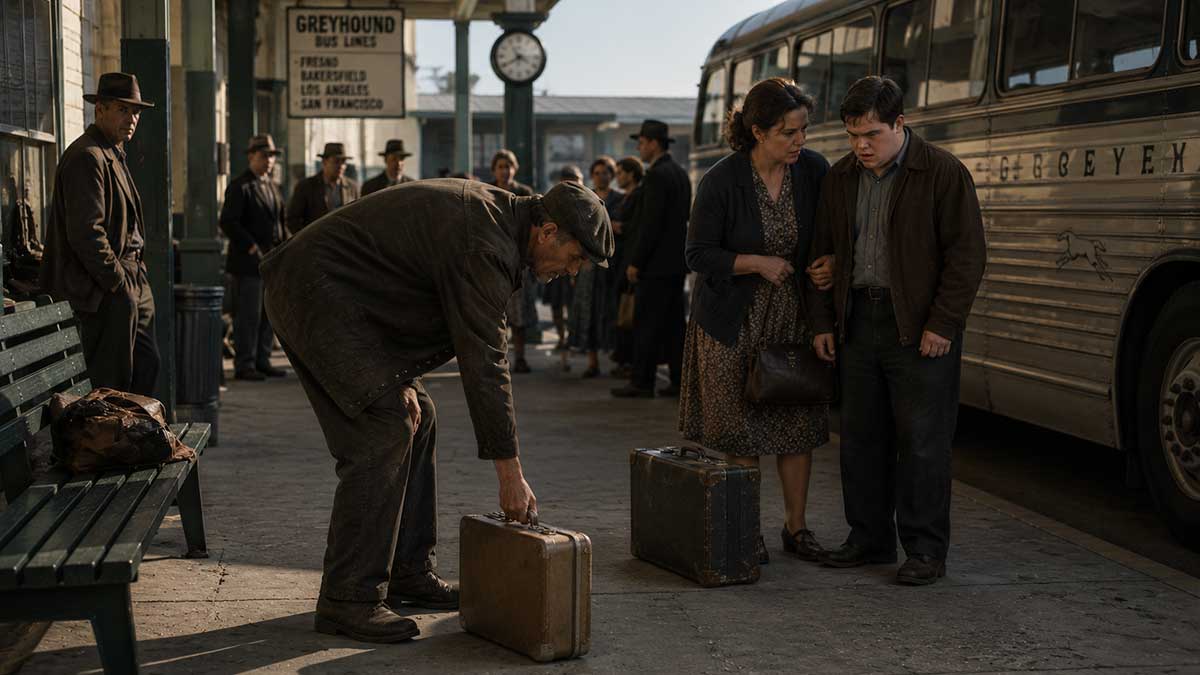
George was waiting for a bus in Fresno when he noticed the woman.
She stood beside a young man much larger than herself.
The bus was delayed.
"When's it coming?"
"Twenty minutes."
A minute later:
"When's it coming?"
"Nineteen minutes."
Then the loudspeaker announced another delay.
The young man became upset.
"You said twenty."
"I know, Tommy."
"You said twenty."
People stared.
A suitcase fell.
The woman immediately said:
"I'm sorry."
George watched her.
Not Tommy.
Her.
The eyes following every movement.
The shoulders already tight before anything happened.
The habit of apologizing before anyone accused her.
George knew it.
He stood and picked up the suitcase.
"Thank you," she said.
George put it upright.
He did not tell Tommy what to do.
He did not advise the woman.
He simply sat again.
When the bus arrived, George picked up the heaviest bag.
"You don't have to," she said.
"I know."
He carried it to the bus.
That was all.
He never saw them again.
But George remembered the suitcase.
Heavy.
Not impossible.
Just easier when somebody else held one end of the day.
What George Could Never Know
George became an old man.
The county had settled Lennie's death decades before.
George never did.
Was he right?
Some years he thought he had saved Lennie from Curley.
Some years he believed he had betrayed the only person who trusted him absolutely.
Sometimes he remembered Curley's wife and knew the danger had become real.
Sometimes he remembered Weed and wondered whether he should have run once more.
Then another question slowly replaced the old one.
Why had there only ever been George?
If Lennie was scared, George handled it.
If Lennie lost work, George found more.
If Lennie caused trouble, George got them out.
If Lennie needed money, George controlled it.
If Lennie needed hope, George created the farm.
If Lennie became dangerous, George had to decide what came next.
Carry Lennie.
Or abandon Lennie.
Those were the choices George had believed existed.
He had never pictured enough people around them to create another one.
Someone who could say:
I'll stay with him today.
Someone who could tell George:
Go sleep.
Someone Lennie trusted besides George.
Someone who could recognize danger before a frightened man stood beside a river with a stolen gun.
Would it have saved Curley's wife?
George didn't know.
Would it have saved Lennie?
George didn't know.
Could Lennie have hurt somebody anyway?
George didn't know.
Age had given George fewer answers than he expected.
But it had made him less afraid of saying:
I don't know.
The River
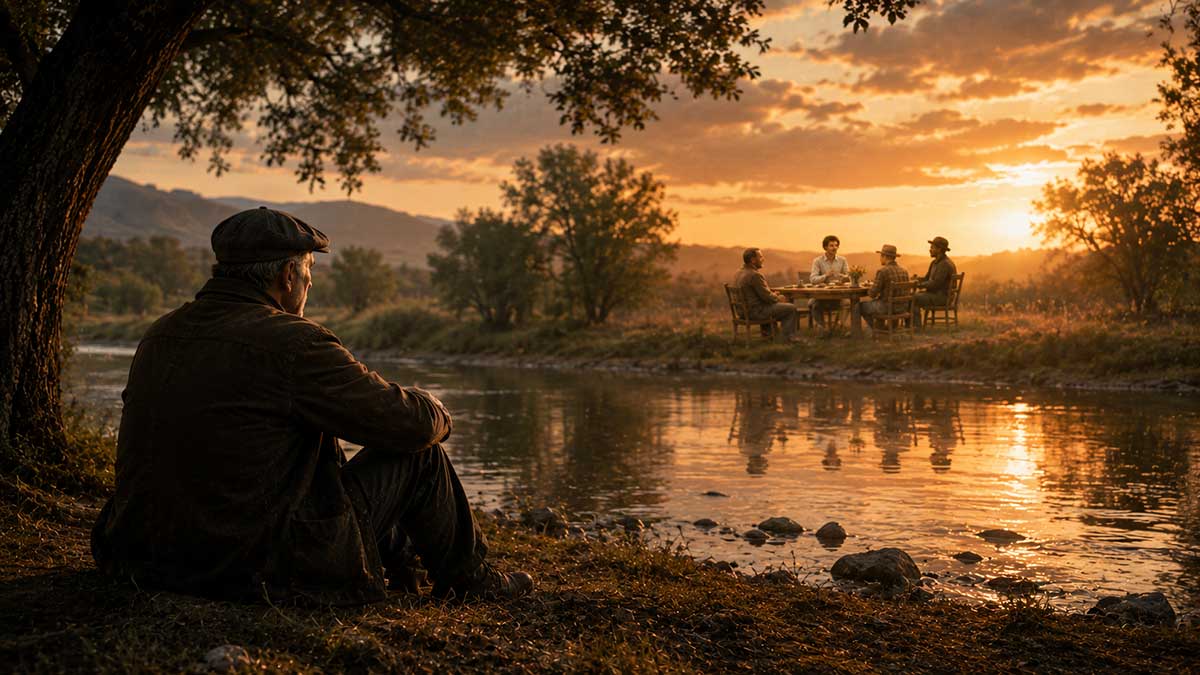
Late in his life George returned to the Salinas Valley.
He told himself the river had nothing to do with it.
Then one afternoon he found the road.
The trees.
The water.
Everything looked smaller.
Memory had enlarged the place.
George sat beneath the trees.
He thought of Lennie.
Then Candy.
Crooks.
Curley's wife.
Slim.
The sheriff.
The men sitting behind the table deciding whether George would walk free.
George almost laughed at that memory.
They had settled the question in days.
George had spent decades failing to do it.
For years he had wanted a verdict.
Right.
Wrong.
Mercy.
Murder.
Love.
Selfishness.
One answer.
None came.
George looked at the water.
Then he finally said:
"I was tired."
The river kept moving.
George waited.
No punishment.
No forgiveness.
Nothing.
Then:
"I loved you."
George closed his eyes.
For most of his life he had thought those two sentences could not occupy the same man.
Now he knew they already had.
He could love Lennie.
He could resent what his life had become.
He could want Lennie safe.
He could want freedom.
He could have believed the gun was mercy.
He could still wonder whether it was betrayal.
Perhaps the worst decisions human beings make do not always come from one clean motive.
George opened his eyes.
The farm came to him one last time.
But it was different.
No house.
No vegetable patch.
No rabbits.
A table.
Lennie sat on one side.
George sat across from him.
Candy was there.
There were more chairs.
Other people.
Nobody at the table was responsible for everything.
Nobody needed to earn the right to stay by remaining useful.
Nobody had to choose between carrying another person's whole life and leaving them alone.
George knew this picture was not proof.
Maybe nothing would have changed.
Maybe the tragedy would have happened anyway.
He had learned not to rewrite the dead into happier endings simply because the living needed comfort.
But perhaps George and Lennie had spent their lives believing their greatest dream was to have a place of their own.
Maybe what they had needed first was more people of their own.
The sun dropped lower.
George stood carefully.
His knees hurt now.
He looked across the river.
For years he had thought loving Lennie meant carrying him.
Later he believed freedom meant carrying nobody.
It had taken most of a lifetime to recognize something between those two ideas.
A suitcase held for a stranger.
A table with more than two chairs.
Someone beside you saying:
Give me some of it.
George turned toward the road.
The question remained behind him.
Was he right?
George still didn't know.
For the first time, he did not need to know before taking another step.
He walked away from the river.
This time, he did not look back.
Final Thoughts
The authorities can close a case.
George cannot.
That difference lies at the heart of After the River.
Other men hear that Lennie killed Curley's wife, learn about his violence, hear George's account of the gun, and eventually allow George to walk away.
George receives something resembling an official answer.
His own answer takes a lifetime.
Part of the reason is that George knows something the investigators do not fully know.
He remembers Lennie's final moments.
Lennie was not attacking him.
He was listening.
He trusted George.
George was telling him about the farm.
That makes George's decision impossible to reduce to a simple act of self-defense.
Yet Curley's wife is dead.
Her death cannot disappear simply because Lennie did not intend to kill her. George has already watched a pattern grow more dangerous, from Weed to Curley's hand, the puppy, and finally the woman in the barn.
Running again might have saved Lennie that afternoon.
George can never know what would have happened the next afternoon, the next month, or in the next town.
Then comes an even more uncomfortable truth.
After Lennie dies, some parts of George's life improve.
He sleeps without listening for trouble.
He chooses his own jobs.
He spends his own money.
He travels faster.
Nobody depends on him.
For years George had said he could live easily without Lennie.
Now he discovers that part of what he said was true.
And he hates himself for it.
The imagined decades that follow allow George to discover that love is rarely emotionally pure. A person can love someone deeply and still become exhausted. A caregiver can want to remain and sometimes dream of escape. Relief after a burden ends does not necessarily erase the love that existed before it.
George eventually encounters the same question from the opposite direction.
He grows old.
His hands stiffen.
Younger men carry things for him.
The worker who once worried about Lennie's dependency begins experiencing dependency himself.
Now Candy looks different in George's memory.
So does Candy's old dog.
So does the farm.
The farm once represented freedom to George.
For Lennie, it meant rabbits and safety.
For Candy, it meant having somewhere to grow old without being discarded.
By the end of After the River, George no longer pictures the farm.
He pictures something much simpler.
A table.
More than two chairs.
That image changes the question.
Perhaps George and Lennie did not need George to become stronger.
Perhaps they needed a life in which Lennie's safety, George's exhaustion, and the protection of everyone around them did not depend almost entirely upon one friendship.
That possibility does not prove Lennie could have been saved.
It does not restore Curley's wife.
It does not prove George was right.
It does not prove George was wrong.
George returns to the river as an old man still unable to answer the question that has followed him for decades.
Instead, he finally admits two truths:
“I was tired.”
“I loved you.”
For most of his life, George believed one statement weakened the other.
At the river, he finally allows both to remain.
Perhaps that is the closest George can come to peace.
Not certainty.
Not innocence.
Not absolution.
Just the ability to live truthfully with something he can never undo.
And perhaps the final question is no longer only whether George should have pulled the trigger.
It is:
Before George ever reached that riverbank with Lennie's life in his hands, who else could have helped carry it?
Short Bios:
John Steinbeck (1902–1968) was an American novelist born in Salinas, California. His writing frequently explored migrant workers, poverty, loneliness, human dignity, friendship, and economic insecurity. His best-known works include Of Mice and Men, The Grapes of Wrath, and East of Eden. Steinbeck received the Nobel Prize in Literature in 1962.
George Milton is a migrant ranch worker and Lennie Small's longtime companion. Practical, intelligent, loyal, impatient, and often exhausted, George protects Lennie while dreaming that the two will someday own a small farm. At the end of Of Mice and Men, George kills Lennie beside the Salinas River. After the River imagines how that decision might have shaped the rest of his life.
Lennie Small is George's physically powerful and highly dependent traveling companion. He loves soft things and dreams of tending rabbits on the farm he and George hope to own. Lennie does not intend to hurt people, yet his strength and difficulty recognizing danger repeatedly lead to serious harm. His accidental killing of Curley's wife sets the novel's final tragedy in motion.
Candy is an aging ranch worker who has lost one hand and fears being discarded when he can no longer work. He offers his savings toward George and Lennie's farm, turning their dream into a genuine possibility. Earlier, Candy allows another worker to shoot his elderly dog and later regrets not doing it himself, creating a painful parallel with George's final decision about Lennie.
Slim is a respected ranch worker known for his calm judgment and perceptiveness. Unlike Carlson, Slim recognizes that Lennie's death represents a profound personal loss for George. His quiet response at the end of Steinbeck's novel suggests that he sees something in George's decision that the other men do not.
Crooks is a Black stable worker forced to live apart from the other ranch hands under the racial segregation of the period. Intelligent and guarded, he briefly allows himself to hope that he might join George, Lennie, and Candy on their farm. His story reveals how loneliness can be imposed by the society surrounding a person.
Curley's wife is the only major woman in Of Mice and Men and is never given a personal name. She is lonely, dissatisfied with her marriage, and still remembers her abandoned hopes of becoming an actress. Lennie accidentally kills her in the barn. Her death remains central to the moral problem of George's decision: Lennie's lack of murderous intent cannot erase the life that was lost.
Ruth is an original character created for After the River. She runs the kitchen at a boardinghouse where George stays years after Lennie's death. Their quiet relationship reveals one of the lasting consequences of George's experience: after spending years responsible for Lennie, George has begun to fear that loving someone may eventually mean becoming responsible for everything that happens to them.
Leave a Reply