
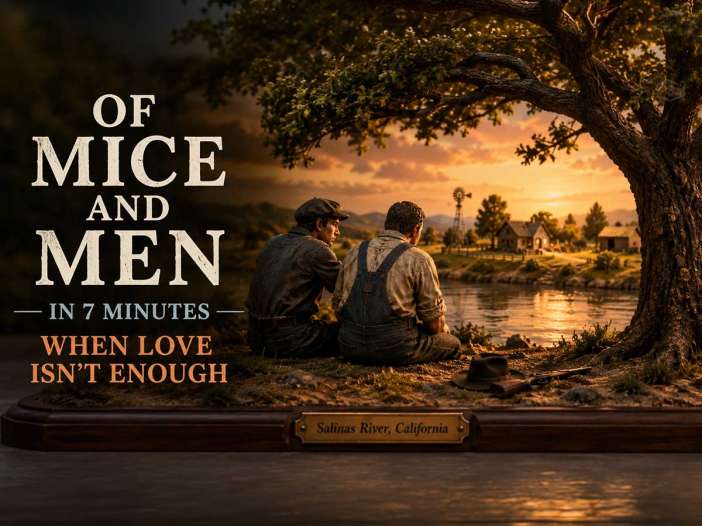
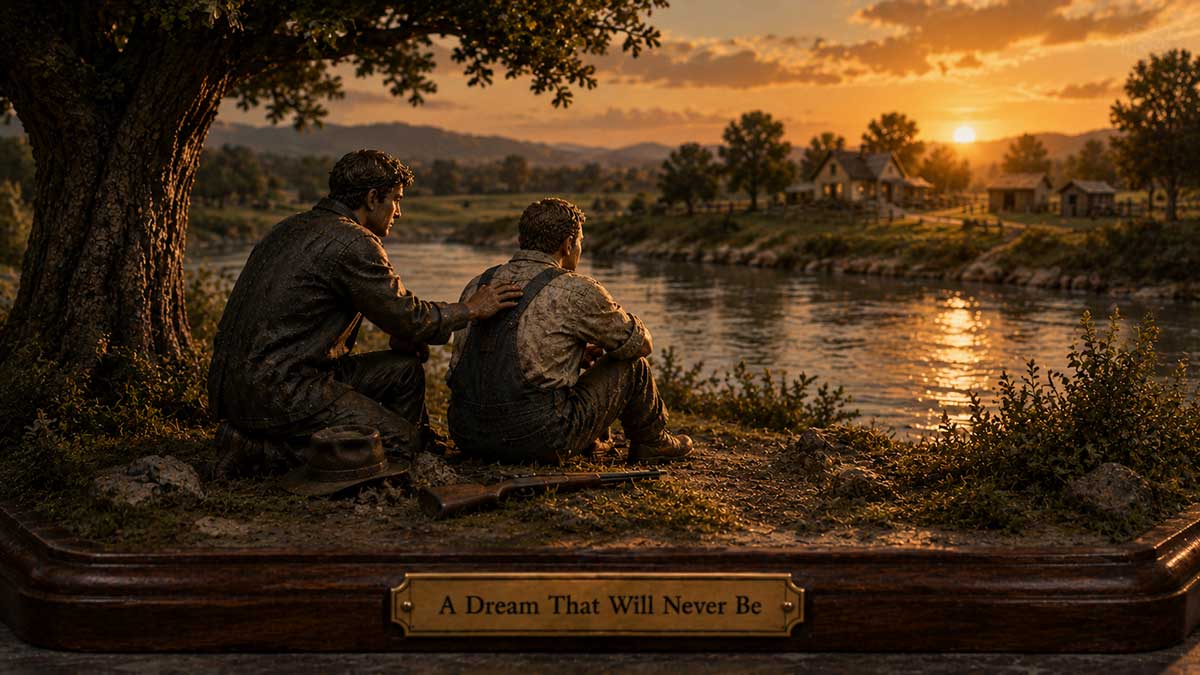
George Milton spends most of Of Mice and Men protecting his best friend.
At the end of the story, he raises a gun and kills him.
That is the shocking contradiction at the center of John Steinbeck's 1937 novel.
But the deepest question is not simply:
Was George right to kill Lennie?
There is an earlier question.
How did one man end up carrying so much responsibility for another human life that, in the end, he believed killing his friend was the most merciful choice left?
To understand that, we have to go back to the beginning.
1. Two Men Who Have Almost Nothing Except Each Other
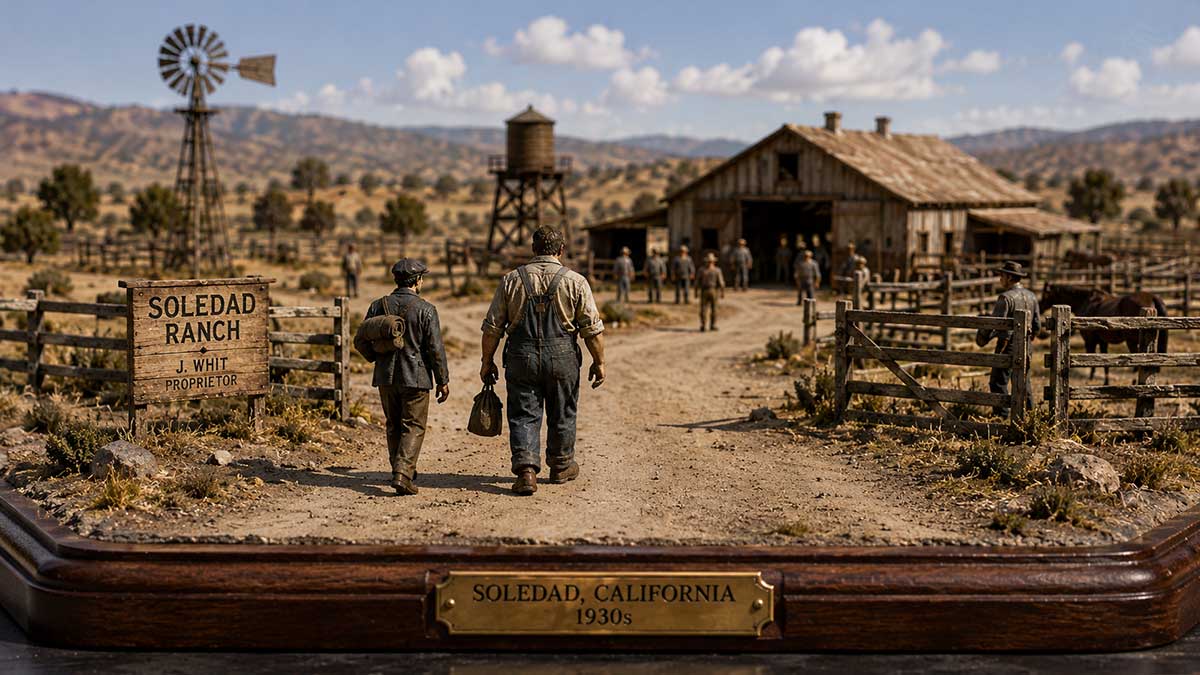
The story takes place during the Great Depression.
George Milton and Lennie Small travel through California looking for ranch work.
George is small, sharp, practical, and quick-tempered.
Lennie is physically enormous and incredibly strong, but he struggles to understand consequences and depends heavily on George.
George finds their jobs.
George manages their money.
George tells Lennie what to say and what not to say.
George gets them out of trouble.
He even tells Lennie where to hide if something goes wrong.
Sometimes George explodes in frustration.
Without Lennie, he says, he could keep his money, go wherever he wanted, and live without constantly worrying about what disaster might happen next.
Yet George never leaves him.
Part of the reason is obvious.
Lennie needs George.
But something more complicated is happening.
George needs Lennie too.
The other ranch workers drift from job to job, often without families, permanent homes, or anyone waiting for them.
George and Lennie are different.
They have each other.
In a lonely world, that matters.
And they share something else.
A dream.
2. The Little Farm
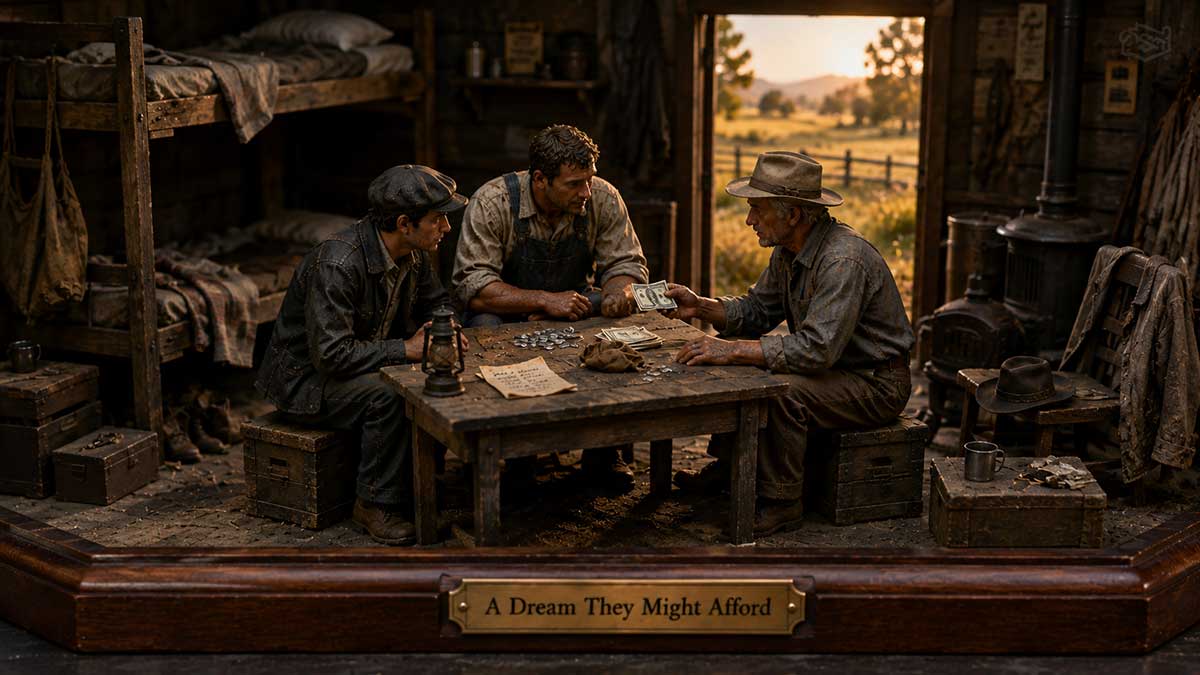
George and Lennie have told each other the same story so many times that Lennie practically knows it by heart.
One day they will stop working for other men.
They will buy a few acres of their own.
They will have a little house.
They will grow vegetables.
They will raise animals.
And Lennie will get to tend the rabbits.
Whenever Lennie becomes frightened, George tells him about the farm.
For George, the farm means independence.
For Lennie, it means safety, rabbits, and a place where he belongs.
But for both men it means something larger:
Someday, we will have a place in this world that cannot throw us away.
Then something remarkable happens.
They meet Candy, an aging ranch worker who has lost one of his hands.
Candy hears about the farm.
He has savings.
He offers to contribute his money if George and Lennie will let him come too.
Suddenly, the impossible dream becomes financially possible.
For the first time, "someday" becomes "soon."
And that is what makes everything that follows hurt so much.
3. Candy's Dog
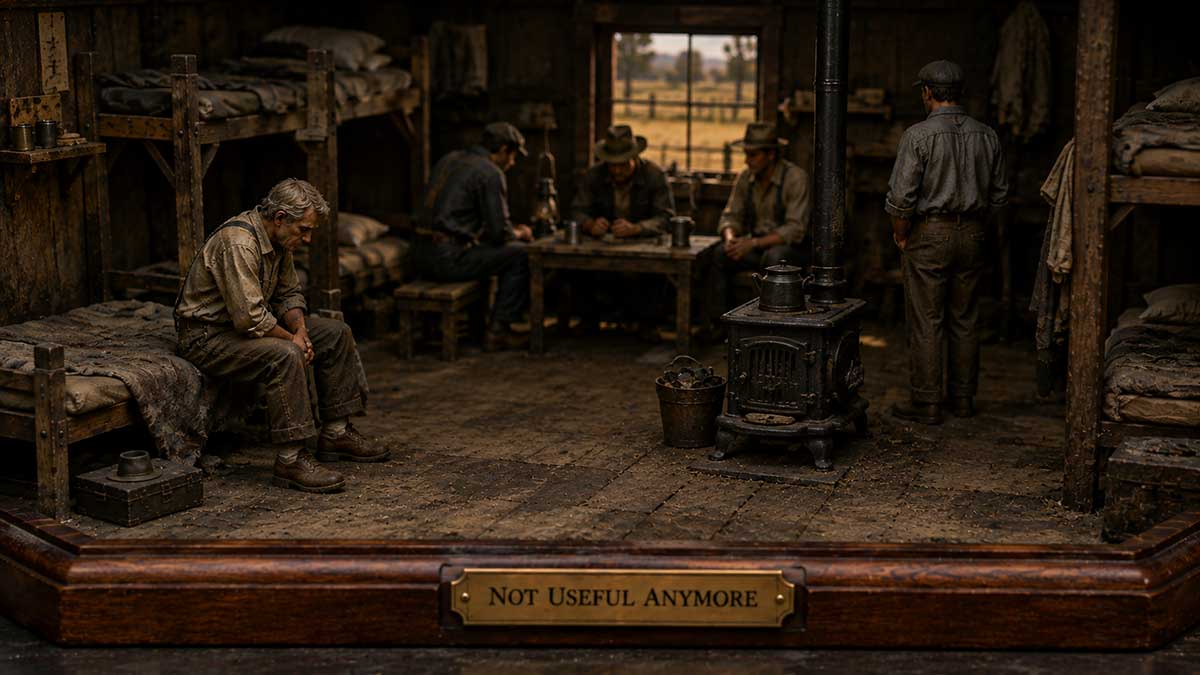
Candy owns an old dog.
The dog has been with him for years, but now it is weak, old, and no longer useful as a working animal.
Another ranch hand, Carlson, argues that the dog should be shot.
Candy doesn't want to let it go.
But eventually he gives in.
Someone else takes the dog outside and kills it.
Later, Candy says something that becomes terribly important.
He wishes he had done it himself.
The scene foreshadows the ending of the novel, but it raises another question too.
What happens to a person when a society begins confusing usefulness with worth?
Candy knows that the conversation about his dog could someday become a conversation about him.
He is aging.
He has lost a hand.
He cannot work forever.
What happens when he becomes inconvenient?
This is one reason the little farm matters so much to him.
He isn't merely buying property.
He is trying to buy a future in which someone will still say:
You can stay.
4. Lennie Doesn't Want to Hurt Anyone
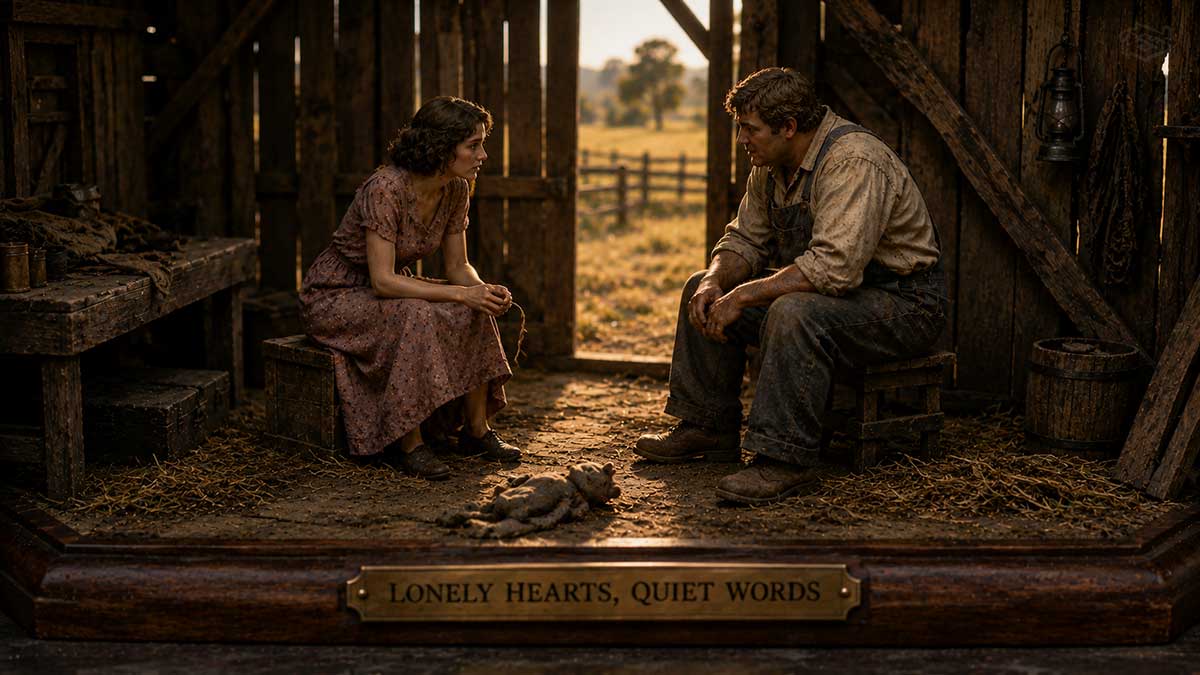
Lennie loves soft things.
A mouse.
A woman's dress.
A puppy.
A woman's hair.
And, in his imagined future, rabbits.
But there is a terrible pattern.
Lennie loves fragile things, yet he does not understand his own strength.
Before the novel begins, George and Lennie have already been forced to flee another town after Lennie grabbed a woman's dress and became frightened when she tried to escape.
At the ranch, Lennie accidentally kills his puppy.
Then he meets Curley's wife in the barn.
She is one of the loneliest characters in the novel.
She once dreamed of becoming an actress.
Instead, she is trapped in an unhappy marriage on a ranch where the men distrust her.
Steinbeck never even gives her a name of her own.
She talks to Lennie.
She lets him touch her hair.
He holds on too tightly.
She becomes frightened.
She screams.
Lennie panics.
He tries to stop her from screaming.
And he accidentally breaks her neck.
This is where Steinbeck forces us to hold two truths at once.
Lennie did not intend to kill her.
And:
A woman is dead.
Lennie's lack of malicious intent matters.
Her life matters too.
Compassion for one cannot require us to erase the other.
5. Back at the River
George had previously told Lennie that if anything terrible happened, he should return to a particular place beside the river and wait.
So Lennie does exactly that.
The other men form a search party.
Curley wants revenge.
George knows what may happen when they find Lennie.
He reaches Lennie first.
Then George does something painfully familiar.
He tells Lennie about the farm one more time.
The little house.
The land.
The rabbits.
Lennie listens.
He can see their future again.
He believes he and George are still going there.
And as Lennie looks toward that imagined future, George raises the gun.
He shoots his friend.
Lennie dies believing in the dream.
6. Did George Save Lennie or Betray Him?
This is where readers have argued for generations.
George may have spared Lennie from a violent manhunt.
He may have believed he was giving Lennie a peaceful death rather than allowing Curley and the others to capture him.
That can look like mercy.
But there is another truth.
Lennie never asks George to kill him.
He doesn't know George is about to do it.
He trusts George completely.
George decides that Lennie's future is over.
So perhaps George saves Lennie.
Perhaps he betrays him.
The reason the ending remains so painful is that both interpretations can exist at the same time.
But there is another way to read the ending.
Instead of asking only what George did at the river, ask what happened during all the years that brought him there.
George begins as Lennie's friend.
Then he becomes Lennie's caregiver.
His protector.
His financial manager.
His advocate.
His safety plan.
His crisis manager.
And finally, his judge.
That is an extraordinary amount of responsibility to place on one human relationship.
7. Maybe George Was Never Supposed to Carry All of This Alone
Lennie needed more than friendship.
He needed an environment capable of protecting his dignity while protecting other people too.
George needed help.
He needed other people who could share responsibility.
He needed somewhere to turn before every emergency became his emergency.
But in the world Steinbeck gives them, there is almost nothing.
No stable home.
No meaningful support network.
No real safety system.
No community capable of carrying them both.
The world keeps narrowing.
The road becomes the ranch.
The ranch becomes the dream.
The dream disappears.
Lennie runs.
And finally everything narrows to two men beside a river.
One friend.
One gun.
One unbearable decision.
Perhaps the tragedy is not simply that George made that decision.
Perhaps the tragedy began much earlier, when responsibility that should have belonged to many people ended up resting on one frightened man.
8. What Does This Have to Do With Us?
Of Mice and Men was published in 1937.
But this part of the story has never disappeared.
Think of the daughter caring for an aging parent.
The brother responsible for a sibling who needs lifelong support.
The husband caring for his wife.
The mother whose phone must always be on in case her adult child needs her.
Often, one person gradually becomes the person who handles everything.
The appointments.
The money.
The emergencies.
The transportation.
The decisions.
The fear.
And sometimes we praise that person by saying:
"You are so strong."
But strength may not be what that person needs.
They may need someone else to carry part of the weight.
Love does not make exhaustion disappear.
Love does not eliminate resentment or fear.
And love does not automatically give one person the wisdom or authority to make every decision for another.
There are things love cannot carry by itself.
That does not mean love has failed.
It means love needs to stop being alone.
9. The Dream That Never Came True
George and Lennie never reach their farm.
There is no little house.
No vegetable garden.
No rabbits for Lennie.
Candy never gets the secure old age he imagined there.
Yet that does not mean the dream was meaningless.
For a little while, Lennie had a tomorrow.
George believed freedom might be possible.
Candy believed growing old did not necessarily mean being discarded.
For a brief moment, three lonely men could picture a place where their value did not depend entirely on how much work they could perform.
A place where someone might say:
You belong here.
Maybe that is why the farm remains so moving.
It wasn't simply a piece of land.
It was their answer to loneliness.
10. The Question Steinbeck Leaves With Us
So after Of Mice and Men, we can certainly ask:
Was George right to kill Lennie?
There may never be a comfortable answer.
But perhaps there is a more useful question.
Look around your own life.
Who is always answering the phone?
Who always drives over when something goes wrong?
Who keeps track of everything?
Who looks strong because nobody has given them permission to be tired?
Maybe that person does not need to hear:
"Be stronger."
Maybe they need to hear:
"Let me carry some of it too."
And perhaps that brings us back to George and Lennie.
Before the gun.
Before the riverbank.
Before their little farm disappeared forever.
Before one frightened man was left holding another man's entire future in his hands.
What could the rest of us have helped carry?
Short Bios:
John Steinbeck (1902–1968) was an American novelist whose fiction frequently explored poverty, migrant labor, loneliness, dignity, injustice, and the lives of ordinary working people. Born in Salinas, California, Steinbeck drew heavily on the agricultural communities and landscapes of his home state. He published Of Mice and Men in 1937 and The Grapes of Wrath in 1939. Steinbeck received the Nobel Prize in Literature in 1962.
George Milton is a migrant ranch worker and Lennie Small’s closest companion. Intelligent, practical, impatient, and deeply loyal, George dreams of owning a small farm where he and Lennie can live independently. His relationship with Lennie gradually forces him to carry responsibilities far beyond ordinary friendship, leading to the novel’s devastating final decision.
Lennie Small is George’s physically powerful companion who depends heavily on him to navigate everyday life. Lennie loves soft things and dreams of tending rabbits on the farm he hopes to share with George. He does not intend to hurt people, yet his inability to understand his own strength repeatedly creates danger. His combination of vulnerability and capacity for harm creates one of the novel’s central moral tensions.
Candy is an aging ranch worker who has lost one hand. After hearing about George and Lennie’s dream farm, he offers his savings and asks to join them. His old dog, killed after other workers decide it has become useless, becomes one of the novel’s most important symbols of aging, dependency, usefulness, and human worth.
Crooks is the ranch’s Black stable hand, forced to live separately from the other workers because of racial segregation. Intelligent and guarded, he initially mocks the idea of George and Lennie’s farm but briefly allows himself to hope that he might belong there too. His story reveals that loneliness in Steinbeck’s world is not experienced equally. Some people are deliberately pushed outside the community.
Curley’s wife is the only major woman in the novel, and Steinbeck never gives her a personal name. She once dreamed of becoming an actress but now lives an isolated life on the ranch. Her loneliness and frustration make her more complicated than the danger the men initially believe her to be. Her accidental death at Lennie’s hands destroys the dream of the farm and forces the novel toward its final tragedy.
Slim is a respected ranch worker whose quiet authority comes from judgment and empathy rather than force. He sees George and Lennie’s relationship more clearly than most of the other men. After Lennie’s death, Slim recognizes that George has suffered a profound loss, offering compassion at the moment when others fail to understand what has happened.
Leave a Reply