
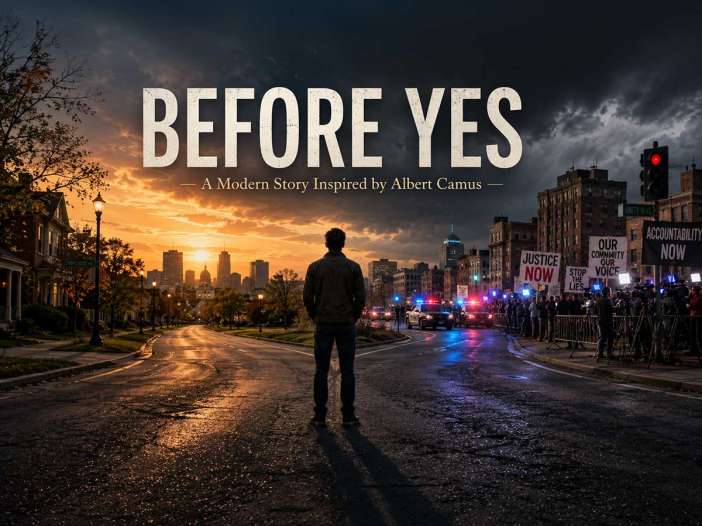
What if the most important moral decision in your life happened long before the tragedy itself?
Introduction by By Albert Camus
When I wrote The Stranger, I did not intend to create a hero.
Nor did I intend to create a villain.
I wanted to place one ordinary man before a series of ordinary decisions and ask whether honesty alone is enough to guide a human life.
For many years, readers argued about Meursault.
Was he truthful?
Was he detached?
Was he courageous enough to refuse hypocrisy?
Or did his refusal to pretend become another kind of blindness?
Those questions have remained alive because they belong to every generation.
This story begins where those questions lead us today.
The world has changed.
Courtrooms now compete with television studios.
Newspapers have been joined by social media.
A single photograph can shape public opinion before a witness ever takes the stand.
Political movements have grown louder.
Public judgment has become faster.
Yet one thing has not changed.
Human beings still make countless small decisions before they face one irreversible moment.
Most lives are not changed by one dramatic choice.
They are changed by a thousand quiet agreements.
"I'll drive."
"I'll carry it."
"I'll stay."
"It probably doesn't matter."
This is not a retelling of The Stranger.
It is an answer to it.
It asks whether silence can become a form of participation.
Whether refusing to choose is itself a choice.
Whether another person's life can slowly disappear behind arguments, headlines, and symbols.
Above all, it asks whether moral responsibility begins long before tragedy arrives.
Perhaps it begins in the unnoticed moment...
before we say yes.
(Note: This is an imaginary conversation, a creative exploration of an idea, and not a real speech or event.)
Chapter 1: The Funeral
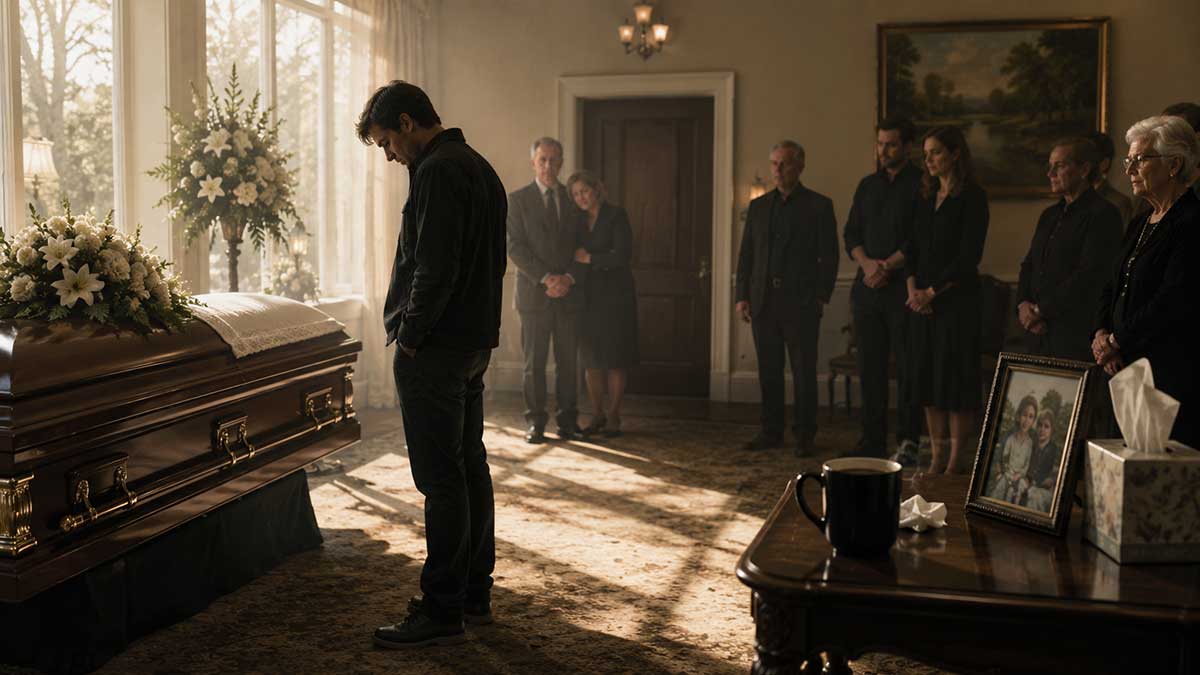
The heater clicked every forty seconds.
I noticed it during the prayer.
The room was too warm near the front and cold near the door. My collar pressed against my neck. There was a brown mark on the ceiling above the second row of chairs. It looked like a map of a country no one had named.
My cousin Daniel sat beside me. He kept looking over.
I knew what he was waiting for.
The minister spoke about my mother’s patience. Then he spoke about her faith. He said she had never complained.
She had complained often.
Mostly about the nurses, the television, and the soup.
I did not hold that against her.
The coffee at the back of the room smelled burnt. Someone had opened the lid too many times. Lena held the funeral program with both hands. She folded one corner, flattened it, then folded it again.
My mother’s photograph stood beside the coffin.
It had been taken twelve years earlier at my sister’s wedding. She was smiling at someone outside the frame. The photographer had caught her before she remembered the camera.
She had looked better then.
Near the end, her face had become thinner. Her hands shook when she lifted a cup. During my last visit, she had asked whether the warehouse still changed the schedule every month.
I told her it did.
She said that was no way to live.
Then she asked whether I had paid the phone bill.
Those were our last two subjects.
Work and the phone bill.
At the funeral, people said she had loved me deeply.
I believed them.
I had loved her too.
No tears came.
After the prayer, relatives moved in a line.
Daniel hugged me longer than usual. His hand stayed between my shoulders. I felt him waiting for my body to respond.
It did not.
He stepped back.
“You holding up?”
“Yes.”
“You need anything?”
“No.”
He looked disappointed.
Lena came next.
She did not hug me immediately. She studied my face, then touched my sleeve.
“We can stay after everyone leaves,” she said.
“There’s nothing else to do here.”
The sentence reached her before I understood it.
Her hand dropped.
“I know,” she said.
Outside, the sky was bright and colorless. Cars moved along the road beyond the cemetery. A truck changed gears on the hill.
Lena stood beside me with her coat unbuttoned.
“Are you all right?”
“It’s fine.”
She looked at me for a moment.
Then she buttoned her coat.
The next afternoon, she took me to the neighborhood street fair.
I had not wanted to go. She said sitting alone in my apartment would not prove anything.
The weather had changed. Sunlight reflected from parked cars and folding tables. Children ran between booths holding paper cups of lemonade. Someone played old soul songs through a speaker that cracked whenever the bass grew louder.
Lena bought fried dough covered in powdered sugar.
She took one bite.
A gust of wind blew the sugar across the front of her black coat.
She looked down.
Then she looked at me.
I laughed.
A man carrying a camera turned at the sound. He lifted it and took the picture before Lena brushed the sugar away.
She laughed too.
For a few seconds, the day felt ordinary.
Mason found us near the city workers’ booth.
He wore a green jacket covered with buttons. One said HOUSING IS A HUMAN RIGHT. Another had the name of a local legal fund.
“I heard about your mother,” he said.
“Thank you.”
“How was the service?”
“It was fine.”
Mason nodded as though I had given the correct answer.
He knew how to do that. He could make almost any response seem complete.
He looked at Lena’s coat.
“Looks like you lost a fight with a bakery.”
“She did,” I said.
Lena smiled.
Mason asked whether I was free Thursday evening.
He was moving equipment for a rally outside city hall. One of his volunteers had hurt his back. He needed someone with a car and steady hands.
“What kind of rally?” I asked.
“City cooperation with immigration enforcement.”
I waited.
He said, “We’re trying to stop the council from expanding the agreement.”
I had heard something about it on the radio.
“What time?”
“Six.”
“I can do that.”
Mason put a hand on my shoulder.
“I appreciate you.”
After he left, Lena watched him cross the street.
“Do you support the campaign?”
“I haven’t read much about it.”
“Then why did you say yes?”
“He asked.”
She looked at me in the same way Daniel had at the funeral.
That night, I hung my funeral shirt over the back of a chair.
The collar was open.
It still looked tight.
Chapter 2: The Bag
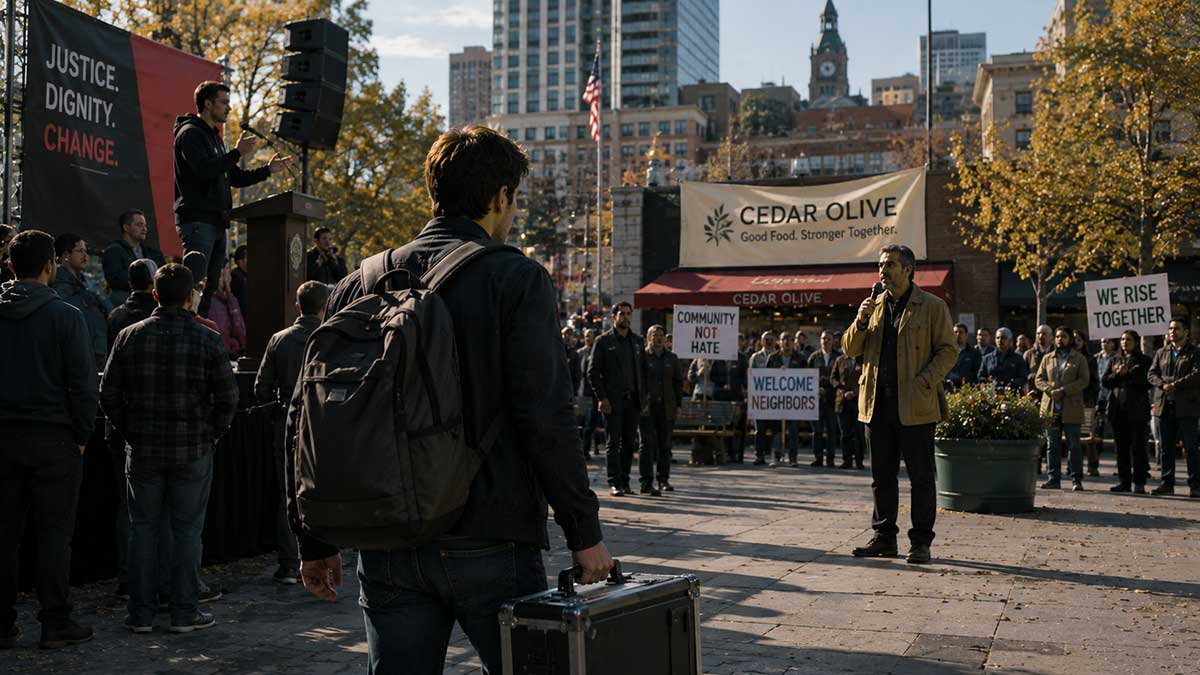
The rally began before sunset.
Mason had filled the sidewalk outside city hall with signs, folding tables, and long orange extension cords. He moved through the crowd without stopping. People called his name from every direction.
He remembered theirs.
“Mrs. Alvarez, your son’s hearing is Monday.”
“Darius, the legal clinic called back.”
“Rana, put the water near the steps.”
He made each person feel seen.
I carried two speaker stands from my car. Then three boxes of bottled water. Then a rolled banner that said FAMILIES BELONG TOGETHER.
The backpack came last.
Mason handed it to me near the curb.
“Keep this close.”
It was heavier than it looked.
The strap pressed into my shoulder. I shifted it to the other side.
“What’s in it?”
“Batteries, cables, emergency stuff.”
He had already turned away.
The crowd thickened. Cars slowed as they passed. Some drivers honked. A few people raised phones through open windows.
Mason climbed onto the low stone wall beside the entrance.
He spoke without notes.
He named three families affected by detention. He described a father taken during a traffic stop and a mother who had missed two court dates after being moved between facilities.
The crowd grew quiet.
Mason knew when to lower his voice.
He knew when to let silence work for him.
I stood near the speakers and watched the meter lights rise and fall.
Across the plaza, another group had gathered near the courthouse steps.
Samir Haddad stood behind a small wooden podium.
I recognized him from his restaurant. Lena had taken me there twice. The lentil soup was good. Samir had walked from table to table asking whether everyone had enough bread.
His press conference drew fewer people.
He supported the families, he said. He opposed the agreement. Then he spoke about intimidation inside local activism.
“People are not scenery for your anger,” he said.
The sentence carried across the plaza.
Mason stopped speaking.
For a second, both crowds were silent.
Then Mason climbed down from the wall.
I followed him without deciding to.
Samir saw us coming.
He was shorter than Mason and heavier around the middle. His hair had gone gray at the temples. He wore a white shirt with the sleeves rolled up.
“You could have called me,” Mason said.
“I have called you.”
“You knew what today was.”
“Yes.”
“You chose today.”
Samir looked at the phones pointed at them.
“No. You chose cameras years ago.”
Mason smiled.
It was not the smile he used with families.
“You left when the work became difficult.”
“I left when the work became yours.”
A woman beside me whispered, “Here we go.”
Mason stepped closer.
“You took money from people who trusted us.”
Samir’s face changed.
“You signed the checks.”
“You managed the account.”
“And you promised things we could not pay for.”
Mason looked at the cameras.
Samir looked at Mason.
That was the difference between them.
“People lost rent money,” Mason said.
“People received rent money.”
“Not all of them.”
“No fund reaches everyone.”
“That’s convenient.”
Samir gave a small laugh.
“You are very good at turning failure into betrayal.”
The crowd reacted.
Mason’s face remained still.
Samir had won the moment. He knew it.
He gathered his papers.
Before leaving, he said, “You help people. I know that. It does not make every cruelty useful.”
Mason watched him walk away.
The backpack strap cut deeper into my shoulder.
I shifted it again.
Lena arrived after the speeches.
She had come from school and still wore paint on one sleeve.
“You carried all that?” she asked.
“Most of it.”
She touched the red mark near my collarbone.
“What was in the bag?”
“Batteries.”
“You checked?”
“No.”
She looked across the plaza, where Mason spoke to a reporter.
“I heard what happened.”
“It was an argument.”
“It has been an argument for three years.”
She told me about the aid fund.
Mason and Samir had started it together after several refugee families arrived in the city. Donations came quickly. So did requests. The records were poor. Money moved between accounts. Some families received help. Others did not.
No charges were filed.
Each man blamed the other.
“Do you know who took it?” I asked.
“No.”
“Then it could have been either one.”
“It could have been neither in the way people tell it now.”
I did not know what that meant.
Later that night, Samir closed his restaurant.
I learned the details months afterward from statements and photographs.
He corrected a payroll error that had shorted one of the dishwashers by forty-two dollars.
He tasted the soup.
He added salt.
His daughter, Leila, sat at a corner table doing homework.
She told him not to speak to Mason again.
“Mason speaks whether I answer or not,” Samir said.
“He needs an audience.”
Samir wiped his hands on a towel.
“He needs to be answered.”
Leila closed her notebook.
“That is not the same thing.”
Samir did not reply.
At 11:14 that night, Mason sent me a message.
Samir thinks he can embarrass me and walk away.
I read it twice.
Then I put the phone face down.
A minute later, another message appeared.
Council meeting next Thursday. Need a ride.
The red mark from the backpack strap still hurt when I touched it.
I looked at the message.
Then I wrote:
Fine.
Chapter 3: The Garage
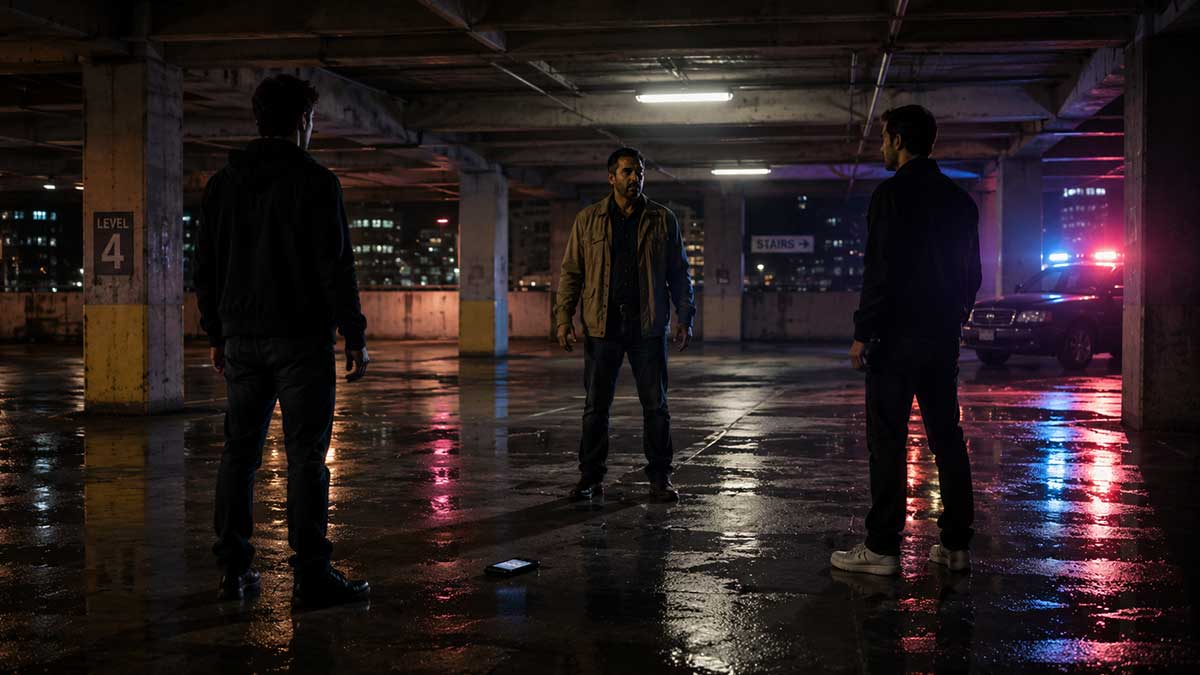
The council meeting lasted three hours.
Most of it was waiting.
People filled the hallway outside the chamber before the doors opened. Mason spoke to reporters near the elevators. Samir stood with two restaurant owners and a lawyer from the neighborhood legal clinic.
I sat on a stone bench beneath a vent that blew warm air.
The backpack rested between my feet.
Mason had handed it to me in the parking lot.
“Same emergency stuff,” he said.
The strap had rubbed the skin near my shoulder raw the week before. I carried it by the top handle instead.
Inside the chamber, council members spoke into microphones beneath bright lights. Some read prepared statements. Others thanked people for sharing difficult stories.
The agreement passed by one vote.
Half the room shouted.
The council president struck a wooden block several times. Police moved between the rows.
Mason stood.
“This city just chose fear,” he called.
Samir remained seated.
People pushed into the hallway.
Phones were already recording.
Outside, the evening air felt heavy. A storm had passed earlier, but the heat remained trapped between the buildings. The pavement gave off the smell of wet stone.
Mason wanted to speak to the crowd near the front steps.
The police told everyone to move across the street.
He argued with them for several minutes.
Samir left through a side entrance.
Mason saw him.
“Come on,” he said.
I followed.
I cannot say why.
The parking garage was across the alley behind city hall. The concrete inside held the day’s heat. Tires made a high sound on the ramps above us. Somewhere, a car alarm had been ringing long enough to become part of the building.
Samir walked toward the stairwell.
Mason called his name.
Samir kept moving.
Mason called again.
This time Samir stopped.
“I’m going home,” he said.
“You told them to accept the agreement.”
“I told them what the vote would be.”
“You gave the council cover.”
“I told people not to get arrested for your camera.”
Mason laughed.
“You think this is about my camera?”
Samir looked at me.
It was the first time he seemed to notice I was there.
“You should go home too,” he said.
Mason stepped between him and the stairwell door.
“You don’t get to do this again.”
“Move.”
“Say what you said inside.”
“I did.”
“Say it now.”
Samir glanced at two people approaching from the alley. One held a phone upright. A small red light blinked near the top.
“Mason,” I said.
He did not look at me.
“You tell everyone I use people,” he said. “You used every family in that fund to build your restaurant.”
Samir’s face tightened.
“My restaurant existed before the fund.”
“With whose money?”
“My money.”
“Which account?”
Samir reached for the door.
Mason caught his arm.
Samir pulled away and shoved him once in the chest.
Mason stumbled backward.
The two people near the alley shouted.
Someone farther inside the garage threw a bottle. I heard it strike a pillar and break.
The car alarm stopped.
For a moment, the silence was worse.
Mason turned toward me.
“Give me the bag.”
I set it on the ground and opened the zipper.
The handgun lay beneath two coils of cable.
It was black and smaller than I expected.
I looked at Mason.
“What is this?”
“For protection.”
“You said batteries.”
“There are batteries.”
He reached down.
I took the gun before he could.
Mason stared at me.
“Give it here.”
“No.”
Samir pushed the stairwell door open.
Mason moved toward him again.
I held the gun at my side.
The metal felt warm from the bag.
Another shout came from the alley.
Samir turned.
Mason said something I could not hear.
Samir reached inside his coat.
I saw a flash of metal.
A second bottle broke.
I fired.
The sound filled the garage and came back from every wall.
Samir fell against the door, then onto the concrete.
No one moved.
My ears rang.
His right hand remained inside his coat.
I could see Mason’s mouth moving, but I could not hear him.
The first shot felt finished.
The silence after it did not.
I fired again.
Then once more.
Samir’s hand slipped free.
A phone fell beside him.
The screen was lit.
Home soon.
The words sat above an unfinished message.
Mason was the first person I heard clearly.
“He had something.”
I looked at Samir’s hand.
There was nothing in it.
The woman with the phone screamed at me to drop the gun.
I did.
It struck the concrete and turned once.
Police entered from the alley with their weapons raised.
They pushed me face down.
The floor smelled of oil and wet dust.
Someone asked why I had shot him.
I turned my head enough to speak.
“I thought he was reaching for something.”
The woman’s phone was close to my face.
Later, that sentence appeared everywhere.
The recording stopped before I said the rest.
“I was wrong.”
A different person had captured those words from farther away.
That version did not appear until three weeks later.
An officer pulled my arms behind me.
The backpack still hung from one shoulder.
The strap pressed into the same place as before.
Chapter 4: The Photograph
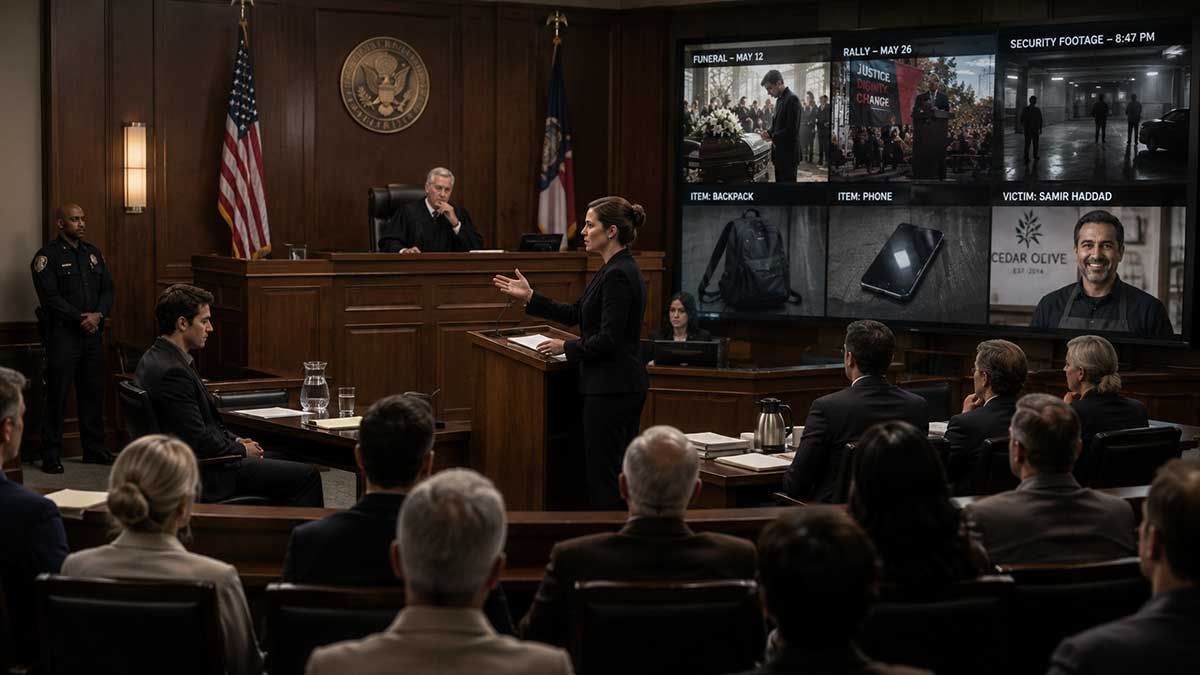
They kept the television on in the holding area.
No one watched it continuously.
The sound was low, but my name appeared often enough that I learned to recognize the change in tone before I looked up.
At first, the story was about the rally.
The words left-wing violence appeared beneath my photograph.
The photograph had been taken outside city hall. I stood behind Mason carrying a speaker stand. My face was turned away.
A commentator said I was part of an organized extremist network.
Another said the shooting occurred during chaos created by aggressive policing.
A third said Samir had been targeted for breaking with radical activists.
Each person spoke as though the other two had not seen the same event.
My lawyer, Paul Becker, told me not to watch.
“There’s no benefit,” he said.
“It’s on all day.”
“Then look at the wall.”
The wall had been painted three times without repairing the cracks beneath it.
The photograph from the street fair appeared on the fourth day.
Someone had found the photographer’s page.
The image showed Lena looking down at the sugar on her coat. I was laughing beside her.
The caption beneath it gave the date.
One day after mother’s funeral, accused killer laughs at street festival.
That evening, a cousin told a reporter I had not cried during the service.
The story changed.
A television host placed two images beside each other.
In one, I stood near my mother’s coffin.
In the other, I laughed with Lena.
The host asked what kind of man could move from grief to pleasure so quickly.
A psychiatrist who had never met me said emotional flatness could be associated with several conditions but warned against diagnosis from video.
The host thanked her, then repeated the phrase emotional flatness three times.
More images appeared.
Me carrying water at the rally.
Me wearing one of Mason’s old campaign shirts while painting his kitchen two summers earlier.
Me standing behind a banner.
A donation of twenty-five dollars to the legal fund.
I remembered making it only after Paul showed me the receipt. Mason had passed his phone around at a neighborhood cookout. I had entered my card number.
Messages from a group chat were read aloud.
Mason had written that public officials should be made afraid to appear in their own city.
Several people responded with raised fists and fire symbols.
I had said nothing.
My silence became a statement.
Mason went on television from a studio with blue lights behind him.
He said he had known me as a neighbor and occasional volunteer.
He said I had become increasingly withdrawn.
He said the weapon was mine.
That part was false.
Paul paused the recording.
“Did he give you the bag?”
“Yes.”
“Did you know the gun was inside?”
“No.”
“Can anyone prove that?”
“I don’t know.”
My phone records showed a message from Mason.
Don’t mention the bag.
I had not answered.
Paul said the message helped.
It did not feel that way.
Lena visited on the sixth day.
A glass partition separated us. The phone beside my chair smelled faintly of disinfectant.
She looked tired. There was blue paint beneath one fingernail.
“I’ve been calling Paul,” she said.
“He told me.”
“The things they’re saying are wrong.”
“Some of them.”
Her face changed.
“What does that mean?”
I looked at the small holes in the metal panel beneath the glass.
“I drove Mason.”
“I know.”
“I carried the equipment.”
“I know that too.”
“I carried the bag.”
She waited.
“There was a gun in it.”
Her hand tightened around the phone.
“Did you know?”
“Not until the garage.”
“What did Mason say?”
“That it was for protection.”
“And you took it.”
“Yes.”
“Why?”
“He was angry.”
“So you knew he wanted trouble.”
“Not exactly.”
She closed her eyes for a moment.
“You read his messages.”
“Yes.”
“You knew what he was doing.”
“Not exactly.”
“You drove him.”
“Yes.”
“You carried the bag.”
“Yes.”
“Then stop saying you weren’t part of it.”
I looked at her.
“I didn’t say that.”
“You keep saying it without the words.”
Neither of us spoke.
A guard walked behind her and looked at the clock.
Lena wiped one eye with the back of her wrist.
“I don’t think you went there to kill anyone.”
“I didn’t.”
“I know.”
She leaned closer to the glass.
“That is not the same as being innocent.”
The visit ended before I answered.
That night, Leila Haddad posted a sentence beneath a photograph of her father standing behind the counter at his restaurant.
My father had a name before he became your argument.
It was shared more often than the street-fair photograph.
Some people used it to condemn me.
Others used it to attack Mason.
Some used it beneath messages about immigration, guns, religion, policing, elections, and the war overseas.
Paul brought me a printed copy.
The photograph showed Samir holding a bowl with both hands. He was looking at someone outside the frame.
“What was his full name?” I asked.
Paul looked at me for several seconds.
“Samir Haddad.”
I repeated it once.
The name sounded different from the one used on television.
There, it belonged to a case.
In the room, it belonged to a man.
Chapter 5: The Trial
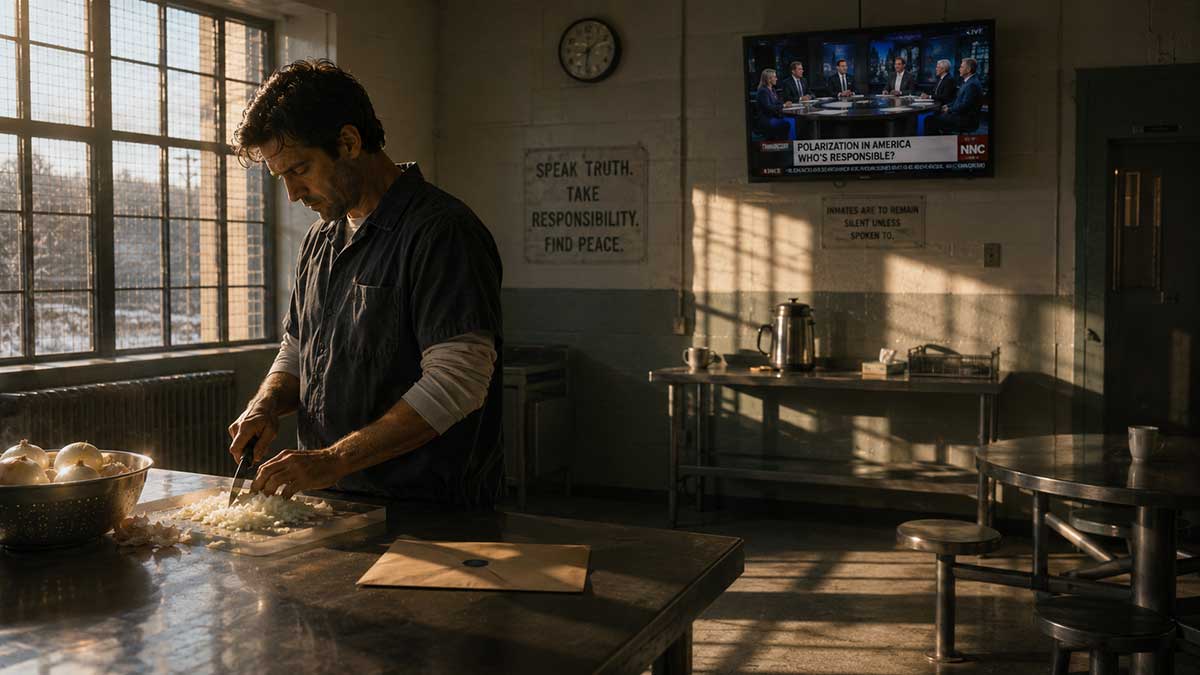
The courtroom was colder than the jail.
I noticed it before I noticed the jury.
The air vent above the judge's bench made a low humming sound that never stopped. One of the ceiling lights flickered every few minutes. My chair leaned slightly to the left.
Paul placed a legal pad in front of me.
"You don't have to write anything," he said.
"I know."
"If you don't understand a question, wait."
"I know."
He looked at me.
"This isn't the time to fill silence."
"I wasn't planning to."
He almost smiled.
The prosecutor, Dana Voss, stood without carrying any notes.
She thanked the jurors for their attention.
Then she surprised everyone.
She did not begin with my mother.
She did not begin with politics.
She began with the garage.
On the screen behind her appeared a photograph of the concrete floor.
The outline where Samir had fallen had already been washed away.
"This case," she said, "begins with three shots."
Not one.
Three.
The room remained still.
"The first shot may be explained by fear."
She let the sentence settle.
"The second and third require another explanation."
She turned toward me for only a moment.
"That explanation is responsibility."
Paul wrote something on his pad.
I watched the ceiling light flicker.
The first witnesses described measurements.
Distances.
Bullet paths.
The angle of the shots.
The position of Samir's phone.
The medical examiner spoke quietly.
The second bullet had struck after Samir was already falling.
The third after he was on the ground.
Paul did not argue with those facts.
He asked about visibility.
Lighting.
Echoes inside the garage.
The possibility that the first shot had damaged my hearing.
The doctor answered carefully.
"Possible."
"Likely?"
"I cannot say."
The jury listened to every word.
The woman who had filmed the shooting testified next.
The video played.
No one in the courtroom looked at me while it ran.
I watched the floor instead.
The bottle breaking sounded louder than I remembered.
The first shot sounded smaller.
The second sounded slower.
The third sounded lonely.
Dana stopped the video before the recording ended.
Paul stood.
"Would you play the final six seconds?"
Dana objected.
The judge overruled her.
The remaining footage played.
"I thought he was reaching for something."
A pause.
"I was wrong."
No one moved.
Dana stood again.
"You admitted you were wrong."
"Yes."
"And you still fired two more shots."
"Yes."
"Why?"
"I don't know."
"You expect this jury to believe that?"
"I don't know."
She nodded once.
"As I said."
She returned to counsel table.
Mason arrived wearing a dark blue suit.
He looked tired.
The cameras followed him into the courtroom.
He testified that he had known me for several years.
That I had become quieter.
More withdrawn.
More interested in politics.
Paul stood slowly.
"You told police the backpack belonged to Mr. Hale."
"Yes."
Paul placed a printed message on the projector.
DON'T MENTION THE BAG.
The courtroom became quiet.
"Did you send this?"
Mason looked toward Dana.
"Yes."
"Why?"
"I was frightened."
"Were you protecting yourself?"
"No."
"Then who?"
Mason said nothing.
Paul placed another message on the screen.
SAMIR THINKS HE CAN EMBARRASS ME AND WALK AWAY.
"You wrote this the night before."
"Yes."
"Were you angry?"
"I cared about the cause."
Paul waited.
"Mr. Redd, did you bring the gun?"
Dana objected.
The judge allowed the question.
Mason looked toward the jury.
"Yes."
The answer hung in the room longer than any speech.
Dana called my cousin Daniel.
He described the funeral.
"He never cried."
Paul objected.
The judge limited the testimony.
Daniel continued anyway.
"He looked... normal."
Dana thanked him.
She did not ask another question.
She didn't need to.
Then Nadia Haddad entered.
She wore a gray sweater.
Nothing about her looked prepared for television.
Dana asked her only a few questions.
"What did your husband do?"
"He owned Cedar Olive."
"What kind of restaurant was it?"
"A small one."
"What did he enjoy most?"
She smiled for the first time.
"Talking too much with customers."
Soft laughter moved through the courtroom.
"He always forgot the bread because he stayed too long at the first table."
She described how he checked every lock twice before going home.
How he sang badly while chopping onions.
How he insisted on writing every payroll check himself.
How he wanted a second restaurant where newly arrived refugees could work until their English improved.
Then she stopped.
"I am not asking you to remember him as a hero."
She looked toward the jury.
"He was stubborn."
"He interrupted people."
"He believed he was right too often."
Another small smile.
"But he belonged to us before he belonged to this case."
No one spoke.
Even Dana waited.
Nadia looked toward me only once.
Not with hatred.
Only recognition.
Then she stepped down.
I remembered her bringing tea to our table the second time Lena and I visited the restaurant.
I had forgotten that until then.
Paul asked whether I wished to testify.
"Yes."
The oath felt ordinary.
Dana approached first.
"Did you hate Mr. Haddad?"
"No."
"Did you intend to kill him?"
"No."
"You carried the backpack."
"Yes."
"You knew Mr. Redd wanted another confrontation."
"I knew he wanted to speak."
"You stayed."
"Yes."
"You took the gun."
"Yes."
"You fired once."
"Yes."
"You fired again."
"Yes."
"And once more."
"Yes."
She walked closer.
"Do you regret Mr. Haddad's death?"
"Yes."
"Do you regret killing him?"
I looked toward the jury.
Then toward the empty witness chair Nadia had occupied.
"I don't know how to separate those things."
Dana waited.
"Why did you fire again?"
"I don't know."
She waited longer.
I had nothing else.
The verdict took four hours.
Second-degree murder.
Twenty-five years.
The clerk read the sentence.
Most of the words disappeared before reaching me.
Only one remained.
Samir Haddad.
I heard the name clearly.
For the first time, it sounded heavier than mine.
Chapter 6: The Letter
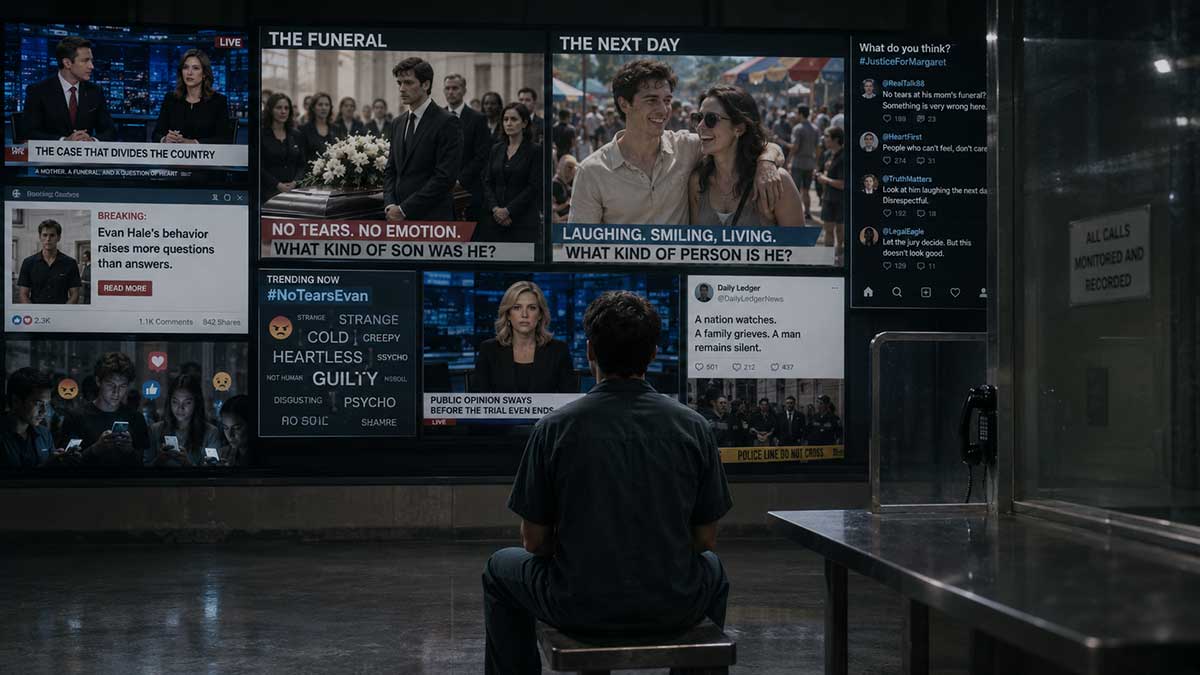
Prison measured time differently.
Breakfast always smelled the same.
The lights came on before sunrise.
The loudspeaker crackled even when no one spoke.
I worked in the kitchen three mornings each week.
The onions arrived in large white sacks.
The first week, I cut too slowly.
The supervisor moved me to potatoes.
Three months later he moved me back.
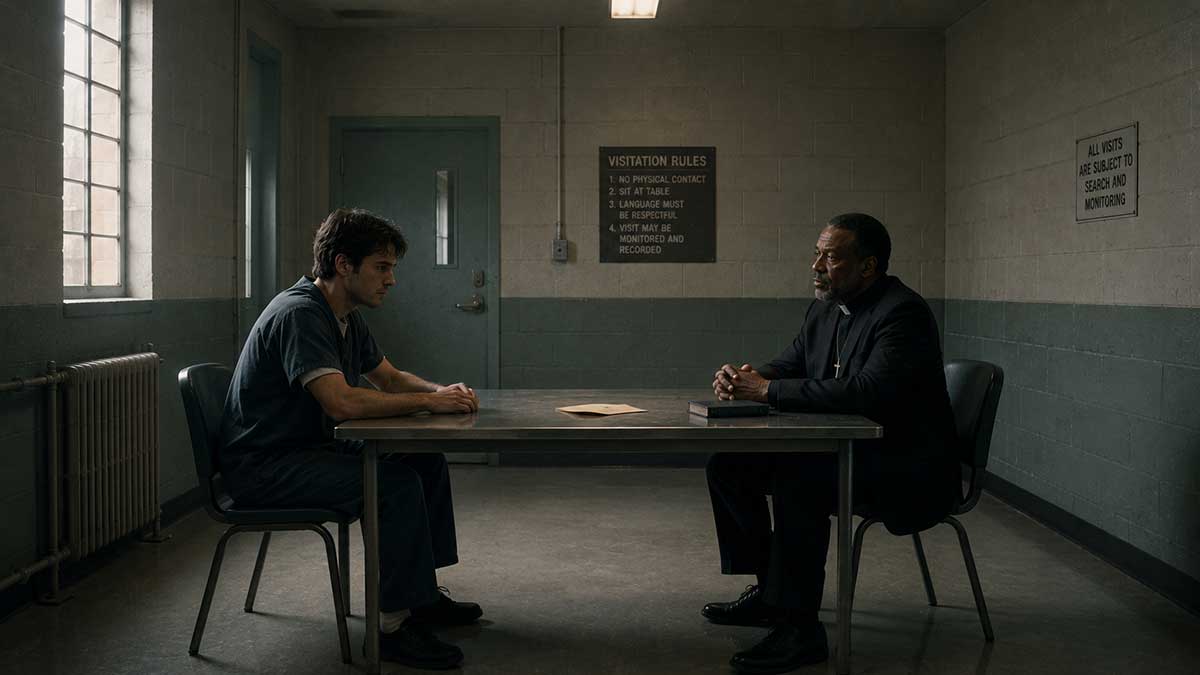
One afternoon a correctional officer stopped beside my table.
"You have a visitor."
"I don't."
"You do today."
Reverend Elias Ward wore an old brown jacket with worn elbows.
He shook my hand through the opening in the visitation room.
"I've heard about you."
"I'm sure you have."
"I haven't watched television."
That surprised me.
He sat down.
"I expected a pastor."
"I am one."
"I expected you to ask about God."
"I came to ask about Samir."
I looked at the table.
"What about him?"
"Have you written to his family?"
"No."
"Why not?"
"I don't know what to say."
"That's different from having nothing to say."
I folded my hands.
"Every apology sounds rehearsed."
"Many are."
"I won't write something false."
He nodded.
"False words are not the only alternative to silence."
Neither of us spoke for a while.
The heating pipes clicked behind the wall.
They reminded me of the funeral.
"I didn't hate him," I said.
"I believe you."
"I didn't even know him."
"I believe that too."
"I wasn't trying to kill him."
"I know."
I waited.
He leaned forward slightly.
"Hatred wasn't required."
I looked at him.
"You lent another man's anger your hands."
The sentence stayed between us.
"I didn't believe Mason."
"You drove him."
"Yes."
"You carried the bag."
"Yes."
"You took the gun."
"Yes."
"I thought I was stopping him."
"You may have been."
He rested both hands on the table.
"And then?"
I looked at the floor.
"I don't know."
After a while I said, "Everyone wants the same thing."
"What thing?"
"The performance."
He waited.
"They want tears."
I counted them quietly.
"They want religion."
"They want a speech."
"They want me to choose a political side."
"They want me to become someone they understand."
He nodded.
"Sometimes they do."
I looked up.
"So why should I give them that?"
He smiled faintly.
"I didn't ask you to."
Silence again.
"What truth are you protecting now?"
I opened my mouth.
Nothing came.
For the first time in months, silence felt heavier than speaking.
Before leaving, Reverend Ward placed an envelope on the table.
"Lena asked me to bring this."
After he left, I read it twice.
She did not tell me she still loved me.
She did not tell me she had stopped.
She wrote about ordinary things.
A broken picture frame in her classroom.
One of the stray cats behind the warehouse.
The coffee mug I always washed before she woke up.
Then the letter changed.
You always believed nothing counted unless you meant it.
But things counted anyway.
The ride counted.
The bag counted.
The silence counted.
You thought not choosing protected you.
It didn't protect Samir.
She signed only her name.
Nothing else.
The next morning I asked the librarian for the victim-impact statements.
The clerk looked up.
"You mean the trial transcript?"
"No."
"The police file?"
"No."
"What do you want?"
"The things his family wrote."
She studied me.
"Why?"
I thought about the answer.
Finally I said,
"I want to know who he was."
She disappeared into the records room.
I waited beside the counter.
Outside the narrow window, the afternoon sun reflected from the prison fence until it was almost too bright to look at.
Chapter 7: Before Yes
The folder was thinner than I expected.
Its cover was gray.
My name appeared on one side.
Samir Haddad's on the other.
The librarian placed it on the table between us.
"You can't remove anything."
"I won't."
She nodded and walked away.
For a long time I looked at the cover without opening it.
Then I turned the first page.
The first document was not from the trial.
It was a school essay.
At the top someone had written:
Leila Haddad — Ninth Grade
The assignment asked students to describe a person they admired.
She had written about her father.
Not about his work with refugees.
Not about politics.
Not about the restaurant.
She wrote that he always tasted soup with the same spoon, even though her mother told him not to.
She wrote that he sang the wrong words to old songs because he never bothered learning them correctly.
She wrote that he checked every door twice before going to bed, then asked everyone else whether they had checked them too.
Near the end she wrote:
My father worries all the time. I think worrying is another way he says he loves us.
I read the sentence twice.
Then I turned the page.
There was a payroll sheet.
Someone had spilled coffee across one corner months before.
Every employee's hours had been calculated by hand.
Beside one name Samir had written:
Forgot overtime. Fix Friday.
The handwriting leaned slightly to the right.
The next page contained sketches.
A second restaurant.
Smaller than the first.
Kitchen here.
Three tables near the window.
Office in back.
Training area.
Beside the drawing he had written:
First jobs. English practice. No experience needed.
I imagined him standing in the empty room with a tape measure.
Until then, I had never imagined him planning anything.
Only arguing.
Only falling.
Near the middle of the folder was a photograph.
Samir stood behind the counter holding a bowl of lentil soup.
Someone outside the frame had said something.
He was laughing.
Not for the camera.
Toward someone else.
I looked at the picture for a long time.
I remembered Lena telling me the soup was better the second time we came.
Samir had walked over.
He asked whether it needed more lemon.
I had said no.
He brought extra lemon anyway.
I had forgotten that.
Or perhaps I had never really noticed it.
The final pages were letters.
One from Nadia.
One from Samir's father.
The last from Leila.
She wrote that for weeks after the shooting she had expected to hear the restaurant door open each evening.
Sometimes she still looked up when someone entered.
Then she stopped herself.
She hated that part.
Near the bottom she copied the unfinished text message found on his phone.
Home soon.
Underneath she wrote:
That became the last promise my father ever made.
The room felt smaller.
I closed the folder.
For several minutes I listened to the fluorescent lights.
Two weeks later a documentary producer requested an interview.
He wanted my apology.
He believed people were ready to hear it.
The prison arranged a meeting.
He placed a camera on the table.
"If you speak honestly," he said, "people will understand."
"I don't know about that."
"We'll edit very little."
He smiled.
"You deserve to tell your side."
I looked at the lens.
Then at the blank wall behind it.
"I don't think that's what this is."
He waited.
"I don't want to explain myself."
"Don't you want forgiveness?"
"I don't think that's yours to arrange."
The interview ended before it began.
That night I wrote a letter.
Not to reporters.
Not to the court.
Not to people who argued about me on television.
I addressed it to Nadia and Leila Haddad.
The first page took an hour.
The second took longer.
I crossed out almost every sentence.
In the end only a few remained.
I knew where your husband stood in an argument.
I never knew who he was.
I acted as though the difference did not matter.
It did.
I stopped writing.
There was nothing after that.
I did not ask them to forgive me.
I folded the pages and placed them inside an envelope.
Whether they ever received it, I never learned.
Winter arrived.
Snow collected against the fences.
The prison kitchen became warmer than the housing units.
Steam covered the windows every morning.
One afternoon another inmate approached my station.
"Can you take this to Building C?"
He held out a sealed envelope.
I looked at it.
"What's inside?"
He laughed.
"What difference does it make?"
I held the envelope another moment.
Then I handed it back.
"You should give it to whoever's supposed to carry it."
He shrugged.
"Suit yourself."
He walked away.
The onions waited beside the cutting board.
I began slicing them into thin strips.
The knife moved steadily.
Outside the kitchen, someone had turned on the television.
A panel discussed my case again.
One commentator called me proof that political extremism had poisoned the country.
Another insisted I had become a scapegoat for national division.
A third blamed social media.
The cook beside me turned the volume lower.
"Noisy," he said.
I nodded.
Neither of us listened anymore.
The onions released their sharp smell.
My eyes began to water.
The supervisor walked past.
"You all right, Hale?"
"Yes."
He kept walking.
I continued cutting.
The tears reached my cheeks.
I thought of my mother.
Then of Lena.
Then of the photograph from the street fair.
Then of the parking garage.
Finally, I thought of Samir Haddad standing behind a counter, holding out a bowl of soup with an extra slice of lemon I had never asked for.
I did not know whether the tears belonged to the onions.
For once, I did not try to decide.
Final Thoughts by Albert Camus
Stories rarely end where readers wish they would.
Life almost never grants perfect clarity.
Evan Hale does not become a saint.
He does not suddenly discover eloquence.
He does not offer the public the confession it demands.
He cannot restore Samir Haddad to his family.
Some losses remain beyond repair.
Yet something has changed.
Not in the courtroom.
Not in public opinion.
Not on television.
Within him.
He has learned to notice the small moment that once escaped him.
The pause before agreement.
The instant before another person's certainty becomes his own action.
Many people believe evil begins with hatred.
History often teaches something quieter.
It begins when ordinary people surrender judgment to those who speak with greater confidence.
The greatest danger is not always cruelty.
Sometimes it is the comfortable belief that responsibility belongs to someone else.
There is another lesson I hope you carry away.
Every human being deserves to remain larger than the role assigned by history.
Evan was more than the headlines that described him.
Samir was more than the victim whose death became a political argument.
Lena was more than a witness.
Even Mason was more than the movement that consumed him.
If we reduce people to symbols, we repeat the same mistake in different forms.
Perhaps that is why literature still matters.
It slows us down.
It asks us to look again.
To listen longer.
To hesitate before certainty.
If this story leaves you less eager to judge strangers and more willing to recognize the quiet weight of your own choices, then it has fulfilled its purpose.
The most important decisions in life are rarely announced.
They arrive quietly.
Often disguised as ordinary moments.
And they ask only one question.
Will you say yes?
Short Bios:
Albert Camus (1913–1960)
French-Algerian novelist, essayist, journalist, and recipient of the 1957 Nobel Prize in Literature. Camus explored freedom, justice, rebellion, and the absurd through works such as The Stranger, The Plague, The Fall, and The Myth of Sisyphus. His writing continues to influence philosophy, literature, and moral thought around the world.
Evan Hale
A quiet warehouse supervisor who believes staying out of conflict keeps him innocent. His tragedy is not hatred but passivity. Through one irreversible act, he discovers that refusing to choose can still shape another person's fate.
Lena Ortiz
An art teacher who loves Evan for his quiet kindness and honesty. She becomes the first person to recognize that compassion without moral courage leaves those we love dangerously incomplete.
Mason Redd
A gifted community organizer whose passion for justice slowly becomes inseparable from certainty and personal resentment. He represents the danger of believing that a righteous cause excuses every method used to pursue it.
Samir Haddad
A Syrian-American restaurant owner, husband, father, and former community organizer. Thoughtful, imperfect, generous, and proud, Samir's life reminds us that every victim exists beyond the moment that history chooses to remember.
Dana Voss
The special prosecutor whose calm, disciplined arguments force difficult questions about responsibility, silence, and repeated acts of passive cooperation. She seeks justice without becoming a caricature of moral certainty.
Reverend Elias Ward
A prison chaplain who refuses easy answers. Rather than demanding public repentance, he quietly challenges Evan to distinguish honesty from responsibility and silence from integrity.
Leave a Reply