
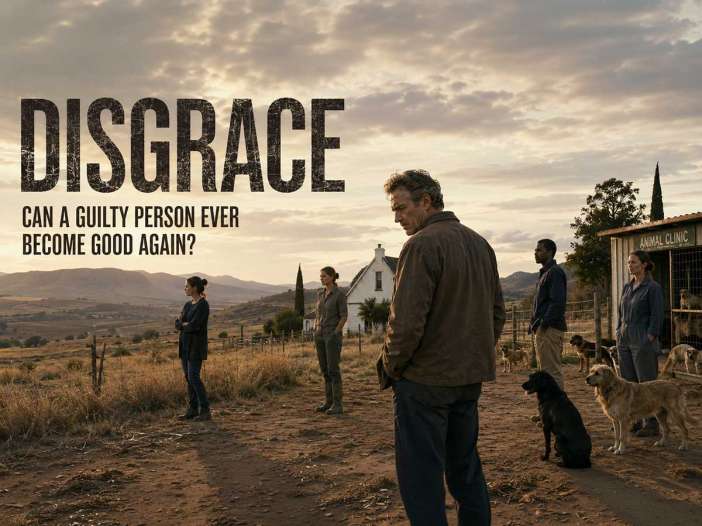
Introduction
What if losing your reputation does not mean you have learned why you lost it?
What happens when a person does something that cannot be undone?
J. M. Coetzee’s Disgrace begins with David Lurie, a university professor whose relationship with his student Melanie Isaacs destroys his career and public reputation. Yet losing his position is only the beginning.
David retreats to the South African countryside to live with his daughter Lucy, where a brutal attack forces him to confront violence, vulnerability, race, history, ownership, and his inability to control the lives of others.
In this Imaginary Conversation, David sits with Lucy, Melanie, Petrus, and Bev Shaw to confront questions the novel deliberately refuses to answer easily.
Was David truly remorseful? Can public shame make someone better? Why does Lucy refuse the justice her father wants for her? What does Petrus reveal about the changing South Africa? And why, after everything else has been lost, do unwanted dogs become so important?
Perhaps the deepest question is not whether David deserves forgiveness.
It is whether someone can become better without ever becoming innocent again.
(Note: This is an imaginary conversation, a creative exploration of an idea, and not a real speech or event.)
Topic 1: Was David’s Relationship With Melanie Desire, Seduction, Abuse, or Something He Refuses to Name?
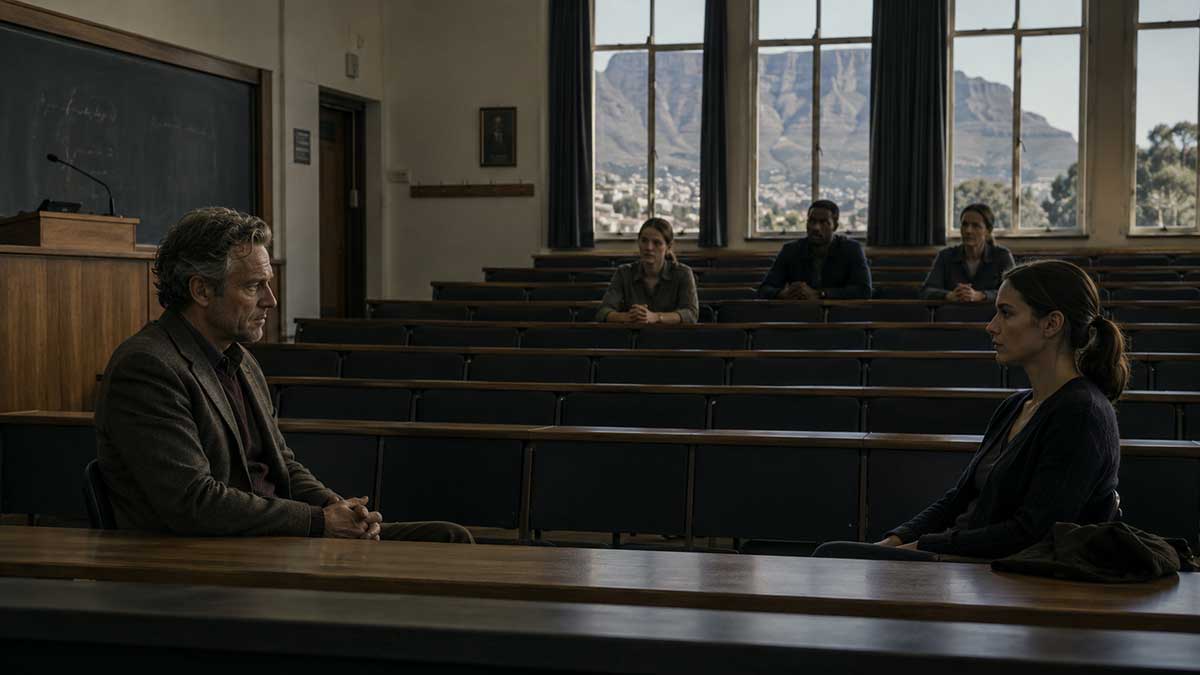
The room was quiet before anyone spoke.
David Lurie sat with one hand resting on the arm of his chair, composed enough to seem almost indifferent.
Lucy sat across from him.
Bev Shaw had taken the seat nearest the window.
Petrus leaned back, watching.
Melanie Isaacs looked directly at David.
“Everyone calls this your disgrace. Why is it still your story?”
Melanie Isaacs: That is what I want to know first.
People say your disgrace.
Your fall.
Your hearing.
Your resignation.
Your shame.
Your change.
Why does everything that happened keep becoming part of your story?
David Lurie: Since I am the central consciousness through which these events are known.
Melanie Isaacs: That is exactly what I mean.
David looked at her.
Melanie Isaacs: You can even turn that into a literary answer.
Lucy Lurie: She has a point.
David Lurie: I did not say she did not.
Melanie Isaacs: You rarely deny facts. You do something more effective.
You interpret them until they belong to you again.
David Lurie: Everyone interprets experience.
Melanie Isaacs: Yes.
But some people have more authority to make their interpretation stick.
David’s expression changed slightly.
Does David’s Desire Matter Morally if Melanie Did Not Experience the Relationship as Equal?
David Lurie: Desire is not a democratic institution.
It does not wait for ideal conditions.
It arrives.
Melanie Isaacs: That is about your desire.
David Lurie: Yes.
Melanie Isaacs: Then why are we discussing it as though that tells us what happened between us?
David paused.
David Lurie: Since my desire was part of what happened.
Melanie Isaacs: Part.
Not the whole.
Lucy Lurie: Dad, did you ever ask yourself what it felt like from her side before everything collapsed?
David Lurie: Of course.
Melanie almost laughed.
Melanie Isaacs: When?
David Lurie: Melanie—
Melanie Isaacs: No. Really.
When?
Before?
During?
After?
At the hearing?
When you lost your job?
When you went to the farm?
When exactly did my experience become important to you?
David looked away.
Bev Shaw: Maybe there is a difference between wondering what someone feels and letting that feeling change what you do.
No one answered immediately.
David Lurie: I did not think of myself as forcing anyone.
Melanie Isaacs: That matters to you very much.
David Lurie: Should it not?
Melanie Isaacs: Less than you think.
Petrus: A man with more power does not always need to force.
David turned toward him.
David Lurie: Explain.
Petrus: Sometimes the other person already knows what saying no may cost.
David Lurie: That is an assumption.
Melanie Isaacs: So was your assumption that desire made the situation mutual enough.
David’s jaw tightened.
Can Sincere Desire Still Become Coercive?
Lucy Lurie: I think that is the harder question.
You believed what you felt was real.
I believe you.
That does not mean Melanie experienced freedom.
David Lurie: I have never claimed there was no imbalance.
Melanie Isaacs: You acknowledge the imbalance now as though acknowledging it afterward makes the earlier choice more honest.
David Lurie: What would you prefer? That I lie and say I felt nothing?
Melanie Isaacs: No.
I would prefer that your sincerity stop functioning as evidence in your defense.
Silence.
Bev Shaw: Wanting someone honestly does not mean you are caring for them.
David looked toward her.
David Lurie: You think desire and care are opposites?
Bev Shaw: No.
I think people confuse them when the wanting is strong enough.
David Lurie: Desire is not inherently cruel.
Bev Shaw: I did not say it was.
Melanie Isaacs: Neither did I.
That is the problem.
You keep defending yourself against accusations nobody is making.
David Lurie: Then name the accusation.
Melanie held his gaze.
Melanie Isaacs: You treated what you wanted as more real than what I might not want.
The room became very still.
Is the Word “Abuse” Too Simple—or Is David Afraid of It?
David Lurie: Language matters.
Words such as abuse, assault, coercion—they carry legal and moral meanings.
They are not interchangeable.
Melanie Isaacs: True.
David Lurie: Then precision matters.
Melanie Isaacs: It does.
But precision can become hiding too.
David Lurie: Hiding from what?
Melanie Isaacs: From a word that would force you to stop admiring the story you told yourself.
David leaned forward.
David Lurie: You think I admired it?
Melanie Isaacs: I think you admired desire.
You admired being the sort of man who could still be overtaken by it.
You made your appetite sound tragic.
Romantic.
Almost noble.
Lucy Lurie: That is true.
David turned.
Lucy Lurie: You often spoke about passion as though it existed above ordinary rules.
David Lurie: I spoke about desire as part of being alive.
Lucy Lurie: And sometimes you used that to exempt yourself.
David Lurie: From what?
Lucy Lurie: From having to ask whether the other person had equal room to choose.
Can Someone Admit the Facts but Refuse Their Meaning?
Bev Shaw: At the university, you admitted what happened.
David Lurie: Yes.
Bev Shaw: But you resisted what people wanted you to say it meant.
David Lurie: Since they wanted ritual confession.
Melanie Isaacs: We will get to that.
But even before the hearing, you had already decided what the relationship meant.
David Lurie: So had you, presumably.
Melanie Isaacs: Yes.
But I was not your professor.
David stopped.
Melanie Isaacs: That difference seems to disappear whenever you speak poetically.
Petrus: Words belong easier to people who already have position.
David looked toward him again.
David Lurie: You are making this about status.
Petrus: It is partly about status.
Professor.
Student.
Older.
Younger.
Man.
Woman.
These things do not vanish since two people are alone in a room.
David Lurie: Nor do they determine everything.
Petrus: No.
But pretending they determine nothing is convenient for the stronger person.
Does David Believe Freedom Means Acting Without Interference?
Lucy Lurie: Dad, what did freedom mean to you then?
David Lurie: Not being governed by hypocrisy.
Lucy Lurie: That is not an answer.
David Lurie: It is part of one.
Lucy Lurie: Did freedom mean being able to act on desire?
David Lurie: Sometimes.
Lucy Lurie: What about Melanie’s freedom?
David looked toward Melanie.
David Lurie: She had freedom.
Melanie’s face hardened.
Melanie Isaacs: Did I?
David Lurie: You were not imprisoned.
Melanie Isaacs: That is a very low definition of freedom.
Bev Shaw: Maybe freedom is not just whether someone can leave.
Maybe it includes how costly it feels to refuse.
David said nothing.
Did David Ever Need Melanie to Say Yes Clearly?
Melanie Isaacs: Did you need me to say yes?
David looked at her.
David Lurie: I believed—
Melanie Isaacs: No.
Did you need me to say yes?
A long pause.
David Lurie: Not in the form you are asking now.
Melanie Isaacs: Exactly.
Lucy Lurie: That matters.
David Lurie: I understand why it matters now.
Melanie Isaacs: Do you?
Or do you understand that everyone else thinks it matters?
David’s expression tightened.
David Lurie: You seem determined to make every answer evidence against me.
Melanie Isaacs: I am determined not to let your self-awareness become another defense.
Is David More Interested in Being Honest Than Being Good?
Bev Shaw: Can I ask something?
David nodded.
Bev Shaw: You value honesty very highly.
David Lurie: Yes.
Bev Shaw: More than kindness?
David Lurie: That is a false choice.
Bev Shaw: Maybe.
But sometimes you speak as though saying something honestly makes the thing itself cleaner.
David Lurie: Better honesty than hypocrisy.
Bev Shaw: Maybe those are not the only two choices.
David looked at her.
Bev Shaw: A person can be honest and still selfish.
Melanie Isaacs: Thank you.
David Lurie: I never claimed honesty absolved me.
Lucy Lurie: You often acted as though it distinguished you from everyone judging you.
David Lurie: It did.
Lucy Lurie: There.
David frowned.
Lucy Lurie: That is what you still want.
Some moral territory no one else gets to enter.
You may have done wrong, but at least you were more honest than the committee.
More honest than respectable society.
More honest than people pretending they do not have desires.
David Lurie: Is that entirely false?
Melanie Isaacs: Maybe not.
But truth can become vanity too.
Is David Defending Freedom—or His Right to Remain the Author?
Petrus: You keep returning to how things are named.
David looked toward him.
Petrus: Desire.
Scandal.
Confession.
Disgrace.
You care about names.
David Lurie: Names shape judgment.
Petrus: Yes.
And who has the right to name?
David said nothing.
Petrus: When a person has authority for a long time, he may think naming is natural.
Then another person names him.
Now it feels like violence.
David Lurie: You are comparing a university committee to political authority.
Petrus: I am comparing control over meaning.
Melanie watched David.
Melanie Isaacs: That is what I have been trying to say.
You lost more than your job.
You lost the right to decide what the story was called.
David Lurie: And you believe you possess that right entirely?
Melanie Isaacs: No.
That may be the difference.
I do not need to possess the whole story.
I need you to stop possessing mine.
Silence.
What Did Melanie Actually Want From David?
Lucy Lurie: Melanie, what would accountability have looked like to you?
David glanced toward his daughter.
Melanie thought before answering.
Melanie Isaacs: Not a speech.
Not necessarily an apology in front of a committee.
Maybe something simpler.
Bev Shaw: What?
Melanie looked at David.
Melanie Isaacs: Curiosity.
David frowned.
David Lurie: Curiosity?
Melanie Isaacs: About me.
Not as the girl you wanted.
Not as the student who caused your downfall.
Not as the injured person you need to understand so you can become better.
Me.
A person whose experience might remain partly unavailable to you.
David looked genuinely unsettled.
Melanie Isaacs: You wanted intimacy without accepting that another person remains separate.
Maybe that was the problem before anything else.
Can David Accept That Melanie May Never Give Him the Meaning He Wants?
David Lurie: And what meaning do you think I want now?
Melanie Isaacs: Redemption.
David Lurie: I have not asked you for forgiveness.
Melanie Isaacs: You may be too proud to ask.
That does not mean you do not want it.
David Lurie: What if I do?
Melanie Isaacs: Then it is still yours to want.
Not mine to provide.
David leaned back.
For once, he had no immediate answer.
Closing: Who Gets to Name What Happened?
Lucy Lurie: I think there are two questions here.
What happened.
And who gets to say what it meant.
Bev Shaw: Maybe three.
What happens after you learn your own meaning was incomplete.
Petrus: And what you do when another person will not give you control back.
David looked toward Melanie.
She met his eyes without anger now.
That seemed harder for him than anger.
David Lurie: You believe I still have not named it correctly.
Melanie Isaacs: I believe you are still asking whether you have named it correctly.
David waited.
Melanie continued.
Melanie Isaacs: You keep asking whether the university had the right to name what you did.
Whether the committee had the right.
Whether society had the right.
Whether the word “disgrace” was fair.
She leaned forward slightly.
Melanie Isaacs: I’m still asking whether I did.
No one spoke.
David looked down at his hands.
For perhaps the first time in the conversation, he did not explain himself.
And that silence opened the door to the next question.
If a person no longer controls the meaning of what he has done, what exactly is public shame supposed to accomplish?
Topic 2: Does Public Shame Produce Moral Change—or Merely Teach People How to Perform Remorse?
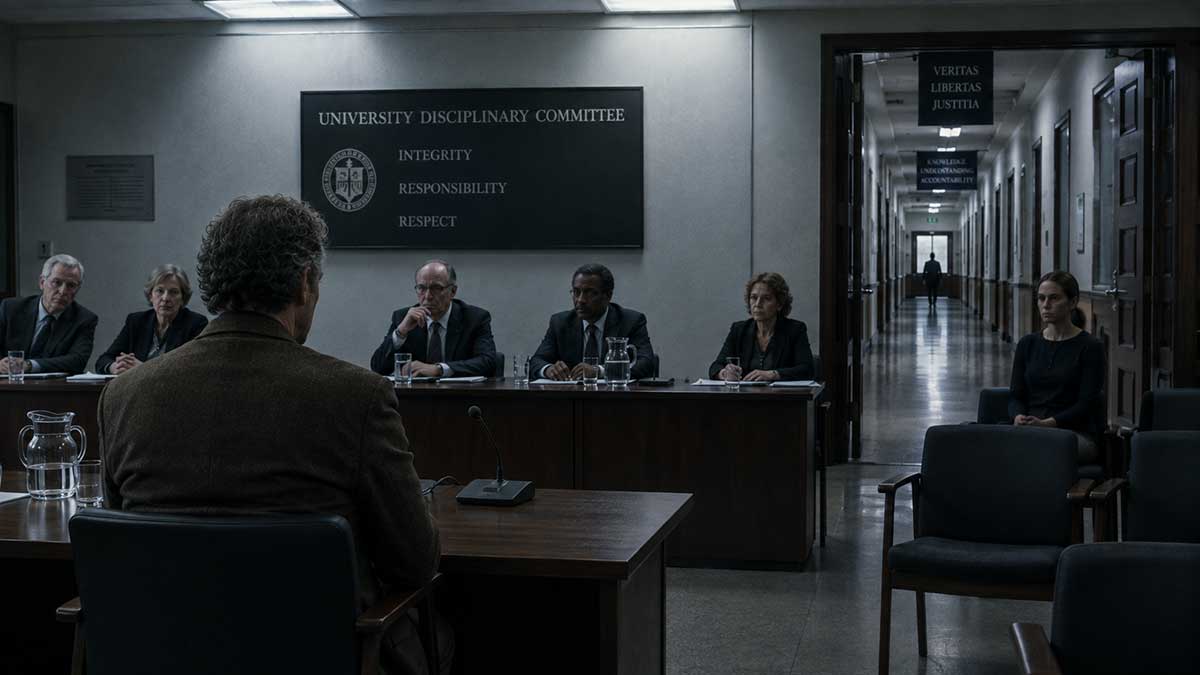
The room had changed after Melanie’s final question.
David no longer looked irritated.
He looked cornered by something less visible.
Lucy noticed first.
Bev noticed second.
Petrus said nothing.
Melanie sat back.
The university hearing now entered the conversation.
Was David Courageous for Refusing a False Confession—or Arrogant for Refusing Accountability?
David Lurie: I admitted the facts.
Melanie Isaacs: Yes.
David Lurie: I did not deny the relationship.
I did not claim innocence.
I did not blame you.
Lucy Lurie: But you refused the language they wanted.
David Lurie: Since it was theater.
Bev Shaw: What part?
David Lurie: The entire ritual.
A committee.
Statements.
Public acknowledgment.
Remorse converted into procedure.
Melanie Isaacs: Maybe it was procedural.
That does not automatically make it false.
David Lurie: They wanted submission.
Lucy Lurie: Or recognition.
David Lurie: Recognition of what?
Lucy Lurie: That what happened was not just a private story about desire.
David looked at her.
David Lurie: I had already admitted wrongdoing.
Melanie Isaacs: You admitted behavior.
You resisted meaning.
David Lurie: We are back there again.
Melanie Isaacs: We never left.
Does Forced Remorse Mean Anything?
David Lurie: If a man is told, “Show remorse or lose your career,” then whatever he says afterward is corrupted by the demand.
Petrus: Maybe.
David Lurie: Maybe?
Petrus: If a man says sorry to keep his job, the apology may be worthless.
David Lurie: Exactly.
Petrus: But refusing to say sorry does not make him brave.
David looked at him.
Petrus: Sometimes pride and honesty wear the same coat.
Lucy almost smiled.
David Lurie: That sounds rehearsed.
Petrus: No.
I know proud men.
Bev Shaw: So do I.
David glanced toward her.
Bev Shaw: Sometimes people reject an imperfect form of accountability since they prefer none at all.
David Lurie: I did not reject accountability.
Melanie Isaacs: You rejected theirs.
David Lurie: Yes.
Melanie Isaacs: What form would you have accepted?
David paused.
What Kind of Accountability Would David Have Accepted?
Lucy Lurie: That is the question.
If the committee was performative, fine.
What would have been real enough for you?
David Lurie: Private recognition.
Melanie Isaacs: To whom?
David looked at her.
David Lurie: To myself.
Melanie’s face changed.
Melanie Isaacs: Convenient.
David Lurie: Why?
Melanie Isaacs: Since you remain judge, witness, and defendant.
Petrus: Very efficient court.
David ignored him.
Lucy Lurie: Dad, accountability that exists only inside your own mind is still controlled by you.
David Lurie: And public confession controlled by them is better?
Lucy Lurie: Maybe neither is enough.
Bev Shaw: Maybe accountability is not one event.
David looked at her.
Bev Shaw: Maybe you do not finish it by saying the correct thing in one room.
Does Society Want Truth—or Visible Submission?
David Lurie: Public institutions like visible surrender.
That is what reassures them.
The offender bends.
The community feels restored.
Melanie Isaacs: Sometimes that is true.
David looked surprised.
Melanie Isaacs: Did you expect me to deny it?
David Lurie: Perhaps.
Melanie Isaacs: Institutions can perform morality.
People can perform outrage.
Apologies can be scripted.
None of that makes your refusal noble.
David Lurie: I did not call it noble.
Lucy Lurie: You treated it like integrity.
David Lurie: There is integrity in refusing words one does not believe.
Melanie Isaacs: Yes.
There can be.
But what if the words you refused were partly true?
David went quiet.
Can Someone Reject the Performance and Still Accept the Judgment?
Bev Shaw: Could you have said, “I do not know if I feel what you want me to feel, but I understand I harmed someone”?
David looked toward Melanie.
David Lurie: Perhaps.
Melanie Isaacs: But you did not.
David Lurie: No.
Lucy Lurie: Why?
He took time before answering.
David Lurie: Since I thought they wanted ownership over my conscience.
Petrus: Maybe they did.
David Lurie: Thank you.
Petrus: That does not mean your conscience was already clean.
David looked at him sharply.
Petrus shrugged.
Is Public Shame About Morality—or Control?
Lucy Lurie: Maybe public shame does two things at once.
It can expose wrongdoing.
And it can become its own form of domination.
Melanie Isaacs: Yes.
David Lurie: Finally.
Melanie Isaacs: Do not celebrate yet.
She turned toward him.
Melanie Isaacs: The fact that humiliation can be cruel does not erase what caused the humiliation.
David Lurie: I know.
Melanie Isaacs: Do you?
Sometimes you speak as though once the committee behaved badly, your moral position improved.
David’s expression tightened.
Melanie Isaacs: It didn’t.
Their failure did not reduce yours.
Why Is David So Interested in the Dignity of the Accused Once He Is the Accused?
Melanie Isaacs: You became very concerned with dignity once yours was threatened.
David looked at her.
Melanie Isaacs: Privacy.
Complexity.
The danger of labels.
The cruelty of public judgment.
All real concerns.
Where were those concerns when I had less authority than you?
Silence.
David Lurie: You think I had no concern for you.
Melanie Isaacs: I think your concern came after your desire.
That ordering matters.
Lucy Lurie: It matters later too.
David looked toward her.
She did not explain yet.
The implication sat there.
Can Shame Produce Change if the Shame Is Mostly About Status?
Bev Shaw: What did you miss first after leaving the university?
David Lurie: My work.
Bev Shaw: Which work?
David hesitated.
David Lurie: Teaching.
Reading.
Music.
Bev Shaw: Students?
He looked at her.
Bev Shaw: Reputation?
David Lurie: Of course.
Bev Shaw: Authority?
David’s face changed.
David Lurie: Perhaps.
Lucy Lurie: More than perhaps.
David Lurie: You all seem determined to make every loss morally revealing.
Bev Shaw: Some losses are.
David Lurie: And some are just losses.
Bev Shaw: Yes.
But disgrace takes away things you thought belonged to you.
Then you discover which ones you thought you deserved.
Did David Mourn Melanie—or Mostly Himself?
Melanie asked it plainly.
Melanie Isaacs: Did you ever mourn what happened to me?
David looked at her for a long time.
David Lurie: I thought about you.
Melanie Isaacs: That is not the question.
David Lurie: I know.
The room stayed quiet.
David Lurie: At first?
No.
Melanie did not react.
David continued.
David Lurie: At first I mourned myself.
My career.
My humiliation.
The grotesque public simplification of everything.
Lucy Lurie: That is probably the most honest thing you have said.
David Lurie: I am not asking for praise.
Melanie Isaacs: Good.
Does Shame Make a Person Better—or Merely More Self-Conscious?
Petrus: Shame can make a man hide.
Bev Shaw: Or perform.
Lucy Lurie: Or resent.
Melanie Isaacs: Or change.
David Lurie: You believe that?
Melanie Isaacs: Sometimes.
David Lurie: Did disgrace change me?
She looked at him.
Melanie Isaacs: I don’t know yet.
David almost smiled bitterly.
David Lurie: Fair.
Melanie Isaacs: Losing status is not the same as gaining conscience.
That line stayed in the room.
Is Remorse Something You Feel—or Something You Do?
Bev Shaw: Maybe remorse is overrated as a feeling.
David looked toward her.
David Lurie: That is unexpected.
Bev Shaw: Feelings come and go.
People can feel terrible and remain selfish.
People can feel very little and still behave more carefully.
Lucy Lurie: So what matters?
Bev Shaw: What changes.
Melanie Isaacs: In behavior.
Bev Shaw: Yes.
David Lurie: Then the committee was asking the wrong question.
Bev Shaw: Maybe.
But you were too.
David Lurie: Which was?
Bev Shaw: You kept asking whether your remorse was authentic.
Maybe the harder question was whether you would live differently.
David looked down.
Can a Person Change Before He Fully Understands What He Did?
Lucy Lurie: Maybe insight comes late.
Melanie Isaacs: That does not excuse the delay.
Lucy Lurie: No.
But it may be true.
Petrus: People often learn after they lose something.
David Lurie: Easy wisdom.
Petrus: Most wisdom is easy after loss.
David Lurie: Convenient.
Petrus: You prefer difficult sentences.
Bev smiled.
David did not.
What Did David Actually Lose?
Lucy Lurie: Your job.
Your standing.
Your public identity.
What else?
David Lurie: Certainty.
The answer surprised everyone.
Melanie looked toward him.
David Lurie: I was more certain before.
About desire.
About myself.
About the stupidity of institutions.
About what freedom meant.
Bev Shaw: And now?
David Lurie: Less.
Melanie Isaacs: That may be the first useful thing disgrace gave you.
David looked at her.
She did not smile.
Is Shame Necessary for Moral Change?
Lucy Lurie: Could you have changed without being publicly disgraced?
David thought.
David Lurie: I doubt it.
Melanie Isaacs: That is not comforting.
David Lurie: It is not meant to be.
Melanie Isaacs: It means other people had to pay before you became capable of self-doubt.
David flinched.
David Lurie: Yes.
No defense.
Just yes.
Does David Deserve Credit for Changing Late?
Petrus: People like to reward a man for learning what others knew before he hurt them.
David looked toward him.
Petrus: He becomes wise.
They remain hurt.
Bev Shaw: That does not mean the learning is worthless.
Melanie Isaacs: No.
But it should not become another achievement.
Lucy Lurie: That is important.
Dad could turn repentance into one more thing he is good at.
David almost laughed.
David Lurie: You have a high opinion of my vanity.
Lucy Lurie: Experience.
Closing: Are You Remorseful Now?
Melanie looked at David.
The room quieted.
Melanie Isaacs: You said you did not know whether you were remorseful then.
David nodded.
Melanie Isaacs: Are you now?
He did not answer.
She waited.
No one interrupted.
Finally David spoke.
David Lurie: I know I wish I had understood more before acting.
Melanie said nothing.
David Lurie: I know I thought my honesty made me less culpable than it did.
Still nothing.
David Lurie: I know losing my job hurt me long before I understood what may have hurt you.
Melanie watched him.
David Lurie: If that is remorse, then perhaps.
She tilted her head slightly.
Melanie Isaacs: And if it isn’t?
David looked down.
David Lurie: Then I have more to learn.
For once, no one pressed him.
Lucy looked toward her father.
Something in him had changed.
Not enough to call redemption.
Maybe enough to call uncertainty.
And uncertainty, for David Lurie, was no small loss.
It was the first opening.
The next question would be harder.
David had spent much of his life defending the right of adults to make their own choices.
Soon he would discover how difficult that principle became when the person choosing was his daughter.
Topic 3: Why Does Lucy Refuse the Kind of Justice David Wants for Her?
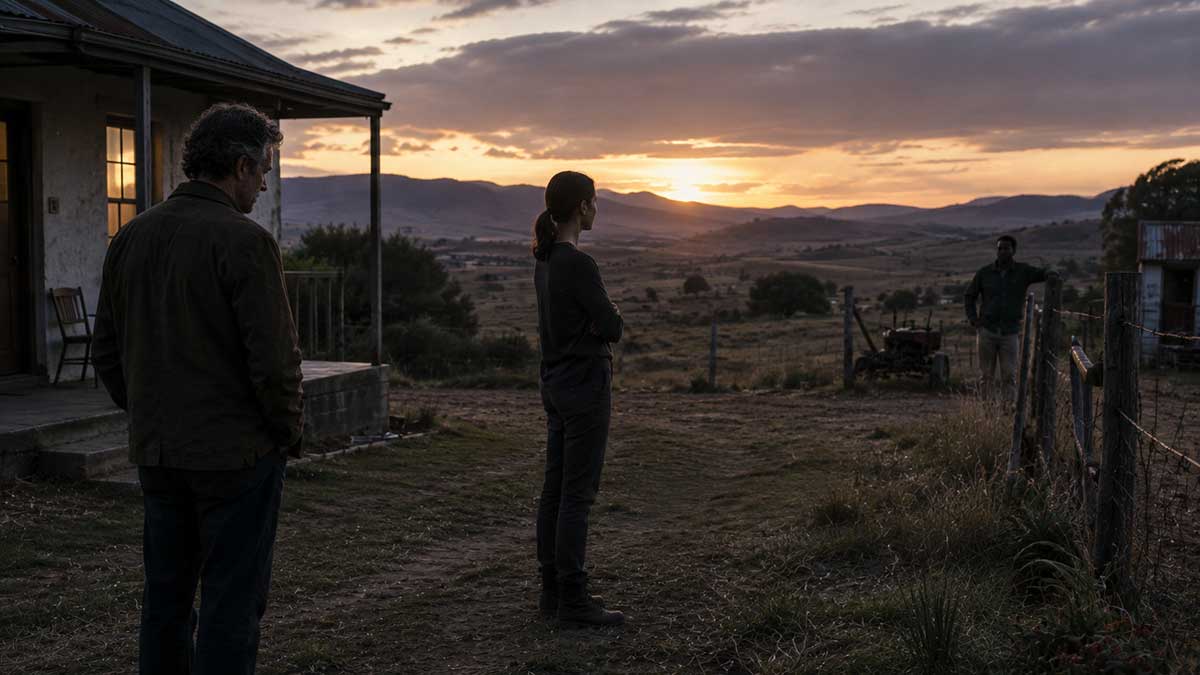
The room felt different when Lucy began speaking.
Until now, David had been the one under examination.
Now he sat across from his daughter and discovered how quickly concern could become control.
“What Happened to Me Does Not Make My Life Yours to Manage.”
Lucy Lurie: That is where I want to begin.
What happened to me was terrible.
But it did not transfer ownership of my life to you.
David Lurie: Ownership?
That is an unfair word.
Lucy Lurie: Is it?
You wanted me to report everything.
Leave the farm.
Reject Petrus.
Move somewhere you considered safe.
David Lurie: Since you were attacked.
Lucy Lurie: Yes.
David Lurie: Since you were violated.
Lucy Lurie: Yes.
David Lurie: Since I am your father.
Lucy Lurie: There.
David looked at her.
Lucy Lurie: You say “father” as though it settles the question.
David Lurie: It does not settle it.
But it matters.
Lucy Lurie: Of course it matters.
Love matters.
Fear matters.
Protection matters.
None of them gives you the right to decide for me.
Why Does David Respect Autonomy More Easily When He Agrees With the Choice?
Melanie Isaacs: I have been waiting for this.
David turned toward her.
Melanie Isaacs: You defended desire as something adults should be free to act upon.
You distrusted institutions telling people what choices were acceptable.
David Lurie: Yes.
Melanie Isaacs: Yet when Lucy makes a choice you find unbearable, autonomy suddenly becomes less sacred.
David’s face tightened.
David Lurie: These situations are not comparable.
Melanie Isaacs: They are not identical.
That is not what I said.
Lucy Lurie: You respect freedom more easily when it leads somewhere you understand.
David Lurie: I understand self-destruction perfectly well.
Lucy Lurie: You think staying is self-destruction.
I do not.
David Lurie: You are willing to remain where the men who attacked you may still have influence.
Lucy Lurie: Yes.
David Lurie: You are willing to accept protection from Petrus under terms that diminish your independence.
Lucy Lurie: Perhaps.
David Lurie: You are pregnant.
Lucy looked directly at him.
Lucy Lurie: I know.
The room went silent.
Is Lucy Surrendering—or Choosing the Only Future She Believes She Can Still Live?
Bev Shaw: Lucy, do you think of staying as surrender?
Lucy Lurie: No.
David Lurie: What would surrender look like, then?
Lucy Lurie: Letting fear choose for me.
David Lurie: Fear is sometimes useful.
Lucy Lurie: Yes.
But if fear decides every future move, then the attack keeps happening.
David looked away.
Petrus: She wants to remain.
David Lurie: And you benefit from that.
Petrus met his eyes.
Petrus: Yes.
David Lurie: At least you admit it.
Petrus: Why should I pretend?
Lucy Lurie: Petrus benefits.
I know that.
That does not automatically mean every decision involving him is false.
David Lurie: You trust him?
Lucy paused.
Lucy Lurie: Not completely.
David Lurie: Then why stay?
Lucy Lurie: Since life is sometimes built with people you do not trust completely.
David stared at her.
Can Survival Look Like Humiliation From the Outside?
Bev Shaw: Maybe that is what is hardest.
A choice can look humiliating to someone else and still feel survivable to the person making it.
David Lurie: Humiliation matters.
Lucy Lurie: To you, very much.
David Lurie: It should matter to you.
Lucy Lurie: Why?
David Lurie: Since dignity matters.
Lucy Lurie: Whose definition?
David stopped.
Lucy Lurie: You lost your university position and treated public humiliation as one of the worst things that could happen to a person.
I have different priorities now.
David Lurie: Safety?
Lucy Lurie: Continuity.
Land.
A future.
Being able to wake up somewhere that still feels like mine, even if less of it is mine than before.
Does Historical Violence Change What Survival Means?
Petrus: The farm is not outside history.
David turned toward him.
David Lurie: Do not use history to excuse what happened.
Petrus: I did not.
Lucy Lurie: Neither did I.
David Lurie: It always seems nearby.
Lucy Lurie: Since it is nearby.
That does not make the assault justice.
It does not make the men righteous.
It does not make me deserve anything.
But I cannot pretend South Africa began the morning I was attacked.
David Lurie: And I refuse to pretend history means you must accept becoming smaller.
Lucy Lurie: Maybe I am not becoming smaller.
Maybe I am becoming someone who can live inside a reality you hate.
Can Another Person Love You Deeply and Still Have No Right to Decide What Recovery Should Look Like?
Melanie Isaacs: This is where I understand Lucy most.
David looked toward her.
Melanie Isaacs: People think suffering creates a script.
Report it.
Name it.
Leave.
Fight.
Forgive.
Do not forgive.
Heal.
Speak.
Stay silent.
Everyone has instructions.
Lucy Lurie: Exactly.
Melanie Isaacs: And sometimes the person giving the instructions genuinely loves you.
That does not make the instructions yours.
David’s expression changed.
David Lurie: You think that is what I am doing?
Lucy Lurie: Yes.
David Lurie: I am trying to keep you alive.
Lucy Lurie: I am alive.
David Lurie: You know what I mean.
Lucy Lurie: I know exactly what you mean.
You want the version of me that survives in a way you can respect.
That is different.
Does David Want Justice—or Restoration of His Own Moral Order?
Petrus: Maybe he wants the old order back.
David turned sharply.
David Lurie: Explain yourself.
Petrus: Before the attack, he understood the world.
Then the attack happened.
Now he wants police.
Punishment.
Property.
Distance.
A line restored.
David Lurie: You say that as though law is nostalgia.
Petrus: Sometimes law is necessary.
Sometimes nostalgia hides inside it.
David Lurie: Convenient again.
Lucy Lurie: He may still be partly right.
David looked at her.
Lucy Lurie: You want something repaired.
I understand that instinct.
But some things do not repair into what they were.
David Lurie: Then what do they become?
Lucy Lurie: Something else.
Is Lucy Choosing, or Is She Being Forced by Circumstance?
Bev Shaw: Can a choice still be real if the options are terrible?
Lucy thought.
Lucy Lurie: Yes.
Not perfectly free.
Still mine.
David Lurie: That sounds like resignation.
Lucy Lurie: It sounds like adulthood.
David winced.
Lucy Lurie: I do not mean that cruelly.
David Lurie: You do a little.
Lucy Lurie: Maybe.
She looked toward him.
Lucy Lurie: You had choices I do not have.
That does not mean I have none.
Why Does David Need Lucy’s Choice to Look Morally Admirable?
Melanie Isaacs: Perhaps that is part of it.
David wants Lucy’s choice to make sense morally.
David Lurie: Of course I do.
Melanie Isaacs: Why?
David Lurie: Since she is my daughter.
Melanie Isaacs: That is not an answer.
Why must her survival be morally elegant?
David said nothing.
Melanie Isaacs: Maybe she gets to choose something compromised.
Something ugly.
Something you dislike.
Something that does not become a lesson.
Lucy looked at Melanie with gratitude.
Can Love Become Another Way of Refusing to Listen?
Bev Shaw: David, when Lucy speaks, what are you listening for?
He frowned.
David Lurie: Meaning.
Bev Shaw: Maybe that is the problem.
David Lurie: Again with meaning.
Bev Shaw: Maybe she is telling you what she wants.
And you keep listening for what it means.
Lucy smiled faintly.
Lucy Lurie: Yes.
David Lurie: I am trying to understand.
Lucy Lurie: Sometimes understanding is another delay before acceptance.
Does Lucy Owe David an Explanation He Can Live With?
David Lurie: You are asking me to stand beside a choice that may destroy you.
Lucy Lurie: I am asking you to stand beside me.
David Lurie: Without approval?
Lucy Lurie: Yes.
David Lurie: Without agreement?
Lucy Lurie: Yes.
David Lurie: Without trying to stop you?
Lucy paused.
Lucy Lurie: Not without concern.
Not without argument.
But without believing concern gives you the final vote.
David leaned back.
He looked exhausted.
Closing: “Stay My Father Without Becoming the Owner of What Happened to Me.”
David Lurie: Then what am I supposed to do?
Lucy looked at him for a long time.
Her voice softened.
Lucy Lurie: Stay my father.
David waited.
Lucy Lurie: Without becoming the owner of what happened to me.
The room went still.
Melanie looked down.
Bev folded her hands.
Petrus watched David.
For once, David did not argue.
Lucy continued.
Lucy Lurie: You do not have to admire my choices.
You do not have to understand them completely.
You do not have to stop being afraid.
But you do have to let them be mine.
David looked at his daughter.
Something in his face changed.
Not agreement.
Not peace.
Something smaller.
Recognition.
And perhaps that was enough for now.
The next question would move from Lucy’s body to the ground beneath her feet.
Who owns the land?
Who owns the future?
And what happens when people who were once accustomed to authority discover that history has changed the terms?
Topic 4: Who Owns the Land, the Future, and the Right to Feel Safe?

The conversation shifted.
Until now, Petrus had mostly watched.
This time, David turned toward him first.
The argument was no longer only about one family.
It was about land.
History.
Protection.
Ownership.
And what happens when the people who once defined order are no longer the only people allowed to define it.
Why Does Changing Power Feel Like Injustice to People Accustomed to Possessing It?
David Lurie: Let me ask directly.
What exactly do you think is happening to Lucy’s land?
Petrus: Changing.
David Lurie: That is not an answer.
Petrus: It is.
David Lurie: Ownership is either hers or it is not.
Petrus: You like clean lines.
David Lurie: Property law tends to.
Petrus: History does not.
Lucy looked between them.
Lucy Lurie: Petrus is not wrong about that.
David Lurie: History does not invalidate ownership.
Petrus: No.
But ownership does not erase history either.
Melanie Isaacs: Maybe that is the tension.
People inherit legal rights inside histories that were never legally fair to begin with.
David Lurie: And what follows from that?
That present rights become morally provisional?
Petrus: Sometimes they always were.
David’s face tightened.
Is David Defending Safety—or Defending an Order He Understands?
Bev Shaw: David, when you say Lucy is unsafe, what do you mean?
David Lurie: I mean exactly that.
She was attacked.
The men may still have connections nearby.
Petrus is gaining influence.
Her position is becoming weaker.
Bev Shaw: That is all true.
David Lurie: Thank you.
Bev Shaw: But I think Lucy is asking whether safety can exist without control.
David looked toward her.
David Lurie: Control is not a dirty word.
Lucy Lurie: No.
But you confuse it with security sometimes.
David Lurie: Since lack of control can be dangerous.
Lucy Lurie: So can the illusion of control.
Petrus nodded slightly.
Petrus: Before, white people had much control.
Was everybody safe?
David looked at him.
David Lurie: No.
Petrus: Then control for one group is not the same as safety for all.
Can Historical Injustice Explain Present Conflict Without Excusing Present Cruelty?
David Lurie: This is where I object.
Every time history enters the conversation, present wrongdoing starts becoming understandable.
Too understandable.
Lucy Lurie: Understandable is not excusable.
David Lurie: People blur that line.
Melanie Isaacs: They do.
Historical explanation can become moral anesthesia.
David looked toward her.
Melanie Isaacs: But refusing history can become anesthesia too.
If we act as though every event begins with the people currently suffering, we erase what came before.
Petrus: Exactly.
David Lurie: I am not erasing apartheid.
Petrus: You are tired of its relevance.
David said nothing.
That landed.
Does Present Violence Become Less Wrong if History Was Worse?
Bev Shaw: No.
Lucy Lurie: No.
Melanie Isaacs: No.
Petrus looked toward David.
Petrus: No.
David seemed almost disappointed.
David Lurie: Then we agree.
Petrus: On that.
David Lurie: Which should matter.
Petrus: It does.
But now you want agreement to end the rest of the argument.
David frowned.
Petrus: I can say the attack was wrong.
I can say Lucy did not deserve it.
I can say history does not excuse it.
And I can still say the land around us carries history.
All can be true.
What Does Land Mean to Petrus?
Lucy Lurie: Petrus, what does the land mean to you?
He looked at her.
Petrus: Future.
David Lurie: That sounds convenient.
Petrus: Maybe truth is convenient sometimes.
Lucy Lurie: Future how?
Petrus: House.
Family.
Children.
Work.
Something with my name.
Something not temporary.
He paused.
Petrus: Land means you do not always belong to somebody else.
The room quieted.
David Lurie: Lucy’s ownership does not make you belong to her.
Petrus: No.
But you understand what I mean.
David did.
That was clear from his silence.
Why Does Land Carry More Than Economic Value?
Melanie Isaacs: Land is strange since people talk about it like property, but they feel it like identity.
Lucy Lurie: Yes.
David Lurie: Which is why losing it matters.
Petrus: To everybody.
David Lurie: Then perhaps you understand why I object to Lucy giving away control.
Petrus: I understand.
David Lurie: And?
Petrus: Understanding does not mean agreeing.
Lucy almost smiled.
The sentence sounded familiar.
Is Petrus Protecting Lucy—or Expanding His Own Position?
David Lurie: Let us stop pretending your motives are pure.
You gain from Lucy’s dependence.
Petrus: Yes.
David Lurie: You gain land.
Petrus: Maybe.
David Lurie: Status.
Petrus: Yes.
David Lurie: Influence.
Petrus: Yes.
David Lurie: And we are supposed to call this protection?
Petrus looked at him calmly.
Petrus: Protection can benefit the protector.
David laughed bitterly.
David Lurie: There it is.
Lucy Lurie: He is not pretending sainthood.
David Lurie: That makes exploitation better?
Lucy Lurie: No.
It makes the arrangement easier to see clearly.
Can a Compromised Arrangement Still Be Rational?
Bev Shaw: Maybe that is what David hates most.
The arrangement is morally ugly.
But it may still make sense to Lucy.
David Lurie: Yes.
I hate that.
Lucy Lurie: I know.
David Lurie: Since something making sense does not make it right.
Lucy Lurie: True.
But sometimes rightness is not the only thing a person has to survive with.
Melanie Isaacs: That sounds like Topic 3 again.
Lucy Lurie: It is.
A person with limited choices may still choose.
Is Equality Experienced as Loss by People Who Once Held More?
Petrus: David, let me ask.
If someone has ten and another has two, then later both have six—
who feels loss?
David looked at him.
David Lurie: The one who had ten.
Petrus: Yes.
David Lurie: That does not prove the new arrangement is just.
Petrus: No.
It proves feelings of loss do not prove injustice either.
David sat back.
Melanie Isaacs: That may be the larger point.
People often experience the reduction of privilege as deprivation.
David Lurie: Privilege is becoming a word that explains too much.
Lucy Lurie: Only when people use it lazily.
David Lurie: And here?
Lucy thought.
Lucy Lurie: Here it explains part.
Not all.
Does David Fear Losing Power More Than He Admits?
Bev Shaw: David, when Petrus speaks, what frightens you most?
David Lurie: His ambiguity.
Petrus: Good answer.
David Lurie: I do not know where he stands.
Petrus: Maybe you know enough.
David Lurie: That is exactly the problem.
Lucy Lurie: You want him legible.
David Lurie: Yes.
Lucy Lurie: Predictable.
David Lurie: Preferably.
Melanie Isaacs: Manageable?
David turned toward her.
She raised an eyebrow.
He said nothing.
Why Is Petrus So Difficult to Read?
Petrus: Maybe since I do not owe you explanation of everything.
David looked sharply at him.
Petrus: You want to know what I think.
What I plan.
What I know.
What I will do.
Maybe that used to feel normal.
David Lurie: Trust requires transparency.
Petrus: For everybody?
David Lurie: Ideally.
Petrus: History had much secrecy when others had power.
David sighed.
David Lurie: We are back there again.
Petrus: We never left.
Can Lucy Belong Without Owning in the Same Way?
Lucy Lurie: I have been thinking about that.
David Lurie: About what?
Lucy Lurie: Whether staying requires me to stop imagining ownership the way I did before.
David’s face changed.
David Lurie: That sounds dangerously close to surrender.
Lucy Lurie: Maybe.
Or adaptation.
David Lurie: You cannot build a life on permanent insecurity.
Lucy Lurie: People do.
Petrus: Many people always have.
David looked toward him.
Again, no easy answer.
What Is the Difference Between Belonging and Possessing?
Bev Shaw: Maybe that is the deepest question here.
Can you belong somewhere without fully possessing it?
Lucy nodded.
Lucy Lurie: I think so.
David Lurie: Easy to say until somebody else decides you no longer belong.
Petrus: That happened to many people before.
David looked tired.
David Lurie: And must it happen again to make history symmetrical?
Petrus: No.
David Lurie: Then what do you want from me?
Petrus thought.
Petrus: Maybe stop treating your fear of losing as proof you are being wronged.
Can Historical Guilt Become Another Form of Control?
Melanie Isaacs: There is another danger.
White guilt can become self-centered too.
Everyone keeps asking how much guilt people should feel.
Less often, what justice actually requires.
Lucy Lurie: Yes.
David Lurie: I have little interest in inherited guilt.
Petrus: You have interest when inheritance benefits you.
David’s eyes narrowed.
Petrus: Property can pass through generations.
Money can pass.
Education.
Connections.
Then when history passes, suddenly inheritance becomes unfair.
The room went quiet.
Is David Responsible for History He Did Not Personally Create?
David Lurie: I did not create apartheid.
Petrus: No.
David Lurie: Then do not speak as though I did.
Petrus: I did not.
David Lurie: Then what responsibility do you assign me?
Petrus answered slowly.
Petrus: To know where you stand.
Not only where you think you stand.
David looked at him.
That answer seemed to trouble him more than accusation.
Can Lucy's Future Be Separated From South Africa's Past?
Lucy Lurie: No.
I do not think it can.
David Lurie: That is what frightens me.
Lucy Lurie: I know.
David Lurie: Since you may be paying personally for something collective.
Lucy Lurie: People always do.
Bev Shaw: History reaches bodies eventually.
Melanie looked toward Bev.
Melanie Isaacs: Yes.
That may connect everything we have discussed.
Ideas become personal somewhere.
Power becomes personal.
Desire becomes personal.
History becomes personal.
Does History Ever Give Anyone Permission to Harm an Individual?
David Lurie: No.
Lucy Lurie: No.
Melanie Isaacs: No.
Bev Shaw: No.
They looked toward Petrus.
He waited.
Petrus: No.
David nodded once.
David Lurie: Good.
Petrus continued.
Petrus: But personal innocence does not erase historical position either.
David exhaled.
David Lurie: You never let me have one clean sentence.
Petrus: Life is difficult that way.
Closing: What Does Life Feel Like Without Control?
The sun had shifted outside the windows.
The room felt quieter now.
Not resolved.
Simply exhausted by certainty.
David looked toward Petrus.
David Lurie: You think I confuse losing control with injustice.
Petrus: Sometimes.
David Lurie: And you think Lucy should accept less control.
Petrus: I think Lucy knows she has less control.
That is different.
David looked toward his daughter.
She did not look defeated.
That was what unsettled him.
Petrus leaned forward slightly.
Petrus: You think losing control means losing everything.
David stared.
Petrus continued.
Petrus: Maybe you are only finding out what life feels like without control.
The words stayed there.
David did not answer.
Bev looked toward him.
Her voice was quiet.
“And What Happens When There Is Nothing Left to Control at All?”
David turned.
Bev did not explain.
She did not need to.
The university was gone.
His reputation was gone.
His authority over Lucy had limits he was only beginning to accept.
The social order he understood was changing.
The land would not answer to him.
History would not.
Perhaps the next question was no longer about ownership.
Perhaps it was about what remained when ownership stopped being the measure of value.
Somewhere outside the room, a dog barked.
Bev looked toward the sound.
David did too.
And for the first time, the conversation was ready to become smaller.
Much smaller.
One unwanted animal.
One man with nothing left to prove.
One question:
Could compassion matter when it redeemed absolutely nothing?
Topic 5: Do the Dogs Reveal David’s First Truly Unselfish Love?
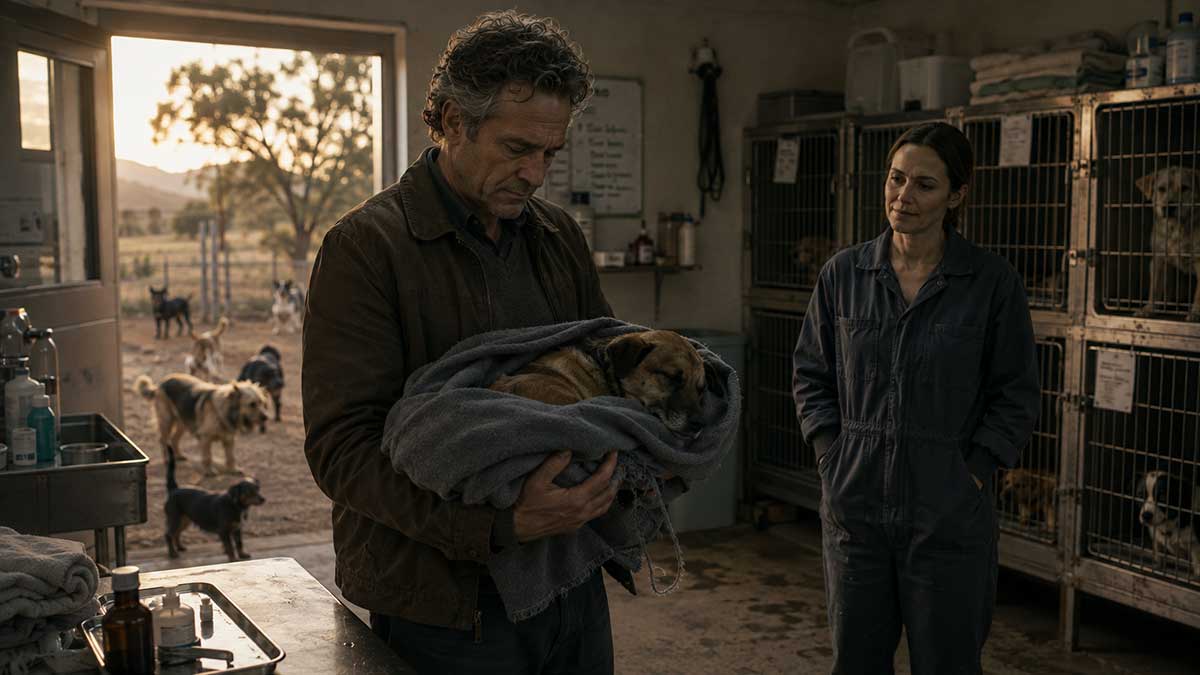
The room became quieter.
No university.
No hearing.
No land dispute.
No argument about history.
Only Bev.
Only David.
And somewhere nearby, the sound of dogs.
Why Did David Keep Coming Back to the Animal Clinic?
Bev Shaw: You could have stopped coming.
David Lurie: Yes.
Bev Shaw: Nobody needed you there in the way the university once did.
David Lurie: That is true.
Bev Shaw: Nobody admired you.
David Lurie: Certainly true.
Bev Shaw: The dogs did not know you had taught poetry.
David almost smiled.
David Lurie: Mercifully.
Lucy Lurie: Then why did you keep going?
David looked toward Bev.
Then toward his daughter.
David Lurie: I’m not sure.
Melanie Isaacs: That may be your best answer yet.
David glanced at her.
She did not smile.
Why Does David Become Gentler When Nothing Can Be Gained?
Bev Shaw: At first, you seemed embarrassed by the work.
David Lurie: I was.
Bev Shaw: Why?
David Lurie: It felt beneath me.
Petrus: Beneath professor?
David Lurie: Yes.
Petrus: Dog does not know professor.
David Lurie: Exactly.
Lucy Lurie: Maybe that was useful.
David looked at her.
Lucy Lurie: You spent much of your life being someone.
Professor.
Scholar.
Man of taste.
Man of desire.
The dogs did not care.
David Lurie: No.
Bev Shaw: They cared whether you frightened them.
Whether you hurt them.
Whether you stayed.
David went quiet.
Is Compassion More Pure When No One Can Reward It?
Melanie Isaacs: Is that why this matters so much?
The dogs cannot forgive you.
David Lurie: No.
Melanie Isaacs: They cannot tell me you changed.
They cannot persuade Lucy.
They cannot restore your reputation.
David Lurie: No.
Melanie Isaacs: Then for once, your kindness does not return to you as a story.
David looked at her carefully.
David Lurie: Perhaps.
Melanie Isaacs: That is new.
Bev Shaw: Maybe compassion becomes clearer when there is nothing to gain.
David Lurie: Or more pathetic.
Bev Shaw: Why pathetic?
David Lurie: Since it changes nothing.
Is Compassion Meaningful When It Repairs Absolutely Nothing?
Bev Shaw: The dogs still die.
David Lurie: Yes.
Bev Shaw: Their bodies still have to be taken away.
David Lurie: Yes.
Bev Shaw: So why carry them carefully?
David looked down.
David Lurie: Since they deserve not to be treated like rubbish.
Bev Shaw: They are already dead.
David Lurie: I know.
Bev Shaw: They cannot feel the difference.
David Lurie: I know.
Bev Shaw: Then who is the care for?
David thought for a long time.
David Lurie: Maybe for what they were.
Lucy Lurie: Or for who you are becoming.
David looked toward her.
David Lurie: Careful.
Lucy Lurie: Why?
David Lurie: That sounds too much like redemption.
Does David Want the Dogs to Redeem Him?
Melanie Isaacs: Do you?
David Lurie: No.
Melanie Isaacs: Too fast.
David sighed.
David Lurie: Fine.
At first, perhaps.
Maybe I wanted the work to mean something about me.
Bev Shaw: And later?
David Lurie: Later I became tired of what things meant about me.
Silence.
That answer changed the room.
Can a Good Act Matter Without Becoming Evidence of Goodness?
Petrus: Maybe that is difficult for educated man.
David looked at him.
Petrus: To do something and not explain what it proves.
David Lurie: You enjoy this.
Petrus: A little.
Lucy Lurie: He is right, though.
David Lurie: Unfortunately.
Melanie Isaacs: You spent so much time defending what your actions meant.
Now perhaps the action can remain smaller than the explanation.
David nodded.
Slowly.
What Does David Learn From Creatures He Once Considered Beneath Him?
Bev Shaw: The dogs do not care about dignity the way people do.
David Lurie: No.
Bev Shaw: They are frightened.
Hungry.
Lonely.
Sometimes trusting.
Sometimes not.
Lucy Lurie: And you cannot argue them into anything.
David Lurie: That may be their greatest virtue.
Melanie Isaacs: You cannot narrate consent for them either.
The humor disappeared.
David looked toward her.
She held his gaze.
Melanie Isaacs: You have to watch.
Wait.
Notice whether they move closer or away.
David said nothing.
The connection was obvious.
No one explained it further.
Is Attention a Form of Repentance?
Bev Shaw: Maybe attention matters.
David Lurie: Attention?
Bev Shaw: Seeing what is actually in front of you.
Not what you want it to be.
Not what it represents.
Not what it can do for you.
David looked down.
Lucy Lurie: That sounds simple.
Bev Shaw: It isn’t.
David Lurie: No.
It isn’t.
Why Does David Care What Happens to the Dogs After Death?
Lucy Lurie: This part has always interested me.
You did not just help with euthanasia.
You cared about what happened afterward.
David Lurie: The bodies were handled badly.
Bev Shaw: Efficiently.
David Lurie: Brutally.
Petrus: Dead dog cannot complain.
David Lurie: No.
Petrus: Then why care?
David looked at him.
David Lurie: Since lack of complaint does not mean lack of dignity.
Melanie’s expression changed.
David noticed.
He understood why.
The room went quiet.
Can Dignity Exist Without Recognition?
Melanie Isaacs: That may be the first time today you have used dignity without talking about yourself.
David looked at her.
David Lurie: Perhaps.
Melanie Isaacs: Good.
No praise.
Just good.
What Does the Final Dog Mean?
Bev Shaw: There was one dog you liked more than the others.
David nodded.
Bev Shaw: He liked you too.
David Lurie: Yes.
Bev Shaw: You could have kept delaying.
David Lurie: For a while.
Lucy Lurie: Why didn’t you?
David looked at his hands.
David Lurie: Since keeping him alive for me would still have been for me.
No one spoke.
Is Giving Up the Dog an Act of Love?
Melanie Isaacs: You give him up.
David Lurie: Yes.
Melanie Isaacs: Is that love?
David hesitated.
David Lurie: I don’t know.
Bev Shaw: Maybe love is sometimes giving up the right to make another life serve your need.
David closed his eyes briefly.
That sentence reached farther than the dog.
Everyone knew it.
Does This Echo Everything David Failed to Understand Before?
Lucy Lurie: You wanted Melanie.
You wanted to protect me.
You wanted to keep your dignity.
You wanted the world to make sense.
You wanted the social order to stay legible.
David looked at her.
Lucy Lurie: Maybe this is the first time you love something without insisting on keeping it.
David Lurie: That sounds generous.
Lucy Lurie: I am not saying it erases anything.
David Lurie: Good.
Melanie Isaacs: It doesn’t.
David looked at her.
Melanie Isaacs: But maybe that is why I can believe it a little.
Can Someone Become Better Without Becoming Innocent Again?
The original question finally returned.
Bev asked it softly.
Bev Shaw: David, do you think you are better now?
He looked uncomfortable.
David Lurie: I dislike the question.
Petrus: Answer anyway.
David almost smiled.
Then he thought.
David Lurie: I think I am less certain.
Lucy Lurie: That is not the same.
David Lurie: No.
Melanie Isaacs: Less entitled?
David paused.
David Lurie: Perhaps.
Bev Shaw: Less interested in being forgiven?
A longer pause.
David Lurie: Maybe.
Does David Need Forgiveness to Continue Changing?
Melanie looked directly at him.
Melanie Isaacs: If I never forgive you, what happens?
David did not answer immediately.
Melanie Isaacs: Not rhetorically.
If I never tell you I understand.
If I never tell you that you changed.
If I never make your story complete.
What happens?
David looked at her.
For once, he did not seem defensive.
David Lurie: Then it remains incomplete.
Melanie Isaacs: Can you live with that?
David Lurie: I may have to.
Is Redemption the Wrong Question?
Lucy Lurie: Maybe redemption is too dramatic.
Bev Shaw: I think so.
David Lurie: Coming from someone who spends her days with death, that is interesting.
Bev Shaw: Most change is small.
A hand gentler than before.
A voice quieter.
Someone staying five minutes longer.
Someone carrying a body carefully when nobody is watching.
Petrus: Not very heroic.
Bev Shaw: No.
Melanie Isaacs: Maybe that is why it matters.
Closing: “Would You Still Want to Become Better?”
Bev looked at David.
Her voice remained quiet.
Bev Shaw: If none of us forgave you, would you still want to become better?
David did not answer.
The silence lasted long enough to become uncomfortable.
He looked toward Melanie.
Then Lucy.
Then Petrus.
Then Bev.
No one rescued him.
Finally:
David Lurie: I don’t know.
Bev waited.
David looked down.
Then added:
David Lurie: But I think I would still carry the dogs.
No one declared him redeemed.
Melanie did not forgive him.
Lucy did not tell him everything between them was repaired.
Petrus did not suddenly trust him.
Bev did not bless him.
There was no return to innocence.
Only a man who once believed desire justified taking, now learning that care sometimes meant giving up.
Perhaps that was not redemption.
Perhaps it was smaller.
And perhaps smaller was finally enough.
The conversation ended there.
Not with innocence restored.
With a dog being carried carefully by a man who no longer needed the act to prove what kind of man he was.
Final Thoughts
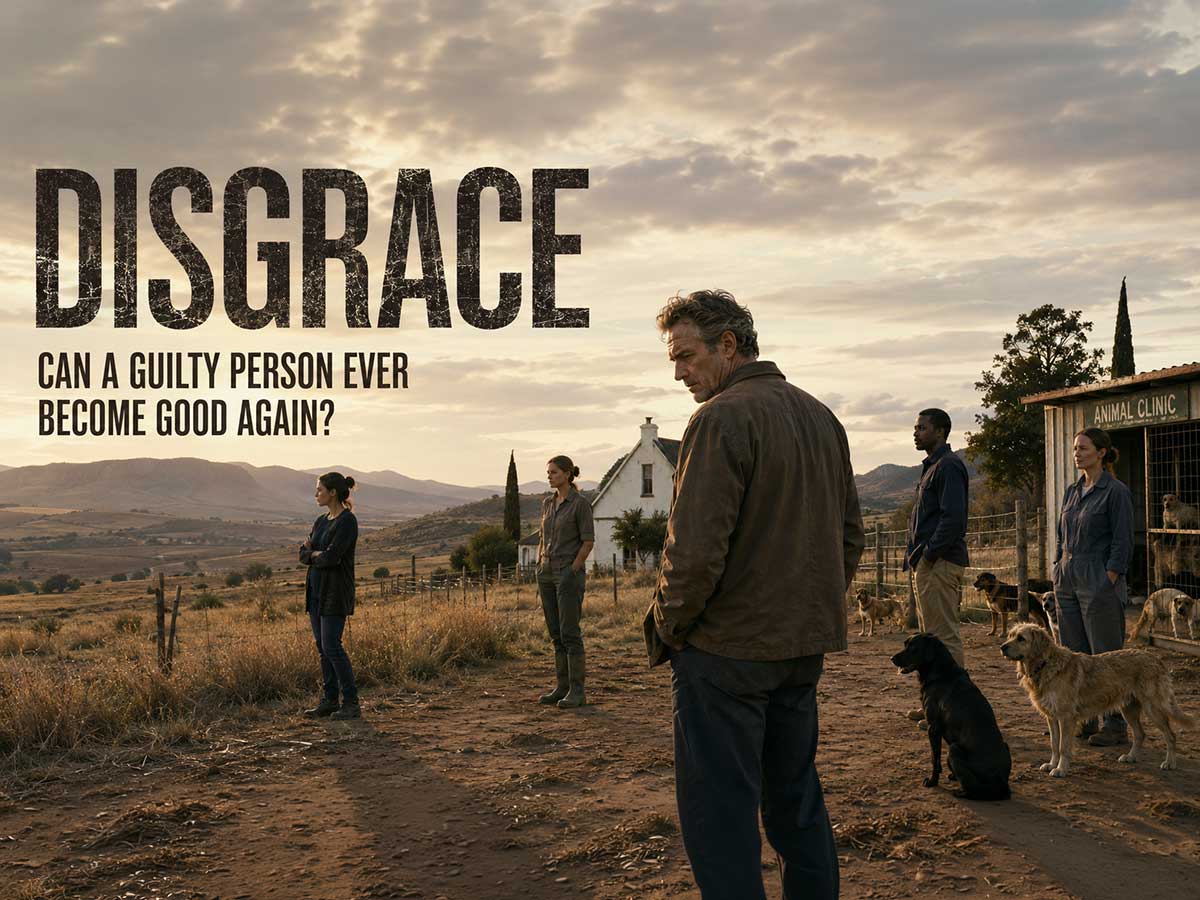
Disgrace does not give David Lurie the redemption story readers might expect.
He does not regain his career.
Melanie does not appear to absolve him.
Lucy does not return to the life he wants for her.
History does not become morally simple.
The damage remains.
Yet David changes.
At the beginning, he is a man of appetite. He trusts his intelligence, his desires, and his ability to interpret his own behavior.
Gradually, those certainties disappear.
Melanie challenges his assumption that his experience determines the meaning of what happened between them.
Lucy teaches him that love does not grant ownership over another person’s choices.
Petrus confronts him with a social order he can no longer control.
Bev introduces him to a form of care with no prestige attached to it.
Then there are the dogs.
They cannot restore David’s reputation.
They cannot forgive him.
They cannot admire his learning.
They cannot tell the world that he has changed.
Many cannot even be saved.
Yet David begins treating them with tenderness.
That may be Coetzee’s quietest and most difficult answer.
Moral change does not necessarily mean becoming innocent again.
It may mean accepting that innocence is gone and choosing to act with greater care anyway.
David’s final movement is not upward.
He does not reclaim status.
He moves downward, into humility.
At the end, perhaps the question is no longer:
“Does David Lurie deserve redemption?”
Perhaps it is:
“If nobody forgives you, nobody applauds you, and nothing you do can erase the past, will you still choose to become gentler?”
David cannot answer confidently.
He can only carry the dogs.
And perhaps, after everything he once believed about himself has fallen away, that small act tells us more than another confession ever could.
Short Bios:
J. M. Coetzee — South African-born novelist, essayist, and literary scholar who received the 2003 Nobel Prize in Literature. Disgrace, published in 1999, won the Booker Prize and became one of his best-known works. His fiction frequently examines authority, shame, violence, moral responsibility, and the difficult relationship between individuals and social systems.
David Lurie — A 52-year-old divorced university professor whose relationship with his student Melanie leads to disciplinary proceedings and the loss of his academic career. Proud, intellectual, and deeply attached to his own interpretation of desire, David gradually confronts the limits of his authority and self-knowledge.
Lucy Lurie — David’s independent daughter, who lives on a small farm in South Africa’s Eastern Cape. After suffering a brutal attack, she makes decisions about her future that her father finds almost impossible to accept. Lucy becomes central to the novel’s questions about autonomy, survival, land, history, and dignity.
Melanie Isaacs — A young university student with whom David becomes sexually involved. Her position as David’s student creates a profound imbalance between them. In this Imaginary Conversation, Melanie is given space to challenge David’s tendency to interpret their experience primarily through his own desire and disgrace.
Petrus — Lucy’s neighbor and former assistant who is steadily gaining land, status, and independence. Pragmatic and difficult to read, Petrus represents neither a simple villain nor an uncomplicated symbol of historical justice. His presence forces David to confront changing authority in post-apartheid South Africa.
Bev Shaw — Lucy’s friend who works with unwanted and suffering animals at a small clinic. David initially regards her work with little respect, yet his time assisting her becomes one of the most meaningful parts of his transformation. Bev quietly introduces him to compassion that offers neither status nor reward.
Leave a Reply