
Introduction
For thirty years, Nathaniel Mercer preached that grace is greater than our worst mistakes.
Then, one Sunday morning, a woman from his past tells the world what happened between them.
Within weeks, Nate loses his church, his reputation, his marriage, and the public life that once defined him. Yet one question refuses to disappear: Was he simply a flawed man who committed a terrible mistake—or did his position of spiritual authority make what happened far more serious than he is willing to admit?
Inspired by the moral questions at the heart of J. M. Coetzee’s Disgrace, this original modern story explores forgiveness, accountability, authority, and the uncomfortable distance between being forgiven and being restored.
Most of all, it asks a harder question:
What if becoming a better person does not mean getting your old life back?
Chapter 1 — The Statement
Nathaniel Mercer had preached the same sentence in different forms for thirty years.
Grace is greater than your worst day.
He had said it in hospital rooms.
At funerals.
To men who had destroyed their marriages.
To women who could not forgive themselves.
To parents who believed their children were lost.
On Sunday morning, twelve minutes before the first service, the phrase waited on the screen behind the stage in white letters.
GRACE IS GREATER THAN YOUR WORST DAY
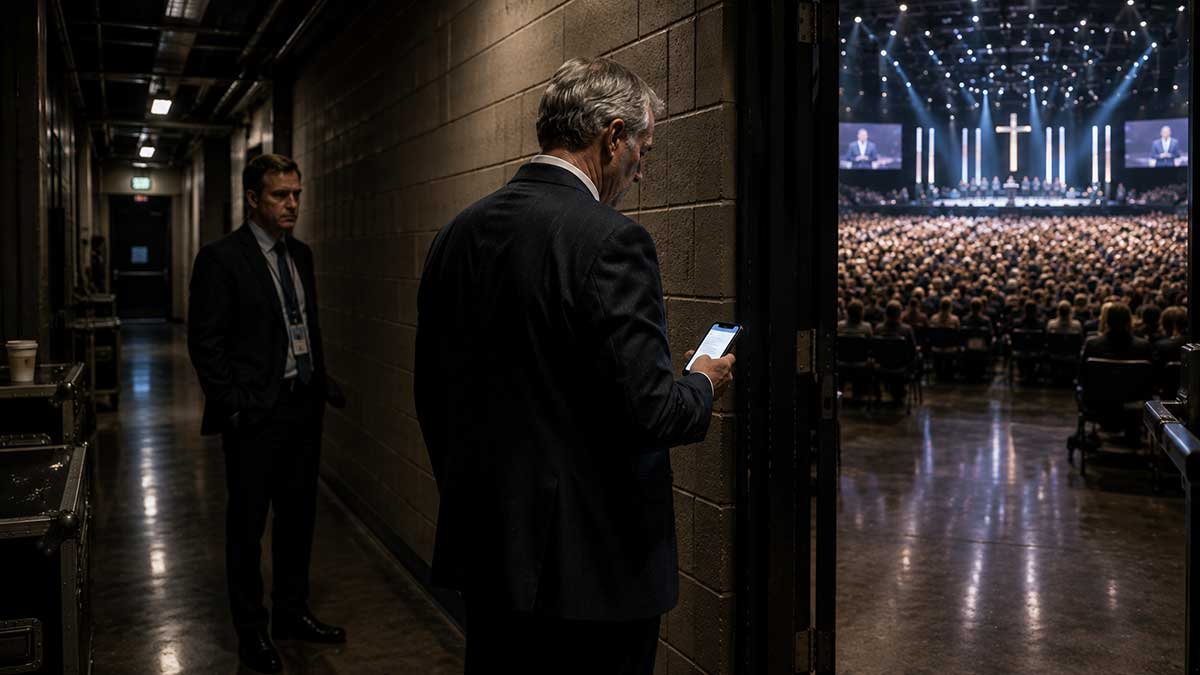
Nate stood in the narrow hallway behind the sanctuary and adjusted his cuff.
Eight thousand people were singing on the other side of the wall.
The bass from the worship band trembled through the floor.
Someone had left a paper cup of coffee on the equipment case beside him.
His phone vibrated.
He ignored it.
It vibrated again.
Then again.
Nate looked.
Twenty-three messages.
Most were from staff.
Three from Elena.
One from Hannah.
He opened Elena’s first.
Call me before you go out there.
Then the second.
Do not preach.
He stared at the screen.
The door at the end of the hallway opened.
Mark Caldwell, executive pastor of Grace Harbor Church, came toward him quickly.
Mark had worked beside Nate for nineteen years.
He never hurried.
Now he was almost running.
“Nate.”
“What happened?”
Mark stopped.
His face answered before his mouth did.
“Claire posted something.”
Nate felt his body change.
Not shock.
Recognition.
He looked back at his phone.
The messages suddenly made sense.
“What did she post?”
“Something long.”
“How long?”
“I don’t know. Twelve pages. Maybe more.”
“Where?”
“Everywhere.”
Nate unlocked his phone.
His fingers felt clumsy.
He searched Claire Hart.
The post appeared immediately.
A photograph of Claire at thirty-four.
Hair shorter than he remembered.
No makeup.
Looking straight into the camera.
Beneath it:
For seven years I have tried to decide whether what happened between Pastor Nathaniel Mercer and me was love, an affair, abuse, or something I still do not have language for.
Nate stopped.
Mark watched him.
“Keep reading.”
Nate did.
Claire described being twenty-seven.
Newly divorced.
Working as communications director at Grace Harbor.
She described private counseling meetings.
Late-night calls.
Prayer.
Texts.
A first kiss in Nate’s office after a staff retreat.
A hotel room in Nashville three months later.
Nate read faster.
Then slower.
Claire did not say he forced her.
That mattered to him immediately.
She wrote:
I cared about him.
I sometimes called first.
I sometimes wanted to see him.
I sometimes believed what we were doing was meaningful.
Nate exhaled.
Then came the next paragraph.
I was twenty-seven. He was fifty-one. He was my pastor, my employer, my mentor, and the person who had taught me for years how to understand God’s voice.
Nate stopped again.
Something in that sentence felt more dangerous than everything before it.
Not false.
Dangerous.
He kept reading.
When Pastor Mercer told me that perhaps God had allowed our connection for a reason, I did not hear that as a sentence from an ordinary married man. I heard it from the person who had spent years teaching me how God speaks.
Nate locked the phone.
Mark said nothing.
The music outside rose.
A thousand voices repeated the chorus.
Nate looked toward the stage door.
“How long until I’m up?”
“Seven minutes.”
“Did you tell the board?”
“They’re already here.”
“All of them?”
“Enough.”
Nate put the phone in his pocket.
“Good.”
Mark stared.
“Good?”
“I’ll address it.”
“No.”
Nate looked at him.
“Excuse me?”
“You’re not going out there.”
“Mark.”
“The board decided.”
“They decided what?”
“You don’t preach today.”
Nate almost laughed.
“You had a board meeting in the last ten minutes?”
“Emergency call.”
“Without me.”
“Yes.”
“That’s absurd.”
“It may be.”
Nate stepped closer.
“I need to speak to the church.”
“No.”
“They’re going to hear this from strangers online before they hear it from me?”
Mark’s expression hardened.
“They’re already hearing it.”
Nate looked toward the sanctuary again.
Someone cheered as the song ended.
He had walked through that door nearly two thousand Sundays.
This morning there was a security volunteer standing beside it.
Not looking at him.
That detail hurt more than Nate expected.
“What did Claire accuse me of?”
Mark did not answer.
“Mark.”
“She says the relationship was exploitative.”
“That’s not what I asked.”
“She uses the phrase spiritual abuse.”
Nate’s face changed.
“No.”
Mark waited.
“No.”
“You haven’t finished reading.”
“I don’t need to finish reading to know that word is false.”
Mark looked at him carefully.
“Was the relationship sexual?”
Nate stared back.
“Yes.”
Mark swallowed.
“More than once?”
“Yes.”
“How long?”
“Eleven months.”
Mark closed his eyes.
When he opened them again, something old between them had disappeared.
“Did Elena know?”
“No.”
“Did Claire report to you?”
“Yes.”
“Were you counseling her?”
“At first.”
“Nate.”
“She was an adult.”
Mark looked away.
The sentence sounded smaller once spoken aloud.
Nate heard that too.
But he continued.
“She was not a child.”
“I didn’t say she was.”
“We both made choices.”
Mark looked back.
“Were they equal choices?”
Nate did not answer immediately.
The stage manager appeared at the far end of the hall.
She saw both men and stopped.
Mark shook his head.
She disappeared again.
Nate said, “I was wrong.”
Mark’s expression softened slightly.
“Then say that.”
“I just did.”
“No. Say what you were wrong about.”
Nate’s irritation returned.
“Adultery.”
“Anything else?”
“Secrecy.”
“Anything else?”
“Betraying Elena.”
Mark waited.
Nate knew what he wanted.
“No.”
The worship leader began speaking from the stage.
“Before Pastor Nate comes—”
There was a pause.
Nate could hear confusion in the man’s voice.
Mark looked toward the door.
Then the worship leader continued.
“Pastor Nate will not be joining us this morning.”
A murmur spread through the sanctuary.
Nate stood perfectly still.
The worship leader said:
“Our elders have asked that we pray.”
Nate walked toward the stage door.
The security volunteer finally looked up.
“Nate.”
Mark touched his arm.
Nate stopped.
On the other side of that door, people were beginning to whisper.
He could picture the first rows.
The Wilkins family.
Old Mrs. Edwards.
The college students who always sat stage left.
The camera operators.
His chair.
His Bible.
The glass of water someone had already placed on the small table.
Everything ready.
Except him.
He had never understood how much authority was contained in being expected.
He understood now.
His phone vibrated again.
A message from Hannah.
Dad, please don’t make this worse by preaching.
Nate read it twice.
He put the phone away.
For the first time since the post appeared, he felt something close to fear.
Not fear of losing the church.
Not yet.
Fear that Hannah already knew what he was about to do.
And did not trust him to do it.
By noon, the statement had been shared more than eighty thousand times.
By two, national outlets were calling.
By four, Grace Harbor had posted its own response.
Senior Pastor Nathaniel Mercer has acknowledged an inappropriate sexual relationship with a former member of church staff. He has been placed on immediate administrative leave pending an independent investigation.
The phrase inappropriate sexual relationship lasted approximately nine minutes online before people began replacing it.
Abuse.
Affair.
Predation.
Adultery.
Grooming.
Cancel culture.
Spiritual manipulation.
Persecution.
Hypocrisy.
Nate sat at the kitchen table and watched his life become vocabulary.
Elena stood at the counter with her back to him.
Neither had spoken for almost an hour.
The house was strangely quiet.
No staff.
No ringing doorbell.
Security had blocked the driveway.
Nate looked again at Claire’s statement.
He had read all twelve pages now.
Some parts he remembered differently.
Some parts he did not remember at all.
That frightened him less than it should have.
Claire described one night in his office when she tried to end things.
Nate remembered crying.
She remembered him saying:
“If this were merely wrong, why does it feel so difficult to walk away from?”
He remembered saying something like that.
Claire wrote:
I heard that as a spiritual question. I think he meant it as a romantic one. I no longer know whether that distinction mattered to him.
Nate put the phone down.
Elena turned.
“Did you say it?”
He knew immediately what she meant.
“Yes.”
She nodded.
“Do you remember saying it?”
“Yes.”
Another nod.
No accusation.
That was worse.
Nate said, “Claire loved me.”
Elena’s face barely moved.
“That may be true.”
He had expected anger.
Instead he felt cheated.
“You believe her?”
Elena looked at him.
“I believe you slept with her.”
“I told you that.”
“I believe she loved you.”
He said nothing.
“I believe you loved whatever she made you feel like.”
Nate pushed back from the table.
“That’s unfair.”
“Probably.”
Elena folded a dish towel.
Her hands were steady.
Nate wanted her to yell.
Something he could answer.
“She was an adult.”
Elena looked tired.
“You keep saying that.”
“Since it matters.”
“It does.”
“Then why does everyone act like it doesn’t?”
Elena put the towel down.
“No one is saying it doesn’t matter.”
“Claire is using the word abuse.”
“I know.”
“That is not what happened.”
Elena looked at him for several seconds.
Then:
“Do you know what happened?”
Nate laughed once.
It came out bitter.
“Apparently I am the last person anyone intends to ask.”
Elena turned away.
“That answer is more revealing than you think.”
His phone lit up again.
An old video.
Someone had clipped a sermon from six years earlier.
Nate stood on the Grace Harbor stage, younger, sharper, one hand resting on the pulpit.
His own voice filled the kitchen.
“Grace begins when we stop defending the person we were.”
The clip ended.
Elena closed her eyes.
Nate turned the phone face down.
Neither spoke.
Chapter 2 — Say the Words

Three weeks later, Nathaniel Mercer entered the boardroom through a side door.
The church had asked him not to use the main entrance.
Photographers had been waiting there since six in the morning.
He wore a gray suit.
No tie.
Elena used to choose his ties when something serious mattered.
He had chosen not to wear one.
The boardroom had twelve chairs.
Eleven were occupied.
Three elders.
Two outside investigators.
The denominational superintendent.
Grace Harbor’s attorney.
A crisis communications consultant.
Mark.
Two women Nate knew from the church’s safeguarding committee.
His chair remained empty at the head of the table.
Someone had placed another chair halfway down.
That was where they wanted him.
Nate noticed.
Of course he noticed.
He sat.
The lawyer began.
“We’re not here to relitigate the factual findings.”
“Good.”
Mark looked at him.
Nate ignored it.
The investigator opened a binder.
“The relationship lasted approximately eleven months.”
“Yes.”
“You exchanged more than eighteen hundred messages.”
“If you say so.”
“You met privately outside church business on at least forty occasions.”
“Yes.”
“You approved two salary increases during the period.”
“I approved department recommendations.”
“You signed them.”
“Yes.”
“You continued providing pastoral counseling after the relationship became sexual.”
Nate paused.
“For a period.”
“How long?”
“I don’t remember.”
“Approximately six weeks.”
Nate nodded.
The investigator continued.
“Did Claire ever try to end the relationship?”
“Yes.”
“How many times?”
Nate looked at the binder.
“You tell me.”
Mark closed his eyes.
The investigator said, “At least twice.”
“Yes.”
“And you continued contact.”
“She continued contact too.”
One of the safeguarding committee members, Dr. Miriam Cole, leaned forward.
“No one disputes that.”
Nate looked at her.
Miriam had taught Bible study at Grace Harbor for fifteen years.
Her husband had died the previous winter.
Nate had preached the funeral.
That memory felt suddenly unusable.
She asked:
“Do you understand why her continued contact does not settle the question?”
“Yes.”
“Explain.”
Nate felt the old instinct rise.
The room becoming an audience.
A difficult question.
The pleasure of answering it well.
He hated himself slightly for noticing.
“People can remain inside relationships they know are unhealthy.”
Miriam nodded.
“Anything else?”
“Power differences complicate choice.”
“Anything else?”
He looked at her.
“No.”
Miriam sat back.
The attorney slid a sheet of paper across the table.
“This is the statement the board is prepared to release with you.”
Nate picked it up.
It began:
I have sinned against my wife, my family, Claire Hart, Grace Harbor Church, and God.
He kept reading.
I entered a sexual relationship with a member of staff over whom I held spiritual and professional authority.
Fine.
I abused that authority.
Nate stopped.
He read the sentence again.
Then placed the paper on the table.
“No.”
No one seemed surprised.
The denominational superintendent, Howard Bell, folded his hands.
“Which part?”
“You know which part.”
Howard waited.
“I will say I misused authority.”
Miriam said, “What distinction are you making?”
“Abuse implies coercion.”
“Not always.”
“To most people it does.”
“Claire says she experienced it as spiritual abuse.”
“Claire is entitled to describe her experience.”
Miriam’s eyes narrowed slightly.
“But you are not willing to name your actions that way.”
“No.”
“Why?”
“Since I don’t believe it is accurate.”
Mark finally spoke.
“What is accurate?”
Nate looked at him.
“I had an affair with an employee.”
“An employee you counseled.”
“Yes.”
“An employee who believed you had spiritual authority in her life.”
“Yes.”
“An employee whose salary you could influence.”
“Yes.”
“An employee who tried to end the relationship.”
“Yes.”
Mark stared.
Nate knew what the room wanted.
He felt it pressing in from every side.
“Still no?”
“Still no.”
Howard Bell pushed the statement closer.
“This is the language the board believes reflects the findings.”
“The board wants language donors will accept.”
The communications consultant shifted in her seat.
Nate saw it.
There.
Proof.
“You see?”
Howard said, “See what?”
“This is not only about Claire.”
“No one said it was.”
“It’s about liability. Giving. Reputation. Whether people keep coming Sunday.”
The attorney said, “Those are legitimate institutional concerns.”
“Exactly.”
Nate leaned forward.
“You want me to stand in front of a camera and perform repentance in vocabulary your lawyers approved.”
Miriam said, “Do you think the fact that lawyers are involved makes the statement false?”
“No.”
“Then what makes it false?”
“I don’t believe that word.”
“Abuse.”
“Yes.”
Howard said, “Suppose the word is correct and you simply cannot see it yet.”
Nate looked at him.
“Then forcing me to say it won’t make me see it.”
Silence.
This was his strongest argument.
He knew it.
The old certainty entered his voice.
“If you require me to say a sentence I do not believe so that donors calm down and the institution can survive, that is not repentance. That is public relations.”
No one answered immediately.
Then Mark said:
“Maybe.”
Nate looked at him.
Mark continued.
“Maybe part of this is public relations.”
The consultant looked uncomfortable.
Mark did not care.
“Maybe the board is afraid.”
“Good.”
“Maybe the denomination is protecting itself.”
“Yes.”
“Maybe every institution involved here has mixed motives.”
“Exactly.”
Mark leaned forward.
“But your ability to identify our hypocrisy does not resolve yours.”
Nate went quiet.
He hated the sentence since he could not dismiss it.
Miriam said, “You keep finding impurity in everyone else’s motives.”
“That doesn’t make it imaginary.”
“No.”
She tapped the statement.
“And imperfection in the people asking you to take responsibility does not make responsibility unnecessary.”
Nate looked toward the windows.
The parking lot beyond was almost empty.
He could see the roofline of the sanctuary.
The cross above the entrance.
For decades he had interpreted rooms like this for other men.
Do not defend yourself.
Tell the truth.
Accept consequences.
He had preached those sentences.
He still believed them.
Mostly.
That was becoming the problem.
Howard said, “Will you read the statement?”
“No.”
“Will you amend it?”
“I already told you how.”
Miriam asked, “Would you say you abused spiritual authority without saying the sexual relationship itself was coerced?”
Nate hesitated.
Everyone noticed.
He did too.
“What would that mean?”
“It would mean your authority shaped the relationship in ways you failed to recognize.”
“I can say that.”
“Then say it.”
Nate looked at the page.
He could feel the trap.
Or perhaps it was not a trap.
That possibility bothered him more.
He read aloud:
“I entered a relationship with someone over whom I held spiritual and professional authority, and I failed to recognize how that authority affected her freedom.”
Miriam waited.
Nate stopped.
“That’s it?”
“Yes.”
“Do you believe you harmed her?”
“Yes.”
“How?”
His irritation returned.
“Is this a deposition?”
“No.”
“Then what exactly are we doing?”
Miriam’s voice stayed calm.
“Trying to find out whether your admission contains anyone besides you.”
The room went very still.
Nate looked at her.
For a moment, he did not know what she meant.
Then he did.
He wished he didn’t.
The meeting lasted four hours.
No agreement.
At the end, Howard Bell formally requested Nate’s resignation.
Nate gave it.
That surprised everyone.
Perhaps himself most.
“I won’t fight for the position.”
Howard nodded.
“Thank you.”
“Don’t thank me.”
Nate signed the document.
The signature looked identical to thousands he had written before.
Bookplates.
Bibles.
Marriage certificates.
Letters.
Donation acknowledgments.
Now it ended thirty years of ministry in less than three inches of ink.
Mark walked him to the side entrance.
At the door, Nate said:
“Do you think I abused her?”
Mark looked tired.
“Yes.”
Nate stared.
“You never said that before.”
“You never asked me before.”
That hurt.
“Did you always think it?”
“No.”
“Then when?”
Mark considered.
“When I stopped asking whether you meant to.”
Nate looked away.
Photographers waited beyond the gate.
Mark said:
“Take the back exit.”
Nate nodded.
Then:
“Will you preach Sunday?”
“Yes.”
“What are you preaching?”
Mark hesitated.
Nate almost smiled.
“You can tell me.”
Mark said:
“David and Nathan.”
The prophet confronting the king.
Of course.
Nate laughed.
Not since it was funny.
He walked out.
The publisher terminated his contract the following morning.
The podcast network removed his show by afternoon.
A conference scheduled in Atlanta replaced his name with another speaker before lunch.
Grace Harbor removed Nate’s photograph from its website.
His sermons remained available for three days.
Then most disappeared.
People argued about that too.
Should sermons preached by a disgraced pastor still be listened to?
Does truth become false when the person who spoke it fails?
Nate watched strangers debate his theology in ninety-second clips.
One Christian influencer recorded a video from inside a luxury SUV.
“If grace means anything, Nathaniel Mercer cannot be defined by his worst failure.”
Another pastor replied:
“Grace does not entitle anyone to a microphone.”
That clip received twice as many views.
Then Claire posted four sentences.
Nate saw them while sitting alone in his study.
I have been asked whether I forgive Nathaniel Mercer.
Forgiveness is something I am working through privately.
But forgiveness and trust are not the same thing.
And forgiveness and employment are not synonyms.
The last sentence spread everywhere.
Even people who had never heard of Grace Harbor began using it.
Nate stared at the screen.
Part of him admired the line.
Part of him resented how good it was.
He hated that second part.
That evening Elena came into the study carrying two suitcases.
Nate looked at them.
“Where are you going?”
“I’m not.”
She placed them near the desk.
He understood.
“You’re throwing me out.”
“No.”
“What would you call it?”
“I’m asking you to stay somewhere else.”
“Same difference.”
“No.”
She looked at him.
“I am refusing to make your consequences sound like something I am doing to you.”
Nate stood.
“Where exactly do you expect me to go?”
“Hannah.”
“She doesn’t want me there.”
“Probably not.”
He stared.
Elena’s face remained calm.
“Then perhaps you can learn what it feels like to arrive somewhere without being wanted.”
He sat again.
“That was cruel.”
“Yes.”
At least she admitted it.
Nate looked at the suitcases.
“Are we done?”
Elena took a long time.
“I don’t know.”
“That means yes.”
“No. It means I don’t know.”
He waited.
“I have spent thirty-four years living with a man who always knew what everyone else meant.”
Nate looked up.
“What is that supposed to mean?”
“It means I’m tired of having my answers corrected.”
He shook his head.
“This is not about us.”
Elena gave him a look he had seen perhaps five times in their marriage.
Pure disbelief.
“Of course you think that.”
He wanted to answer.
Nothing came.
Elena left the room.
Nate sat alone.
On the desk was the statement the board had emailed him again.
He opened his laptop.
Turned on the camera.
For the first time in weeks, no one had asked him to record anything.
He pressed record anyway.
“My name is Nathaniel Mercer.”
He stopped.
Started again.
“My name is Nathaniel Mercer, and for nearly thirty years I served as senior pastor of Grace Harbor Church.”
Stop.
Again.
“I sinned against my wife, my family, Claire—”
Stop.
Again.
“I abused—”
He froze.
Could not say it.
Nate leaned back.
His face on the screen looked older than it had a month ago.
He thought of Miriam.
Suppose the word is correct and you simply cannot see it yet.
He pressed record once more.
“If I say what people want me to say merely to get my life back, then I would be lying twice.”
He continued.
For eleven minutes.
About confession.
Authenticity.
Public shame.
Grace.
Institutional hypocrisy.
The danger of forced repentance.
It was good.
Very good.
By minute four he could feel himself becoming the man who had filled arenas.
By minute eight he knew exactly where the emotional turn belonged.
By minute ten his voice had acquired the softness that made people lean forward.
When he finished, he watched the recording.
He nearly posted it.
His finger hovered above the button.
Then he saw something in his own face.
Not remorse.
Not innocence.
Pleasure.
The old pleasure.
A room.
An argument.
An audience waiting to be persuaded.
He deleted the video.
For several seconds he sat staring at the blank screen.
It was the first thing he had lost voluntarily.
Chapter 3 — My Daughter’s House
Hannah lived twenty minutes outside Asheville in a gray house with a porch that leaned slightly to the left.
Nate noticed that before anything else.
The porch.
Then the cracked gutter.
Then the missing shutter on the upstairs window.
He had spent thirty years walking into churches and noticing people.
Now he noticed repairs.
Maybe since repairs did not know his name.
Hannah opened the door before he knocked.
She looked at the two suitcases.
Then at him.
“How long?”
“I don’t know.”
“Okay.”
No hug.
No accusation.
She stepped aside.
“The room downstairs is made up.”
Nate carried the bags in.
Her house smelled like coffee and dog.
“Do you have one?”
“Three.”
“I thought you worked at a hospice.”
“I do.”
“Then why three dogs?”
“Since apparently dying humans were not enough.”
He almost smiled.
Hannah did not.
She pointed toward the basement stairs.
“Towels are in the cabinet. Bathroom light is weird. Jiggle the switch.”
Nate stood there.
She looked at him.
“What?”
“Nothing.”
“You expected something.”
“No.”
“You always do.”
She went into the kitchen.
Nate followed.
“Your mother thinks I should stay here.”
“I know.”
“She called?”
“Yes.”
“What did she say?”
“That you might need somewhere to go.”
“That’s all?”
Hannah opened the refrigerator.
“That’s all I’m telling you.”
Nate nodded.
There it was already.
A boundary.
He hated how quickly he recognized one now.
The first week was unbearable.
Not since Hannah was cruel.
She was busy.
She left at 6:30 every morning.
Returned exhausted.
Sometimes ate standing at the sink.
Sometimes fell asleep on the couch with one of the dogs pressed against her legs.
Nate woke at five from decades of habit.
For the first two mornings he opened his laptop to prepare a sermon that did not exist.
On the third morning he closed it.
He tried reading.
The words would not stay still.
He checked his phone.
Hundreds of messages remained unanswered.
Some begged him to speak.
Some told him never to speak again.
He ignored both.
Mostly.
At 7:14 every morning he searched his name.
He told himself he needed to know what had changed.
Hannah caught him on the sixth day.
She came downstairs early and found him at the kitchen table.
His own face filled the phone.
A headline beneath:
FORMER MEGACHURCH PASTOR STILL REFUSES “ABUSE” LABEL
Hannah poured coffee.
“You miss it.”
Nate locked the phone.
“Miss what?”
“Being talked about.”
“That is absurd.”
“Okay.”
“I’m trying to understand what people are saying.”
“You know what they’re saying.”
“Some of it is false.”
“I’m sure.”
He looked at her.
She took the coffee and walked away.
“Hannah.”
She stopped.
“What?”
“You think I enjoyed any of this?”
She turned.
“No.”
Pause.
“I think you enjoyed being important before it.”
Then she left.
Nate sat alone.
He wanted to be angry.
Instead he reopened the article.
Three days later Hannah came home and found him repairing the porch.
He had replaced two rotten boards.
The gutter no longer sagged.
The upstairs shutter sat against the wall waiting for screws.
She stood in the yard.
“You don’t have to do that.”
“I know.”
“Then why?”
“It was broken.”
Hannah looked at the porch.
Then at him.
“Okay.”
He waited.
That was it.
No gratitude.
No compliment.
Strangely, he liked that.
On Friday she said:
“You’re coming with me.”
“Where?”
“Work.”
“Why?”
“Since if you stay here another day, you’re going to reorganize my pantry.”
“I already did.”
“I know.”
She looked almost horrified.
Nate smiled.
It was the first real smile between them.
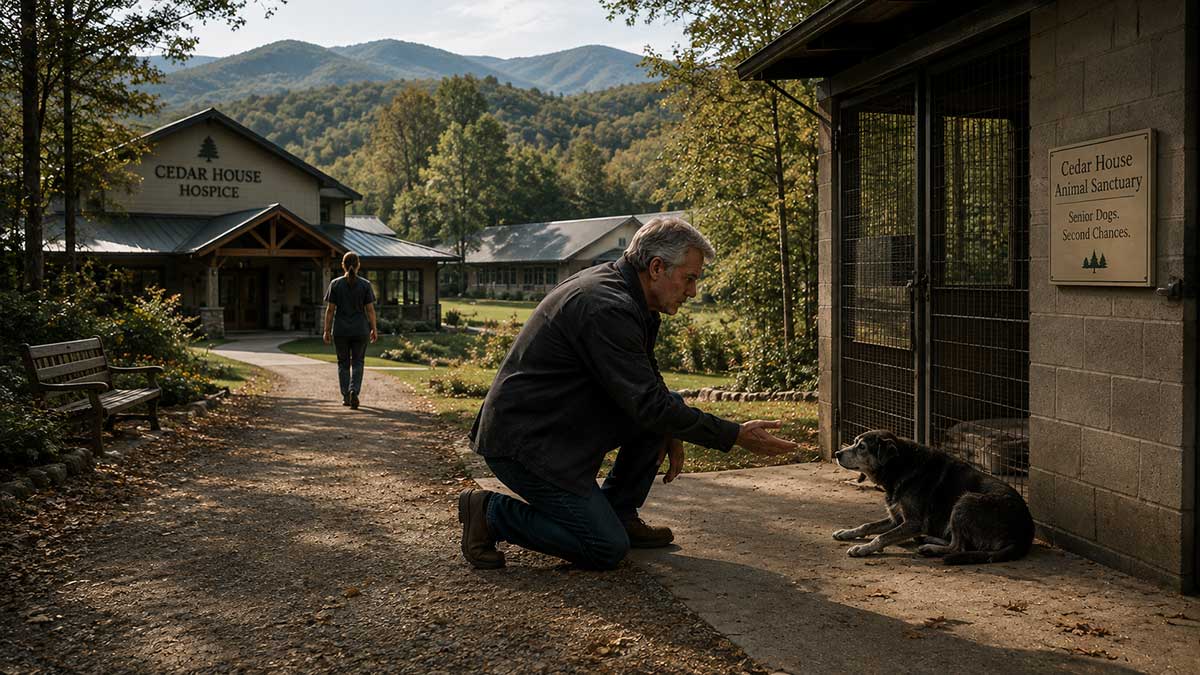
Cedar House occupied a former retreat center on seven acres.
One building was hospice.
Another had been converted into a senior-dog sanctuary.
A narrow path connected them through oak trees.
The place was smaller than Nate expected.
Everything was smaller now.
The chapel seated forty.
The hospice had sixteen beds.
The animal side had twelve kennels and a fenced yard.
No LED wall.
No security team.
No worship band.
A volunteer at reception handed him a visitor badge.
Nate stared at it.
VISITOR.
Hannah noticed.
“Problem?”
“No.”
She walked on.
Her first stop was Room 4.
An eighty-one-year-old man named Walter Hendricks sat upright in bed watching baseball with the sound off.
Hannah introduced Nate only as her father.
Walter squinted.
“You look familiar.”
Nate braced.
Then Walter snapped his fingers.
“You’re that preacher.”
“Yes.”
“My wife watched you.”
Nate nodded.
“Did she?”
“Every Sunday.”
Nate felt the old muscle engage.
“I hope the ministry was a blessing to her.”
Walter looked toward the television.
“She died last February.”
“I’m sorry.”
“She liked you.”
Nate began:
“Sometimes when we lose someone—”
Walter pointed at the screen.
“You follow baseball?”
Nate stopped.
“A little.”
“Braves?”
“Rangers.”
Walter groaned.
“Terrible.”
That was the conversation.
Ten minutes later Nate left the room feeling strangely emptied.
Hannah looked at him.
“What?”
“Nothing.”
“You did the thing.”
“What thing?”
“The sermon voice.”
“I was expressing sympathy.”
“You were about three seconds from giving him a meaning for his wife’s death.”
Nate looked offended.
“I have sat with thousands of grieving people.”
“I know.”
“That’s not a crime.”
“I didn’t say it was.”
She kept walking.
He followed.
At the animal building, a volunteer named Ruth gave him gloves.
“We need help cleaning.”
Nate looked toward Hannah.
She was already gone.
“Cleaning what?”
Ruth pointed.
Kennel six.
He stared at the mop.
“I’m just visiting.”
“Then visit with the mop.”
He almost laughed.
She did not.
Twenty minutes later he was scrubbing concrete.
Nobody recognized him.
Nobody asked for prayer.
Nobody wanted to know whether grace and restoration were the same thing.
A three-legged terrier barked at him continuously.
An old beagle slept through everything.
Near the far wall, a black-and-white dog lay beneath a table.
Thin.
Clouded eyes.
One ear folded oddly.
Nate nodded toward him.
“What’s wrong with that one?”
Ruth looked.
“Jonah?”
“That his name?”
“Apparently.”
“What’s wrong?”
“Cancer. Hips. Eyes. Mostly being old.”
Nate watched the dog.
“How long?”
Ruth shrugged.
“Could be weeks. Could be months.”
The answer irritated him.
He was accustomed to people knowing things.
Jonah lifted his head.
Nate crouched.
“Come here.”
The dog stared past him.
Nate clicked his fingers.
Nothing.
Ruth said:
“He’s nearly blind.”
“I know.”
“He doesn’t like strangers.”
Nate held out his hand.
Jonah stood slowly.
For a second Nate thought he was coming closer.
The dog turned and walked away.
Ruth continued mopping.
Nate looked at her.
“What?”
“Nothing.”
She smiled.
He realized she was trying not to laugh.
At lunch, Nate met Dr. Caleb Reeve.
Caleb was forty-six.
Tall.
Quiet.
The sort of man who made silence seem intentional rather than awkward.
He wore hospice scrubs and carried a paper bowl of soup.
“Hannah’s father.”
“Nate.”
“I know.”
There it was.
Nate waited for the rest.
Caleb sat.
“I read one of your books in seminary.”
Nate felt a small warmth.
“Which one?”
“When Grace Costs Something.”
Of course.
“What did you think?”
Caleb smiled.
“I was twenty-three.”
Nate laughed.
He liked him immediately.
That bothered him later.
Hannah joined them.
She sat beside Caleb without thinking.
Nate noticed the ease between them.
The shared glance when a nurse dropped a tray.
The unfinished sentences.
The way Caleb knew Hannah took sugar without asking.
Nate noticed all of it.
On the drive home, he said:
“You and Reeve.”
Hannah kept her eyes on the road.
“No.”
“I didn’t ask anything.”
“You were about to.”
“He seems interested.”
“He is a colleague.”
“People can be both.”
Hannah exhaled.
“Please do not start.”
“Start what?”
She looked at him.
“You know exactly what.”
Nate turned toward the window.
For once, he let the conversation die.
That night he searched Caleb Reeve.
Medical school.
Residency.
Hospice fellowship.
Two articles.
No scandals.
Nate hated himself slightly.
Then searched again.
Nothing.
He closed the laptop.
His phone buzzed.
A message request from an account with no photograph.
You taught me about grace.
I hope someday you learn about it.
Nate read it three times.
He could not decide whether it was kind.
That bothered him more than if it had been cruel.
The next morning Hannah found him replacing the broken switch downstairs.
“You know you don’t have to fix everything.”
Nate tightened the plate.
“I know.”
“Do you?”
He looked at her.
She picked up her bag.
“Come by Cedar House later if you want.”
“For what?”
“Ruth needs help.”
“With?”
“Kennel six.”
He looked at her suspiciously.
She smiled.
Then left.
Chapter 4 — What He Knew About Her

Hannah called at 9:12 on a Tuesday morning.
Nate answered immediately.
“What happened?”
Silence.
“Hannah?”
“I need you to come get me.”
“Where are you?”
“Cedar House.”
“What happened?”
“Just come.”
Nate was in the car two minutes later.
Hannah was sitting outside the administration building when he arrived.
No coat.
Coffee untouched beside her.
She looked pale.
Caleb stood fifty feet away speaking with two administrators.
Nate saw him and felt something harden.
He went to Hannah.
“What happened?”
She shook her head.
“Car first.”
He did not argue.
That frightened him.
They drove five minutes before Hannah spoke.
“There was an audit.”
“What kind?”
“Records.”
Nate waited.
“Caleb accessed employee counseling files.”
Nate looked toward her.
She kept staring ahead.
“What files?”
“Mental-health records. Employee assistance notes. Some hospice counseling.”
“Why?”
“I don’t know.”
“How many?”
“At least six.”
Nate’s hands tightened on the steering wheel.
“Yours?”
Hannah nodded.
“When?”
“Over two years.”
Nate pulled onto the shoulder.
“What did he read?”
“Drive.”
“Hannah.”
“Drive.”
He stayed parked.
She finally looked at him.
“Please.”
Nate drove.
At home, Hannah sat at the kitchen table.
Nate stayed standing.
She opened her laptop and turned it toward him.
Audit log.
Dates.
Access records.
Caleb’s credentials.
Nate recognized almost none of the technical language.
He recognized repetition.
“What did he see?”
Hannah stared at the screen.
“Everything.”
“What does everything mean?”
“My counseling after the miscarriage.”
Nate stopped breathing for a second.
She had never told him she went to counseling.
“My notes about Mom and you.”
His stomach turned.
“What notes?”
Hannah looked at him.
“Does that matter?”
“No.”
“Yes.”
He sat.
“What else?”
“Fear of abandonment.”
“Work burnout.”
“Feeling guilty for resenting church.”
“Feeling guilty for resenting you.”
Nate looked away.
“He knew all that?”
“Before I told him.”
“Did you tell him eventually?”
“Some of it.”
Nate felt sick.
Then something occurred to him.
“The conversations.”
Hannah nodded.
“He always knew which question to ask.”
Nate saw Caleb at lunch.
Quiet.
Attentive.
Sugar already in Hannah’s coffee.
“Did he use any of it to—”
He stopped.
Hannah looked at him.
“To what?”
“Get close to you.”
She rubbed her forehead.
“I don’t know.”
“Did you date him?”
“No.”
“Kiss?”
“No.”
“Hannah.”
“No.”
“Then what happened?”
She stood.
“Why do you need a cleaner category?”
The question hit him strangely.
He said nothing.
“He became the person I talked to.”
“Knowing everything first.”
“Yes.”
“He manipulated you.”
“I know.”
“He studied you.”
“I know.”
“He knew where you were vulnerable.”
“I know.”
Nate stood too.
“He needs to be fired.”
“He’s suspended.”
“Medical board?”
“Administration is filing.”
“Police?”
“I don’t know if anything is criminal.”
“We’ll find out.”
“Nate.”
“Attorney.”
“No.”
He stopped.
“What?”
“No attorney.”
“You need one.”
“No.”
“Why?”
“Since I said no.”
The room changed.
Nate paced.
“He violated protected records.”
“Yes.”
“He used private information to build trust.”
“Yes.”
“He had professional authority.”
“Yes.”
“He knew things about you you never chose to tell him.”
“Yes.”
“He cannot be allowed to control what happens now.”
Hannah looked at him.
“Neither can you.”
Nate stopped.
“This isn’t about me.”
“That’s what you always say right before you make something about you.”
He stared.
“That’s unfair.”
“Probably.”
Elena’s word.
Nate heard it.
Hannah continued:
“I am reporting him.”
“Good.”
“I am cooperating with the investigation.”
“Good.”
“I am not doing press.”
“Fine.”
“I am not suing.”
“That is a mistake.”
“There.”
“What?”
“That.”
Nate felt anger rise.
“You think this is a philosophy exercise?”
“No.”
“He invaded your private life.”
“I know.”
“You don’t seem angry enough.”
Hannah laughed once.
It was not amusement.
“Do I need to perform it for you?”
Nate went still.
She knew.
Of course she knew.
The hospice administration asked Nate not to come onto the property for several days.
Hannah had not requested that.
That made it worse.
He waited at home.
Read everything he could about unauthorized medical-record access.
Licensing sanctions.
Privacy law.
Civil remedies.
He built a folder.
Hannah found it on the table.
“What is this?”
“Options.”
She did not open it.
“I told you.”
“You’re making decisions while upset.”
“Yes.”
“That’s exactly when people need—”
He stopped himself.
“Need what?”
Nate did not answer.
She pushed the folder back.
“I don’t want to become content.”
“What?”
“I don’t want reporters.”
“I never said—”
“You would.”
“If it helped stop him.”
“There.”
Again.
Nate hated the word now.
Hannah picked up the folder.
Dropped it into the trash.
He pulled it back out.
She stared.
For several seconds neither moved.
Then Hannah said quietly:
“You don’t get to rescue me into another story.”
Nate put the folder down.
Caleb asked to speak with Hannah two days later.
She refused.
He asked the administration to deliver a written statement.
Hannah read it once.
Then handed it to Nate.
Caleb admitted accessing the records.
He said he originally did so after becoming worried about staff mental health following several patient deaths.
He knew it violated policy.
He continued anyway.
Then came the sentence that made Nate stand up.
I never intended to manipulate Hannah. Whatever closeness developed between us was real to me.
Nate threw the page onto the table.
“Real?”
Hannah said nothing.
“He thinks that matters?”
“Apparently.”
“He read private records.”
“I know.”
“He knew exactly what you were afraid of.”
“I know.”
“And now he says the feelings were real?”
Hannah watched him.
Nate did not notice yet.
He kept going.
“That is the most self-serving—”
His phone rang.
Cedar House administration.
They wanted him present the following morning since Hannah had asked for a family support person during a meeting with Caleb.
Nate looked at her.
“You asked for me?”
She nodded.
He tried not to look pleased.
He failed.
She saw.
The meeting took place in a small conference room.
Caleb sat at one end.
Hannah opposite.
Nate beside her.
An administrator remained near the door.
Caleb looked exhausted.
No lawyer.
No notes.
“I’m sorry.”
Hannah said:
“For what?”
Caleb looked at her.
Nate almost interrupted.
He did not.
“For accessing the files.”
“Anything else?”
“For not telling you.”
Hannah waited.
“For using things I learned.”
That was harder for him.
Nate watched.
Caleb continued.
“At first I told myself I was trying to understand what you were carrying.”
Nate’s jaw tightened.
Caleb looked toward him.
Then back to Hannah.
“I crossed a line.”
“A line?”
“Yes.”
Nate could not hold it.
“You studied her.”
Hannah touched his wrist.
He stopped.
Caleb said:
“I understand why you’d say that.”
“No, you don’t.”
“Nate.”
Hannah again.
He sat back.
Caleb looked at Hannah.
“Some of what happened between us was still real.”
Nate laughed.
The administrator looked up.
Caleb continued:
“I’m not saying that excuses it.”
“Then why say it?” Nate asked.
“Since it’s true.”
Nate leaned forward.
“You of all people should know truth can be used as a defense.”
Caleb stared at him.
Then something passed through his expression.
Recognition.
Not of the argument.
Of Nate.
The pastor.
The scandal.
Everything.
Caleb said quietly:
“You of all people should understand that a wrong boundary doesn’t make every feeling inside it false.”
The room changed.
Nate stood so quickly the chair scraped backward.
Hannah rose too.
“Dad.”
Caleb did not move.
For one second Nate wanted to hit him.
Not figuratively.
His body had already made the decision.
Then he saw Hannah.
He sat down.
Slowly.
The administrator ended the meeting.
Outside, Nate walked ahead.
Hannah caught him near the parking lot.
“You cannot do that.”
“He deserved worse.”
“That is not your decision.”
“You wanted me there.”
“I wanted support.”
“That’s what I was doing.”
“No.”
He stared.
“You were turning into a weapon.”
Nate laughed bitterly.
“He violated you.”
“Yes.”
“He manipulated you.”
“Yes.”
“He had authority.”
“Yes.”
“He knew things about you that made saying no complicated.”
Hannah’s face changed.
Nate stopped.
He heard the sentence again.
Not from her.
From himself.
He looked away.
Neither spoke.
A dog barked from the sanctuary building.
Hannah walked toward her car.
Nate said:
“It isn’t the same.”
She stopped.
But she did not turn around.
“I didn’t say it was.”
Then she left.
Nate stayed.
He had nowhere useful to go.
He walked behind the animal building.
Jonah lay beside the fence in a patch of winter sun.
Nate sat several feet away.
The dog lifted his head.
Nate held out his hand.
Jonah stood.
Walked two steps closer.
Stopped.
Nate waited.
“Fine.”
Jonah looked in his direction.
“You don’t have to.”
The dog lowered himself again.
Still out of reach.
For several minutes they sat that way.
Nate wanted him to come closer.
The wanting itself suddenly felt embarrassing.
So he stopped calling.
Stopped clicking his fingers.
Stopped holding out his hand.
He simply sat.
After a while, Jonah shifted.
Only a few inches.
Closer.
Nate noticed.
He did not move.
For once, he let the distance belong to someone else.
Chapter 5 — Grace for Me, Justice for You
For three days Nate avoided Hannah.
Not completely.
They still shared coffee.
Still passed each other in the hallway.
Still discussed groceries and whether the dishwasher had started leaking again.
But the conversation outside Cedar House remained between them like a third person.
It isn’t the same.
I didn’t say it was.
Nate kept hearing both sentences.
He wanted to explain the difference.
That desire worried him.
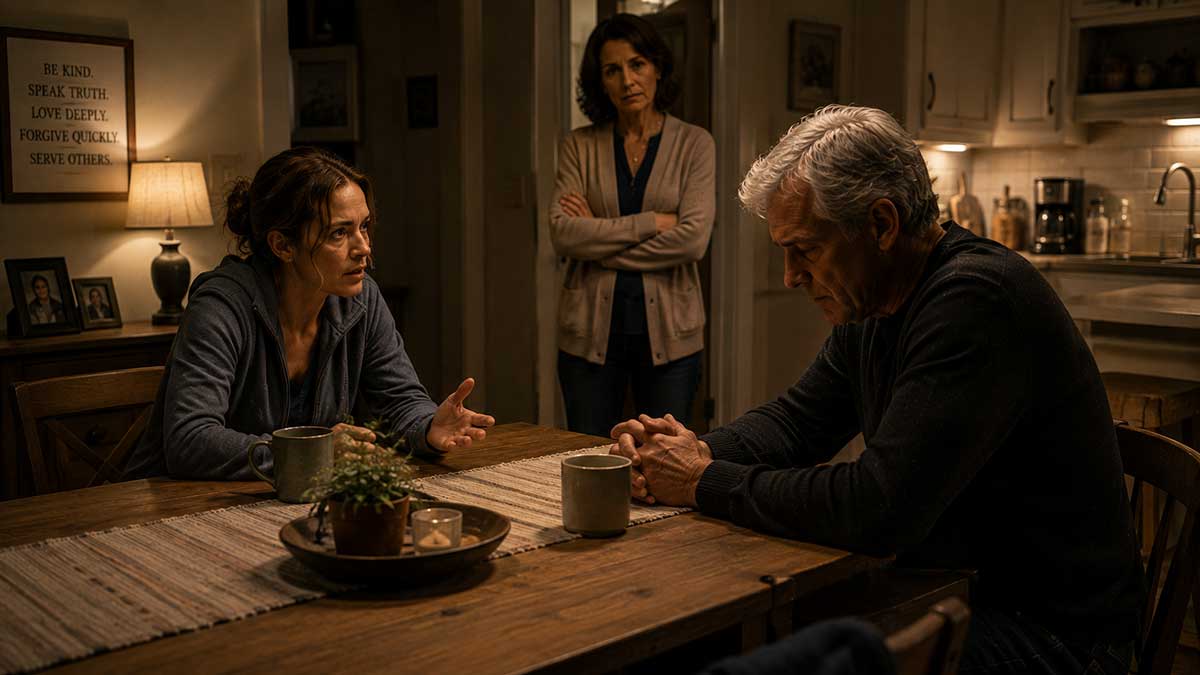
On Friday afternoon he found Hannah at the kitchen table reading an email from an attorney.
He recognized the firm.
A large one.
Charlotte.
“Who contacted you?”
Hannah closed the laptop.
“No one you need to worry about.”
“Attorney?”
She looked at him.
“How do you know?”
“Logo.”
She reopened the computer.
Nate came closer.
“They’re offering representation?”
“Yes.”
“Good.”
“I declined.”
He thought he had misheard.
“You what?”
“I declined.”
“Why?”
“Since I don’t want to sue.”
Nate stared.
“Hannah.”
“No.”
“He accessed medical records.”
“I know.”
“He used them.”
“I know.”
“You could have a serious claim.”
“I know.”
“Then why would you—”
She pushed back from the table.
“There.”
Nate stopped.
“That word again.”
“Since you keep doing it.”
“Doing what?”
“Acting like my answer is only temporary until you explain the correct one.”
He pulled out a chair.
“I am trying to help.”
“I know.”
“That doesn’t seem to mean much to you.”
“It means something.”
“Does it?”
“Yes.”
She looked exhausted.
“That’s why this is hard.”
Nate sat.
For once, he tried not to speak first.
Hannah looked at the email again.
“I want the licensing board to deal with him.”
“Good.”
“I want Cedar House to tighten access.”
“Good.”
“I want the other employees notified.”
“Yes.”
“And I want my private records to stop traveling into more rooms.”
Nate frowned.
“A lawsuit would be confidential.”
“At first.”
“You don’t know that.”
“Neither do you.”
He felt the argument rising.
The old rhythm.
Question.
Answer.
Counterargument.
He had lived inside that rhythm for decades.
Hannah closed the laptop.
“Do you know what scares me most?”
Nate waited.
“That somebody will make me useful.”
“What does that mean?”
“A case.”
“A headline.”
“A warning.”
“A panel.”
“A woman who survived something.”
She looked at him.
“I don’t want to become evidence.”
Nate said softly:
“You wouldn’t be.”
Hannah almost smiled.
“You really believe that.”
“Yes.”
“That’s the problem.”
Nate stood.
Walked to the sink.
Came back.
“You can’t let Caleb walk away.”
“He isn’t.”
“Suspension is not enough.”
“He may lose his license.”
“May.”
“That’s the process.”
“The process failed before.”
“In your case?”
He looked at her.
She had not meant it cruelly.
That made it worse.
“I’m not talking about me.”
“I know.”
He heard how quickly he had said it.
Hannah did too.
Nate rubbed his face.
“He had access to things you never gave him.”
“Yes.”
“He used your fear.”
“Yes.”
“He knew where you were vulnerable.”
“Yes.”
“He had authority.”
“Yes.”
“He knew things about you that made saying no complicated.”
Silence.
Nate looked at her.
The words had escaped before he could stop them.
Hannah said nothing.
He could almost feel the room waiting for him to hear himself.
“I said this before.”
“Yes.”
He sat.
“About Caleb.”
“Yes.”
Another silence.
“It isn’t the same.”
Hannah looked down.
Nate hated the sentence the moment it returned.
She said:
“I didn’t say it was.”
“I know.”
“Do you?”
“Yes.”
She looked at him now.
“Then stop defending yourself against a comparison I haven’t made.”
That landed harder than accusation.
Nate’s voice softened.
“Claire was different.”
Hannah did not respond.
“She loved me.”
“Maybe.”
He looked up.
“Maybe?”
“Maybe she did.”
That was not the answer he expected.
It disarmed him.
Hannah continued:
“Why do you think that makes the structure around it disappear?”
Nate stared.
“I don’t.”
“You keep reaching for it.”
“No.”
“You do.”
“Since it matters.”
“Yes.”
She leaned forward.
“It matters that she loved you.”
“It matters that you loved her.”
“It matters that she called you.”
“It matters that some of it felt mutual.”
Nate waited.
Hannah’s eyes were wet now.
“And it matters that you were still her pastor.”
No answer.
Her employer.
No answer.
The person who taught her how to hear God.
Nate looked away.
Hannah said:
“I think you keep waiting for one truth to cancel the others.”
He stood again.
The kitchen suddenly felt too small.
“I never wanted to hurt her.”
Hannah said:
“I believe you.”
That hurt more.
Nate turned.
“You believe me.”
“Yes.”
“Then—”
“No.”
She shook her head.
“Don’t use my belief as another exit.”
He closed his eyes.
She continued:
“You believed in grace most when you needed it from everybody else.”
Nate opened his eyes.
Hannah’s voice trembled.
“And now you believe in justice most when I’m the one who got hurt.”
He said nothing.
Nothing came.
For perhaps the first time in his life, silence was not a failure of leadership.
It was the only honest thing available.
The front door opened.
Elena entered carrying a small overnight bag.
Nate looked startled.
Hannah did not.
“You knew she was coming?”
“Yes.”
Elena looked at Nate.
“Hi.”
“Hi.”
No kiss.
No hug.
She hugged Hannah.
Longer than Nate expected.
He watched.
Then hated himself for measuring it.
That evening Elena and Hannah cooked.
Nate set the table.
It felt like a family scene belonging to someone else.
They ate chicken.
Rice.
Green beans.
Nobody mentioned Claire.
Nobody mentioned Caleb.
For twenty minutes they talked about Hannah’s neighbor installing a ridiculous security light that illuminated half the county.
Nate laughed.
He had forgotten how ordinary laughter sounded.
After dinner Hannah went upstairs.
Elena washed dishes.
Nate dried.
The old choreography returned immediately.
He wondered whether she noticed.
Of course she did.
“Can I ask you something?”
Elena kept washing.
“You usually do.”
“Have you forgiven me?”
Her hands stopped.
Only briefly.
Then resumed.
“In some ways.”
Nate felt hope before he could stop it.
Elena saw his face in the reflection above the sink.
“There.”
He froze.
“What?”
“That look.”
“What look?”
“The one where forgiveness becomes an opening.”
Nate put the towel down.
“I didn’t say anything.”
“You didn’t need to.”
He stared.
“So what does it mean, then?”
“What?”
“If you forgive me.”
Elena turned off the water.
“It means I don’t want to spend the rest of my life feeding anger.”
“That’s all?”
She looked at him.
“No.”
“It means I can remember thirty-four years without needing every good thing to become fake.”
Nate swallowed.
“It means I can believe you are sorry.”
He waited.
“It means I can hope you become different.”
His voice was quiet.
“And us?”
Elena leaned against the counter.
“I don’t think I want to be married to you.”
The sentence was not loud.
It did not need to be.
Nate looked down.
“You said you forgave me.”
“I did.”
“I don’t understand.”
“I know.”
He looked up sharply.
Elena softened.
“Forgiveness is not the same thing as restoration.”
Nate almost laughed.
“Claire’s line.”
“No.”
“My line.”
He walked outside.
Cold mountain air.
No coat.
He stood on Hannah’s porch with his hands in his pockets.
Elena came out several minutes later.
“You’ll freeze.”
“I’m fine.”
“You still say that terribly.”
He smiled once.
She stood beside him.
Nate said:
“Was Claire the reason you left?”
Elena looked toward the dark trees.
“No.”
He turned.
“She was the event.”
“What does that mean?”
Elena thought.
“For years, people needed you.”
“Of course.”
“You loved that.”
“I loved them.”
“I know.”
He frowned.
She continued:
“That’s what makes this difficult.”
“You think I didn’t love the church?”
“No.”
“I think you loved being necessary.”
Nate looked away.
“People came into your office broken.”
“You knew what to say.”
“You flew across the country when somebody’s child died.”
“You answered calls at two in the morning.”
“You remembered names.”
“You paid people’s rent without telling anyone.”
Nate said nothing.
Elena’s voice grew softer.
“And then you came home with nothing left.”
He stared at the yard.
“The church didn’t take you away from us.”
She looked at him.
“You kept choosing the version of yourself the church needed.”
Nate felt his eyes burn.
Elena did not touch him.
That was right.
After midnight, Nate drove to Cedar House.
He knew the gate code.
Hannah had given it to him for errands.
The hospice windows glowed softly.
The animal building was dark except for one security light.
Nate let himself in.
Jonah was awake.
The dog lifted his head when Nate approached.
Nate opened the kennel.
Then sat outside it.
Not inside.
He did not call him.
Did not hold out a hand.
Jonah watched.
Nate leaned against the wall.
For several minutes nothing happened.
Then Jonah stood.
His legs shook slightly.
He stepped out.
Stopped.
Nate remained still.
Another step.
Then another.
Jonah lowered himself beside Nate.
Not touching.
Close.
Nate looked down.
“Okay.”
That was all.
He stayed until the dog fell asleep.
Chapter 6 — Claire
Nate waited twelve days before writing to Claire.
Then deleted the message.
Waited another week.
Wrote again.
Deleted that too.
The third version contained seventy-eight words.
He cut it to twenty-three.
If there is anything you want to say to me that you could not say then, I will listen. I won’t respond unless you ask me to.
He stared at it.
No apology.
No explanation.
No request for forgiveness.
He almost added one sentence.
I am trying to understand.
He deleted it.
Then sent the message.
Claire answered three weeks later.
Thursday.
2:00 p.m.
Buncombe County public library.
Room 3B.
No greeting.
Nate read the message several times.
Then spent three days preparing not to prepare.
He failed.
He rehearsed.
“I am sorry for what I did.”
Too broad.
“I am sorry I failed to recognize the effect of my authority.”
Too institutional.
“I am sorry I used God to make something selfish seem holy.”
Too dramatic.
He wrote nothing down.
That felt like progress.
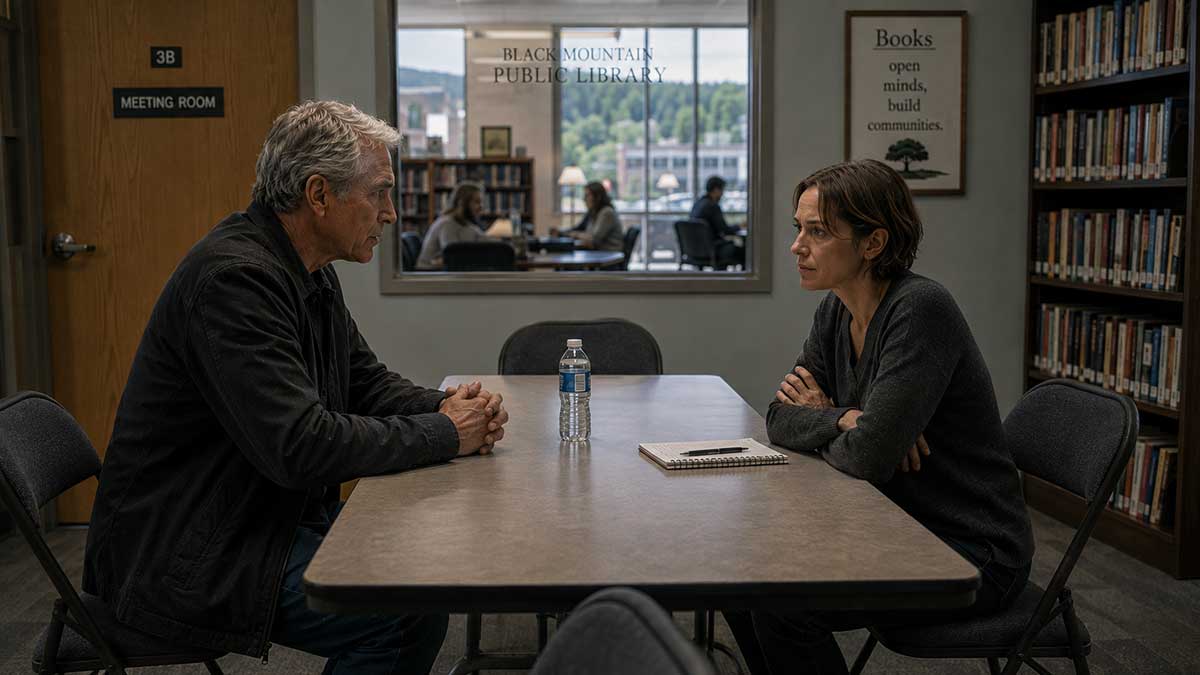
Room 3B had fluorescent lights and a table designed for six people.
No coffee.
No art.
No comfortable chairs.
Nate arrived twenty minutes early.
He sat facing the door.
Then moved to the side.
Facing the door felt too much like waiting for an audience.
He hated that he noticed.
At 2:03, Claire entered.
She looked older.
Of course she did.
Seven years had passed.
Yet Nate had kept a twenty-seven-year-old version of her alive in memory.
Long hair.
Blue church badge.
Notebook pressed against her chest.
This Claire wore dark jeans and a gray sweater.
Short hair.
No visible cross.
Nate noticed that too.
He stood.
“Claire.”
She closed the door.
“Nate.”
Not Pastor.
He had expected that.
It still hurt.
She sat across from him.
He did too.
For several seconds neither spoke.
Nate felt the old instinct:
Fill silence.
He resisted.
Claire watched him resisting.
Maybe.
Or maybe he was imagining that.
Finally he said:
“I’m sorry.”
Claire’s face did not change.
“For which part?”
He had rehearsed everything except that.
“All of it.”
“That’s easier.”
He nodded.
“Yes.”
Silence.
“I don’t know how to say it correctly.”
Claire looked toward the table.
“You always did.”
“What?”
“Know how to say things.”
He looked down.
“That may have been part of the problem.”
She did not reward him for the insight.
Good.
Claire opened her bag.
Nate expected documents.
She took out a bottle of water.
Unscrewed it.
Drank.
Put it down.
“What do you want from me?”
Nate answered quickly.
“Nothing.”
She raised an eyebrow.
He corrected himself.
“I’m trying not to want anything.”
“That’s different.”
“Yes.”
“What did you expect today?”
He thought.
“The truth?”
She almost smiled.
“Your truth?”
“No.”
“Mine?”
“If you want to tell it.”
Claire leaned back.
“That still sounds like Pastor Nate.”
He felt the correction.
“What should I say?”
“Maybe nothing.”
So he said nothing.
Claire began.
“I did love you.”
Nate felt something loosen inside his chest.
He hated himself immediately.
Claire saw it.
“There.”
He looked at her.
“What?”
“You needed that.”
“No.”
“Yes.”
Nate looked away.
She continued.
“I loved you.”
“I called you.”
“I missed you.”
“Sometimes I wanted to be with you.”
He looked back.
Claire said:
“And for years I thought that meant I had no right to feel harmed.”
Nate’s face changed.
“I never wanted you to feel—”
She raised one hand.
He stopped.
“You said you would listen.”
“Yes.”
She waited until she was sure.
Then continued.
“I kept thinking abuse had to mean I hated you.”
“Or I said no every time.”
“Or you threatened me.”
“Or I was afraid of you.”
She looked directly at him.
“But I wasn’t afraid of you.”
“That was why it was confusing.”
Nate said nothing.
Claire continued:
“You knew everything.”
“My divorce.”
“My father.”
“My anxiety.”
“My faith.”
“You knew what I wanted to become.”
“You knew how much Grace Harbor meant to me.”
Nate swallowed.
“You knew I believed you heard God more clearly than I did.”
He looked at her.
“I never said that.”
Claire nodded.
“No.”
“You didn’t have to.”
The answer hurt.
She opened the bottle again.
“Do you remember Nashville?”
“Yes.”
“After the conference?”
“Yes.”
“You prayed.”
Nate closed his eyes.
He remembered.
Hotel room.
Curtains closed.
Claire sitting on the edge of the bed.
His hand on her shoulder.
“Do you remember what you said?”
Nate knew.
He wished he didn’t.
“Maybe.”
“Say it.”
He looked at her.
Claire waited.
Nate said quietly:
“Maybe God allowed us to find each other for a reason.”
Claire nodded.
“Did you believe that?”
He wanted to qualify.
Explain the emotional state.
Distinguish theological claim from romantic language.
He did none of it.
“Yes.”
Claire looked down.
“That made it worse.”
Nate’s eyes filled.
“Why?”
The word escaped before he realized how foolish it sounded.
Claire looked at him.
“Since you were the person who taught me how to hear God.”
There it was.
Not a legal argument.
Not a board statement.
Not the word abuse.
Something smaller.
Something he could finally feel.
Nate looked away.
For the first time, he understood why the phrase spiritual authority had never reached him.
It had sounded structural.
Institutional.
Abstract.
Now it sounded like Claire sitting on a hotel bed trying to decide whether her desire and God’s will had somehow become the same thing.
He covered his mouth with one hand.
Claire watched him.
No comfort.
No cruelty.
After a while Nate said:
“I thought I loved you.”
Claire looked at him.
“Maybe you did.”
He started crying harder.
That answer hurt more than rejection.
She continued:
“Love doesn’t erase the rest.”
“I know.”
She waited.
Nate almost said:
I know now.
He stopped.
Claire noticed.
Maybe.
“I keep wanting to tell you I’m different.”
She nodded.
“I know.”
“I am, I think.”
“I hope so.”
Nate looked up.
Claire’s voice remained calm.
“But you keep asking whether you are different now.”
“I’m still trying to understand what happened to me then.”
The sentence landed quietly.
Nate looked down.
His tears stopped.
Not from relief.
From recognition.
He had turned even his transformation into another question Claire might answer for him.
“I’m sorry.”
Claire nodded.
This time she did not ask which part.
Nate continued:
“I don’t expect you to forgive me.”
“That’s good.”
“I don’t expect you to trust me.”
“Good.”
“I don’t expect—”
She stopped him.
“You’re still making a list.”
He almost laughed.
Then did.
A short, broken laugh.
Claire smiled faintly.
The first kindness in the room.
It disappeared quickly.
Nate asked:
“Do you hate me?”
Claire thought.
“No.”
The answer entered him like mercy.
Then she added:
“That isn’t the same as wanting you back in my life.”
He closed his eyes.
Elena.
Forgiveness.
Restoration.
The same lesson from another person.
“I understand.”
Claire looked at him.
“Do you?”
Nate considered.
“Enough not to argue.”
That seemed to satisfy her more than anything else he had said.
Claire stood.
Nate rose too.
No hug.
No handshake.
She put the water bottle into her bag.
At the door she paused.
“You know what used to make me angriest?”
Nate shook his head.
“That I still missed your sermons.”
He looked stunned.
Claire almost smiled.
“I hated that some of them still helped me.”
Nate’s eyes filled again.
She opened the door.
“People are complicated.”
Then she left.
Nate remained in Room 3B.
Five minutes.
Ten.
He did not know what he was waiting for.
Perhaps nothing.
A custodian opened the door.
Middle-aged man.
Blue work shirt.
“Meeting done?”
Nate looked around.
“Yes.”
“Could you stack those chairs before you go?”
Nate stared at him.
The man pointed.
“Against the wall.”
“Oh.”
“Sure.”
The custodian left.
Nate stood alone.
Six folding chairs.
He picked up the first.
Then the second.
Stacked them carefully.
Four.
Five.
Six.
No one watched.
No music rose.
No cameras.
No sentence appeared on a screen behind him.
When he finished, he turned off the lights.
Then came back.
He had forgotten one chair.
His own.
Nate folded it.
Placed it on top of the others.
And left the room empty.
Chapter 7 — No One Calls Me Pastor Here
Six months later, Nate lived in a one-bedroom apartment above a hardware store in Black Mountain.
The apartment had one window facing the mountains and another facing a parking lot.
The parking lot view was better.
There was always something happening.
Delivery trucks.
People returning lumber.
A boy learning to drive stick shift in his father’s pickup.
Ordinary life, badly parked.
Nate liked watching it.
His name was still on the lease.
Nathaniel Mercer.
Nobody had asked him to change it.
But fewer people recognized it now.
The internet had moved on.
Another pastor had fallen.
Then a senator.
Then an actor.
Then another pastor.
For several months Nate had experienced the disappearance of public outrage as another humiliation.
He had believed hatred was the worst thing people could give him.
He discovered something worse.
Forgetting.
Then, gradually, forgetting became easier to live inside.
He worked at Cedar House three mornings a week.
Worked was not technically correct.
He volunteered.
Ruth refused to let him call it ministry.
The first time he used the word, she handed him a bag of soiled blankets.
“Minister to these.”
He never used it again.
He drove patients’ families to the airport.
Picked up prescriptions.
Changed lightbulbs.
Cleaned kennels.
Carried boxes.
Sometimes he sat with hospice patients when families were late.
He had learned not to begin with questions about God.
That had been difficult.
He had once believed every silence contained an invitation.
Now he was less certain.
On a Wednesday morning, a new volunteer named Carol stared at him while he folded sheets.
“You’re Nathaniel Mercer.”
Nate kept folding.
“Yes.”
“My mother loved you.”
He looked up.
He knew this conversation.
Or thought he did.
“Did she?”
“Never missed Sunday.”
Nate smiled.
“That’s kind.”
Carol stared another second.
He waited for the question.
What really happened?
Were you falsely accused?
Did you repent?
Are you coming back?
Instead she handed him another stack.
“Can you change the bedding in kennel six?”
Nate looked at the sheets.
“Yes.”
She walked away.
He stood there smiling.
Ruth saw him.
“What?”
“Nothing.”
“Then move. Those sheets aren’t going to experience spiritual transformation by themselves.”
Nate laughed.
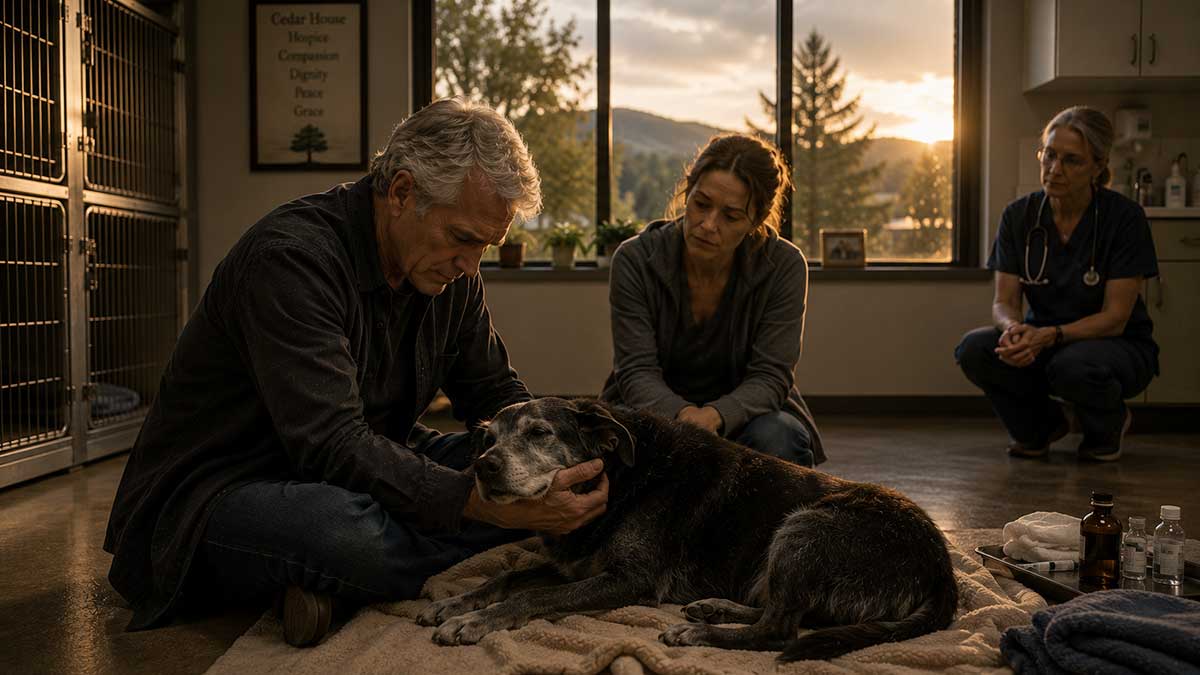
Kennel six belonged to Jonah now.
The old dog had deteriorated.
His eyes were almost completely clouded.
His hips failed him some mornings.
Cancer had spread.
Yet he knew Nate’s voice.
Nate had discovered this accidentally.
He entered one afternoon and said:
“Morning, old man.”
Jonah’s head lifted.
The tail moved once against the blanket.
Nate tried again.
“Morning.”
Another movement.
He sat outside the kennel.
Jonah came slowly.
They had developed an arrangement.
Nate did not reach first.
Jonah decided.
Some days he pressed his head against Nate’s knee.
Other days he remained several feet away.
Nate had stopped taking either response personally.
That surprised him.
He talked to Jonah.
Not about anything important.
The weather.
The Cowboys.
Hannah’s terrible coffee.
Elena’s insistence that he finally see a dentist.
Sometimes Claire.
Never much.
Once he said:
“I think I loved her.”
Jonah slept.
“Apparently that wasn’t the question.”
The dog continued sleeping.
Nate smiled.
“You’re not much of a counselor.”
Jonah opened one eye.
“Better than me, maybe.”
Hannah and Nate had become easier with each other.
Not repaired.
Easier.
She no longer monitored every sentence for hidden pastoral instruction.
He no longer interpreted every disagreement as evidence she had lost respect for him.
She had.
In some ways.
They both knew it.
Something else had grown in its place.
Perhaps something smaller.
More durable.
Caleb Reeve surrendered his position at Cedar House.
The licensing investigation remained open.
Two other employees had filed complaints.
Hannah never sued.
Nate stopped asking her to.
That had taken longer than he liked to admit.
One afternoon she thanked him.
“For what?”
“Stopping.”
Nate knew exactly what she meant.
He did not make her explain.
Elena visited every few weeks.
They had filed for divorce.
Quietly.
No statement.
No announcement.
The Christian press discovered it two months later and produced three days of headlines.
Nate did not read them.
He wanted to.
That mattered too.
Sometimes he and Elena had coffee.
They spoke more easily now than during the final years of their marriage.
Nate once suggested that perhaps this meant something.
Elena looked at him.
He laughed before she answered.
“Never mind.”
She smiled.
Progress.
The invitation arrived on paper.
Not email.
Nate recognized the handwriting.
Thomas Bell.
A pastor outside Knoxville.
Seventy-two years old.
One of the few nationally known ministers who had neither defended nor condemned Nate publicly.
The letter was brief.
Thomas’s church was holding a private gathering for pastors who had left ministry after moral failure.
No cameras.
No livestream.
No press.
Thomas wanted Nate to speak for twenty minutes.
Not about scandal.
About grace.
Nate read the letter four times.
Then once more.
He put it in a drawer.
Ten minutes later he took it out.
That evening he stood in his apartment.
No audience.
No Bible.
No notes.
He began.
“When we talk about grace—”
He stopped.
Started again.
“Grace is not God pretending the worst thing you did never happened.”
Better.
He continued.
Within thirty seconds the room changed.
Not literally.
Inside him.
His shoulders relaxed.
His breathing found its old rhythm.
His hands knew when to move.
His voice knew when to soften.
He told the story of Peter.
Failure.
Shame.
Restoration.
Feed my sheep.
He reached the turn at exactly the right moment.
He had always known where the turn belonged.
By minute three, Nate Mercer was preaching again.
And he was brilliant.
He knew it.
That was the problem.
He stopped.
The silence afterward felt enormous.
His body wanted to continue.
Twenty minutes.
Forty.
An hour.
He could almost hear people responding.
He sat on the edge of the bed.
He had missed it more than he had missed his marriage.
The realization frightened him.
The next day he showed Hannah the invitation.
She read it.
“You want to go?”
“Yes.”
“Then go.”
He frowned.
“That’s it?”
“What do you want me to say?”
“I don’t know.”
“Do you want to preach?”
“Yes.”
She handed the letter back.
“Then why are you asking me?”
Nate looked at her.
“I value your opinion.”
“I know.”
“But?”
She hesitated.
“I think part of you wants me to say you’re ready.”
Nate looked down.
Hannah touched his arm.
Very lightly.
“You don’t need me to make you good again.”
He folded the letter.
“I know.”
She gave him the look.
Nate smiled.
“I’m beginning to know.”
He had not decided when Ruth called.
Jonah could not stand.
Nate drove to Cedar House.
The veterinarian was already there.
Jonah lay on a blanket.
His breathing was shallow.
Nate sat beside him.
“What happened?”
“Nothing happened.”
“What does that mean?”
“It means he’s dying.”
Nate looked at the veterinarian.
“There has to be something for the pain.”
“There is.”
“Then give it.”
“We have.”
“More.”
“Nate.”
The veterinarian crouched.
“We can probably get another few days.”
“Maybe a week.”
Nate nodded.
“Good.”
The veterinarian did not move.
“What?”
“For him or for you?”
Nate looked back at Jonah.
The dog’s chest rose.
Fell.
Rose again.
Nate put his hand near Jonah’s head.
Did not touch him.
Jonah moved toward it.
Barely.
Permission.
Nate rested his palm against the dog.
The veterinarian waited.
Nate said:
“Today?”
“I think so.”
Nate closed his eyes.
“Okay.”
Hannah arrived before sunset.
She sat beside Nate for a while.
Neither talked.
At one point she rested her head against his shoulder.
He did not interpret it.
He did not need to.
When the veterinarian returned, Hannah stood.
“You want me here?”
Nate looked at Jonah.
Then at her.
“You don’t have to.”
“That’s not what I asked.”
He smiled faintly.
“Yes.”
So she stayed.
The veterinarian explained the procedure.
Nate already knew.
He asked her to explain again.
She did.
The first injection relaxed Jonah.
His head became heavy against Nate’s hand.
Nate whispered:
“Good boy.”
The phrase embarrassed him.
Then it did not.
He kept his hand beneath Jonah’s head.
The veterinarian gave the second injection.
Jonah breathed once.
Again.
Then no more.
Nate waited.
He knew.
Still he waited.
The veterinarian listened with the stethoscope.
“He’s gone.”
Nate looked down.
Thirty years of ministry had given him hundreds of sentences for death.
He could not think of one he wanted.
Finally:
“Thank you.”
Hannah was not sure whether he meant Jonah, the veterinarian, or God.
Neither was Nate.
That seemed acceptable.
Later, Ruth brought a blanket.
They wrapped Jonah carefully.
A young volunteer came with a transport cart.
“Want me to take him?”
Nate looked at the cart.
Then at Jonah.
“No.”
“You sure?”
Nate slipped one arm beneath the body.
Then the other.
Jonah was heavier than he expected.
Dead weight.
The phrase came to him and seemed suddenly cruel.
Nate adjusted his grip.
“I’ve got him.”
He carried Jonah through the hallway.
Past kennel six.
Past the laundry room.
Past the little office where Ruth kept medication charts.
No music.
No congregation.
No one watching except Hannah.
At the back door, she opened it for him.
Cold evening air entered.
Nate stepped outside carrying the dog.
He did not feel redeemed.
He did not feel forgiven.
He felt the weight.
For now, that was enough.
Epilogue — The Empty Pulpit
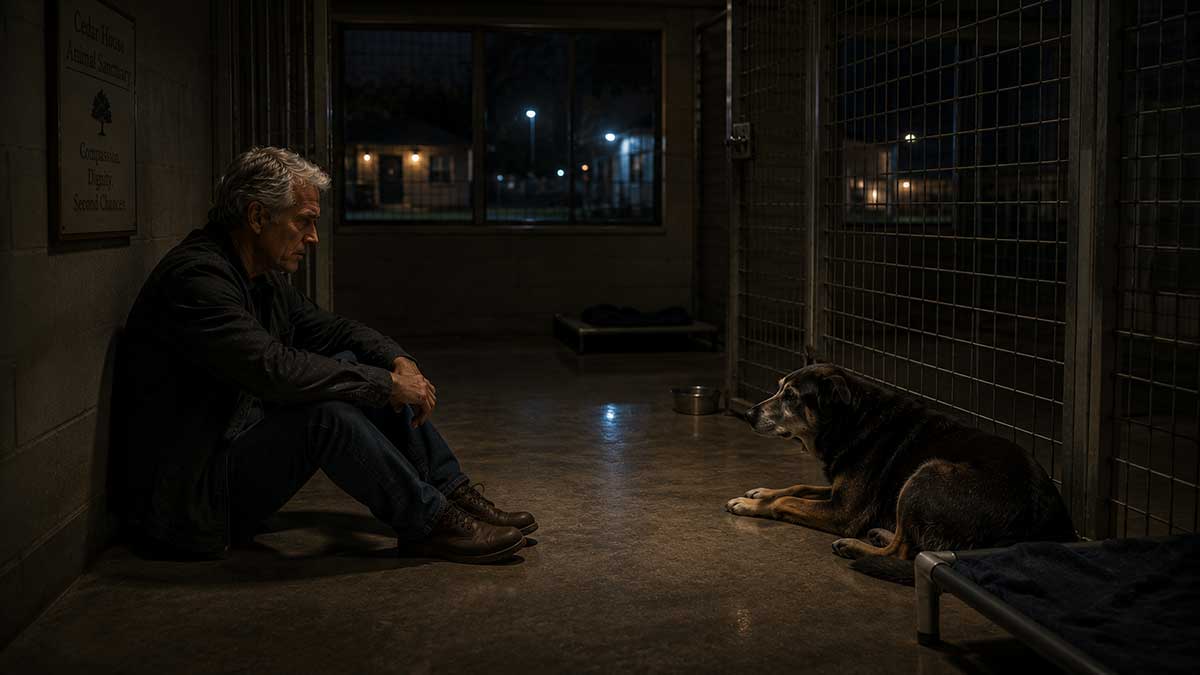
Two years later, Grace Harbor Church turned thirty.
Nate received an invitation.
This one came by email.
The new senior pastor, Aaron Miles, had never met him.
Mr. Mercer,
Grace Harbor would be honored to have you attend our anniversary service privately. There is no expectation that you speak or participate publicly. Whatever our history, your years of service are part of this congregation’s history.
Nate read it once.
He replied:
Thank you. I will come.
Nothing more.
He did not tell Hannah until the week before.
She asked:
“Are you nervous?”
“Yes.”
“Good.”
“Why good?”
“Means you’re human.”
He smiled.
Elena planned to attend too.
They agreed not to sit together.
That felt right.
Claire would not be there.
Nate knew that without asking.
He had not contacted her again.
Once, on her birthday, he wrote a message.
Hope you are well.
He never sent it.
That felt right too.
Grace Harbor looked smaller.
Nate had expected the opposite.
The lobby had been renovated.
New screens.
New coffee bar.
Different photographs.
He found only one image of himself.
A group photograph from the church’s tenth anniversary.
Thirty people standing outside the original building.
Nate near the center.
Young.
Dark hair.
Elena beside him.
Hannah, eleven years old, sitting on his shoulders.
He stared longer than he intended.
Then went inside.
He sat in the back row.
The place he had once occupied existed only twenty yards away.
The pulpit.
Different now.
Smaller.
Aaron Miles walked onto the stage.
Thirty-eight, perhaps.
No tie.
Bible in hand.
Nate immediately began evaluating him.
Too fast.
Pause longer there.
Don't explain that yet.
Let the text breathe.
Nate smiled at himself.
Some habits would apparently survive sanctification.
If sanctification was what this was.
He was less certain of that word now.
Aaron preached from Luke 15.
The Prodigal Son.
Nate nearly laughed.
Of course.
The younger son.
Failure.
Return.
The father running.
The robe.
The ring.
The feast.
Restoration.
Nate disagreed with half the sermon.
He wanted to stand and correct the theology.
Grace was not that simple.
Restoration was not guaranteed.
The prodigal returned to a father.
Claire was not his father.
Elena was not his father.
Grace Harbor was not God.
Neither was Hannah.
The distinctions mattered.
Nate could have preached a better sermon.
That was still true.
He sat and listened anyway.
Halfway through, a woman three rows ahead turned.
She looked at him.
Looked away.
Then back.
Recognition.
She whispered to her husband.
He turned.
Another person noticed.
Then another.
Nate felt it.
The old electricity.
Not fame exactly.
Attention.
The sensation traveled through him with humiliating familiarity.
Someone lifted a phone.
Nate's heart began beating faster.
Aaron continued preaching.
Then his eyes moved toward the back.
He saw Nate.
Paused.
Only a fraction.
But Nate knew pauses.
The whole room seemed to change.
Nate stood.
A few people turned fully now.
Someone began clapping.
One person.
Then three.
Nate felt the room waiting.
The aisle ran straight from him to the stage.
For one terrible, beautiful second, he could see himself walking it.
Aaron stepping aside.
The congregation rising.
Nate taking the microphone.
No preparation.
No notes.
He knew exactly what he would say.
He could begin with:
“I once believed grace meant getting back what sin had taken.”
It was a very good opening.
Nate almost laughed.
Then he stepped into the aisle.
And walked the other direction.
Toward the exit.
Outside, nobody followed him.
He stood in the parking lot.
The doors closed behind him.
Through the walls he could faintly hear Aaron preaching.
Nate put his hands in his pockets.
The cross above the entrance looked exactly as it had years earlier.
He waited for some great feeling.
Freedom.
Grief.
Peace.
Nothing came.
His phone buzzed.
Hannah.
Everything okay?
Nate typed:
Yes.
Deleted it.
Typed:
I left early.
She replied:
Want me to ask why?
Nate smiled.
No.
A moment later:
Good.
Cedar House had changed too.
Ruth had retired.
The hospice added four rooms.
Kennel six had been rebuilt.
No plaque for Jonah.
Nate had once considered paying for one.
Then decided against it.
That had surprised him.
He arrived just after seven.
Hannah was finishing paperwork.
“You came back early.”
“Yes.”
“How was it?”
“Good.”
“That's all?”
“For now.”
She accepted that.
Then pointed toward the animal building.
“New arrival.”
Nate looked through the window.
“Bad?”
“Pretty scared.”
“Old?”
“Ten, maybe eleven.”
“What happened?”
“Owner died. Family couldn't take him.”
Nate nodded.
“Name?”
“Samson.”
“Of course.”
Hannah smiled.
“You biblical people ruin everything.”
Samson was a German shepherd mix.
Thin.
Gray around the muzzle.
He had pushed himself into the rear corner of the kennel.
Nate opened the door.
The dog growled.
Nate stopped.
Years earlier he might have spoken.
Soft voice.
Reassurance.
Come here.
It's okay.
He said nothing.
He stepped inside.
Closed the door behind him.
Then sat on the concrete floor several feet away.
Samson watched.
Nate looked toward the opposite wall.
Minutes passed.
The building settled into night.
A pipe clicked.
Someone closed a door far away.
Samson remained in the corner.
Nate's hip began hurting.
He shifted slightly.
The dog growled.
Nate stopped moving.
“Fair enough,” he said.
Then silence again.
After half an hour Hannah appeared outside the kennel.
“You coming home?”
“Eventually.”
“He may not come over.”
“I know.”
She looked at him.
“Could take hours.”
“I know.”
“Could be tomorrow.”
Nate nodded.
Hannah smiled.
“Night.”
“Night.”
She left.
Nate and Samson remained.
Forty minutes.
An hour.
Nate thought about Grace Harbor.
The aisle.
The applause beginning.
The sermon he could have preached.
He thought about Claire.
About Elena.
About Hannah.
About Jonah becoming heavy in his arms.
For years Nate had believed love meant moving toward people.
Entering their pain.
Crossing the room.
Finding the sentence.
Offering the hand.
He had rarely considered that love might sometimes mean refusing to cross the final few feet.
Samson shifted.
Nate heard claws against concrete.
He did not look.
Another sound.
Closer.
Nate kept his hands resting loosely on his knees.
The dog stopped.
Several minutes passed.
Then Nate felt warm breath near his shoe.
Every instinct told him to reach.
He did not.
Samson sniffed his trouser leg.
Stepped back.
Then forward again.
Nate waited.
The distance between them was less than a foot now.
Still he did not reach.
Nothing had been promised.
Nothing had been restored.
No one had declared him changed.
There was simply another living creature deciding whether Nate could be trusted with the space between them.
Nate lowered his eyes.
And stayed where he was.
Short Bios:
Nathaniel “Nate” Mercer — A 58-year-old nationally known pastor who spent three decades preaching about grace, forgiveness, and second chances. After a relationship with a younger church employee becomes public, Nate loses his ministry and begins confronting questions his sermons never prepared him to answer.
Claire Hart — A former communications director at Grace Harbor Church who had a secret relationship with Nate when she was 27. Years later, she publicly tells her story, forcing difficult questions about consent, spiritual authority, love, and unequal relationships.
Hannah Mercer — Nate’s 31-year-old daughter and a hospice social worker in North Carolina. Independent and quietly compassionate, Hannah loves her father without allowing that love to excuse him or give him control over her choices.
Elena Mercer — Nate’s wife of thirty-four years. Thoughtful and emotionally perceptive, Elena has watched Nate devote himself to thousands of strangers while becoming increasingly absent from his own family.
Dr. Caleb Reeve — A respected hospice physician and trusted colleague of Hannah. His actions create an uncomfortable moral mirror that forces Nate to examine ideas about authority and vulnerability from a very different position.
Jonah — An elderly, nearly blind rescue dog suffering from cancer. His quiet relationship with Nate becomes one of the story’s most meaningful connections.
Samson — A frightened older shepherd mix who arrives at Cedar House late in the story. His cautious relationship with Nate quietly captures one of the story’s deepest questions: can trust be given freely when nobody tries to force it?
Leave a Reply