
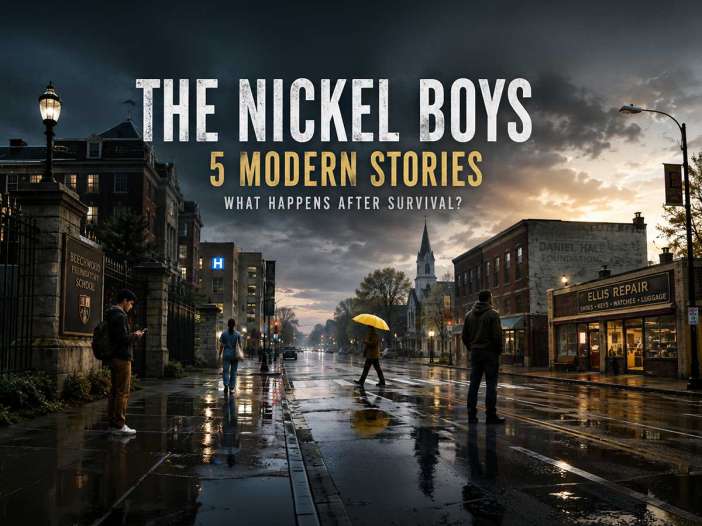
Introduction
What happens after we learn that courage alone is not enough?
Colson Whitehead's The Nickel Boys gave us Elwood and Turner, two boys who respond to injustice in radically different ways. Elwood believes truth must be spoken. Turner believes survival requires knowing when truth can get you hurt.
The scholar conversation pushed those questions further. It asked why institutions fail vulnerable people, why ordinary people remain silent, how survivor guilt reshapes identity, whether forgiveness should ever be demanded, and what hope can mean after certainty is gone.
These five original stories move those ideas into modern life.
A teenager records something his school would rather erase.
A nurse realizes that believing a patient privately is not enough if she never acts.
A man spends decades living under the memory of the brother who died protecting him.
A pastor discovers that asking someone to forgive can become another way of controlling how they heal.
And an older man who survived childhood abuse learns that freedom may arrive in something as ordinary as leaving one door unchecked.
None of these characters has a perfect answer.
They are trying to discover what courage looks like when love, fear, loyalty, guilt, faith, and survival all pull in different directions.
(Note: This is an imaginary conversation, a creative exploration of an idea, and not a real speech or event.)
Story 1: The Boy Who Recorded Everything
The first time Coach Mercer called Noah Bennett his second son, Noah pretended not to hear him.
It happened at a team dinner during his sophomore year.
Noah was standing beside the Mercers' kitchen island, eating a second helping of lasagna, when Coach Mercer put an arm around him and said to Caleb's mother:
Coach Mercer: "You realize we're feeding two teenage boys now."
Mrs. Mercer: "I've noticed."
Coach Mercer: "Might as well claim this one on our taxes."
Caleb laughed.
Noah laughed too.
Then Coach Mercer squeezed the back of his neck.
Coach Mercer: "Second son."
Noah looked down at his plate.
He didn't want anyone to see how much those two words meant.
His own father had left when Noah was eleven.
Not dramatically.
No terrible final argument.
No slammed door.
He simply became less available.
First every other weekend became once a month.
Then birthdays became phone calls.
Then phone calls became texts.
Eventually Noah stopped expecting anything.
Coach David Mercer arrived gradually in the empty space.
He drove Noah home after late practices.
He bought him new cleats when Noah's mother said they needed to wait until payday.
When Noah made varsity, Coach Mercer hugged him before Noah's mother could reach him.
When Noah received an academic award and his father didn't come, Coach Mercer sat three rows back beside Caleb and whistled so loudly when Noah's name was called that the principal laughed.
Noah remembered looking into the audience.
His mother was crying.
Coach Mercer was standing.
For a moment, that had been enough.
Perhaps more than enough.
That was why Noah didn't understand what he saw in the locker room.
Not at first.
It was a Thursday in October.
Rain hammered the athletic-center windows.
Most of the varsity team had already left.
Noah had forgotten his chemistry notebook and returned to the locker room.
The door was partly closed.
He heard Coach Mercer's voice.
Not his normal shouting.
Something quieter.
Worse.
Coach Mercer: "Look at me when I'm talking to you."
Noah stopped.
A freshman named Owen Price stood near the equipment cages.
Small kid.
Fourteen, maybe fifteen.
Talented.
Fast.
Coach Mercer had moved him up to practice with varsity.
Everyone thought it was an honor.
Owen's back was against the lockers.
Coach Mercer stood close enough that the boy couldn't move without brushing past him.
Coach Mercer: "You embarrassed me today."
Owen: "I'm sorry."
Coach Mercer: "Sorry doesn't make you tougher."
Owen looked down.
Coach Mercer struck the locker beside his head.
The sound made Noah jump.
Owen did too.
Coach Mercer: "Look at me."
Owen raised his eyes.
Coach Mercer: "You want to play with men, stop acting like a little boy."
Then Coach Mercer grabbed the front of Owen's practice jersey.
Not a punch.
Not exactly.
Something harder to name.
He pulled Owen forward and shoved him back against the lockers.
Coach Mercer: "Understand?"
Owen nodded.
Noah stood outside the door.
His first thought was strange.
He must have missed something.
There had to be context.
Coach Mercer was demanding.
Everyone knew that.
He yelled.
He pushed players.
He believed sports taught discipline.
Noah had defended him many times.
Then Coach Mercer shoved Owen again.
Noah reached into his pocket.
His phone was already in his hand before he had decided what to do.
He pressed record.
Through the narrow opening in the door, the camera captured perhaps forty seconds.
Coach Mercer's back.
Owen's frightened face.
The second shove.
Then something Noah would remember more clearly than anything else.
Owen whispered:
Owen: "Please."
Coach Mercer stepped away.
Coach Mercer: "Go home."
Owen grabbed his bag and rushed toward the door.
Noah barely had time to step behind the wall.
Owen passed without seeing him.
Coach Mercer remained inside.
Noah looked down at his phone.
Forty-three seconds.
He stopped recording.
His hands were shaking.
Then the locker-room door opened.
Coach Mercer stepped out.
He saw Noah.
For one terrible second, Noah thought he knew.
Then Coach Mercer smiled.
Coach Mercer: "What are you still doing here, Bennett?"
Noah held the phone against his leg.
Noah: "Forgot my chemistry notebook."
Coach Mercer: "You're going to forget your head one day."
He slapped Noah affectionately on the shoulder.
Coach Mercer: "Need a ride?"
Noah looked at the man who had bought him cleats.
The man who had stood at his award ceremony.
The man who had called him his second son.
Noah: "No. My mom's coming."
Coach Mercer: "Tell her I said hi."
Then he walked away.
Noah watched the video eleven times that night.
Every viewing made it worse.
Not since the images changed.
Since they didn't.
At 10:18, Caleb texted him.
You studying for Patel's test?
Noah stared at the message.
Trying.
My dad says you're probably studying too much.
Noah stopped breathing for a second.
Then another message.
Come over Saturday. Mom making lasagna.
Noah put the phone facedown.
His mother knocked.
Mom: "You awake?"
Noah: "Yeah."
She opened the door.
Still wearing her work clothes.
She worked mornings for a dental office and three afternoons each week in the alumni office at Noah's school.
The school job wasn't glamorous, but it helped cover tuition after Noah's scholarship.
She looked exhausted.
Mom: "Everything okay?"
Noah almost told her.
Then he thought about her job.
The scholarship.
The Mercers.
Caleb.
He looked at his chemistry book.
Noah: "Just studying."
His mother smiled.
Mom: "Don't stay up too late."
She closed the door.
Noah turned the phone over.
Forty-three seconds.
He found Owen two days later.
The freshman was sitting alone behind the gym before practice.
Noah sat beside him.
Owen immediately stood.
Noah: "Wait."
Owen looked nervous.
Noah: "I'm not going to say anything."
That was the wrong sentence.
Owen's face changed.
Owen: "About what?"
Noah looked at him.
Noah: "Thursday."
Owen stared at the ground.
Owen: "Nothing happened."
Noah: "I saw."
Owen: "No, you didn't."
Noah: "Owen."
Owen: "I fell into the lockers."
Noah said nothing.
Owen looked at him.
Owen: "Don't."
Noah: "Don't what?"
Owen: "Make this a thing."
Noah: "He shoved you."
Owen: "He's Coach Mercer."
As though that explained everything.
Maybe it did.
Owen: "He says I could start next year."
Noah stared at him.
Owen: "Please."
There was that word again.
But this time Owen wasn't saying it to Coach Mercer.
He was saying it to Noah.
Owen: "Please don't ruin this for me."
For three days Noah did nothing.
He practiced.
He studied.
He ate lunch with Caleb.
Coach Mercer corrected his footwork.
Once, Coach Mercer placed both hands on Noah's shoulders and repositioned him.
Noah's body stiffened.
Coach Mercer: "Relax, Bennett."
Noah tried.
Then another freshman quit the team.
No explanation.
Noah started asking quiet questions.
Not accusations.
Questions.
A senior told him Coach Mercer had always been intense.
Another said:
Senior: "Freshmen cry. Then they toughen up."
A former player Noah knew from church laughed when Noah mentioned Mercer.
Former Player: "He still doing the locker thing?"
Noah froze.
Noah: "What locker thing?"
The former player realized he had said too much.
Former Player: "Nothing."
Noah: "What locker thing?"
Former Player: "Forget it."
That night Noah made his decision.
He would tell an adult.
Not the internet.
Not the police.
Not even his mother.
Someone inside the school who would know what to do.
He chose Assistant Principal Graham.
Mr. Graham had written one of Noah's scholarship recommendations.
He knew Noah's mother.
He had once told Noah:
"If you ever have a problem here, my door is open."
So Noah walked through it.
Mr. Graham watched the recording twice.
He didn't speak during either viewing.
Then he placed Noah's phone carefully on the desk.
Mr. Graham: "Has anyone else seen this?"
Noah: "No."
Mr. Graham: "Owen?"
Noah: "He knows I saw what happened."
Mr. Graham: "Did he ask you to report it?"
Noah hesitated.
Noah: "No."
Mr. Graham nodded.
Mr. Graham: "This is serious."
Relief moved through Noah so quickly he almost cried.
Someone believed him.
An adult knew.
The problem had changed hands.
Mr. Graham: "You did the right thing coming here."
Noah nodded.
Mr. Graham leaned forward.
Mr. Graham: "But these situations can become complicated very quickly."
The relief slowed.
Noah: "Complicated how?"
Mr. Graham: "There are privacy issues. Student welfare issues. Employment issues. We need to understand context."
That word.
Context.
Noah remembered thinking the same thing outside the locker room.
Noah: "You can see what happened."
Mr. Graham: "I can see forty-three seconds."
Noah looked at him.
Mr. Graham: "I'm not dismissing you."
Noah: "Okay."
Mr. Graham: "I need you to trust the process."
Noah nodded again.
Mr. Graham smiled.
Mr. Graham: "Take your time. You don't need to make any decisions tonight."
He asked Noah to upload the recording to the school's secure student portal.
Noah did.
Mr. Graham promised to contact him.
Noah walked home feeling lighter.
For the first time in a week, he slept.
Nothing happened Monday.
Nothing happened Tuesday.
Coach Mercer ran practice.
Owen practiced too.
Wednesday afternoon, Noah went back to Mr. Graham.
Noah: "What's happening with the video?"
Mr. Graham closed his office door.
Mr. Graham: "We're reviewing the situation."
Noah: "Is Coach still supposed to be practicing?"
Mr. Graham: "Noah, I can't discuss personnel matters with a student."
Noah: "But I'm the one who showed you."
Mr. Graham: "And we appreciate that."
Noah felt something tighten in his chest.
Noah: "Can I have my copy back?"
Mr. Graham looked confused.
Mr. Graham: "You have your copy."
Noah opened the school portal on his phone.
The upload folder was empty.
He stared at it.
Noah: "It was here."
Mr. Graham came around the desk.
Mr. Graham: "Maybe it didn't upload correctly."
Noah: "You watched me upload it."
Mr. Graham: "I watched you use your phone. I don't know whether the upload completed."
Noah looked at him.
Noah: "You told me it did."
Mr. Graham's expression changed.
Not much.
Enough.
Mr. Graham: "Noah."
He lowered his voice.
Mr. Graham: "Be careful."
Noah felt cold.
Noah: "About what?"
Mr. Graham: "About making accusations you can't substantiate."
Noah stared at him.
A week earlier this man had been the safest adult Noah could think of.
Now Noah understood something that frightened him more than Coach Mercer.
Mr. Graham was not surprised by the recording.
He was managing it.
Noah searched everything that night.
Old team forums.
Archived school newsletters.
Local newspaper stories.
Social media posts from former players.
Most contained nothing.
Then he found a comment beneath a six-year-old Facebook photograph.
A former player's mother had written:
"Maybe someday this school will finally listen to what these boys have been saying about Mercer."
The comment had two likes.
No replies.
Noah found the woman's name.
Then another.
Then an old message-board post mentioning a complaint.
Then a former assistant coach who had abruptly resigned.
He began saving everything.
Screenshots.
Names.
Dates.
He created a folder.
Then another.
He stopped trusting folders.
He started printing.
At 1:12 in the morning, his bedroom floor was covered with paper.
His mother opened the door.
Mom: "Noah?"
He looked up.
She stared at the papers.
Mom: "What is all this?"
Noah wanted desperately to remain seventeen.
He wanted his mother to come into the room, look at everything, and know exactly what to do.
Instead, he heard himself say:
Noah: "I need to tell you something."
His mother listened without interrupting.
When he finished, she sat on the edge of his bed.
Mom: "Do you still have the original recording?"
Noah picked up his phone.
He opened Photos.
Nothing.
Recently Deleted.
Nothing.
His face drained.
Noah: "I didn't delete it."
His mother looked at him.
Noah: "I swear."
Then Noah remembered.
Automatic backups.
His old tablet synchronized photographs when connected to home Wi-Fi.
He ran downstairs.
The tablet was in a kitchen drawer.
Dead battery.
He plugged it in.
They waited.
The screen came alive.
Noah opened Photos.
October 15.
There it was.
Forty-three seconds.
His mother covered her mouth.
Noah did not feel relieved.
He felt afraid.
His mother watched the video once.
Then she sat at the kitchen table.
Mom: "We're making copies."
Noah looked at her.
Mom: "More than one."
Caleb found out Friday.
Noah never learned who told him.
He was waiting beside Noah's car after school.
His eyes were red.
Caleb: "Tell me it's not true."
Noah stopped.
Caleb: "Tell me you didn't report my dad."
Noah couldn't.
Caleb laughed once.
Not from humor.
Caleb: "Wow."
Noah: "Caleb."
Caleb: "He loves you."
Noah looked down.
Caleb: "Do you know how many times he defended you?"
Noah: "I know."
Caleb: "When people said you only made varsity since you were my friend?"
Noah: "I know."
Caleb: "When you couldn't afford camp?"
Noah: "I know."
Caleb stepped closer.
Caleb: "My dad was there for you when yours wasn't."
That one landed.
Noah looked away.
Caleb: "Say something."
Noah couldn't.
Caleb: "He treated you like family."
Noah: "I know."
Caleb: "Then how could you do this?"
Noah looked at his best friend.
He remembered sleeping on Caleb's bedroom floor when they were twelve.
Playing video games until two in the morning.
Mrs. Mercer making pancakes.
Coach Mercer teaching them to throw spirals in the backyard.
The four of them laughing at dinner.
A family Noah had borrowed for years.
Caleb's voice broke.
Caleb: "You were supposed to be my brother."
Noah's eyes filled.
Noah: "You are my brother."
Caleb: "Don't."
Noah: "Caleb."
Caleb: "Don't say that."
Noah wiped his face.
Noah: "I wanted your dad to be who I thought he was."
Caleb looked at him.
Noah's voice shook.
Noah: "I needed him to be."
That stopped Caleb.
For one second, anger left his face.
Only pain remained.
Noah continued.
Noah: "But Owen said please."
Caleb looked away.
Noah: "Twice."
Caleb: "What?"
Noah: "Once to your dad."
Noah swallowed.
Noah: "Once to me."
Caleb stared at the pavement.
Noah: "What was I supposed to do?"
Caleb didn't answer.
Noah stepped closer.
Noah: "Tell me."
Caleb shook his head.
Noah: "If it was somebody else's dad, tell me what I was supposed to do."
Caleb's face collapsed.
Caleb: "I don't know."
It was the first honest thing either of them had said.
They stood there crying beside the car.
Neither touched the other.
Eventually Caleb walked away.
Noah watched him go.
Doing the right thing did not feel right.
It felt like losing someone.
That night Noah sat at his desk.
His mother had contacted an attorney.
They had spoken with Owen's parents.
There would be meetings.
Investigations.
Denials.
Perhaps lawsuits.
Perhaps nothing.
Noah understood now that truth did not move through the world simply since it was true.
Truth needed somewhere to survive.
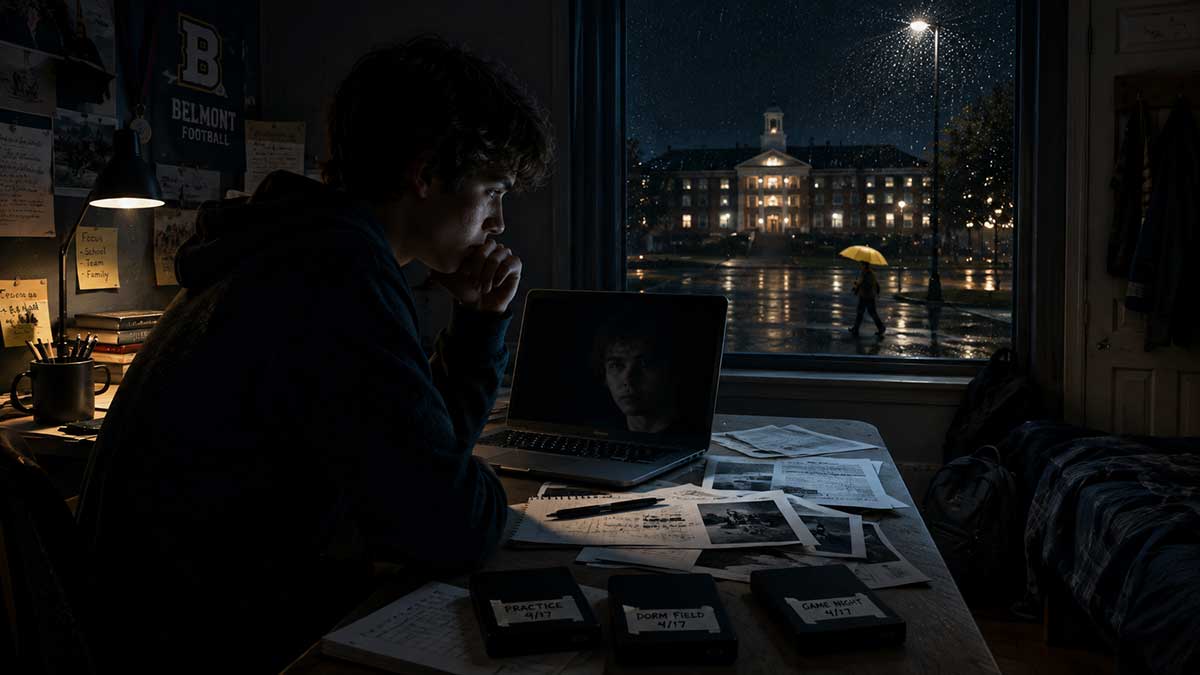
He inserted a small storage drive into his laptop.
Copied the video.
Ejected it.
A second drive.
Copied everything.
A third.
Video.
Screenshots.
Dates.
Names.
The old complaint.
He placed the first drive in an envelope for the attorney.
The second went into his mother's locked document box.
He stared at the third.
Then put it inside an old chemistry textbook on his shelf.
Outside, the rain had returned.
Through the bedroom window, Noah saw someone walking along the opposite sidewalk beneath a yellow umbrella.
For several seconds he watched the stranger cross beneath the streetlight.
Then disappear beyond the houses.
Noah looked back at the three copies.
He thought about Coach Mercer.
The man who had hurt Owen.
The man who had helped Noah.
Both were true.
He thought about Caleb.
He wanted desperately to call him.
He didn't.
Not tonight.
Noah closed the laptop.
He had once believed courage meant telling the truth.
Now he knew that was only the beginning.
Sometimes courage meant making sure the truth was still there tomorrow.
Story 2: Room 417
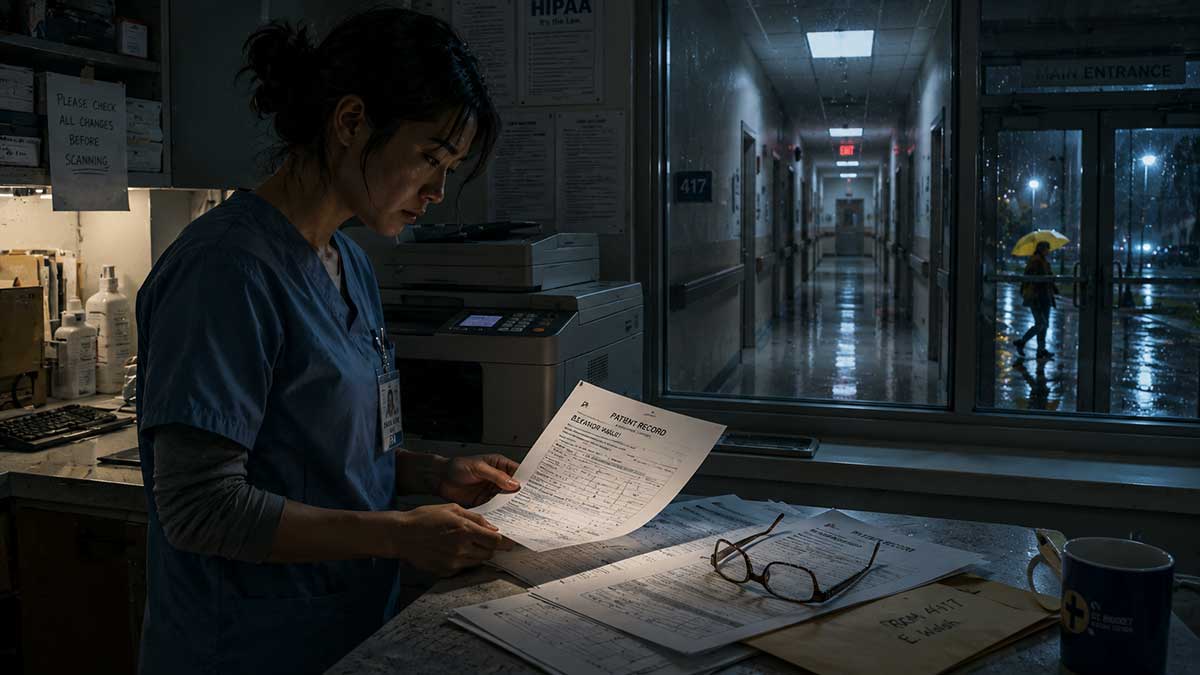
At 2:13 in the morning, Eleanor Walsh pressed the call button for the fourth time.
Maya Chen saw the light above Room 417 and closed her eyes.
Three seconds.
That was all she allowed herself.
Then she stood.
She had been working for eleven hours.
Her feet hurt. Her lower back hurt. Her breasts hurt since she had stopped pumping regularly during night shifts. Her seven-month-old daughter had been awake at four that morning, and Maya could still hear the baby's crying somewhere behind her thoughts.
Her husband, Eric, had texted twenty minutes earlier.
She's finally asleep.
Then:
Don't worry about us. Finish your shift.
Maya worried anyway.
She worried about the baby.
She worried about Eric, whose company had eliminated his position six weeks earlier.
She worried about their mortgage.
She worried about the credit card bill she hadn't opened.
And now Room 417 was calling again.
Maya walked down the fluorescent corridor.
When she entered, Eleanor was sitting upright.
Seventy-eight years old.
White hair.
Small frame.
Reading glasses hanging from a chain around her neck.
Maya: "Mrs. Walsh, what's wrong?"
Eleanor: "Something isn't right."
Maya checked the monitor.
Heart rate acceptable.
Oxygen saturation good.
Blood pressure slightly elevated, but nothing alarming.
Maya: "Are you having pain?"
Eleanor: "Not exactly."
Maya: "Shortness of breath?"
Eleanor: "No."
Maya: "Nausea?"
Eleanor shook her head.
Maya smiled gently.
Maya: "Everything looks okay."
Eleanor stared at her.
Eleanor: "That's what everyone keeps telling me."
Maya pulled the blanket higher over her.
Maya: "Try to sleep."
Eleanor didn't lie down.
Eleanor: "Dr. Cole told me something different yesterday."
Maya stopped.
Maya: "Different about what?"
Eleanor: "The procedure."
Maya: "What did he say?"
Eleanor frowned.
The words seemed difficult to retrieve.
Eleanor: "He said something happened."
Maya: "What happened?"
Eleanor: "I don't know."
She became frustrated.
Eleanor: "That's the problem."
Maya waited.
Eleanor: "Yesterday he said there had been a complication. Today he said everything went normally."
Maya glanced at the chart.
No major complication was documented.
Maya: "Medication can make memories fuzzy."
Eleanor looked at her.
Eleanor: "I'm old, dear."
Maya smiled.
Eleanor: "I'm not stupid."
The smile disappeared.
Maya: "I didn't mean that."
Eleanor: "I know."
Eleanor reached for her water.
Her hand trembled.
Maya helped her.
Eleanor: "You have children?"
Maya: "One."
Eleanor: "Boy or girl?"
Maya: "Girl."
Eleanor: "How old?"
Maya: "Seven months."
Eleanor smiled.
Eleanor: "Then you haven't slept since January."
Maya laughed.
Maya: "Pretty much."
Eleanor: "What's her name?"
Maya: "Sophie."
Eleanor repeated it.
Eleanor: "Sophie."
Then she looked at Maya for a long moment.
Eleanor: "Your mother still alive?"
The question surprised her.
Maya: "Yes."
Eleanor: "Nearby?"
Maya: "North Carolina."
Eleanor: "You see her much?"
Maya adjusted the IV line.
Maya: "Not enough."
Eleanor nodded.
Then she said:
Eleanor: "If I were your mother, would you believe me?"
Maya's hand stopped.
Eleanor did not look angry.
That made it worse.
Eleanor: "If your mother called you tonight and said something wasn't right..."
She paused.
Eleanor: "Would you tell her everything looked okay?"
Maya looked at the monitor.
Then at Eleanor.
Maya: "I'll look at the chart again."
Eleanor smiled.
Eleanor: "Take your time."
Dr. Adrian Cole was the kind of physician nurses usually wanted on difficult cases.
He remembered names.
He answered pages.
He didn't humiliate residents.
He thanked environmental-services workers.
Once, when Maya was eight months pregnant and became dizzy during a shift, he made her sit down, brought her juice himself, and covered two patient questions until another nurse arrived.
Months later, when Sophie developed breathing trouble and Maya brought her to the emergency department terrified, Dr. Cole happened to be nearby.
He recognized Maya.
He made one phone call.
Sophie was evaluated immediately.
Nothing serious.
But Maya remembered standing beside her baby's hospital bed with tears running down her face.
Dr. Cole had touched her shoulder.
Dr. Cole: "She's going to be okay."
She believed him.
And Sophie was.
So when Maya opened Eleanor's chart at 3:06 a.m. and saw Dr. Cole's name, part of her relaxed.
Then she saw the lab value.
She stared.
Something bothered her.
She opened the previous day's results.
Then the procedure notes.
Then the medication record.
She couldn't identify it.
Maybe exhaustion.
She closed the chart.
Opened it again.
There.
A value from immediately after Eleanor's procedure appeared different from the value Maya remembered seeing during handoff.
Maya searched the audit history.
The entry had been amended.
That wasn't necessarily suspicious.
Charts were corrected constantly.
She opened the amendment.
Dr. Cole.
She read his note.
Then an earlier note.
The wording had changed too.
"Unexpected event during procedure" had become "transient expected response."
Maya stared at the screen.
A nurse approached behind her.
Nurse: "You okay?"
Maya minimized the window.
Maya: "Yeah."
Nurse: "417 again?"
Maya nodded.
The nurse rolled her eyes sympathetically.
Nurse: "She's sweet, but she's confused."
Maya looked back toward Eleanor's room.
Maya: "Maybe."
At 6:40 a.m., Dr. Cole arrived.
Fresh shirt.
Coffee.
Calm.
He greeted Maya by name.
Dr. Cole: "How's Sophie?"
Maya looked at him.
Maya: "Good."
Dr. Cole: "Sleeping?"
Maya laughed.
Maya: "No."
Dr. Cole: "Then she's healthy."
He smiled.
Maya almost let him walk past.
Maya: "Dr. Cole?"
He turned.
Maya: "Can I ask you about Mrs. Walsh?"
His expression didn't change.
Dr. Cole: "Of course."
Maya: "She says you told her there was a complication."
A small pause.
Perhaps Maya imagined it.
Dr. Cole: "Mrs. Walsh has had intermittent confusion."
Maya: "I know."
Dr. Cole: "We had some instability during the procedure. Nothing outside the range of what we sometimes see."
Maya: "The note was amended."
Another pause.
Dr. Cole: "Yes."
Maya: "Why?"
His face remained kind.
Dr. Cole: "The original wording was imprecise."
Maya nodded.
He studied her.
Dr. Cole: "Is something bothering you?"
There it was.
An invitation.
She could ask.
She could say everything.
Instead:
Maya: "No."
Dr. Cole smiled.
Dr. Cole: "Get some sleep, Maya."
He walked away.
Maya watched him disappear around the corner.
She hated herself a little.
Not enough yet to do anything.
At home, Sophie was awake.
Maya barely got through the door before Eric handed her the baby.
Eric: "She's been waiting for you."
Sophie grabbed Maya's hair.
Maya laughed.
Then cried.
Eric looked alarmed.
Eric: "What's wrong?"
Maya: "Nothing."
He gave her a look.
Maya: "I'm tired."
He put his arms around both of them.
For several minutes Maya stood there holding her daughter.
She thought about Eleanor's question.
If I were your mother, would you believe me?
Her own mother called that afternoon.
Maya almost laughed at the timing.
Mom: "You sound tired."
Maya: "Night shift."
Mom: "You work too much."
Maya: "You say that every time."
Mom: "Since every time it's true."
Maya closed her eyes.
Her mother began telling her about a neighbor.
Maya only half listened.
Then suddenly she pictured Eleanor alone in Room 417.
She opened her eyes.
Maya: "Mom?"
Mom: "Hmm?"
Maya: "If something happened to you at a hospital, you'd tell me, right?"
Silence.
Mom: "What kind of question is that?"
Maya: "Nothing."
Mom: "Maya."
Maya: "I have to sleep."
She ended the call.
But she couldn't sleep.
Three nights later, Eleanor was worse.
Her daughter, Anna, had arrived from Denver.
Maya recognized her immediately.
Same eyes.
Same impatient way of pushing hair behind one ear.
Anna sat beside the bed holding Eleanor's hand.
Anna: "Mom says you're her favorite."
Maya forced a smile.
Maya: "She says that to everyone."
Eleanor opened her eyes.
Eleanor: "No, I don't."
Anna laughed.
Maya checked the IV.
Eleanor looked weaker.
Anna: "They said there was an infection."
Maya nodded.
Anna: "Could that have come from the procedure?"
Maya's hands stopped.
Maya: "That's something the physician would need to discuss with you."
Anna nodded.
Eleanor watched Maya.
She knew.
Maya could see it.
Not the details.
But she knew Maya was holding something.
Eleanor: "Did you look?"
Maya looked at her.
Anna looked between them.
Anna: "Look at what?"
Maya's mouth went dry.
Maya: "The chart."
Eleanor waited.
Maya: "I looked."
Eleanor: "And?"
Maya could hear footsteps in the corridor.
A cart rolling past.
Someone laughing at the nurses' station.
Ordinary hospital sounds.
Maya: "There were changes."
Anna stood.
Anna: "What changes?"
Maya immediately became frightened.
She thought of hospital policy.
Her license.
Eric's unemployment.
Sophie.
The mortgage.
Dr. Cole helping her baby.
Maya: "Chart corrections happen all the time."
Eleanor looked away.
Maya felt something break between them.
Not trust entirely.
Something smaller.
Maybe hope.
The next afternoon, Maya spoke to her unit manager.
Carefully.
She didn't accuse anyone.
She asked about amended records.
Her manager listened.
Then closed the office door.
Manager: "You need to be very careful with this."
Maya almost laughed.
Mr. Graham had told Noah the same thing across town only weeks earlier, though Maya had never met Noah and knew nothing about him.
Institutions seemed to develop similar vocabularies without ever speaking to one another.
Maya: "I'm asking a question."
Manager: "You're implying something serious."
Maya: "I saw changes."
Manager: "Records are amended."
Maya: "I know."
Manager: "Dr. Cole has practiced here for twenty-three years."
Maya: "I know."
Manager: "He has an exceptional record."
Maya: "I know."
Her manager leaned forward.
Manager: "Then what are you saying?"
Maya didn't know.
That was the problem.
She had pieces.
Not certainty.
Manager: "You have a young family, don't you?"
Maya looked at her.
The manager smiled.
Manager: "Sophie?"
Maya felt cold.
Manager: "I'm not threatening you."
Maya: "I didn't say you were."
Manager: "I'm reminding you that accusations have consequences for everyone."
Everyone.
Maya thought of Eleanor.
Apparently everyone was a very large group that sometimes excluded the person lying in Room 417.
Dr. Cole found Maya that evening.
He asked if they could talk privately.
They entered an empty consultation room.
He closed the door.
Dr. Cole: "I heard you have concerns."
Maya looked at him.
He appeared older than she remembered.
Tired.
Maya: "Were there complications during Eleanor Walsh's procedure?"
He sat down.
For a moment, he wasn't the famous physician.
Just a tired man.
Dr. Cole: "Yes."
Maya's heart accelerated.
Maya: "Why isn't that clear in the record?"
He rubbed his forehead.
Dr. Cole: "It is in the record."
Maya: "Not the same way."
He looked at her.
Dr. Cole: "Medicine isn't always clean, Maya."
Maya: "I know."
Dr. Cole: "Things happen quickly. Notes get written before we have complete information. Language changes when we know more."
Reasonable.
Every word was reasonable.
Then he said:
Dr. Cole: "Have I ever given you a reason not to trust me?"
Maya immediately thought of Sophie.
That was unfair.
Perhaps he didn't mean it that way.
That made it worse.
Maya: "No."
He nodded.
Dr. Cole: "Then trust me."
Maya looked at him.
For some reason she heard Eleanor instead.
If I were your mother, would you believe me?
Maya stood.
Maya: "I need to get back."
Eleanor died Sunday morning at 5:42.
There was no dramatic final conversation.
No last revelation.
No perfect goodbye.
Maya wasn't even in the room.
She was helping another patient when the rapid-response call came.
By the time she arrived, physicians and nurses surrounded Eleanor.
Anna stood outside.
Barefoot.
Someone had given her a blanket.
Maya watched Dr. Cole work.
He tried.
That mattered too.
He tried very hard to save Eleanor.
Maya could see it.
When it was over, Dr. Cole stood beside the bed longer than anyone else.
His shoulders dropped.
For a moment Maya saw grief on his face.
Real grief.
That complicated everything.
She wished he were cruel.
Cruel people were easier.
Dr. Cole touched Eleanor's covered hand.
Then walked out.
Anna remained.
Maya entered later.
Room 417 looked different without urgency.
She helped remove equipment.
Someone stripped the bed.
A cleaning cart arrived.
Within forty minutes, Eleanor Walsh had become a room being prepared for someone else.
Maya stood alone beside the empty mattress.
On the windowsill sat Eleanor's reading glasses.
Someone had forgotten them.
Maya picked them up.
Anna called two days later.
Maya almost didn't answer.
Anna: "I'm sorry to bother you."
Maya: "You're not."
Anna: "I wanted to thank you."
Maya closed her eyes.
Anna: "Mom liked you."
Maya: "I liked her too."
Anna: "She said you listened."
Maya couldn't speak.
Anna: "Can I ask you something?"
Maya sat down.
Maya: "Yes."
Anna: "Was she frightened?"
Maya thought about lying.
A kind lie.
Then she remembered Eleanor looking at her after Maya said chart corrections happened all the time.
Maya: "Yes."
Anna was quiet.
Maya: "Sometimes."
More silence.
Maya: "But she was very happy when you came."
Anna began crying.
Maya cried too.
Then Anna said something Maya would carry for years.
Anna: "She kept telling me, 'That nurse believes me.'"
Maya covered her mouth.
Anna: "I just wanted you to know."
After the call ended, Maya sat alone in her car for twenty minutes.
She had believed Eleanor.
That was the unbearable part.
She had believed her enough to worry.
Enough to search.
Enough to ask questions.
Enough to become afraid.
She simply hadn't believed her enough to risk anything.
Maya finally understood that belief could become another kind of silence when it never left your own head.
She returned to work the next night.
At 4:51 a.m., Maya opened Eleanor's chart.
She expected it to be restricted.
It wasn't.
She searched the audit history again.
More changes.
One caught her attention.
A medication dosage.
Then a timing entry.
Then an internal note that had been removed from the visible summary.
Maya stared.
She searched another patient treated by Dr. Cole.
Then another.
There were patterns.
Not proof.
Patterns.
She felt sick.
Dr. Cole might have made one mistake.
Then altered the language.
Then another change had become necessary to protect the first.
Perhaps somewhere along the way he stopped knowing whether he was protecting his career, his patients, his department, or himself.
Maya thought about reporting through her manager again.
No.
She thought about confronting Dr. Cole.
No.
She thought about doing nothing.
For several seconds, that option felt wonderful.
Go home.
Hold Sophie.
Let someone else carry this.
Then Maya looked down the hallway.
Room 417 was occupied again.
An older man slept inside.
Different patient.
Different family.
Same room.
Maya opened the hospital's independent reporting system.
Then stopped.
She needed records.
She needed dates.
She needed something that could not quietly disappear.
The administrative printer stood in a small room near the end of the corridor.
Maya walked there.
She closed the door.
Printed the relevant audit report.
One page emerged.
Then another.
Then another.
She made a second set.
Her hands shook.
She placed one copy inside an envelope.
The second she kept separately.
Then she submitted the independent report.
Not through her manager.
Not through Dr. Cole's department.
Outside the chain that had already told her to be careful.
When she pressed Submit, nothing happened.
No alarms.
No sudden justice.
No one entered the room.
The printer hummed.
That was all.
Maya looked at the papers in her hands.
She thought of Eleanor.
For one terrible moment, Maya wished she could go backward.
Back to 2:13 in the morning.
Back to the fourth call button.
Back to:
Something isn't right.
This time Maya would pull up a chair.
This time she would listen differently.
But regret did not open doors backward.
It only stood beside the next door and asked what you intended to do.
Maya left the hospital shortly after sunrise.
Rain had begun.
Eric had texted her a photograph of Sophie asleep with one fist beside her face.
Maya smiled.
Then another message appeared.
Come home. Pancakes.
She stood beneath the hospital awning.
Across the driveway, someone walked slowly through the rain carrying a yellow umbrella.
Maya watched until the person disappeared behind the parking structure.
Then she noticed something in her scrub pocket.
Eleanor's reading glasses.
She had meant to give them to Anna.
Maya held them carefully.
Two small lenses.
Something meant to help a person see clearly.
She almost laughed at the cruelty of the symbolism.
Instead, she put them back in her pocket.
She would mail them to Anna.
Then she went home.
Three weeks later, Maya received a call from an investigator.
She sat in her car outside the hospital and answered every question.
She did not know what would happen to Dr. Cole.
She did not know whether Eleanor's death could have been prevented.
She did not know whether the hospital would change.
She did not know whether she would keep her job.
For once, Maya did not wait for certainty before deciding what she knew.
She knew Eleanor had been afraid.
She knew the record had changed.
She knew people with more authority than Maya had seen enough to ask harder questions.
And she knew she had waited too long.
That truth hurt.
She decided not to protect herself from it.
That evening Maya packaged Eleanor's reading glasses.
She wrote Anna's address on the box.
Before sealing it, she added a small note.
She stared at the blank paper for several minutes.
She wanted to write:
I'm sorry.
She wanted to explain everything.
She wanted Anna to know Maya had eventually acted.
Then she realized the note was beginning to become about Maya.
So she crossed everything out.
On a clean card she wrote only:
Your mother knew when something wasn't right.
She deserved to be heard.
Maya
She sealed the box.
Then she sat beside Sophie on the living-room floor.
Her daughter was learning to crawl.
She moved forward a few inches, fell, looked surprised, and tried again.
Maya watched her.
One day Sophie would tell her things.
Small things.
Ridiculous things.
Frightening things.
Things Maya might not want to believe.
Maya picked her daughter up.
Sophie pressed her face against Maya's shoulder.
Maya held her tightly.
She could never promise Sophie that every person would listen.
She could never promise that institutions would always protect her.
She could not even promise that Maya herself would always recognize the truth quickly enough.
But she could make one promise silently.
When someone she loved said,
Something isn't right,
Maya would not begin by asking whether believing them was convenient.
Room 417 had taught her what convenience could cost.
Story 3: The Man Who Lived Under His Brother's Name
Marcus Hale had spent twenty-three years introducing himself with his brother's name behind him.
At conferences.
At fundraisers.
At high schools.
At dinners where people stood to applaud.
The screen behind him always showed the same photograph.
Two identical boys at fourteen.
Same narrow shoulders.
Same dark hair.
Same crooked smile.
One was Marcus.
One was Daniel.
Almost nobody could tell which was which.
Marcus could.
Every time.
That evening, seven hundred people filled the ballroom of the Franklin Civic Center.
The large screen behind him read:
THE DANIEL HALE FOUNDATION
Below it:
NO CHILD SHOULD FACE VIOLENCE ALONE
Marcus stood beneath the words in a dark suit.
He had given the speech hundreds of times.
He no longer needed notes.
Marcus: "My brother Daniel taught me something when we were young."
The room became quiet.
Marcus: "Courage is not always loud."
He looked toward the photograph.
Marcus: "Sometimes courage is simply standing between someone you love and something that wants to hurt them."
People listened closely.
Marcus knew where to pause.
He knew when to lower his voice.
He knew how long to look at Daniel's picture.
He hated himself slightly for knowing.
Marcus: "Daniel died when we were seventeen."
A woman near the front covered her mouth.
Marcus continued.
Marcus: "I survived."
He had learned to let that sentence sit.
Three seconds.
Not two.
Not four.
Marcus: "For a long time, I didn't know what to do with that."
He smiled.
Marcus: "Eventually, I realized surviving creates a responsibility."
The audience leaned toward him.
Marcus: "I could spend the rest of my life asking why Daniel died."
Another pause.
Marcus: "Or I could spend it making sure another child had someone standing beside them."
Applause began before he finished.
Marcus smiled.
Behind the ballroom's glass wall, rain streaked the city lights.
Across the plaza, someone carrying a yellow umbrella moved slowly through the night.
Marcus did not notice.
His wife, Leah, did.
She watched the umbrella until it disappeared.
Then she looked back at her husband.
Seven hundred people were standing for him.
Marcus bowed his head.
The photograph of Daniel remained enormous behind him.
Leah wondered, not for the first time, where Marcus had gone.
They had been identical twins.
At least that was what adults said.
Their mother could tell them apart from across a room.
Their father rarely bothered.
Father: "Whichever one of you did it, fix it."
Daniel was born six minutes first.
He treated those six minutes as a legal authority.
When they were eight, Daniel walked ahead of Marcus on the way to school.
At twelve, Daniel answered the door when strangers knocked.
At fourteen, Daniel told their father to stop yelling at their mother.
At sixteen, Daniel began standing between Marcus and their father when the evenings became bad.
Marcus hated him for it.
Not since Marcus wanted the shouting.
Since every time Daniel stepped forward, Marcus became more aware that he had stepped back.
Their father drank.
Not every day.
Enough.
Some nights were normal.
That made everything harder to understand.
He could take them fishing on Saturday.
Buy hamburgers.
Laugh until Marcus cried.
Then Tuesday night arrive already angry at something neither boy understood.
A broken glass.
A bad grade.
Noise from upstairs.
Their mother learned how to read his footsteps.
Daniel learned too.
Marcus learned to disappear.
Daniel learned to stay visible.
Once, after their father threw a chair across the kitchen, Marcus whispered:
Marcus: "Why do you always do that?"
Daniel: "Do what?"
Marcus: "Make him madder."
Daniel looked at him.
Daniel: "I'm not making him anything."
Marcus: "You know what I mean."
Daniel did.
Marcus: "Just leave him alone."
Daniel: "And Mom?"
Marcus looked away.
Marcus: "She knows how to handle him."
Daniel stared at him.
Marcus hated that look.
Not judgment.
Worse.
Sadness.
Daniel: "No one should have to get good at handling that."
Marcus never forgot the sentence.
Years later, he would use versions of it in speeches.
The audience would write it down.
No one knew Daniel had said it first.
The night Daniel died began with a birthday cake.
Their seventeenth birthday.
Their mother had bought it from the grocery store.
Chocolate.
White frosting.
Two candles shaped like the number seventeen.
Their father arrived home late.
He had missed dinner.
Marcus knew something was wrong immediately.
Daniel did too.
Their mother tried to keep everything light.
Mother: "Cake?"
Their father looked at the table.
Father: "You started without me."
No one answered.
Father: "Did you?"
Mother: "The boys have school tomorrow."
He laughed.
Father: "The boys."
Marcus looked down.
Daniel did not.
Their father noticed.
Father: "Something funny?"
Daniel: "No."
Marcus closed his eyes.
Please.
Not tonight.
Their father walked closer.
Father: "Look at me when I talk to you."
Daniel looked at him.
Marcus remembered thinking how tired Daniel looked.
Not frightened.
Tired.
Their father shoved him.
Their mother stood.
Mother: "Stop."
Everything moved quickly after that.
A chair fell.
Their mother screamed.
Marcus backed toward the hallway.
Daniel stepped forward.
Their father swung at him.
Daniel pushed him away.
Their father stumbled.
Then came toward Daniel again.
Marcus saw the metal fireplace tool before anyone else did.
He saw his father's hand move.
He saw Daniel turn.
Marcus shouted.
The rest lived inside him as fragments.
Their mother's voice.
Something hitting the floor.
Their father suddenly silent.
Daniel on his knees.
Marcus holding him.
Blood on Marcus's hands.
Daniel trying to breathe.
Then Daniel looking at Marcus.
Marcus would spend the next thirty years trying to decide what that look meant.
Fear?
Love?
Pain?
Regret?
Daniel said only one thing.
Daniel: "You okay?"
Marcus began crying.
Marcus: "Yeah."
Daniel nodded.
As though that answer mattered.
Then he was gone.
People told Marcus it was not his fault.
The police.
His mother.
A counselor.
Teachers.
Relatives.
Everyone agreed.
Marcus had done nothing wrong.
He believed them intellectually.
Emotion had different evidence.
Daniel stepped forward.
Marcus stepped back.
Daniel died.
Marcus lived.
For Marcus, the equation required no expert interpretation.
Daniel should have survived.
Marcus should have been the one on the floor.
He never said that aloud.
Not for years.
The foundation began almost accidentally.
Marcus was twenty-six.
He worked for a youth center.
A local reporter learned about Daniel and wrote a short profile.
Donations arrived.
Someone suggested a scholarship in Daniel's name.
Then a mentoring program.
Then a nonprofit.
Marcus resisted at first.
His mother encouraged him.
Mother: "Daniel would've loved this."
That sentence decided it.
Marcus named the organization after him.
The Daniel Hale Foundation.
The first year, they helped twelve teenagers.
By year five, more than two hundred.
By year ten, three cities.
By year fifteen, national partnerships.
Marcus became good at fundraising.
Then public speaking.
Then leadership.
He met Leah at a conference in Chicago.
She was an architect.
She had no connection to nonprofits.
That was one of the things Marcus loved about her.
On their third date, she asked:
Leah: "Do you ever get tired of talking about your brother?"
Marcus laughed.
No one had asked that before.
Marcus: "Sometimes."
Leah: "Then don't."
Marcus: "Don't what?"
Leah: "Talk about him."
Marcus stared at her.
Leah: "You're allowed to have dinner."
He fell in love with her somewhere between the appetizer and dessert.
Their first years together were happy.
Marcus believed that.
Leah believed it too.
They traveled.
Bought a small house.
Argued about paint colors.
Burned dinner.
Stayed up too late watching terrible movies.
Marcus laughed easily with her.
Then the foundation grew.
The speeches grew.
Daniel appeared everywhere.
In brochures.
On walls.
On scholarship plaques.
On the foundation website.
At home, Marcus kept Daniel's photograph beside the bed.
Leah never complained.
Then Daniel began entering their decisions.
Marcus refused an overseas vacation since it overlapped with the foundation's anniversary.
He declined a job opportunity that would have reduced his role.
He donated more money than Leah thought they could afford.
When Leah suggested moving, Marcus refused.
Daniel was buried nearby.
When Leah asked whether they might eventually leave Columbus, Marcus said:
Marcus: "This is home."
But she slowly understood that home meant where Daniel remained.
Not where Marcus wanted to be.
Every year on their birthday, Marcus disappeared before sunrise.
Leah knew where he went.
She never followed.
He returned before lunch.
He was quieter for the rest of the day.
She learned not to plan celebrations.
At first, she thought this was love.
Later, she began wondering whether it was punishment.
On their twelfth year of marriage, Marcus left at 5:40 a.m.
Leah woke when the front door closed.
She stared at the ceiling.
Something inside her changed.
She dressed.
Drove after him.
She parked far enough away that Marcus wouldn't see.
The cemetery was nearly empty.
Morning fog sat low over the grass.
Marcus stood in front of Daniel's grave.
He held two paper coffee cups.
He placed one beside the headstone.
Leah almost left.
Then Marcus spoke.
Marcus: "Happy birthday."
Silence.
Marcus: "Forty-six."
He laughed softly.
Marcus: "Can you believe that?"
He sat on the grass.
Leah could not hear every word.
Then the wind shifted.
Marcus's voice carried.
Marcus: "You should've been the one."
Leah stopped breathing.
Marcus looked down at the headstone.
Marcus: "You would've known what to do with all this."
He rubbed his face.
Marcus: "Mom would've been better with you."
Leah's eyes filled.
Marcus: "The foundation would've been better."
He paused.
Then:
Marcus: "Leah would've been better."
Leah covered her mouth.
Marcus began crying.
Not the controlled tears people saw during speeches.
The crying of a seventeen-year-old boy who had somehow aged without leaving the room where his brother died.
Marcus: "I got your life."
Leah wanted to run to him.
She did not.
Something told her this moment had never belonged to anyone else.
She drove home before he returned.
That evening Marcus found a small cake on the kitchen counter.
No candles.
Leah sat at the table.
Marcus: "You didn't need to do this."
Leah: "I know."
Marcus cut a piece.
Marcus: "You want some?"
Leah: "Where did you go this morning?"
His hand stopped.
Marcus: "You know."
Leah: "I followed you."
Marcus slowly set down the knife.
Marcus: "Why?"
Leah: "I was worried."
His face hardened.
Marcus: "That was private."
Leah: "I know."
Marcus: "Then why would you..."
Leah: "You said I would've been better with Daniel."
Marcus went silent.
His face emptied.
Marcus: "You heard that."
Leah: "Yes."
He looked away.
Marcus: "I didn't mean it."
Leah: "I think you did."
Marcus stood.
Marcus: "Leah."
Leah: "Sit down."
He looked at her.
Leah: "Please."
Marcus sat.
Leah had rehearsed several speeches on the drive home.
She abandoned all of them.
Leah: "Do you love me?"
Marcus looked shocked.
Marcus: "Of course."
Leah: "Do you think I married the wrong brother?"
Marcus: "No."
Leah: "Then why do you?"
Marcus stared at her.
Marcus: "What?"
Leah: "Why do you think I did?"
Marcus: "I don't."
Leah: "You said I'd be better with him."
Marcus: "I was upset."
Leah: "Marcus."
He looked down.
Leah: "I never met Daniel."
Marcus said nothing.
Leah: "I know him through you."
She pointed toward the photograph on the shelf.
Leah: "I know he was brave."
"I know he protected you."
"I know he loved your mother."
"I know he hated canned peas."
That made Marcus look up.
Leah: "I know he cheated at Monopoly."
Marcus almost smiled.
Leah: "I know he should have lived."
The smile disappeared.
Leah: "But I don't know that he would've been a better husband."
Marcus's eyes filled.
Leah: "I don't know that he would've built a better foundation."
Marcus: "He would've."
Leah: "You don't know that."
Marcus: "I knew him."
Leah: "At seventeen."
Marcus froze.
Leah: "You've spent almost thirty years finishing a man who never got the chance to become one."
The sentence hurt.
She saw it.
Marcus: "That's cruel."
Leah: "I know."
Her voice broke.
Leah: "But I'm losing you to someone who's been dead longer than I knew you."
Marcus stood.
This time Leah did not stop him.
He walked to the window.
Rain had begun.
Marcus: "What do you want me to do?"
Leah: "Nothing tonight."
Marcus: "Then why are we doing this?"
Leah: "Since I need you to know something."
Marcus turned.
Leah was crying now.
Leah: "I've never asked you to leave Daniel."
Marcus looked at her.
Leah: "I never will."
She took a breath.
Leah: "But I married Marcus."
Her voice became almost a whisper.
Leah: "I need you to come home too."
Marcus looked away.
His shoulders shook once.
Then again.
Leah stood.
For a moment she thought about embracing him.
Instead, she remained where she was.
Marcus had spent a lifetime being rescued from feelings before he finished having them.
She waited.
Finally, he turned.
Marcus: "I don't know how."
That was the first honest answer.
For several weeks, nothing changed.
Marcus continued working.
The Daniel Hale Foundation continued helping children.
He gave speeches.
He said Daniel's name.
But certain sentences became impossible.
I survived for a reason.
He stopped saying that.
Daniel lives through me.
He stopped saying that too.
People noticed.
A communications director asked whether he wanted the old language restored to his speech.
Marcus: "No."
Director: "Why?"
Marcus looked at the paragraph.
Marcus: "It isn't mine anymore."
One night Leah found Marcus sitting on the floor of the guest room.
Boxes surrounded him.
Old photographs.
School papers.
Daniel's baseball glove.
A cassette tape.
Two identical report cards.
Marcus held a photograph of the twins at twelve.
Leah: "Which one are you?"
He pointed immediately.
Marcus: "Left."
Leah smiled.
Leah: "How can you tell?"
Marcus: "Daniel always tilted his head."
She sat beside him.
Marcus picked up another photo.
Marcus: "I used to hate that."
Leah: "What?"
Marcus: "That Mom always knew."
Leah: "Why?"
Marcus looked at the picture.
Marcus: "Everybody thought we were the same."
He swallowed.
Marcus: "She didn't."
Leah waited.
Marcus: "After he died, people started telling me how much I looked like him."
He laughed bitterly.
Marcus: "Every time, I liked it."
Leah: "Marcus..."
Marcus: "I thought maybe I could do both."
Leah: "Both what?"
Marcus: "Live enough for two people."
Leah's eyes filled.
Marcus: "Work enough."
"Help enough kids."
"Make Mom proud enough."
"Be good enough."
He looked at her.
Marcus: "Then maybe it would make sense that I was the one who stayed."
Leah took his hand.
Marcus did not pull away.
Marcus: "It never did."
Leah: "Maybe it never will."
He nodded.
That hurt.
It was a relief too.
For decades Marcus had treated the absence of an answer as a problem he had not worked hard enough to solve.
Perhaps there was no answer.
Daniel died.
Marcus lived.
Two truths.
No equation between them.
Months later, Marcus called an emergency meeting of the foundation board.
Everyone assumed something was wrong financially.
Marcus stood at the head of the conference table.
Behind him, Daniel's photograph hung on the wall.
Marcus: "I want to change the name."
Silence.
A board member laughed nervously.
Board Member: "Of the program?"
Marcus: "Of the foundation."
Nobody moved.
Board Member: "Marcus, Daniel is the identity."
Marcus nodded.
Marcus: "That's the problem."
Another member leaned forward.
Board Member 2: "Donors know the story."
Marcus: "The story isn't going anywhere."
Board Member 2: "Then why change it?"
Marcus looked at Daniel's photograph.
Marcus: "When I started this, I thought remembering Daniel meant putting his name on everything."
He paused.
Marcus: "Now I think remembering him means continuing the work without asking him to carry it forever."
The board resisted.
Donors complained.
Some accused Marcus of abandoning his brother.
That hurt most.
A woman wrote:
Daniel deserves better than being erased.
Marcus read the email eleven times.
Then deleted it.
Not since it did not hurt.
Since he finally recognized that hurt was not always instruction.
The new name became:
THE OPEN DOOR PROJECT
Its mission remained the same.
Young people facing violence would have somewhere to go.
Someone to call.
Somewhere safe.
Daniel's story remained in the organization's history.
His photograph remained inside the building.
But his name no longer covered the roof.
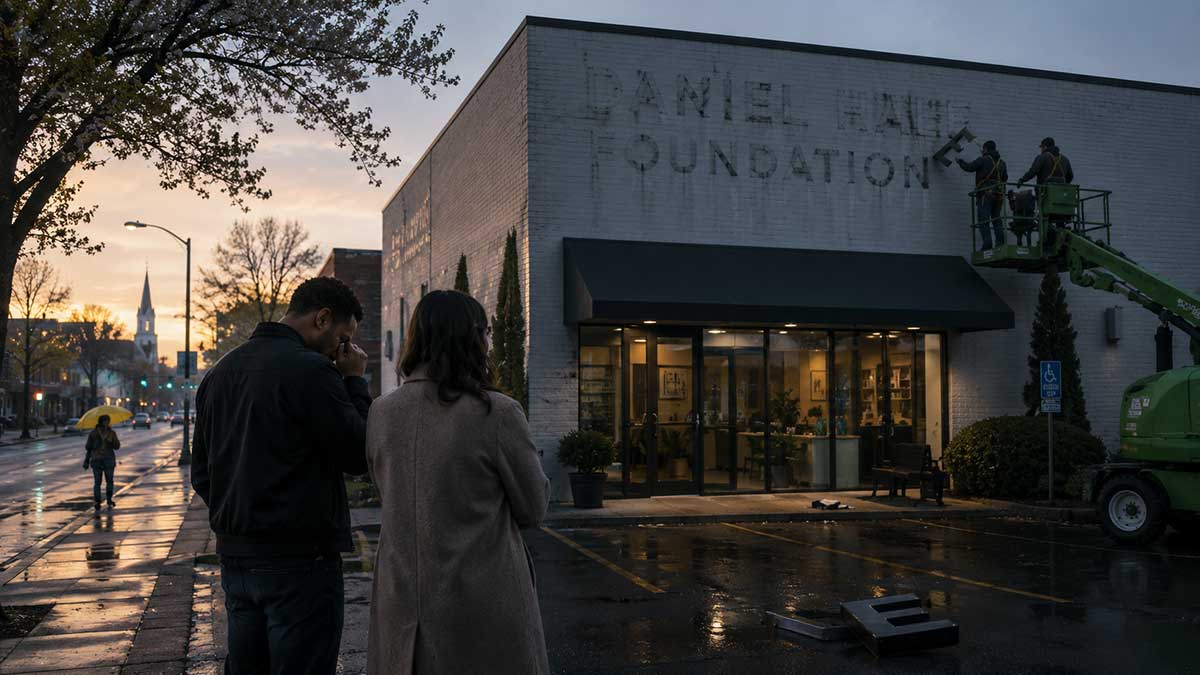
The old sign came down on a cold April morning.
Marcus arrived before the workers.
Leah came with him.
They stood across the parking lot.
The building still read:
THE DANIEL HALE FOUNDATION
A lift carried two workers upward.
The first letter came loose.
Then another.
Marcus's breathing changed.
Leah noticed.
Leah: "We can leave."
Marcus shook his head.
Marcus: "No."
The D came down.
Then A.
Then N.
Marcus started crying.
Leah stayed beside him.
She did not touch him.
Not yet.
The remaining letters looked strange.
Incomplete.
Marcus whispered:
Marcus: "I'm sorry."
Leah looked at him.
She knew he wasn't speaking to her.
Marcus: "I'm sorry, Danny."
The workers lowered another letter.
Marcus: "I thought if I stopped carrying you..."
His voice broke.
Marcus: "I thought you'd disappear."
The final letters came away.
Only faded outlines remained where the name had been.
Marcus stared at the empty space.
Nothing happened.
Daniel did not disappear.
Marcus remembered the fishing trip when Daniel fell into the creek.
Daniel cheating at Monopoly.
Daniel standing in the kitchen.
Daniel asking:
You okay?
Marcus remembered all of it.
Without the sign.
He laughed through his tears.
Marcus: "You're still here."
Leah's eyes filled.
Marcus looked at her.
For several seconds, neither moved.
Then Marcus reached for her hand.
She took it.
Across the street, a person carrying a yellow umbrella waited at a crosswalk.
The light changed.
The umbrella moved across the road and disappeared behind a row of trees.
Marcus watched the workers carry the old letters away.
Leah: "What are you going to do with them?"
Marcus looked at the large D lying on the truck.
Marcus: "I don't know."
Later, he kept only one small piece from the old lobby sign.
Not Daniel's whole name.
Just a single letter.
D.
He placed it beside the photograph of two twelve-year-old boys.
On their forty-seventh birthday, Marcus woke before sunrise.
Leah felt him move.
Leah: "You going?"
Marcus: "Yeah."
She opened her eyes.
Leah: "Want me to come?"
Marcus thought.
Every year, the answer had been no.
This time:
Marcus: "Maybe."
They drove to the cemetery together.
Marcus carried two coffees.
At Daniel's grave, he put one down.
Then sat.
Leah remained several feet away.
Marcus: "Happy birthday."
Wind moved through the grass.
Marcus smiled.
Marcus: "The organization has a new name."
He paused.
Marcus: "You probably would've complained."
Leah laughed quietly.
Marcus looked at the headstone.
Marcus: "I miss you."
His voice broke.
Marcus: "I'm going to keep missing you."
He wiped his eyes.
Then said the sentence he had never been able to say.
Marcus: "But I don't wish you were me anymore."
Leah closed her eyes.
Marcus placed his hand on the stone.
Marcus: "And I don't wish I was you."
Silence.
Morning light reached the cemetery.
Marcus looked toward Leah.
She smiled.
He stood.
For the first time in twenty-nine birthdays, he left Daniel's coffee unfinished.
They walked back toward the car together.
The grave remained behind them.
Daniel remained behind them too.
And somehow he came with Marcus in a different way.
Not as a life Marcus owed.
Not as a name Marcus had to become.
As his brother.
Nothing less.
Nothing more.
On the drive home, Leah asked:
Leah: "What do you want to do today?"
Marcus almost answered automatically.
Foundation event.
Cemetery.
Call his mother.
The usual birthday obligations.
Instead he looked out the window.
Marcus: "I don't know."
Leah smiled.
Leah: "Take your time."
Marcus smiled back.
For once, not knowing what he wanted did not frighten him.
It meant there might finally be something left to discover.
Story 4: The Pastor Who Asked Her to Forgive
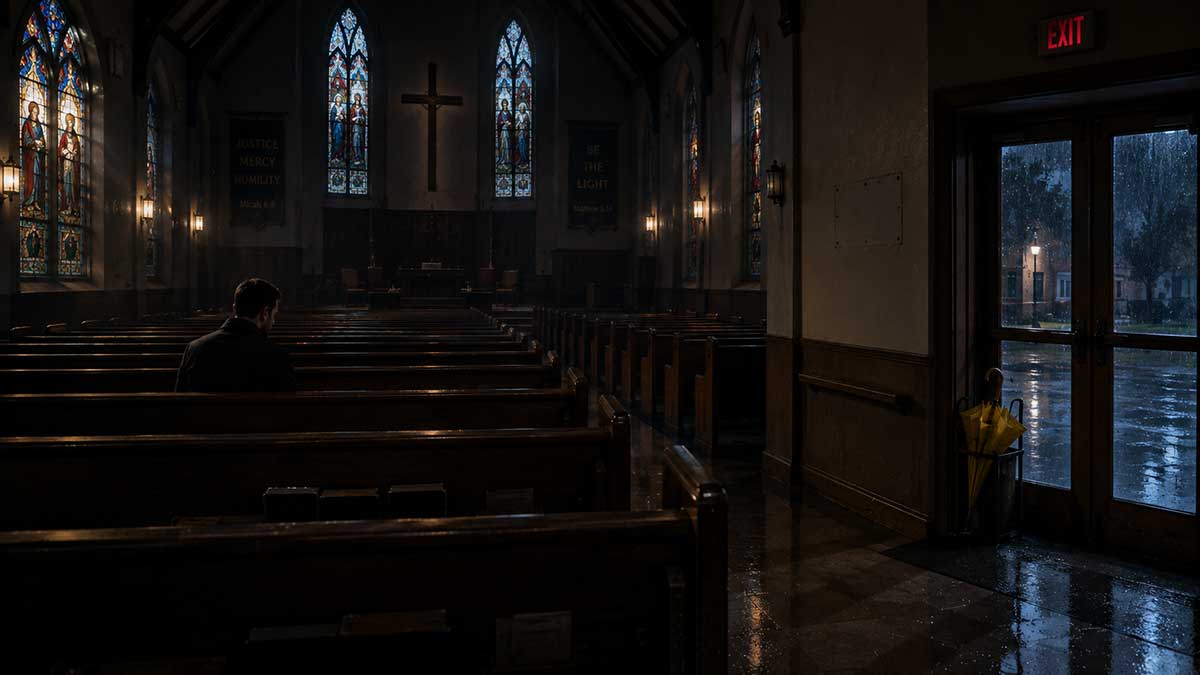
Rachel Monroe had not been inside Grace Covenant Church for twenty-one years.
The building looked smaller than she remembered.
Same brick walls.
Same white steeple.
Same double wooden doors.
Same narrow windows running along the sanctuary.
She sat in her car across the street for twelve minutes before getting out.
Rain tapped lightly against the windshield.
On the passenger seat lay a folded newspaper article about the church.
The headline read:
FORMER YOUTH VOLUNTEER ACCUSED BY MULTIPLE WOMEN
Rachel had read it so many times she no longer needed the words.
She knew the names.
Not all of them.
Enough.
A yellow umbrella passed along the sidewalk.
Rachel watched it move toward the church entrance.
The person carrying it shook off the rain and disappeared inside.
Rachel looked at the building again.
Then she opened the car door.
Pastor Jonah Reed was waiting in the foyer.
He looked older.
Of course he did.
His hair had thinned.
His shoulders were broader.
But Rachel recognized him immediately.
At seventeen, Jonah had been the boy who always carried two pens.
One for himself.
One in case someone else forgot.
He had played guitar badly.
Laughed too loudly.
And once walked Rachel home after youth group since she was afraid to go alone.
Now he wore a dark sweater beneath a clerical collar.
For one second Rachel could see both versions at once.
Jonah: "Rachel."
She nodded.
Rachel: "Jonah."
He stepped forward, then stopped.
He had been about to hug her.
She was grateful he noticed.
Jonah: "Thank you for coming."
Rachel: "I'm not sure I have yet."
Jonah gave a small, sad smile.
Jonah: "Fair."
They stood beneath the framed photographs of former pastors and church elders.
Rachel recognized several faces.
Her stomach tightened.
Jonah noticed.
Jonah: "We don't have to meet in here."
Rachel: "Where else?"
Jonah: "My office."
Rachel: "No."
He nodded immediately.
Jonah: "Sanctuary?"
Rachel looked toward the closed doors.
Rachel: "Okay."
Jonah opened one.
He held it.
Rachel stopped before crossing.
At seventeen, she had stood in this exact place trying to decide whether to tell someone.
She had forgotten that until now.
Her hand tightened around her purse.
Jonah noticed.
Jonah: "Take your time."
Rachel looked at him.
Something about the phrase irritated her.
She walked through.
The sanctuary smelled the same.
Wood.
Old hymnals.
Dust.
A faint trace of coffee drifting from somewhere downstairs.
Rachel chose a pew near the back.
Jonah sat one row ahead, then reconsidered and moved beside her.
Not too close.
He placed a folder on the pew between them.
Rachel looked at it.
Rachel: "What's that?"
Jonah: "Everything we've been able to find."
Her body became cold.
Rachel: "About him?"
Jonah nodded.
She did not say the man's name.
Neither did Jonah.
Jonah: "There were reports."
Rachel laughed once.
Rachel: "Reports."
Jonah: "Yes."
Rachel: "How many?"
Jonah hesitated.
Rachel: "How many?"
Jonah: "At least six before he was removed from youth ministry."
Rachel stared at the cross at the front of the sanctuary.
Rachel: "Removed."
Jonah: "Yes."
Rachel: "Not reported?"
Jonah looked down.
Jonah: "Not then."
Rachel: "Not warned about?"
Jonah: "No."
Rachel: "Just moved."
Jonah nodded.
Rachel looked at him.
Rachel: "And he still attended church."
Jonah: "Yes."
Rachel: "And families were told what?"
Jonah said nothing.
Rachel smiled bitterly.
Rachel: "Exactly."
When Rachel was seventeen, she had told Jonah first.
She remembered the room.
Youth-group basement.
Cheap carpet.
Metal chairs.
A half-empty bowl of pretzels.
Jonah had been stacking music stands after everyone left.
Rachel stood near the door.
Seventeen-year-old Rachel: "Can I tell you something?"
Jonah looked up.
Seventeen-year-old Jonah: "Yeah."
She almost changed her mind.
Then she told him.
Not everything.
Enough.
The youth volunteer had touched girls in ways he shouldn't.
Made comments.
Found reasons to be alone with them.
Had once held Rachel against a wall after a church retreat and laughed when she pushed him away.
Jonah's face changed.
Seventeen-year-old Jonah: "Are you sure?"
Rachel remembered that sentence more clearly than any other.
Not since it was cruel.
Since it was automatic.
Seventeen-year-old Rachel: "Yes."
Jonah immediately apologized.
Seventeen-year-old Jonah: "Sorry. I didn't mean..."
Rachel looked at the floor.
Seventeen-year-old Jonah: "We should tell Pastor Michael."
Seventeen-year-old Rachel: "I don't want everyone knowing."
Seventeen-year-old Jonah: "They won't."
He believed that.
Rachel could see it.
That was why she trusted him.
Jonah brought her to Pastor Michael.
Rachel spoke again.
Pastor Michael listened.
He prayed with her.
He told her she had done the right thing.
Then he said:
Pastor Michael: "We will handle this."
A week later Jonah found Rachel after youth group.
Seventeen-year-old Jonah: "I talked to Pastor Michael."
Rachel looked at him.
Seventeen-year-old Jonah: "He said it's being taken care of."
Seventeen-year-old Rachel: "What does that mean?"
Jonah smiled reassuringly.
Seventeen-year-old Jonah: "You can trust them."
Rachel stared at him.
She wanted to.
So she tried.
A month later the volunteer was still attending services.
Two months later Rachel stopped attending youth group.
By graduation, she had stopped attending church.
Jonah sent her a birthday card that summer.
She never answered.
Now, twenty-one years later, Jonah opened the folder.
Inside were photocopies.
Meeting notes.
Emails.
A handwritten page.
He lifted it carefully.
Jonah: "I found this."
Rachel looked.
The handwriting was young and uneven.
She recognized it before she recognized the words.
Jonah's.
Jonah: "I wrote this after you told me."
Rachel took the page.
At the top:
Rachel Monroe told me tonight that...
She stopped reading.
Her eyes filled.
Rachel: "You wrote it down."
Jonah: "Yes."
Rachel: "You remembered."
Jonah looked ashamed.
Jonah: "Not enough."
Rachel handed the page back.
Rachel: "What happened to it?"
Jonah: "It was in Pastor Michael's files."
Rachel laughed.
Not since anything was funny.
Rachel: "So they knew."
Jonah: "Yes."
Rachel: "You knew."
Jonah looked at her.
Jonah: "I knew what you told me."
Rachel: "And then?"
Jonah: "I believed them."
Rachel turned toward him.
Rachel: "You believed them."
Jonah: "Yes."
Rachel: "Why?"
Jonah looked toward the front of the sanctuary.
Jonah: "They were adults."
Rachel stared at him.
Jonah continued.
Jonah: "Pastor Michael was the person everyone went to."
Rachel: "Including me."
Jonah: "I know."
Rachel: "You told me to trust them."
Jonah: "I know."
Rachel's voice hardened.
Rachel: "Do you?"
Jonah looked at her.
Rachel: "Do you actually know what that did?"
He didn't answer.
Rachel: "I thought maybe I was exaggerating."
Jonah closed his eyes.
Rachel: "I thought maybe I'd made everyone uncomfortable for nothing."
Jonah: "Rachel..."
Rachel: "I saw him at church afterward."
Her voice broke.
Rachel: "He smiled at me."
Jonah looked down.
Rachel: "Do you understand that?"
Jonah: "I'm trying to."
Rachel: "He smiled since he knew nothing had happened."
Jonah's face tightened.
Rachel: "And I thought that meant I must have misunderstood what happened to me."
Silence.
Rachel: "That's what trusting the adults did."
Jonah's eyes filled.
He apologized.
Not once.
Several times.
Rachel listened.
Then Jonah made the mistake.
He didn't know it was a mistake when he began.
He had said similar things from the pulpit.
People thanked him for them.
Jonah: "I know this may not be something you can think about now."
Rachel looked at him.
Jonah: "But at some point..."
He hesitated.
Something inside Rachel became alert.
Jonah: "Forgiveness may be part of what frees you."
Rachel became completely still.
Jonah saw it too late.
Jonah: "I don't mean..."
Rachel stood.
Jonah: "Rachel."
She picked up her purse.
Jonah: "Please."
Rachel turned.
Her face was calm.
That frightened him more than anger would have.
Rachel: "You already asked me to forgive once."
Jonah stared at her.
Jonah: "What?"
Rachel: "You just called it something different when we were seventeen."
Jonah: "Rachel, I never..."
Rachel: "You told me to trust them."
Jonah: "I was seventeen."
Rachel: "So was I."
Jonah stopped.
Rachel's eyes filled.
Rachel: "I told you what happened."
Jonah: "I know."
Rachel: "Then when nothing happened, you helped me explain it away."
Jonah shook his head.
Jonah: "I didn't know."
Rachel: "I know."
She took a breath.
Rachel: "That's what makes this so hard."
Jonah looked at her.
Rachel: "You weren't cruel."
Her voice softened.
Rachel: "You loved me."
Jonah's face collapsed.
Rachel continued.
Rachel: "And you still left me alone with it."
She walked out.
The yellow umbrella was leaning beside the church entrance.
Rachel grabbed it without thinking.
She didn't realize it wasn't hers until she reached the parking lot.
She stopped.
Looked at it.
Then laughed once through tears.
Of course.
Even now she was leaving church with something that belonged to somebody else.
She considered taking it back.
The rain intensified.
Rachel opened it.
She walked to her car.
Jonah remained in the sanctuary.
The church was silent.
He sat where Rachel had been sitting.
He had spent years believing his role in her story was simple.
Rachel told him.
He told an adult.
He did what a seventeen-year-old should have done.
Technically, that was true.
It was incomplete.
He had trusted the adults so completely that when Rachel disappeared, he never asked why.
He remembered her missing youth group.
He remembered asking someone where she was.
He remembered Pastor Michael saying:
"She's going through some things."
Jonah accepted it.
He remembered seeing the volunteer at church.
He remembered feeling uncomfortable.
He did nothing.
One small discomfort.
Then another.
Eventually the discomfort became normal.
Jonah looked toward the row of photographs outside the sanctuary.
Pastor Michael's portrait was there.
Smiling.
Underneath:
SENIOR PASTOR, 1992–2011
Jonah stood.
He walked into the foyer.
He looked at the photograph for a long time.
Then he removed it from the wall.
Behind it was a cleaner rectangle where sunlight had not faded the paint.
Jonah carried the frame to his office.
He placed it face down.
It was not justice.
He knew that.
It was not enough.
That mattered too.
He spent the next three weeks reading everything.
Reports.
Emails.
Meeting minutes.
He called former staff.
Some remembered nothing.
Some remembered too much.
One former elder said:
Former Elder: "We handled things differently then."
Jonah felt anger rise.
Jonah: "Children weren't different then."
Silence.
Another person told him:
Former Staff Member: "You have to understand. People were afraid of destroying the church."
Jonah almost laughed.
Jonah: "What did protecting the church cost the girls?"
The person had no answer.
Jonah began seeing the pattern.
Every decision had sounded reasonable in isolation.
Protect privacy.
Avoid gossip.
Gather more information.
Pray.
Give people grace.
Protect reputations.
Wait.
Be cautious.
No single sentence sounded monstrous.
Together they created twenty years of silence.
Jonah emailed Rachel once.
No response.
He waited two weeks.
He sent a second message.
Not long.
I am not asking you to forgive anyone.
I am not asking you to come back to church.
I would like to apologize without asking you to make me feel better afterward.
If you ever want to speak again, I will listen.
Rachel read it three times.
She did not answer.
A week later she found the yellow umbrella in the trunk of her car.
She laughed.
She had forgotten it completely.
On the handle was a small label.
GRACE COVENANT
Church property.
Rachel stared at it.
Then she drove there.
Not for Jonah.
She told herself that.
She only wanted to return the umbrella.
Jonah was alone when she entered.
He looked surprised.
Rachel held up the umbrella.
Rachel: "Apparently I stole this."
Jonah looked at it.
Jonah: "We have twelve."
Rachel: "Then I'm only one-twelfth criminal."
He smiled.
Rachel almost did.
A strange silence followed.
Jonah: "Thank you for bringing it back."
Rachel: "I almost kept it out of spite."
Jonah: "I would've understood."
She set it beside the door.
Jonah did not ask her to stay.
That was why she did.
Rachel: "You removed Michael's picture."
Jonah nodded.
Rachel: "I noticed."
Jonah: "We're reviewing everything displayed in the building."
Rachel looked toward the empty rectangle.
Rachel: "That won't fix it."
Jonah: "I know."
She studied him.
Rachel: "Good."
Jonah nodded.
They entered the sanctuary.
Rachel sat in the same back pew.
Jonah sat one row ahead this time.
She noticed.
Rachel: "You can sit here."
He moved beside her.
Jonah: "Thank you."
Rachel looked toward the front.
Rachel: "Why did you ask me back?"
Jonah took a long breath.
Jonah: "The first time?"
Rachel: "Yes."
Jonah: "I thought you needed closure."
Rachel smiled bitterly.
Rachel: "Of course."
Jonah: "I know."
Rachel: "And now?"
Jonah looked at his hands.
Jonah: "I don't know what you need."
Rachel turned toward him.
Jonah: "I think that's what I should have understood from the beginning."
He looked at her.
Jonah: "I don't know what forgiveness should look like for you."
Rachel said nothing.
Jonah: "Or whether it should be something you're thinking about at all."
Her eyes filled.
Jonah continued.
Jonah: "I know what accountability should start looking like for us."
Rachel waited.
Jonah: "Records preserved."
"Independent review."
"Contacting families."
"Reporting what should have been reported."
"Removing people from leadership who concealed things."
"Financial support for counseling if survivors want it."
Rachel listened.
Jonah: "But I don't know what accountability looks like to you."
He paused.
Jonah: "So..."
His voice softened.
Jonah: "What would accountability look like?"
Rachel looked toward the stained-glass windows.
Rain colored the sanctuary light.
Red.
Blue.
Gold.
For the first time in twenty-one years, someone from this church had asked a question without supplying the answer.
Rachel began slowly.
Rachel: "Don't call us brave."
Jonah listened.
Rachel: "Not first."
Jonah: "Okay."
Rachel: "Say you failed us."
Jonah nodded.
Rachel: "Say exactly how."
Jonah: "Okay."
Rachel: "Don't say 'mistakes were made.'"
Jonah: "We won't."
Rachel looked at him.
Rachel: "Don't tell people this was one bad man."
Jonah said nothing.
Rachel: "There were people who knew."
Jonah: "Yes."
Rachel: "People who suspected."
Jonah: "Yes."
Rachel: "People who wanted to protect the church."
Jonah nodded.
Rachel's voice shook.
Rachel: "And I want you to say that protecting the church hurt children."
Jonah closed his eyes.
Jonah: "We will."
Rachel looked at him.
Rachel: "No."
Jonah opened his eyes.
Rachel: "You will."
He understood.
Not a committee.
Not a statement.
Him.
Jonah: "I will."
Rachel continued.
She talked for forty minutes.
Jonah barely spoke.
Once, he began:
Jonah: "I think..."
Then stopped himself.
Jonah: "Sorry."
Rachel looked at him.
Jonah: "Go ahead."
She continued.
At the end, Rachel stood.
Jonah did too.
Jonah: "Can I ask one thing?"
Her body tightened.
He noticed.
Jonah: "You don't have to answer."
Rachel waited.
Jonah: "When you left the church..."
He struggled.
Jonah: "Did you think I didn't believe you?"
Rachel looked at him.
For several seconds she considered being kind.
Then decided kindness without truth would help neither of them.
Rachel: "Eventually."
Jonah looked down.
Rachel: "At first, I thought you believed me."
He looked up.
Rachel: "That was why it hurt."
Jonah's eyes filled.
Rachel continued.
Rachel: "If you hated me, I could have explained it."
"If you thought I was lying, I could have hated you."
She shook her head.
Rachel: "But you believed me enough to tell someone..."
Her voice broke.
Rachel: "then forgot enough to keep living normally."
Jonah covered his mouth.
Rachel looked toward the front.
Rachel: "I couldn't understand how both things could be true."
Jonah lowered his hand.
Jonah: "Neither could I."
Rachel: "Can you now?"
Jonah nodded.
Jonah: "I think so."
Rachel waited.
Jonah: "I believed your words."
He swallowed.
Jonah: "I trusted the institution more."
Rachel's eyes closed.
There.
Twenty-one years.
One sentence.
When she opened them, Jonah was crying.
Rachel did not comfort him.
He did not ask her to.
That mattered.
Months passed.
Grace Covenant issued a public statement.
Jonah rejected the first draft.
It began:
We deeply regret any pain caused...
He deleted it.
The new version began:
We failed children who told us they were unsafe.
Names followed.
Dates.
Actions.
Failures.
No passive language.
No call for healing.
No invitation to reconciliation.
The church established independent reporting procedures.
Survivors were offered support without being required to meet church leaders.
Several former leaders were removed from honorary displays.
People left the congregation.
Some accused Jonah of destroying the church's reputation.
One elderly member cornered him after service.
Member: "How long are we going to keep apologizing?"
Jonah looked at her.
Jonah: "Until we stop wanting the apology to end more than we want the truth to remain."
She walked away angry.
Jonah shook for ten minutes afterward.
Courage, he was discovering, did not feel much like the sermons about courage.
Rachel returned once more.
Not for worship.
A survivor meeting was being held in the fellowship hall.
She arrived early.
Jonah was arranging chairs.
He stopped when he saw her.
Jonah: "Hi."
Rachel: "Hi."
A box of old church materials sat near the door.
Rachel noticed a metal key on top.
She picked it up.
Rachel: "What's this?"
Jonah smiled faintly.
Jonah: "Old master key."
Rachel: "To everything?"
Jonah: "Pretty much."
Rachel turned it in her hand.
Rachel: "You keeping it?"
Jonah shook his head.
Jonah: "The locks were changed."
Rachel looked at the key again.
Rachel: "Good."
She placed it back in the box.
Jonah continued arranging chairs.
Rachel watched.
Rachel: "You know what I used to think keys meant?"
He looked at her.
Rachel: "Access."
Jonah nodded.
Rachel: "Now I think they mean responsibility."
Jonah looked at the old key.
Jonah: "I think you're right."
Rachel smiled faintly.
Rachel: "Don't get used to it."
Jonah laughed.
It was the first time they had laughed together since they were seventeen.
The sound startled both of them.
Neither apologized for it.
After the meeting, Rachel left through the sanctuary.
The room was dark except for evening light through stained glass.
She stopped near the back.
The pew where she had sat at seventeen was still there.
Same wood.
Same hymn rack.
Same small scratch carved into the side.
Rachel touched it.
Jonah entered quietly behind her.
He did not speak.
Rachel looked at the pew.
Rachel: "I used to sit here after youth group sometimes."
Jonah nodded.
Rachel: "Waiting for my mother."
He waited.
Rachel: "After I told everyone, I sat here and prayed that he'd disappear."
Jonah looked down.
Rachel: "Then when he didn't..."
She paused.
Rachel: "I thought maybe God didn't believe me either."
Jonah's face changed.
He wanted to answer.
Rachel saw it.
Rachel: "Don't."
Jonah stopped.
Rachel: "Not yet."
He nodded.
They stood there.
No theology.
No explanation.
No forgiveness.
No lesson.
After a while, Rachel left.
Jonah remained.
He sat in that pew.
Not the pulpit.
Not the pastor's chair.
Rachel's old pew.
He looked toward the dark sanctuary.
For most of his life, faith had meant having words.
Prayer.
Scripture.
Teaching.
Answers.
That evening he tried something else.
He listened.
The building made small sounds.
Rain against windows.
Wood settling.
Distant traffic.
Somewhere near the entrance, water dripped slowly from a yellow umbrella someone had returned to the stand.
Jonah sat there until the sanctuary was almost completely dark.
He did not ask God to make Rachel forgive.
He did not ask God to restore the church's reputation.
He did not ask for closure.
For once, he did not ask the wounded person, or God, to make the story easier to carry.
He simply let what had happened remain true.
And listened long enough to understand that sometimes repentance begins when the person with the microphone finally stops speaking.
Story 5: Tuesday Morning
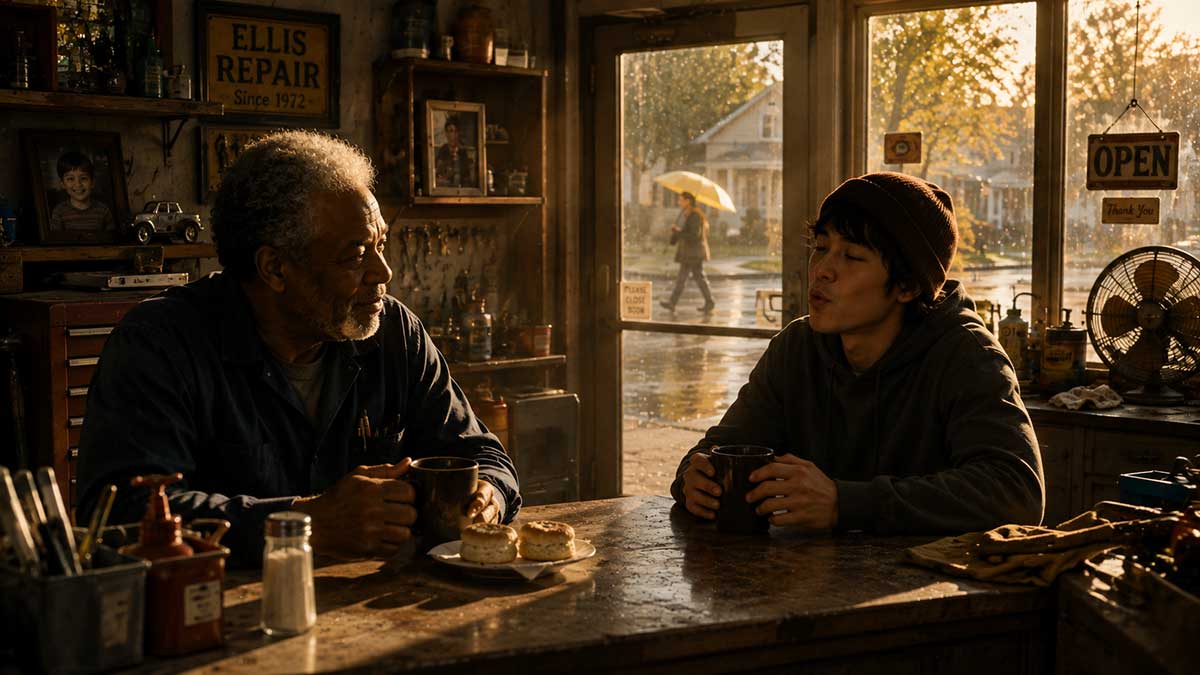
Raymond Ellis arrived at the shop every morning at 6:45.
Not 6:44.
Not 6:46.
6:45.
He unlocked the front door.
Checked the back door.
Checked the side window.
Checked the tool cabinet.
Checked the cash drawer.
Then he made coffee.
Same order.
Every morning.
For thirty-seven years.
People called Raymond disciplined.
He preferred that word.
Routine sounded harmless when other people used it.
They did not know that Raymond had learned routines in a place where knowing what came next sometimes kept a boy safe.
They did not know why he disliked doors left open.
Why he refused to sit with his back to a room.
Why he woke at the smallest sound.
Why he checked locks he clearly remembered locking.
They simply knew Raymond Ellis could repair almost anything.
Alternators.
Starters.
Old lawn equipment.
Generators.
Small engines other repair shops refused to touch.
A faded sign above the garage read:
ELLIS REPAIR
Underneath:
SINCE 1989
Raymond had painted the letters himself.
He had never married.
People assumed work was his life.
Raymond let them.
Eli Carter arrived one Monday afternoon seventeen minutes late.
Raymond knew since he had looked at the clock six times.
Eli pushed open the shop door.
Seventeen.
Skinny.
Curly hair that seemed permanently unfinished.
Backpack hanging from one shoulder.
Eli: "Sorry."
Raymond stared at him.
Raymond: "For what?"
Eli looked confused.
Eli: "Being late."
Raymond: "Then say what you're sorry for."
Eli blinked.
Eli: "I'm sorry I'm late."
Raymond: "Better."
Eli waited.
Eli: "Am I fired?"
Raymond: "You haven't started."
Eli: "So that's a no?"
Raymond looked at him.
Eli smiled.
That was the first thing Raymond disliked about him.
The smile.
Crooked.
One side higher than the other.
Raymond looked away.
Raymond: "Put your bag over there."
Eli dropped it directly in the middle of the floor.
Raymond stared at it.
Eli: "What?"
Raymond: "Does that look like 'over there'?"
Eli picked it up.
Eli: "You might have to be more precise."
Raymond regretted agreeing to this.
The high school counselor had called.
Eli needed after-school work.
Good kid.
Unreliable attendance.
Mother dealing with health problems.
Needed structure.
Raymond had said no twice.
The counselor called a third time.
Raymond hated persistence almost as much as he respected it.
Now Eli was standing in his shop.
Raymond: "You know anything about engines?"
Eli: "Cars have them."
Raymond closed his eyes.
Raymond: "Wonderful."
Eli knew nothing.
Worse, he was curious.
Eli: "What's this?"
Raymond: "Torque wrench."
Five minutes later:
Eli: "What's this?"
Raymond: "Fuel pump."
Then:
Eli: "What's this?"
Raymond looked over.
Raymond: "That's a broom."
Eli grinned.
Raymond almost did too.
He stopped himself.
By the second week, Eli had developed a habit of whistling while he worked.
Badly.
Same four notes.
Over and over.
Raymond finally snapped.
Raymond: "Stop that."
Eli stopped.
Eli: "Stop what?"
Raymond: "Whistling."
Eli: "Why?"
Raymond: "Since I said so."
Eli stared at him.
Raymond heard the sentence after it left his mouth.
The tone.
The authority.
The old echo.
He turned away.
Raymond: "Just stop."
Eli didn't whistle for the rest of the afternoon.
Raymond should have been relieved.
Instead the shop felt wrong.
Too quiet.
Samuel used to whistle.
Raymond had not thought about that in years.
At least that was what he told himself.
Samuel was three years younger.
Thin wrists.
Big ears.
Always hungry.
Terrible at keeping secrets.
He could whistle before Raymond could.
Same four-note pattern.
Raymond hated it then too.
Not since it was annoying.
Since Samuel whistled when he was nervous.
At the residential school, boys learned quickly not to appear nervous.
Nervous boys attracted attention.
Raymond used to whisper:
Young Raymond: "Stop."
Samuel would try.
Then start again five minutes later.
One night, someone heard him.
Raymond remembered a door opening.
A man's voice.
Samuel going quiet.
Raymond spent much of his life trying not to remember what came after.
Eli started whistling again three days later.
Raymond didn't stop him.
He told himself he simply hadn't noticed.
By November, Eli knew how to change oil properly.
By December, he could diagnose a dead battery without Raymond.
By January, he could rebuild a small carburetor if Raymond stood nearby.
Eli talked through every step.
Eli: "Okay, so first..."
Raymond: "You don't need to narrate."
Eli: "Helps me think."
Raymond: "Hurts me think."
Eli: "That's not grammar."
Raymond: "You want the job?"
Eli: "Very much."
Raymond shook his head.
Eli grinned.
That smile.
Every time.
The same left side lifting first.
Samuel had smiled like that.
Raymond began avoiding looking directly at him.
One afternoon Eli brought two cheeseburgers.
He placed one on Raymond's desk.
Raymond: "What's this?"
Eli: "Lunch."
Raymond: "I know what food is."
Eli: "Good. Progress."
Raymond stared at him.
Eli: "They had two for one."
Raymond: "I didn't ask for anything."
Eli: "That's why it's called a surprise."
Raymond hated surprises.
He looked at the wrapped burger.
Raymond: "How much?"
Eli: "Don't worry about it."
Raymond: "How much?"
Eli: "Six dollars."
Raymond opened the cash drawer.
Eli pushed it closed.
Eli: "It's six dollars."
Raymond: "Exactly."
Eli: "You're weird."
Raymond looked at him.
Eli: "Sorry."
He paused.
Eli: "You're unusually particular."
Raymond slid six dollars across the desk.
Eli pushed it back.
They spent the next minute moving the money between them.
Finally Eli grabbed it.
Eli: "Fine."
Raymond opened the burger.
They ate together.
Neither spoke for several minutes.
Then Eli asked:
Eli: "You got kids?"
Raymond stopped chewing.
Raymond: "No."
Eli: "Brothers?"
Raymond looked down at the burger.
Raymond: "Had one."
Eli understood the tense.
Eli: "Sorry."
Raymond nodded.
Eli did not ask more.
That surprised him.
Raymond expected seventeen-year-olds to push through every boundary.
Eli simply ate.
After a while he said:
Eli: "My mom says I chew too loud."
Raymond listened.
Raymond: "She's right."
Eli laughed.
Raymond smiled before he could stop himself.
His mother was named Denise.
Raymond met her once when she came to pick Eli up.
She looked tired.
Thin.
A scarf covered her head.
She shook Raymond's hand.
Denise: "Thank you for giving him a chance."
Raymond looked toward Eli, who was trying to balance a socket on his nose.
Raymond: "Still evaluating."
Denise laughed.
Eli dropped the socket.
Eli: "He loves me."
Raymond looked sharply at him.
Eli laughed again.
Denise smiled at Raymond.
Something about the smile made him uncomfortable.
Grateful.
Hopeful.
Trusting.
Raymond looked away.
Raymond: "He needs to stop leaving tools out."
Denise: "He's done that since kindergarten."
Eli: "I was not using sockets in kindergarten."
Denise: "You lost everything else."
They left together.
Raymond watched from the shop door.
Eli put his arm around his mother as they crossed the parking lot.
Samuel used to put his arm around Raymond like that.
Raymond closed the door.
Checked the lock.
Then checked it again.
The closer Eli became, the less patient Raymond became.
Neither understood it at first.
Eli forgot to put away a wrench.
Raymond shouted.
Eli spilled coffee.
Raymond sent him home.
Eli arrived nine minutes late.
Raymond refused to speak for an hour.
One afternoon Eli stood beside the workbench while Raymond criticized the way he was cleaning parts.
Raymond: "You're rushing."
Eli: "I'm not."
Raymond: "You are."
Eli: "I've done it the same way for months."
Raymond: "Then you've been doing it wrong for months."
Eli dropped the rag.
Eli: "What's your problem?"
Raymond turned slowly.
Raymond: "Excuse me?"
Eli: "You heard me."
Raymond stared at him.
Eli's face was red.
Eli: "I can do everything right and you find something."
Raymond: "Then do better."
Eli: "See?"
Raymond: "See what?"
Eli's voice broke.
Eli: "Why do you get mad every time I start feeling like family?"
Raymond stopped breathing.
The shop seemed to disappear.
For one second he was somewhere else.
A dormitory.
Metal beds.
Samuel whispering in the dark.
You awake?
Raymond looked at Eli.
Same crooked smile gone now.
Only hurt.
Raymond: "Go home."
Eli stared at him.
Eli: "What?"
Raymond: "Go home."
Eli: "Raymond..."
Raymond: "Now."
Eli grabbed his backpack.
At the door he turned.
Raymond looked away.
The door closed.
Raymond stood alone.
The silence felt like punishment.
Eli did not come the next day.
3:15 passed.
3:30.
4:00.
Raymond checked his phone.
No message.
At 4:17 he told himself:
Good.
The boy had finally understood.
At 4:32:
Kids quit.
At 5:01:
Everyone leaves eventually.
That sentence felt old.
Reliable.
Raymond began cleaning early.
He put away Eli's tools.
Found a half-finished soda behind the workbench.
Threw it away.
Found Eli's gloves.
Placed them in a box.
By 5:30 the shop looked exactly as it had before Eli arrived.
Orderly.
Quiet.
Safe.
Raymond hated it.
He locked the front door at 5:46.
Checked the back.
Checked the window.
Checked the tool cabinet.
Checked the cash drawer.
Then he went home.
At 8:13 that night, his phone rang.
Unknown number.
Raymond almost ignored it.
He answered.
Raymond: "Hello?"
Denise: "Mr. Ellis?"
Her voice sounded weak.
Raymond sat up.
Raymond: "Yes."
Denise: "It's Denise. Eli's mom."
Raymond's stomach tightened.
Raymond: "What happened?"
Denise: "I'm sorry he didn't call."
Raymond stood.
Raymond: "Where is he?"
Denise: "We're at the hospital."
Raymond gripped the phone.
Raymond: "Is he hurt?"
Denise: "No."
She laughed softly.
Denise: "He wishes. Then everyone would bring him food."
Raymond closed his eyes.
Denise: "I had a bad reaction this afternoon."
Raymond: "Are you okay?"
Denise: "Better now."
Raymond sat again.
Denise: "He left his phone in my bag. Everything happened quickly."
Raymond: "You don't need to explain."
Denise: "He was worried you'd think he quit."
Raymond looked around his silent house.
Raymond: "No."
The lie came easily.
Denise: "He likes working with you."
Raymond swallowed.
Denise: "He talks about you constantly."
Raymond could not answer.
Denise: "He says you're teaching him things nobody else ever took time to teach him."
Raymond looked down.
Denise: "Thank you."
There was that gratitude again.
Raymond wanted to reject it.
Instead:
Raymond: "Tell him I'll see him when he's ready."
Denise: "I will."
Before hanging up, she said:
Denise: "He's a good kid."
Raymond looked toward the dark window.
Raymond: "I know."
He slept badly.
At 3:17 a.m., Raymond woke convinced someone had opened the back door.
He walked through the house.
Checked it.
Locked.
He returned to bed.
At 4:02 he checked again.
At 5:11 he gave up sleeping.
At 6:31 he drove to the shop.
Too early.
He sat in the parking lot.
He refused to unlock the door until 6:45.
Rules were rules.
At 6:44, he noticed someone sitting beside the entrance.
Eli.
Two coffee cups beside him.
Raymond stared through the windshield.
Eli saw the truck.
He stood.
Raymond almost laughed.
Almost cried.
He parked.
Got out.
Eli: "Morning."
Raymond looked at him.
Raymond: "Hospital discharge you directly to my doorstep?"
Eli: "Mom's okay."
Raymond nodded.
Eli: "They kept her overnight."
Raymond: "You should be home."
Eli: "Couldn't sleep."
He held out one coffee.
Eli: "Your usual."
Raymond took it.
Raymond: "You don't know my usual."
Eli: "Black. Tiny bit of sugar."
Raymond stared at the cup.
Eli: "I've watched you make it five hundred times."
Raymond: "That's disturbing."
Eli smiled.
Crooked.
Samuel.
Raymond felt the old instinct rise.
Pull back.
Create distance.
Protect the boy.
Protect yourself.
He unlocked the door.
They entered.
Raymond checked the front lock.
Then the side window.
Tool cabinet.
Cash drawer.
Eli watched.
Eli: "You always do that?"
Raymond looked at him.
Raymond: "Do what?"
Eli: "Check everything."
Raymond turned away.
Raymond: "Shop insurance."
Eli nodded.
He did not believe him.
He did not challenge him.
The morning passed quietly.
Eli swept.
Raymond worked on an old generator.
At 9:20, Eli opened the wrong drawer looking for electrical tape.
Raymond heard him stop.
He looked up.
Eli was holding a photograph.
Raymond's entire body tightened.
Raymond: "Put that down."
Eli immediately did.
Eli: "Sorry."
Raymond crossed the shop.
He picked up the photograph.
Two boys stood beside a lake.
Raymond was thirteen.
Samuel ten.
Matching cheap swimsuits.
Samuel had one arm around Raymond's shoulders.
Both were squinting into the sun.
Raymond had kept the photograph hidden beneath invoices for decades.
Eli looked at him.
Eli: "Your brother?"
Raymond said nothing.
He put the photograph back in the drawer.
Closed it.
Returned to the generator.
Eli did not ask again.
Five minutes passed.
Ten.
Raymond could not concentrate.
He kept seeing Samuel.
Not at the residential school.
At the lake.
Before.
That mattered.
Memory had become unfair.
It returned Samuel's worst moments most easily.
Raymond had forgotten how much he laughed.
How much he ate.
How he cheated at cards.
How badly he sang.
How he whistled those same four notes.
Raymond shut off the tool.
Raymond: "Eli."
Eli looked over.
Raymond opened the drawer.
Removed the photograph.
He carried it to the small table near the office.
Placed it down.
Eli approached carefully.
Raymond pointed to the younger boy.
Raymond: "That's Samuel."
Eli sat across from him.
Eli: "Your brother."
Raymond nodded.
Eli: "He looks like you."
Raymond: "He hated when people said that."
Eli smiled.
Raymond almost did.
Eli: "What was he like?"
Raymond stared at the photograph.
No one had asked him that in years.
People had asked how Samuel died.
Where it happened.
How old he was.
Whether there had been an investigation.
What the institution was called.
Nobody asked what he was like.
Raymond: "Annoying."
Eli laughed.
Raymond continued.
Raymond: "Always hungry."
"Couldn't keep his shoes tied."
"Thought he could sing."
"He couldn't."
Eli listened.
Raymond: "Whistled constantly."
Eli's smile faded slightly.
He understood.
Eli: "That's why you hate it."
Raymond looked at him.
Raymond: "I don't hate it."
Eli: "You definitely hate it."
Raymond looked down.
Raymond: "I hated being reminded."
Eli nodded.
No apology.
No promise to stop.
He simply waited.
Raymond looked at the photograph again.
Raymond: "We were in a place."
He stopped.
Eli waited.
Raymond: "After our mother died."
His throat tightened.
Raymond: "Residential school."
Eli said nothing.
Raymond: "Wasn't a good place."
Silence.
Raymond: "Samuel didn't come home."
Eli looked down.
Raymond had imagined telling someone this many times.
In every version, the other person said something.
I'm sorry.
That's terrible.
You were only a child.
Eli said nothing.
Raymond was grateful.
After a while, Eli touched the edge of the photograph.
Not picking it up.
Just touching the corner.
Eli: "Which one is you?"
Raymond looked at the two boys.
The question struck somewhere he had not expected.
For decades, he had thought of that photograph as Samuel.
Samuel at the lake.
Samuel before everything.
Samuel alive.
Raymond had rarely looked at the other boy.
He pointed.
Raymond: "That one."
The older boy.
Thin.
Serious.
Already watching the world as though something might happen.
Eli looked at him.
Then at Raymond.
Eli: "You looked nervous."
Raymond laughed unexpectedly.
Raymond: "I probably was."
Eli smiled.
Eli: "You still kind of do."
Raymond gave him a look.
Eli: "Sorry."
Raymond shook his head.
Then something happened he had not planned.
He began laughing.
Not loudly.
Enough.
Eli joined him.
For a moment Samuel's photograph sat between them without becoming a grave.
Just two boys at a lake.
At noon, Eli went across the street for sandwiches.
Raymond remained in the shop.
He looked at the photograph.
Raymond: "You would've liked him."
He felt ridiculous talking to Samuel.
Then:
Raymond: "Maybe too much."
He smiled.
A truck passed outside.
Raymond picked up the photograph.
For years he had hidden it.
He placed it on the shelf beside the register.
Not prominently.
Just visible.
Then returned to work.
Spring arrived slowly.
Denise improved.
Eli continued working.
He became better with engines.
Worse with putting away tools.
Raymond learned that neither condition was likely to change.
One afternoon Eli asked:
Eli: "Can I use the lift?"
Raymond: "No."
Eli: "You said when I was ready."
Raymond: "You're not."
Eli: "When will I be?"
Raymond handed him a wrench.
Raymond: "Take your time."
Eli stopped.
Eli: "Did you just say that?"
Raymond: "Say what?"
Eli: "Nothing."
He smiled.
Raymond pretended not to notice.
Then came Tuesday morning.
No anniversary.
No birthday.
Nothing important on the calendar.
Raymond arrived at 6:45.
Unlocked the front.
Checked the side window.
Tool cabinet.
Cash drawer.
He walked toward the back door.
Stopped.
The door stood exactly where it always had.
Closed.
Raymond stared at it.
His hand moved toward the lock.
Then the front door opened behind him.
Eli entered carrying two coffees and a paper bag.
Eli: "Breakfast."
Raymond turned.
Raymond: "You have a key now. You don't need to announce yourself."
Eli: "You say that, but I feel like you'd hit me with a wrench."
Raymond: "Depends which wrench."
Eli put the bag on the counter.
Eli: "Mom made biscuits."
Raymond looked at the bag.
Raymond: "How much?"
Eli: "If you try to pay me, I'm quitting."
Raymond considered it.
Raymond: "Fine."
Eli looked shocked.
Eli: "That worked?"
Raymond sat down.
Raymond: "Don't get excited."
Eli poured coffee.
Outside, morning light stretched across the street.
Someone carrying a yellow umbrella crossed in front of the shop, though the sky was perfectly clear.
Eli noticed.
Eli: "That's optimistic."
Raymond looked out.
The umbrella disappeared beyond the corner.
He looked back toward the rear of the shop.
The back door.
Unchecked.
His chest tightened slightly.
He could stand.
It would take five seconds.
Walk back.
Touch the lock.
Return.
Nobody would know.
Then Eli placed a biscuit on a paper plate.
Eli: "You want the usual?"
Raymond looked at the coffee.
At Samuel's photograph on the shelf.
At Eli.
Raymond: "Yeah."
Eli began fixing it.
Raymond looked once more toward the back door.
He did not move.
A minute passed.
Then another.
Nothing happened.
No one entered.
No danger appeared.
The world continued.
Eli sat across from him.
He started whistling.
Four bad notes.
Raymond looked at him.
Eli stopped instantly.
Eli: "Sorry."
Raymond picked up his coffee.
Raymond: "Keep going."
Eli stared.
Eli: "Seriously?"
Raymond nodded.
Eli started again.
Same four notes.
Raymond listened.
At first he heard Samuel.
Then Eli.
Then simply a boy whistling badly on a Tuesday morning.
Raymond took a sip of coffee.
For once, the past did not disappear.
It simply moved over enough to make room for someone living.
Final Thoughts
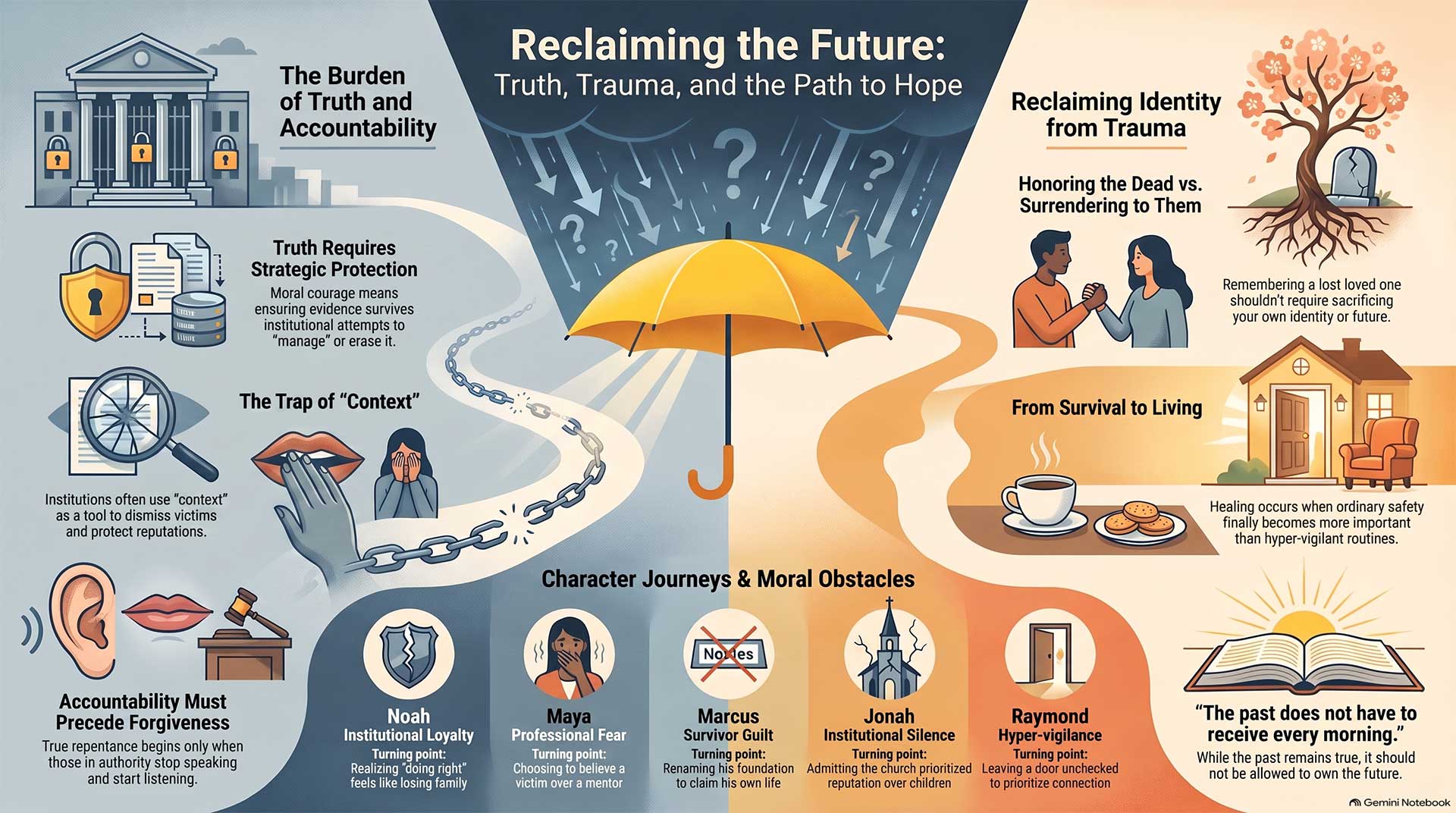
Across all five stories, the same question keeps changing shape:
How much of the future should the past be allowed to own?
Noah learns that telling the truth is only the first step. Truth sometimes needs strategy, protection, and somewhere safe to survive.
Maya learns that listening carries responsibility. Regret cannot change Room 417, but it can change what she does when the next warning appears.
Marcus discovers that honoring the dead does not require becoming a memorial to them. Daniel can remain his brother without remaining the owner of Marcus's life.
Rachel learns that forgiveness cannot be assigned to the injured. Jonah learns that repentance may begin when the person with authority stops explaining and starts listening.
Raymond learns perhaps the quietest lesson of all.
Healing does not always arrive through a dramatic breakthrough.
Sometimes it arrives when a man hears a familiar whistle and, for the first time, hears the living boy in front of him rather than only the brother he lost.
These stories do not promise that truth always wins.
They do not promise that institutions always change.
They do not claim suffering automatically creates wisdom.
They ask for something more difficult.
See clearly.
Listen when someone says something is wrong.
Protect truth when it is vulnerable.
Remember without disappearing.
Let accountability come before demanded forgiveness.
And when safety finally becomes possible, allow life to become larger than survival.
The past may remain true forever.
It does not have to receive every morning that follows.
Short Bios:
Noah Bennett
A seventeen-year-old scholarship student who discovers that exposing wrongdoing can threaten the people and relationships he loves most. His story explores loyalty, evidence, courage, and the need to pair moral conviction with strategy.
Maya Chen
A hospital nurse and new mother who begins questioning altered medical records after an elderly patient insists something is wrong. Her story examines responsibility, professional fear, regret, and what it means to truly listen.
Marcus Hale
A nonprofit founder who has built his adult identity around Daniel, the twin brother who died protecting him. His story explores survivor guilt, remembrance, identity, and the difference between honoring someone and surrendering your own life to their memory.
Rachel Monroe and Jonah Reed
Former childhood friends separated by a church's failure to respond when Rachel reported abuse. Their reunion examines accountability, institutional loyalty, spiritual language, forgiveness, and the difficult work of listening without demanding a preferred ending.
Raymond Ellis
An older repair-shop owner who survived an abusive residential institution but continued living by the rules that once kept him safe. His friendship with teenage employee Eli gradually challenges his distrust and reveals that healing can begin in very ordinary moments.
Leave a Reply