
Introduction
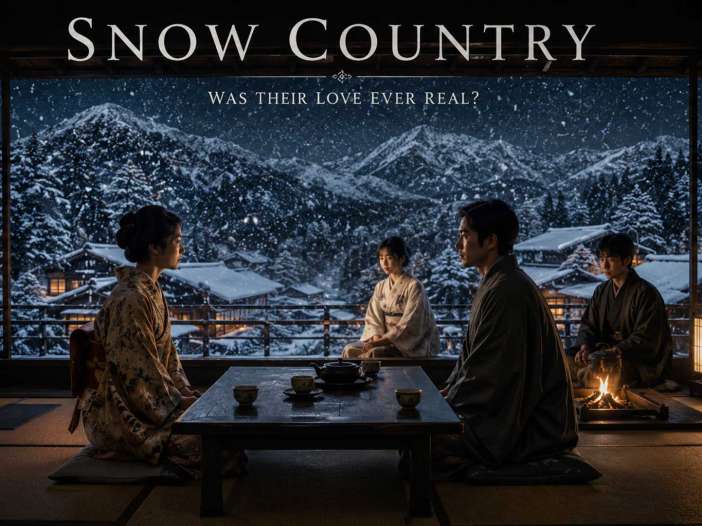
Yasunari Kawabata’s Snow Country is a story of beauty, distance, longing, and impermanence.
Shimamura repeatedly returns from Tokyo to a remote hot-spring town, where Komako grows deeply attached to him. Yoko remains mysterious and unforgettable, and Yukio’s presence adds another layer of care, illness, and unresolved feeling.
In this imaginary conversation, the characters finally ask the questions the novel leaves suspended.
Was the love between Komako and Shimamura real? Why did Komako keep waiting for someone she knew would leave? Did Shimamura truly see the people around him, or did he turn them into beautiful images? Who actually wasted more of life—the person who loved too much, or the person who protected himself from loving completely?
Their discussion ends where Kawabata’s novel does: with fire, Yoko’s fall, the Milky Way, and one haunting question:
If everything beautiful eventually disappears, what does that ask of us while it is still here?
(Note: This is an imaginary conversation, a creative exploration of an idea, and not a real speech or event.)
Topic 1 — Was Their Love Ever Real?
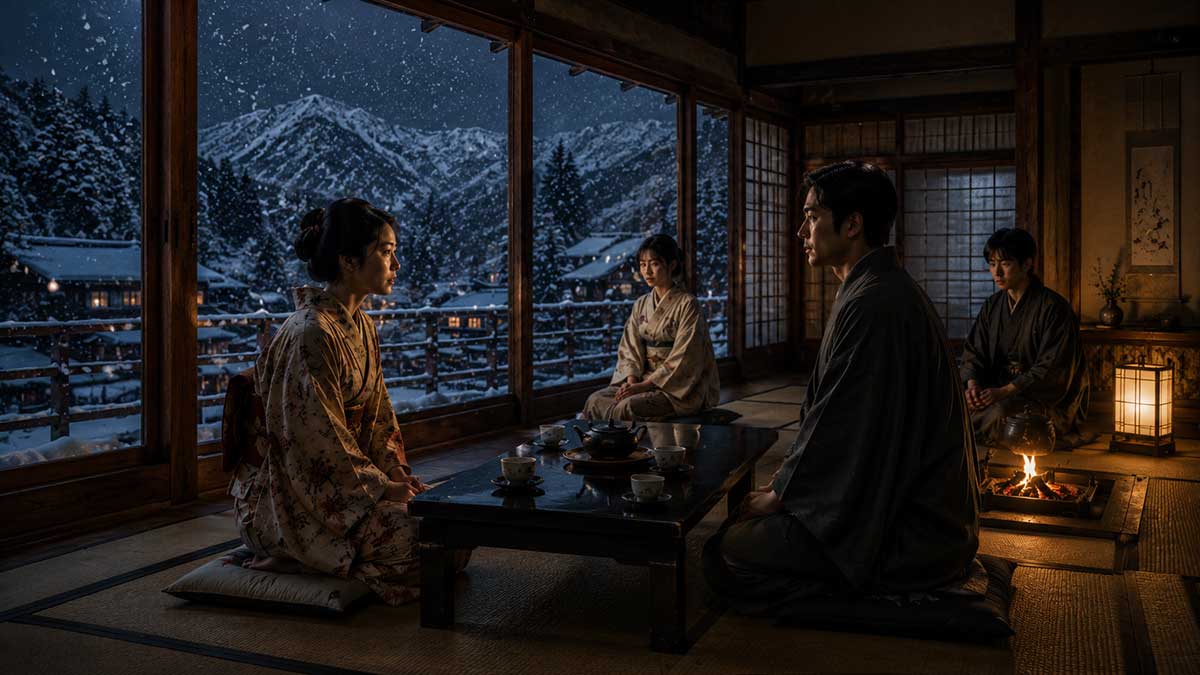
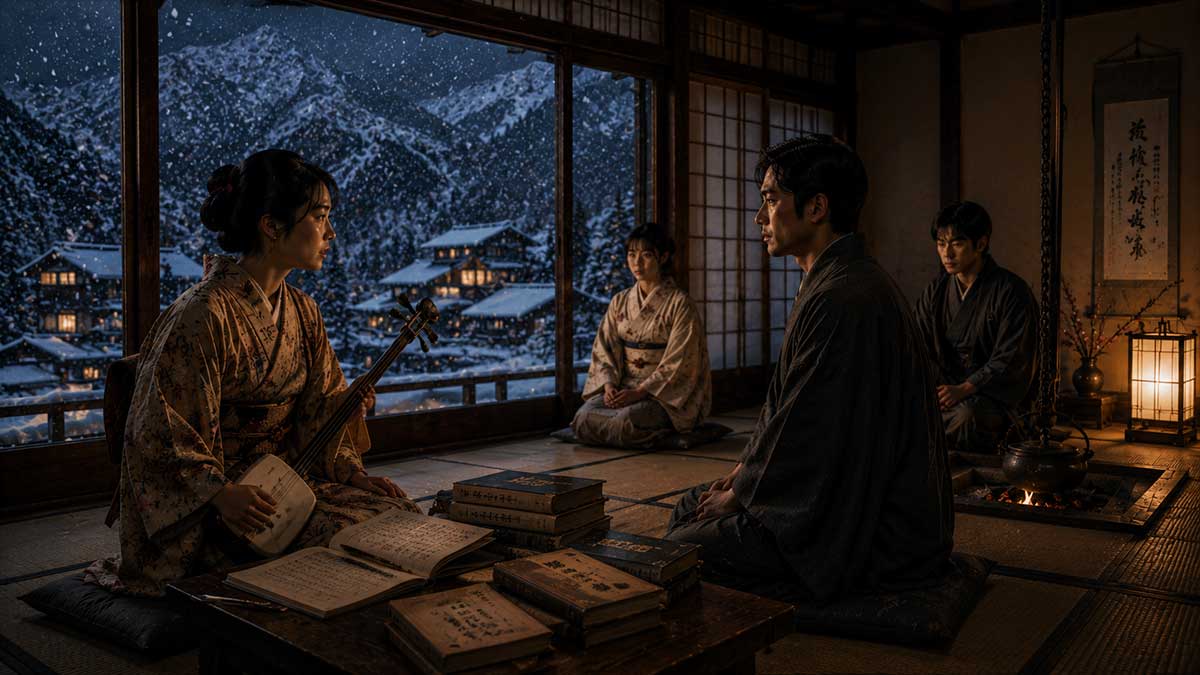
Snow pressed against the dark windows of the inn.
The room was warm, but no one seemed comfortable.
Komako sat nearest the window.
Shimamura sat across from her.
Yoko remained slightly apart from both of them, her hands folded loosely in her lap.
Yukio sat near the low fire.
For a long time, nobody spoke.
Then Komako looked at Shimamura.
Komako: You always came back.
Shimamura lifted his eyes.
Komako: That was the cruel part.
If you had come once and disappeared, perhaps I could have hated you.
If you had never returned, perhaps eventually I could have forgotten you.
But you kept coming back.
Shimamura: I never asked you to wait.
Komako looked at him.
Komako: No.
She gave a small, bitter smile.
Komako: You only kept giving me reasons to.
Silence returned.
Yoko looked toward the window.
Snowflakes gathered against the glass and vanished into darkness.
Does love require a future?
Shimamura: What would you have wanted me to say?
Komako: The truth.
Shimamura: I never lied about Tokyo.
Komako: No.
Shimamura: You knew I had a family.
Komako: Yes.
Shimamura: You knew I would leave.
Komako: Yes.
Shimamura: Then what truth did I withhold?
Komako stared at him.
Komako: That coming back meant something.
Shimamura: It did.
Komako: What?
Shimamura hesitated.
Komako: There.
Shimamura: What?
Komako: You can describe snow for ten minutes.
You can describe the light on a woman's face.
You can describe the sound of a shamisen string in cold air.
But ask what you felt and suddenly language abandons you.
Shimamura looked down.
Yukio: Perhaps the question is simpler.
Shimamura turned toward him.
Yukio: Did you love her?
Shimamura’s expression tightened.
Shimamura: That word may carry expectations that do not belong to what existed between us.
Komako laughed once.
Komako: Of course.
Yukio: That is not an answer.
Shimamura: I cared for her deeply.
Komako: Deeply enough to leave.
Shimamura: Leaving does not erase feeling.
Komako: No.
She leaned forward.
Komako: But feeling does not excuse everything either.
Can something temporary still be love?
Shimamura: Suppose two people share something real for a season.
Must it become permanent before we are allowed to call it meaningful?
Yoko: No.
Everyone looked toward her.
Yoko rarely spoke first.
Yoko: Something can be brief and still be real.
Komako looked at her.
Yoko: A voice can be real even after it stops.
A winter can be real even after the snow melts.
Komako’s expression softened slightly.
Then Yoko looked toward Shimamura.
Yoko: But knowing something will end does not remove responsibility for how you hold it before it ends.
Shimamura studied her.
Shimamura: Responsibility to do what?
Yoko: To know what it is to the other person.
Komako looked at Shimamura again.
Komako: That is what you never wanted to know.
Shimamura: I knew you cared for me.
Komako: No.
You knew I came to your room.
You knew when I drank too much.
You knew when I became jealous.
You knew when I practiced.
You knew which books I read.
You knew the color of my face after walking through snow.
She paused.
Komako: But did you know what happened to me after you left?
Shimamura said nothing.
Komako: Did you know what mornings were like?
Did you know which days I thought you might return?
Did you know how long I listened whenever someone arrived at the inn?
His eyes shifted.
Komako: You knew the beautiful parts.
Did Shimamura love Komako—or the place?
Yoko spoke quietly.
Yoko: When you returned to Tokyo, what did you miss?
Shimamura turned toward her.
Shimamura: What do you mean?
Yoko: Komako?
Or the snow country?
He did not answer.
Yoko: Or perhaps yourself here?
Komako looked at Yoko.
Then back at Shimamura.
Komako: Answer her.
Shimamura: These things are not so easily separated.
Komako: Try.
Shimamura leaned back.
Shimamura: Tokyo was crowded with obligations.
The snow country was different.
Komako: Different how?
Shimamura: Quiet.
Komako: And I was part of that quiet?
Shimamura: You were part of what drew me back.
Komako: Part.
He looked at her.
Komako: I see.
Shimamura: You want me to say that everything disappeared except you.
That I returned only because of you.
That would not be true.
Komako’s face changed.
The answer hurt.
Yet she nodded.
Komako: Good.
Shimamura: Good?
Komako: At least that sounded like you.
He looked surprised.
Komako: Continue.
Shimamura: I missed the mountains.
The cold.
The journey through the tunnel.
The change in the air.
I missed the feeling of entering somewhere separate from the rest of my life.
He looked toward Komako.
Shimamura: And yes.
I missed you.
Komako: In the same way you missed the snow?
Shimamura looked almost offended.
Shimamura: No.
Komako: Then how?
Silence.
Did Shimamura love the person—or the experience?
Yukio: Perhaps that is the distinction.
Everyone turned toward him.
Yukio: You may have loved what happened to you when you were with her.
That is not always the same as loving her.
Shimamura frowned.
Shimamura: You presume a great deal.
Yukio: Perhaps.
But there is a difference between wanting someone and wanting the life that appears around them.
Komako looked down.
Yukio: Komako made this place more vivid to you.
Her music.
Her temper.
Her laughter.
Her sadness.
Her body.
Her contradictions.
She became inseparable from the beauty of the place.
Shimamura: That does not make my feelings false.
Yukio: No.
It makes them difficult to measure.
Komako: Did you ever picture me in Tokyo?
Shimamura froze.
Komako: Not visiting.
Living there.
Being tired.
Being angry.
Getting sick.
Arguing with you.
Needing money.
Wanting something from you when you wanted silence.
He said nothing.
Komako: Did you ever picture ordinary days with me?
Shimamura: No.
The answer came quietly.
Komako looked toward the fire.
Komako: Then perhaps you loved me only where I was beautiful to you.
Shimamura: That is unfair.
Komako: Is it?
Does love require ordinary life?
Shimamura: Must love always become ordinary?
Komako: Eventually, yes.
He looked at her.
Komako: Not immediately.
Not every love becomes marriage.
Not every feeling becomes a household.
But if you keep returning to someone, eventually they begin wondering where the feeling belongs in daylight.
Shimamura looked away.
Komako: You wanted evenings.
Snow.
Rooms.
Departure.
You wanted something untouched by morning.
Yoko watched them both.
Yoko: Perhaps that is why temporary things were safer for you.
Shimamura turned.
Shimamura: Safer?
Yoko: A temporary thing can remain perfect.
A permanent thing must survive reality.
Shimamura smiled faintly.
Shimamura: You all speak as though permanence proves sincerity.
It does not.
People remain together for decades and barely know one another.
People promise forever and betray each other before spring.
Komako nodded.
Komako: True.
He looked surprised.
Komako: I did not say permanence proves love.
I said love eventually creates questions.
And you preferred beauty before the questions.
Did Komako love the real Shimamura?
Yukio turned toward Komako.
Yukio: Then perhaps you should answer one too.
Komako looked at him.
Yukio: Did you love the real Shimamura?
Her expression hardened.
Komako: I knew him.
Yukio: Did you?
Komako: Better than he knew me.
Yukio: That was not my question.
Komako stared at him.
Yukio: You accuse him of loving an image.
Did you?
Komako: I saw his selfishness.
Yukio: Yes.
Komako: His laziness.
Yukio: Yes.
Komako: His distance.
Yukio: Yes.
Komako: Then what image?
Yukio: The man you kept hoping would eventually stay.
Komako went silent.
Yukio: Was that man real?
She looked toward Shimamura.
He did not help her.
Komako: Sometimes I thought he was.
Yukio: Based on what?
Komako: The way he looked at me.
The fact that he came back.
The things he remembered.
The moments when he seemed—
She stopped.
Yukio: Seemed what?
Komako: Close.
Yukio: And from those moments, you built a future?
Komako looked angry now.
Komako: I did not sit drawing houses and children in a notebook.
Yukio: I know.
Komako: I knew he was married.
Yukio: I know.
Komako: I knew he would leave.
Yukio: Yes.
Komako: Then don't speak to me as though I were a foolish girl waiting for rescue.
Yukio: I am not.
His voice remained calm.
Yukio: I am asking whether part of you kept loving the man you thought he might become.
Komako looked down.
That question stayed with her longer.
Can two people love each other and still want different realities?
Yoko looked toward Komako.
Yoko: Perhaps you both loved something real.
Komako raised her eyes.
Yoko: But perhaps you loved different things inside the same relationship.
Shimamura watched her.
Yoko: Komako loved the possibility that what happened between you might eventually ask something of tomorrow.
Shimamura remained still.
Yoko: You loved the fact that it did not have to.
The room grew quiet.
Snow brushed faintly against the window.
Komako looked at Shimamura.
Komako: Is that true?
He took a long time.
Shimamura: I did not want to destroy what existed by forcing it into another form.
Komako: Marriage?
Shimamura: Not only marriage.
Expectation.
Definition.
Duty.
Komako’s eyes narrowed.
Komako: You were afraid ordinary life would make it less beautiful.
Shimamura did not answer.
That was answer enough.
Can beauty become an excuse?
Komako: You wanted us untouched.
Shimamura: Perhaps.
Komako: Untouched by what?
Shimamura: Consequence.
The word surprised everyone.
Perhaps Shimamura most of all.
Komako looked at him carefully.
Komako: Say that again.
Shimamura: I said perhaps I wanted what existed between us untouched by consequence.
Komako: There is no such love.
He looked at her.
Komako: There may be temporary love.
There may be impossible love.
There may be love that never becomes a home.
But there is no love without consequence.
Yoko looked toward the fire.
Yoko: Someone always carries the ending.
That sentence silenced the room.
Komako turned toward her.
Yoko's expression remained unreadable.
Yoko: Sometimes both people carry it.
Sometimes one carries more.
Did Shimamura owe Komako a promise?
Shimamura: Then tell me.
What did I owe her?
A promise I could not honestly make?
Should I have told her I would stay when I knew I would not?
Komako: No.
Shimamura: Should I have lied about my family?
Komako: No.
Shimamura: Should I have stopped returning?
Komako hesitated.
That answer was harder.
Komako: Maybe.
Shimamura: Would you have wanted that?
She looked at him.
Komako: No.
The honesty surprised them both.
Shimamura: Then what?
Komako stared at the snow.
Komako: I wanted you to understand that returning was not neutral.
Shimamura: I never thought it was.
Komako: I think you did.
He frowned.
Komako: You thought you could come back, feel deeply, leave, and call the whole thing beautiful.
As though beauty paid the debt.
Shimamura: Debt.
Komako: Yes.
Shimamura: You make love sound like accounting.
Komako: No.
I am saying feeling creates weight.
You wanted feeling without weight.
Was Komako asking for too much?
Shimamura turned toward her.
Shimamura: And perhaps you wanted feeling to guarantee transformation.
Komako stared at him.
Shimamura: You knew who I was.
You knew my life.
You knew my limitations.
Yet each return became evidence that perhaps this time I would become another man.
Komako: Perhaps.
Shimamura: Is that entirely my doing?
She said nothing.
Yoko looked at Komako.
Yoko: He has a point.
Komako turned sharply.
Yoko: Not the whole point.
But part of it.
Komako looked wounded.
Yoko continued gently.
Yoko: Hope can sometimes turn another person into an unfinished version of what we want.
Komako looked down.
Komako: I thought returning meant you were moving closer.
Shimamura answered quietly.
Shimamura: I thought returning meant I was returning.
That sentence struck her.
For a moment, anger rose in her face.
Then disappeared.
Because it was honest.
Painfully honest.
So was the love real?
Yukio looked around the room.
Yukio: We have gone very far without answering the first question.
Was it love?
Komako looked at Shimamura.
Shimamura looked at her.
Yoko waited.
Finally Komako spoke.
Komako: Yes.
Shimamura looked surprised.
Komako: I think it was.
Shimamura: After everything you have said?
Komako: Yes.
She looked toward the window.
Komako: That may be why it hurt.
Shimamura considered this.
Then:
Shimamura: I think so too.
Komako turned back.
Shimamura: I loved you.
The sentence landed awkwardly.
Not theatrical.
Almost uncomfortable in his mouth.
Komako’s expression changed.
Komako: Then why does hearing it now feel so small?
Shimamura had no answer.
Love is not the same as wanting the same life
Yoko spoke.
Yoko: Perhaps love was never the question.
Everyone turned.
Yoko: Perhaps you both wasted years trying to decide whether the feeling was real.
The feeling was real.
What was different was what you believed real feeling should become.
Komako watched her.
Yoko: For you, love began asking for tomorrow.
She looked toward Shimamura.
Yoko: For you, love remained complete inside the moment.
Neither answered.
Yukio nodded slowly.
Yukio: Then perhaps the tragedy is not that one loved and the other did not.
Komako: What is it?
Yukio: You loved each other according to different calendars.
Komako almost smiled.
A sad smile.
Yukio: One of you kept asking what this meant next.
The other kept asking why next had to matter.
Komako looked at Shimamura for a long time.
Komako: Perhaps we did love each other.
He waited.
Komako: Perhaps that was never the same as wanting the same life.
Shimamura lowered his eyes.
The sentence remained between them.
No accusation.
No absolution.
Only recognition.
Outside, snow continued falling.
Komako watched it.
Then she spoke again.
Komako: There is still something I don't understand.
Shimamura looked up.
Komako: You knew you would leave.
I knew you would leave.
We both knew almost from the beginning.
She paused.
Komako: Then why was I the one who kept waiting?
No one answered immediately.
Yoko looked toward her.
Yukio lowered his head.
Shimamura said nothing.
The first question had been answered, at least partly.
Their love may have been real.
But another question had taken its place.
A harder one.
If Komako knew what Shimamura could give—
why did she keep returning for more?
That was where Topic 2 would begin.
Topic 2 — Why Did Komako Keep Returning?
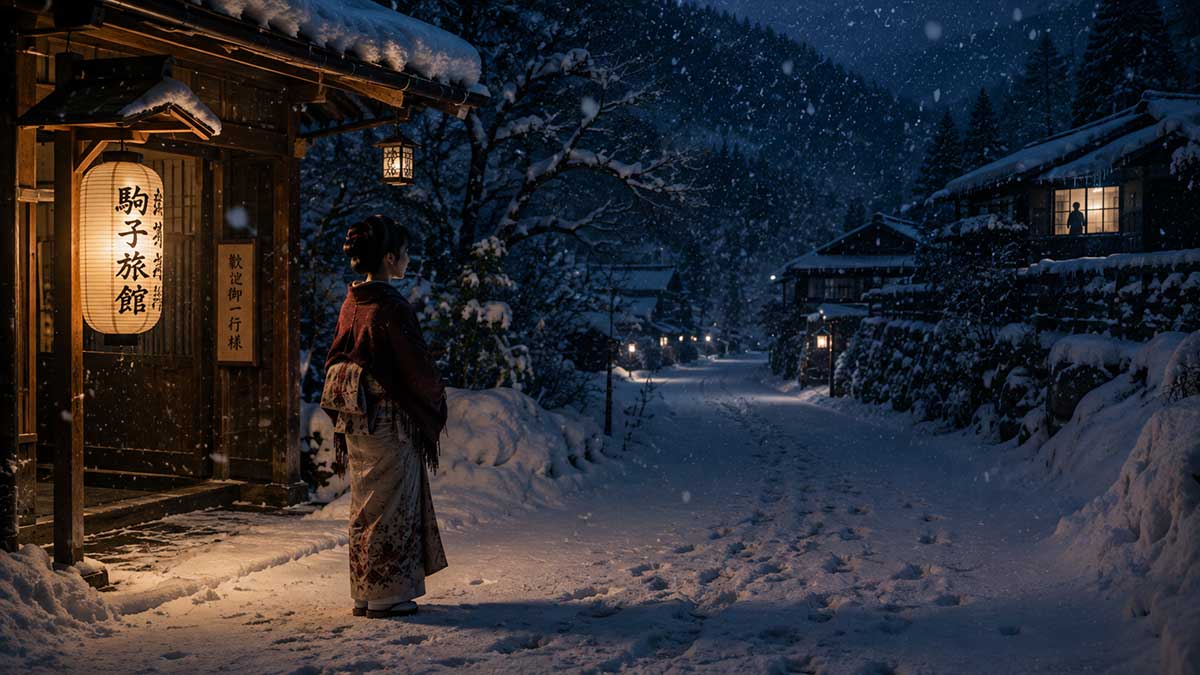
The snow had not stopped.
It pressed softly against the windows, filling the night with a silence that seemed almost deliberate.
Komako sat with her arms folded.
For the first time, she looked less angry than tired.
Shimamura watched her.
Yoko sat near the lamp.
Yukio remained by the fire.
The first conversation had asked whether the love between Komako and Shimamura was real.
They had reached an answer neither found comforting.
Perhaps it had been.
That made the next question harder.
If Komako knew Shimamura would always return to Tokyo, why did she keep giving him more of herself?
Why did Komako keep coming back?
Shimamura: May I ask you something now?
Komako gave him a wary look.
Komako: Apparently everyone may.
Shimamura: You knew I would leave.
Komako: Yes.
Shimamura: You knew I was married.
Komako: Yes.
Shimamura: You knew my life was in Tokyo.
Komako: Yes.
Shimamura: Then why did you keep coming to my room?
Komako looked toward the window.
Komako: Because I wanted to.
Shimamura: That is true.
But not complete.
She turned back.
Komako: You have suddenly become very interested in completeness.
Yoko lowered her eyes.
Shimamura accepted the blow.
Shimamura: Fair.
He waited.
Shimamura: Still.
Why?
Komako did not answer immediately.
Was it hope?
Komako: I suppose I thought something might change.
Shimamura: What?
She looked irritated.
Komako: You.
Shimamura: Into what?
Komako: Someone who stayed.
The answer came too quickly.
Komako heard it herself.
Shimamura did not smile.
That somehow made it worse.
Shimamura: Did I ever tell you I would?
Komako: No.
Shimamura: Did I behave as though I were preparing to?
Komako hesitated.
Komako: Sometimes.
Shimamura: When?
She searched.
A look.
A return.
A long evening.
A remembered detail.
Nothing substantial enough to name.
Komako: I don’t know.
Yoko spoke softly.
Yoko: Perhaps you were collecting signs.
Komako looked at her.
Yoko: Not promises.
Signs.
Komako: Maybe.
Yoko: A return became a sign.
A tender look became a sign.
Jealousy became a sign.
Silence became a sign.
Komako’s face tightened.
Yoko: Hope can make evidence from very small things.
Did Komako know he probably would not change?
Shimamura: Did you truly believe I would leave Tokyo?
Komako stared at him.
Shimamura: Be honest.
She looked down.
Komako: Not really.
He absorbed that.
Komako: I wanted to believe it.
That is different.
Shimamura: Very different.
Komako: Don’t sound pleased.
Shimamura: I’m not.
Komako: Good.
She took a breath.
Komako: I knew what you were.
I knew your life was elsewhere.
I knew I was part of something separate.
But knowing something and giving up on it are not the same.
Was love making Komako more alive?
Yoko leaned forward.
Yoko: Were you afraid of losing him?
Komako looked at her.
Komako: Yes.
Yoko: Or afraid of losing the person you were when you loved him?
Komako frowned.
Komako: What does that mean?
Yoko: You were intense with him.
Alive.
Angry.
Jealous.
Tender.
Restless.
You practiced more.
You read.
You waited.
You suffered.
Komako looked away.
Yoko: Perhaps loving him gave shape to days that otherwise felt shapeless.
Komako: Are you saying I needed suffering?
Yoko: No.
I am saying sometimes a difficult love becomes the place where a person feels most awake.
That is not the same as wanting pain.
Komako went quiet.
Did Shimamura become part of Komako’s identity?
Yukio: There may be something else.
Komako looked at him.
Yukio: When a person waits long enough, waiting becomes a way of living.
Shimamura listened closely.
Yukio: The question changes.
At first it is:
“Will he come back?”
Later it becomes:
“Who am I if I stop waiting?”
Komako stiffened.
Komako: I had a life.
Yukio: Yes.
Work.
Music.
Books.
People.
Komako: Then—
Yukio: I did not say you had nothing else.
I said he may have become part of the structure through which you experienced everything else.
Komako looked toward Shimamura.
There was anger there.
And recognition.
When does hope become self-deception?
Shimamura: Were you waiting for me to change?
Komako: Yes.
Shimamura: For how long?
Komako: I don’t know.
Shimamura: And each time I returned—
Komako: I thought maybe.
Shimamura: Even when I gave you no reason?
Komako: Returning was a reason.
Shimamura: To you.
Komako: Yes.
He went quiet.
That distinction mattered.
Can we blame someone else entirely for a relationship we knowingly keep choosing?
Yukio looked at Komako.
Yukio: This is the difficult part.
Komako: I know.
Yukio: Shimamura’s limits were his responsibility.
Your decisions were yours.
Komako bristled.
Komako: That sounds very convenient for him.
Yukio: It should not.
He looked toward Shimamura.
Yukio: He does not escape his part.
Then back to Komako.
Yukio: But if we give him every ounce of responsibility, we take something from you too.
Komako: What?
Yukio: Agency.
That silenced her.
When does love become participation in your own pain?
Yukio: If someone repeatedly shows you what they can give, at what point does waiting for more become your decision?
Komako looked at him for a long time.
Komako: I hate that question.
Yukio: I know.
Komako: It sounds like something people say to the person who was hurt.
Yukio: Sometimes it is used cruelly.
That does not make the question false.
Komako’s eyes filled slightly.
Komako: I did not choose his distance.
Yukio: No.
Komako: I did not choose his marriage.
Yukio: No.
Komako: I did not choose to mean less to him than he meant to me.
Yukio paused.
Yukio: No.
Then:
Yukio: But you chose each return after you knew those things.
Komako looked down.
Why is leaving sometimes harder than staying in pain?
Yoko spoke.
Yoko: Giving up hope has its own pain.
Komako looked at her gratefully.
Yoko: Sometimes greater pain than waiting.
Shimamura: Why?
Yoko looked toward him.
Yoko: Because waiting lets the story remain unfinished.
Leaving gives it an ending.
Shimamura said nothing.
Komako’s eyes shifted.
That sentence had found her.
Komako: Yes.
Everyone waited.
Komako: As long as he kept coming back, I did not have to admit what it was.
Shimamura: Which was?
Komako looked at him.
Komako: Something beautiful that was never becoming anything else.
The room stayed silent.
Did Komako mistake endurance for devotion?
Yukio: There is another possibility.
Komako gave him an exhausted look.
Komako: Of course there is.
Yukio: You worked hard at everything.
Music.
Reading.
Keeping records.
Work itself.
Perhaps you believed that enough effort eventually gives something meaning.
Komako frowned.
Yukio: Did you treat love the same way?
She stared at him.
Komako: You think I thought I could earn him?
Yukio: Maybe not consciously.
But perhaps effort was how you answered uncertainty.
Try harder.
Care more.
Wait longer.
Become indispensable.
Komako’s expression changed.
Shimamura looked uncomfortable now.
Komako: That sounds ugly.
Yukio: Why?
Komako: Because it sounds pathetic.
Yukio: It sounds human.
Did Shimamura benefit from Komako’s hope?
Yoko turned toward him.
Yoko: You understood some of this.
Shimamura looked at her.
Yoko: Not perfectly.
But enough.
Shimamura: Perhaps.
Yoko: Did her hope make it easier for you to return?
He said nothing.
Komako: Answer.
Shimamura: Yes.
Komako’s face tightened.
Shimamura: I knew I would be welcomed.
She looked away.
Shimamura: I knew the place would still exist.
You would still exist.
There was comfort in that.
Komako: For you.
Shimamura: Yes.
Yoko’s voice sharpened.
Yoko: Then her waiting was not something that happened only inside her.
You benefited from it.
Shimamura nodded slowly.
Shimamura: Yes.
That mattered.
Did Komako love him—or refuse to lose?
Shimamura: Can I ask one more difficult question?
Komako laughed bitterly.
Komako: You appear to have discovered a talent.
Shimamura: Did you keep loving me partly because giving up would have made all the years before feel wasted?
Komako’s expression froze.
The word “wasted” hung in the room.
She looked toward the fire.
Komako: Maybe.
No one moved.
Komako: Maybe I thought if I stopped, then everything before had been foolish.
The waiting.
The nights.
The jealousy.
The hope.
She rubbed her hands together.
Komako: If I kept going, perhaps one day the whole thing would prove itself.
Shimamura looked at her.
Not triumphantly.
Sadly.
Can love become a sunk cost?
Yukio spoke gently.
Yukio: Then perhaps the question became less about him.
Komako looked at him.
Yukio: And more about proving that your earlier choices had not been wasted.
She gave a small nod.
Komako: I suppose so.
Yoko: That happens.
Komako looked toward her.
Yoko: People sometimes stay because leaving would force them to grieve not only the person, but the version of themselves who waited.
What did Komako fear more: losing Shimamura or admitting the truth?
Komako: I think I feared admitting the truth.
Shimamura: Which truth?
She looked directly at him.
Komako: That you might love me and still never choose me.
He lowered his eyes.
Komako: I kept thinking those two things could not both be true.
If you loved me, eventually you would stay.
If you never stayed, then perhaps you never loved me.
She shook her head.
Komako: It was easier than accepting something messier.
Yoko nodded.
Yoko: That love and choice are not identical.
Komako: Yes.
Yoko: Painful, but not identical.
Does accepting reality mean the love was meaningless?
Komako: This is what frightens me.
Yoko looked at her.
Komako: If I say now that I should have stopped waiting, does that mean everything I felt was foolish?
Yoko: No.
Komako: How do you know?
Yoko: Because ending something does not erase what it was.
Komako listened.
Yoko: Snow melts.
That does not mean winter did not happen.
What would Komako tell her younger self?
Yukio leaned forward.
Yukio: If you could speak to yourself at the beginning, what would you say?
Komako smiled sadly.
Komako: Don’t fall in love with him?
She thought.
Then shook her head.
Komako: No.
That would be dishonest.
She looked toward Shimamura.
Komako: I might still love you.
His face changed.
Komako: I would tell myself something else.
Everyone waited.
Komako: Love him if you must.
But do not build your life around the day he might become someone else.
Silence.
The line between love and waiting
Shimamura looked at her.
Shimamura: Do you regret me?
Komako took a long time.
Komako: No.
He seemed surprised.
Komako: I regret the waiting.
That answer landed differently.
Komako: Loving you made me feel alive.
Waiting for you made my life smaller.
Shimamura looked down.
Final realization
Komako turned toward the window.
The snow continued falling.
Komako: Perhaps I kept waiting because giving up would have meant admitting that all my waiting had changed nothing.
Yoko watched her.
Komako: But maybe that was wrong too.
Yukio: How?
Komako looked back at them.
Komako: It changed me.
It taught me what I can survive.
What I can give.
And what I should never again confuse with hope.
She looked toward Shimamura.
Komako: I don't regret loving you.
Her voice softened.
Komako: I regret believing that loving you required me to wait forever.
Shimamura said nothing.
There was nothing useful he could add.
Outside, the snow covered every path leading away from the inn.
But beneath the snow, the roads were still there.
And for the first time, Komako seemed to understand that leaving did not require denying that she had once wanted to stay.
Topic 3 — Does Shimamura Love Beauty More Than People?
The snow had softened outside.
The wind had fallen.
For a while, the room seemed almost peaceful.
Komako sat closer to the fire now.
Shimamura remained opposite her.
Yukio looked tired.
Yoko had said little since the previous conversation.
Then she turned toward Shimamura.
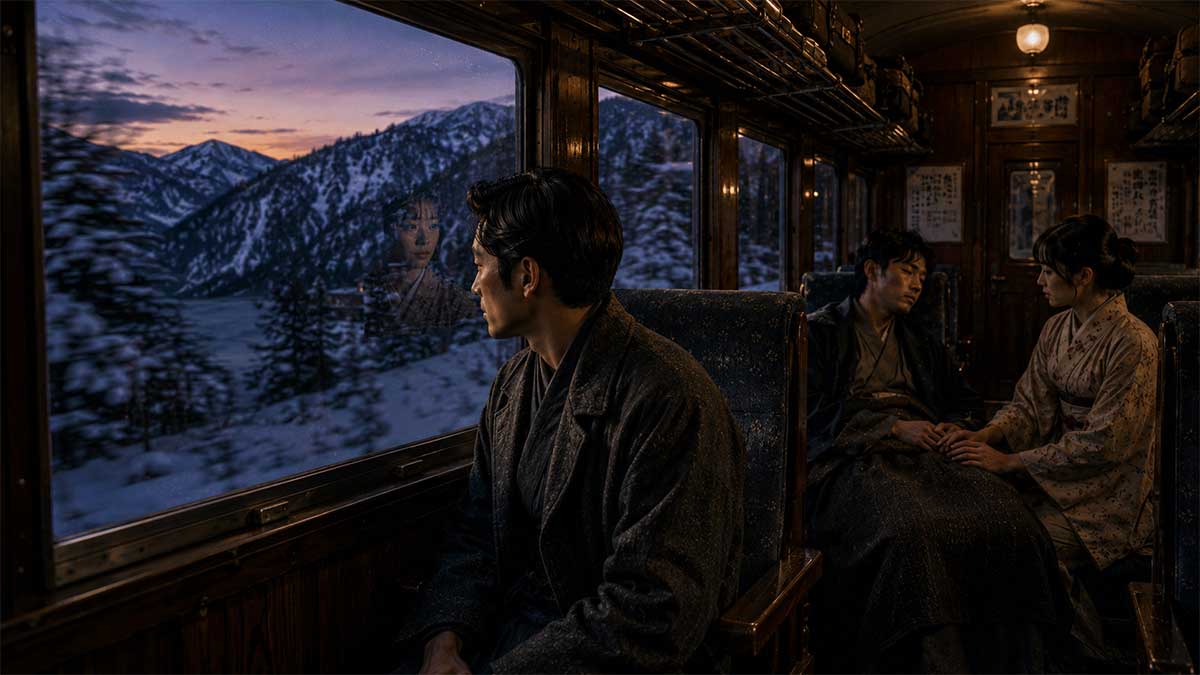
Yoko: The first time you truly noticed me, I was reflected in glass.
Shimamura looked at her.
Yoko: Was that easier for you?
He frowned.
Shimamura: Easier?
Yoko: I was more beautiful when there was a window between us.
No one spoke.
Komako looked toward Shimamura.
He did not answer.
Why must everything become beautiful first?
Yoko: You remember that train.
Shimamura: Yes.
Yoko: You remember the mountains outside.
Shimamura: Yes.
Yoko: You remember my face reflected over them.
Shimamura: Very clearly.
Yoko: What did I feel?
He hesitated.
Shimamura: You seemed concerned for Yukio.
Yoko: Seemed.
Shimamura: You were caring for him.
Yoko: Yes.
Shimamura: Tenderly.
Yoko: That is what it looked like.
Shimamura watched her.
Yoko: You remember the image better than the person.
Shimamura: That is unfair.
Yoko: Is it?
Shimamura: I had never met you.
Yoko: Exactly.
She looked at the dark window.
Yoko: Yet before knowing anything about me, you had already made something beautiful from me.
Komako spoke.
Komako: You did that with me too.
Shimamura turned.
Komako: My skin.
My hands.
My shamisen.
The way I walked through snow.
The way I drank.
You noticed everything.
Shimamura: Is noticing a fault now?
Komako: No.
Yoko: But perhaps noticing can become a substitute.
Seeing versus knowing
Yukio: There is a difference between observation and knowledge.
Shimamura looked toward him.
Yukio: You can describe a person accurately and still know almost nothing about what matters to them.
Shimamura: That could be said of anyone.
Yukio: Yes.
That is why the question matters.
Komako leaned forward.
Komako: What did I need?
Shimamura looked at her.
Komako: Not what I said.
What did I need?
He thought.
Shimamura: Stability.
She gave a small smile.
Komako: Perhaps.
Shimamura: Respect.
Komako: Yes.
Shimamura: Someone who would not treat you carelessly.
Her expression changed.
Komako: And did knowing that change anything you did?
Shimamura said nothing.
Komako: That is the part I never understood.
You saw so much.
You were not stupid.
You noticed when I was hurt.
You noticed when I was jealous.
You noticed when I tried not to care.
You noticed when I was pretending.
She paused.
Komako: But sometimes I think your sensitivity made things easier for you instead of harder.
Shimamura: Easier?
Komako: You could feel moved without having to act.
Can sensitivity become selfishness?
Yukio looked toward Shimamura.
Yukio: That may be the central question.
If another person’s suffering moves you deeply but changes nothing you do, what is that feeling worth?
Shimamura’s expression hardened.
Shimamura: Must every feeling become intervention?
Yukio: No.
Shimamura: Then—
Yukio: But some knowledge creates responsibility.
Shimamura: According to whom?
Yukio: According to the person whose suffering you understand and continue benefiting from.
The room went quiet.
Is aesthetic sensitivity a form of distance?
Yoko: You liked Western ballet.
Shimamura looked at her.
Yoko: But mostly from books.
Shimamura: Yes.
Yoko: Why?
Shimamura: Because one can study form, history, movement, technique.
Yoko: Without standing in front of dancers.
Shimamura: That is one way of putting it.
Yoko: Without being disappointed by the real thing.
Shimamura looked away.
Komako watched him carefully.
Komako: You preferred the idea of ballet.
Shimamura: I appreciated it intellectually.
Komako: From far away.
Yoko: Like people.
He turned sharply toward her.
Shimamura: That is too convenient.
Yoko: Perhaps.
But distance preserves beauty.
Close enough, and everything becomes complicated.
Sweat.
Need.
Bad moods.
Contradictions.
Obligation.
Does Shimamura prefer people as images?
Shimamura: You speak as though I never cared for anyone.
Komako: No.
That is what makes you difficult.
Shimamura: How?
Komako: You cared.
But your caring often remained inside you.
You made something beautiful out of it and considered that enough.
Yoko looked directly at him.
Yoko: You remember my voice.
Shimamura: Yes.
Yoko: You remember my reflection.
Shimamura: Yes.
Yoko: You remember the way I moved.
Shimamura: Yes.
Her expression tightened.
Yoko: Did you ever wonder what I wanted?
Shimamura was silent.
Yoko: Not what I represented.
Not whether I seemed pure.
Not whether my voice was beautiful.
What did I want?
He could not answer.
Is this about beauty—or control?
Yukio: Perhaps beauty is not the problem.
Komako: What is?
Yukio: Control.
Shimamura looked toward him.
Yukio: A beautiful image asks very little of the observer.
A person can.
Yoko: Yes.
Yukio: An image cannot reject you.
Cannot accuse you.
Cannot require change.
Cannot demand that your life make room for theirs.
Shimamura: And yet a person can also become impossible to possess.
Komako: Possess?
Shimamura: I mean understand completely.
Komako watched him.
Shimamura: Perhaps I preferred moments because moments can be complete.
People never are.
Is incompleteness what frightens him?
Yoko: Maybe that is it.
Shimamura: What?
Yoko: You like what can be framed.
A landscape.
A voice.
A face.
A night.
Something with edges.
People have none.
They continue after you leave the room.
Komako’s eyes softened.
Komako: That is what you never seemed to understand.
I continued after you left.
Shimamura looked at her.
Komako: I was not waiting inside the same beautiful scene until you returned.
I had mornings.
Work.
Fatigue.
Humiliation.
Bills.
Loneliness.
My life kept moving.
Can beauty become consumption?
Yukio spoke carefully.
Yukio: There is another danger.
Shimamura waited.
Yukio: When you turn another person’s pain into something moving, you may begin consuming their suffering.
Shimamura looked offended.
Shimamura: That is harsh.
Yukio: Yes.
Shimamura: I never wanted anyone to suffer for my pleasure.
Yukio: Intent is not the entire question.
You may not want the suffering.
But you may still find it beautiful.
Komako looked toward the fire.
Komako: Sometimes when I was miserable, you looked at me as though I had become more interesting.
Shimamura stared at her.
Komako: You probably did not know you were doing it.
Shimamura: I did not.
Komako: I believe you.
She paused.
Komako: That does not mean I imagined it.
Is beauty morally neutral?
Shimamura: Must beauty now defend itself morally?
Yoko shook her head.
Yoko: No.
Shimamura: Then what are you asking?
Yoko: Whether you used beauty to avoid morality.
That silenced him.
Why does he turn pain into aesthetics?
Shimamura: Perhaps beauty was simply how I understood the world.
Komako: Perhaps.
Shimamura: Not everyone knows how to enter another person's life directly.
Yukio: True.
Shimamura: Some of us understand through observation.
Yoko: Then observation should eventually lead somewhere.
Shimamura: Where?
Yoko: Closer.
Does seeing create obligation?
Yukio: There is the question.
If you truly see someone, what does that require?
Shimamura leaned back.
Shimamura: Not possession.
Komako: No.
Shimamura: Not rescue.
Yoko: No.
Shimamura: Not necessarily permanence.
Yukio: No.
Shimamura looked around.
Shimamura: Then what?
Komako answered.
Komako: Response.
He looked at her.
Komako: Something.
Not necessarily the thing I wanted.
But something that proves I was not merely a beautiful object passing through your mind.
What would response have looked like?
Shimamura: What should I have done?
Komako: Asked more.
Shimamura: About what?
Komako: Me.
He frowned.
Komako: Not my music.
Not my face.
Not whether I seemed beautiful in the snow.
Ask what frightened me.
What I wanted.
What I hated.
What I planned to do when you were gone.
Yoko added quietly:
Yoko: And when someone tells you, let the answer inconvenience you.
Shimamura looked toward her.
That line unsettled him.
Was Shimamura ever truly present?
Yukio: Presence is not the same as being physically there.
Shimamura: I know that.
Yukio: Do you?
You often arrived intensely.
Then left completely.
Komako looked down.
Yukio: Perhaps that is why everyone remembered you so sharply.
You entered like weather.
Then disappeared.
Does beauty require distance?
Shimamura stared at the snow.
Shimamura: Some things are beautiful because of distance.
No one argued.
He continued.
Shimamura: Mountains.
Music heard from another room.
A face reflected in glass.
Komako watched him.
Shimamura: Perhaps I believed closeness destroyed something.
Yoko: Sometimes it does.
He looked toward her.
Yoko: But sometimes what closeness destroys is illusion.
What was Shimamura afraid would disappear?
Komako: What did you think would happen if you came closer?
Shimamura took a long time.
Shimamura: I don't know.
Komako: Try.
He looked at her.
Shimamura: Perhaps you would become ordinary.
The sentence hurt.
He saw it immediately.
Komako: I was ordinary.
Shimamura closed his eyes briefly.
Komako: That was the part you refused to love.
Shimamura: I did not mean—
Komako: I know what you meant.
She was not angry now.
That made it worse.
Komako: You wanted me exceptional.
Snow.
Music.
Desire.
Sadness.
You wanted me to belong to this place.
But I was also tired.
Petty.
Afraid.
Bored.
Hungry.
Human.
Shimamura lowered his eyes.
Can someone love only the exceptional parts of another person?
Yoko: Maybe that is the difference between admiration and love.
Everyone looked toward her.
Yoko: Admiration chooses the parts that shine.
Love eventually meets what does not.
Shimamura looked at Yoko.
Shimamura: And do you believe everyone manages that?
Yoko: No.
Shimamura: Then perhaps we are demanding something impossible.
Yoko: Not impossible.
Rare.
Did Yoko become an image too?
Komako looked toward Yoko.
Komako: You know he did it to you.
Yoko nodded.
Komako: Did it anger you?
Yoko thought.
Yoko: Not at first.
Komako: Later?
Yoko: Yes.
Shimamura looked at her.
Yoko: You made me mysterious.
Shimamura: You were mysterious to me.
Yoko: Because you did not know me.
He stopped.
Yoko: Sometimes people call someone mysterious when they have never bothered to ask enough questions.
Komako almost smiled.
Can the observer ever be innocent?
Yukio: Observation feels passive.
But it can shape a relationship.
Shimamura: How?
Yukio: If one person is always the observer, the other becomes the observed.
One interprets.
The other is interpreted.
One remains free.
The other becomes part of the scenery.
Does Shimamura realize what he has done?
Shimamura looked around the room.
His voice softened.
Shimamura: I thought attention was a form of care.
Komako: Sometimes it is.
Shimamura: I noticed things others did not.
Yoko: Yes.
Shimamura: I believed that mattered.
Yukio: It does.
Shimamura: Then what was missing?
Yoko answered.
Yoko: You rarely let what you noticed change you.
The room became still.
Can beauty awaken us?
Shimamura looked at her.
Shimamura: Perhaps beauty did change me.
Yoko: Temporarily.
Shimamura: Is temporary change meaningless?
Yoko: No.
She looked at him carefully.
Yoko: But if every beautiful thing moves you for an evening and leaves your life untouched the next morning, eventually we have to ask what “moved” means.
Final challenge
Komako spoke quietly.
Komako: You saw beauty everywhere.
Snow.
Mountains.
Music.
My face.
Yoko’s voice.
She looked directly at him.
Komako: Perhaps the problem was not that you saw too little.
It was that you thought seeing was enough.
Shimamura did not defend himself.
For once, he seemed almost unable to turn the accusation into an idea.
Yoko looked at the window.
Her reflection floated faintly over the snow outside.
Then she turned back.
Yoko: You saw me reflected in glass before you saw me as a person.
Shimamura listened.
Yoko: Perhaps that was safer.
Shimamura: Perhaps.
It was the first time he had admitted it.
Outside, the snow country remained extraordinarily beautiful.
No one denied that.
But inside the room, beauty had become less innocent.
The question was no longer whether Shimamura could see.
He could.
Perhaps too well.
The question now was what a person owes the world after seeing it.
And that led naturally to the accusation Komako had been waiting to make.
Shimamura had once looked at her reading, practicing, working, loving, and called so much of it wasted effort.
Topic 4 would ask whether he had judged the wrong life.
Topic 4 — Who Actually Wasted Their Life?
The fire had burned lower.
Outside, the snow still covered the village roofs, the roads, the trees, the dark edges of the mountains.
Komako sat with one hand resting beside her knee.
Shimamura had become quieter.
Topic 3 had left him with an accusation he could not easily turn into beauty:
He noticed everything.
But noticing had rarely required him to change.
Now Komako looked at him with a different expression.
Not anger.
Something more dangerous.
Clarity.
Komako: You used to call things wasted effort.
Shimamura lifted his eyes.
Shimamura: I may have used such language.
Komako: You did.
My diary.
My reading.
My practicing.
The records I kept.
The things I tried to learn.
She paused.
Komako: Even loving someone like you probably seemed that way.
Shimamura looked uncomfortable.
Komako: Futile.
Beautiful perhaps.
But futile.
He did not deny it.
Komako leaned slightly forward.
Komako: You thought my effort was wasted.
Then tell me something.
She looked directly at him.
Komako: What did you build with all the effort you saved?
No one moved.
Yoko lowered her eyes.
Yukio looked toward Shimamura.
Shimamura opened his mouth.
Nothing came.
Is devotion foolish when it fails?
Shimamura: I did not mean that effort itself was foolish.
Komako: Then what did you mean?
Shimamura: There are things people pour themselves into knowing they may produce nothing lasting.
Komako: Lasting.
Shimamura: Yes.
Komako: That word again.
She looked toward the snow.
Komako: Snow does not last.
Does that make winter a failure?
Shimamura said nothing.
Komako: Music ends.
Does that make playing it useless?
A conversation ends.
Does that make speaking foolish?
A person dies.
Does that make loving them wasted effort?
Yukio nodded slowly.
Yukio: Permanence is a strange standard for judging value.
Shimamura: I did not say permanence was the only standard.
Yukio: No.
But you often seemed suspicious of effort that could not justify itself afterward.
Did Shimamura admire Komako partly because her efforts seemed doomed?
Yoko looked toward him.
Yoko: Perhaps that was part of what attracted you.
Shimamura: What?
Yoko: Her effort.
Her seriousness.
Her playing.
Her reading.
The way she kept trying.
Shimamura: Yes.
Yoko: But you admired it partly from the outside.
Almost as though her struggle became more beautiful if it could never fully succeed.
Shimamura frowned.
Yoko: You liked the sadness in it.
Komako looked at him.
Komako: Is that true?
He took a long breath.
Shimamura: Perhaps there was beauty in the fact that you kept trying.
Komako gave a small, humorless laugh.
Komako: There.
Shimamura: What?
Komako: My life becomes most beautiful to you when it is losing.
What is the difference between effort and outcome?
Yukio: Perhaps we should separate them.
Shimamura turned toward him.
Yukio: An effort can fail in outcome and still matter in character.
Komako: Yes.
Yukio: Practicing shamisen may not change the world.
Reading every book may not rescue anyone.
Keeping a diary may never lead anywhere.
But effort shapes the person making it.
Shimamura: Sometimes.
Yukio: More often than you admit.
Komako looked toward her hands.
Komako: When I practiced, I was not trying to become famous.
Shimamura: I know.
Komako: I wanted to become better.
Shimamura: Yes.
Komako: That mattered to me.
You looked at it and saw futility.
I looked at it and saw a day that had not been thrown away.
Shimamura’s expression shifted.
Which life was fuller?
Yoko looked at them both.
Yoko: One of you suffered more.
The other protected himself more.
Neither spoke.
Yoko: Which one lived more fully?
Komako looked toward Shimamura.
He looked away.
Shimamura: Suffering is not proof of fullness.
Yoko: No.
Shimamura: A person can ruin a life through passion.
Yoko: Yes.
Shimamura: A person can mistake intensity for meaning.
Komako: True.
Shimamura: Then why praise suffering as though it proves courage?
Komako: I don't.
She shook her head.
Komako: I praise entering your own life.
What does it mean to enter life?
Shimamura: And you believe I did not?
Komako: Not fully.
Shimamura: I traveled.
I studied.
I saw things.
I felt things.
Komako: You visited.
He stared at her.
Komako: Places.
People.
Feelings.
You visited them.
Yoko looked toward him.
Yoko: You were always able to leave.
Shimamura: Everyone leaves eventually.
Yoko: Not like you.
You built leaving into the beginning.
Was Komako foolish to love him?
Shimamura: Then answer me honestly.
Was loving me wise?
Komako smiled faintly.
Komako: No.
That surprised him.
Komako: It was not wise.
Shimamura: Then—
Komako: I did not say wisdom is the only measure.
Shimamura fell silent.
Komako: I was foolish.
I hoped too long.
I waited too long.
I gave too much meaning to your returns.
She paused.
Komako: But I was there.
Inside my own foolishness.
Inside my own longing.
Inside the life I had.
Is avoiding error a meaningful life?
Yukio turned toward Shimamura.
Yukio: You made fewer foolish commitments.
Shimamura said nothing.
Yukio: You protected yourself from many forms of regret.
Shimamura: Perhaps.
Yukio: Then what did you protect?
The question sat heavily in the room.
Shimamura: My freedom.
Yukio: For what?
Shimamura stared at him.
Yukio: You protected your freedom from obligation.
Your peace from disappointment.
Your distance from need.
Your life from entanglement.
Then what did you do with the freedom you preserved?
Shimamura looked toward the fire.
For once, the room offered him no beautiful object to study.
Can avoiding waste become another form of waste?
Komako: Maybe that is what I want you to see.
You thought I wasted myself on things that could disappear.
My music.
My notes.
My love.
She looked at him.
Komako: But you were so careful not to waste yourself that sometimes you hardly spent yourself at all.
Shimamura closed his eyes briefly.
Yoko spoke softly.
Yoko: A life can be wasted through excess.
It can be wasted through refusal too.
Did Shimamura confuse detachment with wisdom?
Shimamura: I did not think of myself as wise.
Komako: No.
You were too clever for that.
A faint smile appeared in the room.
Even Shimamura almost smiled.
Then Komako continued.
Komako: But you trusted detachment.
You trusted the part of yourself that could step back and observe.
Shimamura: Observation can prevent foolishness.
Komako: Yes.
It can prevent living too.
What did Komako gain from all her “wasted” effort?
Yukio looked toward her.
Yukio: Then answer the reverse question.
What did all your effort give you?
Komako considered.
Komako: Skill.
Yukio: What else?
Komako: Discipline.
Memory.
Days with shape.
Something to reach for.
She thought longer.
Komako: And pain.
Yukio: Yes.
Komako: I will not pretend the effort purified me.
Sometimes it made me stubborn.
Sometimes ridiculous.
Sometimes cruel.
But it gave me something to stand inside.
Did Shimamura have anything comparable?
Yoko looked at him.
Yoko: What gave your days shape?
Shimamura said nothing.
Yoko: Ballet?
Shimamura: Sometimes.
Yoko: Travel?
Shimamura: Sometimes.
Yoko: Komako?
He looked toward her.
Shimamura: Sometimes.
Yoko’s expression saddened.
Yoko: Everything was sometimes.
Can a life built on fragments ever feel complete?
Shimamura: Perhaps fragments are enough.
Komako: For you?
Shimamura: Perhaps for anyone.
Komako shook her head.
Komako: Fragments can be beautiful.
But eventually a person has to live between them.
What did Shimamura actually fear wasting?
Yukio looked at him carefully.
Yukio: Maybe you were not afraid of wasting effort.
Maybe you were afraid of wasting yourself on the wrong thing.
Shimamura looked up.
Yukio: If you committed deeply and chose badly, you would have to live with the mistake.
If you remained detached, you could preserve the possibility that something better remained elsewhere.
Shimamura stared at him.
That came close.
Komako: Yes.
Shimamura: You agree?
Komako: I think you liked possibility more than decision.
A decision closes doors.
Possibility keeps everything beautiful.
Does choosing always mean losing something?
Shimamura: It does.
Komako: Yes.
Shimamura: Choose one life and you abandon others.
Komako: Yes.
Shimamura: Choose one person and you lose other possibilities.
Komako: Yes.
Shimamura: Then perhaps I simply recognized the cost.
Komako looked at him gently.
Komako: Everyone recognizes it eventually.
Living means paying it.
The sentence unsettled him.
Is the person who commits always more vulnerable?
Yoko: Of course.
Shimamura: Then why romanticize commitment?
Yoko: We are not.
Shimamura: It creates grief.
Yoko: Yes.
Shimamura: Loss.
Yoko: Yes.
Shimamura: Regret.
Yoko: Yes.
Shimamura: Then detachment has some wisdom.
Yoko nodded.
Yoko: It does.
Shimamura looked surprised.
Yoko: Detachment can protect you from pain.
The question is whether pain is the only thing it protects you from.
What else can detachment protect us from?
Komako answered.
Komako: Joy that becomes responsibility.
Love that becomes ordinary.
A place that becomes home.
A person who can disappoint you.
A person you can disappoint.
She paused.
Komako: A life that becomes yours.
Is “wasted effort” sometimes just another name for love?
Yukio looked toward Komako.
Yukio: Caring for someone who may die can look futile.
Yoko lowered her eyes.
Yukio: Yet no one would say care has value only if death is prevented.
He looked toward Shimamura.
Yukio: Perhaps much of human devotion appears wasteful if judged only by what remains afterward.
Komako nodded.
Komako: Maybe love is often wasted effort.
Shimamura looked at her.
She smiled.
Komako: And maybe that is not the insult you think it is.
What happens if we stop measuring life by permanence?
Yoko: Then music matters though it ends.
Snow matters though it melts.
Care matters though someone dies.
Love matters though someone leaves.
The room became still.
Yoko: Perhaps the question is not whether something lasts.
Maybe the question is whether we were present enough to receive it before it disappeared.
Shimamura’s defense begins to weaken
Shimamura looked toward the window.
Shimamura: I thought I understood impermanence.
Komako listened.
Shimamura: I thought that was precisely why I kept distance.
Nothing lasts.
So why pretend otherwise?
Yoko: That is not acceptance of impermanence.
He looked toward her.
Yoko: That is using impermanence to avoid attachment.
Can knowledge of endings become an excuse not to begin?
Yukio: If everything ends, there are two possible conclusions.
Shimamura waited.
Yukio: One is:
Do not give yourself completely to anything.
The other is:
Give yourself more fully, since nothing can be kept forever.
Shimamura looked down.
Who actually wasted life?
Komako spoke.
Komako: You asked whether my love was wise.
It wasn't.
You asked whether my effort produced something lasting.
Often it didn't.
She looked toward him.
Komako: But I know what I cared about.
Do you?
Shimamura did not answer.
Komako: I know what I tried to become.
Do you?
Still nothing.
Komako: I know what I would have regretted not giving.
Do you?
Shimamura looked toward her.
The room held the silence.
The hardest question
Yukio leaned slightly forward.
Yukio: You protected yourself from obligation.
From disappointment.
From foolish hope.
From commitment.
He paused.
Yukio: What exactly were you protecting for?
Shimamura stared at the fire.
A long time passed.
Then:
Shimamura: I don't know.
No one moved.
It was perhaps the most honest answer he had given all night.
What if the protected life was the wasted one?
Shimamura spoke again.
Shimamura: Perhaps I believed the person who saw futility clearly had understood something the person striving had not.
Komako watched him.
Shimamura: Perhaps I mistook not being fooled for knowing how to live.
Yoko’s expression softened.
Komako looked away.
Shimamura: You practiced knowing it might lead nowhere.
You kept records no one might read.
You loved knowing I might leave.
He looked toward Komako.
Shimamura: I thought that made you tragic.
Komako: Maybe it did.
Shimamura: Perhaps I was too quick to think tragedy meant failure.
Komako turned back toward him.
Komako’s answer
Komako: I wasted things too.
Shimamura looked surprised.
Komako: Time.
Hope.
Too many nights waiting.
Too much of myself trying to change someone who never promised to change.
She paused.
Komako: But waste and meaning can exist in the same life.
I don't need to pretend every choice was good before I can say the life was mine.
Final realization
Yoko looked between them.
Yoko: Perhaps neither of you gets to judge life only by what remains.
Shimamura watched her.
Yoko: One person gives too much.
Another gives too little.
Both can lose something.
Komako turned toward Shimamura.
Komako: You thought my effort was wasted.
He nodded faintly.
Komako: Maybe some of it was.
She looked toward the snow.
Komako: But at least I spent myself on something.
Shimamura absorbed that.
Then quietly:
Shimamura: Perhaps I mistook avoiding waste for knowing how to live.
No one answered.
There was no need.
A faint glow appeared beyond the windows.
At first, Shimamura assumed it came from the moon reflecting off the snow.
Then Yoko stood.
Yoko: Look.
Far down the slope, orange light flickered against the night.
A bell began ringing.
Once.
Twice.
Then urgently.
Komako moved toward the window.
Komako: Fire.
The room changed instantly.
Shadows moved across the walls.
Outside, people began running through the snow.
The conversations about love, effort, and wasted lives disappeared beneath something immediate.
Real.
Uncontrolled.
Yoko stared at the distant flames.
Shimamura watched the fire brighten the sky.
Komako turned toward him.
She would later remember exactly what happened next.
She ran toward another human being.
And Shimamura looked upward.
The final question had arrived.
Not whether Shimamura could recognize beauty.
Not whether Komako had wasted her devotion.
But what beauty means when suffering is no longer safely distant.
Topic 5 would begin with one question:
Komako: “When Yoko fell, why were you looking at the sky?”
Topic 5 — When Yoko Fell, Why Did Shimamura Look at the Sky?
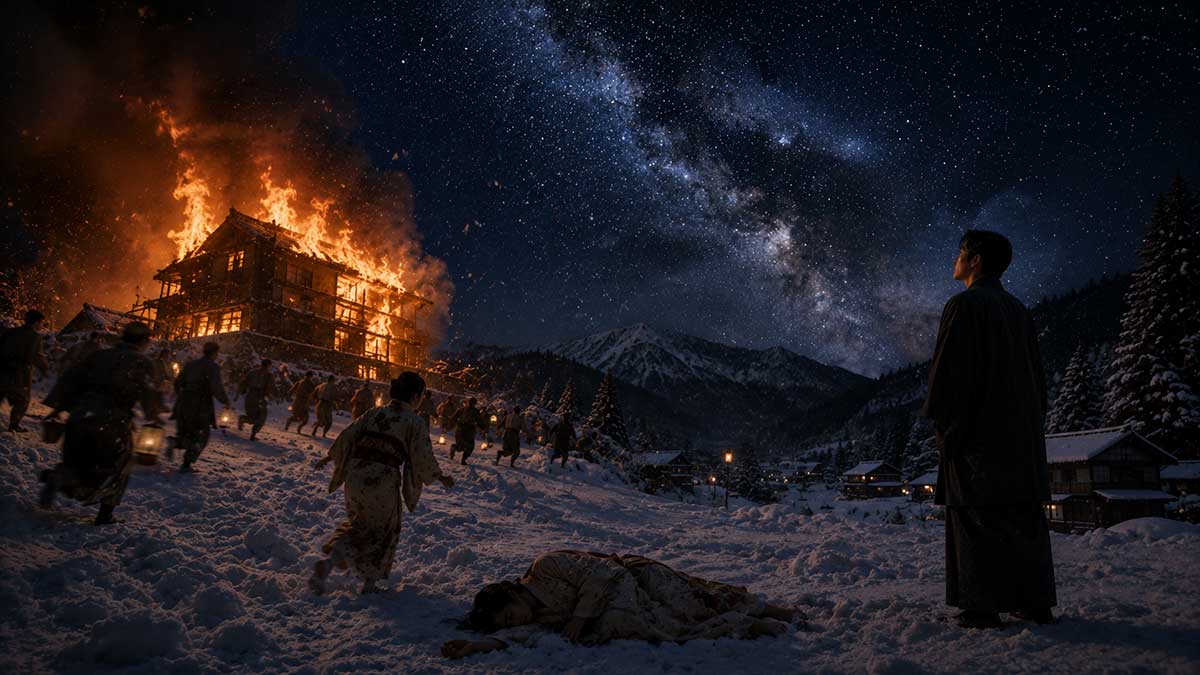
For the first time that night, the snow outside seemed dark.
The fire was gone now.
Only memory remained.
Orange light against white ground.
People running.
Shouting.
Smoke rising into winter air.
And Yoko falling.
Nobody in the room wanted to begin.
Komako sat with her hands clasped tightly together.
Yukio watched her from beside the dying fire.
Yoko stood near the window.
Shimamura had not looked directly at her for several minutes.
Finally, Komako turned toward him.
Komako: When Yoko fell, I ran toward her.
Shimamura lifted his eyes.
Komako: You looked at the sky.
He said nothing.
Komako: Why?
Was the Milky Way another escape?
Shimamura: I don't know.
Komako’s expression tightened.
Komako: You always say that when the answer gets too close.
Shimamura: No.
This time I truly don't know.
He looked toward the window.
Shimamura: I remember the fire.
The people.
The snow.
Yoko falling.
Then the sky.
Komako: The Milky Way.
Shimamura: Yes.
Komako: Why that?
Shimamura: It seemed enormous.
Komako: A woman had just fallen from a burning building.
Shimamura: I know.
Komako: Did you?
He looked at her.
Komako: Or did you turn away from what was happening and find something beautiful enough to escape into?
Yoko remained by the window.
Her reflection floated faintly against the darkness.
Yoko: Perhaps that is what you always did.
Shimamura turned toward her.
Yoko: When reality became too painful, you made it beautiful.
Did Shimamura turn tragedy into an image?
Shimamura: I did not choose the sky.
Yoko: Perhaps not consciously.
Shimamura: It was simply there.
Yoko: So was I.
The room became still.
Yoko: I was there too.
Falling.
And yet somehow the universe became the thing you remembered.
Shimamura lowered his eyes.
Shimamura: I remember you.
Yoko: How?
He looked up.
Shimamura: Your body.
The way you fell.
The light.
Yoko gave a sad smile.
Yoko: Again.
Shimamura: What?
Yoko: An image.
Can Shimamura remember Yoko without turning her into beauty?
Yoko: Tell me something about me that is not beautiful.
Shimamura stared at her.
Yoko: Something ordinary.
He searched.
Shimamura: You cared for Yukio.
Yoko: That is still beautiful.
He thought again.
Nothing came.
Komako watched him.
Yoko: Did I have bad habits?
Shimamura: I don't know.
Yoko: Did I become impatient?
Shimamura: I don't know.
Yoko: What food did I dislike?
He said nothing.
Yoko: What frightened me?
Nothing.
Yoko: What did I want my life to become?
Silence.
Yoko nodded.
Yoko: You remember my voice.
My reflection.
My fall.
She looked directly at him.
Yoko: You remember everything except my life.
Was Shimamura incapable of seeing people completely?
Shimamura: Nobody sees another person completely.
Komako: True.
Shimamura: Then why am I being judged for something impossible?
Komako: You aren't.
She leaned forward.
Komako: We're asking whether you ever tried to cross the distance.
What did Komako do differently?
Yukio spoke.
Yukio: When Yoko fell, Komako ran.
Komako looked down.
Yukio: She did not know whether she could help.
She did not calculate.
She moved.
Shimamura looked toward Komako.
Yukio: That does not make her morally superior in every way.
But the difference matters.
One person moved toward suffering.
One person became overwhelmed by what he saw.
Shimamura: You think I should have run.
Komako: I don't know.
Shimamura: Then what?
Komako looked at him.
Komako: I want to know where you went.
Shimamura: I stayed there.
Komako: Your body did.
The words struck him.
Where did Shimamura’s mind go?
Shimamura: The sky did not feel like escape.
Yoko: What did it feel like?
He struggled.
Shimamura: As though everything opened.
The fire.
The snow.
You.
Komako.
Myself.
Everything seemed suddenly very small and impossibly large at the same time.
Yukio watched him closely.
Shimamura: I cannot explain it better.
Could the Milky Way have awakened him?
Yukio: Perhaps we are assuming the worst interpretation.
Komako turned.
Yukio: Perhaps he did not look toward beauty to escape.
Perhaps beauty finally became impossible to keep at a distance.
Shimamura looked at him.
Yukio: Until then, beauty was something you observed.
Snow.
Women.
Mountains.
Music.
Reflections.
But perhaps the Milky Way was different.
Shimamura: How?
Yukio: Perhaps you did not observe it.
Perhaps it overwhelmed you.
Yoko looked toward the sky beyond the window.
Yoko: Then what changed afterward?
No one answered.
She turned back.
Yoko: Awakening should eventually enter a life.
Can an experience transform us without immediate action?
Shimamura: Must transformation happen instantly?
Yoko: No.
Shimamura: Then perhaps the moment was only beginning.
Komako: Beginning what?
He looked at her.
Shimamura: I don't know.
Komako almost objected.
Then stopped.
This time the uncertainty seemed different.
Is beauty innocent?
Yoko: I don't hate beauty.
Shimamura looked toward her.
Yoko: I don't blame the Milky Way for being beautiful while I fell.
The universe does not owe us darkness when we suffer.
Komako listened.
Yoko: Perhaps that is what makes the moment unbearable.
Something terrible can happen beneath something beautiful.
Both remain true.
Why does tragedy not stop beauty?
Yukio: People often expect the world to reflect their grief.
Rain at funerals.
Dark skies during tragedy.
Silence after death.
But the world continues.
Snow remains beautiful.
Stars remain visible.
Someone laughs somewhere while another person dies.
Komako looked toward him.
Yukio: Perhaps that indifference is cruel.
Perhaps it is merciful.
Does cosmic beauty make human suffering insignificant?
Shimamura: That was part of what frightened me.
Komako: What?
Shimamura: The scale.
He looked upward.
Shimamura: One human life beneath all those stars.
One love.
One death.
One winter.
Everything seemed almost nothing.
Yoko watched him.
Yoko: Almost?
Shimamura: Yes.
Yoko: What stopped it from becoming nothing?
Shimamura looked at her.
Shimamura: You did.
Silence.
Can something be tiny and still matter completely?
Shimamura: You were almost nothing beneath that sky.
So was I.
So was Komako.
He paused.
Shimamura: Yet your fall filled everything.
Yoko’s expression changed.
Shimamura: I could see the universe and still there was only you.
Komako watched him carefully.
For once, Shimamura had described beauty without seeming protected by it.
Was this the first time beauty hurt him?
Komako: Maybe that was different.
Shimamura: What?
Komako: Before, beauty pleased you.
Even sadness could please you if it was beautiful enough.
Shimamura lowered his eyes.
Komako: But that night?
He looked toward her.
Komako: Beauty hurt.
Yoko nodded faintly.
Yoko: Maybe that is closer to seeing.
Does beauty save us—or expose us?
Yukio: Perhaps beauty has two possibilities.
It can become shelter.
Or revelation.
Shimamura: How do we know which?
Yukio: By what happens after we see it.
What happens after the beautiful moment?
Yoko returned to her chair.
Yoko: That is the question you avoided your entire life.
After.
Shimamura looked toward her.
Yoko: You loved moments.
But moments have consequences.
Beauty has an after.
Love has an after.
Death has an after.
Komako nodded.
Komako: You always left before the after became ordinary.
Does impermanence justify distance?
Shimamura: Everything ends.
Komako looked at him.
The familiar defense had returned.
But this time Yoko answered immediately.
Yoko: Yes.
Everything ends.
Shimamura: Then why pretend we can keep anything?
Yoko: We can't.
Shimamura: Then—
Yoko: You still think those are the only choices.
He stopped.
Yoko: Keep something forever or remain detached from it.
There is another possibility.
Shimamura: Which is?
Yoko: Love what cannot be kept.
If everything disappears, why love anything?
Shimamura stared at her.
Shimamura: That seems almost cruel.
Yoko: It is.
Shimamura: To give yourself knowing you will lose.
Yoko: Yes.
Shimamura: Then why?
Yoko looked toward the falling snow.
Yoko: Because losing something is different from never having entered it.
What does impermanence actually ask of us?
Yukio spoke quietly.
Yukio: We talked earlier about two responses to impermanence.
One says:
Everything disappears, so protect yourself.
The other says:
Everything disappears, so be present.
Shimamura looked toward him.
Yukio: Perhaps the second is harder.
Komako’s answer
Komako looked at Shimamura.
Komako: I loved you badly sometimes.
I waited too long.
I wanted things you could not give.
I mistook your returns for promises.
She paused.
Komako: But if you ask whether I wish I had felt nothing—
She shook her head.
Komako: No.
Shimamura watched her.
Komako: I would rather regret some of what I gave than regret never giving anything.
Shimamura’s question
Shimamura: And if giving destroys you?
Komako considered.
Komako: Then you learn where to stop.
He looked surprised.
Komako: Loving fully does not mean disappearing inside another person.
I learned that too late.
She gave a small smile.
Komako: But distance is not the only alternative to losing yourself.
Yoko’s question
Yoko looked around the room.
Yoko: If everything beautiful disappears eventually, does that make loving it foolish?
Nobody answered.
She looked toward Yukio.
Then Komako.
Then Shimamura.
Yoko: We know snow will melt.
We still look at it.
We know music will end.
We still listen.
We know people will die.
We still—
She stopped.
Yukio watched her.
Yoko: We still love them.
What was Shimamura protecting?
Shimamura looked toward the window.
Shimamura: I thought distance protected beauty.
Komako listened.
Shimamura: If I did not possess something, I could not ruin it.
If I did not demand permanence, I could not be disappointed when it ended.
If I remained partly outside, I could see more clearly.
Yoko waited.
Shimamura: Perhaps distance did not protect beauty.
He looked toward Komako.
Then Yoko.
Shimamura: Perhaps it only protected me.
No one spoke.
Did Shimamura finally feel anything?
Yoko stood.
She walked toward the window.
The reflection of her face appeared faintly in the glass.
For a moment, it resembled the image Shimamura remembered from the train.
But now he did not look at the reflection.
He looked at her.
Yoko noticed.
She turned.
Yoko: You saw everything.
Shimamura waited.
Yoko: Did you finally feel anything?
He could have answered quickly.
Yes.
He did not.
He looked toward Komako.
Toward Yukio.
Then back to Yoko.
Shimamura: I think I spent my life feeling things I did not know how to enter.
Yoko listened.
Shimamura: Perhaps that is different from feeling nothing.
Yoko: It is.
A pause.
Yoko: But not different enough.
Shimamura nodded.
One final question each
The fire had nearly gone out.
Yukio looked around the room.
Yukio: Perhaps we should end where we began.
Not with answers.
With questions.
Komako looked toward Shimamura.
Komako: If I knew you would leave and loved you anyway, was my love wasted?
No one answered.
Shimamura looked toward her.
Shimamura: If I felt deeply but refused to promise what I could not give, was I dishonest?
Again, silence.
Yukio looked toward the fire.
Yukio: Is love measured by feeling—
He looked at the others.
Yukio: —or by what we are willing to do for someone?
Then Yoko turned toward the window.
Outside, the snow fell more lightly now.
She watched it for a long time.
Yoko: If everything ends—
She stopped.
The others waited.
Yoko: —why are we so afraid to give ourselves to anything?
Nobody answered.
What remains?
Komako finally looked toward Shimamura.
There was sadness in her face.
But less waiting.
Komako: I don't regret loving you.
Shimamura listened.
Komako: I regret believing that loving you required me to wait forever.
He lowered his eyes.
Then spoke.
Shimamura: I thought distance protected beauty.
He looked toward her.
Shimamura: Perhaps it only protected me.
Yoko placed one hand against the cold window.
Snow disappeared against the glass almost as soon as it touched.
She smiled faintly.
Yoko: Snow is beautiful because it melts.
She looked back at them.
Yoko: That doesn't mean we should spend winter refusing to touch it.
No one spoke after that.
The fire slowly disappeared.
Outside, the snow country remained white beneath an enormous sky.
By morning there would be footprints.
By afternoon some would disappear.
Eventually winter itself would leave.
Nothing in the room could be kept exactly as it was.
Not love.
Not beauty.
Not suffering.
Not the people sitting there.
Perhaps that had never been the tragedy.
Perhaps the tragedy was believing that because something could not be kept, one should never give oneself completely enough to lose it.
And somewhere beyond the dark mountains, morning was already beginning.
Final Thoughts
Perhaps the tragedy of Snow Country is not that love failed.
It is that Komako and Shimamura gave the same relationship two very different meanings.
Komako believed real feeling eventually had to touch tomorrow.
Shimamura believed a temporary experience could remain complete inside the moment.
Both felt something real.
But only one person had the freedom to leave.
Komako eventually recognizes that loving someone does not require waiting forever. Shimamura begins to recognize that distance may have protected him more than it protected beauty.
Yoko’s final question reaches beyond all of them:
If everything ends, why are we so afraid to give ourselves to anything?
Kawabata offers no simple answer.
Perhaps impermanence does not make love foolish.
Perhaps it makes presence more precious.
Short Bios:
Shimamura — A wealthy married man from Tokyo who repeatedly visits the snow country. Highly sensitive to beauty yet emotionally distant, he often experiences people through observation rather than commitment.
Komako — A geisha living in the hot-spring town whose love for Shimamura becomes increasingly intense. Passionate, disciplined, imperfect, and deeply alive, she becomes the emotional center of the story.
Yoko — A mysterious young woman first seen by Shimamura reflected in a train window. Her voice, presence, and final fall become some of the novel’s most powerful images.
Yukio — A sick young man cared for by Yoko and connected to Komako’s past. Much about his relationships remains deliberately uncertain, reflecting Kawabata’s fragmentary style.
Yasunari Kawabata — Japanese novelist and the first Japanese recipient of the Nobel Prize in Literature, awarded in 1968. His work is known for spare prose, emotional restraint, beauty, loneliness, memory, and the sadness of impermanence.
Leave a Reply