

Introduction Five sentences rest beside a white ceramic bowl:“I am frightened, but fear does not define my ability.”“I see your contribution, and I still need help with daily care.”“I have concerns. Would you like to hear what I have noticed?”“I missed you, and I told myself that your silence meant I did not matter.”“I treated constant availability as proof … [Read more...] about The Vessel of Words: How Language Shapes Relationships
Korean literature
The Vessel of Words: 5 Korean Stories of Hurt and Healing

Introduction A message remains unread.A manager waits five seconds before speaking.A daughter says she will not return home for Seollal.A student deletes an anonymous post, only to discover that the injury has already escaped the screen.A mother sits beside an empty bowl, trying not to fill her son’s silence with meanings he never gave her.These five stories … [Read more...] about The Vessel of Words: 5 Korean Stories of Hurt and Healing
Han Kang Human Acts Explained by Leading Scholars
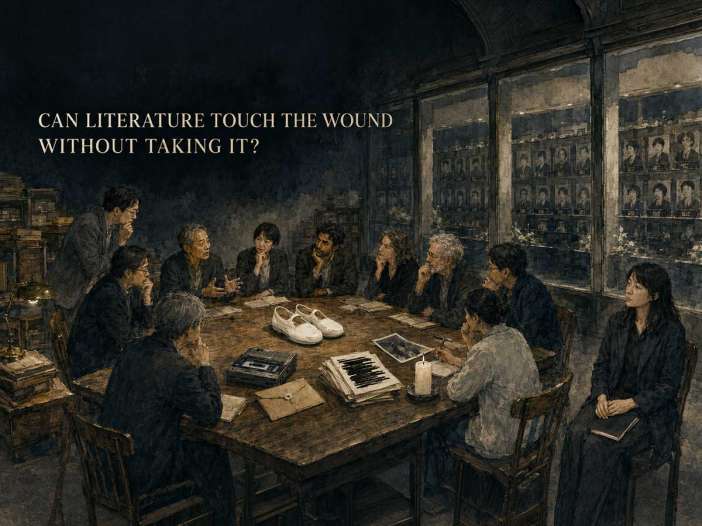
Introduction Han Kang’s Human Acts begins with a murdered boy, but its questions reach far beyond one death.How does a government transform citizens into enemies? Can the body preserve a truth that official history suppresses? Does a survivor owe testimony to the public? Can poetic language represent torture without making suffering beautiful? What … [Read more...] about Han Kang Human Acts Explained by Leading Scholars
Han Kang Human Acts: An Imaginary Conversation with the Dead
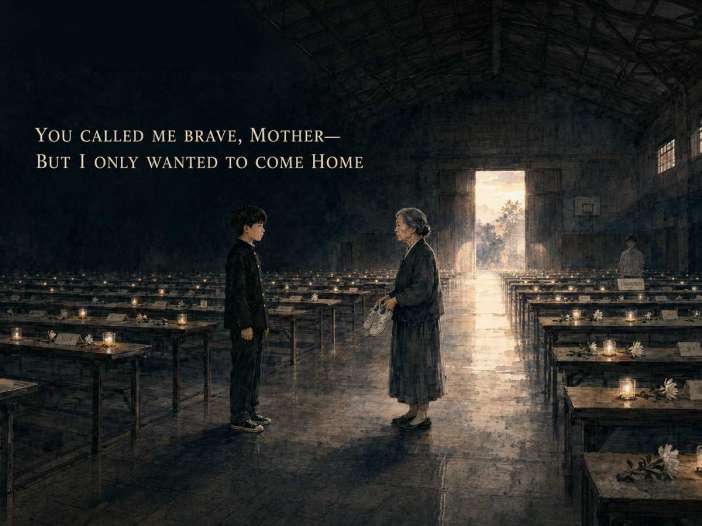
Introduction In May 1980, the South Korean military entered Gwangju and opened fire on citizens calling for democracy. Among the dead was a fifteen-year-old boy whose brief life became the emotional center of Han Kang’s Human Acts.In the novel, his name is Dong-ho.He remains at the provincial office gymnasium, helping volunteers identify bodies and care for … [Read more...] about Han Kang Human Acts: An Imaginary Conversation with the Dead