
Introduction
What happens when you reach the later years of your life and realize that the qualities you were proudest of may have kept you from truly living?
Kazuo Ishiguro’s The Remains of the Day follows Stevens, an English butler who has devoted his life to dignity, loyalty, and service. He rarely questions his employer, rarely expresses emotion, and almost never allows personal desire to interfere with duty.
But beneath that discipline are questions Stevens has spent decades avoiding.
Should he have challenged Lord Darlington when he knew something was wrong? Should he have been beside his father during his final hours? And what might have happened if he had simply asked Miss Kenton to stay?
In this imaginary conversation, Stevens finally sits with Miss Kenton, his father, Lord Darlington, and Reginald Cardinal. Together they examine dignity, conscience, family, lost love, regret, and one final question that matters far beyond this novel:
If you realize late in life that you chose wrongly, what can you do with the life that remains?
(Note: This is an imaginary conversation, a creative exploration of an idea, and not a real speech or event.)
Topic 1 — Is It Dignity—or Fear?
The imagined room at Darlington Hall was unusually still.
No dinner was being prepared. No bell waited to summon a servant. No distinguished guests occupied the drawing room. Through the tall windows, the English countryside had begun to darken beneath a pale evening sky.
Five people sat together who, in life, had never been given such an opportunity.
Stevens sat upright, his hands resting neatly upon his knees.
Miss Kenton sat opposite him.
Lord Darlington occupied a chair near the fireplace. Reginald Cardinal stood for a moment by the window before joining them.
Beside Stevens sat his father.
The older man said nothing.
Stevens seemed particularly aware of his presence.
For much of his life, Stevens had believed there was one quality separating the truly great servant from the merely competent one.
Dignity.
Tonight, for the first time, the others intended to ask what that word had cost him.
What does it actually mean to live with dignity?
Lord Darlington: Stevens, I suppose there is no one better placed to begin. You spent much of your life thinking about dignity. What did the word mean to you?
Stevens: I would hesitate to suggest that my thoughts on the matter possess any unusual authority, sir.
Miss Kenton: You have already begun.
Stevens: Begun what, Miss Kenton?
Miss Kenton: Hiding behind modesty.
Stevens: I hardly think—
Miss Kenton: Tell us what you believed. Plainly.
Stevens adjusted his posture.
Stevens: Very well. I believed dignity concerned a person's ability to inhabit his professional role completely. A great butler does not abandon that role whenever circumstances become unpleasant. He maintains composure.
Cardinal: Whatever happens?
Stevens: Within reason.
Cardinal: Your father becomes ill?
Stevens glanced at him.
Stevens: We have scarcely begun our discussion, Mr. Cardinal.
Cardinal: Fair enough.
Stevens's father gave the faintest suggestion of a smile.
Stevens: A professional man cannot permit every private feeling to dictate his conduct. There are moments when one must simply continue.
Stevens's Father: That's right.
Everyone looked at the older man.
Stevens's Father: A gentleman employing you has no use for your moods. The work must be done whether you're happy or miserable.
Miss Kenton: I don't disagree with that.
Stevens seemed surprised.
Miss Kenton: You expected me to?
Stevens: Perhaps.
Miss Kenton: A household cannot be managed by people bursting into tears whenever something goes wrong. But that isn't what we're discussing.
Stevens: I rather think it is.
Miss Kenton: No. We're discussing whether dignity means controlling emotion or refusing to acknowledge that you have any.
Stevens was quiet.
Lord Darlington: There is something admirable in self-command.
Cardinal: Certainly.
Lord Darlington: Then perhaps we should be careful not to judge Stevens according to the standards of another age.
Cardinal: I'm not judging him for being reserved. I'm asking what the reservation was protecting.
Stevens looked toward Cardinal.
Stevens: Protecting?
Cardinal: You describe dignity as though it were armor.
Stevens: I have never described it in such terms.
Cardinal: No. I did.
A brief silence followed.
Does dignity require hiding what you feel?
Miss Kenton: May I ask you something, Mr. Stevens?
Stevens: Certainly.
Miss Kenton: Did you ever see me cry?
Stevens looked uncomfortable.
Stevens: I cannot see how—
Miss Kenton: Did you?
Stevens: Yes.
Miss Kenton: Did you think less of me afterward?
Stevens: Of course not.
Miss Kenton: Did you think I lacked dignity?
Stevens: No.
Miss Kenton: Then why did you believe showing your own feelings would diminish yours?
Stevens did not answer immediately.
Stevens: The positions we occupied were somewhat different.
Miss Kenton: There it is.
Stevens: What?
Miss Kenton: Every time we get near you, another door appears.
Stevens frowned.
Miss Kenton: Position. Responsibility. Propriety. Professional standards.
She leaned slightly forward.
Miss Kenton: You always had a word available whenever you needed not to say what you felt.
Stevens: I don't believe expressing every passing emotion constitutes honesty.
Miss Kenton: Neither do I.
Stevens: Then—
Miss Kenton: But there is considerable distance between expressing every feeling and expressing none.
Stevens's father looked down at his hands.
Stevens's Father: Feeling can interfere with work.
Miss Kenton: Yes.
She turned to him.
Miss Kenton: But work can interfere with feeling.
The old man looked at her.
Miss Kenton: And perhaps nobody taught your son that.
Stevens stiffened.
Stevens: I assure you, Miss Kenton, my father taught me a great deal.
Miss Kenton: I know he did.
Her voice softened.
Miss Kenton: That's why I said it.
The father looked toward his son.
Something passed between them, but neither spoke.
Cardinal broke the silence.
Cardinal: Stevens, suppose a man says, “I am frightened.”
Would you consider that undignified?
Stevens: Not necessarily.
Cardinal: “I am grieving.”
Stevens: No.
Cardinal: “I was wrong.”
Stevens hesitated.
Stevens: Certainly not.
Cardinal: “I need you.”
A longer silence.
Miss Kenton looked down.
Stevens's face remained composed.
Stevens: Circumstances would determine whether such a statement were appropriate.
Cardinal almost smiled.
Cardinal: There is that word again.
Stevens: Which word?
Cardinal: Appropriate.
Can professionalism become a hiding place?
Outside, the light had faded.
Lord Darlington stared into the fireplace.
Lord Darlington: I wonder whether we are placing too much upon Stevens. I valued precisely those qualities we are now questioning.
Cardinal: That's part of the problem.
Lord Darlington turned.
Lord Darlington: Explain yourself.
Cardinal: Men like Stevens made men like you possible.
The room changed.
Stevens looked sharply toward Cardinal.
Stevens: Mr. Cardinal—
Cardinal: I'm not speaking yet about politics. We'll come to that.
He looked directly at Stevens.
Cardinal: I'm saying that Lord Darlington benefited from your refusal to bring yourself into the room.
Stevens: A butler should hardly make himself the center of his employer's affairs.
Cardinal: But you weren't merely absent from his affairs.
You were becoming absent from your own.
Stevens stared at him.
Cardinal: That's what interests me.
Stevens: I don't follow.
Cardinal: You speak endlessly about the danger of emotion interfering with duty. Did you ever consider the opposite possibility?
Stevens: Which is?
Cardinal: That duty prevented you from having to risk emotion.
Miss Kenton looked at Cardinal.
Stevens did not move.
Cardinal: Think about it. Duty is wonderfully safe.
There are procedures.
Expectations.
Standards.
You can succeed.
Someone tells you whether the silver is polished properly. Whether dinner was served properly. Whether the household operated properly.
But love?
No standards.
No guarantee.
No superior tells you what to do.
No one promises that the person you love will love you back.
Stevens's jaw tightened slightly.
Cardinal: Perhaps the great attraction of duty was that you knew how to succeed at it.
Stevens: That is an extraordinary speculation.
Cardinal: Is it wrong?
Stevens: Entirely unsupported.
Miss Kenton: I don't think it is.
Stevens looked at her.
Miss Kenton: You were extraordinarily brave when the situation required you to be Stevens the butler.
She paused.
Miss Kenton: I sometimes wondered whether you were frightened whenever the situation required you simply to be Stevens.
The words seemed to remain between them.
Stevens: I cannot imagine what distinction you are attempting to make.
Miss Kenton: Yes, you can.
Lord Darlington shifted uneasily.
Lord Darlington: Miss Kenton, perhaps—
Miss Kenton: No.
She did not raise her voice.
Miss Kenton: We spent years speaking around things.
I don't intend to do it again.
Stevens's father looked at her carefully.
Miss Kenton: Mr. Stevens, do you remember bringing flowers into my room?
Stevens: Naturally.
Miss Kenton: Why did you do it?
Stevens: They improved the room.
Miss Kenton: Of course.
Cardinal lowered his eyes.
Miss Kenton: Do you remember standing outside my door?
Stevens's expression changed almost imperceptibly.
Stevens: There were many occasions—
Miss Kenton: You remember.
He did.
Everyone could see that he did.
Miss Kenton: Do you remember the book?
Stevens looked away.
Stevens: Miss Kenton—
Miss Kenton: You were reading a sentimental novel.
Stevens: For purposes related to improving my command of English.
For the first time, Stevens's father looked directly at his son with something approaching amusement.
Stevens's Father: Were you?
Stevens turned toward him.
Stevens: Father, I don't see—
Stevens's Father: Just asking.
Miss Kenton smiled faintly.
Then the smile disappeared.
Miss Kenton: I think there was a man inside you who wanted many things.
A man who enjoyed sentimental stories.
A man who wanted companionship.
A man who sometimes wanted someone to ask whether he was tired.
A man who perhaps wanted flowers to mean something more than improving a room.
Stevens remained perfectly still.
Miss Kenton: And whenever that man appeared—
She stopped.
Stevens: Whenever he appeared, what?
Miss Kenton: You sent the butler to remove him.
Silence.
Stevens's father finally spoke.
Stevens's Father: Son.
Stevens: Yes, Father?
Stevens's Father: Were you afraid?
Stevens stared at him.
Stevens: Of what?
Stevens's Father: I don't know.
The older man shrugged slightly.
Stevens's Father: That's why I'm asking.
Stevens: I don't recall living my life in fear.
Stevens's Father: That's not an answer.
Stevens looked almost wounded.
His father continued quietly.
Stevens's Father: You learned composure from me.
Stevens: I have always been grateful for that.
Stevens's Father: Maybe you learned something else.
Stevens: What?
His father took a long time before answering.
Stevens's Father: Maybe you learned that a man shouldn't need anybody.
Stevens looked down.
Nobody interrupted.
Stevens's Father: I may have taught you that without meaning to.
That landed differently from everything Miss Kenton and Cardinal had said.
There was no accusation in it.
Only recognition.
Stevens swallowed.
Stevens: You taught me dignity.
Stevens's Father: Perhaps.
The old man looked at his son.
Stevens's Father: Perhaps I confused the two myself.
Miss Kenton waited before speaking again.
When she did, her voice was gentle.
Miss Kenton: Mr. Stevens?
He raised his eyes.
Miss Kenton: I want to ask you one question.
Stevens: Very well.
Miss Kenton: And I don't want an answer tonight.
Stevens looked puzzled.
Miss Kenton: All your life, you believed dignity meant never allowing your feelings to take command of you.
Stevens: Yes.
Miss Kenton: But what if that wasn't what happened?
He waited.
Miss Kenton: What if dignity didn't teach you how to control your feelings?
The room became completely silent.
Miss Kenton: What if it simply gave you permission never to face them?
Stevens opened his mouth.
Nothing came.
For perhaps the first time that evening, no professional phrase arrived to rescue him.
He looked toward his father.
Then Lord Darlington.
Then Cardinal.
Finally, Miss Kenton.
Stevens: I should need some time to consider that question.
Miss Kenton nodded.
Miss Kenton: Yes.
She looked at him with an expression Stevens could not comfortably categorize.
Miss Kenton: I believe you should.
Outside Darlington Hall, darkness had settled over the countryside.
And inside, Stevens sat with a question for which dignity offered no answer.
Topic 2 — When Does Loyalty Become Complicity?
Morning had not yet reached Darlington Hall.
The five remained in the same room, but something had changed after Miss Kenton’s final question.
Stevens had always believed dignity meant command over oneself.
Now another word waited for examination.
Loyalty.
This one would prove harder.
Lord Darlington sat nearest the fireplace. Stevens remained upright across from him.
For decades, Stevens had regarded the man before him as more than an employer. Lord Darlington had represented something Stevens desperately wanted to believe existed:
A great gentleman serving a great cause.
Reginald Cardinal knew how dangerous that belief had become.
Miss Kenton knew what it had cost two young women.
And Lord Darlington knew how the story ended.
Does a servant have the right to judge the person he serves?
Cardinal: Stevens, may I ask you something rather simple?
Stevens: Certainly, sir.
Cardinal: Was Lord Darlington always right?
Stevens glanced toward his former employer.
Stevens: No serious person could suggest that any individual is invariably correct.
Cardinal: Good.
Stevens: However—
Cardinal: I knew there would be a “however.”
Stevens: A gentleman such as Lord Darlington possessed access to information and persons far beyond anything available to household staff. It would have been presumptuous for someone in my position to imagine himself qualified to judge matters of international significance.
Cardinal: I didn't ask whether you understood international diplomacy.
Stevens: Then I fear I have misunderstood.
Cardinal: I asked whether Lord Darlington was always right.
Stevens: I said he was not.
Cardinal: Then what did you do when he was wrong?
Stevens paused.
Stevens: My duty.
Cardinal looked at him for several seconds.
Cardinal: That's precisely what worries me.
Lord Darlington shifted in his chair.
Lord Darlington: Reginald, there is something unfair in this. Stevens was employed to manage Darlington Hall. He was hardly engaged as my political adviser.
Cardinal: I'm aware of that, sir.
Lord Darlington: Then what would you have expected him to do?
Cardinal: Think.
Stevens's expression tightened.
Stevens: I assure you that I was perfectly capable of thought.
Cardinal: I know.
Cardinal leaned forward.
Cardinal: That's why your case troubles me.
Miss Kenton: Mr. Stevens, you often spoke about serving a great gentleman.
Stevens: Yes.
Miss Kenton: How did you know he was great?
Stevens looked toward Lord Darlington.
Stevens: His lordship devoted considerable effort to matters he believed would improve relations between nations.
Miss Kenton: That isn't what I asked.
Stevens: Then perhaps you could clarify.
Miss Kenton: Who decided that Lord Darlington was worthy of your life's service?
Stevens considered this.
Stevens: I did.
Miss Kenton: Then you did exercise judgment.
Stevens looked at her.
Miss Kenton: You judged him worthy.
Stevens: Naturally one must make such an assessment when choosing employment.
Miss Kenton: Yet after choosing him, you decided judgment was no longer your responsibility.
Stevens said nothing.
Miss Kenton: That seems rather convenient.
Stevens: Miss Kenton—
Miss Kenton: You allowed yourself one enormous moral decision.
She looked toward Lord Darlington.
Miss Kenton: “This man is good.”
Then back to Stevens.
Miss Kenton: And after that, you treated every decision he made as though your first judgment could never require reconsideration.
Cardinal nodded slowly.
Cardinal: That's it.
Stevens looked between them.
Cardinal: Loyalty became permanent permission not to ask again.
What should you do when someone you respect asks you to do something you believe is wrong?
Miss Kenton's expression changed.
Stevens noticed immediately.
He knew where the conversation was going.
Stevens: I suspect you intend to raise a particular incident.
Miss Kenton: Yes.
Lord Darlington lowered his eyes.
Miss Kenton: The two Jewish girls.
No one spoke.
Miss Kenton: Do you remember them?
Stevens: Of course.
Miss Kenton: Tell me their names.
Stevens froze.
It was a small question.
Yet suddenly the entire conversation seemed to depend upon it.
Stevens: I—
Miss Kenton waited.
Stevens: I confess their names do not immediately come to mind.
Miss Kenton looked away.
Miss Kenton: I thought they might not.
Stevens: It has been many years.
Miss Kenton: Yes.
Stevens: One cannot reasonably—
Miss Kenton: They remembered ours.
That stopped him.
Miss Kenton: They knew your name.
They knew mine.
They knew Lord Darlington's.
They knew whose house they worked in.
Then one day they were told they could no longer work there for one reason.
They were Jewish.
Lord Darlington stared at the floor.
Lord Darlington: It was indefensible.
Stevens turned toward him.
Lord Darlington: There is no purpose pretending otherwise.
Stevens: Your lordship later acknowledged that the decision had been—
Lord Darlington: Wrong.
Stevens stopped.
Lord Darlington: Say the word, Stevens.
Stevens: Sir?
Lord Darlington: Wrong.
Not unfortunate.
Not regrettable.
Not ill-considered.
Wrong.
Stevens looked deeply uncomfortable.
Lord Darlington: I dismissed two innocent young women from my household because I had allowed myself to become influenced by ideas that were contemptible.
Miss Kenton watched him carefully.
Lord Darlington: I cannot undo it.
Miss Kenton: No.
Lord Darlington: I know.
Cardinal turned toward Stevens.
Cardinal: Did you agree with the decision?
Stevens: I had reservations.
Miss Kenton: Reservations?
Stevens: Serious reservations.
Cardinal: Did you think it was wrong?
Stevens looked toward Lord Darlington again.
Lord Darlington: Don't look at me.
Stevens was startled.
Lord Darlington: That's the habit we're discussing.
Stevens slowly turned back toward Cardinal.
Cardinal: Did you think dismissing those women was wrong?
A long silence.
Stevens: Yes.
Miss Kenton closed her eyes briefly.
Cardinal: And what did you do?
Stevens's answer came quietly.
Stevens: I carried out his lordship's instruction.
Miss Kenton: I told you I might resign.
Stevens: Yes.
Miss Kenton: Do you remember what you told me?
Stevens: Not precisely.
Miss Kenton: You told me our duty was not to concern ourselves with such matters.
Stevens: Something of that nature may have been said.
Miss Kenton: Something of that nature?
Her voice rose slightly.
Then she caught herself.
Miss Kenton: Mr. Stevens, two frightened girls were about to lose their employment.
I came to you because I thought you would understand.
Stevens: I did understand.
Miss Kenton: You didn't tell me.
Stevens: It would not have altered the situation.
Miss Kenton: It would have altered something.
Stevens: What?
Miss Kenton looked directly at him.
Miss Kenton: I would have known you were still there.
Stevens stared at her.
Miss Kenton: Not the butler.
You.
The man who knew something cruel was happening.
Can obedience protect us from responsibility?
Stevens: What precisely would you have had me do?
The question came more sharply than anything Stevens had said that evening.
Cardinal sat back.
Stevens: Resign?
Cardinal: Perhaps.
Stevens: Abandon my position over every decision with which I disagreed?
Cardinal: No.
Stevens: Publicly challenge my employer?
Cardinal: Perhaps sometimes.
Stevens: Create chaos within the household?
Miss Kenton: Nobody said it would have been easy.
Stevens: That is precisely my point!
Everyone became still.
Stevens had raised his voice.
He seemed almost shocked by it himself.
Stevens: You speak now with the benefit of knowing everything that followed.
You know what Germany became.
You know what those political movements became.
You know how history judged the people involved.
But we were living through events as they occurred.
There were respectable people saying many different things.
There were men of considerable standing who believed Germany had been treated unjustly after the previous war.
There were people who sincerely believed accommodation might prevent another catastrophe.
He turned toward Cardinal.
Stevens: And you ask why a butler did not possess greater political wisdom than statesmen?
Cardinal did not answer immediately.
Cardinal: No.
His voice was quieter now.
Cardinal: I'm asking something much smaller.
Stevens waited.
Cardinal: When two innocent women stood in front of you, did you need to understand Germany to know they were being treated unjustly?
Stevens stopped.
No one moved.
The question had stripped away everything else.
Diplomacy.
History.
Hierarchy.
Politics.
Two young women.
One decision.
Stevens's father finally spoke.
Stevens's Father: Son.
Stevens: Yes?
Stevens's Father: You knew it was wrong.
Stevens looked at him.
Stevens: Yes.
Stevens's Father: But you did it.
Stevens: Yes.
His father nodded slowly.
Stevens's Father: Then that's where you begin.
Stevens: Begin what?
Stevens's Father: Responsibility.
Stevens looked away.
Lord Darlington rose from his chair.
He walked toward the window.
For a long time, he said nothing.
Lord Darlington: Stevens.
Stevens: Sir?
Lord Darlington: Do you know something I find rather terrible now?
Stevens waited.
Lord Darlington: You trusted me more than I trusted myself.
Stevens's expression changed.
Lord Darlington: I was uncertain constantly.
I was surrounded by men claiming knowledge I did not possess.
Diplomats.
Politicians.
Foreign visitors.
Men who flattered me.
Men who used my desire for peace.
There were nights when I wondered whether I understood any of it.
He turned around.
Lord Darlington: Yet downstairs was a man who apparently believed I possessed judgment sufficient for both of us.
Stevens: Your lordship acted according to conscience.
Darlington gave a sad smile.
Lord Darlington: And sometimes my conscience failed.
Stevens: You could not have known—
Lord Darlington: Stop rescuing me, Stevens.
The sentence struck him.
Lord Darlington: I made mistakes.
Serious ones.
Some caused harm.
I have had to accept that.
But there is something I cannot understand.
Stevens: Sir?
Lord Darlington approached him.
Lord Darlington: Why did you give me authority over your conscience?
Stevens looked almost bewildered.
Stevens: I did no such thing.
Lord Darlington: Didn't you?
Stevens: I served you.
Lord Darlington: Exactly.
Stevens: That was my profession.
Lord Darlington: Serving my dinner was your profession.
Managing my household was your profession.
Keeping my confidence was your profession.
He paused.
Lord Darlington: Deciding that whatever I commanded became morally permissible was something else.
Stevens had no immediate response.
Cardinal: There's a seductive idea hidden inside obedience.
Stevens looked toward him.
Cardinal: If someone above me makes the decision, perhaps the responsibility belongs entirely to him.
Stevens: Surely authority carries responsibility.
Cardinal: It does.
Stevens: Then—
Cardinal: But following authority does not erase yours.
Cardinal leaned forward.
Cardinal: That's the part people dislike.
We want morality to operate like a household.
Someone above gives instructions.
Someone below follows them.
Responsibility moves upward.
But conscience doesn't work that way.
Stevens: Then every individual must judge everything for himself?
Cardinal: Yes.
Stevens: That would produce chaos.
Cardinal: Sometimes.
Stevens: You say that rather casually.
Cardinal: I don't mean it casually.
Cardinal's expression hardened.
Cardinal: But history contains things worse than disorder.
Miss Kenton turned toward Stevens.
Miss Kenton: Do you know what frightened me most that day?
Stevens: No.
Miss Kenton: It wasn't Lord Darlington.
Stevens looked surprised.
Miss Kenton: It was you.
Stevens: Me?
Miss Kenton: Lord Darlington believed something terrible.
But you knew it was terrible.
And you carried it out anyway.
Stevens lowered his eyes.
Miss Kenton: That frightened me.
Because I realized your idea of duty could make you participate in something your own heart rejected.
A long silence settled across the room.
Then Stevens spoke.
His voice had lost some of its formality.
Stevens: Suppose I had refused.
Nobody interrupted.
Stevens: Suppose I had resigned.
Another butler would have dismissed them.
Miss Kenton: Perhaps.
Stevens: Nothing would have changed.
Cardinal: Something would have.
Stevens: What?
Cardinal: You.
Stevens looked at him.
Cardinal: You would have known there was a line you would not cross.
Stevens's father looked at his son.
Stevens's Father: A man needs one of those.
Stevens: A line?
Stevens's Father: Yes.
Stevens: And if duty lies on the other side?
His father thought for a moment.
Stevens's Father: Then perhaps it isn't duty anymore.
Stevens stared at him.
Cardinal stood and walked toward the window.
Dawn was beginning to lighten the horizon.
Cardinal: Stevens, you spent your life believing that refusing to judge kept you neutral.
Stevens: I attempted to remain within the proper boundaries of my position.
Cardinal: I know.
Cardinal turned.
Cardinal: But there are moments when neutrality ceases to exist.
Stevens remained silent.
Cardinal: You believed refusing to choose kept your hands clean.
He looked directly at him.
Cardinal: But refusing to choose was itself a choice.
Stevens looked down at his hands.
The same hands that had polished silver.
Opened doors.
Carried trays.
Poured wine.
And delivered Lord Darlington's dismissal.
For once, Stevens did not defend them.
Stevens: I knew it was wrong.
Miss Kenton looked at him.
Stevens repeated it, almost as though testing whether he could bear the sentence.
Stevens: I knew it was wrong.
No one congratulated him.
No one forgave him.
They simply allowed the truth to remain in the room.
And Stevens, who had spent a lifetime believing responsibility belonged to those who gave the orders, began to confront the possibility that some portion had always belonged to the man who obeyed them.
Topic 3 — What Did Duty Cost Your Father?
The room felt different now.
Topic 1 had questioned Stevens’s idea of dignity.
Topic 2 had questioned his idea of loyalty.
But this time, there would be nowhere to hide behind politics, hierarchy, or history.
This was about one night.
One staircase.
One dying father.
And a son who remained downstairs.
Stevens’s father sat beside him in silence.
Miss Kenton watched them both.
Lord Darlington lowered his eyes.
Cardinal said nothing.
No one needed to announce the subject.
Stevens already knew.
Why did Stevens remain downstairs when his father was dying upstairs?
Stevens’s Father: Son.
Stevens: Yes, Father?
Stevens’s Father: Tell me about that night.
Stevens took a breath.
Stevens: You became unwell during the conference.
Stevens’s Father: I remember.
Stevens: There were important guests in attendance.
Stevens’s Father: I remember that too.
Stevens: Matters of considerable consequence were being discussed.
Stevens’s Father: And so you stayed downstairs.
Stevens paused.
Stevens: Yes.
Stevens’s Father: Why?
Stevens: I had responsibilities.
The father nodded slowly.
Stevens’s Father: That sounds like me.
Stevens looked at him.
Stevens: I learned from you.
Stevens’s Father: Yes.
He looked down at his hands.
Stevens’s Father: Perhaps too well.
Miss Kenton: Mr. Stevens, did anyone forbid you from going upstairs?
Stevens: No.
Miss Kenton: Did Lord Darlington tell you that you could not leave the room?
Stevens: No.
Miss Kenton: Were there other members of staff?
Stevens: Of course.
Miss Kenton: Then why do you speak as though there had been no choice?
Stevens’s posture tightened.
Stevens: There was technically a choice.
Miss Kenton: Technically?
Stevens: One could always abandon one’s responsibilities.
Miss Kenton: There.
Stevens: What?
Miss Kenton: You changed the language again.
Stevens: I merely stated—
Miss Kenton: Going upstairs to your dying father became “abandoning one’s responsibilities.”
Stevens said nothing.
Miss Kenton: Do you hear yourself?
Lord Darlington shifted uneasily.
Lord Darlington: Stevens, had I known the seriousness of the situation—
Stevens: Sir, there is no need.
Lord Darlington: There is every need.
Stevens: You were occupied with important matters.
Lord Darlington: And your father was dying.
Stevens looked at him.
Lord Darlington: Had you said, “My father is dying. I must go to him,” what do you imagine I would have done?
Stevens: I cannot speculate.
Lord Darlington: I can.
Darlington leaned forward.
Lord Darlington: I would have told you to go.
Stevens looked down.
Lord Darlington: Perhaps not gracefully. Perhaps not immediately. I was capable of being very self-important.
A faint sadness crossed his face.
Lord Darlington: But I would have told you to go.
Stevens remained silent.
Lord Darlington: You never gave me the opportunity.
That sentence stayed in the room.
Did Stevens actually want to go upstairs?
Stevens’s father turned toward him.
Stevens’s Father: Did you want to come?
Stevens looked at him.
Stevens: Father—
Stevens’s Father: Did you want to come upstairs?
Stevens: The situation downstairs was extremely demanding.
Stevens’s Father: I didn’t ask that.
Stevens: Several guests required—
Stevens’s Father: Son.
The old man’s voice remained calm.
Stevens’s Father: Did you want to come upstairs?
Stevens looked toward Miss Kenton.
Then Lord Darlington.
Then Cardinal.
Nobody helped him.
Finally he looked back at his father.
Stevens: Yes.
A single word.
The father nodded.
Stevens’s Father: Good.
Stevens seemed almost offended.
Stevens: Good?
Stevens’s Father: Yes.
Stevens: I fail to see—
Stevens’s Father: At least we know there was a son in you somewhere.
Stevens stared at him.
The father’s voice softened.
Stevens’s Father: I wondered.
Stevens: Of course there was.
Stevens’s Father: Was there?
Stevens: I was your son.
Stevens’s Father: That is a fact.
He paused.
Stevens’s Father: I am asking whether you allowed yourself to be one.
Stevens’s face changed.
Stevens: I cared for you deeply.
Stevens’s Father: I know.
Stevens: Then—
Stevens’s Father: Caring silently and showing up are different things.
Stevens looked away.
Miss Kenton spoke quietly.
Miss Kenton: I remember your face that evening.
Stevens: Do you?
Miss Kenton: Yes.
Stevens: I maintained myself perfectly well.
Miss Kenton: No.
Stevens turned.
Miss Kenton: You thought you did.
She looked at him carefully.
Miss Kenton: Your eyes were different.
Stevens: I do not recall—
Miss Kenton: I do.
She leaned forward slightly.
Miss Kenton: You were breaking.
And you were working very hard to make certain no one could see it.
Stevens looked uncomfortable.
Miss Kenton: That should have told you something.
Stevens: Which is?
Miss Kenton: That your body knew what your philosophy would not allow you to say.
What did his father need from him?
Cardinal spoke for the first time.
Cardinal: Sir, may I ask you something?
He looked at Stevens’s father.
Stevens’s Father: Go on.
Cardinal: What did you want from him that night?
The old man thought for a long time.
Stevens watched him closely.
Stevens’s Father: Not much.
Stevens’s eyes narrowed.
Stevens’s Father: I didn’t expect him to fix anything.
Cardinal: You knew you were dying?
Stevens’s Father: Enough to understand something was ending.
He looked at Stevens.
Stevens’s Father: I wanted to see him.
Stevens lowered his head.
Stevens’s Father: That was all.
A long silence.
Stevens: You did see me.
Stevens’s Father: Briefly.
Stevens: I came upstairs.
Stevens’s Father: Yes.
Stevens: We spoke.
Stevens’s Father: We did.
Stevens: Then—
Stevens’s Father: Son.
Stevens stopped.
Stevens’s Father: Why are you arguing with a dead man about whether you were there long enough?
No one moved.
Stevens’s lips parted.
Nothing came.
Stevens’s Father: I am not trying to punish you.
Stevens: It rather feels—
Stevens’s Father: I know.
He looked at his son with unexpected gentleness.
Stevens’s Father: I am trying to get you to stop punishing yourself with explanations.
Stevens looked up sharply.
Stevens: I do not believe I have done so.
Stevens’s Father: You have.
Stevens: How?
Stevens’s Father: Every time the memory comes, you polish it.
Stevens stared at him.
Stevens’s Father: You arrange the details.
Important conference.
Important guests.
Professional obligation.
Duty.
Dignity.
He shook his head slowly.
Stevens’s Father: You keep polishing until you can see your reflection and tell yourself you did the proper thing.
Stevens looked wounded.
Stevens’s Father: But you never look at the thing itself.
If your definition of dignity prevented you from saying goodbye, was the definition wrong?
Miss Kenton spoke softly.
Miss Kenton: Mr. Stevens, suppose this had happened to someone else.
Stevens: I beg your pardon?
Miss Kenton: Suppose one of the footmen had come to you and said his father was dying upstairs.
Stevens waited.
Miss Kenton: Would you have ordered him to remain at his post?
Stevens did not answer.
Miss Kenton: Would you?
Stevens: No.
Miss Kenton: Why not?
Stevens: That would have been inhumane.
The word escaped before he could stop it.
Stevens froze.
Miss Kenton’s expression changed.
She did not press him immediately.
Miss Kenton: Inhumane.
Stevens looked away.
Miss Kenton: Yet you demanded exactly that of yourself.
Cardinal leaned back.
Cardinal: That may be the strangest part of all.
Stevens: What?
Cardinal: You were capable of compassion.
You simply excluded yourself from receiving any.
Stevens: That seems exaggerated.
Cardinal: Is it?
You could excuse another servant for grieving.
You could understand Miss Kenton’s tears.
You could sympathize with Lord Darlington’s burdens.
But when it came to yourself, every ordinary human need became weakness.
Stevens’s father looked at his son.
Stevens’s Father: I recognize that.
Stevens: In yourself?
Stevens’s Father: Yes.
The old man leaned back.
For the first time, his voice carried something close to confession.
Stevens’s Father: When your mother died, I went back to work.
Stevens looked at him.
Stevens’s Father: I thought that was strength.
Stevens: You did what was necessary.
Stevens’s Father: Perhaps.
Stevens: You had responsibilities.
The father gave a sad smile.
Stevens’s Father: Listen to you.
Stevens stopped.
Stevens’s Father: You are still trying to make it noble.
He looked toward the dark window.
Stevens’s Father: Maybe it was noble.
Maybe it was cowardice.
Maybe it was both.
Stevens watched him.
Stevens’s Father: I never learned how to tell the difference.
Stevens: Father, I never blamed you.
Stevens’s Father: I know.
Stevens: Then why blame yourself now?
Stevens’s Father: I am not blaming myself.
He turned back.
Stevens’s Father: I am recognizing something.
A man can pass more than his name to his son.
He can pass his fears.
He can pass his silences.
He can pass all the things he never learned.
Stevens’s eyes began to shine, though his face remained still.
Stevens’s Father: I taught you that a man proves his worth by being useful.
Stevens: You taught me discipline.
Stevens’s Father: Yes.
Stevens: Pride in work.
Stevens’s Father: Yes.
Stevens: Standards.
Stevens’s Father: Yes.
The old man nodded.
Stevens’s Father: Those were good things.
He paused.
Stevens’s Father: But I may have taught you that love was something one felt privately and never allowed to interfere.
Stevens could not look at him.
What would Stevens have done differently?
Lord Darlington spoke quietly.
Lord Darlington: Stevens.
Stevens: Sir?
Lord Darlington: If you could return to that evening—
Stevens immediately stiffened.
Stevens: Such speculation seems of limited value.
Miss Kenton: Answer him.
Stevens: The past cannot be altered.
Cardinal: We know.
Stevens: Then—
Miss Kenton: He isn't offering you a time machine.
Stevens looked at her.
Miss Kenton: He's asking whether you know now what mattered.
That silenced him.
Lord Darlington repeated the question.
Lord Darlington: If you could return to that evening, what would you do?
Stevens looked at his father.
For a moment, he seemed almost unable to speak.
Stevens: I would go upstairs.
The father said nothing.
Stevens: I would arrange for Mr. Graham to supervise the dining room.
He was already slipping back into logistics.
Miss Kenton noticed.
Miss Kenton: And then?
Stevens breathed slowly.
Stevens: I would go upstairs.
Miss Kenton: And then?
Stevens looked at his father.
Stevens: I would sit with him.
The father’s face remained calm.
Miss Kenton: And what would you say?
Stevens’s mouth tightened.
Stevens: I do not know.
His father gave the smallest smile.
Stevens’s Father: That would have been fine.
Stevens looked at him.
Stevens’s Father: You always thought words had to be proper.
They don’t.
Sometimes you sit.
The old man reached one hand toward his son.
Stevens looked at it.
He hesitated.
Then took it.
Nobody spoke.
The gesture was small.
Almost formal.
Yet for Stevens it seemed more intimate than any speech could have been.
His father looked at their hands.
Stevens’s Father: There.
Stevens swallowed.
Stevens: There what?
Stevens’s Father: You see?
Stevens: What?
Stevens’s Father: Nothing collapsed.
Stevens’s eyes closed briefly.
After some time, his father spoke again.
Stevens’s Father: I want to tell you something.
Stevens: Yes.
Stevens’s Father: I was proud of you.
Stevens looked at him quickly.
Stevens’s Father: Very proud.
Stevens’s composure faltered.
Only slightly.
Stevens: I had hoped—
He stopped.
His father waited.
Stevens: I had hoped that was the case.
The old man nodded.
Stevens’s Father: It was.
Stevens looked down.
Stevens’s Father: But I wish I had told you sooner.
Stevens’s breathing changed.
Stevens: Yes.
One word.
Barely audible.
The father squeezed his hand.
Stevens’s Father: And I wish I had told you something else.
Stevens looked up.
Stevens’s Father: You did not have to earn being my son.
Stevens stared at him.
That sentence reached somewhere deeper than accusation ever could.
Stevens: I never thought—
Stevens’s Father: I think you did.
Stevens: I—
Stevens’s Father: You spent your life trying to be worthy.
Worthy of your profession.
Worthy of your employer.
Worthy of me.
The old man shook his head.
Stevens’s Father: Son, you were my boy before you ever carried a tray.
Stevens looked away.
His eyes were wet now.
He made no effort to wipe them immediately.
Miss Kenton noticed.
So did everyone else.
Nobody mentioned it.
After a long silence, Stevens spoke.
Stevens: Father.
Stevens’s Father: Yes?
Stevens: Were you frightened that night?
The old man smiled faintly.
Stevens’s Father: Yes.
Stevens seemed surprised.
Stevens: You never appeared so.
Stevens’s Father: There’s the problem, isn’t it?
Stevens stared at him.
Then, unexpectedly, a small sound escaped Stevens.
Not quite laughter.
Not quite grief.
Perhaps both.
His father smiled.
Stevens: I am sorry.
The room went completely still.
His father looked at him.
Stevens: I am sorry I was not there.
The old man nodded.
Stevens’s Father: I know.
Stevens: I thought—
Stevens struggled.
Stevens: I thought continuing was what you would have respected.
Stevens’s Father: It was.
Stevens looked confused.
Stevens’s Father: That's what makes it sad.
He held his son’s hand.
Stevens’s Father: I probably would have told you to go downstairs.
Stevens stared at him.
Stevens’s Father: And I would have been wrong.
That broke something open.
Stevens lowered his head.
No dramatic sob followed.
No collapse.
Just one aging man holding the hand of another aging man and finally grieving a night neither had known how to handle.
After some time, Stevens’s father looked around the room.
Then back to his son.
Stevens’s Father: Perhaps I taught you too well.
Stevens slowly raised his eyes.
Stevens’s Father: I taught you how a great butler behaves.
He paused.
Stevens’s Father: I don't know that I taught you what to do when being a great butler and being a son ask different things of you.
Stevens listened.
Stevens’s Father: If you have any time left—
His voice softened.
Stevens’s Father: Learn that.
Stevens nodded.
This time he did not answer with “Yes, Father.”
He simply held his father's hand.
Across the room, Miss Kenton looked away to give them privacy.
And for perhaps the first time in his life, Stevens allowed duty to wait.
Topic 4 — Why Didn’t You Ask Me to Stay?
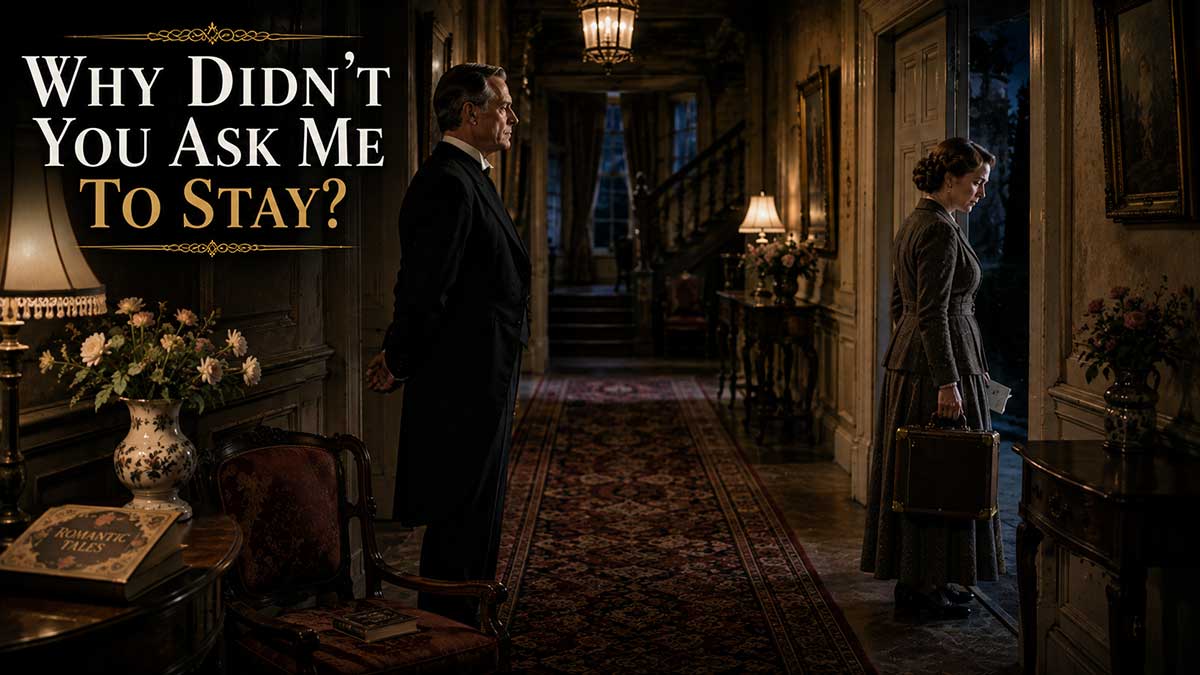
The room had grown quieter after Stevens’s conversation with his father.
Something in him had shifted.
Not enough to make him suddenly open.
Not enough to turn him into another man.
But enough that silence no longer felt quite as safe.
Miss Kenton sat across from him.
For years, almost everything important between them had lived in implication.
A flower placed in a room.
A book taken from his hands.
A conversation through a doorway.
A marriage announcement answered with courtesy.
Tonight, implication would no longer be enough.
Did Stevens love Miss Kenton?
Miss Kenton: Mr. Stevens.
Stevens: Miss Kenton.
Miss Kenton: I think we have reached the part of this conversation you would most prefer to avoid.
Stevens: I cannot imagine what you mean.
Cardinal glanced toward Lord Darlington.
Neither spoke.
Miss Kenton almost smiled.
Miss Kenton: There you are again.
Stevens: Where?
Miss Kenton: Behind the door.
Stevens looked down.
Miss Kenton: I am going to ask you something plainly.
Stevens: Very well.
Miss Kenton: Did you love me?
The room seemed to contract.
Stevens did not answer.
His father watched him carefully.
Lord Darlington looked away.
Stevens: I had the highest regard for you.
Miss Kenton closed her eyes.
Miss Kenton: Of course you did.
Stevens: You were an exceptionally capable housekeeper.
Miss Kenton: Mr. Stevens.
Stevens: I respected your judgment in numerous—
Miss Kenton: Stop.
He did.
Miss Kenton: Please do not make me listen to my performance review after all these years.
Cardinal lowered his head, hiding a smile.
Stevens looked embarrassed.
Miss Kenton: I did not ask whether you respected my work.
Stevens: I understand.
Miss Kenton: Then answer the question.
Stevens swallowed.
Stevens: I do not know whether such matters can always be defined so simply.
Miss Kenton: They can sometimes.
Stevens: Human attachment is—
Miss Kenton: Did you miss me after I left?
That stopped him.
Stevens: Yes.
Miss Kenton: Did Darlington Hall feel different?
Stevens: Naturally. You had supervised a considerable portion of—
She stared at him.
Stevens stopped.
Stevens: Yes.
Miss Kenton: Did you ever wonder where I was?
Stevens: Yes.
Miss Kenton: Whether I was happy?
Stevens: Yes.
Miss Kenton: Whether I thought of you?
Stevens hesitated.
Stevens: Yes.
Miss Kenton’s expression softened.
Miss Kenton: Then perhaps we can continue without pretending this was only about staffing.
What did all those small moments mean?
Miss Kenton: Do you remember the flowers?
Stevens: Yes.
Miss Kenton: You told me they were there to brighten the room.
Stevens: That was indeed—
Miss Kenton: Were they?
Stevens stared at her.
Miss Kenton: Only that?
Stevens: I thought you might appreciate them.
Miss Kenton: Why?
Stevens: Because—
He stopped.
Miss Kenton waited.
Stevens: Because I wished you to have them.
The sentence was tiny.
Yet everyone in the room heard what it cost him.
Miss Kenton: Thank you.
Stevens looked almost relieved that she did not ask more.
She did.
Miss Kenton: And the book?
Stevens sighed.
Stevens: Must we revisit that episode?
Miss Kenton: Absolutely.
Stevens: I have explained—
Miss Kenton: That you were reading romance novels to improve your English.
Stevens: Yes.
Miss Kenton: Do you still expect me to believe that?
Stevens’s father spoke.
Stevens’s Father: I don’t.
Stevens turned toward him.
Stevens: Father.
Stevens’s Father: Carry on.
Miss Kenton laughed softly.
For a moment, even Stevens seemed close to smiling.
Then she became serious again.
Miss Kenton: Why were you embarrassed?
Stevens: It was private.
Miss Kenton: Yes.
Stevens: I saw no reason for you to examine it.
Miss Kenton: I think you were embarrassed because it revealed something.
Stevens said nothing.
Miss Kenton: You liked stories about people saying the things you could not say.
That landed.
Stevens: That is rather speculative.
Miss Kenton: Is it?
Stevens looked away.
Why didn’t you ask me to stay?
Miss Kenton folded her hands.
Her voice became quieter.
Miss Kenton: Then let us come to the night I told you I intended to marry.
Stevens grew still.
Stevens: Yes.
Miss Kenton: Do you remember?
Stevens: Very clearly.
Miss Kenton: More clearly than you usually admit.
Stevens: Perhaps.
Miss Kenton: I told you another man had asked me to marry him.
Stevens: Yes.
Miss Kenton: What did you feel?
Stevens: I was surprised.
Miss Kenton: Only surprised?
No answer.
Miss Kenton: Hurt?
Stevens looked down.
Stevens: Perhaps.
Miss Kenton: Angry?
Stevens: No.
Miss Kenton: Jealous?
A long silence.
Stevens: I cannot say.
Miss Kenton: You can.
Stevens: I had no claim upon you.
Miss Kenton: I didn’t ask whether you had a claim.
She leaned forward.
Miss Kenton: Why didn’t you ask me to stay?
Stevens looked at her.
He had known this question was coming.
Knowing did not help.
Stevens: You had made a decision.
Miss Kenton: I had told you about a decision.
Stevens: There is little distinction.
Miss Kenton: There is an enormous distinction.
Stevens: You had accepted his proposal.
Miss Kenton: Yes.
Stevens: Then—
Miss Kenton: Mr. Stevens, I am not asking what etiquette required.
I am not asking what a butler should have done.
I am asking what you wanted.
Silence.
Miss Kenton: Did you want me to go?
Stevens’s face tightened.
Stevens: No.
Miss Kenton’s eyes filled.
She nodded once.
Miss Kenton: Did you want me to stay?
Stevens could not look at her.
Stevens: Yes.
No one moved.
Why didn’t he say it?
Miss Kenton: Then why didn’t you ask?
Stevens stared at his hands.
Stevens: It would have been inappropriate.
Miss Kenton: No.
Stevens: You were engaged.
Miss Kenton: No.
Stevens: I had responsibilities.
Miss Kenton: No.
Stevens looked up, irritated now.
Stevens: Then what answer would satisfy you?
Miss Kenton: The true one.
He said nothing.
Miss Kenton: What frightened you?
Stevens: I was not frightened.
His father shifted.
Stevens heard it.
Miss Kenton: You were.
Stevens: Of what?
Miss Kenton: Of asking.
Stevens: Why would asking frighten me?
Miss Kenton: Because I could have said no.
Stevens froze.
Miss Kenton continued.
Miss Kenton: You could serve a dinner perfectly.
You could manage a staff perfectly.
You could polish silver perfectly.
But there was no perfect way to ask a woman to choose you.
Stevens stared at her.
Miss Kenton: You could have done everything right and still lost.
That was unbearable to you.
Cardinal spoke quietly.
Cardinal: Duty gave you measurable success.
Love would not.
Stevens turned toward him.
Cardinal: Perhaps that was why one felt safer.
Stevens: Safer.
Cardinal: Yes.
Stevens: I find this insistence that I lived in fear rather tiresome.
Miss Kenton’s eyes narrowed.
Miss Kenton: Then tell me what it was.
Stevens looked back at her.
Miss Kenton: Tell me why a man who wanted a woman to stay watched her leave without one word.
Stevens’s breathing became heavier.
Miss Kenton: Tell me.
He tried to answer.
Nothing came.
His father watched him.
Stevens’s Father: Son.
Stevens looked at him.
Stevens’s Father: Don’t polish it.
The phrase struck him.
Stevens looked back at Miss Kenton.
Stevens: I did not know how.
Miss Kenton’s face changed.
Stevens: I did not know how to ask.
A pause.
Stevens: I did not know what words one uses.
Miss Kenton: Any words.
Stevens: That is easy to say now.
Miss Kenton: Yes.
Stevens: I had spent my entire adult life learning how not to intrude.
How not to presume.
How not to place myself before others.
He looked at her.
Stevens: And suddenly I was expected to say, “Choose me.”
Miss Kenton’s eyes filled further.
Stevens: I did not know how to become that person in one evening.
Was there really only one lost moment?
Miss Kenton: That is the saddest part.
Stevens: What is?
Miss Kenton: You think it happened in one evening.
Stevens: You are referring to your engagement.
Miss Kenton: I am referring to us.
Stevens looked confused.
Miss Kenton: There was not one moment when you might have changed things.
There were many.
The flowers.
The book.
The evenings when we talked after the household had gone quiet.
The days I found reasons to come speak with you.
The occasions when I was angry with you for reasons I barely understood myself.
The times I waited for you to say something personal.
Stevens looked shaken.
Miss Kenton: I gave you many chances.
Stevens: I did not recognize them.
Miss Kenton: I know.
Her voice carried no cruelty now.
Only sadness.
Stevens: Then perhaps they were not as clear as you suggest.
Miss Kenton smiled through tears.
Miss Kenton: Of course they were not clear.
That is how such things often are.
People do not arrive carrying signs.
She looked at him.
Miss Kenton: We give each other openings.
And hope.
Did Miss Kenton love him?
Stevens finally asked the question.
Barely.
Stevens: And you?
Miss Kenton looked at him.
Miss Kenton: What about me?
Stevens: Did you—
He stopped.
Cardinal looked away.
Lord Darlington stared into the fire.
Stevens tried again.
Stevens: Did you wish me to ask you to stay?
Miss Kenton did not answer immediately.
Miss Kenton: Yes.
Stevens closed his eyes.
For perhaps two seconds.
Then opened them.
Miss Kenton: Not every day.
Not always clearly.
But yes.
There were times when I wished very much that you would.
Stevens said nothing.
Miss Kenton: There were times when I thought you might.
That hurt him more.
Stevens: When?
Miss Kenton shook her head.
Miss Kenton: That is precisely the tragedy, Mr. Stevens.
There wasn’t one moment.
There were many.
Stevens looked down.
What if he had asked?
Stevens: Would you have stayed?
Miss Kenton took a long breath.
Miss Kenton: I don’t know.
Stevens looked up.
Miss Kenton: You see?
He almost smiled bitterly.
Stevens: Indeed.
Miss Kenton: Do not use that uncertainty as proof that silence was wise.
Stevens said nothing.
Miss Kenton: Perhaps I would have stayed.
Perhaps I would have been frightened.
Perhaps we would have failed terribly.
Perhaps living together would have revealed that we were entirely unsuited.
A small laugh escaped her.
Miss Kenton: You might have driven me mad within a fortnight.
Cardinal smiled.
Even Stevens did.
Very faintly.
Miss Kenton: But we would have known.
The smile disappeared.
Miss Kenton: Instead, we spent years living beside a life that might have existed.
That is different.
Can lost love still be honored without trying to reclaim it?
Stevens looked at her for a long time.
Stevens: Are you happy?
Miss Kenton’s eyes shifted.
Miss Kenton: That is a difficult question.
Stevens: I apologize.
Miss Kenton: No.
She shook her head.
Miss Kenton: Do not retreat now.
Stevens waited.
Miss Kenton: My marriage was difficult at times.
There were years when I wondered whether I had made a terrible mistake.
Stevens’s expression changed.
She saw it.
Miss Kenton: But I stayed.
And something happened that I did not expect.
I grew into the life I had chosen.
I grew to love my husband.
We had a daughter.
Soon I will have a grandchild.
Stevens’s hope disappeared almost invisibly.
Miss Kenton saw that too.
Miss Kenton: I am not telling you this to hurt you.
Stevens: I understand.
Miss Kenton: Do you?
Stevens: Yes.
She looked at him.
Miss Kenton: Then understand one more thing.
What we might have had matters to me.
But so does what I have.
Stevens nodded.
Stevens: I would never ask you to abandon it.
Miss Kenton: I know.
The room fell silent.
Then Stevens spoke.
Stevens: Miss Kenton.
Miss Kenton: Yes?
Stevens: I believe I owe you an apology.
Miss Kenton: For what?
Stevens: For allowing you to think you were alone in what you felt.
Her face tightened.
Stevens: I thought silence was a form of restraint.
Perhaps even kindness.
He paused.
Stevens: I see now that silence can be quite selfish.
Miss Kenton’s eyes filled again.
Stevens: It allowed me to avoid risk.
And left you to carry the uncertainty.
Miss Kenton nodded slowly.
Miss Kenton: Yes.
Stevens: I am sorry.
She looked at him for a long time.
Miss Kenton: Thank you.
Stevens’s father spoke from beside him.
Stevens’s Father: Say the rest.
Stevens turned.
Stevens: Father—
Stevens’s Father: You have come this far.
Stevens looked almost alarmed.
Miss Kenton waited.
No one rescued him.
He drew a slow breath.
Stevens: Miss Kenton.
Miss Kenton: Yes.
Stevens: I loved you.
Nothing moved.
Stevens looked down almost immediately after saying it.
Miss Kenton covered her mouth.
Her eyes closed.
When she opened them again, tears had escaped.
Miss Kenton: I know.
Stevens looked up.
Miss Kenton: I think I always knew.
A faint, painful smile crossed her face.
Miss Kenton: I only wish you had known.
That sentence struck deeper than any accusation.
Stevens nodded.
After a long silence, Miss Kenton stood.
Stevens stood too.
For an instant it seemed that he might offer his hand formally.
Instead, he simply looked at her.
Stevens: Had I asked you to stay—
He stopped.
Miss Kenton: Yes?
Stevens: I cannot know what would have happened.
Miss Kenton: No.
Stevens: But I wish I had asked.
Miss Kenton nodded.
Miss Kenton: So do I.
They stood facing each other with an entire unlived life between them.
Neither attempted to reclaim it.
Neither pretended it had not mattered.
For the first time, Stevens allowed himself to grieve something he had spent decades refusing to name.
And for the first time, Miss Kenton did not need him to change the past.
She needed only one thing.
For him to admit that there had been something to lose.
He had.
Now only one question remained.
What does a man do after finally admitting that the life he wanted is gone?
And what, if anything, can he make of the life that remains?
Topic 5 — What Can Be Done With the Life That Remains?
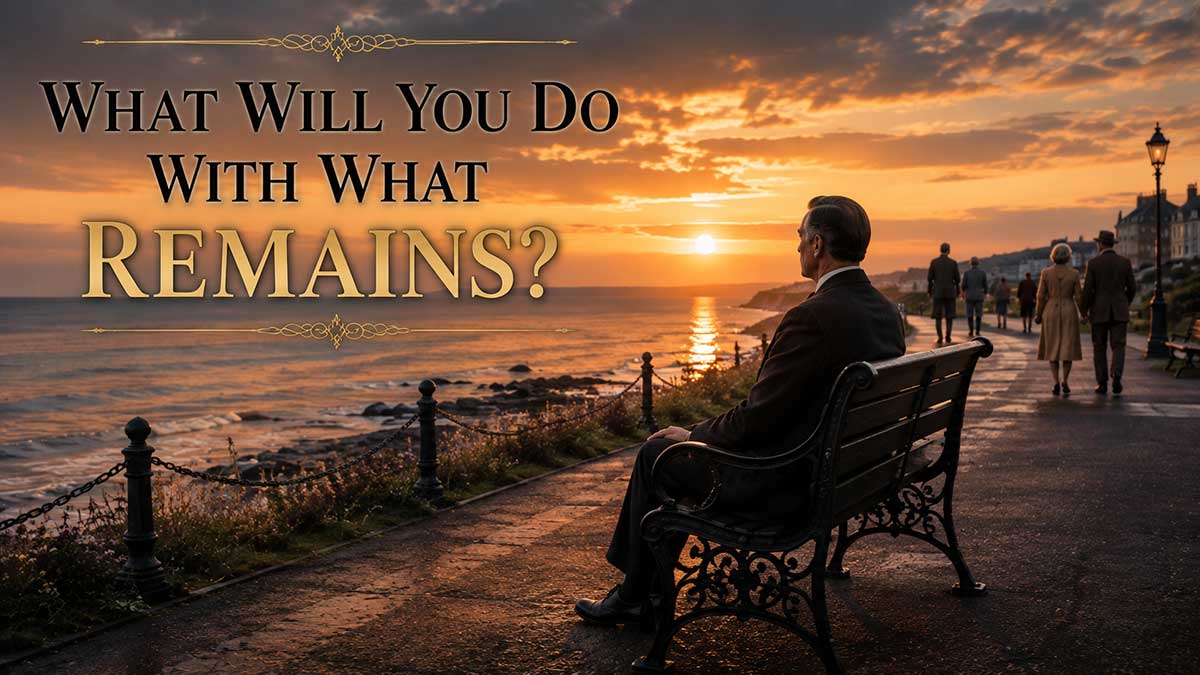
For some time after Miss Kenton’s confession, no one spoke.
Stevens remained standing.
So did Miss Kenton.
Between them lay everything that might have been.
A different house.
A different table.
Children, perhaps.
Arguments about ordinary things.
Illnesses.
Birthdays.
Years spent growing old beside each other instead of remembering each other from separate lives.
None of it had happened.
And now it never would.
Miss Kenton slowly returned to her chair.
Stevens did the same.
His father watched him.
Lord Darlington sat near the fire, looking older than before.
Cardinal leaned back and waited.
They had examined dignity.
Loyalty.
Family.
Love.
Now came the question none of those subjects could answer.
What does a man do after realizing that the life he might have wanted has already passed?
Can you forgive yourself for a life you cannot change?
Cardinal: Stevens.
Stevens: Yes, sir?
Cardinal: What are you thinking?
Stevens looked toward the window.
Stevens: I am not certain it would be useful to describe it.
Miss Kenton: Try.
Stevens hesitated.
Stevens: I was thinking that there seems little purpose in discovering certain truths so late.
Nobody answered.
Stevens: Had these matters become apparent to me thirty years ago, perhaps they might have possessed some practical value.
He looked toward Miss Kenton.
Then his father.
Stevens: But now?
He shook his head.
Stevens: My father is dead.
Lord Darlington’s affairs belong to history.
The young women who were dismissed from this house have long since gone.
Miss Kenton has her family.
He paused.
Stevens: One cannot repair such things simply by admitting them.
Miss Kenton: No.
Stevens seemed surprised by her agreement.
Miss Kenton: You cannot.
Stevens: Then what precisely has been achieved tonight?
Miss Kenton looked at him carefully.
Miss Kenton: You stopped lying to yourself.
Stevens: I would not characterize—
He stopped.
A faint smile crossed her face.
Miss Kenton: You nearly did it again.
Stevens noticed.
He gave a small nod.
Stevens: Yes.
Lord Darlington: Stevens, I have asked myself the same question.
Stevens turned toward him.
Lord Darlington: What value is there in recognizing an error after the damage has been done?
Stevens: Have you found an answer, sir?
Darlington stared into the fire.
Lord Darlington: Not one I particularly like.
Stevens: Which is?
Lord Darlington: Perhaps recognition is not repayment.
Stevens listened.
Lord Darlington: Perhaps it does not erase anything.
It simply prevents us from spending the rest of our lives defending what should have been admitted.
Stevens looked down.
Lord Darlington: I spent years telling myself that my intentions had been honorable.
And they were.
But good intentions became a refuge.
Whenever I approached the truth of what I had helped encourage, I reminded myself that I had wanted peace.
He shook his head.
Lord Darlington: Wanting something good does not make every act committed in its name good.
Stevens remained quiet.
Lord Darlington: I cannot undo my mistakes.
But I can stop asking the world to pretend they were not mistakes.
Stevens’s father spoke.
Stevens’s Father: Same with me.
Stevens looked toward him.
Stevens’s Father: I cannot go back and become a different father.
Stevens: You were a good father.
The old man looked at him.
Stevens’s Father: Was I?
Stevens: Yes.
Stevens’s Father: Then let me be good enough to admit where I failed.
Stevens’s eyes lowered.
Stevens’s Father: You keep thinking admitting a wrong cancels everything good.
It doesn’t.
A man can have loved his son and still have failed him.
A man can have worked honorably and still have hidden inside his work.
A man can have done much that was worthy and still wish he had lived differently.
Stevens looked at him.
Stevens’s Father: Life does not need to be declared entirely good or entirely wasted.
Stevens seemed struck by that.
Was Stevens’s life wasted?
Stevens: Perhaps that is the question.
Cardinal: What is?
Stevens: Whether I wasted it.
The words sounded unnatural coming from him.
Miss Kenton’s expression changed.
Stevens: I gave the best years of my life to service.
I believed I was participating, however modestly, in matters of significance.
I believed Lord Darlington was a gentleman whose work might benefit the world.
He looked toward Darlington.
Stevens: Much of that belief proved misplaced.
Then toward his father.
Stevens: I chose work when I should perhaps have chosen family.
Then Miss Kenton.
His voice softened.
Stevens: And I remained silent when perhaps I should have spoken.
He lowered his eyes.
Stevens: If these things were errors, they were not small ones.
Cardinal: No.
Stevens: Then perhaps I did waste it.
Miss Kenton leaned forward.
Miss Kenton: Mr. Stevens, do you believe every moment we spent at Darlington Hall was worthless?
Stevens: No.
Miss Kenton: Did you ever help someone?
Stevens: I imagine so.
Miss Kenton: Did members of staff depend upon you?
Stevens: Yes.
Miss Kenton: Did you teach young servants their work?
Stevens: Naturally.
Miss Kenton: Did you ever make difficult days easier for people without even noticing?
Stevens looked uncertain.
Miss Kenton: I saw you do it.
He looked at her.
Miss Kenton: You were not an empty man walking through empty years.
You were kind in ways you refused to call kindness.
You were dependable.
You took pride in doing things properly.
You cared about people.
Your tragedy was not that there was no goodness in your life.
She paused.
Miss Kenton: It was that you gave yourself so little permission to enjoy any of it.
Stevens’s expression softened.
Cardinal: There is another danger in calling an entire life wasted.
Stevens: Which is?
Cardinal: It can become another excuse.
Stevens: I fail to see how.
Cardinal: If the first sixty years were wasted, why risk the remaining ones?
Stevens stared at him.
Cardinal: You could turn regret into a new form of hiding.
Stevens: That seems rather harsh.
Cardinal: It is meant to be.
He leaned forward.
Cardinal: You spent much of your life saying, “It is too early to think of myself.”
Now you could spend what remains saying, “It is too late.”
Stevens did not move.
Cardinal: Different sentence.
Same result.
Miss Kenton looked at Stevens.
Miss Kenton: Nothing changes.
Is it too late?
Stevens looked toward Miss Kenton.
Stevens: It is too late for certain things.
She nodded.
Miss Kenton: Yes.
Stevens: You will not return to Darlington Hall.
Miss Kenton: No.
Stevens: My father will not return.
Stevens’s Father: No.
Stevens: Lord Darlington’s reputation cannot be restored by my loyalty.
Lord Darlington: Nor should it be.
Stevens drew a slow breath.
Stevens: Then surely one must acknowledge that time imposes limits.
Cardinal: Of course.
Stevens: I cannot begin again as though I were a young man.
Miss Kenton: Who asked you to?
Stevens looked toward her.
Miss Kenton: Perhaps beginning again is the wrong idea.
Stevens: Then what would you call it?
She thought.
Miss Kenton: Beginning from here.
Stevens repeated it quietly.
Stevens: From here.
His father nodded.
Stevens’s Father: That's all any man gets.
Stevens: I beg your pardon?
Stevens’s Father: Nobody begins from where he wishes he had been.
He begins from where he is.
Stevens stared at him.
Stevens’s Father: You keep looking backward and asking what the younger Stevens should have done.
Fine.
Learn from him.
But he is gone.
The old man pointed gently at his son.
Stevens’s Father: That man is the one you have responsibility for now.
Who is Stevens when he is not simply a butler?
Miss Kenton studied him.
Miss Kenton: May I ask you something?
Stevens gave her a wary look.
Stevens: I believe you intend to regardless.
She smiled.
Miss Kenton: What do you enjoy?
Stevens frowned.
Stevens: Enjoy?
Miss Kenton: Yes.
Stevens: In what sense?
Miss Kenton: There is only one sense.
What do you enjoy doing?
Stevens considered the question as though asked to solve a diplomatic crisis.
Stevens: I take satisfaction in maintaining a properly run household.
Miss Kenton sighed.
Miss Kenton: Mr. Stevens.
Stevens: It is true.
Miss Kenton: I know.
But suppose there were no household.
Stevens: That is hypothetical.
Miss Kenton: Naturally.
Stevens: Darlington Hall continues to require—
Miss Kenton: Suppose tomorrow you were told that you would never work another day.
What would you do?
Stevens stared at her.
Nothing came.
Miss Kenton: What food do you like?
Stevens: Food?
Miss Kenton: Yes.
Stevens: I have never given the matter particular thought.
Miss Kenton: Music?
Stevens shifted.
Stevens: I have heard many excellent performances during functions.
Miss Kenton: Books?
Cardinal smiled.
Cardinal: Careful. We may discover another romance novel.
Stevens gave him a restrained look.
Stevens: I believe that matter has been sufficiently discussed.
Miss Kenton laughed.
This time Stevens did smile.
Small.
Brief.
But unmistakable.
Miss Kenton noticed.
Miss Kenton: There.
Stevens: What?
Miss Kenton: That.
Stevens: I do not follow.
Miss Kenton: You smiled.
Stevens: People occasionally do.
Miss Kenton: You should investigate the practice.
Lord Darlington gave a quiet laugh.
Stevens glanced around the room.
Something almost unfamiliar had entered it.
Ease.
Miss Kenton: What about your trip?
Stevens: My trip?
Miss Kenton: The countryside.
The villages.
The evening by the sea.
Was there nothing you enjoyed?
Stevens thought for a moment.
Stevens: There was a place where I stopped.
The view was quite remarkable.
Miss Kenton: How did it make you feel?
Stevens: I am not certain.
She waited.
Stevens: Peaceful, perhaps.
Miss Kenton: Did anyone require you to be there?
Stevens: No.
Miss Kenton: Was it part of your duties?
Stevens: No.
Miss Kenton: Did you enjoy it?
Stevens looked at her.
Stevens: Yes.
Miss Kenton nodded.
Miss Kenton: There you are.
Does meaning require a grand purpose?
Stevens: This seems rather small.
Cardinal: What does?
Stevens: Enjoying scenery.
Learning to joke.
Taking trips.
After spending one's life believing that meaning came from contributing to great affairs, this seems—
He stopped.
Lord Darlington: Insignificant?
Stevens: Perhaps.
Darlington smiled sadly.
Lord Darlington: I spent much of my life around men obsessed with significance.
Statesmen.
Ambassadors.
Industrialists.
Men who spoke of nations and destiny.
He looked at Stevens.
Lord Darlington: We were very impressed with ourselves.
Stevens listened.
Lord Darlington: Perhaps we were wrong to think meaning had to be grand.
He glanced toward Miss Kenton.
Lord Darlington: Perhaps caring for one family well might be worth more than attempting to rescue Europe badly.
Cardinal smiled faintly.
Cardinal: That may be the wisest thing you've said tonight.
Darlington nodded.
Lord Darlington: Pity it took me so long.
Stevens looked toward his father.
Stevens: You believed greatness mattered.
Stevens’s Father: I did.
Stevens: You taught me to seek employment in a distinguished household.
Stevens’s Father: Yes.
Stevens: Do you regret that?
His father considered.
Stevens’s Father: I regret teaching you that greatness belonged only to great houses.
Stevens stared at him.
Stevens’s Father: A man can do something great by being present when his child needs him.
By telling someone he loves them.
By refusing an order he knows is wrong.
By sitting with a friend who is lonely.
He shrugged.
Stevens’s Father: Nobody writes history books about most of it.
Stevens looked down.
Stevens’s Father: Maybe history books aren't the best measure.
What remains?
The room had begun to brighten.
Morning light entered through the tall windows.
Miss Kenton looked toward it.
Miss Kenton: The title of your story is rather strange, isn't it?
Stevens looked at her.
Stevens: My story?
Miss Kenton: The remains of the day.
Stevens nodded.
Miss Kenton: Most people hear “remains” and think of what has been lost.
What is left after something has finished.
Stevens: That seems reasonable.
Miss Kenton: But what remains is still something.
Stevens watched her.
Miss Kenton: Evening is not morning.
But it is still part of the day.
You cannot demand morning back.
But you can decide whether to spend the evening staring at the clock.
Cardinal looked toward Stevens.
Cardinal: So what will you do?
Stevens grew uncomfortable again.
Stevens: I cannot provide a comprehensive plan at this moment.
Miss Kenton: Nobody asked for one.
Cardinal: Tomorrow.
What will you do tomorrow?
Stevens turned toward his father.
The old man smiled.
Stevens’s Father: I was going to ask the same thing.
Stevens looked around the room.
For years, nearly every tomorrow had already been decided.
Breakfast.
Correspondence.
Household matters.
Silver.
Dinner.
Guests.
Duty.
For once the question contained uncertainty.
Strangely, it did not feel entirely frightening.
Stevens: I suppose I will return to Darlington Hall.
Miss Kenton: Yes.
Stevens: Mr. Farraday will expect me.
Cardinal: Of course.
Stevens: There are staffing difficulties requiring attention.
Miss Kenton smiled.
Miss Kenton: Naturally.
Stevens paused.
Stevens: But perhaps—
Everyone waited.
Stevens: Perhaps I need not regard every hour outside those responsibilities as wasted time.
His father nodded.
Stevens: I might continue traveling occasionally.
Miss Kenton: Good.
Stevens: And I have been considering this matter of bantering.
Cardinal laughed.
Cardinal: A brave undertaking.
Stevens: Mr. Farraday seems to value it.
Miss Kenton gave him a look.
Stevens caught himself.
Stevens: I see.
Miss Kenton: Do you?
Stevens: I was making it about my employer again.
She smiled.
Miss Kenton: You were.
Stevens thought.
Stevens: Then perhaps I should learn because—
He struggled for the phrasing.
Stevens: Because I might enjoy it.
Miss Kenton smiled.
Miss Kenton: That will do.
The final question
Miss Kenton stood.
This time Stevens understood that she truly was leaving.
He rose.
There was no future in which she stayed at Darlington Hall.
No late miracle waited behind the door.
The years they had lost would remain lost.
Stevens seemed to know this now.
He approached her.
Stevens: Miss Kenton.
Miss Kenton: Yes?
He hesitated.
Then spoke without searching for the perfect formulation.
Stevens: I am glad you came into my life.
Miss Kenton looked at him.
Her eyes filled.
For a moment she seemed unable to answer.
Then:
Miss Kenton: So am I, Mr. Stevens.
Stevens nodded.
She reached for his hand.
He gave it to her.
No one pretended this gesture restored anything.
It did something quieter.
It acknowledged what had existed.
And what had mattered.
Miss Kenton released his hand.
Miss Kenton: Goodbye, Mr. Stevens.
He looked at her.
There was one last temptation.
Ask her to stay.
Ask her to return.
Ask for what should have been asked decades earlier.
But that would no longer be love.
It would be asking her to sacrifice the life she had built so that he could escape regret over the one they had missed.
Stevens understood.
Stevens: Goodbye, Miss Kenton.
She walked from the room.
Stevens watched the door close.
For a few moments, he said nothing.
Then his father spoke.
Stevens’s Father: Son.
Stevens turned.
Stevens: Yes?
Stevens’s Father: What will you do tomorrow?
Stevens looked toward the window.
The morning had arrived.
He thought for a long time.
Then something unexpected happened.
He smiled.
Not because he had an answer.
But because he did not.
Stevens: I don't know.
His father smiled back.
Stevens’s Father: Good.
Stevens looked almost amused.
Stevens: You consider ignorance desirable?
Stevens’s Father: No.
He leaned back.
Stevens’s Father: But for once, the rest of your life has not already been decided.
Stevens turned again toward the window.
He could not recover what was gone.
He could not change whom he had served.
He could not return to his father’s bedside.
He could not live the life he might have lived with Miss Kenton.
There would always be grief in knowing that.
But perhaps regret did not have to become his final duty.
Perhaps the years behind him did not need to command the years ahead.
Perhaps dignity could mean something different now.
Not never needing anyone.
Not never admitting error.
Not never showing grief.
Perhaps dignity could include the courage to look directly at one’s life, accept what cannot be repaired, and refuse to waste what remains mourning what cannot return.
Stevens stood beside the window.
Outside, the day was beginning.
He had spent most of his life serving other people's purposes.
For the first time, a quieter question waited for him.
Not:
What is expected of me?
Not:
What would a great butler do?
Not:
What does my employer require?
Something far simpler.
What do I want to do with the time I have left?
Stevens did not yet know.
For once, that was enough.
Final Thoughts
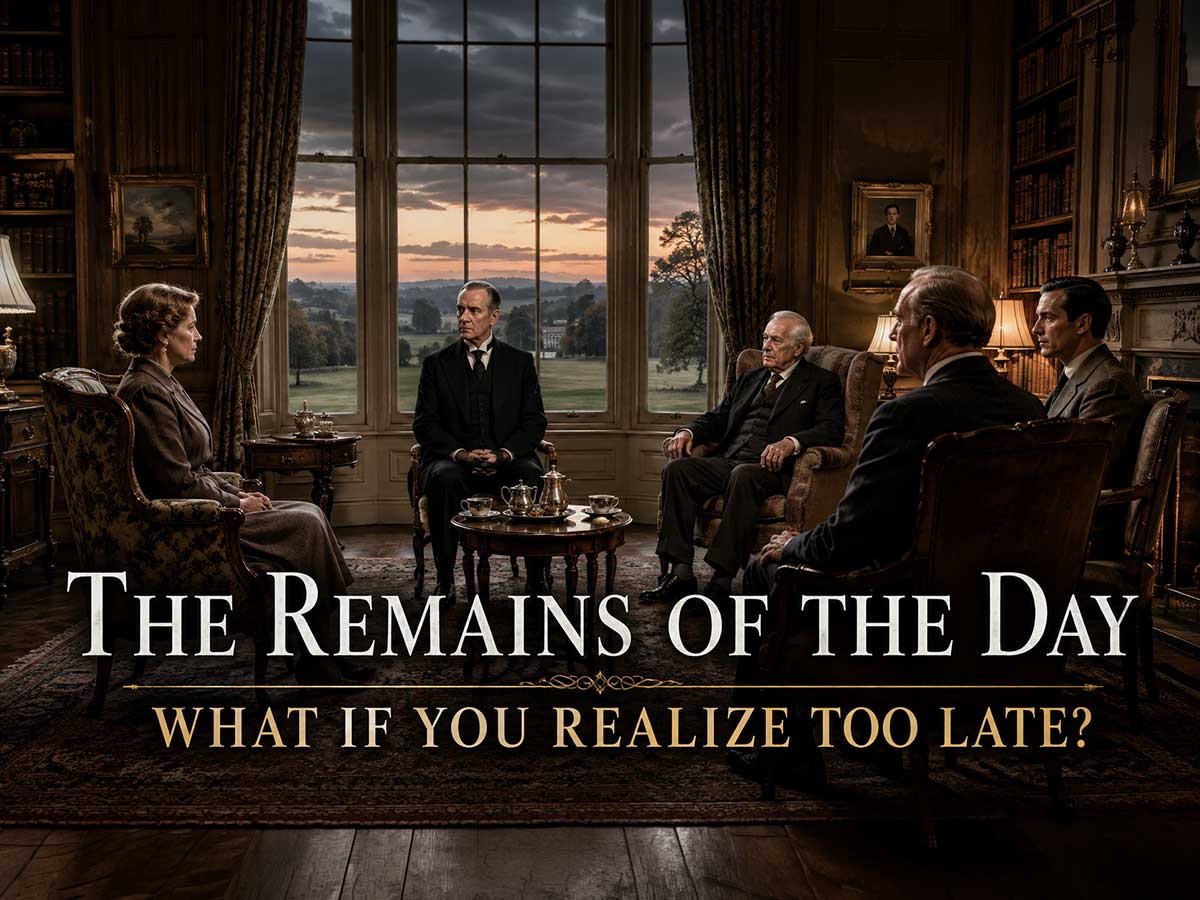
Perhaps the deepest tragedy of Stevens is not that he made mistakes.
Everyone does.
It is that he spent so many years refusing to call them mistakes.
He believed dignity meant controlling emotion, loyalty meant withholding judgment, and duty meant placing himself last. Only much later does he begin to see that these virtues can become hiding places.
Yet The Remains of the Day leaves us with something more meaningful than regret.
The morning may be gone.
The afternoon may be gone.
Some doors may never reopen.
But whatever remains of the day still belongs to us.
We cannot change the love we failed to express, the people we failed to question, or the moments when we should have been present.
We can decide what happens next.
Perhaps that is Stevens’s final lesson:
It may be too late to live the life you could have lived. It is not necessarily too late to live the life you still have.
Short Bios:
Stevens — The longtime butler of Darlington Hall whose devotion to professionalism and dignity gradually forces him to confront the emotional and moral costs of his choices.
Miss Kenton (Mrs. Benn) — Darlington Hall’s former housekeeper. Intelligent, emotionally perceptive, and one of the few people capable of reaching the person hidden beneath Stevens’s professional identity.
Lord Darlington — Stevens’s former employer, an English aristocrat whose desire to influence European affairs leads him into disastrous political associations before World War II.
Reginald Cardinal — Lord Darlington’s godson and journalist, who recognizes the dangerous political forces surrounding Darlington and challenges Stevens’s belief that obedience removes personal responsibility.
Stevens’s Father — An elderly butler whose extreme devotion to professional dignity deeply influences his son. His relationship with Stevens reveals how emotional silence can pass quietly from one generation to another.
Kazuo Ishiguro — British novelist born in Nagasaki, Japan, in 1954. The Remains of the Day won the 1989 Booker Prize. Ishiguro received the 2017 Nobel Prize in Literature for fiction exploring memory, identity, self-deception, loss, and the fragile stories people construct about their own lives.
Leave a Reply