
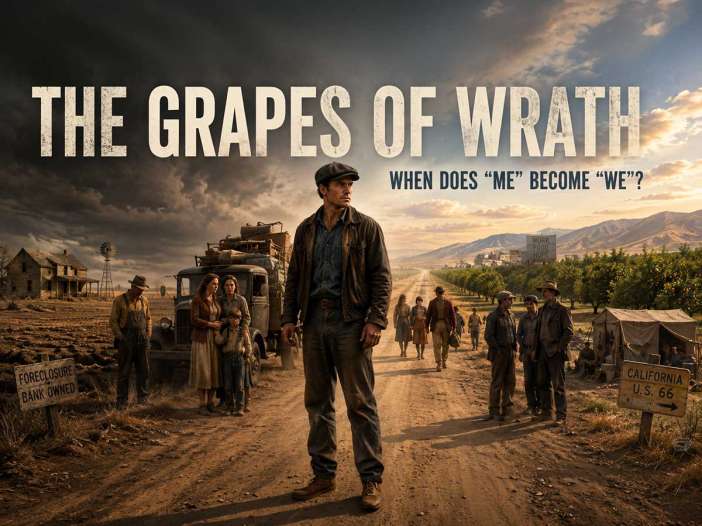
Introduction
What happens when a family does everything it was told to do, works hard, stays together, keeps moving, and still cannot find a secure place in the world?
John Steinbeck's The Grapes of Wrath begins with one family losing its land, but it gradually asks a much larger question.
At first, the Joads think in the language of survival.
Our land.
Our food.
Our children.
Our family.
There is nothing shameful about that. When people are hungry and frightened, protecting those closest to them can feel like the most basic moral duty.
Yet the journey west keeps challenging that boundary.
Tom discovers that his family's suffering is happening to thousands of other families. Pa discovers how quickly losing work can become confused with losing worth. Ma learns that keeping a family alive may require help from people outside it. Jim Casy begins to see human beings as connected in ways that cannot be reduced to individual success or failure. Rose of Sharon eventually encounters a stranger whose suffering asks something of her despite the fact that she owes him nothing personally.
Their conversation therefore moves through five connected questions:
What remains of us when home disappears?
Does poverty diminish human dignity, or expose how easily society forgets it?
Is protecting our own family enough?
When does justified anger become destructive violence?
And finally:
When we say “we,” who are we willing to include?
Steinbeck never makes these questions comfortable.
He does not give us a world where every poor person is virtuous, every employer is evil, every act of resistance is justified, or every sacrifice produces a happy ending.
Tom is capable of violence.
Uncle John carries guilt and escapes into alcohol.
Connie abandons Rose of Sharon.
Fear makes workers compete against one another.
People trying to save their own families can unintentionally make survival harder for other families.
That moral difficulty is one reason The Grapes of Wrath remains so unsettling.
The novel asks us to look at the space between two truths:
People are responsible for their choices.
And:
People make those choices inside circumstances they did not entirely choose.
The Joads live inside that space.
So do we.
(Note: This is an imaginary conversation, a creative exploration of an idea, and not a real speech or event.)
Topic 1: What Happens When Your Home Is Taken From You?
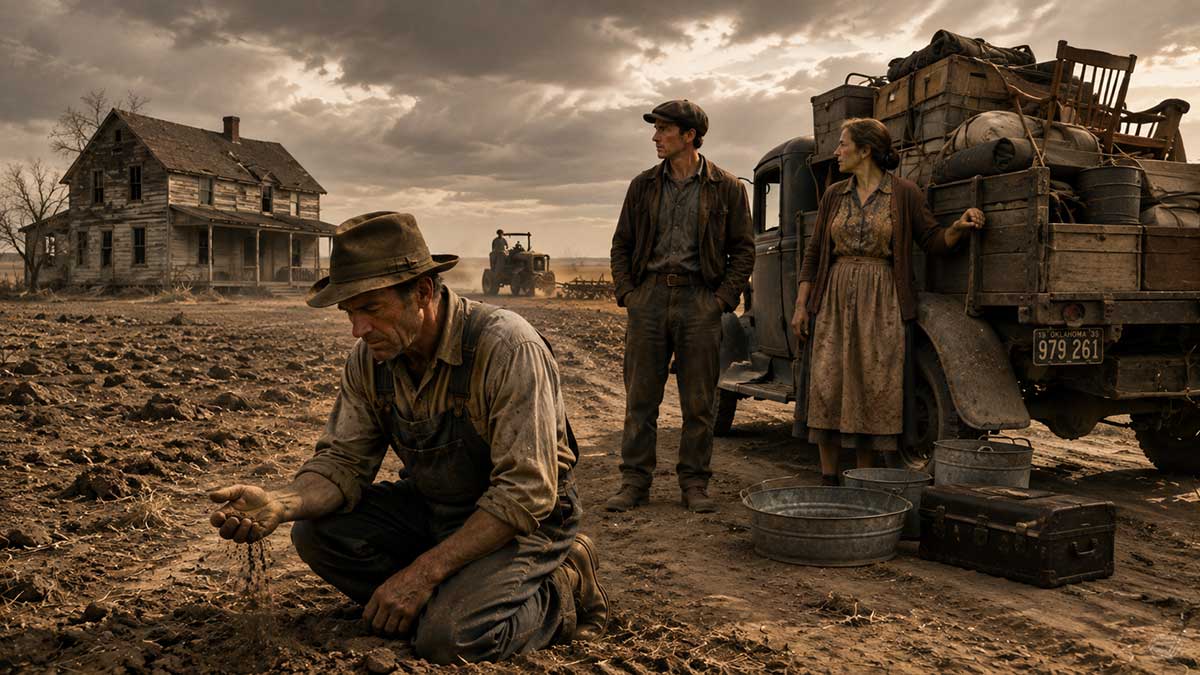
The evening sky over California had turned the color of dust.
For a long time, nobody spoke.
They had crossed hundreds of miles to get here, but sitting together now, the distance between Oklahoma and California somehow felt greater than it had on the road.
Tom Joad: Funny thing about coming home from prison. You spend all that time thinking about a place.
Not even anything special. A road. A fence. The way the dirt looks after rain.
You think it's waiting for you.
Then I got back and there wasn't much waiting.
Ma Joad: We were waiting.
Tom: You were.
I'm talking about the place.
I kept thinking I'd walk up and everything would fit again. Like putting on an old shirt.
But the houses were empty. Fields all tore up. People gone.
Felt like somebody had taken the whole thing and shaken the people out of it.
Pa Joad: They didn't take the dirt.
Tom: No.
Pa: That's what makes it worse.
The dirt was still there.
I could've stood right there where I'd always stood. Could've put my hand down and picked up the same soil.
But it wasn't ours anymore.
Jim Casy: Was it ever?
Pa looked at him.
Pa: What kind of question is that?
Casy: Just a question.
Pa: My people worked that land.
Casy: I know.
Pa: My father worked it. His people before him. We buried people there. We planted there. We starved there when things were bad and ate there when things were good.
Don't tell me it wasn't ours.
Casy: I ain't telling you anything.
I'm asking what makes dirt belong to a man.
Pa: Working it.
Tom: Bank didn't seem to think so.
Pa's jaw tightened.
Pa: Bank never put its hands in that dirt.
Tom: That's the point.
Pa: Bank never watched a crop come up. Never buried a dog beside the barn. Never sat awake wondering if the rain would come.
Then some fellow walks up with papers and says we got to leave.
How does paper know more about my land than I do?
Nobody answered immediately.
Ma: Maybe that's why it hurt so bad.
The thing telling us to leave didn't know us.
If a man had come and said, "I want your farm," Pa could've hated that man.
Could've yelled at him.
Maybe hit him.
Tom: Probably would've.
Ma: But who do you yell at when everybody says it ain't them?
Pa stared at the ground.
Pa: That's what they did.
One man says it's the bank.
Bank says it's the company.
Company says it's business.
Everybody's got somebody standing behind him.
You keep looking for the man who did it, and there ain't any man there.
Casy: But somehow a family still loses its home.
Pa: Yeah.
That's a hell of a trick.
Rose of Sharon had been listening quietly.
Rose of Sharon: I used to think California would fix it.
Tom: Fix what?
Rose of Sharon: Everything.
She gave a small, embarrassed smile.
Rose of Sharon: Connie and me used to talk about it. We'd get there, he'd study. Get a good job. We'd have a little house. The baby would have nice things.
I could see the curtains.
Isn't that foolish?
Ma: No.
Rose of Sharon: I could actually see them. Yellow ones.
Pa smiled faintly.
Rose of Sharon: I thought if you could see something clear enough, maybe that meant it was waiting for you.
Tom: I reckon we all thought something was waiting.
Rose of Sharon: But California wasn't waiting for us either.
Silence returned.
Then Uncle John spoke.
Uncle John: Maybe we weren't supposed to have it.
Tom turned toward him.
Tom: Have what?
Uncle John: Any of it.
The farm. California. All them things we thought were coming.
Maybe there's things done wrong and payment comes later.
Tom: Here we go.
Uncle John: You don't know.
Tom: Neither do you.
Uncle John: I know there's things a man carries.
Casy: There are.
Uncle John: Then maybe suffering's got a reason.
Casy: That's where you lose me.
Uncle John looked surprised.
Casy: I spent years telling people there was a reason for everything.
Something good happens, God's blessing you.
Something bad happens, God's testing you.
Somebody suffers, maybe there's sin somewhere.
It makes the preacher sound like he knows what he's talking about.
But I don't know anymore.
Uncle John: Then what do you know?
Casy: I know a hungry child is hungry.
That's about as far as I've gotten.
Uncle John lowered his eyes.
Casy: Maybe there's mysteries bigger than me. Probably are. But I've seen too many people hurting to tell every one of them they ought to search themselves for the reason.
Sometimes a man loses his farm because the rain don't come and the debt does.
Pa: That's closer to the truth.
Casy: Sometimes there ain't a lesson hiding inside the suffering.
Sometimes there's just suffering.
Ma studied Casy.
Ma: Then what do you do with it?
Casy: Maybe that's the question I've been trying to figure out.
Tom leaned forward.
Tom: I know what you do first.
You eat.
You find work.
You keep moving.
Folks can talk about what suffering means after supper.
Casy: That's true.
Tom: I mean it. When we were driving west, I wasn't sitting there thinking about mankind. I was wondering whether the truck was going to make it up the next hill.
Ma: And whether we could keep everybody together.
Tom: That too.
Ma: Mostly that.
Tom looked at her.
Tom: You really thought you could, didn't you?
Ma: I had to.
Tom: Grampa died.
Ma nodded.
Tom: Granma died.
Another nod.
Tom: Noah left.
Ma looked away.
Tom: Connie left Rosie.
Rose of Sharon stiffened.
Tom: I'm not saying it to hurt nobody.
Ma: I know.
Tom: I'm saying maybe there wasn't any way to keep us like we were.
Ma: I know that now.
Tom: Did you know it then?
Ma: No.
She answered so quickly that Tom stopped.
Ma: I thought if I held tight enough, nobody could go.
I thought that's what a mother was supposed to do.
Keep the family together.
Feed them. Watch them. Pull one back when he wandered too far.
I thought if we were all in the same place, we'd still be us.
Rose of Sharon: Weren't we?
Ma considered it.
Ma: Less and less.
Pa looked at her.
Pa: What does that mean?
Ma: You know what it means.
Back home, we knew who everybody was.
Pa was Pa.
I was Ma.
Tom was Tom.
Grampa sat where Grampa sat.
Everybody had a place.
Then the land went, and the places went with it.
Pa's face hardened slightly.
Pa: I was still Pa.
Ma: I know.
Pa: Doesn't sound like you know.
Ma: I do.
Pa: You started making the decisions.
There it was.
The others became quiet.
Ma: Somebody had to.
Pa: I know.
Ma: Then why say it like that?
Pa: Because knowing don't make it feel better.
Ma waited.
Pa: Back home, a man could look at his place and know what he was for.
Fence needs fixing, you fix it.
Field needs planting, you plant it.
Child needs feeding, you find a way.
Then suddenly there ain't no field.
Ain't no fence.
Ain't no work half the time.
Your children look at you hungry and you can't do a damn thing about it.
He rubbed his hands together.
Pa: You asked what they took from me.
Wasn't just land.
They took the answer to the question of what I was for.
Nobody interrupted him.
Tom: Pa...
Pa: Don't.
Let me say it.
All my life I thought a man was supposed to provide.
Then I couldn't.
Ma could keep going.
You could keep going.
I started feeling like baggage.
Ma: You were never baggage.
Pa: Felt like it.
Casy: Maybe that's different.
Pa: Different how?
Casy: Being useless and feeling useless ain't always the same thing.
Pa: Easy to say.
Casy: Sure is.
Most true things are easier to say than live.
Pa almost smiled.
Casy: Maybe somebody taught you that your worth came from being able to provide.
Then when the work disappeared, you thought your worth disappeared too.
Pa: What else is a man supposed to think?
Ma: That you're still a man.
Pa: That's easy for you.
Ma: No, it ain't.
Her voice changed.
Not louder.
Harder.
Ma: You think I didn't lose anything?
Pa looked at her.
Ma: I lost the same house.
Same land.
Same people.
I laid beside Granma after she died because I had to get the rest of you across that desert.
I didn't get to stop being Ma just because I was scared.
Pa's eyes dropped.
Ma: Maybe that's the difference.
You thought your job made you Pa.
I thought all of you made me Ma.
The words settled between them.
Casy looked from one to the other.
Casy: That's something.
Tom: What?
Casy: Maybe home works that way too.
Tom: Here comes the preacher.
Casy: I ain't preaching.
Tom: You're getting that look.
Casy laughed.
Casy: All right.
Maybe I'm thinking out loud.
Back there, you thought the land made the home.
Then the land went away.
Ma thought the family made the home.
Then the family started coming apart.
So what is left?
Nobody answered.
Rose of Sharon: People?
Casy turned toward her.
Rose of Sharon: I don't know.
Maybe home is just... where somebody knows you're there.
Ma looked at her daughter for a long moment.
Ma: That's closer than anything I've heard.
Tom: But that means you could make a home anywhere.
Rose of Sharon: Maybe.
Tom: Didn't feel much like home in them camps.
Rose of Sharon: No.
Tom: Didn't feel like home with people calling us Okies.
Ma: No.
Tom: Didn't feel like home when you had to watch your food because another man's child was staring at it.
Casy: Maybe that's when the word starts getting bigger.
Tom frowned.
Tom: What word?
Casy: Home.
Tom: I don't follow.
Casy: Back in Oklahoma, home was your farm.
Then maybe it became that truck.
All of you packed into it.
Then a camp.
Then maybe just the people sitting around a fire.
Tom: You're making home so big it don't mean anything.
Casy: Or maybe we made it too small before.
Tom shook his head.
Tom: That's the kind of thing a man says when he ain't got a house.
Casy: Could be.
Ma suddenly smiled.
Ma: Maybe that's exactly when you start thinking about what a house was for.
That stopped Tom.
Uncle John had remained quiet.
Now he spoke.
Uncle John: I still want the old place.
Nobody challenged him.
Uncle John: I don't want a bigger meaning.
I don't want losing it to teach me something.
I want it back.
Ma: I know.
Uncle John: Sometimes people talk like if you learn enough from losing something, you ain't lost it.
But you have.
Casy nodded slowly.
Casy: You're right.
Uncle John: Grampa's still dead.
Casy: Yes.
Uncle John: Granma too.
Casy: Yes.
Uncle John: Farm's still gone.
Casy: Yes.
Uncle John: Then don't make it beautiful.
Casy's expression softened.
Casy: I won't.
That may have been the first moment all evening when everyone agreed.
They sat with the losses without trying to repair them.
After a time, Tom looked toward Casy.
Tom: You asked Pa whether land ever belonged to a man.
Casy: I did.
Tom: Let me turn it around.
Can a man belong to land?
Casy did not answer immediately.
Pa did.
Pa: Yes.
Tom looked at him.
Pa: That's what them bank fellows never understood.
They thought they were taking dirt from us.
They didn't know they were taking us from the dirt.
Ma reached over and placed her hand on Pa's.
No one spoke for several moments.
Then Casy looked beyond them, as though he could see the abandoned farms stretching back across Oklahoma.
Casy: There's one thing bothering me.
Tom: What's that?
Casy: If it was just your family, we'd call it a tragedy.
Bad luck.
A sad story.
Folks might bring you supper and shake their heads.
But it wasn't just you.
Thousands of families got pushed off.
Thousands packed everything they had onto trucks and went looking for somewhere else to live.
So when does a man's private trouble stop being private?
Tom watched him.
Casy: How many families have to lose their homes before we stop asking what each family did wrong...
He paused.
Casy: ...and start asking what happened to all of us?
The fire cracked softly.
Pa stared into it.
Ma still held his hand.
And for the first time, the question was no longer simply where the Joad family could find another home.
It was whether a country could still call itself home when so many of its people had nowhere to belong.
Topic 2: Does Poverty Take Away Dignity, or Reveal How Easily Society Does?
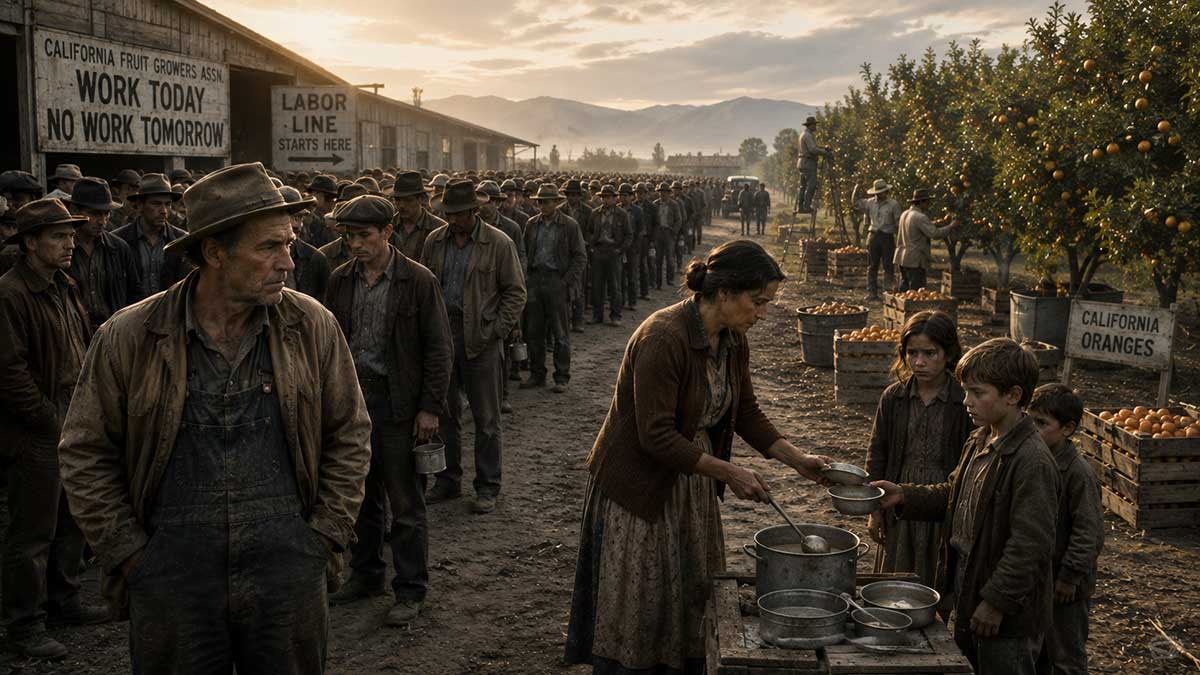
Morning came cold and gray.
The camp had already begun moving before the sun rose. Men stood in lines waiting to hear whether there was work. Women boiled coffee thin enough to stretch. Children watched skillets as if looking hard enough might make more food appear.
Tom came back from the road with dust on his boots and anger in his face.
Ma Joad: No work?
Tom Joad: Work.
Pa Joad: Then what's wrong?
Tom: Forty men for twenty jobs.
Pa looked away.
Tom: Fellow says wages are lower today.
Pa: How much lower?
Tom told him.
Pa laughed once, without humor.
Pa: Can't feed anybody on that.
Tom: That's what I said.
Casy: What'd he say?
Tom: Said there were thirty men behind me who'd take it.
Nobody spoke for a moment.
Uncle John: Would they?
Tom: Course they would.
Pa: Then maybe we should too.
Tom looked at him.
Pa: Don't look at me like that.
Tom: I ain't.
Pa: You are.
You got that look like I'm giving something away.
Tom: You're giving your work away.
Pa: No. I'm trying to buy food.
Tom: With what?
Pa: With whatever they'll pay me.
Tom: And tomorrow they'll pay less.
Pa: Tomorrow ain't sitting here hungry.
Ma turned toward Tom.
Ma: He's right about one thing.
Tom: I know.
Ma: Knowing don't help much, does it?
Tom: No.
Casy watched the men gathering at the road.
Casy: That's the cruel part.
Pa: What is?
Casy: Nobody has to force a starving man very hard.
Tom looked at him.
Tom: That's what makes me mad.
Ma: Being hungry?
Tom: That too.
But there's something worse.
Rose of Sharon: What?
Tom: Folks looking at you like being hungry means you're some kind of bad person.
Rose of Sharon lowered her eyes.
Tom: You walk into town and they see the clothes first.
See the truck.
Hear where you're from.
Then they've already decided.
Lazy.
Dirty.
Trouble.
Like hunger leaves a stain they can see.
Pa: They call us Okies before they know our names.
Tom: That's what I'm talking about.
A man spends his whole life working, and one bad year turns into another, bank takes the place, weather ruins the rest, and suddenly some fellow who never met him can tell what kind of man he is.
Casy: Maybe that's easier.
Tom: Easier than what?
Casy: Easier than admitting it could happen to him.
Tom studied him.
Casy: If I see a hungry man and tell myself he's hungry because he's lazy, then I'm safe.
I'm not lazy.
So I won't become him.
If I tell myself he made bad choices, I'm safe again.
I make good choices.
Uncle John: Maybe sometimes that's true.
Casy: Sometimes.
Uncle John: There are lazy people.
Tom: Sure.
Uncle John: Drunks too.
Pa glanced at him.
Uncle John noticed.
Uncle John: I'm including myself.
Casy: That's fair.
Uncle John: So we can't say every poor man is some saint crushed by the world.
Tom: Nobody said that.
Uncle John: Sounds close.
Casy: No.
A man's poverty don't prove he's good.
It don't prove he's bad either.
That's the point.
Ma: Hunger ain't a character trait.
Casy nodded.
Ma: I seen good people hungry.
Mean people hungry.
Hardworking people hungry.
Foolish people hungry.
Children hungry.
A child's stomach don't know whether his daddy made wise decisions.
That quieted them.
Rose of Sharon looked toward a little girl sitting near another tent.
The child held an empty tin cup.
Rose of Sharon: She keeps looking over here.
Ma followed her eyes.
Rose of Sharon: We don't have much.
Ma: I know.
Rose of Sharon: Are you going to give her something?
Ma did not answer right away.
Tom: Ma.
Ma: I heard her.
Tom: We got our own.
Ma: I know that too.
Tom: That's what we were just talking about.
Ma: No.
We're talking about something harder.
Tom frowned.
Ma took a small piece of bread, broke it in half, then looked at the half in her hand.
She broke that half again.
Ma: This won't fix her hunger.
Casy: No.
Ma: Might not even help much.
Tom: Then why do it?
Ma looked at him.
Ma: Because she's looking.
Tom said nothing.
Ma carried the small piece over to the girl.
When she returned, Pa was staring at the ground.
Pa: I hate that.
Ma: What?
Pa: Watching you divide food like that.
Ma: I know.
Pa: Makes a man feel...
He stopped.
Tom: Feel what?
Pa's jaw tightened.
Pa: Small.
Tom leaned back.
Pa: There. You wanted it.
Small.
A man ought to be able to feed his family.
Casy: Says who?
Pa turned sharply.
Pa: Everybody.
Casy: That's a lot of people.
Pa: Don't start.
Casy: I'm asking.
Who told you that a man's worth gets measured by what he can put on a table?
Pa: Life did.
Ma: Maybe the old life did.
Pa looked at her.
Ma: Back home, work and food were tied together different.
You worked the ground. The crop came or it didn't. But you knew what you were doing.
Here, you stand in a line and wait for another man to tell you whether your hands are worth using today.
Pa: That's worse.
Ma: I know.
Pa: Then don't tell me not to feel ashamed.
Ma: I'm not telling you what to feel.
I'm telling you shame may be lying to you.
Pa was silent.
Tom: That's a strange way to say it.
Ma: Maybe.
But if a man wants to work and somebody won't hire him, how'd that turn into a judgment on the man?
Pa: Doesn't matter how it happened.
Your children still look at you.
Rose of Sharon: Maybe they don't look at you the way you think.
Pa turned to her.
Pa: What does that mean?
Rose of Sharon: I never thought you were less Pa because we were hungry.
Pa's face changed.
Pa: You didn't?
Rose of Sharon: No.
I was scared.
I was angry.
Sometimes I blamed everybody.
But I never thought you stopped being my father.
Pa looked down at his hands.
Tom: That's the trouble.
A man can think everyone else sees him the way he sees himself.
Casy: Happens all the time.
Tom: You saying Pa did this to himself?
Casy: No.
Not all of it.
That's too easy too.
A man gets called worthless enough times, he may start helping the world say it.
Uncle John shifted uncomfortably.
Uncle John: People do need to take responsibility for themselves.
Tom looked at him.
Tom: Sure.
Uncle John: I'm serious.
If a man drinks away his pay, that's his doing.
If he walks out on his children, that's his doing.
If he hurts somebody, that's his doing.
Casy: Yes.
Uncle John: Then why does everybody act like saying that is cruel?
Casy: It ain't cruel.
What's cruel is using one man's bad choice to explain another man's suffering.
Uncle John stared at him.
Casy: You drink too much sometimes.
Uncle John: I know.
Casy: Does that explain why a child two tents down ain't got supper?
Uncle John: No.
Casy: Does Tom killing a man explain why wages are dropping?
Tom: Didn't expect to get dragged into this.
Casy: Sorry.
Tom: No, you're right.
Casy: Does Connie leaving Rosie explain why five thousand people answer the same job notice?
Rose of Sharon looked hurt at the mention of Connie, but she nodded.
Casy: Personal responsibility is real.
But sometimes we grab it because it gives us one person to blame.
Big trouble scares people.
One guilty person feels easier.
Tom: So what's the other side?
Casy: Other side of what?
Tom: You keep talking about systems and wages and all these people getting pushed around.
How far do you take that before nobody's responsible for anything?
Casy smiled faintly.
Casy: That's a good question.
Tom: I mean it.
I killed men.
I can tell you I grew up hard, went to prison, saw violence, got mad.
All that may be true.
Still my hand did it.
Casy: Yes.
Tom: So if you start saying everybody's shaped by everything around them, where does responsibility go?
Casy: It doesn't have to go anywhere.
Maybe two things can be true.
Maybe a man can be responsible for what he does and still be trapped inside conditions he didn't create.
Tom: That's messy.
Casy: Most honest things are.
Ma looked toward the work line.
Ma: Maybe dignity works like that too.
Rose of Sharon: How?
Ma: Maybe nobody can truly take it away.
But they can make it mighty hard for you to feel you still have it.
Tom considered that.
Pa: Feels like the same thing from inside.
Ma: I know.
Pa: If everybody treats you like dirt long enough, saying "I still have dignity" don't put food in the pot.
Ma: No.
Pa: Don't get you hired.
Ma: No.
Pa: Don't stop the police from pushing you around.
Ma: No.
Pa: Then what good is it?
Ma did not answer quickly.
Ma: Maybe it tells you what they still haven't bought.
Pa looked at her.
Ma: Your hunger belongs to the day.
Your clothes belong to whatever we can afford.
Your work may belong to whoever hires you.
But whether you become cruel to the next person...
She glanced toward the little girl with the bread.
Ma: Maybe that still belongs to you.
Tom exhaled slowly.
Tom: That's a hard standard when you're starving.
Ma: I didn't say it was easy.
Casy: There's something else too.
Tom: What?
Casy: People with very little sometimes start fighting each other for scraps.
Pa: That's what they want.
Casy: Maybe.
Or maybe that's simply what fear does.
A man sees another hungry man and thinks, "He's going to take my job."
A town sees hungry families arriving and thinks, "They're going to take what's ours."
Next thing you know, poor people are scared of poorer people.
Uncle John: That's human.
Casy: Sure.
But human don't mean harmless.
Tom: You think those townspeople were scared of us?
Casy: Some were.
Tom: They sure had a funny way of showing it.
Casy: Fear often puts on a mean face.
Rose of Sharon: But they had houses.
Casy: People can have houses and still be afraid of losing them.
Pa: So now we got to feel sorry for them?
Tom laughed.
Casy: No.
But if we're trying to understand why people turn on each other, it matters.
Tom: I don't know.
Somebody spits "Okie" at me, I'm not thinking about his childhood fears.
Ma: You don't have to.
Tom: Good.
Ma: But it might stop you from believing the name.
Tom looked at her.
Ma: That's what worries me.
Not just somebody calling you dirty.
You starting to think maybe you are.
Not just somebody calling you worthless.
You starting to carry it.
Pa's face tightened again.
Ma noticed.
Ma: I'm not picking on you.
Pa: I know.
Ma: I'm talking about all of us.
Rose of Sharon touched her stomach.
Rose of Sharon: I did that.
Tom: Did what?
Rose of Sharon: Started believing things.
When Connie left, I thought maybe I wasn't enough.
Maybe if I'd been prettier.
Less afraid.
Less complaining.
Maybe he'd have stayed.
Ma: Rosie...
Rose of Sharon: I know now it wasn't all mine.
But at first, every bad thing felt like proof.
That's what shame does, isn't it?
It takes what happened and turns it into what you are.
Casy looked at her.
Casy: That's about as well as I've heard it said.
Uncle John gave a tired smile.
Uncle John: Then I've been doing that most of my life.
Tom: Doing what?
Uncle John: Turning everything into evidence against myself.
Nobody laughed.
Uncle John: Something bad happens, I think, "There. See? That's what kind of man you are."
Casy: And does it make you better?
Uncle John thought.
Uncle John: Mostly makes me want to drink.
Casy: That's what I wondered.
Tom looked back toward the line of workers.
Some had been chosen.
Most had not.
A few were already walking away.
Tom: You know what gets me?
Ma: What?
Tom: Those men who didn't get picked are going to go somewhere else.
Next place they'll be standing against us.
Same hunger.
Same wives.
Same kids.
But for that one job, they'll want me to lose.
And I'll want them to lose.
Casy: That's the part I can't stop thinking about.
Tom: What part?
Casy: How easy it is to make people enemies when there's not enough to go around.
Pa shook his head.
Pa: But sometimes there really isn't enough.
Casy looked toward the orchards beyond the road.
Casy: Is that what you think?
They followed his gaze.
Trees heavy with fruit stood in long rows in the distance.
Casy: There's food over there.
Pa: Not ours.
Casy: I know.
Tom: That's the whole damned thing.
There can be food ten feet from a hungry man and he still can't eat.
Rose of Sharon: Then what does "not enough" mean?
No one answered at first.
Ma looked from the fruit trees to the children in the camp.
Ma: Sometimes it means there isn't enough.
She paused.
Ma: Sometimes it means there isn't enough that you're allowed to have.
The distinction sat heavily between them.
Pa rubbed his palms over his knees.
Pa: I still want work.
Tom: I know.
Pa: I don't want anybody giving me dignity.
Ma: Nobody can give you that.
Pa: I want wages.
Casy: That's fair.
Pa: I want to buy supper with money I earned.
Casy: Fair too.
Pa: I want to look at my family and know I did my part.
Tom nodded.
Tom: Nothing wrong with that.
Casy: No.
The trouble comes when we start saying a man who can't do those things has become less human.
Pa looked at him.
This time, he did not argue.
Nearby, the little girl finished the small piece of bread Ma had given her.
She licked a crumb from her finger.
Then she handed the last tiny corner to a smaller boy beside her.
Tom watched.
Tom: Look at that.
Ma turned.
The girl had almost nothing.
And still she divided it.
Casy smiled sadly.
Casy: Maybe that's dignity.
Tom looked at him.
Tom: Sharing one bite?
Casy: No.
Knowing the person beside you is still a person when you haven't got much left yourself.
Ma watched the children.
Ma: Maybe that's what poverty tests.
Pa: What?
Ma: Not whether poor people deserve dignity.
She looked toward the town beyond the camp.
Ma: Whether everybody else remembers they do.
No one answered.
And the question that remained was no longer whether the Joads could prove themselves respectable enough to deserve work, food, or kindness.
It was something more uncomfortable:
If human dignity has to be earned before we recognize it, was it ever dignity at all?
Topic 3: Is Protecting Your Own Family Enough?
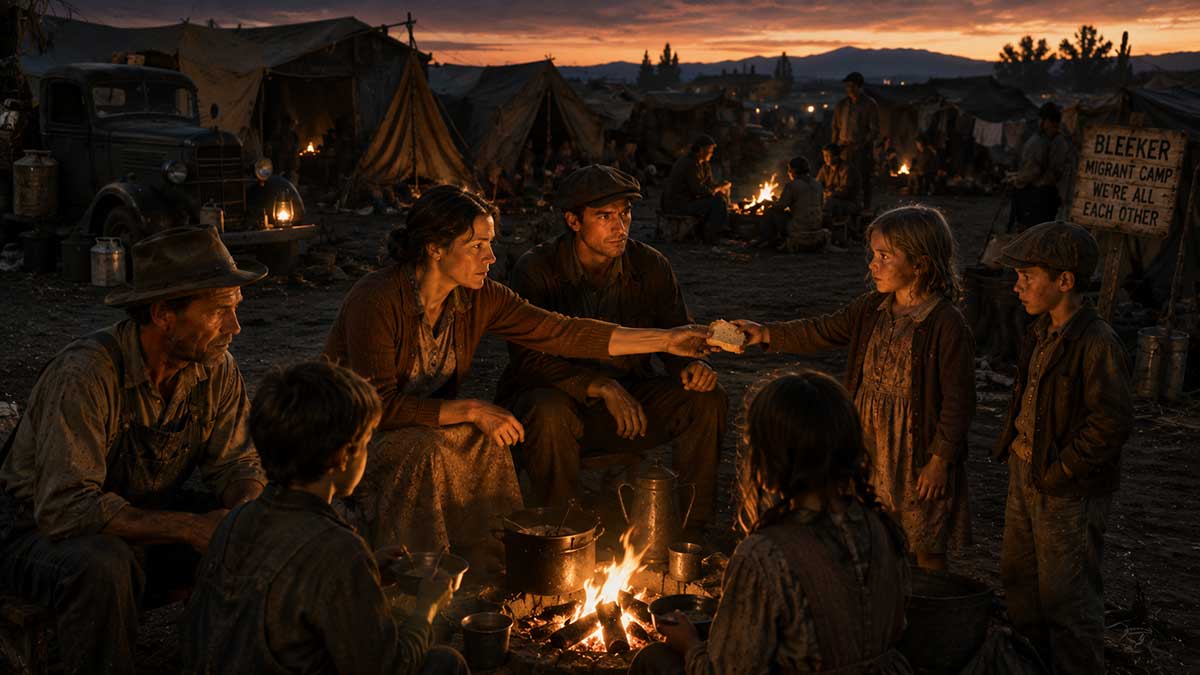
The light had changed by late afternoon.
Heat pressed down over the camp, flattening everything into stillness.
Ma sat near the cookfire, counting potatoes.
Tom watched her split one in half.
Then split one of those halves again.
Tom Joad: You keep doing that, there won't be anything left.
Ma Joad: There ain't much left now.
Tom: That's what I mean.
Ma placed the smaller pieces into the pot.
Ma: I know what you mean.
Tom: Then why are you making extra?
Ma glanced toward two children sitting beyond the edge of the camp.
They were not Joad children.
Tom followed her eyes.
Tom: Ma.
Ma: Don't start.
Tom: I'm not starting anything.
Ma: You're about to.
Tom: We barely got enough for ourselves.
Ma: I know.
Tom: Then that's the end of it.
Ma looked at him.
Ma: Is it?
Tom: Should be.
Casy: Why?
Tom turned.
Tom: You stay out of this.
Casy: Gladly.
Tom: You're already in it.
Casy smiled.
Casy: Seems that way.
Tom: I'm saying a man's first responsibility is his own family.
Casy: First?
Tom: Yes.
Casy: Then what comes second?
Tom: Depends.
Casy: On what?
Tom: Whether there's anything left.
Ma stirred the pot.
Tom: That's not cruel.
Ma: I didn't say it was.
Tom: You look like you think it is.
Ma: I look like I'm cooking.
Tom: Ma.
Ma: Tom.
Pa gave a tired chuckle.
Pa Joad: Best leave it.
Tom: No. I want to know.
He turned back toward Ma.
Tom: If we've got enough food for this family and those children over there don't, what am I supposed to do?
Ma: I don't know.
Tom: That's helpful.
Ma: You want me to say give them everything?
Tom: No.
Ma: I won't.
Tom: Good.
Ma: You want me to say keep everything?
Tom hesitated.
Ma: I won't say that either.
Tom: Then what do you say?
Ma looked again at the children.
Ma: I say they're hungry.
Tom: I know they're hungry.
Ma: Sometimes knowing a thing ought to trouble you.
Tom: Trouble don't make food.
Ma: No.
Tom: Trouble don't keep Ruthie and Winfield fed.
Ma: No.
Tom: Then maybe worrying about every hungry person you see is a good way to starve your own.
Casy nodded slowly.
Casy: That's the strongest argument there is.
Tom looked surprised.
Tom: You agree with me?
Casy: Partly.
Tom: That's new.
Casy: If Ma gives away everything and her own children starve, calling it generosity don't make the children less dead.
Ma looked at him.
Casy: Love has limits when the pantry has limits.
Ma: Yes.
Tom: There.
Casy: Don't celebrate yet.
Tom rolled his eyes.
Casy: The trouble starts when every family says, "Mine first, and if there's nothing left, too bad."
Tom: That's life.
Casy: Is it?
Tom: Mostly.
Casy: Then why'd people help us on the road?
Tom did not answer immediately.
Casy: Why'd strangers help bury Grampa?
Tom: They were decent.
Casy: Why?
Tom: What kind of question is that?
Casy: The kind I keep asking.
Tom: Maybe they'd been through it themselves.
Casy: That's closer.
Tom: Closer to what?
Casy: Maybe suffering teaches people that "mine" isn't as solid a word as they thought.
Ma stopped stirring.
Ma: I used to think keeping the family together was the whole job.
Everyone looked toward her.
Ma: That's what I believed.
If we stayed together, we'd make it.
If somebody wanted to leave, pull him back.
If somebody got scared, hold him.
If somebody got sick, carry him.
Just keep everybody together.
Rose of Sharon: You did.
Ma shook her head.
Ma: No.
Grampa died.
Granma died.
Noah left.
Connie left.
Her eyes rested briefly on Rose of Sharon.
Ma: Tom left us before he even left us.
Tom frowned.
Tom: What does that mean?
Ma: You started belonging to something else.
Casy watched him.
Tom: I was still there.
Ma: Your body was.
Tom: Ma.
Ma: I'm not accusing you.
Tom leaned back.
Ma: I'm saying something changed.
At first, everything was the family.
Then you started seeing all those other men and women as part of what was happening to us.
Tom: Casy got into my head.
Casy: Sorry.
Tom: You ought to be.
Ma: No.
I'm glad he did.
Tom looked at her.
Ma: Scared me.
But I'm glad.
Tom: Why?
Ma: Because I think I was wrong.
Pa: About what?
Ma: About what keeps people alive.
Pa watched her carefully.
Ma: Family matters.
Course it does.
But sometimes family ain't enough.
No one spoke.
Pa: That's a hard thing to hear from you.
Ma: Harder to learn.
Pa: I thought family was everything to you.
Ma: It is.
Pa: Then how can it not be enough?
Ma looked toward the camp around them.
Ma: Because look.
Every tent has a family.
Every truck has one.
Every mother here thinks her children come first.
Every father wants work for his own.
Every hungry child belongs to somebody.
So if every family closes itself up tight...
She paused.
Ma: Who helps when a whole camp starts going under?
Pa stared at the ground.
Tom: You can't save everybody.
Ma: No.
Tom: That's what I'm saying.
Ma: And I'm saying maybe you don't have to save everybody to stop acting like nobody else matters.
That quieted him.
Rose of Sharon had been listening with her hands folded over her belly.
Rose of Sharon: I didn't think like that.
Ma turned toward her.
Rose of Sharon: Before.
I thought about Connie.
The baby.
A little house.
Maybe nice clothes.
Maybe a radio.
She smiled faintly.
Rose of Sharon: I thought if we got all that, then we'd be safe.
Tom: Nothing wrong with that.
Rose of Sharon: No.
But it was small.
Tom: Small isn't wrong either.
Rose of Sharon: I know.
I wanted a small life.
I liked the thought of it.
Casy nodded.
Rose of Sharon: I didn't want to save anybody.
I wanted my husband to stay and my baby to live.
Ma reached over and touched her arm.
Rose of Sharon: Sometimes when people talk about what happened later...
She stopped.
Tom knew what she meant.
So did Ma.
Rose of Sharon: They make it sound beautiful.
Casy: Does that bother you?
Rose of Sharon: Yes.
Casy: Why?
Rose of Sharon: Because my baby was dead.
Nobody answered.
Rose of Sharon: People can turn anything into a lesson when it didn't happen to them.
Casy lowered his head.
Rose of Sharon: That man in the barn was starving.
I saw him.
I knew what he needed.
And I had milk.
That's all.
Tom: That's not all.
Rose of Sharon: Maybe it is.
Tom: You gave something meant for your baby to a stranger.
Rose of Sharon: Don't make me holy.
Tom went quiet.
Rose of Sharon: I wasn't thinking about mankind.
I wasn't thinking about justice.
I wasn't thinking about some big "we."
I was broken.
He was dying.
There was something I could do.
So I did it.
Casy looked at her for a long time.
Casy: Maybe that's where most morality actually happens.
Rose of Sharon: What?
Casy: Not when people have big ideas.
When somebody's right in front of them.
Tom leaned forward.
Tom: But that's different.
Casy: Different from what?
Tom: Giving food away until your own family starves.
Casy: Yes.
Tom: So there are limits.
Casy: Of course.
Tom: Good.
Casy: The harder question is who gets to decide where they are.
Tom sighed.
Tom: There it is.
Uncle John: I think Tom's right about one thing.
They turned.
Uncle John: A man can't carry everybody.
Casy: No.
Uncle John: Sometimes you barely carry yourself.
Ma: That's true too.
Uncle John: Then maybe people shouldn't be shamed for choosing their own.
Ma: They shouldn't.
Uncle John: Seems like that's what we're doing.
Casy: I don't think so.
Uncle John: Then what are we doing?
Casy thought.
Casy: Maybe we're asking whether "our own" can change.
Uncle John frowned.
Casy: When Tom says his family comes first, that's real.
But what happens when another family has been traveling beside you for two hundred miles?
What happens when you've shared water?
Buried someone together?
Watched each other's children?
At what point are they still strangers?
Tom: Maybe they never stop being strangers.
Ma: That's not true.
Tom: Sometimes it is.
Ma: You don't believe that.
Tom: You know what I believe?
I believe people get sentimental when they're sitting around talking.
Then work shows up and there are ten jobs for a hundred men.
Watch how fast "we" turns back into "me."
Casy's face became serious.
Casy: You're right.
Tom stopped.
Casy: That's why solidarity is hard.
Tom: Thought you were going to argue.
Casy: No.
Fear makes the circle smaller.
A man gets scared, and suddenly "we" means his wife.
His children.
Maybe his brother.
Then just himself.
Pa: That's natural.
Casy: Natural don't always mean good.
Pa: There you go again.
Casy: I'm not condemning it.
I'm saying fear pulls people inward.
Sometimes survival has to push them outward again.
Pa: Explain that.
Casy: If the boss can replace you with Tom, and replace Tom with John, then each one of you protecting only your own family keeps all your families weak.
Pa thought about it.
Tom: So this is where you get to the union.
Casy: Maybe.
Tom: Knew it.
Casy: Don't turn it into a slogan.
I'm talking about a plain fact.
One hungry man says, "I'll work for less."
Another says, "I'll work for even less."
Every one of them is trying to save his family.
And together they drive wages down until none of the families can live.
Tom stared at him.
Casy: That's the terrible part.
A man can do what's best for his own house and help destroy every house around him.
Ma: Including his own.
Casy: Including his own.
Pa rubbed his face.
Pa: Then what are you supposed to do?
Tell your children, "Go hungry tonight because we're taking a stand for everybody else's children"?
Casy did not answer quickly.
Pa: That's what I thought.
Casy: Sometimes there ain't a clean answer.
Pa: Convenient.
Casy: Honest.
Pa glared at him.
Casy: I won't tell a starving father he has no right to take the day's work.
I also won't pretend that all those fathers competing against each other are free.
Pa's anger softened slightly.
Tom: That's the thing.
Everybody keeps talking about choices.
Half the time the choices are lousy.
Casy: Exactly.
Tom: Work for too little or don't work.
Keep food from another kid or short your own.
Take the job and hurt the strike or refuse it and watch your family go hungry.
Ma: Maybe that's why people need each other.
Tom looked at her.
Ma: So one person don't have to make an impossible choice alone.
Casy smiled.
Casy: That's better than anything I was about to say.
Tom: Don't encourage her.
Ma gave him a look.
For a moment, they all laughed.
It did not last long.
Rose of Sharon: Can I ask something?
Ma: Course.
Rose of Sharon: If I had had my baby...
Her voice caught.
Ma squeezed her hand.
Rose of Sharon: If my baby had lived, and there was only enough milk for him...
Nobody moved.
Rose of Sharon: Would I have owed that man anything?
Casy looked away.
Tom answered first.
Tom: Your baby would've come first.
Rose of Sharon looked at him.
Tom: I mean that.
Rose of Sharon: Then what about the man?
Tom: I don't know.
Rose of Sharon: That's what I'm asking.
Ma: Maybe there are questions where somebody loses no matter what you do.
Rose of Sharon: Then how do you know what is right?
Ma looked tired.
Ma: Maybe sometimes you don't.
Rose of Sharon's eyes filled, but she did not cry.
Ma: Maybe all you can ask is whether fear is making the choice for you.
Tom looked at her.
Tom: What does that mean?
Ma: If I keep everything because my children truly need it, that's one thing.
If I keep everything because I've decided those other children aren't my problem...
She shook her head.
Ma: That feels different.
Casy leaned forward.
Casy: That's the line.
Tom: What line?
Casy: Between protecting love and using love as an excuse not to see anybody else.
Tom sat with that.
Uncle John: Still sounds dangerous.
Casy: It is.
Uncle John: You keep making "we" bigger and bigger, pretty soon a person disappears.
Casy looked at him with interest.
Uncle John: Maybe a man gets told his needs don't matter because the group matters.
His family don't matter because everybody matters.
He suffers for some big cause and nobody cares because they say it's for the greater good.
Tom: He's got a point.
Casy: He does.
Ma: Then don't make people disappear.
Casy: That's easier said than done.
Ma: Most things are.
Casy laughed softly.
Ma: I'm serious.
If your "we" gets so big you can't see the person standing in front of you, then what good is it?
Rose of Sharon looked at her.
Ma: Maybe that's what Rosie did.
She didn't feed humanity.
She fed one man.
Rose of Sharon nodded.
Ma: Maybe big words only mean something when they come back down to one person.
Tom stared out beyond the camp.
Tom: You know what scares me?
Pa: What?
Tom: That there's no end to it.
You notice one hungry man, then ten, then a thousand.
You notice one family got cheated, then you see the whole thing.
Pretty soon you can't go back to pretending you didn't see it.
Casy looked at him.
Casy: No.
You can't.
Tom: That's what happened to you, isn't it?
Casy: I think so.
Tom: And me.
Casy did not answer.
He did not need to.
Ma looked at Tom.
Ma: I knew it.
Tom: Knew what?
Ma: That's why you had to leave.
Tom's face changed.
Tom: I left to keep the family safe.
Ma: Partly.
Tom: Ma.
Ma: You told me what you were going to do.
Be where people were hungry.
Be where they were getting beat.
You weren't just running from the law anymore.
Tom looked down.
Ma: I wanted to keep my son.
Her voice became quieter.
Ma: But maybe keeping you would've made you smaller than you had become.
Tom could not look at her.
Tom: Doesn't mean I wanted to go.
Ma: I know.
Tom: Doesn't mean I stopped being your boy.
Ma: I know that too.
A long silence.
Then Pa spoke.
Pa: Maybe that's the hardest thing about family.
Everyone looked toward him.
Pa: You spend your life trying to keep people close.
Then maybe loving them sometimes means letting what they care about become bigger than you.
Ma reached for his hand.
This time he took hers first.
Casy looked out across the camp.
Casy: Maybe family is where most people first learn "we."
Tom glanced at him.
Casy: But maybe it's not supposed to be where the word ends.
Uncle John: And where does it end?
Casy smiled faintly.
Casy: I don't know.
Tom: That's becoming your answer to everything.
Casy: Took me years to learn it.
Rose of Sharon looked again toward the children outside the camp.
Rose of Sharon: Maybe it ends where you stop seeing people.
No one spoke.
Rose of Sharon: Maybe that's what changes.
Not whether they're family.
Whether you can see them.
Ma looked at her daughter.
Then at Tom.
Then at the children.
Ma: A stranger can stay a stranger and still matter.
Tom nodded slowly.
Tom: I can live with that.
Casy: That's a start.
The sun had begun falling behind the fields.
Families gathered around their own fires.
Separate circles of light.
Separate pots.
Separate worries.
Separate children.
And yet the smoke from every fire rose into the same evening sky.
The question left between them was simple enough to say and almost impossible to answer:
At what point does another family's survival become part of our own?
Topic 4: When Does Anger Become Justice, and When Does It Become Violence?
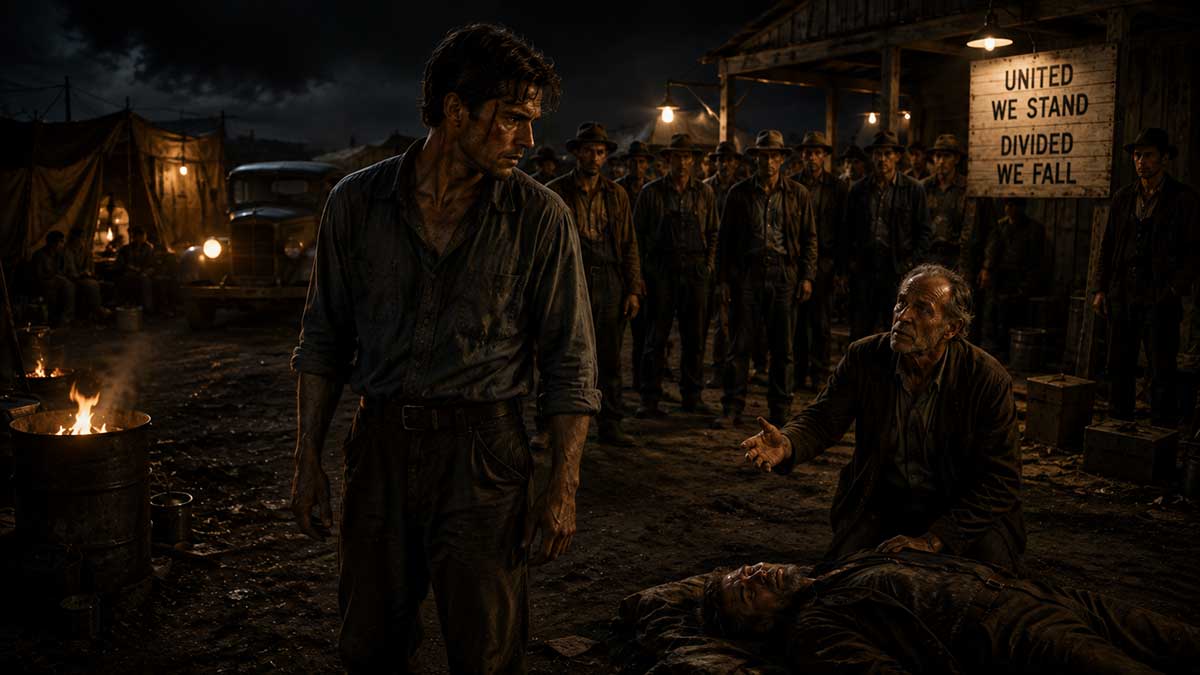
Night had settled over the camp.
Somewhere beyond the trees, men were arguing about wages.
Their voices rose, disappeared, then rose again.
Tom sat apart from the others.
Casy watched him for a while before speaking.
Jim Casy: You still think about him?
Tom did not look up.
Tom Joad: Which one?
Casy understood immediately.
There was more than one.
Casy: The man you killed after they hit me.
Tom rubbed his thumb slowly across his knuckles.
Tom: Sometimes.
Ma Joad: Tom...
Tom: It's all right, Ma.
She ain't asking anything I haven't asked myself.
Casy: I wasn't there afterward.
Tom: No.
Casy: So I never got to ask you.
Tom looked at him.
Casy: Why'd you kill him?
Tom: He killed you.
Casy: I know.
Tom: Then what kind of question is that?
Casy: A hard one.
Tom stared into the darkness.
Tom: He hit you.
You went down.
I saw it.
Something happened in me.
Didn't think.
Didn't decide.
I just went.
Casy: Was it justice?
Tom: Felt like it.
Casy: Revenge?
Tom: Felt like that too.
Casy: Love?
Tom finally looked at him.
Tom: Don't make it pretty.
Casy: I'm not.
Tom: I was mad.
I wanted him hurt.
He took you away and I wanted to take something back.
Casy: Did you?
Tom was silent.
Casy: Did killing him bring anything back?
Tom: You know it didn't.
Casy: Then what did it do?
Tom's voice hardened.
Tom: It stopped him from hitting you again.
Casy: I was already dying.
Tom: Then maybe I wanted him to pay.
Casy: That's different.
Tom: Is it?
Casy: I think so.
Tom: You think too much.
Casy: That's why nobody pays me.
Pa almost smiled, but Tom did not.
Tom: You weren't standing there.
Casy: No.
Tom: You didn't see yourself on the ground.
Casy's expression changed.
Tom: I did.
You can sit here now and ask whether it was justice or revenge.
But I had about one second.
Maybe less.
Casy: That's fair.
Tom: And I'd like to tell you I made some noble decision.
I didn't.
I hit him because I hated him.
There.
That's the truth.
Ma looked away.
Tom: You don't like hearing that.
Ma: No.
Tom: But you knew it.
Ma: I knew you were angry.
Tom: I killed a man, Ma.
Ma: I know.
Tom: You keep looking at me like I'm still that little boy running around the farm.
Ma: You are.
Tom shook his head.
Ma: And you're the man who killed him.
Both can be true.
Tom looked at her.
Ma: Being my son don't make everything you do right.
Tom: I know.
Ma: And doing something wrong don't make you stop being my son.
Casy watched the two of them quietly.
Uncle John: Maybe he deserved it.
Everyone turned.
Tom: Don't.
Uncle John: He killed Casy.
Tom: I said don't.
Uncle John: I'm just saying what everybody's thinking.
Casy: I'm not.
Uncle John: Course you aren't. You're the one who got killed.
Casy smiled faintly.
Uncle John: If somebody murders a man, maybe getting killed himself is justice.
Casy: Then who decides?
Uncle John: Maybe Tom did.
Casy: That's what worries me.
Uncle John frowned.
Casy: Everybody's justice looks clean from inside his own anger.
Tom: So what was I supposed to do?
Stand there?
Watch?
Ask him politely to stop?
Casy: I don't know.
Tom: That's convenient.
Casy: It's honest.
Tom: You were organizing men.
You knew what they were doing to people.
They beat you for it.
They killed you for it.
And now you're going to tell me violence is wrong?
Casy: I didn't say that.
Tom: Then say what you mean.
Casy leaned forward.
Casy: I mean I'm scared of what happens when a good reason becomes permission for anything.
Tom said nothing.
Casy: We had a good reason to strike.
Men couldn't feed their families.
They cut wages.
We stood together.
Then somebody comes with clubs.
Now what?
If we hit back, maybe we're defending ourselves.
If we chase them afterward, maybe that's revenge.
If we burn a house where their families sleep, maybe we call it justice because we started with a good cause.
Where does it change?
Tom: You tell me.
Casy: That's what scares me.
I don't always know.
Pa shifted closer to the fire.
Pa: Seems like people with full stomachs always got a lot to say about patience.
Casy turned toward him.
Pa: Man's hungry, they tell him wait.
Wages too low, they tell him work harder.
Family gets pushed off the land, they tell him obey the law.
Police hit him, they tell him stay peaceful.
How long is a man supposed to stay calm?
Ma: That's true.
Tom looked at her.
Tom: You agreeing with Pa about fighting?
Ma: I'm agreeing about anger.
There's a difference.
Tom: Is there?
Ma: Course there is.
Tom: Anger wants to do something.
Ma: Doesn't mean you let it choose what.
Tom: Easy to say.
Ma: You think I don't know anger?
Tom looked at her.
Ma's face was calm.
Her voice was not.
Ma: You think I wasn't angry when they pushed us off our land?
You think I wasn't angry watching Grampa die?
Granma?
Watching my children hungry?
Watching men look at Rosie like she was dirt?
Watching Pa stand in a line begging for work he would've done better than half the men hiring him?
Pa lowered his head.
Ma: I have been angry every mile from Oklahoma.
Tom: You don't act like it.
Ma: Maybe that's why we're still here.
The words struck harder than she intended.
Tom's face changed.
Ma: Tom, I didn't mean...
Tom: Yes, you did.
Ma: Not like that.
Tom: But it's true.
I get angry and somebody ends up bleeding.
Ma: Sometimes.
Tom: Twice.
Ma: Yes.
Tom stared at the ground.
Ma: But don't turn that into another excuse.
He looked up sharply.
Tom: Excuse?
Ma: "That's just who I am."
I've heard men say that all my life.
"I'm angry."
"I've got a temper."
"Don't push me."
Like anger came down from heaven and borrowed their hands.
Tom stared at her.
Ma: Your anger is yours.
So are your hands.
Nobody spoke.
Casy: That's worth remembering.
Tom: I don't need you agreeing with her.
Casy: Fair enough.
Rose of Sharon had been quiet.
Now she spoke.
Rose of Sharon: I was angry at Connie.
Ma turned toward her.
Rose of Sharon: Really angry.
For a while I wanted something terrible to happen to him.
Pa: Rosie.
Rose of Sharon: It's true.
He left me pregnant.
Left me scared.
Left all those things he'd promised.
There were nights I wanted him to hurt as much as I hurt.
Tom: That's different from killing somebody.
Rose of Sharon: I know.
I'm talking about wanting pain to travel.
Tom became still.
Rose of Sharon: Maybe that's what anger does when it gets bad.
Somebody puts pain into you and you start looking for somewhere else to put it.
Tom looked at Casy.
Casy said nothing.
Rose of Sharon: Maybe Connie would've been where I put mine.
Maybe that man was where you put yours.
Tom's jaw tightened.
Tom: He killed Casy.
Rose of Sharon: I know.
Tom: Connie walked out.
Rose of Sharon: I know that too.
Tom: Not the same.
Rose of Sharon: I didn't say it was.
She met his eyes.
Rose of Sharon: I'm saying pain can make hurting somebody feel like balance.
Tom looked away.
Uncle John: Maybe that's what punishment is.
Casy: What?
Uncle John: Making the scales balance.
Casy: Do they?
Uncle John: Supposed to.
Casy: You've punished yourself most of your life.
Uncle John stiffened.
Casy: You feel balanced?
Nobody moved.
Uncle John: No.
Casy: Then maybe pain ain't arithmetic.
Uncle John: What does that mean?
Casy: You can't always subtract suffering by adding more suffering.
Tom: Sometimes you have to stop the person causing it.
Casy: Yes.
Tom: That's where your argument gets weak.
If somebody comes for Ma, I'm not going to sit around wondering whether violence reproduces violence.
I'm stopping him.
Ma: I expect you would.
Tom: Wouldn't you?
Ma looked at him.
Ma: If somebody came for my children?
Tom: Yes.
Ma: I'd do things I'd be ashamed to tell you.
Tom smiled slightly.
Tom: Knew it.
Ma: Don't look so pleased.
Tom: Means I'm not the only one.
Ma: No.
It means love can make a person dangerous too.
That wiped the smile away.
Ma: That's something people don't like admitting.
We talk about hate making people violent.
Love can do it.
Threaten somebody's child and see.
Casy: Then love doesn't automatically make an action right.
Ma: No.
Casy: That's important.
Ma: Very.
Tom: So how do you know?
Ma: Know what?
Tom: Whether you're protecting somebody or just using them as a reason to hurt somebody.
Ma looked at him for a long time.
Ma: Maybe you ask what happens after the danger is gone.
Tom: What do you mean?
Ma: If a man is coming at Rosie and you stop him, that's one thing.
If he's lying on the ground and you keep hitting him because you want him to feel what you felt...
Tom understood.
Ma: Maybe somewhere in there protection turns into punishment.
Tom: It happens fast.
Ma: I know.
Tom: Faster than thinking.
Ma: Then maybe that's why a man has to think about it before the moment comes.
Casy picked up a small stone and rolled it between his fingers.
Casy: There's another kind of violence.
Pa: What kind?
Casy: The kind nobody sees because nobody swings a club.
Pa frowned.
Casy: Cut a man's wages until his children can't eat.
Is that violence?
Tom: Feels like it.
Casy: Throw a family off land they've worked for generations.
Violence?
Pa: Ask me.
Casy: Let fruit rot behind a fence when children nearby are hungry.
Violence?
Uncle John: Nobody hit them.
Casy: That's what I'm asking.
Does violence require a fist?
Tom: Careful.
Casy: Why?
Tom: You start calling everything violence, pretty soon the word don't mean anything.
Casy nodded.
Casy: That's fair.
Tom: Being underpaid ain't the same as getting your skull cracked.
Casy: No.
Tom: Losing a farm ain't the same as being murdered.
Casy: No.
Tom: Then don't make them the same.
Casy: I won't.
But maybe harm has more than one language.
Tom considered that.
Casy: A club is obvious.
A system can hurt people without anybody feeling the blow in his own hand.
Pa: That's what happened back home.
Casy: Maybe.
Pa: Nobody woke up saying, "Let's ruin the Joads."
Tom: Didn't stop us getting ruined.
Pa: That's what makes it hard to fight.
He looked toward Casy.
Pa: If one man stole my horse, I'd know who to go after.
But when a bank takes your land, who do you hit?
Tom: That's the wrong question.
Everyone looked at him.
Tom almost seemed surprised by his own words.
Ma: What is?
Tom: "Who do you hit?"
He rubbed his hands together.
Tom: That's always where I go.
Something's wrong.
Who did it?
Where is he?
What do I do to him?
Casy listened closely.
Tom: Maybe that's why I understood fighting better than what you were doing.
Casy: Organizing?
Tom: Yeah.
You weren't looking for one man to hit.
You were trying to change what all the men were stuck inside.
Casy: Trying.
Tom: I thought it was weak at first.
Talking.
Meetings.
People standing together.
Casy: Sometimes it was weak.
Tom: But killing that guard didn't raise anybody's wages.
Casy said nothing.
Tom: Didn't bring you back.
Didn't feed anybody.
Just made another dead man and sent me running.
Ma's eyes filled.
Tom saw and looked away.
Tom: I ain't saying I'd stand there and watch him kill you.
I don't know what I'd do if I had that second again.
Maybe the same thing.
That's the truth.
Casy: That's enough.
Tom: No, it isn't.
Casy: What would be enough?
Tom thought for a long time.
Tom: Maybe knowing what I want my anger to build before I let it break something.
Casy's expression softened.
Casy: That's more than I knew when I started preaching.
Pa looked toward the distant voices.
Pa: Still bothers me.
Ma: What?
Pa: People telling the weak to be peaceful.
Everybody looked at him.
Pa: Seems like peace is mighty convenient when you're the fellow on top.
Casy nodded.
Pa: If somebody's boot is on your neck, and he says, "Now let's settle this calmly," what does that mean?
Tom: Means he likes where his boot is.
Uncle John: Then anger has a use.
Casy: Yes.
Tom turned quickly.
Tom: There. Finally.
Casy: I never said anger was useless.
Tom: What is it for?
Casy thought.
Casy: Maybe anger tells you something matters.
Rose of Sharon: Like pain?
Casy: Maybe.
Touch a hot stove, pain says move your hand.
See somebody treated like they're less than human, anger says something is wrong.
Tom: Then anger is good.
Casy: Pain is useful too.
You wouldn't want pain driving the car.
Tom laughed.
Tom: That's actually pretty good.
Casy: I get one every few years.
Ma: So anger tells you something's wrong.
Casy: Yes.
Ma: But it doesn't tell you what to do.
Casy looked at her.
Casy: Exactly.
Uncle John stared into the fire.
Uncle John: Then what turns anger into justice?
No one answered immediately.
Pa: Winning?
Casy: Plenty of people win and ain't just.
Rose of Sharon: Punishing the person who did wrong?
Tom: Sometimes.
Ma: Protecting somebody?
Casy: Closer.
Tom: Changing the thing that made you angry?
Casy looked at him.
Casy: Maybe.
Tom: That's what you were trying to do.
Casy: Yes.
Tom: And that's what I didn't do.
Casy: Tom...
Tom: Let me finish.
He looked around the circle.
Tom: I thought anger meant strength.
Somebody hurts you, you hurt him worse.
Nobody thinks you're weak.
Prison teaches that.
Road teaches it too.
Maybe men teach each other that from the time they're boys.
Pa watched his son.
Tom: But there's something harder than hitting back.
Pa: What's that?
Tom: Staying angry long enough to change something without letting the anger turn you into the thing you're fighting.
Nobody spoke.
Casy finally smiled.
Casy: I wish I'd said that.
Tom: You probably would've used twice as many words.
Casy laughed.
Ma looked at Tom.
Ma: I'm still afraid for you.
Tom: I know.
Ma: Not just because somebody might kill you.
Tom waited.
Ma: I'm afraid you'll start believing that because your cause is right, everything you do for it is right.
Tom's expression became serious.
Ma: That's how people lose themselves.
Tom: Then what do I hold onto?
Ma answered quietly.
Ma: People.
Tom: What people?
Ma: The ones you're trying to help.
If your anger starts hurting them too, maybe you've gone somewhere wrong.
Casy nodded.
Casy: That's a better compass than purity.
Uncle John: What about forgiveness?
Tom gave him a skeptical look.
Uncle John: I'm asking.
Does justice require forgiving people?
Casy: I don't think so.
Ma: Neither do I.
Uncle John seemed surprised.
Ma: Forgiveness forced on somebody ain't forgiveness.
Casy: And telling injured people they must forgive before anything changes can become another way of asking them to stay quiet.
Tom looked at Casy.
Tom: So what do we do with the people who hurt us?
Casy: Stop them when we can.
Hold them responsible.
Protect the people they're hurting.
Try not to become them.
Tom nodded slowly.
Tom: Last one's the hard part.
Casy: Usually is.
The voices beyond the trees had stopped.
The camp seemed unusually quiet now.
Rose of Sharon looked at Tom.
Rose of Sharon: Are you still angry?
Tom: About what?
Rose of Sharon: Everything.
Tom smiled without humor.
Tom: More than I ever was.
Rose of Sharon: Then what's different?
Tom looked toward Casy.
Then toward Ma.
Then toward the families sleeping around them.
Tom: I used to want to know who to hit.
He paused.
Tom: Now I want to know what needs changing.
Casy lowered his eyes.
There was pride in his face, but sadness too.
Casy: Then maybe I didn't die for nothing.
Tom's expression tightened.
Tom: Don't say that.
Casy: Why?
Tom: Because you didn't need to die for your life to mean something.
Casy stared at him.
Tom continued.
Tom: That's another thing we do.
Somebody suffers, and afterward we make the suffering necessary so we can stand looking at it.
Maybe your death changed me.
But that doesn't make killing you right.
The fire cracked.
Casy slowly nodded.
Casy: You're right.
Ma looked at her son differently now.
Not as the boy who had returned from prison.
Not as the fugitive she was afraid to lose.
As a man still capable of anger, still capable of violence, but beginning to ask his anger for something more difficult than revenge.
Tom looked down at his hands.
The same hands that had killed.
The same hands that had worked.
The same hands that could protect.
Nothing about the hands themselves decided what came next.
And that left them with a question more difficult than whether anger was good or bad:
When injustice makes us angry, can we use that anger to stop the harm without passing the harm forward?
Topic 5: How Far Can the Word “We” Expand?
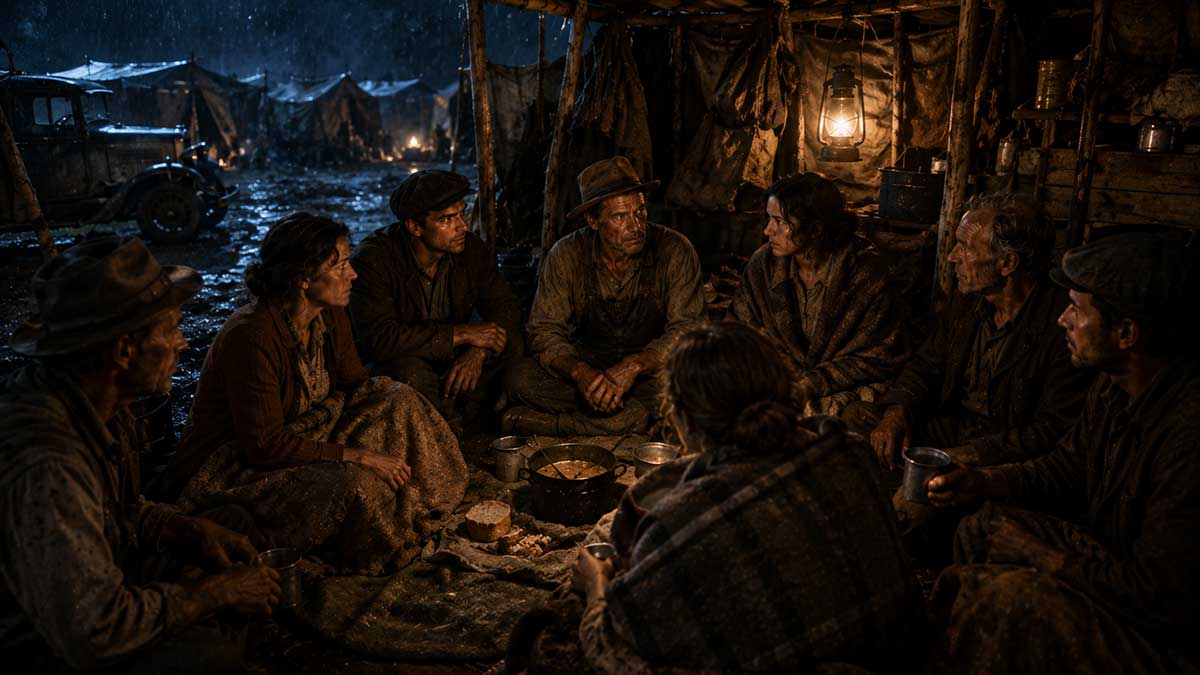
Rain had started sometime before dawn.
At first it was soft.
Then it became steady.
By morning, water ran in narrow streams through the camp.
People moved boxes, blankets, pans, anything they could keep dry.
Tom stood under the edge of a patched canvas roof and watched families carry what little they owned from one wet place to another.
Tom Joad: Funny.
Ma Joad: What is?
Tom: Everybody's doing the same thing.
Ma: Moving things out of the water?
Tom: Yeah.
Same look too.
Like if they move fast enough, maybe they can keep the world from getting in.
Casy stood nearby, rain dripping from his hat.
Jim Casy: Maybe that is what people spend half their lives doing.
Tom: Keeping the world out?
Casy: Keeping trouble inside somebody else's fence.
Tom looked at him.
Tom: There you go again.
Casy: I know.
Bad habit.
Ma adjusted a blanket around Rose of Sharon's shoulders.
Rose of Sharon: I don't think there are fences anymore.
They looked toward her.
Rose of Sharon: Not really.
Not after all this.
Rain came through every crack.
People walked into each other's tents.
Borrowed pans.
Shared dry matches.
Held babies that weren't theirs.
Ma: Trouble don't knock much before coming in.
Pa Joad: Neither does hunger.
Uncle John: Neither does shame.
Tom glanced at him.
Uncle John: Thought I'd add something.
Tom almost smiled.
Then the sound of a child crying came from somewhere beyond the trucks.
Everybody heard it.
Nobody knew whose child it was.
Ma turned automatically.
Tom noticed.
Tom: You do that every time.
Ma: Do what?
Tom: A child cries and you look.
Ma: Course I do.
Tom: Even when it ain't one of ours.
Ma looked puzzled.
Ma: What's your point?
Tom: Maybe that's the whole thing.
Casy: What thing?
Tom: "We."
Casy became still.
Tom: Ma doesn't ask whose kid it is before she turns around.
Ma shrugged.
Ma: It's a child crying.
Tom: Exactly.
They moved inside the shelter as the rain strengthened.
For a while, nobody spoke.
Then Casy said:
Casy: I used to think a man had his own soul.
Tom groaned.
Tom: Here we go.
Casy: You asked for it.
Tom: I did not.
Casy: You said "we."
Tom: That's one word.
Casy: It's a dangerous word.
Pa: Dangerous how?
Casy sat down.
Casy: Because people can hide inside it.
Tom: Thought you loved "we."
Casy: Maybe that's why I'm suspicious of it.
Tom frowned.
Casy: A man says, "We believe this."
Who's we?
"We need this."
Who's we?
"We've decided."
Who decided?
"We must sacrifice."
Who gets sacrificed?
Pa looked at him with interest.
Pa: Now you're sounding like me.
Casy: Maybe that's why I'm worried.
Pa: Very funny.
Casy: I'm serious.
A big "we" can protect people.
Can make them stronger.
Can keep one hungry worker from standing alone against somebody who can replace him in five minutes.
But a big "we" can crush people too.
Uncle John: Then what's the answer?
Casy: I don't know.
Tom laughed.
Tom: There it is.
Casy: Told you I learned something.
Rose of Sharon: Maybe "we" only works if the people inside it still have names.
Casy turned toward her.
Rose of Sharon: If everybody becomes "workers" or "migrants" or "poor people," isn't that just another label?
Tom nodded slowly.
Tom: Like "Okies."
Rose of Sharon: Yes.
Ma: So you don't make a bigger family by forgetting who's in it.
Casy: That's good.
Ma: You keep saying that.
Casy: Because you keep saying good things.
Pa stared at the rain.
Pa: I still don't like the idea that a man has to belong to everybody.
Casy looked at him.
Pa: Maybe I'm selfish.
Ma: You're not.
Pa: I want some things that are mine.
My family.
My work.
My place.
I don't want every man's trouble becoming my trouble.
Tom: There are too many troubles.
Pa: Exactly.
If I feel every hungry child's hunger, I'll go crazy.
If every man without work becomes my responsibility, I ain't sleeping again.
Casy: That's fair.
Pa looked suspicious.
Pa: You agree?
Casy: Yes.
Pa: No sermon?
Casy: Not yet.
Pa: Knew it.
Casy smiled.
Casy: Maybe responsibility isn't the same as carrying everything.
Tom: Then what is it?
Casy: Maybe it's refusing to say, "That has nothing to do with me," too quickly.
Tom sat with that.
Pa: That's still a lot.
Casy: It is.
Pa: A man needs boundaries.
Casy: Yes.
Ma: Boundaries aren't walls.
Everyone looked toward her.
Ma: You can know what's yours without pretending nobody else exists.
Pa nodded.
Ma: I can feed my children first and still see another hungry child.
I can love Tom more than some stranger and still know that stranger's life matters.
Tom: So love doesn't have to be equal.
Ma: Course not.
That's foolish.
I don't love every man in California like I love you.
Tom: Good.
Ma: Don't look so relieved.
Tom: I was worried for a second.
She almost smiled.
Ma: But another man's life can matter without being equal to yours in my heart.
Casy leaned forward.
Casy: That's important.
Ma: Why?
Casy: Because sometimes people think caring about humanity means loving everybody the same.
Nobody does.
Maybe nobody can.
Tom: Then what does "we" mean?
Casy: Maybe it means their suffering is not meaningless to you just because you don't know their name.
Rose of Sharon had been looking out through the opening of the shelter.
Rose of Sharon: That man in the barn didn't have a name to me.
No one answered.
Rose of Sharon: I never knew it.
Ma: No.
Rose of Sharon: I never knew where he came from.
Didn't know what kind of man he was.
Didn't know if he was good.
Didn't know if he was kind.
Tom looked at her.
Rose of Sharon: That's strange, isn't it?
Tom: What?
Rose of Sharon: We keep talking about whether people deserve help.
I didn't know enough about him to decide.
Casy: So what did you decide?
Rose of Sharon: Nothing.
He was dying.
Tom watched her carefully.
Rose of Sharon: Maybe sometimes knowing too much gives us more excuses.
Pa: What do you mean?
Rose of Sharon: If I'd known he had made mistakes, maybe I could've told myself he caused it.
If I'd known he'd been cruel to somebody, maybe I could've said he didn't deserve anything.
If I'd known he was lazy, maybe that would've been enough.
She looked at Casy.
Rose of Sharon: But all I knew was that he was starving.
Casy: And that was enough?
She hesitated.
Rose of Sharon: For that moment.
Tom: That's different from making him family.
Rose of Sharon: Maybe.
Tom: You didn't know him.
Rose of Sharon: I know.
Tom: You didn't owe him like you owed your baby.
Her expression tightened.
Tom: Sorry.
Rose of Sharon: No.
Say it.
Tom: If your baby had lived, you'd have fed the baby.
Rose of Sharon: Yes.
Tom: So the stranger wasn't equal.
Rose of Sharon: No.
Tom looked toward Casy.
Tom: There.
That's what I've been saying.
Casy: I heard.
Tom: Family matters more.
Casy: Maybe.
Tom: "Maybe"?
Casy: Maybe the question isn't whether everybody matters equally.
Maybe the question is whether somebody has to matter equally before they matter at all.
Tom stopped.
Rose of Sharon looked at him.
Casy: Your child can matter more.
That man can still matter.
Those two things don't cancel each other.
Uncle John shifted in his chair.
Uncle John: What happens when helping him hurts your own?
The shelter became quieter.
Uncle John: That's the question nobody likes.
Everybody talks about sharing when there's enough to share.
What about when there isn't?
Pa: That's what I've been saying.
Uncle John: If one man lives because another man's child eats less, what then?
Casy looked troubled.
Casy: Then we enter the part where morality stops being comfortable.
Tom: That's not an answer.
Casy: No.
Tom: You always get quiet when the answer costs somebody.
Casy: Because easy answers get dangerous when somebody else pays for them.
Tom looked at him for a long moment.
Tom: That's fair.
Ma: Maybe we aren't meant to solve every case with one rule.
Pa: Then how do you live?
Ma: One person at a time.
Pa: That's not much of a philosophy.
Ma: I'm not trying to have one.
Casy smiled.
Ma: I know my children.
I know what they need.
I know when there's extra.
I know when there isn't.
I know when somebody's standing in front of me and I can do something.
Maybe that's enough to start.
Casy: That's more honest than most philosophies.
The rain hammered harder.
A man outside shouted for help moving a truck stuck in mud.
Tom rose immediately.
Pa stood too.
Uncle John followed.
No one discussed whether the man was family.
They simply went.
After several minutes they returned soaked and muddy.
Tom sat down, breathing hard.
Rose of Sharon: Did you know him?
Tom: Who?
Rose of Sharon: The man with the truck.
Tom: No.
Rose of Sharon: Why'd you help?
Tom stared at her.
Tom: Because the truck was stuck.
She smiled faintly.
Tom: Don't start.
Casy: She didn't say anything.
Tom: She's thinking it.
Rose of Sharon: Maybe.
Tom: All right.
Maybe that's what you mean.
Didn't feel moral.
Didn't feel like solidarity.
Fellow needed three men and we had three men.
So we went.
Ma: Most decent things don't announce themselves.
Tom: You writing that down somewhere?
Casy: I wish I had paper.
Pa wrung water from his sleeve.
Pa: That man could be competing with me for work tomorrow.
Tom looked at him.
Pa: Didn't think about it till now.
Tom: Me neither.
Pa: If I'd thought about it, would I still have helped?
No one answered.
Pa: I hope so.
Casy: That's the interesting part.
Pa: What?
Casy: For ten minutes, you weren't competitors.
You were four men and one stuck truck.
Pa nodded.
Casy: Then tomorrow somebody offers two jobs and you're enemies again.
Tom: That's how it works.
Casy: But which one's more real?
Tom: Both.
Casy smiled.
Tom: Don't give me that face.
Casy: I think you're right.
Both are real.
That's what makes it hard.
A man can be your competitor and your neighbor.
A stranger and somebody who needs your hands.
A threat to your wages and a father trying to feed his children.
If you make him only one thing, you stop seeing him.
Ma nodded.
Ma: We talked about that before.
Tom: Labels.
Ma: Yes.
Casy: Maybe "we" begins when people can hold two truths about each other at once.
Tom laughed.
Tom: That's an awfully complicated word now.
Casy: Human beings ruined it.
For a time they listened to the rain.
Then Tom spoke.
Tom: When I told Ma I'd be wherever people were hungry...
Ma looked at him.
Tom: I don't know if I understood what I was saying.
Casy: Probably not.
Tom: Thanks.
Casy: Neither did I when I started thinking that way.
Tom: I made it sound like I'd become everybody.
Like I'd be in every fight.
Every hungry kid.
Every man getting beat.
Ma: That's how it sounded.
Tom: Maybe that's impossible.
Ma: Of course it is.
Tom: Then was I talking nonsense?
Ma shook her head.
Ma: No.
Tom waited.
Ma: Maybe you weren't saying you'd carry everybody.
Maybe you were saying you wouldn't look away.
Tom became quiet.
Ma: There's a difference.
Tom: Is there?
Ma: A big one.
Looking doesn't mean you can fix everything.
But looking means the other person can't disappear just because helping is inconvenient.
Casy looked at Ma.
Casy: That's better than the way I would've said it.
Tom: We know.
Uncle John: What if looking hurts too much?
The question came so softly that no one joked.
Uncle John: There are days I don't want to see anybody else's suffering.
I've got enough in my own head.
Casy nodded.
Uncle John: Does that make me bad?
Casy: No.
Uncle John: Then what do I owe people when I'm empty?
Ma: Maybe nothing that day.
He looked at her.
Ma: Maybe somebody carries you instead.
Uncle John's face changed.
Ma: That's part of "we" too.
Not everybody gives all the time.
Sometimes you're the one feeding.
Sometimes you're the one being fed.
Sometimes you're strong enough to pull a truck.
Sometimes you're the man sitting in it.
Casy nodded slowly.
Casy: Now we're getting somewhere.
Tom: Where?
Casy: Maybe "we" doesn't mean every person carries everybody.
Maybe it means nobody has to carry everything alone.
The rain seemed louder after that.
Pa looked toward Ma.
Pa: That's what happened to us, isn't it?
Ma: What?
Pa: Family.
I thought family meant I carried you.
Then I couldn't.
And I thought that meant I failed.
Ma: We talked about that.
Pa: I know.
But maybe I had it backward.
Maybe family means sometimes I carry.
Sometimes you carry.
Sometimes Tom.
Sometimes somebody we ain't met yet.
Ma smiled.
Pa: Don't make too much of it.
Tom: Too late.
Casy: I'm proud of you.
Pa: Shut up.
They laughed.
The laughter lasted longer this time.
Rose of Sharon looked toward the rain beyond the shelter.
Rose of Sharon: Then maybe the man in the barn wasn't family.
Ma turned to her.
Rose of Sharon: Maybe he didn't have to be.
Tom: What do you mean?
Rose of Sharon: We keep trying to make him part of something before what happened can make sense.
Family.
Humanity.
A symbol.
Maybe he was just a man.
She looked down at her hands.
Rose of Sharon: Maybe that was enough.
Nobody spoke.
Casy's face softened.
Casy: Maybe that's the most dangerous idea of all.
Tom: Why dangerous?
Casy: Because if a man has to belong to your religion, your town, your family, your race, your side, your union, your country before his suffering matters...
He paused.
Casy: ...then you can always make the circle smaller when helping gets hard.
Tom stared into the rain.
Tom: And you can make it too big.
Casy: Yes.
Tom: Turn people into some giant "humanity" and forget the actual man.
Casy: Yes.
Ma: Then keep both.
Tom: Both what?
Ma: The person and the circle.
Casy turned toward her.
Ma: See the one person.
Remember there are more.
The child outside cried again.
This time, nobody turned immediately.
Then Rose of Sharon did.
She stood slowly.
Ma: Where are you going?
Rose of Sharon: To see.
Tom: You don't know that child.
She looked back at him.
Rose of Sharon: I know.
Tom smiled.
Tom: That's the point, isn't it?
Rose of Sharon stepped out into the rain.
Ma watched her go.
Pa: She may come back wanting food.
Ma: Probably.
Pa: We don't have much.
Ma: I know.
Tom looked at Casy.
Tom: Don't say anything.
Casy: Wasn't going to.
Tom: You were.
Casy: Maybe.
A few minutes later Rose of Sharon returned carrying a little boy.
He was shivering.
His mother followed close behind, apologizing.
Ma immediately pulled another blanket around him.
Nobody asked where they were from.
Nobody asked whether the mother had made good decisions.
Nobody asked how long they would stay.
For the next few minutes, there was simply a wet child who needed warmth.
Tom watched.
Then he looked at Casy.
Tom: Maybe this is as big as "we" needs to get.
Casy: How big?
Tom nodded toward the child.
Tom: Big enough for whoever's in front of you.
Casy smiled.
Casy: And what about the person who ain't in front of you?
Tom frowned.
Tom: Had to ruin it.
Casy: It's my gift.
Ma looked at both of them.
Ma: Maybe Tom's right for today.
Tom: Thank you.
Ma: Don't get used to it.
She tucked the blanket tighter around the child.
Ma: Tomorrow can ask for a bigger answer.
The rain continued.
The camp remained poor.
The jobs remained uncertain.
The food remained scarce.
Nothing had been solved.
No system had changed that morning.
No one had discovered a perfect rule for how much one person owed another.
Yet for a few minutes, one frightened child was warm.
Pa had helped a stranger move a truck.
Rose of Sharon had gone outside when she heard someone crying.
Tom had begun to see that responsibility did not require becoming everyone.
Casy had begun to admit that solidarity could become dangerous if it forgot the individual.
And Ma, who had spent so much of the journey trying to keep her own family from breaking apart, now understood something she could not have understood back in Oklahoma.
A family could become smaller and still teach you how to make the human circle larger.
Tom looked at the little boy under the blanket.
Tom: Casy.
Casy: Yeah?
Tom: You keep asking what "we" means.
Casy: I do.
Tom: Maybe that's the wrong question.
Casy: What's the right one?
Tom looked around the shelter.
At Ma.
Pa.
Uncle John.
Rose of Sharon.
The strange woman holding her son's wet shoes.
The child wrapped in a Joad blanket.
Tom: When I say "we"...
He paused.
Tom: ...who am I still willing to leave outside?
No one answered.
And perhaps that was where Steinbeck's question had been leading all along.
Not toward a world without boundaries.
Not toward a world where family ceased to matter.
Not toward a world where one person became responsible for everyone.
Toward something smaller and harder:
How far can we expand the word “we” without losing the individual person inside it?
And perhaps the measure of that word was not how beautifully people spoke about humanity.
It was who they still recognized as human when food was scarce, fear was high, and helping cost them something.
Final Thoughts
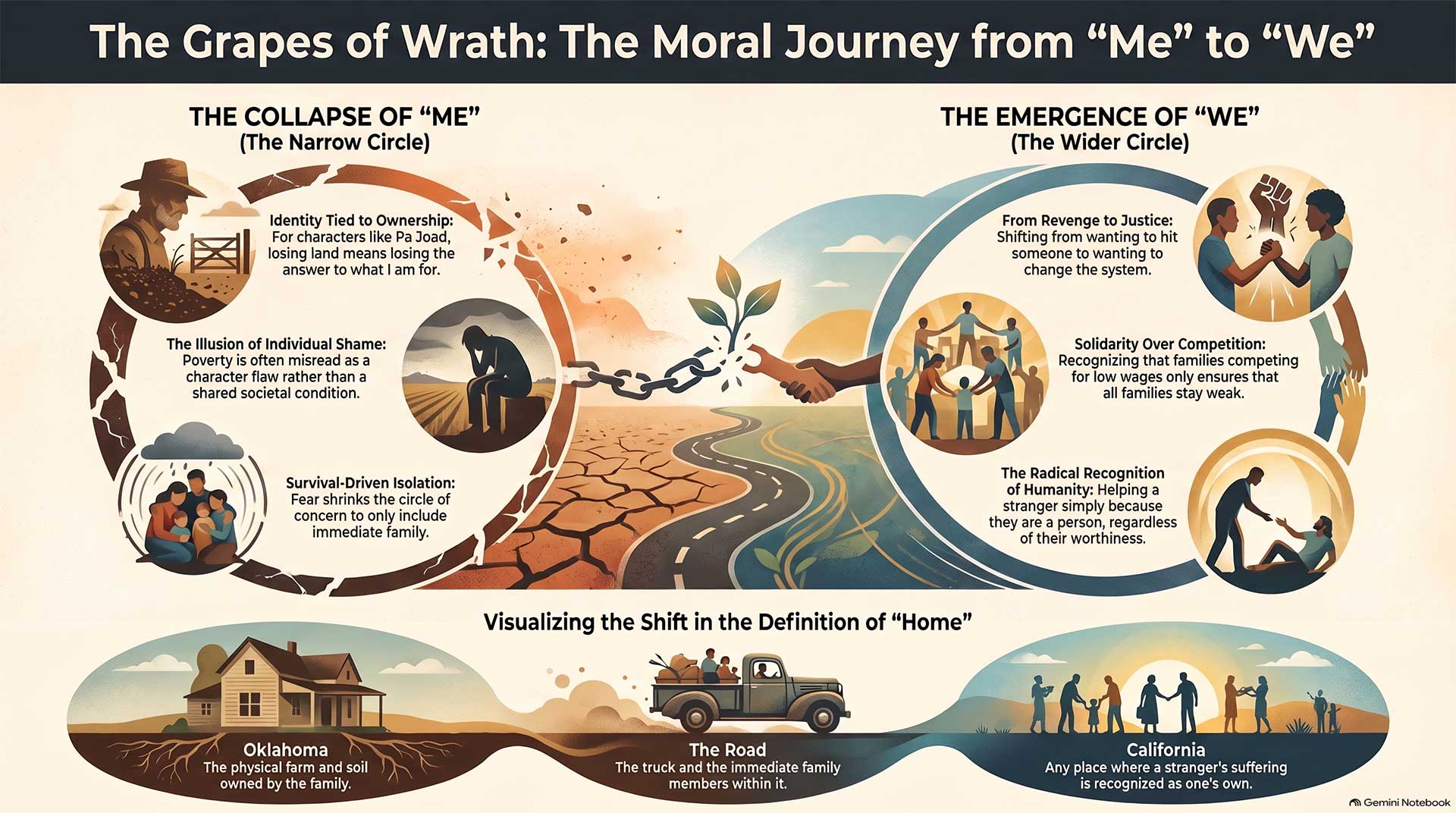
At the beginning of The Grapes of Wrath, home seems like a place.
A farm.
A piece of Oklahoma soil.
A house where generations have lived.
When that disappears, Pa loses more than property. He begins losing the identity attached to it.
He had understood himself as the man who worked the land, provided for his family, and led the household.
Take away the land.
Take away the work.
Take away his ability to provide.
What remains?
That question extends far beyond Pa Joad.
Many people quietly build their identity around usefulness.
I provide.
I earn.
I take care of people.
I am needed.
When illness, unemployment, economic change, age, automation, migration, or family disruption removes that role, the financial loss can be accompanied by something more private:
If I can no longer do what made me valuable, am I still valuable?
Ma's answer is radically different.
She does not measure Pa by his paycheck.
She does not measure Tom by his worst act.
She does not measure a hungry child by the decisions of the child's parents.
For Ma, people remain people before they prove that they deserve to be.
That idea leads directly to the novel's treatment of poverty.
The Joads discover that hunger is rarely allowed to remain hunger.
Society adds a moral interpretation.
If you are poor, perhaps you were irresponsible.
If you cannot find work, perhaps you are lazy.
If you need help, perhaps you failed.
Once migrants become “Okies,” individual human beings become a category.
And categories are much easier to reject than people.
Steinbeck forces us to ask an uncomfortable question:
Why are human beings so eager to turn another person's suffering into evidence about that person's character?
Casy begins to suspect one reason.
If I believe every suffering person caused his own suffering, I can reassure myself that the same thing will never happen to me.
His failure becomes my protection.
But the Joads' experience destroys that comforting idea.
Hardworking people can lose everything.
Good people can make terrible decisions.
Responsible people can become trapped.
People can work and remain hungry.
And people who have done foolish or harmful things do not cease being human.
None of this eliminates personal responsibility.
Tom understands that better than most.
He cannot blame society for every act of violence he commits.
His circumstances matter.
His anger matters.
His history matters.
Yet eventually he must confront something simpler:
His hands still did what they did.
This gives the conversation about anger its moral weight.
Tom's anger is often justified.
People are exploited.
Casy is murdered.
Families are humiliated.
Workers are deliberately placed against other desperate workers.
The question is not whether Tom has a right to be angry.
The question is:
What should anger be allowed to do?
Casy's death pushes Tom toward a different form of resistance.
Earlier, when something is wrong, Tom wants to know whom to hit.
Later, he begins asking what needs to change.
That is a profound transformation.
Anger can identify injustice without automatically knowing how to correct it.
It can become courage.
It can become solidarity.
It can become resistance.
It can also become revenge.
One of the hardest moral tasks in the novel is therefore learning to remain angry at injustice without allowing anger to decide that every action taken in its name must be just.
Yet an even larger transformation is taking place.
The meaning of family changes.
Ma begins the journey desperately trying to hold the Joads together.
She cannot.
Grampa dies.
Granma dies.
Noah leaves.
Connie disappears.
Tom must go.
Rose of Sharon loses her child.
Measured by Ma's original goal, the journey is a devastating failure.
The family does not remain intact.
Yet something unexpected happens.
As the physical family becomes smaller, the moral family becomes larger.
People who once would have been strangers begin helping one another.
They share camps.
Food.
Information.
Labor.
Grief.
Risk.
The Joads slowly discover that independence is sometimes an illusion.
A family may desperately protect itself and still be unable to survive alone.
This does not mean Steinbeck asks us to stop loving our own families more deeply than strangers.
Ma never does.
Rose of Sharon would have fed her living baby before the starving stranger in the barn.
Tom remains Ma's son in a way no stranger ever could.
The novel does not require equal affection.
It asks for something more realistic:
Must another person be equal in our heart before that person's suffering matters at all?
Rose of Sharon's final act brings that question to its most intimate form.
The starving man is not family.
She does not know his history.
She does not know whether he has lived wisely.
She does not know whether he deserves her compassion according to some moral accounting system.
She knows something much simpler.
He is dying.
She has something that may keep him alive.
Her action does not repair the economy.
It does not restore the Joad farm.
It does not bring back her baby.
It does not end poverty.
One person helps one person.
Perhaps that is precisely why the ending is so powerful.
The novel's enormous social vision finally returns to an individual human body.
“We” cannot become so large that the person disappears inside it.
Nor can “we” remain so small that everyone outside our immediate circle becomes invisible.
This is where Casy's philosophy, Tom's transformation, Ma's endurance, Pa's loss, and Rose of Sharon's final action converge.
The journey of The Grapes of Wrath can be expressed in two words:
I → We
But perhaps Steinbeck's deeper achievement is making the arrow between those words difficult.
There are risks on both sides.
Too much “I,” and we can become indifferent to suffering that does not directly touch us.
Too much abstract “we,” and individuals can disappear inside causes, movements, institutions, or ideologies.
The challenge is keeping both.
The person and the community.
Responsibility and circumstance.
Family and stranger.
Anger and restraint.
Self and solidarity.
Which leaves us with a question that reaches far beyond the Joad family's journey to California:
When I say “us,” who am I still willing to leave outside?
Short Bios:
John Steinbeck
John Steinbeck (1902–1968) was an American novelist born in Salinas, California. His writing frequently explored workers, migrants, poverty, dignity, community, and the moral pressures created by economic hardship. The Grapes of Wrath, published in 1939, won the Pulitzer Prize for Fiction in 1940. Steinbeck received the Nobel Prize in Literature in 1962. His other major works include East of Eden, Of Mice and Men, and Cannery Row.
Tom Joad
The central Joad son, recently released from prison when the novel begins. Tom starts as a practical man concerned mainly with immediate survival and his family. His experiences with migrant workers and Jim Casy gradually broaden his sense of responsibility beyond the Joad family.
Ma Joad
The emotional center of the Joad family. Ma is resilient, practical, protective, and often more adaptable than the men around her. As the family's traditional structure breaks apart, she becomes its strongest source of continuity and gradually develops a wider sense of human connection.
Pa Joad
The traditional head of the Joad household. Losing the farm and his ability to provide steadily weakens his confidence and authority. His story shows how employment, masculinity, usefulness, and personal dignity can become painfully intertwined.
Jim Casy
A former preacher who travels west with the Joads. Casy has lost confidence in conventional religious answers and begins developing a belief centered on shared humanity. His involvement with exploited workers profoundly influences Tom.
Rose of Sharon
Tom's younger sister, pregnant during the family's migration. She initially dreams of building a secure life with her husband, Connie. After abandonment, hardship, and devastating loss, she becomes central to the novel's unforgettable final scene.
Uncle John Joad
Pa's brother, a troubled man carrying intense guilt over his wife's death. He frequently interprets suffering through guilt and punishment and struggles with alcohol. His character shows how shame can turn painful events into judgments about one's entire identity.
Connie Rivers
Rose of Sharon's husband. Connie initially dreams of building a better future in California but becomes discouraged by the family's circumstances and abandons his pregnant wife. His departure contributes to the gradual fragmentation of the Joad family.
Al Joad
Tom's younger brother, skilled with automobiles and fascinated by girls. His mechanical abilities are extremely valuable during the family's journey west. Al represents youthful adaptability and a future that may eventually move beyond the original Joad family structure.
Grampa and Granma Joad
The elderly generation of the family. Their deaths during the migration show how deeply identity can be tied to place and how physically and emotionally costly forced displacement can become.
Noah Joad
Tom's older brother. Quiet and emotionally distant, Noah eventually leaves the family during the journey and chooses to remain near the Colorado River, becoming another sign that Ma cannot preserve the family exactly as it once existed.
Ruthie and Winfield Joad
The younger Joad children. Their hunger, fear, curiosity, and vulnerability repeatedly remind the adults that large economic and social forces eventually reach individual children who had no role in creating them.
Leave a Reply