
Introduction
What happens when doing the right thing does not save you?
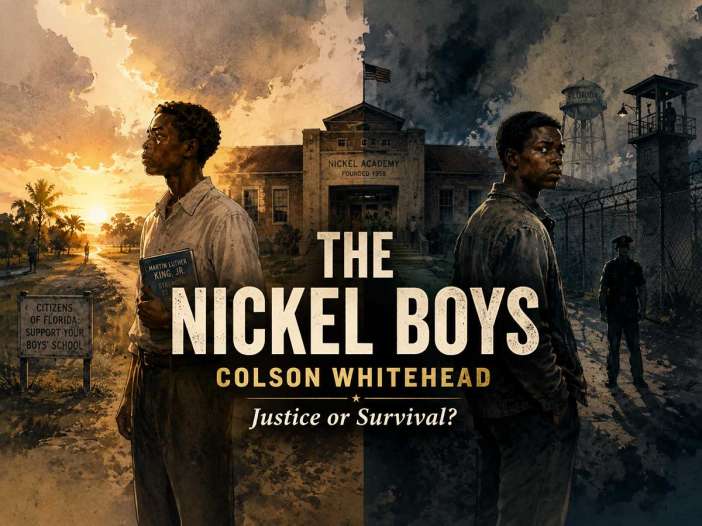
Colson Whitehead's The Nickel Boys places that question inside the friendship between Elwood Curtis and Turner, two Black teenagers trapped inside the brutal Nickel Academy during the Jim Crow era.
Elwood believes deeply in justice and the moral vision of Martin Luther King Jr. Turner has learned a harsher lesson: institutions lie, authority cannot automatically be trusted, and sometimes survival requires silence.
Their disagreement appears simple at first.
Elwood believes people must resist injustice.
Turner believes you have to remain alive before you can resist anything.
Yet their imaginary conversation reveals something harder.
Elwood's idealism can become dangerous when it ignores reality. Turner's realism can become its own prison when survival turns into permanent distrust.
Neither boy possesses the complete answer.
Their friendship asks a question extending far beyond Nickel:
How do we see the world as it really is without surrendering our belief in what it could become?
(Note: This is an imaginary conversation, a creative exploration of an idea, and not a real speech or event.)
Topic 1: Was Elwood Naive?
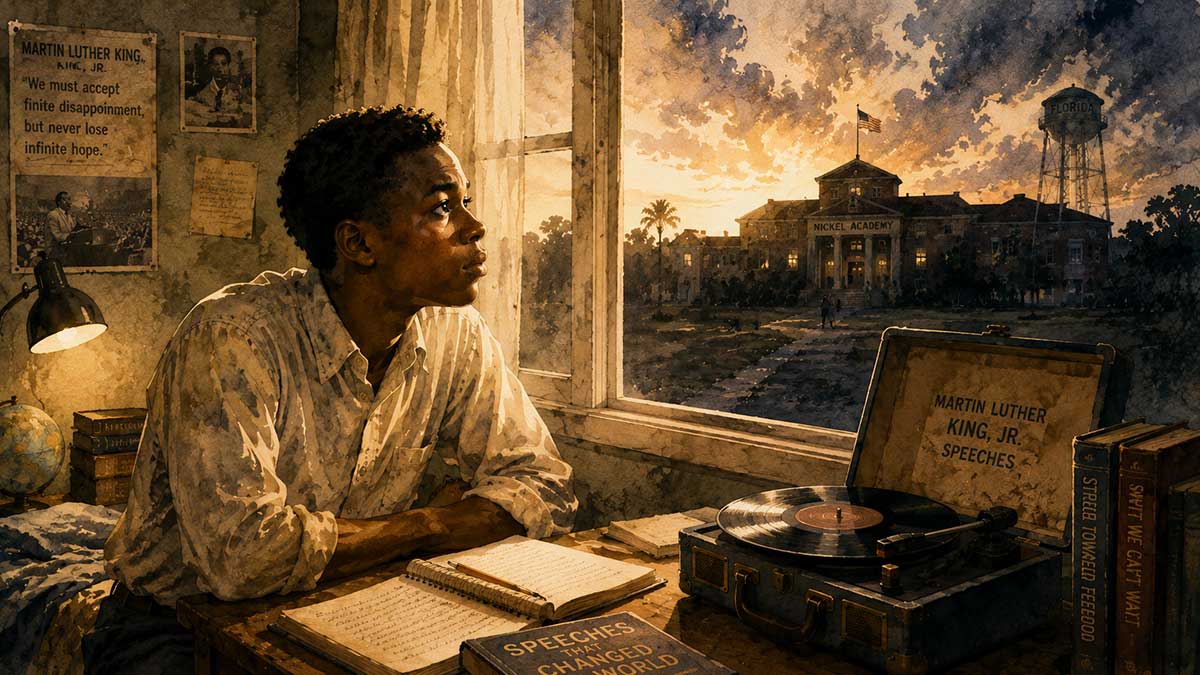
The room had been quiet for a long time.
There was a window behind Turner, but neither of them had looked through it. Late-afternoon light rested across the table between them. Two glasses of water sat untouched.
Elwood looked older, of course.
So did Turner.
But something about sitting across from each other had made age strangely irrelevant. Every few seconds Turner could see the boy underneath Elwood's face. The same patient eyes. The same irritating seriousness.
Elwood finally spoke.
Elwood: Turner, do you still think I was foolish?
Turner's eyes moved toward him.
Turner: About what?
Elwood: You know what.
Turner: I want to hear you say it.
Elwood gave a faint smile.
Elwood: You haven't changed much.
Turner: Neither have you.
The smile disappeared.
Elwood: Do you still think I was foolish for believing what I believed?
Turner leaned back.
He could have been kind.
Time gave people permission to be kind about things that had once made them angry.
He chose not to use it.
Turner: Yeah.
Elwood nodded once.
Turner: You asked.
Elwood: I did.
Turner: You want me to lie now?
Elwood: No.
Turner: Good. Then yeah. I thought you were foolish then. Sometimes I still do.
Elwood looked down at his hands.
Elwood: Sometimes?
Turner: Don't get excited.
Elwood: That's progress.
Turner: That's age.
Elwood laughed quietly.
Turner didn't.
Turner: You walked into Nickel thinking the problem was that people weren't following the rules.
Elwood: They weren't.
Turner: That's exactly what I'm talking about.
Elwood: What does that mean?
Turner: You thought there was Nickel, and then there were bad people inside Nickel breaking what Nickel was supposed to be.
Elwood stared at him.
Turner: I figured out something before you did.
Elwood: What?
Turner: The bad people weren't breaking Nickel.
A pause.
Turner: They were Nickel.
Elwood's face tightened.
Elwood: Not everybody.
Turner: There you go.
Elwood: What?
Turner: Still looking for the exception.
Elwood: There were exceptions.
Turner: And what did those exceptions do?
Elwood didn't answer.
Turner: That's what I thought.
Elwood: So what should I have done?
Turner: Survived.
Elwood: That's it?
Turner: At Nickel?
Turner leaned forward.
Turner: Yeah, Elwood. That's it.
Something changed between them.
The conversation had stopped being nostalgic.
Turner: You know what used to make me mad about you?
Elwood: There was a list.
Turner: You acted like surviving wasn't enough.
Elwood: I never said that.
Turner: Didn't have to.
Elwood: Turner...
Turner: You'd get that look.
Elwood: What look?
Turner: Like you could see the world the way it ought to be, and the rest of us were disappointing you by living in the one we actually had.
Elwood sat back.
That landed harder than Turner expected.
Elwood: Is that what you thought?
Turner: Sometimes.
Elwood: I wasn't disappointed in you.
Turner: Maybe not me.
Turner tapped the table once.
Turner: But you were disappointed in reality.
Elwood almost smiled at the strange sentence.
Then he realized Turner wasn't joking.
Elwood: Maybe I was.
Turner: Reality doesn't care.
Elwood: Does that mean we shouldn't?
Turner: There. That's you.
Elwood: It's a question.
Turner: No. It's your whole damn philosophy disguised as a question.
Elwood laughed.
This time Turner almost did.
Then Elwood became serious again.
Elwood: I listened to Dr. King before Nickel.
Turner's expression changed slightly.
He remembered.
Elwood: I listened to that record until I knew where the scratches were.
Turner: I remember.
Elwood: People hear those speeches now and hear history.
He touched his chest.
Elwood: I didn't hear history.
Turner: I know.
Elwood: I heard somebody telling me that being treated like I was less didn't make me less.
Turner looked away.
Elwood: You understand that?
Turner: Yeah.
Elwood: Do you?
Turner looked back sharply.
Turner: Don't do that.
Elwood: Do what?
Turner: Don't make me the man who didn't believe Black boys had dignity just since I didn't want to get beaten proving it.
Elwood became silent.
Elwood: That's fair.
Turner: Damn right it is.
Another silence.
Elwood: I'm sorry.
Turner hadn't expected that.
Turner: For what?
Elwood: For ever making you feel that survival was something smaller.
Turner stared at him.
The anger remained, but something underneath it shifted.
Turner: You didn't make me feel that.
Elwood: You just said I did.
Turner: I said that's how I saw you.
Elwood: There's a difference?
Turner: Big one.
Turner finally reached for his water.
He didn't drink.
He rotated the glass slowly between his fingers.
Turner: You want to know what I thought about King?
Elwood: Yes.
Turner: I thought he was right.
Elwood looked genuinely surprised.
Turner: Don't look at me like that.
Elwood: I didn't know that.
Turner: You never asked.
Elwood: I assumed...
Turner: Exactly.
Elwood lowered his eyes.
Turner: I thought he was right about plenty.
Elwood: Then why did it bother you so much?
Turner: It didn't bother me when King said it.
Turner stopped moving the glass.
Turner: It bothered me when you acted like Nickel was going to care.
Elwood looked at him.
Turner: That's the part you couldn't see.
Elwood: Explain it.
Turner: You want the truth?
Elwood: Yes.
Turner: Those speeches had people listening.
Churches.
Crowds.
Newspapers.
Cameras sometimes.
People outside could see.
Turner leaned closer.
Turner: Who was watching us?
Elwood said nothing.
Turner: When they took a boy out at night, who was watching?
Silence.
Turner: When somebody came back and couldn't lie on his back, who was watching?
Elwood's jaw tightened.
Turner: When a boy disappeared and somebody told us he'd run away, who was watching?
Elwood stared at the table.
Turner: That's what you didn't understand.
Elwood: I understood.
Turner: Not soon enough.
Elwood looked up.
For a moment, anger appeared.
Elwood: And what exactly did you understand, Turner?
Turner: That nobody was coming.
The sentence seemed to change the room.
Elwood didn't answer.
Turner's voice became quieter.
Turner: That's what I understood.
Elwood: Nobody?
Turner: Nobody.
Elwood: And you were okay with that?
Turner stared at him.
Turner: You think I was okay with it?
Elwood: You accepted it.
Turner: I survived it.
Elwood: Is there no difference?
Turner: There is when you're sitting in a safe room fifty years later asking questions.
Elwood flinched.
Turner saw it.
He didn't apologize.
Elwood: Then tell me something.
Turner: What?
Elwood: Suppose every boy at Nickel had understood what you understood.
Turner: They would've gotten hurt less.
Elwood: Maybe.
Turner: Not maybe.
Elwood: Fine.
Elwood leaned forward.
Elwood: Then what?
Turner: What do you mean?
Elwood: Everybody keeps his head down. Everybody learns when not to speak. Everybody knows the rules are fake. Everybody survives if he can.
Turner: Sounds better than dying.
Elwood: And Nickel?
Turner didn't answer.
Elwood: What happens to Nickel?
Turner: That's not a boy's responsibility.
Elwood: I didn't ask whose responsibility it was.
Turner: You're trying to trap me.
Elwood: I'm asking.
Turner: Nickel keeps going.
The words came reluctantly.
Elwood waited.
Turner: Nickel keeps going.
Elwood: That's what bothered me.
Turner: I know.
Elwood: Somebody else comes after us.
Turner: I know.
Elwood: Another boy.
Turner: I know, Elwood.
Elwood: Then another.
Turner: I said I know.
Elwood stopped.
Turner's eyes had hardened, but not from anger.
Something older was there.
Turner: You think I didn't think about them?
Elwood's voice softened.
Elwood: I don't know.
Turner: I did.
Elwood: The boys who came later?
Turner: All of them.
The glass stopped turning.
Turner: That's the trouble with surviving.
Elwood waited.
Turner: You get time to think about everybody who didn't.
Neither spoke.
A car passed somewhere outside.
Elwood: Turner...
Turner: Don't.
Elwood stopped.
Turner: Don't turn this into one of your lessons.
Elwood: I wasn't going to.
Turner: Good.
They sat with it.
After a long time, Elwood spoke again.
Elwood: Maybe I was naive.
Turner looked up.
Turner: What?
Elwood: You wanted me to say it.
Turner: I didn't think you ever would.
Elwood: I thought knowing the truth would matter more than it did.
Turner watched him carefully.
Elwood: I thought if the right person knew, something would happen.
Turner: Yeah.
Elwood: I thought rules had meaning outside the people enforcing them.
Turner: Yeah.
Elwood: I thought goodness had more protection than it actually has.
Turner didn't say anything.
Elwood: I was wrong about those things.
Turner: That's a lot coming from you.
Elwood smiled faintly.
Elwood: Don't enjoy it too much.
Turner finally smiled.
It lasted only a moment.
Then Elwood said:
Elwood: But I don't think I was wrong about everything.
Turner: Knew that was coming.
Elwood: If I had learned your lesson completely...
Turner: You might've lived longer.
Elwood looked directly at him.
Elwood: Would I still have been me?
Turner's smile disappeared.
Turner: I don't know.
Elwood: Neither do I.
Turner looked toward the window.
For the first time since they began talking, he seemed tired rather than guarded.
Turner: You know something I never told you?
Elwood: What?
Turner waited.
Turner: Sometimes I hated that record of yours.
Elwood laughed softly.
Elwood: I suspected that.
Turner: Not for the reason you think.
Elwood: Then why?
Turner took a long time answering.
Turner: You could still listen to a man talk about justice and believe he was talking to you.
Elwood's expression changed.
Turner: I couldn't do that anymore.
A long silence.
Turner: And I hated you for being able to.
Elwood said nothing.
Turner: But sometimes...
Turner looked down.
Turner: Sometimes I envied you too.
Elwood's eyes filled, though he did nothing to hide it.
Elwood: Why?
Turner gave him a tired smile.
Turner: You still thought something mattered.
Elwood breathed in slowly.
Elwood: Something did.
Turner nodded.
Turner: Maybe.
Elwood waited for an argument.
None came.
Then Turner looked at him again.
Turner: But if we were back there tomorrow, I'd still tell you to keep your damn mouth shut.
Elwood laughed through the emotion.
Elwood: And I probably wouldn't listen.
Turner: I know.
Elwood: Would you still help me?
Turner stopped smiling.
The question hung between them.
He looked at Elwood for a long time.
Turner: That's a different question.
And for the first time that afternoon, Elwood realized Turner was afraid of where the conversation was going next.
Topic 2: When the Rules Protect the Wrong People
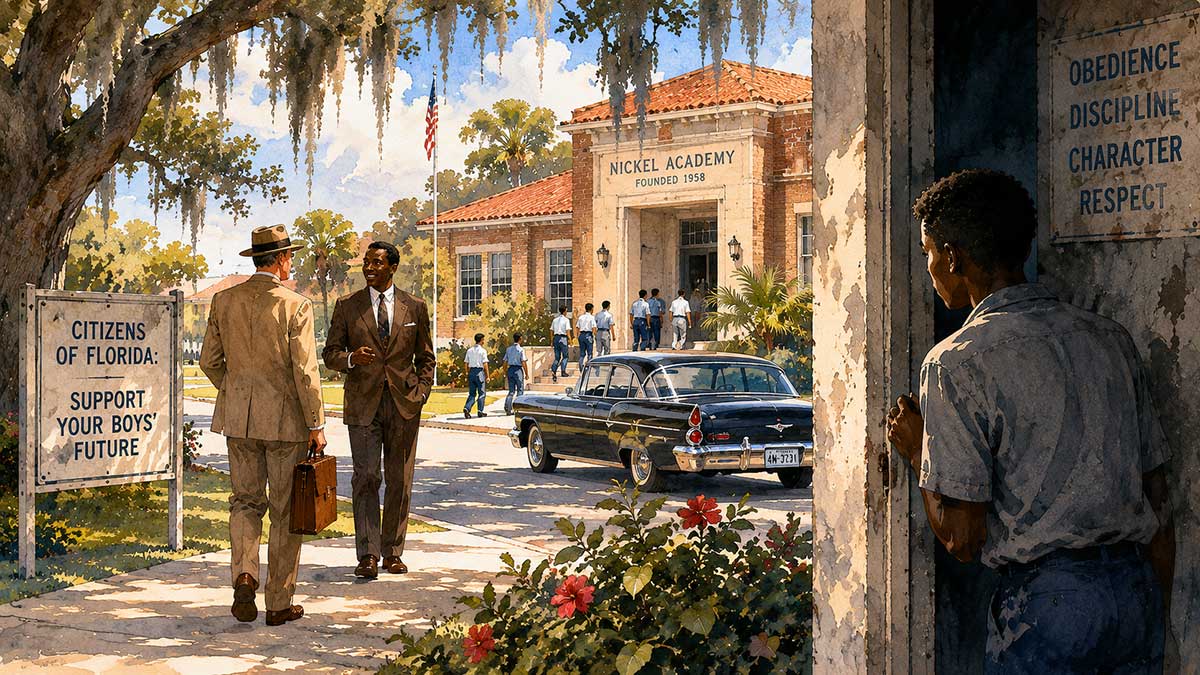
Turner looked at the glass in front of him.
He still had not answered Elwood’s last question.
Would you still help me?
His fingers rested against the side of the glass.
Then he let go.
Turner: You want to know something else I used to think about Nickel?
Elwood: What?
Turner: It wasn’t really hidden.
Elwood frowned.
Elwood: What do you mean?
Turner: People talk about places like that later and say nobody knew.
Elwood: Some people probably didn’t.
Turner: Sure.
Turner leaned back.
Turner: But enough people knew something.
Elwood: Something isn’t everything.
Turner: It doesn’t have to be.
Elwood watched him.
Turner: One person sees a boy with marks on his back.
Another hears screaming.
Another sees food meant for the boys getting loaded into somebody else’s truck.
Another notices a kid is there Monday and gone Thursday.
Another hears somebody say not to ask questions.
Turner paused.
Turner: Nobody has the whole picture.
Elwood: So nobody feels responsible for the whole picture.
Turner pointed at him.
Turner: There.
Elwood: There what?
Turner: Now you’re getting it.
Elwood gave him an irritated look.
Elwood: I’m glad I finally passed your examination.
Turner: Barely.
Elwood smiled.
It faded quickly.
Elwood: You really think people outside knew?
Turner: I think people outside knew enough to wonder.
Elwood: Wondering isn’t knowing.
Turner: Sometimes wondering is where responsibility starts.
Elwood looked at him.
Turner: You hear a scream once, maybe you tell yourself you heard wrong.
You hear it every week?
That changes things.
Elwood: Then why didn’t they stop it?
Turner gave a short laugh.
There was no humor in it.
Turner: You still asking that?
Elwood: Yes.
Turner: Same reason people don’t stop plenty of things.
They got jobs.
Families.
Mortgages.
Friends who work there.
Someone at church knows somebody.
Someone’s cousin is an administrator.
Someone says the boys are trouble anyway.
Someone says discipline is supposed to hurt.
Someone says the newspapers exaggerate.
Someone says the state inspected the place last year.
Elwood listened.
Turner: Give people enough little reasons and they can walk around a big truth for years.
Elwood’s eyes moved toward the window.
Elwood: That’s worse than I thought.
Turner: What is?
Elwood: I used to think places like Nickel survived through cruelty.
Turner: They do.
Elwood: No.
Elwood turned back.
Elwood: Cruelty starts them.
Silence keeps them alive.
Turner stared at him.
Turner: Maybe.
Elwood: You don’t agree?
Turner: I agree too much.
That answer made Elwood stop.
Turner looked down at his hands.
Turner: That’s what people don’t like hearing.
They want monsters.
Elwood: There were monsters.
Turner: Sure.
Elwood: Spencer.
Turner: I know.
Elwood: Men who hurt boys and went home afterward.
Turner: I know.
Elwood: That matters.
Turner: Of course it matters.
Turner looked up.
Turner: But monsters are convenient.
Elwood: Convenient?
Turner: You call somebody a monster, then everybody else gets to be human.
Elwood went still.
Turner: The man who hit you is the monster.
The man who heard it and did nothing is normal.
The woman who typed the report is normal.
The official who signed the paper is normal.
The person who saw something strange and decided not to ask is normal.
The neighbor who heard rumors is normal.
The church member who said those boys probably deserved discipline is normal.
Turner’s voice lowered.
Turner: Pretty soon you got one monster surrounded by a hundred normal people keeping him in business.
Elwood stared at him.
Elwood: That’s not fair.
Turner: No?
Elwood: You can’t make everyone equally guilty.
Turner: I didn’t.
Elwood: It sounded like you did.
Turner: There’s a difference between guilt and responsibility.
Elwood crossed his arms.
Elwood: Explain it.
Turner: The man who beats a boy carries one kind of guilt.
The person who knows and stays quiet carries another.
The person who suspects and looks away carries something else.
The person who truly knew nothing carries none.
Elwood: And how do you judge the difference?
Turner: I don’t know.
Elwood: That matters.
Turner: Of course it matters.
Turner shook his head.
Turner: You always want the clean rule.
Elwood: Somebody has to.
Turner: There’s your problem again.
Elwood: My problem?
Turner: You want a line.
Stand here, innocent.
Stand there, guilty.
Life doesn’t work like that.
Elwood: Then what does?
Turner: Distance.
Elwood frowned.
Turner: How close were you?
How much did you know?
What could you have done?
What would it have cost?
How many times did you get another chance to act?
Elwood grew quiet.
Turner: That’s how I think about it.
Elwood: What if speaking up costs someone everything?
Turner: Now you’re asking the real question.
Elwood: Say a man works at Nickel.
He has a wife.
Three children.
That job feeds them.
He sees something wrong.
If he reports it, he loses the job.
Maybe nobody believes him.
Maybe his family can’t pay rent.
Turner nodded.
Turner: Exactly.
Elwood: What does he owe us?
Turner didn’t answer right away.
Turner: Something.
Elwood: How much?
Turner: I don’t know.
Elwood: His job?
Turner: Maybe.
Elwood: His family’s security?
Turner: That’s harder.
Elwood: His life?
Turner: No.
Elwood looked at him.
Turner: Nobody gets to demand somebody else become a martyr.
Elwood: But the boy getting beaten didn’t choose martyrdom either.
Turner’s face hardened.
Turner: I know.
Elwood: So now what?
Turner: Now you see why people stay quiet.
Elwood: I see why they’re afraid.
Turner: Same thing sometimes.
Elwood: No.
Turner looked at him sharply.
Elwood: Fear explains silence.
It doesn’t erase what silence does.
Turner’s jaw moved.
Turner: You think I don’t know that?
Elwood: I think you understand the frightened person so well that sometimes you forget the person who pays for their fear.
Turner stared at him.
The room became very quiet.
Turner: Careful.
Elwood: Why?
Turner: You’re starting to sound like you’re judging everybody from a safe chair.
Elwood’s face changed.
Elwood: I know what it means to be afraid.
Turner: You know what it means to be beaten.
That’s not the same as having three kids at home and knowing one phone call could wreck all four lives.
Elwood looked away.
Turner continued, quieter now.
Turner: Everybody thinks courage is free when they’re asking somebody else to show it.
Elwood turned back slowly.
Elwood: That’s true.
Turner had expected resistance.
He did not know what to do with agreement.
Elwood: I didn’t think enough about that when I was young.
Turner: No.
Elwood: I thought if something was right, the cost was secondary.
Turner: That’s easy when you’re seventeen.
Elwood: It wasn’t easy then either.
Turner: No.
Turner’s voice softened.
Turner: It wasn’t.
Elwood leaned forward.
Elwood: But I still don’t know where that leaves us.
Turner: Leaves us with people.
Elwood: What does that mean?
Turner: It means most people aren’t heroes.
Most people aren’t monsters either.
They’re trying to get through Tuesday.
Elwood’s mouth tightened.
Elwood: And evil knows that.
Turner looked at him.
Elwood: That’s what you’re saying, isn’t it?
Turner: Maybe.
Elwood: A bad institution doesn’t need everyone to believe in it.
It only needs most people to want a quiet Tuesday.
Turner looked down.
Turner: Yeah.
Elwood sat with that.
Elwood: That may be the most frightening thing you’ve said.
Turner: I’ve got worse.
Elwood: I’m sure.
For a moment they both smiled.
Then Elwood became serious again.
Elwood: You know what else protected Nickel?
Turner: What?
Elwood: How it looked.
Turner nodded immediately.
Turner: There you go.
Elwood: Buildings.
Uniforms.
Schedules.
Forms.
Staff.
Turner: State money.
Elwood: Official letters.
Turner: Inspections.
Elwood: A name that sounded like somebody was helping children.
Turner leaned forward.
Turner: That’s the trick.
Elwood waited.
Turner: If some man grabbed boys off the street and locked them in a barn, everybody would know what he was.
Elwood: A criminal.
Turner: Put up a sign.
Give him an office.
Call the boys students.
Call the beatings discipline.
Call the cages rooms.
Call the disappearances transfers.
Turner’s voice sharpened.
Turner: Now people need paperwork before they believe you.
Elwood closed his eyes briefly.
Elwood: Respectability.
Turner: Best fence they had.
Elwood opened his eyes.
Elwood: Better than barbed wire.
Turner: Much better.
Elwood: The wire kept boys in.
Turner: Respectability kept everybody else out.
Neither spoke.
The statement sat between them.
Elwood: We trusted buildings.
Turner: People still do.
Elwood: We trusted titles.
Turner: Still do.
Elwood: We trusted adults.
Turner: Some deserved it.
Elwood: Some did.
Turner: Don’t forget that.
Elwood looked surprised.
Elwood: You’re telling me not to become cynical?
Turner gave him a flat look.
Turner: Don’t ruin the moment.
Elwood laughed.
Turner almost laughed too.
Elwood: Fine.
Turner looked away.
Turner: There were people who weren't like them.
Elwood: Yes.
Turner: That matters.
Elwood: It does.
Turner: Just wasn’t enough.
The smile disappeared from Elwood’s face.
Elwood: No.
It wasn’t.
A long silence followed.
Then Elwood said something Turner did not expect.
Elwood: I used to think the worst people at Nickel were the men who hurt us.
Turner: They were pretty high on the list.
Elwood: They still are.
Elwood rubbed his thumb across the edge of the table.
Elwood: But sometimes I think about the people who knew enough to ask one more question.
Turner watched him.
Elwood: And didn’t.
Turner: You hate them?
Elwood considered it.
Elwood: No.
Turner: Really?
Elwood: I don’t know who they were.
I don’t know what they were afraid of.
I don’t know what it would have cost them.
Turner nodded slowly.
Elwood: But I wish one of them had been a little less comfortable.
Turner looked at him for a long time.
Turner: That’s different from the boy I knew.
Elwood: How?
Turner: Back then you wanted brave people.
Elwood waited.
Turner: Now you’re asking for uncomfortable ones.
Elwood thought about it.
Elwood: Maybe that’s where courage starts.
Turner looked toward the window.
Turner: Maybe.
Elwood let the silence stay.
Then he asked:
Elwood: Were you ever angry at yourself for staying quiet?
Turner’s head turned back immediately.
The question had crossed a boundary.
Turner: I didn’t stay quiet about everything.
Elwood: I know.
Turner: Then why ask?
Elwood: You know why.
Turner stared at him.
Elwood: We’ve talked about the staff.
The officials.
The people outside.
The ones who heard something.
The ones who suspected something.
Elwood’s voice grew softer.
Elwood: But we were there too.
Turner’s eyes narrowed.
Turner: We were children.
Elwood: Yes.
Turner: Don’t you dare put us in the same category.
Elwood: I’m not.
Turner: Sounds like you are.
Elwood: I’m asking what it did to us.
Turner stood suddenly.
He walked toward the window.
Elwood remained seated.
For a long time, Turner said nothing.
When he finally spoke, he did not turn around.
Turner: You ever hear somebody crying and decide not to move?
Elwood’s expression changed.
Turner: I did.
Silence.
Turner: You ever know somebody was going to get it and be grateful it wasn’t you?
Elwood looked down.
Turner: I was.
His shoulders tightened.
Turner: You ever see a boy come back and not ask what happened since you were scared he'd tell you?
Elwood closed his eyes.
Turner: I did that too.
He finally turned.
Turner: So you want to know if I was angry at myself?
Elwood looked up.
Turner: Yeah.
Elwood said nothing.
Turner: For years.
His voice was quieter now.
Turner: Maybe still.
Elwood stood, but did not walk closer.
Elwood: Turner, we were children.
Turner: Funny.
Elwood: What?
Turner: Five minutes ago you said fear doesn't erase what silence does.
Elwood froze.
Turner gave him a sad look.
Turner: Now it's me, and suddenly you got mercy.
Elwood absorbed the accusation.
Elwood: Yes.
Turner looked surprised.
Turner: Yes what?
Elwood: I have mercy for you.
Turner: Why?
Elwood: Since I know where you were.
Turner said nothing.
Elwood: Maybe that's what I was missing before.
Elwood took one small step forward.
Elwood: Reasons don't erase consequences.
But consequences don't erase reasons either.
Turner stared at him.
Elwood: Both can be true.
The anger left Turner's face little by little.
Turner: You practicing these speeches?
Elwood: For years.
Turner laughed once.
It broke something open.
Elwood smiled.
Then Turner looked down.
Turner: You know what scares me?
Elwood: What?
Turner: Nickel didn't need everybody to be cruel.
Elwood waited.
Turner: It just needed everybody to have a reason.
Elwood’s smile vanished.
The two men stood across from each other in silence.
Then Elwood said:
Elwood: And if every reason is enough...
Turner looked at him.
Elwood: Nobody is responsible.
Turner nodded slowly.
Turner: That's the trap.
Elwood sat again.
Turner remained by the window.
Elwood: Then the question isn't whether people are afraid.
Turner: No.
Elwood: It's what we do with our fear.
Turner looked back at him.
Turner: Careful.
Elwood: What?
Turner: You're getting close to sounding like the old Elwood again.
Elwood smiled.
Elwood: Maybe he wasn't wrong about everything.
Turner shook his head.
Turner: Here we go.
But this time there was affection in it.
Elwood watched him for a moment.
Then his expression became serious.
Elwood: Turner.
Turner: What?
Elwood: You said nobody gets to demand somebody else become a martyr.
Turner: That's right.
Elwood: What if the person you're trying to save isn't somebody else?
Turner did not understand at first.
Then he did.
Elwood held his gaze.
Elwood: What if it's your friend?
Turner's face changed.
The room seemed to shrink.
They had reached the question Turner had avoided at the end of their first conversation.
Not what a worker owed a boy.
Not what a citizen owed an institution.
Not what society owed the forgotten.
What did Turner owe Elwood when helping him could have destroyed them both?
Turner returned slowly to the table.
He sat down.
Turner: You're really going to make me answer that.
Elwood: Yes.
Turner looked at him.
This time neither of them smiled.
Topic 3: What Do I Owe You If Saving You Could Destroy Me?
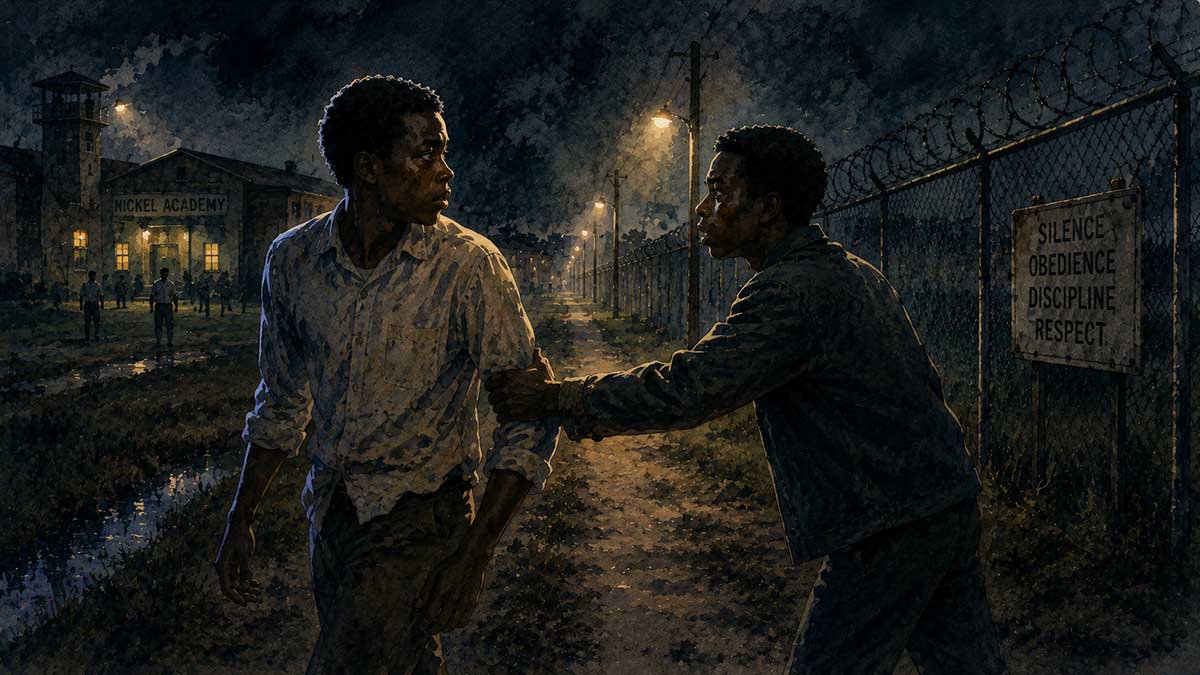
Turner sat back down.
For several seconds he looked at Elwood without speaking.
The room had changed again.
They were no longer talking about Nickel as a system.
No staff.
No officials.
No anonymous people who knew enough and did too little.
Now there were only two boys inside an old memory.
One asking.
One deciding whether he could answer.
Turner: You always did know how to corner somebody.
Elwood: You could leave.
Turner: That's funny.
Elwood: Why?
Turner: Coming from you.
Elwood understood.
He lowered his eyes.
Elwood: Fair.
Turner rubbed both hands together.
Turner: You want to know what I owed you?
Elwood: I want to know what you think now.
Turner: That's not the same question.
Elwood: I know.
Turner: Back then, I would've told you I owed you nothing that got me killed.
Elwood nodded.
Turner: Maybe I'd share food.
Warn you.
Cover for you.
Tell you when somebody was watching.
But if you decided to do something stupid and drag both of us into it?
Turner shook his head.
Turner: No.
Elwood: You thought that clearly?
Turner: I thought everything clearly at Nickel.
Elwood: Nobody thinks everything clearly when they're scared.
Turner looked at him.
Turner: There you go again.
Elwood: I'm not criticizing you.
Turner: Sounds like it.
Elwood: I'm saying fear changes the math.
Turner gave him a long look.
Turner: Maybe.
Elwood: It changed mine too.
Turner: Yours?
Elwood: You think I wasn't scared?
Turner: I think sometimes you acted like fear was something you could out-argue.
Elwood almost smiled.
Elwood: That's probably true.
Turner: Probably?
Elwood: Fine. It was true.
Turner leaned forward.
Turner: That's what scared me about you.
Elwood's expression shifted.
Elwood: Me?
Turner: Yeah.
Elwood: I scared you?
Turner: More than Nickel sometimes.
Elwood laughed in disbelief.
Turner did not.
Elwood: You're serious.
Turner: You'd get an idea.
Then once you decided it was right, the danger stopped counting.
Elwood: It counted.
Turner: Not enough.
Elwood: Maybe I thought some things were worth the danger.
Turner: That's easy to say when you're risking your own skin.
Elwood: Is that wrong?
Turner: No.
Turner paused.
Turner: It gets different when your decision risks mine.
That landed.
Elwood sat very still.
Elwood: Yes.
Turner: You see it now?
Elwood: I do.
Turner: Back then you would've said if something was right, we both had a duty.
Elwood: Maybe.
Turner: Not maybe.
Elwood: Fine.
Turner shook his head.
Turner: You can't volunteer another person for courage.
Elwood looked at him.
Elwood: No.
Turner: You can't decide somebody else ought to be brave enough to die with you.
Elwood: No.
Turner's voice sharpened.
Turner: Then don't ask me whether I owed you that.
Elwood: I didn't.
Turner stopped.
Elwood: I asked what you think you owed me.
Turner stared at him.
Elwood: Maybe the answer isn't your life.
Turner: Then what?
Elwood: I don't know.
A faint frustration crossed Turner's face.
Turner: That's not like you.
Elwood: I've had time to learn.
Turner: Took long enough.
Elwood smiled.
Then his face became serious.
Elwood: Maybe friendship isn't about owing someone everything.
Turner: That's better.
Elwood: Maybe it's about deciding how much of yourself you're willing to risk before fear starts deciding everything for you.
Turner looked away.
Turner: That's still a pretty speech.
Elwood: Doesn't make it wrong.
Turner: Doesn't make it useful.
Elwood: Was it useful when you warned me?
Turner said nothing.
Elwood: Was it useful when you watched out for me?
Still nothing.
Elwood: Was it useful when you stayed close to somebody who kept making your life harder?
Turner finally looked back.
Turner: You were annoying.
Elwood: I remember.
Turner: You still are.
Elwood: I know.
A little of the pressure broke.
Then Elwood asked:
Elwood: Why did you stay near me?
Turner blinked.
Turner: What?
Elwood: If I was that dangerous.
If I was naive.
If you thought I might get both of us hurt.
Why didn't you just stay away?
Turner looked down.
He took his time.
Turner: I thought about it.
Elwood: I believe you.
Turner: More than once.
Elwood: So why didn't you?
Turner looked irritated now, though Elwood could tell the irritation was covering something else.
Turner: You really don't know?
Elwood: I want to hear you say it.
Turner laughed softly.
Turner: You always want people to say things.
Elwood: Words matter.
Turner: There he is.
Elwood waited.
Turner looked toward the window.
Turner: You were different.
Elwood: Different how?
Turner: You looked at people like you expected something from them.
Elwood: Good things?
Turner: Better things.
Elwood said nothing.
Turner: Most people at Nickel learned quick not to expect much.
That way nobody could disappoint you.
You?
Turner shook his head.
Turner: You kept expecting people to be better than they were.
Elwood: You hated that.
Turner: I did.
Elwood: And?
Turner: And sometimes I liked being around it.
Elwood's face softened.
Turner: Don't make a thing out of it.
Elwood: I'm not.
Turner: You are with your face.
Elwood smiled.
Turner: It made the place feel less permanent.
Elwood stopped smiling.
Elwood: What do you mean?
Turner: Nickel told you what the world was.
Power.
Fear.
Keep your head down.
Don't trust anybody.
Take what you can.
Stay alive.
Turner looked at him.
Turner: Then you'd sit there talking like the world was bigger than Nickel.
Elwood's eyes lowered.
Turner: I didn't believe you.
Elwood: But?
Turner: I wanted you to be right.
The room went quiet.
Elwood looked at him for a long time.
Elwood: Turner...
Turner: Don't.
Elwood closed his mouth.
Turner breathed out.
Turner: That's why I stayed near you.
Not since I thought you were right.
Since I didn't want Nickel to be the only thing that was right.
Elwood looked away.
His eyes had filled.
Turner noticed and frowned.
Turner: You better not start crying.
Elwood: I'm not.
Turner: You are.
Elwood: It's allergies.
Turner: In August?
Elwood: Severe case.
Turner laughed.
So did Elwood.
The laughter was brief, but necessary.
Then Turner became quiet again.
Turner: You know what I don't like about all this?
Elwood: What?
Turner: You keep making survival sound like the lesser choice.
Elwood: I don't think it is.
Turner: You say that now.
Elwood: I mean it.
Turner: Then say what you think survival is.
Elwood considered the question.
Elwood: Sometimes survival is courage.
Turner waited.
Elwood: Sometimes it's instinct.
Sometimes luck.
Sometimes someone else helping you.
Sometimes doing something you don't feel proud of afterward.
Turner's face changed slightly.
Elwood continued.
Elwood: Maybe surviving doesn't have one moral meaning.
Turner: That's closer.
Elwood: But I don't think survival can be the only measure either.
Turner sighed.
Turner: Knew you couldn't leave it alone.
Elwood: If survival is everything, then the safest person is always the wisest person.
Turner: Sometimes he is.
Elwood: Sometimes he's just the safest.
Turner stared at him.
Elwood: Suppose somebody survives by betraying everyone around him.
Is survival enough?
Turner: No.
Elwood: Suppose somebody survives by becoming what he feared.
Turner: No.
Elwood: Then you agree with me.
Turner: Don't get excited.
Elwood: You agree.
Turner: I agree there's a line.
Elwood: Where?
Turner: That's the problem.
Elwood nodded.
Turner: Everybody wants the line drawn before the bad thing happens.
Usually you don't see it until afterward.
Elwood: Maybe that's why people carry guilt.
Turner looked at him.
Turner: Here we go.
Elwood: I'm serious.
Turner: So am I.
Elwood: You survive something.
Then years later you replay every choice.
Could I have done more?
Did I run too soon?
Did I leave someone behind?
Did I keep quiet when I could've spoken?
Turner looked down.
Elwood: Is that what happened to you?
Turner did not answer.
Elwood: Turner.
Turner: Maybe.
Elwood waited.
Turner: You know the worst part?
Elwood: What?
Turner: You get older and start judging the boy you were with information he didn't have.
Elwood's face softened.
Turner: That's not fair either.
Elwood: No.
Turner: But you do it.
Elwood: We all do.
Turner: I used to ask what I should've done differently.
Then I started asking what kind of person would've done it differently.
Elwood leaned in slightly.
Elwood: What do you mean?
Turner: Somebody braver.
Somebody stronger.
Somebody more like you.
Elwood's expression tightened.
Elwood: Don't do that.
Turner: Do what?
Elwood: Turn me into something I wasn't.
Turner: You were brave.
Elwood: I was scared all the time.
Turner: Didn't stop you.
Elwood: Sometimes it should've.
Turner looked at him.
Elwood's voice became quieter.
Elwood: That's one of the things I know now.
Turner sat back.
Elwood: Courage without judgment can become recklessness.
Turner: Now you're talking.
Elwood: Don't enjoy it.
Turner: I'm enjoying it.
Elwood: And survival without anything worth protecting can become emptiness.
Turner's smile disappeared.
Turner: There you go ruining it.
Elwood: I'm not trying to.
Turner: You think I was empty?
Elwood: No.
Turner: Then what are you saying?
Elwood: I'm saying you weren't surviving just to survive.
Turner frowned.
Elwood: You cared about things.
You cared about people.
You cared about me, whether you admitted it or not.
Turner looked away.
Elwood: That's why some decisions hurt you afterward.
If all you cared about was staying alive, there'd be nothing to regret.
Turner became very still.
Turner: That's cruel.
Elwood's face changed.
Elwood: I didn't mean it that way.
Turner: Doesn't matter.
Elwood: Turner...
Turner: No.
Turner looked at him.
Turner: You're right.
Elwood didn't respond.
Turner: That's the part I hate.
Turner's voice dropped.
Turner: Regret means you cared.
Elwood nodded slowly.
Turner: Sometimes I wish I didn't.
Elwood: I know.
Turner: No, you don't.
Elwood: Maybe not.
They sat in silence.
Then Turner asked:
Turner: You want to know what I would've changed?
Elwood looked up.
Elwood: Yes.
Turner: If I could go back?
Elwood: Yes.
Turner thought for a long time.
Turner: I'd listen to you sooner.
Elwood stared at him.
Elwood: What?
Turner: Don't make me say it twice.
Elwood: Turner...
Turner: You were wrong about plenty.
Elwood: Thank you.
Turner: But you saw something I didn't.
Elwood: What?
Turner looked at him.
Turner: That if everybody only tries to survive, somebody has to keep building the place we're surviving.
Elwood didn't speak.
Turner: I understood the cage.
You understood why somebody had to break it.
Elwood's eyes dropped.
Turner: I still think you should've been more careful.
Elwood: I agree.
Turner frowned.
Turner: You do?
Elwood: Yes.
Turner: You're ruining thirty years of arguments.
Elwood smiled.
Elwood: My turn.
Turner: What?
Elwood: If I could go back, I'd listen to you sooner too.
Now Turner looked stunned.
Turner: You serious?
Elwood: I thought recognizing danger meant surrendering to it.
Turner: It doesn't.
Elwood: I know now.
Turner: Took you long enough.
Elwood: I needed some of what you knew.
Turner: And I needed some of what you knew.
The words came out before Turner could stop them.
Both men went silent.
Turner looked annoyed with himself.
Elwood did not smile.
He knew better.
Elwood: Maybe that's why we stayed together.
Turner: Maybe.
Elwood: You kept me from walking straight into every fire.
Turner: Tried.
Elwood: And I kept reminding you there was something outside the fire.
Turner nodded once.
Turner: Maybe.
Elwood looked at him carefully.
Elwood: So what did you owe me?
Turner let out a tired breath.
Turner: You really won't let that go.
Elwood: No.
Turner thought.
Then he answered slowly.
Turner: Not my life.
Elwood nodded.
Turner: Not obedience.
Not every risk you wanted to take.
Not becoming you.
Another pause.
Turner: But maybe I owed you honesty.
A warning when I saw danger.
Help when I could give it.
And enough courage not to abandon you just since I was afraid.
Elwood looked at him.
Elwood: That's a lot.
Turner: Didn't feel like enough.
Elwood: Maybe it was more than you think.
Turner shook his head.
Turner: You don't get to decide that for me.
Elwood: Fair.
The silence returned.
Then Turner looked directly at him.
Turner: My turn.
Elwood: Go ahead.
Turner: What did you owe me?
Elwood had not expected the question.
He looked down.
Turner waited.
Elwood: I think...
He stopped.
Started again.
Elwood: I owed you the right to be afraid.
Turner's face changed.
Elwood: I didn't understand that then.
I thought fear was something people had to overcome before they could do the right thing.
Now I think sometimes the right thing is learning what fear is telling you without letting it own you.
Turner watched him closely.
Elwood: I owed you the right not to become a martyr for my beliefs.
Turner: Yeah.
Elwood: And maybe...
Elwood hesitated.
Turner: Say it.
Elwood: Maybe I owed you more gratitude than I gave you.
Turner looked away.
Turner: Don't start.
Elwood: You kept me alive more than once.
Turner: We kept each other alive.
Elwood stopped.
Something in the sentence struck them both.
Elwood: Maybe that's it.
Turner: What?
Elwood: We keep talking like one of us was the brave one and one was the survivor.
Turner looked at him.
Elwood: Maybe we survived differently.
Turner sat very still.
Elwood: You protected the body.
Turner: And you protected what?
Elwood thought.
Elwood: The part that still believed life could be different.
Turner looked at him for a long time.
Then he nodded.
Not agreement exactly.
Recognition.
Turner: Sounds like we both had lousy jobs.
Elwood laughed.
Elwood: Terrible management too.
Turner laughed with him.
The laughter lasted longer this time.
When it faded, Turner looked tired again.
Turner: You know something?
Elwood: What?
Turner: I used to think staying alive was the end of the problem.
Elwood waited.
Turner: Get out.
Grow up.
Work.
Pay bills.
Don't think about Nickel.
That's surviving.
Elwood: And now?
Turner looked down at his hands.
Turner: Now I think leaving a place and being free of it are two different things.
Elwood's face became still.
Turner looked at him.
Turner: Sometimes I wonder how many boys got out of Nickel and carried Nickel with them anyway.
Elwood did not answer.
He didn't need to.
They both knew where the conversation had to go next.
Topic 4: Who Carries the Dead?
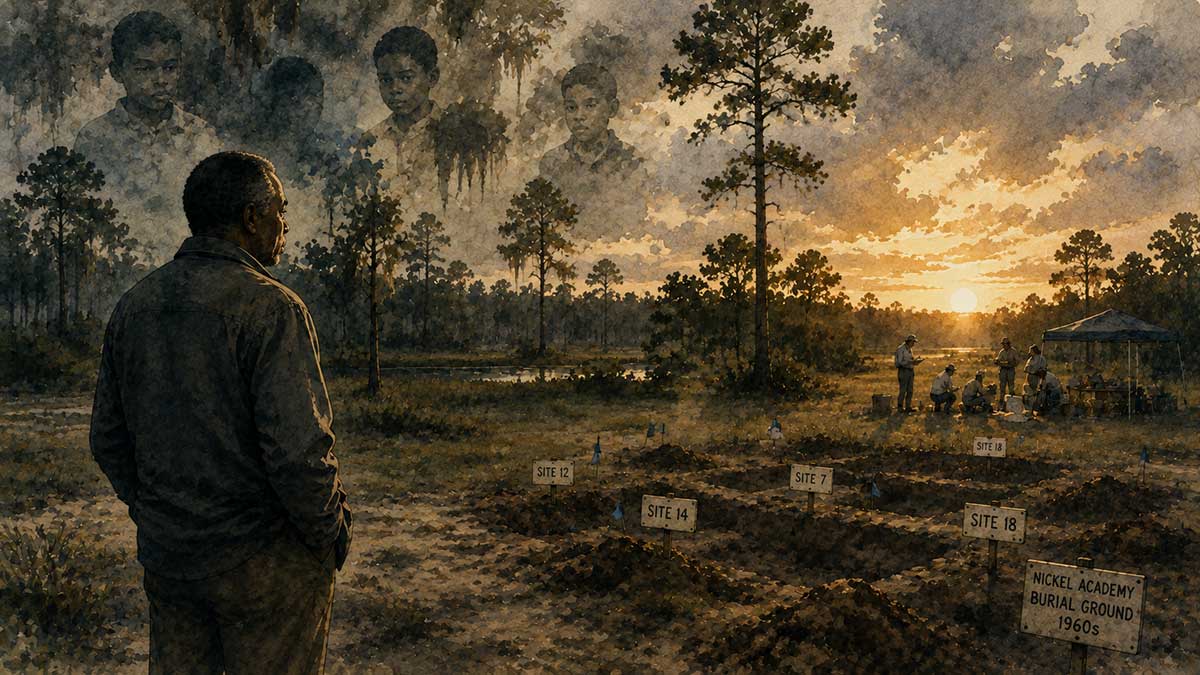
For a while, neither man spoke.
Turner's last sentence remained between them.
How many boys got out of Nickel and carried Nickel with them anyway?
Elwood looked toward the window.
The light had changed. Their reflections were beginning to appear faintly in the glass.
Two older men sitting in a quiet room.
Behind them, invisible, were boys who never became older men.
Elwood: Do you remember their faces?
Turner didn't ask whose.
Turner: Some.
Elwood: Me too.
Turner: Some I remember better than people I knew twenty years later.
Elwood: Why do you think that is?
Turner: Don't know.
Elwood: I sometimes wonder if fear preserves things.
Turner looked at him.
Turner: Like what?
Elwood: A face.
A hallway.
The sound of somebody's shoes coming down the corridor.
A door closing.
Things you'd give anything to forget.
Turner nodded.
Turner: And then other things disappear.
Elwood: Yes.
Turner: That's what bothers me.
Elwood: What?
Turner looked down.
Turner: Sometimes I can't remember a boy's voice.
Elwood remained quiet.
Turner: I remember his face.
I remember where he slept.
I remember something stupid he said once.
But I can't hear him anymore.
Turner tapped two fingers lightly against the table.
Turner: Then I start thinking maybe one day the face goes too.
Elwood: Turner...
Turner: And if I'm the last person who remembers him?
Elwood's expression changed.
Turner: What happens when I forget?
Elwood: Nothing happens to him.
Turner: How do you know?
Elwood: Since his life isn't stored inside your memory.
Turner looked irritated.
Turner: Sounds nice.
Elwood: I'm serious.
Turner: Then where is it?
Elwood couldn't answer immediately.
Elwood: I don't know.
Turner: Exactly.
Elwood: But I know it can't all belong to you.
Turner stared at him.
Elwood: That's too much to ask of one person.
Turner: Nobody asked.
Elwood: Maybe that's the problem.
Turner looked away.
Elwood: You gave yourself the job.
Turner: Somebody had to remember.
Elwood: Yes.
Turner: Then what's your complaint?
Elwood: Remembering them isn't the same as keeping yourself wounded for them.
Turner's head turned sharply.
Turner: Who said I was doing that?
Elwood did not retreat.
Elwood: You did.
Turner: When?
Elwood: Every time you talk about surviving like it created a debt.
Turner leaned back.
Turner: Here we go.
Elwood: Tell me I'm wrong.
Turner: You're wrong.
Elwood: Tell me why.
Turner opened his mouth.
Nothing came.
Elwood waited.
Turner: You ever wake up happy?
Elwood frowned.
Elwood: Of course.
Turner: I mean really happy.
Nothing wrong.
Good morning.
Sun coming through the window.
Coffee tastes right.
Maybe somebody you love is in the next room.
For a second everything feels...
He searched for the word.
Turner: Easy.
Elwood nodded.
Turner: Then something comes into your head.
A name.
A face.
And you think...
Turner stopped.
Elwood: What?
Turner: Why do I get this?
Elwood's face softened.
Turner looked almost embarrassed by the admission.
Turner: That's stupid.
Elwood: No.
Turner: They're dead.
Me enjoying coffee doesn't change anything.
Elwood: No.
Turner: I know that.
Elwood: I know.
Turner: Then why does it feel wrong sometimes?
Elwood took a long breath.
Elwood: Maybe since part of you still thinks survival has to be justified.
Turner said nothing.
Elwood: Like you have to make your life worthy enough to explain why you got one.
Turner's eyes narrowed.
Turner: And what if that's true?
Elwood: It isn't.
Turner: How do you know?
Elwood: Since you didn't choose who lived.
Turner: Neither did they.
Elwood: Exactly.
Turner: That doesn't help.
Elwood: I know.
Turner looked surprised.
Turner: You're supposed to argue.
Elwood: I'm getting old.
Turner: Finally.
Elwood smiled.
It disappeared quickly.
Elwood: Some things don't have an argument that fixes them.
Turner looked down.
Elwood: Maybe that's one of them.
Silence.
Then Turner spoke.
Turner: There were times I was glad it wasn't me.
Elwood looked at him.
Turner: We talked about that before.
But I don't think you heard what I meant.
Elwood: Tell me.
Turner: A boy gets called.
You know where he's going.
And there's this first feeling.
Before sympathy.
Before anger.
Before anything decent.
Turner touched his chest.
Turner: Relief.
Not me.
Elwood closed his eyes briefly.
Turner: That's the first thing.
Then afterward you hate yourself for it.
Elwood: I felt it too.
Turner looked up.
Turner: What?
Elwood: Relief.
Turner: You?
Elwood: Of course me.
Turner: You never said.
Elwood: Neither did you.
Turner stared at him.
Elwood: You think morality changes your nervous system?
Fear comes first sometimes.
Your body says thank God it's somebody else.
Then your conscience arrives.
Turner looked almost offended.
Turner: You could've told me that fifty years ago.
Elwood: You could've asked.
Turner: I didn't think Saint Elwood had ugly thoughts.
Elwood laughed.
Elwood: Saint Elwood?
Turner: That's what you were in my head sometimes.
Elwood: That's terrible.
Turner: Made it easier to be mad at you.
Elwood: Turner, I was terrified.
Turner: I know that now.
Elwood: I wanted to run.
I wanted someone else to take the punishment.
I wanted adults to save me.
I wanted to wake up somewhere else.
Turner listened.
Elwood: Courage didn't remove any of that.
Turner: Then what did it do?
Elwood thought.
Elwood: Sometimes?
Nothing.
Turner smiled faintly.
Elwood: Sometimes it just made me ashamed of what I wanted to do.
Turner: That's not very inspirational.
Elwood: Good.
Turner's smile grew.
Elwood: Maybe we've had enough inspiration.
Turner: Definitely had enough of yours.
They both laughed quietly.
Then Turner became serious.
Turner: You ever wonder why them and not us?
Elwood: Yes.
Turner: Find an answer?
Elwood: No.
Turner: Me neither.
Elwood: Maybe there isn't one.
Turner: People hate that.
Elwood: I hate it.
Turner: Everybody wants a reason.
Elwood nodded.
Turner: God.
Luck.
Strength.
Destiny.
Somebody made the right choice.
Somebody made the wrong one.
Elwood: A reason makes survival feel less random.
Turner: Exactly.
Elwood: But randomness might be closer to the truth.
Turner looked at him.
Turner: You believe that now?
Elwood: About some things.
Turner: What happened to everything meaning something?
Elwood smiled sadly.
Elwood: Maybe meaning isn't always in why something happened.
Turner waited.
Elwood: Maybe sometimes meaning is what we do after it happens.
Turner groaned.
Turner: There he is.
Elwood: You asked.
Turner: I walked right into that.
Elwood smiled.
Then Turner asked:
Turner: So what are we supposed to do for them?
Elwood knew immediately who "them" meant.
Elwood: The boys?
Turner: Yeah.
Elwood considered it.
Elwood: Tell the truth.
Turner: That's all?
Elwood: Say their names when we know them.
Refuse the lie that what happened didn't happen.
Refuse to let people turn them into numbers.
Turner nodded.
Elwood: And live.
Turner looked at him.
Turner: That's the part I don't know about.
Elwood: Why?
Turner: Feels too easy.
Elwood: Living?
Turner: Being happy.
Elwood: You think happiness is disrespectful?
Turner hesitated.
Turner: Sometimes.
Elwood leaned forward.
Elwood: Suppose one of those boys were sitting here.
Turner looked at him.
Elwood: Suppose he could see you refusing happiness for fifty years on his behalf.
What do you think he'd say?
Turner said nothing.
Elwood: Would he thank you?
Turner: Don't know.
Elwood: Would you want me to suffer forever if you had died?
Turner's answer came immediately.
Turner: No.
Elwood: Why?
Turner: Since that would be stupid.
Elwood smiled.
Elwood: There you go.
Turner: Don't use my own words against me.
Elwood: They're useful occasionally.
Turner shook his head.
Elwood: Maybe the dead don't need our suffering.
Turner looked at him.
Elwood: Maybe they need our honesty.
That stayed between them.
Turner slowly nodded.
Turner: Honesty.
Elwood: Yes.
Turner: That's harder than suffering sometimes.
Elwood: I know.
The light outside had grown dimmer.
Turner stared at their reflections in the window.
Turner: What about the graves?
Elwood knew where this was going.
Elwood: What about them?
Turner: Suppose nobody had found them.
Elwood: Then part of the truth would still be buried.
Turner: Maybe some people would've preferred that.
Elwood looked at him.
Turner: Think about it.
You survive something like Nickel.
Spend decades putting it somewhere in your head where you can live with it.
Then somebody starts digging.
News stories.
Reporters.
Names.
Questions.
People calling your house.
Your kids learning things you never told them.
Elwood listened carefully.
Turner: Everybody says truth heals.
Does it?
Elwood: Not always.
Turner looked surprised.
Elwood: Truth can hurt terribly.
Turner: Then why dig?
Elwood: Since pain isn't the only measure.
Turner: There you go again.
Elwood: Suppose a mother spent fifty years wondering where her son went.
Turner looked down.
Elwood: Does she have a right to know?
Turner: Yes.
Elwood: Suppose another survivor doesn't want anybody reopening it.
Does he have a right to be left alone?
Turner: Yes.
Elwood: Both rights can exist at the same time.
Turner: And collide.
Elwood: Yes.
Turner sighed.
Turner: You used to have simpler answers.
Elwood: I miss them.
Turner smiled.
Turner: I don't.
Elwood laughed.
Then Turner grew serious again.
Turner: Who owns what happened?
Elwood: What do you mean?
Turner: Nickel belongs to history now.
Books.
Articles.
Museums.
Researchers.
People studying it.
People talking about what it means.
Turner looked directly at him.
Turner: But we lived there.
Elwood: Yes.
Turner: Does everybody get to have it now?
Elwood thought for a long time.
Elwood: The facts belong to history.
Turner waited.
Elwood: Your pain belongs to you.
Turner's face changed.
Turner: That's different.
Elwood: It should be.
Turner: Explain.
Elwood: People have a right to know what institutions did.
They don't automatically have a right to every private wound of every person who survived them.
Turner nodded slowly.
Elwood: You can tell the truth without surrendering yourself to everybody who wants to examine it.
Turner: Wish somebody told me that earlier.
Elwood: Me too.
They sat quietly.
Then Turner said:
Turner: You know what bothers me about graves?
Elwood: What?
Turner: Everybody cares once there's a grave.
Elwood looked at him.
Turner: Bones make people serious.
A boy saying "they're hurting us"?
That's complicated.
Maybe he's lying.
Maybe he's trouble.
Maybe he deserved punishment.
Maybe there's another side.
Turner's voice grew bitter.
Turner: But dig up bones and suddenly everybody understands.
Elwood stared at him.
Turner: Why do some people have to die before their suffering becomes believable?
Elwood had no answer.
For once, he did not try to find one.
Turner waited.
Elwood: I don't know.
Turner nodded.
That answer seemed to satisfy him more than an explanation would have.
Elwood: Maybe that's one of the things we should be ashamed of.
Turner: Who's "we"?
Elwood: People.
Turner looked toward the darkening window.
Turner: People.
He said the word as if he still wasn't certain he wanted membership.
A long silence followed.
Then Elwood spoke.
Elwood: Turner.
Turner: What?
Elwood: You asked what happens when you're the last person who remembers somebody and then you forget.
Turner: Yeah.
Elwood: Maybe remembering doesn't mean carrying every detail forever.
Turner listened.
Elwood: Maybe it means refusing to let what happened become meaningless.
Turner: That's different.
Elwood: Yes.
Turner: Easier?
Elwood: I didn't say that.
Turner smiled faintly.
Elwood: You can forget the sound of somebody's voice and still know that voice mattered.
You can forget a face and still know that person deserved a life.
You can forget a name and still fight against the kind of place that erased it.
Turner's eyes lowered.
Turner: So forgetting isn't betrayal?
Elwood: No.
Turner looked up.
Elwood: Pretending it never happened would be.
Turner nodded.
For several seconds he said nothing.
Then:
Turner: I can live with that.
Elwood smiled.
Elwood: Good.
Turner: Don't look so pleased.
Elwood: I'm not.
Turner: You are.
Elwood: Maybe a little.
Turner shook his head.
Then something changed in his expression.
Turner: Elwood.
Elwood: Yeah?
Turner: Can I ask you something ugly?
Elwood: You haven't exactly been holding back.
Turner didn't smile.
Elwood's expression became serious.
Elwood: Ask.
Turner looked directly at him.
Turner: What if all this remembering doesn't matter?
Elwood said nothing.
Turner: What if they find every grave?
Put every name on a wall?
Write every book?
Everybody admits what happened?
Turner leaned forward.
Turner: Nobody comes back.
Elwood: No.
Turner: Nobody gets their childhood back.
Elwood: No.
Turner: Nobody gives us those years back.
Elwood: No.
Turner's voice became almost a whisper.
Turner: Then what exactly did truth win?
Elwood looked at him for a long time.
He understood now where they had arrived.
They were no longer asking whether remembering mattered.
They were asking whether justice arriving after the damage could still be called justice.
And underneath that was an even harder question.
After the graves.
After the truth.
After the survival.
After all these years.
Had Nickel actually lost anything?
Elwood reached for his glass of water for the first time.
He took a slow drink.
Then set it down.
Elwood: I've wondered that too.
Turner waited.
Elwood: Maybe that's the question we've been avoiding.
Turner: Which one?
Elwood looked straight at him.
Elwood: Did Nickel win?**
Topic 5: Did Nickel Win?
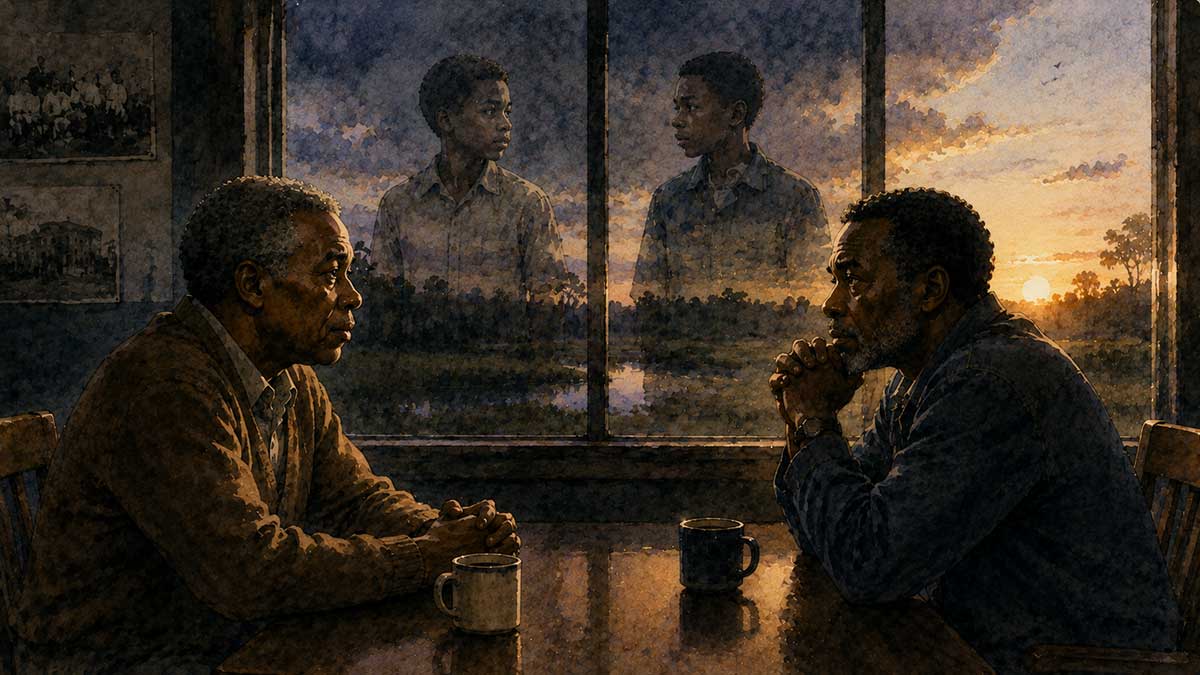
Turner did not answer.
For most of his life, he had known what victory looked like.
You got away.
You stayed alive.
You made enough money to eat.
You found somewhere safe to sleep.
Nobody could order you into a room anymore.
Nobody could strike you without consequences.
You survived.
That was victory.
At least that was what he had told himself.
Now Elwood was asking something different.
Elwood: Did Nickel win?
Turner looked toward the window.
It was dark enough now that the glass had become a mirror.
Turner: Depends what winning means.
Elwood: Then define it.
Turner: You first.
Elwood thought.
Elwood: If Nickel wanted obedience, it didn't get mine.
Turner: That's one way to put it.
Elwood: You disagree?
Turner: I think Nickel wanted more than obedience.
Elwood: What?
Turner looked back at him.
Turner: It wanted you to learn something.
Elwood: What?
Turner: That it was right.
Elwood frowned.
Turner: Not right morally.
Right about the world.
Elwood waited.
Turner: Strong people hurt weak people.
People with authority make the truth.
Rules mean whatever the person holding the stick says they mean.
Nobody is coming.
Keep your head down.
Don't trust anybody.
Turner tapped the table.
Turner: That's what Nickel taught.
Elwood stared at him.
Turner: So maybe that's how you decide if it won.
Elwood: Whether we believed it.
Turner: Yeah.
Elwood sat back.
Elwood: Did you?
Turner smiled without humor.
Turner: For a long time.
Elwood said nothing.
Turner: Maybe part of me still does.
Elwood: Which part?
Turner: The part that checks the exit when I walk into a room.
The part that doesn't like somebody standing behind me.
The part that hears a man raise his voice and starts measuring distance before I even know I'm doing it.
Elwood watched him.
Turner: You can leave Nickel.
Nickel doesn't always leave you.
Elwood: No.
Turner: So if that's winning...
Turner shrugged.
Turner: It won plenty.
Elwood looked down.
Elwood: That's hard to hear.
Turner: You asked.
Elwood: I know.
Turner studied him.
Turner: What about you?
Elwood: What about me?
Turner: Did it win?
Elwood didn't answer immediately.
Elwood: It changed me.
Turner: That's not an answer.
Elwood: Maybe it is.
Turner: Changed isn't the same as defeated.
Elwood: No.
Turner: Then say it.
Elwood looked directly at him.
Elwood: Nickel took things from me.
Turner: Yes.
Elwood: Things I couldn't get back.
Turner: Yes.
Elwood: It taught me that institutions can lie.
That adults can know something is wrong and still go home for dinner.
That rules can exist without justice.
That telling the truth doesn't guarantee anybody will listen.
Turner nodded.
Elwood: I didn't believe those things before.
Turner: You do now.
Elwood: Yes.
Turner: Sounds like Nickel taught you pretty well.
Elwood's eyes hardened.
Elwood: It taught me what cruelty can do.
It didn't teach me cruelty was right.
Turner became still.
Elwood: There's a difference.
Turner: Maybe.
Elwood: A big one.
Turner: Explain it.
Elwood leaned forward.
Elwood: You said Nickel wanted us to believe that strength gives someone the right to hurt weakness.
I learned that strong people sometimes do hurt weak people.
But I never learned that makes it right.
Turner watched him.
Elwood: Nickel taught me justice doesn't always win.
It never convinced me justice doesn't matter.
Turner's expression changed slightly.
Elwood: Nickel taught me truth can lose.
It never convinced me truth and lies are the same.
Silence.
Elwood: Nickel taught me goodness won't necessarily protect you.
It never convinced me goodness is worthless.
Turner looked away.
Turner: You still believe that?
Elwood: Yes.
Turner: After everything?
Elwood hesitated.
Elwood: Not the way I did before.
Turner turned back.
Turner: What does that mean?
Elwood searched for the words.
Elwood: When I was young, I thought goodness had some kind of force behind it.
Turner: God?
Elwood: Maybe.
History.
Justice.
America eventually becoming what it said it was.
People's consciences waking up.
I thought if enough truth entered a room, lies would eventually have to leave.
Turner gave him a tired smile.
Turner: That boy really was something.
Elwood smiled too.
Elwood: He was.
Turner: You miss him?
The question surprised Elwood.
Elwood: Sometimes.
Turner: I figured.
Elwood: But I don't want to become him again.
Turner: Really?
Elwood: No.
Turner raised an eyebrow.
Elwood: He believed goodness would win.
I don't.
Turner stared at him.
Elwood: I believe goodness can lose.
Badly.
Good people can be crushed.
Truth can be buried.
Children can die.
Institutions can lie for decades.
People responsible can live full lives and never answer for what they did.
Turner was listening differently now.
Elwood: I know all that.
Turner: Then what's left?
Elwood looked at him.
Elwood: Choice.
Turner: Choice?
Elwood: If goodness were guaranteed to win, being good wouldn't require much courage.
Turner frowned.
Elwood: You'd just be betting on the winning side.
Turner remained silent.
Elwood: Maybe morality matters most when there's no guarantee.
Turner looked down.
Turner: That's a dangerous thing to tell a kid.
Elwood: Yes.
Turner: You'd tell him anyway?
Elwood: Not by itself.
Turner: What else?
Elwood: I'd tell him what you taught me.
Turner's head lifted.
Turner: Me?
Elwood: Learn the room.
Know who's dangerous.
Don't assume authority deserves trust.
Protect yourself.
Don't confuse recklessness with courage.
Know when to wait.
Know when to run.
Turner stared at him.
Elwood: But I'd tell him something else too.
Turner: Of course you would.
Elwood smiled.
Elwood: Don't let surviving become the only thing you're living for.
Turner's smile disappeared.
For several seconds neither spoke.
Then Turner nodded.
Turner: That's better.
Elwood: Better than what?
Turner: The boy with the record.
Elwood laughed quietly.
Elwood: He would've hated this conversation.
Turner: He would've argued with both of us.
Elwood: Mostly you.
Turner: Definitely me.
They smiled.
Then Turner became serious.
Turner: You said Nickel took things that couldn't be returned.
Elwood: Yes.
Turner: Then I don't like saying it lost.
Elwood nodded.
Elwood: Neither do I.
Turner: Feels disrespectful.
Elwood: To the boys?
Turner: Yeah.
Turner's voice tightened.
Turner: Somebody finds graves decades later and we call that justice?
Elwood: No.
Turner: Somebody writes their names down?
Elwood: That's remembrance.
Turner: Somebody admits the institution lied?
Elwood: That's truth.
Turner: None of that is justice?
Elwood thought.
Elwood: Maybe pieces of it.
Turner: Pieces.
Elwood: Justice would've been stopping it before another boy got hurt.
Turner nodded.
Elwood: Justice would've been believing them when they were alive.
Turner looked down.
Elwood: Justice would've been letting them grow old.
The room became silent.
Turner rubbed his eyes.
Turner: Yeah.
Elwood: Everything after that is something else.
Turner: What?
Elwood thought.
Elwood: Responsibility.
Turner: Meaning?
Elwood: We can't give them justice in the form they deserved.
But we can refuse to give the people who hurt them one final thing.
Turner: What's that?
Elwood: The lie that they never existed.
Turner swallowed.
Elwood: That's not enough.
Turner: No.
Elwood: It will never be enough.
Turner: Good.
Elwood looked at him.
Turner: I'm tired of people making things sound enough.
Elwood nodded slowly.
Elwood: Me too.
Turner: Closure.
Healing.
Justice.
Like somebody can find the right word and close the account.
Elwood: Some accounts don't close.
Turner: Exactly.
Elwood watched him.
Elwood: But do they have to stay open every minute?
Turner frowned.
Turner: What do you mean?
Elwood: We talked about happiness.
About whether enjoying your life betrays people who didn't get one.
Turner: I remember.
Elwood: Maybe this is connected.
Turner waited.
Elwood: Nickel already took enough.
Turner's expression changed.
Elwood: Why give it Tuesday morning too?
Turner stared at him.
Elwood: Why give it your coffee?
A birthday?
Somebody you love?
A good night's sleep?
A stupid joke?
Turner looked away.
Elwood: Nickel doesn't deserve every good thing that happened after Nickel.
Turner said nothing.
Elwood: Maybe that's another way it wins.
Turner: What?
Elwood: When it makes a survivor feel guilty for being alive.
Turner's jaw tightened.
Turner: That's not something you just decide to stop.
Elwood: I know.
Turner: You keep saying things like they're choices.
Elwood: Some aren't.
Turner: Good.
Elwood: But what we do with them sometimes is.
Turner sighed.
Turner: There's the old Elwood again.
Elwood: A little.
Turner: Thought we'd gotten rid of him.
Elwood: Apparently not.
Turner smiled faintly.
Then his face became serious.
Turner: You know what I used to think freedom was?
Elwood: What?
Turner: Nobody could lock the door.
Elwood nodded.
Turner: That's it.
You walk outside.
You go where you want.
Nobody tells you when to sleep.
Nobody decides when you eat.
Nobody takes you somewhere at night.
Turner paused.
Turner: Took me years to figure out you can live behind a door nobody locked.
Elwood looked at him.
Turner: That's what I meant before.
Nickel gets inside.
You start doing its work for it.
Elwood: How?
Turner: Don't trust anybody.
Don't get too close.
Don't tell people things.
Always expect the worst.
Leave before somebody can leave you.
Stay ready.
Elwood listened.
Turner: Nobody has to guard you anymore.
You guard yourself.
Elwood's eyes filled.
Elwood: That's a prison too.
Turner: Yeah.
Elwood: Did you ever get out of that one?
Turner smiled sadly.
Turner: Some days.
Elwood nodded.
Turner: You?
Elwood thought.
Elwood: Some days.
Turner laughed softly.
Turner: Look at us.
Elwood: Two experts.
Turner: Terrible experts.
Elwood: The worst.
They laughed.
Then Turner looked at Elwood for a long time.
Turner: Can I ask you the question now?
Elwood: Which one?
Turner: The one I've wanted to ask since you started all this.
Elwood waited.
Turner: After everything you know now...
Turner leaned forward.
Turner: If you were that boy again, would you still pick up that King record?
Elwood stopped breathing for a moment.
Turner continued.
Turner: Knowing where all that believing would take you.
Knowing goodness wouldn't protect you.
Knowing truth wouldn't save everybody.
Knowing what Nickel really was.
Turner's voice softened.
Turner: Would you still listen?
Elwood looked down at the table.
A very long time passed.
Elwood: Not the same way.
Turner waited.
Elwood: Back then, I listened since I wanted someone to tell me the world was moving toward justice.
Turner: And now?
Elwood: Now I'd listen for something else.
Turner: What?
Elwood looked up.
Elwood: How not to let injustice decide who I become.
Turner said nothing.
Elwood: That's different.
Turner: Yeah.
Elwood: I don't need King to promise me we'll win.
Turner watched him.
Elwood: I need him to remind me what isn't worth becoming just to survive.
Turner's eyes lowered.
For a moment, Elwood wondered whether he had gone too far again.
Then Turner nodded.
Once.
Slowly.
Turner: I can live with that.
Elwood smiled.
Elwood: That's high praise coming from you.
Turner: Don't get used to it.
The room became quiet again.
But it was a different quiet now.
Not empty.
Not comfortable either.
Something between them had loosened.
Turner looked at Elwood.
Turner: So what's your answer?
Elwood: To what?
Turner: Your own question.
Elwood knew.
Did Nickel win?
He thought for a moment.
Elwood: Sometimes.
Turner looked surprised.
Turner: Sometimes?
Elwood: Every time one of us couldn't sleep.
Every time somebody was afraid to love someone.
Every time a survivor hated himself for surviving.
Every time someone kept silent since Nickel had taught him nobody would listen.
Elwood paused.
Elwood: Nickel won something.
Turner nodded.
Elwood: But not everything.
Turner: How do you know?
Elwood: We're talking about it.
Turner almost objected.
Then stopped.
Elwood: The graves were found.
The lies didn't remain complete.
Some names came back.
People learned what happened.
Not enough.
Never enough.
But something.
Turner looked down.
Elwood: And you still care.
Turner: About what?
Elwood: Whether any of it was right.
Turner frowned.
Elwood: That's how I know Nickel didn't get all of you.
Turner stared at him.
Elwood: If it had, you wouldn't feel guilty.
You wouldn't remember those boys.
You wouldn't be angry.
You wouldn't care whether truth mattered.
Turner's eyes began to fill.
Elwood: Nickel taught you not to trust.
It never taught you not to care.
Turner looked away.
He wiped his face roughly.
Turner: Damn you.
Elwood smiled gently.
Elwood: Sorry.
Turner: No, you're not.
Elwood: Not entirely.
Turner laughed through the tears.
Then he looked back at Elwood.
Turner: You asked me something when we started.
Elwood: I remember.
Turner: You asked if I still thought you were foolish.
Elwood nodded.
Turner took his time.
Turner: Yeah.
Elwood laughed.
Turner: Sometimes.
Elwood: Thank you.
Turner: You believed things that could get a boy killed.
The laughter disappeared.
Turner: I wish you'd understood danger better.
I wish you'd listened more.
I wish you'd known the world didn't owe you a fair ending just since you were trying to do something right.
Elwood nodded.
Turner: But...
Turner stopped.
Elwood: But?
Turner: I don't think foolish is the worst thing a man can be anymore.
Elwood's face changed.
Turner looked down.
Turner: Maybe believing too much can hurt you.
He looked back at Elwood.
Turner: Believing nothing can hurt you too.
Neither man spoke.
Then Turner asked quietly:
Turner: You ever think I was a coward?
Elwood did not answer immediately.
Turner's face tightened.
Turner: See?
Elwood: I'm thinking.
Turner: Shouldn't take that long.
Elwood: You deserve a real answer.
Turner waited.
Elwood finally spoke.
Elwood: No.
Turner looked away.
Elwood: I think you were scared.
Turner's eyes closed.
Turner: I was.
Elwood: So was I.
Turner looked at him.
Elwood: We just did different things with it.
A long silence.
Then Turner nodded.
Turner: Maybe that's all we were.
Elwood: What?
Turner: Two scared boys.
Elwood looked at him.
Turner: One trying to stay alive.
One trying to believe staying alive meant something.
Elwood smiled sadly.
Elwood: Maybe we both needed the other one.
Turner shook his head.
Turner: Took us long enough to figure that out.
Outside the window there was nothing left but darkness and their reflections.
Two older men.
And somewhere behind those reflections, two boys.
One had believed too much.
One had trusted too little.
Neither had possessed the whole answer.
But between them there had been enough.
Enough realism to recognize the cage.
Enough hope to believe the cage was not the whole world.
Final Thoughts
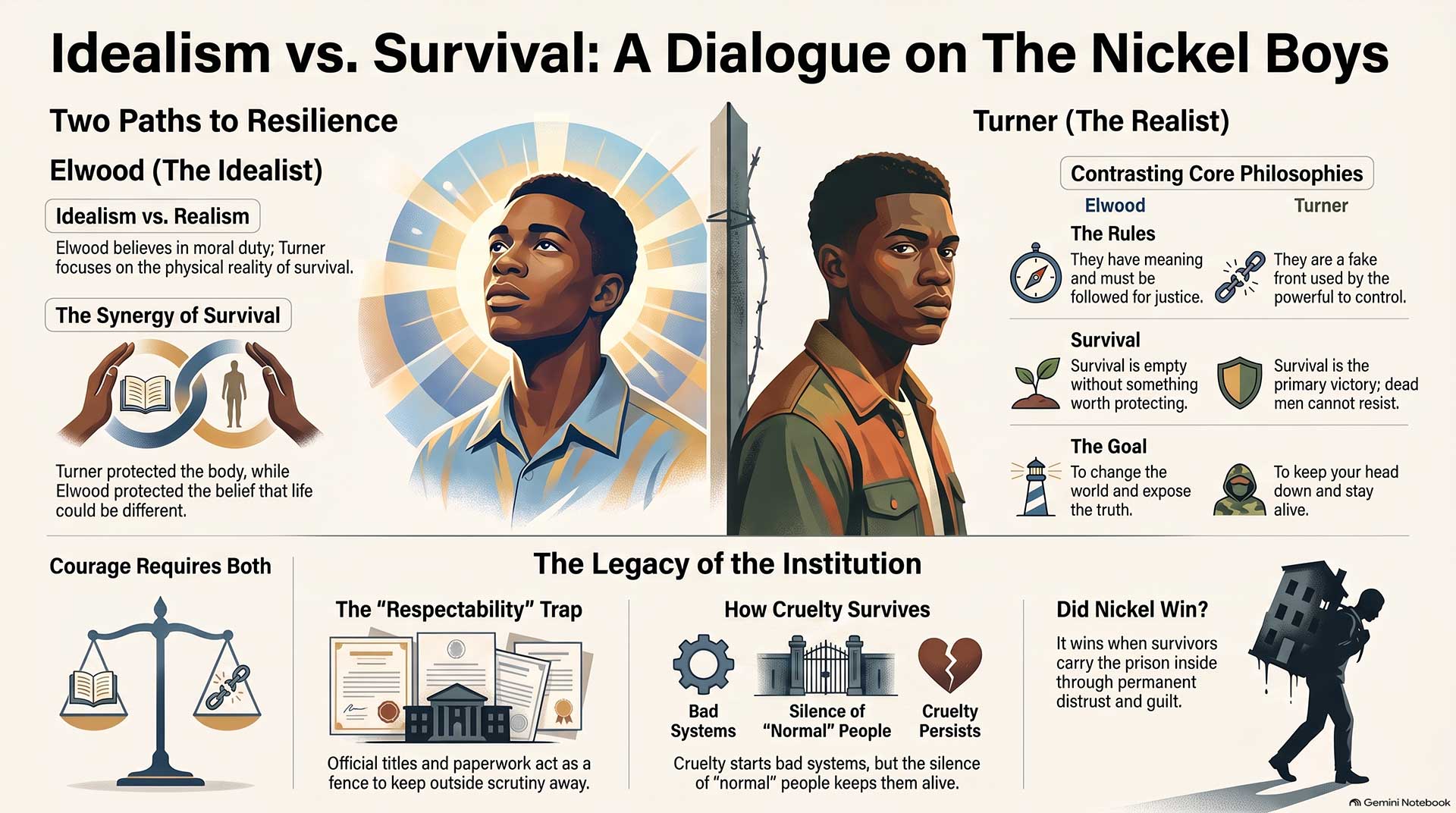
Perhaps Nickel's greatest victory would not have been making Elwood suffer or making Turner afraid.
It would have been convincing them that cruelty was the final truth about human beings.
Nickel taught Turner to watch the exits.
It taught Elwood that goodness does not guarantee protection.
It taught both boys that institutions can hide terrible acts behind respectable language.
Yet it failed to erase something from either of them.
Turner continued to care.
Elwood continued to believe that right and wrong mattered.
Their imagined reunion does not give them an easy answer about courage, survival or justice.
Instead, each finally recognizes what the other knew.
Elwood needed Turner's ability to recognize danger.
Turner needed Elwood's refusal to accept that danger was the whole truth about life.
Perhaps courage requires both.
See the danger.
Protect yourself when you must.
Know that institutions can fail.
Know that truth can lose.
But never let the people who hurt you determine what kind of person you become.
And when the past cannot be repaired, remembering does not require living forever inside the wound.
The dead do not need our endless suffering.
They need our honesty.
The final question, then, may not be whether Nickel won.
It may be:
How much of yourself will you allow Nickel to keep after you have already escaped?
Short Bios:
Elwood Curtis
An intelligent, idealistic Black teenager deeply influenced by Martin Luther King Jr. Elwood believes dignity and moral courage remain meaningful in the face of injustice. His experience at Nickel forces that belief through an extraordinarily painful test.
Turner
Elwood's friend at Nickel and his philosophical opposite. Suspicious of authority and focused on survival, Turner understands danger far earlier than Elwood does. Beneath his cynicism, however, lies loyalty, fear, memory and a moral conscience he has learned to protect.
Colson Whitehead
An American novelist and one of the rare writers to win the Pulitzer Prize for Fiction twice, receiving it for The Underground Railroad and The Nickel Boys. His fiction frequently uses history to examine race, institutions, freedom, memory and the stories societies tell about themselves.
Leave a Reply