

Introduction
What if the deepest wound in a family is not what happened to us, but what we unknowingly hand to someone else?
With the new East of Eden Netflix adaptation bringing Steinbeck's story, Cathy Ames, and the Trask family's inherited wounds back into public attention, the questions behind the novel feel strikingly modern.
John Steinbeck's East of Eden asks whether human beings are trapped by inheritance, family roles, jealousy, guilt, and the darker parts of themselves. Cal fears that Cathy's darkness lives inside him. Aron is protected by an image of goodness that cannot survive reality. Adam mistakes idealization for love. Brothers measure themselves through the eyes of a father. One terrible act becomes entangled with consequences no single person completely controls.
Then comes Steinbeck's most enduring idea.
In the novel, timshel comes to mean “thou mayest.”
Not “you will change.”
Not “you must change.”
Only that the future may not be completely closed.
These five modern stories take that question beyond the Trask family and beyond any single adaptation.
They ask what East of Eden might look like in families and relationships today.
In The Better Son, two brothers discover that being the favorite and being the disappointment can both become prisons. Daniel has spent his life believing Michael received the love meant for him. Then he learns that his brother has been carrying a different wound: the fear that love could disappear the moment he stopped succeeding.
In Her Mother's Voice, Mara hears the language of her childhood coming through her own mouth. She must face a frightening possibility: understanding where cruelty comes from does not prevent us from repeating it.
In The Woman He Married Twice, Jonathan discovers that a marriage can contain affection, loyalty, generosity, and still fail to truly see one of the people inside it. His wife was never hiding from him. He had simply become skilled at translating every uncomfortable truth into something easier to live with.
In The Last Message, Noah sends one message meant to hurt his closest friend. Hours later, that friend is dead. Noah must live somewhere between two unbearable statements: “I caused everything” and “I had nothing to do with it.”
And in The Inch, Ray confronts perhaps the hardest problem of all. His abusive childhood really did shape him. His father really did teach him anger. Yet his daughter still experienced the consequences of the man Ray became. His past explains him, but can explanation become another way of avoiding responsibility?
Across all five stories, the same pattern appears in different forms.
A father compares.
A daughter repeats a sentence.
A husband replaces a person with an image.
A friend turns hurt into revenge.
A wounded child grows into a wounded parent.
Something travels.
Sometimes through words.
Sometimes through silence.
Sometimes through expectations.
Sometimes through fear.
Sometimes through love itself.
And every story reaches a small moment when that thing could continue into another person.
That is where these stories live.
Not in perfect freedom.
Not in easy redemption.
In the small space between what reaches us and what we pass on.
These stories grow out of the questions explored throughout our East of Eden trilogy. The journey begins in Part 1, where Steinbeck's characters confront timshel, inherited darkness, and whether we can choose what happens next.
(Note: This is an imaginary conversation, a creative exploration of an idea, and not a real speech or event.)
1. The Better Son
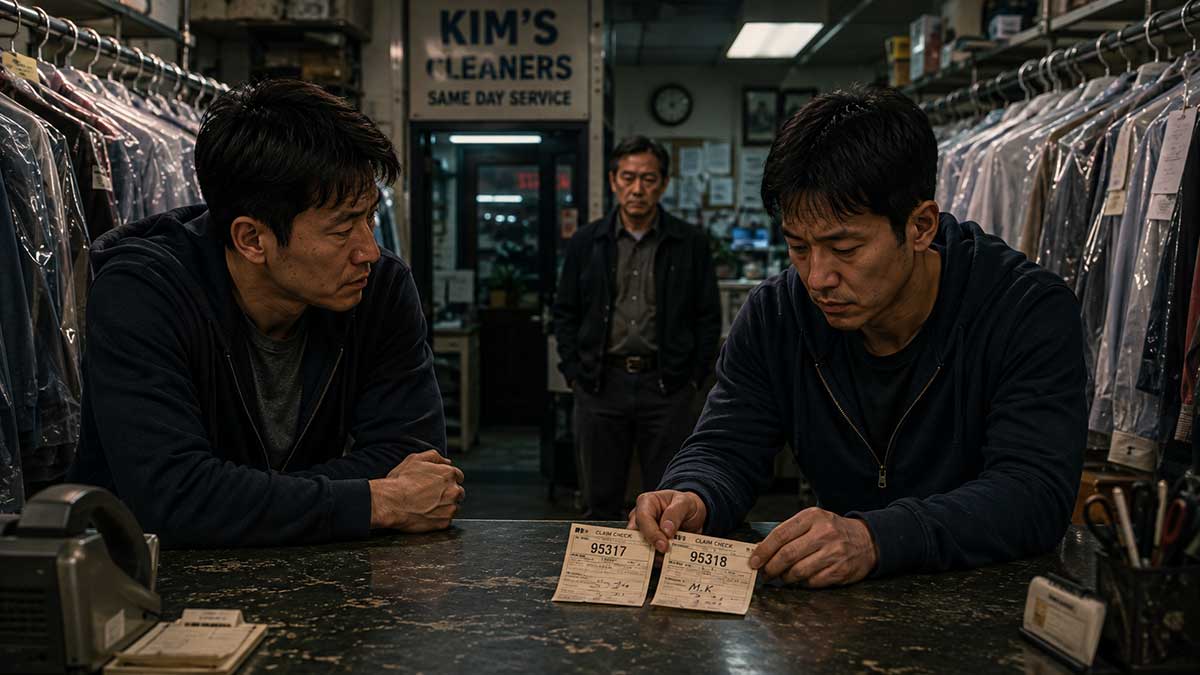
The customer smiled at the photograph in Mr. Kim’s hand.
“Your son?”
Mr. Kim’s face changed in the way Daniel had noticed since childhood. His shoulders lifted. His eyes brightened.
“My younger son,” he said. “Doctor.”
The photograph had been taken at St. Joseph’s Hospital. Michael stood beneath fluorescent lights in a white coat, smiling beside two other residents. The photo was slightly blurry, but their father had printed it anyway and placed a copy behind the counter at Kim’s Cleaners.
The customer looked impressed.
“A doctor. You must be very proud.”
“Yes. Very proud.”
Daniel stood three feet away, sorting shirts onto the finished rack.
The customer finally noticed him.
“And you?”
Daniel opened his mouth.
His father answered first.
“He helps us here.”
Daniel slid another hanger onto the rack.
The plastic made a small snapping sound against the metal rod.
He looked at the customer and smiled.
“Somebody has to keep the place from falling apart.”
The customer laughed.
His father did not.
Daniel took the next shirt from the conveyor.
Blue oxford.
Starch.
Medium.
Ticket 4172.
He matched it to the claim slip and pushed it down the line.
He had been doing that since he was fourteen.
Everything in the store had a number.
Every jacket.
Every blouse.
Every pair of trousers.
Every comforter wrapped in clear plastic.
If something disappeared, Daniel could usually find it.
If two orders were mixed up, he could separate them.
If a customer claimed a coat was theirs when the tag said otherwise, Daniel could prove who it belonged to.
There was comfort in that.
Things had owners.
Numbers matched.
Mistakes could be corrected.
Love had never been so organized.
His father returned the photograph to its place beside the register.
Daniel did not look at it again.
That night, Mr. Kim had a stroke.
It happened after closing.
Daniel was in the back room changing a solvent filter when he heard a metal hanger hit the floor.
He ignored it at first.
Then another.
Then something heavier.
When he came around the pressing machine, his father was sitting against the wall with one arm hanging strangely beside him.
His mouth was moving.
No words came out.
“Dad?”
Mr. Kim looked at him with terror.
Daniel dropped to his knees.
“Dad, look at me.”
His father tried to speak again.
Only a wet sound emerged.
Daniel called 911.
He rode in the ambulance.
He called his mother.
Then he called Michael.
Michael answered on the third ring.
“Daniel?”
“Dad had a stroke.”
Silence.
Then Michael’s voice changed instantly.
“What hospital?”
“Overlook.”
“What symptoms?”
“His speech is messed up. His right arm isn’t moving right.”
“When did it start?”
“I don’t know. Five minutes ago. Ten.”
“I’m coming.”
Daniel almost laughed.
Of course he was.
The doctor was coming.
For the next four hours, Daniel sat beneath a television in the emergency department waiting room while his mother prayed quietly beside him.
Michael arrived still wearing hospital scrubs beneath his coat.
Their mother stood so quickly that her purse fell off her lap.
“Michael.”
She grabbed him with both hands.
Michael hugged her, then looked at Daniel.
“What did they say?”
Daniel told him.
Michael asked questions.
Daniel answered.
Then Michael disappeared through doors Daniel was not allowed to enter.
Their mother watched him go.
“He knows what to ask.”
Daniel looked at the vending machine.
“Yeah.”
“He knows doctors.”
“Yeah.”
“So lucky he is here.”
Daniel turned toward her.
“Mom, I was here.”
She blinked.
“I know.”
“I found Dad.”
“I know.”
“I called the ambulance.”
“Daniel, I know.”
He looked away.
She touched his arm.
“Why are you angry now?”
“I’m not.”
“You always say that when you are.”
He pulled his arm gently away.
“This is not the time.”
She lowered her hand.
“No,” she said. “It isn’t.”
His father survived.
The stroke was described as moderate.
There would be therapy.
His speech might improve.
His right hand might remain weak.
Memory problems were possible.
The neurologist used careful phrases.
“Good prognosis.”
“Early response.”
“Rehabilitation.”
“Time will tell.”
Mr. Kim came home twelve days later.
For the first few weeks, he slept downstairs in the family room.
Mrs. Kim moved a small table beside the sofa and filled it with medications arranged by time of day.
Daniel took over the cleaners full time.
Michael requested leave from the hospital.
Daniel had expected him to visit.
He had not expected him to stay.
On Michael’s first morning at the store, he stood behind the counter staring at the computer.
“What password?”
Daniel handed him a yellow sticky note.
Michael typed it.
Nothing happened.
“It says invalid.”
“You used a capital K?”
“Yes.”
“Did you press Num Lock?”
Michael stared at the keyboard.
Daniel reached over and pressed the key.
The screen opened.
Michael looked at him.
“Very advanced system.”
“We try to stay ahead of medicine.”
Michael smiled.
For a few minutes, it felt almost normal.
They had not worked together in the store since Michael was in high school.
Back then Daniel had taught him how to tag pants, clean lint traps, and identify customers who would complain before they opened their mouths.
Michael had hated the smell.
“You get used to it,” Daniel had told him.
“I don’t want to get used to it.”
Their father had overheard.
“You study hard,” he told Michael. “Then you don’t have to.”
Daniel had been nineteen.
He remembered pretending not to hear.
Now Michael stood beneath the same fluorescent lights in a button-down shirt with the sleeves rolled up.
At eleven thirty, Mrs. Goldfarb arrived for six blouses.
Michael could not find them.
Daniel located them in less than a minute.
“They’re under her husband’s phone number.”
Michael looked annoyed.
“How did you know?”
“She always forgets which number she gives us.”
“You remember everybody’s phone number?”
“Pretty much.”
“That’s disturbing.”
Daniel handed him the order.
Mrs. Goldfarb looked at Michael.
“You’re the doctor son.”
Michael smiled politely.
“Yes.”
“I've heard so much about you.”
Daniel walked to the back before she could finish.
That evening they counted the register together.
Michael kept losing his place.
“Start over,” Daniel said.
“I know.”
“You skipped the tens.”
“I know.”
“You want me to do it?”
“No.”
Daniel leaned against the counter.
Michael counted again.
Halfway through, his breathing changed.
Daniel noticed it immediately.
His fingers stopped moving.
“You okay?”
Michael nodded.
“Yeah.”
“You sure?”
“Yes.”
Then Michael put both palms flat on the counter.
“Just give me a second.”
Daniel watched him.
Michael closed his eyes.
His chest rose too quickly.
“Michael.”
“I said give me a second.”
Daniel waited.
Thirty seconds.
Maybe forty.
Michael finally opened his eyes.
“What was that?”
“Nothing.”
“That wasn’t nothing.”
Michael gathered the bills.
“I’m tired.”
Daniel watched him.
“Are you having panic attacks?”
Michael looked up sharply.
“Who told you?”
“No one.”
Michael stared at him.
Daniel said, “How long?”
Michael shoved the money into the drawer.
“Can we close?”
“How long?”
“Daniel.”
“How long?”
Michael looked toward the darkened front windows.
“About a year.”
Daniel did not know what to say.
Michael switched off the register.
“Don’t tell Mom.”
Daniel almost laughed.
“Seriously?”
“I mean it.”
“Does Dad know?”
“No.”
“Your fiancée?”
Michael was quiet.
Daniel frowned.
“What?”
Michael picked up his coat.
“We broke up.”
Daniel stared at him.
“When?”
“Four months ago.”
“You told Mom the wedding was postponed.”
“It was easier.”
Daniel felt something strange move through him.
Not sympathy at first.
Something uglier.
Surprise.
Then, beneath it, shameful relief.
The perfect life had a crack in it.
He hated himself for noticing.
They locked the store and walked to their cars.
Daniel said, “Why didn’t you tell me?”
Michael gave him a tired look.
“You never ask me anything.”
Daniel stopped.
Michael kept walking.
A week later, their father returned to the store for the first time.
Mrs. Kim drove him.
Mr. Kim moved slowly with a cane.
His right hand remained curled slightly inward.
When he stepped through the door, he stood still.
The cleaners had been his life for thirty-seven years.
The counter.
The racks.
The pressing machines.
The smell of steam and detergent.
He touched the edge of the register with his left hand.
“My...”
He stopped.
His face tightened.
Daniel waited.
His father tried again.
“My store.”
Daniel smiled.
“Still here.”
Mr. Kim nodded.
Then he saw Michael.
His face brightened.
“Doctor.”
Michael smiled.
“Hi, Dad.”
Their father motioned him closer.
Michael stepped forward.
Mr. Kim touched his cheek.
“Good.”
Daniel looked away.
He hated how quickly the old feeling returned.
Not twelve years old.
Not sixteen.
Not thirty-two.
All of them at once.
Mrs. Kim began unpacking food from a shopping bag.
“I brought lunch.”
Daniel went to help her.
At the table in the back room, their father ate slowly.
Conversation moved around him.
Michael talked about physical therapy.
Their mother talked about church.
Daniel talked about a broken compressor.
Then their father pointed at Michael.
“College.”
Michael nodded.
“Yes.”
Mr. Kim looked pleased.
“Scholarship.”
Michael’s expression changed slightly.
Daniel stopped chewing.
Their father continued.
“Full scholarship.”
Michael looked at Daniel.
Mr. Kim smiled proudly.
“Rutgers.”
Daniel put down his fork.
Michael said gently, “Dad, that was Daniel.”
Mr. Kim frowned.
“Daniel?”
“Daniel got the scholarship.”
Their father looked confused.
Daniel stared at his plate.
“Doesn’t matter.”
Michael said, “It matters.”
Daniel looked at him.
Their father shook his head.
“No. Michael.”
“Dad.”
“Michael scholarship.”
Daniel pushed back his chair.
“I said it doesn’t matter.”
His mother said, “Daniel.”
“I have work.”
He walked out.
Michael followed him.
Daniel was pulling shirts from the conveyor when Michael entered the pressing room.
“Why are you mad at me?”
Daniel laughed.
“Of course you think I’m mad at you.”
“You are.”
“I’m working.”
“Dad had a stroke.”
“I’m aware.”
“He’s confused.”
“I know.”
“Then what do you want?”
Daniel slammed a hanger onto the rack.
“I want him to remember one thing correctly.”
Michael stared at him.
Daniel turned.
“One thing.”
Michael’s face hardened.
“This is not about the scholarship.”
“No?”
“No.”
“Then tell me what it’s about, doctor.”
Michael flinched.
Daniel saw it.
He kept going anyway.
“You want to know what it's about? It's about standing in this store my entire life hearing people ask Dad about his doctor son.”
“Stop.”
“It’s about every relative asking me how Michael is doing before they ask how I’m doing.”
“Daniel.”
“It’s about him telling people you were smart when I was the one helping him with invoices at midnight.”
“I said stop.”
“And now he can’t even remember which one of us did what.”
Michael stepped closer.
“You think I wanted this?”
Daniel laughed.
“You had a terrible time being the favorite?”
Michael’s face went still.
“Yes.”
Daniel stopped.
Michael’s eyes were wet.
“Yes,” he said again.
“You have no idea.”
Daniel stared at him.
Michael looked toward the door, then back.
“You think Dad loved me for free?”
Daniel said nothing.
Michael pressed his lips together.
“When I was twelve, he told Uncle Jae I was going to be a doctor.”
“You became one.”
“I was twelve.”
“You wanted it.”
“I don’t know what I wanted.”
Daniel frowned.
Michael wiped his face with the heel of his hand.
“When I got a B in chemistry, Dad didn’t speak to me for two days.”
Daniel remembered.
He had thought their father was disappointed.
He had never known about the silence.
Michael continued.
“When I wanted to take a year off before medical school, Mom cried.”
Daniel looked at him.
“She told me Dad would think I was wasting everything he sacrificed.”
Michael laughed once, without humor.
“So I went.”
Daniel leaned against the pressing machine.
Michael said, “Do you know why I didn’t tell them about Sarah?”
Daniel shook his head.
“Dad spent three years telling everyone she was going to be a surgeon.”
Daniel almost smiled.
Michael did not.
“He loved telling people about us.”
“He loved telling people about you.”
Michael stared at him.
“You still don’t get it.”
“What?”
“I didn’t get to be the favorite.”
Daniel said nothing.
Michael’s voice broke.
“I had to keep earning it.”
The pressing machine hissed behind them.
Neither brother moved.
Michael looked down.
“I know you got hurt.”
Daniel's throat tightened.
“But you keep talking like I was standing on the other side of some door laughing at you.”
Daniel looked away.
“I wasn’t.”
Michael wiped his face again.
“I was holding the door shut from my side.”
After that, something shifted.
Not healed.
Shifted.
They began eating lunch together without their mother.
Daniel learned that Michael owed more than two hundred thousand dollars in student loans.
Michael learned that Daniel had almost opened a second location three years earlier but backed out when their father refused to sign the paperwork.
Daniel learned that Michael had taken medication for anxiety for eight months.
Michael learned that Daniel still drove past the apartment where his college girlfriend had lived, even though she had moved to Chicago nine years ago.
They started talking about their father differently.
Not accusing.
Not defending.
Remembering.
“Do you remember when Dad made us repaint the back room twice?”
“You spilled the first can.”
“You kicked it.”
“I was six.”
“You blamed me.”
“You were there.”
Some memories made them laugh.
Others did not.
Mr. Kim’s recovery came unevenly.
Some days he spoke almost normally.
Other days words disappeared halfway through a sentence.
Names confused him.
Dates moved.
Once he called Daniel by his own brother’s name.
Once he asked where his father was, though Cyrus Kim had been dead for twenty-two years.
Then came a Thursday afternoon in March.
Mr. Kim sat behind the counter while Daniel and Michael worked.
The store was quiet.
A framed certificate hung on the wall near the register.
“New Jersey Small Business Association, Community Service Award.”
Daniel had won it five years earlier after organizing free cleaning for families displaced by an apartment fire.
His father had attended the ceremony.
Daniel remembered every detail.
The blue tie.
The chicken dinner.
His father leaving early due to a problem with one of the machines.
Mr. Kim pointed toward the certificate.
“Michael.”
Daniel looked up.
His father smiled.
“You.”
Michael froze.
Mr. Kim pointed again.
“Good.”
Daniel felt the old tightening in his chest.
Michael said softly, “Dad...”
Then stopped.
Their father looked at Daniel.
His eyes were clear.
Clearer than they had been in days.
“You help people.”
Daniel could not breathe.
His father smiled.
“Proud.”
Michael looked at Daniel.
Daniel looked back.
Neither spoke.
For one impossible second, Daniel could have taken it.
The word.
Proud.
He had imagined that word from his father so many times that hearing it felt less like receiving something new than recovering property that had been stolen.
He wanted it.
God, he wanted it.
He looked at Michael.
Michael's face had gone pale.
He was not going to correct him.
Daniel understood immediately.
Michael was giving it to him.
Maybe from guilt.
Maybe from love.
Maybe from exhaustion.
Daniel could take it.
Nobody would know.
His father might never remember.
Daniel looked at the certificate again.
Then at Michael.
Then at the man behind the counter who had spent years separating his sons without ever admitting he had done it.
Daniel walked closer.
He crouched beside his father's chair.
“Dad.”
Mr. Kim looked at him.
“That award wasn't Michael's.”
His father's smile faded.
Daniel pointed at himself.
“It was mine.”
Mr. Kim stared.
Daniel continued.
“But the hospital stuff is Michael.”
He pointed toward his brother.
“Doctor.”
Their father looked at Michael.
Then back at Daniel.
Confusion passed across his face.
Daniel waited.
Mr. Kim reached out with his weak right hand.
His fingers barely moved.
Daniel took it.
His father whispered something.
Daniel leaned closer.
“What?”
Mr. Kim tried again.
“Both.”
Daniel closed his eyes.
He did not know exactly what his father meant.
Both sons?
Both good?
Both his?
It might have meant nothing coherent at all.
Daniel decided not to ask.
That night, after they closed, Michael was clearing old receipts from beneath the register.
“Look at this.”
He held up two faded claim tickets.
They had been stuck together with something brown and ancient.
Daniel looked.
“Those are probably ten years old.”
Michael pulled gently.
The tickets resisted.
“Don’t rip them.”
“I know.”
“Here.”
Daniel reached for them.
Michael moved his hand away.
“I can do it.”
Daniel smiled.
“Of course you can.”
Michael worked his fingernail between the paper edges.
Slowly, the tickets separated.
One was number 8136.
The other 8137.
Michael placed them side by side on the counter.
Daniel looked at them.
“Congratulations.”
Michael laughed.
“Thank you.”
They finished closing.
Daniel switched off the fluorescent lights.
Michael locked the front door.
Outside, the March air was cold enough to sting.
Their cars were parked in opposite directions.
For years, this was where they would have said goodnight.
Instead, Michael stood on the sidewalk.
“You hungry?”
Daniel looked at him.
“Yeah.”
“Pho?”
“You always order the wrong thing.”
“You always tell me that.”
“Since you do.”
Michael started walking.
Daniel followed.
Behind them, through the darkened window of Kim’s Cleaners, two old paper tickets remained on the counter.
Separate now.
Neither covering the other.
2. Her Mother’s Voice
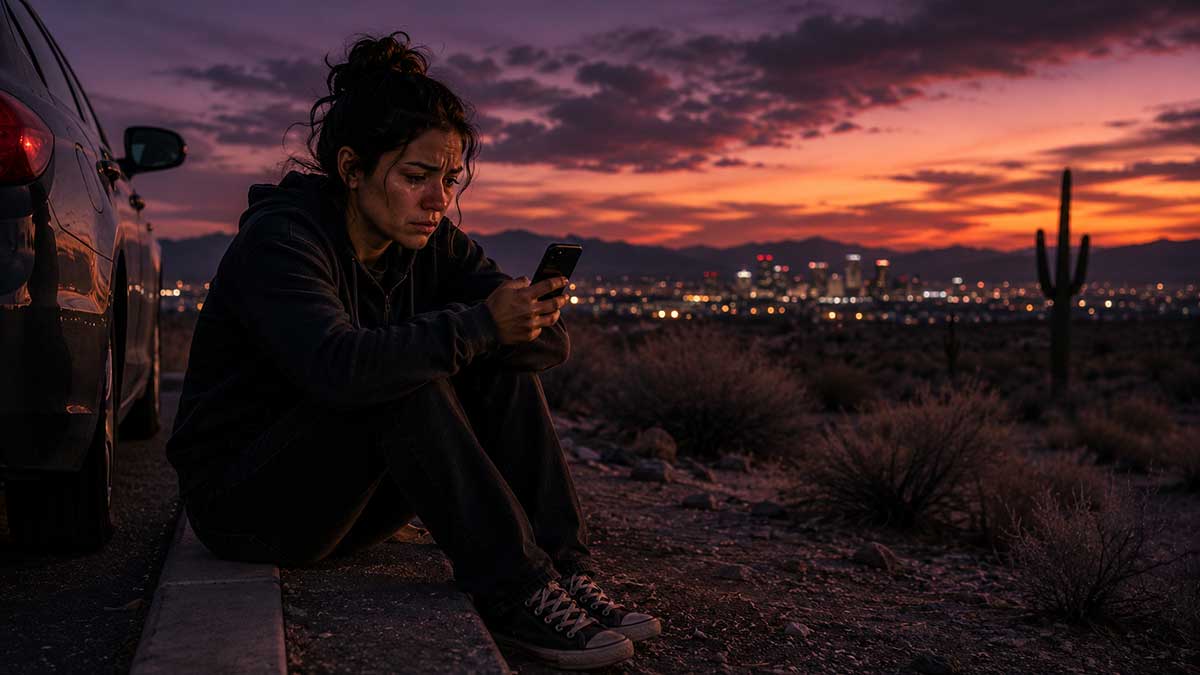
The sentence came out before Mara knew she had chosen it.
“Maybe people wouldn’t leave you if there were anything worth staying for.”
Eli stopped moving.
They were standing in the kitchen of their apartment in Phoenix.
A bag of groceries sat unopened on the counter.
One orange had rolled onto the floor.
The air conditioner hummed above them.
Neither of them looked at the orange.
Mara heard the sentence again.
Not from herself.
From years earlier.
Her mother standing in a hallway.
Her father by the front door.
Lucía’s voice low and precise.
Maybe people wouldn’t leave you if there were anything worth staying for.
Mara had been eleven.
She had been sitting on the stairs where neither parent could see her.
Now she was twenty-seven.
And the words had come through her mouth.
Eli looked at her as though something had opened between them.
Mara wanted to take the sentence back.
Instead she said, “You know I didn’t mean that.”
Eli gave a short laugh.
Not amused.
“Do I?”
“I was angry.”
“So?”
“So I said something stupid.”
“You didn’t say something stupid.”
His voice was quiet.
“That was very specific.”
Mara folded her arms.
“You were attacking me.”
“I said you don’t listen when you’re angry.”
“That is an attack.”
“No. That is a description.”
Mara felt heat climb into her neck.
“There you go again.”
“What?”
“Talking to me like I’m one of your employees.”
“I don’t have employees.”
“You know what I mean.”
“I actually don’t.”
Mara saw it then.
The look on his face.
Not anger.
Caution.
That was worse.
She had seen that look before too.
On her father.
On her aunt.
On herself.
People deciding which version of Lucía they were speaking to.
Mara grabbed her keys.
“Where are you going?”
“I need air.”
“It’s one hundred and four degrees.”
“Then I need one hundred and four degrees.”
She walked out before he could answer.
By the time she reached the parking lot, her hands were shaking.
She got into the car and drove east.
No destination.
Just away.
Past strip malls.
Past gas stations.
Past stucco walls the color of sand.
The city loosened gradually around her.
The buildings grew farther apart.
The mountains sharpened against the evening sky.
She kept driving.
At a red light, she realized she was crying.
Not loudly.
The tears simply came.
She wiped them away angrily.
Her phone connected automatically to the car.
A notification appeared.
MOM
1 new voice message.
Mara stared at the screen until the light changed and the car behind her honked.
“Of course,” she whispered.
She drove another twenty minutes before pulling into a gravel turnout overlooking the desert.
The sun was almost gone.
The land looked enormous.
She turned off the engine.
Silence.
Then she opened the message.
Her mother’s voice filled the car.
“Mara, call me when you can. I found the wedding invitation samples you sent. I don’t like the cream one. It looks cheap. The white is cleaner. And your aunt wants to know if you’re still doing the outdoor ceremony, since August is ridiculous. Anyway, call me.”
Mara closed her eyes.
There was nothing cruel in it.
Nothing anyone else would hear as cruel.
That was the problem.
Mara had spent most of her life trying to explain tone.
The way a word could carry a blade without changing shape.
Cheap.
Ridiculous.
Still.
Anyone else heard adjectives.
Mara heard history.
She opened the recording app.
For several seconds she said nothing.
Then:
“I said exactly what she used to say.”
She stopped the recording.
Listened.
Deleted it.
She recorded another.
“I was upset.”
Deleted that one too.
Another.
“Eli was being condescending.”
Deleted.
Another.
“I felt cornered.”
Deleted.
She stared through the windshield.
The sky above the mountains had turned purple.
She pressed record again.
“I wanted to hurt him.”
Her thumb hovered over stop.
“I wanted him to hurt before I did.”
She stopped the recording.
This time she did not delete it.
She sat there until the car grew hot.
Then she drove home.
Eli was asleep on the couch.
Or pretending to be.
Mara stood in the doorway.
“Eli.”
He opened his eyes.
“I’m sorry.”
He sat up slowly.
She waited for him to say it was fine.
He didn’t.
Mara continued.
“I knew where to hit.”
Eli looked at her.
“That scares me.”
“It scares me too.”
“No.”
His voice stayed quiet.
“I mean you knowing where to hit scares me.”
Mara swallowed.
“I know.”
Eli looked toward the kitchen.
“You always know.”
She wanted to defend herself.
She could feel the defense forming.
I grew up learning people’s moods.
I had to know when Mom was angry.
I had to know when Dad was leaving.
I had to know when to disappear.
All true.
None of it answered what Eli had said.
Mara sat on the chair across from him.
“I’m sorry.”
He nodded once.
But he did not move closer.
That frightened her more than if he had shouted.
For the next several days, they were polite.
Politeness was terrible.
Good morning.
Do you need coffee?
I’ll be late tonight.
Did you feed the cat?
Mara discovered that intimacy could disappear without anyone slamming a door.
On Thursday night, she called her mother.
Lucía answered immediately.
“Finally.”
“Hi, Mom.”
“You never return calls.”
“I return calls.”
“Eventually.”
Mara closed her eyes.
“Can I ask you something?”
“That depends.”
“Do you remember when Dad left the first time?”
Silence.
Then Lucía laughed softly.
“Which time?”
Mara did not laugh.
“When I was eleven.”
“Oh.”
“Do you remember what you said to him?”
“No.”
“You told him maybe people wouldn’t leave if there were anything worth staying for.”
Another silence.
Then Lucía sighed.
“Mara, that was almost twenty years ago.”
“I know.”
“Why are you thinking about that?”
“I said it to Eli.”
Her mother paused.
“So?”
Mara stared at the wall.
“So I sounded like you.”
Lucía’s voice hardened.
“What is that supposed to mean?”
“Nothing.”
“No, say it.”
“Mom.”
“You called me to tell me I ruined your relationship?”
“I didn’t say that.”
“You young people remember everything dramatically.”
Mara felt something inside her tighten.
There it was.
The familiar sequence.
Dismissal.
Heat.
The need to prove.
Mara said, “I’m not blaming you.”
“Sounds like you are.”
“I’m trying to understand something.”
“What?”
“Why I do that when I’m scared.”
Lucía laughed once.
“You were always sensitive.”
Mara stood up.
She began pacing.
“See? That.”
“What?”
“You always make the other person the problem.”
Lucía’s voice changed.
“And now you’re a psychologist?”
Mara could already see where the conversation was going.
She could fight.
She knew the evidence.
Dates.
Sentences.
Doors slammed.
Birthdays ruined.
The morning her father slept in his car.
The Christmas when Lucía did not speak to anyone for two days.
Mara could present the entire case.
She had been preparing it for years.
Instead she said, “I have to go.”
Lucía became offended.
“You called me.”
“I know.”
“So now you’re hanging up?”
“Yes.”
“That’s very mature.”
Mara closed her eyes.
“Goodnight, Mom.”
She ended the call.
Her whole body shook.
She stood in the middle of the living room.
Then she laughed.
Not from humor.
From disbelief.
She had spent years imagining the conversation that would finally explain everything.
Her mother would understand.
Or apologize.
Or reveal something terrible from her own childhood.
Then the pieces would line up.
Mara would understand why Lucía had been Lucía.
And somehow that understanding would release her.
Instead, her mother had said:
You were always sensitive.
That was all.
Mara sat on the floor.
She realized she had been waiting for a key from someone who might never admit there was a lock.
A week later, Mara made an appointment with a therapist.
She hated the first session.
The room was too beige.
The therapist took notes.
Mara felt observed.
She told the entire story too quickly.
Her mother.
Her father.
The yelling.
The unpredictable affection.
The days when Lucía made breakfast and sang.
The nights when everyone moved silently through the house.
The therapist listened.
Then she asked:
“What happens right before you say something cruel?”
Mara frowned.
“I get angry.”
“Before angry.”
“I don’t know.”
“Try.”
Mara stared at the rug.
“I feel disrespected.”
“Before that?”
Mara became irritated.
“I don’t know.”
The therapist waited.
Mara hated waiting.
Finally she said:
“Small.”
The word surprised her.
The therapist did not react.
Mara continued.
“Like someone has decided what I am.”
“What do you do with that feeling?”
“I fight.”
“How?”
“I say something.”
“Any something?”
Mara shook her head.
“No.”
“What kind of thing?”
Mara looked away.
“The thing that will work.”
The therapist nodded.
Mara felt ashamed.
“I know people.”
“What do you mean?”
“I can tell what they’re insecure about.”
“Most people can.”
“No.”
Mara shook her head.
“I’m good at it.”
She thought of Eli.
His fear that people would eventually tire of him.
His father leaving when he was eight.
His ex-girlfriend telling him he was emotionally exhausting.
Mara had known all of it.
She had chosen the exact sentence.
The therapist asked:
“What do you feel after you hurt someone?”
Mara answered immediately.
“Relief.”
Then covered her mouth.
The therapist waited.
Mara started crying.
“Only for a second.”
“That second matters.”
“I hate that.”
“I know.”
Mara looked down.
The therapist said, “What comes after the relief?”
“Shame.”
“And then?”
“I explain why I did it.”
“And then?”
Mara understood before answering.
“Then I’m angry again.”
The therapist nodded.
Mara whispered, “So it keeps going.”
“Yes.”
For the next month, Mara began recording voice notes.
Not every day.
Only when something happened.
Her boss criticized a campaign.
Mara sat in her car afterward.
“I feel embarrassed.”
Eli forgot to tell her he was having dinner with a friend.
“I feel unimportant.”
Her sister canceled plans.
“I want to make her feel guilty.”
Sometimes the recordings embarrassed her.
Sometimes they sounded childish.
Once she listened to five in a row and realized how often humiliation came before anger.
Not sadness.
Not rage.
Humiliation.
That discovery bothered her.
She had always thought of herself as strong.
Her mother had called her strong too.
“You were always tougher than your brother.”
Maybe toughness had been part of the problem.
Tough people were not allowed to say:
That hurt.
So Mara had learned something more efficient.
Make the other person hurt first.
She began noticing the moment physically.
The heat in her face.
Jaw tightening.
Breath shortening.
A strange pressure behind the ribs.
Her mind becoming very clear.
That was the frightening part.
She did not lose control.
She gained a particular kind of control.
Everything narrowed.
She knew exactly what to say.
One night, three months after the kitchen argument, Mara and Eli were discussing wedding expenses.
The venue had raised the price.
Eli wanted to reduce the guest list.
Mara did not.
“My family will notice.”
“They’ll survive.”
“You don’t get it.”
“I do get it. We can’t spend money we don’t have so your mother doesn’t complain.”
Mara stiffened.
“Don’t bring her into it.”
“She’s already in it.”
“What is that supposed to mean?”
“You change every decision once you think she’ll disapprove.”
Mara stood up.
“That is not true.”
“It is.”
“You don’t know anything about my family.”
“I know you panic every time she texts.”
“Stop.”
“I know she makes you miserable and then somehow I end up paying for it.”
Mara went completely still.
There.
Humiliation.
Small.
Exposed.
Then fear.
He was seeing something she did not want seen.
Her mind sharpened.
She knew exactly where to go.
Eli had been worried for months that Mara might call off the wedding.
He had asked twice whether she still wanted to marry him.
She had reassured him.
Now the sentence arrived.
Maybe I don’t.
Four words.
Perfect.
She could see what they would do before saying them.
His face.
The silence.
The rest of the night.
Maybe more than the night.
She opened her mouth.
Nothing came out.
Eli waited.
“What?”
Mara’s hands were shaking.
“What were you going to say?”
She grabbed her phone from the counter.
“I need to go outside.”
He exhaled hard.
“You always leave.”
“I know.”
“That’s not healthy either.”
“I know.”
“Then stay.”
“I can’t.”
“Why?”
She looked at him.
“Since I want to hurt you right now.”
He stopped.
Mara's eyes filled with tears.
“I know what I could say.”
Eli said nothing.
“And if I stay here, I might say it.”
She walked out.
The desert heat hit her like an open oven.
She sat on the curb beside the parking lot.
Cars moved along the road.
Somewhere nearby, someone was grilling.
A dog barked behind a wall.
Mara opened the recording app.
Her thumb pressed the red button.
“I wanted to tell him I might not marry him.”
She swallowed.
“I don’t mean it.”
She stopped.
Then restarted.
“No.”
Deleted.
Again.
“I wanted to tell him I might not marry him because I knew he was afraid of losing me.”
Her voice shook.
“I wanted to use that fear.”
She stopped the recording.
She stared at the waveform.
For a long time, she did nothing.
Then she deleted it.
Not to erase what happened.
She did not need evidence anymore.
She knew.
Mara sat outside for eleven minutes.
Then she went upstairs.
Eli was still in the kitchen.
The orange from months earlier was gone, of course.
She thought about it anyway.
One ordinary thing rolling away while they watched something worse happen.
Eli looked at her.
“You okay?”
“No.”
He nodded.
She sat across from him.
“I was going to say something.”
“I know.”
“I didn’t.”
“I know.”
She looked down.
It sounded pathetic when spoken aloud.
I didn't hurt you this time.
Was that supposed to be progress?
Eli seemed to understand what she was thinking.
He said, “That matters.”
Mara looked at him.
“But it doesn’t fix the other times.”
“No.”
She nodded.
That answer relieved her.
He was not making it beautiful.
He was not forgiving everything with one moment.
She said, “I think when I feel ashamed, I try to make the other person ashamed too.”
Eli sat quietly.
“I’m starting to see it.”
“Okay.”
“I don’t know how to stop it every time.”
“Okay.”
“I might still screw up.”
“I know.”
Mara almost smiled.
“You could sound more encouraging.”
“I’m trying not to lie to you.”
She nodded.
“Good.”
They sat there without touching.
After a while, Eli reached across the table.
Not for her hand.
He turned her phone face down.
“Your mom has called three times.”
Mara looked at the screen.
Three missed calls.
She felt the familiar tightening.
Then something else.
Not strength.
Not peace.
Space.
Small.
Almost ridiculous.
But there.
She left the phone where it was.
Later that night, Mara stood alone in the bathroom brushing her teeth.
She looked into the mirror.
For years she had searched her face for her mother.
Same dark eyes.
Same cheekbones.
Same small line between the eyebrows when angry.
When she was younger, people often said:
“You look exactly like Lucía.”
She had loved it then.
Later she hated it.
Tonight she studied herself.
The resemblance had not changed.
That surprised her.
She had expected something inside her to feel different.
Nothing did.
She still looked like her mother.
She could still hear her mother's voice.
She could still feel the sentence she had almost used against Eli.
Maybe I don’t.
It had not disappeared.
That was the part she had misunderstood.
She had thought becoming different would mean no longer having the impulse.
No longer feeling the heat.
No longer knowing where to strike.
Instead, the sentence had arrived exactly as before.
The difference was almost invisible.
It had stopped inside her.
Mara rinsed her toothbrush.
From the bedroom, Eli called:
“Coming?”
“In a minute.”
She looked at herself once more.
Then switched off the light.
The voice had come from somewhere.
The silence afterward belonged to her.
3. The Woman He Married Twice
Jonathan thanked his wife in front of three hundred people.
He had thanked investors.
He had thanked the engineering team.
He had thanked the two college friends who had worked with him in a rented basement fifteen years earlier when their company consisted of four laptops, a folding table, and an espresso machine they had bought on Craigslist.
Then the lights dimmed.
A photograph appeared on the enormous screen behind him.
Jonathan and Claire on their wedding day.
The audience made the soft, collective sound people make when they see a younger version of someone they know.
Jonathan smiled.
“And finally, Claire.”
A spotlight found her at the front table.
Claire looked up.
She wore a black dress Jonathan loved.
He had told her so in the car.
“You look incredible.”
She had smiled.
“Thank you.”
Now everyone was looking at her.
Jonathan placed one hand over his heart.
“This woman has been beside me through every version of this company.”
Applause.
“When I wanted to quit, she told me to keep going.”
More applause.
“When I worked until three in the morning, she somehow kept our family functioning.”
Claire smiled.
“When investors walked away, employees quit, products failed, and I became absolutely impossible to live with...”
Laughter.
Jonathan pointed toward her.
“She stayed.”
The room applauded again.
Jonathan waited.
Then he said:
“She is my calm in every storm.”
People stood.
Claire stood too.
Jonathan watched her from the stage.
Beautiful.
Elegant.
Composed.
His wife.
Later, in the hotel bathroom, Claire locked the door and sat on the closed toilet.
She could still hear music from the ballroom downstairs.
She looked at herself in the mirror.
My calm in every storm.
She closed her eyes.
For some reason, those words made her want to cry.
She didn't.
Someone knocked.
“Mom?”
Sophie.
Claire opened the door.
Her seventeen-year-old daughter stood outside.
“You okay?”
“Fine.”
“You disappeared.”
“I needed quiet.”
Sophie looked at her.
Claire smiled.
“Really.”
Sophie did not move.
“What?”
“Nothing.”
“Then why are you looking at me like that?”
Sophie shrugged.
“Dad's looking for you.”
“Of course he is.”
Sophie heard something in the answer.
Claire saw that she had heard it.
Neither mentioned it.
“I'll be down in a minute.”
Sophie nodded.
Then she said, “You know you don't always have to be calm.”
Claire stared at her.
Sophie walked away.
Six weeks later, Claire told Jonathan she wanted to separate.
He laughed.
Not from amusement.
From disbelief.
They were sitting at the kitchen island on a Tuesday morning.
Jonathan had a meeting in forty minutes.
His laptop was open.
Claire had made coffee.
Nothing about the room looked capable of containing the sentence she had just spoken.
Jonathan stared at her.
“What?”
“I want us to separate.”
He waited.
She did not correct herself.
“Separate how?”
Claire looked at him.
“Jonathan.”
“No, I'm asking. What does that mean?”
“It means I think we should live apart.”
“Why?”
She inhaled.
“I've been trying to talk to you about this for years.”
“About separating?”
“About us.”
Jonathan closed his laptop.
“Claire, we're happy.”
She looked at him.
Something passed across her face.
Not anger.
Almost pity.
“You are.”
He leaned back.
“What the hell does that mean?”
“It means you're happy.”
“And you're not?”
“No.”
“Since when?”
Claire looked toward the windows.
Outside, Lake Washington was gray beneath the morning sky.
“I'm not sure.”
“Last month?”
“No.”
“Last year?”
“No.”
Jonathan stared at her.
“How long?”
She rubbed her thumb against the side of her coffee mug.
“Maybe eight years.”
He stood.
“Eight years?”
“Maybe longer.”
“That's ridiculous.”
Claire looked at him.
Jonathan immediately regretted the word.
“I don't mean ridiculous. I mean... Claire, how can you be unhappy for eight years and not tell me?”
“I did tell you.”
“No, you didn't.”
“Yes.”
“When?”
She gave a small laugh.
It frightened him.
“Jonathan, I don't know how to answer that anymore.”
He began pacing.
“Were you unhappy in Hawaii?”
Claire blinked.
“What?”
“Last Christmas. Hawaii. You seemed happy.”
“I had a good time.”
“Okay.”
“That isn't the same thing.”
“Our anniversary?”
“What about it?”
“You cried when I gave you the necklace.”
“I was moved.”
“So?”
“So I can be moved by a necklace and unhappy in my marriage.”
Jonathan stared at her.
“That doesn't make sense.”
“It does to me.”
He sat down again.
“Is there someone else?”
“No.”
“Are you sure?”
Claire's face hardened.
“Don't do that.”
“I'm trying to understand.”
“No. You're trying to find an explanation you can understand.”
“What is the difference?”
She looked at him for several seconds.
“That.”
She stood.
Jonathan watched her walk toward the stairs.
“Claire.”
She stopped.
“I can fix this.”
Her shoulders dropped.
He saw it.
That tiny movement.
Instead of stopping, he continued.
“We can go somewhere. Just us. No phones. No company. Italy. Remember Tuscany?”
Claire turned.
“This is exactly what I mean.”
“What?”
“I tell you I'm disappearing inside my own life and you hear vacation.”
Jonathan said nothing.
Claire went upstairs.
For the next three days, Jonathan treated the separation as a problem.
Problems were familiar.
Problems had variables.
He had built a career by taking impossible things and dividing them into manageable parts.
He researched marriage counselors.
He found a couples retreat on Vancouver Island.
He moved meetings.
He asked his assistant to block two Fridays each month.
He made a list titled:
CLAIRE
- More time together
- Fewer work dinners
- No phone after 7
- Travel
- Support her interests
- Listen more
He showed Claire the list.
She stared at it.
“You made a project plan?”
“That's not what this is.”
“It has bullet points.”
“I'm trying.”
“I know.”
“Then why are you angry?”
“I'm not angry.”
“What are you?”
Claire looked exhausted.
“Done explaining myself.”
She rented an apartment in Seattle.
Small.
Two bedrooms.
No water view.
Jonathan offered to pay for something larger.
Claire declined.
He offered furniture.
She declined that too.
When she moved out, she took fewer things than he expected.
Clothes.
Books.
Several paintings.
Boxes from the garage.
Her drafting table.
Jonathan stood beside it.
“You want this?”
Claire looked at him.
“Yes.”
“I didn't know you still used it.”
“I don't.”
“Then why take it?”
She ran her hand across the wood.
“Maybe I will.”
Jonathan did not understand.
But for once, he did not say so.
The house became unbearably quiet.
Sophie stayed with him every other week.
Their son, Ben, was away at college and called both parents separately.
Jonathan worked later.
He told himself it was temporary.
Claire needed space.
He respected that.
Three weeks into the separation, he began seeing a therapist.
He chose Dr. Levin partly due to an online review describing him as “direct and solution-oriented.”
Jonathan liked the phrase.
At the first appointment, Dr. Levin asked:
“What does Claire want?”
Jonathan answered for nearly four minutes.
“She wants independence. She wants to reconnect with architecture. She wants to feel like herself again. I think she feels like she sacrificed too much when the kids were younger, and now she's projecting some of that resentment onto the marriage. She probably needs a sense of purpose outside the family. I've encouraged her to take classes or maybe consult. Financially, she doesn't need to work, so she has flexibility.”
Dr. Levin waited.
Jonathan stopped.
“What?”
“I asked what Claire wants.”
“I just told you.”
“You told me what you think she should want.”
Jonathan frowned.
“No, I didn't.”
Dr. Levin said nothing.
Jonathan disliked him immediately.
He returned the following week.
One Saturday, he began clearing the garage.
Claire had left several boxes labeled ARCHITECTURE.
He almost called her.
Instead he opened one.
Inside were photographs.
Drafting tools.
Tracing paper.
Old notebooks.
Then models.
Jonathan remembered them vaguely.
Before Sophie was born, Claire had worked for an architectural firm in Seattle.
She had loved physical models.
Tiny walls.
Tiny windows.
Tiny staircases.
She would sit at the dining table late at night cutting pieces with a knife while Jonathan worked on code beside her.
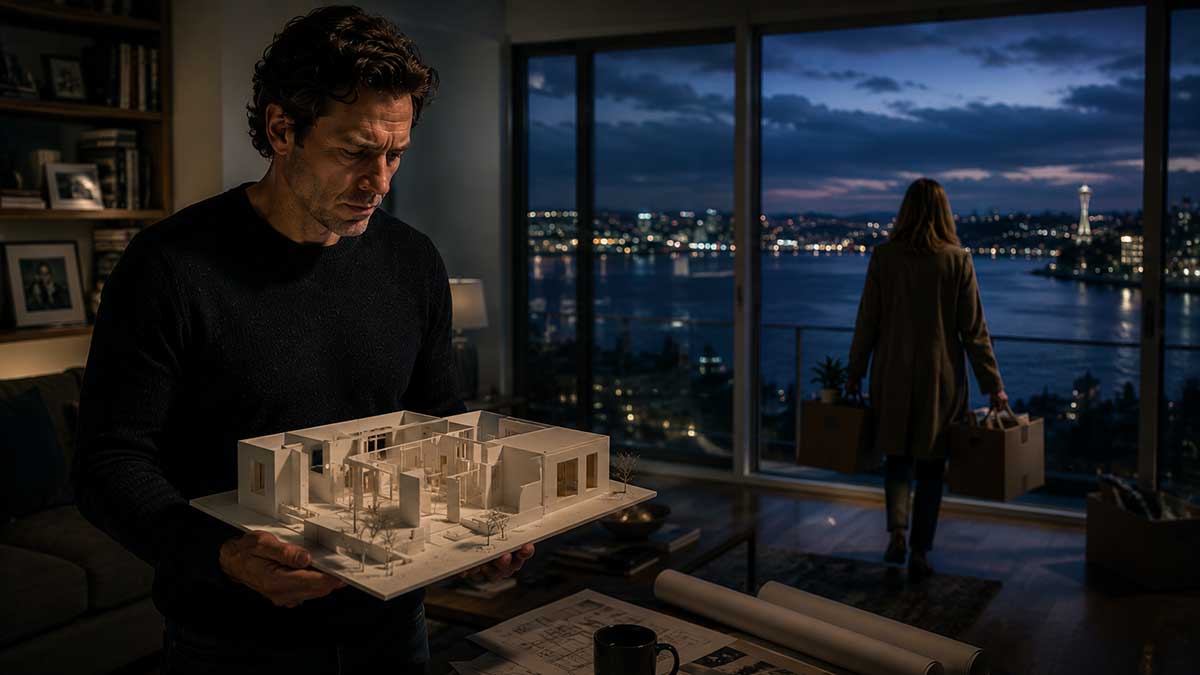
He pulled out a small white building.
A museum proposal.
Another box contained a narrow house.
Another, an office complex.
At the bottom he found one unfinished model.
A house.
The exterior walls were complete.
Roof partly finished.
Large windows faced one side.
Inside, there were no walls.
Jonathan turned it in his hands.
He remembered this one.
Or thought he did.
“Wasn't that the Bainbridge project?”
Claire had looked up from the model.
“No.”
“Bellevue?”
“No.”
“What was it?”
“My competition entry.”
“Oh, right.”
He had gone back to his laptop.
He sat on the garage floor holding it.
When had that happened?
He tried to remember.
Sophie appeared in the doorway.
“What are you doing?”
“Cleaning.”
She looked at the boxes.
“Mom's stuff?”
“Some.”
Jonathan held up the model.
“Do you know what this was?”
Sophie nodded.
“Her house.”
“What house?”
“The one she designed for herself.”
Jonathan laughed.
“Mom didn't design a house for herself.”
Sophie looked at him.
“Yes, she did.”
“When?”
“I don't know. A long time ago.”
Jonathan turned the model.
“What do you mean for herself?”
“She told me once if she could build any house she wanted, that's what she'd build.”
Jonathan stared at it.
“Where?”
“I don't know.”
“Did she say?”
“Maybe.”
He looked at his daughter.
“You know more about this than I do?”
Sophie shrugged.
“You never asked her about architecture.”
“That isn't true.”
Sophie said nothing.
Jonathan felt defensive.
“I supported her.”
“I didn't say you didn't.”
“I told her she could go back whenever she wanted.”
Sophie leaned against the doorframe.
“You always say that.”
“Say what?”
“That Mom could do things.”
Jonathan frowned.
“What is wrong with that?”
“Nothing.”
“Then?”
Sophie looked uncomfortable.
“Dad, I don't want to get in the middle.”
“You're already in the middle.”
“That's not fair.”
Jonathan stopped.
She was right.
“Sorry.”
Sophie turned to leave.
Then she stopped.
“Mom didn't become a different person.”
Jonathan looked at her.
Sophie continued.
“You just started noticing.”
She walked away.
Jonathan remained on the garage floor.
That night he found old emails.
Not intentionally at first.
He searched Claire's name looking for a tax document.
Thousands of messages appeared.
He scrolled backward.
Three years.
Five.
Seven.
One subject line caught him.
Can we talk tonight?
He opened it.
Claire had written:
I know you're buried with the launch, but I really need to talk about what I'm doing next. I feel like I've been waiting for the right time for years and there never seems to be one.
Jonathan searched for his response.
Got it. This week is insane. Let's plan a weekend away after launch and figure everything out. Love you.
He stared at the screen.
Another email.
I don't think you understood what I was trying to say last night.
His response:
I understand you're overwhelmed. I've booked massages for Saturday. Mom can take the kids.
Another.
I miss working.
His response:
You should absolutely find something fun to do. What about that ceramics studio near Madison Park?
Jonathan closed the laptop.
He sat in darkness.
Nothing had been hidden.
That was the worst part.
He had imagined himself betrayed by a secret unhappiness.
But Claire had left evidence everywhere.
He had simply translated it.
Loneliness became stress.
Loss became exhaustion.
Ambition became a hobby.
Despair became a vacation.
He thought of Adam and Cathy, though he had not read East of Eden since college and could not remember much beyond the title.
What frightened him was simpler.
He had believed that loving someone meant knowing them.
Now he wondered whether love had sometimes convinced him he no longer needed to ask.
Months passed.
Claire began consulting for a small architecture firm.
Then she joined a project designing affordable housing.
Sophie mentioned it casually.
“Mom's doing a community project in Tacoma.”
Jonathan almost asked why Claire had not told him.
He stopped himself.
A week later, he saw Claire at Sophie's school fundraiser.
She stood across the room talking with another parent.
Her hands moved as she spoke.
She was animated.
Laughing.
Jonathan watched her.
He could not remember the last time he had seen her speak that way.
The thought hurt.
Then another thought followed.
Maybe she had.
Maybe he had simply not been watching.
Claire noticed him.
She came over.
“Hi.”
“Hi.”
“You okay?”
“Yeah.”
He looked toward the display tables.
“Sophie said you're working again.”
Claire smiled.
“Part time.”
“How is it?”
Her face changed.
There.
The animation again.
“We're redesigning two old apartment buildings instead of tearing them down. The structures are actually beautiful. Everyone assumed they were useless, but...”
She stopped.
“What?”
Jonathan realized he was staring.
“Nothing.”
Claire's smile faded slightly.
“Jonathan.”
“No. Keep going.”
She hesitated.
Then she told him about the buildings.
For ten minutes, Jonathan asked questions.
Real ones.
He did not suggest funding.
He did not offer contacts.
He did not tell her how proud he was.
He listened.
When she finished, Claire looked almost suspicious.
“What?”
“Nothing.”
“You keep saying that.”
Jonathan smiled.
“I'm practicing.”
She shook her head.
But she smiled too.
They did not reconcile.
Jonathan had expected that eventually they would.
For months he had carried a secret timeline.
Six months apart.
Therapy.
Slow dinners.
Reconnection.
A second honeymoon.
The marriage restored.
Eventually he understood that this was another model.
Another structure he had built and expected Claire to inhabit.
So he stopped.
Eleven months after she moved out, they met at the house to divide the remaining belongings.
Claire walked through the rooms placing small stickers on things.
Blue for her.
Yellow for Jonathan.
They disagreed about almost nothing.
In the garage, Claire found the architectural models.
“You kept these?”
“Of course.”
She opened the box.
Jonathan lifted the unfinished house.
“I found this months ago.”
Claire smiled.
“I wondered where it went.”
“Sophie told me about it.”
“Oh no.”
“What?”
“She wasn't supposed to see my embarrassing dream house.”
“Why is it embarrassing?”
Claire took it.
“Look at it.”
“I have.”
“It's absurd.”
“Where are the interior walls?”
“I never finished them.”
“Why?”
Claire shrugged.
“Sophie got sick. Then your Series B happened. Then life.”
She said it without accusation.
That somehow hurt more.
Jonathan watched her face.
“Would you finish it now?”
Claire looked at the model.
“No.”
“Why?”
“I'd design a different house.”
Jonathan smiled.
“Of course you would.”
She looked at him.
“What does that mean?”
“Nothing bad.”
He leaned against the workbench.
“I think I spent twenty years believing I knew exactly who you were.”
Claire said nothing.
“And the strange thing is, I really did love you.”
“I know.”
“I still do.”
“I know that too.”
He swallowed.
“But I think I loved knowing who you were.”
Claire looked at him carefully.
Jonathan continued.
“It made everything feel safe.”
He glanced at the unfinished model.
“You were my calm.”
Claire lowered her eyes.
“I hated that speech.”
“I know.”
“You didn't then.”
“No.”
He took a breath.
“I think I married you twenty years ago.”
Claire looked up.
“And I met you this year.”
The sentence sounded different aloud.
Less beautiful than it had in his head.
Sad.
Claire's eyes filled.
She laughed softly.
“That is a terrible thing to say.”
“I know.”
“And maybe a good thing.”
“I hope so.”
She wiped one eye.
Jonathan looked at the model in her hands.
“Take it.”
Claire shook her head.
“You keep it.”
“Why?”
She handed it to him.
“So you remember that people change the plans.”
Jonathan almost laughed.
“That sounds like something an architect should hate.”
“A bad architect.”
She picked up another box.
Jonathan held the unfinished house.
He wanted to ask whether there was still a chance.
The question rose immediately.
He could already hear himself:
Do you think maybe someday?
He looked at Claire.
For once, he did not ask her to provide an answer that would make his future easier.
He helped carry the boxes to her car.
She drove away.
A year later, the unfinished model still sat on a shelf in Jonathan's study.
Visitors sometimes asked about it.
He used to explain.
“My wife designed it.”
Later:
“My ex-wife designed it.”
Eventually he stopped explaining.
One evening Sophie came home from college and found him dusting the shelf.
“You still have Mom's house.”
“Apparently.”
“Why don't you finish it?”
Jonathan looked at the tiny open rooms.
Once, he would have answered immediately.
He would have guessed what Claire intended.
Chosen the walls.
Finished the roof.
Completed the story.
Instead he put the model back.
“It isn't mine to finish.”
Sophie looked at him.
Then nodded.
Outside, lights were appearing one by one across the water.
Jonathan stood before the unfinished house.
For years, he had believed love meant knowing where everything belonged.
Now he was learning something harder.
Sometimes love meant leaving a room open for the person you had not yet learned to see.
Story 4. The Last Message
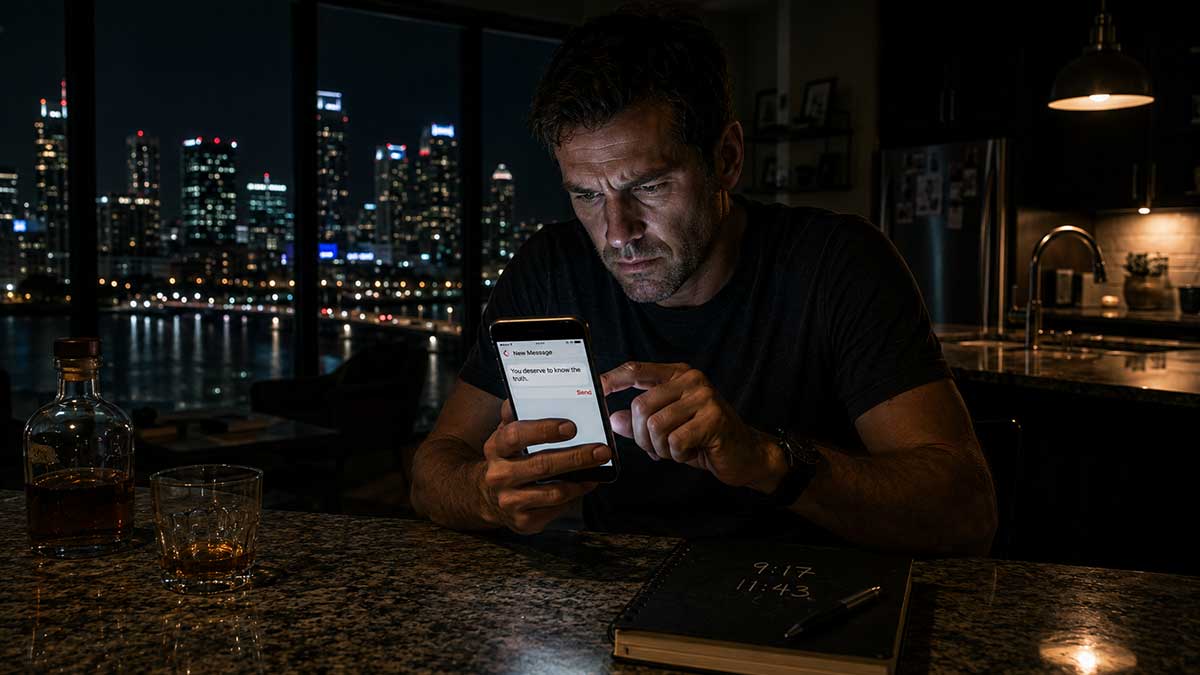
At 9:17 p.m., Noah Bennett pressed Send.
At 11:43 p.m., Evan Cole was dead.
For the next eleven months, Noah measured his life by the two times.
9:17.
11:43.
Before Send.
After Send.
The message itself had taken less than a minute.
No greeting.
No explanation.
Just three screenshots and six words.
You deserve to know the truth.
He sent them anonymously to Rachel Cole.
Then he placed his phone face down on the kitchen counter.
For perhaps ten seconds, Noah felt better.
That was the part he would hate most later.
Not the message.
Not even the lie of anonymity.
The relief.
He had wanted Evan to hurt.
And for ten seconds, knowing that pain was traveling toward him through the dark felt good.
Six hours earlier, Evan had been standing beneath a forty-foot screen at the annual Halcyon Summit in downtown Austin.
Three thousand customers, employees, investors, journalists, and industry people filled the convention hall.
Noah stood behind the curtain.
Evan wore jeans, white sneakers, and the black crewneck sweater the communications team had selected.
He looked relaxed.
He always looked relaxed.
The enormous screen behind him showed photographs from Halcyon's early years.
The first office.
Four folding desks.
Pizza boxes.
Cables everywhere.
Then the rented warehouse.
Then forty employees.
Then two hundred.
Then London.
Singapore.
Toronto.
The audience applauded each transformation.
Evan smiled.
“Twelve years ago, I had an idea.”
Noah looked at him.
An idea.
“I had no money.”
Laughter.
“No office.”
More laughter.
“No customers.”
Evan paused.
“But I believed there was a better way to build this.”
Noah could see the teleprompter from where he stood.
He knew the speech.
He had approved it.
He had not noticed the sentence then.
Or perhaps he had.
Maybe he had simply been too tired to care.
Evan continued.
“I built this company from nothing.”
The audience stood.
Noah remained behind the curtain.
His headset suddenly felt too tight.
A stage manager touched his arm.
“You good?”
“Fine.”
Onstage, Evan was thanking the engineering team.
The investors.
The customers.
The city of Austin.
Noah waited.
His name never came.
Afterward, Evan found him backstage.
“Hell of a show.”
Noah removed his headset.
“Yeah.”
“The Singapore announcement killed.”
“Yeah.”
Evan studied him.
“What?”
“Nothing.”
“Oh, come on.”
“Not now.”
Evan followed him down the corridor.
“Noah.”
Noah stopped.
“You built the company from nothing?”
Evan stared at him.
Then laughed.
“Seriously?”
“Forget it.”
“It was a speech.”
“I said forget it.”
“You approved the speech.”
“I didn't catch it.”
“So this is my fault?”
Noah turned.
“I was there.”
“I know you were there.”
“I maxed out two credit cards.”
“I know.”
“I didn't take a salary for eleven months.”
“Neither did I.”
“I slept in that warehouse.”
“So did I.”
“Then why do you keep telling people you built it?”
Evan's face changed.
“There it is.”
“What?”
“This thing you do.”
Noah stared at him.
“What thing?”
“You keep score.”
“I'm asking for credit.”
“You have credit.”
“Where?”
“You own thirty-one percent of a company worth hundreds of millions of dollars.”
“That's money.”
“Yes, Noah. Most people consider that fairly substantial recognition.”
Noah stepped closer.
“You know what I'm talking about.”
Evan exhaled.
“You want applause.”
“I want the truth.”
“No. You want people to look at you the way they look at me.”
Noah went still.
Evan saw it.
He should have stopped.
He didn't.
“You think I don't know?”
“Know what?”
“You've been angry for years.”
“About what?”
“That I'm better at this part.”
Noah laughed.
“You mean talking?”
“I mean leading.”
That word.
Noah felt something open.
“You would have nothing to lead without me.”
Evan shook his head.
“You really believe that?”
“I know it.”
“Noah, you are brilliant at operations. You're disciplined. You catch everything. You built half the systems that keep this place alive.”
“Half?”
“For God's sake.”
Evan looked down the empty hallway.
Then back at him.
“But if we're going to finally say it, let's say it.”
Noah waited.
Evan's voice lowered.
“I could have built a company without you.”
Noah stared at him.
Evan continued.
“You couldn't have built this company without me.”
Silence.
Noah felt his face burning.
Evan immediately looked as though he regretted it.
“Noah.”
“Don't.”
“I shouldn't have said that.”
“No.”
“I was angry.”
Noah smiled.
It frightened Evan.
“You're right.”
“Noah.”
“You're absolutely right.”
He walked away.
At 8:54 that evening, Noah sat alone in his condominium overlooking Lady Bird Lake.
He poured bourbon.
He did not usually drink alone.
He opened his phone.
Scrolled.
Stopped.
Two years earlier, Evan had come to the same apartment after midnight.
He had been crying.
Noah had never seen him cry before.
“I screwed up.”
“With what?”
“Rachel.”
Evan told him.
A woman from the Los Angeles office.
Three months.
Hotels.
Conferences.
Messages.
Then it ended.
Rachel never knew.
Evan had confessed to Noah out of panic.
“I don't know why I did it.”
Noah had sat with him until almost four in the morning.
He had told Evan not to make any decisions while terrified.
He had listened.
He had kept the secret.
Later Evan sent him a message.
I owe you my life.
Noah still had it.
He also had the screenshots.
Evan had sent them while panicking that Rachel might somehow discover the affair.
Noah had forgotten they existed.
Until 8:54 p.m.
He opened them.
Read them.
Closed them.
Opened them again.
At 9:02 he poured another bourbon.
At 9:08 he searched for Rachel's private social-media account.
At 9:11 he created a new email address.
At 9:14 he attached the screenshots.
At 9:16 he wrote:
You deserve to know the truth.
At 9:17 his thumb hovered over Send.
There was a moment.
Later, Noah would return to that moment thousands of times.
Sometimes he remembered hesitation.
Sometimes he didn't.
Memory changed according to what he needed from it.
But he knew one thing.
He understood what the message would do.
Not everything.
But enough.
He pressed Send.
At 9:31 Rachel called Evan.
At 9:48 Evan arrived home.
At 10:26 a neighbor heard shouting.
At 10:51 Evan left the house.
At 11:06 his credit card was used at a bar on South Lamar.
At 11:31 surveillance video showed him leaving.
At 11:42 his car crossed the center line on a wet curve.
At 11:43 a delivery truck struck the driver's side.
Evan died at the scene.
Noah learned about it at 12:18 a.m.
Rachel called him.
He answered half asleep.
“Noah.”
He sat up immediately.
Something in her voice.
“What happened?”
“It's Evan.”
He knew.
Before she said it, he knew.
Not logically.
His body knew.
“What?”
“There was an accident.”
Noah could hear people behind her.
“Is he okay?”
Rachel began crying.
Noah stood beside his bed.
“Rachel.”
“He's dead.”
The room tilted.
Noah sat down.
For several seconds, he could hear nothing except his own breathing.
Then Rachel said:
“We were fighting.”
Noah closed his eyes.
“He left.”
Noah could not speak.
“I found out something.”
His hand tightened around the phone.
Rachel continued.
“Someone sent me...”
Noah ended the call.
He did not remember deciding to.
He ran to the bathroom and vomited.
At 12:24 he deleted the anonymous email account.
At 12:27 he deleted the screenshots from his phone.
At 12:31 he restored them from Recently Deleted.
He stared at them.
Then at himself in the bathroom mirror.
“I killed him.”
The words came easily.
Too easily.
For months, they became the only sentence that mattered.
I killed him.
At the funeral, Noah stood beside Rachel and Lucas.
Lucas was fifteen.
He wore a suit that was too large.
Evan had bought it for him the previous Christmas.
At one point Lucas leaned against Noah.
Noah nearly collapsed.
He wanted to confess.
Instead he put one arm around the boy.
That night he did not sleep.
I killed him.
The police investigation determined that Evan's blood alcohol concentration had been well above the legal limit.
Noah read that paragraph twelve times.
Relief came.
Maybe three seconds.
Then horror.
He had felt relieved again.
He hated himself.
The road had been wet.
Relief.
The delivery-truck driver had been traveling within the speed limit.
Relief.
Evan had not been wearing his seat belt.
Relief.
Each new cause felt like a fraction removed from Noah's guilt.
Each fraction made him feel worse.
He began reconstructing the night.
If I hadn't sent the message.
If Rachel hadn't confronted him immediately.
If Evan hadn't gone to the bar.
If the bartender had stopped serving him.
If Evan had called a rideshare.
If the rain had stopped.
If the truck had been thirty seconds earlier.
If it had been thirty seconds later.
If Evan had worn his seat belt.
If.
If.
If.
The chain became infinite.
But Noah always returned to 9:17.
Send.
He stopped drinking.
Not as recovery.
As punishment.
He resigned as chief operating officer.
The board refused his resignation.
He took leave instead.
He stopped seeing friends.
He stopped answering messages.
He slept four hours a night.
One afternoon his sister drove from Dallas and entered his condominium with a spare key.
She found him sitting on the floor.
“You need help.”
“I don't.”
“You haven't showered.”
“Go home.”
“Did something happen between you and Evan?”
Noah looked at her.
“What do you mean?”
“You've been acting like you were in the car.”
He looked away.
She sat beside him.
“Were you fighting?”
“Yes.”
“About what?”
“Nothing.”
“Nothing doesn't do this.”
Noah said nothing.
His sister waited.
Then she said:
“Whatever you said to him, you didn't make him drive drunk.”
Noah turned toward her.
“You don't know what I did.”
She froze.
Neither spoke.
Noah wanted to tell her.
Instead he said:
“Go home.”
Two months later, he began therapy.
He did not confess the message for the first four sessions.
On the fifth, he told the therapist everything.
When he finished, he waited.
He wanted the therapist to condemn him.
Or absolve him.
Either would have been easier.
The therapist asked:
“Why did you send it?”
Noah stared at him.
“I told you.”
“Tell me again.”
“I was angry.”
“That's not enough.”
Noah looked away.
“He humiliated me.”
“And?”
“I wanted Rachel to know.”
“Why?”
“She deserved to.”
The therapist waited.
Noah became irritated.
“She did.”
“That may be true.”
“It is true.”
“But that's not why you sent it that night.”
Noah felt his jaw tighten.
The therapist said nothing.
Finally Noah whispered:
“I wanted to break something.”
“What?”
“His life.”
There it was.
Noah began crying.
Not dramatically.
His face simply folded.
“I wanted him to hurt.”
The therapist nodded.
Noah covered his eyes.
“I killed him.”
The therapist did not answer.
Noah lowered his hands.
“Say something.”
“Did you want him dead?”
“No.”
“Did you expect him to die?”
“No.”
“Did you expect the message to cause pain?”
“Yes.”
“Did you deliberately cause that pain?”
“Yes.”
“Then start there.”
Noah stared at him.
“What does that mean?”
“It means stop making yourself smaller than what you did.”
Noah frowned.
“I call myself a murderer every day.”
“Yes.”
“How is that making it smaller?”
The therapist leaned forward.
“Since 'murderer' answers everything.”
Noah stopped.
“If that's simply what you are, you don't have to examine envy. Humiliation. Revenge. Resentment. Secrecy. Your friendship. The years before that night.”
Noah said nothing.
“You get one terrible word.”
Murderer.
“And then the investigation is over.”
Noah looked at the floor.
For the first time, he understood that condemning himself might be easier than knowing himself.
Months passed.
He returned to Halcyon part time.
Evan's photograph hung in the lobby.
Employees still told stories about him.
Some were true.
Some were already becoming legends.
Noah never corrected them.
Rachel sold most of Evan's shares.
Lucas inherited a trust.
Noah saw him occasionally.
The boy grew taller.
His voice changed.
He stopped looking like a child.
Eleven months after the crash, Lucas texted Noah.
Can we talk?
They met at a taco restaurant Evan had loved.
Lucas barely touched his food.
For several minutes, they talked about school.
Then Lucas put down his drink.
“Mom knows.”
Noah's stomach tightened.
“Knows what?”
“That you and Dad had a fight that day.”
Noah stared at him.
“She said he was upset about you before he came home.”
Noah said nothing.
Lucas looked at him.
“What happened?”
The restaurant became unbearably loud.
Noah could hear dishes.
Music.
A child laughing two tables away.
He could lie.
Evan was dead.
Rachel had suffered enough.
Lucas was fifteen.
Sixteen now.
There were a hundred reasons to wait.
Then Noah realized something.
He had spent eleven months deciding what Lucas could handle.
Another secret.
Another person arranging reality for someone else.
Noah placed both hands on the table.
“Your father told me something private two years before he died.”
Lucas waited.
“He had an affair.”
Lucas's face changed.
Noah continued before fear could stop him.
“He told me. I kept it secret.”
“Mom knows that now.”
Noah nodded.
“The night your dad died, I sent her the proof.”
Lucas stared at him.
“What?”
“I sent it anonymously.”
Lucas's mouth opened slightly.
“Why?”
Noah looked directly at him.
“Since I wanted to hurt your father.”
Lucas pushed back from the table.
“You sent it?”
“Yes.”
“That night?”
“Yes.”
“My mom found out that night since you sent it?”
“Yes.”
Lucas stood.
Noah remained seated.
“You knew he was drinking?”
“No.”
“You knew they would fight.”
“I knew it would hurt him.”
“You knew.”
“Yes.”
Lucas's eyes filled.
“You killed him.”
Noah felt the sentence enter him.
For eleven months, he had said it to himself.
Hearing it from Evan's son was different.
He wanted to accept it.
Maybe he deserved to.
Then he remembered the therapist.
Start with what is true.
Noah stood.
“I helped create the worst night of your father's life.”
Lucas stared at him.
“I wanted to hurt him, and I did.”
“You killed him.”
“I didn't choose for him to drink.”
Lucas shook his head violently.
“Don't.”
“I didn't choose for him to drive.”
“Shut up.”
“I didn't choose the crash.”
“Shut up!”
People turned.
Noah lowered his voice.
“But I chose the message.”
Lucas was crying now.
“And I will be sorry for that for the rest of my life.”
Lucas grabbed his jacket.
“Don't ever talk to me again.”
Noah nodded.
Lucas stopped.
Perhaps he expected Noah to argue.
Noah didn't.
The boy walked out.
Noah sat back down.
The tacos remained untouched.
He paid both checks.
Then he went home.
For three days he barely slept.
But something had changed.
The pain was worse.
The sentence was clearer.
Not:
I killed Evan.
Not:
It wasn't my fault.
Something harder.
I wanted to hurt him.
I chose to hurt him.
My choice became one cause among several in a night that ended with his death.
I cannot know what would have happened if I had chosen differently.
I cannot undo what happened.
Noah hated every sentence.
For the first time, he believed them.
Lucas did not contact him for eight months.
Noah did not contact Lucas.
He wanted to.
Birthdays passed.
Evan's death anniversary passed.
Noah wrote messages and deleted them.
I'm thinking about you.
Delete.
I hope you're doing okay.
Delete.
I'm sorry.
Delete.
Each message seemed to ask Lucas to do something with Noah's pain.
So Noah kept it.
He returned to work.
He changed how Halcyon credited teams in company presentations.
It felt embarrassingly small.
He began mentoring two young operations managers who hated public speaking.
He told them visibility mattered.
He never explained why.
He kept going to therapy.
He stopped calling himself a murderer.
That felt wrong at first.
Almost disrespectful.
As though suffering less meant loving Evan less.
The therapist asked him:
“If you punish yourself every day until you die, what does Evan receive?”
Noah had no answer.
“What does Lucas receive?”
Still nothing.
“What does anyone receive?”
Noah stared at the floor.
“Then what am I supposed to do?”
“Become someone who doesn't send that message again.”
Noah looked up.
“That's it?”
“No.”
The therapist shook his head.
“That's the rest of your life.”
Almost twenty months after Evan died, Noah's phone buzzed during a meeting.
LUCAS COLE
Noah stopped breathing.
The message was short.
Do you know who handles Dad's old Halcyon shares? Mom says there's paperwork I have to sign when I turn 18.
That was all.
No hello.
No forgiveness.
No reference to the restaurant.
Noah stared at the screen.
His first impulse was to write too much.
Yes. I'm glad you reached out.
No.
Delete.
Yes. I can help. I hope you're doing well.
Delete.
He could feel himself trying to turn a practical question into a door.
Lucas had not offered a door.
He had asked a question.
Noah typed:
Yes. Her name is Priya Shah in Legal. I'll send you her contact information.
He stopped.
Read it.
His thumb hovered over Send.
For a moment, he was back in his condominium.
9:17 p.m.
A glowing screen.
Anger.
A sentence waiting to leave him.
But this was not that night.
He read the message again.
No hidden punishment.
No plea.
No manipulation.
No attempt to make Lucas responsible for how Noah felt.
Only what the boy had asked for.
He pressed Send.
The message disappeared upward.
Noah put the phone down.
Two minutes later it buzzed.
Thanks.
Noah stared at the word.
He did not answer.
Outside the conference-room windows, Austin stretched beneath a bright afternoon sky.
Cars moved along the highway.
People entered buildings.
People left them.
Thousands of actions crossing other actions.
Causes meeting consequences.
Lives touching lives without ever knowing how far the contact might travel.
Noah thought of Evan.
Not the crash.
Not the funeral.
Evan at twenty-seven, asleep on the warehouse floor with a sweatshirt rolled beneath his head.
Evan laughing when their first customer accidentally paid them twice.
Evan calling at midnight to say they had raised their first million dollars.
Evan crying in Noah's apartment.
Evan beneath the stage lights saying:
I built this company from nothing.
Noah could finally hold all of those men at once.
The friend.
The liar.
The partner.
The selfish man.
The generous man.
The man Noah loved.
The man Noah hated for ten terrible minutes.
The man who made choices.
The man who died.
And himself.
The loyal friend.
The invisible partner.
The keeper of a secret.
The jealous man.
The man who knew where to strike.
The man who struck.
The man who wished he hadn't.
The man who remained.
His phone stayed silent.
Noah looked at it once more.
There would never be a message he could send backward.
Only the next one.
Story 5. The Inch
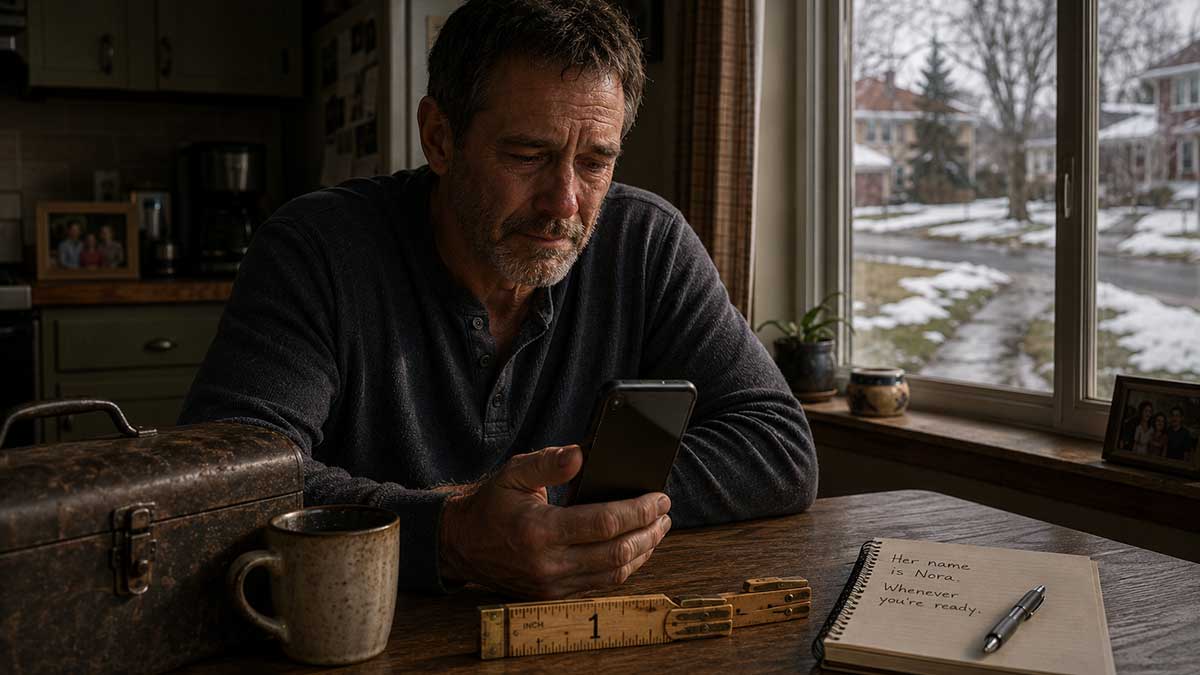
At his father's funeral, Ray Miller heard the same sentence six times.
“He did the best he could.”
His aunt said it first.
Then his father's old drinking buddy.
Then a neighbor Ray remembered from childhood.
His cousin said a version of it near the coffee table.
“Frank had a hard life.”
Ray nodded.
His father's former supervisor squeezed his shoulder.
“He didn't know how to show love.”
Ray nodded again.
By the sixth time, he wanted to hit somebody.
Instead, he stood beside the casket and looked at the man who had taught him how to become angry.
Frank Miller was seventy-seven when his heart stopped.
The funeral home had done something to his face.
Softened it.
The man in the casket looked gentler than Ray remembered.
Ray hated that.
His father's hands were folded across his stomach.
Those hands.
Ray looked away.
When he was nine, one of them had split his lip.
At eleven, they had dragged him by the back of his shirt across the kitchen floor.
At fourteen, they had shoved him into a wall hard enough to crack the drywall.
Ray had learned to watch hands.
Where they were.
What they held.
How tightly the fingers closed.
His father had never needed to announce that he was angry.
The hands told you first.
“He loved you,” Aunt Carol said beside him.
Ray looked at her.
“I know.”
“He just...”
She searched for the sentence.
Ray waited.
“He had his demons.”
There it was.
Another one.
Ray nodded.
Aunt Carol hugged him.
He let her.
Across the room, a framed photograph showed Frank at twenty-three.
Young.
Thin.
Smiling beside a pickup truck.
Ray barely recognized him.
There were other photographs.
Frank holding a fishing rod.
Frank at Ray's high school graduation.
Frank with a beer at a Browns game.
Frank standing beside Ray's mother before she learned how to disappear inside herself.
A whole life arranged on poster board.
No holes in walls.
No broken plates.
No boy sitting behind a locked bathroom door.
No mother whispering:
“Just wait until he calms down.”
At the reception afterward, Ray's cousin Pete handed him a beer.
Ray shook his head.
“You quit?”
“No.”
“Then?”
“Don't feel like it.”
Pete opened it for himself.
“Your dad would hate this place.”
Ray looked around the church hall.
“Dad hated most places.”
Pete laughed.
Ray didn't.
Pete lowered the bottle.
“Sorry.”
“It's fine.”
“He was rough.”
“Yes.”
“But he came from rough.”
Ray looked at him.
Pete continued carefully.
“Grandpa was worse.”
“I know.”
“Probably did the best he could.”
Ray stared at the beer in Pete's hand.
Then he thought of Emily.
His daughter.
Twenty-nine years old.
Eleven months since she had spoken to him.
He heard his own voice.
I worked sixty hours a week for you.
I never hit you.
You don't know what a bad father looks like.
You think I had somebody paying for college?
You have no idea what I grew up with.
Suddenly the sentence at the funeral sounded different.
He did the best he could.
Ray felt cold.
If that sentence was enough for Frank, then one day someone might stand over Ray's casket and say it too.
Maybe Pete.
Maybe a neighbor.
Maybe Emily.
Your father had a hard childhood.
He didn't know how to show love.
He did the best he could.
And everyone would nod.
Ray put down his coffee.
“No.”
Pete frowned.
“What?”
“Nothing.”
Ray walked outside.
Snow had begun falling.
Small flakes disappeared as soon as they touched the pavement.
He stood without a coat.
For the first time in his life, Ray understood that an explanation could be true and still not be enough.
After the funeral, he went to his father's house.
There was not much to take.
Frank had lived alone for nine years after Ray's mother died.
The refrigerator held mustard, eggs, beer, and half a package of bologna.
Ray opened drawers.
Bills.
Batteries.
Rubber bands.
A screwdriver.
In the basement he found the old toolbox.
Brown metal.
Dented corner.
Rusted latch.
Ray remembered it from childhood.
His father had fixed everything.
Cars.
Furnaces.
Doors.
Lawn mowers.
Toasters.
He could repair almost anything except a room after he had entered it angry.
Ray opened the box.
Wrenches.
Sockets.
A chalk line.
Two screwdrivers.
At the bottom lay a wooden folding ruler.
Ray picked it up.
He remembered Frank carrying one in the pocket of his work pants.
The ruler opened section by section.
Six feet when fully extended.
Ray unfolded the first section.
Then another.
The hinges were stiff.
He closed it.
He took nothing else.
Three days later, Ray learned Emily was pregnant.
His sister told him accidentally.
They were on the phone discussing paperwork from the funeral.
“Emily said she can sign it next week.”
Ray stopped.
“You talked to Emily?”
“Yesterday.”
“Why?”
Silence.
Ray knew.
“What?”
“Ray.”
“What?”
His sister sighed.
“She asked me not to say anything.”
His chest tightened.
“Say what?”
“She's pregnant.”
Ray stood in his kitchen.
The refrigerator hummed.
“How pregnant?”
“I shouldn't have told you.”
“How pregnant?”
“Six months.”
Ray closed his eyes.
Six months.
His daughter had been carrying his grandchild for half a year.
He had not known.
“Boy or girl?”
“I don't know.”
“You know.”
“Ray.”
“You know.”
His sister was quiet.
“A girl.”
Ray ended the call.
He immediately opened Emily's contact.
His thumbs moved.
So I'm the last person to know?
He stared at the message.
Anger arrived first.
Then the familiar list.
I paid for braces.
I taught her to drive.
I sat in the emergency room when she broke her wrist.
I worked overtime for dance lessons she quit after four months.
I paid for college.
I am her father.
He added:
I guess I know where I stand.
His thumb moved toward Send.
Then he saw the toolbox on the kitchen table.
The wooden ruler lay beside it.
He stared at the message again.
So I'm the last person to know?
He deleted it.
The anger did not disappear.
That irritated him.
Some part of Ray expected good behavior to feel good.
It didn't.
He was still furious.
Still hurt.
Still humiliated.
Still her father.
He put the phone down.
That was all.
Nobody applauded.
Emily never knew.
His sister never knew.
The baby never knew.
A message that could have existed did not.
Ray made his first therapy appointment the following Monday.
He almost canceled twice.
The therapist was younger than he expected.
A woman named Dr. Patel.
Ray disliked the room.
Plants.
Soft chair.
Box of tissues positioned too deliberately.
Dr. Patel asked why he was there.
“My daughter doesn't talk to me.”
“Why?”
Ray laughed.
“You get right to it.”
“You brought her up.”
He crossed his arms.
“We don't get along.”
“Why?”
“She thinks I was a terrible father.”
“Were you?”
Ray looked at her.
“No.”
Dr. Patel waited.
“I wasn't perfect.”
She waited.
“My father beat me.”
She nodded.
“I never laid a hand on Emily.”
Still nothing.
“I worked my ass off.”
Dr. Patel nodded again.
“Good house. Food. College.”
“What does Emily say happened?”
Ray shifted.
“She says I yelled.”
“Did you?”
“Yes.”
“She says I controlled everything.”
“Such as?”
“Who she dated. What time she came home. Grades. Friends.”
“How old?”
“Depends.”
“She says you frightened her.”
Ray looked away.
“I never touched her.”
Dr. Patel waited.
Ray became irritated.
“Do you understand what I'm saying? My father broke my nose when I was fifteen.”
“I understand.”
“I never hit my daughter.”
“Yes.”
“I broke the cycle.”
Dr. Patel looked at him.
“Did Emily think it was broken?”
Ray stared at her.
He did not return for two weeks.
When he finally did, he began with:
“I've been thinking about what you said.”
Dr. Patel waited.
“I still think it was unfair.”
“Okay.”
“But I've been thinking.”
“Okay.”
Ray hated the way she said okay.
He continued.
“My father is the worst person I ever knew.”
Dr. Patel said nothing.
“I've compared myself to him my whole life.”
He looked at the floor.
“If he hit, and I didn't hit, then I was good.”
Dr. Patel nodded.
Ray rubbed his hands together.
“But Emily wasn't raised by him.”
“No.”
“She didn't know what I was comparing myself to.”
“No.”
Ray looked up.
“So maybe I was running a race against a dead man and expecting her to give me the trophy.”
Dr. Patel leaned back.
“What did she experience from you?”
Ray immediately answered:
“I was under a lot of pressure.”
Dr. Patel waited.
He stopped.
She asked again.
“What did she experience from you?”
“I told you. I worked constantly.”
“That's what you experienced.”
Ray's jaw tightened.
He tried again.
“She had everything she needed.”
“That's your evaluation.”
Ray's voice rose.
“What do you want me to say?”
“I don't want you to say anything.”
He stared at her.
“I'm asking what Emily experienced.”
Ray looked away.
He remembered his daughter at thirteen.
Standing in the kitchen holding a report card.
One C.
He remembered saying:
“What the hell is wrong with you?”
He remembered her face.
He remembered her at seventeen.
A boy waiting outside in a car.
Ray refusing to let her leave.
Emily shouting:
“You don't trust me!”
Ray answering:
“You haven't earned trust.”
He remembered her at twenty-two, home from college.
Ray criticizing her job.
At twenty-five, criticizing the man she was dating.
At twenty-seven, criticizing where she lived.
Always advice.
Always correction.
Always concern.
Always love.
At least that was what Ray had called it.
He said quietly:
“She probably felt like she was always about to fail.”
Dr. Patel waited.
Ray swallowed.
“Like I was watching.”
His eyes burned.
“Like she couldn't relax around me.”
He stopped.
His father's hands appeared in his memory.
Ray had watched them.
Emily had watched his face.
Different warning system.
Same purpose.
Know what is coming.
Ray covered his eyes.
“Oh, God.”
Dr. Patel did not rescue him.
That mattered.
Over the next several months, Ray began writing a letter.
The first version was six pages.
It began:
I know you think I was a bad father, but there are things you don't understand about how I grew up.
Dr. Patel read the first sentence.
“No.”
Ray frowned.
“No what?”
“No 'but.'”
“You haven't even read it.”
“I don't need to.”
He rewrote it.
I'm sorry I wasn't the father you needed. I did the best I knew how.
Dr. Patel shook her head.
“What now?”
“You're asking her to grade your effort.”
Ray became angry.
“I did do my best.”
“Maybe.”
“Maybe?”
“Let's say you did.”
Ray waited.
“Does that change what happened to her?”
He looked away.
Third version.
My father abused me, and I never learned how to control my anger.
Dr. Patel put the paper down.
“True?”
“Yes.”
“Important?”
“Yes.”
“First thing she needs to hear?”
Ray knew the answer.
“No.”
He wrote again.
Weeks passed.
The letter became shorter.
Finally:
Emily,
I have spent years explaining my behavior by telling you about my childhood.
My childhood does explain things about me. It does not change what it was like to be my daughter.
I yelled at you. I controlled you and called it protection. I made you afraid of disappointing me and called it having standards. When you told me I hurt you, I defended my intentions instead of listening to your experience.
I compared myself with my father and decided that since I never hit you, I had broken the cycle.
I see now that you were never required to use him as the standard for what you deserved from me.
Ray stopped writing for three days.
Then continued.
You do not owe me forgiveness.
He stared at that sentence for an hour.
He almost deleted it.
Instead he added:
You do not owe me a relationship.
That one hurt worse.
He finished:
I love you. I am sorry. I will respect whatever distance you need.
Dad
He wanted to add:
I hope someday we can start again.
He didn't.
He mailed the letter.
Then nothing happened.
One week.
Two.
A month.
Emily's due date approached.
His sister refused to give him updates beyond:
“She is healthy.”
Ray wanted to drive to Emily's house.
He did not.
He wanted to send flowers.
He did not.
He wanted to write:
Did you get my letter?
He did not.
Dr. Patel asked how he felt.
“Like I'm being punished.”
She waited.
Ray sighed.
“I know.”
“What?”
“That's still about me.”
She nodded.
Ray continued therapy.
That surprised him.
At first, he had imagined therapy as a bridge back to Emily.
Do the work.
Write the apology.
Get the daughter back.
Simple.
When Emily remained silent, the bargain collapsed.
Ray had to decide whether becoming different still mattered if she never saw it.
That was harder.
He began noticing his anger at work.
One of the younger warehouse employees loaded a pallet incorrectly.
Ray felt the familiar heat.
The sentence arrived.
How stupid can you be?
He had said variations of it hundreds of times.
He looked at the twenty-two-year-old standing in front of him.
Ray's mouth was already open.
He stopped.
“Unload it.”
The employee nodded.
“I'll show you again.”
That was all.
The boy never knew what had almost happened.
Ray did.
He started noticing how many parts of a person existed only as things they did not do.
A door not slammed.
A name not called.
A message not sent.
A humiliation not handed to someone else.
Nobody saw those things.
Perhaps that was why they had seemed so small before.
Six weeks after Emily's due date, Ray was sitting at his kitchen table eating cereal for dinner.
The wooden ruler lay near the toolbox.
He had developed a habit of unfolding it when thinking.
One section.
Two.
Close it.
Start again.
His phone buzzed.
He expected work.
Instead:
Emily.
Ray dropped the spoon.
There was no message.
Only a photograph.
A newborn girl sleeping beneath a pale yellow blanket.
Dark hair.
Tiny closed fist beside her face.
Ray stopped breathing.
He enlarged the photograph.
Her nose.
Her fingers.
Her mouth.
His granddaughter.
He put the phone down.
Picked it up.
Put it down again.
He cried.
Not quietly.
He bent forward until his forehead touched the table.
For several minutes he could not look at the photograph.
When he finally did, he began typing.
Emily, she is beautiful. I can't believe I'm finally seeing her. Thank you. I hope someday you'll let me meet her. I promise I won't pressure you, but I want you to know how much this means to me and how much I...
Ray stopped.
He read it.
Deleted everything.
Started again.
She is beautiful. Thank you for letting me see her.
He stared at the words.
His thumb hovered.
He wanted more.
He wanted to say grandfather.
He wanted her name.
He wanted to ask whether Emily was okay.
He wanted a photograph of Emily holding the baby.
He wanted to know when he could visit.
He wanted twenty-nine years back.
He wanted his father different.
He wanted himself different.
He wanted too much.
Ray looked at the wooden ruler.
He picked it up.
Opened the first section.
One inch.
He laid it beside the phone.
Then he pressed Send.
Nothing happened.
Five minutes.
Ten.
An hour.
Ray washed his bowl.
He wiped the counter.
He went to bed.
At 2:13 in the morning, he woke and checked his phone.
Nothing.
The next morning, nothing.
He went to work.
Three days later, Emily sent another photograph.
No words.
The baby awake this time.
Ray replied:
Those eyes.
Then stopped.
A week later, another.
Ray replied:
She looks warm and happy.
Nothing more.
Two weeks passed.
Then Emily sent:
Her name is Nora.
Ray sat in his truck in the warehouse parking lot.
He whispered the name.
“Nora.”
He typed:
Beautiful name.
His thumb hovered.
Then he sent it.
Spring came slowly to Cleveland.
Dirty snow shrank into gray piles along parking lots.
Water ran beneath them.
The ground appeared in patches.
Ray's father had been dead four months.
Emily still had not called.
Ray had never held Nora.
He did not know if he ever would.
One Sunday morning, he went into the garage and opened Frank's toolbox.
The smell of metal and old oil rose from it.
Ray picked up the folding ruler.
For most of his life, he had believed change meant distance.
How far from his father could he get?
Frank hit.
Ray didn't.
Frank drank every night.
Ray didn't.
Frank never apologized.
Ray had.
But distance from Frank was not the same thing as movement toward Emily.
Ray opened the ruler.
One inch.
He stopped.
It looked absurd.
What could anyone do with an inch?
Not cross a room.
Not rebuild a childhood.
Not repair twenty-nine years.
Not reach his granddaughter.
Then he thought about the message he had not sent when he learned Emily was pregnant.
The insult he had not spoken at work.
The explanation he had removed from the letter.
The demand he had not attached to his apology.
The question he had not added beneath the baby's photograph.
Small things.
Almost embarrassingly small.
Yet each one had been headed somewhere.
Into another person.
And had stopped.
Ray folded the ruler closed.
He carried it inside and placed it beside his phone on the kitchen table.
Outside, the last ridge of snow along the sidewalk had begun to melt.
Water moved slowly toward the street.
Ray watched it for a while.
Then his phone buzzed.
Emily.
His heart raced.
This time there were words.
I'm not ready for you to come over.
Ray read them twice.
Pain rose immediately.
Then beneath it, anger.
After everything I've done.
After therapy.
After the letter.
After respecting your space.
The sentences lined up.
Ready.
Familiar.
His fingers tightened around the phone.
Then he kept reading.
There was a second sentence.
But maybe we can talk on the phone sometime.
Ray sat down.
He read it again.
Not forgiveness.
Not come meet your granddaughter.
Not everything is okay.
Maybe.
Sometime.
He looked at the ruler.
For years, Ray had measured himself against the wrong man.
Now he understood that Emily was offering no measurement at all.
Only a possibility.
He typed:
Whenever you're ready.
He almost added:
I miss you.
He did miss her.
But the sentence felt like weight.
He removed it.
Whenever you're ready.
Send.
Ray placed the phone beside the ruler.
He did not know whether Emily would call tomorrow.
Next month.
Ever.
He did not know whether Nora would know him as Grandpa Ray or as a name her mother mentioned carefully.
He did not know whether a person could truly break something that had traveled through a family for generations.
Maybe breaking was the wrong image.
Maybe the past did not break.
Maybe it remained exactly what it was.
His father had hit him.
Ray had frightened Emily.
Emily had left.
None of those sentences changed.
But another sentence had not yet been written.
Ray looked through the kitchen window.
The snow at the edge of the sidewalk was almost gone.
He opened the ruler once more.
One inch.
For now, it was enough.
Final Thoughts
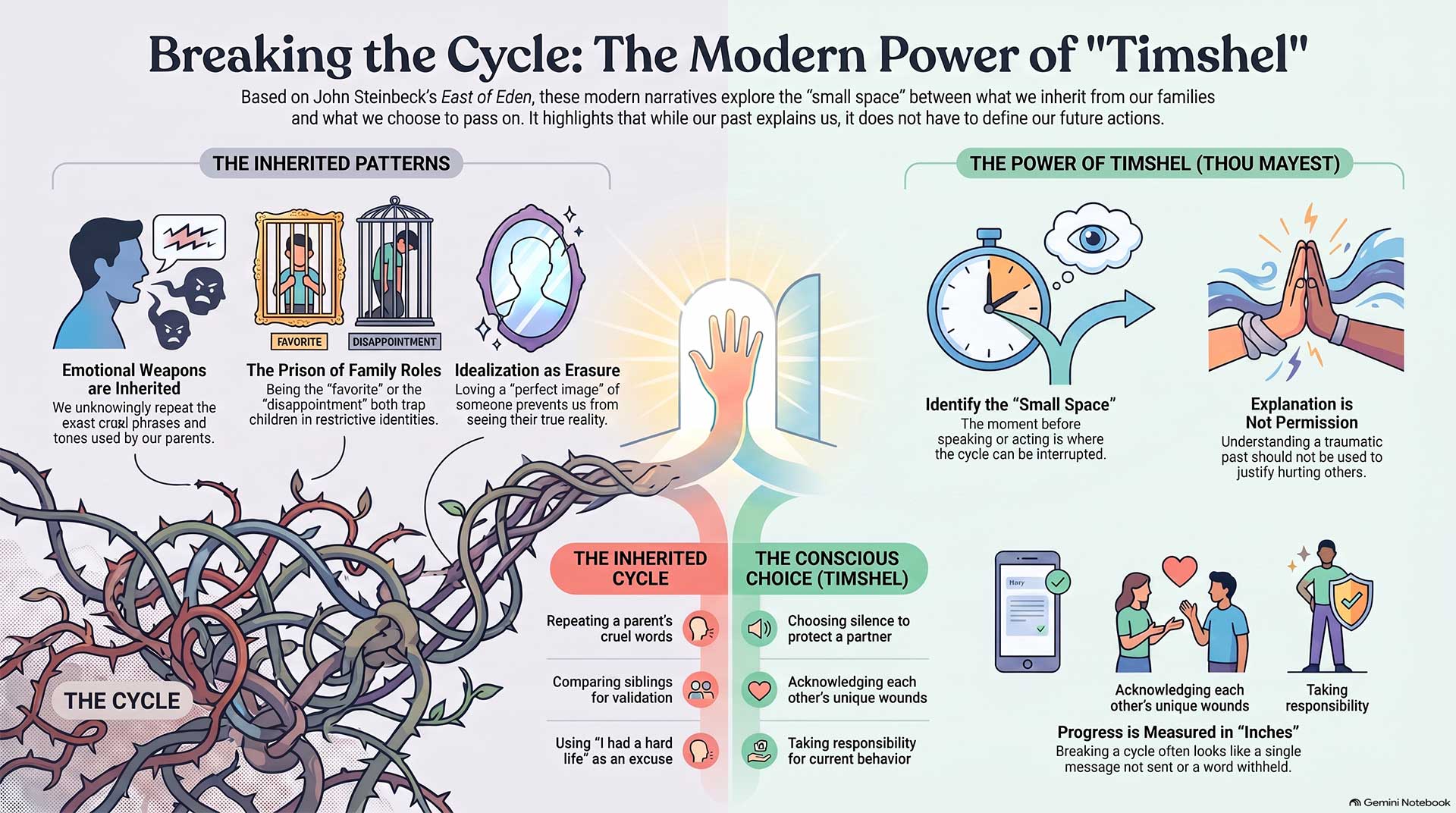
One of the most uncomfortable lessons of East of Eden is that people rarely fit neatly into innocent and guilty.
Daniel was wounded by his father’s favoritism, yet he had spent years turning Michael into a symbol instead of seeing his brother.
Mara learned emotional cruelty from a volatile home, yet the moment she discovers why she hurts people does not erase the people she has hurt.
Jonathan loved Claire, yet love did not stop him from overlooking her reality.
Noah never intended Evan to die, yet he cannot escape the fact that he deliberately chose an action meant to cause pain.
Ray inherited anger from a violent father, yet his daughter did not experience Ray’s childhood. She experienced Ray.
This is where the scholar discussion becomes especially important.
Modern psychology gives us far more ways to explain behavior than Steinbeck had available to him.
We can talk about temperament.
Attachment.
Family systems.
Trauma.
Shame.
Stress.
Modeling.
Neurology.
Childhood environment.
Learned behavior.
These explanations matter.
They can replace simplistic judgments about people being purely “good” or “evil.”
But there is another danger.
Explanation can quietly become permission.
Ray spent years saying, in effect:
You should understand me since my father was worse.
Mara could have said:
I hurt people since this is how I learned to survive.
Noah could reduce one terrible night to a chain of causes so large that his own decision disappears inside it.
The opposite danger is just as serious.
A person can decide:
I did something terrible, so terrible is what I am.
That is Cal’s danger.
Shame turns an action into an identity.
And once identity becomes fixed, change can become unnecessary.
If I am simply bad, what remains except punishment?
That is why the distinction between guilt and shame matters so much.
Guilt can say:
I did something wrong.
Shame says:
Wrong is what I am.
The first statement can lead somewhere.
The second can close the door.
Story 4 pushes this problem furthest.
Noah deliberately sends the message.
He wants Evan to suffer.
That truth cannot be softened.
Yet Evan makes other choices afterward.
Rachel makes choices.
Alcohol matters.
The road matters.
Timing matters.
A hundred causes intersect.
Noah is responsible without being all-powerful.
That may be one of the hardest forms of responsibility to accept.
We often prefer extremes.
Completely innocent.
Completely guilty.
Victim.
Villain.
Good child.
Bad child.
Favorite.
Disappointment.
East of Eden repeatedly shows how destructive those categories can become.
Daniel learns that Michael was never simply “the chosen son.”
Michael was a human being trapped inside the role Daniel envied.
Jonathan learns something similar about Claire.
He had turned her into “the calm wife.”
That sounded loving.
It was still a role.
This may be one of the quieter dangers explored across these stories:
We can misunderstand people through admiration just as easily as through hatred.
Adam needed Cathy to be good.
Cal needed Cathy to explain what he feared was bad inside himself.
Aron needed Abra to remain pure.
In each case, the real person becomes less important than the psychological job they perform.
The modern stories repeat that problem differently.
The better son.
The difficult daughter.
The calm wife.
The charismatic founder.
The terrible father.
Labels make complicated people easier to understand.
They can also make them harder to see.
Then we arrive at Ray.
His story ends with something almost embarrassingly small.
One inch.
That image carries the final idea of the collection.
Ray cannot choose his childhood.
He cannot become the father Emily should have had when she was eight.
He cannot demand forgiveness.
He cannot force his granddaughter into his life.
He cannot rewrite the past.
His available freedom is much smaller.
A message he does not send.
An insult he does not say.
An excuse removed from an apology.
A request he decides not to attach.
One inch.
Modern research may make us skeptical of the idea that human beings stand completely outside biology, childhood, culture, stress, or circumstance and simply choose whatever they wish.
Perhaps they do not.
But the practical question remains.
Once Daniel sees the family pattern, what happens next?
Once Mara recognizes the moment before cruelty, what happens next?
Once Jonathan realizes he has been loving an image, what happens next?
Once Noah understands what revenge made him capable of doing, what happens next?
Once Ray sees that his father's violence has traveled into another generation in a different form, what happens next?
Awareness does not erase causation.
It becomes another cause.
A conversation can become a cause.
An apology can become a cause.
Therapy can become a cause.
A brother telling the truth can become a cause.
A person noticing the sentence before speaking it can become a cause.
Perhaps this is one way timshel survives.
Not as proof that every human being possesses unlimited freedom.
Not as a guarantee that wounds can be healed.
Not as a promise that people will forgive us.
But as refusal to declare the sentence finished.
We are shaped.
We inherit.
We repeat.
We sometimes hurt people with wounds that were handed to us long before we understood them.
Yet the most important question may eventually become something different from:
Who made me this way?
It may become:
What reaches the next person through me?
That is where these five stories leave us.
Daniel cannot change which son his father favored.
Mara cannot remove her mother’s voice from memory.
Jonathan cannot recover the years when he failed to see Claire.
Noah cannot unsend the message.
Ray cannot give Emily another childhood.
But each person reaches a point where something old is about to move forward.
A comparison.
A cruel sentence.
An illusion.
A secret.
An excuse.
And for one moment, it can stop.
Maybe that is not complete freedom.
Maybe it is something more modest.
And maybe, sometimes, one inch is enough.
Short Bios:
Daniel Kim
A 32-year-old Korean-American who has spent much of his life feeling overshadowed by his younger brother. Working beside Michael after their father’s stroke forces Daniel to reconsider the family story he has carried for years.
Michael Kim
Daniel’s younger brother and a physician who grew up as the apparent favorite. Beneath the achievement lies another kind of wound: the fear that love depends upon continuing to succeed.
Mara Torres
A 27-year-old woman confronting the realization that the emotional weapons she learned in childhood have begun appearing in her own relationship. Her story asks whether recognizing an inherited pattern can create enough space to interrupt it.
Eli
Mara’s fiancé. Patient but unwilling to pretend that love makes cruelty harmless. His boundaries force Mara to face the difference between explaining her behavior and changing it.
Lucía Torres
Mara’s mother. Loving at times, emotionally unpredictable at others, she represents the complicated reality that damaging parents are not always simple villains.
Jonathan Reed
A 46-year-old technology entrepreneur who believes he has a happy marriage until his wife tells him otherwise. His story examines how affection can coexist with projection and how idealization can prevent one person from truly seeing another.
Claire Reed
Jonathan’s wife and a former architect who gradually lost parts of herself inside a life others considered successful. Her decision to leave forces Jonathan to encounter her as a separate person rather than as the role she performed in his life.
Sophie Reed
Jonathan and Claire’s teenage daughter. She sees aspects of her parents that Jonathan has missed and quietly challenges his assumption that Claire suddenly became someone different.
Noah Bennett
A 38-year-old business cofounder whose resentment toward his charismatic partner leads him to send a message intended to cause pain. When the night ends in tragedy, Noah must separate moral responsibility from the belief that he alone caused everything.
Evan Cole
Noah’s longtime friend and business partner. Charismatic, talented, selfish, generous, disloyal, and deeply human, Evan refuses to fit neatly into the role of either victim or villain.
Lucas Cole
Evan’s teenage son. His confrontation with Noah prevents Noah from turning guilt into private self-punishment and forces him to speak truth without demanding forgiveness.
Ray Miller
A 51-year-old warehouse supervisor raised by a violent alcoholic father. Ray believes he broke the family cycle since he never physically abused his daughter, until he begins seeing the different form his inherited anger took.
Emily Miller
Ray’s estranged adult daughter and new mother. Her refusal to offer immediate forgiveness gives Ray’s change its real test: whether he can become different without receiving a reward for doing so.
Nora
Emily’s newborn daughter and Ray’s granddaughter. She enters the story without knowing any of the family history behind her, making her a quiet symbol of the central question: what will the next generation receive?
Leave a Reply