• Skip to main content
  • Skip to primary sidebar
  • Skip to footer
ImaginaryTalks.com
  • Spirituality and Esoterica
    • Afterlife Reflections
    • Ancient Civilizations
    • Angels
    • Astrology
    • Bible
    • Buddhism
    • Christianity
    • DP
    • Esoteric
    • Extraterrestrial
    • Fairies
    • God
    • Karma
    • Meditation
    • Metaphysics
    • Past Life Regression
    • Spirituality
    • The Law of Attraction
  • Personal Growth
    • Best Friend
    • Empathy
    • Forgiveness
    • Gratitude
    • Happiness
    • Healing
    • Health
    • Joy
    • Kindness
    • Love
    • Manifestation
    • Mindfulness
    • Self-Help
    • Sleep
  • Business and Global Issues
    • Business
    • Crypto
    • Digital Marketing
    • Economics
    • Financial
    • Investment
    • Wealth
    • Copywriting
    • Climate Change
    • Security
    • Technology
    • War
    • World Peace
  • Culture, Science, and A.I.
    • A.I.
    • Anime
    • Art
    • History & Philosophy
    • Humor
    • Imagination
    • Innovation
    • Literature
    • Lifestyle and Culture
    • Music
    • Science
    • Sports
    • Travel
You are here: Home / History & Philosophy / Why Socialism Fails | A Children’s Story of Fairness & Effort

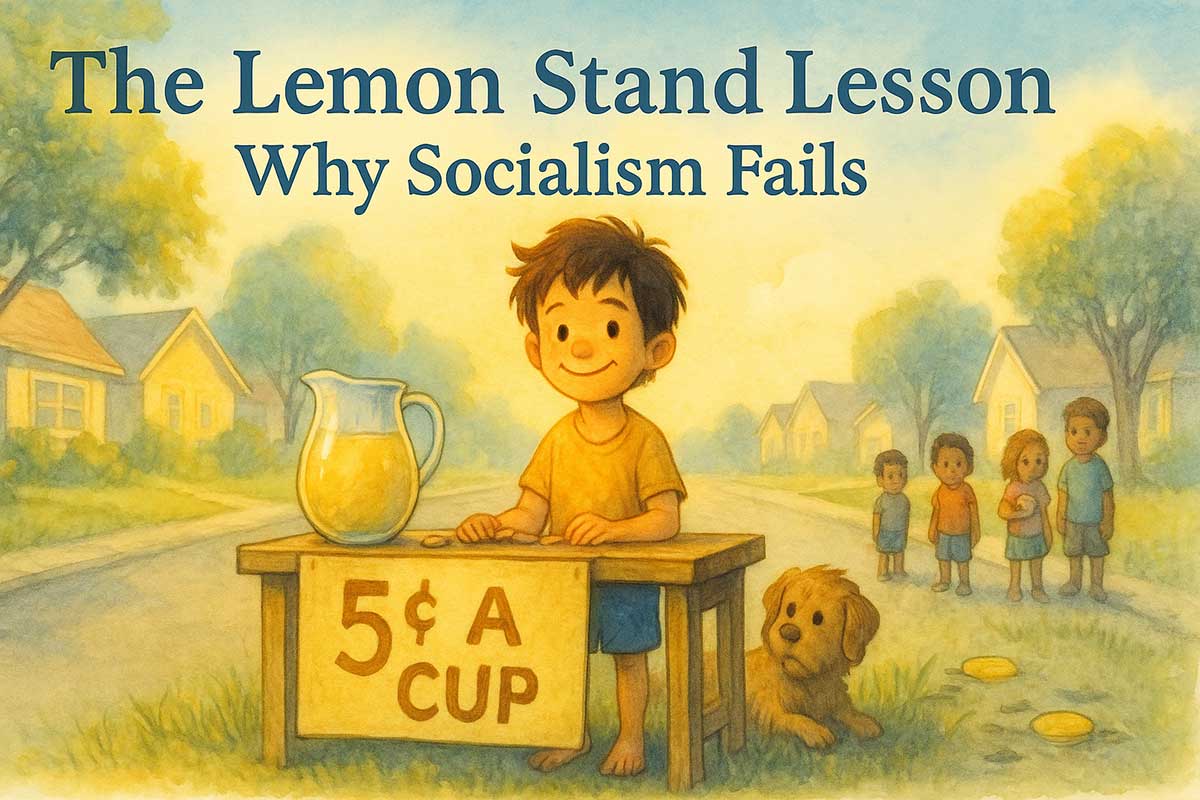
Why Socialism Fails | A Children’s Story of Fairness & Effort

November 10, 2025 by Nick Sasaki 2 Comments

Introduction by Zohran Mamdani 

When I first dreamed of fairness, I imagined a world where no child went without.
Where toys, joy, and opportunity belonged to everyone — not to the lucky few.
That dream still burns bright in me.

This story, The Lemon Stand Lesson, begins with that very dream — the dream of equality, of shared happiness. It starts with children who believe that everyone deserves the same smile. And what could be more beautiful than that?

But dreams meet reality not in speeches, but in sidewalks — in the sweat of work, in the heart of effort.
When the children of Sunnyvale Street decide to share what one boy earned, they believe they are creating fairness. But soon, they must face a question as old as society itself:

Can fairness survive when effort disappears?

So let’s step into the sunlight with open hearts.
Let’s ask what truly builds community — the taking or the creating, the sharing or the striving.
Because if we can teach our children that fairness is born from contribution, not confiscation, perhaps we’ll learn it again ourselves.


Table of Contents
Introduction by Zohran Mamdani 
Dreams and Lemons
The Sweet Reward
The Whisper of Fairness
The Taking
The Equal Joy
The Cracks Appear
The Still Street
The Rain of Regret
The Empty Stand
The Builder’s Tears
The Harm We Meant as Kindness
Final Thoughts by Zohran Mamdani

Dreams and Lemons

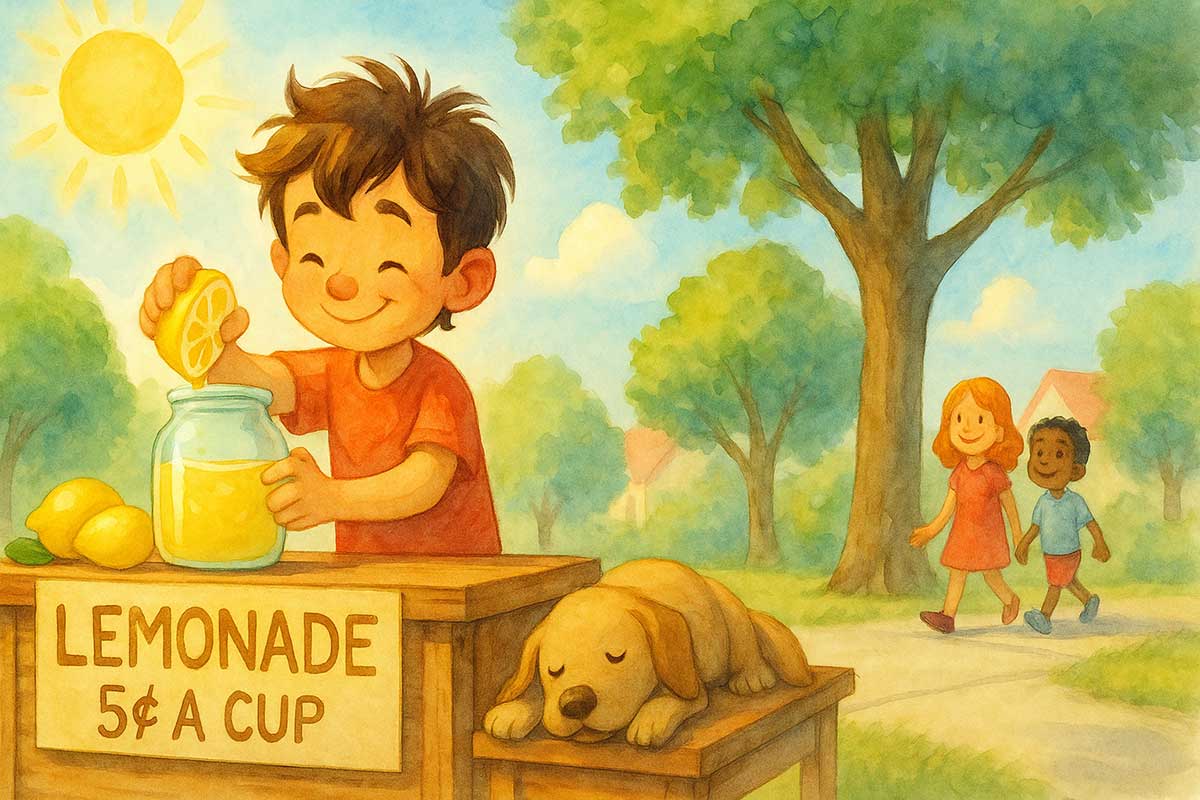
On Sunnyvale Street, where the summers were sweet,
Lived Milo, a boy with bare, dusty feet.
He dreamed of new toys, of rockets and drums,
So he built a small stand and waited for thumbs.

The Sweet Reward
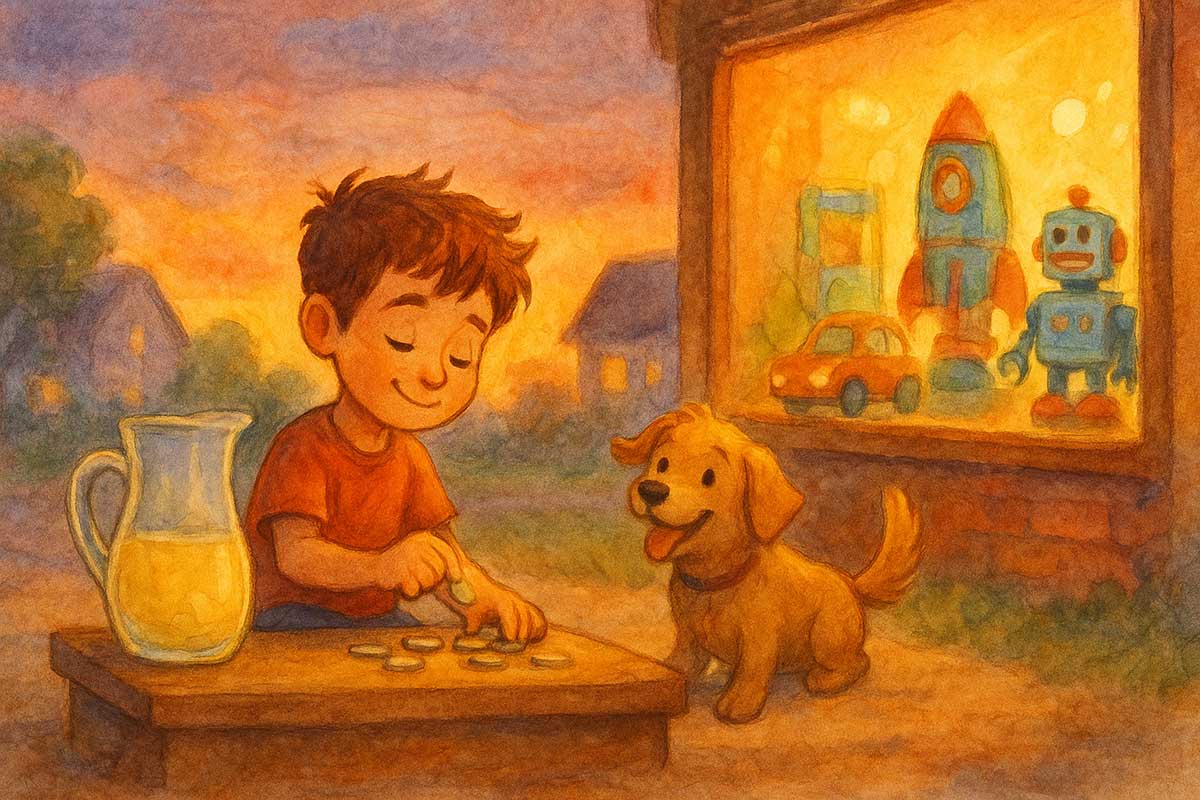
He mixed up his lemons, he measured each cup,
He smiled through the sweat till the sun gave up.
Each drop he sold, each coin he saved,
Was a tiny reward for the hours he gave.

The Whisper of Fairness
And soon the stand was more than play —
It gave his work a light each day.
He bought bright toys that whirred and spun,
The sound of effort turned to fun.

The Taking
The children clapped; they laughed and cheered,
Till envy whispered, “It’s unfair, my dear.”
“Why should one boy have joy alone?
Aren’t we all equal?” came the tone.

The Equal Joy
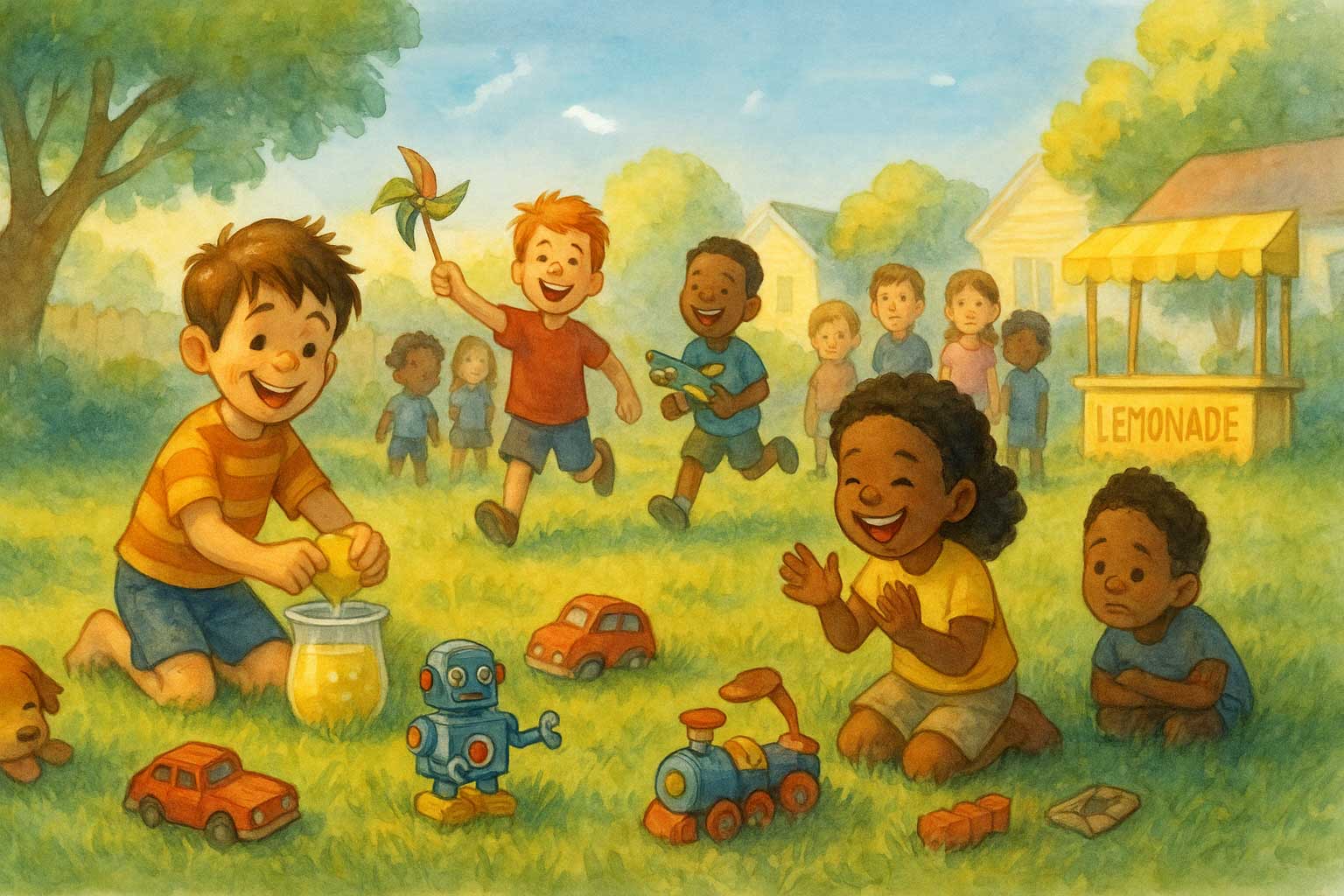
Their words were soft — they meant no harm.
They only wished for life’s same charm.
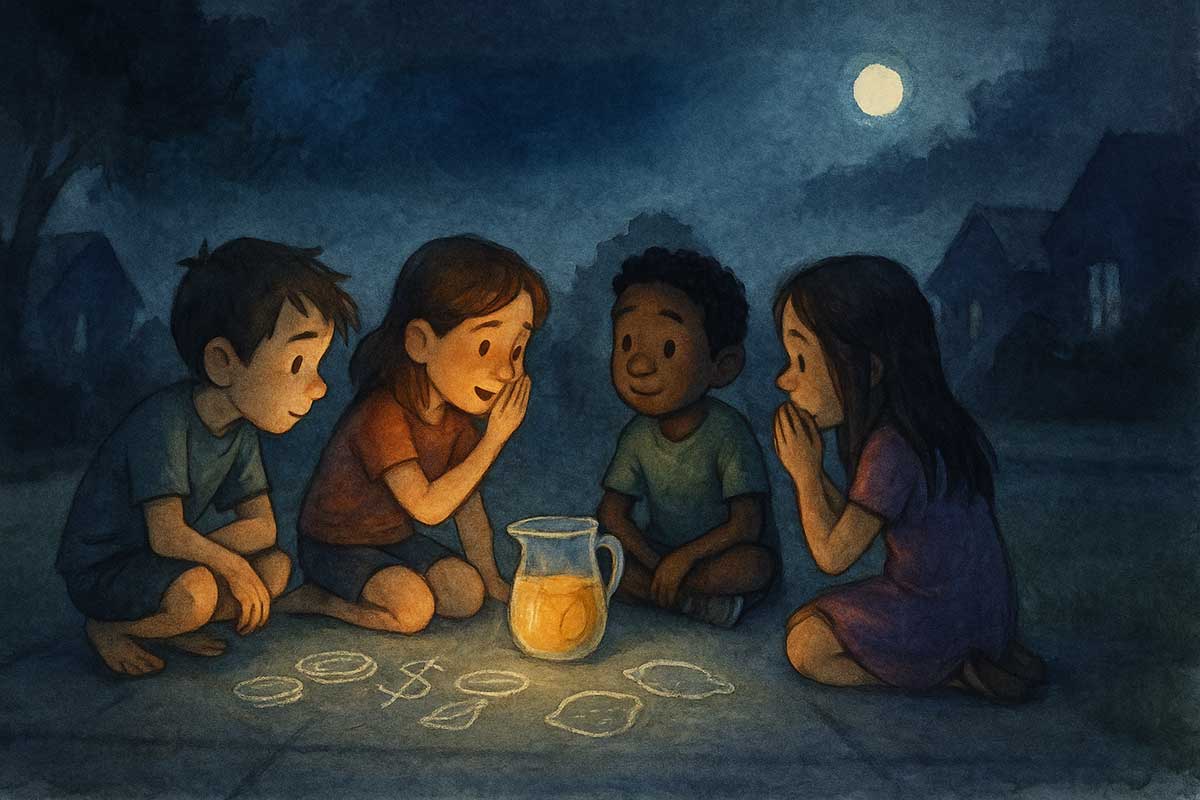
So they made a plan beneath the moon,
To share his toys — and share them soon.

The Cracks Appear
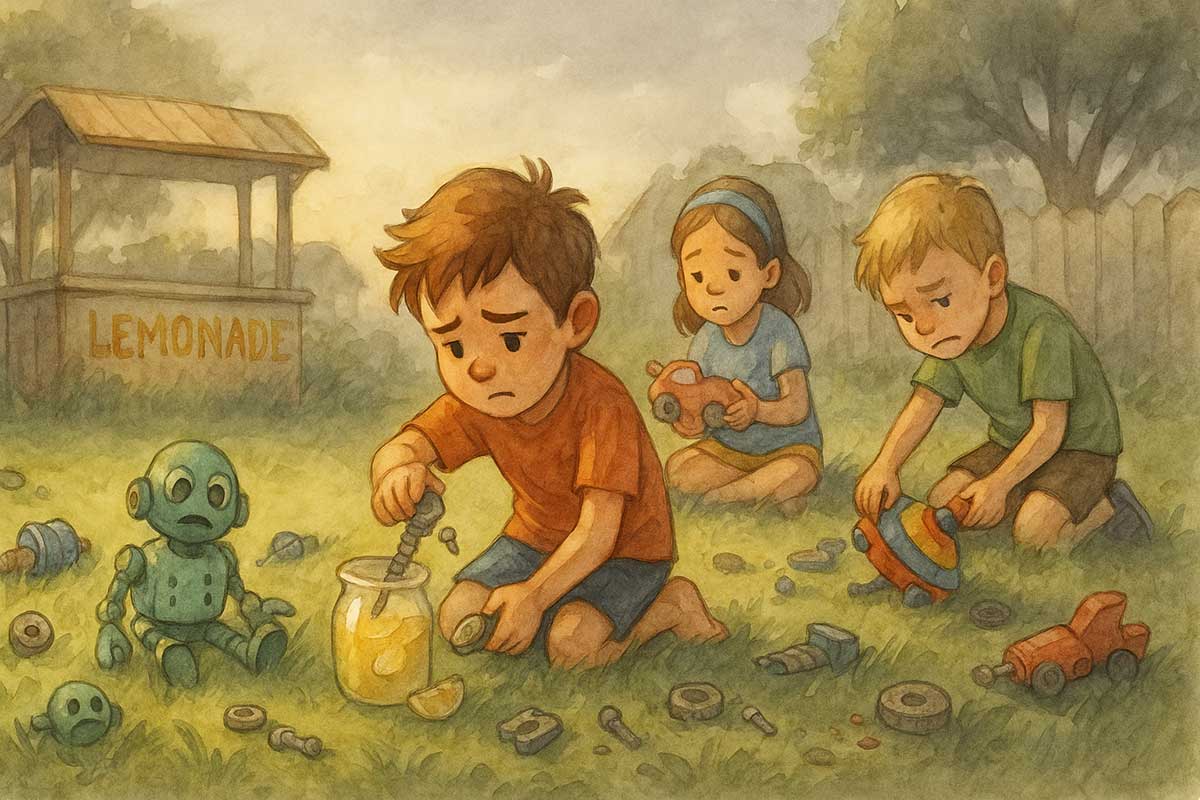
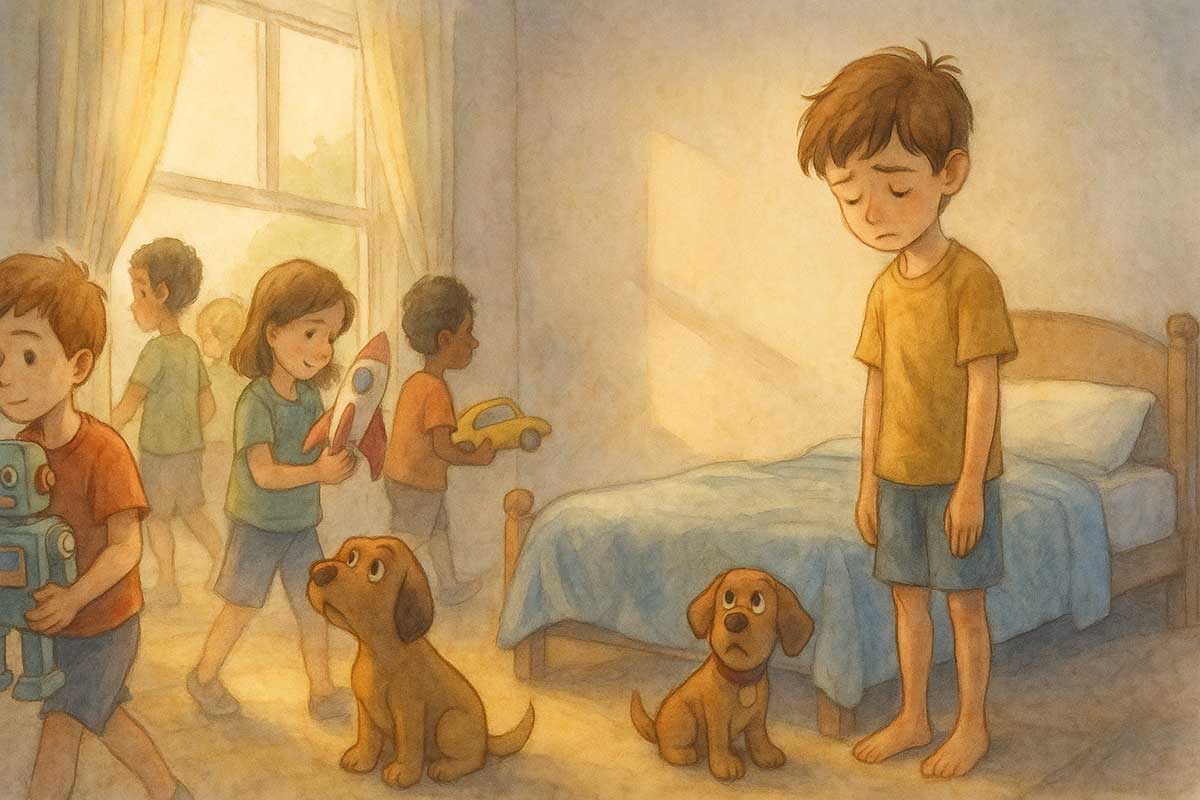
Milo woke to find them gone,
His work, his joy, his stand withdrawn.
They told him, “Now we’re all the same.
It’s only fair, you had your fame.”

The Still Street
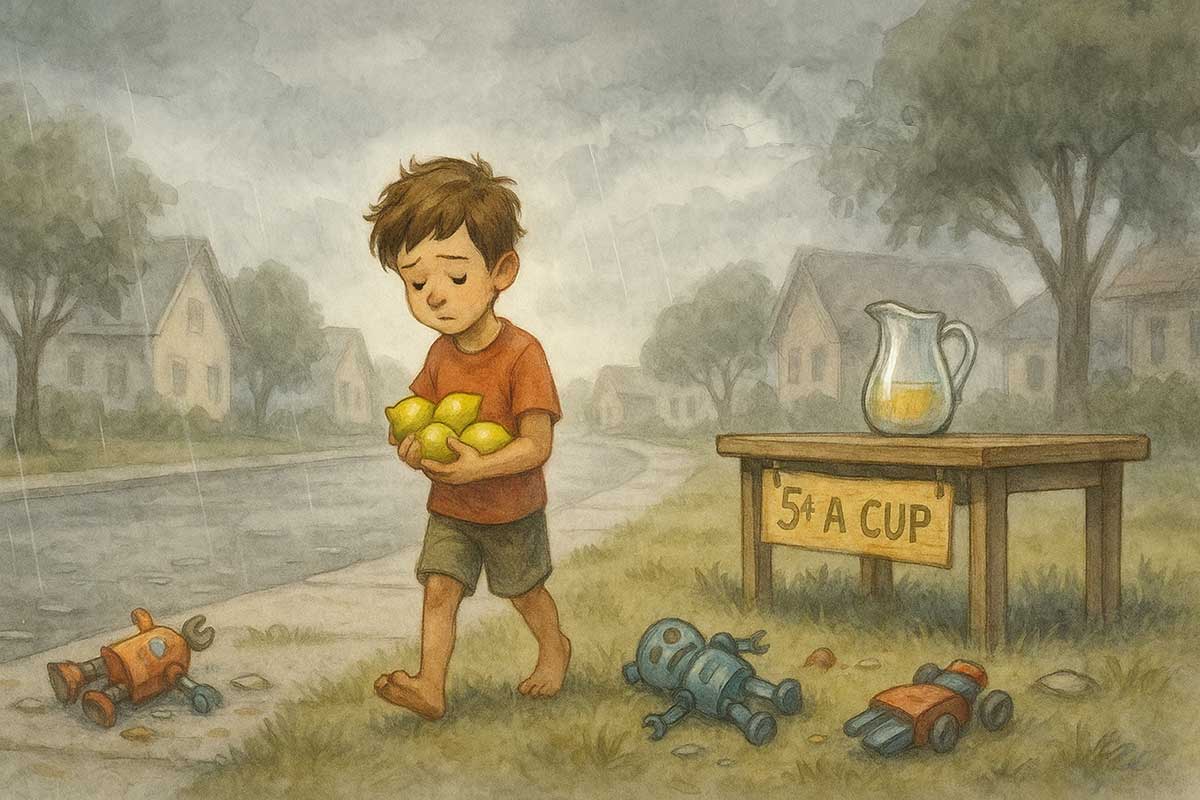
At first it seemed that all was good —
Each child with toys as they dreamed they should.
Laughter bloomed for just one day,
Then cracks began where fairness lay.

The Rain of Regret
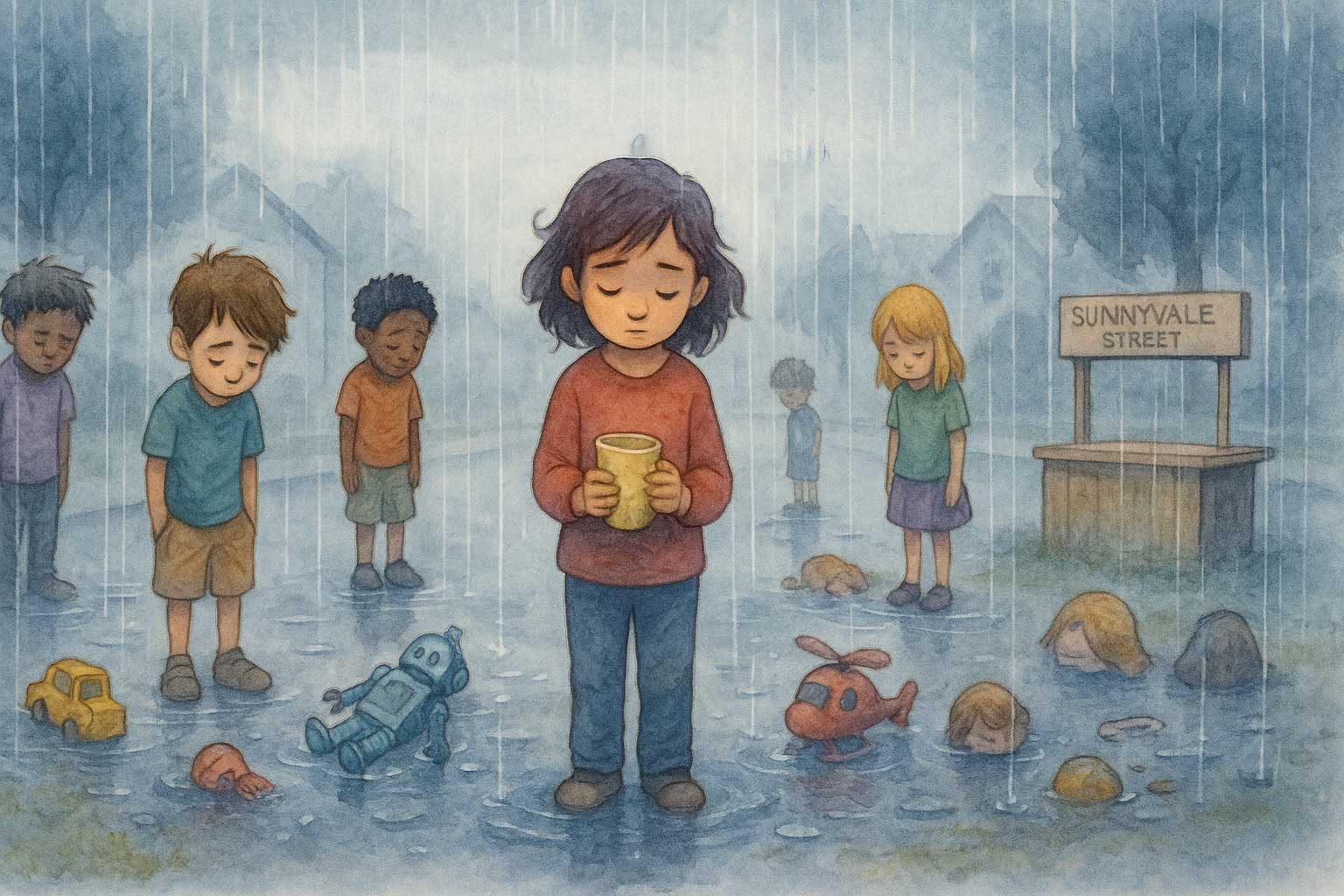
The toys broke down — no one repaired,
No one worked, for nothing was spared.
The lemonade stand, once bright with cheer,
Stood empty, quiet, year by year.

The Empty Stand

No child saved coins, no one tried.
The spark that built their joy had died.
For when all gain without the strain,
The will to work begins to wane.

Soon, Sunnyvale Street grew gray,
Its joy and color drained away.
The laughter gone, replaced by sighs —
The dream of “equal” slowly dies.

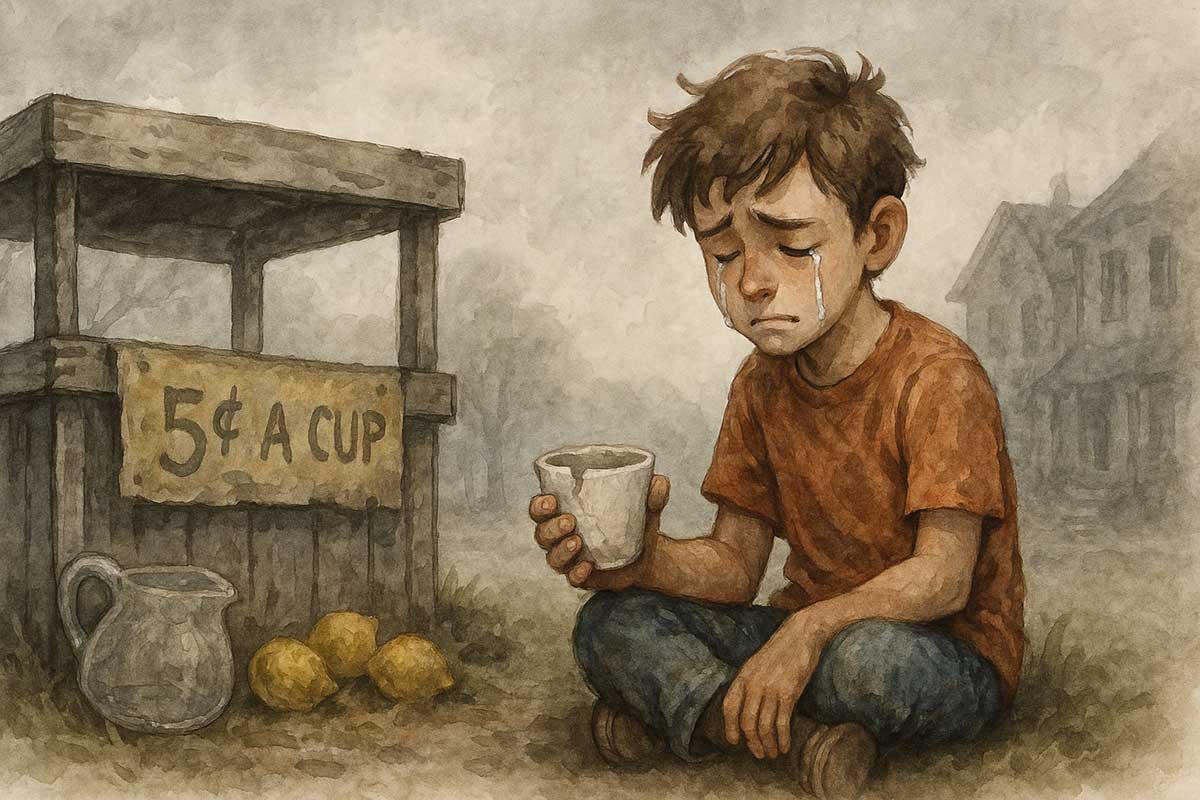
The Builder’s Tears
The Harm We Meant as Kindness

Milo wept beside the stand, A broken cup still in his hand. "It felt so right," he softly said, "To share what I had earned instead.

But now my tools grow rust, my lemons spoiled, The hands that built now stand uncoiled."
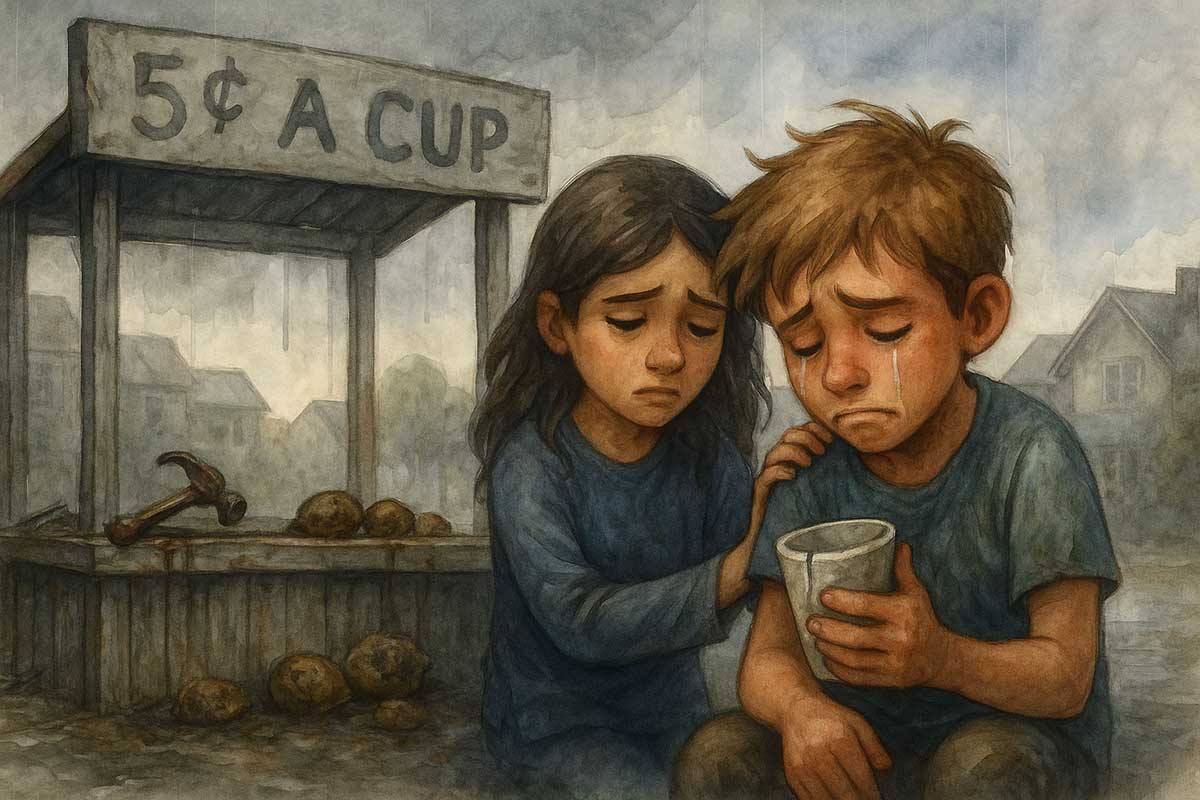
Luna turned and held his arm, "We wanted kind — we caused you harm. We thought that joy could multiply, But somehow made the whole street die."

And from that street, a silence spread, Of dreams once shared, now cold and dead.

Final Thoughts by Zohran Mamdani
I wanted to believe that fairness could be made by decree — that if everyone shared, no one would suffer.
I thought envy could be erased by equality.
I thought joy could be multiplied by dividing.

But I was wrong.

Watching those children on Sunnyvale Street, I saw something break that no law or policy could fix.
They began with good hearts — just as I did — but when they took what one had earned, they also took the meaning of it. The toys didn’t just fall apart; so did their sense of purpose.

It hurt to see it.
Because deep down, I knew that was my own mistake — believing that goodness could survive without responsibility.
That compassion alone could hold a community together.

I wanted socialism to work. I still wish it could.
But wishes don’t build lemonade stands, and slogans don’t keep them standing.
What does, is something harder — effort, ownership, pride.

The story ends with the children rebuilding together, and I see myself in that too — starting over, learning again.
Maybe fairness isn’t about equal slices. Maybe it’s about each of us earning the chance to give something back.

If I ever speak of sharing again, I’ll speak of it differently — not as taking, but as offering.
Because now I know:

When everything belongs to everyone, nothing truly belongs to anyone.
And when nothing belongs to anyone, care disappears.

That’s the lesson I learned on Sunnyvale Street.
And it’s one I won’t forget.

Short Bios:

Milo

A bright-eyed boy with a curious mind and hardworking hands. Milo starts a humble lemonade stand on Sunnyvale Street, saving every coin until his small dream grows into joy. Through success, envy, and renewal, he learns that true happiness comes from effort, not entitlement.

Luna

Milo’s loyal friend and quiet thinker of the group. She believes in fairness but learns that kindness without contribution can hurt more than it helps. Luna’s compassion turns into wisdom as she helps rebuild the lemonade stand in the end.

Theo

The loudest of the neighborhood kids and the first to suggest that everyone “share” Milo’s toys. Theo represents the impulse to make things fair instantly — before understanding the cost. His regret later leads him to become Milo’s biggest helper.

Asha

An observant girl who sees both sides of the conflict. Asha questions whether taking what isn’t earned can ever truly feel right. Her gentle honesty helps the group see that fairness must grow from shared responsibility, not from demand.

Rafi

Milo’s playful neighbor and class clown. Rafi joins the others in taking the toys, but when the fun fades, he’s the first to feel the emptiness. His humor and humility help bring laughter back during the rebuilding — this time with purpose.

Sunny (Milo’s Dog)

A scruffy, ever-faithful companion who watches every triumph and mistake with silent loyalty. Sunny never speaks, but his wagging tail at the end says what words can’t — forgiveness and hope return when love and work come together.

Zohran Mamdani — Narrator & Voice of Reflection

Zohran Mamdani lends his reflective voice to the story, opening with optimism about equality and closing with painful honesty about what happens when ideals meet reality. His narration bridges innocence and awareness — guiding young and adult readers alike to see that fairness without effort is fragile, and that responsibility is what makes community real.

Related Posts:

  • The Mamdani Years: Coffee, Co-ops, and Controlled Chaos
  • Karma Exchanger: A Novel of Pain, Rebirth, and Mercy
  • Trump Meets Mamdani: Faith, Power, and Moral Vision
  • Mamdani Housing Plan: Rent Freeze or Property Trap?
  • S. Y. Agnon in 2026: An Imagined Novel of Belonging
  • Ultimate Pilgrimage in Israel: When the Bible Comes Alive

Filed Under: History & Philosophy, Literature Tagged With: children’s book about economics, children’s picture book socialism, children’s story about socialism, effort ownership children’s story, kids book socialism lesson, kids entrepreneurial story morality, kids moral story socialism, kids story about fairness and economics, kids story about fairness and work, lemonade stand socialism kids story, moral economics kids story, picture book socialism for children, sharing vs earning kids book, socialism and work children’s picture book, socialism moral lesson kids, socialism simplified for children, socialism vs sharing story, teaching kids about effort and fairness, teaching kids about socialism story, why socialism doesn’t work kids

Reader Interactions

Comments

  1. Genny says

    November 15, 2025 at 8:39 pm

    Thank you. I love how such a valuable lesson is taught/illustrated is such a simple, easy to understand way. This is the way my generation was taught and how we lived and we were all happy. How sad those values are being lost/destroyed by means of equity.
    Equality (everyone has the same oppertunities) vs equity (redistribution of resources so everyone ends up the same)

    Reply
    • Nick Sasaki says

      November 16, 2025 at 4:52 pm

      Thank you so much for this beautiful reflection.
      It means a lot that the message came through the way it was intended — simple, honest, and rooted in the values many of us grew up with.

      You’re absolutely right about the difference between equality and equity.
      Equality gives everyone the same chance to rise through effort.
      Equity tries to guarantee the same outcome, often by taking away the meaning and joy that come from earning something yourself.

      The sad part is that most people who push for equity truly believe they are being kind — but, as your generation learned firsthand, removing effort removes purpose, pride, and dignity.

      I’m grateful you shared this.
      These lessons are worth preserving, not just for nostalgia, but because they keep communities strong, motivated, and connected.
      If stories like this help even a little, then it’s worth continuing to tell them.

      Reply

Leave a Reply Cancel reply

Your email address will not be published. Required fields are marked *

Primary Sidebar

RECENT POSTS

  • Joel Osteen’s Best Messages: Hope, Favor, and Faith
  • Hilary Mantel Wolf-Hall ending explainedWolf Hall Ending Explained: Can a Good Man Survive Political Power?
  • i-never-said-i-was-god-What If Jesus Never Claimed to Be God?
  • did-jesus-say-he-was-god-Did Christianity Reverse the Message of Jesus?
  • The Unseen World Liz MooreThe Unseen World Analysis: Memory, AI, and Identity
  • gilead ending explainedGilead Ending Explained: Can Grace Reach the Person We Judge Most?
  • Elena Ferrante My Brilliant FriendMy Brilliant Friend Ending Explained: Who Was Brilliant?
  • The-Underground-Railroad-ending-explained--The Underground Railroad Ending Explained
  • The Road Cormac McCarthyThe Road Ending Explained: Father and Son Imaginary Conversation
  • Atonement Ending Explained: Briony Faces the Truth
  • Never Let Me Go Kazuo IshiguroNever Let Me Go Analysis: An Imaginary Conversation
  • have-we-forgotten-who-we-really-areMichael G. Reccia: Has Humanity Forgotten Who We Really Are?
  • pachinko imaginary talksPachinko by Min Jin Lee: An Imaginary Conversation Across Generations
  • are-you-falling-behindMin Jin Lee on Time, Failure, and Falling Behind in Life
  • trump-putin-xi-modi-geography-of-power-Trump, Putin, Xi and Modi: The Geography of Power
  • misunderstanding of loveWhat If the World’s Problems Come From Misunderstanding Love?
  • netherlands travelNetherlands Travel with Five Unlikely Guides
  • france-imaginary-travel-France Imaginary Travel with Conan, Voltaire and RM
  • rent freeeze trapMamdani Housing Plan: Rent Freeze or Property Trap?
  • 2027 warning prof jiang xueqinProf. Jiang Xueqin’s 2027 Warning for America
  • Banana Fish ExplainedBananafish Explained: Before and After Salinger’s Story
  • Why James Joyce's Ulysses MattersJames Joyce’s Ulysses Explained: Love, Home, and Myth
  • what dad never saidWhat Your Father Never Told You About Silent Sacrifice
  • Fiddler On The Roof Tradition or changeFiddler on the Roof Lessons on Tradition and Family
  • short story secretsShort Story Writing Secrets from Classic Masters
  • Top-20-world-heritage-sites-Top 20 World Heritage Sites and the Future of Humanity
  • America 250 and Rev. Moon’s Bicentennial Warning
  • America next 250 yearsAmerica 250: Presidents on Hope for the Next 250 Years
  • The-love-you-withheld-Darius J Wright on Death, Love, and Life Review
  • birth chart or fateAstrology and Self-Discovery: Do the Stars Reveal Who We Are?
  • Europe next?Viktor Bout Warns Europe: Ukraine War Deep Analysis
  • The Anti-VisionDan Koe Anti-Vision: How Fear Rebuilds Identity
  • Success and now Alex Hormozi Tony RobbinsAlex Hormozi Tony Robbins Interview: Success After Winning
  • second half of 2026 predictionsSecond Half of 2026 Predictions: AI, Iran & Disclosure
  • Joy-Shared-Is-Twice-the-Joy-Sorrow-Shared-Is-Half-Joy Shared Is Twice the Joy: Sorrow Shared Is Half
  • ai bubbleJeremy Grantham AI Bubble Warning for Investors
  • why is the yen so weakWeak Yen Explained: Japan’s Currency Crisis, Carry Trade, and Future
  • soul contract storyDolores Cannon Inspired Story About Reincarnation and Soul Contracts
  • heroes after painAnime Heroes Discuss Pain, Loyalty, and Courage
  • AI and God: John Lennox on Faith, Truth, and Human Dignity
  • Alex Hormozi entrepreneur adviceAlex Hormozi Mentors on Wealth, Skill, and Leverage
  • divinity is comingCraig Hamilton Parker: Divinity Is Coming Through Darkness
  • What If Fiction’s Most Beloved Fathers Talked About Love?
  • YouTube day trading strategiesYouTube Day Trading Strategies: 5 Traders Debate Risk
  • What If Ayn Rand Debated JD Vance on the Soul of Conservatism?
  • Iran nuclear dealIs a Bad Peace Better Than a Good War? Iran, America, and the Moral Cost of Power
  • J.D Vance CommunionJ.D. Vance’s Communion: Faith, Family, and the Moral Burden of Public Life
  • is spiritual ability morally neutralAre Spiritual Gifts Morally Neutral?
  • understand without agreeingNoah Eckstein’s Harvard Graduation Speech: Understand Without Agreeing
  • Charlie Kirk’s Spiritual Legacy After Death
  • Why ChatGPT Feels More Human Than Modern Conversation
  • claude mythos aiClaude Mythos: The AI Anthropic Refused to Release
  • The future of humanityThe Future of Humanity: AI, Aliens, God, and the Multiverse
  • Elon Musk Warns AGI Could Surpass Humanity Within Years
  • japanese sauna culture totonouWhy the World Is Falling in Love With Japanese Sauna Culture
  • foreigners who loved JapanWhy Foreigners Fell in Love With Japan
  • patrick winston how to speak effectivelyPatrick Winston’s Last Lecture: How Communication Creates Success
  • psychology of money explainedThe Psychology of Money Explained
  • The Ultimate Japan Trip: Week 3 — Memory, Warmth, and Goodbye
  • the ultimate japan travel week 2The Ultimate Japan Trip: Week 2 — Kyoto to Osaka
  • the ultimate japan travel week 1The Ultimate Japan Trip: Week 1 — Tokyo’s Hidden Rules
  • graduation emotionsGraduation and Growing Up: Why Saying Goodbye Hurts So Much
  • The Simple Path to Wealth Explained by Top Financial Thinkers
  • How to Master Time Before Life Slips Away
  • Jujutsu Kaisen Curses Explained by Psychics
  • national defense strategy explainedNational Defense Strategy Explained: Security or Empire?
  • Edgar Cayce JesusEdgar Cayce on Jesus and Christ Consciousness
  • MrBeast challengeMrBeast’s Biggest Challenge Ever: 100 Nations, One Prize
  • 5 Great Novels About Mothers and Silent Sacrifice
  • what children realize too late5 Movie Mothers Who Revealed the Real Meaning of Love
  • before i was a mom explainedBefore I Was a Mom Explained: The Poem Makes Mothers Cry
  • What Happens When the World Order Loses Trust?
  • Why Empires Go to War: Truth, Profit, Fear
  • Your Child Is Your Karma? Explore Parenting and Soul Healing
  • Buckminster Fuller and AI: Can Technology Save the Soul?
  • Why War Still Exists in 2026: God, Religion, Technology, and Peace
  • mel robbins let them theoryThe Let Them Theory Explained: Stop Chasing Approval
  • history repeatsFourth Turning vs Dispensational Time Identity Explained
  • Fourth Turning Cycle Explained: Crisis, Generations, Reset
  • The Unoriginal Sinner Imaginary TalksThe Unoriginal Sinner and the Ice-Cream God Explained
  • Never Split the Difference Explained: Chris Voss Breaks It Down
  • hungry-ghosts-explainedHungry Ghosts Explained: Maté on Addiction & Trauma
  • World Peace Through God: One Human Family
  • John Lennon’s Imagine: Vision or Illusion?
  • ikigaiIkigai Explained: The Japanese Secret to Purpose and Longevity
  • Tiny Habits by B.J. Fogg: Why Small Actions Change Everything
  • Faith, Trump, and Tucker Carlson: Can Belief and Politics Coexist?
  • The Goal Explained: Goldratt, Cox, and Business Bottlenecks
  • A Return to Love: Marianne Williamson Dream Panel
  • Is Lust Bad or God-Given? A Christian View of Sexual Desire
  • My Voice Will Go With You: Why Stories Heal
  • bryon katie loving what isByron Katie’s Loving What Is and the Truth About Suffering
  • Fooled by RandomnessFooled by Randomness: Taleb on Luck, Risk, and Ruin
  • humanity at the edgeHuman Awakening Through Crisis: Are We Evolving or Breaking?
  • dan kennedy wealth attractionDan Kennedy on Wealth Attraction for Entrepreneurs
  • Ultimate pilgrimage in IsraelUltimate Pilgrimage in Israel: When the Bible Comes Alive
  • the wedding that waited a the crossingA Palestinian Wedding Day Divided by Roads, Memory & Waiting
  • Israeli Family War Story: A Son Returns Home Changed by Fear, Duty & Silence
  • Russian historical fiction 2022 warRussian Family War Story: How Pride, Silence & Duty Sent a Son Away
  • the house that stayed awakeUkraine War Family Story: A House Changed by 1991, 2014, and 2022

Footer

Recent Posts

  • Joel Osteen’s Best Messages: Hope, Favor, and Faith July 20, 2026
  • Wolf Hall Ending Explained: Can a Good Man Survive Political Power? July 18, 2026
  • What If Jesus Never Claimed to Be God? July 18, 2026
  • Did Christianity Reverse the Message of Jesus? July 17, 2026
  • The Unseen World Analysis: Memory, AI, and Identity July 17, 2026
  • Gilead Ending Explained: Can Grace Reach the Person We Judge Most? July 16, 2026

Pages

  • About Us
  • Contact Us
  • Disclaimer
  • Earnings Disclaimer
  • Privacy Policy
  • Terms and Conditions

Categories

Copyright © 2026 Imaginarytalks.com