

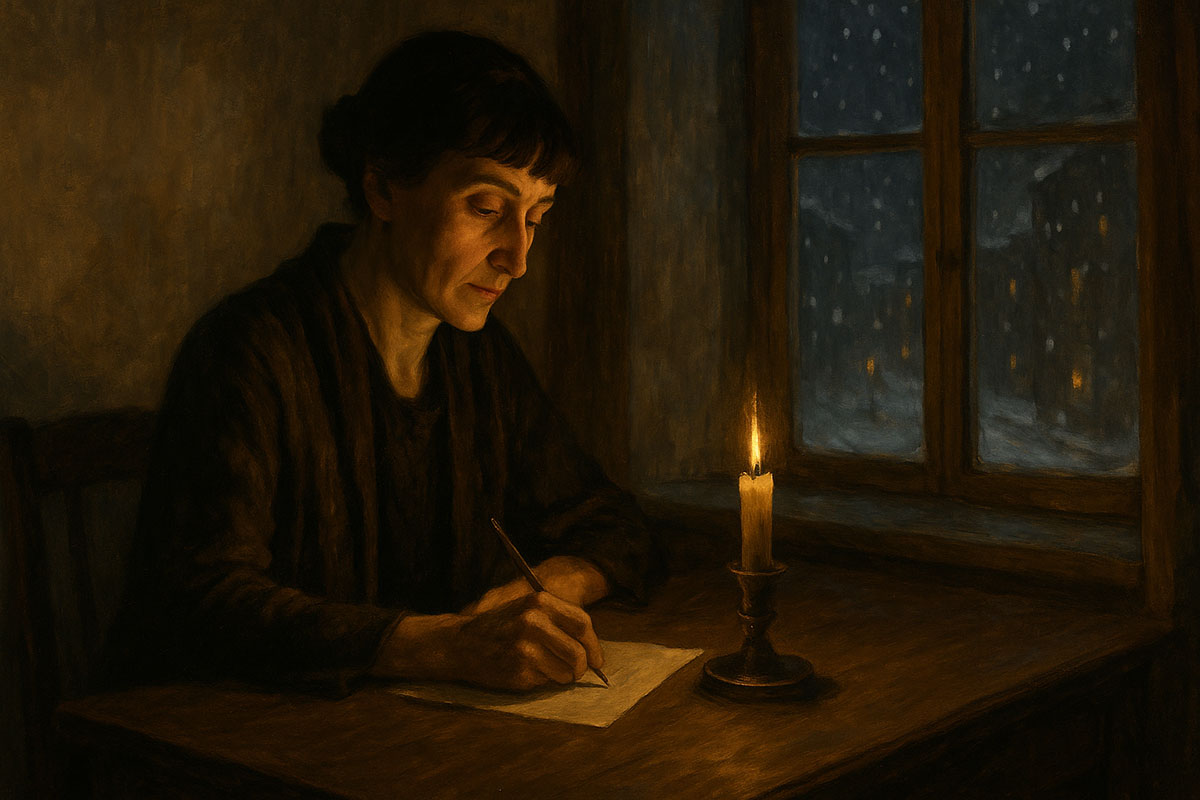
Joseph Brodsky:
Anna Akhmatova’s life unfolded like a poem etched against the granite of history—elegant, unyielding, and shaped by forces both intimate and immense. Born in the twilight of Imperial Russia, she first rose as a luminous voice in the Silver Age of Russian poetry, where her verses sang of love, longing, and the quiet splendor of human connection. Yet her voice did not remain sheltered in salons and literary circles; it was tempered in the crucible of revolution, war, and the iron weight of state repression. Through sieges and purges, through the arrest of loved ones and the silencing of countless peers, she stood as a sentinel for truth, refusing to surrender her words to fear. Each poem became a bridge—spanning the chasm between personal grief and a nation’s collective agony, carrying the whispered dignity of those who could no longer speak. Today, as we gather in this imagined conversation, we honor not only her artistry but the rare courage to craft beauty in the midst of brutality, to turn silence into song when the world demanded obedience.
(Note: This is an imaginary conversation, a creative exploration of an idea, and not a real speech or event.)

Chapter 1: The Spark of a Poet’s Voice
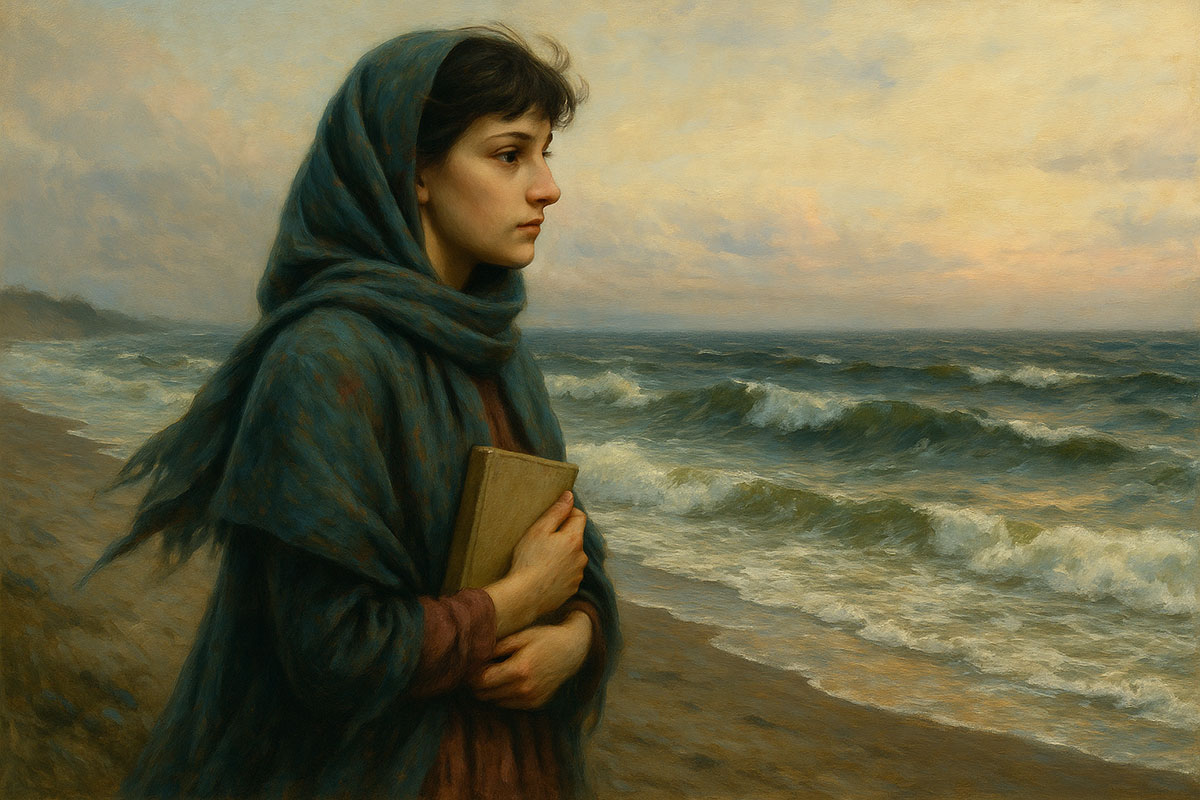
The evening light in St. Petersburg had a softness that made every gold dome seem to hum. You sat across from me in a café tucked behind the Fontanka, your gloved hands cupped around a teacup, a thin curl of steam rising toward your eyes. You were not yet the Anna Akhmatova who would be recited in whispers decades later — you were twenty-two, luminous and unsure, with the glimmer of poems pressing against your ribs.
“They laugh,” you said, looking past me toward the corner where two older poets sat. “They say my rhymes are too delicate. That I have not yet lived enough to write of love.”
I leaned in, knowing your words were both complaint and confession. “And yet,” I told you, “your lines already hold the weight of centuries. You don’t have to prove your suffering to deserve your own voice.”
Outside, sleigh bells chimed against the cobblestone streets, and the river was beginning to freeze. You opened your notebook, running your fingers over the ink you’d laid down the night before — an unadorned verse about longing that felt as if it had been waiting a hundred years to be spoken.
“You write,” I said softly, “as though the world has already told you all its secrets. That is your danger and your gift.”
You laughed, a little bitterly. “Danger, yes. There are men who think a woman should never write as if she understands the soul. They will try to make me smaller.”
“Then let them,” I replied, “and grow larger in secret.”
I remember watching you then — the way your shoulders straightened, as if you’d just accepted a private challenge. Your eyes followed the frost forming on the window, and I could almost see the poems arranging themselves inside you, ready to be loosed into the world.
When we left the café, snowflakes spun like drifting commas around your fur hat. You didn’t speak for several blocks, but your hand brushed mine lightly — a quiet thank-you. In that moment, I knew: the young woman beside me would write lines that outlived the empires we walked under.
And as the lamplight pooled at our feet, I made a silent promise — that when the silences came, and the bans, and the shadows on your doorstep, I would remind you of this night. The night your voice first caught fire.
Chapter 2: The Execution of Nikolay Gumilev
The telegram arrived on an afternoon so still, it seemed even the gulls circling over the Neva had stopped their cries. I was with you when the knock came — three quick raps that sounded too formal to be friendly. You opened the door, accepted the folded paper, and for a moment simply stared at the seal, as if you already knew what it contained.
You read it once, twice, and then set it down on the table without a word. I saw the tremor in your fingers, the way your breath caught in your throat. “They shot him,” you said at last. Your voice was stripped bare, neither breaking nor steady — just emptied.
The room seemed to shrink around us. Outside, the muffled sound of horse hooves on snow went on, indifferent. I reached across the table, but you did not move toward me. Your eyes were fixed on the chipped rim of your teacup, as if it might keep you from drowning.
“I left him years ago,” you murmured, more to yourself than to me. “But he was… part of the map. The world is different now. Smaller. Colder.”
I wanted to tell you that love does not end when a marriage ends, that grief can claim us even for those we no longer hold. But I knew this was not a moment for explanations. This was a moment to bear witness.
You rose and walked to the window, pressing your palm to the frost. “They think a bullet erases a man,” you said. “But I will keep him alive — in the way only a poet can.”
Your voice steadied as you spoke, and I realized you were already shifting the pain into language, already turning loss into something the censors could never truly contain.
That evening, we lit a single candle and sat in silence, the flame bending in the draft. I watched you write a line on a scrap of paper, then hide it beneath the inkwell. It was only later I learned the words: And the angels will speak to him in Russian.
In the quiet between us, I understood something about you that I hadn’t before — that the state could take nearly everything, but it could not take your vow to remember. And I swore to myself that when the time came, I would be there to help you keep it.
Chapter 3: Standing in the Prison Queue
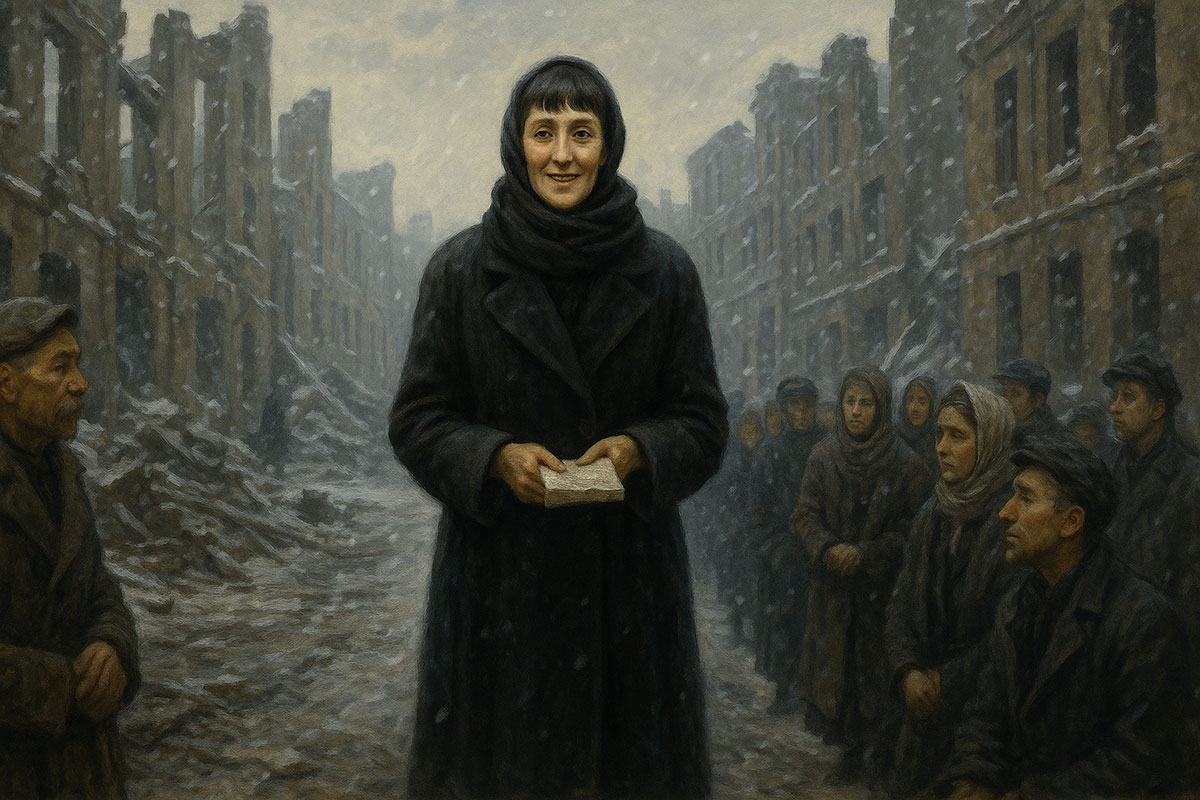
The snow along Shpalernaya Street was no longer white, but gray with soot and the breath of thousands who had stood where we now stood. The prison wall loomed ahead, its bricks darkened by years of winter and grief. We joined the line in silence, our feet sinking into the hardened ruts, the air thick with the smell of unwashed wool and frostbitten skin.
You stood beside me, your scarf wound high around your mouth, but I could see the tightness in your jaw. The women around us murmured names like prayers, each one a tether to someone on the other side of the wall. Some clutched parcels wrapped in rags — bread that would be stale before it was accepted, if it was accepted at all.
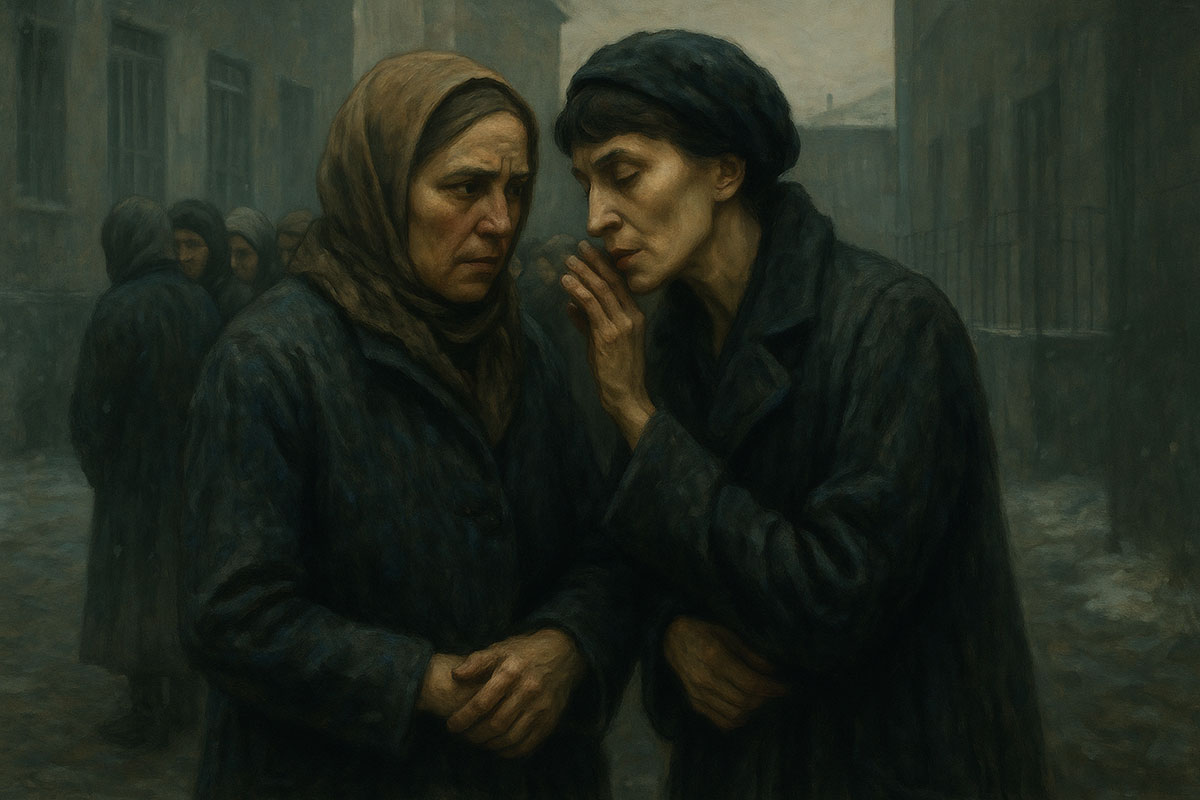
A thin woman ahead of us turned and asked quietly, “Whose?” The question was common here, a grim currency of belonging.
“My son,” she answered before you could speak, her voice cracking. The woman nodded, understanding. And then it was your turn.
“My son,” you said, but the words came out as if carved from stone. You never spoke Lev’s name in that line — it was too dangerous — but I heard it echo in the hollow between your ribs.
We shuffled forward inch by inch, the cold working its way through our boots. At times the gate clanged open and a soldier would call a name, and a woman would step forward — sometimes returning with news, sometimes not returning at all. The rest of us waited, each breath a bargain with despair.
You did not cry. I wondered if you had trained yourself for this, the way soldiers train to march through fire. Your eyes were fixed on the high wall, as if memorizing its pattern of cracks, turning it into a poem only you could read.
When we finally reached the front, you passed the small bundle of bread and tobacco through the slot without a word. The guard did not look at you. The gate slammed shut, and there was no receipt, no promise, only the sound of footsteps fading into stone corridors.
We walked away together, neither of us speaking. The snow had begun to fall again, thin and slow, dusting the world in a fragile disguise of peace.
Halfway home, you stopped, pulled a stub of pencil from your coat pocket, and wrote something on the back of an old envelope. You did not show me, but I glimpsed a line: I have learned to wait as one waits for mercy.
That night, I realized the truth of it — the queue was not just for food, or for letters, or even for news. It was for hope itself, rationed and guarded, yet still enough to keep you walking back the next day.
Chapter 4: The Ban on Her Poetry
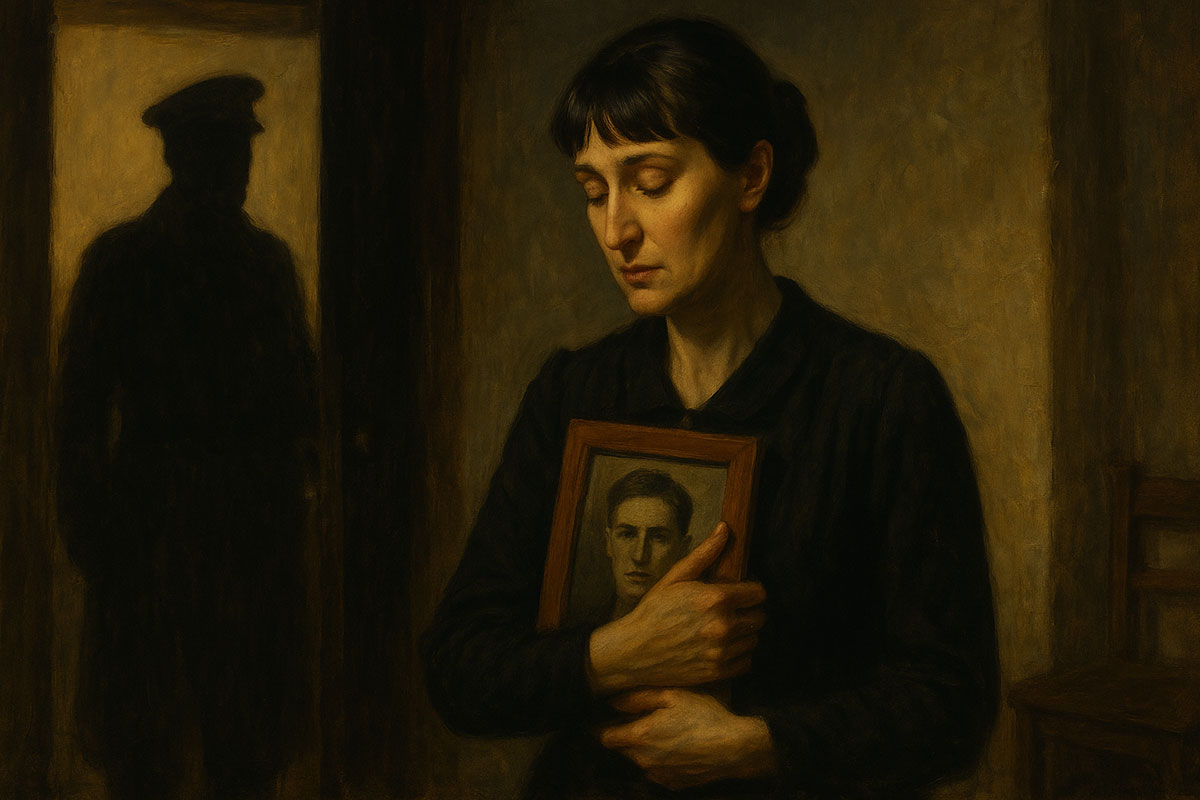
The news did not arrive with an official seal or a formal decree. It came instead as a whisper, passed from poet to poet, from editor to editor, until it reached you like a draft under a closed door. A collection scheduled for printing was halted; the typesetter’s hands were stilled mid-page. Your words, they said, would not be allowed to see the light.
You sat at your desk in the dim winter afternoon, the paper before you an expanse of silence. Outside, the Neva was locked under ice, and even the crows moved sluggishly in the pale air. You did not curse aloud. Instead, you touched the edge of your pen to the paper and let it rest there, as if daring the ink to move.
“They think this will end you,” I said quietly from the window. “They believe that by silencing the page, they can silence you.”
You turned toward me, your eyes unreadable. “A poet does not speak only in books,” you replied. “A poet lives in the breath of those who remember her lines.”
In the weeks that followed, you became your own printing press. You recited verses to friends in kitchens, in the back rooms of museums, in the shadows of theater wings. Words traveled by memory, by hand, by scraps of paper folded into coat linings. Each listener became a page, each page a hidden chapter in a book the censors could never fully burn.
One evening, a friend smuggled in a copy of a journal from abroad. There, in cramped foreign type, your poem stood like a lighthouse — exiled, but unextinguished. You touched the page with the tips of your fingers, as if greeting a child who had crossed a dangerous border.
The danger was real. The walls had ears, and the air itself seemed heavy with listening. You learned to speak with your eyes, to leave spaces in sentences where only the trusted could read the truth.
And yet, in the quiet hours before dawn, when the city still slept under its heavy quilt of snow, you wrote as if nothing could stop you. Your pen moved quickly, urgently, as though you feared the ink might freeze before you reached the last line.
When you finally set the pen down, you smiled faintly — not in triumph, but in defiance. “They can ban my books,” you said, “but they cannot ban my voice.”
Outside, the ice on the Neva groaned and cracked in the first thaw. Somewhere beneath the surface, water was still moving — quietly, relentlessly — toward the sea.
Chapter 5: Writing Under Watch
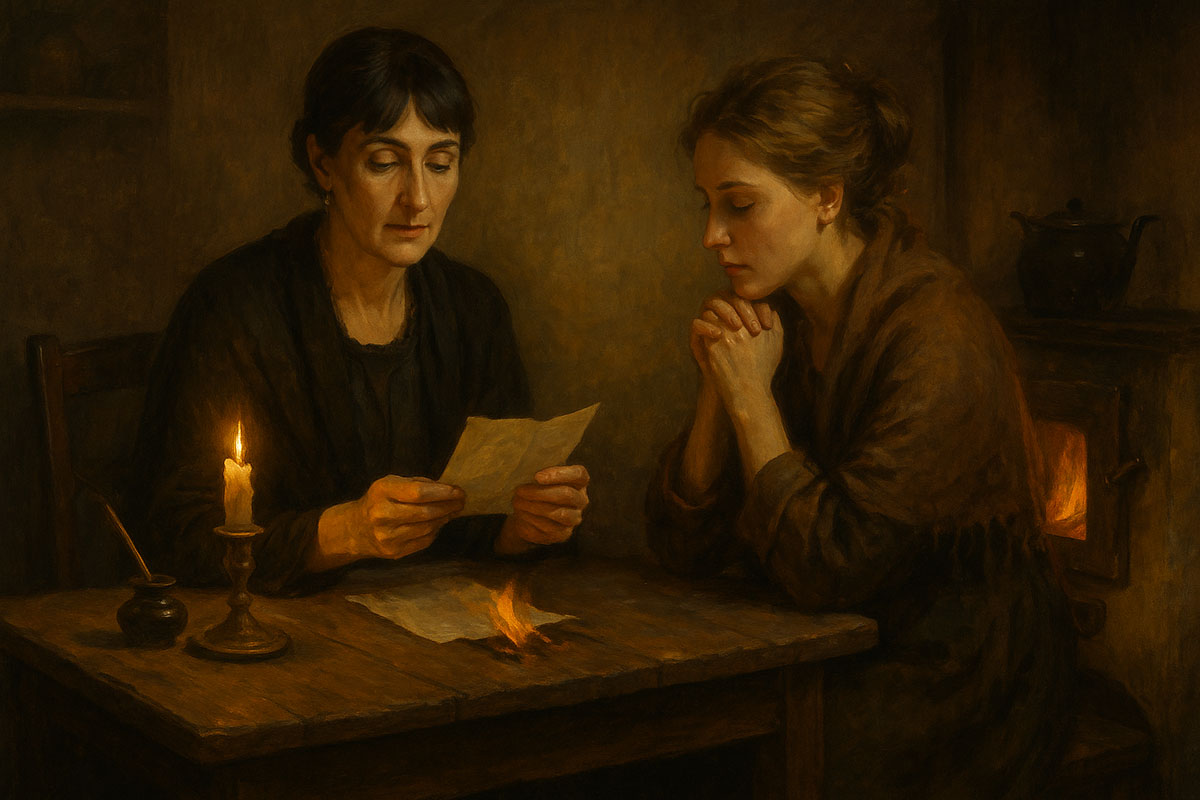
They came at dawn, as they always did, when the walls are thinnest and the heart has not yet put on its armor. Three men, boots clean of snow as if the street itself had stepped aside for them. They searched the shelves, the drawers, the hollow behind the stove where you kept onions and one hidden notebook. When they left, the sunlight on the floor looked like a question they had forgotten to ask.
You waited until the stairwell swallowed their steps. Then you exhaled—once, carefully—so the breath did not turn into a cry. I brought the kettle; your hands shook only enough to make the cups sing against their saucers. On the table lay a page they had not found, no more than six lines, written so small it could have been a prayer in a locket.
“You cannot keep paper,” I said softly.
“I can keep people,” you answered. “They remember better than ink.”
So we began again—the old ritual that made a book out of living voices. You read the poem twice, slowly, placing each word where a heartbeat could hold it. I closed my eyes and repeated it back until the rhythm landed. Then you tore the page into petals and let them fall into the stove’s low flame. A brief flowering of ash, and it was gone from the world that could be searched.
In the queue outside the prison, in stairwells and kitchens, in the echoing corridors of museums, your lines traveled like contraband lanterns. A friend would nod, and another would lean in, and a stanza would pass from mouth to mouth, warmed by breath, protected by silence. They called it rumor. We called it memory.
At night, when the city lay pinned beneath curfew, you wrote in the margin of an encyclopedia, between dates and emperors, smuggling your own empire into the small white borders of official history. I watched your pen hesitate, then move, then fly—no closer to safety, but closer to truth.
“Does it matter,” you asked, “if no one reads it in time?”
“It matters because you are writing inside the time that needs it,” I said. “And because the future is only a reader with a later train.”
You smiled—one of those quick, fierce smiles that had nothing girlish left in it. “Then let the train be late. I will leave a lamp in the window.”
There were nights when footsteps paused at your door and you froze, pen in the air, listening to the argument on the other side of the wood. There were mornings when a friend did not come back and you set another place at the table anyway, as if hunger could be fed by hope. On those days the poems arrived in fragments: a single image—keys like teeth, a coat left on a chair forever—then nothing, then the rest of the stanza breaking through like thaw-water under ice.
When illness flared, I read to you—faded saints’ lives, a French novel smuggled in a coat lining, the Psalms whispered like passwords. You closed your eyes and mouthed the lines you had given to us to keep, and I understood the design: you had turned us into pages so the book could not be burned.
One night the radio crackled with a rumor of reprieve. You did not look up. “They will give with one hand and take with the other,” you said, “but I will remain the witness of both hands.”
We sat until the lamp burned low. Outside, the river muttered against its ice, a patient animal, working the same weak seam. You laid your pen down, not in surrender, but in trust.
“Listen,” I whispered. “Under the noise.”
You tilted your head. There it was—the quiet that comes after a vow has been made and kept. A silence not of censorship, but of arrival.
“They cannot unlearn the poems,” I said.
“No,” you answered, and your voice was steady. “Because the poems have learned them.”
Final Thoughts By Joseph Brodsky
As I reflect on Anna Akhmatova’s journey, I see not merely a poet, but a living testament to the endurance of the human spirit when tethered to truth. She bore the wounds of history without allowing them to hollow her heart; instead, they deepened her compassion and sharpened her clarity. In her words, the private ache of a mother became the shared memory of a people; the solitary act of writing became an act of communal defiance. Even as her world constricted under the shadow of censorship and fear, she carved out a space where poetry could breathe, where dignity could stand unbowed. She reminds us that art is not a luxury—it is the lifeline by which a culture remembers itself. And so, her legacy lives on, not simply in the lines she penned, but in the moral courage she embodied, a courage that whispers to us still: that truth, once spoken, cannot be erased, and beauty, once born, can outlast the coldest winter.
Short Bios:
Anna Akhmatova – Russian poet (1889–1966) whose lyrical and later stark verse chronicled love, loss, and the suffering of her people during political repression. A leading figure of the Silver Age of Russian poetry, her works, including Requiem, stand as enduring testaments to courage and moral witness under Soviet oppression.
Joseph – In the biblical narrative, Joseph, son of Jacob, is known for his unwavering faith, wisdom, and ability to interpret dreams. Rising from betrayal and imprisonment to become a trusted advisor to Pharaoh, he embodies resilience, forgiveness, and providential insight.
Leave a Reply