
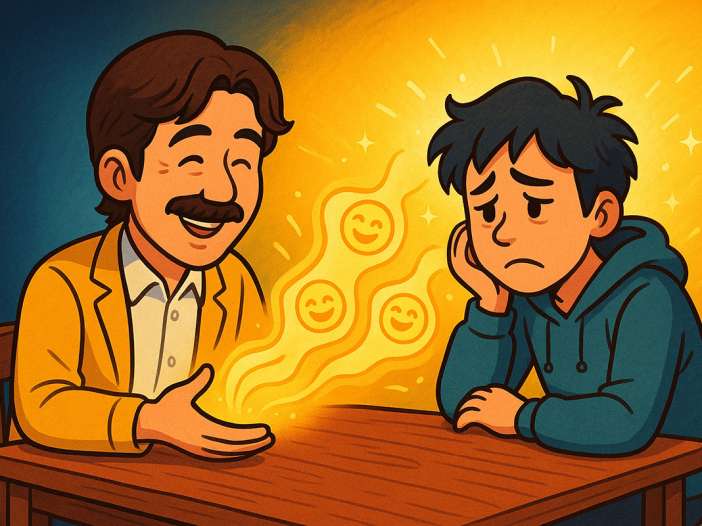
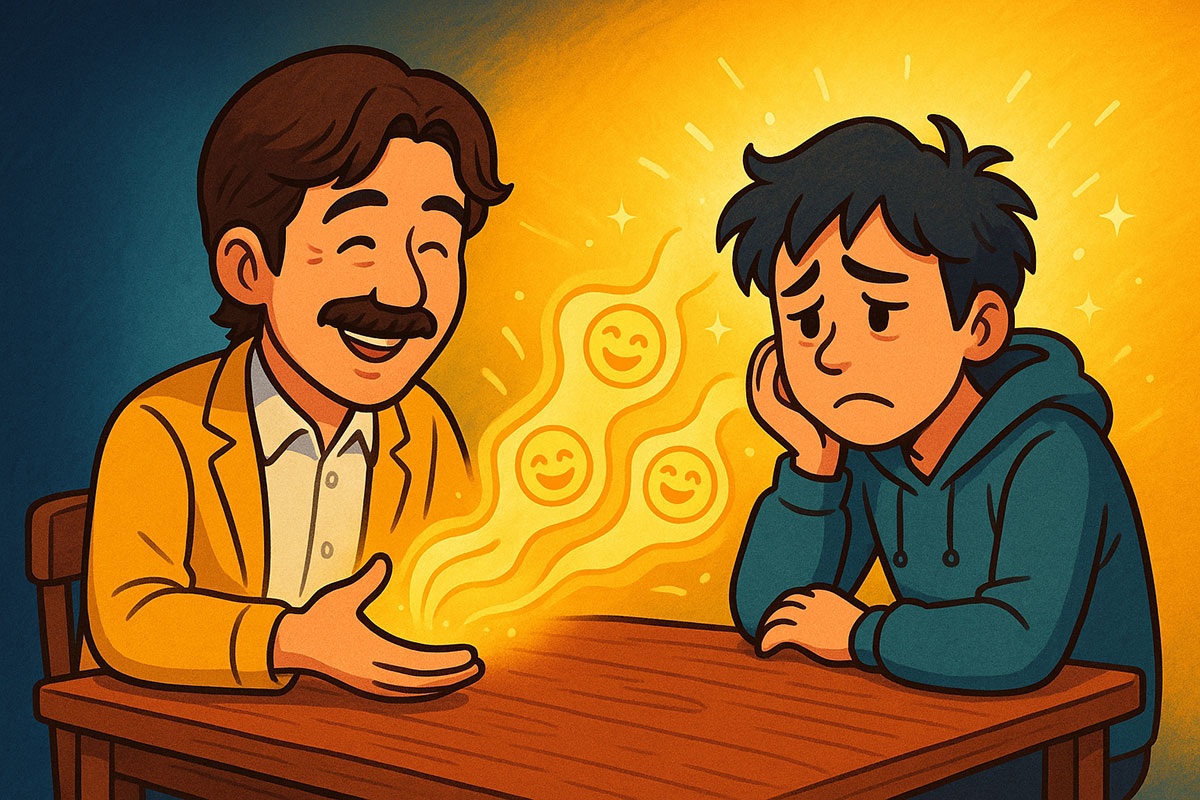
In 2025, suicide is still one of the hardest and heaviest realities we face. Behind every statistic is a human heart—someone’s friend, parent, child, or neighbor—carrying pain so deep it feels unbearable.
But what if the answer to despair wasn’t more fear, or more lectures, but something simpler? What if the medicine was laughter, perspective, and kindness?
This is where Hitori Saito, Japan’s beloved entrepreneur and philosopher of joy, offers something unique. He believed that humor is not a distraction from life’s darkness—it is a torch that helps us walk through it. In this article, we imagine him having conversations with a “Desperate Soul,” addressing twenty reasons people think about ending their lives. His answers are not clinical but human, not heavy but light—turning pain into punchlines and despair into possibility.
If you or someone you love has ever felt like giving up, let these words remind you: laughter can be a lifeline.
(Note: This is an imaginary conversation, a creative exploration of an idea, and not a real speech or event.)

Topic 1: When Life Feels Pointless or Hopeless
The Desperate Soul:
“I don’t see a future for myself. Everything feels dark and empty. No matter how much I try, I just can’t believe things will ever get better.”
Hitori Saito:
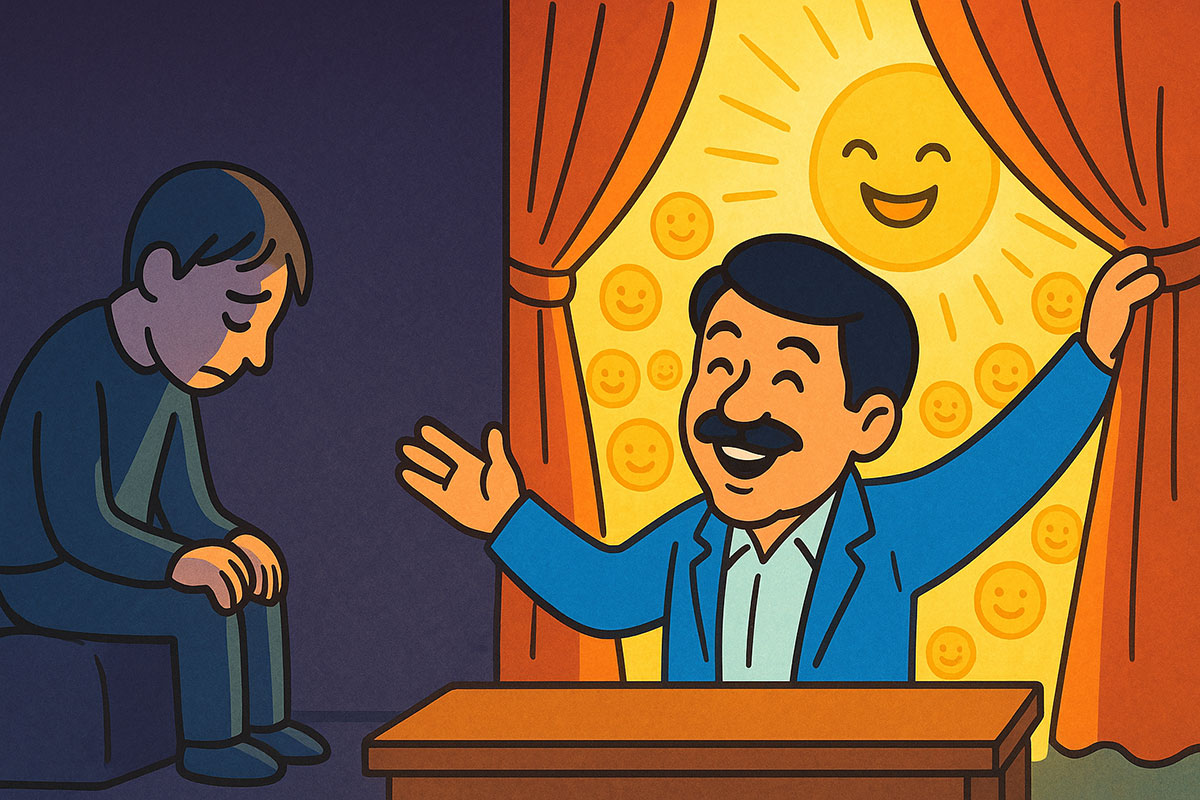
“You say there’s no future? That’s funny, because the future is shy—it only shows up if you stick around to see it. Think of it like a late-night comedy show: you can’t say it’s boring if you left before the jokes started! Every morning is life’s curtain rising. Even the darkest night has to clock out eventually, and the sun—without fail—punches in for work. So don’t resign too early. Wait, and let the next act surprise you.”
The Desperate Soul:
“But the pain never stops. It’s always here, every day, every moment. I just want it to end.”
Hitori Saito:
“You don’t want to die—you just don’t want the pain. That’s an important difference! Pain is like a noisy neighbor—it barges into your house, eats your snacks, and refuses to leave. But here’s the secret: you don’t have to burn down the whole house just to kick out one rude tenant. Your life is the house; the pain is just a bad guest. And even bad guests eventually move on if you stop feeding them. Don’t let pain trick you into giving up the whole home.”
The Desperate Soul:
“I can’t take the pressure anymore. Expectations from work, family, even myself—it’s crushing me. I’m failing everywhere I look.”
Hitori Saito:
“Pressure, huh? You know what else lives under pressure? Diamonds! The coal never thinks, ‘Oh no, I’m breaking!’ It just gets squeezed until it shines. Maybe what you call pressure is just life polishing you up for something brighter. Besides, nobody is expecting perfection—except you. If life gave out grades, most of us would be repeating the class! Don’t quit before you realize that all this pressure is secretly upgrading you.”
The Desperate Soul:
“But I don’t even know why I’m alive. I don’t have a purpose. I feel like I’m just drifting without meaning.”
Hitori Saito:
“Ah, the ‘why am I here’ question. Let me tell you: some people spend their whole lives stuck in purposes they hate—jobs they can’t stand, roles they didn’t choose. But you? You’re free! If life feels like it has no meaning, that means you get to pick one. That’s a gift. It’s like going into a restaurant with no set menu—you can order anything you want! So why not try something new? Start small: your purpose today could be to smile at a stranger, or to laugh at a silly joke. Build from there. Life isn’t about finding one giant reason—it’s about enjoying lots of little ones.”
Hitori’s Closing Thought:
“You don’t need to end your life—you just need to end the way you’re looking at it. Every pain, every pressure, even the feeling of emptiness can be turned into the setup for a new punchline. And believe me, the punchline is coming… but only if you stay for the show.”
Topic 2: When Love and Belonging Break Down
The Desperate Soul:
“They left me. The person I loved most doesn’t want me anymore. If even they rejected me, what value do I have left?”
Hitori Saito:
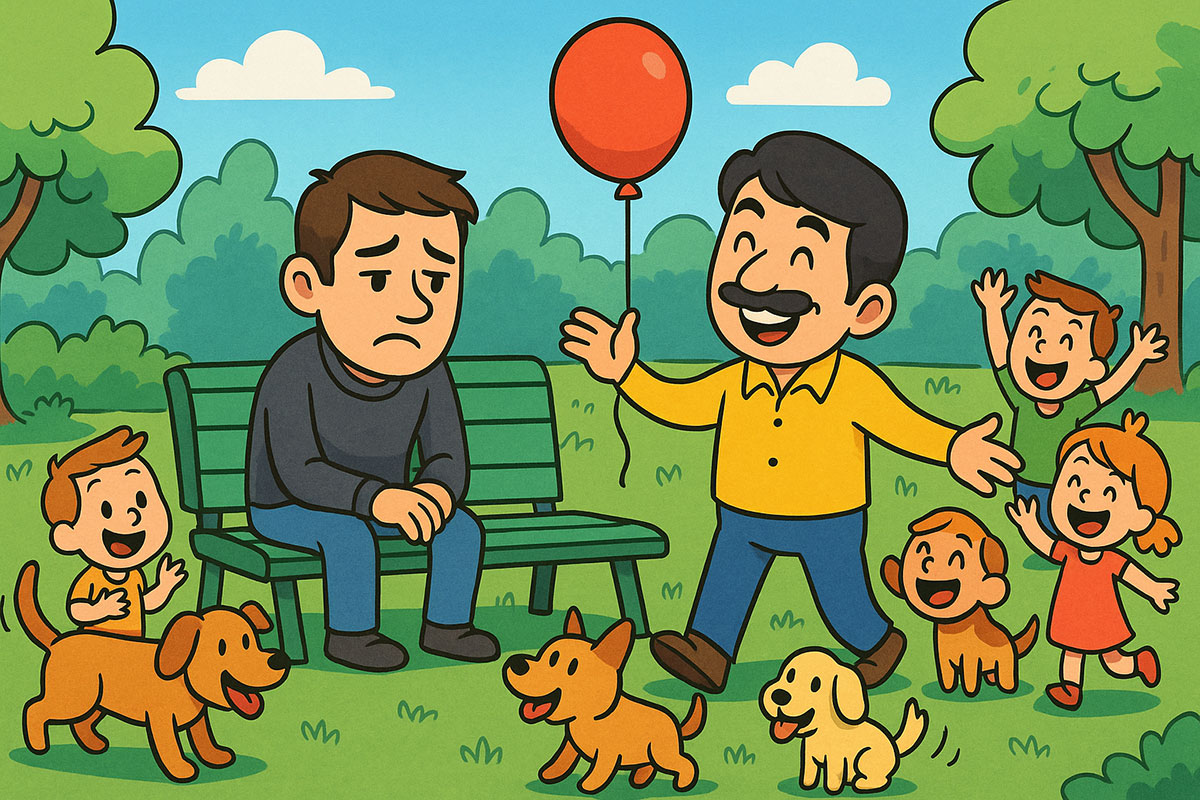
“Someone leaving doesn’t mean you lost value—it means they lost the chance to see your next chapter. Think of it this way: a restaurant doesn’t close just because one customer walked out. The table is free now for someone new, maybe someone who’ll order dessert and actually appreciate the chef! Don’t measure your worth by who left. Your worth is in the fact that you’re still here, ready to serve the next miracle life brings.”
The Desperate Soul:
“I feel so alone. Nobody cares. If I disappeared, I doubt anyone would notice.”
Hitori Saito:
“You think nobody cares? Let me tell you: the universe is already rooting for you. The trees give you air, the sun warms your skin, even dogs wag their tails just because you exist. You’re like Wi-Fi—you don’t see it, but when it’s gone, everyone panics! People would notice, even if you don’t believe it now. Loneliness is just a trick your mind plays—it whispers ‘no one sees me,’ but in truth, you’ve been shining all along. Stick around—you’re needed more than you realize.”
The Desperate Soul:
“I can’t take the bullying anymore. They mock me, tear me down, and I feel worthless.”
Hitori Saito:
“They laugh at you? Then out-laugh them! Remember: nobody throws stones at trees without fruit. The more they tease, the more it means you’ve got something they want. You’re not weak—you’re producing fruit they can’t grow. And here’s the secret: people who shine attract both fans and critics. The critics shout loudest because deep down, they wish they had your light. So instead of shrinking, smile bigger. Their laughter is a spotlight proving you matter.”
The Desperate Soul:
“I’ll never be accepted for who I am. My identity, my truth—it’s something people reject. I’ll always be an outsider.”
Hitori Saito:
“Being different feels lonely, but it’s also your superpower. The world doesn’t need another copy—it needs your original. Think of life like karaoke night: sure, a thousand people can sing the same pop song, but when someone sings something new, everyone turns their head. That’s you—you’re the new song. Yes, some won’t understand at first, but others will say, ‘Because you stayed true, I found courage to be myself too.’ And that makes staying alive not just about you, but about the ones who need your song.”
Hitori’s Closing Thought:
“Rejection, loneliness, bullying, not fitting in—they all shout, ‘You don’t belong.’ But that’s a lie. You belong because you exist. And when you exist with laughter, with courage, with your true self—you don’t just belong, you inspire. Don’t let the world lose your song before it’s sung.”
Topic 3: When Life Feels Too Heavy to Carry
The Desperate Soul:
“My body is broken. The pain never ends. I can’t live like this anymore.”
Hitori Saito:
“Your body may hurt, but you are not just a body. You are also a spirit, and the spirit can laugh even when the body groans. I’ve seen people in hospital beds tell jokes so bright that even the nurses laughed till they cried. Pain may live in your body, but joy can still live in your heart. And joy, my friend, is stronger—it’s what reminds you that you are more than your suffering.”
The Desperate Soul:
“What happened to me—what I went through—it destroyed me. I can’t carry it anymore.”
Hitori Saito:
“What happened to you was terrible, yes. But you already survived it—that proves you are stronger than the event itself. Don’t let the villain win twice. If you erase yourself, they get the last word. But if you live, if you laugh, if you keep shining despite it, then you win. You become living proof that pain does not get to write the ending.”
The Desperate Soul:
“I made mistakes I can never fix. I feel shame that eats me alive. I don’t deserve to live.”
Hitori Saito:
“Made mistakes? Welcome to the human race! We all paid the entry fee with failures. Some people pretend they haven’t—but trust me, everyone has tripped on life’s stage. Mistakes are tuition—very expensive, yes, but they buy you wisdom. If shame is heavy, lighten it with laughter. Say to yourself, ‘Well, at least I’m experienced enough to teach a masterclass in messing up!’ You’ll find that shame loses its power the moment you turn it into a story, instead of a prison.”
The Desperate Soul:
“I’m just a burden. Everyone would be better off without me.”
Hitori Saito:
“You think you’re a burden? That’s like salt saying, ‘I’m just ruining the soup.’ No—you’re seasoning! Without you, life would taste different, emptier. We don’t always see our own flavor, but others do. The truth is, nobody loves you because you’re perfect or useful. They love you because you’re you. And even when you can’t see your worth, you still make the stew of life richer just by being here.”
Hitori’s Closing Thought:
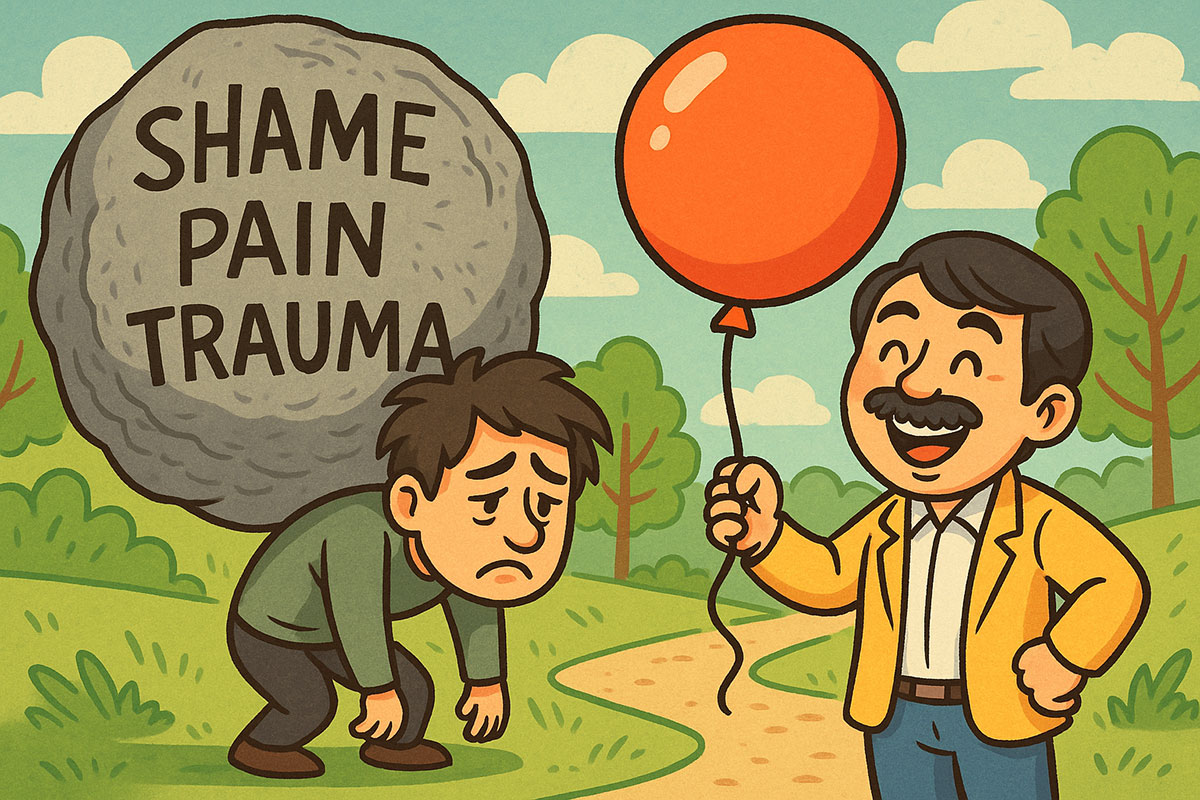
“Pain, trauma, shame, feeling like a burden—these are heavy stones. But laughter is a strange magic: it turns stones into balloons. They may not float away completely, but they become light enough to carry. Don’t give up the journey—you haven’t yet seen where your lighter steps will take you.”
Topic 4: When Circumstances Overwhelm
The Desperate Soul:
“I’ve lost my job. I can’t support myself or my family. I feel worthless.”
Hitori Saito:
“Money is called ‘currency’ because it flows—it comes, it goes. If your wallet is empty today, it doesn’t mean your value is. If life judged us only by money, most comedians would’ve vanished long ago. You can always earn again, start again, rebuild again. But there’s only one you—don’t throw away the treasure just because the purse feels light.”
The Desperate Soul:
“Someone I love is gone. They were my reason to live. Without them, what’s left for me?”
Hitori Saito:
“They’re gone, yes—but love never leaves. It only changes form. Think about it: the laughter you shared, the warmth you felt, it still lives in you. Tears honor them, but so does joy. In fact, every smile you show now is a flower on their grave. By living, you don’t betray them—you keep them alive in the most beautiful way.”
The Desperate Soul:
“I failed. At school, at work, in life. My reputation is ruined. There’s no coming back from this.”
Hitori Saito:
“Failed? Congratulations! You’ve joined the greatest club in history. Every hero you admire was first a professional failure. Shakespeare’s plays bombed before they became classics. Thomas Edison made ten thousand ‘failures’ before the light bulb worked. Life isn’t a straight line—it’s a comedy sketch with bloopers. Your failure isn’t the end; it’s the part of the story people laugh about later, when you’re standing in your success.”
The Desperate Soul:
“I’m terrified of the future. I can only see things getting worse.”
Hitori Saito:
“Funny thing about fear—it’s like renting out space in your mind to ghosts. Ninety percent of what we fear never shows up. But we waste our days paying rent to phantoms! The future isn’t here yet—it’s still cooking. Don’t assume it’s burnt before you’ve even tasted it. Stick around—you may be surprised by how sweet tomorrow actually is.”
Hitori’s Closing Thought:
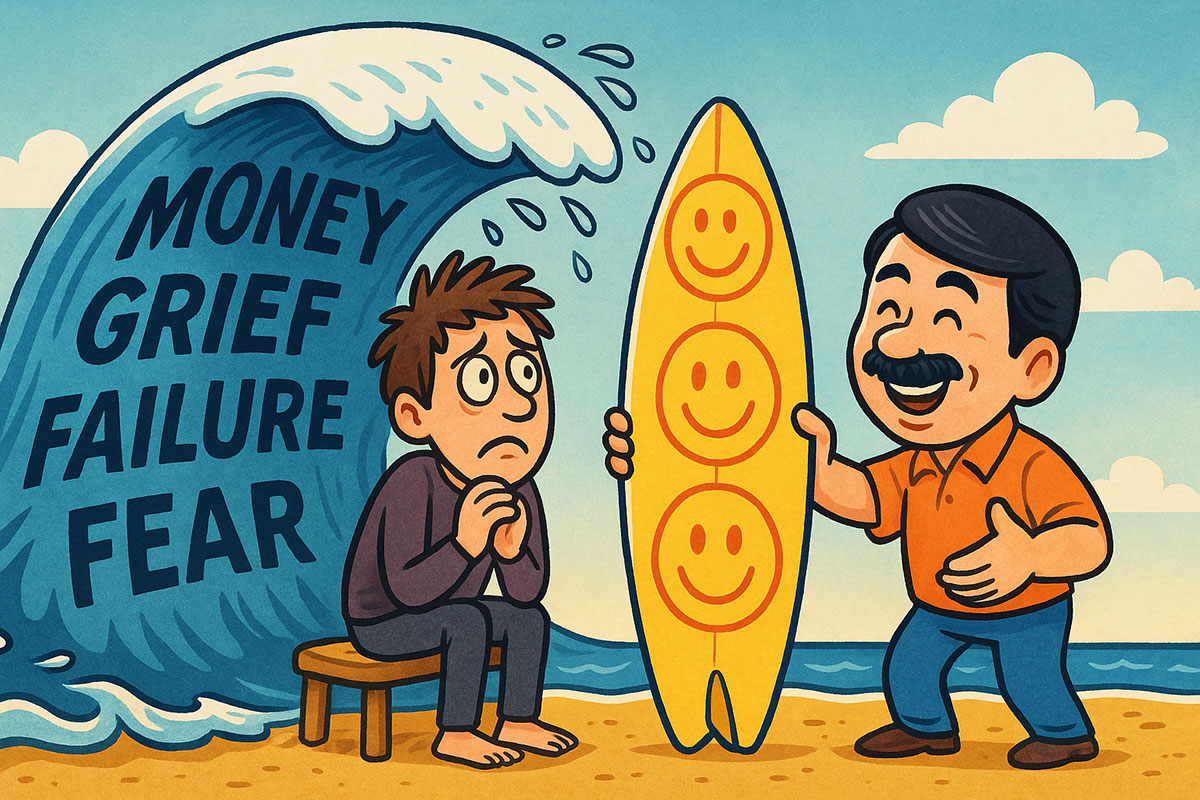
“Circumstances rise and fall like waves. Money, grief, failure, fear—they crash hard, yes. But laughter is the surfboard that keeps you riding instead of drowning. Don’t abandon the board. The waves will pass, but your ride isn’t over yet.”
Topic 5: When the Mind Plays Tricks
The Desperate Soul:
“I keep messing up with alcohol, with drugs. I’ve ruined everything. I can’t control myself anymore.”
Hitori Saito:
“Even cars skid sometimes—doesn’t mean you junk the car! A good driver doesn’t abandon it; he just steers it back on course. You slipped, yes. But slips aren’t the same as endings. You’re still alive, still breathing, which means the wheel is still in your hands. And you know what? The road ahead is still wide open.”
The Desperate Soul:
“My own mind is against me. The voices, the swings, the chaos—I can’t live like this.”
Hitori Saito:
“Your mind may feel like a noisy roommate—shouting, slamming doors, leaving socks everywhere. But remember: the house is still yours. You don’t burn it down just because the roommate is messy. What you need is support, treatment, and kindness—like a landlord sending help. And in the middle of the noise, you’re still allowed to laugh. Laughter is proof you are not the noise—you are the one listening.”
The Desperate Soul:
“Life has no meaning. It’s all pointless. Why keep going?”
Hitori Saito:
“Perfect! If life has no meaning, then you’re free to give it one. Think of it as a blank canvas—scary if you stare too long, but exciting once you pick up a brush. Some people are trapped in heavy ‘meanings’ they never chose. You? You’ve got a clean slate. Paint something silly, something bold, something beautiful. Meaning isn’t handed down from the sky—it’s created, day by day, like a doodle in the margins of life.”
The Desperate Soul:
“I can’t take this anymore. Right now, I just want it all to end. It feels like the only option.”
Hitori Saito:
“Right now feels huge, but it’s just a storm cloud. Suicide is forever; feelings are temporary. Never make a forever decision in a five-minute storm. Give it time—wait, breathe, call someone. Storms always pass; sunshine never asks permission to return. So hold on. The sky above the clouds is still blue—you just haven’t seen it yet.”
Hitori’s Closing Thought:
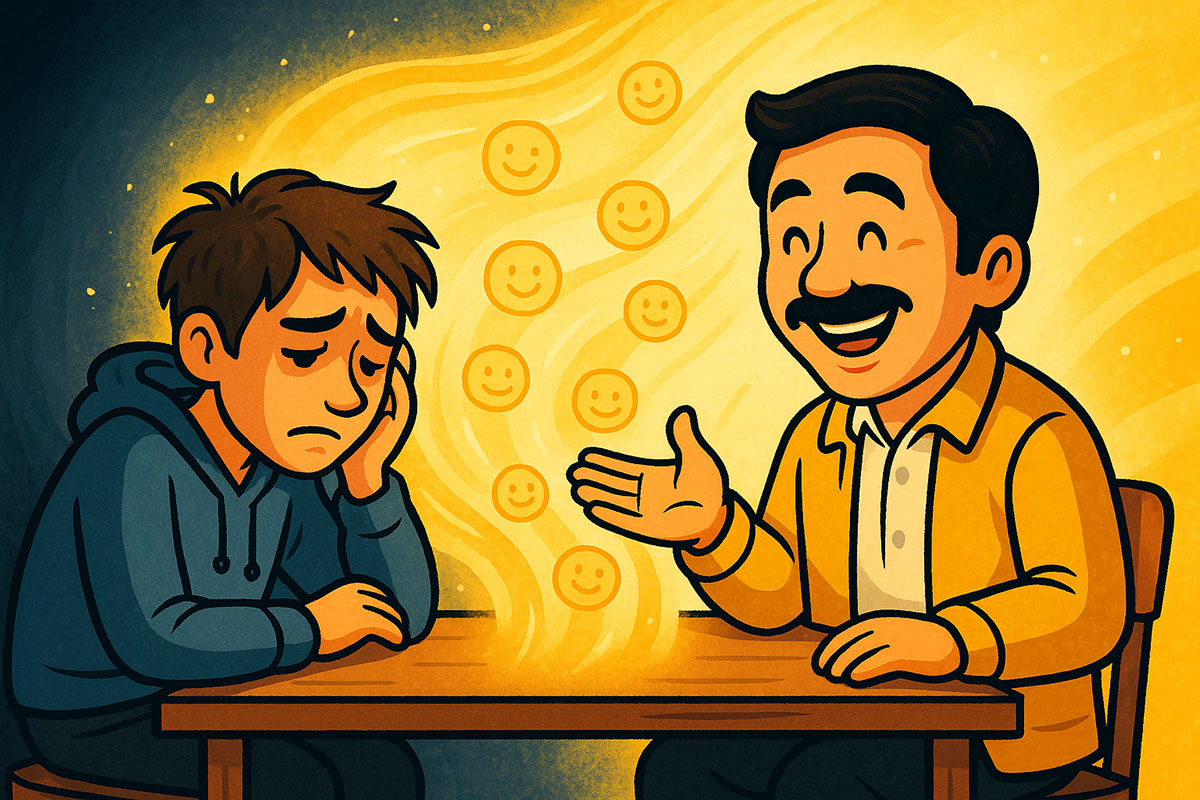
“The mind plays tricks, yes. It whispers, shouts, tells lies. But here’s the truth: you are not your thoughts—you are the one listening. And if you keep listening long enough, you’ll hear a deeper voice. It says: stay. It says: laugh. It says: live. That voice is yours—and it’s stronger than the storm.”
Final Thoughts
Every life is precious. Every struggle is valid. And every dark night eventually makes way for the sunrise.
The twenty voices of despair we explored in this article are real—they echo in countless lives around the world. But as Hitori Saito reminds us, despair doesn’t have to write the ending. With humor, gratitude, and perspective, even the heaviest burdens can become lighter.
Suicide is not the end of pain—it’s the end of possibilities. Laughter, on the other hand, opens new doors. It gives us strength to try again, to see differently, to keep going.
So if you are reading this in a dark moment, remember: you are not alone. You are not your pain. You are not your failures. You are the one who can laugh, even in the storm. And sometimes, that laugh is the very thing that saves your life.
Stay. Laugh. Live. The world is better with you in it.
Short Bios:
Leave a Reply