• Skip to main content
  • Skip to primary sidebar
  • Skip to footer
ImaginaryTalks.com
  • Spirituality and Esoterica
    • Afterlife Reflections
    • Ancient Civilizations
    • Angels
    • Astrology
    • Bible
    • Buddhism
    • Christianity
    • DP
    • Esoteric
    • Extraterrestrial
    • Fairies
    • God
    • Karma
    • Meditation
    • Metaphysics
    • Past Life Regression
    • Spirituality
    • The Law of Attraction
  • Personal Growth
    • Best Friend
    • Empathy
    • Forgiveness
    • Gratitude
    • Happiness
    • Healing
    • Health
    • Joy
    • Kindness
    • Love
    • Manifestation
    • Mindfulness
    • Self-Help
    • Sleep
  • Business and Global Issues
    • Business
    • Crypto
    • Digital Marketing
    • Economics
    • Financial
    • Investment
    • Wealth
    • Copywriting
    • Climate Change
    • Security
    • Technology
    • War
    • World Peace
  • Culture, Science, and A.I.
    • A.I.
    • Anime
    • Art
    • History & Philosophy
    • Humor
    • Imagination
    • Innovation
    • Literature
    • Lifestyle and Culture
    • Music
    • Science
    • Sports
    • Travel

Literature

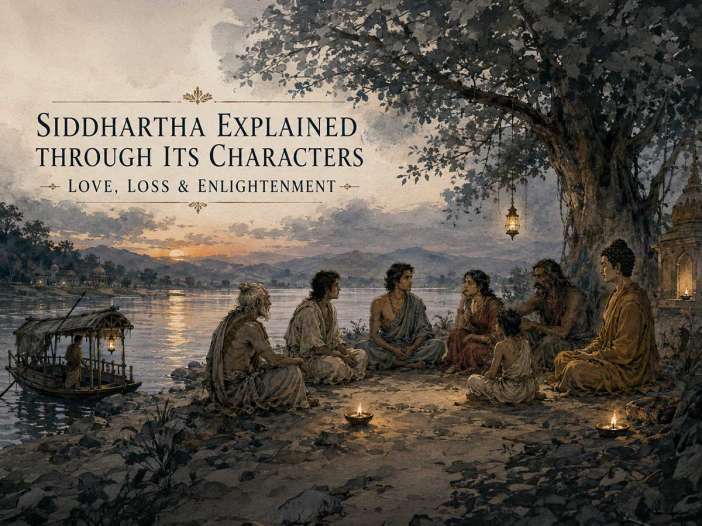
Siddhartha Explained Through Its Characters: Love, Loss, and Enlightenment

August 14, 2026 by Nick Sasaki Leave a Comment

Siddhartha explained

Introduction Hermann Hesse’s Siddhartha is often remembered as a novel about enlightenment, spiritual searching, and the wisdom of the river.But there is another way to read it.What if Siddhartha’s greatest lessons did not come from the Brahmins, the Samanas, Buddha, or even the river?What if they came from the people who loved him?His father had to watch … [Read more...] about Siddhartha Explained Through Its Characters: Love, Loss, and Enlightenment

Filed Under: Literature, Nobel 100 Best Books, Spirituality Tagged With: Enlightenment, father and son, Gautama Buddha, Govinda, Hermann Hesse, imaginary conversation, Kamala, literary analysis, love and attachment, Nobel Prize literature, self discovery, Siddhartha, Siddhartha analysis, Siddhartha characters, Siddhartha son, Siddhartha summary, Spiritual awakening, spiritual fiction, Vasudeva, wisdom

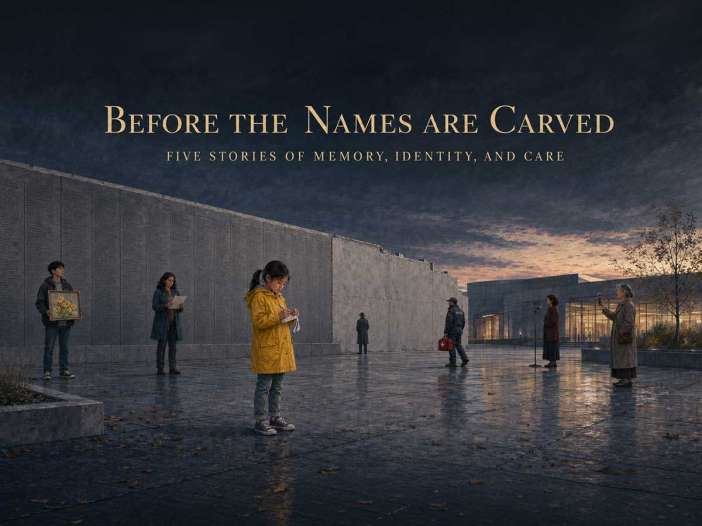
Before the Names Are Carved: Five Connected Stories
August 13, 2026 by Nick Sasaki Leave a Comment

before-the-names-are-carved-

Introduction Before the Names Are Carved is a cycle of five connected short stories inspired by the moral questions raised through our exploration of Han Kang’s Human Acts.Set in Greyhaven, the collection follows people whose identities have been reduced to a risk score, an accusation, archived testimony, an artificial future, or a predicted death. At the … [Read more...] about Before the Names Are Carved: Five Connected Stories

Filed Under: Literature, Nobel 100 Best Books Tagged With: Artificial intelligence, Before the Names Are Carved, civic neglect, connected stories, digital identity, digital resurrection, Greyhaven, Grief, human dignity, Human Rights, institutional failure, literary fiction, memorials, memory, moral courage, predictive policing, short stories, survivor rights, wrongful accusation

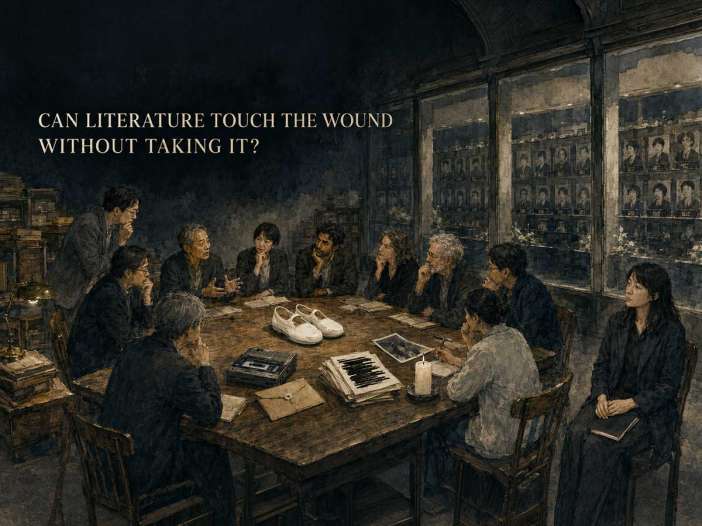
Han Kang Human Acts Explained by Leading Scholars
August 12, 2026 by Nick Sasaki Leave a Comment

The Scholars and the Unworn Shoes

Introduction Han Kang’s Human Acts begins with a murdered boy, but its questions reach far beyond one death.How does a government transform citizens into enemies? Can the body preserve a truth that official history suppresses? Does a survivor owe testimony to the public? Can poetic language represent torture without making suffering beautiful? What … [Read more...] about Han Kang Human Acts Explained by Leading Scholars

Filed Under: Literature, Nobel 100 Best Books Tagged With: bodily memory, censorship, collective memory, Dong-ho, Gwangju Uprising, Han Kang, historical trauma, Human Acts, Human Rights, imaginary conversation, Korean literature, literary analysis, literary scholars, Nobel Prize literature, political violence, reader responsibility, state violence, survivor testimony, translation studies, trauma theory

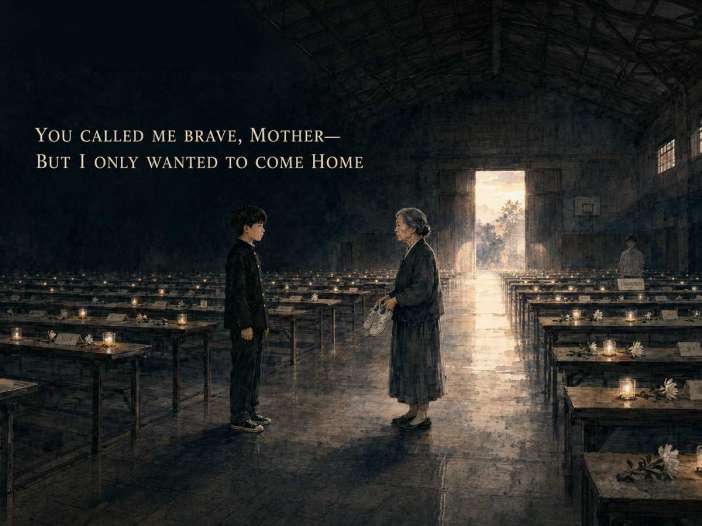
Han Kang Human Acts: An Imaginary Conversation with the Dead
August 12, 2026 by Nick Sasaki Leave a Comment

Introduction In May 1980, the South Korean military entered Gwangju and opened fire on citizens calling for democracy. Among the dead was a fifteen-year-old boy whose brief life became the emotional center of Han Kang’s Human Acts.In the novel, his name is Dong-ho.He remains at the provincial office gymnasium, helping volunteers identify bodies and care for … [Read more...] about Han Kang Human Acts: An Imaginary Conversation with the Dead

Filed Under: Literature, Nobel 100 Best Books Tagged With: censorship, Dong-ho, Grief, Gwangju Uprising, Han Kang, historical trauma, Human Acts, Human Rights, imaginary conversation, Jeong-dae, Korean History, Korean literature, literary analysis, memory, mothers and sons, Nobel Prize literature, political violence, state violence, survivor guilt, testimony

Snow Country Analysis: Kawabata Scholars Explain It
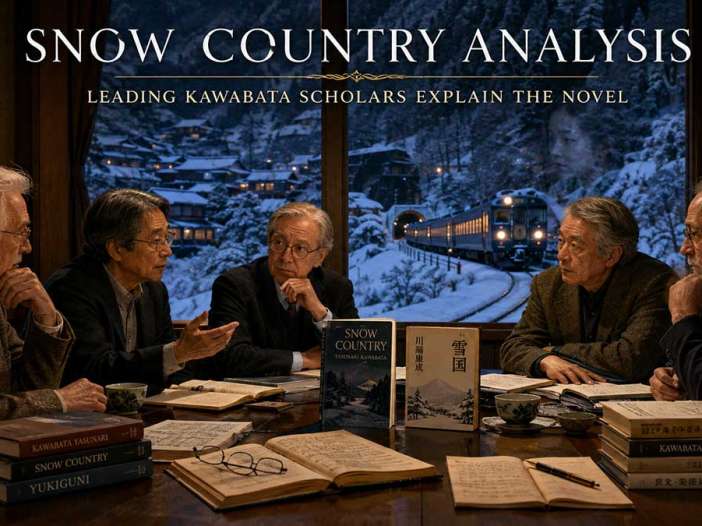
August 12, 2026 by Nick Sasaki Leave a Comment

snow-country-analysis-

Introduction Yasunari Kawabata’s Snow Country has inspired generations of readers with its beauty, silence, longing, and ambiguity.Yet beneath that beauty are much harder questions.Is the relationship between Shimamura and Komako truly love? What does the novel mean by “wasted effort”? Why are mirrors, windows, and reflections so central? Does Kawabata’s … [Read more...] about Snow Country Analysis: Kawabata Scholars Explain It

Filed Under: Literature, Nobel 100 Best Books Tagged With: Donald Keene, Edward Seidensticker, Geisha Culture, Japanese aesthetics, Japanese literature, Kawabata Scholars, Komako, literary analysis, Literary Criticism, Mirror Symbolism, Modern Japanese Literature, Mono no Aware, Nobel Prize literature, Shimamura, Snow Country, Snow Country Ending, Yasunari Kawabata, Yoko

Snow Country Explained Through Its Characters
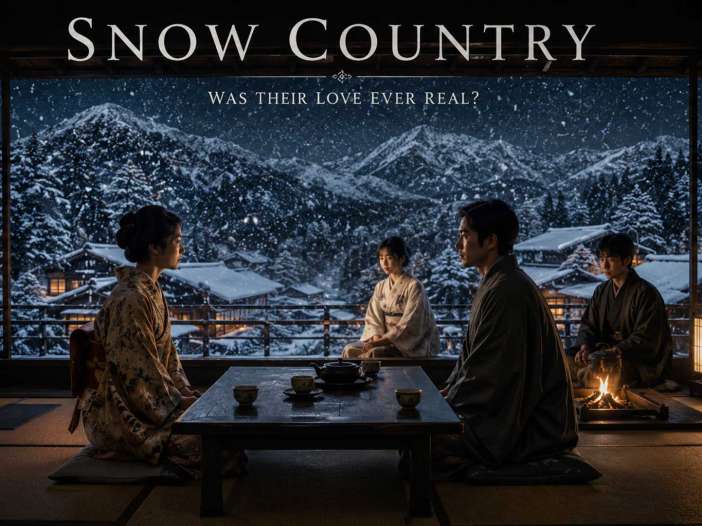
August 9, 2026 by Nick Sasaki Leave a Comment

snow-country-was-their-love-real

Introduction Yasunari Kawabata’s Snow Country is a story of beauty, distance, longing, and impermanence.Shimamura repeatedly returns from Tokyo to a remote hot-spring town, where Komako grows deeply attached to him. Yoko remains mysterious and unforgettable, and Yukio’s presence adds another layer of care, illness, and unresolved feeling.In this imaginary … [Read more...] about Snow Country Explained Through Its Characters

Filed Under: Literature, Nobel 100 Best Books Tagged With: book analysis, Book Discussion, Classic Literature, imaginary conversation, impermanence, Japanese Fiction, Japanese literature, Komako, literary analysis, Love and Loss, Mono no Aware, Nobel Prize literature, Shimamura, Snow Country, Snow Country Ending, Unrequited Love, Yasunari Kawabata, Yoko

The Man Who Never Took the Day Off: A Modern Ishiguro Story

August 9, 2026 by Nick Sasaki Leave a Comment

the-man-who-never-took-the-day-off-

Introduction What happens when being needed becomes the reason you never live your own life?For thirty-eight years, Daniel Mercer has served billionaire businessman Richard Vale as his executive assistant, fixer, confidant, and most dependable employee.Daniel misses dinners, relationships, vacations, and eventually his father’s final hours. Yet he never … [Read more...] about The Man Who Never Took the Day Off: A Modern Ishiguro Story

Filed Under: ImaginaryTalks Originals, Literature Tagged With: Career Identity, Corporate Ethics, Corporate Loyalty, Kazuo Ishiguro, Late Life Change, literary fiction, meaning of life, Missed Opportunities, modern adaptation, modern fiction, moral responsibility, Nobel Prize literature, regret, Short Story, The Man Who Never Took the Day Off, The Remains of the Day, Work Life Balance, Workaholism

The Remains of the Day Explained by Leading Ishiguro Scholars
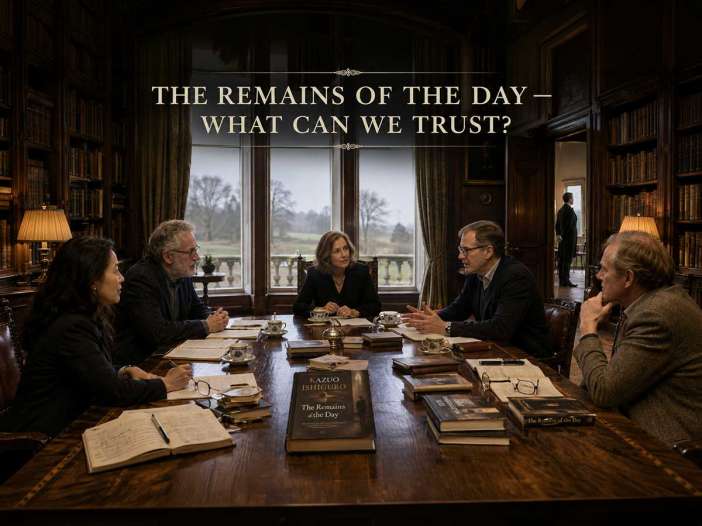
August 9, 2026 by Nick Sasaki Leave a Comment

Introduction Why does Stevens remember so much of his life accurately, yet seem unable to recognize what those memories mean?That question lies at the heart of Kazuo Ishiguro’s The Remains of the Day.In this second imaginary conversation, five leading Ishiguro scholars — Cynthia F. Wong, Brian W. Shaffer, Kathleen Wall, Steven Connor, and Barry Lewis — … [Read more...] about The Remains of the Day Explained by Leading Ishiguro Scholars

Filed Under: Literature, Nobel 100 Best Books Tagged With: book analysis, British literature, Class, dignity, Englishness, Ishiguro Scholars, Kazuo Ishiguro, Literary Criticism, Lord Darlington, memory, Miss Kenton, moral responsibility, Nobel Prize literature, regret, Self-Deception, Stevens, The Remains of the Day, Unreliable Narrator

The Remains of the Day Explained Through Its Characters
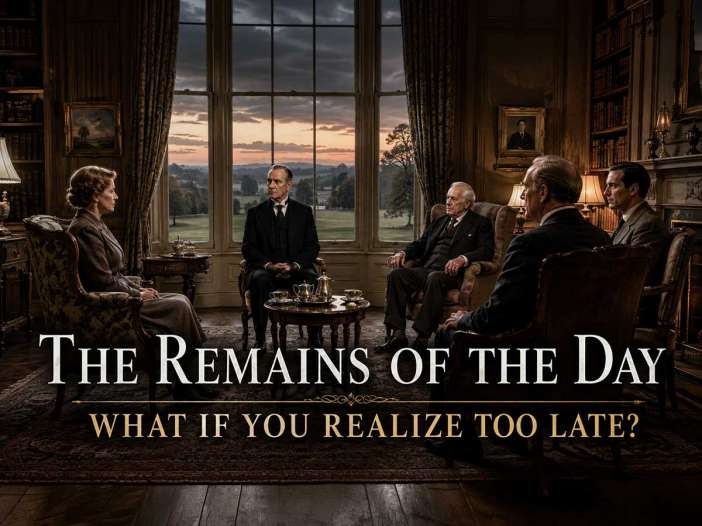
August 9, 2026 by Nick Sasaki Leave a Comment

the-remains-of-the-day-imaginary-talks-

Introduction What happens when you reach the later years of your life and realize that the qualities you were proudest of may have kept you from truly living?Kazuo Ishiguro’s The Remains of the Day follows Stevens, an English butler who has devoted his life to dignity, loyalty, and service. He rarely questions his employer, rarely expresses emotion, and … [Read more...] about The Remains of the Day Explained Through Its Characters

Filed Under: Literature, Nobel 100 Best Books Tagged With: book analysis, British literature, Classic Novels, dignity, Duty, Kazuo Ishiguro, Literary Characters, Lord Darlington, Lost Love, loyalty, Miss Kenton, moral responsibility, Nobel Prize literature, Reginald Cardinal, regret, Self-Deception, Stevens, The Remains of the Day

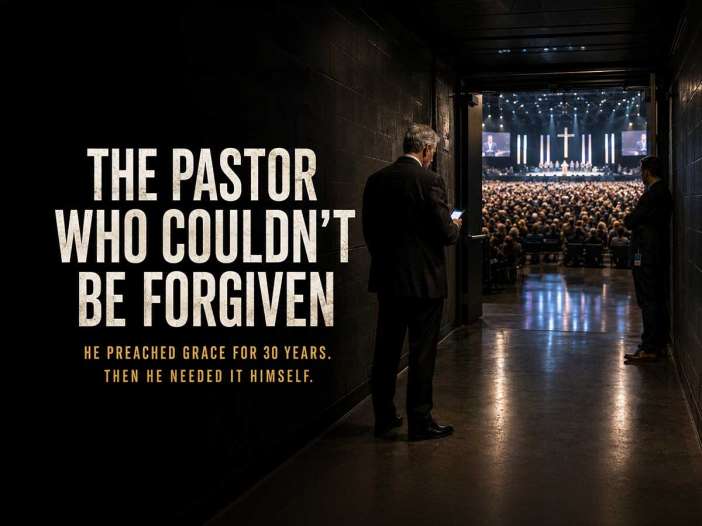
The Pastor Who Couldn’t Be Forgiven: A Modern Story of Grace
August 9, 2026 by Nick Sasaki Leave a Comment

the-pastor-who-couldnt-be-forgiven-

Introduction For thirty years, Nathaniel Mercer preached that grace is greater than our worst mistakes.Then, one Sunday morning, a woman from his past tells the world what happened between them.Within weeks, Nate loses his church, his reputation, his marriage, and the public life that once defined him. Yet one question refuses to disappear: Was he simply a … [Read more...] about The Pastor Who Couldn’t Be Forgiven: A Modern Story of Grace

Filed Under: Forgiveness, ImaginaryTalks Originals, Literature Tagged With: Christian forgiveness, Christian short story, church accountability, church leadership, Disgrace, fallen pastor, forgiveness and trust, forgiveness vs restoration, grace and forgiveness, Imaginary Talks, J. M. Coetzee, modern Disgrace adaptation, modern literary fiction, moral responsibility, pastor redemption, pastor scandal, repentance, second chances, spiritual abuse, The Pastor Who Couldn’t Be Forgiven

  • « Go to Previous Page
  • Page 1
  • Interim pages omitted …
  • Page 5
  • Page 6
  • Page 7
  • Page 8
  • Page 9
  • Interim pages omitted …
  • Page 41
  • Go to Next Page »

Primary Sidebar

RECENT POSTS

  • before we forget how to connect storiesBefore We Forget How to Connect: 5 Modern Stories
  • before we forget questionsBefore We Forget How to Connect: 30 Questions
  • before we forget how to connectBefore We Forget How to Connect: Vinh Giang Explained
  • Love As if You've Never Been Hurt MeaningLove As If You’ve Never Been Hurt: Meaning & Life Lessons
  • love as if you've never been hurt discussionLove As If You’ve Never Been Hurt: 25 Book Club Questions
  • Love As If You've Never Been HurtLove As If You’ve Never Been Hurt: 5 Modern Stories
  • The Correspondent Inspired Stories: 5 Emotional Tales
  • the correspondent questionsThe Correspondent Book Club Questions: Sybil & Psychology
  • the correspondent explainedThe Correspondent Explained: Grief, Love & Sybil’s Letters
  • The Waste Land modern storiesThe Waste Land Modern Stories: 5 Emotional Tales
  • The Waste Land explainedThe Waste Land Explained: What Did T. S. Eliot Mean?
  • The Waste Land charactersThe Waste Land Characters Explained: Eliot’s Broken World
  • theo of golden questionsTheo of Golden Book Club Questions: Expert Discussion
  • theo of goldenTheo of Golden Inspired Stories: 5 Modern Tales
  • theo of goldenTheo of Golden Analysis: What It Means to Truly See Someone
  • martyr modern storiesMartyr Kaveh Akbar Inspired Stories: 5 Emotional Tales
  • martyr explainedMartyr Kaveh Akbar Book Club Questions: 25 Big Questions
  • martyr charactersMartyr Kaveh Akbar Analysis: Meaning, Death & Suffering
  • little wonder storiesLittle Wonder Inspired Stories: 5 Emotional Modern Tales
  • Little Wonder Analysis: Love, Loss & Gifted Children
  • Little Wonder Sophie Chen Keller: Love, Sacrifice & Identity
  • sense and sensibility modern storiesSense and Sensibility Lessons: 5 Modern Love Stories
  • sense and sensibility analysisSense and Sensibility Analysis: Love, Emotion & Austen
  • sense and sensibility conversationSense and Sensibility: How Do We Know Love Is Real?
  • marriage courseAlphaUSA Marriage Course: 5 Emotional Stories Inspired by Its 7 Sessions
  • AlphaUSA Marriage Course: 7 Questions for a Stronger Marriage
  • AI Agents DebateAI Agents Debate Human Extinction: Should Humanity Survive?
  • ai human extinction storiesJunji Ito-Inspired Tales of AI and Human Extinction
  • ai could destroy humanityEx-Anthropic insider Fear how AI could kill all humans by 2030
  • the vessel of words questionsThe Vessel of Words: How Language Shapes Relationships
  • Empty Nest Syndrome StoryEmpty Nest Syndrome Story: 5 Modern Stories for Parents
  • empty nest griefEmpty Nest Syndrome: 30 Questions Parents Ask
  • Empty Nest SyndromeEmpty Nest Syndrome: When the House Goes Quiet
  • the vessel of words storiesThe Vessel of Words: 5 Korean Stories of Hurt and Healing
  • abraham lincoln modern day storiesAbraham Lincoln Leadership Lessons: 5 Modern Stories
  • the real lincolnAbraham Lincoln: What Historians Really Know and Debate
  • Abraham Lincoln and Slavery: War, Power & Change
  • if god is oneIf God Is One, Why Do Religions Divide Us?
  • 5 Modern Stories Inspired by Cleopatra’s Greatest Lessons
  • Joan of Arc: 5 Modern Stories About Faith and Courage
  • Joan of Arc ExplainedJoan of Arc Examined: Voices, War, Trial, and Legend
  • Joan of Arc HistoryJoan of Arc: Did God Really Speak to Her?
  • ASI stories5 Stories About Life After AI Surpasses Human Intelligence
  • the age of superintelligenceThe Age of Superintelligence: What Happens When AI Surpasses Humans?
  • masayoshi son ai futureMasayoshi Son’s AI Future: Health, Jobs, Cyberwar & Japan
  • The Good Earth: 5 Modern Stories About Love and Sacrifice
  • the good earth scholarsThe Good Earth: What Scholars Reveal About Wang Lung and O-lan
  • the good earthThe Good Earth: Did Wealth Destroy What Wang Lung Loved?
  • SoftBank World 2026: Masayoshi Son’s AI 2040 Vision Explained
  • The Great Gatsby in 7 Minutes: Why Gatsby’s Dream Failed
  • a new earthIs Humanity Entering a New Earth? Spiritual Awakening Explained
  • great gatsby modern storiesThe Great Gatsby: 5 Modern Stories About Dreams We Chase
  • the great gatsby analysisThe Great Gatsby Experts Explain Gatsby’s Dream and Tragedy
  • the Great Gatsby explainedThe Great Gatsby: Did Gatsby Love Daisy or His Dream?
  • After Of Mice and Men: What Happened to George After Lennie?
  • Of Mice and Men in 7 Minutes: When Love Is Not Enough
  • of mice and men modern day storiesOf Mice and Men: 5 Modern Stories About Love, Care and Responsibility
  • of mice and men analysisOf Mice and Men: Was George Right to Kill Lennie?
  • of mice and men 5Of Mice and Men: Was George’s Final Choice an Act of Love?
  • grapes of wrath modern storiesThe Grapes of Wrath Today: 5 Modern Stories About “I” and “We”
  • grapes of wrath questionsThe Grapes of Wrath Explained: 5 Questions Readers Still Ask
  • the grapes of wrath john steinbeckThe Grapes of Wrath: When Does “Me” Become “We”?
  • Stand With Jesus: What If People Tried to Stop the Crucifixion?
  • East of Eden Today: 5 Stories About Breaking Family Cycles
  • john steinbeck east of edenEast of Eden: Does Timshel Still Make Sense Today?
  • East of Eden: Are We Born Bad or Free to Choose?
  • Convenience Store Woman: 5 American Stories About Marriage and Freedom
  • convenience-store-women-analysis-Convenience Store Woman: Is the New Normal Really Normal?
  • convenience store womenConvenience Store Woman: Who Decides What Is Normal?
  • sayaka murata imaginary friendsSayaka Murata Imaginary Friends: The Mystery Behind Her Inner World
  • Social Health Stories: 5 Ways We Lost Our Sense of Belonging
  • Social Health: Why Modern Life Is Making Us Lonely
  • nickel-boys-modern-stories-The Nickel Boys: 5 Modern Stories About Truth, Trauma and Hope
  • coloson whitehead the nickel boys discussionThe Nickel Boys: What Kind of Hope Survives Injustice?
  • the nickel boys colson whiteheadThe Nickel Boys: Elwood and Turner on Justice, Survival and Truth
  • AI Resource Consumption: Can AI Give More Than It Takes?
  • madeline-miller-circe-modern-stories-5 Modern Stories Inspired by Circe by Madeline Miller
  • Circle-Madeline-Miller-analysis-Circe Explained: Myth, Meaning, and Madeline Miller
  • Madeline Miller Circle CharactersMadeline Miller Circe: What If No One Ever Chose You?
  • 5 Modern Stories Inspired by Keigo Higashino’s Silent Parade
  • could japanese culture succeed where religion has failedCould Japanese Culture Succeed Where Religion Has Failed?
  • keigo-Higashino-when-love-becomes-too-much-5 Modern Stories Inspired by The Devotion of Suspect X
  • The Devotion of Suspect X Explained by Psychologists: Is Ishigami’s Love Really Love?
  • the devotion of suspect xThe Devotion of Suspect X Explained: Was Ishigami’s Sacrifice Really Love?
  • 5 Modern Midnight Library Stories About Regret, AI, and Choice
  • Matt Haig The Midnight LibraryThe Midnight Library Explained by Scholars and Matt Haig
  • The-Midnight-Library-explainedThe Midnight Library Explained Through Its Characters
  • 5 Modern Siddhartha Stories About Wisdom, Love, AI, and Choice
  • Siddhartha explained by leading scholarsSiddhartha Explained by Leading Hermann Hesse Scholars
  • Siddhartha explainedSiddhartha Explained Through Its Characters: Love, Loss, and Enlightenment
  • before-the-names-are-carved-Before the Names Are Carved: Five Connected Stories
  • The Scholars and the Unworn ShoesHan Kang Human Acts Explained by Leading Scholars
  • Han Kang Human Acts: An Imaginary Conversation with the Dead
  • The Years We Thought We Had: A Story of Love and Waiting in Japan
  • snow-country-analysis-Snow Country Analysis: Kawabata Scholars Explain It
  • snow-country-was-their-love-realSnow Country Explained Through Its Characters
  • the-man-who-never-took-the-day-off-The Man Who Never Took the Day Off: A Modern Ishiguro Story
  • The Remains of the Day Explained by Leading Ishiguro Scholars
  • the-remains-of-the-day-imaginary-talks-The Remains of the Day Explained Through Its Characters
  • the-pastor-who-couldnt-be-forgiven-The Pastor Who Couldn’t Be Forgiven: A Modern Story of Grace

Footer

Recent Posts

  • Before We Forget How to Connect: 5 Modern Stories September 21, 2026
  • Before We Forget How to Connect: 30 Questions September 21, 2026
  • Before We Forget How to Connect: Vinh Giang Explained September 21, 2026
  • Love As If You’ve Never Been Hurt: Meaning & Life Lessons September 20, 2026
  • Love As If You’ve Never Been Hurt: 25 Book Club Questions September 19, 2026
  • Love As If You’ve Never Been Hurt: 5 Modern Stories September 19, 2026

Pages

  • About Us
  • Contact Us
  • Disclaimer
  • Earnings Disclaimer
  • Privacy Policy
  • Terms and Conditions

Categories

Copyright © 2026 Imaginarytalks.com