

Ken Burns:
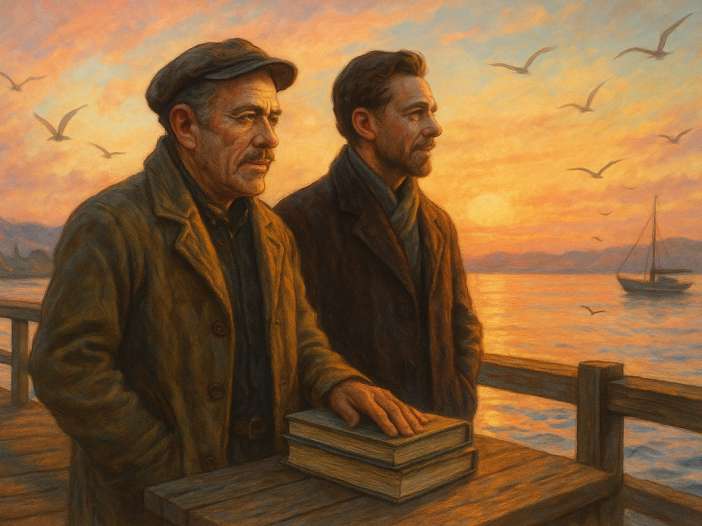
John Steinbeck was born into a land of contradictions—a place where the beauty of the California coast met the backbreaking labor of the fields, where the scent of salt air mixed with the sweat of men and women chasing a better life. He walked these roads as a boy, listening to the whispers of dockworkers, the laughter from cantinas, the silent grief of those who had lost everything.
His words were never just stories—they were an unflinching mirror held up to America, revealing its grit and its grace. And yet, behind the laurels and the Pulitzer, behind the Nobel Prize, was a man wrestling with the same doubts, losses, and longings that haunt us all.
This is not just the story of an author—it’s the story of a human being who carried the weight of unfinished pages, who rowed into fog searching for truth, and who took his last walks with the sea at his side. And, perhaps, it’s the story of the friend who was there through it all—quietly, steadfastly, when the rest of the world turned away."
(Note: This is an imaginary conversation, a creative exploration of an idea, and not a real speech or event.)

Chapter 1: The Boy with the Dust in His Pockets
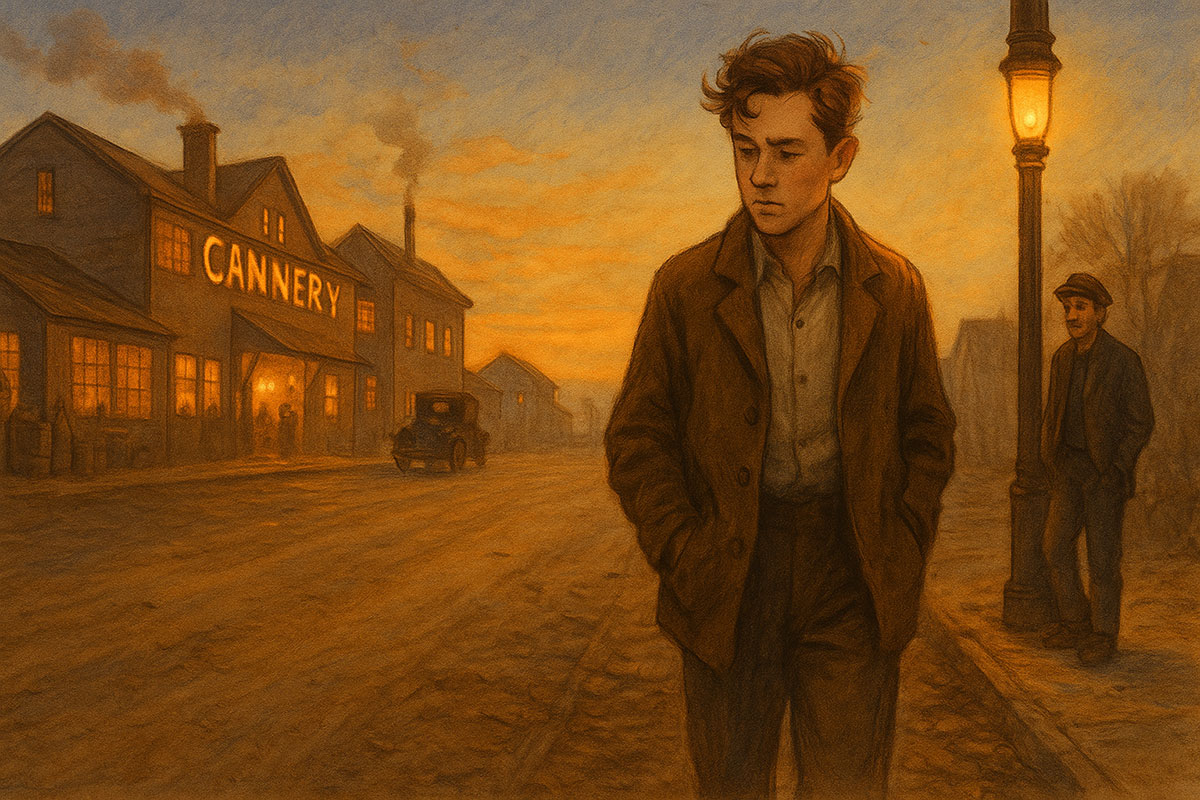
The air in Salinas was warm and restless that afternoon, the kind of heat that didn’t sweat on the skin but settled deep in the bones. John sat on the splintered back step of his parents’ home, the one that led down to a patch of stubborn grass and the soft hum of the valley beyond. Dust rose from the road whenever a car passed, drifting over the fence like lazy smoke. His notebook lay open on his knees, pages half-filled with sentences he didn’t trust.
The smell of cut hay drifted in from somewhere far off, and behind it, the faint scent of the Pacific, like a promise he could almost believe. But the words wouldn’t come the way he needed them to—not in the right order, not with the rhythm he carried in his head when he walked alone at night.
His friend eased down beside him, the wood creaking under their weight. “You’ve been staring at the same page for an hour,” they said softly.
“I’m not staring,” John muttered, though his eyes hadn’t moved from the same half-sentence. “I’m… waiting.”
“For what?”
“The part where I believe in it enough to finish it.” He tapped the page with his pencil. “Every time I start, I hear the voices telling me there’s nothing here worth writing about. Not me. Not this town.”
His friend leaned back, arms braced behind them, eyes on the horizon where the late summer sun bent the fields into gold. “You mean the same voices that told you a boy with dust in his pockets would never dream of anything bigger? The ones you’ve been proving wrong since you could hold a pen?”
John gave a small, reluctant smile. “Maybe.”
A horse whinnied in a pasture across the road. The sound was so familiar it might have been part of the air itself, like the wind through the eucalyptus trees.
“You don’t have to write the whole thing today,” his friend went on. “Just one line that feels true. One that sounds like you. You’ve got the rest of your life to string the lines together.”
John looked at them, then down at the page. The pencil felt lighter now, less like a verdict and more like a key. He wrote slowly, each word shaping the heat and dust and stubborn, aching hope into something that belonged to him alone.
When he finished the line, he closed the notebook and sat there in the thickening twilight, feeling—just for a moment—that the voices might be wrong after all.
Chapter 2: The Rejection Pile

The kitchen table was littered with paper—pages typed and retyped until the ink smudged at the edges, envelopes addressed in careful block letters, and the telltale thin slips folded neatly inside them. John sat with his elbows on the wood, staring at the pile of rejection letters like a gambler who’d bet everything and lost.
The rain had been falling since dawn, the kind that came straight down in steady sheets, pooling in the dirt road outside until it looked like a river of mud. The smell of wet earth filled the room, mingling with the faint, bitter scent of coffee that had gone cold hours ago.
His friend stood at the sink, drying their hands on a dish towel. “That’s the sixth one this week?”
“Seventh,” John said, tapping the pile. “And all of them say the same thing: ‘We regret to inform you…’” He gave a sharp laugh, but it didn’t have any humor in it. “At least they’re polite about it.”
His friend came to the table, pulling out the chair across from him. “You know, every one of those is proof you’re trying. They’re not proof you’re failing.”
“They feel like proof I’m wasting my life.”
The clock on the wall ticked in slow, steady beats. Outside, the rain softened, and somewhere in the distance a dog barked once, sharp and lonely.
His friend reached over and slid one of the rejection letters closer, reading it silently. “This one says your story ‘shows promise.’”
“That’s a polite way of saying ‘no.’”
“Or it’s a polite way of saying, ‘Not yet.’”
John rubbed his temples. The truth was, he’d begun to wonder if there would ever be a “yes.” Salinas felt smaller every day, the walls of the valley inching closer, as if the town might one day close over him completely.
His friend leaned forward, voice low and steady. “One day, someone is going to pick up one of your manuscripts and see what I see in you. And when that day comes, you’ll look back at this table and realize it was the furnace that tempered you.”
The words settled between them, quiet but unshakable. John looked out the window at the rain’s last drops clinging to the glass, and for the first time that week, he felt something like defiance stir in his chest. He picked up his pen.
Chapter 3: The Lonely Road to New York
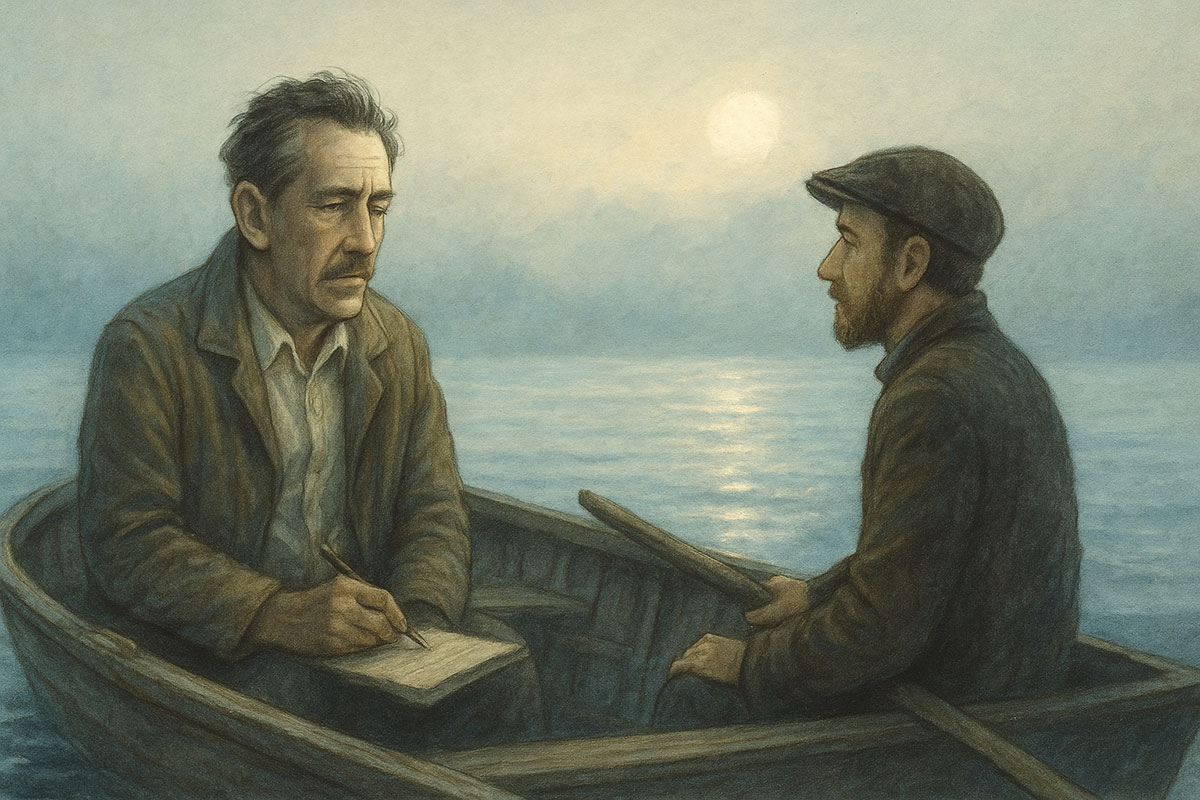
The train to New York rattled like it might shake itself apart. John sat by the window, coat collar turned up against the draft sneaking through the seams. Outside, the winter landscape blurred — bare trees clawing at a gray sky, fields frosted over, small towns sliding by in moments.
His suitcase sat by his feet, half-empty because there wasn’t much worth packing. Inside were a few shirts, a battered typewriter ribbon, and a stack of manuscripts that felt heavier than the clothes. Somewhere deep in his coat pocket was the last letter from his mother, folded so many times it had softened at the creases.
He had told everyone in Salinas he was “going to make it,” but the truth was, he had no idea what that meant. In New York, he knew, there were writers by the thousands, each with dreams big enough to crush a man.
The train slowed, squealing into a station. Vendors on the platform called out for coffee and newspapers, their voices clipped and brisk. John’s friend, who had insisted on coming along for the first stretch, handed him a paper bag. “Bread and apples,” they said. “It’s not much, but it’ll last you a day or two.”
John took it, feeling the weight of the gesture more than the food itself. “I’ll pay you back when I sell my first book.”
“I’m counting on it,” his friend said, but there was no trace of doubt in their voice.
Hours later, the skyline appeared — jagged and impossibly tall, like a wall of ambition he’d have to climb. New York was bigger than he imagined, louder, hungrier. By the time the train pulled into the terminal, the air was thick with coal smoke and the scent of roasting chestnuts from a cart outside.
They stepped onto the platform, and for a moment John just stood there, the crowd flowing around him. His friend touched his arm. “Remember, the city doesn’t care if you’re scared. So don’t show it you are.”
He nodded, tightening his grip on the handle of his suitcase. The manuscripts inside felt like his lifeline and his burden, all at once.
As they walked toward the exit, John looked back over his shoulder. The platform stretched into shadow, and for a flicker of a moment, he could see Salinas fading behind him like a photograph left too long in the sun. Ahead was noise, light, and the impossible promise of becoming someone.
Chapter 4: The Harvest of Dust and Words
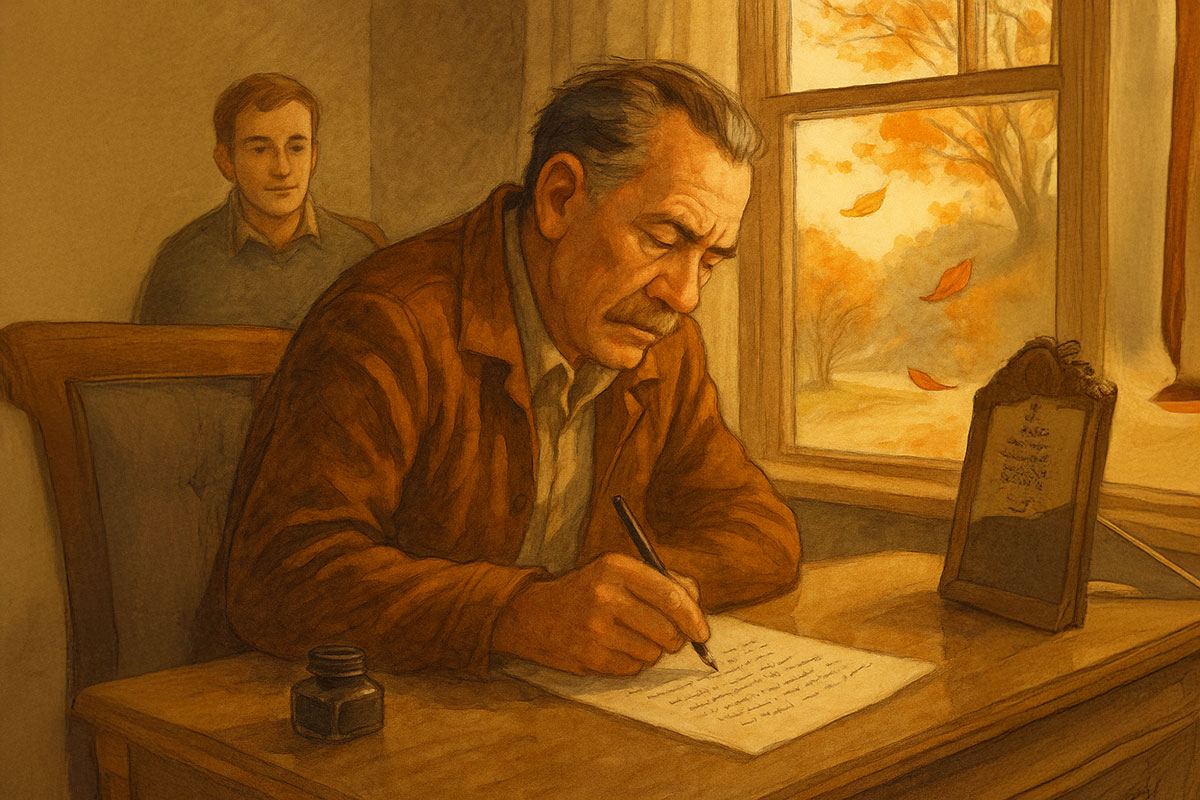
The summer of 1939 clung to the Central Valley like a fever. Dust hung in the air, dry and bitter, coating every window and fencepost. John sat on the porch of a small farmhouse, the manuscript of The Grapes of Wrath stacked beside him, bound in string like a bundle of fragile goods.
The book was finished. That should have been enough to bring relief — maybe even joy — but instead his chest felt heavy. He knew what he had written would stir people, unsettle them, even make enemies. Farmers had already begun muttering about his “agitator’s pen.” The newspapers whispered about “the radical novelist.”
His friend was there, as they had been through the lonely winters and the empty pockets, pouring them both coffee from a dented metal pot. “You’ve told the truth,” they said, passing him the mug. “And truth always costs something.”
From the fields, the migrant camps shimmered in the heat. Children played barefoot in the dirt, their laughter sharp and thin. Women washed clothes in metal tubs, their hands raw from the water. Men sat in the shade of trucks, talking low and slow, as though words themselves were scarce.
John’s eyes followed them, and he remembered the interviews, the long nights listening to stories under a bare bulb in a camp kitchen. He remembered scribbling notes while the wind rattled the tin walls, the voices of the dispossessed weaving into a tapestry of hunger and hope.
“It’s not just their story now,” his friend said quietly. “It’s yours, too. You carry it.”
He nodded, but inside he knew the weight could crush a man if he didn’t hold it right. Fame was already seeping in through the cracks — magazine profiles, speaking invitations, telegrams from New York — but it wasn’t the applause that haunted him. It was the faces of the people he had left behind in the dust.
As evening drew in, the valley turned gold, then red, then the deep indigo of night. He lit a cigarette and leaned back, listening to the crickets begin their chorus. In the distance, a lone truck rattled along the road, its headlights bobbing like fireflies in the dark.
His friend leaned against the porch rail. “So what happens now?”
John exhaled smoke into the cooling air. “Now? Now I wait to see if words can do what I’ve always hoped they could — change something.”
The manuscript sat between them, silent and solid. Beyond the porch, the fields stretched endlessly, still thirsty, still waiting.
Chapter 5: The Sea at the End of the Road

The Pacific lay before him, restless and endless, its waves carrying the same rhythm he had known since boyhood in Salinas. The sea had always been there — in his work, in his bones — a reminder that no matter how far you traveled, the tide always brought you back.
It was late afternoon in Sag Harbor, and the light was soft, the kind that makes everything look as if it belongs to memory. John sat in a weathered Adirondack chair, a blanket over his legs. His friend sat beside him, their chairs angled just enough to catch the last warmth of the sun.
The years had not been gentle. His health had thinned him, his voice sometimes catching as though words had to fight their way out. But his eyes, sharp as ever, still carried the quicksilver humor and quiet defiance that had marked every page he’d written.
“You’ve been to the war,” his friend said, “to the fields, to the city streets. You’ve written the heart of this country into paper. Do you feel done?”
John looked at the water for a long time. “Done isn’t the word,” he said finally. “You never finish. You just hand the story over to time and hope it treats it kindly.”
They talked little after that. The gulls wheeled and called above them. Somewhere far down the coast, a fishing boat’s engine thudded against the waves. In the fading light, the horizon was a seam of gold stitched into the deepening blue.
His friend broke the silence. “Do you regret any of it?”
A small smile tugged at his lips. “Only that I didn’t have more of it. More mornings. More sunsets like this. More people willing to tell me the truth of their lives.”
The wind picked up, rattling the dried grasses along the bluff. He pulled his blanket tighter, feeling the ache in his hands. “But I got to see things,” he continued, his voice low. “I got to write them down so someone, someday, could know we were here — that we tried.”
The last of the sun slid under the horizon. The sea darkened, the air cooling with a suddenness that made them both shiver. John’s gaze didn’t waver from the water.
His friend reached over, resting a hand on his arm. “The tide’s coming in.”
John nodded. “It always does.”
And in that moment — with the waves folding into the shore, with the scent of salt and evening — the world felt both vast and close enough to hold.
Final Thoughts by Ken Burns
(A slow dissolve to the Monterey shoreline at sunset. Waves lap against weathered rocks. The camera lingers on Steinbeck’s handwriting, a signature that fades into the sand.)
Ken Burns:
In the end, Steinbeck’s greatest gift was not that he told America’s story—it was that he refused to look away from it. He showed us that a nation’s soul can be measured by how it treats its most invisible people, and that the smallest lives can carry the weight of the universal.
He did not leave this earth with all his questions answered—none of us do. But he left us a map, drawn in the ink of compassion, courage, and an unshakable belief in the dignity of work and the poetry of the ordinary.
Perhaps that is why, when we read him today, we feel less alone. And perhaps that is why, if you walk the shore in Monterey at dusk, you might imagine him there still—wind at his back, stories at the ready, and the sea keeping his secrets.
Short Bios:
John Steinbeck
(1902–1968) American author and Nobel Prize winner, celebrated for novels such as The Grapes of Wrath, Of Mice and Men, and East of Eden. His works explored themes of social justice, human resilience, and the struggles of working-class Americans, often set against the backdrop of California’s agricultural and coastal landscapes.
Ken Burns
(b. 1953) Acclaimed American documentary filmmaker known for his signature narrative style combining archival footage, photographs, and rich storytelling. His award-winning works include The Civil War, Baseball, and The Dust Bowl, each revealing the depth and complexity of American history and culture.
Leave a Reply