

Introduction by Matt Abrahams
When I wrote Think Faster, Talk Smarter, my goal was simple: to help people feel more confident and capable in the moments that matter most—when we don’t have the luxury of preparation. These spontaneous speaking situations—answering a tough question, giving an impromptu toast, or speaking up in a meeting—can be daunting. But they can also be tremendous opportunities to connect, influence, and inspire.
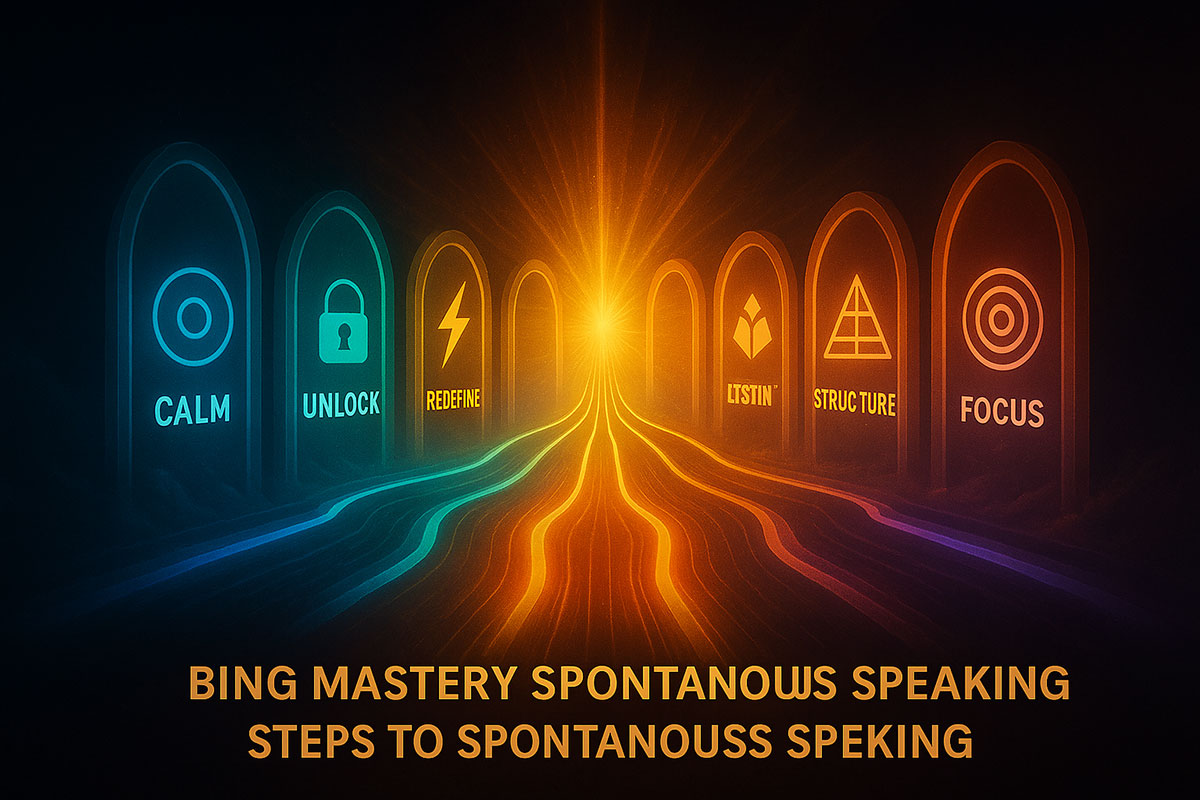
This series takes you step by step through the six key practices I’ve found most effective: Calm, Unlock, Redefine, Listen, Structure, and Focus. Each represents a vital shift in how we approach speaking under pressure. Together, they provide a toolkit to manage nerves, embrace imperfection, reframe stress, deepen connection, organize thoughts, and deliver with clarity.
I’m honored to share this conversation alongside brilliant minds in communication, psychology, and storytelling. Their insights, combined with your willingness to practice, can transform the way you respond to the unexpected.
So, let’s begin—not with the pressure of perfection, but with the possibility of growth.
(Note: This is an imaginary conversation, a creative exploration of an idea, and not a real speech or event)

Topic 1: Calm: Managing Nerves and Presence

Scott D’Amico:
When people think about spontaneous speaking, their first fear is usually, “What if I freeze?” Let’s start there. What’s the first practical thing someone can do in the moment to calm themselves before they speak?
Matt Abrahams:
I always recommend reframing. Instead of saying, I’m nervous, say, I’m excited. The body’s reactions—sweaty palms, fast heartbeat—are almost identical. But the label shifts performance. You stop fighting your physiology and channel it into energy.
Amy Cuddy:
And the body helps lead the mind. Expansive posture—what I call “power posing”—can reset your hormone levels. Standing tall, opening your chest, even for a few seconds, signals to your brain that you are safe and confident.
Jon Kabat-Zinn:
I’d say: come home to the breath. A single conscious inhalation and exhalation brings you into the present moment. Anxiety lives in the future, in what might happen. The breath is always now, and now is calm.
Kelly McGonigal:
I agree, and I’d add: reframe stress itself. Think of that adrenaline rush as your body giving you fuel to rise to the occasion. It’s not a sign you’re failing—it’s your body helping you succeed.
Daniel Goleman:
And a quick attention shift works wonders: look at the audience. See them as collaborators, not critics. When you shift from self-focus to other-focus, anxiety decreases and empathy takes over.
Scott D’Amico:
Excellent. Let’s zoom out a little. What practices, if we build them into daily life, help us maintain a calmer baseline so that these moments don’t feel overwhelming?
Kelly McGonigal:
Exercise. Physical activity conditions the stress response. When you learn to embrace the rush of effort, you also learn to embrace the rush of adrenaline before a talk.
Daniel Goleman:
Cultivate empathy. Everyday listening—undistracted, present, curious—trains the brain to stay socially attuned. That reduces reactivity when you’re suddenly under a spotlight.
Jon Kabat-Zinn:
A daily mindfulness practice, even ten minutes, is like building a muscle. You learn to notice thoughts and let them go. That equanimity follows you into high-pressure situations.
Amy Cuddy:
Practice presence in the little things: put down your phone before entering a room, notice the ground under your feet, make eye contact. These micro-moments build a habit of calm awareness.
Matt Abrahams:
And rehearse spontaneity. Give yourself small challenges every day—speak up in meetings without over-preparing, tell an unplanned story at dinner. The more you practice “not knowing,” the less threatening it feels when it matters.
Scott D’Amico:
Wonderful. Let’s wrap this with the toughest scenario: you’re already speaking and suddenly feel panic rising. What’s the best rescue technique right in that moment?
Daniel Goleman:
Name it. Just telling yourself, this is anxiety, brings the prefrontal cortex online. It interrupts the spiral.
Matt Abrahams:
Pause. Audiences don’t think, they’ve lost it. They think, they’re composed. A sip of water, a breath, even a beat of silence can reset your mind.
Jon Kabat-Zinn:
Anchor awareness in the body. Feel your feet pressing into the ground. That grounds you in the present and interrupts runaway thought.
Amy Cuddy:
Move with intention. Purposeful gestures regulate rhythm, keep you grounded, and give the mind something steady to follow.
Kelly McGonigal:
And smile. Even a small one activates calming neurochemistry—and the audience will mirror it back, creating a loop of connection instead of tension.
Scott D’Amico (closing):
What I’m hearing is that calm isn’t about eliminating nerves. It’s about partnering with them. Through breath, posture, reframing, empathy, and daily practice, anyone can transform anxiety into a powerful presence.
Topic 2: Unlock: Letting Go of Perfection and Embracing Spontaneity

Trevor Noah:
Most of us freeze up because we think we have to be perfect. Let’s start with this: what’s the best way to stop chasing perfection so we can actually speak?
Keith Johnstone:
In improv, perfection kills creativity. The first idea you have—say it. Even if it’s silly. Audiences don’t want flawless; they want real. Spontaneity lives in mistakes, not rehearsed scripts.
Matt Abrahams:
Exactly. I often tell students: dare to be dull. When you remove the pressure to be brilliant, you actually free yourself to connect. People remember clarity, not cleverness.
Tina Fey:
I call it “Yes, and.” Instead of shutting yourself down with “That’s dumb,” you build on it. Even if your thought feels incomplete, add something. It keeps you moving instead of stuck.
Adam Grant:
And research supports that. Original thinkers produce more creative output not by having fewer bad ideas, but by having more ideas—good and bad. Quantity breeds quality.
Judith Glaser:
Conversation is co-creation. When you drop perfection, you make space for trust. If you stumble, others step in, and together you build something far better than one polished line.
Trevor Noah:
That’s powerful. Now let me push further. How do we train ourselves daily to be more comfortable with uncertainty and imperfection, so that spontaneity feels natural?
Tina Fey:
Play. Improv games aren’t just for theater—they’re resilience training. Practice quick word associations, silly scenes with friends. You’re rewiring your brain to treat mistakes as fuel, not failure.
Judith Glaser:
Build “trust rituals.” In teams, normalize saying: let’s explore this together. When people know they won’t be punished for rough ideas, the whole environment becomes more spontaneous.
Adam Grant:
Set micro-challenges. Force yourself to try something unpolished—a tweet, a sketch, a draft—and release it. Over time, you build tolerance for imperfection, and your threshold for contribution lowers.
Matt Abrahams:
Yes, and use constraints. Give yourself 30 seconds to answer a question at dinner or in a meeting. With a deadline, you don’t have time to over-edit—you learn to trust the first draft of your thoughts.
Keith Johnstone:
And remember: laughter is a gift. When something goes wrong, audiences laugh with you if you invite them. That joy transforms uncertainty into shared spontaneity.
Trevor Noah:
Let’s tackle the hardest moment. You’re mid-sentence, realize you’ve rambled or lost your train of thought—what’s the best recovery technique to unlock the moment and keep going?
Adam Grant:
Own it transparently. Say, “I lost my thread, but here’s the main point.” That honesty resets attention and shows humility. Audiences respect recovery more than polish.
Keith Johnstone:
Turn it into an offer. If you lose your way, hand it to someone else: “What do you think?” Suddenly, the conversation continues, and you’ve transformed a slip into collaboration.
Matt Abrahams:
Use a structure. My favorite is “What—So what—Now what.” Even if you’ve gone off track, snap back with one of those anchors. It pulls both you and the audience into clarity.
Tina Fey:
Make a joke of it. Humor disarms tension. A self-aware one-liner—“That sentence got away from me”—creates rapport and buys you time to regroup.
Judith Glaser:
And return to connection. Look at your listeners, breathe, and say something simple like, “Let’s focus on what matters.” Calm presence unlocks you from the spiral of overthinking.
Trevor Noah (closing):
What I hear is that unlocking isn’t about genius—it’s about permission. Permission to stumble, to laugh, to trust others, and to keep building. The key is to let go of perfect, so spontaneity can show up.
Topic 3: Redefine: Reframing Stress and Shifting from Performance to Service

Andrea Wojnicki:
When people face a high-stakes moment, they often see it as a test they must pass. Let me start by asking: how can we redefine these moments so they feel less like judgment and more like opportunity?
Brené Brown:
The biggest shift is vulnerability. Instead of trying to prove worth, step into the moment to connect. Say to yourself, I’m here to serve, not to perform. That mindset removes shame and opens courage.
Matt Abrahams:
Yes. I remind students: it’s not about you, it’s about them. When you frame spontaneous speaking as helping your audience—answering their need—you stop obsessing over self-performance.
Susan Cain:
For introverts especially, reframing is essential. We may dread the spotlight, but if we see it as advocacy—sharing ideas that matter rather than spotlighting ourselves—it changes everything.
Shawn Achor:
And positivity matters. Research shows that people who view stress as enhancing, not debilitating, perform far better. If you believe the challenge is fuel, it becomes one.
Carol Dweck:
This is the growth mindset in action. Every impromptu speaking moment is not a pass/fail test; it’s a chance to learn. If you stumble, that’s not failure—it’s feedback for growth.
Andrea Wojnicki:
That’s powerful. Let’s dig deeper. What daily habits help us train our minds to automatically redefine stress and uncertainty in healthier, more empowering ways?
Shawn Achor:
Practice gratitude. Writing down three positive things daily trains the brain to scan for opportunities rather than threats. When a surprise question comes, you see a chance, not a trap.
Susan Cain:
Schedule solitude. Quiet reflection strengthens your internal compass. Then when you face the unexpected, you’re grounded in self-knowledge rather than rattled by external pressure.
Carol Dweck:
Reward effort, not outcome. If at the end of the day you note, I spoke up without over-preparing, that reinforces the learning orientation. Over time, your brain expects progress, not perfection.
Brené Brown:
Share your stories. Talk openly about times you were nervous but showed up anyway. Naming vulnerability creates resilience, and hearing others’ stories helps normalize imperfection.
Matt Abrahams:
And rehearse reframing. When you feel nerves rising, literally say out loud: This is excitement. This is energy. This is fuel. Training that mantra makes it automatic in high-stakes moments.
Andrea Wojnicki:
And finally, the hardest part: you’re in the middle of speaking and panic hits—your voice shakes, your heart races. How do you redefine that moment on the spot?
Carol Dweck:
Shift self-talk: I’m learning right now. That single sentence transforms panic from failure into a growth moment, and the fear loosens its grip.
Matt Abrahams:
Acknowledge it openly. Say, I’m feeling the energy of this moment, and keep going. Naming reframes and reduces its power.
Brené Brown:
Bring empathy to yourself. Speak to yourself as you’d to a friend: You’re brave for showing up. Compassion interrupts shame.
Susan Cain:
Pause and redirect. Say, Let’s focus on the idea. That takes the spotlight off you and back onto the message, which is the real purpose anyway.
Shawn Achor:
Smile. Research shows smiling—even forced—creates feedback loops that calm physiology and uplift the room. The mood shifts from panic to shared positivity.
Andrea Wojnicki (closing):
So what we’ve uncovered is this: reframing isn’t a trick, it’s a mindset. By seeing nerves as energy, mistakes as learning, and speaking as service, we redefine stress as a bridge to connection.
Topic 4: Listen: Active Listening and Responding with Empathy

Phil Zeller:
We often think communication is all about talking, but real power comes from listening. Let’s start simple: what’s one practice anyone can use to become a better listener right away?
William Ury:
Pause before responding. In negotiation, silence is golden. It shows respect, gives space, and signals you’re truly considering what’s been said.
Julian Treasure:
I teach “RAASA”: Receive, Appreciate, Summarize, Ask. Even repeating back a few words—“So you’re saying…”—instantly proves you’ve heard.
Matt Abrahams:
I call it “space, pace, grace.” Slow your response, create space, listen with grace. That moment of patience helps you respond with clarity instead of reaction.
Celeste Headlee:
Stop multitasking. Put down your phone, close your laptop. Full presence is rare—and the person speaking feels it immediately.
Marshall Rosenberg:
Listen for feelings, not just words. When you reflect someone’s emotion—“I hear that you’re frustrated”—you move from surface to depth.
Phil Zeller:
That’s a strong foundation. Now, let’s go deeper: how do we train ourselves to listen more empathetically in everyday life, not just in big conversations?
Celeste Headlee:
Start with curiosity. Ask one more question than you usually would. That extra step pulls you into real listening instead of rehearsing your reply.
Julian Treasure:
Practice conscious listening exercises. For example, sit quietly and notice how many sounds you can identify. Training your auditory awareness sharpens all listening.
William Ury:
In daily interactions, reframe listening as building a bridge. Even small acknowledgments—nodding, brief affirmations—lay the foundation of trust.
Matt Abrahams:
Use paraphrasing in routine conversations. Say, “So what you mean is…” It not only ensures accuracy, it signals deep attention.
Marshall Rosenberg:
And practice Nonviolent Communication daily: observe without judgment, identify feelings, express needs. When that habit forms, listening becomes compassionate by default.
Phil Zeller:
Excellent. Finally, let’s tackle the toughest challenge: when you’re under pressure—say in a heated debate or stressful Q&A—how do you maintain real listening instead of just waiting to strike back?
Matt Abrahams:
Anchor yourself with breath. Even one inhale-exhale cycle creates a pause where you can choose to listen instead of react.
Marshall Rosenberg:
Focus on needs, not positions. In conflict, people shout positions—“I need this.” True listening means hearing the unmet needs beneath them.
Julian Treasure:
Adjust your listening filters. We hear through culture, bias, expectation. In pressure, consciously reset: “What if I’ve misheard?” That humility unlocks new clarity.
Celeste Headlee:
Give the gift of acknowledgment. Even in disagreement, say, “I understand what you’re saying.” It lowers defenses and opens a door to mutual respect.
William Ury:
In high tension, remember “go to the balcony.” Imagine stepping above the situation. From that mental balcony, you listen with perspective rather than reactivity.
Phil Zeller (closing):
What we’ve discovered is that listening is more than silence—it’s presence, empathy, and discipline. When we slow down, reflect back, and truly hear, communication stops being a battle and becomes a bridge.
Topic 5: Structure: Organizing Thoughts for Clarity and Impact

Matt Bodnar:
One of the biggest barriers to spontaneous speaking is messy thinking. Let me start by asking: when you’re put on the spot, what’s the simplest structure someone can use to organize their response?
Nancy Duarte:
Start with a beginning, middle, and end. Even in thirty seconds, you can frame your point as a mini-story: situation, insight, resolution. It’s familiar, so people follow naturally.
Matt Abrahams:
I often use “What? — So what? — Now what?” First, state the idea, then why it matters, then what to do next. It’s flexible and works in almost any spontaneous setting.
Simon Sinek:
I’d say “Start with Why.” If you begin with the purpose, everything else flows. When people hear the why, they’re already primed to care about the how and the what.
Carmine Gallo:
Use the “Rule of Three.” Our brains love triads. Three points stick; four is fuzzy. Whether you’re giving feedback or telling a story, aim for three beats.
Chip Heath:
And keep it concrete. Use SUCCESs principles from Made to Stick: Simple, Unexpected, Concrete, Credible, Emotional, Stories. Even one or two of those makes your message land.
Matt Bodnar:
Excellent. Now let’s go further. How can we train ourselves to think in structures daily, so it becomes second nature when we speak?
Matt Abrahams:
Practice with low stakes. For example, when someone asks, “How was your weekend?” try answering with “What, So what, Now what.” Make structures a habit in casual talk.
Chip Heath:
Use sticky notes. Capture random thoughts, then group them into patterns—problem/solution, past/present/future. That pattern recognition builds muscle memory for structure.
Nancy Duarte:
Analyze great speeches. Notice how leaders build tension and release it. Once you internalize those arcs, they appear in your own spontaneous responses.
Simon Sinek:
And in conversations, lead with Why. Say, “This matters because…” It rewires you to put purpose first, which clarifies everything else.
Carmine Gallo:
Record yourself. Deliver a one-minute response to a random question. Then check: did you land on three clear beats? If not, refine. Iteration is training.
Matt Bodnar:
Now the toughest scenario: you’re speaking and suddenly realize you’re rambling or off-track. How do you use structure in the moment to recover gracefully?
Simon Sinek:
Go back to Why. Pause and say, “Let me remind us why this matters.” That instantly pulls both you and the audience back to the core.
Matt Abrahams:
Restart with a framework. Even mid-sentence, say, “There are really two key points here…” It creates clarity and resets focus for everyone.
Nancy Duarte:
Tell a mini-story. Even if you’re lost, saying, “Let me give you a quick example,” grounds your point in narrative and buys time.
Carmine Gallo:
Use the audience. Ask, “Do you want me to go deeper, or give the highlights?” That reorients the structure and shows responsiveness.
Chip Heath:
Simplify ruthlessly. If you’re lost, cut down to one sticky message. Say, “If you remember nothing else, remember this…” That salvages clarity.
Matt Bodnar (closing):
What we’ve learned here is that structure isn’t a cage, it’s a compass. By leaning on simple frameworks, practicing daily, and knowing how to reset when you drift, you turn chaos into clarity—and clarity is what makes your words stick.
Topic 6: Focus: Being Concise, Purposeful, and Action-Driven

Jordan Harbinger:
When we speak spontaneously, it’s easy to ramble. Let me start by asking: what’s the best way to keep your response focused and concise without losing substance?
Chris Anderson:
Think of it as a single idea per turn. Even in TED Talks, the magic comes from clarity of one message at a time. Ask yourself: What’s the one takeaway I want them to remember?
Matt Abrahams:
I use what I call the “BLUF” method—Bottom Line Up Front. Start with your main point, then elaborate. That way, if you get cut off, the essence is already delivered.
Dan Pink:
Frame everything in terms of action. Instead of giving background first, lead with “Here’s what you should do” or “Here’s why it matters to you.” That focus makes your words purposeful.
Angela Duckworth:
Discipline matters. Just like grit is sustained effort toward a goal, concise speaking is about resisting distractions. Train yourself to edit in real time, cutting what isn’t essential.
Gary Vaynerchuk:
Cut the fluff. People respect straight talk. If you can say it in 30 seconds, don’t take two minutes. Brevity isn’t just polite—it’s how you earn attention in today’s world.
Jordan Harbinger:
That’s clear. Let’s go deeper: what daily practices help sharpen focus so it becomes natural to speak with purpose instead of wandering?
Matt Abrahams:
Practice distillation. After a meeting or conversation, write down the one-sentence summary. Over time, you train your brain to hunt for essence automatically.
Angela Duckworth:
Build grit in communication. Choose a focus point before you speak—“I will be clear about X.” Stick to it despite temptations to over-explain. That builds discipline muscle.
Chris Anderson:
Consume fewer words, but with depth. Read great speeches, listen to concise communicators. Exposure to clarity shapes your own style.
Dan Pink:
Use timing. Limit yourself—say, 60 seconds per thought. Self-imposed boundaries force sharper choices, which naturally improve focus.
Gary Vaynerchuk:
Talk less, listen more. The less airtime you take, the more potent your words become. That habit bleeds into how you answer under pressure.
Jordan Harbinger:
Now the toughest scenario: you’re mid-conversation, realize you’re rambling, and the point is slipping away. How do you recover and refocus in that exact moment?
Gary Vaynerchuk:
Stop yourself. Literally say, “Let me simplify.” People appreciate honesty and directness—it resets the room instantly.
Angela Duckworth:
Return to your goal. Remind yourself: What was I trying to achieve? Then cut everything else and realign with that single thread.
Chris Anderson:
Summarize midstream. Say, “In short, what I mean is…” That brings clarity and signals to the audience that you value their time.
Matt Abrahams:
Use a framework to snap back. “There are two things that matter here…” Even if you were wandering, the structure refocuses both you and the audience.
Dan Pink:
End with an action. If you’ve rambled, conclude with “So here’s the key takeaway.” That exit line rescues clarity and ensures purpose.
Jordan Harbinger (closing):
What I hear is that focus is less about talking less and more about talking with intention. Through frameworks, self-editing, timing, and purpose-driven speech, you can transform rambling into clarity—and clarity into influence.
Final Thoughts by Matt Abrahams
Across these six steps, one truth shines through: spontaneous speaking isn’t about being flawless—it’s about being present. If you can calm your nerves, let go of perfection, redefine stress as energy, listen deeply, use simple structures, and focus on clarity, you’ll not only speak smarter—you’ll connect more meaningfully.
The ability to think on your feet is less about quick wit and more about practiced habits. By preparing to be spontaneous, you turn what once felt like panic into opportunity. You’ll find that people don’t remember whether you stumbled; they remember whether you were clear, authentic, and helpful.
My hope is that these six practices empower you to approach every unexpected moment with confidence and curiosity. Because when we stop fearing these moments and start embracing them, we not only become better communicators—we become better listeners, collaborators, and leaders.
Short Bios:
Speakers
Matt Abrahams
A Stanford Graduate School of Business lecturer and host of the Think Fast, Talk Smart podcast, Matt Abrahams is an expert in spontaneous communication and presentation skills. He is the author of Think Faster, Talk Smarter, a book focused on helping people manage nerves, structure ideas, and speak with clarity under pressure.
Amy Cuddy
A social psychologist and bestselling author of Presence, Amy Cuddy is known for her groundbreaking research on body language and “power poses,” demonstrating how posture influences confidence and performance.
Jon Kabat-Zinn
Founder of Mindfulness-Based Stress Reduction (MBSR), Jon Kabat-Zinn is a pioneer in bringing mindfulness practices into medicine, psychology, and everyday life to reduce stress and improve resilience.
Kelly McGonigal
A health psychologist and lecturer at Stanford, Kelly McGonigal is the author of The Upside of Stress and The Joy of Movement, blending science and compassion to help people reframe stress as energy and empowerment.
Daniel Goleman
A psychologist and science journalist, Daniel Goleman popularized the concept of Emotional Intelligence, showing how self-awareness, empathy, and regulation are key to leadership and communication.
Keith Johnstone
An innovator in improvisational theatre, Keith Johnstone is the author of Impro, whose work has shaped improv practices worldwide and taught generations how to embrace spontaneity.
Tina Fey
An Emmy-winning comedian, writer, and actress, Tina Fey honed her craft at Saturday Night Live and Second City. Her improv background embodies the “Yes, and” principle of spontaneity.
Judith Glaser
Author of Conversational Intelligence, Judith Glaser explored how trust and neuroscience inform effective dialogue, emphasizing co-creation and collaboration in communication.
Adam Grant
A Wharton professor and bestselling author of Originals and Think Again, Adam Grant is an organizational psychologist who studies creativity, motivation, and rethinking.
Brené Brown
A research professor at the University of Houston, Brené Brown is known for her work on vulnerability, courage, and shame. Her books include Daring Greatly and Atlas of the Heart.
Shawn Achor
A leading expert on happiness and success, Shawn Achor is the author of The Happiness Advantage, focusing on how positive psychology improves performance and resilience.
Susan Cain
Author of Quiet, Susan Cain champions introverts, showing how their quiet strengths can redefine leadership, communication, and influence.
Carol Dweck
A psychologist at Stanford University, Carol Dweck introduced the concept of the growth mindset, which emphasizes learning, adaptability, and resilience over fixed abilities.
William Ury
Co-author of Getting to Yes, William Ury is a negotiation expert who has taught millions the power of listening, empathy, and mutual understanding.
Julian Treasure
A communication and sound expert, Julian Treasure is known for his TED Talks on listening and speaking, and the author of How to Be Heard.
Celeste Headlee
A journalist and TED speaker, Celeste Headlee is the author of We Need to Talk and a champion of better conversations through attentive listening.
Marshall Rosenberg
Founder of Nonviolent Communication, Marshall Rosenberg developed tools for empathy-driven dialogue, focusing on needs, compassion, and peaceful conflict resolution.
Nancy Duarte
CEO of Duarte, Inc., Nancy Duarte is a communications expert and author of Resonate and Slide:ology, specializing in message design and storytelling.
Chip Heath
A Stanford professor and co-author of Made to Stick, Chip Heath explores why some ideas thrive and others fade, with an emphasis on clarity and stickiness.
Carmine Gallo
A communication coach and author of Talk Like TED and The Presentation Secrets of Steve Jobs, Carmine Gallo helps leaders tell powerful stories.
Simon Sinek
A bestselling author of Start with Why and Leaders Eat Last, Simon Sinek inspires audiences to find purpose, clarity, and focus in communication and leadership.
Chris Anderson
The curator of TED, Chris Anderson has overseen thousands of talks and authored TED Talks: The Official Guide to Public Speaking, focusing on clarity and big ideas.
Dan Pink
Author of Drive and To Sell is Human, Dan Pink translates behavioral science into practical advice on motivation, persuasion, and communication.
Gary Vaynerchuk
An entrepreneur and social media personality, Gary Vaynerchuk is known for his direct, concise communication style and practical advice on business and attention.
Angela Duckworth
A psychologist at the University of Pennsylvania, Angela Duckworth is the author of Grit, exploring the role of passion and persistence in achievement and clarity.
Moderators (Top Podcasters in Communication)
Scott D’Amico
Host of Communicate with Confidence, Scott D’Amico shares practical tools and interviews with experts to help professionals improve their communication skills.
Trevor Noah
Host of What Now? With Trevor Noah and former host of The Daily Show, Trevor blends humor and insight to explore communication, culture, and human connection.
Andrea Wojnicki
Host of Talk About Talk, Andrea Wojnicki focuses on communication strategy, leadership presence, and how to speak with impact in personal and professional contexts.
Phil Zeller
Host of Winning Communication, Phil Zeller offers coaching strategies for improving daily conversations, public speaking, and leadership dialogue.
Matt Bodnar
Host of The Science of Success, Matt Bodnar translates behavioral science into practical communication and productivity strategies.
Jordan Harbinger
Host of The Jordan Harbinger Show, Jordan is known for insightful interviews on communication, influence, and human behavior.
Leave a Reply