• Skip to main content
  • Skip to primary sidebar
  • Skip to footer
ImaginaryTalks.com
  • Spirituality and Esoterica
    • Afterlife Reflections
    • Ancient Civilizations
    • Angels
    • Astrology
    • Bible
    • Buddhism
    • Christianity
    • DP
    • Esoteric
    • Extraterrestrial
    • Fairies
    • God
    • Karma
    • Meditation
    • Metaphysics
    • Past Life Regression
    • Spirituality
    • The Law of Attraction
  • Personal Growth
    • Best Friend
    • Empathy
    • Forgiveness
    • Gratitude
    • Happiness
    • Healing
    • Health
    • Joy
    • Kindness
    • Love
    • Manifestation
    • Mindfulness
    • Self-Help
    • Sleep
  • Business and Global Issues
    • Business
    • Crypto
    • Digital Marketing
    • Economics
    • Financial
    • Investment
    • Wealth
    • Copywriting
    • Climate Change
    • Security
    • Technology
    • War
    • World Peace
  • Culture, Science, and A.I.
    • A.I.
    • Anime
    • Art
    • History & Philosophy
    • Humor
    • Imagination
    • Innovation
    • Literature
    • Lifestyle and Culture
    • Music
    • Science
    • Sports
    • Travel

Imaginary Talks

One Hundred Years of Solitude Explained by Top Scholars

July 27, 2026 by Nick Sasaki Leave a Comment

Gabriel-García-Márquez-one-hundred-years-of-solitude-explained-

What if the Buendía family is not trapped by fate, but by patterns no one learns to recognize? Few novels have changed the way readers understand family, history, memory, and reality as profoundly as Gabriel García Márquez’s One Hundred Years of Solitude.The novel begins in Macondo, a remote village surrounded by mystery, invention, and possibility. Over the … [Read more...] about One Hundred Years of Solitude Explained by Top Scholars

Filed Under: Literature, Nobel 100 Best Books Tagged With: book analysis, Colombian Literature, Family Saga, Gabriel García Márquez, Imaginary Talks, Latin American Literature, Literary Classics, Literary Criticism, Macondo, Magical Realism, Nobel Prize, One Hundred Years of Solitude, symbolism

The Overstory Explained: Themes, Ending, and Meaning

July 25, 2026 by Nick Sasaki Leave a Comment

The Overstory explained

What if trees are not simply part of our world—but we are part of theirs? Most novels ask us to pay attention to people.The Overstory asks us to pay attention to everything we've been walking past our entire lives.Trees.For most of us, they're scenery.We admire them in parks, plant them in our yards, and drive past forests without giving them much … [Read more...] about The Overstory Explained: Themes, Ending, and Meaning

Filed Under: Literature, NYT 100 Best Books, Spirituality Tagged With: Adam Appich, book analysis, Book Discussion, Climate Change, Environmental Fiction, Forest Ecology, Imaginary Talks, literary fiction, Nature Writing, Patricia Westerford, Pulitzer Prize, Richard Powers, The Overstory, Trees, Wangari Maathai

Demon Copperhead Explained: Barbara Kingsolver’s Pulitzer-Winning Novel

July 25, 2026 by Nick Sasaki Leave a Comment

What if every child had at least one adult who never gave up on them? Some novels entertain us.Some educate us.And a rare few quietly change the way we look at other people.Demon Copperhead is one of those rare books.Winner of the 2023 Pulitzer Prize for Fiction, Barbara Kingsolver's modern retelling of Charles Dickens' David Copperfield transports readers … [Read more...] about Demon Copperhead Explained: Barbara Kingsolver’s Pulitzer-Winning Novel

Filed Under: Literature, NYT 100 Best Books, Personal Development, Psychology Tagged With: addiction recovery, Appalachian literature, Barbara Kingsolver, Book Discussion, character study, Charles Dickens, childhood trauma, contemporary American fiction, David Copperfield adaptation, Demon Copperhead, Demon Copperhead analysis, Demon Copperhead explained, Demon Copperhead summary, foster care, hope, Imaginary Talks, literary analysis, opioid crisis, Pulitzer Prize fiction, resilience

Can You Judge Donald Trump by His Enemies?

July 24, 2026 by Nick Sasaki Leave a Comment

can you judge trump by his enemies

What if the people who oppose a leader reveal as much about the system as they do about the leader? For nearly a decade, Donald Trump has stood at the center of one of the most extraordinary political battles in modern American history.Few presidents have attracted such sustained opposition from so many different directions. Foreign governments, legacy media … [Read more...] about Can You Judge Donald Trump by His Enemies?

Filed Under: Christianity, Leadership, Politics Tagged With: American Politics, border security, Christianity, Cornel West, David French, Donald Trump, Elite Institutions, Establishment, faith, Government, Imaginary Talks, Leadership, Luke 6:26, Media, Politics, Populism, Reinhold Niebuhr, tucker carlson, Victor Davis Hanson, Working Class

The Warmth of Other Suns Explained

July 24, 2026 by Nick Sasaki Leave a Comment

What if the Great Migration had never happened?There are moments in history that reshape a nation almost without anyone noticing.No declarations.No famous speeches.No single leader standing before a crowd.Instead, history changes one family at a time.One train ticket.One packed suitcase.One quiet goodbye.Between roughly 1915 and 1970, more than six million Black … [Read more...] about The Warmth of Other Suns Explained

Filed Under: History & Philosophy, Literature, NYT 100 Best Books, Psychology Tagged With: American history, American South, Book Discussion, Chicago, dignity, freedom, George Starling, Great Migration, historical nonfiction, Ida Mae Gladney, Imaginary Talks, Isabel Wilkerson, James Baldwin, Los Angeles, migration, New York, Pulitzer Prize, racial justice, Robert Foster, The Warmth of Other Suns

Lincoln in the Bardo Ending Explained:

July 23, 2026 by Nick Sasaki Leave a Comment

Lincol in the Bardo

What if Abraham Lincoln could speak to Willie one last time?  There are novels that tell a story.There are novels that explore an idea.And then there are rare novels that ask us to sit quietly beside one of life's deepest mysteries.Lincoln in the Bardo is one of those books.At first glance, it appears to be about Abraham Lincoln mourning the death of … [Read more...] about Lincoln in the Bardo Ending Explained:

Filed Under: Literature, NYT 100 Best Books, Psychology Tagged With: Abraham Lincoln, afterlife, Book Discussion, Booker Prize, Civil War, George Saunders, ghosts, Grief, historical fiction, Imaginary Talks, letting go, Lincoln in the Bardo, literary fiction, loss, love, mourning, Parent and Child, philosophy, psychology, Willie Lincoln

If God Created Man and Woman, Is God Our Original Parent?

July 22, 2026 by Nick Sasaki Leave a Comment

God-as-Original-Parent-

What if the existence of fathers and mothers reveals something profound about the nature of God? For thousands of years, humanity has searched for God by looking upward.We have studied the stars, explored the laws of nature, written sacred books, built magnificent temples, and debated profound theological questions. Yet one possibility often escapes our … [Read more...] about If God Created Man and Woman, Is God Our Original Parent?

Filed Under: God, Religion, Spirituality Tagged With: Aristotle, C. S. Lewis, Carl Jung, Creation, Creator, divine love, faith and reason, Family, fatherhood, God, Hamza Yusuf, Human Nature, Imaginary Talks, Martin Buber, Motherhood, Original Parent, Parent and Child, philosophy, spirituality, Theology

Never Let Me Go Analysis: An Imaginary Conversation

July 13, 2026 by Nick Sasaki Leave a Comment

Never Let Me Go Kazuo Ishiguro

What if Kathy, Tommy, Ruth, Miss Lucy, and Miss Emily could finally answer the questions readers have debated since Never Let Me Go was published? Some stories end when the final page is turned. Others begin their deepest conversation only after the reader closes the book.Kazuo Ishiguro's Never Let Me Go has remained one of the most discussed novels of the … [Read more...] about Never Let Me Go Analysis: An Imaginary Conversation

Filed Under: Literature, NYT 100 Best Books Tagged With: Book Discussion, dystopian fiction, ethics, Hailsham, humanity, Imaginary Talks, Kathy H, Kazuo Ishiguro, Kazuo Ishiguro Never Let Me Go, literary analysis, love, memory, modern literature, Never Let Me Go, Never Let Me Go analysis, Never Let Me Go artwork meaning, Never Let Me Go characters, Never Let Me Go clones, Never Let Me Go completion meaning, Never Let Me Go deferral, Never Let Me Go ending explained, Never Let Me Go Hailsham, Never Let Me Go humanity, Never Let Me Go Kathy Tommy Ruth, Never Let Me Go love, Never Let Me Go meaning, Never Let Me Go memory, Never Let Me Go soul, Never Let Me Go summary, Never Let Me Go symbolism, Never Let Me Go themes, Nobel Prize literature, philosophy, Ruth, speculative fiction, Tommy D, Was Hailsham a prison, Why didn't the clones escape

What If Ayn Rand Debated JD Vance on the Soul of Conservatism?

June 19, 2026 by Nick Sasaki Leave a Comment

What if Ayn Rand gave conservatism its courage — but Christianity had to give it back its soul? Introduction by By JD VanceThere are books you read, and there are books that read you.For many young conservatives, Atlas Shrugged was one of those books.It looked at ambition and said, “Do not be ashamed.”It looked at the builder and said, “You are not the … [Read more...] about What If Ayn Rand Debated JD Vance on the Soul of Conservatism?

Filed Under: History & Philosophy, Politics, Religion Tagged With: Alan Greenspan, ambition, Atlas Shrugged, Ayn Rand, Christianity and capitalism, conservative philosophy, faith and politics, free markets, Imaginary Talks, individualism, JD Vance, limited government, mercy, modern conservatism, moral capitalism, Objectivism, Paul Ryan, Republican Party, self-interest, Whittaker Chambers

Dolores Cannon: Why Souls Meet, Suffer, and Heal

April 10, 2026 by Nick Sasaki Leave a Comment

What if Dolores Cannon revealed that the people who hurt you most were part of your soul’s deepest lesson? Introduction by Nick Sasaki Some questions do not leave us alone.Why does one person feel familiar the moment we meet them? Why do certain dreams stay in the heart like memory instead of imagination? Why do some wounds seem older than this life, … [Read more...] about Dolores Cannon: Why Souls Meet, Suffer, and Heal

Filed Under: Afterlife Reflections, Personal Development, Psychology, Spirituality Tagged With: deja vu spiritual meaning, Dolores Cannon, Dolores Cannon teachings, forgiveness and healing, Imaginary Talks, karmic relationships, life between lives, life purpose of the soul, Nick Sasaki, past life trauma, past lives, recurring dreams meaning, reincarnation, soul agreements, soul contracts, soul lessons, soul memory, Spiritual growth, unfinished pain, why souls meet again

  • « Go to Previous Page
  • Page 1
  • Page 2
  • Page 3
  • Page 4
  • Go to Next Page »

Primary Sidebar

RECENT POSTS

  • madeline-miller-circe-modern-stories-5 Modern Stories Inspired by Circe by Madeline Miller
  • Circle-Madeline-Miller-analysis-Circe Explained: Myth, Meaning, and Madeline Miller
  • Madeline Miller Circle CharactersMadeline Miller Circe: What If No One Ever Chose You?
  • 5 Modern Stories Inspired by Keigo Higashino’s Silent Parade
  • could japanese culture succeed where religion has failedCould Japanese Culture Succeed Where Religion Has Failed?
  • keigo-Higashino-when-love-becomes-too-much-5 Modern Stories Inspired by The Devotion of Suspect X
  • The Devotion of Suspect X Explained by Psychologists: Is Ishigami’s Love Really Love?
  • the devotion of suspect xThe Devotion of Suspect X Explained: Was Ishigami’s Sacrifice Really Love?
  • 5 Modern Midnight Library Stories About Regret, AI, and Choice
  • Matt Haig The Midnight LibraryThe Midnight Library Explained by Scholars and Matt Haig
  • The-Midnight-Library-explainedThe Midnight Library Explained Through Its Characters
  • 5 Modern Siddhartha Stories About Wisdom, Love, AI, and Choice
  • Siddhartha explained by leading scholarsSiddhartha Explained by Leading Hermann Hesse Scholars
  • Siddhartha explainedSiddhartha Explained Through Its Characters: Love, Loss, and Enlightenment
  • before-the-names-are-carved-Before the Names Are Carved: Five Connected Stories
  • The Scholars and the Unworn ShoesHan Kang Human Acts Explained by Leading Scholars
  • Han Kang Human Acts: An Imaginary Conversation with the Dead
  • The Years We Thought We Had: A Story of Love and Waiting in Japan
  • snow-country-analysis-Snow Country Analysis: Kawabata Scholars Explain It
  • snow-country-was-their-love-realSnow Country Explained Through Its Characters
  • the-man-who-never-took-the-day-off-The Man Who Never Took the Day Off: A Modern Ishiguro Story
  • The Remains of the Day Explained by Leading Ishiguro Scholars
  • the-remains-of-the-day-imaginary-talks-The Remains of the Day Explained Through Its Characters
  • the-pastor-who-couldnt-be-forgiven-The Pastor Who Couldn’t Be Forgiven: A Modern Story of Grace
  • disgrace-j-m-coetzee-Disgrace Explained Through Its Characters
  • disgrace-explained-leading-jm-coetzee-scholarsDisgrace Explained by Leading J. M. Coetzee Scholars
  • Forty-One Could Live. Nine Had to Die.
  • The Gospel According to Jesus Christ explainedThe Gospel According to Jesus Christ Explained Through Its Characters
  • SARAMAGO’S GOSPEL EXPLAINEDThe Gospel According to Jesus Christ Explained by Top Scholars
  • the last safe floorThe Last Safe Floor: A Modern Lord of the Flies Story for 2026
  • william golding explained by top scholarsWilliam Golding Explained by Top Scholars: Evil, Faith, and Redemption
  • lord-of-flies-character-conversation-Lord of the Flies Explained Through Its Characters: Is the Beast Inside Us?
  • never complain never explainNever Complain Never Explain: Henry Ford & Disraeli
  • The Empty Chair: A Modern Brothers Karamazov Story
  • the brothers karamazov explained top dostoevsky scholarsThe Brothers Karamazov Explained by Top Dostoevsky Scholars
  • Brothers Karamazov explainedThe Brothers Karamazov Explained Through Its Characters
  • before yesBefore Yes: A Modern American Story Inspired by Albert Camus
  • The Stranger Explained by Top Albert Camus Scholars
  • the stranger explainedAlbert Camus’s The Stranger Explained Through Its Characters
  • What is Worth Saving?The Last Store on Main Street: Inspired by The Sound and the Fury
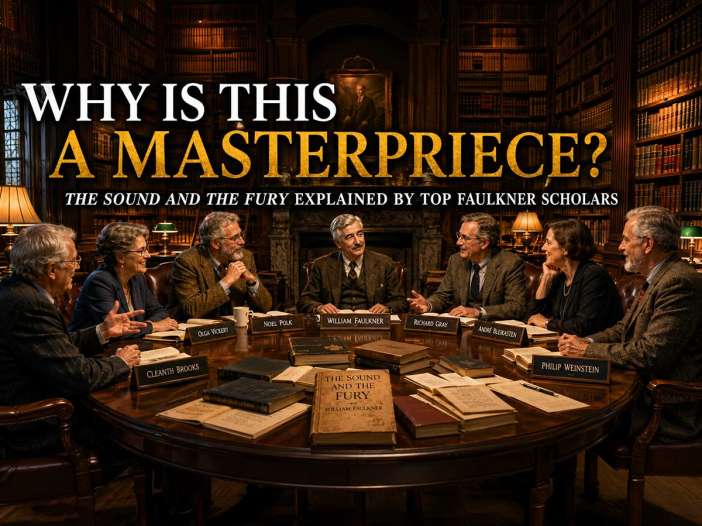
  • The Sound and the Fury Scholar discussionThe Sound and the Fury Explained by Top William Faulkner Scholars
  • The Sound and the Fury Family SpokenThe Sound and the Fury Explained by Its Characters
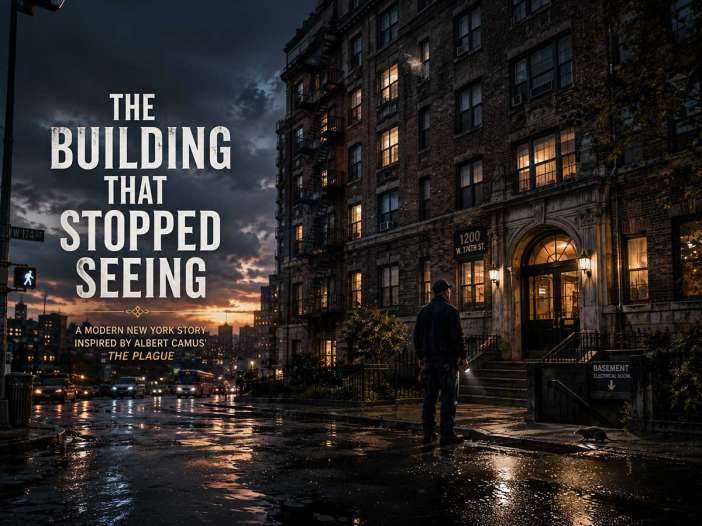
  • The Building That Stopped Seeing | Modern Camus Story
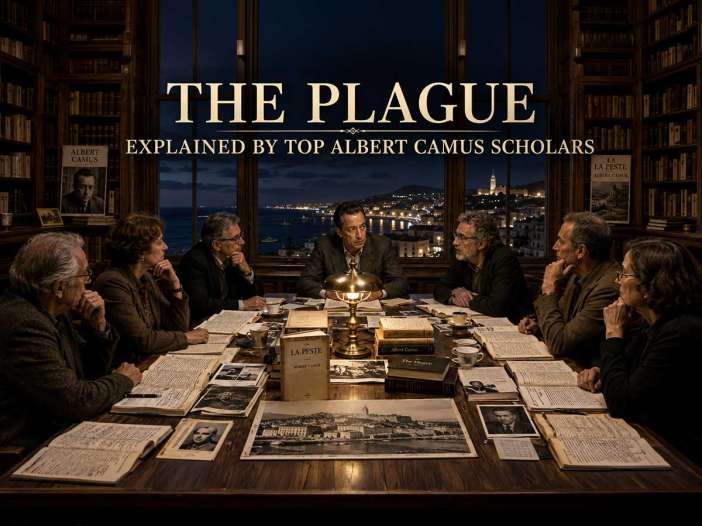
  • The Plague Explained by Top Albert Camus Scholars
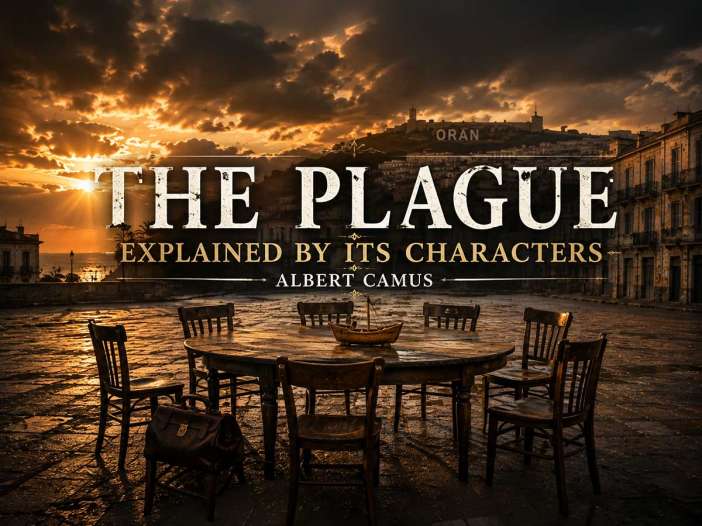
  • albert camus the plague explainedThe Plague explained by its characters
  • the last good sentenceThe Last Good Sentence: A Story About Fame and Loneliness
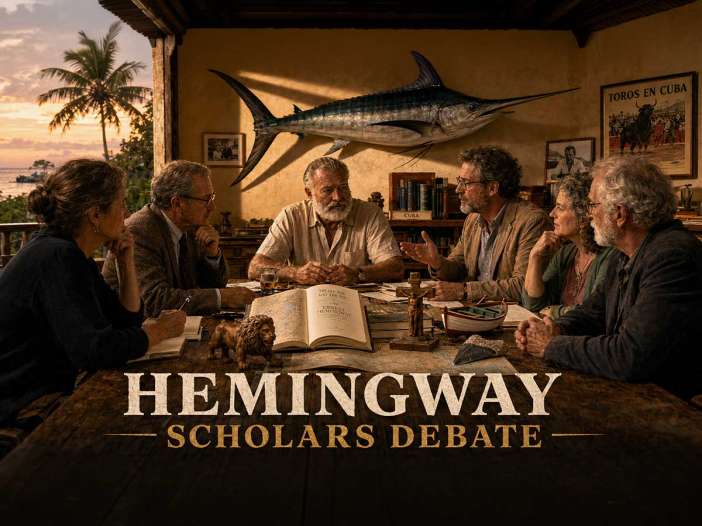
  • hemingway scholars debateThe Old Man and the Sea Explained by Top Scholars
  • The Old Man and the Sea Explained by Its Characters
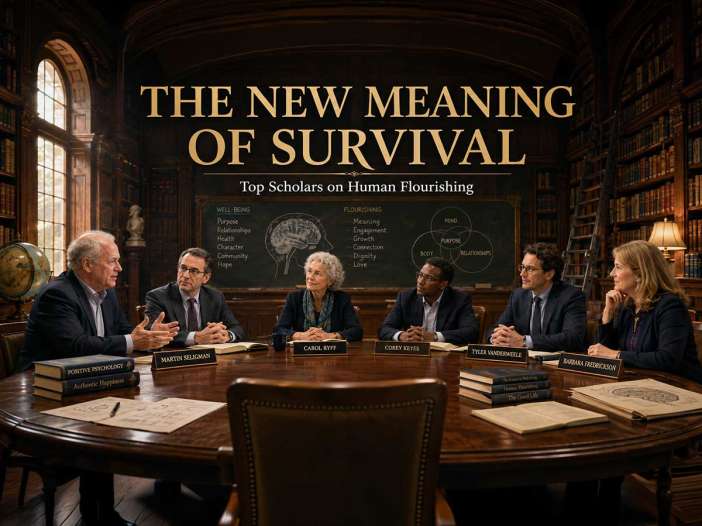
  • the new meaning of survivalThe New Meaning of Survival: Top Scholars on Human Flourishing
  • true meanig of survivalThe True Meaning of Survival: Living, Not Just Existing

  • the last affordable roadThe Last Affordable Road: A Modern Grapes of Wrath Story
  • the-grapes-of-wrath-explained-by-top-scholars-The Grapes of Wrath Explained: Top Steinbeck Scholars
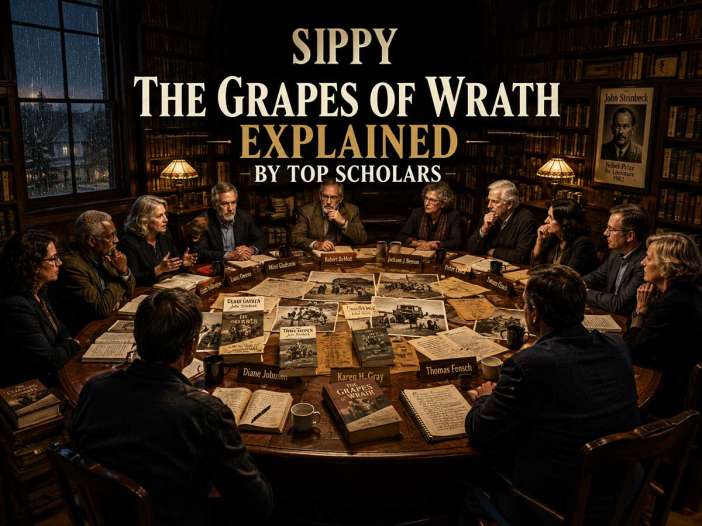
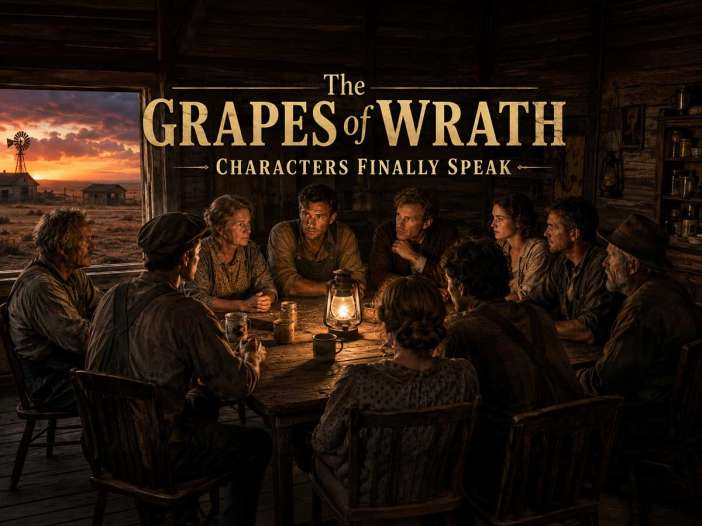
  • the grapes of wrath conversationThe Grapes of Wrath Explained Through Its Characters
  • the white silenceThe White Silence: A Japanese Novel of Loneliness
  • jose-saramago-blindness-explained-Blindness Explained by Top Scholars | José Saramago’s Greatest Warning
  • José-Saramago-Blindness-Explained-Blindness Explained Through Its Characters and José Saramago
  • Can the Bhagavad Gita Still Guide Humanity in 2026?
  • The Crown of AshesThe Crown of Ashes: A Modern Shakespearean Tragedy
  • the-fourth-bowl-If Toni Morrison Wrote a Japanese Family Novel: The Fourth Bowl
  • Beloved Ending Explained: 25 Questions Answered by Morrison Scholars
  • Toni-Morrison-Beloved-Explained-Beloved Explained Through Its Characters and Toni Morrison
  • house with the black stoneThe House With the Black Stone: A Korean Family Saga
  • Be Kind to Your Mother Before It’s Too LateBe Kind to Your Mother Before It’s Too Late
  • Gabriel-García-Márquez-one-hundred-years-of-solitude-explained-One Hundred Years of Solitude Explained by Top Scholars
  • one-hundred-years-of-solitude-explained-One Hundred Years of Solitude Explained
  • are-any-lives-truly-ordinary-Hateship Friendship Courtship Loveship Marriage explained
  • The Overstory explainedThe Overstory Explained: Themes, Ending, and Meaning
  • Demon Copperhead Explained: Barbara Kingsolver’s Pulitzer-Winning Novel
  • can you judge trump by his enemiesCan You Judge Donald Trump by His Enemies?
  • The Warmth of Other Suns Explained
  • America Iran strategyCan America Prevent a Wider Middle East War?
  • Lincol in the BardoLincoln in the Bardo Ending Explained:
  • God-as-Original-Parent-If God Created Man and Woman, Is God Our Original Parent?
  • can creation reveal godDoes Creation Reveal the Nature of God? Five Great Thinkers Discuss
  • Are Therapists to Blame for the Rise of Adults Cutting Off Their Parents?
  • your seventh year is changingJoel Osteen’s Seventh Year: When Suffering Is Not the Final Chapter
  • Joel Osteen’s Best Messages: Hope, Favor, and Faith
  • Hilary Mantel Wolf-Hall ending explainedWolf Hall Ending Explained: Can a Good Man Survive Political Power?
  • i-never-said-i-was-god-What If Jesus Never Claimed to Be God?
  • did-jesus-say-he-was-god-Did Christianity Reverse the Message of Jesus?
  • The Unseen World Liz MooreThe Unseen World Analysis: Memory, AI, and Identity
  • gilead ending explainedGilead Ending Explained: Can Grace Reach the Person We Judge Most?
  • Elena Ferrante My Brilliant FriendMy Brilliant Friend Ending Explained: Who Was Brilliant?
  • The-Underground-Railroad-ending-explained--The Underground Railroad Ending Explained
  • The Road Cormac McCarthyThe Road Ending Explained: Father and Son Imaginary Conversation
  • Atonement Ending Explained: Briony Faces the Truth
  • Never Let Me Go Kazuo IshiguroNever Let Me Go Analysis: An Imaginary Conversation
  • have-we-forgotten-who-we-really-areMichael G. Reccia: Has Humanity Forgotten Who We Really Are?
  • pachinko imaginary talksPachinko by Min Jin Lee: An Imaginary Conversation Across Generations
  • are-you-falling-behindMin Jin Lee on Time, Failure, and Falling Behind in Life
  • trump-putin-xi-modi-geography-of-power-Trump, Putin, Xi and Modi: The Geography of Power
  • misunderstanding of loveWhat If the World’s Problems Come From Misunderstanding Love?
  • netherlands travelNetherlands Travel with Five Unlikely Guides
  • france-imaginary-travel-France Imaginary Travel with Conan, Voltaire and RM
  • rent freeeze trapMamdani Housing Plan: Rent Freeze or Property Trap?
  • 2027 warning prof jiang xueqinProf. Jiang Xueqin’s 2027 Warning for America
  • Banana Fish ExplainedBananafish Explained: Before and After Salinger’s Story
  • Why James Joyce's Ulysses MattersJames Joyce’s Ulysses Explained: Love, Home, and Myth
  • what dad never saidWhat Your Father Never Told You About Silent Sacrifice
  • Fiddler On The Roof Tradition or changeFiddler on the Roof Lessons on Tradition and Family

Footer

Recent Posts

  • 5 Modern Stories Inspired by Circe by Madeline Miller August 23, 2026
  • Circe Explained: Myth, Meaning, and Madeline Miller August 23, 2026
  • Madeline Miller Circe: What If No One Ever Chose You? August 23, 2026
  • 5 Modern Stories Inspired by Keigo Higashino’s Silent Parade August 22, 2026
  • Could Japanese Culture Succeed Where Religion Has Failed? August 22, 2026
  • 5 Modern Stories Inspired by The Devotion of Suspect X August 21, 2026

Pages

  • About Us
  • Contact Us
  • Disclaimer
  • Earnings Disclaimer
  • Privacy Policy
  • Terms and Conditions

Categories

Copyright © 2026 Imaginarytalks.com