• Skip to main content
  • Skip to primary sidebar
  • Skip to footer
ImaginaryTalks.com
  • Spirituality and Esoterica
    • Afterlife Reflections
    • Ancient Civilizations
    • Angels
    • Astrology
    • Bible
    • Buddhism
    • Christianity
    • DP
    • Esoteric
    • Extraterrestrial
    • Fairies
    • God
    • Karma
    • Meditation
    • Metaphysics
    • Past Life Regression
    • Spirituality
    • The Law of Attraction
  • Personal Growth
    • Best Friend
    • Empathy
    • Forgiveness
    • Gratitude
    • Happiness
    • Healing
    • Health
    • Joy
    • Kindness
    • Love
    • Manifestation
    • Mindfulness
    • Self-Help
    • Sleep
  • Business and Global Issues
    • Business
    • Crypto
    • Digital Marketing
    • Economics
    • Financial
    • Investment
    • Wealth
    • Copywriting
    • Climate Change
    • Security
    • Technology
    • War
    • World Peace
  • Culture, Science, and A.I.
    • A.I.
    • Anime
    • Art
    • History & Philosophy
    • Humor
    • Imagination
    • Innovation
    • Literature
    • Lifestyle and Culture
    • Music
    • Science
    • Sports
    • Travel

literary analysis

Han Kang Human Acts Explained by Leading Scholars

August 12, 2026 by Nick Sasaki Leave a Comment

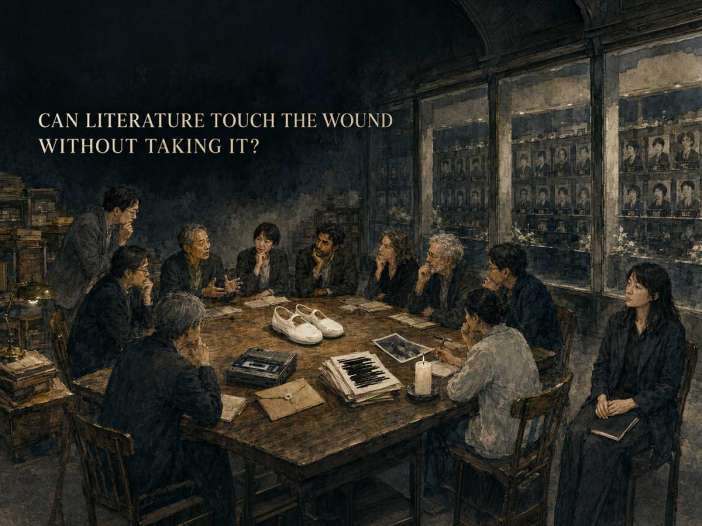
The Scholars and the Unworn Shoes

Introduction Han Kang’s Human Acts begins with a murdered boy, but its questions reach far beyond one death.How does a government transform citizens into enemies? Can the body preserve a truth that official history suppresses? Does a survivor owe testimony to the public? Can poetic language represent torture without making suffering beautiful? What … [Read more...] about Han Kang Human Acts Explained by Leading Scholars

Filed Under: Literature, Nobel 100 Best Books Tagged With: bodily memory, censorship, collective memory, Dong-ho, Gwangju Uprising, Han Kang, historical trauma, Human Acts, Human Rights, imaginary conversation, Korean literature, literary analysis, literary scholars, Nobel Prize literature, political violence, reader responsibility, state violence, survivor testimony, translation studies, trauma theory

Han Kang Human Acts: An Imaginary Conversation with the Dead
August 12, 2026 by Nick Sasaki Leave a Comment

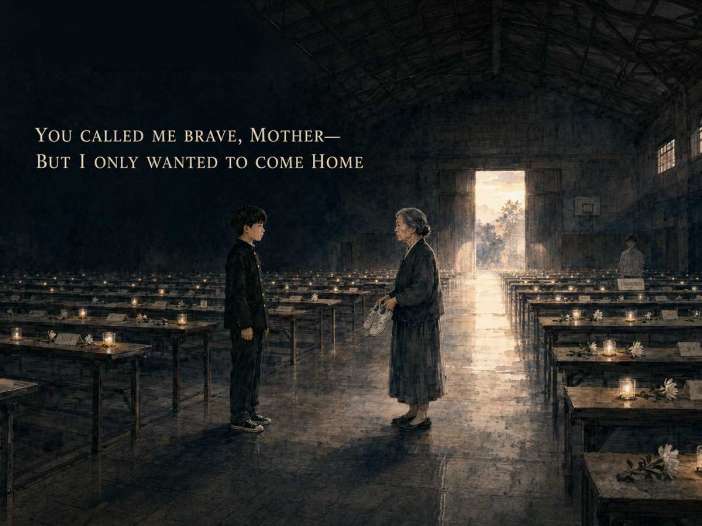
Introduction In May 1980, the South Korean military entered Gwangju and opened fire on citizens calling for democracy. Among the dead was a fifteen-year-old boy whose brief life became the emotional center of Han Kang’s Human Acts.In the novel, his name is Dong-ho.He remains at the provincial office gymnasium, helping volunteers identify bodies and care for … [Read more...] about Han Kang Human Acts: An Imaginary Conversation with the Dead

Filed Under: Literature, Nobel 100 Best Books Tagged With: censorship, Dong-ho, Grief, Gwangju Uprising, Han Kang, historical trauma, Human Acts, Human Rights, imaginary conversation, Jeong-dae, Korean History, Korean literature, literary analysis, memory, mothers and sons, Nobel Prize literature, political violence, state violence, survivor guilt, testimony

Snow Country Analysis: Kawabata Scholars Explain It
August 12, 2026 by Nick Sasaki Leave a Comment

snow-country-analysis-

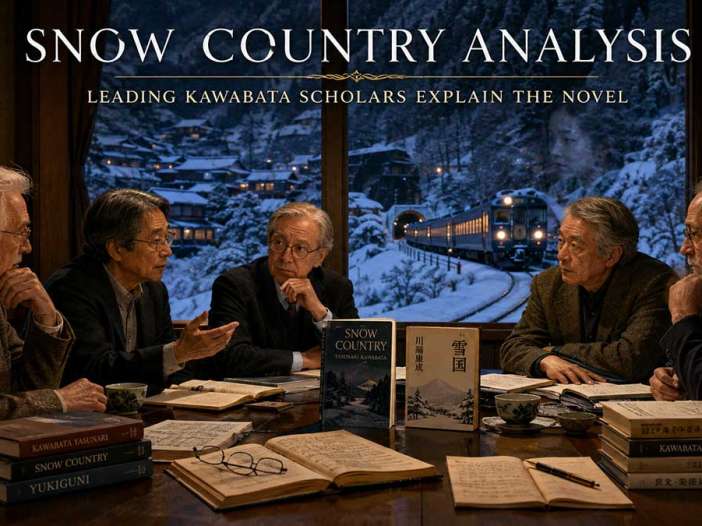
Introduction Yasunari Kawabata’s Snow Country has inspired generations of readers with its beauty, silence, longing, and ambiguity.Yet beneath that beauty are much harder questions.Is the relationship between Shimamura and Komako truly love? What does the novel mean by “wasted effort”? Why are mirrors, windows, and reflections so central? Does Kawabata’s … [Read more...] about Snow Country Analysis: Kawabata Scholars Explain It

Filed Under: Literature, Nobel 100 Best Books Tagged With: Donald Keene, Edward Seidensticker, Geisha Culture, Japanese aesthetics, Japanese literature, Kawabata Scholars, Komako, literary analysis, Literary Criticism, Mirror Symbolism, Modern Japanese Literature, Mono no Aware, Nobel Prize literature, Shimamura, Snow Country, Snow Country Ending, Yasunari Kawabata, Yoko

Snow Country Explained Through Its Characters
August 9, 2026 by Nick Sasaki Leave a Comment

snow-country-was-their-love-real

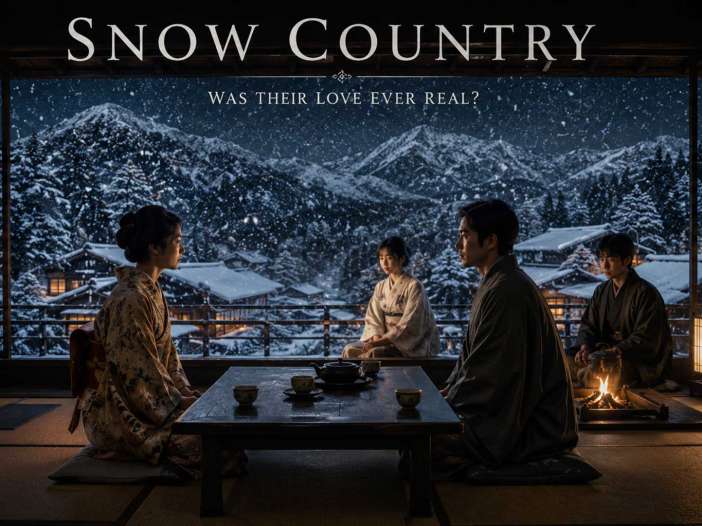
Introduction Yasunari Kawabata’s Snow Country is a story of beauty, distance, longing, and impermanence.Shimamura repeatedly returns from Tokyo to a remote hot-spring town, where Komako grows deeply attached to him. Yoko remains mysterious and unforgettable, and Yukio’s presence adds another layer of care, illness, and unresolved feeling.In this imaginary … [Read more...] about Snow Country Explained Through Its Characters

Filed Under: Literature, Nobel 100 Best Books Tagged With: book analysis, Book Discussion, Classic Literature, imaginary conversation, impermanence, Japanese Fiction, Japanese literature, Komako, literary analysis, Love and Loss, Mono no Aware, Nobel Prize literature, Shimamura, Snow Country, Snow Country Ending, Unrequited Love, Yasunari Kawabata, Yoko

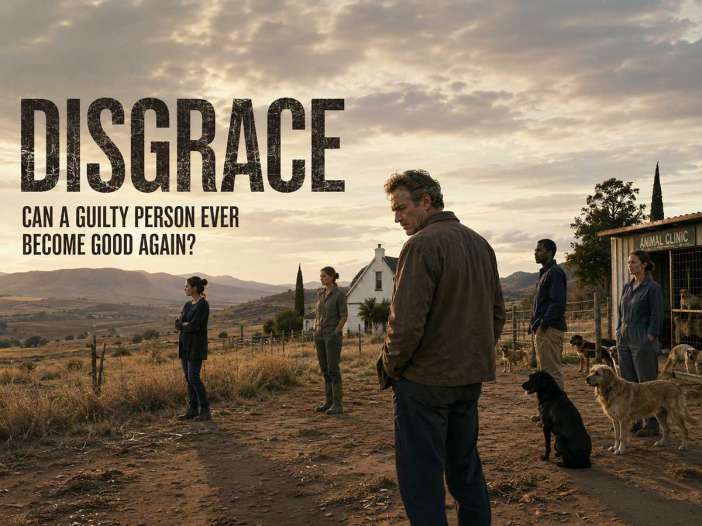
Disgrace Explained Through Its Characters
August 8, 2026 by Nick Sasaki Leave a Comment

disgrace-j-m-coetzee-

Introduction What if losing your reputation does not mean you have learned why you lost it? What happens when a person does something that cannot be undone?J. M. Coetzee’s Disgrace begins with David Lurie, a university professor whose relationship with his student Melanie Isaacs destroys his career and public reputation. Yet losing his position is only the … [Read more...] about Disgrace Explained Through Its Characters

Filed Under: History & Philosophy, Literature, Nobel 100 Best Books, Psychology Tagged With: Bev Shaw, Booker Prize, consent and power, David Lurie, Disgrace, Disgrace analysis, Disgrace characters, Disgrace ending, Disgrace explained, Disgrace themes, J. M. Coetzee, literary analysis, Lucy Lurie, Melanie Isaacs, moral responsibility, Nobel Prize literature, Petrus, post-apartheid South Africa, shame and redemption, South African literature

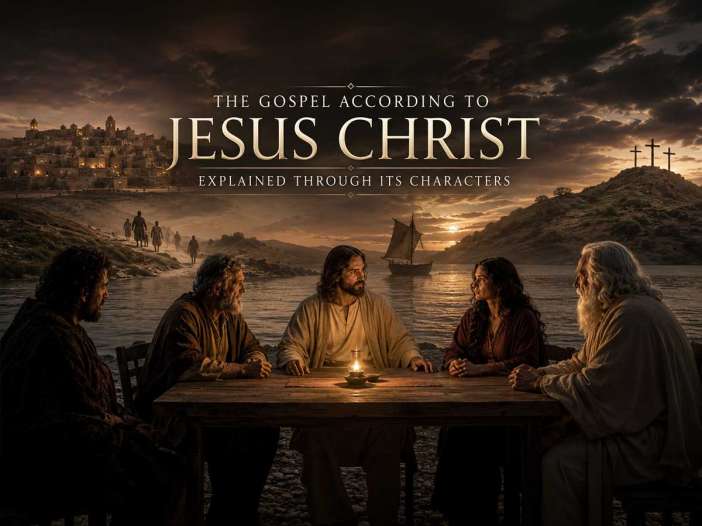
The Gospel According to Jesus Christ Explained Through Its Characters
August 7, 2026 by Nick Sasaki Leave a Comment

The Gospel According to Jesus Christ explained

Introduction What if Jesus knew how much suffering would later occur in his name? José Saramago’s The Gospel According to Jesus Christ is not a conventional retelling of the life of Jesus.It is a moral confrontation.Saramago takes figures familiar to billions of people—Jesus, Joseph, Mary Magdalene, God, and the Devil—and places them inside questions … [Read more...] about The Gospel According to Jesus Christ Explained Through Its Characters

Filed Under: Christianity, Literature, Nobel 100 Best Books Tagged With: character analysis, Christianity, divine foreknowledge, forgiveness, free will, God, Imaginary Talks, Jesus, José Saramago, Joseph, literary analysis, Mary Magdalene, moral responsibility, Nobel Prize literature, religious fiction, sacrifice, the Devil, The Gospel According to Jesus Christ

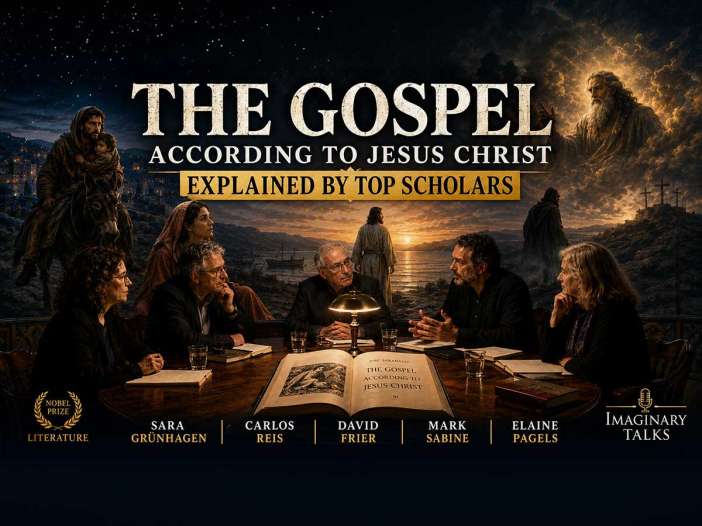
The Gospel According to Jesus Christ Explained by Top Scholars
August 7, 2026 by Nick Sasaki Leave a Comment

SARAMAGO’S GOSPEL EXPLAINED

Introduction by José Saramago Did Saramago reject Christianity, or challenge Christianity to examine its relationship with authority and suffering? I wrote a book about Jesus, and many people assumed that meant I intended to write a book against Jesus.I did not.The Jesus who interested me was precisely the opposite: a human being caught between what he … [Read more...] about The Gospel According to Jesus Christ Explained by Top Scholars

Filed Under: Christianity, Literature, Nobel 100 Best Books Tagged With: biblical fiction, Christianity, divine foreknowledge, free will, God, Imaginary Talks, Jesus, José Saramago, literary analysis, Mary Magdalene, moral responsibility, Nobel Prize literature, philosophy of religion, religious authority, sacrifice, Saramago scholars, suffering, The Gospel According to Jesus Christ

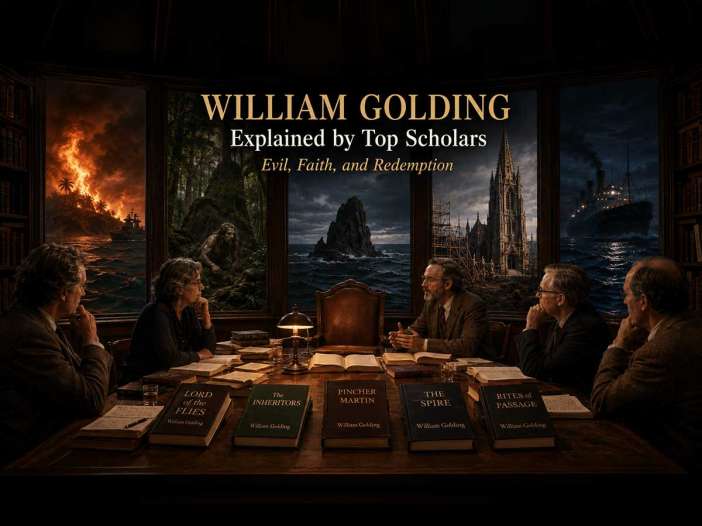
William Golding Explained by Top Scholars: Evil, Faith, and Redemption
August 6, 2026 by Nick Sasaki Leave a Comment

william golding explained by top scholars

Introduction What if Lord of the Flies was only the beginning of Golding’s moral argument? Most readers know William Golding through a single unforgettable image: a group of schoolboys stranded on an island, slowly descending from cooperation into fear, tribalism, and murder.For generations, Lord of the Flies has been read as a warning about civilization's … [Read more...] about William Golding Explained by Top Scholars: Evil, Faith, and Redemption

Filed Under: Literature, Nobel 100 Best Books, Psychology, Spirituality Tagged With: Golding scholars, Human Nature, literary analysis, Literary Criticism, Lord of the Flies, moral philosophy, Nobel Prize literature, original sin, Pincher Martin, redemption, Rites of Passage, Simon Christ figure, the Beast, The Inheritors, The Spire, William Golding, World War II literature

The Brothers Karamazov Explained Through Its Characters
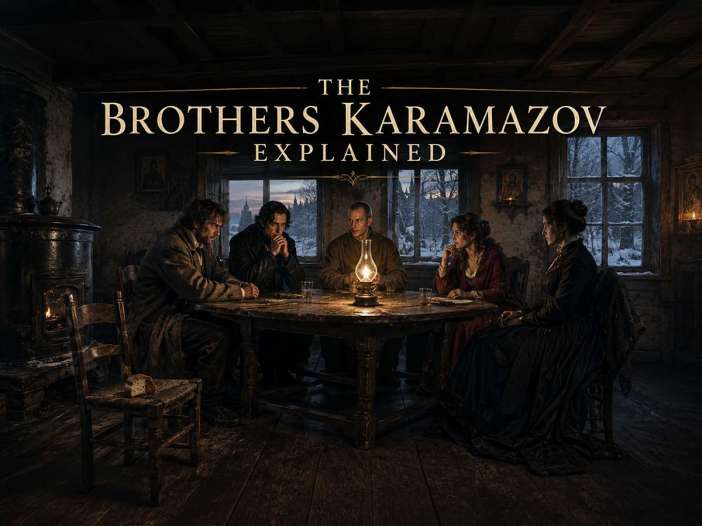
August 5, 2026 by Nick Sasaki Leave a Comment

Brothers Karamazov explained

What if the person who committed the murder was not the only one responsible for it? A father has been murdered.One son threatened to kill him.Another secretly wished for his death.A third may have given the killer the ideas he needed.The man who committed the murder is dead, and the brother who did not commit it has been convicted.So who is truly … [Read more...] about The Brothers Karamazov Explained Through Its Characters

Filed Under: History & Philosophy, Literature Tagged With: active love, Alyosha Karamazov, Classic Novels, Dmitri Karamazov, faith and doubt, Father Zosima, Fyodor Dostoevsky, Ivan Karamazov, literary analysis, moral responsibility, problem of evil, Russian literature, Smerdyakov, The Brothers Karamazov, The Grand Inquisitor

Albert Camus’s The Stranger Explained Through Its Characters
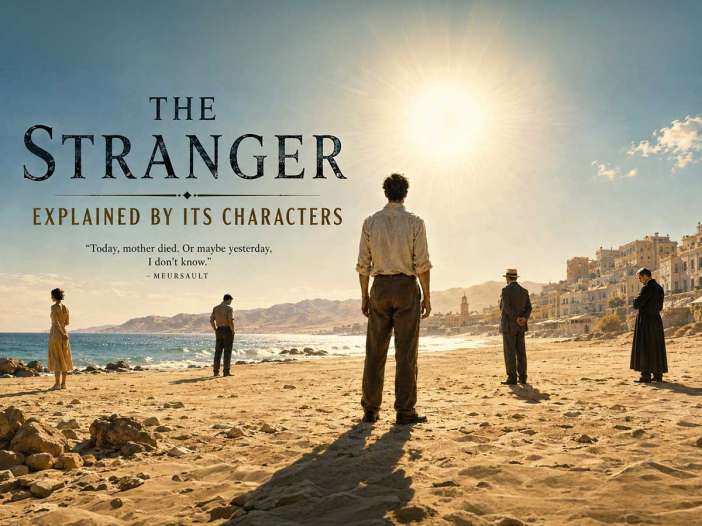
August 4, 2026 by Nick Sasaki Leave a Comment

the stranger explained

What if remaining neutral could still make you responsible for another person's suffering? Introduction by Albert CamusWhen I wrote The Stranger, I did not intend to create a hero.Nor did I intend to create a villain.I wanted to place one ordinary man before a series of ordinary decisions and ask whether honesty alone is enough to guide a human life.For … [Read more...] about Albert Camus’s The Stranger Explained Through Its Characters

Filed Under: History & Philosophy, Literature, Nobel 100 Best Books Tagged With: Absurdism, Albert Camus, Book Discussion, Classic Novels, Death, Existentialism, French literature, Human Nature, imaginary conversations, justice, literary analysis, Literary Characters, meaning of life, Meursault, modern classics, Nobel Prize literature, philosophy, The Stranger, World Literature

  • « Go to Previous Page
  • Page 1
  • Page 2
  • Page 3
  • Page 4
  • Page 5
  • Page 6
  • Go to Next Page »

Primary Sidebar

RECENT POSTS

  • Jesus and the 12 Apostles Reunite: Judas at the Table
  • What If You Could Interview Nikola Tesla?
  • What If You Could Interview Leonardo da Vinci?
  • What If Newt Gingrich and Masayoshi Son Are Right About the Next 50 Years?
  • The Sleeping Prophet Wakes: An Evening With Edgar Cayce
  • What If You Could Interview Napoleon on Saint Helena?
  • Laurence Steinberg’s You and Your Adult Child: 5 Experts Debate
  • Why Adult Children Pull Away: A Family Story of Healing
  • Why Adult Children Grow Distant: Can Parents Reconnect?
  • 3 Modern Stories Inspired by George Eliot’s Middlemarch
  • Middlemarch by George Eliot: 5 Experts Debate Its Genius
  • Middlemarch: What If George Eliot’s Characters Met Again?
  • Middlemarch by George Eliot: The Complete Story in 20 Minutes
  • Love Your Parents Before It’s Too Late: 5 Experts Debate
  • 3 Modern-Day Stories Inspired by American Hagwon
  • American Hagwon by Min Jin Lee: Experts Debate Success
  • American Hagwon by Min Jin Lee: Characters Speak
  • Can Imaginary Conversations Teach Children to Think?
  • 63% Will Forget How to Think? 3 Chilling AI Stories
  • Is Claude Conscious? Dario Amodei & Experts Debate J-Space
  • Is AI Making Us Less Human? 4 Experts Debate
  • Winnie-the-Pooh at 100: Hidden Lessons from Scholars
  • Winnie-the-Pooh at 100: Friendship, Wisdom & Happiness
  • Autobiography of Red Analysis: Love, Identity & Art
  • Autobiography of Red Explained: Love and Identity
  • How to Make Money Writing Novels: A Masterclass
  • Klara and the Sun Themes: Love, Faith, and Human Worth
  • Klara and the Sun Explained: What Makes Us Human?
  • Reverend Moon’s 2026 Message: Forgive, Love and Unite
  • Inspired by Narnia’s Ending: 3 Stories of Hope
  • What Happened to Susan in Narnia? Why C.S. Lewis Left Her Behind
  • Is Aslan Jesus? What C.S. Lewis Really Meant in Narnia
  • The Sun Also Rises Centennial Stories: 5 Modern Lives
  • The Sun Also Rises Themes & Analysis: Questions That Still Matter
  • The Sun Also Rises Centennial: Are We a Lost Generation?
  • The Antidote by Jesse Lee Peterson: Anger, Forgiveness & Freedom
  • One God, Three Messengers: Jesus, Muhammad & Rev. Moon
  • When Love Outlives Death: Grief, Consciousness & Connection
  • Anunnaki, Reincarnation & Afterlife: 5 Mysteries
  • The Fourth Turning Stories: Five Lives in a Changing World
  • The Fourth Turning Predictions: What Happens Next?
  • The Fourth Turning Theory: What Strauss & Howe Would Say in 2026
  • Anthony de Mello’s Awareness: 5 Lessons for Modern Life
  • anthony de mello awarenessAnthony de Mello’s Awareness: What Does It Really Mean?
  • Anthony de Mello’s AwarenessAnthony de Mello’s Awareness: Waking Up Through Comedy
  • War and Peace Lessons for Modern Life: 5 Short Stories
  • war and peace meaningWar and Peace Meaning: What Tolstoy Wanted Us to See
  • war and peace charactersWar and Peace: An Imaginary Conversation on Life
  • AI in 2026: What Happens When Machines Become Smarter Than Us?
  • What If Charles Dickens Visited London in 2026? | Miracle Series #2
  • mozart 2026 nycWhat If Mozart Visited 2026? | Miracle Series #1
  • oprah book clubOprah Book Club: 25 Book Characters Share Life Lessons
  • political tribalismWhy Politics Divides Us: The Psychology of Political Tribalism
  • Trump UN speech 2026Trump UN Speech 2026: 8 Experts Debate His Foreign Policy
  • the art of fighting storiesThe Art of Fighting: 5 Stories About Conflict, Love and Belonging
  • the art of fighting explainedThe Art of Fighting: What Makes Conflict Healthy or Harmful?
  • the art of fightingThe Art of Fighting by Priya Parker: Can Conflict Save Relationships?
  • laura lynne jackson guidedGuided by Laura Lynne Jackson: 5 Modern Stories About Signs, Love & Purpose
  • laura lynne jackson guidedGuided by Laura Lynne Jackson: 5 Questions About Signs, Spirit & Purpose
  • before we forget how to connect storiesBefore We Forget How to Connect: 5 Modern Stories
  • before we forget questionsBefore We Forget How to Connect: 30 Questions
  • before we forget how to connectBefore We Forget How to Connect: Vinh Giang Explained
  • Love As if You've Never Been Hurt MeaningLove As If You’ve Never Been Hurt: Meaning & Life Lessons
  • love as if you've never been hurt discussionLove As If You’ve Never Been Hurt: 25 Book Club Questions
  • Love As If You've Never Been HurtLove As If You’ve Never Been Hurt: 5 Modern Stories
  • The Correspondent Inspired Stories: 5 Emotional Tales
  • the correspondent questionsThe Correspondent Book Club Questions: Sybil & Psychology
  • the correspondent explainedThe Correspondent Explained: Grief, Love & Sybil’s Letters
  • The Waste Land modern storiesThe Waste Land Modern Stories: 5 Emotional Tales
  • The Waste Land explainedThe Waste Land Explained: What Did T. S. Eliot Mean?
  • The Waste Land charactersThe Waste Land Characters Explained: Eliot’s Broken World
  • theo of golden questionsTheo of Golden Book Club Questions: Expert Discussion
  • theo of goldenTheo of Golden Inspired Stories: 5 Modern Tales
  • theo of goldenTheo of Golden Analysis: What It Means to Truly See Someone
  • martyr modern storiesMartyr Kaveh Akbar Inspired Stories: 5 Emotional Tales
  • martyr explainedMartyr Kaveh Akbar Book Club Questions: 25 Big Questions
  • martyr charactersMartyr Kaveh Akbar Analysis: Meaning, Death & Suffering
  • little wonder storiesLittle Wonder Inspired Stories: 5 Emotional Modern Tales
  • Little Wonder Analysis: Love, Loss & Gifted Children
  • Little Wonder Sophie Chen Keller: Love, Sacrifice & Identity
  • sense and sensibility modern storiesSense and Sensibility Lessons: 5 Modern Love Stories
  • sense and sensibility analysisSense and Sensibility Analysis: Love, Emotion & Austen
  • sense and sensibility conversationSense and Sensibility: How Do We Know Love Is Real?
  • marriage courseAlphaUSA Marriage Course: 5 Emotional Stories Inspired by Its 7 Sessions
  • AlphaUSA Marriage Course: 7 Questions for a Stronger Marriage
  • AI Agents DebateAI Agents Debate Human Extinction: Should Humanity Survive?
  • ai human extinction storiesJunji Ito-Inspired Tales of AI and Human Extinction
  • ai could destroy humanityEx-Anthropic insider Fear how AI could kill all humans by 2030
  • the vessel of words questionsThe Vessel of Words: How Language Shapes Relationships
  • Empty Nest Syndrome StoryEmpty Nest Syndrome Story: 5 Modern Stories for Parents
  • empty nest griefEmpty Nest Syndrome: 30 Questions Parents Ask
  • Empty Nest SyndromeEmpty Nest Syndrome: When the House Goes Quiet
  • the vessel of words storiesThe Vessel of Words: 5 Korean Stories of Hurt and Healing
  • abraham lincoln modern day storiesAbraham Lincoln Leadership Lessons: 5 Modern Stories
  • the real lincolnAbraham Lincoln: What Historians Really Know and Debate
  • Abraham Lincoln and Slavery: War, Power & Change
  • if god is oneIf God Is One, Why Do Religions Divide Us?
  • 5 Modern Stories Inspired by Cleopatra’s Greatest Lessons
  • Joan of Arc: 5 Modern Stories About Faith and Courage
  • Joan of Arc ExplainedJoan of Arc Examined: Voices, War, Trial, and Legend

Footer

Recent Posts

  • Jesus and the 12 Apostles Reunite: Judas at the Table October 21, 2026
  • What If You Could Interview Nikola Tesla? October 21, 2026
  • What If You Could Interview Leonardo da Vinci? October 20, 2026
  • What If Newt Gingrich and Masayoshi Son Are Right About the Next 50 Years? October 20, 2026
  • The Sleeping Prophet Wakes: An Evening With Edgar Cayce October 20, 2026
  • What If You Could Interview Napoleon on Saint Helena? October 20, 2026

Pages

  • About Us
  • Contact Us
  • Disclaimer
  • Earnings Disclaimer
  • Privacy Policy
  • Terms and Conditions

Categories

Copyright © 2026 Imaginarytalks.com